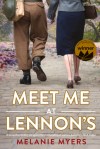
 I was keen to read Melanie Myers’ debut novel, Meet me at Lennon’s, because it is set during the Brisbane of my mother’s early teens, that is, wartime Brisbane when her school, Somerville House, was commandeered in 1942 by the Australian Military Forces and served as a US Army Headquarters for the rest of the war. I grew up knowing this story, so was keen to see what Myers made of it, particularly since not many literary fiction novels, as far as I know, have tackled Brisbane during those times. Ariella van Luyn spends some time there in Treading air (my review) and David Malouf’s semi-autobiographical novel Johnno, which I read a long time ago, covers those years. However, being five years younger than my mum, Malouf was only 11 when the war ended, so his perspective is necessarily different.
Myers’ focus is the lives of women during those strange, heady days when women experienced new freedoms through filling the jobs left by men. Added to this was the excitement and glamour of the American GIs in town resulting in increased socialising at bars, like the titular Lennon’s Hotel, and dance venues, like the Trocadero.
It’s something isn’t it? It’s hard not to get caught up in the fever of having a common purpose. Uniforms everywhere and everyone feeling what they’re doing is important and useful. And the Americans, let’s not forget them. For all their braggadocio, they’ve certainly brought a touch of glamour to our little colonial outpost. (April 1943. p. 233/4)
But it was a dark time too. It was a time of austerity and rationing. There was tension between the Australian men and the Americans whose cashed-up glamour, with their gifts of “nylons” and fur coats, attracted the women. There was racism towards black American soldiers. And there was sexual violence against women. This is the complex world that Myers explores in her historical novel, Meet me at Lennon’s.
However, this novel is not straight historical fiction because Myers has taken the increasingly-common dual narrative approach, alternating between the 1940s and the present, when protagonist Olivia Wells is struggling, not only with her PhD on the life of a now-forgotten feminist author Gloria Graham, but also with her abusive (as it turns out) boyfriend, Sam, and the reappearance of her estranged father. Just like her 1940s counterparts, Olivia meets an American man. The stage is set in chapter 1 …
You might be getting a glimmer now of why Myers chose the dual narrative approach? It serves to compare the lives of women in the 1940s with those of women now, asking us to consider what, if anything, has changed? Myers undertook extensive research into wartime Brisbane, looking particularly at police and newspaper reports of crimes against women, as well as the infamous Battle of Brisbane. She uses this research to create stories of several young women in the 1940s, stories she winds around a plot based on an unsolved crime – the River Girl murder. Through these women we learn, for example, that crimes by Americans were mostly passed to their Military Police and quietly handled, with justice rarely being obtained for the victim. Such was the River Girl’s fate. Can Olivia and her friends solve it now? There is, then, also a mystery at the heart of this novel.
Myers does a lovely job of recreating the times. Her characters not only engaged me, but they felt authentic. There’s sturdy sensible Alice, who, having worked pre-war as a house-maid for rich people, sees the opportunity, now that she’s in a well-paid job, to buy a fur coat, just like her former employer had owned. To her horror, however, she soon realises that fur coats were “the gift of choice for women whom American servicemen ‘favoured'”. There’s Gwendolyn, engaged to the uninspiring Robert, but now having fun, as the much more exciting Dolly, with the “energetic” Corporal Charles Feely. There are several more, including those in the present time. One of the book’s challenges is keeping track of the characters and clocking the clues that might connect them.
Myers plays about a bit with her dual chronologies. Chapter 4, for example, is divided into three sections, September 1942, July 1942, then August 1942. The aim, I assume, is to reduce the focus on plot tensions, by preparing us for characters’ actions and feelings. In September 1942, Alice burns the above-mentioned fur coat she buys in July 1942. She also remembers a violent act by her brother when they are children, which prepares us for meeting him in August. And Chapter 12 is set in 1993, when we meet again, as an older woman, Alice’s friend Val from 1942. It works fine – and indeed meeting the lively Val again in 1993 provides some light relief, while also moving the more serious issues on.
The writing is generally sure and expressive. Myers writes some evocative descriptions, such as “a confident early sun fixed on warming the rest of the day ahead” and “the vaulted plaster ceiling of Reckitt’s blue was badly deteriorated and hadn’t felt the caress of a paintbrush in decades”. However, for me at least, she does overdo the similes. While, individually, most are fresh, they often felt irrelevant and distracting, such as “like a starlet’s eyelids, the brownout covers …”, “unfolding like a crumpled flamingo, Clio …”, and “the details landed like clumps of pelted sand.” Too much, I’m afraid.
Meet me at Lennon’s, which won the Queensland Literary Awards’ Glendower Award for an Emerging Writer in 2018, is a good and meaningful read about a significant and little covered period in Australia’s and Brisbane’s history. Early in the novel, Olivia’s American acquaintance Tobias refers to the racist segregation of black American soldiers during the war years, and sees a wider relevance:
“A place has got to come to terms with its ugly history, is what I think. Otherwise it metastasises like a cancer cell. And from what I understand, ugly history goes back a lot further here than just the war.” (p. 10)
In the end though, it’s the lives of women which are the central concern of this novel. The final chapter commences with a letter written by Rhia (Gloria Graham) in 1975. She admits that she had hoped to “undo” what had been done to Olive, the River Girl. However, she comes to realise that “there are some evils that no art form can make better, fix or even soothe”. Perhaps she’s right, but novels like this can keep the important issues front and centre – and there’s value in that.
Theresa Smith also appreciated this novel.
 Melanie Myers
Meet me at Lennon’s
St Lucia: UQP, 2019
265pp.
ISBN: 9780702262616
(Review copy courtesy UQP)
 always save the receipt, the reason being that if you have chosen a book you’ve thought to be the perfect present for someone, so probably have others. Fortunately, my mother had saved the receipt for the book she gave me this Christmas, Helen Garner’s Yellow notebook, because I already have it (albeit as a review copy, not a gift.)
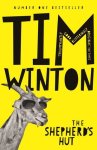 choose for the recipient rather than what you think they should read! Now this, to me, is a no-brainer. Surely the aim is to give your recipient something they’ll enjoy and remember you fondly for! I’m really hoping my toddler grandson likes Pamela Allen’s Mr McGee. And I was very confident that my lexicographer-grammarian mother would like John Sutherland’s How good is your grammar. The article notes that giving books can signal your own taste, and touches on the pros and cons of this and of giving books you love. It suggests if you can’t overcome the influence of your ego when choosing books, ask the advice of a knowledgeable (often independent) bookseller! Good suggestion. This year, as in most years, I gave some books that I’ve loved – like Tim Winton’s The shepherd’s hut to Son Gums and Amanda O’Callaghan’s This taste for silence to Brother Gums’ partner – because I think the recipients will like them. But, I have also given books I haven’t read, for the same reason. Horses for courses, as they say.
 The
The  Louise Allan
 Amanda Curtin
 Nigel Featherstone
 Irma Gold
 Michelle Scott Tucker


 As last year, a good friend (from my library school days 45 years ago) has agreed for me to share her reading group’s schedule from this year:
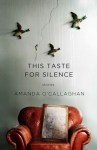 Short story collections are rarely recognised in literary fiction awards, but Amanda O’Callaghan’s debut collection, This taste for silence, was


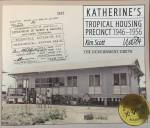 Do you have a favourite house that you lived in? I do. It’s the lovely old Queenslander my family lived in for most of my primary school years. It was in Sandgate, Brisbane, and I still have vivid memories of those days, and that house and garden. Kim Scott, the author of Katherine’s tropical housing precinct 1946-1956, also has such a house, the one her family moved into in Katherine when she was three years old. It was a 1956-built Type D1 N.T.A. (Northern Territory Administration) house and she loved it so much that many years later, she bought herself a similar house, a Type L “New Series” house.
 C.H. Wales (whoever s/he is) was inspired by the death of John McCarthy, who inspired ‘Irish Mac’ in Mrs. Aeneas Gunn’s 1907 novel, We of the Never-Never, to write about the frequent use made by Australian authors of people from real life in their novels.
  Brian Penton’s Landtakers (1934) is described as being among “other readable novels published in Australia”! Damned with faint praise?
  Trove revealed many other books of different genres and styles, so I’ll share just a few, the first group coming from the West Australian (linked above):
 Those versed in the period will know that I’ve not included some of the better known writers. This is partly because some have been mentioned in previous posts, but more because they didn’t pop up in my random search of this mid-30s period. One did, however, appear – Christina Stead’s The Salzburg tales. However, I have decided to hold it over for a future post as she’s worth a special focus.
 Last month’s starting book, Lewis Carroll’s Alice’s adventures in Wonderland, is of course a classic. This month’s would have been a classic I’m sure, if only the author had managed to finish it. The book is Sanditon (
 For my first link, I’m choosing Thea Astley’s Drylands (
 Now, Drylands has an unusual form. It is a novel, really, but it can read like a collection of short stories, which are written by someone called Janet. Another novel that can also be described as a collection of short stories, though not quite as tricksy in form as Astley’s, is Tara June Winch’s Swallow the air (
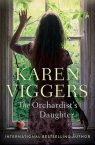 And here I’m going to change tack and move from Australia to France. Tara June Winch now lives in France, and has for some years. An Australian author who sells very well in France is, in fact, local Canberra writer, Karen Viggers. Her novel, The orchardist’s daughter (
 … and link to a book by an Australian writer (another Canberran in fact) that was drafted at a writer’s retreat in France and published by the people, La Muse, who are behind that retreat. The author is John Clanchy and his book, Sisters (
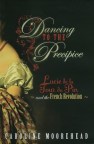 So far I’ve been a bit nationalistic in my French links, so next I’m linking to a book by – an English writer! Did I trick you there? However, it is about French people, Caroline Moorhead’s biography Dancing to the precipice: The life of Lucie De La Tour Du Pin, Eyewitness to an era (
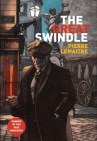 And finally, because of course I had to do it, a book actually written in France by a French writer. I’ve read a handful of French writers since I started blogging, so the choice was a bit of a challenge. However, given the flamboyance of some of the French aristocracy covered by Moorehead in her book, I thought perhaps Pierre LeMaitre’s novel,The great swindle (
 Madelaine Dickie ($4374): to research a proposed biography of Wayne Bergmann in Broome. I’ve
  Whispering Gums