Monday musings on Australian literature: Astrid Lindgren Memorial Award

Yes, you read right. This week’s Monday Musings on Australian Literature focuses on an award established by the Swedish government, but it is an international award. Established in 2002 to honour the Swedish children’s author Astrid Lindgren (as you’ll have guessed), the prize is five million SEK, making it, says Wikipedia, the richest award in children’s literature and one of the richest literary prizes in the world.

The award, continues Wikipedia, “annually recognises one or more living people and extant institutions” for “their career contributions”, in the case of people, and for their long-term sustainable work, in the case of institutions. The winners should be “authors, illustrators, oral storytellers and promoters of reading” and their work should be “of the highest quality, and in the spirit of Astrid Lindgren.” The award’s aim “is to increase interest in children’s and young people’s literature, and to promote children’s rights to culture on a global level”.

Alert readers here will have seen it mentioned here before, most recently in my post on Alison Lester, because she has been nominated for the award. However, she’s not the only Australian to have been so listed, and in fact, Australians have won it.

Aussie winners

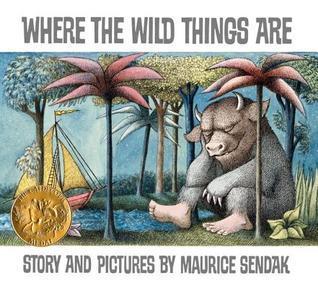
The first winner, in 2003, was Maurice Sendak, but in its short history, Australians have won twice: Sonya Hartnett in 2008 (whose adult novel Golden boys I’ve reviewed) and Shaun Tan in 2011 (whose little book Eric, from Tales of outer suburbia, I’ve reviewed.)

The Chinese paper, People’s Daily Online, reported Hartnett’s win, quoting the award jury as saying:

Sonya Hartnett is one of the major forces for renewal in modern young adult fiction …

and

With psychological depth and a concealed yet palpable anger, she depicts the circumstances of young people without avoiding the darker sides of life. She does so with linguistic virtuosity and a brilliant narrative technique; her works are a source of strength. 

Shaun Tan, Eric cover

Reporting Tan’s win, Claire Armitstead of The Guardian wrote that

Larry Lempert, the chair of the jury, described Tan as “a masterly visual storyteller” whose minutely detailed pictorial narratives touched everyone, regardless of age. “His pictorial worlds constitute a separate universe where nothing is self-evident and anything is possible,” the citation says.

The Guardian article describes the prize as focusing on work with “a profound respect for democratic values and human rights”. That certainly describes Shaun Tan’s work, and ethos, as I know them.

Announcing the British contingent for the 2020 award, The Guardian quoted the jury’s citation for British past-winner Philip Pullman (whose His Dark Materials series Daughter Gums loved) for writing that

stands firmly on the side of young people, ruthlessly questioning authority and proclaiming humanism and the power of love whilst maintaining an optimistic belief in the child even in the darkest of situations

I rest my case – I think!

Some Aussie candidates

As far as I understand it, candidates are nominated by organisations around the world, but the winners are chosen by, quotes Wikipedia, “a jury with broad expertise in international children’s and young adult literature, reading promotion and children’s rights. The 12 members include authors, literary critics and scholars, illustrators and librarians. One member represents Astrid Lindgren’s family.”

Book cover

I’ve already said that Alison Lester has been shortlisted (or, announced as a “candidate” as they call it), but given our strong children’s literature culture here, many Australians have been shortlisted over the years, too many, in fact for me to discuss in detail.

Children’s/young adult author John Marsden was nominated in 2008. I enjoyed reading his books when my children were young, and was impressed by the fearlessness with which he tackled some difficult issues, including domestic violence in his 1987 novel, So much to tell you.

Some authors have been listed multiple times. For example, Jeannie Baker, Ursula Dubosarsky, Susanne Gervay and Margo Lanagan were candidates for the 2020 Award, and are again for 2021. The specialty Indigenous Australian publisher Magabala Books and the Indigenous Literacy Foundation are also in this 2020 and 2021 group.

I know and have read works from some of these writers and organisations, but not all. However, it’s clear how and why Magabala Books and the Indigenous Literacy Foundation would meet the prize’s interest in “democratic values and human rights”.

I could go on finding more Aussies to tell you about, but I think you get the gist. This is an impressive, and significant award in both value and what it is trying to achieve (or so it seems to me).

Are you familiar with it?

Yarra Valley Writers Festival 2020 (Online): New Release Sundays: Robert Dessaix

YVWF Dessaix Logo

Back in May, I attended several sessions of the Yarra Valley Writers Festival (YVWF), a COVID-19 bonus, as most of you know. The Festival also runs two regular events, a weekly New Release Sundays and a monthly Bookclub. I haven’t managed to attend any, until today, which involved Festival Ambassador Michael Veitch speaking with Australian novelist, essayist and journalist, Robert Dessaix. I read Dessaix’s memoir, A mother’s disgrace, before blogging, and I used to love his ABC RN radio shows, Lingua Franca, and Books and writing (which he did for a decade.) Today’s session was about his new book about growing older, The time of our lives: Growing older well.

The session’s promo described the book as “a wise and timely exploration of not just the challenges but also the many possibilities of old age”. Given I have had nonagenarians, and now a centenarian, continuously in my life since 2004, and given my own aging, this topic interested me.

The conversation

Robert Dessaix, The time of our lives: Growing older well Book cover

Michael Veitch started, of course, by introducing Dessaix, telling us that The time of our lives is Dessaix’s 10th book. He described the book as “joyous”, but hard to define – not a novel, not short stories, not a guide. More, he said, a kaleidoscope of impressions, spiritual and intellectual.

Dessaix liked that image, saying that kaleidoscope describes how he lives: he takes shards from what happens around him, shapes them, and hopes “a beautiful pattern will emerge”.

Several themes ran through the conversation, kaleidoscope being one, plus there being “bulwarks” against the ravages of age, the importances of having an inner life, the value of curiosity, and the idea of dance. The book begins with a dance (“Voulez-vous couchez avec moi”!) and ends with a Javanese dance, which nicely encapsulates his transition from loving Europe to being interested in Asia (particularly India and Indonesia.)

Later in the conversation, Veitch mentioned the death of Dessaix’s partner’s mother, Rita. It seems that she was the (or a) major impetus for the book. She was living in a retirement village – “village” being the wrong word Dessaix felt for such homogenous places – until she had the fall that resulted in her moving into aged care. I’ll return to this later …

Veitch read an excerpt from the book describing the inner life. This definition included that it’s like “a cherished piece of music [that is] shaped by our our individual memories”. (This is a tiny part of the full description, so please don’t quote me!) Dessaix said his aim is not to shut out the outer world, but simply to keep certain things in. The inner self is a conversation, and is something that “holds us together against nothingness”. Hmm, that sounds more like the time of Sartre and TS Eliot than now!

“of course, I’m curious”

Anyhow, Veitch moved onto the idea of curiosity, suggesting that it drives the book. Dessaix agreed, saying “of course I’m curious”. We are only here for a short time!

Dessaix went on to say that a major interest as he’s grown older is other people. How do people cope with what the world has served up to them? He loves to visit India, but not for the sights, which are purely background. He likes getting close to people, to understand their lives. Women, he said, are easier to become close to.

During this conversation he said something that spoke to me, which is that coping is “such a difficult thing to do”. We think, he said, that it will be easy. that we follow the path – get a job, marry, having family, etc – and that it will all just fall into place. I remember thinking that in my angsty teen years. But, he said, it’s not like this, “we have to cope every day with something”. He described the world as “an abattoir”, which is a strong image for what is apparently not a dark book.

This led to a discussion of friendship, but there was nothing particularly new here (for me anyhow), so let’s move on. He did, though, comment that the older you get, the things you care about become less. Now he will say what he thinks, and “take negative responses on the chin”. Around here, he commented that in the 1960s, we (and I became a teen in the 1960s so I was with him) believed everything would get better, but that euphoria of has evaporated into nothing. So sad, because we really did think we were on the way to becoming kinder, gentler, fairer.

“a stupid foreginer”

Veitch asked him about his current interest in Asia. Dessaix replied that Europe started to become tedious. He wanted to go somewhere where he would be a blank, “innocent”, so he started with India, and now visits (except this year) Java. Being in a place where he feels “not at home” stimulates him “to have important conversations with himself”.

He admitted that he is granted liberties because he’s “a stupid foreigner”; he feels open to saying things he would not say in Paris or Berlin.

Veitch read another excerpt which, if I got it correctly, described a secret door going from the formal European gardens of Dessaix’s younger days to the more riotous gardens of places like Java. He said he was humbled to discover he had shut out these intricate civilisations and now he’s too old. These are sensual places. Europe preens, and positions itself as sexy, but is not sensual.

“play and discipline”

Dessaix equated the inner life with a dance, the tango, which he said combines “play and discipline”. It is sexy, sensual, beautiful but also demands discipline. His aim is to hone these two – play and discipline.

At this point, the conversation turned to the aforementioned Rita, who died during the writing of the book. She, Dessaix said, did not have an inner life (though how he really knows, I’m not sure). Born in 1922, she, Dessaix suggested, was one of those women “crushed by the men they lived with”. He believes she did not feel she was worthy of having an inner life.

Veitch wondered whether you have to learn how to have an inner life? Dessaix thought yes, but that class is also involved. Rita was told she was a “stupid woman”. She was, he said, bored out of her mind. Dessaix said her aged care home “smelled of boredom”. This could be a judgement from someone not there yet, though I’m sure boredom does exist in aged care. Dessaix doesn’t feel he will be affected because “there is too much going on inside”.

Now, here’s the thing … many aged care places (here in Canberra, anyhow) offer many opportunities for residents to be engaged and mentally active, but it depends on one’s brain staying healthy, and on hearing and sight being good. Father Gums has quite an inner life. I know, because he tells me about the things he thinks about, but time can, nonetheless, hang heavily, because sight and hearing difficulties make it difficult to partake of opportunities offered to feed the mind.

“happiness & contentment”

The discussion turned to the difference between happiness and contentment. Dessaix initially saw little difference but refined his ideas as the book progressed. Fortunately, what he came up with is how I see it, because I’m bothered by the focus on “happiness”. Contentment – a sort of inner comfort – is what we aim for, he said, but it can never be complete, while there is suffering in the world. Happiness, on the other hand, can be complete, but it “drops on you”. There is no mystery to it. As Veitch said, happiness falls on you, while contentment settles on you.

Continuing this theme, Dessaix said that he doesn’t like “tranquility”, preferring “animation”. For this reason he likes the god, Ganesha, who dances! Apparently, grief guru Elizabeth Kubler-Ross said at the end of her life, “I wish I’d danced more”. I love it!

There was more, including a discussion about attitudes to death. Mainly, though, the conversation reiterated in different ways the main theme of continuing to “play” and engage in life actively, and of accepting ageing without fear. Ever the writer, Dessaix equated life with sitting on your own “Persian carpet”: it is beautiful, has repetitions, and is different from the one next to it.

However, he did add an element of reality, which I approved. Life, he said, is about maintenance – your eyes, your ears, your … well, you get the picture.

Dessaix said he found ageing liberating, meaning that things he had hoped for – like the Catholic Church disappearing – won’t happen, and he no longer cares, because he has his inner life. He is more tolerant now, accepting that some things can’t be changed.

As you age, said Dessaix, you can still be happy: there’s a shrinking list of things to be happy about but that happiness can be deeper.

Veitch concluded the session by saying that the book is not a dark book, and is more about life than age. He liked, he said earlier, that the book is called “growing older” not “old”.

Overall, a good session about a book I’d like to read, but it is clear – and he would probably admit it – that Dessaix is a privileged person for whom ageing and an inner life will come easier than for some.

From Yarra Valley Writers Festival 2020 (Online): New Release Sundays
1 November 2020, 4:00 – 5:00 PM
Livestreamed

Julia Baird, Phosphorescence (#BookReview)

Book cover

Much as I love watching Julia Baird on The Drum, and much as Mr Gums and I worried about her multiple cancer diagnoses and her extended journey to recovery over recent years, I’m not sure I would have read her book, Phosphorescence: On awe, wonder and things that sustain you when the world goes dark, if my reading group hadn’t scheduled it. However, we did schedule it, and I did read it. I found many of its ideas affirming or confirming, or, if not those, thought-provoking. In other words, although it feels like a self-help book which I usually avoid, I’m glad I read it.

Why? Her hope, which she shares late in the book, is pretty straightforward:

I wrote this book in the hope that it might be a salve for the weary, as well as a reminder of the mental rafts we can build to keep ourselves afloat, the scraps of beauty that should comfort us, the practices that might sustain us, especially in times of grief, illness, pain, and darkness. (p. 274)

She goes on to say that she understands that the things she’s shared, “stillness, kindness, the sea and ancient trees can hardly be a universal panacea for all the suffering on the planet”. This is true, but there is more to the book. In the Prelude, she describes her intention as being ‘to search for “the light within”, for what makes people shine’. What she shares, I’d say, will speak to each reader differently, according to our personal values, beliefs, and life experiences.

The book is divided into four main parts, focussing in turn on awe, wonder and silence; the importance of accepting and valuing failure and imperfection; the art and value of friendship; and the practice of looking and savouring, of paying attention to our inner strengths. Each of these explores its topic from three perspectives: documentary evidence from researchers, writers, philosophers; anecdotal evidence from people Baird knows or has spoken to; and, of course, her own personal experience.

It is an unusual hybrid of a book. Part book of essays, part memoir, and part quest (for “phosphorescence” or “the light within”), it sometimes felt more like a collection of random thoughts and ideas than the coherent argument I was expecting. This may be partly because several of the essays originated in previously published pieces, whose links are not immediately obvious. However, while this uncertainty was at the back of my mind as I was reading, it didn’t stop me enjoying each essay as it came along, because each had something interesting – and often heartfelt – to offer.

So, for the rest of this post I’m going to share some of the ideas that appealed to me and why.

Japanese thought, friendship, imperfection and doubt

First was the frequency with which she references Japanese thinking and aesthetics – and many of you know how much Mr Gums and I like Japan. The ideas, which are hard to put into Western words so my descriptions are loose, are Shinrin-yoku (or forest-bathing, the physiological/psychological benefits of being in the forest); Yūgen (mysterious or sublime, perhaps, experiences of beauty); Wabi-sabi (beauty in imperfection or transience, often characterised by asymmetry, roughness); Kintsugi/Kintsukuroi (repairing broken pottery visibly, so that the damage becomes part of its history and beauty); and Moai (the groups created among newborns in Okinawa to provide lifelong social support).

It’s not surprising that a nation that is generally known for values like stillness and stoicism, for preferring what novelist Juni’chirō Tanizaki calls “a pensive lustre to a shallow brilliance”, might have ideas relevant to a search for our “inner light”.

Moai is discussed in the section on friendship which is titled “We are walking each other home” (after Ram Dass). If there’s one image from the book that moved me it was this, the idea of “walking each other home”. It speaks of grace, tenderness and care, and of the way I’d like to think my friends, family and I are with each other. Baird’s section on friendship is beautiful.

In another evocatively titled section – “We are all wiggly” – Baird discusses failure and imperfection. Again, as in the other sections, she ranges over a wide range of ideas and examples, which are too numerous to share here, but they include honouring our failures, letting ourselves go (appearance-wise), and appreciating impermanence.

In the fourth section, Baird, a Christian, writes about faith and doubt. While I appreciated her discussion of her faith and what Christianity means to her, I most enjoyed her discussions of other forms of faith, hope and stoicism, and its corollary, doubt. Embracing doubt is valid, she argues, though she adds this aside:

(Although, seriously, if you can’t accept what the vast majority of scientists have to say about climate change, it’s not doubt that is your problem.)

I also enjoyed her exploration of the importance of searching for our “ert” (a term coined by marine biologist Lisa-ann Gershwin to oppose “inertia”).

In this section she also refers to Helen Garner and Tim Winton, Australian writers for whom faith is important, but whose thinking about it is personally rather than institutionally focused.

Setting a “low bar”

However, what struck me most was her articulation of a philosophy that I live by. It is, as described by psychologist Barry Schwartz, that “the secret to happiness is low expectations”. Or, at least, Baird adds, “realistic ones, erring on the low side”.

When it first dawned on me that this was how I managed my life, I was surprised. It didn’t seem to accord with my view of myself as an idealist, but I then realised that the two were not mutually exclusive. I could have high ideals of how we should all behave and treat each other but I could also not expect that we all would (all of the time). I worried that this might sound snooty, or holier than thou, but hoped not. For me, this approach encompasses the realisation that we don’t all come from the same place; we don’t all have the same experiences or values; we have not all had the same opportunities; and, perhaps most critically, many of the things that affect us are out of our control and that, to remain sane, I need to be able to accept them.

As I’ve been writing this post, it’s become clear to me that the book does, in fact, satisfy Baird’s goal of searching for “the light within” – even though, while reading it, I sometimes felt I was losing the overall plot as I followed her down multifarious paths. In retrospect, I’ve decided that this could be the book’s strength. Not only does it offer a variety of experiences and thinking, but it enables us to choose paths most suitable for us, paths that may change depending on our circumstances. I won’t be swimming with giant cuttlefish like Baird, but I’m very happy to bathe in the forest.

Challenge logo

Julia Baird
Phosphorescence: On awe, wonder and things that sustain you when the world goes dark
Sydney: Fourth Estate, 2020
310pp. (including 23 pages of Endnotes)
ISBN: 9781460757154

Monday musings on Australian literature: Supporting genres, 2: Short stories

When I started this little sub-series, I wondered how to describe it – genres or forms or genres and forms? In the end, I chose “genres” on the assumption that we could define it very loosely to include forms. I hope this works. After all, the content is more important than the name!

I decided to make my second topic Short Stories because it’s around now that the relatively new Australian Short Story Festival has been held. You will see from this post, that the way the forms/genres I discuss in this sub-series are supported vary greatly. Short stories, for example, don’t seem to have a focused organisation supporting them the way genres like historical fiction and crime do. However, they are supported in their own ways.

Short story publishers

Although the scuttlebutt is that publishers do not like short stories, there are some who commit to them in an ongoing way, and these are the ones I’m going to share here. Many publishers, though, do, in fact, publish collections, such as, recently, Laura Elvery’s Ordinary matters (by University of Queensland Press) or Carol Lefevre’s Murmurations (by Spinifex Press, my review).

Black Inc’s Best Australian stories series has been published annually for at least two decades, with each edition edited by significant Australian short story writers like Charlotte Wood (2016) and Maxine Beneba Clarke (2017).

Book cover

Margaret River Press published their short story prize anthologies, annually, from 2012 to 2017. I have reviewed a couple of these anthologies, which included competition winners and commended stories. They announced in 2019 that they were “taking a break”. They may be taking a break from this competition, but they are continuing to publish short story collections. I reviewed one only recently, Emily Paull’s Well-behaved women.

Carmel Bird, Dead aviatrix

The wonderfully named Spineless Wonders describe themselves as “a multi-platform publishing company devoted to short, quality fiction produced by Australian writers”. They support “brief fiction in all its forms – from short short stories to novella” including ‘microlit’ which combines microfiction and prose poetry. Most of their publishing is digital, I believe, and I have reviewed Carmel Bird’s foray into digital publishing, The dead aviatrix: Eight short stories.

Other publishers which support short stories in a significant way include MidnightSun Publishing and Kill Your Darlings, which has now published two annual editions (2019 and 2020) of New Australian fiction.

Short story prizes

Back in 2015, I wrote a Monday Musings on short story awards, so I won’t repeat that here. Please check it out for awards like the ABR Elizabeth Jolley Short Story Prize and the Margaret River Short Story Competition. But, there are some new ones established since then, and genre ones I didn’t mention, that I’d like to share here.

  • Carmel Bird Digital Literary Award: Established in 2018 –  named for Carmel Bird (who has appeared on my blog several times), hosted by Spineless Wonders and supported by the Copyright Agency – this award is for short story collections up to 30,000 words in length. The stories can be in any fiction genre, with all prose forms being acceptable, including non-fiction prose. The award includes cash prizes and world-wide digital publication of the three winning entries. Lisa (ANZLitLovers) has posted on this award.
  • Scarlet Stiletto Awards: Established in 1994 by Sisters in Crime (who will appear again when I focus on crime), this national award is for “short stories, written by Australian women and featuring a strong female protagonist”. Its purpose was “to support and unearth new talent”. Past winners have included writers who have appeared here – Cate Kennedy, Angela Savage – and a young woman who went to school with Daughter Gums, Anna Snoekstra. This award is actually a suite of awards comprising several awards – such as “Best New Writer”, “Best ‘Body in the Library'”, “Best Foreign Linguistics Story”, “Best Story with a Disabled Protagonist”, to name a few.

There is a comprehensive list of short story competitions available in 2020 on the Australian Writers Centre site, which underscores how much support there really is for this oft-maligned form!

Australian Short Story Festival

As I said at the beginning, the reason I chose Short Stories as my second topic for this sub-series is this festival. Founded by Anna Solding (MidnightSun Publishing) and Caroline Wood (Margaret River Press) in 2016, it’s an annual festival celebrating short stories in written and spoken forms. It aims to connect Australian and international short story writers, storytellers, publishers, literary magazine editors, and readers. It’s apparently the first national event to focus exclusively on the short story.

The first festivals were held in Perth – I watched the social media campaigns with great envy! In 2019 it was held in Melbourne. Unfortunately, due to COVID-19, the 2020 festival, scheduled for Adelaide, was cancelled because they felt that “online festival experiences can never quite replicate the immediacy of the face-to-face festival”. This is a festival I plan to attend one day.

Book cover

For those of you interested in short story recommendations, check out my reviews of short stories or look at Readings blog post on Short Stories (written to align with the 2019 Australian Short Story Festival). One of the books recommended is Chris Womersley’s A lovely and terrible thing, which I’ve reviewed here, so I’ll conclude this little post with it!

Do you like short stories? Why or why not?

Book (Re)Launch: Sara Dowse’s West Block


Sara Dowse West Block

Way back when, I read Sara Dowse’s debut 1983-published novel West Block. It ticked all the boxes – it was by a woman, by a feminist, was set in Canberra (a rare thing), and was about the Public Service within which I also worked. I enjoyed it immensely and have often wanted to re-read it. I was therefore thrilled to hear that it was being re-published – and with a new introduction by Dowse.

This new edition, by For Pity Sake Publishing who published Dowse’s latest novel, As the lonely fly (my review), was virtually launched at a COVID-19-determined Zoom Event today.

The launch …

The launch comprised a conversation between Dowse and Michele Seminara who is a poet and managing editor at the Canberra-founded creative arts journal Verity La.

Sara Dowse, West Block

Seminara commenced by describing Dowse as a “legend of Australian literature”. She was also one of the Canberra Seven, about whom I have written before. The conversation, though, focused mostly on the book’s subject matter …

West Block, for the non-Canberrans here, is one of the original buildings in our Parliamentary Triangle. Built in 1926 it, and East Block, flanked what is now known as Old Parliament House. These buildings were the home of the public service.

So, Dowse’s novel, West Block, is about the bureaucracy. From 1974-1977, Dowse was the inaugural head of the women’s affairs section established to support PM Gough Whitlam’s first women’s adviser, Elizabeth Reid. Dowse became, she believed, the first femocrat.

Dowse spoke about her intentions for the novel which she started writing a couple of years after the 1975 Dismissal. She wanted to tell the story of what happened and how public servants coped in the aftermath. She wanted it not to be “just” a women’s story but a story about what women saw, about how women perceived government. “I wanted to nail them”, Dowse said, meaning she wanted to write about the male world from a feminist perspective.

The conversation, not surprisingly, also covered the politics then and now, particularly in terms of what was achieved and what has lasted. Dowse, describing the times as “unbelievably exciting”, talked about their focus being issues like child care. She said many reforms were introduced. Some were “tweaked” by the Hawke government, but they’ve been gradually whittled away since the Coalition returned to power.

She talked about the Australian federal public service, and of admiring its commitment to serving the people. She saw this public-good oriented value as being distinctively Australian, including amongst conservatives. (She couldn’t understand the antipathy with which Australians would speak of Canberra, their national capital.) However, she said, much of this value has been lost since PM John Howard turned governing into a business-style, economic rationalist, model. She talked about how private sector inflated salaries are being given as a reason why you can’t get good people into the public service, but her belief is that good people who know that the measure of their worth is not purely monetary will still work in the public service. (They’re not poor, in any event, she said.)

Dowse also told us that the main character, Cassie, is based on her, though Cassie is Australian – and unlike her, has red hair and green eyes! The joy of being a writer is that you can create characters you’d like to be! Cassie, like Dowse was, is also a single Mum juggling work and parenthood.

Seminara asked Dowse about her book’s structure with its five chapters focusing on different individuals. Dowse said she was influenced by two John Dos Passos works, Manhattan transfer and the USA trilogy. She was inspired by his telling a big story through overlapping individual stories, though he also married fiction with nonfiction which she didn’t do.

A point that came up a few times through the conversation related to the publishing and literary environment in Australia at the time she was publishing this book. For example, a fiction-nonfiction blend would not have been accepted then (though it would now.) She was also inspired by Dos Passos’ experimental writing, but that too she had to tone down for Penguin to publish the work. Upon the book’s release, one of the common questions posed about it was “is it a novel or is it stories?” This question is still with us, I believe, though writers are increasingly playing with this form (such as, most recently on my blog, Carol Lefevre’s Murmurations, my review.)

Seminara commented that she loves Dowse’s characters, with their commitment to public interest. They are, she said, “admirable as characters, flawed as people.” She also spoke of how Dowse had managed to make art out of traditionally boring subject matter. More art is now being made of such subjects, but Dowse, she said, was one of the first here to put humanity and drama into it.

Dowse briefly talked about this new edition, which was suggested by publisher Jen McDonald. Dowse said that this was her apprentice novel, and wondered how she would face having it out in the world again. However, she did not want a word changed. It had, she said, to live on its record. I am greatly looking forward to reading it again – and I fully expect it to appeal to me all over again, albeit with older eyes and understanding of how the world works.

Q&A

Dowse also read from the book, and answered a couple of emailed-in questions:

  • John Dos Passos’ influence. Dos Passos, she said, wanted to deal with the coming of mass society, and he did it by oscillating within a group of characters to build up a picture of society. This encompassed both the personal and the political, which, she reminded us, had been the feminists’ mantra: the personal is the political.
  • Susan Ryan‘s recent death and what has been left unfulfilled by it. Dowse expressed great sadness at Ryan’s death, as they had worked closely together. She said young girls now have the right to big dreams but there are still barriers. She believes the feminist voice has been rekindled through awareness of these barriers, injustices, domestic violence, and the ongoing childcare issue. While many things that were started under Whitlam have been truncated, whittled down, Ryan had achieved much, she said, including getting the ALP to accept Affirmative Action.

This was an excellent launch, and I’m glad it was on at a time that I could make. Do consider reading the book. It has much to offer.

Launch of West Block new edition
Online Zoom event by Barbie Robinson of Living Arts Canberra
25 October 2020

Delicious descriptions: Gay Lynch on place, in colonial South Australia

Book cover

In my recent post on Gay Lynch’s historical fiction novel, Unsettled, I spent so much time writing about it, that I didn’t share any quotes as I usually do, so I’m using a Delicious Descriptions post to share just a couple of descriptions of the setting, which is around Gambierton/Mt Gambier in South Australia.

In one scene, Rosanna is looking for a lost child – a deft use by Lynch of the “lost child” motif common in colonial Australian literature – and comes across “a formidable rock-face … pigface flowers rioting across its surface.”

Her head spins when she finally looks down, searching the red rings like the contours of cut gum that encircle the unbroken walls of the crater. A wagtail aggravates a flock of swallows, resting on their tails and diving off, riding invisible currents over the startling void. Not a flutter of childish frilly clothing. Father Woods and Skelly have long conversations about the Pleistocene period when molten lava cooled forming the solid parts of the south-east landscape and great seas retreated, leaving behind corals and small crustacaens. Moorecke has told Rosanna Booandik stories about giant Craitbul’s cooking mound, for that is what she calls it.

In this little excerpt Lynch not only describes the physical landscape, but she conveys Western and Indigenous understandings of it. She doesn’t presume to tell Indigenous stories but she lets us know that other stories about the land exist. She also conveys here the relationship Father Julian Tenison-Woods (a real historical character) and Rosanna’s brother, Skelly, have concerning exploring and documenting the natural environment.

My second choice describes a ride Rosanna takes, with Moorecke, to the shipwrecked Admella (which many of you know was also featured in Jane Rawson’s 2017 novel From the wreck):

Moorecke directs Rosanna due west. Up to his girth in water, skirting sinkholes, Lucifer crosses deep bogs. They pass through long grasses, scrub and stands of black-wood. He takes logs in his stride with Moorecke jolting like a post office package, hands on his haunches, and Rosanna standing on the balls of her toes in the stirrups. They curve their backs against the stiff salt wind like crooked trees–like carratum, Moorecke says. A swamp harrier drops before them and screams as it rises, a scrabbling creature dangling from its talons.

White mist settles like a ration-blanket around their shoulders. They approach the sea, making their way with caution past sink-holes and through limestone-littered clearings. Sea heath and spear grass cling to the dunes. Lucifer begins to flag. Fingers stiff with cold, Rosanna lengthens his reins. The hollow roar of the sea reminds her that she has seen these limestone cliffs undercut by ferocious waves on a ride with Edwin. ‘I know this place. There is a spring.’

‘No stopping here.’ Moorecke lifts Rosanna’s hair to bellow in her ear. ‘Blackfellas’ caves’.

Once again the landscape is described, but Lynch imbues it with a disturbing sense to prepare us for the horror they are about to confront. Again, too, there is reference to Indigenous culture, and the implication that some places are sacred and should not be visited. In such ways do historical novelists show rather than didactically tell the things they want us to understand.

Any thoughts?

Gay Lynch, Unsettled, ligatu.re, 2019.

Monday musings on Australian literature: Modern sensibilities and Historical fiction

Book cover

Following last week’s Monday Musings, and my recent review of Gay Lynch’s historical novel, Unsettled, I thought it might be worth teasing out the fraught issue of “modern sensibilities” in this genre.

By teasing out, I mean that this will not be a thorough analysis of the topic so much as my sharing a few ideas and thoughts for you to respond to with your own.

I was inspired, of course, by Bill (The Australian Legend) – who wouldn’t be! – when he commented on my review of Unsettled that “I’m glad that she included the Boandik people and that they had some input. I suspect though that Rosanna has modern sensibilities when it comes to Indigenous relations.”

I could research the journals and letters of women at the time to see what discernment there might have been among those women, but most likely women from oppressed groups like Rosanna’s are not well represented in the papers held in libraries and archives. For a start, many may not have been able to read, though Rosanna could. Those who could read would have, like Rosanna, struggled to afford paper. Writing journals and letters was probably rare for them.

Consequently, I’ve decided to tackle the wider issue, rather than try to prove this particular one.

Why do people write historical fiction? I quoted HNSA in last week’s post as saying that historical fiction presents “an authentic world which can enrich a reader’s understanding of real historical personages, eras and events”.

Lynch made it clear in her Acknowledgements, as I wrote in my post, that she wanted to “to materialise Lynch girls” who were absent in all meaningful ways from the record. She noted that their “lack of documentation and therefore their invisibility reflect their early settlement status on the frontier.” So, how to do this without documentation? And how are we to assess this?

Let’s start with what we want from historical fiction? What I want is light to be thrown on issues relevant to now. Sure, stories can be fun for their own sake, but I like my stories to have something more. I want to be challenged to think about how things were, and how they affect or reflect how things are. In other words, I want to get at the “truth” of history. The thing of course is that the “truth” of history does change with the times, whether we like it or not.

Right now, in Australia, historical “truth” includes issues like the invisibility and powerlessness of women, and the dispossession of Indigenous people. It hasn’t always been so. There was a time when historical “truth” focused on what many of us now view as the ANZAC myth. There was a time when the story of early settlement was only about the hardship faced by and the achievements of the white settlers. And, so on … history may be based on facts but how those facts are interpreted, which facts are interpreted, who is interpreting them and why, makes all the difference.

In a past post, I included the following from novelist Jose Saramago’s The Elephant’s Journey (2008):

It must be said that history is always selective, and discriminatory too, selecting from life only what society deems to be historical and scorning the rest, which is precisely where we might find the true explanation of facts, of things, of wretched reality itself. In truth, I say to you, it is better to be a novelist, a fiction writer, a liar.

The novelist, then, can explore “truths” that society may scorn (reject) as not being “historical” or, I would add, that is not readily available on the historical record. However, how do you convey historical “truths” in situations where they come with a lack of record, with minimal evidence or facts. If you are powerless and dispossessed you are unlikely to leave a verifiable mark. How, in this circumstance, do you convince your readers that your characters and/or story are authentic as well as true?

Authors, I’d argue, have to start by presenting the times and characters in ways that feel authentic; they have to get enough of the “facts” right that we are happy to go along with what might be less easy to verify. Then, they have to present an interpretation of the facts that makes sense according to what we believe or know to be true.

I have been interested in this issue for some time, and have shared on this blog the thoughts of various novelists expressed at events I’ve attended. I thought I’d reiterate some here.

Robyn Cadwallader, The anchoress

Robyn Cadwallader, who has written two mediaeval historical novels, The anchoress (my review) and Book of colours (my review), spoke of her interest in ordinary women and how they “managed to find value in their lives within the constraints” of their times. She spoke of the challenges of making these women’s gains and achievement believable for those times, of not wanting to “damage” them “by presenting them differently from what they are”.

Rachel Seiffert, who has written historical fiction about the Third Reich, spoke about how her character in A boy in winter doesn’t know the Holocaust is proceeding. Her challenge was to show that he had to make choices not knowing the full story, which the readers do know.

(Seiffert’s point here is relevant to the idea that we should only read fiction written at the time it is about. As she says, people at the time do not “know” their whole time. They cannot therefore provide the perspective we gain in retrospect, and which historians and historical novelists offer us.)

Roslyn Russell, Maria Returns Barbados to Mansfield Park

Historian and historical fiction novelist (Maria returns: Barbados to Mansfield Park), Ros Russell, spoke about ethical responsibilities, saying that historians must not distort what they find. They must be true to their sources, but she always looks out for things that might say something different to the prevailing narrative.

In the end, the issue of “modern sensibility”, particularly where the author has rendered the period authentically, comes down to the reader. We have to decide whether that authenticity includes the novel’s characters sounding just like prevailing views of their era, or whether we accept that there were always people who “bucked” that prevailing view.

As you probably know, I’m with the latter group. So, if I’m happy with the overall authenticity, I’m prepared to give novelists the benefit of the doubt if their characters express views that seem to be “modern”. So-called “modern” ideas don’t pop out of nowhere, after all …

Now, over to you … where do you stand on this issue?

Gay Lynch, Unsettled (#BookReview)

Coincidentally, my first review after this week’s Monday Musings on historical fiction happens to be a work of historical fiction, Gay Lynch’s cleverly titled Unsettled. Consequently, I’m going to start there, that is, talking about the form.

Well, more or less, because I should at least give you a sense of its subject. It is set primarily in South Australia’s Gambierton (later Mt Gambier) from the 1859 to 1880, with most of the action taking place in the 1860s. It’s the story of an Irish family, the Lynches, who migrated to Australia in 1848. The Lynches, as you might have guessed from the author’s name, are based on her husband’s family. Unsettled explores their story primarily through two fictional characters, Rosanna and her younger brother Skelly.

… in the spirit of the story

Which brings me to the genre. In her Acknowledgements, Lynch provides some useful insights into the book. Firstly, regarding intention, she says that she specifically wanted “to materialise Lynch girls, absent from every family anecdote and official documents, church, state and school, apart from their birth documents … the girls’ lack of documentation and therefore their invisibility reflect their early settlement status on the frontier.” The challenge, of course, in “materialising” invisible characters from the past is to make them real, and avoid anachronism. This is difficult when records are few, but I think there are enough records of frontier women in general to validate Lynch’s conception here.

Lynch also addresses where she has changed Lynch family “facts”, such as their and their employers’ names. She also says that her two main characters, Rosanna and Skelly, “exist only in [her] imagination”, but “her lived experience as Lynch wife and mother, verifiable historical events, and historical Lynch antecedents” offered her “the connective tissue” needed for their fictional lives.

She goes on to say that “in the spirit of historical fiction” she has kept close to official records so that the characters drawn from life are as “true” as she can make them, but that “in the spirit of story, some events may not be verifiable”. That, of course, is historical fiction; it’s about fleshing out lives and times with story, where the facts are not known or are minimal.

Finally, she addresses her inclusion of the local Boandik people, an issue we often discuss here. She writes that they “tell their own South-East story – they still live on that once dangerous frontier, on land they never ceded – of their attempted eviction and genocide”. She says she “benefitted from knowledge shared by Boandik custodian Ken Jones”, conversed “with Boandik linguist linguist David Moon”, and was supported in addressing “important questions about voice and Indigenous historicity”. As I’ve said before, it’s really up to the Boandik people to say whether they agree with their representation, but Lynch has, it seems, done the right thing: she has included them in her narrative (in an appropriate way) and has conferred with the people she ought about doing so.

I’ve spent a bit of time on this I know, but it’s important with historical fiction to be very clear about what it is we are reading. I’m not an expert in South Australian settler history, but I feel Lynch has provided me with enough here, in addition to the knowledge I do have, to reassure me that her story is a valid one, so let’s get to that …

“now that the country is settled”

Nearly halfway through the novel, Rosanna converses with her employer, the hard, English station-owner, Mr Ashby. He is searching for some local Indigenous people who, he believes, have been “filching” from him. Rosanna, who has befriended the young local woman, Moorecke, tells him that Moorecke “belongs on this land”. She adds, hoping to throw him “off the scent”, that she rarely sees “Blacks, now that the the country is settled.”

Here, and throughout the novel, Lynch layers meanings in brief exchanges. Implied in this little scene, for example, are multiple power imbalances – between settlers and the original inhabitants, between the landowning English and the oppressed Irish, and between man and woman. And of course, overlaying this is the fraught idea of being “settled” and all its connotations, political and personal, physical and emotional. “Now that the country is settled” implies of course that it was “unsettled” before. This novel, with its title, “Unsettled”, keeps this foundational wound front and centre in our minds, which, dare I say, “unsettles” us.

This layering of meaning is one of the reasons I found the book an enjoyable read, because I enjoy such thoughtful, provocative writing, but the enjoyment here is compounded by the characters, particularly Rosanna and Skelly. Both are well individualised, with the novel’s third person perspective shifting mainly between them.

Over the course of the novel, Rosanna is our guide to what happens on the frontier. She works for the landowning Ashbys; she spends time with and learns from Moorecke of the Boandik people; she rides with the poet Adam Lindsay Gordon and confesses to Father Tenison Woods. She falls in love naively, makes many mistakes big and small, can be mean and tender, but she is a warm, courageous young woman who is determined to make her way authentically through a world which pays little attention to the dreams, let alone rights, of women. A world, in fact, in which “men are dangerous creatures if thwarted”.

Skelly, her sensitive and somewhat frail younger brother, is both foil and support to Rosanna. Their relationship contains the typical sibling tensions, but love and loyalty underpin it. It is what happens to Skelly at a school in Melbourne that propels Rosanna’s actions which provide the novel’s opening drama.

As is common in historical fiction, Lynch uses a family drama to drive the narrative forward and engage our emotions and interest. Lynch also imbues her story with references to both Australian and English literature of the times. For keen-reader Rosanna, Anthony Trollope’s Irish heroine Feemy Macdermot, from his first novel The Macdermots of Ballycloran, offers lessons to heed.

The main work that threads through the novel, however, is Edward Geoghegan’s play The Hibernian father, which was a popularly performed tragedy in mid- to late-nineteenth century Australia. It tells a tragic story of the Lynches of Galway, whence our own Lynches had come. The tragedy distresses our young Lynches, and threatens to destabilise them as they struggle to forge their lives without failing in the same catastrophic way. Rosanna’s father Garrick Lynch reassures his family that “it’s an ancient story … from bloody times”, but the irony is that “bloody times” are still with them.

In the end, all of this has one goal, to serve the real point of Lynch’s story, the complicated politics of settlement, oppression and dispossession, the injustices of colonialism. As Rosanna becomes aware, during an interaction with her employer Mrs Ashby, “living on the edge of civilisation unsettles everyone”. Gay Lynch’s book does the same – and that, I’m sure, was her intent.

Challenge logo

Gay Lynch
Unsettled
Balmain: ligatu.re, 2019
421pp.
ISBN: 9781925883237

(Review copy courtesy the author.)

Monday musings on Australian literature: Supporting genres, 1: Historical fiction

While my prime focus here is literary and classic fiction, I do also delve into other forms (like biography, autobiography/memoirs, poetry, history), and other genres (like crime, dystopian fiction, and historical fiction). So, I’ve decided to start a little MM subseries on other genres and forms, starting with historical fiction. My aim is less to analyse the genre itself, than to share some of the ways in which it is supported in Australia.

I’m starting with historical fiction because of the recently announced longlist for the inaugural ARA Historical Novel Prize, which Lisa (ANZLitLovers) posted on recently. Let’s start with the prize’s home, the …

Historical Novel Society of Australasia (HNSA)

HNRA describes itself as

the third arm of the international Historical Novel Society, and is recognised as the home of the historical fiction genre in Australasia. The Society promotes the writing, reading and publication of historical fiction … Our events showcase the best literary talent and enable readers, writers and publishing professionals to celebrate the genre.

They consider historical fiction

to be important to both the entertainment and education of readers as it contributes to the knowledge of the reader and provides a valid perspective beyond the viewpoint of the historian. Both the imagination and dedication of historical novelists present an authentic world which can enrich a reader’s understanding of real historical personages, eras and events.

The secret River cover

While I agree that there is an educative aspect, we readers need to appreciate what sort of education we’re getting. We can’t expect certifiable facts but can expect insight into how things were or might have been. My favourite historical fiction, though, does more; it explores the past in a way that throws light on the present. I find the statement that historical fiction provides “a valid perspective beyond the viewpoint of the historian” interesting in light of The secret river controversy. Beyond? I think alongside might be better?

Anyhow, on the ARA Historical Fiction Prize page, they define historical fiction. It:

  • means novels written at least 50 years after the events described, or written by someone who was not alive at the time of the events and who therefore approaches them only by research.
  • can include historical mystery, historical romance, historical fantasy, and historical fiction written for children and young adults; and also alternate history, pseudo histories, time-slip novels, multiple-time novels, and parallel narrative novels with flexibility to crossover between eras stretching from 50 years or more in the past until contemporary times.

HNSA has now held three biennial conferences – in 2015, 2017 and 2019. They also offer a suite of prizes/awards of which the new ARA Historical Novel Prize is “the crown jewel”. The others are the ARA HNSA Short Story Contest and the TCW HNSA First Pages Pitch Contest. They also offered a Colleen McCullough Residency on Norfolk Island in 2019, and this year instituted the Elizabeth Jane Corbett Mentorship for Young Adult historical novelists (that is, for previously unpublished writers of young adult fiction, not for writers who are young adults1)

ARA Historical Novel Prize

Nigel Featherstone, Bodies of men

This prize, which is supported (fascinatingly) by a building and facilities company, the ARA Group, is worth $60,000, with $50,000 going to the winner, and $5,000 each to two short-listed writers. It is open to Australian and New Zealand writers. The longlist was announced on 6 October, with the shortlist of 3 books to be announced 28 October, and the winner on 10 November.

The inaugural 2020 longlist is:

  • Sienna Brown’s Master of my fate 
  • Nigel Featherstone’s Bodies of men (my review)
  • Catherine Jinks’ Shepherd
  • Mirandi Riwoe’s Stone Sky Gold Mountain (want to read, Theresa’s review)
  • Dominic Smith’s The Electric Hotel (my review)
  • Christos Tsiolkas’ Damascus (my review)
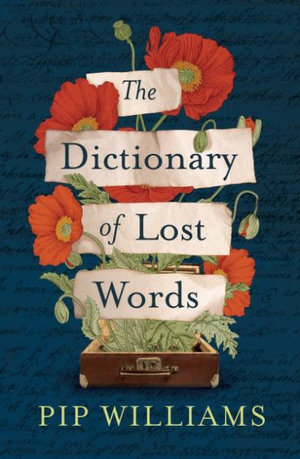
  • Pip Williams’ The Dictionary of lost words (on my TBR, Lisa’s review)
  • Tara June Winch’s The yield (my review)

Surprisingly for me, I have read half of them!

HNSA Conferences

In 2019, the conference included a full-day academic stream, focusing on the overall conference theme of History repeats. There were three panels through the day: Genre and gender; Genre and the discourse of history; and War and conflict. Abstracts of the papers can be found at the link above.

Jessica Anderson, The commandant Book cover

One of the papers was “‘the truth of the book’: Jessica Anderson’s The Commandant as a work of biofiction, Merran Williams“. I have reviewed this book, which is Anderson’s only historical fiction work. In her abstract, Williams says that “Historical novels have the ability to provide unique insights into untold histories” and that

Anderson subverted the traditional biofiction of a man of importance by feminising the masculine history of Patrick Logan and the Moreton Bay convict settlement and telling much of his story from the point-of-view of the soldiers’ female family members. I focus on her fiercely forensic approach to historical research and how she applied this to her writing practice to produce a work of historical biofiction that shines a light on a foundational period of Australian history.

This is a stream of the conference I’d love to attend if it ever came my way.

AWW Challenge

Challenge logo

Many of you know that I have been involved in the Australian Women Writers Challenge pretty much from its inception. It collects on-line reviews by contributors of any books – all forms and genres – written by Australian women. At regular intervals, mostly monthly or bimonthly, volunteers post round-ups of reviews contributed in the previous period for specific genres/forms. Our current Historical Fiction volunteer is Theresa Smith (Theresa Smith Writes.)

You can find her Historical Fiction round-ups at the AWW site. The Books Reviewed search page will find all contributors’ reviews posted to the challenge. The site comprises an excellent resource for reviews on books published recently and in the past, because our reviewers read widely.

Other

The Nib Literary Award could be seen to support this genre in a broad way, because, although its winners tend to be non-fiction, its aims are to celebrate excellence in research, including in fiction.

Courtney Collins, The burial

There is also an interesting international site called historicalnovels.info which devotes a page to Australasia. It’s uncomfortably simplistic in its understanding, offering this about Indigenous Australians regarding historical fiction: “Native Australians, dubbed Aborigines by European settlers, did not fare well as colonization spread, but modern novelists recognize the positive aspects of their culture”. However, for readers looking for a list of Aussie historical fiction books, there’s something here. The list includes classic and contemporary novels – including writers like Eleanor Dark and Brian Castro! I learnt a few things, including that Courtney Collins’ The burial (my review) was published in the USA as The untold.

I’d love to hear what you think about historical fiction – even you Bill! – particularly regarding whether you like and why or why not?

Bill curates: Monday musings on Indigenous Australian writers

Bill curates is an occasional series where I delve into Sue’s vast archive, stretching back to May 2009, and choose a post for us to revisit.

The feature of Whispering Gums that we all most look forward to is Monday Musings. But when did they start? It took me a while to locate – WordPress really needs the ability to scroll through post Titles by Date – but it turns out Sue put up the first one on 9 Aug. 2010 (here). Check it out, it’s only short, not much more than a statement of intent. No. 2 (here) covers 5 Australian novels, of which two would have to be my all time least favourite. So I’ve chosen for today, No. 3, from 23 Aug. 2009.
_______________________

My original post titled: “Monday musings on Australian literature: Indigenous writers”

Tara June Winch

Tara June Winch (Courtesy: Friend of subject, via Wikipedia, using CC-BY-SA 3.0)

It’s important I think that my third post be on our indigenous writers. Again it’s going to be pretty idiosyncratic as my reading in this area has been scattered, not for lack of interest so much as the old “so many books” issue that we all know only too well. I was first introduced to indigenous writing at high school where I had two inspirational teachers who encouraged us to think seriously about human rights. It was then that I bought Oodgeroo Noonuccal’s (or Kath Walker as she was then) book of poetry, My people.

In my first Monday Musings post, I mentioned David Unaipon who is generally recognised as the first published indigenous Australian author. However, it was Oodgeroo Noonuccal, with her book of poetry, We are going (1964), who heralded contemporary indigenous Australian writing. So let’s start with her.

Oodgeroo Noonuccal My people (1970, poetry)

Noonuccal’s poetry is largely political. She wrote to right the wrongs which indigenous Australians confronted every day: the racism, the white-colonial-slanted history, the lack of land rights, and so on. Much of her poetry is therefore strong but accessible “protest” poetry. My people collects poems from her first two books and includes new works as well. Here are just a few lines to give you a sense of what she was about:

… Do not ask of us
To be deserters, to disown our mother,
To change the unchangeable.
The gum cannot be trained into an oak.
(from “Assimilaton – No!”)

Gumtree in the city street,
Hard bitumen around your feet,
Rather you should be
In the cool world of leafy forest walls
And wild bird calls.
(from “Municipal gum”)

I love the way she uses gums to represent her people – who they are, where they should be. Some of the poems are angry, some are conciliatory, and others celebrate her culture. I loved the book then, and I still value it now.

Sally Morgan My place (1987, memoir)

The next book in my collection, chronologically speaking, is Sally Morgan’s memoir My place. Sally Morgan is primarily an artist but her memoir became a best seller when it was first published. In it she chronicles how she discovered at the age of 15 years old that her colour did not come from an Indian but  an Aboriginal background, and her subsequent investigations into her family’s rather controversial story. I don’t want to go into the controversy here. Rather, the point I’d like to make is her story-telling: it is warm, funny, and thoroughly engaging.

Women of the centre (1990, short life-stories); Black chicks talking (2002, short life-stories produced in film, book, theatre and art)

Telling stories is an intrinsic part of Indigenous Australian culture. It’s how traditions have been passed on for 40,000 years or more. It’s probably simplistic to draw parallels between traditional story-telling and the telling of stories in general. After all, we all love stories. Nonetheless it is certainly clear from the little experience I’ve had and the reading I’ve done, that story-telling is an intrinsic part of Indigenous Australian culture and is becoming an important way of sharing their experience with the rest of us. This was powerfully done in Bringing them home: The stolen generation report of 1997 which contained not only the history of the separation of children from their parents and recommendations for the future, but many many first person stories which drove the drier points home.

Two books that I’ve read which contain personal stories by indigenous women are Women of the centre and Black chicks talking. The introduction to the former states that its aim is to help we non-Aboriginal Australian readers to understand lives that are so different from our own and “to provide personal written histories for the descendants of the women involved”. This latter is becoming an urgent issue in indigenous communities today – the capturing of story before more is lost. In Black chicks talking Leah Purcell interviews nine Aboriginal woman – some urban, some rural, some well-known, some not – about their lives. Another wonderful read.

Life stories/memoirs represent, in fact, a significant component of indigenous literature. Another work worth mentioning, though I’ve only seen the film and not read the book (shame on me!), is Doris Pilkington’s “stolen generation” story of her mother’s capture and subsequent escape involving an astonishing trek home, Follow the Rabbit-Proof Fence.

Alexis Wright Carpentaria (2006); Tara June Winch Swallow the air (2006); Marie Munkara Every secret thing (2009)

Finally, a brief mention of three recent fictional works, two of which I’m ashamed to say are still in my TBR pile. These are the two David Unaipon Award winners by Tara June Winch (reviewed since then) and Marie Munkara (reviewed since then). If you are interested in the latter, please check Musings of a Literary Dilettante’s review.

I have though read Alexis Wright’s Miles Franklin Award-winning Carpentaria (my post). It’s set in a fictitious place, tellingly called Desperance, in northern Australia. Its focus is colonialism (ie European invasion of the land), and conflict within black communities about how to respond. To explore these, Wright touches on lot of ground, including land rights, deaths in custody, mining rights, boat people, and petrol sniffing to name just a few. She flips between the real and the magical, she uses language that is image-rich and often playful, and she tells some very funny stories. It’s a big, wild and rather complex read that manages in the end to be hopeful despite itself.

This is just a small introduction to the wealth of Australia’s indigenous literature. It won’t be the last time I write about it. I will also in the future post on white Australians who have written about Aboriginal Australians, writers like Thomas Keneally who wrote The chant of Jimmie Blacksmith but who now says he wouldn’t presume to write in the voice of an Indigenous Australian. A vexed question really. I believe there should be no “rules” for writers of fiction and yet, sometimes perhaps, it is best not to appropriate voices not your own. But that is a question for another day…

Meanwhile, back to Alexis Wright – and stories:

Old stories circulating around the Pricklebush were full of the utmost intrigues concerning the world. Legends of the sea were told in instalments every time you walked in the door of some old person’s house. Stories lasted months on end, and if you did not visit often, you would never know how the story ended. (Carpentaria, p. 479)

____________________

I’m not surprised – and am glad – that Bill chose this one from my early Monday Musings, because this is an area of Australian literature that is dear to his and my hearts (and to Lisa’s who runs her Indigenous Literature Week each year.) And phew, I’m glad I’ve since read those two novels that were on my TBR back there in 2010.

[You can find all my Monday Musings by clicking on the Monday Musings category, or this link]

Would you, wherever you are, like to recommend any indigenous writers?