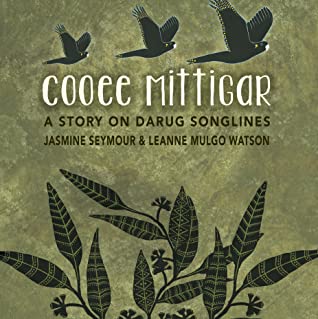
Jasmine Seymour and Leanne Mulgo Watson, Cooee mittigar: A story on Darug songlines (#BookReview)

Recently, on a bit of a whim, I bought two books from the Indigenous Australian publishing company, Magabala Books. They were the younger readers-young adult novel, Black Cockatoo (my review), which had been shortlisted for a few awards, and this picture book, Cooee mittigar, which had just won the 2020 Prime Minister’s Literary Award for Children’s Fiction. It is described on the Awards website as “introducing children and adults-alike to Darug ‘Nura’ (Country) and language”. So, a book for children and adults. I’m in …

The book tells the story of the seasons*, as understood or experienced by Sydney’s Darug people, through the eyes of the black swan, Mulgo. It is a perfect example of the generosity of Indigenous Australians. Despite being dispossessed of their country, despite being repeatedly discounted as having anything important to contribute, despite being overlooked or specifically excepted by policy-makers, they come back again and again, willing to share their knowledge – and, particularly, their language – when there’s a real risk that it too might be taken from them. They seem to understand, when so many don’t, that it’s only by sharing and communicating with each other our values and belief systems that we can mature as a nation.

And so, we have this beautiful hardback, written and illustrated by two Darug women, Jasmine Seymour and Leanne Mulgo Watson. Like many recent books I’ve read by Indigenous Australian writers, it incorporates Indigenous – Darug here, of course – language into the story. The technique they use is, in two-page spreads, to tell the story using English and Darug words, immmediately followed (on the same spread) by a glossary for the Darug words used. So, for example, we have:

In the time of yuruka and burara
Elders tell us not to hunt the buru.

yuruku – hot
burara – dry
buru – kangaroo

The glossary words are presented in slightly smaller but still clear text. The illustrations for the page, as you’d expect in a picture book, help convey the meaning. This spread, for example, is dominated by hot-dry looking yellows and tans, with two kangaroos lazing in the grass.

But now, let’s go back to the beginning. The book starts with a welcome: “Warami mittigar. Welcome friend. … Cooee mittigar. Come here friend.” We are then introduced to our guide, the afore-mentioned black swan, Mulgo, who tells us that she will teach us “about Darug life” – and off we go, starting, logically, with an introduction to Biami (dreaming ancestor spirit) and the idea of Darug dreaming and the songlines which tell the story of “Nura” or country. From here, we move through the seasons, starting when the “the darrabura [day] grows long and the weather warms up”. Each step of the way, we are told what to look for, what might be happening, what we can do, with respect to country and the natural environment, such as:

During dagara, gulgadya will bloom –
ready to be turned into spears.

dagara – frost
gulgadya – grasstree

The story ends with the gentle request to “tread softly on our lands”.

The language flows simply – though, as a non-indigenous reader, I’m sure it would take me a few readings to feel comfortable enough with the words to make it sound good aloud. Leanne Mulgo Watson’s illustrations draw mostly from greens, blues and yellows, but with touches of other hues. They are gorgeously evocative of the text, making them a delight for all readers, but they also provide good opportunities for actively engaging younger readers (and listeners).

At the end of the book is a complete glossary of the Darug words used throughout, with a simple pronunciation guide, which is a feature I’ve missed in other books. So, for example, there’s “warami – wara me – hello”. There is also a one-page description of Darug Country, and another page providing brief bios of Seymour and Watson.

Cooee mittigar concludes with a statement of its creators’ intentions, which are “to share Darug language and culture and show that the Darug people are still strong on Country”. They also “hope that Cooee mittigar will contribute to the continuation of stories and culture”. I’d be surprised if they haven’t achieved this, but I hope that in publishing this post I will have made my contribution to supporting their goals.
Challenge logo

Jasmine Seymour and Leanne Mulgo Watson (illus.)
Cooee mittigar: A story on Darug songlines
Broome: Magabala Books, 2019
48pp.
ISBN: 9781925936865

* As many Australians know, Indigenous Australians do not see the year through “our” four-season calendar, but through different seasons depending on the country.

Monday musings on Australian literature: Selected early high country history

As some of you know, I am currently having a little summer break in Australia’s high country, based in Thredbo in Kosciuszko National Park. This is an annual trek for Mr Gums and me, and I have written about it occasionally before. I thought I’d do so again for this week’s Monday Musings, from an historical angle. It’s just a soupçon, because I’m too busy holidaying to do more!

Bundian Way

The Bundian Way is, says its website, “an ancient pathway for Aboriginal people from Yuin, Ngarigo, Jaitmathang, Bidawal Country that provided safe passage between the coast and the high country”. 

The project to document and develop it as a community resource is an ambitious one that, say the organisers, is not about native title, but about acknowledging “Aboriginal cultural heritage values in the historic landscape” and that “these are symbolised by the old pathways”. Surveying the Way commenced in 2010, and was conducted, says Wikipedia, by the Eden Aboriginal Land Council and naturalist John Blay (who has subsequently written On track: Searching out the Bundian Way, 2015). They identified the 265-kilometre route (though the length varies a bit according to the source) using, for example, historical records like 19th century survey reports and journals. The website notes early interactions with Europeans, and the role played by journals:

The old Aboriginal people showed the European ‘explorers’ the pathways (e.g. Ryrie 1840 journals and maps; Robinson 1844-5) and permitted use of the country in the earliest days by highland Scots shepherds, and the horsemen and cattlemen who followed (Watson 1984).

I came across the Bundian Way in an article in the December 2020 issue of the free The Snowpost magazine. It describes the Way as “a shared history pathway” “that was the easiest path from the Monaro to the coastal plains”. It includes places associated with Aboriginal whaling and springtime ceremonies in Twofold Bay on the south coast, and Aboriginal bogong moth hunting and ceremonies in the high country in summer. The article notes that there is still evidence along the route of “old land management … in its Aboriginal landscapes”, which presumably was also used in the survey.

The Snowpost (possibly using Wikipedia) also notes the role played by the controversial Chief Protector of Aborigines GA Robinson in all this. Wikipedia cites John Blay as saying that Robinson recorded the story of Al.mil.gong who walked from Omeo to present his new corroboree to his kin at Bilgalera on Twofold Bay on 14 August 1844. The important thing is not who provides the information, but that we have the information, eh? The Snowpost also records that geologist WB Clarke, who explored around here in 1852, recorded Indigenous people’s description of the Bundian Pass. Unfortunately, his writings and Robinson’s don’t appear to be available on Project Gutenberg Australia.

Finally, the Snowy-Monaro Regional Council makes the point that:

This walking track is older than the silk roads and was used the Aboriginal people for trading, ceremonies, family gatherings and caring for country for thousands of years.

Georg von Neumayer

Also active in Australia around the middle of the nineteenth century, like Robinson and Clarke, was the German polar explorer and scientist Georg Neumayer or Georg Balthasar von Neumayer. Tim Flannery writes in his book, The explorers, that “the exploration of the Australian Alps seems inextricably linked with Germans and Poles: Lhotsky, Strzelecki, Neumayer and von Guérard”. Neumayer, who was interested in “terrestrial magnetism, hydrography and meteorology”, conducted a magnetic survey of “the colony of Victoria”. In doing so, he visited the summit of Mt Kosciuszko in November-December, 1862, with his assistant Edward Brinkmann and the artist Eugène von Guérard. Flannery writes that Neumayer’s account of this trip “provides a terrifying example of Australia’s fickle alpine weather”. Flannery also says that the Von Guérard painted “one of his most memorable works [of Mt Kosciuszko] from the view he obtained on that dramatic November day”. You can see a version on the Art Gallery of New South Wales website.

Flannery quotes Neumayer as saying that

The vegetation near the camping place [which overlooked the Manroo Plains and Thredbo River] reminds one very much of that of the Alps except that the strange look of the dwarf gum trees introduces rather a new feature.

I suspect it’s true that alpine regions can look very similar – except for vegetation! Neumayer also notes that

M. de Guérard, meanwhile, had seated himself on the summit, which affords a beautiful view of the mountainous country of New South Wales and Victoria, as well as the plains of the Murray River, and was taking a sketch of the scenery when, just as I was completing my observations, he called out that it appeared to him a heavy storm was approaching from the New South Wales side.

What follows is a rather terrifying description of coping with this storm, during which Edward Brinkmann (who was looking after some of Neumayer’s instruments) got lost. This was around 18 November 1962, I think. Despite looking hard for him, they could not find him.

Neumayer writes on 3 December 1862

The day very hot, and a haze, caused by bushfires, over the whole sky, so that nothing of the fine mountain scenery was visible.

Such is the alpine environment – blizzard one day, bushfire the next. Anyhow, Neumayer and von Guérard

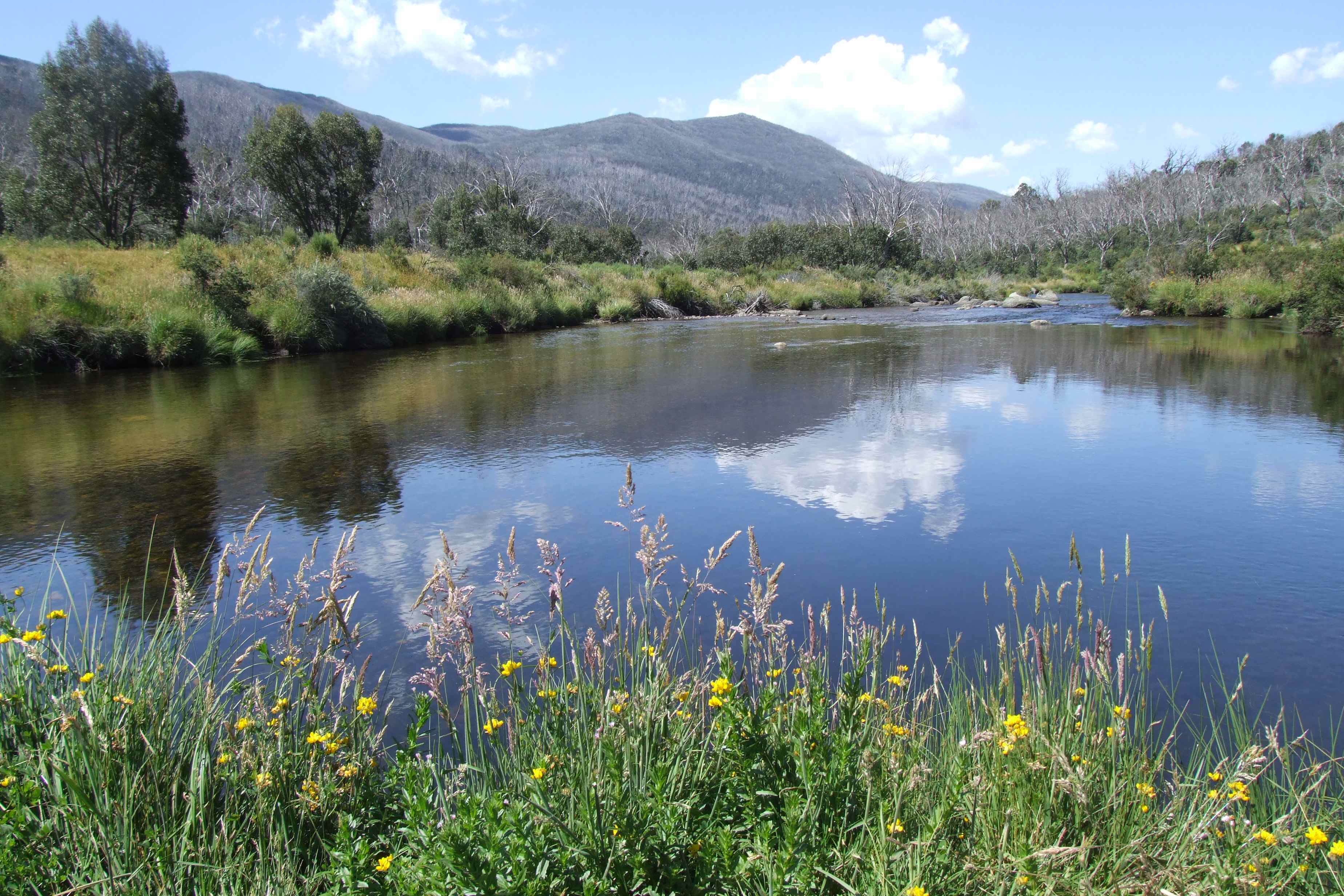
Thredbo River, Kosciuszko National Park
Thredbo River (on a nice day), Kosciuszko National Park)

Went to the police court, but could hear nothing of him, so that the last hope of his safety was now quite destroyed. Sat down to dinner, and had hardly done so when the lost man made his appearance in a most deplorable condition, having been without food and clothes for some time. My conjectures as to the route he had taken proved to be correct. Soon after leaving us on Mt Kosciusko, he endeavoured to return but missed the track to the camp and descended into the valley of the Thredbo River. For two days he wandered on, with scarcely anything to eat, until he fell in with some diggers in a lonely valley, who behaved most kindly to him and assisted him in making his way to Kiandra. … I cannot quit this most annoying affair without expressing my appreciation of Edward’s courageous behaviour, after separating from our party, and of the skill and care he bestowed upon the instruments entrusted to his charge; for the fine mountain barometer Fortin II did not receive the least injury during the whole of this rough and perilous journey.

I love that Neumayer seems to have cared both about Brinkmann AND his instruments!

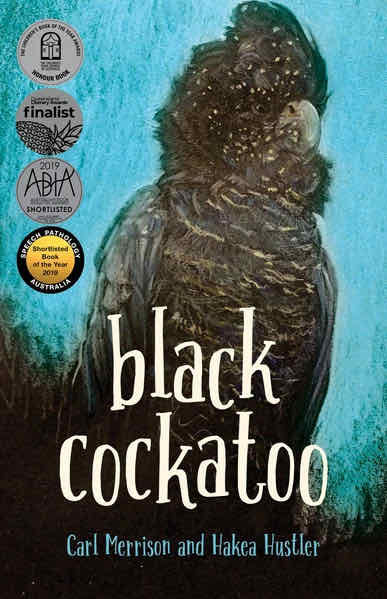
Carl Merrison and Hakea Hustler, Black cockatoo (#BookReview)

Black cockatoo is a young adult novel written by Indigenous Australian author, Carl Merrison, and his non-Indigenous collaborator, Hakea Hustler, and illustrated by Indigenous Australian illustrator, Dub Leffler. It is a beautiful, little (in size, not value) book that made quite a splash when it was published. It was shortlisted for several children’s literature awards in 2019, including those by the Children’s Book Council of Australia, Readings, the Australian Book Industry Association, and the Queensland Literary Awards. However, it is not the sort of book that I would normally post on here, so I plan to keep this review short.

I say this for a few reasons. For a start, children’s and young adult literature are not my main interest, though I do occasionally make exceptions, as I am making here. My main reason, however, is that not only am I not the typical age demographic for this book, but I am also the wrong cultural demographic, which makes me two steps removed from its target audience. But, I ordered this book from Magabala because I was intrigued about what was being written for young Indigenous readers, and it is on that basis that I’m posting on the book.

The story is set in a remote community in Australia’s Kimberley region, and focuses on 13-year-old Mia. She is disturbed to see her 15-year-old brother, Jy, becoming increasingly alienated from his community and culture, but feels powerless to do anything about it. In the book’s first chapter she rescues a young black cockatoo (dirrarn) which had been injured by Jy who had been target practising with his shanghai. The dirrarn is her totem animal.

What makes this book interesting for someone like me to read is the way it conveys the issues that I, an outsider, am aware of through my reading. One of these is the issue of family breakdown in Indigenous communities. Mia and her brother are being raised by their mother and grandparents, and haven’t seen their father or his family for many years. It’s clear that this is a tough gig for the grandparents. Mia overhears her grandfather (her jawiji) tell her grandmother that he’s “just tired”, and that:

I’m not sure I have it in me to teach him the right ways anymore. He’s just so headstrong.

In one way, of course, Jy is a typical teenager – stubborn and defiant – but concern about this behaviour is magnified in Indigenous communities where disconnection from culture can leave young people, young men in particular, highly vulnerable. In this story, the grandparents, like many in Indigenous communities, do their best to inculcate knowledge of and respect for culture, while also supporting their grandchildren’s need to make their way in a world they don’t know themselves.

This brings me to the main subject of this story, Mia. Her angst stems not only from her concern about her brother, but from having to make a decision about whether to take up her place at “a fancy school down south”. She’s confronting that conundrum faced by young Indigenous people that I’ve also gleaned through my reading, the challenge of straddling two cultures. There is a lovely sense here of Mia being supported and encouraged by her family, but also of her having some agency in what she does:

“You live in both worlds,” her grandmother added. “You will be strong in both ways.”

Black cockatoo is a short story but Merrison and Hustler pack a lot in here about the warmth and humour within extended Indigenous families, which lightens the more serious concerns they confront. The tone is not heavy, which is appropriate given the aim of this book being presumably to support young Indigenous people in making good choices rather than to demoralise them with the challenges they face!

The book is illustrated by Dub Leffler, with stylish, sometimes realistic sometimes more subtle, black-and-white images opening each chapter. Words from Jaru language are lightly scattered through the text:

It had been a proper long barranga dry weather, so to hunt we didn’t have to travel far to find big fat bin.girrjaru bush turkey.

There are two small glossaries at the end, one of Jaru words, and the other of Aboriginal English/Kriol words, that are used in the text.

While not all issues are resolved by the end, as you would expect, the novel’s conclusion, as you would also expect, is positive, with Mia coming to realise both her own inner strength and that she has the ongoing support of family and culture. It’s a good message in an accessible book, it seems to me, but the real proof is whether it works for its target readers, and that, of course, I don’t know.

Challenge logo

Carl Merrison and Hakea Hustler
Dub Leffler (illus.)
Black cockatoo
Broome: Magabala Books, 2018
62pp.
ISBN: 9781925360707

Angela Savage, Mother of Pearl (#BookReview)

Book cover

Having commented in my Reading Highlights post about how little self-directed reading I did last year, I decided to start the year with just that, before returning to the Review TBR pile. What to choose? Many books jostled for attention, but in the end I chose Angela Savage’s novel Mother of Pearl because I felt it would be a warm-hearted but meaty read, just right for this time of year. I was right.

Let’s start with the meaty first. The subject matter is commercial surrogacy, in Thailand specifically. This surrogacy involving “farang” couples was banned in Thailand during the writing of this book, but that doesn’t invalidate it. Many novels have been written about behaviours, cultures, practices that have changed or disappeared – and, anyhow, commercial surrogacy still exists in various forms in different countries around the world. So, on many fronts, both contemporary and historical, Mother of Pearl has much to offer.

And what it offers is a sensitive portrayal of a very complex issue. On the surface, the novel is about a childless Australian couple paying a poor Thai woman to carry “their” baby (created using the husband’s sperm and a donor egg) but, as Savage wrote on novelist Amanda Curtin’s blog*, what specifically interested her were “the political, ethical, cultural and emotional aspects of overseas surrogacy”. This, of course, makes the book sound very much like an “issues” novel, and it is. However, Savage, who is an experienced and award-winning crime writer – I have reviewed her novel, The dying beach – has written a novel that shows not tells, that is in no way didactic, that explores the “issue” from multiple angles without moralising.

How does she do this? Partly by creating well-rounded and engaging characters, which include Meg (the would-be mother), her sister Anna (an experienced Southeast Asian aid worker), and surrogate mother Mod. There are others, including Meg’s husband Nate. The novel starts in 1998 with Mod who is, then, a 16-year-old girl. We learn of the role of temple culture in her life, and we hear her “fortune” told which says that her “good luck will be earned, not won”. The novel then jumps ten years and we are introduced to forty-year-old Anna, recently returned from Cambodia, and her 14-months-younger sister Meg who has, ostensibly, given up the idea of having a child after years of trying, including gruelling IVF rounds. However, at Anna’s place, she meets a gay couple with a child born to a Thai surrogate mother, and the seed is sown.

Who are the winners, who are the losers (Anna, paraphrased)

From here, the novel, like many modern novels, switches perspectives, primarily between Mod, Anna and Meg, to explore the emotions and motivations, the practice and legalities of commercial surrogacy, and the cultural implications in Thailand. Anna – who is experienced in Thai culture and, let us say, the “disinterested” party – is our main guide through all this. She is, I’d say, our voice, because she is the one concerned about the exploitative aspects of this surrogacy. However, she comes to see that it’s a little more complex than would appear on the surface. This is not to argue that such surrogacy is a good thing, but that neither is it a black-and-white issue.

I particularly liked the way Savage explored the different motivations of surrogate mothers through Mod’s spending time with other surrogates and potential surrogates. We learn not only of the need for money, but of factors like the desire to earn Buddhist merit and the exploitation of young Thai women by their boyfriends and fathers. Exploitation, we realise, is a complex beast.

So, the novel is meaty because it does tease out many of those “political, ethical, cultural and emotional” factors that Savage intended to do. Meg’s single-minded focus on having a child, and the pressure this creates on others, is quietly interrogated. Aid-worker Anna’s discomfort with the exploitativeness of commercial surrogacy is teased out, as she faces reassessing “the moral high ground, where she’d once felt so at home”. The financial, cultural and emotional implications for Mod are also genuinely explored.

However, the novel is also warm-hearted because it is non-judgemental. Our main characters aren’t perfect. Meg and Anna, in particular, have their sisterly squabbles, tensions and fallings-out, but their disagreements aren’t bitter, and they both “put their foot in it” at times. More importantly, though, Savage leaves it to the reader to consider the issues and decide where we stand, and why.

Finally, underpinning all this is the writing. Mother of Pearl, which is logically divided into three parts – Preconception, Gestation, Afterbirth – is an accessible novel. The alternating perspectives are easy to follow, the pacing is good, and the writing flows well. There are some perfect descriptions, like

Anna recoiled like a sea anemone poked with a stick. She was fixed to the rock face; everything moved around her.

but they are not overdone in a novel for which the narrative is the driving force. I was concerned for a while that Meg and Nate were too good to be true, given the stresses they’d been under for years, but Savage injected enough little cracks to reassure me that they hadn’t stepped out of a romance novel. Finally, there’s the perfectly apposite pearl motif, which is also handled with a light touch.

Mother of Pearl, then, respects the complexity of its “issue” without becoming polemical. In so doing, it discourages judgement where compassion should prevail, and yet is clear-eyed about the realities that make surrogacy so problematical. A good choice for my first book of 2021.

Lisa (ANZLitLovers) also appreciated this book.

Challenge logo

Angela Savage
Mother of Pearl
Transit Lounge, 2019
318pp.
ISBN: 9781925760354

* Thanks to Lisa for providing the link to this post.

Monday musings on Australian literature: Some New Releases in 2021

For some years now, I’ve made my first Monday Musings of the year, a “new releases” post. As in previous years, my list is mostly drawn from the Sydney Morning Herald, whose writers do a wonderful job of checking out publishers large and small, but I have found a couple of extras on my own! Also, remember, as this is Monday musings on Australian literature post, it will be limited to Australian authors (listed alphabetically.) Do click on the SMH link to see the full list, which includes non-Aussies, Aussies I haven’t selected, and additional info about some of the books.

Links on the authors’ names are to my posts on them.

Fiction

Last year, I listed 24 fiction works plus a few new voices and short story collections, and read only TWO (par for last year’s course, really) – but I will be reading some more of them in the next few months.

Book cover
  • Pip Adams, Nothing to see (March, Giramondo)
  • Michael Mohammed Ahmad, The other half of you (June, Hachette)
  • Larissa Behrendt, After story (July, QUP)
  • Emily Bitto, Menagerie (second half, A&U)
  • Steven Carroll, O (February, Fourth Estate)
  • Claire G. Coleman, Enclave (October, Hachette)
  • Paul Daley, Jesustown (August, Allen & Unwin) 
  • Michelle de Kretser, Scary monsters (“a flip book”, second half of 2021, Allen & Unwin)
  • Briohny Doyle, Echolalia (June, Vintage)
  • Nikki Gemmell, The ripping tree (April, Fourth Estate)
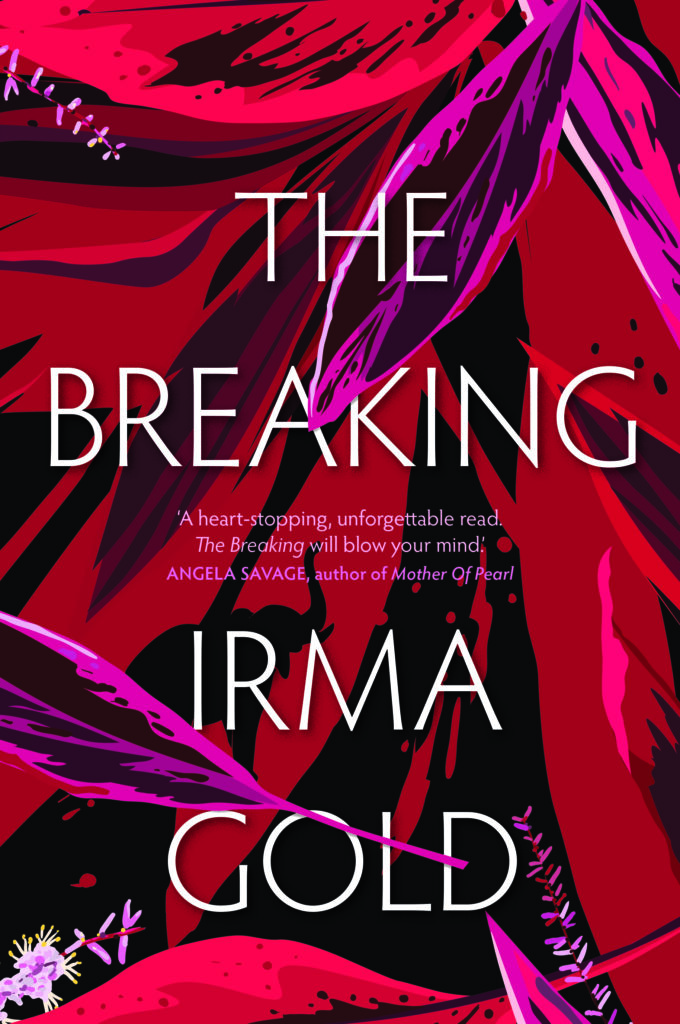
  • Irma Gold, The breaking (March, MidnightSun)
  • Chris Hammer, no title yet (second half, Allen & Unwin) (my token crime inclusion!)
  • John Kinsella, Pushing back (February, Transit Lounge)
  • Jamie Marina Lau, Gunk baby (May, Hachette) (and I have to include the description: it’s “about a budding entrepreneur who opens an ear-cleaning business in the local mall”)
  • Charlotte McConaghy, Once there were wolves (August, Hamish Hamilton)
  • Emily Maguire, Love objects (April, Allen & Unwin)
  • Sophie Masson, The ghost squad (yes, I know, YA, but – February, MidnightSun)
  • Jennifer Mills, Airwaves (August, Picador)
  • Kate Morton, no title yet (second half, Allen & Unwin)
  • Stephen Orr, Sincerely, Ethel Malley (April, Wakefield Press)
  • Debra Oswald, The family doctor (March, A&U)
  • Alice Pung, One hundred days (June, Black Inc.)
  • Trevor Shearston, The beach caves (February, Scribe)
  • Graeme Simsion and Anne Buist, Two steps onward (collaborative novel, March, Text)
  • Claire Thomas, The performance (March, Hachette)
  • Christos Tsiolkas, (“auto-fiction”, second half, Allen & Unwin)

I’m surprised to find that many more authors from this year’s list are already on my blog than ever before, which sort of makes me feel I’m getting somewhere!

SMH also lists “new voices” (including new forms for established voices):

  • Ella Baxter, New animal (February, Allen & Unwin)
  • Hannah Bent, When things are alive they hum (second half, Ultimo Press)
  • Barry Divola, Driving Stevie Fracasso (March, HarperCollins) (music journalist/short story writer)
  • Max Easton, Leaving the plain (TBA, Giramondo)
  • Martin McKenzie-Murray, The speech writer (Scribe, February) (journalist)
  • L.P McMahon, As swallows fly (March, Ventura)
  • Jacqueline Maley, The truth about her (April, Fourth Estate) (journalist)
  • Campbell Mattinson, We were not men (June, Fourth Estate) (wine writer)
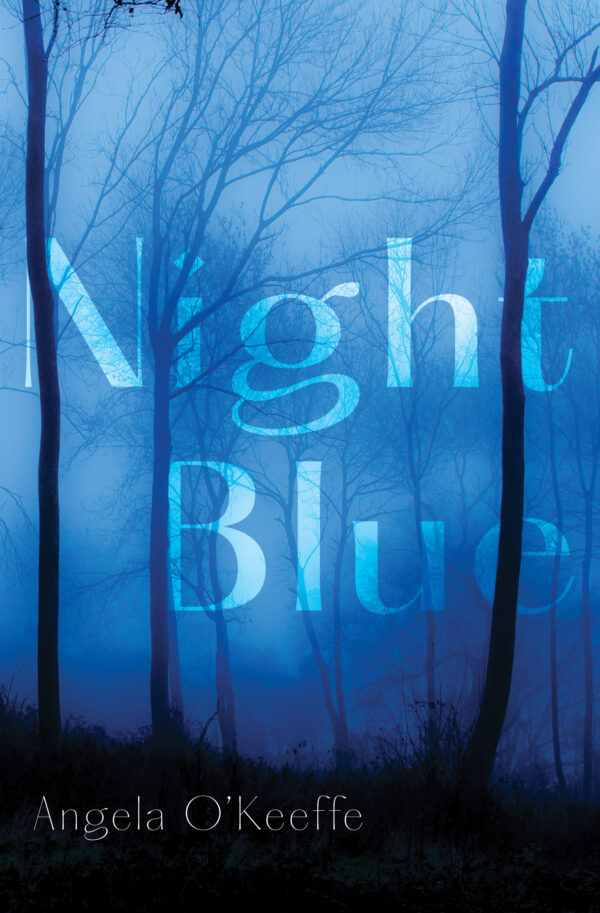
  • Angela O’Keeffe, Night blue (May, Transit) (here’s one for next year’s “interesting narrative voices” – the narrator is Pollock’s Blue Poles painting!)
  • Sophie Overett, The rabbits (July, Michael Joseph)
  • Madeleine Ryan, A room called Earth (March, Scribe)
  • Emma Spurr, A million things (March, Text)

Short stories

  • Tony Birch, Dark as last night (August, UQP)
  • Te-Ping Chen, Land of big numbers (March, Scribner)
  • Paige Clark, She is haunted and other stories (August, A&U).  
  • Melissa Manning, Smokehouse (April, UQP)
  • Adam Thompson, Born into this (February, UQP) 
  • Chloe Wilson, Hold your fire (March, Simon & Schuster)

Non-fiction

SMH provides a long long list of new non-fiction books covering a huge range of topics, so my two lists are highly selective.

Life-writing (loosely defined)

  • Emma Alberici, Rewrite the story (September, Hardie Grant): memoir.
  • Alison Croggon, Monsters: A reckoning (March, Scribe): hybrid memoir/essay (award-winning essayist).
  • Carly Findlay (ed.) Growing up disabled (February, Black Inc.): from the Growing Up series.
  • Clementine Ford, How we love (second half, Allen & Unwin): memoir about love, motherhood and her family.
  • Evelyn Juers, The dancer (TBA, Giramondo): biography of Philippa Cullen, that was listed in my 2020 new releases and is listed again but still without a date.
  • Nathan Hobby, biography of Katharine Susannah Prichard (first half, MUP)
  • Eleanor Hogan, Into the loneliness (March, NewSouth): biography of Daisy Bates and Ernestine Hill
  • Yumiko Kadota, Emotional female (March, Viking): memoir about the challenges of being a young female surgeon in an often toxic environment.
  • Sarah Krasnostein, The believer (March, Text): faith and conviction in six people.
  • Joyce Morgan, The Countless from Kirribilli (July, Allen & Unwin): biography of Elizabeth von Arnim. I can’t believe there is a third book coming out in reasonably short time about this author, with whom I fell in love way back in the 1980s. 
  • Rick Morton, My year of living vulnerably (March, HarperCollins): follow-up memoir.
  • Fiona Murphy, The shape of sound (March, Text): memoir about being deaf, by an emerging writer admired by Jessica White and Angela Savage.
  • Christine Skyes, Gough and me (May, Ventura): memoir about the role Gough Whitlam played in her life.
  • Alf Taylor, God, the devil and me (February, Magabala): Memoir
  • Robert Wainwright, The diva and the duc (second half, A&U): biography of soprano Nellie Melba.
  • David Williamson, untitled autobiography (October, HarperCollins). 
  • Charlotte Wood, Inner life (second half, A&U): expanding her essay on “the creative process, inspiration and hard work”. 

SMH lists a number of biographies coming out on politicians, past and present, and memoirs by current political figures, but let’s give ourselves a break from parliamentary politics today. (You can check out the SMH link, of course, if you are interested.)

History and other non-fiction

  • Santilla Chingaipe, Black convict (July, Picador): convicts of African descent transported to the Australian penal colonies.
  • Helen Garner, presumably the next diary volume (Text)
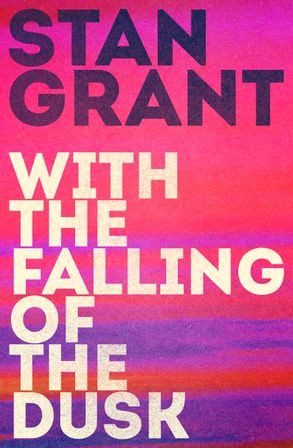
  • Stan Grant, With the falling of the dusk (April, HarperCollins): “the challenges facing our world”. 
  • David Hunt, Girt nation (November, Black Inc.): third instalment after Girt and True girt.
  • Bri Lee, Brains (second half, Allen & Unwin): the structural inequalities behind elite institutions.
  • Mark McKenna, Return to Uluru (March, Black Inc.): starts from the 1934 shooting at Uluru of Aboriginal man Yokunnuna by white policeman Bill McKinnon.
  • David Marr, A family business (October, Black Inc.): Queensland’s frontier massacres in the 19th century. 
  • Henry Reynolds Truth-telling (February, NewSouth): First Nations sovereignty and the importance of the Uluru Statement from the Heart. 

SMH also identifies some special current-interest topics being written about, including:

  • Last year’s bushfires: Bronwyn Adcock, Currowan (August, Black Inc.); Danielle Celermajer, Summertime (February, Hamish Hamilton); Greg Mullins, Firestorm (September, Viking Australia); John Pickrell, Flames of extinction (March, NewSouth); and Michael Rowland (ed), Black summer (January, ABC Books).
  • Climate change: Richard Beasley, Dead in the water (February, Allen & Unwin); Jonica Newby, Beyond climate grief (NewSouth); Gabrielle Chan, Why you should give a f— about farming (August, Vintage); and Ian Lowe, Long half life (August, Monash).
  • COVID-19 (of course): Ross Garnaut, Reset (February, La Trobe); Hugh McKay, The loving country (May, A&U); Duncan McNab, The Ruby Princess (February, Macmillan); and Norman Swan, So you think you know what’s good for you (July, Hachette).
  • Politics and current affairs: David Brophy, China panic (June, La Trobe); Zoe Daniel and Roscoe Whalan, Greetings from Trumpland (February, ABC Books); Zareh Ghazarian and Katrina Lee-Koo (ed), Gender politics: Navigating political leadership in Australia (May, NewSouth); Nicholas Jose and Benjamin Madden (ed), Antipodean China (February, Giramondo); Peter van Onselen and Wayne Errington, How good is Scott Morrison? (March, Hachette); and Trevor Watson and Melissa Roberts (ed), The Beijing Bureau (May, Hardie Grant).

Does anything here interest you?

Blogging highlights for 2020

Finally, the last of my traditional and very self-indulgent year-end trifecta (which includes my Australian Women Writers’ Challenge wrap-up and Reading highlights posts).

But, before I launch into my usual analysis, I must send a huge shout-out to Bill (The Australian Legend) for the astonishing effort he put in this year to help me keep my blog going during the sad months of my mother’s late-diagnosed illness and death. He coordinated four Monday Musings guest posts (from Lisa, Kate and Michelle, as well as himself, even proposing topics in case they needed inspiration). And, inspired by Karen’s (BookerTalk) post on reblogging, he curated a series of reblogged posts from my early days, which we titled Bill curates. It was a stellar effort and I’m immensely grateful to him (and to Lisa, Michelle and Kate) for helping me out during those times. It may sound silly but it significantly helped my well-being to have these posts lined up to keep my beloved blog ticking along. Thanks Bill.

Top posts for 2020

Until last year, my top posts have changed minimally, but last year’s little shift has held – a little! However, there is still a set of “usual suspects” posts reappearing year after year, and it’s still true that most of the posts are over 5 years old. Whatever these top posts are, though, I always wonder why them? Some are probably set school texts, but the rest?

Trent Dalton, Boy swallows universe

Here’s my 2020 Top Ten, ordered by number of hits:

None of these were actually published in 2020, which is the norm except for last year’s little aberration when Trent Dalton hit the top spot. What other observations can I make?

  • Red Dog has slipped out of the Top Ten (into the Top Twenty) for the first time since it was published in 2011.
  • Last year’s record of six Australian posts in the Top Ten did not last, but Australians still make a showing!
  • Barbara Baynton continues to be an established Top Ten regular.
  • Why is ABR’s Top Twenty list here? Were locked-down readers looking for reading recommendations? And, old Stegner and Greene posts are new here. Why them? Good lockdown reading?
  • Mark Twain’s “A presidential candidate”, which popped into the Top Ten in 2018 and remained there in 2019, appears again, but has risen to 2nd spot! I wonder why?!
  • Short stories and essays still feature strongly, with four again this year.

Four Australian posts appear in the next ten, as in 2019, but they are all different. Barbara Baynton remains, just with a different story, “A dreamer”! The others are Shaun Tan’s Eric, the slowly-slipping Red dog, and, out-of-the-blue it seems to me, a 2014 Delicious descriptions: Clare Wright’s sources on the Australian landscape.

Book cover

But what about posts actually written in 2020? How did they fare? After last year’s little aberration, this year returned to normal (whatever that is) with my top-ranked 2020-written post coming quite down the list. Here are the Top Ten 2020-published posts (excluding Monday Musings) – an eclectic bunch that tells us, what?:

My most popular Monday Musings posts were:

My New Releases posts seem popular, having featured the last two years. Australian Gothic has also featured in the top three for a few years. But, I’m surprised to see Allen & Unwin’s House of Books, which was only published in July, appearing as the third most popular Monday Musings this year.

Random blogging stats

The searches

One of my favourite parts of this highlights post is sharing some of the search terms used to reach my blog, but this year that aspect of the end-of-year stats has been flakey. However, I did glean a few that might interest – and hopefully, entertain – you.

Book Cover
  • several searches seemed to be for a school or college assignment about Sherwood Anderson’s short story “Adventure”. The searches included: who should be blame for alice’s tragedy; alice is the one to be blamed for her tragedy. do you agree?; explain. adventure sherwood anderson; and explain the significance of the title ‘adventure’ by anderson. Don’t you love how some have just typed in the whole question?
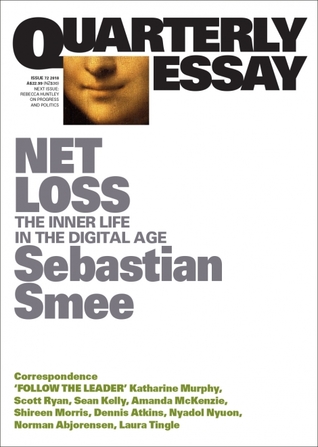
  • I have reviewed an essay by Sebastian Smee but I don’t think that will have helped this searcher: does wellesley have a non-credit on-line course taught by sebastian smee
  • relevant to this year’s second top post, here is one search: what type of satire is mark twain’s a presidential candidates 
  • and, my favourite: word association. what comes into your mind about australian literature? You know what I’m going to ask: What words come to your mind when you think about Aussie lit?

Other stats

I wrote thirteen (nearly 8%) fewer posts in 2020 than in 2019, averaging under 13 posts per month. This resulted in a small drop in my blog traffic.

Merlinda Bobis Fish-hair woman

Australia, the USA, Britain, in that order, continue to be the top three countries visiting my blog. The next three slots went, respectively, to India, the Philippines and Canada. India has been fourth for two of the last three years but, this year, the Philippines jumped from its usual 6th place to 5th, edging out Canada. This is largely due to Philippine-born Merlinda Bobis’ Fish-hair woman.

I’d like to thank all of you who commented on my blog this year. I’m thrilled that, although my blog traffic dropped a little this year, my comments count increased by 12%, which is heart-warming because the conversations have to be one of blogging’s biggest delights. The friendly but fearless sharing of sometimes opposing ideas – you know who you are! – demonstrates that social media can be positive and respectful.

Challenges, memes and other things

I only do one challenge, the AWW Challenge, which I wrapped up last week, and one regular meme, #sixdegreesofseparation run by Kate (booksaremyfavouriteandbest). I occasionally do others, which you can find on my “memes” category link.

I also took part in Lisa’s (ANZLitLovers) Indigenous Literature and Thea Astley weeks, Bill’s (The Australian Legend) AWW Gen 3 Week, and, more casually, in Nonfiction November, because all these align with my reading practice.

Each year, I like to host some guest posts but I have already mentioned these in my opening paragraph. You can find them at this link.

Being blogging mentor for the New Territory  program has been a major highlight over recent years. It was set to continue, until you-know-what. I don’t know whether it will return next year. Meanwhile, I have enjoyed following the writings of several “alumni” who are continuing their literary reviewing and criticism journeys. Rosalind Moran’s well-timed Overland post on the value (or not) of lists, caught the eye of several bloggers over the last month! Amy Walters has revamped her website to include links to her other writings, and Angharad has continued to be an active blogger as well as occasionally writing other articles. Shelley Burr, on the other hand, won a Debut Dagger for her Aussie noir unpublished manuscript, Wake. How lucky am I to know these great young women.

And so, 2021 …

As I say every year, a big thanks to everyone who read, commented on and/or “liked” my blog last year – and to all you other wonderful bloggers out there. I’m really sorry that I don’t always manage to visit everyone as much as I’d like. I wish you all good reading in 2021, and look forward to discussing books with you at your place or mine!

Finally, huge thanks to the authors, publishers and booksellers who make it all possible (and who have put up with my extreme tardiness this year). Let’s hope 2021 will be better for us all.

Six degrees of separation, FROM Hamnet … TO …

Woo hoo! A New Year at last after what has really been a doozy for us all, in one way or another. So glad to see the back of it. I hope you all had a lovely Christmas wherever you were and however you were able to spend it. Now though to that thing that stayed with us unchanged all through 2020, come hail or shine, come fire or covid, and that thing of course is our Six Degrees of Separation meme. If you don’t know this meme and how it works, please check out meme host Kate’s blog – booksaremyfavouriteandbest.

Book cover

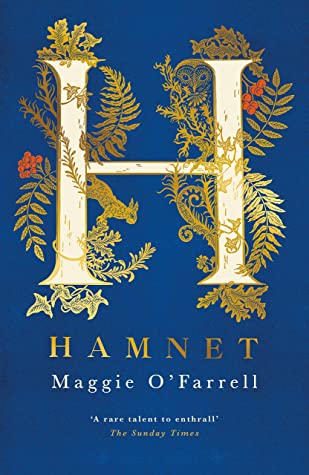
The first rule is that Kate sets our starting book. This month, she’s chosen a book was one of many readers’ loved books last year – Maggie O’Farrell’s Hamnet! I haven’t read it – but what’s new? I wouldn’t be averse to reading it, I must say, because its topic of Shakespeare’s son, Hamnet, who died in his youth, sounds intriguing.

Book cover

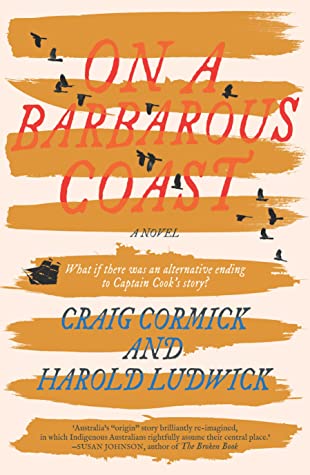
There are various directions I could go in, but I’ve chosen a pretty obvious one, a book that, like Hamnet, is historical fiction breathing life into a marginal historical figure. The book is Craig Cormick and Harold Ludwick’s On a barbarous coast (my review), and the figure, James Mario Magra. Magra was a midshipman on the Endeavour and is believed to have authored an anonymous journal about that journey. Cormick drew from that journal for his characterisation of Magra.

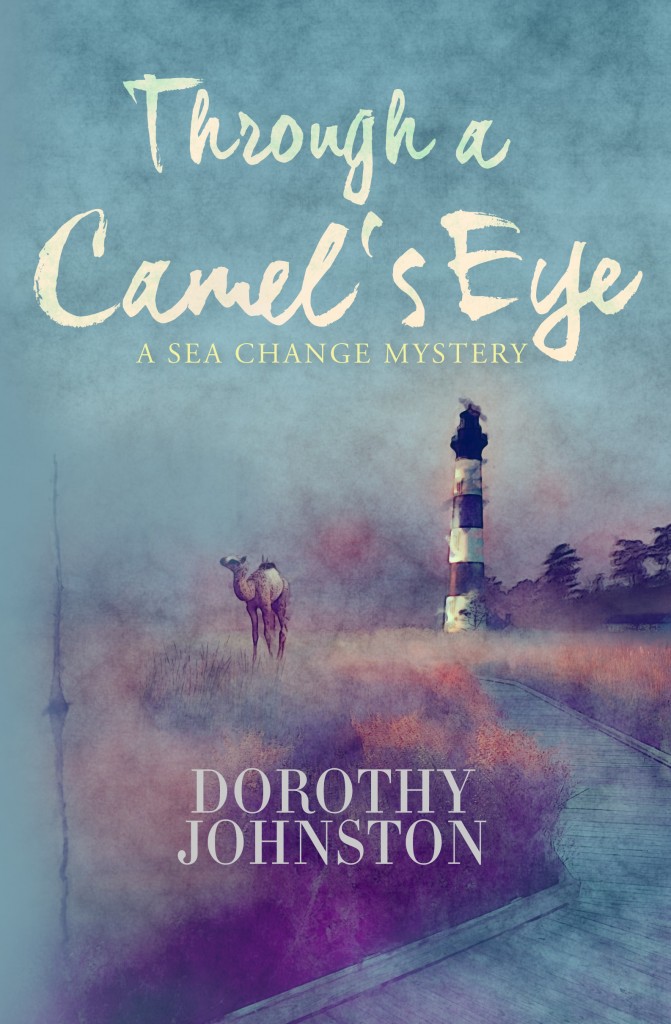
Dorothy Johnston, Through a camel's eye

Staying with the coastal theme – but shifting time (to the contemporary not colonial era), setting (to southern Victoria, not Far North Queensland), and genres (to crime not historical fiction) – I’m linking to Dorothy Johnston’s Through a camel’s eye (my review). This novel introduces Constable Chris Blackie, meaning that …

Through a camel’s eye is the first of Johnston’s latest series, her Sea-change Mysteries. I’m not, as you know, a big reader of series, but in 2020 I did read the first in another series, Steven Carroll’s The lost life (my review), which starts his Eliot Quartet series.

I’m being a bit cheeky with my next link because I’m taking us to a literary app, rather than a book, The waste land app for TS Eliot’s poem cycle of the same name (my review). This was an exciting foray into the possibilities of using apps for the reading and study of literature, but I’m not sure it has taken off. It was, I’d say, expensive to produce and may just not have got the market size they needed. A shame. (The pic here is of a book edition of the poem, not of the app!)

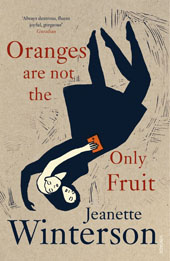
Winterson, Oranges are not the only fruit, book cover

The Wasteland app contains many academics, writers and actors reading, critiquing and reflecting on this major poem. One of those involved was the English novelist Jeanette Winterson, so it’s to her book Oranges are not the only fruit (my review) that I am linking next.

Francesa Rendle-Short book cover Bite your tongue

Jeanette Winterson has quite a bit in common with our Francesca Rendle-Short, but the most relevant to my link here is that both were raised by mothers who were religious zealots. Oranges are not the only fruit is a semi-autobiographical novel, while Bite your tongue (my review) is a sort of hybrid fiction/memoir, but both cover protagonist-daughters’ struggles against highly restrictive maternal upbringings.

Coincidentally, we’ve somehow ended up on a topic – religion and God – relevant to last month’s starting book, Judy Blume’s Are you there God? It’s me Margaret.

So, this month, half of my books are by men and half by women. We haven’t travelled far, staying in Australia except for a trip in the middle to England, but we have traversed a couple of centuries. I do like how we started with the starting book’s lovely cool blue cover and ended with Rendle-Short’s fiery one. I hope that’s not telling us something about the year to come!

Now, the usual: Have you read Hamnet? And, regardless, what would you link to?

Reading highlights for 2020

For newbies here, my annual Reading Highlights post is my answer to other bloggers’ Top Reads posts. In other words, I don’t do a ranked list of the books I consider my year’s “best”, but instead share my “highlights”, which I define as those books and events that made my reading year worthwhile.

I don’t, as I say each year, set reading goals, but do have certain “rules of thumb”, including trying to reduce the TBR pile, increase my reading of indigenous authors, and read some non-anglo literature. This year though has been an annus horribilis for me – of which COVID-19 was only a part. Consequently, I didn’t make great inroads into any of these … as you’ll see.

Literary highlights

My literary highlights, aka literary events, were different this year, given the pandemic’s early (and ongoing) presence in the year, However, going on-line, while a less personal experience, had its pluses:

Book cover
  • Writing War panel discussion: This in-person event was changed into a Zoom one. As it included local writer Nigel Featherstone on his book, Bodies of men, I loved being able to attend!
  • Writers in Residence: This tightly run online festival aimed to give exposure to some emerging writers, and it worked a treat.
  • Melbourne Writers Festival: Covid-19 had some silver linings, including enabling me to attend, at last, some Melbourne Writers Festival events. I only attended two sessions, one on short stories and the other a lecture by Alexis Wright, but they were both so stimulating.
  • Yarra Valley Writers Festival: Another silver lining saw me able to attend sessions of the inaugural Yarra Valley Writers Festival. Session topics were wide-ranging, such as climate change and crime. I wrote four posts.
  • Author interviews/book launches: I only got to a few of the many offered: Heidi Sze, Sara Dowse, Robert Dessaix and Ramona Koval (the last two from Yarra Valley Writers Festival’s New Release Sundays program).

Reading highlights

Book cover

This is where I share some random observations about the year’s reading, rather than a ranked list. That said, I’d happily recommend all I mention here:

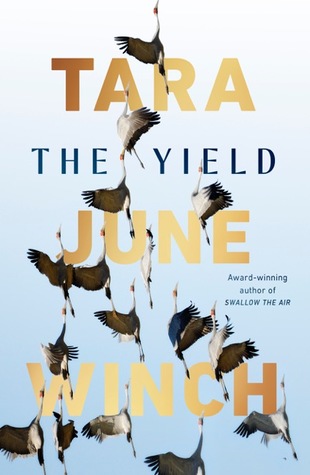
  • Indigenous authors: Each year I try to ensure my reading diet includes a few indigenous authors. This year I didn’t quite achieve the number I did last year, but I did read three novels, Tara June Winch’s Miles Franklin Award-winning The yield, Julie Janson’s Benevolence, and the collaborative On a barbarous coast by Craig Cormick and Indigenous writer Harold Ludwick – plus Archie Roach’s memoir, Tell my why.
  • The year of single-word titles: I can’t remember when I read so many books with single word titles, titles not even preceded by an article, like Benevolence, Bruny, Damascus, Displaced, Mammoth, Murmurations, and Unsettled. I like the possibilities contained in direct, simple-sounding titles like these.
  • Rethinking colonial Australia: Completely serendipitously, I read a few books this year by Indigenous and non-Indigenous writers that attempted to correct the white-version of Australia’s colonisation that many of us grew up with: Craig Cormick and Harold Ludwick’s On a barbarous coast; Julie Janson’s Benevolence; and Gay Lynch’s Unsettled. Poet John Kinsella’s memoir, Displaced, also addresses these issues, albeit within a contemporary framework. And, at a tangent, Madeleine Dickie’s contemporary novel Red can origami hinges on this colonial dispossession to explore the complex relationships and exploitation behind mining in northwest Australia.
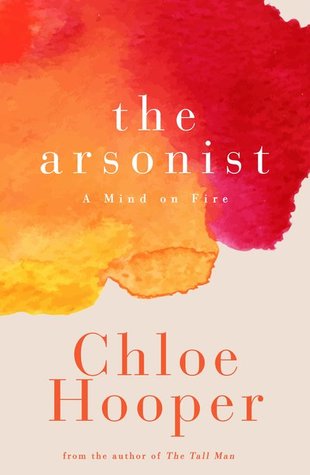
  • That “accusing” TBR (which I define as books waiting for more than 12 months): This year I read 5, one more than last year, so, a win. The highlights were Ruth Park and D’Arcy Niland’s collaborative memoir, The drums go bang! and Chloe Hooper’s The arsonist.
  • Returning to an old favourite author: Looking for books for my mum to read, I chose, among others, Anne Tyler’s Redhead by the side of the road. She wanted to read it, but her time ran out. However, I read it, and Tyler’s quirky world was just the right thing at the time. Other favourite authors I returned to this year included Thea Astley (An item from the late news), Jane Austen (Juvenilia Vol. 1), and Helen Garner (Yellow notebook).
  • Out of left field from Brother Gums came Sue Lovegrove and Adrienne Eberhard’s nourishing art-poetry book, The voice of water, and, from my reading group, Balli Kaur Jaswal’s cheekily titled Erotic stories for Punjabi widows.
  • Observing contemporary Australia: My reading always includes books that interrogate contemporary life, and two stand out from this year, Carmel Bird’s wry, satirical Field of poppies about a retired couple’s failed escape from the city, and Charlotte Wood’s The weekend about older women and friendship.
  • Other people’s lives: Biographies and memoirs are always part of my reading fare. Two standouts this year were Desley Deacon’s thorough and beautifully designed biography of Judith Anderson, and Rick Morton’s heart-rending but not self-indulgent memoir, One hundred years of dirt.
  • Some interesting voices: Each year seems to produce an unusual narrator or two – a foetus or skeleton, perhaps. This year produced another variation, with Chris Flynn’s Mammoth narrated by, yes, the fossil of a 13,000-year-old mastodon. It was more enjoyable than I expected.
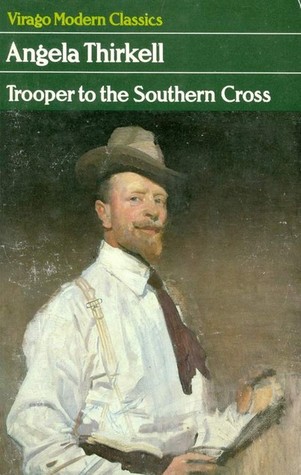
  • Surprise of the year: I read a couple of books for Bill’s (The Australian Legend) AWW Gen3 week but Angela Thirkell’s Trooper to the Southern Cross took the cake. I didn’t know what to expect, and was both surprised and entertained by what I got.
  • The quiet achiever: A beautiful, perceptive book that just didn’t get the recognition it deserves is John Clanchy’s historical novel exploring clerical abuse of children, In whom we trust.
  • The book most relevant to me this year won’t surprise those who know my year: Griffith Review 68, Getting on. It’s enlightening, informative, and even, at times, inspiring, about all things ageing!
Book cover

These are just some of 2020’s worthwhile reads.

Some stats …

I don’t read to achieve specific stats, but I like to keep an eye on what I’m doing to ensure some balance, all the while maintaining my particular interest in women and Australian writers:

  • 63% of my reading was fiction, short stories and novels (70% in 2019 and 80% in 2018): Around 75% is my rule of thumb, so this is quite a bit lower. Not sure why, but these things happen!
  • 80% were by women which is significantly higher than my 2015-2019 average of 68%: This is a bigger weighting than the 65-70% I prefer. Some of this 80% includes collaborations with male writers and editors.
  • 18% were NOT by Australian writers (28% in 2019 and 18% in 2018): I would like the balance to be something more like one-third non-Australian, two-thirds Australian, so this is a regression on last year’s achievement, but this year was an aberration overall so I’m not going to beat myself up. It is what it is.
  • 15% were published before 2000 (significantly less than for the last three years which hovered around 30%): Too low. I really like to read more older books.
  • 22% were published in 2020 (rather less than last year), which pleases me, because (obviously) I don’t want all my reading to be the latest books.

Overall, it was a disappointing reading year, in which much of my reading was driven by review books and my reading group. Both of these resulted in some good reads, and I don’t for a moment regret them, but my personal circumstances meant I did less self-directed reading and that was a bit frustrating. I hope I can get back to a more even keel in 2021.

As always, I’m grateful to all of you who read my posts, engage in discussion, recommend more books and, generally, be all-round great people to talk with. You know I love you!

I wish you all an excellent 2021, and thank you so much for hanging in this year.

What were your 2020 reading or literary highlights?

Craig Cormick and Harold Ludwick, On a barbarous coast (“BookReview)

Craig Cormick is a Canberra-based writer whom I’ve seen at various literary events around town, but not read until now, so I was especially glad when Allen & Unwin sent me this book to review. Titled On a barbarous coast, it was written collaboratively with Harold Ludwick, “a Bulgun Warra man whose traditional lands lie west of Cooktown”.

On a barbarous coast offers something a bit different for reviewers. Besides its collaborative nature, there’s its form or genre, which is that sub-genre of historical fiction called alternate (or alternative) history. In this case, it involves looking at a period of Australian history and asking “what if things had happened differently?” Those things, for Cormick and Ludwick, relate to Captain Cook’s exploration of Australia.

The story springs, then, from Captain Cook’s 1768-1771 voyage to Australia to observe the Transit of Venus. During that expedition, in late 1770, the Endeavour was seriously damaged around the Great Barrier Reef, but managed to limp on to Batavia. However, Cormick and Ludwick posit a different scenario, suggesting that the Endeavour was shipwrecked and that only a small number of the crew survived – including Cook, though he remains comatose though much of the story. The survivors make their way to land, and … the question is, as the cover states, “What if there was an alternative ending to Captain Cook’s story?” Would Australia’s history have been different, and how?

While I’ve not read many, I do quite like alternative histories. They encourage us to look at the past from different angles, which can illuminate the implications of decisions made and actions taken.

So, this is how it goes …

The story is told in two alternating first-person voices, Cormick’s being that of American Midshipman James Magra, and Ludwick’s being the young Indigenous boy, Garrgiil.

Magra chronicles the actions and fates of the shipwreck survivors, who very quickly break into two antagonistic camps, while Ludwick shares the thoughts and actions of the local Guugu Yimidhirr people. For the bulk of the narrative, the two cultures remain apart. There is quite a bit of humour in watching Garrgiil’s people trying to decide whether these strange “spirit things” are ancestors or just men. Initially, they feel they must be ancestors, but the way they stumble around, starving while “walking past food every day”, not to mention behaving incorrectly in sacred or special areas, suggests that this may not be the case.

… their presence gives our people great stories of their stupidity and clumsiness to tell around the fire at night. Like the one who stood in the river and let Gandhaar [crocodile] eat him …

Meanwhile, we watch Magra and his co-survivors bickering amongst themselves, trying to plan a solution to their predicament, and sensing the “natives” are out there but not seeing them. The stage is set for a meeting. The question is: how will it go? You will have to read the book for yourselves to find out.

So, how does it all come together?

Magra gets the lion’s share of the story, which could be seen as giving the invaders the upper-hand (yet again) in story-telling. However, I’m going to assume that this was all discussed and agreed between the two authors. Also, I think we could argue that the unequal number of physical pages doesn’t necessarily mean that the emotional impact of the two narratives is similarly unequal. Garrgiil’s voice is strong enough, and compelling enough, to be in our minds, even when he’s not centre-stage.

In the Authors’ Note at the end, Cormick says they “tried to stay as close to known history as possible, both within the known and imagined paths of the story”, which requires a bit of mind-bending but I get what they mean. They drew upon “many existing knowledges” including several journals, such as those of James Cook, Joseph Banks, Sydney Parkinson, and an anonymous journal believed to have been written by James Mario Magra, whom Cormick uses as his narrator. They also looked at the work of Indigenous and non-Indigenous historians, journalists and academics, and at historical accounts of several shipwrecked individuals who had lived with Indigenous people. Cormick notes that while their story divides easily into the two narratives, “it is not so easy to unpick how each of us influenced each other’s work”.

Ludwick adds that his aim was to pull readers into “the world of Guugu Yimidhirr language (which was first recorded in 1770 by Sydney Parkinson and Joseph Banks)”. He says that many of the practices and knowledge he describes in the book are still used by his people. He also says that he wove Dreamtime stories into his narrative to help readers understand his people’s traditional explanations of how the land became what we see today.

The end result is the sort of book I like to read, one that entertains me with its story, while also engaging my mind as I consider what the authors (plural, in this case) were trying to do, how they were trying to do it, and whether they pulled it off. It is an earnest book. Sometimes this comes a bit close to the surface when we are “told” things to make sure we get it (such as “I know the Captain controlled how the stories of our journey would be told”). This – and the strange though interesting little “magical realism” interludes where Magra talks to Gandhaar, the crocodile – creates a little unevenness in the narrative. Also, the use of parenthesis to translate the local language used by Garrgiil felt clunky. Yet, I applaud the book’s extensive use of this language. We need more of it in contemporary Australian literature. As Gandhaar tells Magra:

You create the landscape in your own words. If you don’t know the right words, you will never know the land properly.

But these are minor “picky” things. Cormick and Ludwick have attempted something significant in terms of story, intent, and process, and they pulled it off in a way that engaged me, right through to their considered ending which suggests possibilities, while being realistic about probabilities. Without irony, we could call this book “a grand endeavour”. It is certainly exciting to see such Indigenous-non-Indigenous collaborations happening in our literary sphere.

Lisa (ANZLitLovers) also found this book intriguing.

Craig Cormick and Harold Ludwick
On a barbarous coast
Crows Nest: Allen & Unwin, 2020
309pp.
ISBN: 9781760877347

(Review copy courtesy Allen & Unwin)

Monday musings on Australian literature: Australian Women Writers Challenge 2020

AWW Challenge 2019 Badge

Once again I am devoting my last Monday Musings of the year to the Australian Women Writers Challenge*. Last year in my opening paragraph, I wrote that I loved the sound of 2020 – and I wished you all a wonderful year to come in whatever form you would like that to take. My, oh my, little did we expect what was going to eventuate (which for me included a personal loss in addition to the impacts of the pandemic and other catastrophes). I no longer like the sound of 2020, and fervently hope 2021 turns out much better for us all. And so, may you all have a positive and fulfilling 2021.

Now, the challenge … it has continued to go very well. The full database now contains reviews for nearly 7,000 books across all forms and genres, from all periods, of Australian women’s writing. This means that the number of books reviewed on our database increased in 2020 by 900 books, which is about the same number added as last year, or just under 15%.

My personal round-up for the year

This year, for obvious reasons, was not my best Challenge year. I posted only 26 reviews relevant to the Challenge over the year, about the same as last year which was also a strange year (but differently). I feel disappointed about all this, but such is life. Anyhow, here they are, with links to my reviews:

Fiction

Book cover

Short stories

Book cover

Anthologies/Essays

Non-fiction

Book cover

This year, fiction (including short stories) represented around 61% of my AWW challenge reading, which is a little more than last year and a bit closer to my preferred ratio. I read three Classics. Two were novels and one a memoir, and they were read for Bill’s (The Australian Legend) Gen 3 week and Lisa’s (ANZLitLovers) Thea Astley week. Thanks to Bill and Lisa for the impetus to read these books, because they added a special depth ! In terms of that problematic word “diversity”, I read two novels by Indigenous Australian women, and one translated novel by an Iranian-born Australian writer.

Chloe Hooper, The Arsonist

My non-fiction reading was eclectic, featuring biography and memoir of course, a work of creative or narrative nonfiction, a beautiful collaboration between an artist and a poet, and, unusually for me, also two books that could be seen to be in the self-help vein.

If you’d like to know more about the Challenge, check it out here. We are also on Facebook, Twitter (@auswomenwriters), and GoodReads. Do consider joining us. All readers are welcome.

Finally, as always, a big thanks again to Theresa, Elizabeth and the rest of the team. I (still) love being part of this challenge, partly because equating with my reading goals it is not really a challenge, and also because I enjoy working with the people involved. See you in 2021.

And so, 2021

Challenge logo

The 2021 sign up form is ready, so this is also my Sign Up post for next year. As always, I’m nominating myself for the Franklin level, which is to read 10 books by Australian women and post reviews for at least 6 of those. I expect, of course, to exceed this.

Do you plan to sign up?

* This challenge was instigated by Elizabeth Lhuede in 2012 in response to concerns in Australian literary circles about the lack of recognition for women writers. I have been one of the challenge’s volunteers since 2013. Theresa Smith (of Theresa Smith writes) now oversees the day-to-day management of the blog, but Elizabeth is still an active presence.