Steven Conte, The Tolstoy Estate (#BookReview)

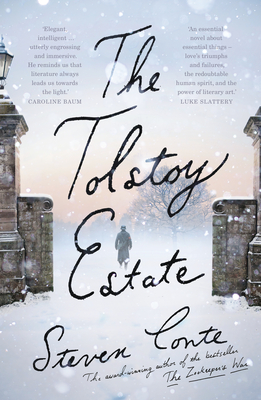
Steven Conte burst on the scene in 2008 when he won the inaugural Prime Minister’s Literary Award with his 2007-published debut novel, The zookeeper’s war. I always intended to read it but somehow it never happened. Jump to 2020, and Conte’s second novel, The Tolstoy Estate, was published. That’s a big gap, but what he’s produced is a well-researched, carefully-crafted, thoroughly absorbing novel.

What intrigues me more than this gap, however, is that both his novels are set during World War 2, and both deal with Germany in the war. The zookeeper’s war is about how the Berlin Zoo’s owner and his Australian wife managed to keep it going through the war. I wonder what it is about war and Germany that attracts Conte? Or, is it just coincidence?

So many paths to follow

The Tolstoy Estate’s plot is not complicated. Most of the story takes place over the six week period – November-December 1941 – during which a German army medical unit established and ran a hospital in Yasnaya Polyana, Tolstoy’s estate, near Tula, south of Moscow. Arriving at the estate, the Germans, including doctor Paul Bauer, meet the site’s curator, Katerina Trubetzkaya, who is, not surprisingly, hostile. A relationship develops between Paul and Katerina, against a backdrop of deteriorating conditions both on the war-front and in the unit, as its commanding officer Metz’s behaviour becomes increasingly erratic.

Sounds straightforward enough? Yes, but as one of my reading group members said, the novel has so many paths to follow, so many ideas to think about, that it’s impossible to follow them all. I agree, so, here, I will focus on just a couple of them.

I’ll start, however, with a few comments about the style and structure. The novel is primarily told in third person through the perspective of Paul, so our understanding of what happens, our assessment of the characters and their relationships, come through his thoughts and feelings. Fortunately, he is quickly established as a humane, considered person, so we can trust him, as much as we can trust anyone.

SORT OF SPOILER (though not the ending)

Half-way through the novel we jump to 1967, and a letter from Katerina to Paul. This introduces a second chronology which covers nearly a decade from then. Most of it, until the last chapter, is conveyed though a few letters between the two, interspersed with the main wartime narrative.

Why does Conte do this? This is the question I always ask when an author plays with their narrative structure like this. My usual thought is that the author wants to de-emphasise the plot to encourage us to think about something else, but then the question is, what? I suspect that this is partly the case here, and I’ll talk about the “what” soon. Regardless of the “what”, however, the impact of revealing that Katerina and Paul have survived the war, is to slow us down. It encourages us to focus on the development of their relationship against the backdrop of this cruel war, rather than rushing to turn the pages to see what happens next.

As for the paths, the “whats”, there are many. The Tolstoy Estate is about war of course. The history part of this novel is true, in that Tolstoy’s estate was indeed occupied by the Germans for a military hospital, so there is that. And, there’s the exploration, through our two protagonists, of two unappealing regimes, Nazism and Stalinism. I could write more about the nuances of that, but I won’t. Then, there’s its evocation of how humans behave during war, of how some will and some won’t behave with humanity across the enemy divide. We see this in many war novels, so I won’t dwell on that, either, except to say that I liked Conte’s appreciation of the continuum of humanity’s behaviour from the worst to the best. One of the questions on Steven Conte’s website concerns whether we can forgive what we come to understand. I’ll leave that one with you too!

Love is an excellent motivator (Katerina)

Now, though, I want to turn to two paths that particularly interested me – love and literature. Let’s do love first. The Tolstoy Estate is a love story. Both our protagonists have lost their spouses, meaning both are currently free but have experienced love before. However, they are also, of course, technically, enemies, belonging to opposing regimes, both of which can be brutal to those who cross the line. This tests their love.

Love is not one-dimensional, as Conte knows, so he sets their love against other sorts of love, including master-race proponent Metz’s dutiful but ultimately sexless marriage because of the “physiological costs imposed by sexual congress”; the Soviet Government’s conservative, sexist attitude to romantic relationships, evidenced in its reaction to Katerina’s novel; a German officer’s homosexuality that brings about his demise; the bawdy conversations and behaviour of many soldiers. There’s also Bauer’s brief but pointed reference to the soldiers he treats:

Loves or is loved“, he thought constantly as he amputated, concerned less about the truth of the incantation than its usefulness to keeping him alert.

War and love, by definition, make strange bed-fellows. War heightens emotions of all sorts, and forces those who love to think seriously about it, as Paul and Katerina do. Paul’s bawdy but romantic colleague Molineux says that Paul and Katerina’s bond “transcends race, it transcends law”, and yet both Paul and Katerina are aware that the practicalities of love can spoil even a strong bond – which provides the perfect link to the literature path …

Writers document, great men do (Metz)

Contemplating the value and practice of literature underpins the novel, with Tolstoy’s War and peace, of course, providing the pivot. It links to the love path, because Paul and Katerina frequently consider Tolstoy’s evocation of love in the novel. In a letter to Katerina, Paul writes that War and peace reminded him

that love doesn’t always conquer but that, arguably, it’s better that way – that thwarted love is stronger, more enduring than the domesticated kind.

But, beyond love in Tolstoy, Conte’s characters also think about the value of literature. Again, here is Paul in a letter to Katerina, telling her that War and peace had restored his faith in

doing good in the world; because if, as Tolstoy argued, we are all specks in a vast world-historical drama, including those who think they’re in charge, it follows that everyone’s actions are potentially significant, that the humblest person can influence events as much as any general, emperor of tsar.

This counteracts Metz’s argument to Katerina early in the novel that

with his rifle our humblest “Landser” shapes the world in a way your Tolstoy never did.

The old “pen is mightier than the sword” discussion I suppose, but oh so engagingly told!

There are also discussions about the craft of writing – some of which reflect wryly on Conte’s interest, such as Katerina’s research focus being narratology.

But I will end with Katerina’s concern about the fading of the novel in the later 20th century:

Everything fades, I suppose, certainly everything made by human hands, and yet I can’t help feeling bereft to witness this diminution of the novel, which for all its inadequacies has trained us to see the world from others’ points of view. To borrow a Stalinist idiom, the novel is a machine, a noisy, violent thing whose product, oddly enough, is often human understanding, perhaps even a kind of love.

Love … and the novel. A good place to end my post on this compelling and intelligent novel.

Lisa (ANZLitLovers) also loved this novel.

Steven Conte
The Tolstoy Estate
Sydney: Fourth Estate, 2020
410pp.
ISBN: 9781460758823

Colin Roderick Award longlist 2021

I wrote about this award in a Monday Musings back in 2012, but haven’t mentioned it much since. Roderick, as I explained in that post, is a somewhat controversial character in Australian literature. However, the award is worth $20,000 and encompasses a wide range of forms and genres, both fiction and nonfiction, so, I thought it might be interesting to revisit. Awards, like the Stella, which are brand like this, make interesting lists for readers.

But, just to recap … as I explained in my Monday Musings post, the award goes to “the best book published in Australia which deals with any aspect of Australian life”. A bit like the Miles Franklin – except that it can be “any” book.

It is administered by the Foundation for Australian Literary Studies (FALS) at James Cook University.

The 15 longlisted titles for 2021 are:

  • Steven Conte’s The Tolstoy Estate (historical fiction, my review coming but here’s Lisa’s)
  • Stephanie Convery’s After the count: The death of Davey Browne (nonfiction)
  • Garry Disher’s Consolation (crime fiction, a sequel to Bitter Wash Road which I reviewed recently)
  • Anna Goldsworthy’s Melting moments (fiction, my review)
  • Jane Harper’s The survivors (crime fiction, Kim’s measured review)
  • Daniel Keighran & Tony Park’s Courage under fire (nonfiction/memoir)
  • Grantlee Kieza’s Banks (nonfiction/biography)
  • Sofie Laguna’s Infinite splendours (fiction, Theresa’s and Kate’s qualified reviews)
  • Tobias McCorkell’s Everything in its right place (fiction)
  • Louise Milligan’s Witness (nonfiction)
  • Kirli Saunders’ Bindi (children’s poetry)
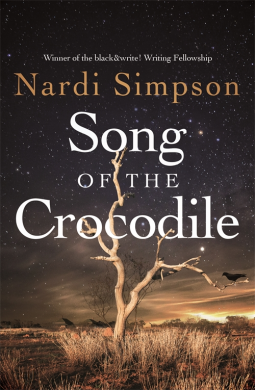
  • Nardi Simpson’s Song of the crocodile (fiction, to be read in July)
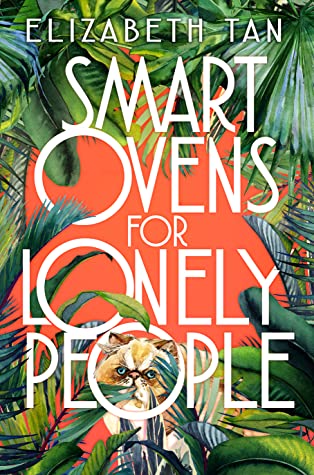
  • Elizabeth Tan’s Smart ovens for lonely people (short stories, on my TBR, Bill’s review)
  • Jessie Tu’s A lonely girl is a dangerous thing (fiction, Kim’s and my inaugural blog mentee Angharad’s reviews)
  • Mark Wilson’s Eureka! A story of the goldfields (children’s picture book)
Book cover

This year’s extended longlist includes nine works of fiction, four of nonfiction (including a biography and a memoir), and two children’s books. One of these is Eureka!, which, says Books + Publishing, is the first children’s picture book to be longlisted for the award.

For more information, including an excellent description of each of the longlisted books, check out the Foundation’s website.

Do any of these books interest you?

Monday musings on Australian literature: Forgotten writers 2, Eliza Hamilton Dunlop

When I started my Monday Musings sub-series on forgotten Australian writers a couple of months ago, I had a few writers in mind, including the first one I did, Helen Simpson. However, a couple of weeks ago, The Conversation published the latest in their Hidden Women of History series, and the subject was an Irish-Australian poet, Eliza Hamilton Dunlop. I figured that, being a poet, she also qualifies for my Forgotten Writers series. I hadn’t heard of her, but she has become well-known in academic circles, because of … well I’ll let The Conversation explain.

Anna Johnston, co-editor with Elizabeth Webbey, of the recently published collection of essays Eliza Hamilton Dunlop: Writing from the colonial frontier, launches her The Conversation article with

Eliza Hamilton Dunlop’s poem The Aboriginal Mother was published in The Australian on December 13, 1838, five days before seven men were hanged for their part in the Myall Creek massacre.

Dunlop, Johnston continues, had arrived in Sydney in February and was “horrified by the violence” she read about in the papers. Her poem was inspired by the evidence given in court about an Indigenous woman and baby who survived the massacre. In it, she condemns “settlers who professed Christianity but murdered and conspired to cover up their crime”.

The poem made Dunlop “locally notorious”, but “she didn’t shrink from the criticism she received in Australia’s colonial press”. She hoped

the poem would awake the sympathies of the English nation for a people who were “rendered desperate and revengeful by continued acts of outrage”.

So, who was this outspoken, confident woman?

She was born in Ireland in 1796. Her father was a lawyer, but her mother died soon after her birth. Soon after, her father moved to India, to be a Supreme Court judge, so she was raised by her paternal grandmother. Johnston writes that she grew up in a “privileged Protestant family with an excellent library”, and “grew up reading writers from the French Revolution and social reformers such as Mary Wollstonecraft”. She started writing at a young age, and had poems published in local magazines in her teens.

These poems reflected her interest in the Irish language and in political campaigns to extend suffrage and education to Catholics. After travelling to India in 1820, she wrote poems about the impact of British colonialism. Then, in 1823 she married book binder and seller David Dunlop, in Scotland. His family history inspired poems about the bloody suppression of Protestant radicals in the 1798 Rebellion.

According to ADB, she had previously married an Irish astronomer in Ireland and had two children, one born in Coleraine, Northern Ireland, in 1816. They don’t mention what happened to this husband, but they concur with Johnston about her marrying Dunlop in 1823. Johnston says that Eliza and David had five children in Coleraine, and that they were engaged there “in political activity seeking to unseat absentee English landlords”. Clearly, Dunlop was politically engaged from an early age.

The family left Ireland in 1837, arriving in Australia, as mentioned above, in February 1838. Husband David worked first as a magistrate in Penrith, before, in 1839, becoming police magistrate and protector of Aborigines at Wollombi and Macdonald River, where he remained until 1847. ADB’s Gunson says that “as a minor poet Mrs Dunlop contributed to the literary life of the Hunter River circle” and that “her acquaintance with the European literary world gave her a place of prestige, and though neither as talented nor radical as, for example, Charles Harpur, her contribution was original”.

Songs of an exile

She may not have been, as “talented” or “radical” as others, but Sydney University Press deems her a worthy subject. Their promo for the above-mentioned book says that, after the publication of “The Aboriginal mother”,

She published more poetry in colonial newspapers during her lifetime, but for the century following her death her work was largely neglected. In recent years, however, critical interest in Dunlop has increased, in Australia and internationally and in a range of fields, including literary studies; settler, postcolonial and imperial studies; and Indigenous studies.

One of those interested is Katie Hansord, who has an essay in the book and who has written about her on the Tinteán online magazine website. Hansord’s article is titled – surprise, surprise – “a forgotten colonial woman poet”. Hansord says that in addition to being a poet she was “a playwright, a writer of short stories, and a passionate advocate of human rights with a keen interest in politics”. She writes that

Dunlop’s poetry reflects her concerns with both gender and nationalism. It should be remembered that in its original publication, ‘The Aboriginal Mother’ was the fourth poem in the series ‘Songs of an Exile’ which Dunlop published in The Australian from October 1838.

The poem is easily found on the web, and has been included in many anthologies, but it is also in Hansord’s article, linked above. The poem was, as were many of Dunlop’s poems, set to music by Isaac Nathan, and performed in concerts at the time.

However, the point I wish to end on concerns the reception of “The Aboriginal mother” because it was, of course, controversial. Leading the negative charge was, apparently, The Sydney Herald, which essentially believed that Dunlop had “given an entirely false idea of the native character”(29 November 1841), that, in effect, the Indigenous people were not capable of such deep feelings.

Hansord says more about this in her article:

Elizabeth Webby has also pointed out that the Sydney Morning Herald* ‘which had strongly opposed the execution of the men involved in Myall Creek was for many years very hostile to her [Dunlop] and her work’ (Blush 45). This hostility seems also to have reflected a growing white masculinist nationalist agenda.

Hansord briefly discusses the construction of “Australianness” during the nineteenth century, a construction that privileged white Australian-born men. For immigrant Irishwoman Dunlop – who was also actively engaged in capturing Indigenous language and translating Indigenous songs – this was clearly not good enough. (You can find an example of an Indigenous poem captured in the original language and translated by Dunlop, in The Band of Hope Journal and Australian Home Companion (5 June 1958)).

Dunlop died in Wollombi in 1880, and is buried in the local Church of England cemetery. There is clearly much more to this woman, but let this be a little introduction to another interesting, independent colonial Australian woman!

* The Sydney Herald, founded in 1831, was renamed The Sydney Morning Herald in 1842.

Malcolm Knox, Bluebird (#BookReview)

Malcolm Knox’s sixth novel, Bluebird, comes with some impressive endorsements. On the front cover is “Charlotte Wood, author of The weekend“, while the back features “Christos Tsiolkas, author of Damascus and The slap” and “Adam Gilchrist, former test cricketer and beach-goer”. Hang on, Adam Gilchrist? What the?

Some of you will know why, but I didn’t. However, I now know that as well as being a novelist, Knox is a respected journalist who has been a cricket correspondent, sport editor, and literary editor. Wikipedia reminded me that he was the literary editor who exposed “the fake Jordanian memoirist, Norma Khouri“. This won him and co-journalist, Carolyn Overington, a Walkley Award for Investigative Journalism.

The thing is, I knew Malcolm Knox’s name, but had read none of his novels or his many works of non-fiction. Consequently, I came to Bluebird cold. I have no idea whether it is typical of Knox’s writing, but, I did enjoy it.

Superficially, it looks like a satire on all those beach communities that pepper Australia’s coasts – the middle-aged men who prefer surfing to working, the country-club set, the councils which sell out to developers, small-town racism and gay-bashing, and so on. You can imagine it, I’m sure. Except that, in fact, it soon becomes clear that while a beach-town might be the setting, Bluebird’s satire is broader, reaching into wider aspects of contemporary Australian life – dysfunctional men and broken families, development, aged care, banking, local government, the list goes on. It’s more that given Australians’ love for the beach, such a town makes the perfect, relatable, setting for his tale.

However, satire can sometime be an intellectual exercise, engaging the mind more than the heart, but Knox achieves both, by creating flawed characters whom we recognise and can engage with, and by telling a story that is just that bit larger than life to make it exciting but not so much that it doesn’t feel real. At first, I was concerned that it was just a little bit too smart-alecky for me, that there were just a few too many biting lines, but I found myself drawn in because I cared about the seemingly hapless 50-year-old Gordon and (some of) his family and friends.

How did they get away with it?

The novel is told in four parts – First Part, Next Part, This Part and Last Part – with each introduced in an italicised section by “Bird’s eye”, a not quite disinterested truth-teller. The story concerns the recently unemployed, recently separated Gordon, and his attempts to keep Bluebird’s iconic house, The Lodge, intact. The Lodge, however, is more than a house; it’s a symbol of all that is both good and rotten in Bluebird, in Gordon’s family, in, I think we could say, Australia. It is a paradox. Bird’s eye, introducing First Part, says:

This house is not an answer but a question: absolute beachfront yet virtually inaccessible, sitting on premium real estate that is somehow not real estate at all, a historic abuse protected by custom.

And the question is, how did they get away with it, or, more pointedly, as Bird’s eye asks, what have they got away with, to, even more pointedly, will they keep getting away with it.

So, through Gordon, the novel explores how its characters (and, dare I say, Australians) have managed to maintain the good life. Gordon lives in his beloved Lodge, sharing the bunk room with his teenage son Ben, who has some sort of “Asperger-ish ADHD-sih, non-specific, nameless disorder-is Thing”, and his goddaughter Lou, who is, arguably, the most competent character in the novel. His soon-to-be ex-wife, Kelly, is also there, occupying the “queen room”. His many unemployed, or minimally employed, friends also hang around the Lodge – unless, that is, there is a surf. And, he has elderly parents, irascible father Ron, who is living, unwillingly, in aged care due to having terminal kidney failure, and mother Norma, “a model for pressing forward without an inward glance”. But, the centre of it all is Gordon, and he is floundering. He has no money, and is marooned by a secret concerning his brother’s death over 40 years ago. The problem is that he is likeable, “a good man” in fact, and people want to help him, even at risk to themselves.

And, of course, there are the bullies – including his soon-to-be ex-step-mother-in-law Leonie who pulls the family financial strings for her own purposes, Council heavy Frontal, and “big man” about town, Tony Eastaugh. None of these want to help Gordon save The Lodge, and thus Bluebird itself.

It’s a complicated story of financial skulduggery set against personal insecurities, jealousies, and just plain ineffectuality, but the novel holds together largely because of its language and humour, Knox’s ability to skewer Australian culture, and his insight into human nature. I loved for example his comment on Gordon and Kelly’s marriage:

Habit, over-familiarity, neglect and inaction killed more lives than cancer.

Change is what I’m ready for (Gordon)

Marriage, however, is not his main target. Rather, it’s Australian men and the way they are letting the side down. Bluebird’s men tend to be ambitious power-hungry bullies or ineffectual past-focused also-rans. There are few in the middle. Overall, it’s the women who are decisive, which is not to say that they are all “better” people. Knox’s attitude to most of his characters seems to be one of frustrated affection. These people, he seems to be saying, are hanging onto the past, but

The past was worn out, not as solid as it was made out to be. Past its best.

The ending, when it comes, is cataclysmic, but not hopeless. Knox wants us to believe that people – that Australia, which seems also to be wallowing in its past – can change. It’s not that the past is all bad, but it shouldn’t drive us.

Introducing the Last Part, Bird’s eye says

This is not the outsider’s story. This is the story of those who are in the middle yet on the margin, the hole in the doughnut, so close to the centre that they have fallen into the void.

The question is, can we get ourselves out? Bluebird is a warm and funny but also biting read. Recommended.

This review is featured by Twinkl in their blog about the latest must-read books. See more recommendations and get involved at Book Lovers’ Top Picks For Your 2021 TBR List.

Malcolm Knox
Bluebird
Crows Nest: Allen & Unwin, 2020
487pp.
ISBN: 9781760877422

(Review copy courtesy Allen & Unwin)

Monday musings on Australian literature: Refugee literature

I had planned another post for this week, but that can wait, as Lisa (ANZLitLovers) has reminded me that it is Refugee Week, and I thought that should take priority. Lisa has posted on a book relevant to the week, and includes in her post a link to a reading list of books she provided last year. Do check her posts out, because she also briefly describes the successes and failures of Australia’s treatment of refugees.

Refugee Week was first commemorated in Australia in 1986 in Sydney, and became a national event in 1988. It runs from Sunday to Saturday of the week which includes 20 June (World Refugee Day), so this year it actually runs from Sunday 20 to Saturday 27 June. Its aim, as you can imagine, is “to inform the public about refugees and celebrate positive contributions made by refugees to Australian society” in order to encourage Australians to welcome them and help them become integral part of our community.

Before I get to my main topic of refugee literature, I thought it would be worth reminding us of a book that was not written by a refugee but which, among other things, makes a point about the contributions made to Australia by postwar European refugees. I’m talking Madeleine St John’s The women in black (my review). For baby-boomers, this novel brought back the suspicion with which Australians viewed, for example, the strange food introduced into Australia at the time, like salami, for example! My sense is that we learnt a lesson from this and are now more welcoming of the wonderful new foods refugees can bring to us. But, of course, refugees bring much more than simply food to a country. For St John’s Europeans, this included more cultured or intellectual interests, and greater equality between the sexes.

Recent refugee literature in Australia

Behrouz Boochani, No friend but the mountains

There is a wealth of post-war European refugee literature published in Australia, but for this post I want to focus on more recent literature. And probably the best known recent work of refugee literature in Australia was/is Behrouz Boochani’s No friend but the mountains. As it turns out, this Kurdish-Iranian asylum-seeker to Australia has ended up in New Zealand. However, his book, which he wrote on a mobile phone and transmitted in a series of single messages, won the 2019 Victorian Prize for Literature and the Victorian Premier’s Prize for Nonfiction. It was translated from Persian into English by Omid Tofighian.

Refugee literature comes in various forms – memoirs, of course, of which Boochani’s book is an example, but also novels, poetry and drama. Most commonly, it’s the next generation whose voices are heard, than the adults who came here.

AS Patric, Black rock white city

These “next” generation writers include those who came as quite young children. They are true bearers of both worlds. Anh Do, author of the memoir, The happiest refugee, is an example. He came to Australia as a Vietnamese boat-person in 1980 when he was just a toddler. Nam Le, author of the short story collection, The boat, was a baby when his parents arrived here, also as Vietnamese boat people. Two of the stories in his collection deal specifically with the experience of migration, but all, as I recollect, confront the idea of survival which must surely have been inspired by his family’s experiences.

Another example is AS Patrić, who was a child when he came to Australia from Serbia (and the Yugoslav Wars). He won the Miles Franklin Award with his debut novel, Black rock white city (my review), which graphically portrays the feeling of displacement experienced by refugees.

Alice Pung, by contrast, was born in Australia a year after her parents arrived as refugees from Cambodia. She has written memoirs about her family, including Her father’s daughter (my review).

Indian-born Aravind Adiga’s novel, Amnesty (Lisa’s review), has recently been shortlisted for the 2021 Miles Franklin award. He is not a refugee, and does not live in Australia, but his novel deals with with some of the most complex issues confronting Australia at the moment, that of people coming to Australia via people smugglers, seeking asylum but not deemed to be refugees. This novel forces its protagonist to confront his status, while also looking at how his position in Australia makes this such an issue.

Refugee literature makes many contributions to our literature. One is refugee writers’ willingness to challenge literary norms and genres, and to push boundaries. Boochani and Patrić are particularly good examples of this. Another is the focus they bring to our perception of Australian culture and identity, confronting us with issues like racism and promoting social justice causes. Alice Pung’s writing exemplifies this. Both, though, force us to rethink the status quo, and to see both our literature and our culture through different eyes and we are, surely, richer for it.

I’m afraid that this is a brief post because, as some of you know, I am family and grandchild visiting in Melbourne. However, I hope I have done at least a little justice to Refugee Week.

I’d love to you to contribute to the discussion, with, for example, your own favourite examples of refugee literature – and why you like them.

Favourite quotes: from Marion Halligan’s Fog Garden

Some time ago, I started a little ad hoc Favourite Quotes series but I haven’t added to it for some time. This post, I actually drafted back then, but never got around to completely it, but I will now!

One of my favourite Australian writers, though I’ve only reviewed one of her recent books on my blog, is Marion Halligan. It’s fitting therefore, that she feature in this little series. The quotes – and there are four – all come from The fog garden, which was shortlisted for the Queensland Premier’s Literary Award and the Nita Kibble Literary Award (which is for “life writing”). I loved it, and felt it deserved these and more accolades.

I read The fog garden in 2002, a year after it came out, and so, unfortunately, a few years before blogging. It’s an autobiographical novel. In other words, it’s a novel, it’s fiction, but it draws from Halligan’s life. It is about Clare, a novelist, and how she copies with grief after the death of her beloved husband. The novel was triggered or inspired by, or a response to – I’m not sure which here is the most accurate – the death of Halligan’s husband of 35 years.

What I love about it is that as well as being about grief, and the wisdom one learns from the tough experiences of life, it is also about fiction. What I love, in other words, is that it’s about life, it’s about writing, and it is also about reading. It asks us readers to think about how we read. It’s cheeky – and those of you who know how much I love Jane Austen, how much I love Carmel Bird, will know how much I love cheeky writers.

So, here is our first person narrator writing about her character Clare:

She isn’t me. She’s a character in fiction. And like all such characters she makes her way through the real world which her author invents for her. She tells the truth as she sees it, but may not always be right.  (p. 9)

I mean, really, you’ve got to love that. It’s the real world, but a version of it invented by the author for her character. Just because it’s a recognisable world, and just because the things Clare says and does are “true” doesn’t mean that they are the things author Halligan said, did and believed. They could be but they aren’t necessarily so, and we should not assume they are so, because this is fiction not a memoir. If Halligan had wanted to write a memoir she certainly would have. By writing fiction Halligan was freer to explore her feelings and to play with where they might take her.

Anyhow, here again is our first person narrator writing about writing Clare:

A reader could think that, since Clare is my character, I can make all sorts of things happen to her that I can’t make happen to myself. This is slightly true, but not entirely … only if it is not betraying the truths of her life and character as I have imagined them. (p. 10)

Of course: once you create a character, that character must be true to what you have created.

And here is a little insight into the challenges of writing. I certainly know about writers’ metaphors that have taken me in wrong directions.

That is the trouble with metaphor, it may take you to places you don’t want to go. (p. 279)

And, finally, one of my favourite quotes from all the books I’ve read, and one I’ve shared before.

Read a wise book and lay its balm on your soul.

If you haven’t read The fog garden, and ever get a chance, do give it a go. It’s a wise – but also lively – book.

Meanwhile, do any of these quotes speak to you?

Miles Franklin Award 2021 shortlist

I haven’t posted on the Miles Franklin Award since 2019, and I didn’t post this year’s longlist when it came out last month, but, despite my woeful record – I’ve yet to read any on the longlist – I felt it was about time I returned to Australia’s best known literary award.

Unfortunately, I was driving in the back blocks of northeast Victoria when the announcement was made, with no Internet connection in our room overnight. We have landed in civilisation – hmmm – depending on you definition, and are once more connected! I thought I’d start by sharing the longlist:

The longlist

Book cover
  • Aravind Adiga’s Amnesty (Lisa’s review)
  • Robbie Arnott’s The rain heron
  • Daniel Davis Wood’s At the edge of the solid world
  • Gail Jones’ Our shadows
  • Sofie Laguna’s Infinite Splendours (on my TBR and will definitely be read this year)
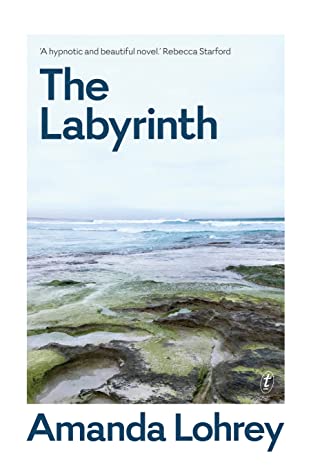
  • Amanda Lohrey’s The Labyrinth (Lisa’s review)
  • Laura Jean Mckay’s The animals in that country (my, I wish I’d read this already, given its popularity on awards lists)
  • Andrew Pippos’ Lucky’s
  • Mirandi Riwoe’s Stone sky, gold mountain (on my TBR)
  • Philip Salom’s The fifth season (on my TBR) (Lisa’s review)
  • Nardi Simpson’s Song of the crocodile ((on my TBR and will definitely be read this year)
  • Madeleine Watts’ The inland sea

The judges describe the spread as “‘a rich mix of well-established, early career and debut novelists whose work ranges from historical fiction to fabulism and psychologism”.

And now, the shortlist:

  • Aravind Adiga’s Amnesty
  • Robbie Arnott’s The rain heron
  • Daniel Davis Wood’s At the edge of the solid world
  • Amanda Lohrey’s The Labyrinth
  • Andrew Pippos’ Lucky’s
  • Madeleine Watts’ The inland sea

Some random observations:

  • Two of the authors – Adiga and Wood – are not Australian-born or based, but meet the award’s criteria because their subject matter is Australian (that is, they present ‘Australian life in any of its phases’). Adiga won the Booker Prize in 2008 with The white tiger, and Wood is apparently the founder and publisher of Splice, a small UK-based press.
  • None of these books are on my TBR pile – wah – though I have been wanting to read Lohrey so this might be the impetus I need.
  • There appears to be less diversity in terms of author background, though Adiga is Indian.
  • There are four women and two men, which is fine, particularly given the award has rebalanced the gender representation well over recent years.
  • None of these authors have won the Award before, but two, Arnott and Lohrey, have been listed before.
  • Two – Pippos and Watts – are debut novelists.
  • Lisa (ANZLitLovers) will be happy as she was mightily impressed with Lohrey’s Labyrinth (see her review above).

Each of the shortlisted writers will receive $5000 from the Copyright Agency’s Cultural Fund, with the winner receiving $60,000 prize.

The chair of the judging panel, Richard Neville, said

‘In various ways each of this year’s shortlisted books investigate destructive loss: of loved ones, freedom, self and the environment … There is, of course, beauty and joy to be found, and decency and hope, largely through the embrace of community but, as the shortlist reminds us, often community is no match for more powerful forces.’

This year’s judges comprise, as always, continuing judges and new ones, providing I think a good mix of experience and fresh ideas: Richard Neville (State Library of NSW), author and activist Sisonke Msimang, and critics Melinda Harvey, Bernadette Brennan and James Ley.

The winner will be announced on 15 July.

And, for a bit of fun, we saw this on a school notice board as we drove by today:

I always knock on the fridge door just in case salad’s dressing. (Eltham Primary School) 

What do you think – of the shortlist, I mean!?

Monday musings on Australian literature: Return of The Age Book of the Year

Early in my retirement, I spent quite a bit of time creating and editing articles on Australian literature in Wikipedia. I focused on a couple of subject areas in particular, Australian women writers and Australian literary awards. One of the awards I worked on was the well-regarded The Age Book of the Year Awards.

Gillian Mears' Foal's bread

They were established by Melbourne’s The Age newspaper, and were first awarded in 1974. For 15 years – between 1998 and 2012 – they were presented during the Melbourne Writers Festival (like the NSW Premier’s Literary Awards are during the Sydney Writers Festival.) They started with two awards – fiction and nonfiction – but in 1993, a third was added for poetry. One of the winning books from these categories was chosen as The Age Book of the Year. Sadly – at least, sadly for those who think literary awards have value – this award was cancelled in 2013. However, I have just read – in The Age of course – that it has been revived, and the winner will be announced, once again, at the Melbourne Writers Festival.

The revival was written up by The Age’s literary editor, Jason Steger:

In a double boost for writers, readers and the book industry The Age is sponsoring the Melbourne Writers Festival and reviving the Age Book of the Year award…

Apparently, The Age’s current editor, Gay Alcorn was “dismayed” when she joined the paper in 2020 and found that it no longer supported the Festival. Steger quotes her as saying, “I am thrilled that it has been rectified. The festival is about books and writing, ideas and debate in this city – exactly what The Age champions.” Even if you don’t like Awards, you will hopefully like this editor’s belief that a newspaper should champion “books and writing, ideas and debate”.

This year there will only be a fiction award, but there are plans to revive the other two categories and the overall “book of the year” in the future. With just three months to go, they’d better get their skates on to even do just one award this year! My web search has not found any further information about how the prize is going to be managed, how (or whether) books are submitted, and/or who will be judging. Neither is there any information about what the actual prize is. We will just have to wait.

We’ll also have to wait to see whether long and shortlists will be announced. For me, as a reader, these lists are as important as the award itself, as they provide good guides to what is going around.

Recap of Past Fiction Awards

You won’t be surprised that past winners of the fiction category include writers who are some of our biggest literary names, but before I share some of them, I should explain that the award was described as “Imaginative writing”. The result is that an early winner was a poetry collection – AD Hope’s A late picking – awarded before poetry was given its own prize. It also includes short stories, but as these are fiction, that shouldn’t be a surprise!

So, let’s look at some of the winners. Over the Award’s 38 years, there were 39 winners, as one year the award was shared. Of these, 16 were by women. The first award was made in 1974 to David Foster’s The pure land, and the last, in 2012, to Gillian Mears’ Foal’s bread (my review).

Book cover

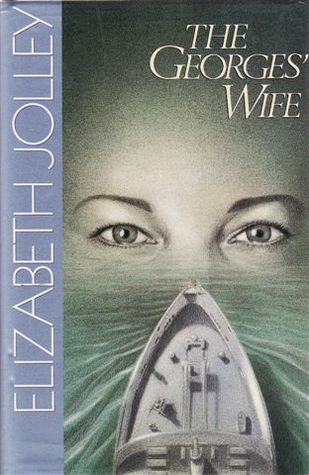
The writer who won the most awards is Peter Carey, with four, for True history of the Kelly Gang (2001), Jack Maggs (1997), The unusual life of Tristan Smith (1994), and Illywhacker (1985). One writer received three awards, Elizabeth Jolley, for The Georges’ wife (1993) (Bill’s review), My father’s moon (1989) (my review), and Mr Scobie’s riddle (1983).

Three writers won twice – David Malouf, Joan London and Thea Astley.

If you compare this award with other major fiction awards over the same period – such as the Christina Stead Award (NSW Premier’s Literary Award) and the Miles Franklin – you will see a large overlap in authors, but not so much in actual titles. In other words, Carey, Jolley, Astley, and so on, have won awards on each list, but for different books. Carey, for example, won the Miles Franklin in 1989 for Oscar and Lucinda, and the Christina Stead in 1982 for Bliss. Jolley won the Miles Franklin in 1986 for The well, and the Christina Stead in 1985 for Milk and honey, while Thea Astley won four Miles Franklins, but all for different books than her two The Age winners.

Of course, there are also authors who only appear on one list. Nicholas Hasluck, for example, won The Age’s award but neither of the other two.

None of this is particularly surprising. Occasionally, we see a book sweeping the awards, but mostly – and this is a healthy thing, I’d argue – the accolades and largesse are spread around.

What is worth noting but not surprising about The Age’s award and the other two I’ve mentioned here is that before 2012, very few authors from diverse backgrounds won. Since then, authors like Kim Scott, Michelle de Kretser, Melissa Lucashenko, Tara June Winch and Melinda Bobis have won literary fiction awards, and it has happened often enough for it to be no longer particularly commented on, which is as it should be. Presumably, The Age’s award will continue this trend.

We await the next move …

George Orwell, My country right or left (#Review)

Having recently posted on the fourth essay, “The prevention of literature“, in my book of George Orwell essays, I’ve decided to plough on and try to finish it. The next essay is the short, cleverly titled, “My country right or left”. It was first published in Autumn 1940 in Folios of new writing.

It’s a curious little essay. I’m going to introduce it by sharing the Orwell quote used by the Orwell Foundation under its banner: “What I have most wanted to do… is to make political writing into an art”. You can certainly tell from “The prevention of literature” that he sees literature as being necessarily political. That essay was written in 1946, just after World War 2 had ended. “My country right or left” was first published just one year into this war – and is politically-driven.

The essay starts with:

Contrary to popular belief, the past was not more eventful than the present. If it seems so it is because when you look backward things that happened years apart are telescoped together, and because very few of your memories come to you genuinely virgin. It is largely because of the books, films and reminiscences that have come between that the war of 1914-18 is now supposed to have had some tremendous, epic quality that the present one lacks.

I wasn’t sure at all, from this opening, where it was going. Soon, however, it’s clear that war is the driver for the essay which turns out to be about Orwell trying to rationalise, or work through, his socialist beliefs, his previously avowed pacifism, and his patriotism (and thus support for the war).

He writes about being a middle-class school boy during World War 1 and being oblivious to what was happening, particularly to “the true significance” of the big events. He writes:

The Russian Revolution, for instance, made no impression, except on the few whose parents happened to have money invested in Russia. 

I’m sure that’s not unusual! He talks about how pacifism

had set in long before the war ended. To be as slack as you dared on O.T.C. parades, and to take no interest in the war was considered a mark of enlightenment.

Interestingly, however, this pacifism, he says, gradually gave way to a certain nostalgia in those who had not experienced the war! He suggests that this was why his generation was so interested in the Spanish Civil War. He then moves onto World War 2, to the growing awareness in the mid-1930s that it was coming and – this is his main point – his realisation that he “was patriotic at heart” and “would support the war”.

Orwell’s sees this as a no-brainer. He says:

If I had to defend my reasons for supporting the war, I believe I could do so. There is no real alternative between resisting Hitler and surrendering to him, and from a Socialist point of view I should say that it is better to resist; in any case I can see no argument for surrender that does not make nonsense of the Republican resistance in Spain, the Chinese resistance to Japan, etc. etc. 

But, he admits that this support stemmed primarily from “the long drilling in patriotism which the middle classes go through”. The drilling had, he said, “done its work … once England was in a serious jam it would be impossible for me to sabotage”. This patriotism, however, in not incompatible, he argues, with his socialist view that “only revolution can save England”. That “has been obvious for years”. “To be loyal both to Chamberlain’s England and to the England of tomorrow might seem an impossibility”, he writes, but it is, in fact, a fact, because such dual loyalties were happening everyday. Revolution could not happen with Hitler in control, so, Hitler must be resisted.

His final point is to criticise the left-wing intellectuals who do not understand this, though his method is curious. He turns to the idea of “patriotism”, arguing that “patriotism” should not be equated with “conservatism”, because, unlike “conservatism”, “patriotism” can encompass change. Indeed, he proposes that “socialism” can grow out of the emotions that underpin “patriotism”, whether “the boiled rabbits of the Left” like it or not.

So, curiously argued perhaps, but I can imagine the socialist-leaning, middle-class raised, intellectually open Orwell wanting to nut out how to marry his socialist beliefs with the very real threats his imperfect Britain was facing – and coming up with something confronting, but true.

Wikipedia writes that “according to his notes to his literary executor in 1949”, this was one of three essays that he did not want reprinted after his death. I can sort of see why, and I don’t know why the executor didn’t respect this. However, I do like the insight this essay provides into how Orwell thought, and that it shows him to be an independent thinker, rather than a parroter of received truths.

Previous reviews of essays from this book: “Books v. Cigarettes“, “Bookshop memories“, “Confessions of a book reviewer“, and “The prevention of literature“.

George Orwell
“My country right or left” (orig. 1940)
in Books v. cigarettes (Great Ideas)
London: Penguin Books, 2008
pp. 21-41
ISBN: 9780141036618

Available online at the Orwell Foundation.

Monday musings on Australian literature: Reading and publishing, pandemic-wise

In his 1946 essay, “The prevention of literature”, George Orwell named “the unwillingness of the public to spend money on books” as one of the threats to literature. I commented in my post that I didn’t know how that stood now in England, but that I thought Australians were currently buying books. The week’s Monday Musings seemed a good opportunity to check this out.

It didn’t take long to confirm. Jason Steger, literary editor for The Sydney Morning Herald and The Age, reported on 4 June, in his weekly emailed newsletter, that:

total book sales in Australia, according to Nielsen BookScan, jumped by 9 per cent to 66 million in 2020 … It’s proof that even as we sink more and more time into streaming services and social media, we’re still finding entertainment and enlightenment in books, and increasingly so during times of crisis and change.

This confirms what the Australian and New Zealand book industry’s Books+Publishing reported last (southern) spring (30 September):

For the first eight months of 2020, adult fiction sales were up 12% in value compared to the same period in 2019, and children’s, YA and educational sales were up 7%, according to data from Nielsen BookScan. Only adult trade nonfiction was lagging slightly, with sales down 1%.

This includes some catch-up, because, apparently, sales were down 3% in 2019 after 5 years of “marginal growth”.

Unfortunately, the figures do not include “ebooks and audiobooks, as their sales aren’t tracked in Australia in any reliable way”. We don’t know, therefore, whether, with lockdowns, more people turned to eBooks, making the increase even better than they look.

On the other hand …

While this looks positive, it’s not evenly so. Books+Publishing notes that bookshops in major city centres and some shopping centres struggled – particularly in Melbourne with its long lockdown – while sales in suburban strip shopping centres and regional towns were up on last year. The major winners were the online retailers and discount department stores. I don’t know whether these “online retailers” include the bricks-and-mortar shops which introduced online options.

Book cover

Books+Publishing also looked at the impact on publishing. They reported that major publishers “appear to have weathered the fallout from Covid-19 better than many of the smaller publishers, particularly those with titles doing well in discount department stores, chains and online retailers”. Many smaller publishers reported significant declines in sales. An exception was Melbourne’s Affirm Press which chose not to delay publishing any of its titles. It had excellent results with Pip Williams’ debut novel The dictionary of lost words which went into reprint in its first week.

Steger takes up the impact on writers, particularly debut authors who had “book launches, festival appearances and publicity tours cancelled”. He links to Melanie Kembrey’s article on how “six authors got their books published – in the hardest of times”. The article, actually, focuses more generally on these debut authors than on the impact of COVID-19, but a couple of authors do talk about it. Sam Coley, author of State Highway One, had a sense of humour about it saying:

Since you’re not going to make any money out of it, that’s the real fun part of it, drinking wine on our publisher’s expense account … It was disappointing. It was difficult to launch a book online and then still be inside your own house.

He also had a publicity tour of New Zealand cancelled (thus missing more excellent wine-drinking opportunities, I’d say!)

Vivian Pham, author of the well-regarded The coconut children, was “relieved” that the coronavirus meant cancellation of public events. It was a silver lining, for her, as it gave her time to process what was happening. She didn’t feel “ready”, having had no “public speaking” experience. She said she’d “mainly been doing online events and book clubs which feel really personal.” She liked that the pandemic “slowed things down” because it had been “overwhelming.”

Many of you will have seen/attended online events, like those mentioned by Pham. One lovely one that I attended was Writers in Residence, which focused on emerging writers. Blogger Lisa (ANZLitLovers) offered to host Virtual Launches and had three authors take this up.

What sold?

You may have noticed in the figures above that most areas increased, except for adult nonfiction which showed a small decrease. Steger reported in January on 2020’s bestselling books. He starts by noting a trend already under way, “the continuing absence of one of the staples of many annual bestseller lists, international and American fiction, particularly crime”. How interesting.

A decade ago, the top 10 books sold in Australia included only one Australian book (a cookbook), says Steger. However, in 2020, only two US books were on the list (one being Delia Owens’ Where the crawdads sing). Mark Newman, managing director of the 57-shop Dymocks chain, said there’s been a growing trend towards Australian stories. This started in 2016 with Jane Harper’s The dry. Novels which appeared in 2020’s top 10 included Trent Dalton’s All the shimmering skies and Jane Harper’s The survivors. Newman said that 2020 had been “particularly strong for Australian authors with new books.

Bruce Pasco, Dark emu

Other Australian books which appeared in the top 20 included Julia Baird’s Phosphorescence and Bruce Pascoe’s Dark emu which was first published in 2014.

Books+Publishing categorised what people were reading, and came up with “escapist fiction, self-help and children’s books (middle grade)”. According to Allen & Unwin, crime by both Australian and international authors, was selling well, particularly from “well-loved local and international authors … as people are looking for something they know they will enjoy”. This was not me. Although for reasons many of you know I read less, my reading preferences didn’t change.

Anyhow, Books+Publishing writes,

In the absence of browsing opportunities, established brands, titles and authors were the clear winners. ‘Debut literary fiction has been more challenging,’ says Sherwin-Stark [Hachette Australia]. ‘In normal times, our debut authors would be out and about meeting booksellers and readers on publication, and this has just not been possible.’

The impact of the lack of “browsing” is something I hadn’t considered. You can browse books online, but, do you? Do you?

Sherwin-Stark also says something that I’m sure many of us observed: 

“the pandemic has encouraged the industry to get more creative in their promotion. ‘Publishers and bookshops have been incredibly innovative to find ways to connect readers with authors—virtual events are excellent and attracting very large viewing audiences and these events will become a part of our promotional mix permanently.’

So there it is … a little round-up on the pandemic’s impact on the bookselling and publishing.

I’d love to hear about your experience of pandemic reading?