Monday musings on Australian literature: Australia’s favourite genres

A week or so ago I received an email from an organisation called Studying in Switzerland. Their main focus, as their name suggests, is helping students who want to study in Switzerland, but it seems that they also do some research of their own. A recent project was to identify the most popular book genres – in countries where data was available. 

Their methodology was to analyse Google search queries on genres from different countries, and the results are intriguing. I haven’t found much discussion of their analysis to know how others view the effectiveness of the methodology. Does it match up with borrowing or book-buying data? Or, is what we read different to what we research?

Study in Switzerland says that:

Books continue to be a significant part of our lives, with reading being a popular pastime for many people. Indeed, a typical person reads 12 to 13 novels each year, and how people choose what to read has long piqued the curiosity of researchers. As a result, book publishing has a huge market size worldwide, with revenue reaching $112.5 billion in 2022.

Anyhow, here is what came up for Australia – they identified that Australians search most for Adventure and Classics! Is this what you would have guessed? If I’d been asked, I would have thought Crime. Indeed, I probably would have said “Crime, hands down”. And, of course, as I questioned, what is searched may be different from what is actually read.
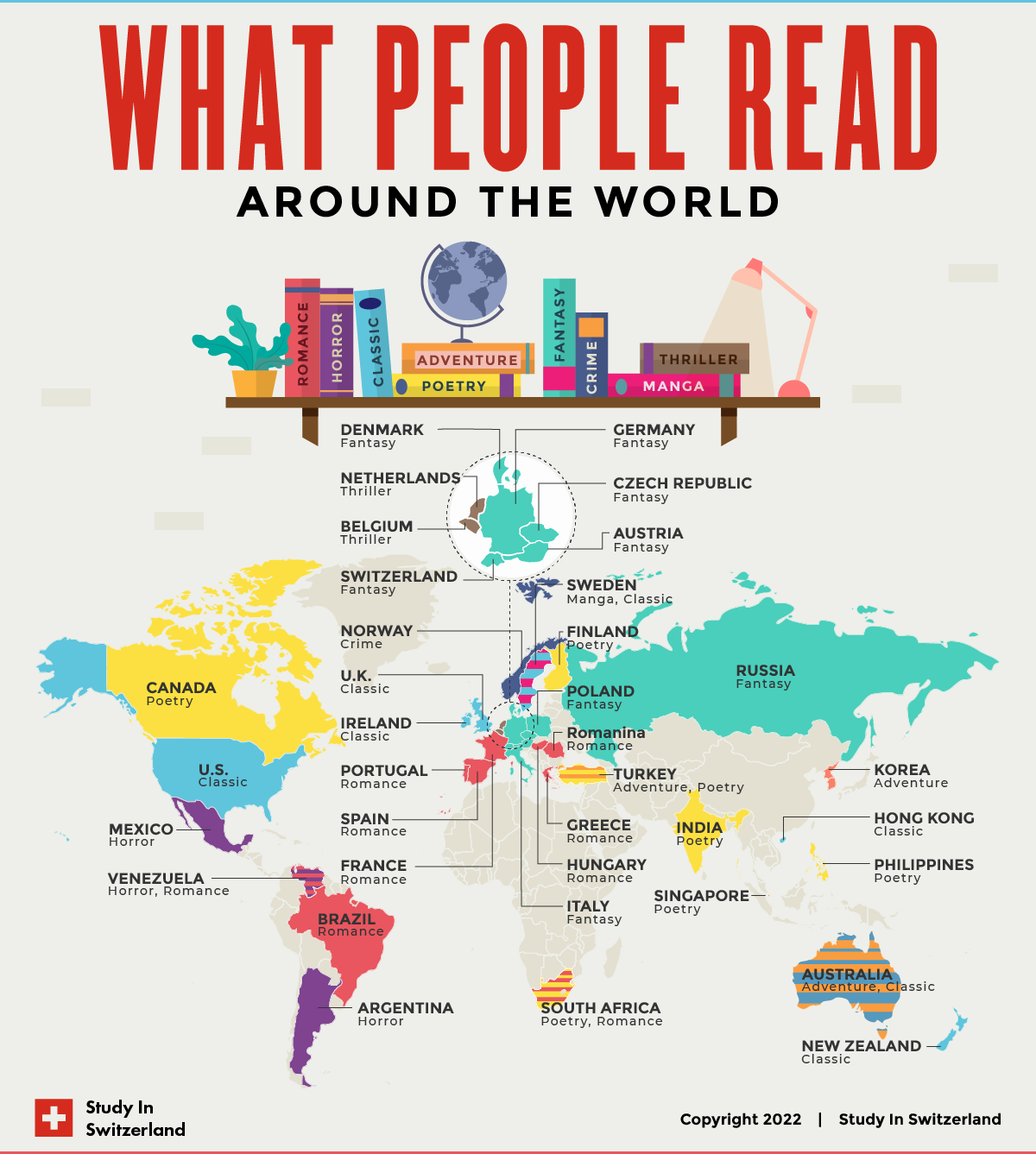
We are not the only country interested in Classics. This genre was also popular in Sweden, Hong Kong, USA, UK, Ireland and New Zealand.

Worldwide, they say, Romance, Classics and Poetry are the most searched for genres but, drilling down, there are some interesting preferences. Asians and Canadians, for example, had Poetry first, while overall Europeans (like the Russians, Poles and Finns) go for Fantasy, although some of them (like the French and Spanish) searched more or Romance! Not surprisingly, Belgians, the Dutch and the Norwegians seemed to prefer Crime and Thrillers.

Study in Switzerland makes some assumptions about the reasons for the various preferences they found. Those assumptions make some sense, but they are not based, I believe, on this research.

For their report, please check out this link.

Meanwhile …

There is other research to look at. Back in 2017, a survey conducted by the Australia Council and Macquarie University of Australians’ reading habits, found something closer to what I expected, which is that

The most popular fiction genre is crime/mystery/thriller, with 49% of Australians having read a book of that genre in the last 12 months … followed by historical fiction on 36%, contemporary/general fiction on 33%, science fiction/fantasy on 32%, and classics on 31%.

However, they also found that just over half (51%) of Australians were interested in “literary fiction”, which they described as fiction “eligible for prizes like the Man Booker and Miles Franklin”. They also found that it’s generally older readers who are most interested in this fiction. Interestingly, they found that these “older readers also tend to be more interested in work by Australian authors”.

I did report on this survey back in 2017, and posed some questions at the end. Some of these might have been answered by …

A report on bookselling published by ArtsHub in 2019 which confirmed Australians’ interest in “home-grown authors”. They found “a 30% jump in local authors featured in the top 25 fiction titles” over the previous two years. Further, bookseller and Book Club coordinator, Jennifer Stephens at Brisbane’s Avid Reader Bookshop, Brisbane, reported that “we are reading a lot of Australian women writers”. (Music to my ears, of course.)

Overall, this report, which drew on two years of Nielsen BookScan data, concluded:

Australian readers’ priorities and interests are evident: self-help and finance, a taste for home-grown writers, an eye for feminist writing, curiosity about sexuality and gender, a fascination with crime and mystery, and a deep need for First Nations perspectives.

I wonder if things have changed much since then, particularly given the pandemic? Either way, it’s interesting to ponder whether there is a significant difference between what we search for online and what we actually buy, or, whether, Study in Switzerland has identified a big swing in our interests over the pandemic?

Any thoughts?
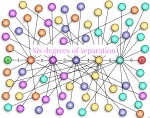
Six degrees of separation, FROM The end of the affair TO …

March. Summer is over and I’m a bit grumpy, as you couldn’t call what we’ve just had, summer. Very few days exceeded 30°C and none exceeded 35°C. But, I can’t really complain. I am not facing war or floods, and last month a new grandchild – a healthy baby girl – joined our family circle. I’m very fortunate. So, we’ll just enjoy autumn, always a lovely season, and get onto this month’s Six Degrees. As always, if you don’t know this meme and how it works, please check meme host Kate’s blog – booksaremyfavouriteandbest.

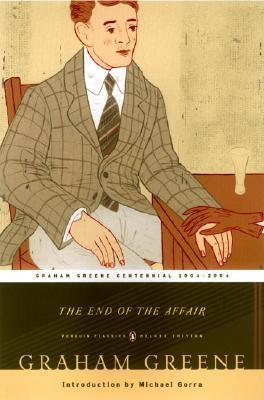
The first rule is that Kate sets our starting book. For March, she’s chosen a classic, Graham Greene’s The end of the affair. I’ve read a few Greenes but am not sure I’ve read this one, which has to be a gap in my reading …

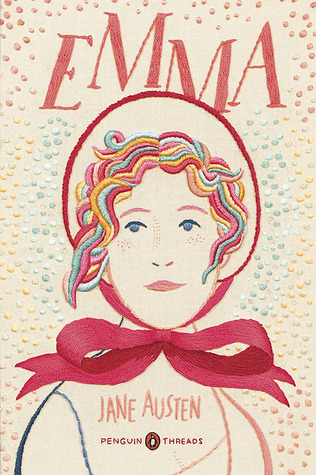
Jane Austen, Emma, Penguin

I have, in fact, even reviewed a Graham Greene novel here, but that seemed a  bit boring for a link. Moreover, it’s been some time since I included a Jane Austen novel in my chain, so this seemed to be the perfect opportunity. But no, the link is not on English classics, but on books that have been adapted to films of the same name. The end of the affair and Emma (one of my many Emma posts) have been adapted more than once.

Staying with film adaptations, the most recent film adaptation of Emma was the 2020 version directed by Autumn de Wilde to a screenplay by the New Zealand writer Eleanor Catton. It’s to her Booker prizewinning novel The luminaries (my review) that I’m linking next. Helen Garner is another novelist who has written screenplays (albeit original stories rather than adaptations) but she is not my next link!

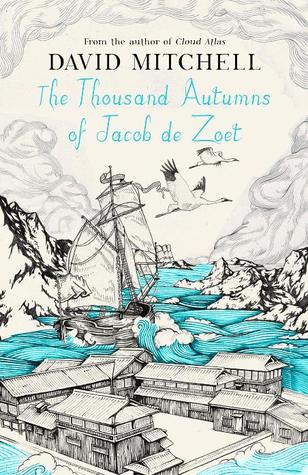
David Mitchell, The thousand autumns of Jacob de Poet

The luminaries has a large number of characters. Fortunately, Catton (or her publisher) very generously provided one of those character charts at the front of the novel. Another novel that has a huge character list is David Mitchell’s The thousand autumns of Jacob de Zoet (my review). No list or chart is provided in this book, but one of my reading group members created one herself. That was in 2010, and over a decade later we still often remind her of her diligence!

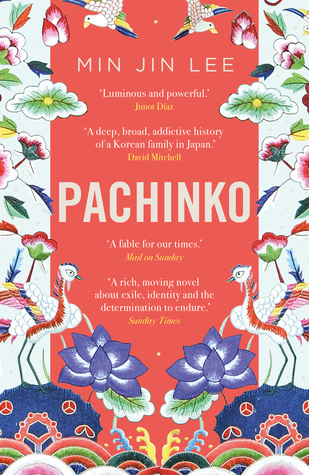
Min Jin Lee, Pachinko

I know many of you are David Mitchell fans, but for those who aren’t this novel was set in Japan (in Nagasaki in fact). Mitchell, of course, is not Japanese, but English. Another novel set in Japan but not written by a Japanese writer, is Korean American writer Min Jin Lee’s Pachinko (my review). This one, as many of you will know, tells the story of a Korean family in Japan. However, that’s irrelevant to my next link, which is a simple one …

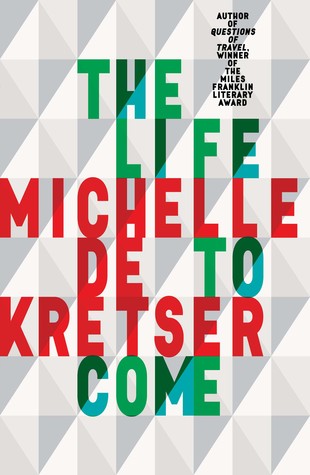
Michelle de Kretser, The life to come

Pachinko was published in 2017, along with a few other books, says she cheekily! One of those was Michelle de Kretser’s The life to come (my review), so that’s my simple fifth link. I guess you could say there’s another link here because de Kretser’s book does include some immigrant stories.

Book cover

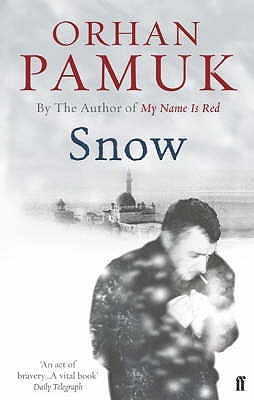
And now we go from a simple link to an obscure one. The life to come is told in 5 parts, one of which is titled “Pippa passes”. It surely has to be a reference to Robert Browning’s eponymous poem. This made me think of Browning, and epigraphs in books. I love epigraphs! So must Orhan Pamuk as he included four in his novel, Snow (my review), one of which was from Browning. Not from “Pippa passes”, unfortunately, but from “Bishop Blougram’s Apology”, on the paradoxical nature of things: “the honest thief, the tender murderer,/the superstitious atheist”. I enjoy paradoxes too, but, luckily for you, I’m at the end of my Six Degrees!

I feel as though I may have gone a bit rogue with my links this month, but I’ve enjoyed doing so. What isn’t rogue is that I’ve returned to my usual proportion of four links by women writers and two by men. We’ve travelled quite a bit – England, New Zealand, Australia, Japan, Turkey – with some brief trips to Korea and other spots around the world.

Now, the usual: Have you read The end of the affair? And, regardless, what would you link to?

Ida Vitale, Byobu (#BookReview)

Uruguayan writer Ida Vitale’s Byobu was my reading group’s second book of the year. Originally published in Spanish in 2018, with the English translation released in 2021, Byobu is Vitale’s first book of prose to be translated into English. Few, if any of us, had heard of her – and yet, this now 98-year-old woman was, in 2019, named by the BBC as one of the 100 most influential women of the year. The things we don’t know!

Anyhow, Byobu is a curious book. It has no clear narrative, and only one character, the eponymous Byobu. It’s just 85 pages, and comprises 34 “chapters”. It is replete with allusions to a diverse range of writers, thinkers, musicians. In other words, it’s one of those books you can struggle with, if you don’t come up with a way of reading it. For me, this was to jettison preconceptions about what a novel is and go with the flow to see what fell out. And what fell out was a mind-opening, and sometimes witty, series of thoughts and observations about life and living. I can’t say I understood all of it, but I thoroughly enjoyed the reading experience.

The best way I can encapsulate Byobu is to describe it as a sort of modern Everyman story, the story of an individual in a world that can be confusing, if not sometimes downright hostile. The overall theme seems to me to be: How do you live in this world?

Before I explore this more, some basics. Byobu is set in Uruguay, and although there’s no plot per se, there is some structure. (I’d probably find more structure had I time to read it a few times). The opening chapter introduces the idea of “story” – and clues us into the idea that we are going to be unsettled:

a story’s existence, even if not well defined or well assigned, even if only in its formative stage, just barely latent, emits vague but urgent emanations. (“A story”)

The next few chapters introduce us to Byobu, conveying a general sense of who he is. These are followed by chapters that consider bigger issues in contemporary life.

However, although we are introduced to Byobu, he remains somewhat shadowy. We don’t know how old he is, but one member of my reading group suggested he was old, like his author, and that he encompasses an old person’s thoughts about life. I can accept that. Regardless, besides not knowing how old he is, we don’t know whether he is (or has been) married, has a family, is working, and so on. A family home is mentioned, and there are references to daily activities including attending a conference. All this vagueness supports the idea of him as an Everyman (albeit, possibly, an old one!)

We do, though, learn some things about the sort of person Byobu is. He can be indecisive. He has “an intractable inclination to complicate things”, and hates change. He’s not a good storyteller, but he likes nature and enjoys minutiae. Unfortunately, though,

often distracted by some minutia captivating him at a particular moment, he misses fragments of conversations that later turn out to be important. (“On anodyne things”)

I found him very human and engaging, to the degree I could, given his shadowiness.

I fear though that I’m not selling the book, so I’ll try now to share some of its joys and intellect. I’ll start by talking a little about the style. Many of the “chapters”, and I put them in quotation marks because some are only a paragraph long, start with what you could call truisms, but they don’t read as cliches, like:

Everything important lies below the surface. (“Terrestrial labours”)

Byobu concludes that he must begin by ending. (“Knots”)

Byobu has heard it said that ‘every mile has its rough patch’. (“Epiphanies”)

Byobu is not always able to predict how the situations he gets involved in will end. (“Dangerous misunderstandings”)

How can you be sure that the avenue, boulevard, or ordinary road you’re facing is not actually a blind alley? (“Crossroads”)

Just look at that sentence, “Byobu concludes that he must begin by ending”. So terse, so clever. “Knots”, in fact, is one of those one-paragraph chapters. It concerns Byobu’s realisation that if he doesn’t end his “trepidations” and “tepid transactions”, if he doesn’t “lay limbos aside” and “ignore everything initiated by the iniquitous” – he will have to “accustom himself” to “the cage”. But, can he recreate himself?

“Crossroads” addresses another recurrent idea in the book, the importance of the imagination, of mystery, over the mundane. Opposing mystery and imagination are “straight lines” which also recur, starting in the second chapter, “Life is not a straight line”. In “Knots”, Byobu learns that straightness “lays snares” and in “Against the Argive Way”, he is aware that “The world loves conversations in straight lines and single-minded strides. Intersections divert. Labyrinths confound.”

A few chapters in, then, it dawned on me that Byobu was about more than a man muddling through life, that it’s a commentary on modern life. Byobu pleads for the imagination, for not going in straight lines. It critiques conformity, power and authority, commercialisation, urbanisation, inhumanity, and resistance to change. “Internal coherence” explores resisting social pressure. It is “immoral”, it suggests, to accept a world “governed by the boorish authorities who rule during these evil times we inhabit”. Yet, Vitale realises resistance is not easy, so her Byobu “resists on the inside, while staying quiet and feigning surrender”.

In the penultimate “chapter”, “Byobu and the traffic light”, traffic lights are a metaphor for “supervision and compliance”. Here “the defiant … recognise the bad example of a behaviour that is a silent hymn to obedience to all authority”. Vitale goes on to suggest that traffic lights should, in fact, “innervate the pedestrians” (who are “increasingly incongruent elements in the city”) to “assume their role as essential antagonists”. This chapter is a call to defy, to rebel.

Lest this all sound rather bleak, let me say there’s beauty here too. There are, for example, some lovely descriptions of nature:

In the garden, jasmines reign supreme. At night the star jasmine is a vertical Milky Way, delirious with aroma. (“Seasons”)

And, there is quite a bit of humour. Much is of the quiet, understated sort, but it made me laugh. “It’s true”, thinks Byobu, “there were three Wise Men; not quite a battalion” or “They’d better not count on him. He’s not an abacus”.

I hate leaving this book, but of course I must, so, I will leave you with two ideas. The first comes from one of the two epigraphs. Neither were translated, but the second is by Henri Michaux, and it roughly translates as “In case of danger, joke”! Joking is part of this book, but it is also deadly serious. Speaking of “story”, the opening chapter exhorts Byobu (our Everyman) not to “underestimate its flexible, disordered density”. And neither should we, because this novel has much to offer those willing to go with its flow.

Ida Vitale
Byobu
Translated from the Spanish by Sean Manning
Edinburgh: Charco Press, 2021 (Orig. Pub. 2018)
85pp.
ISBN: 9781913867023

Stella Prize 2022 Longlist announced

Apologies to those of you who look forward to my Monday Musings post, but I’ve gazumped this week’s edition, because the Stella Prize longlist was announced this evening, and I do like to report on that. I attended the online streamed announcement.

As I say every year, I don’t do well at having read the Stella Prize longlist at the time of its announcement. In recent years the most I’ve read has been two (in 2019). Last year it was none. I don’t expect much better this year.

I was, however, doing better at reading the winners, having read Carrie Tiffany’s Mateship with birds (2013), Clare Wright’s The forgotten rebels of Eureka (2014), Emily Bitto’s The strays (2015), Charlotte Wood’s The natural way of things (2016), Heather Rose’s The museum of modern love (2017), and Vicki Laveau-Harvie’s The erratics (2019). But, that’s slipping too. So far, I’ve missed 2018’s winner, Alexis Wright’s Tracker, am still reading 2020’s winner, Jess Hill’s See what you made me do, and still have last year’s winner, Evie Wyld’s The bass rock on my TBR.

The judges are a complete changeover from last year’s with the excellent, multi-award-winning Melissa Lucashenko taking the role of chair. Her co-judges are writer, poet, essayist Declan Fry; author-across-all-forms Cate Kennedy; memoirist and activist Sisonke Msimang; and essayist and screenwriter Oliver Reeson. As always, attention has been paid to diversity on the panel.

Oh, and I should note that a new form has been added to those eligible for the prize this year, single-author poetry collections. An excellent decision – as it turns out.

The longlist

  • Randa Abdel-Fattah, Coming of age in the War on Terror (nonfiction)
  • Eunice Andrada, Take care (poetry)
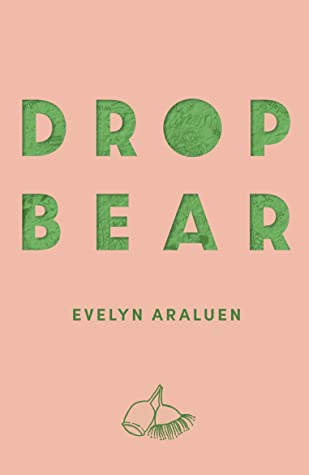
  • Evelyn Araluen, Dropbear (poetry) (TBR, Brona’s review)
  • Paige Clark, She is haunted (short stories)
  • Anwen Crawford, No document (memoir) (Lisa’s review)
  • Jennifer Down, Bodies of light (novel)
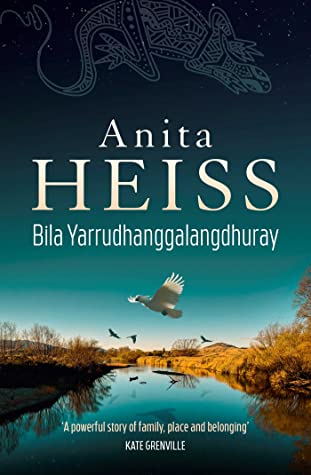
  • Anita Heiss, Bila Yarrudhanggalangdhuray (novel) (TBR, Lisa’s review)
  • Lee Lai, Stone fruit (graphic novel)
  • SJ Norman, Permafrost (short stories)
  • Elfie Shiosaki, Homecoming (memoir) (Lisa’s review)
  • Lucy Van, The Open (poetry) 
  • Chelsea Watego’s Another day in the colony (nonfiction) (Bill’s post)

I didn’t have a strong feel for what might be on the list, but did guess four that ended up there – Araluen, Crawford, Down and Watego. I should have thought of Heiss. On the other hand, although I haven’t read it yet, I was hoping to see Melinda Bobis’ The kindness of birds. However, as I haven’t read any of the longlist, I’m not going to judge. But I will say that the panel discussion that followed the announcement made powerful arguments for their choices. It might be a cliched thing to say, but it looks like a brave list that is likely to challenge readers.

In the lively and very enjoyable online discussion, the panel made some overall comments, as well as discussing individual books. They said that the flavour of the year was poetry. There are, in fact, three on the list. Interestingly, there are only two novels, but there is a graphic novel, and there are two short story collections, so fiction is still well represented. That leaves four works of nonfiction to round out the twelve.

The panel was “excited to have all genres in the list”, and made the strong point that it’s the message that matters more than the medium. It was very clear, as the evening progressed, that message was a critical issue for this panel, that works that interrogate and fiercely tackle the serious matters confronting us, are what most attracted them – whether from a political, or personal point of view, or both. As one who loves “message” in literature, I appreciate this. However, lest all this sound too bleakly serious, they also made the point that although the books are all “quite challenging”, in most there’s also wit, if not, in some, laugh-out-loud humour.

Finally, I’ll close with judging panel chair, Melissa Lucashenko’s opening comments:

In the aftermath of Black Lives Matter and #MeToo, Stella writers are not holding back… Australian women and non-binary writers are producing innovative, sophisticated literature in very difficult times. It has been a great privilege to read and assess their work for the 2022 Stella Prize.

To read more, do check out the Stella website.

The shortlist will be announced on 31 March, and the winner on 28 April.

Any comments?

On John Sinclair

Who is John Sinclair, you are probably asking? Those of you who read my last post, Shy love smiles and acid drops: Letters from a difficult marriage, may remember that he was the husband of the marriage in question, and father of the author, Jane Sinclair. However, as I briefly mentioned in that post, John Sinclair was also a music critic in Melbourne from 1947 to 1985.

As a keen concert-goer I was intrigued, and so did a little digging. I found an interesting man with a passion for some things that might interest us here. This is to say, he had some definite ideas about criticism, and about supporting Australian music and culture. Most of what I’m sharing here came from a 1998 article by Adrian Thomas called ‘“Beware of snakes, spiders and Sinclair”: John Sinclair (1919-1991), Music critic for the Melbourne Herald: The early years’.

If you are interested, read the article, but regarding Sinclair’s background, Thomas tells us that he started out as an artist. In fact, in the early 1940s, newspaper owner Sir Keith Murdoch gave him a stipend over other prominent artists like Sidney Nolan (who was a good friend of Sinclair’s). It was during this time that Sinclair became involved with the Heidi artistic community. Thomas doesn’t know why he didn’t continue with art, but says that his association with this circle and “their artistic beliefs” informed his career as a music critic. He was determined “to encourage a vibrant and enduring musical culture in Melbourne” like that artistic one. He also advocated for contemporary music and championed “those Australian composers and performers whose talents he deemed worthy of support.” In 1947, he was employed as music critic by Murdoch’s Herald, and there he stayed.

The function of the music critic

Sinclair apparently wrote quite a bit about criticism. Re music critics, he argued that, in addition to having the skills necessary to determining “the merit or otherwise of a performance, it is equally important that he [this was 1947] should possess the ability to translate his musical experience into terms accessible to the layman”. He saw criticism as being still “relatively undeveloped in Australia”, and was keen to be part of its development.

He was known, says Thomas, for writing “direct and uncompromising reviews” which “shook the musical establishment”. As is the way of these things, people focused on the negative, but Thomas says that “quality performances were always acknowledged”. I couldn’t resist checking, and I found many positive ones in Trove, alongside some negative ones.

For example, he wrote in 1952 of a young Australian organist, John Eggington, just returned from England, that “certainly, Melbourne organ lovers would find it difficult to recall many occasions on which the playing was as clear, expressive and brilliant as Mr Eggington’s was today”. 

His negative reviews, though, were not gentle. In 1947 he wrote on a recital by Viennese-born Australian pianist Paul Schramm, saying he “sat at the piano, dispassionate and efficient — something of a musical pharmacist dispensing a potion with deft and skilful fingers. He is a natural musician, and a fluid and sensitive interpreter.” However, while it was good playing and musical, it was also “always facile”. Returning to the pharmacist analogy, Sinclair concludes that

Mr Schramm, however, appears more concerned with the effect of his dispensations on his listeners than a personal search in the deeper realms of the composer’s meaning. 

All told, I think Mr Schramm and I were among the few people who weren’t really enjoying themselves last night.

The negative ones caused controversy, which was good for the newspaper business, but even Murdoch himself, writes Thomas, stepped in to give Sinclair his view of criticism.

Anyhow, Sinclair said a few more things about criticism that are more broadly applicable, and appealed to me, such as that it is the critic’s

job to know his subject, to set his standards and then to hold to them so that any thoughtful reader, on the evidence of a series of criticisms, can determine where he and the critic stand in relation to music. Only then can the reader form a worth-while opinion of the music on which the critic has reported. (1952)

I like this point about critics having clear criteria/standards that we can get to know. He also noted in 1952 that “the critic stands between the musician and the public and contributes to the understanding of music by measuring the individual work or performance against the widest possible background”.

And in 1973, in a letter to the Australian Council of the Arts, he said, among other things, that:

I have always believed that my responsibility was to the cause of music in the widest sense [my emph.]; that I had a responsibility not only to make reputable judgements about performance but to understand the many and complex factors that determine the quality of music making in the community.

I like his views on the practice and role of criticism. What about you?

Supporting contemporary music and musicians

Thomas discusses Sinclair’s role in improving what was Australia’s “immature musical culture”, in terms of concert-going behaviour, but my main interest is Sinclair’s ongoing concern with public’s “indifferent attitudes towards Australian composers and performers”. He laid much of this at the feet of the ABC. It was Australia’s main concert organiser and it focused on international performers. He wrote in 1952 that “in the long run it is the quality of indigenous musical activity, and not the playing of visitors that determines the worth of a year”.

The public, he saw, was being trained to prefer the international celebrity. Even worse, the concerts these and local orchestras performed primarily comprised standards from the eighteenth and nineteenth centuries. He argued that “the ABC has an obligation to foster public taste and to provide conditions in which Australian musicians can develop and mature”. He worked hard to promote contemporary music and local composers. I found a 1951 review of a concert conducted by Eugene Goossens in which he praises Goossens for “continuing his very tangible services to Australian composers” by conducting the first Melbourne performance of Margaret Sutherland’s tone poem “Haunted Hills”. Similarly, a review of a 1952 Victorian Symphony Orchestra concert starts:

Much more contemporary music than usual and an excellent standard of performance distinguished last night’s concert by the Victorian Symphony Orchestra under Juan Jose Castro in the Melbourne Town Hall.

Thomas tells us “by the time the ABC tried to change the culture by appointing composer and contemporary music advocate Juan Castro as resident conductor in 1952, a conservative attitude to music was firmly entrenched in audiences”.

Converting audiences to contemporary music has always been a tough ask, but it, like all contemporary artistic endeavour, must be supported if culture is to remain fresh. I have enjoyed getting to know John Sinclair a little more, and greatly enjoyed reading his writing in the Herald.

We don’t hear much about his work in Shy love smiles, but he and Jeannie do discuss music occasionally. I’ll close on something Jeannie wrote to him in 1961 about a concert she attended at Glyndebourne. The work was modern, “Elegy for young lovers” by Henze, with words by Auden. She loved it:

my hair stood on end as the symbols [sic] clashed on and on. You probably read about it. Ah well. Also the audience was more serious and highbrow and sympathetic. Obviously the society ladies were frightened.

They shared some values, it seems. I’ll leave it there.

Adrian Thomas
‘”Beware of snakes, spiders and Sinclair”: John Sinclair (1919-1991), Music critic for the Melbourne Herald: The early years’ in Context: Journal of Music Research, No. 15/16, 1998: 79-90

Jane Sinclair, Shy love smiles and acid drops (#BookReview)

Jane Sinclair’s hybrid biography-memoir, Shy love smiles and acid drops: Letters from a difficult marriage, is an unusual book. Covering around two years in her parents’ life, this book comprises, mostly, letters sent between her parents between April 1960 and July 1962 when Sinclair and her mother were in England while her father remained in Australia. Between the letters (and some entries from her mother’s journal), Sinclair adds explanatory information, which ensures the narrative flow.

Sinclair was 5 to 7 years old when these letters were written. Being so young, her memory of that time is scattered, but she has clearly thought much about her parents in her adult life. Also, she remembers family stories of those times told to her later, and she did discuss her parents’ relationship with them, though, as is the way with such things, not as much as she wishes she had. The book was inspired by her finding the letters that underpin this book.

What makes this book particularly interesting is who her parents are, the artist Jean Langley and music critic John Sinclair. You may or may not have heard of them, but these two were part of mid-twentieth century Melbourne’s arts and music scene. In particular, they had close connections with the Heide artistic community, which inspired Emily Bitto’s award-winning novel, The strays (my review), and which was created by two art-lovers and philanthropists, John and Sunday Reed. This community was famous for two things, the art produced there and the complicated personal relationships amongst its members.

Some of Australia’s best-regarded modernist artists were associated with Heide, people like Albert Tucker, Sidney Nolan, and Joy Hester, all of whom appear in this book. Artist Arthur Boyd was also close to these people, though not part of the community. However, Heide was just as well-known, as Wikipedia puts it, for “the intertwined personal and professional lives of the people involved”. Sunday Reed herself had affairs with several in the community, with her husband’s knowledge. This art history is what primarily attracted me to the book, but it was the background rather than the focus that I’d hoped. Instead, Shy love smiles and acid drops is exactly what it says it is, the story of “a difficult marriage”. As we are told on the back cover

when Jane Sinclair was five her mother Jean Langley followed her lover, Arthur Boyd, to London and took Jane with her. This book covers the two years they live there before returning to Australia in 1962, by which time her mother is three months pregnant to an Englishman.

“Your letter makes me cross” (Jeannie)

The letters are difficult reading because of the emotional pain and distress they contain. There are some fascinating insights into London and England at a time when many Australians saw it as a mecca for arts and culture. Indeed, while Jean Langley was there, living near the Boyds, so were their friends, Barry Humphries and his wife.

In her introduction, Sinclair speaks of how the letters caused her to “seriously question” her mother’s “version of herself as the aggrieved, wronged wife that she had cultivated and genuinely believe to be true”. Sinclair was also sorry that she had never allowed her father, who died twenty-five years before her mother, to tell his side of the story. This is understandable given when he died, she had probably not reached that age of (hopefully) wise reflection many of us do later in our lives, that age when we start to really see our parents as human beings, rather than seeing them through the prism of their relationship with us. I think this is so, in even the best of parent-child relationships?

Anyhow, Sinclair tells us that her parents’ relationship was “intense and difficult” from the start. They separated many times, but “there remained an irresistible attraction that kept them returning to each other”. Eleven years of age separated her mother and father, but it seems that personality difference (“not compatible emotionally”) was the essential problem. John Sinclair apparently tended to melancholy and depression, while Jean Langley was a romantic. “She could create sparkle and shine” and “wanted the world to be a beautiful place of happy endings”. All this comes through the letters. John expresses his sadness, his missing his wife and daughter, while Jeannie expresses her frustration with him, and her increasing disappointment with life and human beings, as things become more and more complicated. The England she adored at the beginning of her trip is not so great when it becomes cold and grey, and as the reality of never having enough money sets in.

“a riddle, muddle, fiddle, diddle” (Jeannie)

But what comes through even more is miscommunication, and particularly what seems to be Jeannie’s wilful misreading of John’s letters. When he invites her to return home on her terms – meaning she can live separately from him if she wishes – Jeannie seems to misread that wilfully, insisting again and again that she can’t be his wife, she won’t sleep with him, and so on. Readers wonder where she reads this, because we don’t.

At times, I put my feminist hat on and wondered whether there was something about John that we don’t know. Should I be supporting my down-trodden sister, I started to wonder? But, while there are, naturally, gender issues to do with women’s place in the mid-twentieth century, I don’t read a woman wronged by her husband here. I read a woman who, due to her own personality, and upbringing perhaps, regularly let emotion cloud her ability to reason – to her own detriment as well as those around her. She falls in and out of love twice during this English sojourn – besides the apparently abiding love for Arthur Boyd – and admits in June 1962 that, “I seem to have made a mess of my emotions”.

As the narrative progresses, daughter Jean notes that her mother, who liked to see herself as truthful, strayed often from it:

My mother believed in her emotional truth, and unfortunately for my father, it was sometimes very far from reality.

Reading this, I think I would say more than “sometimes”. I have known people like Jeannie, people who have such a zest for life but who wear their emotions so close to the surface that they can’t reason through what is really happening. They can be both joyful and draining to be around, and this is how Jeannie comes across.

This is not my usual review, because, in a sense, it’s hard to review such a personal book. Indeed it’s so personal that it’s worth thinking about its target. There’s some interesting social history here – life in the 60s, the experience of Aussie artistic expats in London, the challenges of communication in those pre-electronic communications days. There’s also a little about the the art world, the odd reference to a Boyd or Nolan exhibition, to the Blackmans, and to Brett Whiteley whom Jeannie calls “a shocking little upstart”. But, overall, this is a nicely presented but intense story of a “difficult marriage”, and it will appeal mostly to those interested in human relationships.

Read for #ReadIndies month (kaggsysbookishramblings and Lizzy’s Literary Life). Hybrid is a Melbourne-based independent publisher, with a special but not exclusive interest in Judaica. I have reviewed many of their books over the years.

Jane Sinclair
Shy love smiles and acid drops: Letters from a difficult marriage
Melbourne: Hybrid Publishers, 2021
279pp.
Cover art: from oil painting by Jane Sinclair
ISBN: 9781925736588

(Review copy courtesy Hybrid Publishers)

Monday musings on Australian literature: Two new indies

This month – February* – has been designated #ReadIndies month by two British bloggers, Karen (kaggsysbookishramblings) and Lizzy (Lizzy’s Literary Life). The rules are simple: “read anything you like, in any language you like, as long as it was published by an independent publisher”. This is not a difficult reading month for me to take part in, as the majority of my reading comes from independent publishers.

However, the question is, what is an independent publisher? Karen and Lizzy admit that it’s not easy to define, but they mean smaller outfits that print and issue their own works, and aren’t part of a larger conglomerate. In Australia, the Small Press Network (about which I’ve written before) is a good place to start. In the end, Karen and Lizzy suggest “going with your gut”. They also say, quite rightly, that most independent publisher websites will proclaim their independence. I have written a few times about independent publishers. You can find most of these on my Small Publishers tag. In those posts, I’ve named many small and independent publishers. In this post I’m adding two very new publishers which launched during the pandemic: Ultimo Press and Upswell. What a funny coincidence that both start with U!

Ultimo Press

“to be distinctive, a little bit different, to disrupt and to have fun.”

Launched in 2020, Ultimo Press is an independent publisher with the simple ambition of becoming “home to Australia’s best storytellers”. They say they are part of Hardie Grant Publishing (which is now a reasonably large, diverse business with offices worldwide), making me wonder what they mean by “independent”. However, Hardie Grant describes itself as “independent” and “Australian-owned”, so I’m going with it.

Most Australians will assume, rightly, that Ultimo’s name comes from the Sydney suburb, but here is how they describe it:

Named for the Sydney suburb that houses Hardie Grant’s Sydney office, Ultimo references our home – an historic and colourful part of Sydney. The Italian translates roughly to ‘the latest’, and that will be our ambition: to provide a platform for the latest trends and newest voices.

The staff has some extensive industry cred, as the Who We Are page shows.

They “want to excite readers of general and literary fiction (especially the sweet spot in between), and discover non-fiction that inspires and ignites”. Their “hallmarks will be editorial excellence, arresting design, dynamic marketing and publicity, respect and loyalty to our authors, and publishing compelling new voices and original perspectives that reflect the full spectrum of Australian life”.

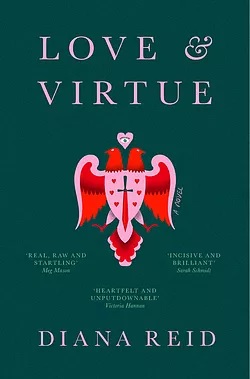
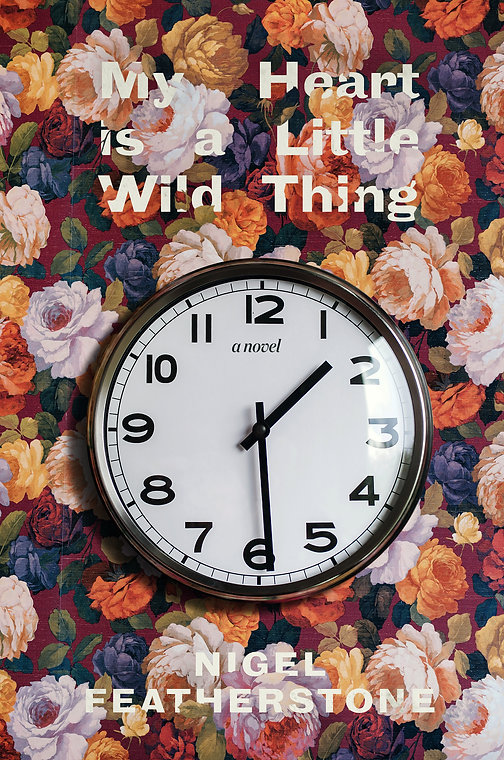
They have certainly started with a bang, with some of their books already making a splash, like Diana Reid’s Love and virtue (which I gave Daughter Gums for Christmas and she loved) and Shankari Chandran’s Chai time at Cinnamon Gardens. They’ve published Claire G. Coleman, and coming up is Yumna Kassab’s Australiana (March 2022), and local writer Nigel Featherstone’s latest novel, My heart is is a little wild thing (May 2022). Regular readers here will be familiar with Featherstone’s warm, expressive writing.

Ultimo certainly looks like a new indie to watch, as does …

Upswell

“where have all the adventurous readers gone?”**

Launched in 2021, Upswell is, you could probably say, a passion project, but it’s the passion project of someone with significant cred too. Director Terri-ann White ran UWA Publishing from 2006 until mid-2020. During that time she was responsible for significant publishing output across the genres, but, for litbloggers like me, especially for some great literary fiction and creative non-fiction. Josephine Wilson’s Miles Franklin Award winning Extinctions (Amanda’s review) and Jessica White’s hybrid biography-memoir, Hearing Maud (my review) are just two examples of too many to name.

Upswell is a not-for-profit company, with its directors being three impressive women, Carmen Lawrence, Linda Savage and White.

Like Ultimo Press, White wants to publish distinctive works, but puts it this way. She will publish

a small number of distinctive books each year in, broadly, the areas of narrative nonfiction, fiction and poetry. I am interested in books that elude easy categorising and work somewhat against the grain of current trends. They are books that may have trouble finding a home in the contemporary Australian publishing sector.

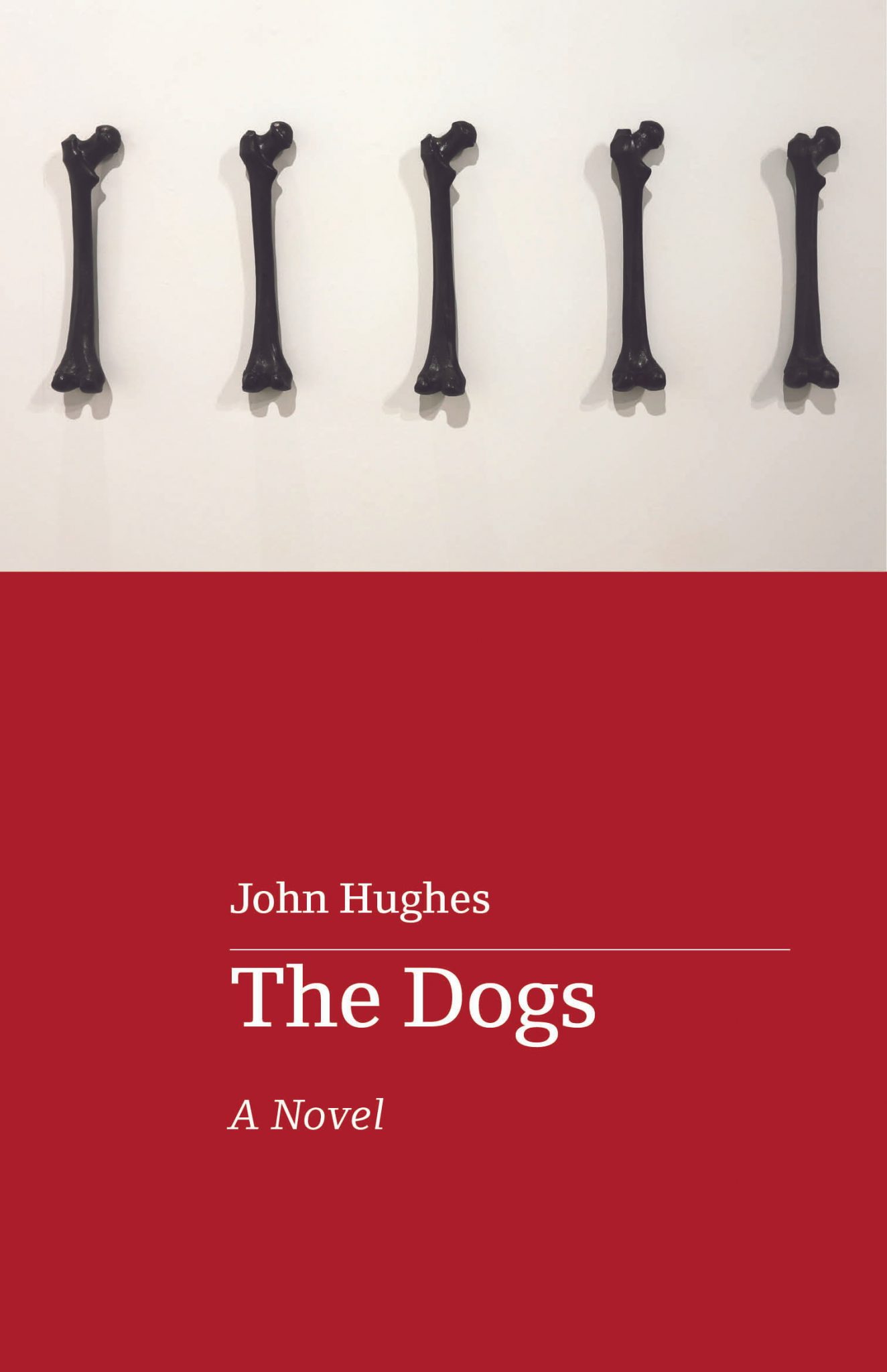
She’s shown, with her early list, not to be afraid of forms that often scare off the big publishers, like novellas, essays and poetry. And, like Ultimo, Upswell has started well with one of its first books, John Hughes’ The dogs (Lisa’s review) being shortlisted for last year’s Victorian Premier’s Literary Awards (not that awards are the only – or main – marker of excellence.)

Upswell is also distributing a bit differently. Of course, individual books can be bought from them directly or from booksellers, but they also have a subscription program, which Lisa and I took part in last year, receiving their first three books: John Hughes’ The dogs, Belinda Probert’s Imaginative possession and Vietnamese-American author Monique Truong’s The sweetest fruit. This year they are offering several subscription packages, which is a great option. You get to support an excellent publisher by providing them some certainty and you get little surprises during the year.

This isn’t the only different thing, however. Upswell also has DGR status, which means that (Australian) donations to them are tax-deductible. Donations will support their Regional Writing and Publishing Workshops, Mentorships with White, a strong poetry list, and their Noongar Voices program.

So, two new indies to add to the ever-growing list of wonderful indie publishers in Australia. Do support them when you can – and, the bookshops which stock (and feature) them. If you don’t see them at your local bookshop, talk to the bookseller. A personal touch is a powerful thing.

Finally, a little aside just in case you are interested, Marcie (Buried in Print) is running a Read Indies series on her blog, in which she is devoting posts to individual Canadian indies.

* The “month” has been extended to 15 March.
** From an article by Terri-ann White in SeeSaw magazine

Julie Koh, Portable curiosities: Stories (#BookReview)

I’ve decided to try reading more audiobooks this year, despite not being a big fan of this mode of consuming books. I’m a textual person. I like to see the print on the page, how it is set out. I like to see the words. I like to see how the names are spelt. Given my reservations and the fact that I expect to “read” in short stints, I thought short stories might be the way to go. I think they are, though my overall reservations still stand.

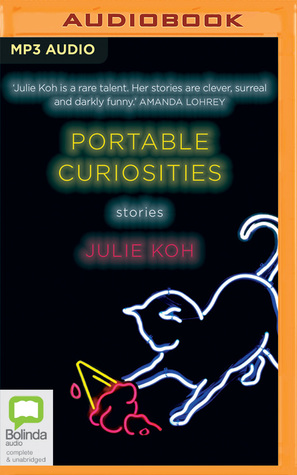
My first book was one that was well-reviewed when it appeared in 2016, Julie Koh’s Portable curiosities. It won the SMH Best Young Novelists Awards in 2017, and was shortlisted for several other awards, including the Steele Rudd Award for Short Story Collections (Queensland Literary Awards) and the Glenda Adams Award for New Writing (NSW Premier’s Literary Awards). I checked to see who won the Steele Rudd Award that year, because Koh’s collection is great. It was clearly a strong year. There were co-winners, Elizabeth Harrower’s wonderful A few days in the country, and other stories (my review) and Fiona McFarlane’s High places, which I’ve also been wanting to read.

So, Portable curiosities. I had no idea what this collection was about, and was delighted to find a lively, engaged and engaging interrogation of contemporary Australia, particularly as it intersects with Chinese-Australian experienceIt is highly satirical, penetrating the myths and assumptions that underpin our shaky existence.

The order of stories in a collection is always worth thinking about, and it is notable that this twelve-story collection opens with a story called “Sight” which satirises immigrant Chinese mothers who are so ambitious for their children to fit in and achieve success that they discourage any sort of individuality or creativity. Many of the stories have a surreal or absurdist element. They start realistically but suddenly we find ourselves in another realm or dimension. “Sight”, starting off the collection, is an example. Here, we suddenly find our young narrator having a “third eye” painted on her navel. This eye represents her imaginative self, so her mother organises for it to be removed in an operation.

From here, having satirised Chinese immigrant culture, Koh moves on to critique, with biting clarity, aspects of Australian culture, from misogyny (in “Fantastic breasts” where our male narrator looks for “the perfect set of breasts to have and to hold” at a conference on “The difficulties of an objective existence in a patriarchal world”) to crushing, soulless workplaces that pay lipservice to their employees’ mental health (in “Civility Place”). “Satirist rising” mourns the end of the civilised world, with a bizarre travelling exhibition that aims to ensure the continuation of the “landscapes of our mind”, while the cleverly titled “Cream reaper” (you have to read it to see what I mean) tackles foodie culture, turning foodie-ism into an extreme sport. Along the way, it also skewers multiple aspects of our capitalist culture, like the housing bubble, the commercialism of art, institutional banking, and the plight of the tortured writer.

As a retired film archivist, I loved “The three-dimensional yellow man” which takes to task the stereotyping of Asians on film. There’s “no need for a back story”, our one-dimensional (yellow man) Asian actor is told, “you’re evil”. He belongs, after all, to the “cruel, meek blank-faced race”. Again, the satirical targets are broad-ranging from film festival panels to Pauline Hanson – and embarrassingly close to the bone.

Many of the stories, like “Two” and “Slow death of Cat Cafe”, explore success, materialism and power, while the 2030-set “The Sister Company” exposes a cynically commercial “mental health industry” through the application of androids to the problem. All these stories, despite, or because of, their laugh-out-loud moments and forays into absurdity, hit their mark. A couple, such as “Two” and “Cream reaper”, felt a bit long, even though I thoroughly enjoyed their imagination, but this might have been a product of listening rather than reading, so I’m reserving judgement on this.

My favourite, however, was probably the last, “The fat girl in history”, which opens on a reference to the popular (in Australia) CSIRO Total Well-being Diet. The narrator is Julie, and, although this story also moves into surreal realms, there is a strong sense of autofiction here. Remember, though, that autofiction is still fiction so … Our narrator is a fiction-writer experiencing a crisis of confidence. She has written about a depressed girl, androids and the future – all of which appear in this collection. She’s been told that she writes like Peter Carey, though she admits she’s never read him. She reads an article telling her that contemporary literature is “in the throes of autofiction”, that the “days of pastiche are over”, and then informs us that she’s going to write autofiction titled “The fat girl in history.” Australians will know that Peter Carey has written a short story, “The fat man in history”, and that his debut collection named for this story started his stellar career. I will leave you to think about the portents and threads of meaning Koh is playing with here, but her outright cheekiness in daring us to go with her made me laugh – particularly when I saw where she went.

Portable curiosities deals with serious, on-song subjects, and I so enjoyed seeing her address them through satire, absurdity and surrealism with a healthy dose of black humour. At times the lateral thinking in these stories, not to mention Koh’s interest in satire, reminded me of Carmel Bird. A most enjoyable collection, that was expressively read by Lauren Hamilton Neill.

Julie Koh
Portable curiosities: Stories
(Read by Lauren Hamilton Neill)
Bolinda Audio, 2018 (Orig. pub. 2016)
5hrs 48mins (Unabridged)
ISBN: 9781489440808

Monday musings on Australian literature: The Guardian Australia’s Unmissables (2)

Two years ago, I wrote a post on The Guardian Australia’s Unmissables series, which was initiated in 2019 and aimed to highlight 12 new releases they deem “significant”. The series was supported by the Copyright Agency Cultural Fund.

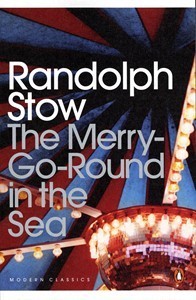
Randolph Stow, The merry-go-round in the sea

I wondered at the end of my previous post whether the project would continue after the initial twelve. It seems that it did, at least until August 2020. By that time, they’d added 15 more works, but there were some changes. The initial project was about “highlighting significant new release Australian books”, but, pleasingly to me, later selections include older books like Randolph Stow’s The merry-go-round in the sea, published in 1965. This is because, from the 15th selection on, they changed tack to offer books “you’ve finally got time for”. That is, Unmissables went from “new releases” to books recommended by writers “for your lockdown”. 

With this, they also changed how the books were presented. In the original series, there were two articles per book, one on the book and one offering some additional resource – an extract from the book, or an interview with or essay by the author. From the 15th selection, there’s just one article, written by the recommender.

I’m chuffed that I’ve read several of this more broadly focused selection. And now, before I list the books, I’ll share Christos Tsiolkas’ comments on making a selection:

Should I choose a novel that I think under-appreciated and undervalued? Should I use positive discrimination in my choice? Should I choose the contemporary and au courant? Or should I be deliberately anti-fashion?

My being disconcerted speaks to the obsession with the “curated self” that we all now have in the digital age: every choice must be scrutinised for its moral and political purport. But in the end, I decided to trust my instincts. I had returned home from overseas in mid-March of this year and, knowing I was to enter a fortnight’s quarantine and then a subsequent period of quietude, I picked a handful of books off the shelves that I just had to read again. The only Australian book I chose in that initial cluster was Randolph Stow’s The Merry-Go-Round in the Sea.

Now, the books …

(Listed alphabetically by author)

Book cover
  • Julia Baird’s Phosphorescence (nonfiction) (1/4/2020) (my review) plus essay by Bridie Jabour applying Baird’s book to living through coronavirus. Little did she know in April 2020, how far we had to go!
  • Peter Carey’s True history of the Kelly Gang (novel) (3/8/2020) (read before blogging) recommended by Caro Llewellyn. Clearly a Carey fan, she says she read it knowing she “was in the presence of a writer walking along a knife’s edge of daring and audacity, my stomach churning at Australia’s cruel past”.
  • Kenneth Cook’s Wake in fright (novel)(24/7/2020) recommended by Briohny Doyle who says the story is easy to explain but its “nightmarish tension not so much”. However, she gives it a red hot go!
  • Chris Flynn’s Mammoth (novel) (24/4/2020) (my review) plus essay by Paul Daley who explains how this book about which he was doubtful got him hooked good and proper.
  • Kate Grenville’s The secret river (novel) (20/7/2020) (read before blogging) recommended by Stephanie Wood who says that “we hold our breath as we read, hoping for the happy, harmonious ending we know cannot come”.
  • Clive James’ Sentenced to life (poetry collection) (28/5/2020) recommended by Vicki Laveau Harvie who calls this slim volume “the poetic equivalent of the tiny, concentrated energy rations marathon runners take to keep going, when the end is not yet in sight”.
  • George Johnston’s A cartload of clay (novel) (6/7/2020) recommended by Paul Daley whose comments are included in my recent Unfinished books post.
  • Elizabeth Jolley’s My father’s moon (novel) (10/7/2020) (my review) recommended by Carrie Tiffany, who opens her piece with “it is proof of a fine novel when its characters enter your spirit as you are reading and take up residence there”.
  • Melissa Lucashenko’s Too much lip (novel) (17/7/2020) (my review) recommended by Alice Pung, who supports this book with a passionate argument that ‘for those of us whose family survived genocide, slavery and stolen children (as mine did), this book is a triumph, brimming with love and wit”.
  • Frederic Manning’s The middle part of fortune (19/6/2020) (Lisa’s review) recommended by Jeff Sparrow who asks “Why hasn’t Anzackery’s ever-rising tide washed Frederic Manning and The Middle Parts of Fortune further up the Australian literary shore?”
  • Alice Pung’s Her father’s daughter (memoir) (27/7/2020) (my review) recommended by Melanie Cheng who discusses her choice, saying “escapism seemed facile”. She needed “a book that could speak to the existential emergency humanity was facing, but also offer a blueprint for how to get through it”.
  • Nevil Shute’s On the beach (novel) (21/5/2020) recommended by Chris Flynn who calls it “a dynamite isolation read”. A teen favourite of mine, it has dated I think, but is still a good apocalypse read.
  • Randolph Stow’s The merry-go-round in the sea (novel) (11/6/2020) (my review) recommended by Christos Tsiolkas. He appreciates that COVID-19 has provided “the opportunity for stillness”, and suggests Stow’s novel is perfect because “it unfolds at a composed, quiet pace”.
  • Alexis Wright’s Carpentaria (novel) (4/6/2020) (my post) recommended by Tara June Winch, who provides excellent insight into how to approach this wild novel. She says “it will change you, as long as you have the guts to read all the way through”.
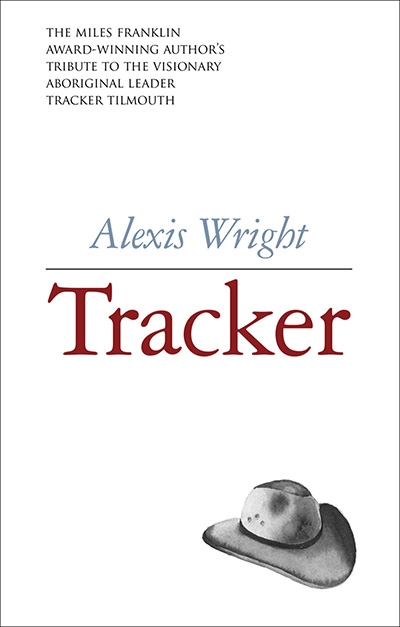
  • Alexis Wright’s Tracker (collective biography)(13/7/2020) recommended by Tegan Bennett Daylight who summarises this Stella-winner as “a chorus of voices about one of the country’s most prominent Indigenous activists is a glorious kaleidoscope of testimony”
Alexis Wright, Tracker

I wish The Guardian provided more about this project. How did the funding get extended and why did it stop? Regardless, there’s good reading here, both the books and the articles about them.

Finally …

This is a simple post, but interesting I hope. I am currently in Melbourne where our second grandchild, a little girl this time, has just been born. She is Neve Jessie, named for my lovely Mum. I’m just so thrilled, and not entirely focused on blogging.

What would you have recommended, if asked?

David Foster Wallace, How Tracy Austin broke my heart (#Review)

Many readers here, I know, are not the slightest bit interested in sports. You know who you are and I’m not going to out you, but you are welcome to do so in the comments. Meanwhile, this is for the rest of you who enjoy watching sports. For me, watching sports aligns well with being a reader, because sport is all story.

What I mean by this is that a sports event has a beginning, a middle and an end. It is full of character and characters. There’s also setting, and there are themes. Some relate to the characters. Are they the underdog, a star on the rise, someone coming back, an oldie having one last go, the bad boy? But, there can be darker themes too to do with politics, social justice, economics, and so on. I don’t need to elaborate them here.

As a lover and supporter of the arts, however, I certainly appreciate that sport can get more than its fair share of attention and money, but that’s not so much the fault of sport, itself. In the best of all possible worlds all forms of human endeavour deserve support and recognition. Enough, though, of my justification … on to David Foster Wallace.

American author David Foster Wallace was a person of wide interests, one being tennis. Several years ago I posted on his essay “Federer as religious experience”. That essay was very different to this one, but its approach is similar in that Wallace takes us on a journey, as he thinks through the issue in front of him. For this reason, I’m going to re-use a quote I used in my previous post. It’s from Best American essays editor, Robert Atwan, who defines the best essays as being

deeply personal (that doesn’t necessarily mean autobiographical) and deeply engaged with issues and ideas. And the best essays show that the name of the genre is also a verb, so they demonstrate a mind in process–reflecting, trying-out, essaying.

Wallace commences his essay by describing his love of tennis and, in particular, of child tennis star Tracy Austin who was born the same year he was. He consequently looked even more forward than usual to reading her sports-memoir. He’s self-deprecating about buying these mass-market books, ‘the sports-star-“with”-somebody autobiography’, saying that he usually hides them “under something more highbrow when I get to the register”.

Unfortunately, Austin’s “breathtakingly insipid autobiography”, being full of cliches and platitudes, might have broken his love of the genre. However, he decides to explore it to see if it might “help us understand both the seduction and the disappointment that seem to be built into the mass-market sports memoir”. He works through the issues, exploring our expectations of them, and why they might compel us. Unlike Wallace, I have never gravitated to these sorts of memoirs, but I can relate to some of the reasons he gives. These athletes are beautiful and inspiring. They make, in fact, “a certain type of genius as carnally discernible as it ever can get”.

So, we want to know them – who they are, how they did it, and how “it feels inside, to be both beautiful and best”. These memoirs, “explicitly or not … make a promise—to let us penetrate the indefinable mystery of what makes some persons geniuses”. But, the problem is, they “rarely deliver”.

He uses Austin’s trajectory to exemplify all this, and discusses why her ghostwritten book fails. It’s not only because it is poorly written. It forgets it’s for the reader. Rather, its “primary allegiance” seems to be “family and friends”, with “whole pages … given over to numbing Academy Award-style tributes to parents, siblings, coaches, trainers, and agents, plus little burbles of praise for pretty much every athlete and celebrity she’s ever met”. It also wallows in the cliches, stereotypes and myths that we’d actually hoped it would break open for us. It’s not that we are looking for “dirt”, but we want insight. The only insights we get in Austin’s memoir, Wallace shows, are unwitting ones where she naively exhibits her lack of awareness of reality, such as her protestation that her mother “did not force” her to play tennis at 3. What three-year-old has free choice? There are other, scarier, examples of naïveté, stories that an aware memoirist would tease out from the position of wisdom gained from experience.

There is also what Wallace describes as the Greek-like tragedy of Austin’s career, the fact that her “conspicuous virtue, a relentless workaholic perfectionism that combined with raw talent to make her such a prodigious success, turned out to be also her flaw and bane”. This too is not grappled with in the memoir. The book could have helped expose “the sports myth’s dark side”.

But then, in a very Wallace-ish way, he starts to turn his analysis around. He notes that this “air of robotic banality suffuses not only the sports-memoir genre but also the media rituals” in which top athletes are asked to explain their “techne” in those post-contest interviews. With the Australian Open just over, and the Winter Olympics on, I’m sure you know what he means. We get no insights, just “I stuck to the plan” or “focused on one point at time”, etc.

From here, Wallace starts to look at the issue from a different angle. He can’t believe, given what they achieve, that these athletes are as vapid as they come across. Maybe they achieve the heights they do because these “one ball at a time” cliches are true, that what goes through the athlete’s mind as they stand ready to serve, make the pass, whatever, is, in fact “nothing at all”.

When Tracy Austin accepts the car crash that ended her come-back attempt with “I quickly accepted that there was nothing I could do about it”, maybe this is true:

Is someone stupid or shallow because she can say to herself that there’s nothing she can do about something bad and so she’d better accept it, and thereupon simply accept it with no more interior struggle? Or is that person maybe somehow natively wise and profound, enlightened in the childlike way some saints and monks are enlightened?

This is, for me, the real mystery—whether such a person is an idiot or a mystic or both and/or neither. The only certainty seems to be that such a person does not produce a very good prose memoir.

Maybe, he continues, it is only spectators who are not divinely gifted athletes who can “truly … see, articulate, and animate the experience of the gift we are denied” while those with the gift are “dumb and blind about it”. Maybe this blindness and dumbness are not the price of the gift but its essence. I see an element of truth here, but the question is, where does this blindness start and end.

David Foster Wallace
“How Tracy Austin broke my heart” (1994)
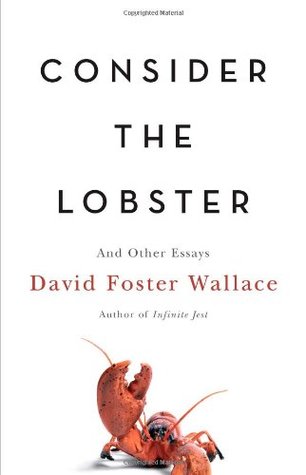
in Consider the lobster and other stories
New York: Little, Brown and Company
pp. 164-181
ASIN: B00FORA1TO (Kindle edition)

Scanned version available on-line at psu.edu