Monday musings on Australian literature: Writers on artists

Last week, the winner of Australia’s prestigious Archibald Prize was announced, Laura Jones for her portrait of Tim Winton.

Winton, as I read in the Herald’s The Booklist email, is the first novelist to be the subject of an Archibald Prize-winning portrait in more than two decades, with Geoffrey Dyer’s portrait of Richard Flanagan being the previous one in 2003. The email’s author, Melanie Kembrey, adds other Australian writers who have been the subject of prize-winning portraits include George Johnston (1969, Ray Crooke); Patrick White (1962, Louis Kahan); Banjo Patterson (1935, John Longstaff); and Ambrose Pratt (1933, Charles Wheeler). The National Portrait Gallery in Canberra has other portraits of writers, including Murray Bail (1980-1981, Fred Williams); Peter Carey (a few, including 2000, Bruce Armstrong); Robert Dessaix (a couple, including the one I know best, 1998, Robert Hannaford AM); Helen Garner (of whom there are many, including 2003, Jenny Sages); the poet Dame Mary Gilmore (c. 1938, Lyall Trindall); Elizabeth Jolley (2003, Mary Moore); Thomas Keneally (1987, Bernd Heinrich); Kath Walker (Oodgeroo Noonuccal) (1965, Clif Peir). Writers, like many people in the public eye, are popular portrait subjects, so I’ll stop here!

Kembrey then writes that “just as painters are interested in novelists, so novelists are in painters” and she lists some of her favourite “(more recent) novels about art and artists” – Alex Miller’s The sitters (1995); Peter Carey’s Theft (read before blogging); Emily Bitto’s The strays (my review). Kembrey also names some non-Australian novels but as you know by now, my Monday Musings is Australian-focused. Oh, just to be clear, we are talking visual art/artists, here, not artist in its wider meaning of any creative person).

Kembrey’s little list is just that, a little list to whet the appetite, but there are many more, including these (in alphabetical order by author):

Miles Allinson’s Fever of animals (2015): about a man’s search to solve the mystery of a Romanian surrealist, who had disappeared decades before, but the search brings up issues from his own life.

Jen Craig’s Wall (2023): about a woman who returns to Australia to clear out her father’s house, aiming to turn the contents into an art installation in the tradition of the Chinese artist Song Dong, but gets caught up family tensions.

Julian Davies, Crow mellow Book cover

Julian Davies’ Crow mellow (2014) (my review): a satirical (and illustrated) house party novel about a group of artists staying in a country house/bush retreat with their patrons and admirers; explores the complex relationship between art, its practitioners and followers, and life.

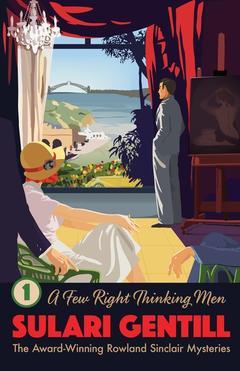
Sulari Gentill’s Rowland Sinclair series, starting with A few right thinking men (2010): Gentill explained during last week’s conversation that she made her protagonist, Rowland Sinclair, an artist, because an artist, particularly back in the 1930s, was a good profession for a character who needed to be able to move through different strata of society.

Gail Jones’ Salonika burning (2022) (my review): draws on the lives of four real people, including British artists Grace Pailthorpe and Stanley Spencer, to explore the experience of war, and, among other things, the idea of witness and representation. (Gail Jones often features art and artists in her novels, including her Miles Franklin award-winning The death of Noah Glass.)

Silvia Kwon’s Vincent and Sien (2023): based on the eighteen months or so that Vincent van Gogh and Sien Hoornik were together.

Book cover

William Lane’s The salamanders (2016) (my review): about events triggered by an obsessive artist father; “a broad, abstract story about our relationship to art, place and nature, and a more personal story about identity and family”.

Alex Miller’s Prochownik’s dream (2005): “reveals the inner life of an artist, torn between his obsession with his art and his love of his wife and daughter” (Readings). (Like Jones, Miller often features artists, another novel being Autumn Laing).

Ruby J. Murray, The biographer’s lover (2018): about a young writer who is hired to write about the life of an unknown woman artist in a family’s quest to bring her to public attention, and the complex issues re fame, art, memory, that arise. (Readings)

Angela O’Keeffe’s The sitter (2023) (Brona’s review): inspired by Hortense Cézanne, wife of artist Paul Cézanne, who sat for twenty-nine of his paintings, and a writer who is writing about her; another exploration of the tension between artist and subject, art and life.

Edwina Preston’s Bad art mother (2022) (my review): the protagonist is a poet, but two other women feature, a muralist and an ikebana artist; about how hard it is hard for women to make art and be recognised for it, and especially hard for woman who are mothers.
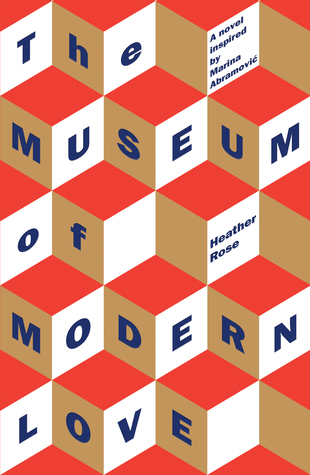
Heather Rose, The museum of modern love

Heather Rose’s The museum of modern love (2016) (my review): inspired by Marina Abramović and her performance piece, The artist is present, exploring, as I suggested in my review, the question of whether art is enough or is love more important? 

Dominic Smith’s The last painting of Sara de Vos (2016) (kimbofo’s review): a multi-pronged story spanning three centuries that “shines a light both on the hidden world of art forgery and women’s unrecognised contributions to the Dutch Golden Age”.

Patrick White’s The vivisector (1970): life story of a fictional artist/painter Hurtle Duffield; “explores universal themes like the suffering of the artist, the need for truth and the meaning of existence”. (Wikipedia)

Chris Womersley’s Cairo (2015): set in a bohemian world peopled by painters and poets, and explores deception and betrayal, within the context of one of the greatest unsolved art heists of the twentieth century, the infamous theft of Picasso’s Weeping Woman. (Readings)

So many novels, most from this century. Like Kembrey, I’ve barely touched the surface.

Some of these novels reference known artists, while others imagine their artists, but the question is, why do novelists choose to write about artists, real or otherwise? Chris Hammer said (in the abovelinked conversation with Sulari Gentill) that if you have 12 authors in a room, you’ll have 14 ways of doing things. This probably also works as an answer to my question here, but we can glean some recurring threads. A common one concerns the (often difficult) artist and his or her relationships (with partners, children, and others), alongside some sort of exploration of what price art in a wider life. There are many variations on this theme, because art is a rich vehicle for examining how we express ourselves and find meaning, how the all-consuming drive to create can become exploitative, how we balance our inner selves with the reality of existence, and so on. Another common theme is the feminist one of retrieving known women artists or muses from their undervalued or misrepresented place in history and/or exploring that challenges women artists face in practising their art.

Have you read any of these? Do you like novels about artists, and do you have any favourites?

Gail Jones, Salonika burning (#BookReview)

Australian author Gail Jones’ ninth novel, Salonika burning, is a curious but beautiful novel, curious because she fictionalises four real people for whom she has no evidence that they met or knew each other, and beautiful because of her writing and the themes she explores. The novel is set during World War 1, but its focus is firmly on the interior rather than the grand stage of battle.

It opens dramatically with the burning of the city of Salonika (Thessaloniki). This is another curious thing, because this destructive event was caused not by an act of war but an accidental kitchen fire. Also, the novel is not set in Salonika but some 90 miles off, in and around “the field of tents that comprised the Scottish Women’s Hospital”, on the shores of Lake Ostrovo in Macedonia. It is 1917, and the novel’s narrative centre is this hospital and those working in and around it. Here, not Salonika, is where our four main characters are based — Stella, an assistant cook/hospital orderly; Olive, an ambulance driver; surgeon Grace; and Stanley, an orderly with the Royal Army Medical Corps. They are based on the Australians, writer Miles Franklin and adventurer Olive King, and the British painters, Grace Pailthorpe and Stanley Spencer. In her Author’s Note, Jones makes clear that she has fictionalised these characters, and that while all are known to have worked in the vicinity, there is no evidence that they met or even knew each other. It is “a novel which takes many liberties and is not intended to be read as a history”. This is fine with me. After all, a novel, by definition, is not history. The novel follows these characters over a few months after the burning of Salonika.

“everything was coming apart”

So, why Salonika? I see a few reasons. For a start, its burning sets the novel’s tone. On the first page we are presented with opposing ideas. The sight of the burning city is described as “strangely beautiful” but, on the other hand, “alarm, instant fear, the sufferings of others … were no match for excitement at a safe distance”. As the fire died, “excitement left and in its place was a murky lugging of spirit”. Throughout the novel, Salonika represents these contradictions, this tension between what is ugly, what is beautiful; between what is random, what is not; and in how to respond to, or feel about, what is being experienced.

The Salonika fire also encompasses the idea of witness and representation. In the opening scene, Jones describes a painting made of the fire by William T. Wood. It is a “morning-after scene, brightly calm, with a floaty view from the heavens” done in his “signature pastels, remote as a child’s dream and thinly decorative”. Those who saw this painting later, she writes, “saw the pretty lies of art”, whereas “former residents and soldiers said, No, it wasn’t like that”. This tension too is played out in the characters as they think about how they might represent their experience.

The burning of Salonika, then, embodies several ideas that are followed through in the novel. But, Salonika is also relevant to the plot. The novel’s narrative arc lies mainly in the characters and their emotional reactions to what is happening as the months wear on. Not only is there the war with its injured and dying soldiers, but malaria is rife, and the privations they experience, professionally and personally, are exacerbated by the burning of Salonika and the attendant shortage of essential provisions – food, petrol, medical supplies. However, a plot also unfolds, and it is something that happens on the way to Salonika, well into the story, which sets the novel’s final drama in motion.

Salonika burning traverses themes that are the stuff of the best war literature – themes that expose the “idiocy of this war, of all wars” and its impact on those caught up in it – but it offers its own take. The telling feels disjointed, particularly at the start, with its constant switching between the perspectives of the four characters who interact very little with each other until well into the novel – and even then it’s often uneasy, as befits their temperaments. And yet, the novel is compelling to read, primarily because of these characters. They are beautifully individuated, so flawed, so human, so real.

Olive, who is the first character we meet, and the one who closes the novel, is confident, tough and practical. Grace, too, is tough, doing her “duty” with a “dull vacancy”. Stella, at 38, the oldest of the four, is “cranky and wanting more”, more excitement to write about, but she believes in “chin-up and perseverance”, while the youngest, 26-year-old Stanley, is “ill-fitted … to this life of rough cynical men”.

These are “intolerable” times, and we are privy to their struggle to maintain their sanity. Olive resorts to her German grammar to escape the emotional load, while Stanley has his mules and favourite painters, his “Holy Rhymers”. Stella, “writing jolly accounts in her diary”, thinks about what stories she will tell, while Grace has her favourite brother to think about and write to. The disjointed structure mirrors, I think, their sense of isolation. Contact and the potential for friendship is there, but Matron discourages emotional engagement. There’s “no room for emotion”, she says, just “duty”. Olive, who seems to represent the novel’s moral centre, thinks otherwise:

It seemed another kind of duty, not to forget. Olive wanted to speak of what she had seen and known, though she suffered too much remembrance.

This could neatly segue to that issue of representation, and the post-war work done by Stella, Grace and Stanley, but instead, I want to conclude with another idea. On a supply trip to Salonika, Olive, “driving in her safe foreign aura”, had been indulging in a dose of self-pity, but is suddenly confronted by the loss Salonika’s burning represented for its residents, “and only now understood that it was the woe of others that claimed importance”. Likewise, Stanley, Grace and Stella are confronted with the woes of others through the novel’s closing drama, and must decide where their humanity lies.

I started this post noting some curious things about Jones’ approach to her story, but these didn’t spoil the read. Rather, they added to my interest as I read it. Ultimately, Salonika burning is a true and tenderly written novel that captures the essence of war’s inhumanity, and then goes about extracting the humanity out of it. A worthy winner of the 2023 ARA Historical Novel Prize.

Lisa and Brona also read and enjoyed this book.

Further reading

Gail Jones
Salonika Burning
Melbourne: Text Publishing, 2022
249pp.
ISBN: 9781922458834

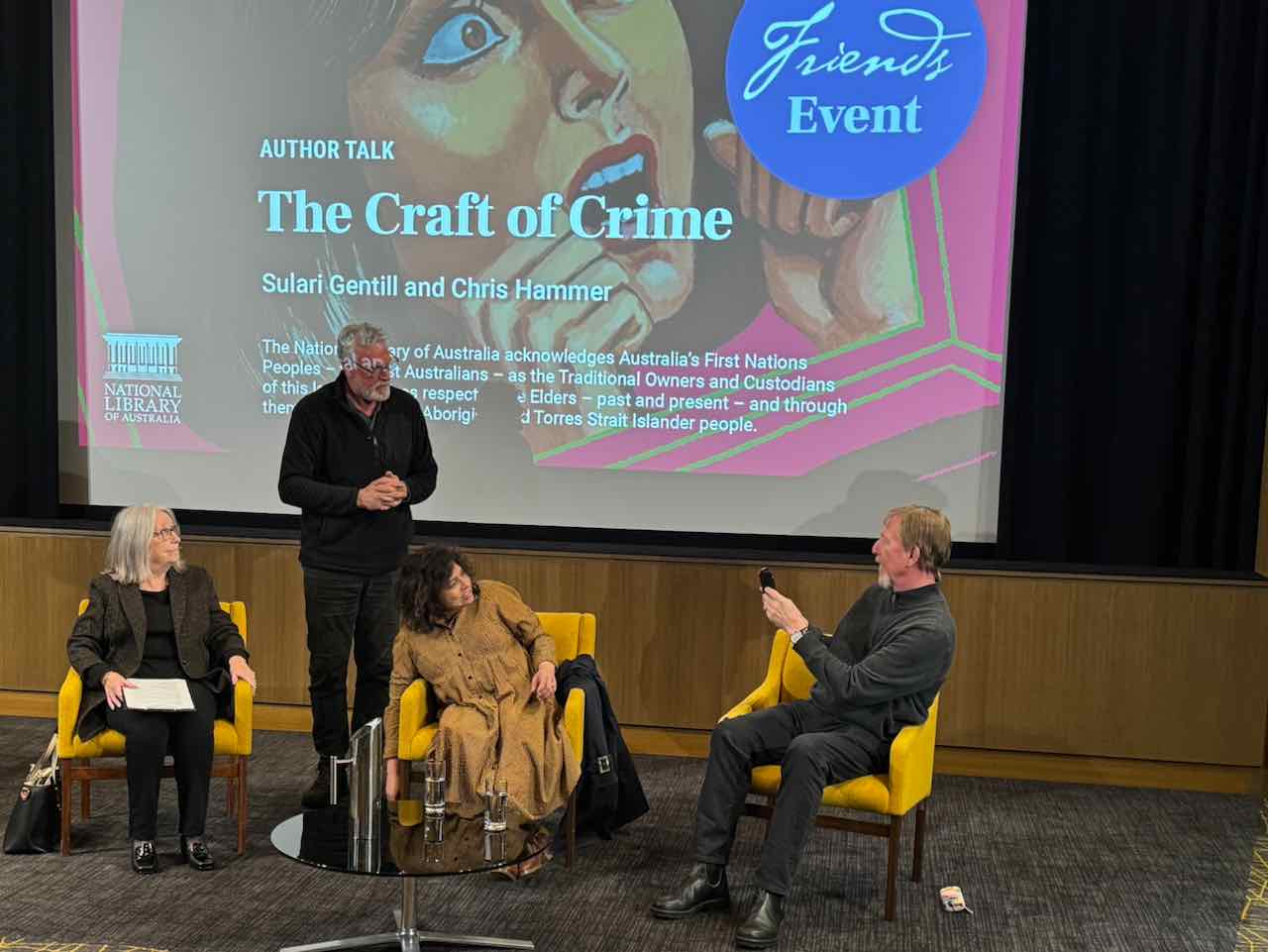
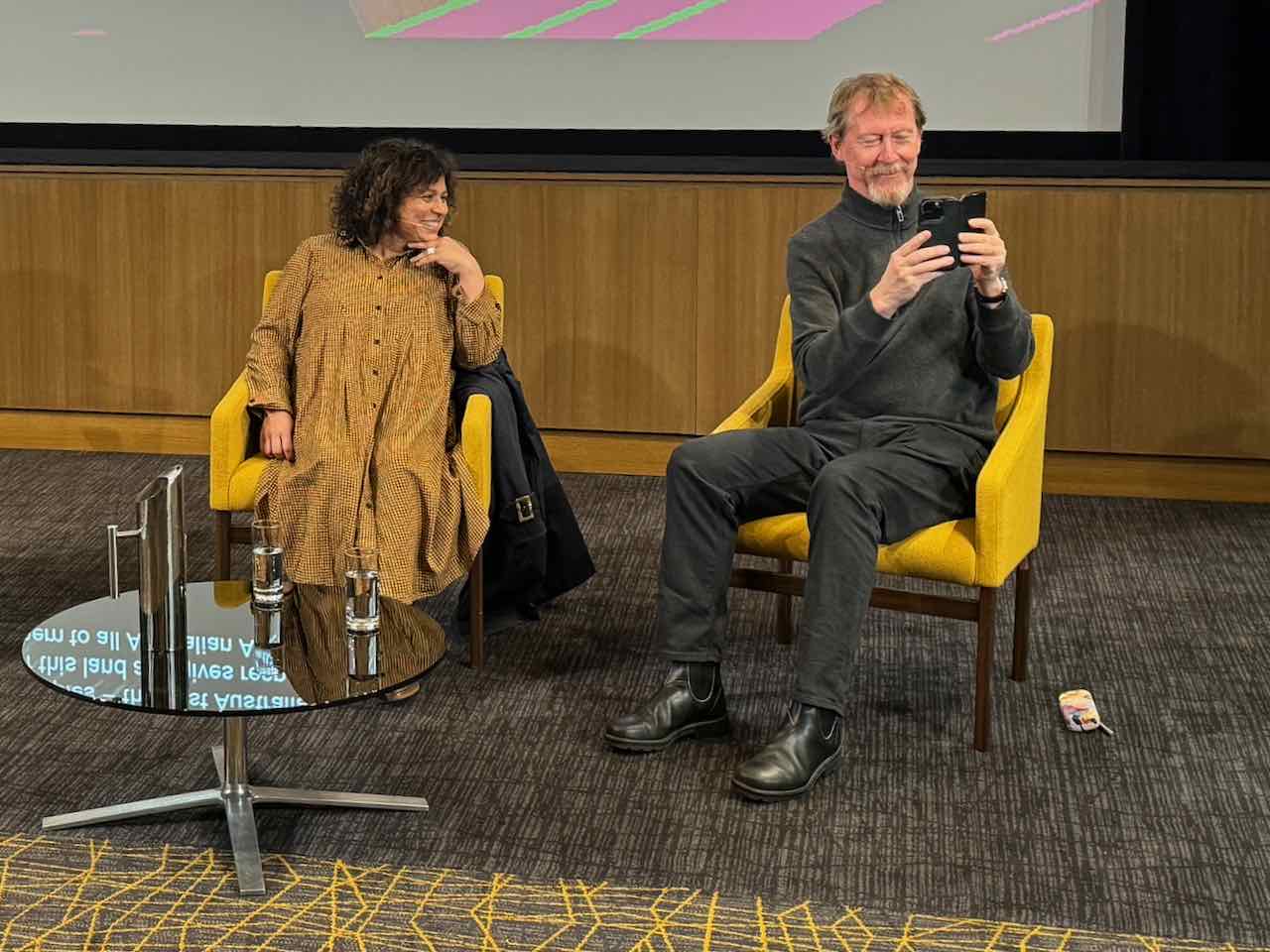
Author Talk: the Craft of Crime, Sulari Gentill & Chris Hammer with Anna Steele

This author talk was not one of my usual series – that is, not ANU/Canberra Times Meet the Author or Muse Canberra‘s conversations. Instead, it was presented by the Friends of the National Library of Australia, of which I am a member. Despite the cold, drizzly night, it was a full house, which is not surprising given the topic was crime fiction and the participants two local-ish, successful crime writers.

The event was MC’d by Nancy Clarke, from the Friends committee. After acknowledging country, she introduced the subject of the evening, and pointed us to a recent post on the NLA Blog on Australian crime fiction. She then introduced our authors and moderator:

  • Sulari Gentill: author of 15 novels, including 10 in her Rowland Sinclair series, since 2010, and winner of Ned Kelly and Davitt Awards.
  • Chris Hammer: author of two non-fiction works, and, since 2018, of 6 crime novels. And, winner of several awards.
  • Anna Steele: reviewer of crime and other fiction for local newspapers, including, currently, the City News. Before retirement she was Head of English at Canberra Grammar School. (She is also a friend of mine, through our local Jane Austen group).

The conversation

After also acknowledging country, Anna explained that the focus of the evening was the craft of crime writing, and suggested they start with how and why they became successful crime writers.

Sulari Gentill, A fete right thinking men

The ever-entertaining Sulari – I’ve heard her before – explained that she had been a lawyer, but also loved hobbies. After trying many, including welding, she thought she’d try writing. Very quickly, it “felt just right”, and she knew she wouldn’t stop. She lost interest in law. Her first foray was writing mythic fiction.

That was the how, more or less. As to why crime, she said that her main reader, her English history teacher husband, found mythic fiction a challenge. He suggested she write “something with names you can pronounce”, and that including a murder might be good. Now, writers, she said, are obsessed, and often “absent”, so living with them can be hard. Given she didn’t want to give up writing or her husband – see what I mean about ever-entertaining – she had to make these two worlds work. So, she looked at her husband’s history thesis on 1930s Sydney and found her subject.

Chris started by quoting Balzac’s “behind every great fortune is a great crime”*. He jokingly said that turning to crime writing was easy because he got sacked! Actually, though, the trajectory was a little more complicated, but the gist is that after writing two low-selling non-fiction works around 2010, he returned to his journalism career. But, he missed writing, so decided to “have a crack at making things up”. He wrote Scrublands (2018) and got a publishing deal after an exciting auction process. His timing was perfect, as he wrote it just after Jane Harper’s huge success with The dry.

As to why crime for him, it was because he didn’t feel he was a good enough writer for literary fiction (his main reading go-to) and he didn’t have an idea. Also, he added – only partly joking – having been a journalist he really “wanted to kill someone”! He liked American hard-boiled writers like Dashiell Hammet, the Australian Shane Maloney, and, in particular, Peter Temple, who had shown the way in terms of combining plot, character, human drama, action.

Anna then asked, Where did their great characters come from?

Chris replied that Martin Scarsden was not based on himself. But, not knowing anything about police work and detectives, and given journalists are experienced investigators who poke their noses into things, he decided to make his protagonist a journalist. Martin, then, is based on his knowledge and experience, but not on his character. However, through his career as a journalist he had met many career war correspondents who were messed up. Scrublands is a redemption story for Martin.

Sulari talked about the challenge of deciding on her character. 1930s Sydney was highly class-based. She needed a character who came from a comfortable background, but who could walk easily among all classes. Then she had an epiphany, he could be an artist, as artists tend to accepted across the social spectrum. Also, she paints, and although she is not a painter, she understands how a painter looks at the world. Authors don’t need to be the same as their protagonist but it is useful to have some link with the character (like Hammer and his journalist.) She talked about some of the other ongoing characters, and why she created them. For example, she didn’t want to write sex scenes, but Martin needed romance, so she created an unrequited love for him.

Are they plotters or pantsers? (Some audience members didn’t know these terms, so for those here who don’t, plotters plan their plots out in advance – albeit to different degrees – while pantsers write “by the seat of their pants”.)

Both laid claim to being pantsers, though there was a little repartee about this at one stage with Sulari suggesting that someone who writes multiple drafts, as Chris does, can’t be a pantser. Chris retorted that if you only write one draft, as Sulari does, you must be a plotter! As Chris said later, if you get 12 writers together in a room together you’ll have 14 different ways of doing things!

Anyhow, back to the question. Notwithstanding Chris’ dig (and I’ll add here that these two get on very well), Sulari claimed to be an “extreme pantser”. She does no plotting at all; she has no idea who is going to die, let alone who did it. She writes while in bed, watching television shows like Midsomer murders, Lewis, etc. She believes, as author Kylie Ladd suggested, that this distraction enables her prefrontal cortex (our creative centre) to come up with the words. She’s not sure if this really is how it works, but she’s been writing this way for so long she doesn’t want to “poke around” in case it breaks the magic! So, things pop into her mind as she’s writing, and they will “suddenly” drive the narrative. Her novels are conversations with the reader about things she’s thinking about.

Chris is also a pantser, though not quite so extreme. For him setting is the critical thing – it’s how you cast a spell and invite the reader in. He might have a murder in mind, and a framing idea, but he won’t know who did what. He couldn’t be a plotter, because he would find it boring to know all in advance, and just have to “get on with it”. That Hollywood image of a book appearing to authors fully formed rarely happens.

Why leave behind successful characters? (As Sulari did with her metafictional Crossing the lines, and Chris in his shift to a police procedural series.)

Sulari said that her first book had been seen as literary fiction, but from then on they were slotted as genre. This separation of “serious” and “elite” from “just enjoyable” irritated her, so she wanted to try literacy fiction; she wanted to write a novel that explained how characters take on agency, and that explored the line between imagination and reality. Ironically, the book ended up including a crime! She sees this book, Crossing the lines, as her truly “novel” book, because there’s not other like it. She needed to do something different.

Chris was aware that booksellers need to know where to shelve your books. A police procedural is easy in that regard. Hence, Treasure and dirt, which was intended as a stand-alone, but has ended up not being so! Also, by end of third Martin Scarsden book, he could think up more crime but didn’t want just “mechanistic investigators”. He likes them to have “skin in the game”. Martin does appear in this new series, and he will probably return to Martin and Mandy in the future.

Then, Anna just had to ask him about his amusing character names. He said he got bored with plain names; he likes Dickensian names; and his editors didn’t complain! One reader has told him that his distinctive names help her keep track of who’s who in his complex plots.

Q & A

On how their “first readers” and drafting process works: Sulari’s husband – her first reader – sometimes sees a chapter at a time, sometimes sees the whole in a “last minute flurry”. He helps with plausibility. As a historian he can advise on the right tone in the language for her period, but as a grammarian and English teacher he will fuss over grammar and want to add adjectives! For Chris, journalist friends read his first book, but now, with the best editors in Australia, they are his first readers.

On their writing schedule/fitting writing into life: Sulari would rather write than do anything else so it’s easy. She does other things first, then settles down to her writing. She writes 1000 words a day, which results in a novel in 3 months. (Writing is like a relationship: you are passionate at the start; then it’s like a long-term marriage and you have to work. By the end you hate the “damn thing”, but when you come back to it you love it again.) Chris is at the stage where he has no kids, and no other job, so he has time. He is addicted to writing, and writes anywhere, including trains and noisy cafes. In the first part of the year he runs out of steam by lunchtime, but as year wears on, the book captures him and he thinks about it all the time.

On getting started, and what they wish they’d known: Chris said the best thing is to enter unpublished manuscript competitions, many of which are for debut authors. Also, try to find an agent, particularly for fiction. Read the acknowledgements at the end of books to get useful names of publishers, agents, editors. And get used to being rejected! Sulari said that it can be hard to get an agent, and they don’t guarantee getting published, but they can mitigate your gratitude to publishers when it comes time to sign the contract!

Conclusion

This was an excellent conversation because Anna used just a few well-targeted questions which kept it closely to the brief, the craft of crime writing.

Anna concluded by quoting Canberra thriller writer, Kaaron Warren, who recently said at the Bristol CrimeFest:

“I have a theory that people who deal with murder and death are always jolly in person … I mean have you ever met a miserable butcher?”

We all laughed and went off into the cold Canberra night feeling well-pleased with the effort we’d made to come out. Big thanks to the Friends, Anna, and our two writers, Sulari and Chris.

* The actual quote is, apparently, “Behind every great fortune is a crime”.

Author Talk: the Craft of Crime, Sulari Gentill & Chris Hammer with Anna Steele (Friends Event)
MC: Nancy Clarke (Committee of the Friends of the National Library of Australia)
National Library of Australia
Wednesday 5 June 2024

Monday musings on Australian literature: Untangling the tangles

Introducing last week’s Monday Musings, I mentioned that the article I was sharing in that post contained a clue to a curly identification I was working on for my upcoming Australian Women Writers blog post. I said that I might share that puzzle this week, and that is what I am doing.

I will get to that soon, but as I also explained last week, that very article that I shared came with its own identification puzzle. That article was signed W.M., and best I cold find was W.M. Kyle, M.A. (or, William Marquis Kyle). He was a loose fit, because while he was a contemporaneous Queenslander, and did write newspaper articles, his interests seemed more philosophy than literature. Fortunately, some of my regular commenters took up the challenge. (How great is this!)

Melanie (Grab the Lapels) posited William Montgomerie Fleming but, while his dates fit, he seems unlikely in terms of his location and focus. I’m glad, though, to add him to my knowledge bank. Meg, however, came up with Winifred Moore, whom she found in Women Journalists in Australian History in a discussion about “the confinement of women journalists to the women’s pages”. Meg wrote that this article said that “under the direction of Winifred Moore from the 1920s, the Brisbane Courier’s ‘Home Circle’ section included a political column of sorts, profiling public personalities in Australia and abroad, alongside the usual recipes and serialised novels.” (You can read more about Moore at the Australian Women’s Register.)

So, of course, I researched Winifred Moore a little more (pun unintended). She wrote the “Home Circle” pages under the pseudonym of “Verity”. But, I also found references to a paper she had given on women writers in 1927 (three years after the article I posted on last week) . So, thanks to Meg, I think there is a good chance that she may be our W.M. I plan to share more on her later. Meanwhile, the original puzzle …

The mysterious J.M. Stevens

I had chosen a story by J.M. Stevens to be my May post for the Australian Women Writer’s Challenge, but, as we find all too frequently, identifying our writers can prove tricky. So it was for J.M. Stevens.

A major source for Australian writers is the (fire-walled) AustLit database and I was delighted to find that J.M. Stevens did have an entry there. It gave me some of her background, including her parentage, and identified an apparently better-known sister as Maymie Ada Hamlyn-Harris, who was a writer and convenor of the Lyceum Club literary circle. It also said that Stevens married John Frederick Stevens around 1917 which means, of course, that her last name stayed the same.

Book cover for The mad painter

Austlit gives her dates as 1887 to 30 May 1944, and uses J.M. Stevens as their name heading for her. They add that she also wrote under other names: Joan Marguerite Stevens, Janie M. Stevens, Joan M. Stevens. The University of Melbourne’s Colonial Australian Popular Fiction digital archive agrees with Austlit’s dates, but uses Janie M. Stevens as their name heading. They list one book for her, The mad painter and other bush sketches, by J.M. Stevens.

All well and good. It seemed pretty straightforward, but I like to find more if I can and this is where things came a bit unstuck because on 31 May 1944, Brisbane’s The Telegraph reported on the death of Mrs Joan M. Stevens. It says:

Mrs Joan M. Stevens, whose death look place yesterday afternoon at her home, Bylaugh, Glenny Street, Toowong, had been an invalid for many years. She was the fifth daughter of the late Mr E. J. Stevens MLC and the late Mrs Stevens, and had lived practically the whole of her life in Brisbane and Southport. Mrs Stevens was gifted musically, showed considerable talent as a painter and like several members of her family possessed distinct literary gifts, two of her books having been accepted for publication in the south. The late Mrs Stevens, who was the wife of Mr John F. Stevens, is survived by her husband, one daughter, three sons, and one granddaughter. Mrs Stevens was the third sister in the same family to die within six months; Miss Alys Stevens died in November last in Melbourne, and her eldest sister, Miss J. M. Stevens, died in Brisbane a few weeks ago.

So, this seems like “our” J.M. Stevens – same death date, and married to Mr John F. Stevens. But, they also mention a sister, “Miss J.M. Stevens”. Oh oh! Who is this? Three months later, on 17 August, this same newspaper announced the posthumous publication of a novel This game of murder, and says it

was written by the late Joan M. Stevens (Mrs J. F. Stevens), whose death took place a short time ago. The late Mrs Stevens, who was the fifth daughter of the late Mr E. J. Stevens, MLC, a former managing director of the “Courier,” belonged to a literary family. Her sisters included the late Miss J. M. Stevens, the writer of short stories and nature studies, whose death occurred earlier in the year. Another sister is Mrs M. Hamlyn-Harris, who has published several books of verse.

Now, AustLit had said that J.M. Stevens (remember, aka Joan M. Stevens and Janie M. Stevens) was a freelance journalist, with articles and short stories appearing in the leading magazines and weeklies in Australia and New Zealand in the earlier part of her life. In her later years, it says, she wrote a long series of nature studies for the Sunday Mail.

I was starting to feel confused. We have a Mrs. J.M. Stevens and a Miss J.M. Stevens. We have a Joan M. Stevens and a Janie M. Stevens. And it seems that despite AustLit’s entry, they are not the same person, but sisters who both wrote. We know that Joan wrote This game of murder, but who wrote The mad painter and other bush sketches? The cover says J.M. Stevens. It sounds like a nature-related work – the sort of writing that Miss J.M. Stevens did. Certainly Brisbane’s The Week writing about this book on 7 January 1927 describes its author as “Miss Stevens … nature lover and also something [of] a humorist”.

Then I found it! The Brisbane Courier, in an article on Queensland writers on 15 October 1927 identifies Janie Stevens as The mad painter’s author. So, clearly we have two sisters here with the initials J.M. One (Miss Janie) wrote The mad painter, and the other (Mrs Joan) wrote This game of murder. The life dates (at least, the death date) given by AustLit for J.M. Stevens and the Colonial Australian Popular Fiction archive for Janie Stevens, are for Joan. I have shared all this with the AustLit researchers who are always happy to receive feedback. Their challenge now, besides confirming my deduction, will be to identify who wrote which of the newspaper articles ascribed to J.M. Stevens!

I really should be doing more reading …

Six degrees of separation, FROM Butter TO …

Today is the first day of winter here in Australia, and we can feel the chill in the air here in Ngunnawal/Ngambri country (or Canberra). I don’t like winter, but my new home (apartment) has the best aspect and we get sun streaming in most of the day in winter (if there is sun, as there mostly is here). I am so so happy. My last home had a good aspect, but also a good verandah so most of the sun landed on the verandah. But, let’s get to the meme … and if you don’t know how the #SixDegrees meme works, please check host Kate’s blog – booksaremyfavouriteandbest.

The first rule is that Kate sets our starting book. This month she set “a crime novel with difference”, Asako Yuzuki’s Butter, which, of course, I haven’t read. GoodReads says it is about “a female gourmet cook and serial killer and the journalist intent on cracking her case, inspired by a true story” and that it is “a vivid, unsettling exploration of misogyny, obsession, romance and the transgressive pleasures of food in Japan”.

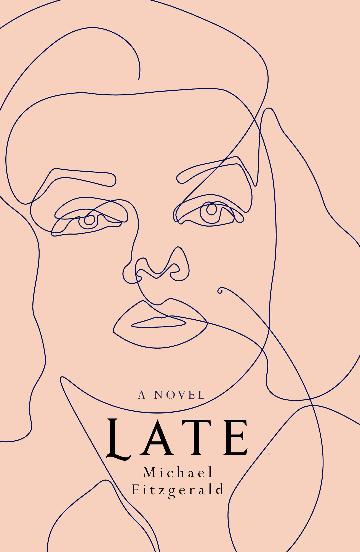
Now, before I go to my next link I’m going to introduce it by saying that after my review of Late, I had an enjoyable email correspondence with one of my wonderful commenters (whom I will leave to out herself if she’d like) about the title. At the end of our to-and-fro, we decided that single-word titles were a trend – and then what do you know but, for this month’s Six Degrees, we have been given a single-word title. So, this chain is going to comprise all single-word titles, but with another link too, if I can manage it. My first is Michael Fitzgerald’s Late (my review), and my link is that, although it is not a crime novel, its background is the gay-hate crime wave in Sydney in the 1980s. So, the link is from the hate of misogyny to gay-hate here.

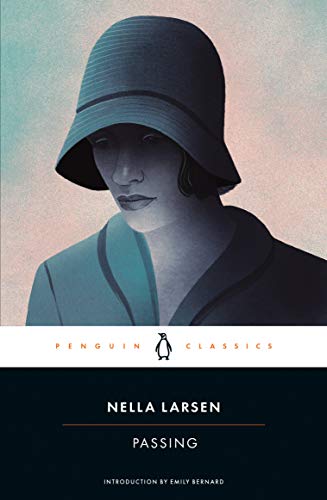
Nella Larsen’s Passing (my review) deals with another sort of hate, racism, and the practice of light-coloured people passing as white in order to avoid that hatred and its attendant discrimination. It also contains a death that could be a fall or suicide or murder, which provides another link to the gay deaths in Sydney, many of which were treated as accidents or suicides rather than murders.

My next link is a crime novel. It starts with a cold case and uncertainty about whether the missing girl – the sister of the protagonist – had run away or been abducted and/or murdered. What did happen to her? What happened is the question we are left with at the end of Passing, and is also a question returned to many years later about the deaths of some of Sydney’s young men. The book is Shelley Burr’s rural noir debut, Wake (my review).

Peter Temple, Truth

Staying with crime, I am moving to the only crime genre novel to have won the Miles Franklin Award, Peter Temple’s Truth (my reviews). (Have I made you happy M.R.?) It’s a crime novel, set mainly in the city, but as well as the crime novel link, I’m noting a loose climate-change link. The farm at the centre of Burr’s Wake is struggling, partly due to the father and daughter being distracted by their grief over the missing daughter/sister but also due to the impact of climate change. In Truth, we do get into the country sometimes, where the detective father’s property is being threatened by bushfire. As Australians know, bushfires are increasing in frequency and intensity here due to climate change.

Catherine McKinnon, Storyland

Next, stay in Australia, and Catherine McKinnon’s Storyland (my review) which links to Truth on the climate-change issue, as well as the single-word title. Storyland traces the trajectory of Australia’s land from an almost pristine state at the dawn of colonisation through increased farming to climate-change-caused destruction in 2033 followed much later by a mysterious post-apocalyptic world in 2717. It starts as an historical novel and concludes a dystopian one.

This leads nicely to my last link, Rebecca Campbell’s Arboreality (my review) which is dystopian climate change fiction set in near future Canada, where the land has been devastated but people are using their ingenuity to find new ways of living.

So, all single-word title novels, in which the titles vary in their intent, but are mostly multi-layered conveying aspects, like setting, plot, character and, in particular, something about their themes. I can’t see much of a link between Butter and Arboreality, except for – yes – their single-word titles, but we’ve been on a challenging journey this month through Asia, Australia and the Americas that confronts some of the world’s harder issues. Two of my six writers this month were male.

Now, the usual: have you read Butter and, regardless, what would you link to?

Monday musings on Australian literature: Queensland’s women writers, 1920s

Yesterday, as I was trying to untangle a curly identification for my next Australian Women Writers blog post, I came across an interesting article in The Brisbane Courier. Published on 15 October 1927, and penned by one W.M., the 1300-word article is titled “Queensland Women Writers: Poets and Novelists“. Of course, it caught my attention, and not only because buried within was an important clue for my puzzle (about which I might write next Monday).

Although I’ve written several Trove-inspired posts about Australian literature in the 1920s and 30s, this one caught my attention for two reasons – it is focused on just one state (Queensland) and is limited to women writers. I don’t know whether W.M. wrote separately about Queensland’s men writers, because it’s hard to search on by-lines like “W.M.” I did try to identify him. He may be William Marquis Kyle, whom I came across via an announcement for a lecture to be given by “Mr. W.M. Kyle, M.A.” He was appointed Professor of Philosophy at the University of Queensland in 1938. The best record I found for him included that “he gave public lectures, wrote and reviewed newspaper articles and was well known as a broadcaster”.  So, on this slim basis, I am going to refer to “W.M.” as he/him.

Queensland women writers

W.M. commences by talking about poetry, arguing that

When we contemplate the work of Australian writers, we can hardly fail to be impressed with the large proportion who have chosen poetry rather than prose as their medium. May it not be that a young nation, like a young writer, turns to poetry as more fitting than prose to express wonder and joy in a country which inspires emotions and sensations most appropriately uttered in lyrical form?

He goes on to say that whether his reasoning is true or not, “there is a larger amount of creditable verse than prose in the imaginative literature of Australia” and this is “apparent in any survey of the women writers of Queensland and their work”. But, he says, two novelists do occupy the first and last positions in his chronological list of Queensland women writers: Mrs Campbell Praed and Mrs Dorothy Cottrell. Both have appeared on my blog before.

W.M.’s article starts with brief paragraphs on the older writers. They are (links go to their Wikipedia pages):

For these six writers, W.M. identifies a work or two, and adds some assessment or description. I’m not sure why he allows Sumner Locke her own name, given she married Henry Logan Elliott. Perhaps it’s that most if not all her works were published before she married, and she died the following year. Anyhow, he praises her, saying “her style was forcible and direct, as shown in her novels”.

He has positive words for all these writers. Of Rosa Praed, he says:

Her style was simple and illustrative, and she had the faculty of making her characters “live.” Her descriptions of the social life of early Brisbane, centring in Government House, show that in many respects the social life of the present time still resembles that of 30 years ago.

Mary Hannay Foott’s “poetic style was simple, but distinguished by considerable lyrical power”, and he praises her versatility. Mabel Forrest’s early promise, evident in a story published when she was 10, “has been fulfilled by an exceptionally large output of poetry, short stories, descriptive articles, and novels”. And, while her novels “contain many descriptive passages of outstanding charm and sincerity, upon her verse rests her claim to rank among the foremost writers of Australia to-day.” Her novel The wild moth was adapted to screen by Charles Chauvel in The moth of Moonbi.

Emily Coungeau had, he says, “a mind attuned to the beauty of Nature and the best in human hearts” which enabled her “to produce verse of much charm and sensibility”. Emily Bulcock’s poetry, on the other hand, was characterised by a “strong spiritual note”.

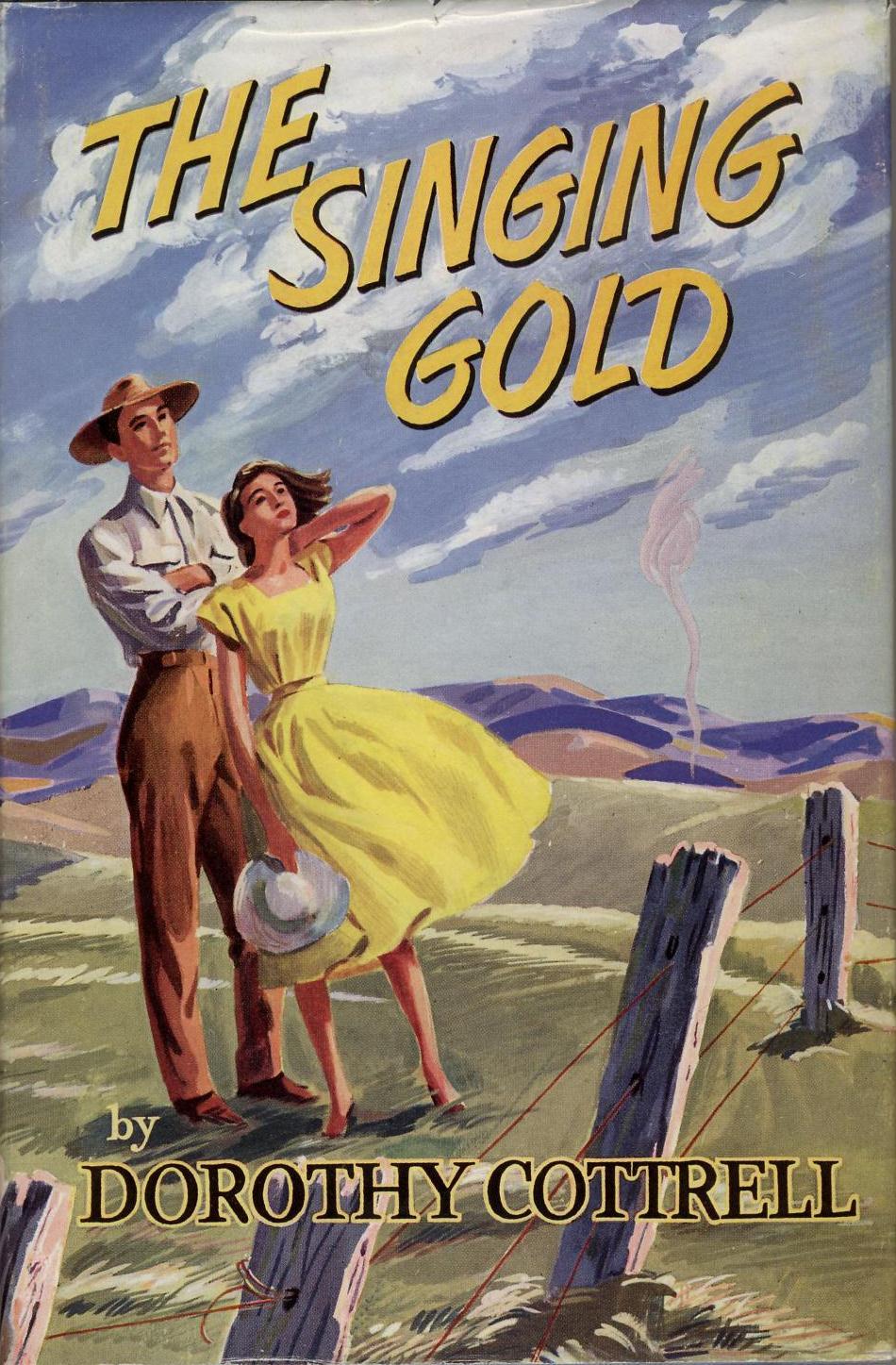
The rest of the writers, listed under the heading “Other writers”, are given one sentence or less, with the exception of the first in the list, Zora Cross. Her reputation has lasted more than most of the above. The reason for the short shrift given to her seems to be that she made her home in Sydney, so, not really a Queensland writer it seems! Few of the others are remembered today, except perhaps for the last on his list, the aforementioned Mrs Dorothy Cottrell. She, he writes, “is hailed by American publishers as a writer of exceptional power”. Her novel The singing gold was first serialised in The ladies home journal. The cover here is the 1956 edition (obvious from the fashion!) which suggests she remained popular for some time. A later story of hers became Ken Hall’s 1936 film, Orphan of the wilderness.

However, I will comment on one other. Wikipedia and the ADB have an entry for Nelle Tritton (1899-1946) whom Wikipedia writes as Lydia “Nellé” Tritton, and ADB as Lydia Ellen (Nell) Tritton. She had an interesting life. She was born in Brisbane in 1899, but in her mid-20s, she went to London and toured Europe, gained “a reputation for knowledge of international affairs”, and married a former officer of Russia’s White Army. The marriage ended in 1936, and in 1939, she married the exiled Russian prime minister Alexander Kerensky in Pennsylvania. ADB writes of their time in America that “their life, when they were together, was idyllic, with numerous visitors and games of croquet”. W.M. tells us none of this – much of which happened after 1927 – but it’s interesting that he’s included her, given she was barely in Australia. All he says of her is that “while still in her teens” she wrote a booklet of “Poems”. Curious – but fascinating. 

W.M. concludes that, from his brief survey, “it is evident that the work of Queensland writers has reached a standard which justifies and claims adequate attention from the reading public”, and he quotes literary critic Bertram Stevens, who had died in 1922 but had apparently said:

Australia has now come of age, and is becoming conscious of its strength and its possibilities. Its writers to-day are, as a rule, self-reliant and hopeful. They have faith in their own country; they write of it as they see it, and of their work and their joys and fears in simple direct language.

Anton Chekhov, The lottery ticket (#Review)

Back in April I posted on Majorie Barnard’s short story “The lottery” for Kaggsy’s and Simon’s 1937 Year Club. Commenting on that post, my American friend Carolyn said that in looking for Barnard’s story she found Chekhov’s “The lottery ticket”, written fifty years earlier in 1887. Of course, I had to read it too. There are enough similarities to make us think that Barnard very likely had read Chekhov’s story, but had decided to put her own spin on it. Whether we are right or not, the two stories make for an interesting comparison. I will try to discuss them without spoiling them, but there will be hints.

Both stories deal with a married couple and their reaction to the idea of winning a lottery, and both stories are told third person from the husband’s point of view. Marjorie Barnard’s is set in suburban Sydney, and explores what happens when a wife wins the lottery. She doesn’t tell him immediately so he finds out from others who had read it in the newspaper. On his way home from work, he thinks about what it all means, how “he” might spend it, and he then starts to find fault with his wife. She “wasn’t cheery and easy going” and hadn’t aged well (not as well as he had, anyhow), and so on. It ends, however, with the wife having the upper hand. Barnard’s story reflects her interest in gender, in how little agency women had, and how constricted their lives were.

This is not Chekhov’s prime interest. He is writing in a different place and time. In his story, it is also the wife who had bought the ticket, but it’s the husband who checks the newspaper and sees that there’s a “probability” that her ticket had won. However, rather than reading on and confirming whether that’s the case he suggests they wait:

Looking at his wife, Ivan Dmitritch gave a broad, senseless smile, like a baby when a bright object is shown it. His wife smiled too; it was as pleasant to her as to him that he only mentioned the series, and did not try to find out the number of the winning ticket. To torment and tantalize oneself with hopes of possible fortune is so sweet, so thrilling!

The hope of course is that they will have a lovely dream about the possibilities, those dreams we all occasionally have (even if we don’t buy lottery tickets!) But, if you know Chekhov, you’ll know that he is unlikely to be interested in unrealistic dreams, but in how ordinary people traverse life and their relationships. So, he lets Ivan dream – of “a new life … a transformation”. “That’s not money,” he says, “but power, capital!” He imagines paying off debts, buying “an estate”, going abroad. Occasionally, he notices that his wife is also dreaming. But, it comes to a head when he realises she’s dreaming of going abroad too. What? She’d be no fun to go with. She’d just talk about the children, complain about the cost of the food, not to mention want to spend money on looking after her relations,

And for the first time in his life his mind dwelt on the fact that his wife had grown elderly and plain, and that she was saturated through and through with the smell of cooking, while he was still young, fresh, and healthy, and might well have got married again.

So the story continues with this man who was, at the beginning, “very well satisfied with his lot” – including presumably, having his wife at home, cooking his meals, caring for the children – feeling very different about his life by the end.

The irony, in Chekhov’s as well as Barnard’s story, is that the lottery ticket was the belittled wife’s. Barnard, however, gives her wife agency, whereas Chekhov’s focus is on how money and greed can destabilise (or, is it reveal?) one’s values. However, the little point is still there, in the irony, in that early description of the husband with his “senseless smile, like a baby when a bright object is shown it”, and in so many of the husband’s attitudes towards his wife. Gender issues are not so forward in the resolution, but they are part of the picture.

Anton Chekhov
“The lottery ticket”
First published 1887
Available online at Classic Shorts

Michael Fitzgerald, Late (#BookReview)

Australian author Michael Fitzgerald’s novel Late owes something to what is known as the alternate (alternative) history genre, or what I call “what if” novels. Here, the underlying story is, what if Marilyn Monroe had not died in 1962 but, instead, had instead escaped Hollywood’s oppressive celebrity culture and moved to Sydney, Australia?

It’s hard to imagine any celebrity who has inspired more books, films, songs – you name it – than Marilyn Monroe. Just check out Wikipedia’s page listing them. There are over twenty works of literature, of which I’ve only read one, Andrew O’Hagan’s The life and opinions of Maf the dog and of his friend Marilyn Monroe (my review).

Now though, I should ‘fess up that nowhere in Fitzgerald’s book does he name Marilyn Monroe. His narrator is unnamed. However, she tells us she is also known as Zelda Zonk, a name once used by Marilyn Monroe, and the biography she gives us is that of Monroe down to her birth and death dates, the details of her marriages, and much more. So, given our narrator is intended to be Marilyn, the question is why? Why write a(nother) story using Marilyn, rather than start from scratch? And why do it using another of her personas, Zelda Zonk? I don’t know, but I’ll have a go at thinking about it.

So, let’s start with the setting. We are in 1980s Sydney, so Marilyn has been in Sydney for a couple of decades. She is living in a modernist (Harry Seidler-designed) building in Vaucluse, not far from some of the cliffs in Sydney which, in the 1980s, were also the site of gay-hate crimes known as the “Sydney cliff murders”. Notwithstanding that darkness, Sydney is beautifully evoked.

Early in the novel, our narrator meets a young man Daniel, who turns out to be gay and who is locked out of the apartment he is house-sitting. The relationship that ensues brought to mind Sigrid Nunez’s The invulnerables (my review) in which an older woman develops a friendship with a young man, but they are different books, so let’s move on. Our narrator and Daniel discover points on which they connect – from something as simple as their mothers’ names (Gladys and Gladyne) to something more fundamental like both having experienced adoption and a sense of being outsiders. Trust and tenderness develop between them, as they walk, ride on a ferry together, and cook a meal for Shabbat.

Now, a little aside: I’m not sure how to refer to the narrator because, as she writes in the opening paragraph of Scene (aka Chapter) 2, “I am not always Zelda, and Zelda is not always me”. Indeed, she writes, “Zelda is everything that I’m not […] She is the me who goes on living”, and later again, she is “the protectress of my spirit, of the shattered sense of me”. If I name her Zelda in my post, I am ignoring the distinction, and I don’t to do that. So, I am going to stick with the term “narrator”.

“What I have to say is important and personal” (Zelda)

Our narrator’s voice is variously wise, funny, erudite, and also at times self-deprecating. She is out to set the record straight in terms of her reputation as the “dumb blonde”, the “beautiful child”, the difficult actress who was always “late”:

You see, I wasn’t late: they were in a God-awful American hurry. Yes, let it be said for the record, being late wasn’t a problem: they were in this crazy rush to the moon. In any case, who aspires to be on time when, for my Art, readiness is all?

And when it really counted, let’s face it, my timing was perfect.

Drop-dead perfect.

So much in those few sentences.

She makes us see her life from a different perspective, such as the time she wore the see-through rhinestone dress to sing Happy Birthday to JFK. I don’t know what Monroe really thought or intended but that is perhaps not the point. Michael Fitzgerald gives her a voice that reflects on her experience, on how the culture manipulated her, on the hurts of being commodified and ignored as a person. Marilyn is a wonderful vehicle for interrogating celebrity, and Zelda for exploring how an escapee might see the experience and move on from it.

There are several questions to ask about this book, besides why Marilyn. Another is, why is she speaking now, a couple of decades after her arrival in Sydney? This one she answers – it’s because “the cliffs have been warning me, for months now, that evil dwells here”. And this is where Daniel as a young gay man comes in. He is the vehicle for exploring the homophobia of the time, the gay-hate crimes and cliff-murders. He is a gentle person with his own crisis, and is drawn to Zelda “like an old person or wounded animal is”. Our narrator empathises with him, and the other young men who have disappeared, and wants to help him. Their cliff-top nemesis is, pointedly, blond.

I won’t say more about the plot, because the novel’s main interest lies in the narrator’s musings. They are what I most enjoyed – her clever allusions to movies, books, poetry, and songs, her witty footnotes, her humanity, and the entertaining wordplay (starting with the multiple meanings of the title itself).

I don’t know if I understood the novel the way Fitzgerald intended, but I enjoyed the voice. It is confident, witty, in-your-face. “Without a sense of humour, we are animals, we are lost,” she says. It is also intelligent and thoughtful. This Marilyn – if I can call her that at this point – has come through and is living life the way she wants to live it, but she has heart too, and cares about the young men. It’s a surprising thing that Fitzgerald has done to put the two ideas together, but I think he has made it work. After all, why not have a gay icon care about saving young gay men?

So, I found it an absorbing to read, one that encourages us to think about who Marilyn might have been had she been allowed to be herself. And who Daniel might be if allowed to be himself!

Right near the end, our narrator comments,

Don’t you think it’s funny? How we still haven’t explored these shadows of the human heart?

Maybe we never will, fully, but books like this encourage us to keep trying.

Lisa also enjoyed and reviewed this book.

Michael Fitzgerald
Late: A novel
Melbourne: Transit Lounge, 2023
208pp.
ISBN: 9781923023024 

(Review copy courtesy Transit Lounge via publicist Scott Eathorne)

Monday musings on Australian literature: Trove treasures (12), A rare humorous novel

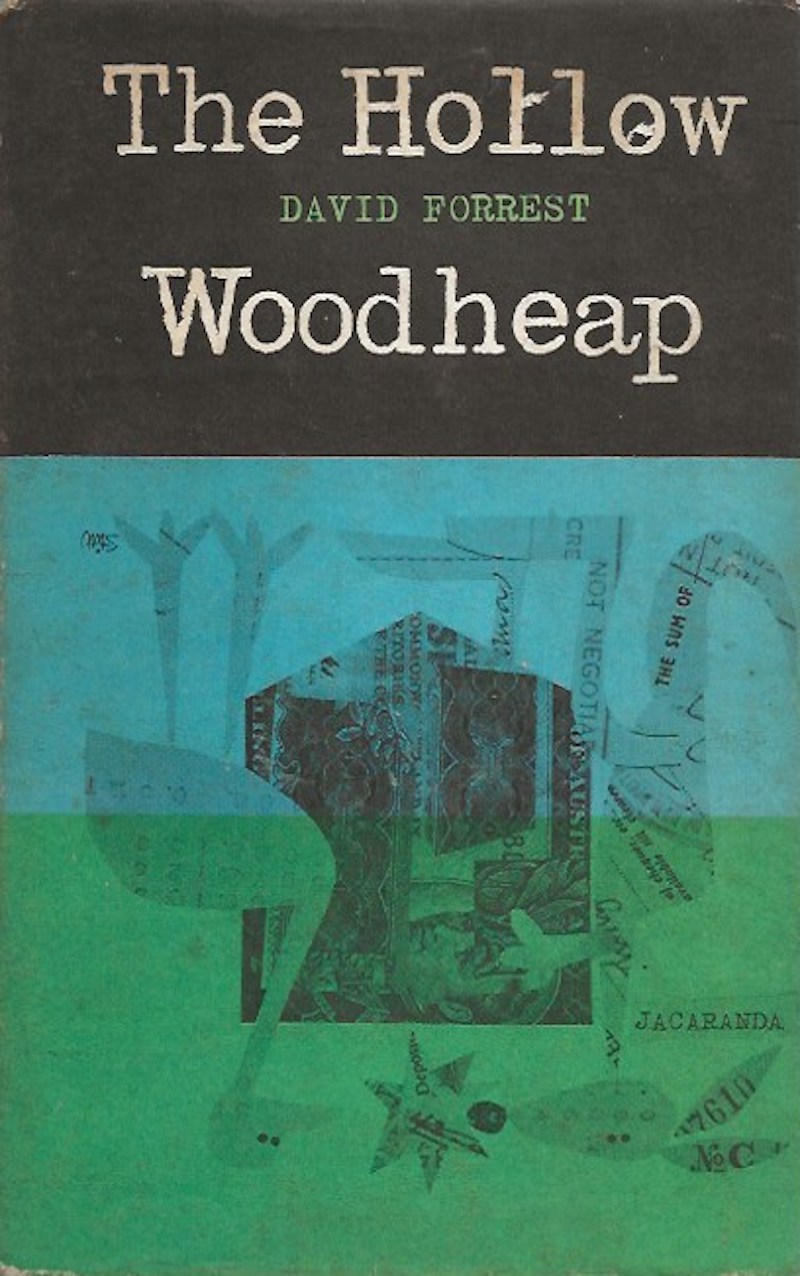
I was unsure about whether to make this post part of my Trove Treasures or Forgotten Writers series, but Wikipedia tells me that in 2006, the historian John Hirst, writing in The Monthly, included this author’s book, The colonial Australians, in a brief list of the best Australian history books of all-time. That probably means he’s not quite forgotten, wouldn’t you think? So, a “Trove Treasure” it is. The author is David Forrest, which is the name used by historian David Denholm for his fiction.

David Denholm was born in Maryborough, Queensland, in 1924 – the place where I, also, was born but, more significantly, it was the birthplace of P.L. Travers, the creator of Mary Poppins. Denholm died in Wagga Wagga, just 3-hours drive from where I live now, in 1997. He has an entry in Wikipedia and in AustLit. From these I gleaned that he served in the Australian army, in New Guinea, during World War 2 and worked in the banking industry until 1964. (I can’t resist adding here that Pamela Travers’ father was a banker, as was my own.) He was a mature age student when he went to university, first to the University of Queensland and then the Australian National University, where he gained a Ph.D in history. He ended his career as an academic in history at the Riverina College of Advanced Education.

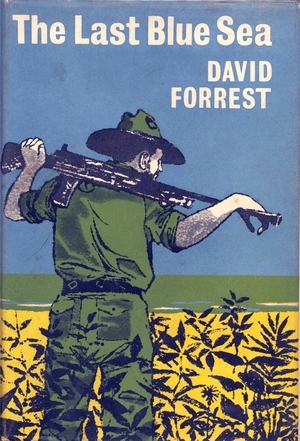
He wrote two novels. His debut novel, published in 1959, was The last blue sea. It is set in New Guinea during World War 2. It focuses, in particular, on the difficulty the Australians faced in fighting in the heat and rain of New Guinea. Wikipedia shares that it has been called “the classic short novel of the New Guinea campaign.” It apparently won the first Mary Gilmore Prize. I wrote last year about his winning this award, but it wasn’t clear in my research that he was the first winner. Now I know.

However, the book which inspired this post, was …

His humorous novel

The Trove Treasure I found was in Sydney’s Tribune on 12 September 1962 and was written by someone signing as R.W. S/he started with:

Humorous novels are not particularly common in Australian literature, or for that matter in any other. This is all the more reason why we should be grateful for such a deliciously humorous work as David Forrest’s new novel, “The Hollow Woodheap”. Not since Lower’s famous “Here’s Luck” has the Australian reader’s sense of humour been so titillated.

It seems that Forrest took to heart the advice to “write what you know”, because his first novel was set during World War 2 in New Guinea, where he had served, and this novel, says R.W., “deals with life in the branch office of a bank in Brisbane” which is where he was working at the time. Critiquing the book, R.W. says that the “the plot is rather flimsy” with the humour deriving “mainly from the personalities and behaviour of the characters in their office environment”. Forrest “reveals a sense of the ridiculous and a capacity for irony, of which there is not the slightest trace in his war novel”. My question is, does the humour have a point? R.W. continues,

The new novel is not a work of profound social criticism, but in his lightly humorous way, the author makes many a sharp jibe at the snobbery and red tape of banking institutions, and at the soulless careerism which corrupts those who cannot resist the lure of money, power and status.

I found little else about the book, but I did find a review-rebuff in a Letter to the Editor in The Canberra Times (14 August 1962). Unfortunately, I could not find the actual review, but Maria Reah did not agree with some criticisms the reviewer had made. I’ll just share one paragraph from her letter:

It is true that most of the characters—the bank manager (The Keg), the bank inspector (The Drummer), the savings bank officer (St. Joseph the Bloody Worker), and the three models of managerial material (Mark One, Mark Two and Mark Three)—are caricatures, but Forrest is not the first creative artist to use caricature to good purpose. If these characters were developed more fully they would lose their value as symbols. For The Hollow Woodheap is more than an attempt to poke fun at “the establishment,” though it does this very successfully. It presents a novelist’s impression of Australian society. The sociology is impeccable, but unobtrusive. The young man who wrote the book is not angry enough to lose sight of either the patterning of social life or the lighter aspects of this patterning. His humour is never plodding, as it appears to your reviewer.

Finally, I’ll return to R.W. He hopes that Forrest will write more humorous novels. As it turns out, while he lived another thirty or so years, Forrest wrote no more novels, humorous or otherwise. Wikipedia , however, does say that he wrote a notable and humorous short story, “The Barambah mob” (1963), which has been often anthologised.

I could say more about Denholm/Forrest, but my point for this post is simply this little “treasure”. I agree with R.W. that good humorous novels are hard to find, but they add so much to our literary environment.

Do you have a favourite humorous novel, and would you share it with us?

Shankari Chandran in conversation with Karen Viggers

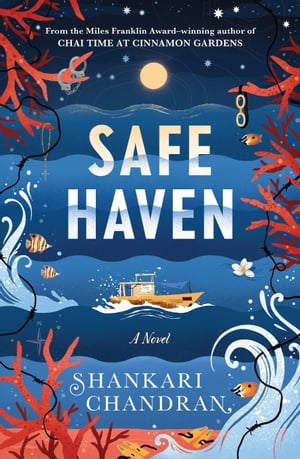
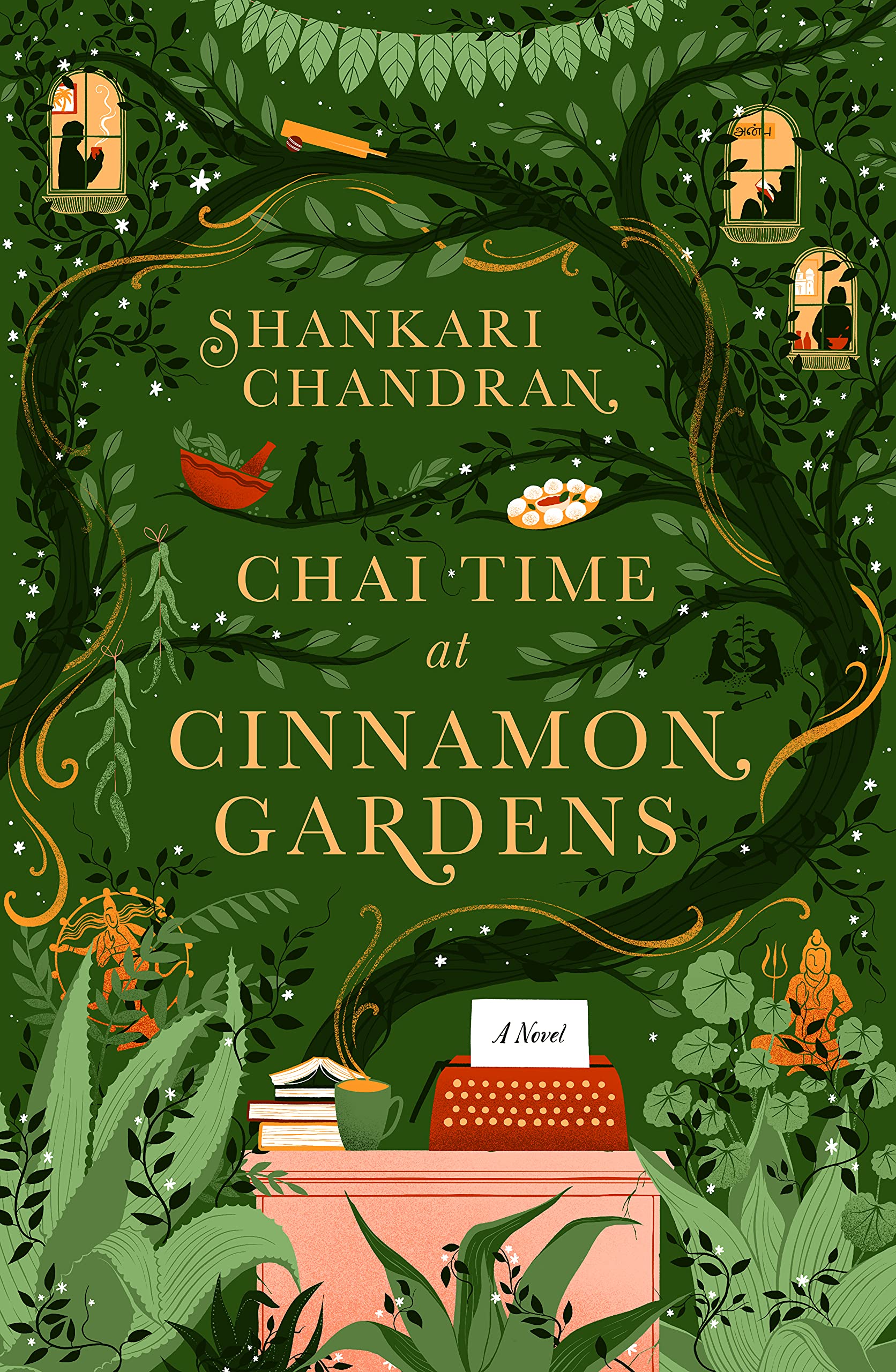
Shankari Chandran’s conversation with Karen Viggers is the second Meet the Author event I’ve managed to attend this year, and it reminded me how much I wish I could get to more of these sessions. This one featured Shankari Chandran, author of the Miles Franklin winning novel, Chai time at Cinnamon Gardens (my review), in conversation with Karen Viggers, who was on the other side of the table at the last session I attended. Karen has appeared several times on my blog, most recently for her novel Sidelines. And Shankari was appearing at this session for her latest novel, Safe haven.

This was a wonderful session, which featured intelligent questions and thoughtful answers from two writers who care deeply about justice and how we find and express our humanity. Their backgrounds might be different, but their hearts not so.

The conversation

MC Colin Steele opened proceedings by acknowledging country and introducing the speakers. He then introduced the conversation, describing Safe haven as appearing to be about displacement and seeking refuge, but in the end, he said, it’s about finding home.

Karen started by congratulating Shankari on winning the Miles Franklin award last year. She wanted to know how Shankari felt the moment she heard she’d won, and its impact on her life and career. Shankari told a funny story about not answering the phone at first – because it came from an unknown number – and then not believing it when she finally answered and got the news! However, of course she was thrilled, and it has been extraordinary for her career. It has affected sales, and it created a spotlight on all her works, not just the winning book, and on her ongoing themes of injustice and dispossession. She also hopes that her win has helped and encouraged other writers of colour.

Shankari also made the point that it was great to win such a prize for a diasporic migrant story, one that is not only set partly elsewhere, but that interrogates who gets to define identity to the inclusion of some and the exclusion of others.

Sticking with the getting-to-know-you theme a little longer, Karen wanted to know how Shankari manages her busy life with four children, a law career, and writing. “Very badly” was the response, accompanied by some self-deprecating humour, followed by a recognition that she has a great team in all aspects of her life.

Karen then moved onto Safe haven, using descriptors like “moving”, “confronting”, “shines a shaming light” on detention, and creating “humans we come to care about”, and noting that the book contributes to an ongoing discussion about racism and exclusion in this country. Shankari talked about the approach she’d chosen, which was to write a romance and murder-mystery set in an off-shore detention centre. Her two main characters are the nun, Sister Fina, who seeks asylum, and special investigator Lucky, sent to investigate the death of a detention guard. Was it suicide, or was it not? Shankari described her book as being about the lengths people will go to to find safety and home.

Wanting to explore the romance-and-mystery approach a bit more, Karen commented that it was a surprising decision. And here a major theme of the discussion came to the fore, Shankari’s belief in storytelling. She wanted to elevate the lived experience of marginalised people, and likes to use fiction/storytelling to take readers into a place of discomfort but one where they can feel safe to reflect and think about the ideas. She wanted a storytelling mode that is compelling, entertaining, interesting. John Le Carre used the literary thriller model to explore macro themes of injustice, so she “wanted to give it a go”.

This led to continued discussion about using fiction to draw people and explore themes, and to the specific question of what Shankari wanted readers to take away from the book. She wants people to not forget the detention centres and what is happening to people in them. Politicians – and the media – too easily appeal to our baser instincts and encourage moral panic. But, she says, there are Australians who see the situation differently – like the people of Biloela for example, people who understand why others get on a boat, risking everything, to seek safety in another country. She wanted to elevate that aspect of what it means to be Australian. (Shankari used the word “elevate” several time during the conversation, and I like it. It’s powerful, and conveys something active and positive, active.)

Shankari talked about her two main characters, and what inspired them. Sister Fina stemmed from her admiration of people whose faith calls them to the sort of bravery seen in religious people during the terrible last days of the Sri Lankan Civil War. Special Investigator Lucky, on the other hand, was fun to write, because she could have Lucky do the sorts of investigation she’d like to do. Of the friendship that develops between these two, Shankari wanted characters who help each other, not one being saviour and the other the saved.

The conversation then moved onto the book’s tougher sections, and how Shankari researched and handled writing them – the scenes at the detention centre, for example. Here, we got a clear sense of Shankari’s ethical and compassionate approach to her work. She set herself some parameters. For example, she would not try to go to a Detention Centre, because she dislikes the voyeurism involved. For this same reason, she did not want to speak to the Biloela family whose story had provided inspiration for the book. At the time of writing they were still in a difficult place. It was not her place to draw fiction from their specific experience. So, she used research undertaken by civil organisations and activists; she read memoirs; and she used her experience of working in justice. If she had a superpower, she said, it would be that through her life people have given her their stories. These recorded truths, she’s been privileged to hear.

But, obtaining these stories, including those she needed for the brutal Civil War flashbacks, requires sensitivity. Interviewing people about their trauma can re-trigger that trauma. When people do want to tell her their story, she is careful about process because they don’t aways know how telling the story will affect them. She is careful, also, to ask whether they want their “lived experience to be conveyed in fiction”. Most respond that there are few safe places in our culture for the truth except in fiction! That feels like an awful indictment on our nation, but a powerful argument for the role of fiction/storytelling in our lives.

Indeed, a strong message I took away from the conversation was absolute belief in fiction being a way to tell important truths, but awareness that those whose truths are being told may not like them fictionalised.

The novel is not all grim, however. Karen turned to the scenes in Hastings (which were inspired by Biloela). What did Shankari want people to glean from them? That strangers can become family, she said, and that we should celebrate that capacity in us. Rural communities are often remote. They only have each other, and can develop an incredible ethos. Hastings offers a moral counterpoint to the other parts of the novel, but also offers readers a place of fun and joy.

Karen raised Australia’s policy regarding asylum seekers, and our use of privatised services to manage detention centres, particularly given these companies can employ people who “have done terrible things”. And why do we not have compassion for asylum seekers? The government’s arms-length management of asylum seekers, said Shankari, erodes accountability and transparency. Her novel asks the questions. It doesn’t provide answers.

As for our lack of compassion, Shankari said she struggled to understand the high level of xenophobia she found in Australia regarding migrants. She was horrified when she returned to Australia with her children – telling them it was “home” – only to find strong racial profiling of “friend” and “foe”. It’s disturbingly easy for politicians and media to trigger xenophobia – and not just in Australia. But she believes we are capable of integrity and intellectualism. This experience, and talking with Aboriginal activists, led her to think about the creation of nation, about the mythology of a nation’s founding and how we construct identity from this, one that involves the inclusion of some and the exclusion of others. She saw a link here with Sri Lanka’s founding mythologies. Does our concept of being Australian really need us to create “other” to maintain it?

Shankari believes that we have a choice in how we want to be – to face the future with fear, or with compassion!

Finally, Karen asked Shankari about how, with such a serious subject, she manages to achieve her light touch. It’s not conscious, but she’s a funny person, said Shankari – and life is tragic and funny. There’s irony too, including in the title. As to whether humour helps keep her sane, Shankari said that a lot of her work deals with trauma. She relies on humour to enable her to keep writing and her readers to keep reading. Writing trauma is traumatic, but she’s writing about the experience of people who have suffered but have survived, who are resilient. Their lives need to be elevated and remembered.

Q & A

On how children of disaporic migrants can broach their background with colleagues and friends. Books and stories, said Shankari, offer a good way in. Also, curiosity and questioning, and trying to meet people where they are. She shared advice she once received from a First Nations Australian, which was to “listen in order to listen, not to react and respond”. (What great advice.)

On how she, not Sri-Lankan born, knew all the details she used in her book, and how she decided on the Cook issue in Chai time in Cinnamon Gardens. For the first, Shankari laughingly credited the talkativeness of her extended family, but regarding the second, she reiterated her point about the creation mythologies in Australia and Sri Lanka and the role they play in forming national identity.

Vote of thanks

Sally Prior, literary editor of The Canberra Times offered a brief but heartfelt vote of thanks. She commented on the lack of curiosity in Australians regarding asylum seekers – who they are and why they want to come – and said she was inspired by Shankari’s persistence. She thanked all involved for an excellent conversation, to which all the audience could say was, hear, hear.

ANU/The Canberra Times Meet the Author
MC: Colin Steele
Australian National University
13 May 2024