Fifteen Year Blogiversary for Whispering Gums, with a Giveaway

At the auspicious time of 1.18pm on 2 May 2009, Whispering Gums was born. I knew nothing about scheduling then because if I had I might have thought to published it at a more precise time. Anyhow, the point is that today, my blog turns 15. I found it hard enough to believe when the Gums turned 10, but somehow, in the flash of a few more books and a few more posts, here we are at 15.

Snow Gum, Dead Horse Gap walk, Kosciuszko National Park

It hasn’t been an easy five years though, personally. All looked hunky-dory in May 2019, but then COVID hit and my mother died in 2020, followed by my father in 2021. Then there was last year’s exhausting downsizing exercise. But, there have been great personal moments during that time, too, including the birth of a second grandchild, and a new partner joining our family circle. Things are now feeling a bit more settled – on the personal front anyhow. And so, as the Sentimental Bloke said, life mooches on.

15 years of blogging

I have written 2,350 posts, or, just over 13 a month, which is not prolific but it keeps me busy. Of these, 691 have been Monday Musings’ posts, which I started in August 2010 as an experiment. Now, although they can be a lot of work, they are among my favourite posts to research and write.

So, that’s the writing aspect of the blog, but what about you lot! I’ve had over 1.2 million views, and nearly 47,000 comments. The comments are the real gold, because they are where we readers and bloggers come together. Our conversations mean a lot to me. You make me think harder; you make me feel useful; and sometimes, you make me laugh. In Marie-Kondo speak you give me joy – and I will keep you all a bit longer if I can!

(For those who joined me later in the piece, here is a link to my first post which explains my name.)

To mark this anniversary

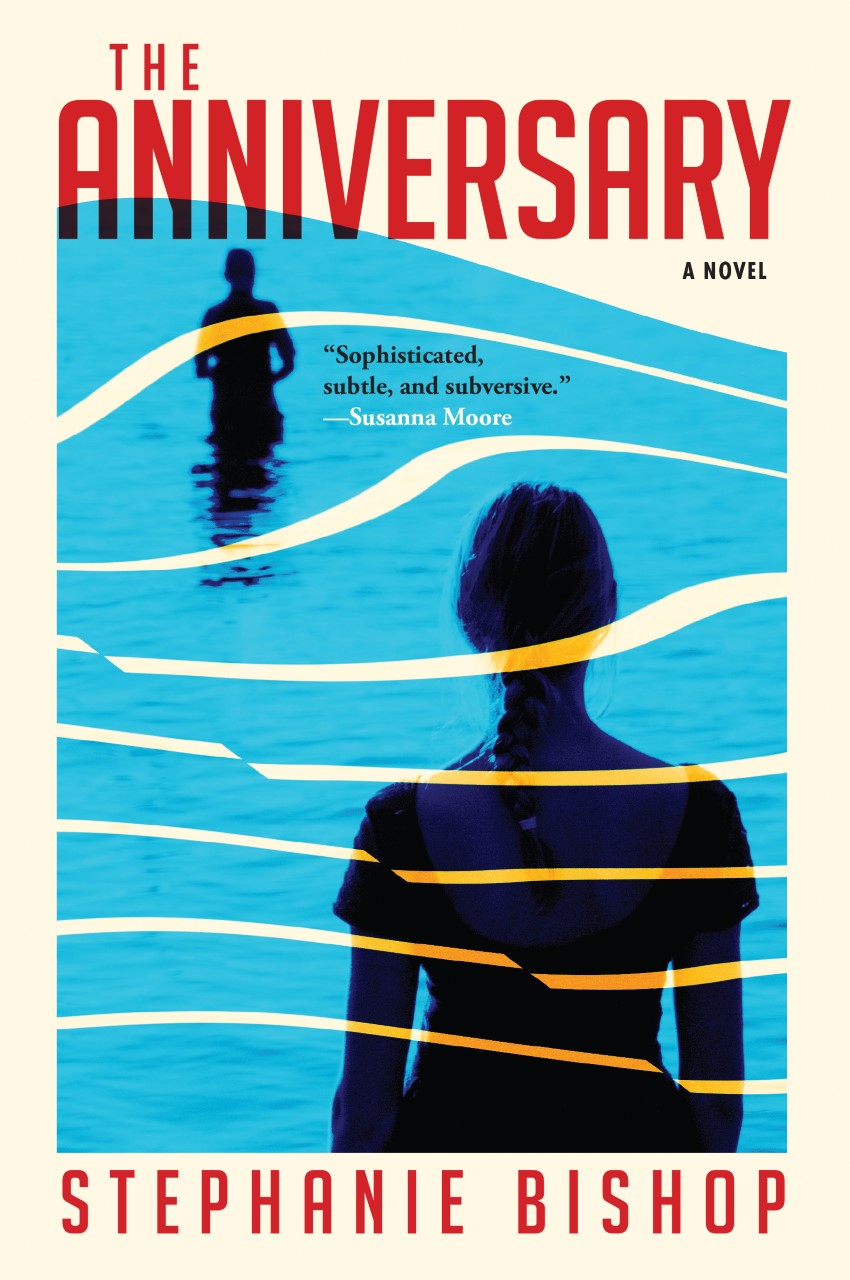
As I did for my tenth anniversary, I would like to express my gratitude to all of you who have made this blogging journey such a fun and meaningful one through a book giveaway, in fact, two book giveaways – one to an Australian-based reader and another to a non-Australian-based one. The book I send to each winner will be a surprise, making this a readers’ lucky dip.

The rules. Express your interest in the comments below, noting whether your postal address is Australian or not, by midnight on May 9 (AEST) and on May 10, I’ll draw from each list using a random number generator. If you win, you will need to provide me with your mailing address (privately) as specified in the post announcing the winner. If you don’t, I’ll redraw. We can’t let a book gift go to waste, after all.

Meanwhile, once again, a big thanks to you all. You make this blog what it is – well, the good things about it, anyhow. The rest, as they say, is mine!


Monday musings on Australian literature: Forgotten writers 4, Kate Helen Weston

In 2021, I started my Monday Musings sub-series on forgotten Australian writers, with posts on Helen Simpson and Eliza Hamilton Dunlop. This year I added Marion Simons, who was my first post on the Australian Women Writers (AWW) blog this year. As I explained then, Elizabeth Lhuede and I have decided to focus this year on sharing public domain works published in 1924 – or written by writers who died in 1924. So today, I am introducing another writer I’ve posted on there, Kate Helen Weston.

As with Marion Simons, I am not including here the piece written by Simons that I published at AWW. It is an entertaining piece titled “The ubiquitous apostrophe”. If love discussions of grammar and punctuation, do check it out at AWW.

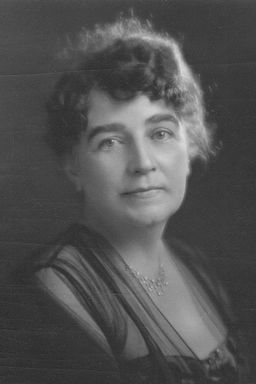
Kate Helen Weston

Kate Helen Weston (1863-1929) was born Kate Helen Carter in Ballarat, Victoria, to British parents who came to Australia for the gold rush, but she died in Adelaide. Indeed, one “L.B.” described her in The Australian Woman’s Mirror (of 24 February 1925) as “one of the best-known of Adelaide’s feminine inky-wayfarers”. She has an entry in AustLit, and in Debra Adelaide’s Australian women writers: a bibliographic guide, but not in the Australian dictionary of biography or Wikipedia. Adelaide’s News (10 December 1924) provided a brief biography of her in their “Pen Portraits of People” series, after she was elected president of the Liberal Women’s Educational Association.

These sources aren’t quite in tune with each other. AustLit says that she married John Samuel Weston “in Adelaide in 1885, and moved there in 1892”. Adelaide’s News says she married “Mr. J.T. Weston … and later came to Adelaide”. AustLit says that she was widowed in 1894, and “turned to writing to provide financially for herself and her children. She contributed to many Australian newspapers, and published fiction between 1911 and 1928”. They also say that “she was Lady Superintendent of the Elder Conservatorium in Adelaide between 1900 and 1914”. The News, on the other hand, says that “after her husband’s death she accepted the position of secretary to the Elder Conservatorium, which she held for 22 years”. So, some minor differences in detail here – in the name of her husband and in her Elder Conservatorium role. These would be good to clarify, but for now I’m noting them and moving on.

The News tells us that she “developed literary and artistic tastes” and had published three novels in London. In fact, she published four novels, one a few years after the News’s article. Her novels were The partners (1911), The man MacDonald (1913), The prelude (1914) and The vagabond soul (1928). The man MacDonald, says News, “had a wide vogue”. Melbourne’s Table Talk (26 July 1928), announcing the publication of The vagabond soul, said that “the story, which contains a dramatic situation of some originality, is entirely Australian in setting, and it is written with the same facile spontaneity which characterises Mrs Weston’s other novels”. But, her novels have not lasted.

Both AustLit and the News mention her other literary and journalistic work, but AustLit is more specific, telling us that she contributed to many Australian newspapers. They say she was “music and art critic for The Register, contributed to The Woman’s Record – a monthly publication – and, according to her obituary in The Advertiser, she was the ‘founder of community singing in Adelaide’.” She received a Commonwealth Literary Fund Fellowship in 1915, and was also actively involved in the National Council of Women.

Weston was clearly well-known in Adelaide’s literary circles. The News (9 September 1924) reports on an address she gave at the monthly meeting of the Liberal Women’s Educational Association. (Th Association aimed to educate women in political and social matters, but, said The Register on 2 March 1926, it could also become active in social reform, “when necessary”.)

Anyhow, the focus of Weston’s talk was Australian Women Writers. The News starts with:

It was not until one began to reckon up the women writers of Australia, said Mrs. Weston, that it was realised how many there were and what a contribution they had made to the literature of Australia in poetry, prose, and journalistic work, though it was only of late years that woman had met man on equal ground in the field of journalism. 

Turning then to poetry, she said that Australian men were credited with being better poets than Australian women, but she believed that the work of women poets was “possibly much more original in style as it bore the impress of no old world stylist, and invariably expressed the writer’s personal outlook on life”. Mary Gilmore, for example, “spoke always with a woman’s voice and wrote, not of things but of humanity and the home”. She named, and apparently read from many, contemporary Australian poets.

She then talked about fiction, arguing that it’s through fiction that the life of an age is chronicled. She named many novelists including those we still recognise today, like Mary Gaunt, Ada Cambridge, Mrs Campbell (Rosa) Praed, and Ethel Turner. She also mentioned – and I think this is an astute and significant recognition – the “many letter writers, whose small contributions fitted into the interstices of the wall of literature which was being built”. 

She concluded by arguing that the Commonwealth Government needed to more actively encourage Australian literature. She pointed to the lack of Australian publishing houses and the small market. She said, writes the News, that “writers of fiction could not afford to remain in their own country, but were forced to go to the fogs of London or the bustle of America, where they lost their nationality and their English”. And she urged would-be writers “to read all styles, and copy none” – and to practise constantly. 

The News and AustLit both describe her other, considerable, community involvements and achievements. These included having a tilt at politics. The News writes that she stood for a ward in municipal elections in 1923, and “polled the highest percentage of votes ever gained by a woman in the elections in this State”. Her death, after falling from a tram from which she never regained consciousness, seems tragic.

So far I have written on four women writers for this year’s AWW project. Two, Marion Simons and Alice Tomholt, never married, and two, Kate Helen Weston and Lillian Pyke, were widowed with young children. All, it seems, managed to eke some sort of living from writing. 

Jane Austen, Mansfield Park (Vol. 2)

Mansfield Park book covers

As I wrote last month, my Jane Austen group is doing a slow read of Mansfield Park this year, meaning we are reading and discussing the novel, one volume at a time, over three months. This month was Volume 2 (that is, chapters 19 to 31). It starts with the return of the patriarch, Sir Thomas Bertram, from his plantation in Antigua, and ends with Fanny rejecting Henry Crawford’s proposal.

Last month, I said that the thing that struck me most in volume 1 was the selfishness, or self-centredness, of most of the characters. I wondered whether Austen was writing a commentary on the selfishness/self-centredness of the well-to-do, and how this results in poor behaviour, carelessness of the needs of others, and for some, in immorality (however we define that). Having now read volume 2, I’m still on this path – together with a couple of other, somewhat related ideas, education, which I also mentioned last month, and parenting.

But first, the selfishness and self-centredness continues. In this volume, Maria marries and she and Julia leave Mansfield Park, leaving Fanny the only young woman at the Park. Mary Crawford, over in the parsonage, no longer has a young female friend to entertain her, so her sister Mrs Grant thinks Fanny would suffice:

Mrs. Grant, really eager to get any change for her sister, could, by the easiest self-deceit, persuade herself that she was doing the kindest thing by Fanny, and giving her the most important opportunities of improvement in pressing her frequent calls. 

Here is one of the reasons I love Austen. She knows exactly how we justify our actions to ourselves.

Anyhow, as a result, Fanny spends more time with Mary, as a favour to others, resulting in, Austen writes,

an intimacy resulting principally from Miss Crawford’s desire of something new, and which had little reality in Fanny’s feelings.

Examples like this pepper the volume. Lady Bertram doesn’t want Fanny to accept a dinner invitation because it would affect her “evening’s comfort”. After all, as Austen writes, “Lady Bertram never thought of being useful to anybody”. Late in the volume, Lady Bertram rises to the occasion, or thinks she does. She sends her maid to help Fanny dress for her first ball, and says so during the ball when Fanny’s appearance is complimented. “Chapman helped her to dress. I sent Chapman to her.” Yes, she did, but only after she was dressed and too late to help Fanny who was already dressed! Austen adds:

Not but that she was really pleased to have Fanny admired; but she was so much more struck with her own kindness in sending Chapman to her, that she could not get it out of her head.

Mrs Grant, Mary and Lady Bertram aren’t the only selfish, self-centred people in this volume. There’s the egregious Henry Crawford who had played, in volume 1, with the feelings of Maria and Julia, and then leaves Mansfield, in volume 2, with nary a word to either of them:

Henry Crawford was gone, gone from the house, and within two hours afterwards from the parish; and so ended all the hopes his selfish vanity had raised in Maria and Julia Bertram.

That’s not the end of Henry, though, because he’s soon back, telling his sister Mary, “my plan is to make Fanny Price in love with me”. In my Jane Austen group, we discussed that as his frivolous flirtation moved to something more serious – as he started to truly see, we believe, Fanny’s value – he gives no thought to whether Fanny will love him. That’s a given! He’s a catch!

There’s more I could say on this theme – I haven’t even mentioned Mrs Norris – but there are other ideas to talk about. I started to see in volume 2 that Mansfield Park is also about parenting, and, relating to this, I’d argue that in this volume we see the beginning of the education of Sir Thomas.

However, Sir Thomas is a controversial character in my group. Some detest him, rather like Mr Yates who had never seen a father so “unintelligibly moral, so infamously tyrannical” as Sir Thomas. But, along with some others, I see Sir Thomas differently.  Sure, he’s formal, but he loves his children – and he has no support in that wife of his. When he realises how silly Maria’s fiancé is, he wants to give her an out. Unfortunately, Maria wants to escape home and its restraints, so doesn’t take it. Sir Thomas is – admittedly – relieved because it suits his wish “to secure a marriage which would bring him such an addition of respectability and influence”. An example of new money, he’s a product of his times, and a “good” marriage can only help! However, as the volume progresses, Sir Thomas looks out for Fanny, wanting to give her opportunities, despite Mrs Norris’ attempts to keep puttng Fanny down.

For me, a recurring theme in Austen’s novels, in fact, is parenting. Lady Bertram is completely hands-off, letting Mrs Norris (as I mentioned in volume 1) have too big a hand in her daughters’ upbringing, to their detriment. Sir Thomas, on the other hand, is strict and – well, let’s talk about how it all plays out in volume 3. Here, though, he is kind to Fanny and wants well for her.

I have more to say on this, but I’ll leave it here as there are two ideas I’d like to share from my group’s discussion.

One of our members talked about the Australian critic John Wiltshire’s discussion of the disempowerment of women in his book Jane Austen and the body. He argues that caring for servants and the working class is a traditional role for genteel but otherwise disempowered woman, but that “this benevolence has a Janus face” because it replicates the inferior-superior social relationships that characterise the wider society. Mrs Norris, Wiltshire argues, “punishes others for her own dependency and frustration, whilst being able to hide this from herself in the guise of generosity to the recipients and loyal service to the system”.

Similarly, all at Mansfield Park have, through their adoption of poor Fanny Price “basked in the pleasure of benevolence”. But this has let Fanny become Mrs Norris’ victim. Both Fanny and Mrs Norris, says Wiltshire, are outsiders, “fringe-dwellers”; both are single, defenceless females who are “not part of the family except by courtesy. The one lives in the small White House, on the edge of the estate, the other in the little white attic at the top of the house”. Wiltshire argues that Fanny becomes the scapegoat upon whom Mrs Norris can “exercise her frustrations and baffled energies”. By scolding and punishing Fanny, she can “appease her own sense of functionless dependency and reaffirm the strictness of the social hierarchy which gives meaning to her life”. An interesting idea which I plan to think more about. It doesn’t excuse Mrs Norris, but it might explain her!

The other idea I want to share came from a young American visitor to our meeting. While she had read Austen and other classic authors, she said that her main reading, currently, is romance and general fiction. So, as she was reading Mansfield Park, she looked for tropes common to the romance genre. And, she found two significant ones, which could cement Austen’s reputation as the mother of the romance genre! The first trope is the idea of friends (or, here, cousins) becoming lovers, and the other is the romantic heroine’s belief that she’s “not like other girls”. She’s not as pretty, not as outgoing, and so on, as her rivals. Fanny makes this sort of observation in a discussion with Edmund about how she likes hearing Sir Thomas talk about the West Indies. She says she is “graver than other people” and concludes:

… but then I am unlike other people, I dare say.

I loved this insight from a first-time reader of the novel.

So much more to say … but there will be more opportunities to talk Austen, I dare say! Meanwhile, thoughts?

Monday musings on Australian literature: 1937 in fiction (2) – and Trove

Karen’s (Kaggsy’s Bookish Rambling) and Simon’s (Stuck in a Book) “Year Club” officially finished yesterday, but I focused so much in last week’s post on the issue of the state of Australian criticism, that I didn’t get to share some other ideas I found. So, I’ve decided to bookend the week with Monday Musings posts!

Trove

First, though, I’d like to explain a little about how I use Trove. For those who don’t know what Trove is, it is an online library database managed by the National Library of Australia. It is a fantastic resource for researchers because it contains an extensive – in depth and breadth – range of digital resources, including newspapers, journals and gazettes; official and personal archives and manuscripts; images; archived websites; and more. I mostly use the digitised newspaper collection, so I’m going to focus on it.

The process for putting non-born-digital newspapers online involves scanning the papers (from print or microfiche form) and then using OCR (optical character recognition) to produce readable text. On Trove, we see both the original and the OCR-ed texts. The quality or accuracy of the OCR text varies greatly, depending on the quality of the original from which the scanning was done. Trove’s solution to this has been to use crowdsourced (aka volunteer) text-correction.

Of course, as a librarian, I can’t use a service like this without doing my bit, so whenever I search Trove I end up doing corrections. This can be a tedious business when the original was poor, and can take a large amount of time. But, I don’t want to link in my blog an article that my readers will find hard to read, so, to do the time! The result is that I may not always research Trove as much as I would like in order to write my posts, but I hope that I research enough to make what I say valid or worthwhile!

I do sometimes cut corners. Where the item I am interested in is, say, part of a multi-subject column, I will, occasionally, only correct the section of interest to me. That’s a pragmatic decision I just need to make sometimes. (Just telling you in case you click on one of these links and wonder what I have been doing!!)

Back to 1937

On developing Australian literature

In my last post I focused on discussion about the importance of a good critical culture to the development of an Australian literature, but other thoughts about the state of Australian literature were also shared during the year. For example, in February, commenting on a gathering – attended by “many prominent men” – to commemorate Henry Lawson, the Williamstown Advertiser observed that Lawson’s “Australianism” is a heritage to be treasured, and that Australians need to

encourage home writers whose individuality cuts through the meshes of old-world hyperorthodoxy in literature, which conveys an assumption that the “blawsted colonials” are mere vulgarians.

Two months later on 10 April, Melbourne’s The Herald ran an article discussing the development of Australian literature, comparing it with the the challenges faced by American literature. It looked at the two nations, and commented on the problems faced by Australian writers. It suggested that America had now developed its own style. From the realism of Dreiser and Anderson, “the American literary spirit has taken lucid shape in the works of Ernest Hemingway and John Dos Passos”. It says that this new spirit represents “a revolt against nineteenth century English romanticism” and that the new style encompasses “typical Americanisms, the characteristic speech, the special vocabulary, the distinctive syntax and, above all, the natural mode of expression”.

Is Australia ready for “the emergence of a style in which an Australian outlook is implicit, and which would incorporate the characteristic speech, syntax and vocabulary of Australia?” Creating this, it argues, “is a labor of love; there is no material reward in it, at present”. Unfortunately, Australia, it says, has not recognised its similarity to America, and “is still awed by the heaped-up riches of the English literary tradition”. This does not, it concludes, prevent our making an “intelligent assessment of the lines upon which distinctively Australian writing should, develop”.

A week later, 17 April, there was a lengthy riposte in The Herald. You can read it at the link provided, because it covers several issues, but it starts by arguing that the most important issue is

that people read books not because they are written by Englishmen, or Americans, or Australians, but because they are entertaining.

So there, you writers! Write what the readers want! “Patriotism,” it says, “does not enter into the plain man’s choice of books”. It accepts that there’s a critical minority of readers who are interested in the technical experiments needed to improve literary standards, but

A critical minority … does not make a best-seller. For that the writer must look to the reading public as a whole, to the suburban libraries, to the man who has never heard of James Joyce or Aldous Huxley— except when one of his books is banned.

The article then argues that Australian artists have developed an Australian style, and suggests how Australian writers might proceed. It concludes that “it would be absurd to believe that the public is hostile or the Australian scene barren” (which I don’t believe the previous article argued.)

Education

Education is critical to encouraging interest in local literatures. At least, it is, I’d argue, for those whose culture has been – or risks being – swamped by larger cultures. The issue of education popped up a few times in 1937.

A pointed reference came from Brisbane’s The Catholic Advocate of 14 October. Written, I believe, by “Pasquin”, it opens with:

Is there a Chair of Australian Literature in any one of our six Universities?

It notes that “the University of Queensland tacks on to the course of English literature half-a-dozen lectures or so on Australian letters”, but then says

Surely it is a disgrace to Australia that in none of our seats of learning is our literature considered worth anything more than a digression or an aside.

It then goes on to ask how many Professors of English Literature are Australian? Go Pasquin, eh? “It is no wonder we have an inferiority complex”. Pasquin then pushes on:

How many are English ex-patriates like Professor Cowling of Melbourne, who in a recent article in the Sydney Morning Herald declared that he was at a loss to name a single Australian novel suitable for the classroom.

Hmm … Many journalists in 1937 could name “good” Australian writers, like, Henry Handel Richardson and Katharine Susannah Prichard! Pasquin concludes by saying that “Even J. T. Lang has been moved to describe the Senate of the Sydney University as “the most un-Australian body in Australia.”

Meanwhile, grass roots action was occurring. The Sydney Morning Herald reported (14 October) that the Workers’ Educational Association (WEA) had organised “a tutorial class in Australian Literature” for the summer. It was to be run by Fisher University librarian and critic H. M. Green, and Hartley Grattan, an American literary critic, with expertise in Australian literature.

On 9 November, Sydney’s The Workers Weekly reported that a Central Cultural Council had been established as the result of a conference convened by Sydney’s Writers’ Association. Indeed, it appears this conference had not only inspired the abovementioned WEA course but the Teachers’ Federation deciding to give more attention to the teaching of Australian literature in schools!

Keeping to the subject of schools, my last 1937 article comes from Queensland’s The Northern Miner on 18 December. It reported on a speaker at a Sydney luncheon. Dr. G. Mackaness, described by the ADB as “educationist, author and bibliophile”, made an “appeal for a better appreciation of Australian literature”. He saw the education system as one of the problems, and said “it was appalling that over a period of five years only one Australian writer was included in the books which had been chosen for Leaving or Intermediate Certificate examinations”. This report concluded that:

The fault of lack of appreciation of Australian literature was equally divided among those who had the selection of certain literature for studies, the non-progressiveness of Australian publishers to help the Australian writer, and the uneducated mind of the average Australian to the culture obtainable from Australian authorship.

We have come a long way since then, but there’s always more to do…

Previous Monday Musings for the “years”: 1929, 1936, 1954, 1940, 1962 and 1937.

Rachel Matthews, Never look desperate (#BookReview)

One of the most appealing things about Rachel Matthews’ third novel, Never look desperate, is that it features some decent men. In this #metoo era, which differs little from what came before, there’s plenty of fiction which shows men in less than stellar light. And that’s fair enough. One of the reasons I read fiction is to expand my understanding of the issues I care about. I can feel along with the so-called sad girl stories, and applaud the angry feminist ones. However, most men I know, like most women I know, are decent human beings trying to live good, fulfilled lives. And this, essentially, is the subject matter of Matthews’ novel.

Never look desperate follows three main characters, in alternating, third-person chapters. These characters are 49-year-old Bernard, 54-year-old Minh, and Bernard’s recently widowed 70-year-old mother Goldie. It is set in Melbourne, immediately post-pandemic. People are starting to get out and about again, but the pandemic’s shadow lingers in the background. Bernard and Minh are single, lonely, and seeking connection.

Bernard, a photographer who works at Officeworks, dearly misses his father Marvin, who had died 12 months ago. He also wears a locket encasing some of his dead-ex-wife’s ashes around his neck. He had loved his wife, and the fact that they were divorced when she died, does not lessen his grief. With both gone, he feels that from now, “the world would keep taking pieces of him”, but he’s surviving – just. The last time he’d had sex, on a Tinder date, “it was all over in one minute and 10 seconds – the same time it took him to microwave porridge”.

Vietnamese-born Minh, who came to Australia by boat when she was seven, works at the Kino cinema complex. She has never married, though has had her share of boyfriends. She loves her mother, but rarely sees her because her evangelical step-father had kicked her out long ago. We first meet her as she wakes, gasping, from “night terrors”, and we soon learn that she carries trauma from the loss of her father on that boat from Vietnam and from the racism she experienced as the only Vietnamese kid at school.

Goldie is more complicated. She’s “alternative”, and uncompromising. She is implicated in her husband’s death, though this is not a legal issue in the novel, because she had slowly replaced his blood pressure tablets with alternative medicines. She has a new lover, but she’s prickly – and grief and ageing are not making her any easier to be with. However, Franz is hanging in there. As she does with the other characters, Matthews nails her with sentences like this:

Goldie didn’t really have friends. Her old workmates from a community centre in Collingwood, found her difficult to work with, but we were grateful when she wrestled with management for better conditions.

She is the most difficult character for readers to identify with, but she has her own baggage, including a tough upbringing, during which her mother would lock her in a dark laundry, aka “the Thinking Room”.

“the world was different now” (Goldie)

So, we have three people who are all grieving or have suffered losses in their lives. Bernard and Minh meet early on via the dating app Tinder, and through the rest of the novel there’s a rom-com type tension regarding whether they will overcome their anxieties and get together. The novel’s other main tension concerns whether there will be a rapprochement between Goldie and Bernard, whose upbringing had been difficult with such an inflexible, “alternative” mother, and who believes that she does not grieve his beloved father. We though know better. (Marvin, whom we only know by hearsay, is one of the book’s joys.)

Now this might all sound ho-hum, but it’s definitely not, for a few reasons. One is the humour. Matthews captures the place and time, and her characters, with light satire that preserves their humanity while letting us laugh at the things they and we do in these strange times of ours. She hones in on some of the absurdities and pretensions of our times, without condemning. After all, who knows who will have the last laugh! That said, the IKEA and cruise-ship scenes are priceless.

Another reason is the characterisation. These characters are real. We know them, and, even if we are not exactly like them, we have surely suffered similar sadnesses and insecurities. This week, for example, we lunched with a recently widowed friend, and as I greeted her with a hug, she said “oh, a lovely hug”. One of the points Matthews makes so eloquently in this novel is the longing “to be touched” in those left alone – especially during the pandemic. So, there’s genuine pathos here, too, as we watch our characters struggle, hard, to beat back their justifiable fears and reconnect.

Related to the characterisation is the setting. Melburnians will love all the grounding references to places, products and businesses that carry signals for those who know, but are self-explanatory enough for those who don’t. The novel is also peppered with pop-culture references, particularly to music but also to film and TV shows, which will be more universal for the generations involved.

Then there is the quiet wisdom. Bernard’s dad had told him once that “a sad day is only a day”. This is not to minimise intense grief, of course, but it puts into perspective the little ups and downs that we can let get on top of us if we don’t take care. Matthews shows the various kindnesses people meet through life, often in unexpected places, and also that online-friendships, like Minh has with Suzy in New York, are real and sustainable.

Goldie recognises early in the novel that “the world was different now. She just had to find her way”. By novel’s end, our characters are finding their way. The future isn’t guaranteed, but they are on their way with a little more connection in their lives. What did E.M. Forster say in Howard’s End? “Only connect”. Yet again, we see his wisdom – and Matthews has given it to us in a funny, warm-hearted novel that is a real pleasure to read.

Lisa (ANZLitLovers) also enjoyed this novel.

Rachel Matthews
Never look desperate
Melbourne: Transit Lounge, 2023
297pp.
ISBN: 9780645565393

(Review copy courtesy Transit Lounge, via Scott Eathorne, Quikmark Media)

Marjorie Barnard, The lottery (#Review, #1937 Club)

This will probably be my only review for the 1937 Year Club but I am thrilled to do it, because it is by Marjorie Barnard, an author whom I have mentioned many times, but have not yet managed to review here. My post is on a short story from her collection, The persimmon tree and other stories, which is one of the very few short story collections I’ve read more than once. It is so good. And don’t just take it from me. Carmel Bird mentions it in her bibliomemoir, Telltale, calling it “extraordinarily powerful”.

I wasn’t sure, in fact, what I was going to read for this week. I certainly hadn’t considered this collection because it was first published in 1943 but, rummaging around Trove, I discovered a story by Marjorie Barnard in The Bulletin of 6 January 1937. The page was titled “Of a lottery winner: First Prize” but I recognised it immediately, and let out an internal whoop. Here was my chance.

“The lottery”, as it is titled in the collection, has been anthologised, including in The Penguin best Australian short stories (1991), though the titular story, “The persimmon tree” is, I believe, the most commonly anthologised from the collection.

Who was Marjorie Barnard?

Marjorie Barnard (1897-1987) was an Australian novelist and short story writer, critic, historian and librarian. She wrote five collaborative novels with Flora Eldershaw, under the pseudonym, M. Barnard Eldershaw. Their first novel, A house is built, was published in 1929, having jointly won, with Katharine Susannah Prichard’s Coonardoo, The Bulletin prize in 1928. Their last, the futuristic Tomorrow and tomorrow and tomorrow was censored, and published in an expurgated edition as Tomorrow and tomorrow in 1947. Barnard also wrote works of literary criticism, and is credited with writing the first assessment of Patrick White (in Meanjin in 1956) and the first biography of Miles Franklin. (Jill Roe writes of the biography in the ADB, saying that “written with misgivings and before the release of Franklin’s voluminous papers, it exhibited characteristic virtues, with insight and style making up for ambivalence and inevitable error.”)

Barnard, along with Eldershaw, and other Sydney-based writers, like Frank Dalby Davison, was deeply concerned about the social and economic upheavals of the 1930s. These three, known as “the triumvirate”, held literary soirees which were attended by like-minded writers including Xavier Herbert and Miles Franklin. They were active in promoting writer’s rights (through the Fellowship of Australian Writers), and opposed censorship. She was a pacifist, and was apparently named in those political witch hunts of the 1950s, making her cautious about what she admitted to in terms of political affiliations. She was one of many writers who corresponded with, and often asked advice of, Nettie Palmer. She was a significant force.

In 1983, she was awarded the Patrick White Award, as was also her admirer Carmel Bird, years later. Hers was a long, and active life – far too long for me to cover here – and unfortunately, I don’t think anyone has done a biography of her. She is more than a worthy subject.

“The lottery”

What is so “extraordinarily powerful” about The persimmon tree and other stories is the quietly controlled but clear-eyed way Barnard interrogates human experience, in general, and women’s experience, in particular. Many of the stories have a strong feminist undercurrent, and “The lottery” is one of these. What makes it remarkable is that it is told third person through the perspective of the husband, which sets us up to align with him – perhaps.

The story is set in suburban Sydney. It starts with the husband, Ted Bilborough, having just boarded the ferry on his way home from work. His co-passengers tell him – show him in the paper, in fact – that his wife had won the lottery, “Mrs. Grace Bilborough, 52 Cuthbert-street.’… First prize, £5OOO, Last Hope Syndicate.” The thing is, Ted didn’t know. We then follow him on his way home as he goes through various emotions – and as he does so, we glean a picture of who he is and the sort of life his wife has led. A disconnect builds between how he – the perfect unreliable narrator – sees that life and the way we do.

At first, we are told that “everyone likes Ted”. He’s decent, it seems, in that typical-for-the-time suburban-husband way, and because of this “he’d always expected in a trusting sort of way to be rewarded, but not through Grace”. It’s little qualifications like this – “but not through Grace” – that give the game away.

Alongside Ted’s thoughts are descriptions of the evening. They too contain nuances that suggest deeper truths are at play. “The sun was sinking into a bank of grey cloud, soft and formless as mist” and two pine-trees have a “soft arrested grace”, a bit like his Grace, we readers might think. A little further on, “Ted could see that the smooth water was really a pale, tawny gold with patches, roughened by the turning tide, of pale frosty blue”.

He wonders how she’d paid for the ticket, “He hadn’t noticed any difference in the housekeeping, and he prided himself he noticed everything”. He starts to rethink Grace, who’d been “a good wife”, while he’d been “a good husband”. Indeed, “theirs was a model home” but, “well, somehow he found it easier to be cheerful in other people’s homes than in his own”. Whose fault is this? Well, Grace’s of course!

She wasn’t cheery and easy-going. Something moody about her now. Moody. He’d worn better than Grace; anyone could see that, and yet it was he who had had the hard time. All she had to do was to stay at home and look after the house and the children. Nothing much in that. She always seemed to be working, but he couldn’t see what there was to do that could take her so long. 

And so it continues, Ted ruminating on the situation, on their marriage, and on how things might proceed – even starting to feel a bit magnanimous with this money that’s not his own – until he arrives home, and discovers exactly what Grace intends. It’s all in the name of the Syndicate!

The writing is delicious. Spare, and accessible, it nails women’s lives and the constrictions so many live under. There is little agency for many of her women, and Barnard draws this with such simple but knowing realism it takes your breathe away. I love many of the stories in the book – and this is as good as any of them.

* Read for the 1962 reading week run by Karen (Kaggsy’s Bookish Rambling) and Simon (Stuck in a Book) who, I discovered, has reviewed the collection.

Marjorie Barnard
“The lottery” (orig. pub. in The Bulletin, 6 January 1937)
in Marjorie Barnard, The persimmon tree and other stories
London: Virago Press, 1985 (first published by Clarendon in 1943)
pp. 97-105

Full text of The persimmon tree and other stories is available online at the Internet Archive

Monday musings on Australian literature: 1937 in fiction

Once again it’s Karen’s (Kaggsy’s Bookish Rambling) and Simon’s (Stuck in a Book) “Year Club” week. This time the year is 1937, and it runs from today, 15th to 21st April. As I’ve been doing for a while now, I am devoting my Monday Musings to the week.

If the 1960s, from which our last “year” came, were exciting for many of us, the late 1930s were very different, particularly for those living in Europe. Of the 1930s, in general, Wikipedia writes that “the decade was defined by a global economic and political crisis that culminated in the Second World War”. For my purposes here, that just about says it all. It certainly provides a flavour for what concerned the major writers of the period. Realist fiction was still in force, and in Australia writers like Marjorie Barnard, Flora Eldershaw, Frank Dalby Davison, Eleanor Dark, and Katharine Susannah Prichard were expressing their ideas about social and economic injustice, for example. Many were pacifists, and many supported or worked for the trade union movement. It was, generally, an unsettled time, here and abroad. (By way of contrast, the best-selling book in the USA in 1937 was, apparently, Gone with the wind! But this was also the time of John Steinbeck, et al!)

I found books published across all forms, but as my focus here is Australian fiction, I’m just sharing a selection of novels published in 1937:

There were very few literary awards at the time, but the ALS Gold Medal went to Seaforth Mackenzie’s The young desire it. He is now among the least known of the authors listed above.

Writers born this year include novelist Colleen McCullough (died 2015) and political scientist and writer Don Aitkin (died 2022). I didn’t find many deaths, but novelist Catherine Martin (born, 1848) died this year.

Finally, also in 1937, the Commonwealth Literature Censorship Board replaced the Book Censorship Advisory Committee. It temporarily lifted the ban on James Joyce’s Ulysses – only to re-apply it again in 1941 after pressure from church groups.

The state of the art

As always, I checked Trove to see what newspapers were saying about Australian literature, fiction in particular. In addition to references to specific books and events, what I found overall was concern about the state of Australian literature, along with discussions about causes and remedies. This is similar to 1936, which I wrote about in my Monday Musings for the 1936 Club, so I’ll try to supplement – rather than repeat – what found then.

One issue discussed several times through the year concerned the importance of a good critical culture, so that’s my focus for this post. The Telegraph (14 April) took up this issue, arguing that the “leading articles” papers publish at the end of the week, versus the reviews published during the week, make a “considered contribution” to “strengthening … literary values among the numerous readers who look to the daily Press for guidance among a vast and ever-changing array of books”. The article comments on the importance not of comparing (“grading”) writers, but of offering

a consideration of their absolute quality as writers. The practice of relative appraisal too often leads to confusion where the authors considered are admittedly worthy of critical study, but derive their literary strength from different sources. The wise newspaper critic of fiction — it is with fiction that for the moment we are primarily concerned — is he who endeavours to establish the qualities which explain his attraction to, or repulsion from, a writer and then evaluates those qualities by the degree and consistency of his own sensibility.

That’s a nice, clear description of criticism – to establish one’s criteria and then evaluate them.

The Telegraph makes the point that Australia is capable of producing good literature. It believes that while achievement is uneven across the different forms, there is “no cause for pessimism about the future of Australian literature”. Indeed, the article says that:

A country that has produced, among living novelists*, Henry Handel Richardson, Vance Palmer, Katherine Susannah Prichard, Miles Franklin, Helen Simpson, the Barnard-Eldershaw combination, and Brian Penton is not deficient in generative power …

And adds that more writers could be added to this list.

Meanwhile, “Norbar” (Dr Norman Bartlett) in The West Australian (7 August) also discussed critical culture, observing that

One of the great disadvantages under which those in Australia who are genuinely interested in national literature suffer is the lack of guidance. Other national literatures have reliable historical and critical signposts. 

His point was that in Great Britain, for example, “reputable literary periodicals, with critical traditions”, help readers make choices. Critics, he admits, “are often wrong, and commercialism has tainted the trade of criticism, but there is a tradition of judgment”. No-one, he says, who is interested in Virginia Woolf would buy books by romance novelist Ethel M. Dell. He then discusses the work of two critics, the American expert on Australia, C. Hartley Grattan, and the Australian, H.M. Green. Speaking of Grattan, Norbar makes an important point about the role of critics:

To accept him as a guide is not to accept his judgments, but he serves the purpose that competent introductions to English literature serve, by erecting signposts in the wilderness of letters.

In other words, it’s not the “absolute” lists of names that are important but the guide they provide to the literary landscape – and, thus, presumably, encouragement for debate.

The final two articles I’ll refer to come from The Age. The first (18 September) is ascribed to R.G. (presumably, the academic and founding editor of Southerly, Robert Guy Howarth), and the second (2 October) is a response from poet and critic, Furnley Maurice (Frank Wilmot), who takes offence at R.G.’s analysis of the state of Australian literature.

R.G. commences by arguing that:

Contrary to the opinions of some critics, Australian literature is not a dependent off-shoot of English literature, but is a vital entity in process of achieving expression of its individuality.

He has very clear opinions about the development of a truly Australian literature, much of which we would agree with now. He talks about its needing to pursue its own course, to be released “from the curb of nineteenth century influences, which have so long entrammelled imagination and held it in subservience to traditional forms and ideas”. While he names some writing that he believes is truly Australian, such as that of Henry Lawson, he believes things have stagnated:

Lack of canonical criticism is responsible to an unfortunate degree for this stagnation, because contemporary Australian criticism stands equivocally in the midst of several schools of thought. A false standard of values has been created by the persistent determination of many commentators to include everything written since Wentworth’s “Australasia” in the category of literature.

Unfortunately, as well as taking criticism to task, he also finds failings in Australian writers! Some have attempted to capture Australian experience, he says, but have failed, and he gives his reasons. These Maurice does not like, so he fights back:

One fact to bear in mind is that the shortcomings of our criticism are as great as the shortcomings of the writing, if not greater. The chief fault of the criticism is one that “R.G.” appears to share — that of making sweeping general statements and giving no particulars. Surely our writers have not all “failed because they lacked technical equipment,” because they “chose banal themes,” or because they “did not possess the basic culture necessary!” Such statements would suggest that “R.G.” has the bad national habit of forming definite opinions before he assembles the facts.

Take that, R.G! He then goes on to identify what he sees as quality Australian literature, and includes* Price Warung, Vance Palmer, Brent of Bin Bin (Miles Franklin), Martin Mills (Martin Boyd), M Barnard Eldershaw, Eleanor Dark and Capel Boake. He challenges R.G. to provide evidence for his statements, and then discusses “the facts” as he sees them, identifying the “difficulties” and “practical conditions” under which Australian writers “must work”.  

He is pleased though that ‘”R.G.” supports a proper national principle in writing even if he has not much to say for the work done to date’. 

While I think Maurice over-reacted somewhat, as R.G. makes some good sense, both writers have something useful to add to the debate, and if you are interested, the articles make good reading. Meanwhile, I will close here – but may very well write a second post next Monday.

* Links are to my post/s on these writers.

Sources

  • 1937 in Australian Literature (Wikipedia)
  • Joy Hooton and Harry Heseltine, Annals of Australian literature, 2nd ed. OUP, 1992

Previous Monday Musings for the “years”: 1929, 1936, 1954, 1940 and 1962.

Do you plan to take part in the 1937 Club – and if so how?

Thomas King, Borders (#Review)

Thomas King’s “Borders” is the eleventh of fourteen stories in the anthology, Great short stories by contemporary Native American writers. Like the previous story by Duane Niatum, it was also written in the 1990s.

Thomas King

Anthology editor Bob Blaisdell provides some basic information about King, but I am supplementing that with information from Wikipedia which introduces him as an “American-born Canadian writer and broadcast presenter who most often writes about First Nations”. He was born in California in 1943, and “self-identifies as being of Cherokee, Greek, and German descent”. He has written novels, children’s books, and short stories. 

King studied in Californian schools and universities, before earning his PhD at the University of Utah. Between his various degrees, he worked in many jobs, including spending three years in New Zealand. He moved to Canada in 1980, where he worked as an academic until he retired.

In terms of his First Nations activity, our main interest here, Wikipedia says that “his 1986 PhD dissertation was on Native American studies, one of the earliest works to explore the oral storytelling tradition as literature”. He is committed to a wide range of issues concerning First Nations rights, prospects and culture, but most relevant to his story, “Borders”, is a statement Wikipedia shares from his book, The inconvenient Indian:

“The issue has always been land. It will always be land, until there isn’t a square foot of land left in North America that is controlled by Native people”.

“Borders”

According to Blaisdell, “Borders” appears in King’s 1993 short story collection, One good story, that one, which was a best-seller in Canada. “Borders” is one of those frequently anthologised stories, apparently, which doesn’t surprise me because it is a ripper. From what I’ve read about King’s writing, “Borders” feels typical of his approach, with its conversational style and use of humour to convey a serious message. King adapted this story into a teleplay for a CBC anthology drama series, and it has also, recently, been turned into a graphic novel for a younger readers.

The narrative comprises two storylines which are alternated with each other. It is told first person through the eyes of a young boy. One storyline concerns his much older sister, Laetitia, leaving home at the age of 17 to live in Salt Lake City, Utah, while the other tells of a trip he makes with his mother some five or so years later to visit this sister. The crux of the story, though, lies in what happens at the US-Canada border. Asked to give her “citizenship”, the mother insists “Blackfoot” and is denied entry. She refuses to offer anything else. As a result, she and her son get caught in a no-man’s land when, attempting to return to Canada, the same response to the same question results in her being refused entry there too. As one of the border officials tries to explain to her, “it’s a legal technicality, that’s all”.

Of course, that’s not all. Blackfoot people ranged across the great northwest of America in what is now known as America and Canada. For our narrator’s mother, that land is her “citizenship”, not that she is American or Canadian, and she will not back down.

From the opening, the mother is established as sensible, no-nonsense. She doesn’t want Laetitia to go to Utah, and she doesn’t give in easily, pointing out the negatives right until they leave her at the border. But Laetitia will go and her mother is eventually proud of her, because she hadn’t “gone floating after some man like a balloon on a string” nor had she “snuck out of the house … to chase rainbows down alleys. And she hadn’t been pregnant.”

We first meet the border, as mentioned above, when the mother and son (our narrator) take Laetitia there, from where she’ll get a bus to Salt Lake City. We see the border, but mother and son don’t attempt to cross it at this point. The writing, at this early point, captures the obstinacy and strength in both mother and daughter, alongside the love between them::

The wind had come up and it blew Laetitia’s hair across her face. Mum reached out and pulled the strands out of Laetitia’s eyes, and Laetitia let her.

“Laetitia let her”. Conveys so much, doesn’t it?

Anyhow, it’s a few years later, when mother and son set off to visit Laetitia that the fun starts. Our narrator sets it up beautifully, his “mom” packing food for the trip, while he plaintively hopes they can “stop at one of those restaurants too, right?” The pacing of the border conversations is perfect. We chuckle, but we see the point too. When the mother gives up trying to get into the USA, and tries to return to Canada, the humour continues. The Canadian border guard, after some friendly small talk, asks

“Where are you coming from?”
“Standoff”.
“Is that in Montana?”
“No.”
“Where are you going?”
“Standoff.”
The woman’s name was Carol and I don’t guess she was any older than Laetitia. “Wow, you both Canadians?”
“Blackfoot.”

And it starts again. It’s just delicious. “Mom” is polite, but also determined to make her point and not. give. in. There are no histrionics, there’s no violence. Just polite behaviour on all sides. (But, the description of the few days they spend in this limbo region, visiting the duty free shop and sleeping in the car, did remind me of that Kath and Kim episode when Kath and Kel spend their honeymoon at the airport.)

The language is direct and spare, told from a pre-teen’s point of view. He reports rather than comments, but in that reportage we see the truth – of the strength of the mother’s identity and determination to preserve it, and of her wisdom in dealing with her daughter.

Hachette’s promo for the graphic novel version describes it as resonating “with themes of identity, justice, and belonging”. It is exactly that. I imagine the graphic novel is a winner, because the short story sure is.

Thomas King
“Borders” (orig. pub. 1991)
in Bob Blaisdell (ed.), Great short stories by contemporary Native American writers
Garden City: Dover Publications, 2014
pp. 84-94
ISBN: 9780486490953

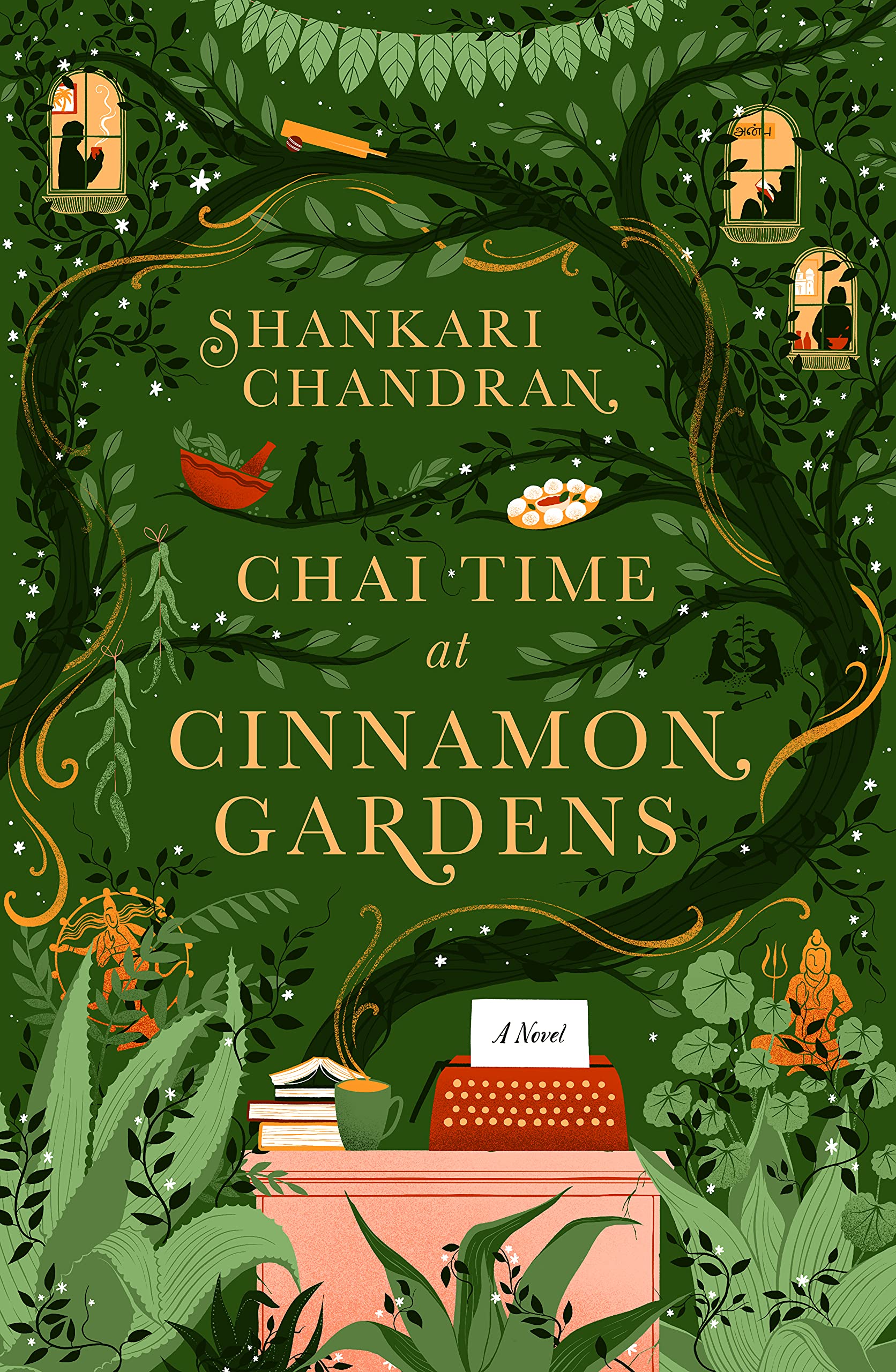
Shankari Chandran, Chai time at Cinnamon Gardens (#BookReview)

Shankari Chandran’s Miles Franklin Award winning novel, Chai time at Cinnamon Gardens, was my reading group’s March book. Unfortunately I was out of town at the time of the meeting, but of course I wanted to read it – and I did, finally!

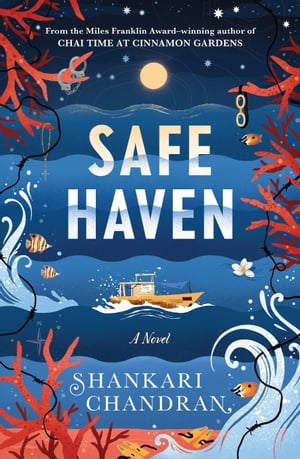
Like many people, I think, when I first saw the book, I assumed it was one of those cosy crime novels set in a nursing home or retirement village. The title and the pretty cover certainly suggest that. Only a fraction of this first impression was right, though. It is set in a nursing home, and crimes do occur, but it is not a crime novel and nor is it cosy. Instead, it is a serious, thoughtful and immersive novel that covers many issues confronting modern multicultural Australia, but that also has one main driving idea – which I’ll get to soon.

First, though, I want to clear up another assumption I had, which was that Chandran is a Sri Lankan-Australian writer. Wikipedia told me otherwise. It describes her as a British-Australian writer, who was born in London to Tamil refugees from Sri Lanka. She grew up in Canberra, and studied law at the University of New South Wales, before working as a human rights lawyer in London for a decade. She now lives in Sydney. Chai time at Cinnamon Gardens is her third novel. GoodReads describes her first novel, Song of the Sun God (2017), as being “about three generations of Australian Tamil women and the choices they make to survive Sri Lanka’s civil war“. I don’t know what that novel’s overarching idea is, but Chai time at Cinnamon Gardens also draws from its main characters’ experiences during that civil war, and I do have a view on what drives it, so let’s get to the novel.

It is set in the Cinnamon Gardens Nursing Home in a fictional Sydney suburb called Westgrove, which situates it in Sydney’s multicultural western suburbs. The home is taken over in the early 1980s by Sri Lankan migrants, Cedric, Zakhir, and his wife Maya who wants to transform it to a place “where people will be valued”. The novel is told through multiple alternating voices, but starts with a Prologue which describes the home and which, if you read carefully, also prepares us for what’s to come:

Arabian jasmine climbs the wooden trellises staked in the garden beds. They are bold travellers, dark vines carrying white stars up the two-storey walls and around the windows of the residence. The plant grows obediently in the quiet suburb of Westgrove, Sydney, but its tropical ancestors are a wild breed, a vine that grows rampant in the villages of Sri Lanka, a home more familiar to many of the residents.

“Bold travellers”, “dark vines”, and “white stars” together with words like “obediently” and “wild” suggest a tension that we are going to explore.

We then start the narrative proper. It’s 2020, and Maya is now old and living as a resident in the home – albeit one who still holds many strings. Ruben is attending her, and we become aware that he bears fresh and old scars on his body. As the narrative progresses, we learn that the fresh scars come from recent racist attacks on him in the vicinity of the home, while the old scars relate to his experiences in Sri Lanka during the war. These scars more literally embody the tensions that pervade the novel.

From here, the rest of our narrators, all third person, are gradually introduced – Ruben; Maya’s daughter Anjali (Anji), who now manages the home; Anji’s old schoolfriend Nikki, who is the home’s geriatrician; and Nikki’s husband Gareth, who is white-Australian and a local councillor. There are other characters, including, most significantly, Anji’s also white-Australian husband, Nathan, and Maya’s aforementioned husband, Zakhir who disappeared, now presumed dead, ten years before the novel’s opening.

A strength of the novel is the way these characters inveigle their way into our hearts and minds so that we care about them, even the unappealing Gareth who, blinded by self-pity, rashly but unintentionally unleashes the dreadful drama that unfolds. It all hinges on racism. Chandran exposes the awful truth of how endemic racism is in Australian society and how, as a result, things can so quickly get out of hand. Interspersed with this present-day storyline are Maya’s, Ruben’s and Zakhir’s backstories, which explain why they had come to Australia – personally, in terms of what they had experienced during the civil war, and politically, in terms of their Tamil heritage and what that civil war was about.

I said at the beginning that the novel covers many issues which confront modern Australia, but that it also has one main driving idea. The issues include racism, colonialism, and multiculturalism; trauma, loss and grief; friendship, family and community; and the role played by the media, including social media, in fuelling emotions rather than encouraging reason. Underpinning these issues is the idea that drives the narrative – storytelling, and “the most powerful” of all stories, history. By framing her story within the Sri Lankan civil war and its battle over contested histories, Chandran makes her novel relevant to all cultures and societies where history has been used to oppress minorities resulting in violence, disempowerment and oppression, where distortion produces misinformation and confusion that can be manipulated to serve personal and political ends.

As grim and confronting as much of it is, Chai time at Cinnamon Gardens is not without hope. Alongside Chandran’s exploration of the misuse of history is a commitment to the positive value of story. To this end Maya, from the beginning, interviews all residents of the home, capturing their lives and their dreams in order to properly know and care for them. This provides the book with another underlying tension, that between histories that erase and stories that “must not be erased”.

Does it all work? Chandran holds a lot of balls in the air. Early on I felt caught in an awkward amalgam of a contemporary novel about middle class angst (husband versus wife, daughter versus mother, and so on) and one exploring critical political ideas. Also, there’s constant moving backwards and forwards in place and time, the plot felt a little contrived in places, and the main themes are hammered home. However, Chandran balances the tone well, mixing light humour and satire with sadness and tragedy, and the characters are vividly and sympathetically drawn. The end result is a book that reveals our essence, and asks us to consider how we might live together in respectful community. Consequently, despite some unevenness, I greatly enjoyed the read.

Shankari Chandran
Chai time at Cinnamon Gardens
Ultimo: Ultimo Press, 2022
360pp.
ISBN: 9781761151408

Monday musings on Australian literature: News on two awards

Originally this post was going to be about South Australia’s reframed literary awards, but then I saw some news on another award, and decided to do a little consolidated post. Here goes…

South Australian Literary Awards

Some of you might be aware that in my sidebar I have a widget (or whatever it’s now called) for the current year’s major Australian Literary Awards – like the Miles Franklin, the ALS Gold Medal, the Stella Prize – focusing, mainly, on the fiction winners. One of the awards I had in that list was the biennial Adelaide Festival Awards. It was due again this year – but no awards were announced, and I wanted to know why. A little search revealed the answer. The award has been reframed as the South Australian Literary Awards, which are being managed by the State Library of South Australia. They will still be biennial, apparently.

The page, linked above, reminds us that the awards were were introduced in 1986 by the Government of South Australia and that they “celebrate Australia’s writing culture by offering national and state-based literary prizes across a range of genres”. This year the shortlists will be announced in July, and the winners in November.

The awards include prizes for published and unpublished works:

  • Fiction Award ($15,000): for a published novel or collection of short stories.
  • Children’s Literature Award ($15,000): for a published fiction or non-fiction book aimed at readers up to 11 years.
  • Young Adult Fiction Award ($15,000): for a published book of fiction aimed at readers aged 12 to 18 years.
  • Non-Fiction Award ($15,000): for a published non-fiction work.
  • John Bray Poetry Award ($15,000): for a published collection of poetry.
  • Jill Blewett Playwright’s Award ($12,500): for an un-produced play of any genre written by a professional South Australian playwright. (Supported by State Theatre Company South Australia.)
  • Arts South Australia Wakefield Press Unpublished Manuscript Award ($10,000 plus publication by Wakefield Press): for an unpublished, book-length manuscript by a South Australian writer.

And some fellowships:

Barbara Hanrahan, The scent of eucalyptus
  • Max Fatchen Fellowship ($15,000): for a South Australian writer for young people working in the genres of fiction, drama, poetry or screenwriting.
  • Barbara Hanrahan Fellowship ($15,000): for a South Australian writer working in the areas of fiction, poetry, drama, scriptwriting, autobiography, essays, major histories, literary criticism or other expository or analytical prose. (My review of Hanrahan’s The scent of eucalyptus)
  • Tangkanungku Pintyanthi Fellowship ($15,000): for a South Australian Aboriginal and Torres Strait Islander writer working in the genres of fiction, literary, non-fiction, poetry and playwriting.

Hilary McPhee Award

The news that changed this post was the announcement of the 2023 Hilary McPhee Award. It’s not for fiction, so is not an award many of us follow closely. However, it is worth noting. After all, it is in the name of a significant Australian publisher, Hilary McPhee, co-founder of McPhee Gribble Publishers, which operated from 1975 to 1989 and which put many of the Australian writers we love today – like Helen Garner and Tim Winton – on the map. The announcement came in an email from that major Australian literary journal, Meanjin, and said that this year’s winner is Declan Fry for his essay “911 Lonely: Call Me Call Me Call Me” on the work of McKenzie Wark. It was published in Meanjin 82 (4), Summer 2023.

The email provided some background, but I did write about the award last year, so I won’t repeat it all. Essentially, the award has been presented annually since 2016, and “recognises brave essay writing that makes a fearless contribution to the national debate”. The essays are drawn from those published in Meanjin in the previous calendar year. It’s worth $5,000.

This year’s winner, Declan Fry, has appeared in my blog a few times. Most recently I’ve noted his being a judge of the 2022 Stella Prize, and a panel member at the 2024 Blak and Bright festival, but I’ve also quoted him in a couple of other posts. He is a writer/poet/essayist based in Naarm/Melbourne. Meanjin’s editor, Esther Anatolitis, says of his winning essay:

I found Declan’s essay thoroughly exhilarating. It’s scholarly, rigorous and utterly delicious. I deeply admire the ways he twists and pulls the essay form—way beyond its limits, and then all the way back—in ways that honour his chosen subject magnificently.

As for his chosen subject? McKenzie Wark has a Wikipedia page. She “an Australian-born writer and scholar”, who writes on media theory, critical theory, new media, and more. She is a professor of Media and Cultural Studies at The New School, and has lived in the USA for some time I believe. Fry’s article, linked on its title above, took a bit of brain-power to digest. But, once I got into it, I could see what Anatolitis means. I do love writers who play confidently with form, and the way Fry teases out Wark’s ideas about language and meaning, identity, race, gender, memoir, and more, to understand her and her theories makes good reading.

‘Do we need to be “we” at all—why not just a collection of I and I and I?’ (Wark in The virtual republic)

However, the truth is that if I tried to describe the essay and the ideas it mulls over, I would reduce them to less than their whole so, over to you…

(There was an event about this at Muse yesterday afternoon, around the time I arrived back from Melbourne. If I’d been here, I would have been there!)