Monday musings on Australian literature: Translated fiction, Australian-style

Having just read and reviewed Linda Jaivin’s Quarterly essay, Lost in translation: In praise of a plural world, I thought I’d research the state of translated fiction in Australia. Jaivin doesn’t spend a lot of time of this particular issue, but in her concluding plea she says:

Publishers need to consider how to prise open their lists in order to let more translation in.

In other words, while she argues that students should learn foreign language/s, she also recognises that we can’t be across all languages. We should therefore have easy access to translated literature. However, in my experience and I’m sure that of Australian blogger Tony, who specialises in translated fiction, it is not easy to find material here and so, all too often, we turn to overseas publishers and distributors.

That said, there are some local sources of translated fiction. And there are – and have been – Australian translators of foreign fiction (besides, of course, Linda Jaivin). I have written before on this blog about poets Rosemary Dobson and David Campbell who translated Russian poetry into English.

The easiest type of translated fiction to find in Australia is of course the classics. It is not hard to find Russian, French and other classics in English in most decent bookshops. It is also relatively easy to find translated works by the better-known contemporary writers from non-English cultures. Random House Australia, for example, has published Japanese writers like Haruki Murakami and Yoko Ogawa. But they do not make it easy to find their translated books. They categorise fiction by genre/form, so if you search under crime, say, you will find translated works by, for instance, the Norwegian crime writer Jo Nesbø. It should be easy enough for them to add a category for translated works to help those of us who’d like to seek out non-English-centric works.

Many of Australia’s smaller independent publishers also publish translated fiction. For example, Text Publishing, probably the largest of the small presses, is currently publishing Diego Marani (whose The last of the Vostyachs I reviewed recently). On Text’s Fiction page is the category Translated, which takes readers to a list of around 60 titles.

Other small presses publishing translated works include:

  • Brandl + Schlesinger lists translated works as one of its focuses. Its list includes Russian author Igor Gelbach, and Hungarians István Örkény and György Dalos.
  • Giramondo specialises in “innovative fiction” and, while it is one of the smaller publishing houses, it includes translated fiction in its list including a work by French-Australian Catherine Rey.
  • Scribe, which has won the Small Publisher of the Year award four times since 2006, publishes foreign language authors such as Dutch writer Gerbrand Bakker. Bakker won the 2010 International IMPAC Dublin Literary Award for his novel The Twin, which is one of his books published by Scribe.

I have to admit that I don’t know all these authors, but it’s great to know they are here!

As I was researching for this post, I came across the website for the Australian bookseller, Booktopia. Of course, as an Australian reader, I’ve known about them for some time, but I was pleasantly surprised when they popped up in my Google search for “translated fiction Australia”. Booktopia, I discovered, do, like Text Publishing, include translated fiction in their side-bar categories though, intriguingly, the click-through categorisation goes like this:

Books
|- Fiction
|- – Fiction in Translation and Short Stories (in a box labelled Subjects)
|- – – Fiction in Translation

Odd, that, the grouping of “Fiction in Translation” and “Short Stories” but at least Booktopia provides a path for readers to find translated works. Go Booktopia I say! They currently have 1862 titles in their list. There’s a lot of crime there, but they also carry classics, popular contemporary fiction (by such writers as Allende and Zafón), and books from independent publishers like Peirene Press, which is well regarded as a publisher of European literature in translation.

It’s probably a bit late for Christmas shopping, but why not include some translated works in your summer (or holiday) reading plan? Meanwhile, I’d love to hear your thoughts on the topic of sourcing and reading translated literature.
Linda Jaivin, Found in translation: In praise of a plural world (Review)

Linda Jaivin, Found in translation Book cover

Courtesy: Black Inc

Reading synchronicity strikes again! In the last couple of months, the issue of language, translation and culture has been crossing my path – in Diego Marani‘s The last of the Vostyachs, in Gabrielle Gouch’s Once, only the swallows were free, and on Lisa’s blog post about the AALITRA Symposium on Translation. I was consequently more than happy to accept a review copy of the latest Quarterly Essay, Linda Jaivin’s Found in translation.

Now, as some of you know, I have mixed feelings about reading books in translation. I want to read them because I want to read not just about but from other cultures. Not being fluent in all the languages of the world, the only way I can do this is to read works in translation, but when I read a translated work I am very conscious that there is a mediator between me and the work. This bothers me. Linda Jaivin, herself a translator, knows exactly what I mean:

… it is absurd to speak of issues of literary style, rhythm – or any aspect of a translated work aside from its structure, characters and plot – without acknowledging that the language of the text is at once a creation of the translator and an interpretation of the author …

And she gives good examples to support her statement. I was pleased to see her acknowledge this, because she knows of what she speaks! But, this little point is only a very small part of Jaivin’s wide-ranging, entertaining but also passionate essay. Jaivin, if you haven’t heard of her, is a multi-skilled woman: she subtitles Chinese film and television and translates Chinese text; she has worked as an interpreter; and she has written novels, stories, plays and essays.

As a reader and lover of words, I enjoyed Jaivin’s discussion of the technical and philosophical challenges faced by translators. She peppers her discussion with an eclectic but fascinating array of examples. And she quotes other translators, such as Edith Grossman who wrote that

a translation is not made with tracing paper. It is an act of critical interpretation … no two languages, with all their accretions of tradition and culture, ever dovetail perfectly.

Take swearing for example. How we swear is highly cultural. Swear words, Jaivin writes, “expose what is forbidden, what is permitted and what is held sacred” in a culture, and consequently “can  throw differences in worldviews into sharp relief”. However, you’ll have to read the essay, if you want to see her examples!

I was intrigued by her argument that translations of classics go out of date! So, this means that the Spanish will always read the same Don Quixote but English speakers are very likely to read a different translation depending on which one is currently in vogue.

“… a culture doesn’t grow just by talking to itself …”

But, the critical point of her essay is not the act of translation. As the title of her essay implies, Jaivin is passionate about pluralism, and more, about cosmopolitanism. By this, she means not just living side by side, not just accepting each other, but “sharing a common vision”.

Australian Women Writers ChallengeFor Jaivin, “translation” is not a narrow concept. Its implications extend far beyond the “simple” translation of words from one language to another, because attached to language are meanings and ideas. When ideas are translated – via words – from one culture to another those ideas change. Jaivin describes how concepts such as Confucianism and yes, even democracy, change when they cross cultures. This can lead, she says, to misunderstanding but it can also provide “room for the kind of creative interpretation that allows cultures and the conversations between them to grow and evolve”.

She argues that, because of Australia’s particular history and geography, and because Mandarin is the most commonly spoken language in Australia after English, “Australia is … in a unique position to translate the shift from the ‘American century’ to the ‘Asian one’ …”.

Building successful international relationships, she believes, requires genuine communication, which includes knowing, recognising and respecting other languages. It

does not require the weak to adopt the language of the strong – as reliance on English threatens to do, given its global and frequently imperial reach.

Jaivin argues that learning a foreign language should be a compulsory part of year 12 and university education, because “we need to have every possible line of communication open to us” if we are to successfully traverse the changes coming.  Not everyone agrees. What do you think?

Linda Jaivin
“Found in translation: In praise of a plural world”
in Quarterly Essay, No. 52
Collingwood: Black Inc, November 2013
103pp.
ISBN: 9781863956307

(Review copy supplied by Black Inc.)

Monday musings on Australian literature: Australian migration literature

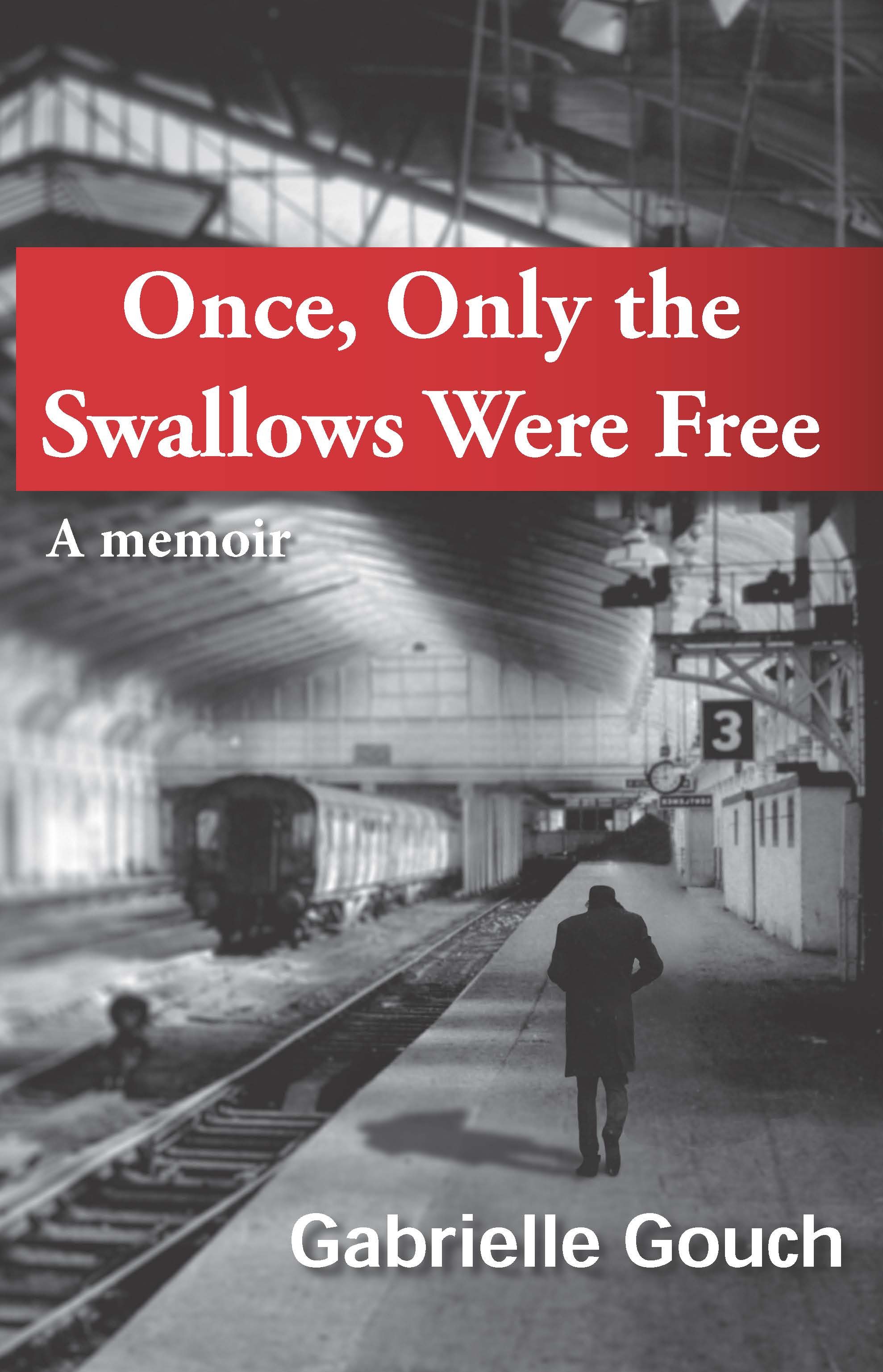
Last week I reviewed Gabrielle Gouch’s memoir, Once, only the swallows were free, in which she tells of her family’s migration from Hungary to Romania to Israel, and then her own on to Australia. While Gouch focuses more on the brother left behind, she does touch on the challenges of migration – the dislocation and loneliness that often ensues. One of the commenters on that post, Ian Darling, suggested that “Australia must have produced some particularly fascinating emigrant accounts in its literature”. We have, and way too many to list here.

It would be worth some time exploring the changes in that literature over the two or so centuries since white settlement – from the early days of British confidence, through to the changes that came as different nationalities started to appear (such as the Chinese on the goldfields in the nineteenth century and the Italian and Greek migrants after the Second World War), to the Asian migration of the later 20th century. But, that’s not what I’m going to do here. It’s nearly Christmas, so I’m going to take it easy and just list a few  I’ve read in recent years that I found interesting. Migrant literature, as you’d expect, crosses genres, particularly literary fiction and memoir.

Yasmine Gooneratne’s A change of skies (1991)

Gooneratne emigrated to Australia from Sri Lanka. I first knew of her as a Jane Austen fan and English literature lecturer at Macquarie University, but then my reading group read her novel, A change of skies, about the experience of migration. She writes about educated middle class migrants – like herself I presume – who work to find a balance between fitting into the new culture while at the same time preserving their Sri Lankan identity.

Melina Marchetta‘s Looking for Alibrandi (1992)

Marchetta’s book is a young adult novel about the daughter of an Italian family and her desire to fit into an Australian world against the family pressure to live the old Italian way. She’s young, bright, and in the last year of high school. She wants to meet boys – and not just Italian ones. She wants to live as her friends do. Gradually, she learns to make peace with her family, to recognise the rich heritage she belongs to while at the same time showing them that she can walk two worlds. It was a hugely popular book when it was published and was later adapted into a successful movie. It is I believe taught in high schools.

Arnold Zable‘s Cafe Scheherezade (2001)

I read this novel a few years before I started blogging. It was inspired by the eponymous cafe in Melbourne at which Jewish immigrants – survivors mostly of the Second World War – would meet, talk and provide support for each other. It is a gorgeous novel, about the power of stories to provide support and aid survival. Zable is a warm, generous writer. I remember the book for that, but I also remember it for  teaching me about the various ways Jewish people came to Australia. I didn’t know, for example, how many had transitioned through Shanghai. Zable’s The sea of many returns, which I reviewed early in this blog, is also about migration and yearning for home – and about the power of stories. Stories, we know, are a powerful mechanism for preserving culture – whether it be our national identity or the micro-culture of our families!

Nam Le‘s The boat (2008)

Le’s book is a collection of short stories, many of which are not about migration, not specifically anyhow. However, two of the stories – ““Love and honour and pity and pride and compassion and sacrifice” and the title story “The boat” which closes the collection – are autobiographical, and draw directly on his life and on family’s experience of migrating to Australia from Vietnam as boat refugees when he was just one. The interesting this is that, while most of the stories aren’t specifically about migration, they do tend to all be about survival, which suggests, to me anyhow, that the experience of migration has strongly informed Nam Le’s world view.

Alice Pung‘s Unpolished gem (2007) and Her father’s daughter (2011)

As with most of the books in this list, I read Pung’s memoir, Unpolished gem, before I started blogging. It tells the story of her growing up in an immigrant household. She focuses particularly on the challenges of being a child growing up in a culture that her parents are unfamiliar with, of being caught between two worlds. While I loved the book, it bothered me a little that she didn’t empathise with, or try to understand her parents as much as I would have liked. I guess she was just young! However, she rectifies this in her next memoir, Her father’s daughter, which I reviewed a couple of years ago. She starts to understand two things – what their lives were like and what they’d lost/sacrificed, and why they had worried about her and tried to protect her the way they did. I loved this recognition in the book:

She started to see her mother and father in a new light. They had a sense of humour! They knew their private lives were completely separate from the world their daughter had described in another language.

Hats off, I say, to all those families who traverse this tricky ground.

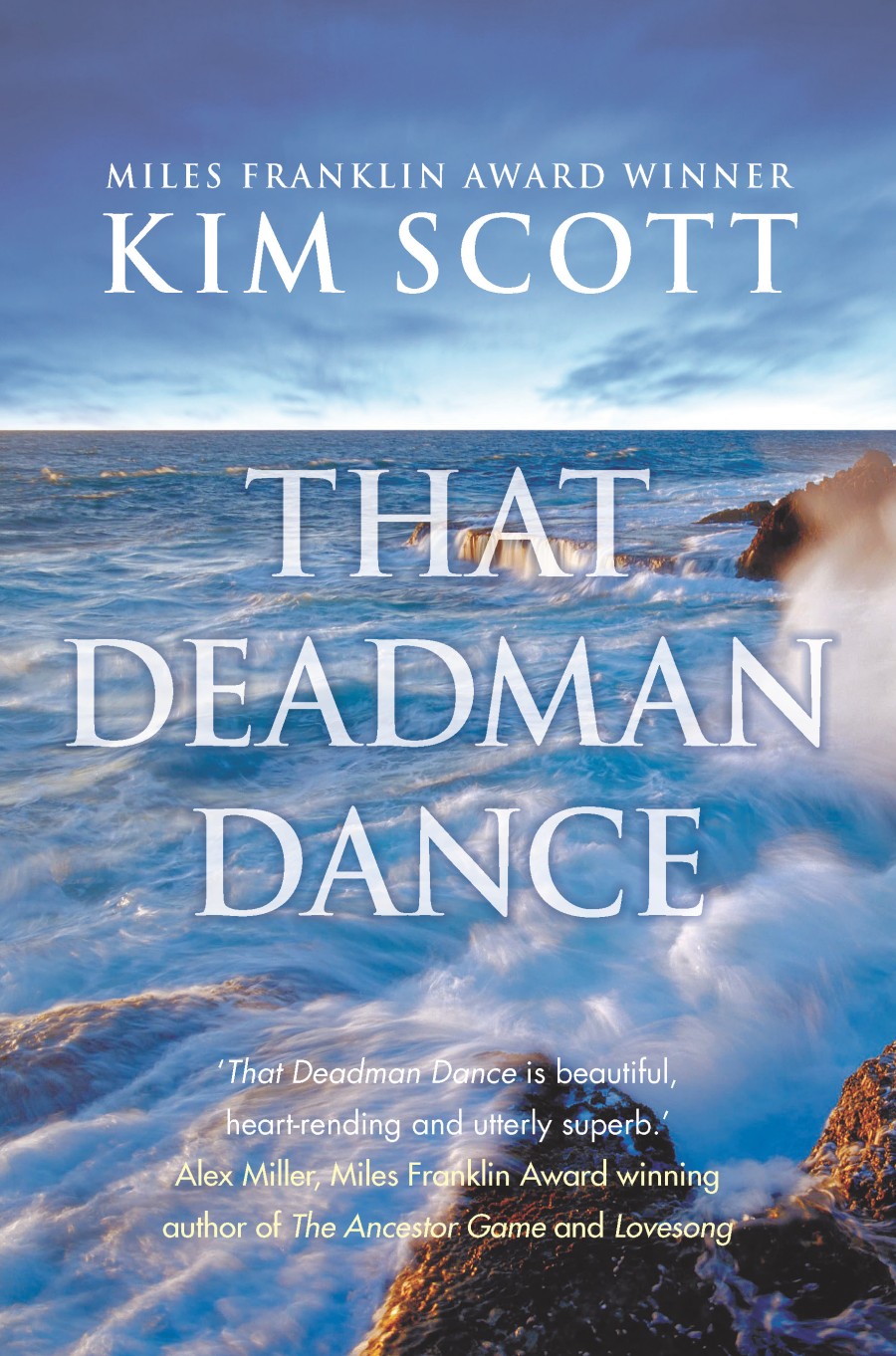
Kim Scott‘s That deadman dance (2010)

Up to this point, I’ve presenting this list chronologically, but I wanted to end with this one, because it is, for Australia, the ultimate migration story. Written by an indigenous Australian, it explores the first meeting in Western Australia between British migrants and the indigenous inhabitants. Drawing from documentary evidence, Scott tells a story in which arrogance reigns over good will, setting Australia down a path from which we haven’t yet recovered. Bobby, the main indigenous character, says at one point in the novel:

We thought making friends was the best thing, and never knew that when we took your flour and sugar and tea and blankets that we’d lose everything of ours. We learned your words and songs and stories, and never knew you didn’t want to hear ours.

I think I’ll leave it there …

Meanjin’s Tournament of Books 2013, Round 1

Hmm, when I announced this year’s Meanjin Tournament of Books over three weeks ago, I thought I’d be back before now with an update. However, the last match in Round 1 was only posted a couple of days ago, and I wanted to wait until the Round was finished before reporting back. So, here I am now, with Round 1’s results …

Round 1 Match 1: Margo Lanagan’s Sea hearts defeated Favel Parrett’s Past the shallows

Now this is a round between books I haven’t read, so I have no vested interest here. The judge Laura Jean McKay is a writer-performer who has been published in places like Best Australian stories and The Big Issue. She had a hard job – though what Meanjin Tournament judging isn’t hard, do I hear you say? – as both books have received significant critical acclaim since their publication. Sea hearts was shortlisted for this year’s inaugural Stella Prize, while Past the shallows was shortlisted for the 2012 Miles Franklin Award. Meanjin showed their strategic hand when pitting these two against each other! McKay observes that both “are told through very similar landscapes and lifestyles—though the first is Australian and the latter presumably Scottish. As well as the motifs of island and fishing life, both books are a comment on effects of these lives on women and their sons”. Parrett’s book she says is a “desperately sad and realist story of a rural Tasmanian fishing family torn apart by jealousy and death” while Lanagan draws on the selkie myth to tell her story of women, men and fishing. McKay doesn’t want to make a decision but, she says, “our relationship with the sea is unfair” and so she makes a choice. Lanagan wins by a seal’s whisker for coaxing McKay under to a place from which she never wants to emerge. Hmm!

Round 1 Match 2: Kim Scott’s That deadman dance defeated Kathryn Heynman’s Floodline

Kim Scott That Deadman Dance

Now, I admit that I don’t know Heynman or Floodline, but I reckon it would have taken a super-extraordinary book to beat Kim Scott. Heynman should take comfort from that. She could have lost to way lesser mortals! Judge Peter Taggart is a Queensland-based writer and theatre critic. Unlike McKay, he is very clear about which book is the winner and why. He appreciates much of what Heynman does but says that Floodline, a novel that explores the hypocrisy of Christina morality, recedes from memory while That deadman dance, with its powerful protagonist in Bobby, “lingers, which is why That Deadman Dance must take out this round”. Can’t argue with that. Scott’s wonderful book (my review) is not easy to forget, and will, I suspect, be a hard one to beat.

Round 1 Match 3: Jaya Savige’s Surface to air defeated Nevil Shute’s On the beach

I must say that, while I haven’t read Savige’s book and I loved Nevil Shute as a teen, I’m not surprised by this result. The mysterious judge, First Dog on the Moon, and I are in agreement. However, why First Dog chose Savige is not exactly clear – you can read the adjudication yourself at the link above – so I will just say that while I loved Shute’s dystopian novel when I was 15, I was disappointed when I read it a decade or so ago. Shute is a good story-teller – his books make great movies – but the characters were too stereotyped and the writing a little too prosaic to engage me beyond the basic story. Enough said. So, I must check out Surface to air which is, apparently, a collection of poetry.

(PS First Dog on the Moon is Walkley award-winning cartoonist Andrew Marlton)

Round 1 Match 4: Tim Winton’s Breath defeated Kate Grenville’s The secret river

Tim Winton, Breath

What a shame that these two books met in the first round – particularly since they are two of the four books I’ve read! Judge Tseen Khoo, a senior adviser in Research Development at RMIT University, had a hard job having to choose between these two great books, but I think, given the “sea” theme, that Tim Winton had to win. How could we not have Winton, our most famous chronicler of things oceanic, in the next round? Seriously, though, Khoo goes into some detail to explain her adjudication. Her decision, rightly or wrongly, comes down to the fact that she’s uncertain whether The secret river “changes conversations in Australia’s present about its past” – and she’d like it to. On the other hand, while she feels that Winton’s protagonist “never grows into measures of self-confidence and joy in life”, the book “left me haunted in an enduring way”. Grenville’s book, she said, felt like a book she’d read before, while Winton’s was unfamiliar and “not comfortable”. Much as I love both books, I think that’s a very good reason for choosing one work of art over another.

Recap

And so, we have 4 books – three novels and one book of poetry – going into Round 2:

  • Margo Lanagan’s Sea hearts
  • Kim Scott’s That deadman dance
  • Jaya Savige’s Surface to air
  • Tim Winton’s Breath

OK, so I’ve read two of these – Scott and Winton. Watch this space, to find out which two books will be in the finals …

Gabrielle Gouch, Once, only the swallows were free (Review)

Gabrielle Gouch, Once, only swallows were free

Courtesy: Hybrid Publishers

Do you differentiate memoir from autobiography? I do. For me, a memoir, such as Gabrielle Gouch’s Once, only the swallows were free, deals with a specific aspect of a person’s life, such as a sportsman writing about his career when he retires from it or a person writing about her growing up, like, say, Alice Pung‘s Unpolished gem. An autobiography, on the other hand, I see as something more holistic, something written near the end of one’s life and summing up its entirety. What do you think?

Gabrielle Gouch was born in Transylvania, Romania to parents who’d both fled anti-Semitic Hungary. She moved elsewhere in Romania with her family before they emigrated to Israel, without her older half-brother, when she was around 20. A few years later, she emigrated on her own to Australia which has remained her home ever since. This is the basic chronology of her life, but Gouch is not really interested in telling us this story chronologically – and in fact, she’s not really interested in telling us the story of her life. What interests her is the brother, Tom, left behind. She wants to know about his life during and post communism in Romania. She also wants to know about the gaps in her knowledge of the family.

Gouch therefore doesn’t tell the story in a simple chronology. While she clearly signposts where you are as you read, I found it a little disconcerting to start with, until I felt familiar with the places and people she was writing about. This, however, could be due to other things going on in my life as I started this book. The memoir starts in 1990 with her first return to Transylvania after “the collapse of communism. The eternal and invincible communism”. A return that took place 25 years after she had left. As the book progresses, she visits Cluj several times, catching up with her brother, learning about her family. It’s a sad story – not surprisingly. Tom’s mother, the much beloved, vivacious Hella, died in childbirth. His – and eventually Gabrielle’s – father, Stefan, married the nanny, refugee Roza, hired in to look after the physically handicapped Tom. (As far as I can tell, his condition is hemiplegia, probably caused by the forceps birth). Roza and Stefan went on to have two children – Gabrielle and, somewhat later, Yossi – but country girl Roza was never accepted by Stefan’s well-to-do family.

The book proper starts in 1962 with the family expecting permission to migrate to Israel to arrive any minute. Of course, it doesn’t – and it is not until some 40 or so pages and three years later that they are finally able to leave. They leave without Tom, now well into his twenties, but exactly why this is so is not understood by Gouch. During the course of the book she finds out why – and she finds out what Tom’s life was like under the communist regime. It’s a very interesting story, and once you master the time shifts across the book’s seven parts, it’s a very readable one. The very short Part 2, for example, returns to the opening of the book, her return in 1990. Then Part 3 jumps to 2002 and another trip of hers “home”. From then on the focus is her time with Tom and the stories she gradually pieces together.

Gouch is a good writer. Her language is expressive, but not over-done. That is, she has some lovely turns of phrase that capture moments and people well. Here, for example, she describes her family’s reaction when her mother says something surprising:

We looked at her as if she had made her way into our home by the back door somehow, a woman we had never met before.

And I like this simple description of children:

Well, children are like shares, you never know how they will turn out.

There are two main threads in the book, one being life under communism, as experienced by Tom, and the other being the life of the emigrant, as experienced by her family. The book is enlightening for people interested in either of these topics, but I’m going to highlight the second, the emigrant’s life, because she explains it beautifully – from the tough life her parents experienced in Israel to her own experience of dislocation from culture. She writes, as she starts to reconnect with her brother:

Noone ever told me that you cannot turn physical distance into emotional one, you cannot forget your native country, you cannot give up your mother tongue. It deadens you inside.

She gives one of the best descriptions of the relationship of language to culture that I have read. She meets an old professor who had chosen to stay living under the repressive regime because, he said, “This is my native land, my language. I belong here.” She writes:

His words lingered. ‘My native land, my language.’ For most people, the sound of Hungarian is awkward; for me it is poetry and delight. When I say ‘flower’ in English I refer to a plant with petals and colours. But the word in Hungarian, virág, sounds to me melodious and joyful. Yes, you can learn to speak a language, you can even learn to think in a language but will you feel the same joy and sadness at the sound of those words? Feel the black desperation or be uplifted by hope? Will the word love evoke the same tenderness and ardour? I don’t think so.

Australian Women Writers ChallengeGouch also writes about “history”, about the impact on people of living through some of history’s trickiest times, as her family had. Her description of her father’s life – a loving father who had worked hard – is heart-rending:

A man who was a Jew but not Jewish enough, an Israeli but not quite, a Hungarian Jew among Romanians and a Jew among Hungarians. Finally he left this world with its divisive nationalisms, ideologies and religions which had marred most of his life. He was just another man on whom history had inflicted its painful and murderous pursuits: Nazism, the Second World War, the communist dictatorship, the Arab-Israeli conflict and Israeli religiosity. History had match-made him, history had controlled his life. It was over. He joined the infinite Universe.

I’ve possibly quoted too much, but Gouch’s words are powerful and worth sharing.

“Knowledge”, Gouch’s father once told her, “is your only possession”. Once, only the swallows were free is a story of discovery for Gouch, but for us, it provides a window into a particular place, time and experience that most of us know little about. The knowledge, the understanding, we gain from reading it is a precious thing.

Gabrielle Gouch
Once, only the swallows were free: A memoir
Melbourne: Hybrid Publishers, 2013
279pp.
ISBN: 9781921665998

(Review copy supplied by Hybrid Publishers)

Monday musings on Australian literature: Australia Council Award

Last month the Australia Council announced this year’s Lifetime Achievement Award for Australian Literature. This award used to be called the Writer’s Emeritus Award, which I have written about before. Lifetime Achievement Award sounds better don’t you think? After all, “emeritus” implies retirement but most winners never really retire – at least as far as I can tell.

The award is worth $50,000 and it “acknowledges the achievements of eminent literary writers aged 60 years and over who have made an outstanding and lifelong contribution to Australian literature”. The Australia Council defines this contribution pretty specifically: “Nominated writers must have provided a critically acclaimed body of work with at least five full-length literary works published or performed over their creative life”. Five full-length literary works? I presume that means that if you are a poet or a short story writer, they would expect five published collections?

This year’s winner, though, is a novelist so no worries on the criteria front. The winner is Frank Moorhouse. The Australia Council Literary Strategy Chair, author Sophie Cunningham, said that while it was hard to select a winner:

Frank’s highly influential, intelligent, timely and sparkling contributions to Australian literature over so many years was hard to beat

Frank Moorhouse has an extensive body of work including novels, short stories and memoirs, but he is probably best known for his Edith trilogy, the third of which, Cold light, I reviewed earlier this year. The President of the Australian Publishers Association Louise Adler, who nominated him for the award, said that

Frank’s Edith is one of the great characters of Australian literature, but his career covers a lot more ground than that extraordinary achievement.

and that

His Edith trilogy is a magisterial work that takes Australia to the world and brings the world home to Australia in a hugely original literary endeavour.

Moorhouse is, I agree, a deserving winner. He’s one of the grand old men of Australian culture – and has been a strong advocate for writers and their rights, and for the book industry. He brought with the Australian Copyright Council, for example, a landmark copyright case against the University of New South Wales regarding the photocopying of pages from his work “The Americans, baby”. Controversy is, in fact, often not far from him, such as when in 1994, the Miles Franklin Award judges decided that his Grand days, the first Edith Trilogy book, was “insufficiently Australian” to be considered for the award. And then, there was even a little contretemps over the announcement of this very award. It was supposed to be announced at an event on November 21, but was pre-emptively announced much earlier on November 4. According to The Australian‘s Stephen Romei, in his blog A pair of ragged claws, this was due to Moorhouse who

said he didn’t want a media embargo in place until the announcement because he was opposed to the “cruel” trend towards treating literary awards “like the Oscars” and keeping shortlisted writers in the dark until the envelope was opened.

Clearly, at 75, Moorhouse is not going quietly!

Some past winners are pretty well-known, such as poet Bruce Dawe (200) and novelist Christopher Koch (2007), but others are not so well-known, including Dr Peter Kocan whose win I reported in 2010. Another lesser known winner is last year’s Herb Wharton, the indigenous Australian poet and novelist.

This is a significant award – and worth a decent amount of money – and yet it doesn’t receive a lot of publicity. That’s a shame, not only because the writers deserve recognition, but because better publicity could help inform Australians about their literary culture and about the work of the Australia Council which our taxes support. Anything that raises our literary consciousness would be a very good thing.

Melissa Lucashenko, Sinking below sight (Review)

In this week’s Monday Musings about the Walkley Awards, I noted that Melissa Lucashenko had won the award for Long Feature Writing for her essay “Sinking below sight: Down and out in Brisbane and Logan” in the Griffith Review. I’ve now read the essay, and thought I’d share it with you. I’ve reviewed Lucashenko before, an essay and a short story. I really must get to one of her novels one day!

With her mixed European and indigenous Australian heritage, Lucashenko is well placed to tackle significant contemporary issues and see them from multiple perspectives. The last essay of hers that I reviewed, “How green is my valley”, dealt with stewardship of the land and the threat imposed by climate change. In “Sinking below sight” her subject is poverty. Lucashenko’s essays make engaging reading. Instead of dry reportage, she starts from the personal, and from that draws conclusions that make sense. And so, while “How green is my valley” drew from her experience on a farm in northern New South Wales, this essay draws from her return, after losing her farm through divorce, to the town of Logan, one of Australia’s ten poorest urban areas.

You’ve probably noticed that her subtitle alludes to Orwell’s autobiographical work Down and out in Paris and London which chronicles his experience of poverty. Similarly, Lucashenko writes that she’s been poor before, so “I had the skill set”. But, this essay is not about her. She starts by setting the scene, describing this “Black Belt” region as one in which

Welfare recipients and the working poor … don’t necessarily realise they are hard up. More accurately, many don’t realise just how poor they are, since everyone in their lives is battling.

She then moves on to the main topic of her essay, which is to find out “How do my Black Belt peers manage? How do single mums, in particular, get by on current levels of welfare? And what dreams are possible for the Brisbane underclass in 2013?” To answer this interviews three women currently living in poverty – Selma (27), Marie (38) and Charmaine (49) – and discusses their situations.

Selma, a Yugoslavian of Serbian and Croatian parents, has four children under ten and a partner who is in and out of jail. Having been a refugee and then involved with an abusive Aboriginal man, Selma has some clear views on her situation:

What I don’t like in society … is the judgments put on Indigenous and refugee and domestic violence people. I was in that situation for nine years. They say you make a choice, but I don’t ever remember choosing to be beaten up! From the age of seventeen ’til about two years ago, domestic violence was part of my everyday life.

She blames poverty for violence, saying that “poverty breeds hate”. Lucashenko suggests that the abuse she experienced “had roots also in the trauma and racism of the refugee experience.”

Marie is also a mother of four, with an “on-again, off-again partner”. She is a member of the “working poor” so not quite as poor as Selma. She grew up in a troubled home, had been sexually molested as a child, and was living independently by the time she was 14 years old. She, like Selma, had a history of “severe emotional and physical abuse from her previous partners, who were all, bar one, Anglo-Australian men”. Lucashenko writes:

Marie spoke to me of feeling enormous rage about the past abuses in her life, rage which sits constantly just beneath the surface.

The third woman is Charmaine, “blond, slim and still able to laugh despite a life that would crush most of us [and] the white Australian mother of four Aboriginal kids”. She too was raped and molested as a child, and ended up in a violent relationship in which she stayed too long.

Australian Women Writers Challenge

While recognising that her examples are more anecdotal than statistical, Lucashenko nonetheless draws some conclusions. They include:

  • Underclass expectations, which see people who grow up with nothing, expecting little
  • The importance of public housing in providing some “minimal prospect of safety”
  • Loneliness and isolation, which drive single mums back to “untenable situations”
  • Violence and mental illness in parents and partners, which entrench poverty for women
  • Childhood molestation and/or rape, which all three women had experienced
  • Women seeking relief in drugs, which of course can initiate new downward trajectories

Her three women, Lucashenko finds, have hopes for the future. Selma and Charmaine are studying, because, as Lucashenko writes

Realising that poverty is a creation of society and its choices, these two women also know that their lives might shift through higher education.

Pragmatic Marie has a saving plan. Their situations though are tenuous. To achieve their goals, they’ll need strength. Better still, though, would be if they got effective financial and other practical support.

Lucashenko opens the essay with the epigraph that “the opposite of poverty isn’t wealth. It’s justice”. Her essay may not be statistically significant from an academic perspective, but anyone who reads contemporary social commentary knows that what she writes rings true – and this, clearly, is why she won the Walkley.

Melissa Lucashenko
“Sinking below sight”
Published in the Griffith Review, Edition 41, 2013
Available: Online at the Griffith Review

Russell Drysdale at Tarra Warra

English: Photograph of Australian painter Russ...

Russell Drysdale with canvases, 1945 (Photo by Max Dupain. Presumed Public Domain, via Wikipedia)

If you’d asked me to name an Australian artist when I was young, two names would have popped into my head – Russell Drysdale and the indigenous artist Albert Namatjira. As I grew up, other names came to the fore, such as William Dobell, Sidney Nolan, Margaret OlleyMargaret Preston, Jeffrey Smart, and Brett Whiteley, not to mention newer indigenous artists like Rover Thomas and Emily Kngwarreye. Russell Drysdale, in fact, disappeared a little from view – at least, I stopped hearing him mentioned. So, when I discovered recently, via Lisa of ANZLitLovers, that the Tarra Warra Museum of Art in Victoria was having a Russell Drysdale exhibition on the theme Defining the Modern Australian Landscape, I knew I wanted to see it. Fortunately, we had a trip planned to Melbourne during the exhibition. Guess where I went this week!

The thing I have always liked about Drysdale (1912-1981) is that the paintings I knew were simple – in the stark sense, not in the meaning sense! This starkness equates, for me anyhow, with the spare in writing – and regular readers here know that I like the spare. I love the fact that paintings that look simple or easy to comprehend contain layers of feelings and ideas that only become evident if you spend time looking at them. But, of course, as usually happens with exhibitions of an artist’s oeuvre, I learnt things I hadn’t known in my simple (and here I mean simple in terms of understanding) youth. Here are some of those things* …

Drysdale’s early landscapes were rejected by the Modernists

Apparently, the Melbourne Modernists didn’t think landscape was a proper subject for art – despite the fact that Drysdale’s landscapes, particularly those from 1940-1941 when the criticisms were made, were not pretty or simplistically representational. One of his artistic influences was Modigliani, which is obvious in the elongated figures he painted into his landscapes in the 1940s, such as his 1941 “Man feeding his dogs”.

As time progressed, however, his images became redder, starker and darker – and yet, the exhibition tells us, he wrote in 1956:

The vast spaces of the north, endless and old. It’s very hard to reorient oneself. Outside the traffic rushes by as in every city. The hurrying crowd, dressed and neat, and rain splashing on the roads. Neon lights and no stars; but the loneliness of the desert plains seems friendly, and infinitely peaceful. (Drysdale’s journal, 13/10/56)

Friendliness and peacefulness are not, I think, the usual feelings you take from his outback paintings. There is certainly the loneliness, but alongside it is a sense of the hardness of the life, of resignation, and, more positively, of resilience. But, there is also, from the painter, a sense of respect and affection. I found, via Google, an oral history interview he did with Hazel de Berg in 1960, in which he said of the landscape:

It is an environment which I love and which I like to go back to, and for me it has a tremendous appeal, it is continually exciting, these curious and strange rhythms which one discovers in a vast landscape, the juxtaposition of figures, of objects, all these things are exciting. Add to that again the peculiarity of the particular land in which we live here, and you get a quality of strangeness that you do not find, I think, anywhere else. This is very ancient land, and its forms and its general psychology are so intriguing as compared to the other countries of the world that it in itself is surprising.

I wonder what Murray Bail would say about this?

Drysdale was rejected for war service

Drysdale had a detached retina from his teens, which left him essentially blind in one eye and hence unfit for war service, so he (unofficially) contributed to the war effort through his paintings. During the Sydney Harbour submarine scare of 1942 he moved to the safety of Albury. His paintings at this time included soldiers on the Albury station platform. I had not seen these paintings before and found them particularly moving – dark, somewhat disproportionate figures that look weary but resigned. There’s “a man’s gotta do what a man’s gotta do” sense about them. (See Soldiers, Albury Station, 1942.)

Drysdale was concerned about environmental degradation

In 1944 the Sydney Morning Herald commissioned Drysdale and a reporter to record the effects of the severe drought that was occurring in western New South Wales. His drawings of dead trees and animals, eroded landscapes, and tired people were printed in the newspaper, and brought him to wider public attention. The exhibition included reproductions of these newspapers. Newsprint is not the ideal medium for such works, but you could still see the power of his feelings about what was happening to the land and the people. The works (paintings and drawings) that came out of this time include somewhat Dali-like surreal but also grotesquely anthropomorphised trees.

He went on in the late 1940s to paint scenes from the old gold mining towns of Hill End and Sofala. The exhibition notes talk of his depicting the impact of “bad farming, reckless mining and unrestrained civic expansion”.

One of the most famous paintings which comes from his Hill End-Sofala period, The Cricketers (1948), is in the exhibition. Its depiction of cricket players dwarfed by stark buildings in a destitute landscape is not the usual way this subject is rendered.

Drysdale was one of the first modern Australian artists to paint indigenous Australians

The exhibition included a few paintings from the 1950s to 1970s which depict Aboriginal people. The exhibition notes describe his concern and empathy for Aboriginal people, for the way they’d been “relegated to the margins”. The notes explained that he first depicted them in the traditional “white settler view of forlorn people”, but then moved to showing them as “silent figures standing in their country” and finally onto a more “abstract representation of their mystic connection beyond the material world”.

One of the strongest paintings from this period in the exhibition, and one of my favourites, is “Bob and Maudie” (1972).

I’m going to finish on a quote that was not in the exhibition, but that I can’t resist. It comes from his longstanding friend, artist Donald Friend. Friend wrote:

He loved gaiety and wild talk and drink, laughter, companionship. Everything, in fact, that was unlike those superb sad empty pictures he made in which a town was an empty street, a pub was one bored man leaning against a verandah post.

Well, he was, like me, the Aquarian – the escapist who could disappear into other shapes…

It’s interesting – the notion of escaping into darker reaches – but Drysdale isn’t the only person to do that, is he.

* Unfortunately, because Drysdale died in 1981, his paintings are still in copyright and so I can’t include any here. However, a Google Images search on his name will retrieve many examples.

Monday musings on Australian literature: The Walkley Awards

The Walkley Awards for Excellence in Journalism are Australia’s premier awards for journalists. Last week the winners of the 58th awards were announced.

According to the Walkley Foundation website, the awards were established in 1956 by Ampol Petroleum founder Sir William Gaston Walkley. Apparently, according to the website, William Walkley appreciated the media’s support for his oil exploration efforts. That’s rather telling of a different time isn’t it? Anyhow, as a result, he wanted to recognise and encourage emerging talent in the Australian media.

Back then the award categories – of which there were five – were all for print, even though radio had been around for a few decades. Television, on the other hand, had only just started – that year in fact – in Australia. Over the years the awards have changed, particularly with new categories added. In 2013, however, more changes were added, in categories and criteria, after a review was conducted of the awards, led by Walkley Advisory Board Chair and well-known Australian journalist, Laurie Oakes. The review recognised that modern journalism “draws on a broad range of interactive tools and multi-media platforms”.  It’s interesting that they needed a review to recognise this, that they hadn’t learnt the lessons from the past when new technologies like radio and television appeared. Anyhow, the aim of the awards is still to maintain and strengthen “commitment to the fundamentals of ‘quality, independent journalism'” but appreciates that quality journalism can appear in many different places.

Here’s what the website says:

For the first time, entry was open to Australian journalists who have self-published, including bloggers and independent operators of online news sites. So too, journalism was invited under the sections of text/print; audio/radio and audio-visual/television to better reflect journalism’s digital evolution as well as specialist All Media categories.

In other words, as Oakes said, “if it looks like journalism and feels like journalism it will be treated as journalism.” According to Oakes, the Walkleys are unique in the world for recognising “excellence across all areas of journalism”.

There are now over 30 categories in which awards are made – and as far as I can see there are no specific categories for blogging journalists. I guess it’s more that blog articles will now be considered in the relevant categories. Anyhow, I’m not going to list all the categories and this year’s winners here. There are some, though that particularly interest me.

  • All Media Coverage of Indigenous Affairs was won by Kathy Marks, Griffith Review, “Channelling Mannalargenna”. I don’t recollect having read Kathy Marks before, but apparently she won a Ned Kelly Award for her book Pitcairn: Paradise Lost and has written a few pieces for Griffith Review. This winning piece is about Aboriginal Tasmania, about “a people who were pronounced extinct in 1896, but a century later re-emerged to proclaim their Tasmanian Aboriginal identity, demand land rights and revive traditional cultural practices”.
  • Print/Text Feature Writing Long (Over 4000 words) was won by Melissa Lucashenko, Griffith Review, “Sinking below sight: Down and out in Brisbane and Logan”. Lucashenko has been a regular contributor to the Griffith Review pretty much since it was established. I have reviewed stories and articles by Lucashenko, and have now read this winning essay about poverty in Australia and some of its identifying features. The research is local and, as she says, not statistical but it is powerful nonetheless. I shall write it up separately.
  • Walkley Book Award was won by Pamela Williams for her book Killing Fairfax: Packer, Murdoch and the ultimate revenge, which is, rather ironically I suppose,  about the decline of one of Australia’s oldest and most respected media organisations. It’s a book I’d like to read. Anna Krein’s Night games: Sex, power and sport (which I reviewed here a few months ago) was one of the three books shortlisted for this award from a long list of nine.

As a fan of the Griffith Review, I’m thrilled to see that it picked up two awards. It has won Walkleys before. It’s good to see that this Griffith University initiative which, in each issue, tackles in some depth and from multiple angles a contemporary issue or concern, is being recognised for the quality of its writers and output.

I was rather hoping that one of the new quality on-line sites would win an award but, as far as I can tell from the list of winners I’ve seen, that doesn’t seem to have happened. However, there is an interesting article at The Conversation on the changes to the Walkleys and in regards to changes in journalism. It looks at the old digital versus analogue debate, the role of user-generated content, and our ongoing need for professional journalists to sift through the available information and present it to us in an intelligent way – because, in the end, it’s not the platform that matters, is it, but the content.

At a time when investigative and long-form journalism is being threatened and when the reputation of journalists for ethical reporting seems pretty low, it’s good to see the Walkley Foundation doing its best to support and encourage the best. I think that’s worth celebrating.

Delicious descriptions: Diego Marani on translation

In Diego Marani’s The last of the Vostyachs, which I have just reviewed, the two linguists argue about language. The Russian, Olga, sees language as key to communication across cultures and to conveying plural meanings. She says to the Finnish Jarmo:

Your language has never known the dizzying heights of universality. No one studies it and all you can do is repeat it among yourselves, because it tells of a tiny country no one knows … our language is translated into a hundred others. A hundred other peoples want to understand us, and invent words in their own language which express our truths.

And hopefully, I presume, to then discuss respective truths heading towards mutual understanding!

For Jarmo though:

Translation causes a language to become solider; like blood in a transfusion, which is gradually tainted by impurities … By being translated, a language picks up meanings which are not its own, which infect it and poison it, and against which it has no defences.

Jarmo clearly has no interest in a global world! He’s not interested in change. In fact, at another point in the novel he says “change implies mistakes”. I’ve had many thoughts about change over my life-time but I must say this idea has not been uppermost.

In the next few weeks, I plan to review the current Quarterly Essay, Linda Jaivin’s Found in translation: In praise of a plural world. Having just read Marani, I think I am going to find this even more interesting than I had expected!