Ouyang Yu, Diary of a naked official (Review)

Ouyang Yu, Diary of a Naked Official

Courtesy: Transit Lounge

When I was offered Chinese-born Australian writer Ouyang Yu’s latest novel Diary of a naked official to review, I was warned that it is rather graphic. And so it turned out to be, but, not having read Ouyang Yu before, I did want to give it a go. The accompanying publicity sheet describes it as “Ouyang Yu’s most commercial novel to date – erotic fiction set in contemporary China”. So now you, my blog readers, have also been warned.

Where to start? Perhaps with the title. Not being an expert on Chinese culture, I wouldn’t have fully understood the title if it hadn’t been for the back cover. It explains that “naked official” is a recognised term in China describing men who locate their wives and children overseas, where they also deposit all their money. The men remain in China “naked” and, in this case at least, “totally free” to indulge in whatever they desire – which brings me to the subject matter of this novel …

The main part of the novel comprises diary entries written by our naked official (who may be named Shi Ma and so that’s what I’ll call him) over a period of three months*. In it he details a life driven by satisfying carnal pleasures with no desire (ha) to rein them in. He is so focused on “enjoying” other women – young, beautiful ones – through pretty much any act you could imagine and then some, that he has no time or energy for intimacy with his wife, who does not move to Australia until halfway through the novel. “Sex”, he says early in his diary, is “a keyword of our times, it is like a poisoned liquid that seeps into the minds of everyone, including women”. (Including women, eh! How gender plays out in the novel, in fact, could occupy a whole post).

Framing the diary is the encompassing conceit that the story is presented to us by a writer, who is probably Chinese-Australian and who had found the diary on a USB stick left on a Melbourne train. He decides to present it in its entirety “with a bit of editing here and there, just to make it less offensive to the middle-class sensitivities in this country”. He warns his readers, just as I have, to be prepared for an assault on their “moral values”.

As you have probably gathered by now, this is a clever, complex and rather slippery book. I say slippery because it looks like it’s a critique (or satire) of modern China, of a world where obsession with sex and fast adoption of capitalism collide, and where increasing independence for women sees “concubine” become “working girl” with different expectations. But, when you comprehend that the character “publishing” this diary is based in Australia – and that writer-translator Ouyang Yu spends his life between Australia and China – you see that this is no simple tale. This is not to suggest that the book is autobiographical but rather that, through these layers, Yu plays with our minds, and forces us to recognise that Australia and China have more in common than we may think.

The layers are complicated further by the fact that Shi Ma himself works in a publishing house. His job is to recommend works to his boss, B, for publication. B, though, rarely agrees with him. Our narrator says:

But it is books that speak the honest truth to a hurting degree that are denied the chance of publication because the comfort zone is outstepped and our core values are challenged.

And so, Shi Ma, whose life of self-centred debauchery alienates us, also draws us in with his desire to publish difficult or confronting works. Publishing now, he says, “is dictated by MM, money and market through B, Banker of Books”. At one point, he considers whether a particular erotic book

might be considered for publication if not recommended outright. In today’s China, things are much more confronting, and much more physically permissive than a decade or so back as it is good for the economy … Still, I am not sure because B may object on the basis of market and censorship.

Censorship in China is one issue, but western readers are only too aware that publishing in so-called “free” countries is by no means free of the impact of the market. Shi Ma is pretty devastating in his comment on publishing:

In the scheme of things, an excellent book, by the time it is edited and published, becomes a good book, and a good book, a so-so book. It is amazing how a so-so book can sell, such as the one penned by the guy called Hung Heavens, but I have ceased to be amazed by the mediocrities as the world is made for them, books written by the mediocre for the mediocre, like common food, eaten only to be shat.

In another interesting layer, Shi Ma is given the job of assessing applications for “self-funded poetry”. Ouyang Yu, himself, is a poet and clearly knows only too well how difficult it is to get poetry published.

I have, I know, digressed somewhat, because the examination of publishing is only one aspect of this novel, and I probably haven’t given you much sense of its actual narrative. The novel does have a story, albeit a flimsy one based around sexual exploits. There are recurring characters, including the aforementioned B, a mother and daughter with whom Shi Ma has a complicated relationship, his friend Sam, and various working girls. However, while Shi Ma, himself, does develop to some degree – becoming “absolutely bored with a multitudinous accumulation of bodies” – none of the other characters are “developed” or even “rounded” in the usual way of fiction, because this is not a traditional novel. It is, rather, what I’d call an “ideas novel” that explores not only what is happening in modern China but also, more generally, what a sex-focussed, market-driven world looks like. And it ain’t pretty. Human relationships and original artistic expression are measured by money, and such values as love and morality are degraded in the wake.

Diary of a naked official is a book that shocks and appalls, but that can also surprise and even make us laugh. In it, Ouyang Yu, unlike B, is not afraid to expose “the night in our hearts”. Shi Ma is not a sympathetic character and yet, at times, he makes sense. There are no easy answers, and this book certainly doesn’t provide any. It does, however, ask some very pointed questions.

Ouyang Yu
Diary of a naked official
Melbourne: Transit Lounge, 2014
220pp.
ISBN: 9781921924705

(Review copy supplied by Transit Lounge)

* In an interview I heard with Ouyang Yu, he pointed out that the diary starts on 4 June (the Tiananmen Square date) and ends on 11 September (9-11 in other words). More layers, you see …
Monday musings on Australian literature: National Biography Award

I have mentioned the National Biography Award before, but have never dedicated a post to it. Since this Monday musings coincides with the announcement of the 2014 award, I thought it would be a good time to write a little about this award.

The National Biography Award was initially endowed by Geoffrey Cains, with support a little later by Michael Crouch, and is managed by the State Library of NSW. Its aim, says its website, is “to encourage the highest standards of writing in the fields of biography and autobiography, and to promote public interest in these genres”.  As of 2013, the winner receives $25,000, with each shortlisted book receiving $1,000. I like the fact that more and more awards are providing a monetary prize for the shortlisted works. Associated with the award, since 2003, has been an annual lecture on the subject of life-writing. The list of lectures, and papers if available, can be found on the State Library of NSW’s website.

The shortlist for 2014 was:

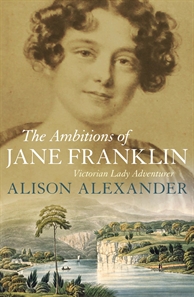
    Alison Alexander, The ambitions of Jane Franklin
    Courtesy: Allen & Unwin
    • Alison Alexander’s The ambitions of Jane Franklin (Allen & Unwin). This one intrigues me as Lady Jane Franklin, about whom I’ve written before, was one of those amazing 19th century woman who came to my attention through contemporary novels, including Richard Flanagan’s Wanting and Andrea Barrett’s The voyage of the Narwhal, and a book of poetry titled Jane, Lady Franklin by Tasmanian Adrienne Eberhard. The biography is subtitled, Victorian lady adventurer. I don’t know Alexander, but she is apparently a Tasmanian historian.
    • Steve Bisley’s Stillways: A memoir (HarperCollins Publishers). Steve Bisley is an Australian actor and this book, the website says, is “a classic memoir of an Australian childhood in the sixties”. That in itself gives it some appeal to me.
    • Janet Butler’s Kitty’s war (University of Queensland Press). This one is on my TBR. It is based on the war diaries of World War 1 army nurse Sister Kit McNaughton. In 2013 it won the NSW Premier’s Prize for Australia. Butler works in the History department at La Trobe University.
    • John Cantwell & Greg Bearup’s Exit Wounds: One Australian’s War on Terror(Melbourne University Publishing). Cantwell was a Major-General in the army who served in Iraq and Afghanistan, and ended up with post traumatic stress disorder (PTSD). He has written this with Walkley Award winning journalist, Greg Bearup.
    • Sheila Fitzpatrick’s A Spy in the Archives (Melbourne University Publishing). Historian Sheila Fitzpatrick lived in the Russia during the Cold War, while researching for her doctoral thesis. She apparently felt at home in Russia, but, as a foreigner, was always seen by Soviet authorities as potentially a spy. The book explores this part of her life. Fitzpatrick is regarded as an expert in the field of Soviet/modern Russian history.
    • Gideon Haigh’s On Warne (Penguin Australia). Australians will know immediately the subject of this biography, the flamboyant, controversial but highly-talented cricketer Shane Warne. Gideon Haigh is a journalist who has written several well-regarded and award-winning books on sport, media and the automotive industry (among other topics).

    All books I’d willingly read … though Alexander’s and Butler’s would be my top priority.

    And the winner is: Alison Alexander’s The ambitions of Jane Franklin! Now I really do want to read this book … It was a little tricky to find who won via a normal Google search several hours after the announcement, so I turned to Twitter and there it was (of course). Will it be reported on Australian television news tonight? I wonder!

    Anyhow, once I knew the winner, I was able to search on that and found a Sydney Morning Herald article which quotes chair of the judging panel (and a previous winner), Jacqueline Kent, as praising the book for its detailed portrayal of a “highly intelligent, vital and strong-minded woman” She said that “This is a biography that drew on a huge amount of research but is also very light on its feet”. Apparently Franklin, according to the Herald, had left behind “8 million words in journals and correspondence”. Alexander is reported as saying that the biography would have been impossible without a “Find” key to search documents. Isn’t modern technology grand – though the “find” function can’t completely replace in-depth reading during which you can find all those wonderful serendipitous details that make research such fun.

    The meeting of art and literature, at the Singapore Art Museum

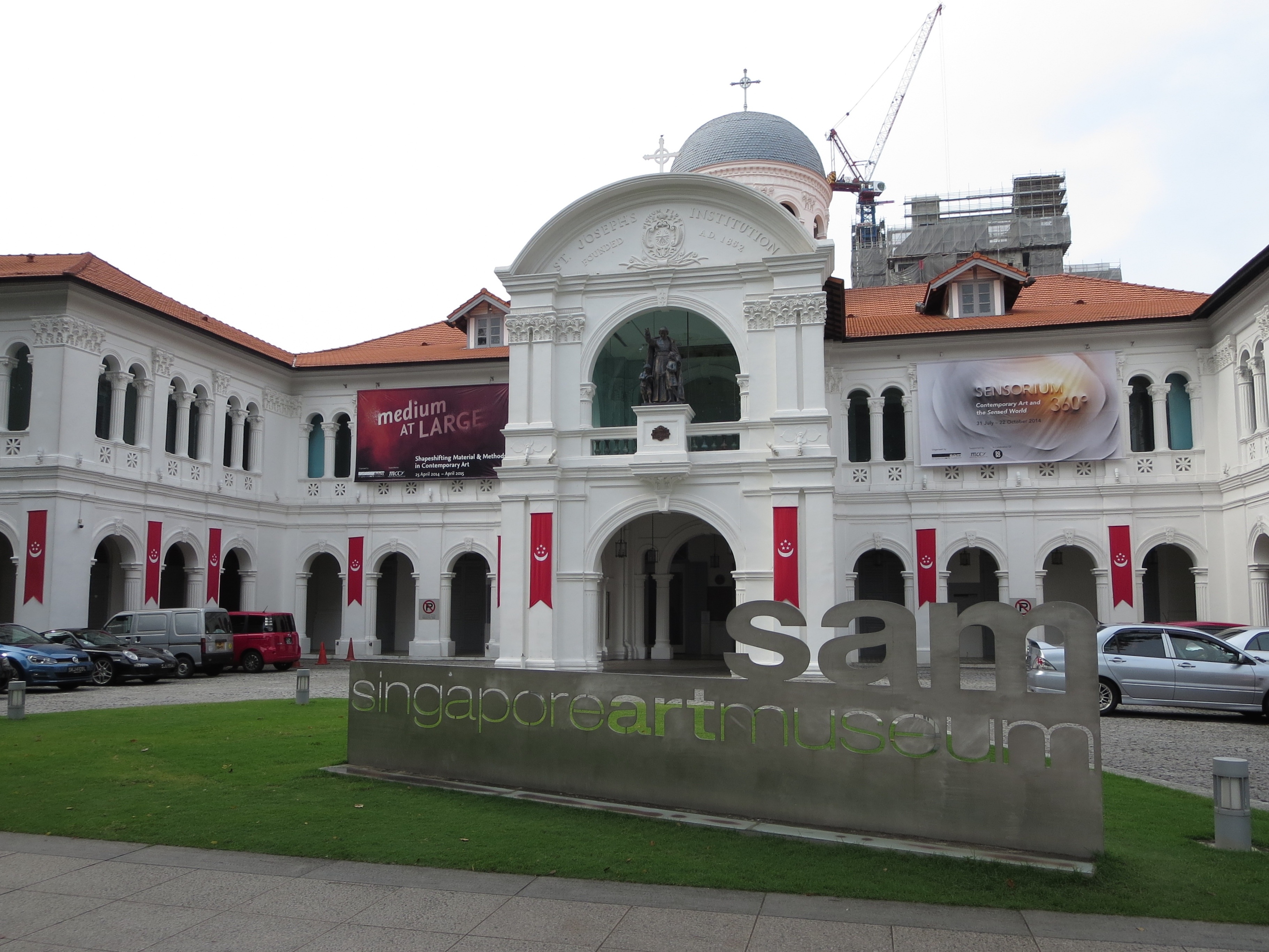
    SAM ExteriorMr Gums and I have had a busy few months, with, unusually for us, two overseas trips in less than four months. Both were family-inspired: Canada in April-May to visit our daughter, and then last week Koh Samui to help Mr Gums’ sister and husband celebrate their 40th anniversary. We decided to spend a few days en route to Samui in Singapore. What an interesting place it is. Although, technically, a new country which will celebrate its 50th anniversary next year, it has a much longer history, dating back to the second century. What we know as “modern” Singapore, though, began when the British, via Sir Stamford Raffles, established a trading post on the island in 1819. We didn’t see anywhere near enough but we tasted its variety –  including my topic for this post, the Singapore Art Museum (SAM).

    SAM is housed in a gracious old 19th century missionary school building – the St Joseph’s Institution run by La Salle Brothers.  The building was constructed in stages, from 1855 to completion in the early twentieth century. It was acquired for the museum in 1992. SAM describes itself as having “one of the world’s largest public collections of modern and contemporary Southeast Asian artworks, with a growing component in international contemporary art”.

    The current major exhibition, which will run for a year, is Medium at Large: Shapeshifting materials and methods on contemporary art. SAM explains that it

    explores the idea of medium in contemporary art, probing some of the most fundamental and pressing questions of art – its making, and also our experience, encounter and understanding of it.

    It’s the sort of exhibition I enjoy – modern, confronting and/or provocative, with useful interpretive signage. Of course, I enjoy the famous, classic galleries like the Louvre or Prado, just as I like to read classic novels, but I also enjoy seeing what contemporary artists are doing and thinking. I loved the concept behind this exhibition. In our increasingly fluid, interactive, interdisciplinary world, a focus on how art is made and how re relate to it, seems very relevant.

    The exhibition comprises 32 artworks and apparently draws mainly from the museum’s permanent collection, but it also “includes loans and commissions from Singaporean, Southeast Asia, and Asian artists”. We are seeing more Asian artists here in Australia, but it’s exciting to visit Asian galleries where we can see art and artists less familiar to western gallery-goers. And so, we saw two portraits made using live bullets on sandpaper (by Filipino artist Alvin Zafra), and a sculpture made with human hair (Dutch-born Indonesian artist Mella Jaarsma’s Shaggy). We saw works that play with medium and form, such as an oil painting overlaid with a video projection (Indian artist Ranbir Kaleka’s He was a good man), a distressingly mesmerising video of a woman dancing on butter captured also in still photographs (Indonesian artist Melati Suryodarmo’s Exegie – Butter Dance), and another video in which a taut rope springs and snaps through architectural spaces (Singaporean Chen Sai Hua Kuan’s Space Drawing 5). Our minds were challenged by a video installation called The Cloud of Unknowing (by another Singaporean Ho Tzu Nyen) in which various residents in an apartment complex experience some sort of epiphany or understanding of something mystical. Some of the works, including this last one, have been exhibited at the Venice Biennale.

    RenatoOraro's Bookwork: NIV Compact Thinline Bible (page 403)

    Renato Orara’s Bookwork: NIV Compact Thinline Bible (page 403)

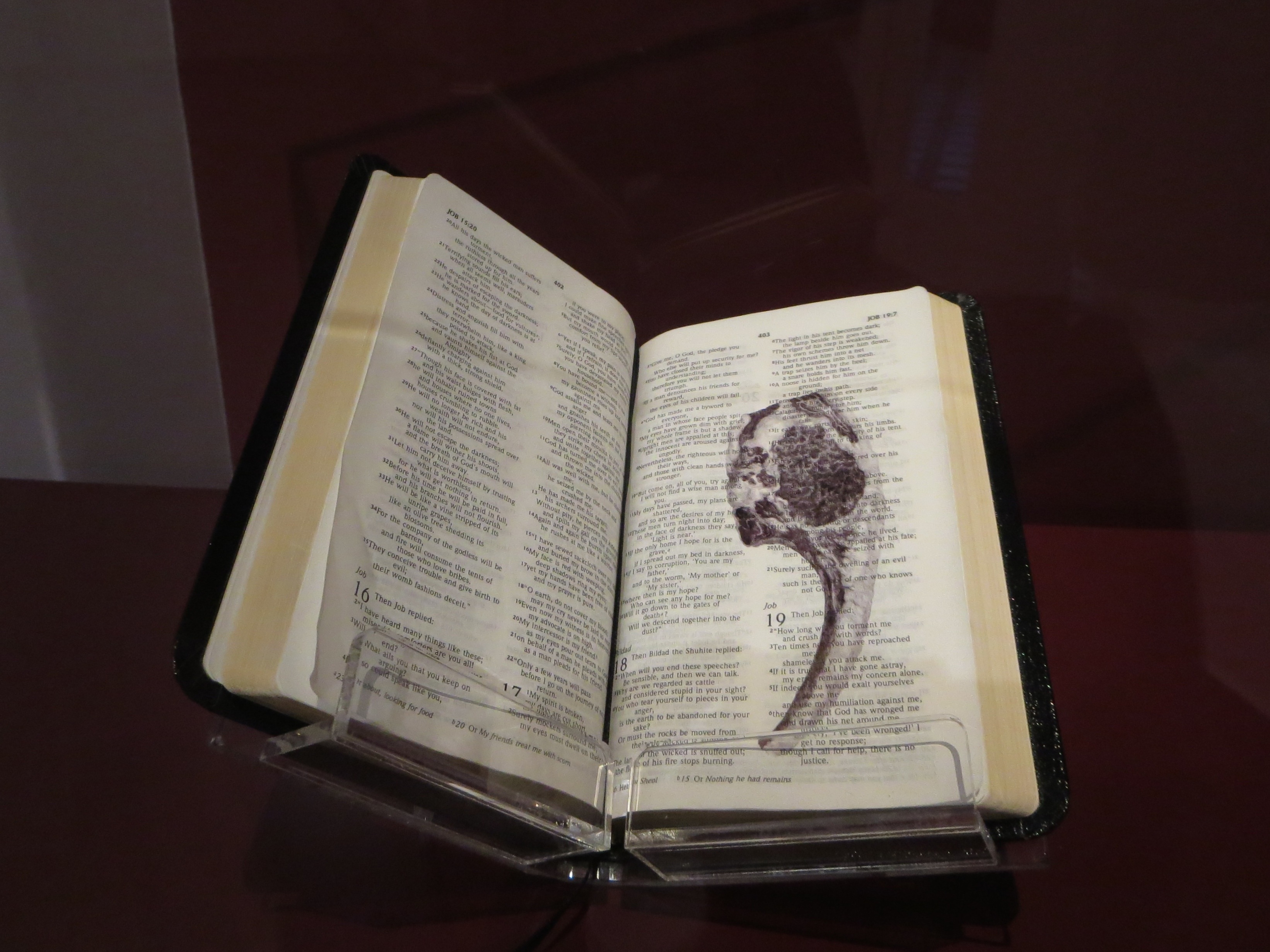
    But, since this is primarily a litblog, I’ll finish with two works that incorporate books. The first one is, in fact, the first work that confronted us in the exhibition, Filipino Renato Orara’s* Bookwork: NIV Compact Thinline Bible (page 403). It comprises a lamb cutlet, finely drawn in ballpoint pen on a page of the Bible, a page from Job. Since Job is primarily about how humans can comprehend why an all-powerful God lets good people suffer, the piece raises all sorts of questions about “the lamb of God”, about sacrifice. The label suggests other tensions too, such as between word and image, between open/public (when the book is open) and hidden/private (when the book is closed), and, through imposing what is essentially a chop on the Bible, between the sacred and profane. I would add another tension – that between wonder at the delicacy of the execution of the image and feeling “gross” from seeing a lump of fatty meat on the Bible. A surprising work that stays with you.

    Part of Titarubi's Shadow of surrender (2013)

    Part of Titarubi’s Shadow of surrender (2013)

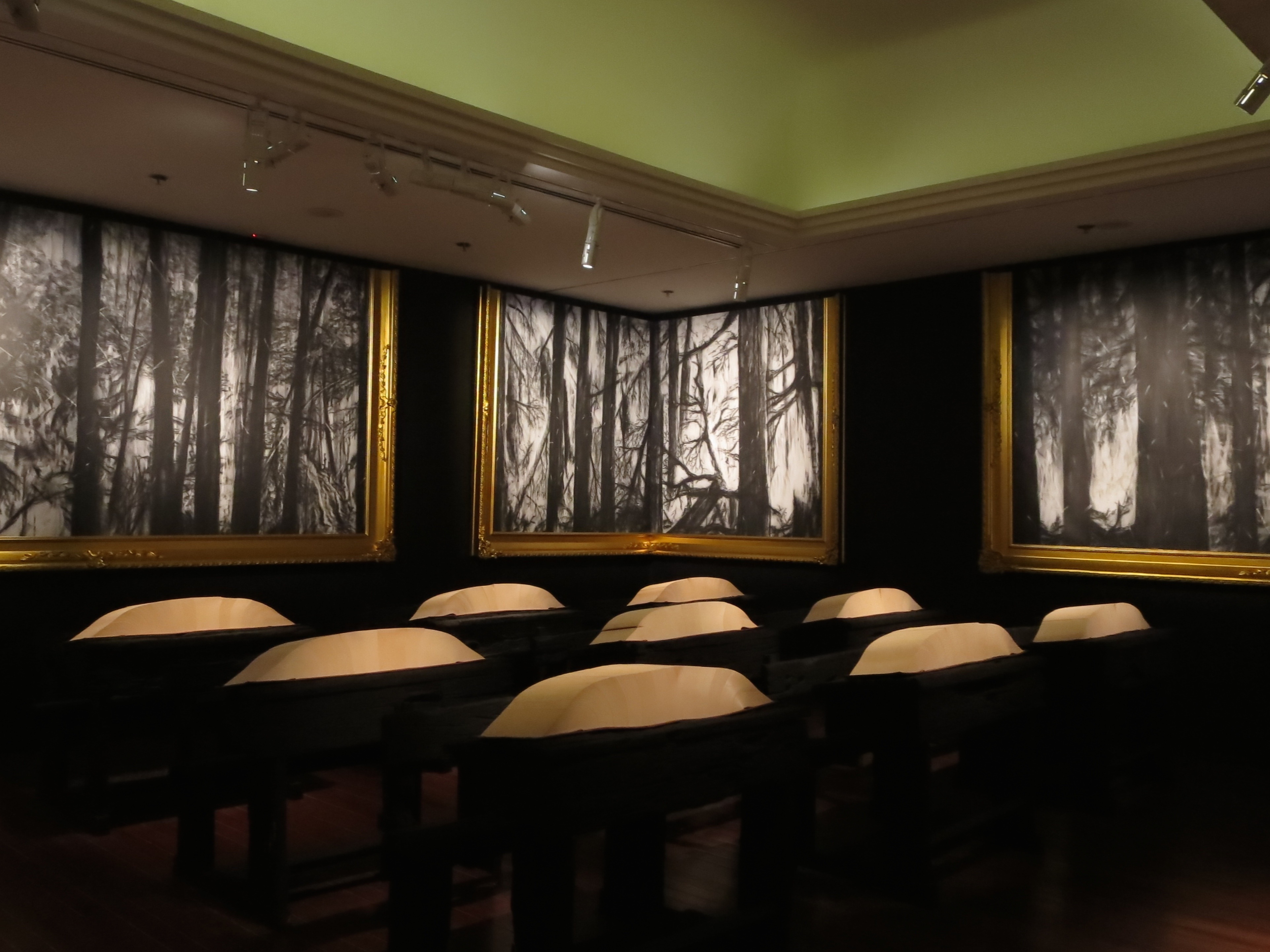
    The other work, Titarubi’s Shadow of surrender, comprises multiple components in a large space. I could not quite fit it all into my photo but it contains large, open, blank books on benches, with chairs, and with big charcoal drawings of trees on the walls. It was commissioned for the Indonesian pavilion at the 2013 Venice Biennale. It’s a complex work, with additional layers of meaning contained in the knowledge that the wood used in the furniture comes from colonial-era railroad tracks. The pieces are burnt, which apparently references the charcoal the artist’s mother cooked with, but which also links to the charcoal tree drawings. And, of course, trees provide the paper and wood used for books and furniture, suggesting a cycle of life theme too. The label refers to the fact that the books are empty implying a “tabula rasa” and the idea that it is time to re-write history or re-learn lessons, and thus develop anew leaving past colonial constructs.  An article about the Biennale on Titarubi’s website says that in this work he links “sakti” (‘divine energy”) “to both education and the environment, to knowledge and the natural world”. Another powerful and emotive piece, as you can see.

    SAM was our last “sight” in Singapore and rounded off our visit very nicely!

    * While researching where Orara was from, I discovered an article about artists using ballpoint pens. It starts with: “Accessible and affordable, the ballpoint pen has become the medium of choice for artists to make obsessive abstractions, extreme drawings, and playful riffs on venerated ink traditions”.

    Monday musings on Australian literature: The novel in Australia, 1927-style, Part 2

    Today’s Monday Musings is Part 2 of my two post series discussing Nettie Palmer‘s article, “The novel in Australia”, that was published in The Brisbane Courier, 15 October 1927.

    As I did in last week’s post, I’ll use her headings to share her view on Australia’s great novels.

    A novelist abroad

    Here she discusses Australian writers who wrote their novels while living overseas, Australians being, as we know, good travellers. It’s no surprise that her choice of the best known novel written while its writer was abroad is Henry Handel Richardson’sMaurice Guest (1909), which is a “brilliant story of music-student life in the Leipzig of the ‘nineties”. (This is another languisher on my TBR pile).

    Palmer then tells us about Richardson’s Australian trilogy, The fortunes of Richard Mahoney, which she wrote mostly from her home in England though she “revisited Australia about 1912 to verify impressions”. Palmer’s article was written before the third book in the trilogy was published, but here she is on the first two:

    The writer’s knowledge of the period – costumes, food, and customs – is immense but the “Fortunes” is never a mere costume novel: there is character all through. All Henry Handel Richardson’s novels, even those whose setting is wholly Australian, are better known in Europe than here, and are discussed at length in German and Scandinavian literary encyclopaedias and reviews. In America too, they have received deep attention. Victoria is fortunate to have found such a chronicler, more fortunate than it knows yet [my emphasis].

    Cultural cringe, or because Richardson was based overseas? Whatever the reason, recognition of her work did increase through the century. The Australian Dictionary of Biography entry on Richardson, written in 1988, discusses her reputation briefly, and touches on the unevenness of her reputation – overseas and in Australia.

    Contemporary novels

    Palmer concludes her article by looking at contemporary (to the late 1920s, that is) novels, and names a few she deems significant.

    Katharine Susannah Prichard

    Prichard, 1927/8 (Courtesy: State Library of NSW, via Wikimedia Commons)

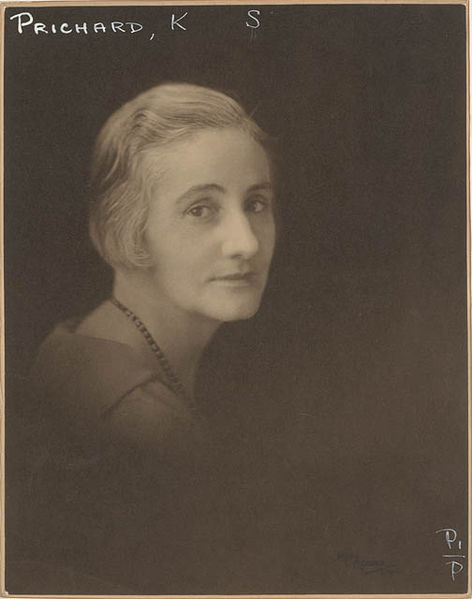
    Katherine Susannah Prichard’s works, she says, “are the fruit of an intense devotion to her subject matter. Her gifts are mainly two: first, that of brilliant impressionism, then a rare power of writing group-scenes.” In Black Opal, for example, the opal miners are “standing about chaffing each other and discussing the universe, every man of them alive”. She says there are similarly vivid scenes of groups of timber-getters in Working Bullocks. “Such scenes”, she says, “are too difficult for most novelists, who shirk them: yet they enrich a book immensely and the reader feels that our everyday life is full of unsuspected charm”.

    Palmer then writes something rather strange (to me anyhow). She comments that each of Prichard’s books is located in a different place – the tall-timbers of South-east Victoria (presumably The pioneers, which I’ve reviewed), the opal fields of Western New South Wales, and the saw-milling country in the south of Western Australia. She says:

    (Reading over this list of regions I can only feel how wretchedly inconvenient our Australian names are: a mere mention of latitude and longitude! Are we too big to think about? It will take many years for many of our names to become easy and vivid.)

    What does she mean? Those names are purely geographical descriptions. The pioneers is, yes, set in south-east Victoria but this region does have a name – Gippsland – which it has had since the nineteenth century. I don’t think I’m on Palmer’s wavelength here at all.

    Anyhow she concludes this section with the statement that there’s “little space left for some recent Queensland books” (because, of course, The Brisbane Courier is a Queensland newspaper). She names Zora Cross, whose books “put on record the changing years of a South Queensland [ha!] district” and M. Forrest, whose novels “have that special quality which readers of her verse would expect – a power of painting in words the rich details of Queensland’s unexplored landscapes”.

    Conclusion

    As I read this article I pondered what criteria Palmer was using to define quality novels. Good characterisation, meaningful realism (if that makes sense), and a capturing of Australian identity seem to be what she was looking for. Fortunately, she has a go at answering this question herself in her last two paragraphs.

    Firstly, she says that:

    the most satisfactory definition of a good novel seems “the revelation of character through narrative,” but the character need not be only human. There is also the character of a country.

    She then suggests that good novels break new ground, with the author “giving part of himself away, revealing his personal vision of ‘men, coming and going on the earth'”. On this point of innovation, she quotes Randolph Bedford, who appeared in Part 1 and who, she says, satirised the idea that “the average publisher loves words written to a formula, to please a reading public which dislikes anything new”. Bedford apparently said of this public:

    It loves to read some old friend it recognises, so it can say, “How original it must be, because I know it so well”.

    Oh dear. Have things changed do you think?

    Palmer then presents her own definition of “a more genuine kind of originality” – and it’s to do with the difficulty of making “Australian life and character their theme”. She concludes:

    Some day, when a novel about life in Indooroopilly seems as natural as one about Piccadilly, we shall thank those who turned the first sods so fruitfully.

    So there it is really. The cultural cringe. This I think has changed.

    * Wikipedia tells us she was Iris Murdoch’s second cousin twice removed. A remote relation, perhaps, but interesting nonetheless!

    Roslyn Russell, Maria returns: Barbados to Mansfield Park (Review)

    A week or so ago my local Jane Austen group had a guest speaker at our meeting, Roslyn Russell, the author of Maria returns: Barbados to Mansfield Park. Russell is a local historian who has written this historical novel based on Jane Austen’s novel, Mansfield Park. She is also a lapsed member of our group, so of course we had to ask her to come and talk to us about it. Most of this post draws from my report of her talk, which she titled Maria returns: Barbados to Mansfield Park: Fictionalising the legacy of slavery in Mansfield Park.

    Regular readers probably know that I’m not a fan of fan-fiction or sequels of well-known works. In fact, I probably wouldn’t have read any if it hadn’t been for belonging to the Jane Austen Society of Australia. However, having read Deidre Shauna Lynch’s essay, “Sequels” in Jane Austen in context, edited by Janet Todd, I decided that I should relax my “rule”. Lynch convinced me that these books are an important part of our understanding of Austen as a literary and cultural icon. Consequently, I have now read PD James’ crime novel Death comes to Pemberley (my review) and Jo Baker’s Longbourn (my review). Roslyn Russell’s historical novel is my third. In it, she imagines that some ten years after being banished to the country, and upon the death of her companion Aunt Norris, Maria Bertram goes to Barbados and learns about slavery and the abolition movement.

    There are, I’m gathering, many different reasons why writers want to write sequels or fan fiction works. For Russell, it was, as she writes in her author’s note, inspired by two passions: her love of Jane Austen and of Barbados. Barbados? How many Australians have been to, let alone developed a passion for, Barbados? Not many, I expect. It was her museum work, in fact, which took Russell to Barbados and there, its history – and particularly the history of its plantations and the practice of slavery – reminded her of Jane Austen’s Mansfield Park in which the leading family, the Bertrams, draw their prime income from their plantation in Antigua.

    Jane Austen, Mansfield Park and Slavery

    Russell commenced by telling us that although most of the characters in her novel are fictional, some are based on real people. Before discussing this further, however, she read the excerpt from Mansfield Park which contains the only reference to slavery:

    “But I do talk to him more than I used. I am sure I do. Did not you hear me ask him about the slave–trade last night?”

    “I did—and was in hopes the question would be followed up by others. It would have pleased your uncle to be inquired of farther.”

    “And I longed to do it—but there was such a dead silence! And while my cousins were sitting by without speaking a word, or seeming at all interested in the subject, I did not like— I thought it would appear as if I wanted to set myself off at their expense, by shewing a curiosity and pleasure in his information which he must wish his own daughters to feel.” (MP)

    She noted that this shows Maria and Julia’s lack of interest in the source of their family’s income. She then referred to cultural theorist Edward Said’s discussion of the novel and his statement that it is not appropriate “to expect Jane Austen to treat slavery with anything like the passion of an abolitionist or a newly liberated slave”. Said, she told us, did not apply 21st century attitudes to his assessment of Austen, but suggested that her work, as that of an author who belonged to a slave-owning society, should be analysed in context and in terms of what she does and doesn’t say rather than simply attacked as being complicit.

    Ros then briefly outlined some of Austen’s known or probable connections with plantations:

    • the family’s close relationship with her father’s friend, the plantocrat James Langford Nibbs who was also Austen brother’s godfather. Nibbs apparently took his son out to his plantations in Antigua to settle down his unruly behaviour, which rather mirrors Sir Thomas’ taking Tom out to his plantation.
    • Austen’s aunt-by-marriage, Jane Leigh-Perrot, who was born in Barbados, though went to school in England.
    • Mrs Skeet who is mentioned in Austen’s letters. Skeet is a common name in Barbados, suggesting she had a connection to slavery*.
    • the Holder family of Ashe Park, also friends of the Austens. Holder, too, is a common name in the Caribbean.

    The title Mansfield Park, itself, could also reflect Austen’s awareness of the slavery issue, as it may have been inspired by Lord Mansfield who was famous for adjudications which contributed significantly to the eventual abolition of the slave trade. (This is the Lord Mansfield who became guardian of his mulatto niece Dido, fictionalised in the recent film, Belle).

    Barbados and Maria Returns

    Russell then turned to her own book, first addressing the question of why she had set it in Barbados and not Antigua, where the Bertrams’ plantation was. Firstly, she has been to Barbados several times and knows its history. She couldn’t, she said, write about a place she didn’t know. Secondly, Barbados is also the location of a historical event she uses in her novel.

    Mansfield Park was written 20 years before emancipation (i.e. the formal abolition of slavery) in 1834. Maria Returns is set about 15 years after MP, and so during the time when the abolition movement was becoming more vocal. Ros explained that the abolition of the slave trade in 1807 did not seriously affect the Caribbean plantations: they were “breeding” their own slaves and were essentially self-sufficient. However, the abolition of slavery represented a major threat to their livelihoods, and the plantation families were deeply concerned. By the 1820s the abolition movement was becoming active – mostly among Evangelical Anglicans, Methodists and Quakers.

    Ros discussed the historical basis of her fiction. For example, at the dinner party in the English village where Maria first meets abolitionist John Simpson, he talks of a trial in Barbados in which slaves were apparently unjustly convicted of and executed for a murder. This trial did occur and is a reason Russell chose Barbados for her setting. The trial was witnessed by James Stephen** who, though he lived a little earlier than our fictional Simpson, is Russell’s model for her character.

    Simpson also talks at this dinner about a slave rebellion, led by African-slave Bussa, that occurred in Barbados in 1816. Bussa was killed in the rebellion. Such slave rebellions resulted in plantation owners becoming harsher. Simpson makes it clear which side he is on. This is a wake up call for Maria who:

    had not been aware of the strength of feeling in the wider community against the institution of slavery, from which her own family had benefitted so materially. (MR)

    After Maria arrives in Bridgetown she meets or hears of other abolitionists, such as the historically real free coloured man, Sam Prescod (who, with Bussa, is now a national hero) and plantation owner Josiah Thompson. Thompson is fictional but, as a former owner who had downsized his estate and treated his slaves-now-servants well, he has historical antecedents. Men who behaved like he did faced hostility from other Barbadians – and so, in the novel, Thompson is a lonely man who is keen to host Maria and her friends at his home. His willingness to import a teacher from England to teach his slaves also has precedents. Maria realises again that she’d never wondered about her father’s plantations, but she begins now to wonder what her father might think about the people she’s meeting.

    Ros then spoke about the treatment of slave women by their white owners, particularly in relation to sexual predation. This forms an important part of the story – but I won’t spoil it here. However, she again spoke of historical precedents – not that we really needed any for this one!  We weren’t, though, quite prepared for the example she gave us, one Thomas Thistlewood who kept a diary of his plantation life. Wikipedia confirms what Ros told us: his diary chronicled “3,852 acts of sexual intercourse and/or rape with 138 women, nearly all of whom were black slaves”.

    Roslyn Russell, Maria Returns Ros illustrated her talk with some wonderful illustrations, including the painting used on the cover of her book, Agostino Brunias’ The Barbadoes Mulatto Girl. She also mentioned some of the sources she used in her research, like Andrea Stuart’s Sugar in the blood: A family’s story of slavery and empire.

    So, the novel

    I enjoyed the read. It is pretty much genre historical fiction rather than literary fiction, so not my usual fare. Russell doesn’t try to emulate Austen, and while her writing is clear, her dialogue can be a little too formal and uniform at times. She includes a lot of information about life at the time, information that Austen herself would not have needed to, and indeed did not, supply. But, of course, this is historical fiction, and modern audiences need background that Austen’s contemporaries didn’t.

    Russell spins a credible story, both in terms of the plot she creates and how she develops the characters she draws from Mansfield Park. Maria does change significantly, but Russell convinces us that she could. However, this is historical, romantic fiction, not a fierce novel, so Russell’s more culpable characters, in particular Bertram father and son, are let off more lightly than they deserve. This perhaps mirrors the political reality: after emancipation, the Caribbean plantation owners received in total £20 million compensation, while the slaves received nothing.

    What did Austen know and feel about slavery? We’re unlikely to ever know, but in Maria returns Russell has given us some insight into the darker side of life that Austen only hints at.

    * Names that are common in slave areas are usually so because slaves tended to take on the surnames of their masters.

    ** Wikipedia tells that Stephen was great-grandfather of Virginia Woolf.

    awwchallenge2014

    Roslyn Russell
    Maria returns: Barbados to Mansfield Park
    Flynn: Bobby Graham Publishers, 2014
    (Kindle ed.)

    Eleanor Dark’s Juvenilia (Review)

    Eleanor Dark's Juvenilia

    Courtesy: Juvenilia Press

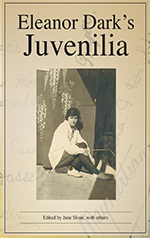
    Eleanor Dark was quite a star in Australia’s literary firmament of the 1930s to 1950s, and has left an important legacy, not only in her most famous book The timeless land but also in the fact that her home Varuna in the Blue Mountains is now one of Australia’s most significant and loved writers’ retreats. It’s therefore wonderful that the Juvenilia Press was able to produce a book on her early work.

    Unlike the Press’s volume on Mary Grant Bruce, which comprises works that push their definition of juvenilia, Eleanor Dark’s Juvenilia fits clearly within their guidelines. All pieces were written between 1916 and 1919, when Dark was 15 to 18 years old. Like the Bruce volume, it was edited by secondary school students and their teacher, rather than the Press’s more usual practice of using tertiary students. (The Press is a teaching press). The decision to use secondary school students is particularly appropriate for this volume as the students come from the school, Redlands, which Dark attended, in her childhood name of Pixie O’Reilly. Research for the volume included the school’s own archives, and all the pieces come from the school magazine, The Redlander. A Foundation Day speech given by the (then) school’s archivist, Marguerite Gillezau, is one of the appendices.

    Like other Juvenilia Press editions, this book includes useful extra matter such as Pixie O’Reilly’s school report! There is, too, an introduction, this one titled “Pixie to Eleanor: From a spark to a flame”. It is creatively, and entertainingly, organised under headings taken from the school report – “Making fair progress”, “Very promising indeed”, and so on. The volume is also illustrated with photographs and other images from Dark’s school days – and there is also the list of references consulted.

    As with most juvenilia, the pieces here provide an insight not only into the author’s childhood but also into the passions and interests they’ll develop later. Dark went to Redlands school in 1914 (an auspicious year) after her mother died. Although it was a girl’s school – why do I say “although”? – the school did not seclude its students. Indeed the school archivist in her Foundation Day speech said that, since its establishment in 1884, the school “has been aware of the world outside its front gates”, including war. One of Dark’s pieces in this volume is a poem about the First World War, “Jerusalem set free”.

    For those of you who don’t know Dark, she and her husband were politically radical – or – socialist in leaning, something for which they were often persecuted. Not having read biographies of her, I cannot say how much of this may have come from the family, but the Introduction says that one writer on Dark, Marivic Wyndham, stresses the importance of the school’s ethos on her development. Wyndham writes that the school provided her “not only with flesh-and-blood models of the new woman and the radical intellectual she eventually adopted, but also with models of community and sisterhood that later featured prominently in her vision of a ‘good society'”.

    These values are evident in the piece most dear to my heart, “The Gum Tree’s Story”. I loved this little 2-page piece for three reasons: it contains delightful descriptions of Australian flora; it contains a story-within-a-story about that Australian archetype, “the lost child in the bush”; and it’s an allegory about inclusion rather than exclusion. The story concerns Waratah who wants to organise a party to enliven his drooping companions but wishes to exclude the interloper White Rose. (Is it girlish, that the Rose is white not red, do you think?).

    The other story in the volume – there are two stories and four poems – encompasses another theme common to classic Australian literature, the bushranger. Titled “‘Thunderbolt’s’ Discovery”, it tells of young boys on a picnic who play bushrangers – Australian readers will be aware that Captain Thunderbolt was a famous bushranger – and come across an unconscious man who, they imagine, is a bushranger. What I love in this is her description of the bush:

    It was very deep in the bush. A clear stream trickled down over the rocks, and there was the faint bush smell of damp earth and fallen gum leaves. Maiden-hair grew thickly, and clumps of pale wide violets and pretty, delicate ferns. Where the stream was at its wildest a huge old tree had fallen across it, and the damp bark was covered with soft green moss. Further up the hillside flannel-flowers and Christmas bells grew among the tall bulrushes, and Christmas bush was already nearly in full bloom.

    Dark, it is clear from this and “The Gum Tree’s Story” knew her botany – but I think she evokes it well too, without going overboard as young writers can do.

    The four poems speak to different aspects of Dark’s girlhood – from the war to hatred of exams. They show someone comfortable with language and with expressing ideas through them. They also show an ability to mix tone, to work in the serious and the light, in the grand and the more personal, in the fanciful and the real.

    Not everyone, I know, enjoys Juvenilia but I am thoroughly enjoying these texts, and the insight they provide into the writers to come. I look forward to telling you about the next one in, hopefully, a month or so.

    awwchallenge2014Eleanor Dark
    (ed. Jane Sloan with students from Redlands, Sydney)
    Eleanor Dark’s Juvenilia
    Sydney: Juvenilia Press, 2013
    26pp.
    ISBN: 9780733433733

    * The book only costs $12 plus postage, from the Press.

    My previous posts on the Juvenilia Press are: Monday Musings and Mary Grant Bruce.

    Monday musings on Australian literature: The novel in Australia, 1927-style, Part 1

    Nettie Palmer was one of Australia’s leading literary critics, not to mention essayist and poet, through the 1920s to 1940s. I have mentioned her several times in this blog, including in my post on Australia’s literary couples. She also mentored younger women writers such as Marjorie Barnard and Flora Eldershaw. However, what I want to discuss today – and next week – is the article she wrote in 1927, about “The novel in Australia”. It was published in The Brisbane Courier, 15 October 1927.

    She starts by commenting that the number of “good novels written in Australia has been small”. There are reasons for this she says but discussing those is not her aim in this article. Rather, her plan is to reduce her list of “good” Australian novels to just the best. The result “is a nugget of surprisingly high quality”. And now my plan is to share with you those nuggets that she defined for her readers back in 1927. It makes for interesting and sometimes surprising reading. Here goes, using the headings she did.

    Some early nuggets

    She names two.

    Thomas Alexander Browne (aka Rolf Boldrewood) (Public Domain from the National library of Australia, via Wikipedia)

    Thomas Alexander Browne (aka Rolf Boldrewood), by Henry Walter Barnett (Public Domain from the NLA, via Wikipedia)

    Henry Kingsley’s Geoffrey Hamlyn (1859), which is a book I have in my TBR and would love to find time to read. I’m not sure I had heard of it until a few years ago but it keeps popping up in unusual places which has piqued my interest. It has, Palmer says, without elaborating, “a very colonial outlook”.

    Rolf Boldrewood’s Robbery under arms (1882), which I defy any self-respecting Australian to say they haven’t heard of (though I suspect many of us haven’t read it!). She does elaborate over one and a half paragraphs on this one! She writes that, despite its “truculent title”:

    It is one of those rare books that can please on several different counts – as an adventure story, as a sketched historical background, and as a sons psychological novel.

    I love that she praises it for its “fine and unexaggerated vernacular, without dropped aitches or other irritating apostrophes to spot its pages”. She sees it as a model for good novels in Australia.

    Some successors

    Palmer then says that it was a “long time before the simplicity and naturalness of that book was again reached”, but eventually some more nuggets appear.

    Marcus Clarke’s For the term of his natural life (1870), but she does not elaborate.

    Mrs Campbell Praed’s (or Rosa Praed as I know and have read her) “easy flowing books now almost forgotten” (1890s). Books being forgotten is, clearly, an age-old problem! Anyhow, she names one, which I haven’t read, Longleat of Koralbyn.Wikipedia tells us that it  was first published in 1881 under the exciting (my description!) title of Policy and passion! No wonder it was republished under a different title. I have read Praed’s rather raw The bonds of wedlock (1887). I laughed at Palmer’s comment that Praed’s books are set in Queensland but “the writer shirks the whole problem of making her Queensland live in the readers’ sight”. That could mean a number of things – but the important thing, I suppose, is that she likes Praed’s writing!

    Then, though her subject is novels, she mentions short story writers, naming Louis Becke, Price Warung (whose stories I’ve reviewed), Henry Lawson and Albert Dorrington.

    She concludes this section with the following:

    For many years it has seemed that only short stories would ever be published again (and those only in fugitive form): any novels that appear have had every sort of circumstantial opposition to overcome.

    Fugitive form? Does she mean in magazines (like The Bulletin, established in 1880) and newspapers rather than something more permanent like books? I suspect her comment about the difficulty of getting novels published is not totally incomprehensible to writers today?

    Novels after 1900

    Her choice of novels from the early twentieth century includes a couple of authors I don’t know. Regular readers here will recognise which ones they are by not having seen them mentioned here!

    First up, of course, is Miles Franklin’s My brilliant career which she describes as a “bit of ironic auto-biography, set in an up-country township of the drearier sort”. Palmer, from the point of view of 1927, hopes that “some day she [Franklin] will be able to repeat her early success, looking through the opposite end of life’s telescope”. Franklin did achieve fictional success again, in the late 1930s, with All that swagger.

    She then names Randolph Bedford’s – quick quiz question: have you heard him mentioned here? – two novels. True eyes and the whirlwind (1903) and The snare of strength (1905). (Don’t you love these titles?) Palmer describes the first as “a novel of the picaresque style, a useful type for expressing the nomadic youth spent by many Australians before they find their life’s work”. Interesting. I hadn’t quite realised just how far back the idea of Australians as travellers extends, but it reminded me that Patrick White spent time jackarooing in Australia, in the 1920s, and travelling overseas as he sought a place for himself in the world. Overall, she says, Bedford’s work “is never without a fine gusto”. Sounds worth checking out.

    I’m pleased to see that she also includes in her list, Barbara Baynton and her novel The human toll (1907) which, she says “had a strong, if acrid life of its own … full of bush tragedy”. That’s our Baynton!

    And finally, in this group, she names Louis Stone’s Jonah, “a Sydney story of young larrikins, done with sincerity”.

    Palmer ends this section with a cry that is surely universal:

    Out-of-print, out-of-print – that is what one has to lament about all these books! Many novels deserve to die in their year of birth, but what of those that have permanent quality? We can only beg for new editions.

    I will conclude my discussion of her article in next week’s Monday Musings.

    Bangarra Dance Theatre’s Patyegarang

    This year is Bangarra Dance Theatre’s 25th anniversary. For those of you who don’t know, Bangarra Dance Theatre is an Indigenous Australian contemporary dance company that was established – obviously – in 1989. Its artistic director since 1991 has been Stephen Page. His brother, David Page, does the music. These are two very talented brothers who have had their hands in many significant indigenous arts endeavours besides Bangarra, but today it’s Bangarra I want to talk about! Bangarra is apparently a Wiradjuri word for “to make fire”.

    Mr Gums and I have been to many Bangarra shows over the years. They are exciting. We love the way they incorporate indigenous themes and movements into the contemporary dance world. Last year’s show was Blak, which comprised three parts – a men’s story, a women’s story, and then both genders together. It was clever and entertaining. In 2012, we saw Terrain, which was inspired by the changing landscape of Lake Eyre in central Australia.

    Two performances we’ve seen, though, have been inspired by historical figures – and have also connected, coincidentally, with Australian literature. In 2008 it was Mathinna, the indigenous Tasmanian girl who was adopted by Governor and Lady Franklin. Richard Flanagan told her story in his novel Wanting, which I read before blogging.  The other is their current show Patyegarang about the young indigenous woman who befriended and trusted first fleet astronomer-timekeeper, Lieutenant Dawes. She trusted him so much that she shared her culture with him, including her people’s language, which Dawes recorded in his diaries. Their story is told in Kate Grenville’s The lieutenant, which I reviewed a couple of years ago.

    Stephen Page explains in the program why he chose this story for their 25th anniversary show:

    I wanted to take the opportunity to pay homage to the land on which we have gathered and created dance theatre works since 1989 – the Eora nation; the place we call Sydney.

    […]

    I believe Patyegarang was a young woman of fierce and endearing audacity, and a ‘chosen one’, to speak, within her clan and community. Her tremendous display of trust in Dawes resulted in a gift of cultural knowledge back to her people almost 200 years later …

    What he means here is that Dawes’ diaries, which were “rediscovered” by a researcher in the 1970s, have helped current people recover language and culture that had been lost.

    Dramaturg Alana Valentine talks of how she translated Page’s vision into a story. She also quotes Richard Green, an elder and cultural adviser for the project, who said that “Dawes was different, he listened”. Valentine continues:

    It is an observation that carries invaluable wisdom for how contemporary Australia might continue to honour the contribution Dawes himself made to reconciliation and respect.

    There it is again – the message we keep hearing: Listen!

    Musician David Page talks of working closely with his brother, nutting out just who Patyegarang was. He said the biggest question for him was “How close was their relationship?”

    So, the show. It runs for 70 minutes without interval. My, how hard those dancers worked. As you would expect, it took their relationship from their meeting through getting to learn to trust each other and share their knowledge to when Dawes departs. The scene opens on the beach with the warm glow of dawn. It’s idyllic. The people go about their business, safe, as they usually do. Then a strange man appears and the story progresses. There’s hunting and gathering, smoking ceremonies, the gradual acceptance of Dawes (danced by the non-indigenous Thomas Greenfield) led by Patyegarang (Jasmin Shepherd) while others are less sure – and of course there’s fighting with the red coats. It’s a work that requires concentration and imagination from the audience – and I’m not sure we understood all the references. I suspect this is because while there seemed to be a clear narrative, the program is framed a little more abstractly, focussing on feelings, spirit, values and politics rather than narrative. It’s a work that would benefit from multiple viewings.

    The dancing draws closely from traditional moves – at least from those I, as a non-indigenous person, recognise – but is still contemporary. Much of it is low to the ground, earthy, suggesting connection to country. All this is accompanied by lighting that tracks the day and mood; a simple backdrop of cliffs, which at times gave the impression of the ancestors looking on, and a single large rock representing a place of safety, of meeting; and gorgeous costuming that blends with the earth while suggesting lightness and spirit too. There’s one dance by the women – “Maugri (Generic Fish)” – in which tubular costumes enable them to slip from human to sea-creature and back again in fluid, organic moves. The music is dramatic, evocative – including clapping sticks at times, strains of “Botany Bay” at others, and overlays of the language Patyegarang shared and Dawes documented.

    Works like this are inspiring on multiple levels, emotionally, intellectually and politically … it would be wonderful if more Australians could (or would) see it.

    John Updike, The lovely troubled daughters of our old crowd (Review)

    I have an old-friend-cum-ex-colleague who has been asking me for longer than I can remember to read John Updike. He even, a year or so ago, sent me a link to a Kindle special for Rabbit, Run. I obediently bought it, and I do intend to read it, I do. However, I recently reorganised my Kindle and discovered that I have a TBR pile there of 20 books! How can that be? I hardly ever buy for the Kindle. But, there you are, the Kindle Cloud never lies, so I must have. All this is to say that I realised it could be some time before I got to Updike, so when I saw a story by him appear on the Library of America a year ago, I printed it out! It finally reached the top of the pile and I’ve just read it. My friend is right. I really should read (more) Updike.

    The story, “The lovely troubled daughters of our old crowd”, is told from the point of view of a male member of a group of couples who socialised and holidayed together over many years – indeed from the time their daughters were two or three to now, when they are in their mid-twenties. Well, until they were somewhere in their teens anyhow, because the old crowd is no longer together – not only due to “the children, really, growing unenthusiastic and resistant” to group holidays but due to “the divorces as they began to build up”.

    He compares happy times of the past – from his perspective – to the less than exciting or fulfilling things all their daughters are doing now – from his perspective. He also compares the daughters to their mothers – and again, of course, it’s from his perspective. This is the important thing about the story – his perspective. We know nothing really of what the girls thought then or think now. We only know what a now middle-aged man thinks. Should we trust his view? What does the fact that Updike included this in a collection, published in 1987, titled (presumably by him) Trust me tell us about his intention?

    Late in the story, the narrator also compares the girls to the “daughters of people we hardly knew”. These daughters “are married to stockbrokers or off in Oregon being nurses or in Mexico teaching agronomy” while

    our daughters haunt the town as if searching for something they missed, taking classes in macramé or aerobic dancing, living with their mothers, wearing no make-up, walking up beside the rocks with books in their arms like a race of little nuns.

    So, here’s the challenge. From his point of view, there’s something wrong with these girls. They are not getting married, they are not in high status or highly admirable jobs or situations. Well, we readers might ask, why should they be, given that their parents have clearly not set good examples of happy marriages? Indeed, our narrator, who’s in “about the last marriage left”, reveals a wandering eye. We wonder, in fact, whether they may have been swinging couples. We might also ask, though, what is wrong with the choices the daughters are making? Why should they wear make-up? To catch a man? What is wrong with walking “beside the rocks with books”? And, do they want to marry a stockbroker?

    I love the complexity of this, the fact that Updike has chosen to tell this story through decidedly subjective eyes, and yet has managed to leave the interpretation surprisingly open. It’s a story, I suspect, that can be read very differently depending on each reader’s experience and point of view, despite some givens in the text.

    Before I conclude, I want to mention the style. The tone is intimate – as though the narrator is talking to one of his old friends. He refers, for example, to Mary Jo Addison and “that bad spell of anorexia”, implying we know all about Mary Jo’s problems. There’s also some lovely imagery, such as this description of the young girls with “their pale brushed heads like candles burning in the summer sunlight”. Decorative but not very necessary? Is this how they were treated? And, overall, there’s a sense of disconnect between the narrator’s nostalgia and the reality of their lives. I’m not sure he’s unreliable exactly, but he does seem rather deluded about what role he and his friends may have played in who the girls are now.

    “The lovely troubled daughters of our old crowd” is such a sly story. It suggests that the daughters are troubled, are somehow wrong, and maybe they are, maybe they’re not, but that is not the real, or the whole, story. And therein lies the lovely irony in the title.

    John Updike
    “The lovely troubled daughters of our old crowd”
    First published: in The New Yorker on April 6, 1981; later republished in his collection Trust me (1987)
    Available: Online at the Library of America

    Monday musings on Australian literature: Indigenous writers recommend …

    Last week, to commemorate the beginning of NAIDOC Week, I devoted Monday Musings to Anita Heiss’s series of interviews with indigenous Australian writers, In conversation with BlackWords. I said then that this week’s post would also draw from the series – and so here it is.

    I’m not 100% sure of Heiss’s process, but I think she sent the same set of questions to all writers, and they answered some or all of questions as they desired. I am focusing, in this post, on one of the questions. Seventeen of the twenty writers responded to it. The question is:

    What book do you think every Australian should read?

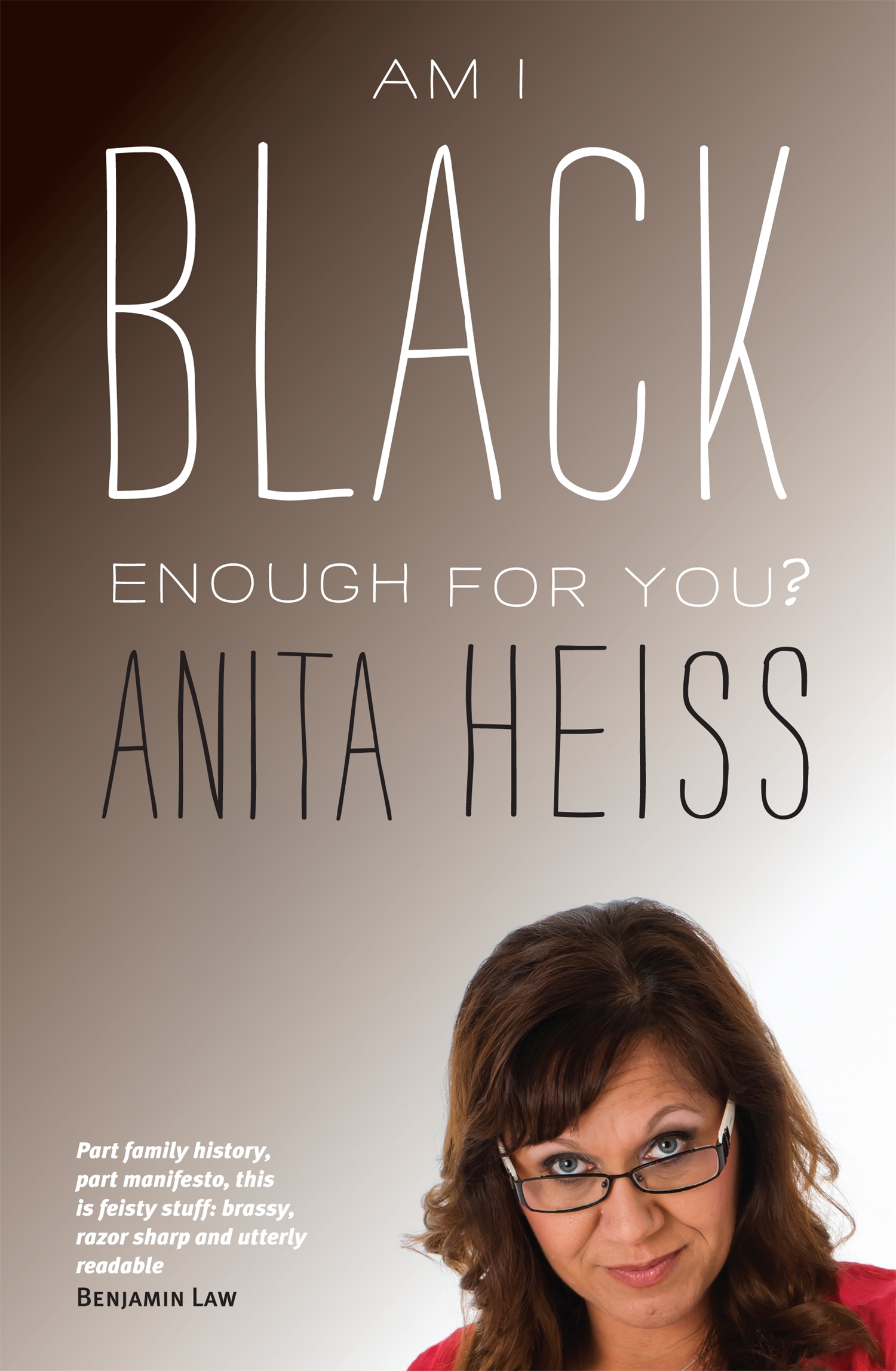
    Anita Heiss, Am I black enough for you?

    Courtesy: Random House

    The answers are fascinating. Most, as you would expect, recommend books that would help all Australians learn and understand more about indigenous culture and history, and the books they recommend are mostly by indigenous Australians. But, the interesting thing is that there’s a lot less duplication than I expected. I like this. It suggests the existence of an active indigenous literary culture. No simple, easily defined cannon here! It provides a great list for us all to go to – both now, and when we are planning for ANZLitLovers’ 2015 Indigenous Literature Week.

    Anyhow, I thought, when I decided to do this post, that I could tally up the recommendations and list them in popularity order. But, given what I actually found, I have decided instead to simply list them in alphabetical order by author/editor, with the name of the recommender/s and comments where appropriate.

    • Berendt, Larissa: HomeEllen van Neerven called this “A very important book.”
    • Carey, Peter*: True history of the Kelly GangJared Thomas said it “alerted me to class struggle – the fact that it is not only Aboriginal people who have endured persecution in this country.”
    • Chi, Jimmy: Bran Nue Dae (script). Kim Scott.
    • Eckermann, Ali Cobby and Fogarty, Lionel (eds): Southerly, Vol 71, No. 2, 2011, “A Handful of Sand: Words to the Frontline”. Lorraine McGee-Sippel described this as “An invaluable resource of Australia’s First Nations writers … Across all genres, ages and life experiences”. She believes is should be “compulsory reading … in all high schools and universities”.
    • Eckermann, Ali Cobby: Ruby MoonlightBruce Pascoe.
    • Gammage, Bill*: The biggest estate on earthKim Scott simply said “an important book”.
    • Gilbert, Kevin: Because a white man’ll never do itKerry Reed-Gilbert, his daughter.
    • Green, Evan*: Adam’s empireSue McPherson described it as “a good Aussie story. It should be made into a film.”
    • Haebich, Anna*: For Their Own GoodKim Scott said that it “focuses on south-west Western Australia, but the power relationship it articulates applies across the continent”.
    • Heiss, Anita: any book. Lionel Fogarty gave Heiss as an example in recommending “Indigenous-authored books such as those by Anita Heiss.
    • Heiss, Anita: Am I black enough for you? Jared Thomas, Bruce Pascoe (my review)
    • Heiss, Anita and Minter, Peter (eds): The Macquarie PEN Anthology of Aboriginal LiteratureKerry Reed-Gilbert.
    • Leane, Jeanine: Purple threadsMelissa Lucashenko (my review).
    • McMullen, Jeff*: any writing. Samuel Wagan Watson.
    • Maynard, John: Fight for liberty and freedom. Recommended by himself.
    • Munkara, Marie: Every secret thingBruce Pascoe (my review).
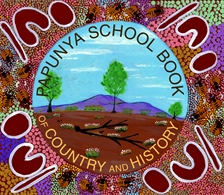
    • Papunya School with Nadia Wheatley and Ken Searle: The Papunya School Book of Country and HistoryAnita Heiss likes this because it is “accessible to all”.
    • Pascoe, Bruce: works by him. Recommended by himself.
    • Pascoe, Bruce: EarthMelissa Lucashenko.
    • Pilger, John*: A secret countryKate Howarth.
    • Reynolds, Henry*: any book. Kerry Reed-Gilbert argued that “it’s time for people to know the truth of this country”; Samuel Wagan Watson.
    • Reynolds, Henry*: Forgotten WarLorraine McGee-Sippel said that it “addresses Australia’s selective amnesia in relation to the wars fought between Traditional Owners and the Invaders. Where are our memorials?”
    • Reynolds, Henry*: This whispering in our heartsJackie Huggins.
    • Scott, Kim: Benang: From the heart. Bruce Pascoe.
    • Scott, Kim: That deadman danceKerry Reed-Gilbert; Bruce Pascoe (my review).
    • Scott, Kim: True countryMelissa Lucashenko.
    • Thiele, Colin*: Labourers in the vineyardBruce Pascoe.
    • Weller, Archie: stories by him. Bruce Pascoe.
    • Willmot, Eric: Pemulwuy: The rainbow warriorDub Leffler.
    • Wright, Alexis: CarpentariaBruce Pascoe (my review).
    • Wright, Judith*: stories and poems by her. Bruce Pascoe.
    Kim Scott also recommended that people read an anthology of writing from the region in which they live, such as Those Who Remain Will Always Remember: an Anthology of Aboriginal Writing, edited by Rosemary van den Berg, Anne Brewster and Angeline O’Neill.

    Tegan Chillcott and Samuel Wagan Watson were a little wary of being prescriptive. Chillcott said, simply, ““whatever book seems most interesting to them”.  Watson, though was a little more explanatory. He said:

    Every Australian?’ Hmmm … It’s hard to say, and I know mature Australians who have admitted to having never finished reading a book because literature bores them. I can’t answer that question? I’ve never watched a cricket match in my 41 years either … So I must seem weird to people who don’t pick up a book. If I was on a ‘soapbox’, I’d say any writing by Uncle Henry Reynolds or Uncle Jeff McMullen.

    But some people can be turned off literature – altogether – by books that are too confronting. And that’s the delicate balance that needs to be dealt by a writer when you’re thinking about audiences. I do believe some writers have no idea that they are either not engaging with an audience or they don’t care? As a writer, on the journey of composing your work or novel or music, you need to consider your audience at every turning point. If you don’t think about the needs of your reader, you are simply writing in a very tight vacuum.

    Another respondent who didn’t seem keen to name specific titles or authors was Samantha Faulkner.

    Papunya School Book

    (Courtesy: Allen & Unwin)

    I’d like to conclude with her lovely, generous statement. She wrote:

    Any book by an Aboriginal and/or Torres Strait Islander writer. Reading a book by a First Nations Australian writer will identify similarities that connect us, and bring us together, rather than divide us. After all, we live on this beautiful country together.

    * Non-indigenous author