Monday musings on Australian literature: Coming in 2015

Although my readerly eyes are always too big for my readerly brain, I do like to know about coming attractions – book-wise – and assume you’re interested too. If you’re not, apologies, but I know I’ll find this post useful to refer to as the year progresses. As I did last year, I’m basing this post on an article in The Australian by literary editor, Stephen Romei, followed by a little research of my own.

Here, according to Romei, are some of the fiction (and poetry) treats we can expect:

  • Les Murray: Given I opened my recent Reading Highlights post with Murray, I like that Romei starts off with him too. Apparently, Black Inc will be publishing two books from Murray this year. The first, Waiting for the past, is apparently his first volume of new poems in five years. I think we heard some poems from this volume at the Poetry at the Gods event I attended last year. The second, Bunyah, is a collection of poems he has written about his home town. It apparently will have an introduction by Murray. And, Romei asks, “Might this be the year the Bard of Bunyah finally collects Australia’s second Nobel Prize in Literature. I wouldn’t mind having an early wager on him doing so”.
  • Steven Carroll: Forever young (Fourth Estate, June), the next in his Glenroy series. Carroll jointly won the 2014 Prime Minister’s Literary Award for fiction last year with Richard Flanagan.
  • Stephen Daisley: Coming rain (Text Publishing, May). I was just wondering the other day what had happened to Daisley who won the Prime Minister’s Literary Prize in 2010 with his novel Traitor. Well, now I know!
  • Marion Halligan: Goodbye sweetheart (Allen & Unwin, May). I’m a Halligan fan and reviewed her gorgeous Valley of grace early in this blog.
  • Krissy Kneen: The adventures of Holly Whit and the Incredible Sex Machine (Text Publishing, May). Text describes it as “an amazing literary sci-fi superhero sex romp from Australia’s genre-bending queen of erotica”! Sounds intriguing, eh? I reviewed her Steeplechase a couple of years ago.
  • Malcolm Knox: Wonder lover (Allen & Unwin, May), his fifth novel. He also has two non-fiction books coming out.  Knox is probably most famously known for exposing the Norma Khouri hoax in 2004.
  • Amanda Lohrey: A short history of Richard Kline (Black Inc, March). Lohrey is an acclaimed novelist and essayist, and can be relied upon to produce something thoughtful and, very likely, different.
  • Frank Moorhouse: The book of Ambrose (Random House, November), about the second (and cross-dressing) husband of Edith Campbell Berry, heroine of Moorhouse’s Edith trilogy. I’ve reviewed Cold light, the last of this trilogy.
  • Steve Toltz: Quicksand (Penguin Books, May). Toltz is another author I’ve been wondering about lately. I loved his “out there” A fraction of the whole, which was shortlisted for the Man Booker Prize way back in 2008.

Romei’s article runs to 6 pages and includes Australian non-fiction, as well as fiction and non-fiction from overseas writers. I couldn’t possibly list them all, but I will note that some interesting sounding memoirs are coming out from Kate Grenville, Gerald Murnane, and Ramona Koval, among others. Caribbean-background author Maxine Beneba Clarke, whose Foreign soil was highly recommended in a comment on this blog by author Julie Twohig, has The hate race, a book about her experience of discrimination, coming out. It’s a real reader’s feast that awaits us.

While Romei mentions several debut novels in his article, I’d like to introduce two of my own gleaned from women I’ve come across via blogging and the Australian Women Writers’ Challenge:

  • Robyn Cadwallader: The anchoress (Fourth Estate, early 2015. It’s historical fiction set in the 13th century, about a woman who commits herself to a life of prayer, rather than marry a wealthy lord. Cadwallader is an expert in mediaeval literature.
  • Lizzy Chandler (pen-name of Elizabeth Lhuede, instigator and convener of the Australian Women Writers’ Challenge): Snowy River man (Escape Publishing, February 2015). This is in the romance genre, so not my preferred fare as Elizabeth knows, but in the spirit of the challenge’s commitment to diversifying our reading I’d like to give her a shout out here.

Finally, I wish good luck – because we all know that talent is only part of the equation in the “getting-published” game – to those out there working hard to get their first or next novel published.

Do any coming releases – either listed here or that you know about from elsewhere – appear on your must-read list for 2015?

(PS I’ll be getting back to reviewing soon!)
Blogging highlights for 2014

Top posts for 2014

According to my tags and categories, my most popular posts according to WordPress still relate to Australian literature, Women writers, Australian writers, 21st century literature and Review-Novels. However, as in 2013, my most “hit” post* for 2014 was a short story by an English woman, Virginia Woolf’s “The mark on the wall (reviewed in March 2012), presumably because it’s a set text for schools/universities.

My other “top” hits for 2014 were:

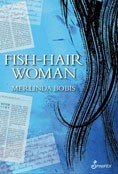
  • Merlinda Bobis Fish-hair woman

    Cover courtesy Spinifex Press

    Australian novel (second highest hit overall): Merlinda Bobis’ Fish-hair woman (reviewed in April 2013). Interestingly, a large percentage of the hits came, I believe, from the Philippines – in the second half of the year. Was it set for study? Was it only just published there? Will it retain this position in 2015?

  • Australian short story (fifth highest hit): Barbara Baynton’s “The chosen vessel” (reviewed in November 2012). It was my top Australian hit last year. I’m guessing that, like the Woolf, it’s a set text.
  • Non-Australian novel (sixth highest hit): Pramoedya Ananta Toer’s This earth of mankind (reviewed in June 2009, about five weeks after I started blogging).

The interesting thing is that my top ten reviews are heavily slanted to older novels and short stories. Is this because newer works are widely reviewed across the web resulting in searches first reaching prime sites like newspaper reviews, whereas older works are covered more sporadically so that searches are more likely find them on blogs like mine? Regardless, for me one of the joys of blogging is giving life to older works on the web.

I’m also aware that many of my top hits are for older posts, which suggests that there’s some longterm value in this here litblogging! Then again, perhaps I’m drawing some long bows from minimal data!

Monday Musings on Australian Literature

When I started Monday Musings in August 2010, I’d been blogging for 15 months. I had no idea that I’d still be blogging over four years later, let along still writing Monday Musings, but here I am … I have, I believe, written 224 Monday Musings posts. At times I have wondered what on earth am I going to write about this week, but I’ve discovered that I enjoy the challenge of finding a new angle or a new piece of news or a new theme to explore. One of the reasons I enjoy it is because of all of you who read and comment on them. I love the conversations that often result – and have learnt much from the sharing that has happened. So, thank you for joining in with such enthusiasm and good grace.

Now, what shall I write about tomorrow?

Searches that reached my blog in 2014

Like most bloggers, I love to look at what the people who find my blog have searched on. Due to Google’s encrypted  searching, WordPress captures less information about search terms now, but we still get a few. Here are some of my favourites from this year:
  • describe wolf hall in 20 words: good luck with that. I wonder if my post helped!
  • poem for boys in love and gun: hmm … two of my posts mention poetry and guns so I suppose that’s what the seeker found, but whether s/he found what s/he was looking for I have no idea.
  • australian landscapes nice and simple: well, of course, I mention landscape a lot on my blog but I’d love to know what this person was looking for. A travel blog? An art blog?
  • pickingjob lengly night: no idea what this means but I’m guessing it brought the seeker to my review of Eve Langley’s The pea-pickers.
  • i got the wooden spoon my pants pulled down: whatthe? I think this reached my Delicious descriptions from Carrie Tiffany post.
  • smacking wooden spoon Facebook irish: see above!

Australian Women Writers’ Challenge

awwchallenge2015Of course, I plan to continue to participate in the Australian Women Writers’ Challenge this year, so let this be my announcement post. We are asked to choose a level or create our own. I plan to stick to the top level, “Franklin, read 10, review 6”. I always exceed it, but I don’t plan to challenge myself to read more than I did last year. As I’ve said before, my doing this challenge is a “cheat” because Australian women writers have been my particular interest since the 1980s. If I wanted to undertake a “real” challenge it would be to increase my reading of non-English language writers, but, as I don’t do challenges, I’ll leave that alone!

And finally …

Thanks to everyone who read, commented on and/or “liked” my blog in 2014. I really do appreciate your visiting me here. I wish you all happy reading in 2015.

* The ranking I’m giving excludes the top hit by far which is “Home page/Archives”. I don’t think that counts really.

Reading highlights from 2014

Unlike last year when I crammed all my highlights into one post, this year I’m returning to the two-post approach. This keeps the posts shorter, which better suits this lazy time of year (southern hemisphere speaking anyhow!) So, this post will focus on literary/reading highlights, and the other will share my blogging highlights (such as they are!)

Literary event highlights

I didn’t get to many literary events this year, partly because my year was fragmented with many small trips out of town (overseas and within Australia). Consequently, I only have two event highlights, and a special – well, you’ll see:

  • Les Murray, probably the current grand man of Aussie poetry, at Poetry at the Gods. What can I say about this except that getting a chance to see and hear one of Australia’s most significant living poets in an intimate venue was a treat, and something I’ll treasure.
  • Mansfield Park Symposium during the Jane Austen Festival of Australia. For some reason I didn’t write this most enjoyable event up on my blog. It involved four academics talking about Mansfield Park from different aspects: Janet Lee on letters and letter-writing, Heather Neilson on education, Gillian Dooley on music and its relationship to morality, and Christine Alexander on landscape gardening and the urge for “improvement” in the era. I’m hoping the 2015 festival includes another targeted symposium.
  • Meeting overseas readers. I began discussing books on the Internet eighteen years ago in January 1997 when I joined the “bookgrouplist”. Through this and other online book discussion groups, I’ve “met” a lot of wonderful readers, cyberly! Over time I have also managed to meet some face-to-face. In 2014 I added to my “met” list by seeing* Emmy, Merrilee and Murph in Toronto, Canada, Cheryl in Montreal, and Trudy (a re-meeting, in fact) in Redondo Beach, California. All lovely people. It’s special being able to put faces to the names, and, of course, meeting locals adds to the joy of travel. I thank them all for making the time to catch up.

* POSTSCRIPT: I’m mortified that I forgot to mention meeting cheeky Cheryl and her husband Tony in Montreal – and receiving three sample jars of Tony’s delicious homemade maple syrup. Never name names because you’ll aways forget one!

Aussie reading highlights

Once again, rather than trying to list my “top [X] books of the year”, I’m going to share some highlights:
  • Classics: I didn’t make great headway this year in my reading of Australian classics, but I did read the last two short stories in Barbara Baynton’s Bush studies collection, having started it in 2013. She’s a significant Aussie writer who offers an important counterbalance to the bush-writing of people like Henry Lawson and Banjo Paterson. I have another classic part-read on my Kindle. With any luck you’ll see a review of that appear some time soon …
  • Juvenilia: At the aforementioned Mansfield Park Symposium I met one of the speakers, Christine Alexander, who also happens to be Director and General Editor of the Juvenilia Press. They have published several volumes of Jane Austen’s juvenilia, but they also publish juvenilia from around the world, including Australia. I bought several, and to date have enjoyed Mary Grant Bruce, Eleanor Dark and Ethel Turner. Fascinating stuff if you are interested in writers and their writing lives.
  • Awards: Three of this year’s award winning books particularly impressed me: Evie Wyld’s somewhat controversial All the birds, singing (Miles Franklin Award), Richard Flanagan’s generous The narrow road to the deep north (Prime Minister’s Literary Award, among others), and Clare Wright’s The forgotten rebels of Eureka (Stella Prize).
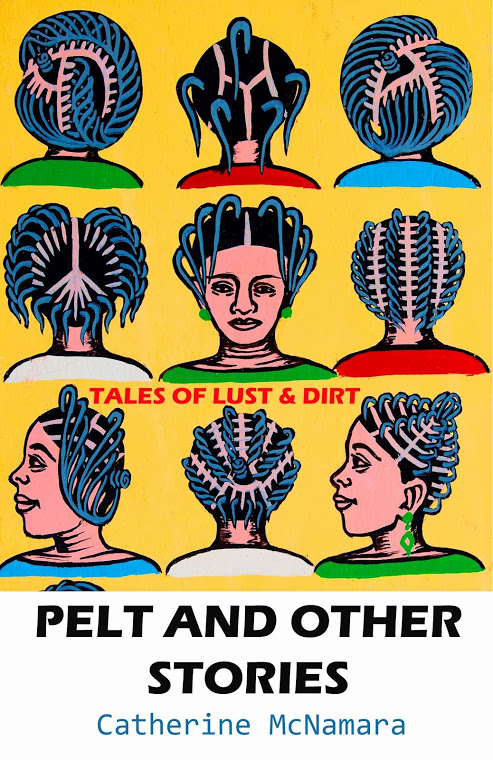
  • Catherine McNamara, PeltShort stories: While I always read short stories, I read more anthologies and collections in 2014 than in 2013. The standout anthology was Australian love stories edited by Cate Kennedy. It left me with such a buzz, for the variety of stories and styles, and the depth of emotions presented. I also loved the latest Margaret River competition anthology, The trouble with flying and other stories, and The great unknown edited by Angela Meyer. And I enjoyed expat author Catherine McNamara’s Pelt and other stories for its unsettling subject matter, often involving exploitation and power imbalances in relationships, and for her richly expressive style.
  • TBR reading: I actually read 4 books from my TBR pile. Three were Australian – and all were well worth diving into the pile for: Jessica Anderson’s One of the wattle birds, Sara Dowse’s Schemetime, and Tara June Winch’s Swallow the air.
  • Non-fiction: I read 7 Australian non-fiction books this year, including four memoirs and a biography. I was particularly moved by Margaret Rose Stringer’s tribute to her husband in And then like my dreams, and Olivera Simić’s passion for non-violence in Surviving peace. And I loved Helen Garner’s latest foray into non-fiction, This house of grief. I admire the way Garner can wear her heart on her sleeves while writing with such perspicacity.
  • Small presses: Once again I read some excellent offerings from our small presses, including Nigel Featherstone’s The beach volcano (Blemish Books), Howard Goldenberg’s Carrots and Jaffas (Hybrid Publishers), and Margaret Merrilees The first week (Wakefield Press). They deserve a shout out.
These are just a few from what was another great year of Aussie reading.

Reading highlights from other parts of the globe

While the greatest percentage of my reading was Australian this year, I did read some excellent books from elsewhere. Highlights were:
  • Simone de Beauvoir’s Memoirs of a dutiful daughter. It reminded me that no matter how radical people are, they can never completely escape their childhood influences and the values of their times.
  • Adam Johnson’s Pulitzer prize winning The orphan master’s son. A surprisingly compelling, yet discomforting novel critiquing politics and power in North Korea.
  • Wallace Stegner’s Crossing to safety. My fourth TBR pile read. I love Stegner’s ability to get to the heart of relationships – with warmth and generosity.

Innovative/experimental/different works

Finally, here are a few books that impressed or excited me because of their voice. Some are pretty grim, but I like my reading fare to include books that shock and/or surprise and/or test my expectations …

  • Kirsten Krauth’s just_a_girl: a story that challenges us to think about young girls, their sexualisation and how they might safely traverse our on-line world.
  • Morris Lurie’s Hergesheimer in the present tense: a novel in thirty stories about an ageing writer coming to grips with love, life and writing.
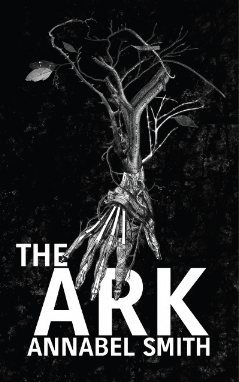
  • Annabel Smith. The arkEimear McBride’s A girl is a half-formed thing: a confronting story about family, disconnection and the urge to self-harm, told in an idiosyncratic voice that reaches your core.
  • Annabel Smith’s The ark: an inventive modern epistolary novel/app/e-book, dystopian speculative fiction set in a post-peak oil world.
  • Ouyang Yu’s Diary of a naked official: another challenging story, this one about sexualisation and self-indulgence in a materialistic world.

All in all, an exciting year of reading that included some challenging, confronting and controversial reads. I wouldn’t have it any other way.

What were your standout reads for the year?

Annie Parker, Passages in the life of a slave woman (Review)

I have, this year, reviewed a couple of Library of America‘s (LOA) stories about slavery in the USA, one being Harriet Ann Jacobs’ “The lover”, and the other William Wells Brown’s, Madison Washington. I’ve always been interested in slavery in the US, so when Annie Parker’s “Passages in the life of a slave woman” appeared in my inbox, I of course wanted to read it – and discovered yet another intriguing story.

When I say I discovered “another intriguing story”, I don’t just mean Parker’s story but the story of Parker herself. Let me explain. Parker’s story, “Passages in the life of a slave woman”, was published, according to LOA’s always illuminating notes, in Autographs for freedom. This was an annual anthology of antislavery literature published as a fundraising venture by the Rochester Ladies Antislavery Society. (Only two were apparently produced). The anthologies included “original works by such dignitaries as Ralph Waldo Emerson, Harriet Beecher Stowe, Theodore Parker, William Wells Brown, Catherine M. Sedgwick, William H. Seward, and Horace Greeley”, as well as Frederick Douglass’ novella, The heroic slave, about Madison Washington. They also included two pieces by Annie Parker – a poem, Story telling”, and the story I’m discussing here. But, here’s the thing – no-one, says LOA, apparently knows who this Annie Parker is (or was).

So, like any good blogger, I did an internet search – just a little one – and found a guest post on the blog of the IAHI, aka, the IUPUI (Indiana University-Purdue University Indianapolis) Arts and Humanities Institute. The guest post, published in September 2014, is titled “In Search of Annie Parker by Professor Jack Kaufman-McKivigan”. Kaufman-McKivigan’s post concerns a symposium that was coming up in October at which experts were “to examine the historical and literary significance of Douglass’s novella, The Heroic Slave.” In preparation for this event, staff members were engaging, he said, in some “literary detective work” – and one of these projects was trying to identify Annie Parker.

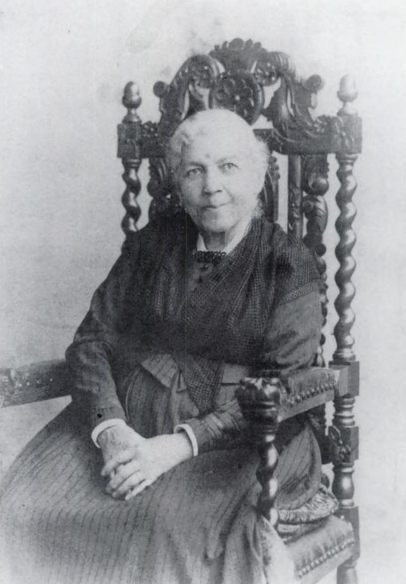
Harriet Ann Jacobs, 1894 (Presumed Public Domain, via Wikipedia)

Harriet Ann Jacobs, 1894 (Presumed Public Domain, via Wikipedia)

Kaufman-McKivigan writes in the post that in recent decades her story “has been anthologized several times as one of the earliest works of fiction by an African-American author”. That’s interesting in itself, because it means they (whoever “they” are) have assumed she was an African-American contributor. It could be so, and the story could be autobiographical, but I also wondered, given the lack of information about her, whether “Annie Parker” was a pseudonym. Anyhow, our professor says they found a couple more articles by an Annie Parker in a temperance journal from Geneva, New York, but then the trail went “cold, very cold”. Genealogical research, he says, turned up “a few possible ‘Annie Parkers’ in the upstate New York region” but none had “any known connection to the antislavery movement and all were white”. He then posits that Annie Parker may not have been a runaway slave as others have speculated, but might have been “a pen-name”. The question then is whose? One possible idea is the above-mentioned Harriet Jacobs. There are some valid reasons for making this connection, as he explains in the post – so do read it at the link above if you are interested. Why Jacobs might have wanted to use a pseudonym is a question the literary detectives are now working on. All very interesting – and one of the reasons I do enjoy these LOA offerings.

Now, though, the story – which is told first person in the voice of a slave, after the opening paragraph is told third person. I was, I must say, quite flummoxed by this. The paragraph has some odd punctuation, in that there are opening quotation marks but no closing ones. LOA’s notes suggest this is to indicate that the rest of the story is composed entirely of her narrative. Fair enough, though I don’t quite understand why Parker needed to start with the third person, except that it does make for an easy way of telling us who the narrator is.

The story is told by the slave, Phillis, sister of another slave, Elsie, who had died giving birth to her second child. Both Elsie’s children – the first, a son, and the newborn, a girl – were fathered by “the young master”. The son, who looks too much like his father is sold off before the young master brings a wife home, thus preventing any awkward questions being asked. Meanwhile, Phillis cares for the daughter, Zilpha, as she grows up to young womanhood. I won’t give away the story here but simply tell you that LOA introduces it as a “tale, charged with incest and gothic intrigue”. You can read it at the link, below. It’s only 6 pages.

This is not a story about beatings and cruel physical treatment. Indeed the new mistress:

proved a kind and gentle mistress. All the slaves loved her, as well they might, for she did everything in her power to make them comfortable and happy.

But, we never forget that slaves are powerless – and, as we know only too well, when anything happens that threatens an owner’s happiness or security, little thought, even on the kindest plantations, is given to the “feelings” of the slaves. They are possessions and can be moved around at will. Their emotional or psychological needs, let alone their physical safety, are not relevant. And so, in this story, as certain truths come to light, the owner takes actions to protect his security and happiness. The irony is that he, like his mistress, is generally (perhaps “superficially” is the better word) kind and fair, but there are limits – and it is the impact of those limits that we are left with, confirming once again what a destructive institution slavery was, indeed is.

Annie Parker
“Passages in the life of a slave woman”
First published: In Autobiography for freedom, 1853.
Available: Online at the Library of America

Monday musings on Australian literature: Australian Women Writers’ Challenge 2014


awwchallenge2014As I’ve done over the last two years, I’m devoting my last Monday Musings for the year to the Australian Women Writers Challenge. This challenge, which most of you probably know by now, was instigated by Elizabeth Lhuede in response to concerns in Australian literary circles about the lack of recognition for women writers. I am one of Elizabeth’s band of volunteers – responsible for the Literary and Classics area – and, of course, am also a challenge participant.

The challenge has had another successful year with continued commitment by a wide range of reviewers. In 2015, we will be moving to a self-hosted site and plan to produce a single searchable database of all reviews logged since the challenge started in 2012. This will provide an excellent entree to a wide variety of Australian women’s writing across all forms and genres that has not been easy to access to date.

As last year, the Challenge ran some special events during the year, including a focus on indigenous writers, writers from diverse backgrounds, and writers with a disability. These events have included interviews and guest posts, and I thought I’d share some with you here, because they are worth reading and because they demonstrate the depth of diversity the Challenge reaches for:

  • Honey Brown (Women writers with a disability): on living with paraplegia and the surprising links between creativity and coping with adversity.
  • Eleanor Jackson (Queer women writers): on how being a “bisexual, biracial female writer” affects her art.
  • Ambelin Kwaymullin (Indigenous women writers): containing reviews of 5 works by Aboriginal women (including one by an Aboriginal community) which “offer insights into Aboriginal culture and existence”.
  • Donna McDonald (Women writers with a disability): on the struggle for rights for people who are deaf or hard-of-hearing, and how exhausting it is.
  • Yvette Walker (Queer women writers): on two queer writers – Elizabeth Bishop and EM Forster – who have inspired her.
  • Jessica White (Women writers with a disability): on her deafness which brought isolation and dislocation but some consolations too!

If you are interested in the challenge, you can check it out here. I don’t believe the sign up form is ready for 2015, but keep an eye on the site. We’d love you – whether you are female or male – to join us next year. The challenge can also be found on Facebook, Twitter (@auswomenwriters), GoodReads and Google+.

As regular readers know by now, the Australian Women Writers’ Challenge is my only challenge. This year I posted 30 reviews for the challenge, three more than last year. My breadth is similar to last year, except interestingly, I reviewed no poetry this year, whereas last year I contributed three poetry reviews. What happened? However, I am pleased that I managed to read four books from my TBR pile for the challenge. Now that is something worth crowing about! Anyhow, here’s my list (with links to the reviews):

FICTION

SHORT STORIES

NON-FICTION

ESSAYS

JUVENILIA

Again, I have enjoyed taking part in the challenge – and plan to take part again next year, both as volunteer and participant. I particularly want to thank Elizabeth and the rest of the team for making it all such a cooperative, and enjoyable experience. I look forward to 2015.

Thea Astley, Drylands (Review, of sorts)

I read Thea Astley’s Drylands many, many years ago now, so what I’m going to share here – inspired by my post earlier this year on confronting Australian novels – are the notes I made when I read it. They are not particularly well-formed, because I wasn’t planning a review at the time, though I must admit that I did spend some time skimming it as I tried to massage my notes into some shape. Too hard not to! It’s her last novel, and it earned Astley her fourth Miles Franklin Award (shared with Kim Scott’s Benang).

Drylands is subtitled “a book for the world’s last reader”. It’s one of those tricky books that looks like a collection of short stories but is, albeit perhaps loosely defined, a novel. Its structure comprises sections titled “Meanwhile” by the so-called writer of the stories, Janet, alternated with stories about inhabitants of, or visitors to, a dying town called Drylands:

a God-forgotten tree-stump of a town halfway to nowhere whose population (two hundred and seventy-four) was tucked for leisure either in the bar of the Legless Lizard or in front of television screens, videos, Internet adult movies or PlayStation games for the kiddies.

[…]

No one was reading anymore.

It’s a town “being outmanoeuvred by the weather. As simple as that. Drought. Dying stock.”

The main subject of these stories are three men (Franzi Massig, farmer Jim Randler and the indigenous Benny Shoforth) and three women (Evie the writing teacher, Lannie Cunneen, and Joss the publican’s wife). This is all quite neat, except that we are thrown somewhat by the fact that the “Janet” character may be a conceit dreamed up by Evie, who says she will “write a story … about a woman in an upstairs room above a main street in a country town, writing a story about a woman writing a story”. Since Janet is an inhabitant of Drylands while Evie is not, it makes sense that this might be Evie’s work, not Janet’s, making Evie both character and observer*. Another spanner in the narrative-voice-works is that two of the stories – those of Franzi Massig and Joss – are told first person. I might be reading too much into it, but I wonder if Astley is using this uncertainty to mirror the disorder she sees in society, if that makes sense.

Drylands explores many of the issues important to Astley. The two overriding ones are words and their importance/power, and the impoverishment of the spirit (often related to our inhumanity). Subsumed in the latter are some of Astley’s recurrent issues – gender and race, dispossession and power imbalances. She rails against the shallowness and small-mindedness that lead to poor treatment of “other” (indigenous people, women, less educated people, the ageing, etc), to “the powerlessness”, as Benny calls it, “of poverty and colour”. Here is a husband coming to drag his wife out of her writing class to get him his lunch:

He was hurling words at his shrinking wife like clods or bricks and she was not dodging but receiving them like a willing saint, enduring abuse like a terrible balm.

I wonder what Astley would have written about our treatment of asylum-seekers had she still been around, but unfortunately she died in 2004.

Thea Astley is, as you’ve probably gathered, an unsettling writer – and one with some very strong viewpoints. Besides being unimpressed by how women, indigenous people, and ‘oddballs’ (or outsiders) are treated, she’s also not too fussed about computers, television, and our sports-mad society. For these reasons I’m inclined to agree with Kerryn Goldsworthy that there’s a dystopian element to her vision. I didn’t pick it at first because I tend to see dystopian novels as being speculative or fable or allegorical, as being, in other words, about what “might be” rather than what “is”. The handmaid’s tale is a dystopian novel that is not specifically set in the future but neither is it set in a recognisable “real” world. Lord of the flies and Animal farm are dystopian views of the world that are not set in the future but, arguably, neither do they present a realistic community/society/place. Drylands, though, is recognisably our world, but a pretty grim version of it, which suggests dystopia. It’s probably worth noting here that Drylands was published in 1999, that is, at the end of the millennium.

Regardless of formal definition, though, Drylands, like dystopian novels, is pervaded by a sense of hopelessness. There are likable people – many – but life isn’t easy or happy for them. There are, however, some positive or redemptive hints, particularly for Clem and Joss. Janet, the linking character, on the other hand, can only glimmer the fact that there might be something out there:

There was something out there, but she doubted she would ever discover. The idiocy of her wasted years made her laugh even more.

There were no endings no endings no

awwchallenge2014The writing in Drylands, though sometimes colourful, is sparer, more restrained than we are used to from Astley – and just right for a bitter tale about lack of literacy, loss of reading skills, and the implications thereof. Janet’s mother tells her that “being unable to read is being crippled for life”. Janet, writing her story, worries whether she’s getting her narrative right, but decides it’s “better for readers to frolic with their own assumptions from the words spoken, the deeds done” – which is, perhaps, the ultimate irony if everyone has lost the ability to read! If you only ever read one Astley, you couldn’t go wrong with this one.

Thea Astley
Drylands
Ringwood: Viking, 1999
294pp
ISBN: 9780670884704

* There is a scene in “Stranger in town”, where Evie briefly meets the eyes of the woman (whom we know is Janet) living above the newsagency.

Books given and received for Christmas

Here at the Gums, we like of course to give and receive books for Christmas. Like you, I’m sure, I love choosing books for those I love, albeit tinged with a little anxiety. Have they read it? Will they like it? That doesn’t stop we readers giving it a go though does it? Anyhow, just in case you’d like to hear what decisions I made this year, here goes.

  • For Ms Gums Jr, who loves poetry: Owen Musa’s Parang
  • For Mr Gums Jr, who enjoys humour: Simon Rich’s Spoiled brats (with thanks to one of those end-of-year lists, in The Guardian I think!)
  • For Ma Gums, who has worked as a lexicographer: Paul Dickson’s Authorisms: Words wrought by writers
  • For Aunt Gums, who likes a nice English writer: Joanna Trollope’s Balancing act
  • For Brother Gums, historian and lover of good writing of all kinds: Best Australian essays 2014 (but unfortunately, as I feared, someone else had a similar bright idea so it’s back to the drawing board for this one!)
  • For Sister-in-law Gums, who’s always up for something different: Jane Rawson’s (recent MUBA award-winner) A wrong turn at the office of unmade lists
  • For Gums’ Californian friend, who teaches Japanese: Mark Henshaw’s The snow kimono (and I hope she doesn’t read this before she opens her parcel)
  • For Gums’ Californian friend’s daughter, who likes a good mystery: Mark Henshaw’s In the line of fire
  • For Gums’ Californian friend’s daughter (yes she has two), who reads widely and, I believe, also enjoys a bit of commentary: Kill Your Darlings #19

POSTSCRIPT: I returned Best Australian Stories 2014 and decided to go more local for Bro Gums – Julian Davies’ Crow mellow.

And while we are at it, I also gave copies of Australian love stories edited by Cate Kennedy for two late-in-the-year birthdays.

As for what I received, well, they are an intriguing and wonderfully eclectic bunch:

  • From Ma and Pa Gums: Don Watson’s The bush: Travels in the heart of Australia. Woo hoo – I was hoping Santa or someone would bring this!
  • From Mr Gums Jr, who knows I’ll give something new a go: Vivek Tiwary and and Andrew Robinson’s graphic novel The fifth Beatle: The Brian Epstein story. Love the out-of-left-fieldedness of this.
  • From Bro and SIL Gums, who live in Tasmania and can be relied upon to give me something by a Tasmanian writer: Danielle Wood’s Mothers Grimm, which reworks four fairy stories from the point of view of mothers and sounds right up my alley!

Monday musings on Australian literature: The challenge of literacy

Today’s topic may be a bit serious for Christmas week, but I’ve decided to go with it anyhow. I was inspired to write it by an article in the online journal, The Conversation. The article, by Deakin University academic Lyn McCredden, was itself inspired by the Prime Minister’s Literary Awards at which one of the winners, Richard Flanagan, donated his $40,000 prize to the Indigenous Literacy Fund. A good thing, nest-ce pas? McCredden goes on to mention the creation by Prime Minister Tony Abbott that night of the Australian Book Council, and quotes publisher Louise Adler as stating that this Council “declares that Australian writing matters and that building future generations of writers and readers is vital to a civilised and free society”. So far so good, but …

Then she quotes American literary critic Michael Bérubé who wrote in 1996 that:

… it has been some decades now since George Steiner and Thomas Pynchon reflected, in their different ways, on the phenomenon of Nazi officers with a fine appreciation of aesthetic excellence. (Bérubé)

In other words, the importance of literacy is a given but

what is so often occluded or skimmed over in many of the prize-giving activities of the book industry is that literacy on its own [my emphasis] is not necessarily a good. (McCredden)

Are you getting the picture? Sure, she says, not being able to read is a bad thing – it usually implies or leads to powerlessness and lack of privilege – but being able to read per se is not automatically good in itself, as Bérubé implies.  (Though, of course, what is “good” is a judgement isn’t it?). Anyhow, McCredden goes on to refer to Flanagan’s winning novel, The narrow road to the deep north, and the fact that “the figure of the vicious and violent prison guard is also notable for the way he quotes the exquisite poetry of Basho, even as he inflicts maniacal harm on prisoners”. If I understand her correctly, she suggests that for reasons like this, she doesn’t find Flanagan’s book (see my review), “satisfying or cohesive”. However, my reading is that Flanagan addresses the ambiguity contained in the Japanese officers’ love of poetry when he says:

They recited to each other more of their favourite haiku, and they were deeply moved not so much by the poetry as by their sensitivity to poetry; not so much by the genius of the poem as by their wisdom in understanding the poem; not in knowing the poem but in knowing the poem demonstrated the higher side of themselves and of the Japanese spirit … (Flanagan, The narrow road to the deep north)

This, to me, clearly expresses Flanagan’s awareness of the questionable or complicated nature of our relationship to literature. McCredden and I could argue this specific point, but it’s not the essence of her article, so let’s continue.

Books, she argues, do not always “unite” us. In fact, the controversies they sometimes generate show that culture is “always contested, and always ideological”. The best kinds of books she therefore suggests might be those that challenge our assumptions about ourselves – like Christos Tsiolkas’ Barracuda (see my review) – rather than those that “please us with myths about ourselves”. She argues that:

if we are, like Dorrigo, privileged enough to be able to read, we are opening ourselves to a world of pain, as much as entertainment. (McCredden)

Literacy, in other words, carries responsibilities as well as rights. As citizens we have a right to be able to read and to therefore conduct the business of our lives, but, there’s more to it than that, and therefore

Learning how to read – that is, how to think, analyse and challenge prevailing ideas (including those appearing in many works of literature, many histories) needs to be considered more coherently alongside the mechanics of book distribution, book marketing, learning the alphabet. (McCredden)

A very good point – and much needed methinks in our rush-to-judgement world. Do you agree? And if so, how do we teach this sort of reading without turning people off?

Morris Lurie, Hergesheimer in the present tense (Review)

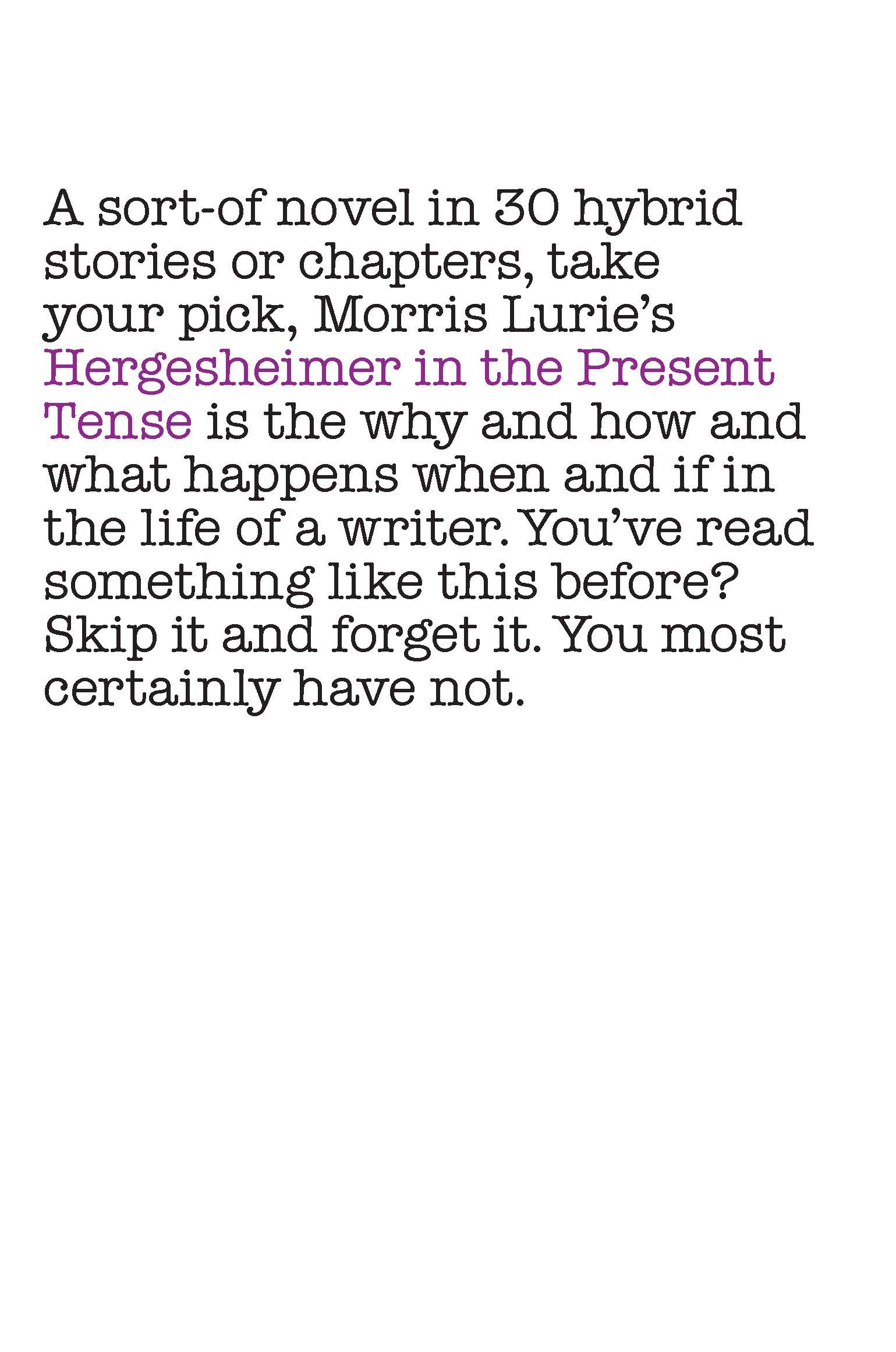
Morris Lurie, Hergesheimer in the present tense Book cover

Courtesy: Hybrid Publishers

Well, well, well, I got to the end of Morris Lurie’s quirky last novel (if that’s what it is), Hergesheimer in the present tense, and laughed. The final paragraph, which seemed to come out of left field, concerns Dostoyevsky’s contract with a “scurrilous publisher” to deliver a novel – The gambler – on an impossible schedule. It resulted in his hiring the stenographer Anna Snitkina, whom he later married. I laughed because my reading group’s next book is Dostoyevsky’s Crime and punishment (the book published immediately prior to The gambler) and because this little anecdote about Dostoevsky manages to bring together in one paragraph the main themes of the book – the writer’s life, relationships with publishers, and finding love.

Where to start? Perhaps with my little aside in that first sentence regarding the form of this “novel”. This book has a very plain cover. In fact, it simply comprises some text on plain white, as you can see from the book cover image. And this text is right: I don’t think I have ever read anything quite like this before. But, I did enjoy it, because this sort of challenge to my reading brain appeals to me, particularly when the challenge involves a writer writing about the writer’s life. Delicious. When I say, though, that the book is about “the writer’s life”, I mean that in its broadest sense. It’s about life lived by the writer – his growing up, his women, his children, as well as the specific challenges of being a writer. This brings me back to the main challenge, its form: 30 little vignettes that criss-cross time within and between each other. There is probably an over-riding chronological arc to the narrative, though this is not particularly obvious, partly due to flashbacks within the chapters and partly because there’s not really a plot. The voice is third person, with the occasional lapse (is it a lapse?) into first or even second person.

This is not Lurie’s first book about Hergesheimer. The first was Hergesheimer hangs in, which comprises 26 chapters and was published in 2011. My curiosity sparked, I found a review of it in the Australian Book Review and discovered that there was a “real” Hergesheimer, who, Lurie writes, was

an American writer of great popularity who fell from favour, couldn’t understand it, didn’t know why, bellyached about it endlessly to his pal Mencken, refused to go gently, if you like, into that good night, is quite forgotten now. I appropriated his name to pass unnoticed, as it were, among you. (Hergesheimer hangs in)

Even Wikipedia knows about him! Him, the “real” Hergesheimer, I mean. We don’t need to know this allusion, of course, to understand the book, but it adds a playful layer to understanding our Hergesheimer, because he too is a writer who has had his successes but who is now struggling to be appreciated, to be recognised in the long-term.

As soon as I finished the book, I checked Lurie’s bibliography and discovered what I was expecting: his twenty or so books were published by around ten different publishers. No wonder Hergesheimer, the fictional one I mean, is generally unhappy with publishers*. It starts in the first story, “Hergesheimer slaps leather”, in which he and another writer discuss publishers – publishers not entering their books for prizes, publishers not promoting their books, and so on. This story, told in Lurie’s linguistically playful and rhythmic style, got me right in. Here is the opening paragraph:

Hergesheimer, found suddenly footloose in the city this sunny midmorning, hears called out from nowhere his name. To stop. To turn. To scan. To see. To spot, waving and weaving in rapid approach through the intervening traffic, McCall, an acquaintance at best, if even exactly that, certainly not bosomy, nothing buddyish, warmth to warmth, heart to heart, nevertheless, as Hergesheimer also, similarly in or of the writing trade.

‘Tom’, greets him Hergesheimer, the safety of pavement by McCall now achieved.

I love such writing – active, compelling, demanding the reader’s full attention. And I found it particularly interesting to read so soon after Eimear McBride’s A girl is a half-formed thing with her broken syntax and run-along sentences. Very different writers, very different concerns, but both subverting the “rules” to create honest, unforgettable characters.

Anyhow, the stories/chapters continue. We see Hergesheimer giving writer’s talks in schools, attending conferences, being interviewed, winning a prize, finding a new publisher, and so on. Life is never simple, and rarely are his experiences unequivocally triumphant. His dreams of great success (accompanied by wealth and acclaim) don’t come to fruition. In “Hergesheimer prompts the essential question” a schoolchild doesn’t believe he’s a real writer because “Stories are supposed to have love in them … Where’s the love in yours?” And in the title story, he discovers that prizes don’t always mean what you think they do. Some stories are laugh-out-loud funny, such as his battle to save his typewriter in an increasingly electronic world (“Hergesheimer embraces the new technology”). But mostly the levity has a self-deprecating, often sardonic edge, because, as we know, concerns about publishing, editing, prizes, promotion, plagiarism, are real. Lurie gives them flesh in the form of an experienced but now mostly defeated writer, “a lumbering dinosaur, defeated, out of step with the modern world”, a world where, for example, plagiarism can be explained away as “collage”, “montage”, or “homage”!

Hergesheimer, though, is not only a writer. He’s a son, father, failed husband, lover and friend, so we see him, for example, facing the death of his daughter (“The gift of strength”), being sick, dealing with a landlord, and trying to maintain a shaky relationship with a new woman, the indefatigable Valerie. There’s pathos here, like in his writing life, as he shambles from experience to experience.

Because of its disjointed (though not disconnected) form, you can read this book quickly or slowly. With most chapters running to around five pages, it’s a perfect book for busy times, like now, when reading opportunities have to be snatched amongst the Christmas madness. Lurie, sadly, died within weeks of its publication. Reading it now would be the perfect way to honour his memory – but reading it only for that reason would be selling it short. Far better to read it for its verbal gymnastics, self-deprecating humour and, most of all, for its awareness of the absurdity of life’s endeavours.

Lisa at ANZLitLovers also read and enjoyed this book.

Morris Lurie
Hergesheimer in the present tense
Melbourne: Hybrid Publishers, 2014
190pp.
ISBN: 9781925000337

(Review copy supplied by Hybrid Publishers)

* It reminded me of poet-novelist Alan Gould, who came to my book group and spoke specifically about the difficulty of finding publishers.

Monday musings on Australian literature: RN presenters’ pick reads of the year

I was going to write my Case for post this week, but I think now that I’ll leave it to January. Life is a bit too busy right now to put proper thought into presenting my case (though I’ve pretty much decided which book it will be!) So, instead, since various media outlets are starting to publish “best” or “favourite” books of the year, I thought I’d share those from the presenters of the radio station that I most listen to, ABC Radio National.

Many did not choose Australian books, but given the theme of this post, I’m only going to share those who did. However, you can see the whole list online at Radio National. Here goes:

  • Helen Garner, This house of grief book cover

    Courtesy: Text Publishing

    Damian Carrick – presenter of the Law Report – chose Helen Garner’s This house of grief. Not surprising, I suppose, that a presenter on law would choose this book about a murder trial. He was concerned, he said, that he might find it too bleak, but “from the opening page I was hooked. It’s a page turner, and as it should be it’s an aching lament to the loss of three lives”. I hate the use of the word “aching” in reviews but regular readers here will know that I liked it too.

  • Jonathan Green – presenter of Sunday Extra – chose Richard Flanagan’s The narrow road to the deep north. I’m glad someone did! He felt that, given it had won the Booker Prize, “anything I say isn’t much more than licking the spoon that somebody else used to put the icing on the cake. Even so, gosh this is a good book”. I agree.
  • Lynne Malcolm – presenter of All in the Mind – chose comedian Tim Ferguson’s Carry a big stick. Again, it’s not a surprising choice for the presenter of a program about the mind and the brain, as this book is a memoir focusing particularly on Ferguson’s being diagnosed with multiple sclerosis. Malcolm refers to Ferguson’s progress from denial to eventual admission when he could hide the condition no longer.
  • Rhianna Patrick – presenter of AWAYE – chose Ellen van Neerven’s Heat and light. This is a book I have on my TBR. Here’s what Patrick says “Van Neerven is part of what I see as the next wave of Aboriginal and Torres Strait Islander writers, who are university graduates in creative writing. What’s clear early on is van Neerven’s exploration of indigeneity and sexuality, and whether the two can coexist”. That intrigues me. Why can’t they coexist? Clearly, I’ll have to read it to find out.
  • Robyn Williams – presenter of the long-running Science Show – chose Evie Wyld’s All the birds, singing. He says that “It may be about blokes with beers and rugged times on the land, but the voice is always clear and convincing”. Hmm, blokes with beers do appear but I wouldn’t quite say that’s what it was “about”. However, I like the fact that he appreciates Wyld’s voice. (You can check out my review if you like. I expect it will feature high in my top books – when I do my list in January).

Other choices included Eleanor Catton’s The luminaries, and Eimear McBride’s A girl is a half-formed thing, both of which I’ve reviewed this year. The most interesting choice, from my point of view anyhow, was from Ann Jones, presenter of Off the Track. She chose Mexican writer Juan Pablo Villalobos’s Down the Rabbit Hole which she described as “fantastically surreal and brutally real”.

For each of the choices, there is a sound grab (at the link I provided above) that you can listen to which gives you a little more about their reasons. I don’t find them all enlightening, but I do find it interesting at this time of year to hear people’s choices and why they chose them.

Have you chosen your favourite book of the year, or are you, like me, waiting until the year is over? (Even then, I suspect, I won’t be able to choose ONE book to top all the others but I will have some favourites.)