Karen Lamb, Thea Astley: Inventing her own weather (Review)

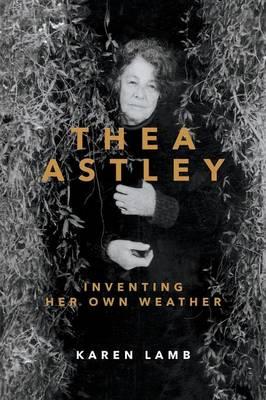
Karen Lamb, Thea Astley
Courtesy: UQP

One of the threads that runs through Karen Lamb’s biography, Thea Astley: Inventing her own weather, is Astley’s ongoing frustration about her work not being appreciated or recognised. On the face of it, this seems neurotic or, perhaps, paranoid. After all, she was the first writer to win the Miles Franklin Award four times, a feat only equalled to date by Tim Winton, and  she won pretty well every other major Australian literary award including the Christina Stead Award for Fiction and The Age Book of the Year Award. Yet, as I have often mentioned on this blog, I would agree that she is under-appreciated. Indeed, winning the Patrick White Award when she was 64 and had published 11 of her 16 books somewhat supports her case. It is awarded to a writer who has been highly creative over a long period but has “not received due recognition”. Lamb quotes her as saying “Ya know what it’s for, it’s for people who fail”! Not quite, if you look at the list of winners, but …

“a writer’s writer”

Why is this? Well, part of it could be gender-based. Astley’s satire and, yes, ferocity were not the fare “expected” of a woman. And part could be because, as author Matthew Condon put it, she’s a “writer’s writer”. This means, I’d say, that she doesn’t pull any punches to prettify her feelings and attitudes, her language is complex and imagistic, her works don’t necessarily neatly fit traditional forms, and she doesn’t dumb down. (It helps to have a dictionary nearby when you read her). But, she is so worth the effort, because she can move you to laughter or tears or just plain anger and shock with her way of expressing the world she saw. You may have heard her four ages of women – “bimbo, breeder, baby-sitter, burden” (Coda) – but what about her description of time as “the great heel”?

“My novels are 90% ME”

Let’s now, though, get to the biography. Why do we read author biographies? Why not just read – and re-read – more of their works? Is it simply a voyeuristic activity or can biographies add something of value to our understanding? And if the latter, what sort of understanding? Is it valid to try to understand an author’s works though his or her life, or, vice versa, to understand the life through the works*? These can be minefields for literary biographers, but they’re minefields Lamb has stepped lightly across. Astley’s statement that “My novels are 90% ME” helped, yet the question is still valid.

How has Lamb done it? For a start, she doesn’t attempt any pop psychology. She presents the story of Astley’s life, noting points of interest, of stress and tension – such as her very strict Catholic upbringing – but she doesn’t labour the point. She lets the reader make most of the assumptions or connections. Similarly, she situates the works in Astley’s time-line, describing what was going on at the time and drawing out themes and concerns – such as those of the outcast and misfit – that recur in her novels. She tracks changes in Astley’s thinking, such as her complex attitude to gender and feminism, through both her life and her work. Astley’s early works from the 1950s and 60s, for example, were mostly written from a male or “neuter” perspective, but later in her career, as times changed, she shifted to a female point of view.

Lamb tells the story, like most biographies, in a generally chronological manner. The book is logically organised into four parts – youth, early career, middle career, and later career – with gorgeously evocative chapter titles most of which come from Thea’s own words. Chapter 2, for example, is “Suspected of reading” from Beachmasters, and Chapter 9’s “I merely crave an intelligent buddy” is from a letter. Underpinning this chronology are recurring themes, including her anxieties about critical recognition and her ongoing battle with publishers to get a fair deal for literary writing; her awareness of her “difficult” style; her persistent focus on and interest in outsiders and misfits, gender, and male-female relationships; her smoking; her long, complicated but loving marriage; and what Lamb describes as her “twin modes of existence”, that is, her adoption of an insider-outsider role or persona. As the book progresses, all these appear and reappear, creating a coherent picture of Astley as a complex, idiosyncratic, frequently funny and often irascible, but oh so very human person.

I was, naturally, interested to read about Astley’s life. I loved that Lamb confirmed the Astley I thought I knew, while filling in the gaps and the backstory that helped me understand her better. I was thrilled, for example, to discover that Astley loved Gerard Manley Hopkins. That made complete sense, considering her style, but how I wish my love of Hopkins had the same effect on me! Anyhow, I was also, of course, keen to read about the writing and the publishing, about the works and how they fitted into her life. Lamb met this intelligently, slotting the works into the chronology, and explaining salient points, as relevant, about what inspired them, who edited and published them, what the critical response was, how they relate to her oeuvre, and so on. I’ll be returning to these – via the thorough index – as and when I read and/or re-read her works.

“It can be lonely at the bottom”

So far I have written mostly, as I should, about the biography itself, but, before I finish, I do want to shine a light a little more specifically on Astley and her work. One of the recurrent issues in Lamb’s book is Astley’s ongoing concern, mentioned earlier, regarding her lack of, or mixed, critical reception. Lamb suggests that, partly to defend herself from critics but partly also because it was how she wrote, Astley described herself as “intensely interested in style”, the subtext being that style was more important to her than plot. In this, Lamb suggests, she was like Patrick White and Randolph Stow. She could be hard on herself, saying early in her career that

It’s a fearful thing to have de luxe standards and be limited by technique and self. I know the country I want to explore but I only seem able to chart its coasts.

Yet she didn’t take (negative) criticism well. This is interesting, given she often opened herself up to it. Perhaps it is partly because she didn’t feel understood. It’s difficult to accept criticism when the basis of that criticism misses the mark, as it often did. Astley, for example, experimented with style and form throughout, but not everyone appreciated that. However, it is also very likely that gender played a role. In 1981 she wrote:

Perhaps it is because I am a woman – and no reviewer, especially a male one, can believe for a split infinitive of a second that irony or a sense of comedy or the grotesque in a woman is activated by anything but the nutrients derived from ‘backyard malice’ … the Salem judgement comes into play and the lady writer is more certainly for burning.

The other point I want to make relates to her themes. Lamb argues that Astley consistently explored outsiders and misfits, and ideas about gender, and male-female relationships, particularly in relation to power and responsibility. Her subject matter may have changed from her early treatment of “teachers, small towns and islands”, and then of suburban life, to wider social concerns about justice, development and indigenous dispossession, but her “obsessions” persisted. I think, as does Lamb, that by the end she’d come full circle, but to a more sophisticated expression, from the lonely, isolated teacher in 1958’s A girl with a monkey to a despairing Janet writing for the last reader in 1999’s Drylands. Such an impressive, tightly focused but never boring oeuvre.

I could say the same about this biography. At just over 300 pages (excluding the end-matter), it manages to be both extensive and intensive. It is tightly focused but never feels like a mere recording of facts. It is honest and affectionate but not hagiographic. It portrays that paradox typical of creators, the self-protective writer who lays herself bare. And it demonstrates that Astley’s concerns are as relevant today as they were when she died in 2004. Lamb’s biography goes some way towards according Astley the recognition she wanted and deserved. May it be just the start.

Lisa (ANZLitLovers) would agree.

awwchallenge2015

Karen Lamb
Thea Astley: Inventing her own weather
St Lucia: UQP, 2015
360pp.
ISBN: 9780702253560

(Review copy supplied by UQP)

* Carol Shields’ biography of Jane Austen is an interesting example, because it’s a case of a novelist writing about a novelist about whom little is known. Shields was upfront about using Austen’s work to fill in the gaps. It worked because she was honest about what she was doing.
Monday musings on Australian literature: Australian literary biographies

Given that a literary biography won the National Biography Award this year, that I’ve recently posted Musings on literary autobiographies/memories, and that my next review will be for a literary biography, it seemed high time that I devoted a Monday Musings to the form, don’t you think?

Brenda Niall's True North
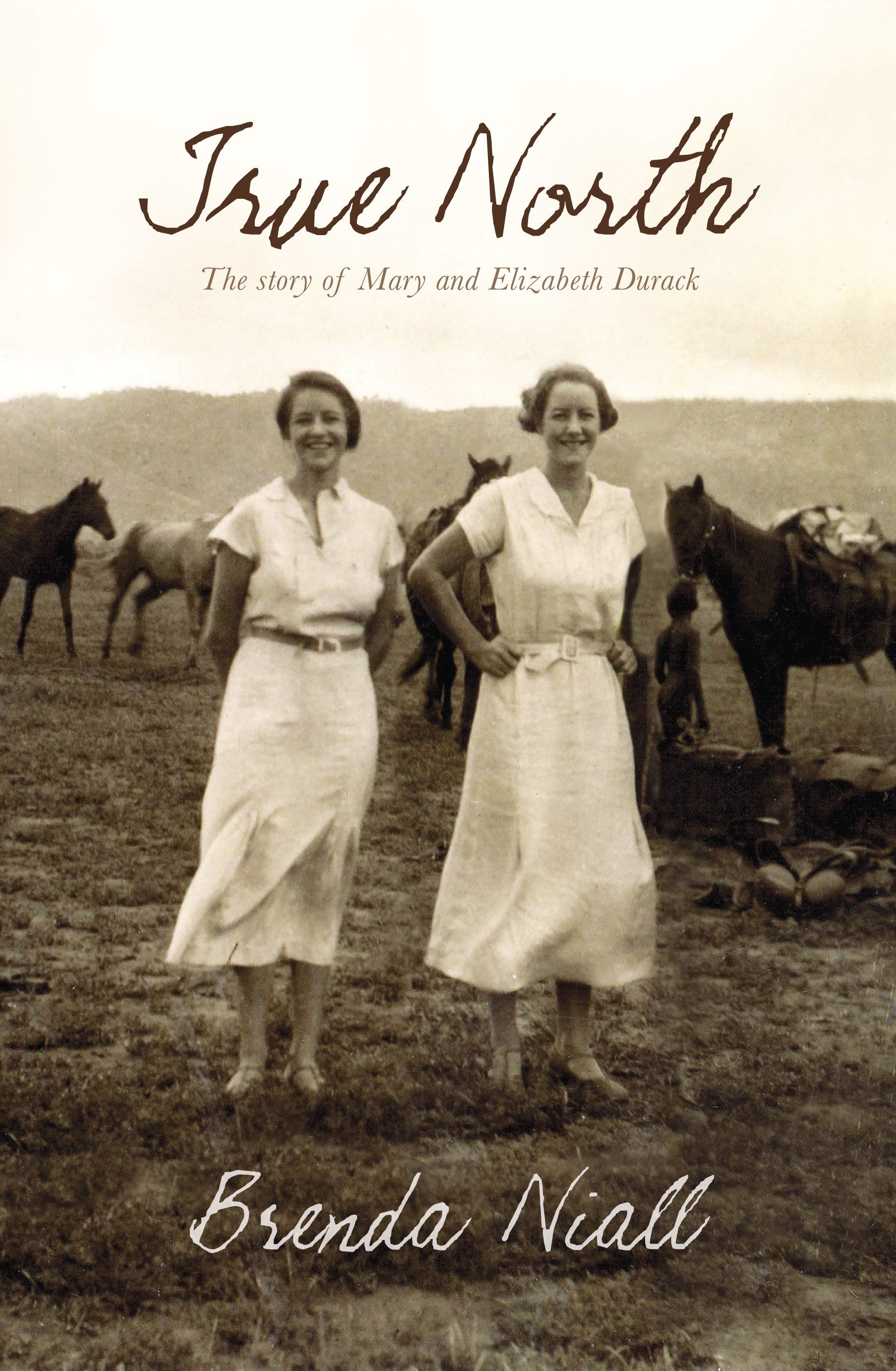
Brenda Niall’s True North: The story of Mary and Elizabeth Durack (Courtesy: Text Publishing)

Biographies make up a pretty small proportion of my reading diet, and when I do read them I tend to prefer literary biographies – for obvious reasons. I can, though, be persuaded to read others if the subject is really of interest to me and/or the biographer is one I admire. An example of such a book I’ve reviewed here is Hazel Rowley’s wonderful Franklin and Eleanor.

Do you read biographies? If so, why do you read them? I have, at times, worried that my interest is voyeuristic. I have felt uncertain about whether I’d be better to focus my attention on reading more of authors’ works than biographies about them? And yet, biography is, I think, a serious literary form in its own right. Indeed, at the Australian National University, there is the National Centre of Biography, about which I’ve written before. Its role, to summarise greatly, is to foster and encourage expert and innovative biographical writing in Australia. This, together with the fact that significant institutions like the National Library of Australia with its Seymour Biography Lecture and the State Library of New South Wales with its National Biography Award, suggests that I should worry no more.

What makes a good literary biography? Well, I know what I look for: well-researched (with foot-notes/end-notes), an intelligent but readable style, honest rather than hagiographic (or its opposite!) tone, and an analytical approach to the writer’s work situating it within the writer’s life and times. I also like it when the biographer engages the reader in the form of the biography, in the challenges they may have confronted, in how and why they chose the approach they did.

So, here I’ll list a few Australian literary biographies, that I’ve read or would like to, in alphabetical order, as libraries do it, by the subject. Inclusion here does not mean they are all the best of the form, but simply that they represent a variety in style and subject.

  • Jennifer Walker’s Elizabeth of the German Garden: A literary journey (2013). A recent addition to my TBR, I’m very keen to read this biography of the not-so-well-known Australian-born writer, Elizabeth von Arnim. I’ve read several of her works – fiction and non-fiction – and love her writing. (As an aside, given recent discussions on this blog regarding memoirs, she’s another author who has played with the memoir form in her writing.)
  • Karen Lamb’s Thea Astley: Inventing her own weather (2015). This is the book I am just finishing now and will review in the next few days.
  • Philip Butterss’ An unsentimental bloke: The life and work of CJ Dennis (2014) (my review). This year’s National Biography Award winner. The judges wrote that it’s “meticulously researched”, “fluent in style”, and that it “provides an illuminating analysis of the oeuvre, and its spinoffs, for which Dennis was famous and, briefly, rich”.
  • Brenda Niall’s True north: The story of Mary and Elizabeth Durack (2012) (my review). This is, really, more than a traditional literary biography. Elizabeth was an artist, and the two were daughters of a pioneering cattle family. I enjoyed it, but it suffered, perhaps, from the breadth of its focus.
  • Jill Roe’e Stella Miles Franklin: A biography (2008). This is a biography that I should read, given the importance of its subject to Australian literature and given the reputation of the biography itself. I can, though, suggest you check out Lisa’s (ANZLitLovers) review.
  • Helen Trinca’s Madeleine: A life of Madeleine St John (2013). (my review). St John is not regarded as “high” Australian literature – nor is Mary Durack, for that matter – but she was the first female Australian writer to be nominated for the Booker Prize and, like the Duracks, came from a family which had a public profile.
  • Hazel Rowley’s Christina Stead: A life (1993). Rowley was regarded as one of Australia’s best biographers until she died too young, in her 60th year, in 2011. Her subjects included the French couple Jean-Paul Sartre and Simone de Beauvoir, and American writer, Richard Wright. Her biography of Stead was universally praised, with, for example, critic Michael Upchurch at the New York Review of Books describing it as “everything a literary biography should be”. He wrote: “It’s a model of clarity. Ms. Rowley’s shrewd selectivity and handling of anecdote makes the book compellingly readable”.
  • David Marr’s Patrick White: A life (1991). Another biography I should read, but it’s a big tome, so will need time. Well-reviewed when it came out, it’s still the authoritative biography of Australia’s only Nobel Laureate in literature.

In 2010, journalist Gideon Haigh wrote an article titled “Sleaze-hounds and artist on oath: The state of Australian biography” in Kill Your Darlings. He bemoaned the scarcity of Australian biography “of quality”. I’d certainly agree that we’d like more good biographies. He suggested various reasons for the dearth, including that it “could be as simple as that there are easier ways to earn a living, and that living in the shadow of a subject for the years required to craft something really worthwhile involves a determination and a humility no longer common among those with writing aspirations”. I’m not sure I like the dig about “humility” but it is clear to me that writing a comprehensive, thoughtful biography is a huge task, one that takes not months but years, and that requires extensive research that must be expensive (even in today’s more digitally accessible world). I don’t know how well supported the endeavour is.

Do you have any thoughts or preferences about biographies?

Who me?: Robert Drewe’s Seymour Biography Lecture

One of the best parts of living in Canberra – and there are many best parts, despite what the politicians and media seem to say! – is that we have the National Library of Australia. It presents many literary events each year, to which I only ever manage to make a few. Some of them I’ve written about here, some not – but I am going to share the latest, Robert Drewe’s Seymour Biography Lecture.

Robert Drewe, Shark netThe Seymour Biography Lecture, endowed by the Seymours in 2005, is an annual lecture devoted to life writing. The inaugural lecture was given by one of Australia’s most respected biographers, Brenda Niall. Later speakers have included Robert Dessaix and Drusilla Modjeska. Initially hosted by the Humanities Research Centre‘s Biography Institute, it was transferred to the National Library in 2010. When I saw that Robert Drewe was to give this year’s lecture, I had to go. While I haven’t reviewed Drewe here yet, I have mentioned him a few times, and have read some of his work in the past. He has written novels, short stories, essays and memoir. The shark net, his first memoir, was adapted to a well-regarded miniseries in 2003, and his second, Montebello, was published in 2012. (I mentioned these in my recent Monday Musings on literary autobiographies.)

The lecture will I’m sure, like those before it, be made available via the Seymour Biography page (link above), but I would like to share a few ideas that struck me.

Memoir, or autobiography?

Drewe talked about how memoir is viewed, the fact that some see it as self-absorption or as narcissistic, about revenge or self-justification. He quoted American critic William Gass (author of Autobiography in the age of narcissism) who attacked memoir for being about self-absorption. Gass ridiculed the genre: “Look, Ma, I’m breathing. See me take my initial toddle, use the potty, scratch my sister; win spin the bottle. Gee whiz, my first adultery-what a guy!” Hmm, I have friends who don’t like memoir for this very reason.

Drewe gave a brief history of memoir – particularly memoir as confession, or redemption – through the writings of St. Augustine who made memoir, he said, an interior exercise, and Rousseau who moved the confession or memoir into the literary arena. He told us that Patrick White described his Flaws in the glass as not a memoir but a “self-portrait in sketches”! Flaws, Drewe said, is regularly criticised. English critic, Richard Davenport-Hines, for example, wrote that White’s “spiteful bestseller Flaws in the Glass must rank as the most inadvertently self-diminishing memoir since Somerset Maugham’s”.

Memoirs, Drewe said – looking at works like St Augustine’s – predated autobiographies. He defined the two forms as follows: memoirs are written from a life, while autobiographies are of a life. The change in preposition here is significant. As Gore Vidal would describe it, memoirs are about memory, while autobiography and biography are about history. In a memoir, a writer can take a memory and describe or expand it to tell a story about his/her life or experiences. Facts can be played with in order to find the emotional truths. Autobiography on the other hand – despite George Bernard Shaw’s “All autobiographies are lies… deliberate lies” – are expected to be factual.

Drewe told us that Sigmund Freud, when asked to write about his life, refused, arguing that it would be a reckless project. To tell his complete life would require so much discretion, it would be an exercise in mendacity. No wonder that, as Drewe told us, 99% of memoirists wait until their parents have died. Oh dear! I do hope my writing-oriented children are among this 99%! We did our best!

All this might sound dry and boring, but Drewe’s presentation was entertaining. He told us that when he thinks of autobiography he thinks of Father’s Day – and sports (particularly cricket) and political autobiographies. He regaled us with the punning titles of cricket autobiographies, such as At the close of playOver to meTime to declare (two in fact); Over but not out; and No boundaries. 

Before we had a chance to call him sexist, Drewe said that Mother’s Day made him think of WOTOs, that is, Women Overcoming the Odds, like, you know, widowed women running a cattle station in the outback, or a woman sailing solo around the world or saving an endangered animal!

Drewe returned several times in his talk to the issue of “facts” versus “truths”. He quoted Louise Adler who commissions political autobiographies for Melbourne University Press, including Mark Latham’s The Latham Diaries, Peter Costello’s The Costello Memoirs, Tony Abbott’s Battlelines, and Malcolm Fraser’s The Political Memoirs. Politicians have a good memory for insults and slights. Being memoirs, they are not necessarily verifiably factual. However, Adler, Drewe said, argues that their unreliability makes them riveting reading. They may be myopic, partisan, but they deliver riches. Drewe didn’t say this, but I’ll add that this requires a certain level of sophistication in the readers, that is, we readers need to understand the memoir genre and read with that understanding. I have no problem with that!

There is, however, what he called “the veracity squad”. These include the righteous readers or burgeoning historians – his descriptions – who are pedantic about facts. They don’t believe, for example, that you can remember dialogue from a family Christmas dinner twenty years ago and so they discount works that include such content. They wouldn’t approve, also, of crafting a particular person into a standout character.

Around here, Drewe referred to his first memoir, The shark net. He said he decided not to focus on the ego, but on the serial murderer with whom his family had contact, Eric Edgar Cooke. It’s basically factual he said, but he did imagine a couple of scenes – that is, he “fictionalized fact” – because he wanted to show Cooke as a human being.

I recently posted a review of Rochelle Siemienowicz’s Fallen. She tells us, in the Epilogue, that she’d initially written the story as a novel but her editor, I believe, suggested it would be better as a memoir. Drewe said in his lecture that “some stories are best kept true, some best as fiction”. The challenge is to decide which form is best. Some writers don’t make the right decision and find themselves in a literary furore, such as Norma Khouri with her fake memoir, Forbidden love. A more complex situation is Helen Demidenko with her fiction, The hand that signed the paper, which she falsely claimed was autobiographical. What both these writers failed to realise is that the first rule of memoir is that you shouldn’t lie!

Memoirs named by Drewe

During his lecture, Drewe identified a number of memoirs, some of which I’ll share as we all like lists:

Top selling Australian memoirs

  • Clive James, Unreliable memoirs
  • Albert Facey, A fortunate life
  • Errol Flynn, My wicked, wicked ways

Other memoirs

  • Vladimir Nabokov’s Speak, memory (in my TBR)
  • Maya Angelou’s I know why the caged bird sings (read before blogging)
  • Joan Didion’s The year of magical thinking (read before blogging)
  • Anne Frank’s Diary of a young girl (read before blogging)
  • Sally Morgan’s My place (read before blogging)

So …

Towards the end of the lecture, Drewe referred to an article titled “Reflection and retrospection” by American critic Phillip Lopate. It commences:

In writing memoir, the trick, it seems to me, is to establish a double perspective, that will allow the reader to participate vicariously in the experience as it was lived (the confusions and misapprehensions of the child one was, say), while conveying the sophisticated wisdom of one’s current self.

Makes sense to me …

Mary Austin, The land (Review)

Regular readers here know that I choose my Library of America offerings for various reasons: for authors I haven’t read before but would like to (such as Edgar Allan Poe and Sherwood Anderson), for authors I love and am always happy to read more of (such as Willa Cather, Kate Chopin and Edith Wharton), or for topics that interest me (like slavery and civil rights). Mary Austin’s “The land” fits into this latter: it’s about the American southwest which is a region I love. I have in fact reviewed another Austin story about that region, “The scavengers”.

In “The scavengers”, Austin described the scavenging animals of the American deserts, the buzzards, vultures, ravens, coyotes and Clark’s crows, and promoted the idea of nature’s balance. In “The land” her focus is the landscape itself, and its hard, unforgiving nature. It’s the first story (essay) in her collection Lost borders, and works partly as an introduction to the collection, in which she sets down, she writes, “what the Borderers thought and felt”.

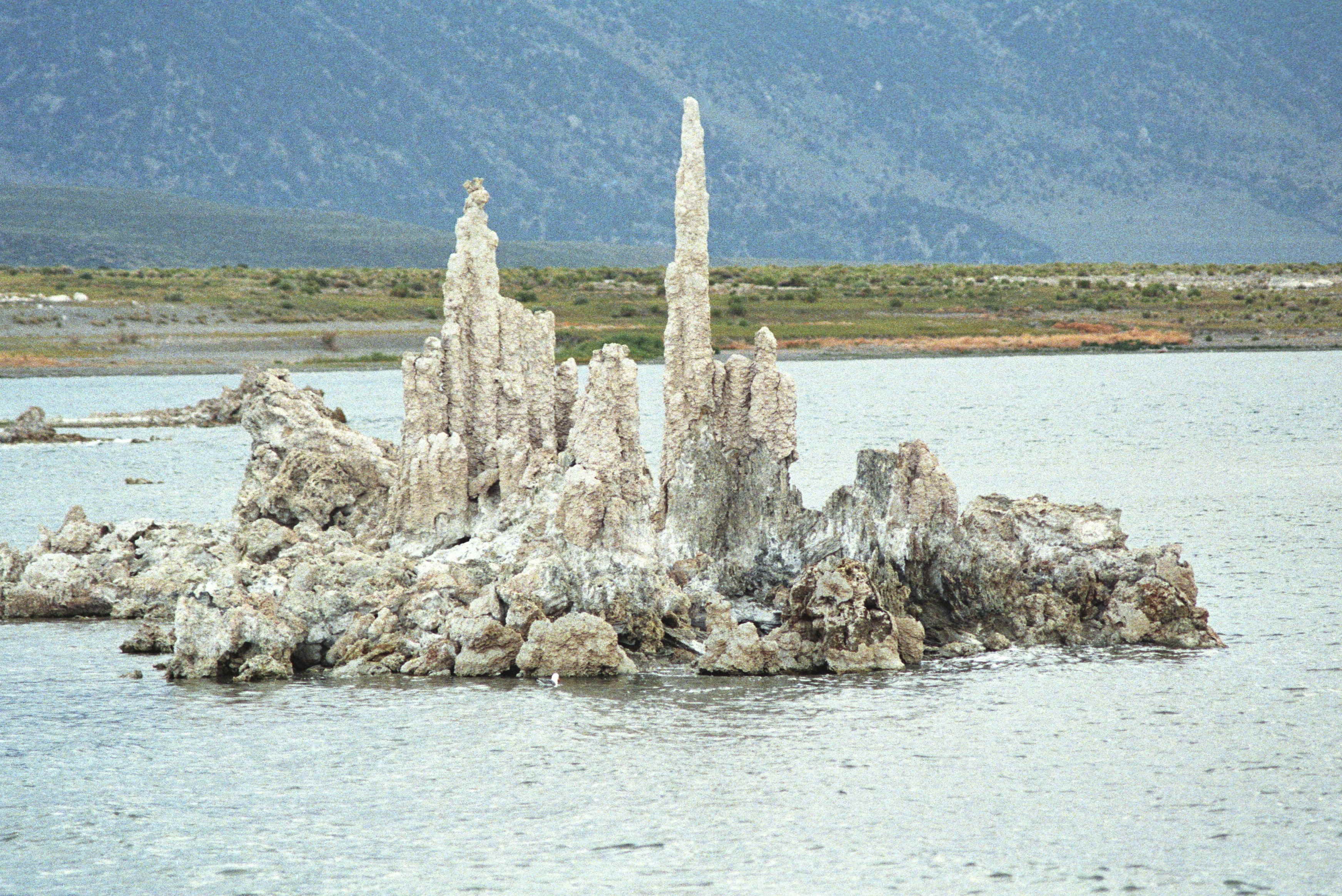
Tufa, Mono Lake

Tufa or “man-deep crystals of pure salt”, Mono Lake

Indeed, LOA’s notes quote scholar Esther F. Lanigan statement that the story introduces “the motley collection of drifters, prospectors, explorers, entrepreneurs, and sheepherders [about whom she will write], most of whom demonstrate an astonishing insensitivity in their dealings with the women closest to them”.

The “lost borders” region she explores in the collection is what I’d call the eastern part of central California*. We are talking country that stretches from the east of the Sierra Nevadas to Death Valley in Nevada. It is remote, hot and very dry. It is country, in other words, that Australians would understand. Driving through this region, as I did in 1983 and a few times in the 1990s, reminded me, in fact, of my road trips in outback Australia – particularly western Queensland and northern South Australia.

“The land” is about story and myth. She writes that “curiously … you can get anybody to believe any sort of a tale that had gold in it”. She’s “sore” that she’s not believed “in some elementary matters, such as that horned toads are not poisonous, and that Indians really have the bowels of compassion”. So, when she is brought a potsherd from Shoshone Land and told she could probably find “a story about it somewhere”, she responds that she’ll “do better than that”, she’ll “make a story”. And so she does, and is amused over time to see her story take on the mantle of truth. She has “a spasm of conscience” on at least one occasion, but doesn’t ‘fess up. Instead, she suggests that there only has to be another similar potsherd found for the tale to be fixed “in the body of desert myths”. Beware, methinks, you oral historians!

“The land” is also about men and women. Austin respects Indian (as she described them back then) knowledge, saying:

Out there, a week’s journey from everywhere, the land was not worth parcelling off, and the boundaries which should logically have been continued until they met the cañon of the Colorado ran out in foolish wastes of sand and inextricable disordered ranges. Here you have the significance of the Indian name for that country— Lost Borders. And you can always trust Indian names to express to you the largest truth about any district in the shortest phrases.

“Largest truth” in “the shortest phrases”. Love that. There’s a lovely, irregular, repetition of “out there” throughout the piece, reinforcing the sense of remoteness and desolation. The unforbidding nature of the land is conveyed in other ways too: by experience, “I have seen things happen that I do not believe myself”, and in description, “the senses are obsessed by the coil of a huge and senseless monotony; straight, white, blinding, alkali flats, forsaken mesas …”.

While Austin respects the Indian inhabitants, she is less impressed by men (and I mean here the male of the species, not mankind). Men are seen as “small”. She describes them as making “law for the comfortable feel of it”. They “pinch themselves with regulations to make sure of being sentient …”. Their “boast of knowledge is likely to prove as hollow as the little yellow gourds called apples of Death Valley”. It is the

men who mostly go into the desert, who love it past all reasonableness, slack their ambitions, cast off old usages, neglect their families because of the pulse and beat of a life laid bare to its thews and sinews. Their women hate with implicitness the life like the land.

Indeed, she concludes this essay with:

If the desert were a woman, I know well what like she would be: deep-breasted, broad in the hips, tawny, with tawny hair, great masses of it lying smooth along her perfect curves, full lipped like a sphinx, but not heavy-lidded like one, eyes sane and steady as the polished jewel of her skies, such a countenance as should make men serve without desiring her, such a largeness to her mind as should make their sins of no account, passionate, but not necessitous, patient—and you could not move her, no, not if you had all the earth to give, so much as one tawny hair’s-breadth beyond her own desires. If you cut very deeply into any soul that has the mark of the land upon it, you find such qualities as these—as I shall presently prove to you.

Austin belongs, I think, to the tradition of nature writers that includes Henry David Thoreau and John Muir (whom I’ve reviewed), but it seems to me that her gender adds quite a different perspective to what she sees.

Mary Austin
“The land”
First published: In Lost borders, 1909.
Available: Online at the Library of America

* This region is at the centre of the California Water Wars (dramatised in the film, China Town)

Monday musings on Australian literature: Where is Australia’s George Orwell?

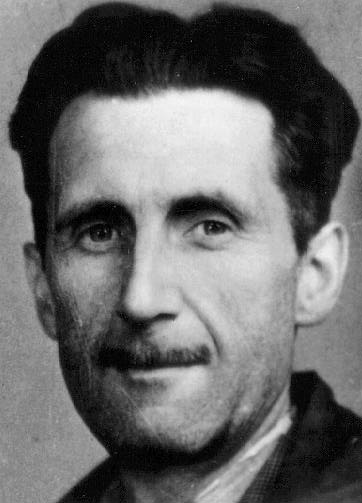
George Orwell, 1933 (Presumed Public Domain, from Wikipedia)

George Orwell, 1933 (Presumed Public Domain, from Wikipedia)

In a comment on my review last week of Kate Grenville’s One life, Lisa (ANZLitLovers) asked “Where’s Australia’s George Orwell?”. This was in reference to the idea that more novelists should write about climate change to help change public opinion. Interesting question, I thought, and one that I could explore in a Monday Musings. You might all be relieved, in fact, to have something different from my recent list-focused musings.

Before I answer the question – and then throw it open to you – it would be sensible to clarify my understanding of the question. (See, I’ve been well-grounded in essay skills: first, define your terms!) To put it simply, I believe Lisa was asking where is the Australian author who is driven to identify injustice, oppose inhumanity, and promote social conscience? That is, an author like Orwell – the man who coined terms like “cold war”, “big brother” and “thought police”, the man who used satire, allegory and other rhetorical devices in his fiction and non-fiction to show us the error of our ways. I hope this is what Lisa meant; this is, anyhow, how I am reading her question.

An Australian Orwell?

Well, a name did pop immediately into my head – Thea Astley. Of course, she’s dead, but so is George Orwell. I suspect Lisa was looking for a living Orwell to speak to us right now on “now” topics”, but, bear with me anyhow.

Astley, like Orwell, wrote in multiple forms – novels, short stories, essays – though Astley didn’t write the sorts of personal experience memoirs that Orwell did in books like Down and Out in Paris and London, The Road to Wigan Pier and Homage to Catalonia. And, unlike Orwell who travelled far and wide, physically and with his pen, Astley’s works were firmly based on Australia. But, like Orwell, she had an acerbic eye and a satiric pen, and she used it to good effect.

Ashley was also a wordsmith, albeit of a different sort to Orwell. She used words that frequently sent (and still send) her readers to the dictionary, and her passion was to “carve a good sentence”.

So far so good. However, having considered Astley, I’m now going to, reluctantly, reject her as our George Orwell. Not because she isn’t a satirist because she is, but because her satire isn’t as explicitly political as his. She was interested in the treatment of outcasts and misfits, regardless of the reason for their “otherness”, which could be race, religion, economic status, age, gender, and so on.  She satirised suburban and small town life, particularly in her first novels. She also tackled more political issues such as white Australia’s treatment of indigenous people in A kindness cup and It’s raining in mango. In Coda she satirised the treatment of ageing. And in her last novel, Drylands, issues like gender, power, modern technology, and sport attracted the attention of her sharp pen.

Astley was surely aware of the political implications of the issues she targeted, but she didn’t explicitly focus on the politics. She was, I think, more interested in the social, cultural and personal ramifications of the behaviours she put before us.

We certainly have political satirists, but they tend to be performers rather than authors.

In 2013, the Sydney Writers’ Festival included a panel discussion titled  The Satirists, which asked the question:

If Australians claim to be anti-authoritarian rabble-rousers, where is the canon of contemporary satirical novels reflecting this stereotype? What are the satirical traditions in Australian literature?

The panel included novelist David Foster, actor/novelist/memoirist William McInnes and poet Alan Wearne. I haven’t read Foster (my bad, I know) or Alan Wearne. And, I don’t think McInnes’ brand of humour, entertaining though it is, is quite what Lisa was asking. Contemporary writers I’ve read included Peter Carey and Richard Flanagan who have written some satirical novels but they are not known primarily as satirists.

So, is there anyone else – writing now – who is making it his or her business to tackle the big questions of our time, questions to do with refugees, indigenous dispossession, climate change? In Australia, or elsewhere?

POSTSCRIPT: I had just scheduled this post for publishing when up popped a blog post from today’s The Guardian. Written by Sam Twyford-Moore and titled “Why so serious: does Australian literature have a funny person problem?”, it starts with the following:

Australian authors show off their satirical chops on social media every day. So why doesn’t more of that wit spill on to the published page?

Of course, not all satire is “funny”, but, regardless, he doesn’t have an answer.

Rochelle Siemienowicz, Fallen (Review)

SiemienowiczFallenAffirmBeing a reader who focuses more on “truths” than “facts”, I’m not averse to writers playing around with fact in their fiction or fiction in their fact. This issue raises its head most frequently in historical fiction of course, but it’s also present in autobiographies, memoirs and even biographies. And so, here I am, having just reviewed Kate Grenville’s biography-cum-memoir of her mother, talking about another memoir, Rochelle Siemienowicz’s Fallen.

“It is a story …”

Siemienowicz’s memoir commences with – well, a literary in-joke – “Call me Eve”. What? It’s a memoir the front cover tells us, and the author’s fist name is Rochelle. Who’s this Eve? Rochelle explains in her brief introductory note, a note that precedes the Prologue, that her parents would never have named her for “that original sinner” but that it’s the name she gives herself when she thinks back to that time when she was a young wife, “so very young, so very hungry”, when she “picked the fruit and ate and drank until I was drunk with freedom and covered in juice and guilt”. The name Eve then has a symbolic meaning that forces us, as we read the book, to consider the idea of “fallen women”, but it also enables Siemienowicz to distance her present self from that young woman she once was. This reminded me of Kate Holden’s memoir, The romantic (my review), in which she chose a different path to create that separation – the third person voice.

Anyhow, having explained the name issue, Siemienowicz continues with the point that interests me, the form of her memoir. She writes that “it is a story, with parts made up and fragments rearranged like a dream half remembered now that twenty years have passed”. In the Epilogue, she mentions, almost in passing, that she’d originally written the book as a novel.

So, in Fallen we have a memoir that has strong novelistic elements, including a tight cast of characters, a deliberate narrative structure, and dialogue. You don’t find dialogue in traditional autobiographies. We readers would not believe that the writer could remember verbatim conversations held so long ago. But, dialogue is increasingly being incorporated into memoirs. Dialogue can engage readers, and while it may not represent verbatim “fact” it can convey the “truth”.  If you are starting to question by now whether this really is a memoir, I should confirm that it is fact-based, at least I believe it is, unless Siemienowicz has pushed artifice so far that her apologetic-cum-warning phone-call to her ex-husband in the Epilogue is fake! But I don’t think this is the case. There does come a point where you must suspend your disbelief and go with the writer after all.

“I feel something breaking inside of me”

Now, having spent paragraphs on introductory discussion, it’s time to say something substantial about the book’s content. Fallen is the story of a young woman raised by devout Seventh-Day Adventists (SDA) who believe, among other things, that premarital sex is a sin. To satisfy her intense sexual longings and remain “clean in the Lord’s sight”, Eve, who feels a freak in a freakish religion, marries Isaac, another SDA, in 1992 when she’s only 20. She’s deliriously happy. They love each other, and they’re free. They rebel – drink alcohol, eat meat, spend hours in bed – but then, within a couple of years, Isaac starts to withdraw, losing interest in their sexual relationship. The solution – because they love each other, and are committed to their vows (to stay married, at least) – is to have an open marriage. There’s only one rule, they must always ask permission first.

Most of the book is set in Perth in 1996, when Eve returns home to attend a conference and catch up with old friends. Her lover, Jay, is to follow for a week, followed by her husband the week later. Before Jay arrives, she reconnects with her first love, and has a fling with another conference attendee. Oh what tangled webs! Things, in other words, start to unravel, and Eve’s faith in her marriage and her vows starts to break down under the weight of secrets. She begins to question whether their rules can work “in the real world” – but the alternative, and its implications, are confronting.

“Can the centre hold …”

Memoirs are interesting beasts. Why do we read them? Sometimes it’s obvious. The memoirist is famous, or is writing about something we love (like literature, for example, for me). Sometimes it’s less obvious. It might be that the memoirist has experienced something we are experiencing like, say, grief. With Fallen, however, neither of these reasons really apply for me. So why read this one? Well, for two main reasons. One is that while the circumstances – a young woman of a strict religious upbringing trying open marriage – are rather narrowly specific, there are some broad themes. One has to do with sexual freedom. What does it mean, before, within and without marriage? How does it affect relationships? What has it to do with sincerity, intimacy and honesty? How do principles fit with feelings? There’s a broader theme too – the formation of identity. The subtitle of the memoir, “marrying too young”, hints at this. How easy is it to sustain a marriage made before you have fully formed your identity?

I feel myself spread all over the nation, with loyalties and loves and lusts from the east coast to the west, and no idea what to do with them. I’m a girl with no qualities and no boundaries, with legs wide open and a beating heart exposed. I’m appalled by myself, but also intrigued. How many tiny pieces of myself can I give away before there is nothing left? How curiously exhilarating. It feels like vertigo.

The other reason for reading this memoir is the writing. Siemienowicz knows how to tell a story. She structures the memoir around a trip back home, which she tells chronologically, but into it she weaves the story of her life and relationships to that point. We see a young woman who can be confident and brazen one moment, and vulnerable and uncertain the next, who throws herself wholeheartedly into life but doesn’t always think about where she’s pointing. And we see all this through a focused narrative and clear, direct but spirited language.

Fallen is, at times, an uncomfortable read but Siemienowicz’s honesty, her angst about her “fraying code of honour” versus her desire to fully engage in her life, captured my imagination and had me wanting her to find an honourable conclusion to a painful part of her life. This memoir is testament, I’d say, that she does.

Rochelle Siemienowicz
Fallen: A memoir of sex, religion and marrying too young
South Melbourne: Affirm Press, 2015
263pp.
ISBN: 9781922213655

(Review copy supplied by Affirm Press)

Kate Grenville, One life: My mother’s story (Review)

Kate Grenville is one of Australia’s best known contemporary writers, and is one of that small band to have succeeded both critically and commercially. Most know her for The secret river, which was shortlisted for the Man Booker Prize among other awards. I enjoyed that, and the other novels of hers that I’ve read, with my favourite being The idea of perfection which won the, then, Orange Prize. I also loved her non-fiction work, Searching for The secret river, about researching for and writing The secret river. I was, consequently, keen to read her latest book, One life: My mother’s story, when I heard it was to be published this year.

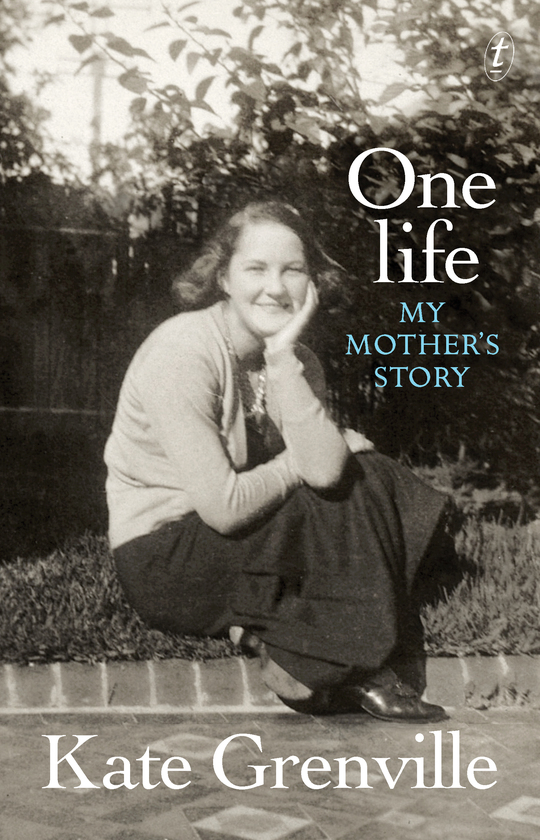
Kate Grenville, One lifeGrenville’s mother, Nance, was born in 1912, and died in 2002. Sorting through her mother’s papers later, Grenville discovered multiple notebooks containing her mother’s attempts to write her story. Nance apparently tried different ways of writing it – including, Grenville quotes, trying “to write it backwards”. However, her attempts always petered out, never going past her early forties “perhaps because by then she felt less need to look back and try to understand”. And so, Grenville’s book sticks to that, stopping (except for a short postscript) when Nance was 38 and pregnant with Kate. Wah! How disappointing not to be able to read about Kate’s childhood!

When I first heard of the book, I thought of Meg Stewart’s fascinating Autobiography of my mother, which I read a few decades ago. Stewart is the daughter of artist Margaret Coen and author Douglas Stewart (who, coincidentally, was born in 1913, one year after Nance). They are, however, very different books, not only because these two women led very different lives – one an artist married to a writer, and the other a pharmacist married to a lawyer – but because Stewart wrote her book in first person, as if she were indeed writing her mother’s autobiography, while Grenville opted for the more expected third person approach of a biography.

Given Grenville’s mother was not an artist or famous in any way, and given, as I’ve already said, she doesn’t write about her writer-daughter’s childhood, why is this book worth reading? Grenville, in her prologue, admits that her mother “wasn’t the sort of person biographies are written about” but argues that her story is worth telling because “not many voices like hers are heard. People of her social class – she was the daughter of a rural working class couple who became pub-keepers – hardly ever left any record of what they felt and thought and did.” The result, as Grenville – ever with an eye on history – says, is that “our picture of the past is skewed towards the top lot”. Grenville argues convincingly that the stories of people like her mother are well worth hearing, though I do think the argument has largely already been won. Many contemporary historians (and others, like museum curators) are, as we’ve seen in the books now being published and exhibitions being created, demonstrably interested in the lives of “ordinary people”.

The paradox, though, is that Grenville’s mother’s story is not at all an “ordinary” one. She was born to rather mis-matched parents, Dolly and Bert, whose marriage had been orchestrated, in 1910, by Dolly’s mother. Nance and her two brothers were “dragged” around the state as their parents worked on farms, in pubs, in the city, in country towns. Nance was sent away to a convent school, where she was very unhappy, wanting always to be part of a family. They experienced the Depression, and her parents lost their pub in Tamworth as a result. At the end of her teens, Nance wondered:

what would have happened if her parents had been unadventurous and contented with their lot. She’d have grown up in Gunnedah, left school at fourteen as they had, married a farmer and had six children … Yes, she wanted to meet someone, get married, have children. She wanted to be happy. But she knew now that she wanted something else as well.

What that “now” refers to is completing her first year of pharmacy studies in 1930. It is this, I think, that proves Nance, while never famous, to be no “ordinary” woman – but one who was “part of the world of the future, not the faded past”. So she becomes a pharmacist, and, after a few romantic adventures, some of which also prove her to be not quite “ordinary”, she meets Troskey-ite lawyer Ken Grenville Gee, the man she married and with whom she had three children.

It was not an easy marriage. Nance fell in love with Ken, but she gradually realised that he didn’t love her. He was a fair but remote man. He acknowledged women and respected Nance’s intelligence. He was happy for her to return to work – particularly when they needed the money! – though he, for all his forward thinking in some areas, never gave a thought to the necessary childcare arrangements or to the housework that still needed to be done. It might be a devoted daughter’s bias, but Grenville presents her mother as a loving woman, with a strong mind and a wonderful can-do attitude.

Running through the story of a woman is also the story of a time and place, of Australia in the first half of the twentieth century. Nance, from a working class background, comes to agree with middle-class-but-socialist Ken that ordinary people never have a chance. She realises that

what people called destiny was really the system everyone was part of. The ones on the top of the pile kept everyone thinking they could get ahead, when in fact ordinary people never had a chance.

War and the Depression taught her that. Nance also faces the challenges of being a woman in a patriarchal society. Not only was there the expectation that she would manage the domestic realm while working outside the home, but she was treated with unfairness and disdain when she applied for her pharmacist licence, despite having the required qualifications and paperwork.

I loved all this, but I did find it an odd book to read, and I think this is due to the voice, to the fact that while it’s not an autobiography it is far more intimate than the usual biography. Kate’s knowledge – or understanding – of her mother’s motivations and behaviour is so intense that I found the third person voice disconcerting at times, all the while enjoying the insights. Grenville’s prose is simple, straightforward, but not plain. Imagery is used with restraint, with the focus primarily on the story and Nance’s thoughts and feelings. Here’s an example, a description of Nance, always wanting family, returning home between her first and second year of pharmacy study:

Nance leaned on the windowsill of her old room, looking up at the washed-out green of the hill behind town. There was nothing for her here. Only that failing hotel, the cranky mother, the father muddled up with some other woman. If this had ever been any kind of home for her, it wasn’t one any longer.

One life is a fascinating, engaging book. Grenville’s insights into her parents’ marriage, and particularly her mother’s thinking, reflect the empathy you’d expect from a novelist. How much comes from Nance’s own words, and how much is extrapolation, is not clear, but the book is convincing – on both the psychological level and as a social history. It is well worth reading for both those reasons.

awwchallenge2015Kate Grenville
One life: My mother’s story
Melbourne: Text Publishing, 2015
260pp.
ISBN: 9781922182050

(Review copy courtesy Text Publishing)

Monday musings on Australian literature: Australian novels adapted for opera

Today’s post is inspired by an article, “Fly away Peter: When Australian literature goes to the opera”, published in May this year in The Conversation. Written by Associate Professor of Vocal Studies and Opera at the University of Sydney, it was inspired by the production of an opera based on David Malouf’s wonderful novel, Fly away Peter.

Now, as some of you may remember, I’ve mentioned Fly away Peter several times in this blog, one being in my second Monday Musings post. Fly away Peter is one of my favourite Australian novels and is also one of a fairly select group of Australian novels dealing with the first world war. I have also mentioned David Malouf in relation to opera before, most recently in a Monday Musings post on Australian novelists and poets who have also written libretti. Malouf has written a few libretti, the most famous being for Patrick White’s Voss, about which I wrote in a post on The Voss Journey. You can probably see, by now, why I was interested in Halliwell’s article.

Halliwell discusses a number of Australian novels/short stories that have been adapted for opera – and I’m going to share them here, in alphabetical order by novelist (with links to my reviews, where I’ve done one):

  • Barbara Baynton’s “The chosen vessel” (my review) was adapted by Australian-British composer and festival director, Jonathan Mills, with libretto by Australian poet Dorothy Porter. It was retitled The ghost wife and premiered in 1996. Halliwell writes that “Baynton’s bleak story, debunking the dominant male myth of the noble bushman, was translated into a confronting music theatre work”. It was performed in Melbourne and Sydney, and had, says Halliwell, a “well-regarded run in London”.
  • Peter Carey’s Bliss was adapted by Australian composer Brett Dean, with libretto by British librettist Amanda Holden. It premiered in Sydney in 2010 to a positive reception, says Halliwell, and was similarly positively received in Melbourne and Edinburgh. It was later presented, in a new production, in Hamburg, under Australian conductor and supporter of the work, Simone Young.
  • Helen Garner’s The children’s Bach (my review) was adapted by Australian composer Andrew Schultz, with libretto by Australian librettist Glenn Perry. It premiered in Melbourne in 2008. Halliwell describes it as “a lightly-scored and evocative chamber opera which took the central metaphor of the fugue from the novel”.
  • Patrick White’s Voss was adapted by Australian composer Richard Meale with libretto, as I’ve already said, by David Malouf. It premiered at the Adelaide Festival in 1986. Halliwell says that it was “hailed at its premiere in 1986 as the ‘Great Australian Opera'”, but it has never been produced again – at least not yet. There have been attempts to adapt Voss for film but some have argued that, while its mystical, visionary aspects translate well to opera, this is not so easy for film.
  • Tim Winton’s The riders was adapted by Australian composer Iain Grandage with libretto by Australian poet, novelist, playwright and librettist, Alison Croggon, It premiered in Melbourne last year (2014). Matthew Westwood wrote in The Australian that “Grandage uses a hunting instrument — the horn — to evoke a man’s odyssey across Europe for the wife who has deserted him. (Frustratingly for that man, Scully, and many of Winton’s readers, the elusive Jennifer never appears.)” Oh dear. I must say that The riders is one of Winton’s least memorable works for me – and I don’t think I’m the only one to feel that way. However, the adaptation was very positively received, says Halliwell.

Alison Croggon is reported in The Guardian as saying that although it’s daunting, it’s logical to write libretti if you write poetry. This makes sense to me: rhythm is critical to poetry, songs and music. Three of the five librettists here – Porter, Malouf and Croggon – are poets.

Halliwell commences his article by quoting Malouf’s statement that “No libretto can reproduce the novel from which it is drawn”. Grandage and Croggon like to call their opera “a reimagining rather than an adaptation”. I’d argue that this is true of all adaptations of a work from one form to another. It’s surely unrealistic to expect a work to be the same. The challenge for the adaptation is to decide what is the essence of the work and to convey that – and for audiences to see if they agree!

Anyhow, if you are interested more widely in the subject of novels adapted for opera, you can check out this Wikipedia category page. It’s by no means complete – indeed not all of the operas I’ve listed here are included.

I’d love to hear whether you have seen any operas adapted from modern novels. Or, do you have a favourite novel you’d love to see adapted for opera?

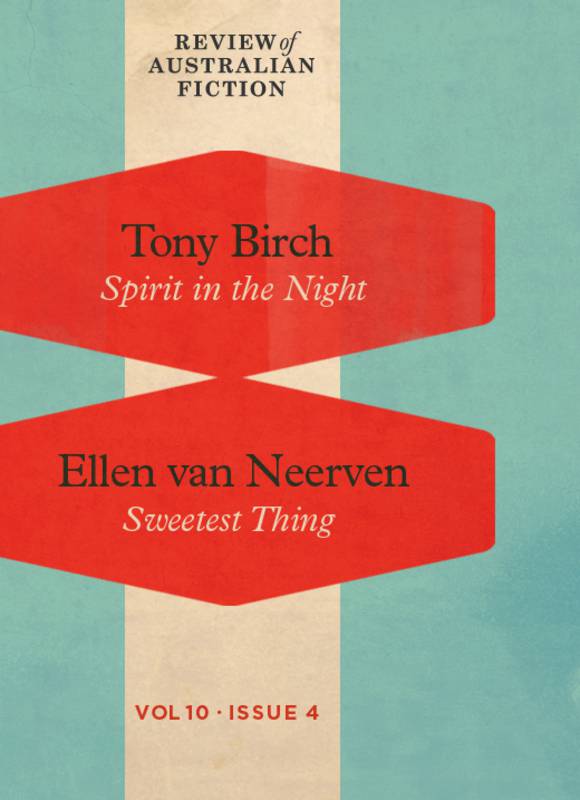
Tony Birch and Ellen van Neerven in Review of Australian Fiction 10 (4)


Review of Australian FictionI have been wanting to write about the oddly titled Review of Australian Fiction for some time. I say oddly titled because, contrary to what it might sound like, this does not contain reviews but short fiction. Established in 2012, it is published, electronically (or digitally), every two weeks. Each issue contains two stories by Australian authors: one by an established author, and the other by an emerging author, chosen by the established author. Funnily, in the issue I’m reviewing here, it’s the emerging author, Ellen van Neerven, whom I’ve read before, not the established one, Tony Birch. But, I’m so glad that Lisa’s Indigenous Literature Week has given me the opportunity to a) finally read something by Birch, and b) finally read Review of Australian Fiction issue.

Tony Birch, “Spirit in the night”

Birch’s story is told first person by a young indigenous boy, the 11-year-old Noah Sexton. He’s dirty, smelly, poorly dressed, and no-one wants to know him – except the new girl, Heather, who invites him to sit next to her. She’s “the cleanest person I’d ever seen” with “no pox rashes, bites or scars like I had”. At lunchtime, Heather offers the hungry Noah a sandwich and engages him in conversation. She asks him why he sits alone, and he gives the classic reply:

‘I sit here because I’m a Sexton.’

She doesn’t know what that means of course. When he discovers that her father is the policeman “in charge of the station”, he assumes:

Our mob was well known to the police, and I knew straightaway that as soon as her father got the story on the family name, she wouldn’t be sitting under any tree offering me a vegemite sandwich.

But, it doesn’t quite work out the way he expected. When he explains to the friendly Heather that he’s from “the only abo family left in town”, she tells him that “abo” is “a dirty word” and that “people like you, we call them half-castes. It’s more proper”. Noah disagrees, telling her that “an abo’s an abo, no matter how black or white he is … Far as whitefella is interested, the shit smells just the same.” Heather shows discomfort at this language, but Noah doesn’t care. He’s “beginning to think she was only another do-gooder”. He tells her about how his people have been treated in town, but Heather tells him her father will be different, that “he’s always fair, to both sides”. Not surprisingly, Noah is (silently) sceptical. Nonetheless, this little bit of kindness from Heather brings out a new sense of self in Noah – he doesn’t wolf down the sandwich, pretending he has a few manners, and when he gets up to go into school after that first lunch he dusts his pants off “for maybe the first time in my life”.

And so Heather spends most lunchtimes with Noah, because she’s a Christian and it’s “a sin to turn away from those in need”. Noah doesn’t like being seen as a “charity case” but is so enamoured of Heather that he’ll “put up with anything”. Understandable, given his treatment at school before.

I won’t describe any more. This is a clever story about do-gooders. Birch has astutely chosen for his protagonist a young boy on the cusp of puberty. Noah, straddling that line between childhood and adulthood, has a sense of his agency, and yet not quite the experience, nor the resources, to insist on enacting it. It’s a story about confused emotions, and about smugness and self-satisfaction. It’s about the right to dignity, and, of course, about power.

Ellen van Neerven, “Sweetest thing”

awwchallenge2015Unique, original, fresh are words I avoid when writing reviews, not only because they feel cliched but because they can be contested by anyone whose reading experience is wider than mine. So, instead, I’ll just comment on Ellen van Neerven’s capacity to surprise. I found it in her Heat and light which I reviewed earlier this year, and in “Sweetest thing”.

“Sweetest thing” is a third-person story about Serene, the child of an indigenous mother and the town’s Dutch baker. She is addicted to having her breasts suckled. It all started in puberty (“that pertinent time of a woman’s life”) with her first experience of having a man suckle her breast occuring with a male tutor when she’s nearly fourteen. He lifts up her shirt:

Beautifully out of herself, she was open and messy and dislocated like a bouquet being readied for a vase, flowers, stems, spores spread everywhere.

Nothing else happens besides this suckling, but Serene feels “bliss” and “knew then that this was what she had been programmed to need”. Slowly, as Serene schemes and positions herself to have her need met, we learn about loss. We learn, for example, about the Kedron pub, which “had refused Serene’s grandparents entry” but which is now

a haunt for women of her mother’s ilk: divorced, discarded, with loose threads of long silent and secret relationships carried under their shirts.

Under their shirts. A reference to their breasts? We learn about the gradual withdrawal of her father as he starts to focus on his “real daughter”. Serene feels anger at “the silence in her life, at his hypocrisy”.

Born into this in-between world – not quite rejected as her grandparents were, but not fully accepted either – Serene believes she deserves “comfort, worship, devotion. Trust and understanding”, but fears “hollowness”.

And so, her life progresses through school and early womanhood into mature adulthood. She has friends, she experiences casual sex, she becomes a masseuse – but still there’s the need for suckling, to have “the most basic of her needs met”. Again, I’ll leave the story here. It’s longer than Birch’s and spans a few decades of Serene’s life, which includes a meaningful relationship and a successful career.

“Sweetest thing” is an edgy story. Serene’s unusual addiction works as a rather confronting metaphor for what all humans need – love and acceptance. What I like about Van Neerven, here and in Heat and light, is that her indigenous characters are not “types”. Their indigeneity is part of who they are, and is fundamental to the challenges they confront, but her characters are also “universal” – that is, they are needy, flawed characters who muddle along, just as the rest of us do, in the lives they find themselves in. It’s powerful stuff.

ANZ_ILW2015Read for ANZLitLovers’ Indigenous Literature Week.

Tony Birch, “Spirit in the night”
and
Ellen van Neerven, “Sweetest thing”
in: Review of Australian Fiction 10 (4), May 2014

Monday musings on Australian literature: Australian literary autobiographies

I’ve written Monday Musings on autobiographies and memoirs by indigenous Australians, and I’ve reviewed biographies of Australian writers, like Mary Durack and Madeleine St John. However, I haven’t written about what we might call literary autobiographies, that is, autobiographies by authors. So, today’s the day. I have read several literary autobiographies, but few since I started blogging. Being a reader, I’m interested in writers’ autobiographies or memoirs – because I’m interested in writers, and because, rightly or wrongly, I expect a good writer to be able to write a good autobiography (however we define “good”!)  There are, as I’m sure you know some famous/popular/well-regarded author autobiographies, such as Nabokov’s Speak, memory, but of course here I’m focussing on Australians.

I’m not going to get into the why and wherefores of writing autobiography or analyse how useful or relevant they might be to understanding a particular writer’s works.I’m just going to list – alphabetically by author – a few that I’ve either read, dipped into, or would like to read.

Robert Drewe’s The shark net (2000) and Montebello: A memoir (2012). I haven’t read The shark net, though it’s on my TBR. However, I did see the 2003 television miniseries. For those of you who don’t know, this is quite different to the usual writer’s growing up story. Drewe grew up in Perth in the 1950s and 1960s when the serial killer Eric Edgar Cooke was creating havoc with the locals’ sense of security. “The murders immediately changed the spirit of the place”, he writes. Drewe knew this man, and knew one of his victims. He wrote this memoir “to try to make sense of this time and place”. I haven’t heard much about Montebello, but Drewe is a significant Australian writer.

David Malouf reading Ransom

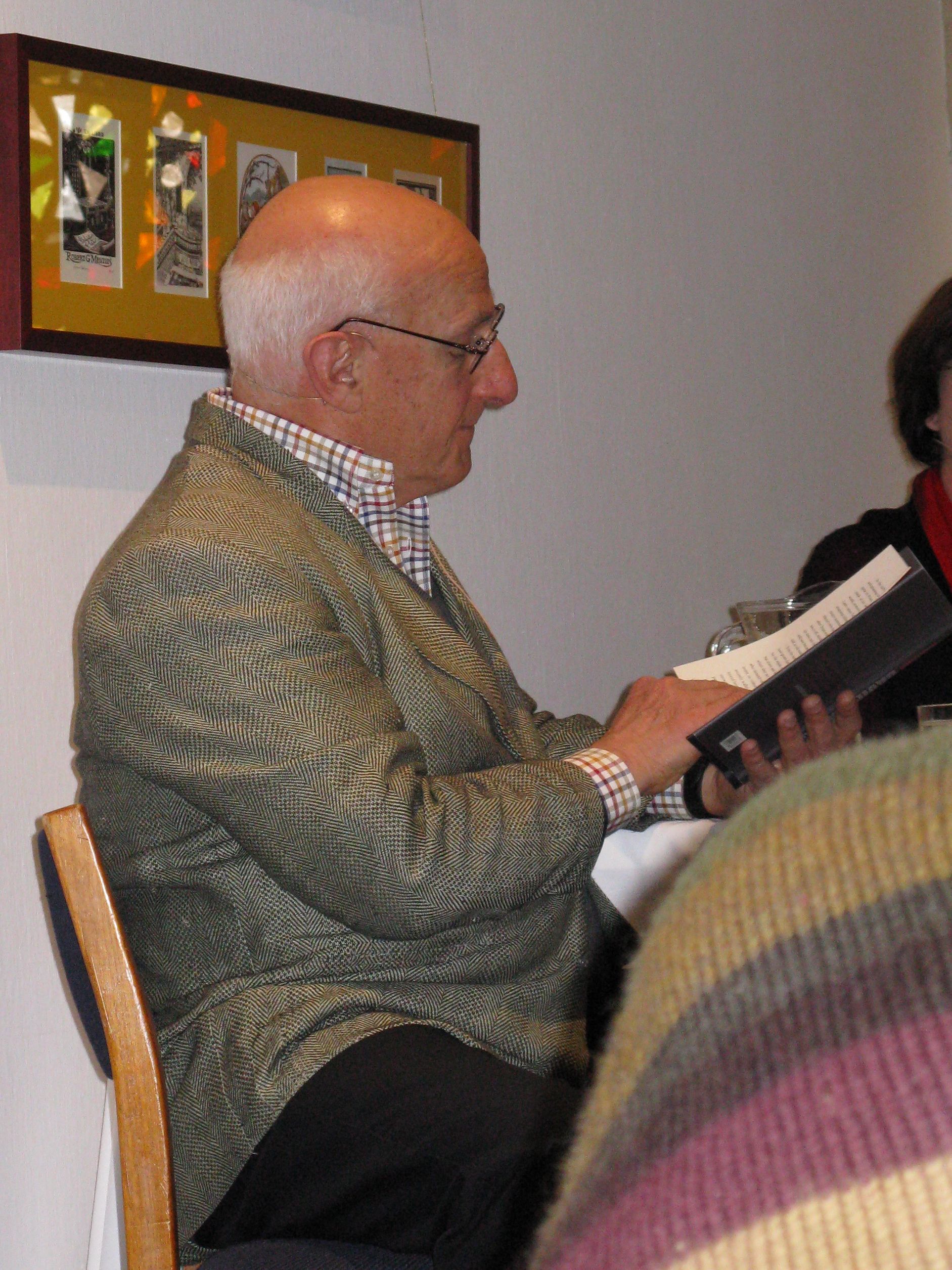
Malouf reading Ransom, National Library of Australia, August 2009

David Malouf’s 12 Edmondstone St (1985) is a very short book, running to just 134 pages. 12 Edmonstone Street is the address of the Brisbane house he grew up in, but this is not your typical autobiography starting with “I was born in …”. Instead, it discusses selected places in his life, starting with that childhood home. I enjoyed his description of that home, of its weatherboard construction with verandahs. His father, he writes, wanted something more modern, something permanent, like brick.

As for verandahs. Well, their evocation of the raised tent flap gives the game away completely. They are a formal confession that you are just one step up from nomads.

So of course, as soon as he could, he closed it in.

This is a thoughtful, meditative – Malouf-like – book.

Ruth Park’s A fence around the cuckoo (1992) and Fishing in the Styx (1993) are more traditional autobiographies, but they are not ordinary. I read them both when they came out and loved them – as much as I loved Park’s books, like her Harp in the South trilogy. A fence around the cuckoo won the Age Book of the Year Non-fiction Award in 1992.

Together, the two books are great reads about life in New Zealand and Australia in the early to mid twentieth century. They also provide wonderful insight into the writer she was to become, and tell the story of one of Australia’s most famous literary couples, Ruth Park and D’Arcy Niland. Here she is on an early contact with Niland (when she was still in New Zealand and he in Australia). He sent, she writes

a stately and respectful letter, carefully written in the sender’s amazing handwriting, and really got up my nose. The writer seemed to think I was some powerful editorial person, capable of assisting him to sell his stories in New Zealand. … I banged off a letter on my three-decker monster, saying that I was but a lowly copyholder with no efficacy or charisma whatsoever, and if he offered to sell my stories in Australia it might be more to the point. Reading his letter now, it is a marvel that the future father of my children did not take a terminal huff and go off and father someone else’s. However, he was choked off for months, much to my relief.

Hal Porter’s The watcher on the cast-iron balcony (1963) is the first of several memoirs written by Porter. It is regarded as an Australian classic, and covers his growing up years. Porter, however, has a reputation for an interest in paedophilia, which has resulted in some different “readings” of this book. Not having read it or any of Porter’s work, I’m afraid I can’t comment.

Patrick White’s Flaws in the glass (1981) is on my TBR. I dip into it frequently when I’m thinking about White, but have not managed to find time to read it from cover to cover. I should though, because every time I dip into it, I find something well worth my dip! For example, he comments frequently on his homosexuality, reflecting particularly on what it means for him and his art. Here is one:

Indeed, ambivalence has given me insights into human nature, denied, I believe, who are unequivocally male or female – and Professor Leonie Kramer*. I would not trade my halfway house, frail though it be, for any of the entrenchments of those who like to think themselves unequivocal.

[…]

Where I have gone wrong in life is in believing that total sincerity is compatible with human intercourse. Manoly [White’s longterm partner], I think, believes that sincerity must yield to circumstance, without necessarily becoming tainted with cynicism. His sense of reality is governed by a pureness of heart which I lack. My pursuit of that razor-bald truth has made me a slasher.

The New York Times Book Review is quoted on my back cover saying that it is “as absorbing an autobiography as has been written by a novelist this century”. Oh dear, I really should read it. Wish I could emulate Stefanie of So Many Books who consistently has five, six or more books simultaneously on the go.

* An Australian academic whom White disdained and called “Killer Kramer”. This singling out of her here is typical of White’s bite.


Do you have favourite literary autobiographies?