Anna Rosner Blay, Sister, sister (Review)

BlaySisterHaleSome of the most vivid memories of my Sydney-based late teens and early twenties relate to spending time with Jewish people, business friends of my father. We went to parties in their homes, to weddings and bar mitzvahs. These were always happy, family-oriented occasions. I had crushes on the sons. I knew that most of these people had come to Australia after the war, had suffered during the war, many in concentration camps, but I knew little more than that. The war was back then and this was now. I have no idea what those sons knew or thought about their parents’ pasts. Anna Rosner Blay’s biography-cum-family-memoir, Sister, sister, has reminded me of those days and made me wonder, yet again, about the lives whose paths I so airily crossed.

Around that time, I also started reading “Holocaust literature”. I’ve read memoirs about surviving the war, including most recently Halina Rubin’s Journeys with my mother (my review), and novels about survival, such as Imre Kertèsz’s Fateless (my review), but Anna Rosner Blay’s Sister, sister adds new ground to my reading. Not only is it about two sisters, Polish Jews, who survived the war from the early restrictions, through ghetto, concentration camps, death marches and factories, to their eventual emigration to Australia, but it also exposes the longterm effects of Holocaust experiences, particularly on the next generation. It’s a moving book.

Three voices

Blay presents the story in three voices: those of her aunt Janka and mother Hela, and her own. Janka and Hela’s voices are clearly identified interview-style, while her voice is conveyed via italics without her name being appended. An interesting decision, but it works. Blay captured the sisters’ stories via tape-recorder and notebook, and then “transcribed and rearranged” them, primarily, I’m assuming, to get them into chronological order, given the stories came out in fits and starts, late in the sisters’ lives. Towards the end of the book Blay writes:

My mother’s accounts are often disjointed, abbreviated, shreds that veer away from the painful reality. But at other times they are laid out before me, complete and pulsating with life, precious jewels that I must handle very carefully.

She has, indeed, handled them (and her aunt’s) memories very carefully to produce a story that is horrifying, horrifying as a personal story, but also because it is clearly representative of a more universal experience of the millions of Jews who suffered under the Nazi regime, which just compounds the horror.

I’ll start with the universal. A survival story, Sister, sister describes the brutality, degradation and humiliation which the Germans visited upon the Jews during the war. You’ve heard the stories before, but, oh dear, to read yet again of the utter inhumanity is appalling. I couldn’t possibly quote the most brutal, so here’s a minor example. Both women ended up separately at Auschwitz. Both were stripped, shaved, sent into showers (that were – what a relief – real showers) – and then tossed random clothing and mismatched shoes. Hela received two left clogs causing blisters, while Janka’s pair comprised “one with a high heel and the other flat. I therefore walked with a limp.”

Surviving this war was, Janka tells, “a macabre game of chance”:

We hardly ever knew what would turn out to be good for us and what should be avoided, possibly by subterfuge. Sometimes being led to a train could mean being sent to a small camp with a factory, and easy work; other times it could mean being sent to death. Sometimes you could save your life just by lingering, which was dangerous in itself. There was no way of knowing how to survive …

And this brings me to the personal, because while the sisters’ experiences are universal, they are also deeply personal. One of the things that Blay does very well is capture Janka and Hela’s individual personalities. Janka tends to be more expansive, telling more stories in more detail. She is also “braver”. She lingers (drawing her sister or friends back) when she thinks to go forward means death; she lies about her skills when she thinks that will get her a better “job” and/or keep her with people she knows; she negotiates black market deals (to swap her mismatched shoes, for example); and so on. She identifies these, and other situations she survives, as “miracles”. The younger Hela – just 18 years old when the war ends – is, by her own admission, less brave, more fearful. She relies on her sister and later, a friend, to keep herself together when times get tough. She’s lucky to end up, towards the end of the war, as a Schindlerjuden, through her musician husband. But this is not to say she’s a wuss. She’s a hard worker, a skilled seamstress, and she survived. You had to be strong as well as lucky to survive. Janka, ten years Hela’s senior, says:

When we were girls Hela was like a flower that had opened too early, its fragile petals still crumpled and sheltered from the ways of the world. But she also had the strength to persist in harsh times, and to continue to flourish even in a storm.

Through directly presenting the sisters’ personal voices, Blay brings them alive as individuals in addition to representing them as survivors in general.

But, there’s a third prong to this story, the one that apparently forms the crux of Magda Szubanski’s recent memoir Reckoning. I’m talking the impact on the next generation. This is where Anna’s voice comes in. Again Blay handles this well, with Anna’s italicised reflections appearing intermittently in response to comments by one or other sister. Her voice is mostly gentle, without histrionics, but we are left in no doubt as to the longterm impact of the experience on the sisters and the way this has transmitted to the next generation. There are losses galore – losses of people and connections, for a start. Anna describes visiting a school friend who shows some of her “treasures” – a war medal, photos, some family jewellery. Anna writes:

She asks if I like the treasures; I nod, unable to speak. The tightness grows to a hollowness, an empty feeling that can’t be filled. The threads that link Linda to her past are strong, glowing. They are made manifest by the treasures before me, and I sense that it is not the objects themselves that have so taken my breath away. It is not their beauty or value that tugs at me, but the world of significant connections that surrounds them.

So, not only are there no grandparents, but there no objects to provide a link, a sense of history. Other losses are deeper, more psychological. Hela’s fear of hunger, of death, of fear itself, are also transmitted, sometimes subtly, sometimes not so, to her daughter:

My mother is always anxious at mealtimes. She coaxes me to eat more and checks how much I am putting in my mouth.

AND

I never trust strangers.

AND

My earliest nightmare is of a narrow cobblestoned lane. Fences on both sides crowd me in. As I walk along, alone, I realise I am being followed. An old man comes behind me with a sack, and grabs me …

Anna’s comments are not chronological, because they respond more organically to the sisters’ experiences, but together they convey how experiences – even when the telling of them has been withheld until late in life – carry through to the next generation. Anna’s stories, though, never overwhelm her aunt’s and mother’s because they are the main game. Anna sums it up best late in the book:

the enormity of the injustice and of the horror defies expression … [yet] … The power of the human spirit to survive, despite everything, is limitless.

Sister, sister was shortlisted for the Age Book of the Year Award and the New South Wales Premier’s Award in 1998. It’s not hard to see why.

Lisa (ANZLitLovers) also read and admired this book.

awwchallenge2016Anna Rosner Blay
Sister, sister
Alexandria: Hale & Iremonger, 1998
264pp.
ISBN: 9780868066479

(Review copy courtesy the author)
Monday musings on Australian literature: Australian writers, loquacious?

It’s a brave person who tries to characterise a nation’s literature. But this is apparently what Australian-French writer Jean-Francois Vernay has done in his book A brief take on the Australian novel (published this year by Wakefield Press). I haven’t read the book, but Lisa (ANZLitLovers) is currently reading it, and she challenged me to write this post. So, yes ma’am, here I am!

To be fair, Lisa’s challenge came from my comment on her blog to Vernay’s statement that there’s

a certain loquaciousness among Australian writers… accustomed to large geographical sweeps of land … and not inclined to deprive themselves of fictional space.

Now, dear readers, I contest this! Perhaps Vernay is not meaning to sound as sweeping about it as I am reading him, but it does sound a bit like the pot calling the kettle black or, to put it in perspective, like Victor Hugo calling Henry Handel Richardson long-winded! I mean really! I’m not sure this even warrants an investigation, but I’m going to take the opportunity to point out that Australians can write tight, spare prose, neat novellas and short novels with the best of them. Our country might be sprawling and all over the place, but our writers certainly aren’t – unless it is warranted. Because of course we do have long books – Henry Handel Richardson’s magnum opus, The fortunes of Richard Mahoney trilogy is an example, as is Xavier Herbert’s Poor fellow, my country. Peter Carey has been known to go on a bit too (in books like Illywhacker) and Winton’s Cloudstreet is not particularly short either.

But, before I continue, perhaps I should define my terms, particularly regarding “loquaciousness” and “fictional space”. According to most dictionaries, “loquacious” means “wordy” or “excessive talk”, meanings which carry a value judgement regarding quality (or lack thereof). “Fictional space” is not the sort of concept you find in dictionaries, but I’m understanding it to refer primarily to physical quantity, that is to “big” or long books. Now I contend that just because a book is big, just because it takes up fictional space, doesn’t mean it is excessive, that is, “loquacious” (and therefore of poorer quality). So, there are two arguments to be had here. One is whether Australian books that take up fictional space are or aren’t loquacious. The other is whether Australian books take up fictional space, in the first place, that is, whether Australian authors are capable of depriving themselves of this largesse that’s apparently open to them! It’s this latter that I’m going to briefly tackle (emulating Vernay’s idea of a “brief take”) in what’s left to me of this post. (Yes, I know that I can make the rules about how much is left to me in my own blog, but far be it from me to sprawl over this essentially limitless space I have here! I know how to be tight. Don’t comment on that!)

Photo: Courtesy Fremantle Press

Photo: Courtesy Fremantle Press

I want to tackle the second argument because, of course, like most literary cultures, we do have our long books (including, admittedly, some big, baggy – and potentially loquacious – monsters). Without taking time here to research examples for you, I’d argue that the majority of the longer Australian books I’ve read have tended to make good use of the words they’ve used. However, it doesn’t take much research for me to argue against the idea that Australians aren’t “inclined to deprive themselves of fictional space”. I just need to point to our long tradition of novellas.

I have many posts tagged “novellas“, some for specific books (not all Australian) and some for posts about the form. Very early in this blog, in fact, I wrote a post titled Little treasures. In that post I listed some of my favourite novellas to that time, and included  several Australians:

  • Thea Astley’s A kindness cup
  • Murray Bail’s Eucalyptus
  • Helen Garner’s The children’s Bach (my review)
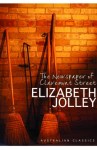
  • Elizabeth Jolley’s The newspaper of Claremont Street
  • David Malouf’s Fly away Peter
  • Carrie Tiffany’s Everyman’s rules for scientific living

And these are just a small sample.

Since then, I’ve read many more Australian novellas. But beyond them, my reading experience is that Australian novels are, overall, relatively short. A quick survey of the last 30 Australian novels I’ve read reveals that only five had more than 350 pages, which seems a reasonable marker in my mind for shorter versus longer books. Interestingly, four of those five were by male writers. Is there another hypothesis here, either regarding who writes the longest books, or, whether there’s a gender preference in the books Vernay based his statement on? I appreciate that my little survey is by no means scientific, but even non-scientific research can form the basis of an hypothesis can’t it?

I found online in The Age a discussion back in 2009 of the original French version (Panorama du roman australien) of Jean-Francois Vernay’s book that Lisa is reading. The article’s author, Simon Caterson, reports on his interview with Vernay:

Vernay says that Panorama, which covers early convict novels such as Quintus Servinton and For the Term of His Natural Life through to the work of contemporary authors such as Christos Tsiolkas and Alexis Wright …

Well, there you have it … these four books/authors used by Vernay to exemplify his research represent the more fictionally spacious end of Australian writing! I rest my case!

Seriously though, I’ve just had a little bit of fun here. I haven’t read Vernay. I don’t know how or whether he qualifies his statement. But, I did find it fascinating that he made his statement at all and wanted to tease it out a little, scientifically or not. So, whether or not Australia’s long novels are loquacious – and I’d say in general they’re not – my prime point is that we don’t produce an inordinate number of long (fictionally spacious) novels in the first place. What say you?

Kate Chopin, A pair of silk stockings (Review)

Kate Chopin

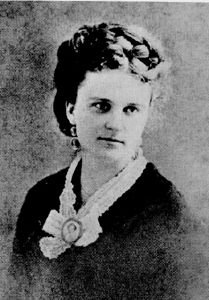
Kate Chopin (Public domain, via Wikipedia)

Over the years, the Library of America‘s (LOA) Story of the Week has published seven short stories by Kate Chopin, and I’ve posted on four of them. Now comes my fifth. It was actually published in February. I noted it, printed it out, but have only now found time to sit down and read it, and of course, I’m glad I did. It’s another little treasure.

Most of Chopin’s writing – including her most famous novel, The awakening, which I’ve read twice – offers commentary on the lives of women in late nineteenth century America. “A pair of silk stockings”, as you can probably tell from the title, doesn’t depart from this.

I enjoyed, as I usually do, LOA’s introductory notes. They are always succinct, yet hone in on something particularly relevant about the writer and the work. The notes to this story remind us that Chopin met with some resistance to her stories, both because of her themes and what literary historian Richard Gray calls her “subversive streak”. Go Chopin! However, what interested me most in these notes was something I’d forgotten, Chopin’s interest in Guy de Maupassant. I loved Maupassant’s short stories in my youth, and still have my little now-yellowing paperback of his stories. Chopin wrote about why she liked Maupassant, in 1896:

Here was life, not fiction; for where were the plots, the old fashioned mechanism and stage trapping that in a vague, unthinking way I had fancied were essential to the art of story making. Here was a man who had escaped from tradition and authority, who had entered into himself and looked out upon life through his own being and with his own eyes; and who, in a direct and simple way, told us what he saw.

LOA’s notes continue to say that Maupassant’s influence on her was substantial, particularly in his “emphasis on psychological character development” and in the use of “the surprise or disconcerting ending”. That’s certainly the case in “Desirée’s baby” (my review).

But today’s post is about “A pair of silk stockings”, which critics argue is one of her best short stories, one critic contending, in fact, that “it is one of the best pieces in turn-of-the-century American literature by anyone”. It is certainly an excellent read – a quiet slice of life with a little bite. The story concerns “Little Mrs Sommers” who suddenly finds herself with a little windfall of $15. We are not told the source of this money, because that’s not the point. The point is how it makes Mrs Sommers feel and what she does with it.

First, though, who is Mrs Sommers? We don’t know a lot about her, but enough. She has a few children – “the boys and Janie and Meg”. I’m sure Chopin is making a little point in naming the girls but not the boys. Anyhow, she is not well off, and has to scrimp and save to dress her children. She “knew the value of bargains” and could line up at sales and “elbow her way if need be” with the rest of them.  She has not always been poor apparently, having once known “better days”, but she doesn’t think of those now:

She had no time—no second of time to devote to the past. The needs of the present absorbed her every faculty. A vision of the future like some dim, gaunt monster sometimes appalled her, but luckily to-morrow never comes.

So, this money, which has “given her a feeling of importance such as she had not enjoyed for years”, needs careful consideration to ensure she makes “proper and judicious use” of it. She doesn’t “wish … to do anything she might afterward regret”.

That’s the set up. As you can probably imagine, for all her careful planning, things work out very differently. The day she goes shopping she’s “faint and tired” having forgotten to eat lunch with all the “getting the children fed and the place righted, and preparing herself for the shopping bout”. She goes shopping – yes – but what she buys and does with her money is nothing like what she planned. Now I could tell you what she spends it on, without telling you the punch-line, but I won’t. It’s only five pages, and is a good read – not only for what it tells us but for its insight into turn of the century American life.

And this last point is what critic Robert D Arner says we should see in the story. It’s not just a story about a poor, struggling woman, but about the whole society, one that is “caught between traditional ideas of feminine roles and the newly emergent American ‘culture of consumption’.” This is not the gut-wrenching Chopin of The Awakening or “Desirée’s baby” but it’s no less poignant for its recognition of the pressures women face in negotiating their lives in a world over which they have little control – not to mention a world in which the temptations to buy are starting to abound.

Kate Chopin
“A pair of silk stockings”
First published: Vogue, September 16, 1897
Available: Online at the Library of America

Charlotte Wood, The natural way of things (Review)

Charlotte Wood, The natural way of thingsWell, I wrote this week’s Monday musings on Australian dystopian fiction as a lead in to my review of Charlotte Wood’s award-winning The natural way of things, but I wasn’t expecting to get the perfect intro for my review! In the post’s comments, author and publisher Anna Blay pointed us to an article by Maria Popova in an online digest called Brain Pickings. The article, titled “The Power of Cautionary Questions: Neil Gaiman on Ray Bradbury’s ‘Fahrenheit 451,’ Why We Read, and How Speculative Storytelling Enlarges Our Humanity”, starts with this:

The important thing,” Ursula K. Le Guin wrote in contemplating the cultural role of speculative fiction and the task of its writer, “is not to offer any specific hope of betterment but, by offering an imagined but persuasive alternative reality, to dislodge my mind, and so the reader’s mind, from the lazy, timorous habit of thinking that the way we live now is the only way people can live.” In doing so, she argued, imaginative storytelling can intercept the inertia of oppressive institutions, perilous social mores, and other stagnations of progress that contract our scope of the possible.

I would agree that the thing is “not to offer any specific hope of betterment” but to jolt the reader into thinking about what is, what might be, if we do nothing. It’s certainly how I’d see most dystopian fiction I’ve read, including Charlotte Wood’s novel, but not being a big reader of speculative fiction I haven’t sat down before and articulated it.

So, what is it that Charlotte Wood wants to jolt our minds about? For those of you – overseas readers at least – who haven’t read or don’t know of it, the plot tells the story of 10 women plucked from their normal lives and transported to a nightmarish place in the middle of nowhere – referencing the mythology of the forbidding Australian outback? – where they are imprisoned behind an electric fence and controlled, labour-camp style, by two boorish men, bruiser Boncer and the preening Teddy. The women pass from disbelief and anger, through resignation, to a sort of acceptance and attempt to make the best of their situation. There are shades of Margaret Atwood’s The handmaid’s tale here and also, perhaps of William Golding’s Lord of the flies, but not derivatively. This is very much its own work.

But now, back to my question. Wood’s target is misogyny, and specifically the way it plays out through the scapegoating of women for their sexuality – whether for assaults that happen to them or for sexual activities they may engage in consensually (think affair with a politician or the flight attendant in a “mile-high” situation) but for which the man is let off while the woman is excoriated. Early in the novel each girl is given a “nickname” which “explains” why they are there such as “army slut”, “cabinet minister’s moll”, “airline girl”, “cruise girl” and “football girl”. You get the picture, I’m sure. The girls are also named. Wood does respect and individualise her characters, beyond just being types. There is one other woman in the picture, and that’s Nancy. She’s on the staff with Boncer and Teddy. She dresses as a rather grotesque nurse who looks after the so-called “hospital” – and represents those enabling women who often feel special but don’t realise that they too are under control.

I came to this book ready to love it. Although I’ve avoided reading reviews, I’ve not been able to help hearing all the accolades, and it sounded like a book and topic that would be right up my alley. It is, and I “enjoyed” reading it, but I’m having trouble defining and articulating my somewhat uncertain response to it. I love the heart, I love the desire to attack an issue that’s absolutely critical, I love the overall narrative concept, I was compelled to keep reading, and I thought the ending was powerful. So, why uncertain? I’ll try to tease it out a bit.

Menace?

There are a lot of characters – the ten captive women, plus Boncer, Teddy and Nancy – though Wood focuses on two young 19-year-olds in particular, Yolanda the “football girl” and Verla “the cabinet minister’s moll”. We get more into their heads. They are analytical about their situations and plan and act in ways to improve their situations. A cautious friendship develops between them. As well as being differentiated in this way from the rest of the group, they are also differentiated from each other by two facts: Yolanda wasn’t tricked like all the others into accepting the agreement that got them to this place, while Verla, who guiltily remembers “gratefully signing the fake legal papers”, believes that her “Andrew”, the cabinet-minister, still loves her. The other women are more problematic. We don’t get to know them well, but what we do see suggests that they have not cottoned on. They focus on finding ways to groom themselves, they reject Yolanda’s feral way of managing the situation, they fall on the fancy handbags at the end and willingly follow the new man who appears. They seem to have learnt little. But, perhaps that’s also the point. They have a right to be the young women they are. See, I’m talking myself into understanding this as I go …

And then there’s the men. They are scary, certainly, and brutal, particularly in the beginning:

So she didn’t see the man’s swift, balletic leap – impossibly pretty and light across the gravel – and a leather covered baton in his hand coming whack over the side of her jaw …

The man Boncer cast an aggrieved look at them, is if they were to blame for the stick in his hand …

But pretty soon we see that they, too, are, in a way, victims of the system. They’ve been fooled it seems into being there, on promises of bonuses, and are ultimately pathetic. I certainly don’t want to excuse them – they’ve made choices. However, as the supporting system seems to fail, they start to rely on the women’s ability to keep the show going. The women realise that these men don’t know what’s happening any more either. There’s an uneasy tension between captors and captives – and with that cracks start to show in the menace, albeit some menace remains.

Natural?

The writing is good. There’s even humour, such as tempeh-loving, yoga-doing but clueless Teddy. The novel is structured by the seasons, starting in Summer, moving through Autumn and ending, appropriately, in Winter. The story is told third person, mostly focusing on Yolanda and Verla. They’re engaging, though they are also pretty slippery to fully grasp. There’s a distance that we never quite penetrate. We “see” Yolanda’s strength and Verla’s self-deception, but we don’t, I think, see “into” them.

Wood uses effective recurrent imagery or motifs, particularly smells, rabbits, horses and birds. The opening line is “So there were kookaburras here”, suggesting some sort of normality. In her interview with Annette Marfording long before this book was written, Wood discusses using kites and kite-flying to suggest “flight and escape”, and then she says “I realise I have a lot of birds”, which I assumed implies that they too suggest “flight and escape”. In The natural way of things, birds also suggest the related idea of “freedom”, but when hawks appear, we see another side, that of predator and prey. All relevant to the book.

Then there’s the irony in the title, “the natural way of things”, because there’s nothing “natural” about what the book describes. The title appears in the text once in a paragraph that occupies its own page. It’s powerful:

What would people in their old lives be saying about these girls? Would they be called missing? Would some documentary program on the ABC that nobody watched , or one of those thin newspapers nobody read, somehow connect the thread to make them a story? The Lost Girls they would be called. Would it be said, they ‘disappeared’, ‘were lost? Would it be said they were abandoned or taken, the way people said a girl was attacked, a woman was raped, this femaleness always at the centre, as if womanhood itself were the cause of all these things? As if the girls somehow, through the natural way of things, did it do themselves. They lured abduction and abandonment to themselves, they marshalled themselves into this prison where they had made their beds, and now, once more, were lying in them.

The “natural” way of things! Referring back to Ursula le Guin, I’d say that Wood has presented here a “persuasive alternative reality”. Indeed, it’s not far removed from Wood’s inspiration: the Hay Institution for Girls to which “problem” teenage girls were sent in the 1960s and 1970s, and treated with great cruelty. But, who or what is the enemy? Looking at Le Guin again, this would be “perilous social mores” (and those who uphold them) – the fact that the scapegoating of women is still “allowed” to happen. There’s (a little) more awareness now, but this behaviour is not stopping, not by a long shot. All of us, I’m sure, recognise the recent inspirations for Wood’s “girls”. Anna Krein’s Night games (my review) makes an interesting companion read.

So, where do we go from here? Dystopian novels don’t have to give answers, indeed they rarely do, they “simply” shine the light. The light Wood has shone is, though, a very complex one indeed. I think I’ll be reading this one again when my reading group does it in July.

Lisa (ANZLitLovers) has also read it and has posted her comments plus links to other reviews.

awwchallenge2016Charlotte Wood
The natural way of things
Crows Nest: Allen & Unwin, 2015
315pp.
ISBN: 9781760111236

Monday musings on Australian literature: Dystopian fiction

For some reason, I’m often drawn to dystopian fiction. In my younger days I read Nevil Shute’s On the beach (probably my first book of this ilk) and then, of course, George Orwell’s 1984, Aldous Huxley’s A brave new world, moving later on to books like Margaret Atwood’s A handmaid’s tale and Cormac McCarthy’s The road, to name a few. But when I look at this list, and think about my reading, I realise that very few are Australian. Perhaps we are indeed “the lucky country”! Hmmm …

There are, in fact, Australian dystopias. Nevil Shute’s novel is set in Australia, and my latest read (to be reviewed this week), Charlotte Wood’s The natural way of things, is also. But, in researching this topic, I was surprised to discover that by far the greatest number of dystopian novels written in Australia seem to be Young Adult (YA) novels, and that they’ve really gained in popularity since the 1980s. John Marsden’s Tomorrow, when the war began series – some of which I read and enjoyed with my children – is an example. But there are many others, such as Isabelle Carmody’s Obernewtyn series (loved by my daughter), Victor Kelleher’s Taronga, Ruth Park’s My sister Sif, and they keep coming apparently with increasing frequency. Says something surely about the current zeitgeist.

However, while YA fiction is popular and worth exploring, I want to focus here, because it’s what I read, on adult fiction. So, I did a bit more delving and came across a few books and articles, such as Roslyn Weaver’s book Apocalypse in Australian fiction and film: A critical study and Russell Smith’s article “The literary destruction of Canberra: Utopia, Apocalypse and the national Capital”. I was only able to scan the works I found but between them, they have come up with several “types” of Australian dystopias:

  • effect of white colonisation on indigenous people
  • futuristic dystopias, including post-nuclear and apocalyptic scenarios, technocratic stories, government collapses
  • ecological thrillers (including some cli-fi fiction, I’d add)
  • fear of invasion
  • fear of the outback

RawsonWrongTurnTransitFor those who just want a quick starter list, here are a few that I’ve read, know of or have come across in my research:

  • M. Barnard Eldershaw’s Tomorrow and tomorrow  (1947, a controversial novel in its time, set in the 24th century, and only published in full – as Tomorrow and tomorrow and tomorrow – in 1983)
  • Andrew McGahan’s Underground (2006, commentary on the “war on terror”)
  • Jane Rawson’s A wrong turn at the Office of Unmade Lists (2013, my review)
  • Annabel Smith’s The Ark (2014, my review)
  • Andrew Sullivan’s A sunburnt country (2003, Sullivan was – still is? – an expert in Bushfire Dynamics at the CSIRO!)
  • George Turner’s The destiny makers (1993, about overpopulation, food shortages and economic collapse)
  • Ellen van Neerven’s Heat and light (2014, my review, includes a dystopian longform story in its central section)
  • Sam Watson’s The Kadaitcha sung (1990, Roslyn Weaver writes that “Watson has reworked the notion of a dead heart [of Australia] … by populating the land with the spirits of murdered Indigenous people and also presenting the landscape, and particularly Uluru, as the sacred setting of power and restoration”)
  • Charlotte Wood’s The natural way of things (2015, review coming soon)

The two main characters in Steve Toltz’s Quicksand engaged in a lot of satirical repartee. One example I quoted in my review included the statement that:

‘You know how while we’re enjoying reading dystopian fiction, for half our population this society is dystopia?’

Toltz’s character is not talking about climate change, or terror attacks, or other apocalyptic scenarios. He’s talking about ordinary lives that are tough, lives that made the Sydney Morning Herald describe Kate Jennings’ Snake (my review) as a “domestic dystopia”. You don’t have to look hard, in other words, for dystopias!

At the 2013 Perth Writers Festival, there was a session (not that I was there) on “The Rise of the Apocalypse”. The question posed in the program was: “Is the recent increase in dystopian fiction due to our concern about what lies ahead with global warming and other environmental catastrophes or does it just make really good fiction?”

Do you read dystopian fiction, and if so, do you have favourites?

My literary week (2), or so

No, I’m not going to write weekly “My literary week” posts – my last one was, anyhow, two weeks ago – but sometimes things happen that I want to share, and bundling them up seems the best way to do it.

Miles Franklin Award Shortlist

The shortlist for Australia’s best known literary award was announced last week – actually, just over a week ago, hence the “or so” in my post title. I had only read two books on the longlist – you are quite justified in wondering what on earth I’ve been reading over the last months! – and neither of them were on the list. The two I had read were both by male authors, but the shortlist of five comprises four female authors and one male. The list is:

  • Hope Farm, by Peggy Frew
  • Leap, by Myfanwy Jones
  • Black rock white city, by A.S. Patrić
  • Salt Creek, by Lucy Treloar
  • The natural way of things, by Charlotte Wood

Last year was the same, and the previous year four of the six shortlisted books were by women. Indeed, since 2012, the year the Stella Prize was established (first awarded in 2013), women have featured very well on the shortlists. The main change, though, has not so much been in gender balance of the shortlists, but in that of the winners. Up to 2011, male writers had won the prize over three times more than women had – but women have won the last four years. Is this gender politics at play? I hope not, because that denigrates the value and meaning of the prize. Or, does it signify an increasing acceptance of more diverse subject matter and voices? I hope so, because that is what the move to promote women writers has been about.

Oh, and, while we are talking imbalances, I should point out that all five authors are apparently Melbourne-based, but we’ll let that through to the keeper this year. Those of us in other states will be watching though! (Just joking!)

Meanwhile, you can expect a review of Charlotte Wood’s book next week.

Quote of the week

Sonya Hartnett, Golden boysI nearly wrote a post just to share the following quote. My fellow bloggers will know how frustrating it is when we can’t include all our favourite quotes from a book in a post. Well, this week, I’m going to share one more quote from Sonya Hartnett’s Golden boys (my review) because it’s a beautiful example of her use of imagery. The quote comes early in the novel when tough, street-wise, working class 10-year old Syd meets the similarly-aged but soft, dependent, well-to-do Bastian:

Syd and Bastian look at each other, and it’s like a Jack Russell being introduced to a budgerigar: in theory they could be friends, but in practice sooner or later there will be bright feathers on the floor.

Need she say any more?

PS I have another favourite quote this week, but I have already posted it in my Washington Irving post. It’s his statement that he hides his morals from sight, disguising it with “sweets and spices” so that the reader might “have a bolus of sound morality popped down his throat, and be never the wiser for the fraud”. Don’t you love the cheekiness of it?

… and then there was lunch

During the week, I lunched, with a good friend who is also in my reading group, at Muse, a favourite local cafe which describes itself as “a space where good food, great wine and the magic of the written word come together”. In other words, it is a cafe, bookshop (for new and secondhand books) and event venue located in one of Canberra’s boutique hotels. I have bought a signed first edition Thomas Keneally, Three cheers for the Paraclete, here. I treasure it. Anyhow, before my friend arrived, one of the owners and I chatted books, what we were currently reading – he saw me reading Charlotte Wood’s The natural way of things – and upcoming events, which will include Arnold Zable. Yes!

And then my friend arrived and we continued our discussion, from reading group the previous night, of Sonya Hartnett’s Golden boys – because there’s always more to discuss when you read a good book! We particularly talked about the ending – how well did it work – and about Hartnett’s decision to set it in the 1970s given its concerns – pedophilia and domestic violence – are very relevant today. No great resolutions, of course, but it was good to tease out ideas a little more.

Washington Irving, The adventure of the German student (Review)

Washington Irving, c. 1855-60 (Copy daguerreotype by Mathew Brady, reverse of original by John Plumbe. Public domain, via Wikimedia Commons)

Washington Irving (1783-1859) is best known for his short stories “Rip Van Winkle” and “The legend of Sleepy Hollow”, but in fact he was a prolific writer and, according to Wikipedia, is often credited as being America’s first “man of letters”. I was fascinated to read in Wikipedia that, as well as being a writer, he worked as a diplomat in Europe. He helped other writers, promoted the writers’  rights in issues like copyright, and he was admired by the likes of Sir Walter Scott, Lord Byron and Charles Dickens. I guess Americans know all this, but I didn’t.

However, I have had a recent encounter with Irving, before the story in this post that is, because I dipped into his Tales of the Alhambra (1832) when we visited that part of Spain in 2013. I was fascinated by his description of a place that is not totally unfamiliar to an Australian:

its scenery is noble in its severity, and in unison with the attributes of its people; and I think that I better understand the proud, hardy, frugal and abstemious Spaniard, his manly defiance of hardships, and contempt of effeminate indulgences, since I have seen the country he inhabits.

And I loved his desire to travel with an open heart and mind:

but above all we laid in an ample stock of good humor, and a genuine disposition to be pleased, determining to travel in true contrabandista style, taking things as we found them, rough or smooth, and mingling with all classes and conditions in a kind of vagabond companionship.

That’s the spirit, as Son Gums would say.

Anyhow, let’s get to the story, “The adventure of the German student”, that was recently published in the Library of America’s Story of the Week program. It came from his collection, Tales of a traveller, which comprised essays and short stories published in 1824 under his pseudonym, one of several he used, Geoffrey Crayon. This collection was divided into four “books”, and our story was in the first, titled  “Strange stories by a nervous gentleman”.

Most of the stories are set in Germany and Paris, with “The adventure of the German student” being set in Paris during the French Revolution. The opening lines are:

On a stormy night, in the tempestuous times of the French revolution, a young German was returning to his lodgings, at a late hour, across the old part of Paris. The lightning gleamed, and the loud claps of thunder rattled through the lofty, narrow streets …

The story, you may not be surprised to hear, is Gothic in tone. LOA’s notes say this is surprising because his “supernatural tales are known more for gentle whimsy and wry satire rather than the Gothic horror found in this story”. They tell us that this story predates Edgar Allan Poe “by a good twenty years” and that American horror writer H.P. Lovecraft admired it for diverging from his “lighter treatment of eerie themes”.

It’s a simply told story. After that opening, the narrator decides that before continuing he needs to tell us a bit about this German student, Gottfried Wolfgang. He was “a young man of good family” but was, perhaps, a little too sensitive and suggestible for his own good. During his studies he had “wandered into those wild and speculative doctrines which have so often bewildered German students” and he starts to feel that “there was an evil influence hanging over him; an evil genius or spirit seeking to ensnare him and ensure his perdition”. His friends decide he needs “a change of scene” and send him off to Paris.

There, Gottfried starts by enjoying the revolutionary spirit but soon all the blood gets him down. In true Gothic style he lives in “a solitary apartment” in a gloomy street not far from the monastic walls of the Sorbonne”. He visits “the great libraries of Paris, those catacombs of departed authors”, becoming a “literary goul (sic), feeding in the charnel house of decayed literature”.

However, he also has “an ardent temperament” but is too shy to approach women so, being of fanciful bent, he dreams up a woman of “transcendent beauty”. She haunts him in the way such visions do to “the minds of melancholy men”.

Now, remember, this is set during the French Revolution, so as the story progresses a guillotine appears where our student meets his dream-woman. He brings her to his home and is, of course, totally enamoured. Fortunately, these are modern times:

It was the time for wild theory and wild actions. Old prejudices and superstitions were done away; every thing was under the sway of the “Goddess of Reason.” Among other rubbish of the old times, the forms and ceremonies of marriage began to be considered superfluous bonds for honourable minds. Social compacts were the vogue. Wolfgang was too much of a theorist not to be tainted by the liberal doctrines of the day.

Ha-ha! Who needs “sordid forms to bind high souls together” he tells the young woman. So he talks her into immediately pledging herself to him. And here, I’m afraid I’ll leave you, but let’s just say that things don’t quite work out for Gottfried, or his dream-woman. There are several layers in which we can read the story – political, philosophical, psychological, sexual, feminist – but all point, at some level at least, to satire of the times.

In 1860, Irving wrote this about his stories:

I am not, therefore, for those barefaced tales which carry their moral on the surface, staring one in the face; they are enough to deter the squeamish reader. On the contrary, I have often hid my moral from sight, and disguised it as much as possible by sweets and spices, so that while the simple reader is listening with open mouth to a ghost or a love story, he may have a bolus of sound morality popped down his throat, and be never the wiser for the fraud…

An interesting, thoughtful man, this Irving.

Washington Irving
“The adventure of the German student”
First published: In Tales of a traveller (1824)
Available: Online at the Library of America

Sonya Hartnett, Golden boys (Review)

Sonya Hartnett, Golden boysAlthough Sonya Hartnett has written a large number of books, for children, young adults and adults, I’ve never read her, which is something I’ve been wanting to rectify. My opportunity came in May when my reading group scheduled her latest novel, Golden boys, for discussion. It was shortlisted for several awards last year, including the Miles Franklin Award – and has by now, I expect, been reviewed to within an inch of its life, but that’s not going to deter me!

You can tell, with Golden boys, that Hartnett is an experienced writer for young people. The book’s protagonists, the perspectives through whom the story is told, are all pre-teen. The three main voices are 12-year-old Colt, eldest son of the well-to-do Jensons, and almost 13-year-old Freya and 10-year-old Syd, children of the working class Kileys. The set up is that the Jensons have moved into a working class suburb for a reason that starts to become clear as the book progresses.

The novel opens with Colt:

With their father, there’s always a catch: the truth is enough to make Colt take a step back. There’s always some small cruelty, an unpleasant little hoop to be crawled through before what’s good may begin: here is a gift, but first you must guess its colour.

It’s a powerful beginning, and we’re right there. The scene is played out through Colt’s eyes. He’s been through these games before and he doesn’t want to play. He’s starting to realise there’s something darker behind his father’s generosity: “His father spends money not merely on making his sons envied, but on making them – and the word seems to tip the floor – enticing. His father buys bait.”

The second (unnumbered) chapter starts with Freya:

Freya Kiley has started to see things she hasn’t before. Until recently she has lived as every child must: as someone dropped on a strangers’ planet, forced to accept that these are the ways of this world.

But, on the next page we read

Now she’s older and smarter, and she’s starting to see that the world is a castle, and that a child lives in just one room of it. It’s only as you grow up that you realise the castle is vast and has countless false floors and hidden doors and underground tunnels … And as you get older, you’re forced out of the room, whether you want to go or not. Freya wants, with urgency, to go.

This lovely castle motif recurs through the novel. Anyhow, here we have two young people on the cusp of adolescence living in families which are headed (because this is the late 1970s when men still tended to “head” the family) by two problematical fathers – the superficially charming, generous but creepy Rex Jenson, and the detached, sometimes violent Joe Kiley. You have probably guessed what some of the themes are … but they are tied up with the plot, and …

I’m not going to talk about the plot because I have other issues to explore. I’ll just say that it builds slowly, inexorably, as the neighbourhood children gravitate to the well-endowed Jenson home, until we reach the climax . It’s expected – has been cleverly foreshadowed – and yet is surprising in exactly how it plays out. It’s painful, but clever too in resolving little while exposing a lot.

Adult? Young Adult?

Rather, I want to talk about voice and audience. When writers write in the voice of young people, or through the eyes of young people, there’s an immediate assumption, fear even, that the work is for young adults, but this isn’t necessarily so, though it can probably make such books cross more easily between adult and young adult readers. This is where Hartnett’s adult-marketed Golden boys sits. Its subject matter extends beyond a narrow focus on teenage experience, like first romantic relationship, first sexual experience, feelings of alienation or otherness, conflict with parents, and so on, to exploring the experience of awakening awareness to the reality of adult life. Here – this awakening – is the focus of Colt and Freya’s consciousness. How are they going to make sense of the flawed adult world they are now seeing? How are they to move through it? Will they survive their loss of innocence (and we are not talking sexuality here, but that deep shock when your view of the world, your sense of safety, is shaken to the core.) I should reiterate here that there are other youthful perspectives, including that of 10-year-old Syd who provides a neat counterbalance to Colt and Freya. At 10 he still has the self-focus of a child, not yet aware of “adult” life. What he wants for Christmas, whether he can still swim in the Jensens’ pool, and whether being a gangster would be a good career are what occupy his mind!

Hmmm, I’m not sure still that I’ve explained why this is a book that should interest adults – those adults who think, perhaps, “been there, done that”. It’s relatively easy to argue that the book, meaty though it is, would appeal to young adults, but why would a book in which all the perspectives are those of young people appeal to adults? Well, first there’s the subject matter, which addresses pedophilia and domestic violence. Just because we see these events through a young perspective doesn’t mean the exploration is superficial or irrelevant to an adult reader. Indeed, this perspective adds weight, because we see what the children see and the impact on them, how they try to process what they actually see, and how they comprehend the behaviour and responses of the various adults. When traumatic things happen in “real” life, it’s the adults we see and hear – the adults who are interviewed on the radio or television, the adults who write the memoirs or exposés. Hartnett presents the other side, the missing voices of the young – and I found her young people to be psychologically convincing. They are aware, perceptive and curious – but their understanding has limits, such as Freya’s taking the full blame for her parent’s situation because she was the reason they married. Hartnett, though, never sells them short, and neither I think should we.

And then there’s the writing. The imagery fits beautifully. There’s the castle motif for Freya, and a subtle but ominous repetition of the colour “black” from that bike in the opening scene to local bully Garrick’s fringe being described in the last scene as “blown back from his forehead like black grass on a sandy dune”. Descriptions tend to be physical. When Colt is confronted by the boys “the sun becomes an inferno, claws tigerishly at his neck”. On another occasion, one of Freya’s little sisters “skitters off like something twanged from a catapult”. The novel, in other words, is a joy to read – despite the unpleasant subject matter – for the imagery, careful plotting, characterisation, and that ending which manages to surprise despite our basic expectations being met.

Earlier, I quoted Freya as seeing the world or life as a castle. Towards the end, as things become more and more clear, she considers:

If she has spent her life rummaging through a castle of countless rooms, she thinks she must have found the vault at the castle’s core, because inside it there is nothing but her wits.

And that is the lesson, in the end, that both Freya and Colt learn. They will have to make their own decisions, rely on their wits, if they are going to survive this flawed, not always safe, world.

awwchallenge2016Sonya Hartnett
Golden boys
Hamish Hamilton, 2014
238pp.
ISBN: 9781926428611

Monday musings on Australian literature: Spotlight on Charlotte Wood

Courtesy: Annette Marfording

Courtesy: Annette Marfording

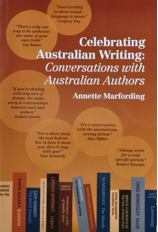
This is the third in my occasional series of Spotlight posts inspired by Annette Marfording’s Celebrating Australian Writing: Conversations with Australian Authors. (See the end of this post for links to the first two.) Since Charlotte Wood won this year’s Stella Prize, the Christina Stead Prize for Fiction (NSW Premier’s Literary Awards), and has just been shortlisted for the Miles Franklin Literary Award for her latest novel The natural way of things, who better to choose for my third post.

Charlotte Wood is no stranger to awards. She has written five novels to date, and each of them has won or been shortlisted for awards, which is a pretty impressive achievement. She has also written a non-fiction work on food, Love and hunger, and edited an anthology, Brothers & sisters. Oh, and she has numerous essays, and newspaper and journal articles under her belt too. She is about to publish another book, The Writer’s Room, which will contain interviews with Australian writers selected from the digital magazine of the same name that she edited for three years.

And this makes a good place to segue to Annette Marfording’s interview with her, which took place back in 2010. Marfording’s first question was about awards. Wood indicated that she was “anti-awards” and that the book she thought was her best, The children (at that time she’d published three novels), had received the least notice in awards listings. She says:

I guess it’s easy when you’ve been shortlisted a couple of times to start dismissing it, but the whole prize culture is kind of damaging to literature, I think. It turns books into a horserace and it’s not good for writers and it’s not good for writing either.

This is not an uncommon view, and I do understand her point. The arts are not something that can be objectively measured like, say, a 50m freestyle swim or a high jump, but the money and recognition can, on the other hand, be very helpful to careers, particularly, I suspect, early ones. Wood admits that the money is useful, and can help writers keep writing.

Charlotte Wood (Courtesy: Wendy McDougall)

Charlotte Wood (Courtesy: Wendy McDougall)

Marfording then asks Wood about some of the ideas that recur in her novels – family, and abuse and violence. Regarding family, Wood says that it’s because “the intensity of human relationships plays out so well in families”. She doesn’t think that abuse and violence are strong themes – in those first three books – though agrees that there’s an abusive relationship in Pieces of a girl, and there is psychological warfare in her books. As she says “A story without any friction is not a story.” True!

Some questions naturally come up in most interviews with writers – recurrent themes being one. Another relates to the writing process, use of research, drawing from other people’s lives, and so on. Marfording asked Wood about these as well. Regarding her process, Wood said that “I start writing and see what happens”. She doesn’t plan, so sometimes the shape of the book comes quickly, other times not so. She doesn’t do a lot of research she says, but may check out the odd specific thing.

And then of course there’s that issue of writing from the perspective of other, such as a male point of view. Wood said that she used to worry about this, but her view is that, despite gender, we are not all that different in the way we think. So, she tries to avoid focusing on the physical issues – which are different – and keeps instead to the mental space.

They also discussed her writing, which is often described as “lyrical”. Wood says that with more experience she had become “sparer”, that at first she was “so lyrical that it kind of made you throw up”. Imagery, it seems, comes easily to her. In this she reminded me of Thea Astley who also found imagery easy and did put some readers off. She too became a little more spare in her later years, though perhaps not to the degree that Wood describes herself doing. Wood talks of actively focusing on character, plot and structure, and balancing that with her interest in language and lyricism.

Other topics discussed included the anthology, Brothers & sisters that she edited, and the place of short fiction in Australia. Re the latter, Wood said she felt things were improving, with new works by Cate Kennedy, Paddy O’Reilly, Robert Drewe, Tony Birch and Nam Le recently appearing. Wood says that:

a short story is perceived as a step to a novel, and there is nothing less true. I find them so hard to write that I hardly ever write them.

The interview concludes with some discussions about the “business end” of writing – publishing, editing and writing courses – topics which always interest me, even though I have no plans to write a novel, memoir or any other book!

A question they didn’t really cover, but which was asked by Booktopia in their Q&A with her in 2011, was which writers she admires. She tells them:

I admire any writer who has the courage to push through the barriers of ambition and vanity to get to the real thing – truth and beauty. Some of the best writers I know are struggling to get published, but they keep going because they are real artists. For the same reasons – truth and beauty – I respect and admire Alice Munro, Helen Garner, Anne Enright, Marilynne Robinson, Kim Scott, Richard Ford, Joan London, William Maxwell and Nina Bawden, among others.

What a lovely range of writers – they give a great sense of her writerly values don’t they?

Wood comes across as calm and level-headed – and I have heard other writers say that she’s generous in mentoring others. I have decided that my next book has to be The natural way of things.

Previous Spotlight posts:

Annette Marfording
Celebrating Australian Writing: Conversations with Australian Authors
Self published, 2015
273pp.
ISBN: 9781329142473

Note: All profits from the sale go to the Indigenous Literacy Foundation. You can purchase the book from its distributor, lulu.com.


Finlay Lloyd: Celebrating 10 Years of Publishing

This weekend I attended a delightful event run by the National Library of Australia’s bookshop. It was an afternoon of author readings to celebrate the 10th anniversary of independent small publisher Finlay Lloyd, which is based in Braidwood, about an hour’s drive from here. It is run by two men, author Julian Davies and artist Phil Day.

Julian Davies em-ceed the event. He described Finlay Lloyd as a non-profit publisher, and said he is often told by other small publishers that they can be that without trying! Ouch! The press is, he said, a quixotic venture, established because many writers were finding it hard to be published by increasingly bottom-line focused publishers. Once, he said, publishers took risks but they now tend to be overly market driven. The press was also established in response to threats about the death of the printed book. For Finlay Lloyd, the book as an artefact is important as well as the content. I can attest to that. Their books have a lovely edge, even the little flsmalls.

Then the main part of the afternoon started, with the format being Davies introducing the writer, asking one question, followed by the writer reading an excerpt. It went for about an hour and a half. My post is rather long – despite my only quoting from one writer – but my headings will enable you to skim and skip if you desire.

Alan Gould and The seaglass spiral (bought at the event)

Davies’ question for Gould was about what he expected of the publisher-author relationship. Gould, whose The Lakewoman I’ve reviewed here, was the perfect choice to be first because he epitomises the reasons behind Finlay Lloyd’s establishment. He had expected it to be hard, he said, to find a publisher for his first couple of books but he then thought an author-publisher relationship would develop. That didn’t happen, so almost every novel of his has had a different publisher.

He introduced his novel, The seaglass spiral, by describing himself as a character novelist. He read from the beginning and a small except from Chapter 10. Here’s the opening paragraph:

There was a fellow called Ralf Sebright. He was decent enough, glad for the most part to be alive, and despite being able to swim, he had just sunk beneath the Pacific Ocean for the second time. Odd to think this about this plight really, that a lineage going back to the first caves of kinship might imminently be pinched off. For Ralf had arrived at a moment when he realised his existence might be in trouble.

In short, he was drowning.

And here are the last few sentences of his first excerpt:

Ralf observed the dominant emotion of drowning was not fear. It was guilt. He also noted that, even when a person says impossible he does not stop imagining deliverance.

Gould told us to remember that word “impossible”. It’s important in the book he said. I’m intrigued. Since I had frequently fondled this gorgeous-looking book when it first came out but had resisted the temptation given my bulging TBR pile, this time I gave in to temptation. See what an author reading can do!

Phillip Stamatellis and Growing up cafe (my review)

To first-time author Stamatellis, Davies posed a question about what the editing process had meant to him. Stamatellis responded that, given the book grew out of scattered pieces of writing he’d been doing, structure was the important thing he’d learnt. Haha, I thought! Here is a sentence from my review: “Stamatellis has structured his short memoir cleverly”! Structure is indeed important to this book.

StamatellisGrowingFinlayLloyd

He also commented on Davies’ obsession with commas, to which Davies interjected with the fact that John Clanchy says he doesn’t use commas enough! This reminded me of my 12 year-old-daughter, as she was then, arguing over a comma with her school principal, who was editing a little book for the school. The principal won but, some months later, she said to me, “you know, Hannah was right about that comma”!

Anyhow, Stamatellis read the first “story” in his book in which he describes a typical cafe scene – the cafe, being, as Davies said, the book’s main character.

Camel Bird and Fair game (my review)

Courtesy: Finlay Lloyd

Introducing Bird, Davies proposed that the current discourse in our society is polarising, but Bird’s book, Fair game, he said, digresses and weaves, telling the story of Tasmania through her personal reflections. Bird agreed with this assessment, saying that “the digressive form is native to me.” And I love this form as I wrote in my review: “I love reading this sort of writing – it’s a challenge, a puzzle. Can I follow the author’s mind?” Oh, and Bird also said it was a wonderful experience to be edited by Julian.

Bird gave a wonderfully expressive reading. She loves being a little cheeky, as I also wrote in my review, and is clearly able to do that in person and well as in print!

Wayne Strudwick and The dark days of Matty Lang (bought at the event)

You meet authors in strange places, it seems. Davies met Strudwick through the latter peering into his eyes. Strudwick, you see, is an optometrist but, Davies soon learnt, also writes – and this led to the publication of Strudwick’s story, The dark days of Matty Lang, in the first series of flsmalls.

Given this story is set in a country town, Davies asked Strudwick about his interest in such towns. He responded that in these towns, everyone knows everyone else, which can be comforting but also claustrophobic. Traumas, he said, go through the whole community. His story is about a trauma, and the reading intrigued me, so I bought it too!

Bidda Jones and Backlash (my review)

Bidda Jones is Davies’ partner so the question was obvious: how did she find working on a book together. Jones explained that she’s a scientist not a writer. She did the book, she said, “through gritted teeth” and was very glad when it was over! But, she’s also glad, I believe, the story is documented.

Jones read an excerpt from the book describing how she and Lyn White took their research and footage to the ABC, but she also told us that already the book has been attacked in parliament. So, I went looking and found the speech by National Party Senator Barry O’Sullivan. My oh my! He name-calls, and he makes false statements about what the book does or doesn’t cover. But the clincher is that he concludes his speech not on proving that the government has made advancements in live export animal welfare but by attacking Jones and the RSPCA – attack after all being the best form of defence – for not focusing their effort on domestic pets and animals (as if they don’t do that too!), which he argued are the RSPCA’s “core and fundamental issues”. In fact, the RSPCA’s mission is broad: to “To prevent cruelty to animals by actively promoting their care and protection”. It’s hard to take such a speech seriously.

Paul McDermott and Fragments of the hole (my review)

McDermottFragmentsFinlay

McDermott’s book is heavily illustrated with his drawings, so Davies’ question to him related to the process of working with Finlay Lloyd’s Phil Day. McDermott, who attended the Canberra School of Art, told us that he is always writing little stories and making drawings and sketches. He described how creatively Day had used his drawings, making selections from what was apparently a big bundle, sometimes upending them, sometimes using only part of them.

McDermott, also an expressive reader of course, read the second part of his story “The boy and the goat” but I certainly won’t share that because it included the wonderful last line of the story. I loved this little book, but was a little disconcerted when, on having a copy of his book signed for a friend, he told me that he’d only seen one review of the book and the reviewer said it wasn’t for children, but it is he said! Hmmm, I thought, I reviewed his book. Was that I? I didn’t ‘fess up, because I couldn’t remember, but checked when I got home and it was. In my defence, though, I did qualify it by saying it wasn’t for “(most) children”. Oh dear.

Meredith McKinney and Mori Ogai’s The wild goose (on my TBR)

Fiction, non-fiction, essays, and even commissioned translations, Finlay Lloyd does it all. Davies talked about how, as he and McKinney were working on this Japanese classic, they compared three translations of this Japanese classic from 1959, the 1990s, and Meredith’s 2010s. He enjoyed their discussions about Japanese language and the decisions that have to be made in translating it.

But, his question for McKinney was why she chose this particular novel (novella, really). It’s because, she said, she’s interested in pre-western-influenced Japanese literature. Davies commented that he liked the sympathy Ogai shows to his minor characters, and McKinney agreed saying that he exhibits tenderness for everybody. I’ve had this book on my TBR for a couple of years, and it’s time I read another Japanese novel, so I really need to find time to read it.

Julian Davies and Crow mellow (my review)

Julian Davies, Crow mellow Book cover

The event ended with Davies’ own book, Crow mellow, which was illustrated by Phil Day. He said he gave Phil Day complete free rein and he enjoyed seeing Day’s illustrations come through as he was writing it. While I love art, my main focus tends to be text, but it was hard not to notice Day’s illustrations wandering as they do all through the text. In my review I commented that they provided “whimsical and sometimes very pointed satirical commentary on the text”.

Davies read a scene in which two young women talk about sex. I remember the scene well. Its illustrations are a hoot, and it ties neatly, satirically, to the novel’s epigraph (from American author, James Salter) that “the new hunger was for sex”.

And on that, the event closed … I, and a few I spoke to, thought the format worked very well. I was only sorry that, due to other commitments, I wasn’t able to hang around for long afterwards.