Ali Cobby Eckermann, Ruby Moonlight (Review)

ANZLitLovers ILW 2016Ali Cobby Eckermann has been on my radar for a while, so when Lisa announced her 2016 Indigenous Literature Week, I decided Eckermann’s verse novel Ruby Moonlight would be my first choice. This novel won the poetry prize and the book of the year in the 2013 New South Wales Premier’s Literary Awards.

I enjoy verse novels but don’t read them often enough to build up a comprehensive understanding of the form. Eckermann’s Ruby Moonlight is the shortest and sparest of those I’ve reviewed on this blog, but its narrative is just as strong. It is set in colonial South Australia – the not-very-poetic subtitle being “a novel of the impact of colonisation in mid-north South Australia around 1880” –  and tells the story of Aboriginal teenage girl, Ruby Moonlight, whose family is massacred by white settlers. The novel reads like a classic three-act drama. It opens with the massacre and Ruby’s lonely wanderings, and then moves into a somewhat idyllic phase when Ruby meets the also lonely “colourless man”, Miner Jack. They become friends and lovers, giving each other the company and warmth they both so desire:

good friendships
blossom
slowly
(from “Friends”)

and

in the moonlight
solace is shared
in this forbidden friendship
( “Solace”)

But it can’t last, of course, not in that place and time, because neither the colonisers nor the Aboriginal lawmen will accept it: “it is the oasis of isolation/that tolerates this union”. Nothing else.
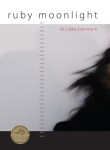
Ali Cobby Eckermann, Ruby MoonlightThe poetry, as you can see from my excerpts, is spare. There’s no punctuation, not even apostrophes, and no capitalisation except for proper names. Lines are generally short, and description is generally minimal. There’s a lovely but restrained used of repetition, and the rhythm is matter-of-fact, that is, it moves the story along with few flourishes (if that makes sense). The story is told through separately titled poems, each of which occupies its own page, though some only part of it. The titles are simple and to the point – “Ambush”, “Friends”, “Oasis”, “Hate”, “Cursed”, “Sunset”. You could almost track the trajectory of the story through its titles. This spareness, I think, enhances the emotional power. The poems say what they need to say without embellishment.

The excerpts above are from more narrative-focused poems, but there are also poems which provide context, describing the seasons as time passes, commenting on the landscape within which our characters operate, providing a sense of the country’s spirits watching, tending, ready to act. The novel opens on the poem “Nature” which sets the scene perfectly by conveying the opposing faces of nature – “sometimes/turning to/butterfly” or sometimes just to “dust” – which also subtly heralds the coming massacre. And, a few poems in, soon after the massacre, comes one describing nature’s nurturing of Ruby:

chirping red-browed finches lead to water
ringneck parrots place berries in her path
trust nature
(“Birds)

The words “trust nature” are repeated at the end of each couplet in this poem, providing a soothing mantra for Ruby.

Most of the poems are presented in couplets or triplets, but occasionally one uses a different structure, usually to mark a dramatic change. Early in the novel is the devastating, shaped-poem, “Ambush”, in which all lines but one comprise single words (“hack/hack/hack” it starts); and half-way through is another shaped-poem, “Tempo”, which marks both the passing of time and acts as a transition from a short time of idyll for Ruby and Jack to the appearance of others:

Jack knows the remainder of the conversation
before it was spoke ya see any blacks roaming
best ya kill ’em disease spreading pests
(“Visitor”, immediately after “Tempo”)

The irony of it! Who brought disease?

So, Ruby and Jack. One of the delights of the book is the sympathetic representation of these two characters. Bereft after the loss of her family, Ruby stumbles across Jack, a loner who scrapes a living out of fur-trapping. Both are outcasts in colonial Australia, Jack an Irishman, a hated “Mick” (“a music-less man stands aloof at the bar/scowling his hatred for the Micks”, from “Loose”) and of course Ruby, a lubra or black woman. These two cautiously find a “small trust … growing” (“Solace”) between them, but it is a “forbidden friendship”, forbidden from both cultures, so their times together are snatched carefully. Ruby is watched by members of another mob, people who are “slowed by fatigue” and “weary with worry” (“Signs”), and who know the dangers:

camp smoke whispers
tell story of the killings
(“Whispers)

Jack and Ruby become the target of the aforementioned “music-less man” – a man who’d lost his “music heart” after an act of barbarity – and his hired help, two brothers “with rotten teeth smirks” (“Scheme”). Hatred and greed fuel these men. And so the scene is set, but it doesn’t quite play out the way you expect, because Eckermann wants to focus more on our universal need for warmth, love and companionship, and also on survival.

The novel is imbued with indigenous presence, from the opening where Ruby’s family live in “Harmony” in their environment, through her meeting with the other mob, the Cloud people, “on their winter trek”, to the appearance of “Kuman”, her guardian spirit who guides her to safety.

Ruby Moonlight is a special read that adds another perspective and voice to colonial contact narratives, a voice that pays respect to indigenous law and traditions, addresses the politics of contact, but also recognises our personal and universal need for love and companionship. It’s a warm and generous book, but it doesn’t pull punches either. A good read.

awwchallenge2016Ali Cobby Eckermann
Ruby Moonlight
Broome: Magabala Books, 2012 (2015 reprint)
74pp.
ISBN: 9781921248511

Julie Proudfoot, The neighbour (Review)

Julie Proudfoot, The neighbourWhen Julie Proudfoot offered me her debut novel, The neighbour, for review I was more than happy to accept. After all, it had won Seizure magazine’s Viva La Novella Prize in 2014, and you all know how much I love a novella. I must say it’s a gorgeous looking book. I’m not one to judge books by their covers, but neither am I immune to a beautiful book, and The neighbour is that – from its rich, green and mysteriously intriguing cover to its crisp, clear internal design. It is such a pleasure to hold and read. No wonder I prefer print to electronic!

But of course, the most important thing is the content, and the book delivers here too. It’s an Ian McEwan style page-turner. By this I mean it starts with a dramatic event which sets in train actions and reactions as the characters struggle to come to grips with the event, with its impact on themselves and their relationships, and with the way it exposes secrets and past traumas. The event is the horrible but accidental death of a child due to a mistake made by a neighbour. The circle of characters is tight – Ryan, Angie, and the nearly-five Lily, who live next door to Luke, Laney, and their four-year-old son Sam. On the opening page, Luke acknowledges, internally, that a frisson of tension (“a nervous kind of energy”) exists between himself and Angie  – and then she asks him for a favour he does not want to do.

“His actions were wrong, but now he can right them”

The neighbour is a novel about psychological disintegration brought about by grief and guilt, and about the tension that ensues when one wants to forget, another wants to remember, while yet another wishes to atone. Grief, we see, is a personal, private thing, and particularly so when it is bound up in a secret that prevents its full expression. Luke has always been Mr Fix-it for Angie and Ryan, so of course he wants to keep on fixing. If he can just fix their house, the loose roof-tiles, for example, he can make amends. Actions, he tells Angie, are the only way he can “beat down” the guilt. But you can’t help or fix for others if you are falling apart yourself, and you certainly can’t if those others don’t want that help. This is something Luke has trouble recognising as his thinking becomes more and more disordered.

And Luke’s thinking becomes so disordered, in fact, that his behaviour moves into quite bizarre territory. His determination to fix things for Angie and Ryan, despite their refusal, edges him into stalker territory. But, stranger still, Lily’s death resurrects (I’ve chosen this word specifically but I’m not going to explain why!) memories of his older brother’s drowning when they were children. Luke’s response to these memories is, there’s no other word for it, sadistic, but we go with it because we know Luke is losing his hold on reality. He is not a sadist. He is a troubled man. We care about him – because Proudfoot makes sure we do.

She achieves this by telling most of the story through Luke’s perspective, though we also occasionally enter other perspectives, such as Angie’s, too. It’s in third person, but present tense, so we journey with Luke, and other characters, as they try to make sense of their situation. Here’s Luke after Ryan has vehemently rejected his attempt to fix their roof:

As he climbs back over the fence, he can feel Ryan watching him. It’s going to be tough. Ryan will fight it. He knows this, but they’ll thank him in the end. They don’t even know what they need right now. He’ll get them all back on track. Ryan and Angie need never be aware of it.

The language, as you can see, is clear and direct. Because we are in Luke’s head most of the time, description is kept to a minimum, but the writing is nonetheless evocative. Sentences are generally kept short, which keeps the story moving and develops tension. The short, choppy sentences also mimic the characters’ erratic, distressed mental states. Here is Angie through Luke’s eyes:

When she talks her face is in parts. Her eyes shine. Her mouth moves. Her cheeks square up when she speaks and droop when she stops. In doing what Ryan wants, she has become fractured and tense. The more Luke tries to help her, the worse she gets.

Then there’s the plotting. It’s delicious. As the novel progresses, we think we’ve guessed the back story, and we have, but not quite. As it builds to its conclusion, we think we know how it will end, and we are right, almost. The end, in fact, has a beautiful irony – and is perfect.

Despite its brevity, The neighbour tells a complex story of grief, guilt, culpability and responsibility. There are layers, here, as there often are in tragic accidents, but rather than labour them, Proudfoot trusts us to comprehend them while she gets on with the story. This is a powerful, thoughtful – and at times – shocking novel that gripped me from its opening sentence. I look forward to seeing what Proudfoot produces next.

Lisa (ANZLitLovers) read and enjoyed this when it first came out.

awwchallenge2016Julie Proudfoot
The neighbour
Sydney: Xoum Publishing, 2014
204pp.
ISBN: 9781922057983

(Review copy courtesy the author)

Monday musings on Australian literature: Spotlight on Larissa Behrendt

Courtesy: Annette Marfording

Courtesy: Annette Marfording

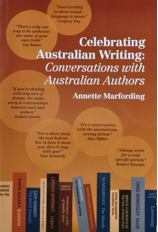
This is the fourth in my occasional series of Spotlight posts inspired by Annette Marfording’s Celebrating Australian Writing: Conversations with Australian Authors, and this time I’m featuring an indigenous author to coincide with Lisa’s (ANZLitLovers) Indigenous Literature Week.

Larissa Behrendt is the perfect subject for what is also NAIDOC Week, not only because she has a few books under her belt, but also because her new book published earlier this year, Finding Eliza, explores how colonisers have written about indigenous people. Behrendt is a Eualeyai/Kamillaroi woman, and in her interview with Marfording describes herself as a Type A person. Looking at what she has achieved in her less that 50 years I can well believe it. She is currently Professor of Indigenous Research and Director of Research at the Jumbunna Indigenous House of Learning at the University of Technology, Sydney. She has won awards for her fiction, and been on the boards of various arts organisations including the Sydney Writers Festival, Bangarra Dance Theatre and the Museum of Contemporary Art. She was the National NAIDOC Person of the Year in 2009 and NSW’s Australian of the Year in 2011. As a lawyer, she has served on many boards, review committees and land councils, most of them indigenous-related. The list is impressive.

Marfording’s interview occurred in August 2010. As she does with each of her interviews, Marfording commences with a brief biography of her subject at the time of the interview, and follows the interview with a biography update to the time of publication. It’s nicely done.

I particularly loved this interview not only because Marfording asks, as she does in all the interviews, thoughtful, relevant questions showing her understanding of the subject, but because in this interview she covers some issues of particular interest to me. More on that anon.

Marfording asked Behrendt, as she tends to ask all award-winners, what winning awards means to her. Behrendt admits that it is affirming to win an award but also says that the richest prize is when a reader tells her that a book “touched” them or that it’s “like me and I never see myself in a book”.

Some of the questions Marfording asked relate to the autobiographical nature of her work, as her two novels, Home (2004) and Legacy (2009), both draw strongly on her family, with Home looking particularly at the stolen generation issue and Legacy being more specifically about her father and her relationship with him. She said that although Home was heavily fictionalised, her father found it hard to read. “It was flattering to me as a writer,” she said, “because it meant I’d got it right.”

Marfording also questioned Behrendt about the fact that her two novels also tend to be issue-based. As a fiction reader, I loved Behrendt’s response. She said that, as a lawyer, she has advocated and written factual pieces on many of the same issues, but that

telling a story that actually explains how a policy can impact on somebody’s life so personally, telling that story from a really human point of view, can influence more people than the most eloquent legal argument, especially when you can talk to somebody through the universals that they understand, like the love between siblings, the love between parents, etc.

I love this reference to universals – to the things that bring us all together. She mentions them again later in the interview, but here I want to share her gorgeous language. She said:

I’ve got very strong opinions, and I think it was a real learning process to learn that sometimes it’s through the whisper of a story that you can influence people more than through the louder, shouting style of activism.

There were other questions too, but I want to conclude on two that focused on her as an indigenous writer, one on labelling, and the other on the issue of non-indigenous people writing about indigenous people (which, as you know, I’ve raised here a few times).

Regarding labelling, Behrendt described it as a complex question. While she has no problem being identified as an indigenous writer, she said it can become problematical when writers are pigeonholed. For example, at the Byron Bay Writers Festival she was invited on a panel discussing “fathers”, a panel that recognised the diversity of perspectives, but in many festivals indigenous writers are lumped together on a panel about indigenous writing. She said that:

What we like to say is that within our writing – and I think that’s true of every Aboriginal author – there are universal themes about family, about love, about betrayal, about hurt, about anger and jealousy, and these are the things that actually unite us.

It’s a problem, in other words, when indigenous authors are seen to be writing only about indigenous subjects. Love it. The comment reminded me of Ellen van Neerven’s Heat and light (my review) in which some of the stories didn’t focus on or clarify race or ethnicity of the characters. They were just about people. For Behrendt, any story – whether the focus is an indigenous issue or not – is, essentially, about universals.

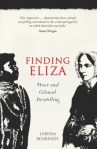
Larissa Behrendt, Finding ElizaAnd finally, that issue about non-indigenous writers writing on indigenous people. Again Behrendt is thoughtful rather than dogmatic. She says she’s always interested in how non-indigenous people portray indigenous people – hence, obviously, Finding Eliza – but that it’s difficult for them to do it authentically because they don’t know enough about Aboriginal life and culture. The reverse is a little different because Aboriginal people are “so bombarded with the dominant culture”. She identifies some writers who have not done it well – albeit she respects their hearts – and then names some who have impressed her. Kate Grenville in The secret river is one. Grenville, she says, doesn’t try an Aboriginal point of view. Instead

through using her non-indigenous characters, by showing their ignorance, their violence, their sense of entitlement, their fear, she tells a very strong story about Aboriginal experience. You read her book and you know exactly what it was like for Aboriginal people.

Grenville talks in Searching for The secret river about the issue of presenting the indigenous perspective. It was something she thought carefully about. Nice to see she’s been vindicated, in the eyes of Behrendt anyhow. The other effective portrayal she offers is Liam Davison’s The white woman. (Davison was tragically killed in the MH-17 disaster, and Lisa reviewed The white woman, as well as his other novels, as a tribute to him.) Behrendt says that Davison tells the story of massacres in Gippsland but relates

the story from the perspective of somebody who goes out as part of those hunting parties, and by getting into the psyche of the kind of person that can actually commit the most brutal aspects of a colonisation of a land, he tells a very strong story about Aboriginal people.

So, while she doesn’t see it as a no-go zone for non-indigenous writers, she does believe that the level of ignorance makes it a difficult challenge.

Another great interview with a writer who’s been in my list of must-reads for a long time. I’ll be starting soon with a short story. Watch this space.

Previous Spotlight posts:

Annette Marfording
Celebrating Australian Writing: Conversations with Australian Authors
Self published, 2015
273pp.
ISBN: 9781329142473

Note: All profits from the sale go to the Indigenous Literacy Foundation. To find out where you can purchase this book, please check Marfording’s website.


Do you consult consumer reviews?

I am not one of those who in expressing opinions confine themselves to facts. (Mark Twain, Wearing White Clothes speech, 1907)

In asking this question about consulting consumer reviews, I’m talking not only about those for books (such as on GoodReads and Amazon), but for restaurants, hotels, and all sorts of other things like clothes and appliances. I use them – though not for books. That is, I never use sites like Amazon or GoodReads to find books to read. When I consult book reviews, it’s usually after I’ve read the book, and I want to compare my response with my favourite bloggers and reviewers.

But, I do check consumer or user reviews for other products and services, most commonly restaurants and hotels when I’m travelling. And, I generally find them very helpful. I can’t think of a time when a TripAdvisor* restaurant review, for example, has led me astray. Similarly I find user reviews on clothing sites extremely helpful. However, I do read sites like TripAdvisor with my antennae out, with, that is, my critical faculty fully engaged.

Here are some of the things I look for:

Date: how recent are the reviews? I check that TripAdvisor hasn’t listed reviews by my “friends” first. Some of these reviews can be significantly older than the latest reviews and may even be for an earlier iteration of the place I’m checking out.

Frequency: how many reviews are there? And are there several for recent dates? Places, particularly restaurants, can change quite quickly, so old reviews may not be very useful or relevant to what the place is like now.

Content: what do the users actually say? I focus more on that than the rating they give. Reading what users say and how they say it, is not only relevant for the actual content, but can give you insight into how closely they may match your preferences and expectations. (See under “the reviewers” below).

Ratings (particularly the ratio of good to bad): one or two bad reviews rarely faze me. They usually mean a mismatch between what the restaurant (or whatever it is) offers and what the reviewer was expecting or, it can be that the restaurant just had one of those days.

The reviewers: while I almost never know the reviewers, I try to understand where they are coming from. It’s usually easy to tell if a reviewer was looking for something different. Diners may complain about small portions or slow service in a fine dining establishment, or a reader might criticise the lack of plot in an experimental novel. You can also look at the reviewer’s profile and check out their other reviews to get a sense of how they review overall. I particularly love clothing  reviews when the reviewer shares something about her body shape, particularly height and weight. It helps me calibrate, for example, their assessment of example of whether an item is “true to size” or fits small or big.

WineGlassBay

It’s worth it – Wine Glass Bay from the lookout

I thought I’d share here an example showing how the needs and abilities of individual reviewers can impact what they write. They are comments on TripAdvisor about the Wine Glass Bay Lookout Walk in Tasmania:

  • “It’s a short walk to the lookout and it’s totally worth it”
  • “A bit of effort but not too ambitious, a bit of sweat, but the view is worth it”
  • “we did find some parts of the walk tough on the way up, but it was well worth it”
  • “Prepare ye for this! It is a hard slog and a fair way, but the end result is stunning, especially if the sun shines at the right time”
  • “Challenging hike to get to the lookout but definitely worth it”
  • “The walk/climb up from the carpark to the lookout is not for the unfit … especially the elderly”
  • “The long walk up the hill was certainly worth it”

So, “short walk” or “a hard slog”? Mr Gums and I would concur with the second dot-point commenter. We found it a little strenuous but comfortably doable, and not particularly long. Indeed we went on to complete the 11km Hazards Bay circuit rather than just do the return 3-4km lookout walk. It’s a well-trodden well-made path, but it is uphill and has some steps. We’re moderately fit late middle-aged people. Those who are overweight, well on in years, or who suffer from physical conditions like arthritis or breathing issues, though, would not find it easy.

Owner responses: how does the owner respond to reviews, particularly bad reviews? Are they defensive, or, worse, aggressive towards the reviewer, or do they respond calmly, explaining the situation and/or what they’ve done to rectify the situation. Even where the reviewer is being unreasonable, I like to see the owner, as in all good customer service situations, attempt to mollify the situation rather than inflame it.

Authenticity: there is always the risk of fake reviews.There are owners/authors/relations/paid reviewers etc who write good reviews about themselves and, worse, bad reviews about others, and there are those who tick the box that they have no business or personal relationship with the product or service when they do. There’s not a lot we consumers can do about that except to look closely for the “rat”. Sometimes it will stand out (be over the top in one direction or another, for example; be too specific or not specific enough), but often it won’t. My approach is to not rely solely on one platform. I check the product/service’s website, where there is one, and other review services or listings, including, where possible, professional ones. No-one ever said research was easy!

Images: I love it when reviewers include photos of dishes they’ve eaten at a restaurant or cafe, or of the rooms in a hotel. Photos can complete the “picture” beautifully. And pictures rarely lie – though of course, they are selected. TripAdvisor identifies where the photo is management supplied (providing management is honest of course).

So, yes, I do consult consumer reviews regularly for certain products – particularly for clothing, eating and travel. The downside, particularly when travelling, is that you can lose the spontaneity of, and sense of achievement in, discovering your own treasures. So, we don’t use reviews slavishly or exclusively. And, we always watch out for opinion-givers like Mark Twain! Following this approach, I find that on balance consumer reviews are one of the benefits our out digital age.

What about you? If you do use them, what sorts of products do you use them for? Do you use them to choose your reading? Is your experience mostly positive or negative?

* I use various consumer sites/reviews but TripAdvisor is the one I know best.


William Makepeace Thackeray, The luck of Barry Lyndon (#Review)

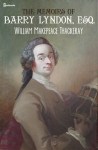
By the time I reached about the 30% mark (on my Kindle) of William Makepeace Thackeray’s classic novel, The luck of Barry Lyndon, I was reminded of a monologue by English comedian Cyril Fletcher which my father had on an old gramophone record. It’s about a “lunatic” (this was in less linguistically-sensitive times) who decided to write a novel. I won’t spoil the fun because you can watch Fletcher perform it himself on YouTube (it’s the first short story):

If you’ve watched it, you might see my point, because Barry Lyndon does go on and on and on, reporting adventure after adventure after adventure, with no apparent change or development in his character (except that he gets older!). I am exaggerating a bit, but …

So, why did I persevere? Firstly, it was my reading group’s June book, and I always like to do my homework; secondly, it is a classic that I haven’t read; and thirdly, I sensed satire, and was intrigued to see just where it was going. As a reading experience though it’s a challenge, one that was perhaps less so for contemporary readers in 1844 because they received it in serial form over 10 months or so. Still, I’m not sorry I read it.

What's in a name?

What’s in a name?

Anyhow, enough introductory patter. Let’s get down to it, starting with a little about the story. It’s a picaresque tale, a popular form in the 18th century in which the story is set, and spans many countries from Ireland and England to much of Europe. Its “hero”, Redmond Barry, pretends to be (believes, indeed, he is) a gentleman – he knows how to speak, dress, and duel – but, see how I enclosed “hero” in quotation marks? That’s because he is, in fact, an anti-hero – a conman and consummate rake (another great 18th century type!). Having lost the hand of his cousin, and then his money through gambling in Dublin, he ends up a soldier fighting the Prussians in the Seven Years’ War. While in Europe, he teams up with an uncle and together they manage to live the high life, gambling their way around Europe. “Luck”, of course, runs out, and he’s penniless again but he manages to essentially bully the wealthy and widowed Countess of Lyndon into marriage. However, things again go bad as Redmond Barry (now renamed Barry Lyndon) mismanages his wife’s money – and so the story continues to its inevitable conclusion.

The “luck” of Barry Lyndon?

One of the questions the book raises is that of “luck”. To what extent is Lyndon master of his own fate and to what extent does luck come into play. As one of the members of my reading group said, Lyndon is one of literature’s greatest justifiers. He can justify (excuse) just about everything he does, but he’s also the consummate unreliable narrator. He continually asserts the “truth” of his story, even though, early on, he’s told us that the “Irish gentry . . . tell more fibs than their downright neighbours across the water.”

The novel opens with:

Since the days of Adam, there has been hardly a mischief done in this world but a woman has been at the bottom of it …

And there it starts. Whatever happens to Lyndon is always someone else’s fault – nothing to do with his gambling, his inability to manage money, or his insensitivity to the needs of anyone but himself. There is a strong misogynistic thread through the novel – but this is part of the satire, which is common in picaresque novels. The targets are many, but a major one is idea of the 18th century gentleman, the sort of person Barry Lyndon proclaims throughout that he is but that he shows by his actions he is not!

The novel is, overall, a romp, albeit a rather tedious one at times, but it does have some things to tell us, besides what a “gentleman” should be. One of these, I think, is that it chronicles social change in Europe, the change from the chivalric life of aristocracy to a more bourgeois life of the middle classes. I’ll give one little example. Lyndon spends his life settling scores through the “gentleman’s” method, a duel (though to be fair he “pinks” people rather than kills them). However, late in the novel, as things close in, he is brought to account for one of his schemes. He writes:

Of course I denied the charge, I could do no otherwise, and offered to meet any one of the Tiptoffs on the field of honour, and prove him a scoundrel and a liar: as he was; though, perhaps, not in this instance. But they contented themselves by answering me by a lawyer, and declined an invitation which any man of spirit would have accepted.

We are talking late eighteenth century, you see – the time of the American War of Independence and the lead into the French Revolution. The times, they were a-changing.

Truth or fiction?

So, there’s the issue of Lyndon asserting the “truth” of his story, asking us to trust that he is the decent, good guy he says he is. His misfortunes, he says, are due to

the consequences of villainy in others, and (I confess it, for I am not above owning to my faults) my own too easy, generous, and careless nature…

Hmm … not quite the “faults” we readers would ascribe to this wife and child-beater, profligate spender, and keen duellist.

However, there’s another angle to this “truth” idea. It’s related to the idea that this is a “memoir”, not a novel. He writes:

Were these Memoirs not characterised by truth, and did I deign to utter a single word for which my own personal experience did not give me the fullest authority, I might easily make myself the hero of some strange and popular adventures, and, after the fashion of novel-writers, introduce my reader to the great characters of this remarkable time. These persons (I mean the romance-writers) …

Later, we find, in one of the occasional “footnotes”, which are part of the novel and provide the occasional corrective to Lyndon’s narrative:

[Footnote: From these curious confessions, it would appear that Mr. Lyndon maltreated his lady in every possible way; that he denied her society, bullied her into signing away her property, spent it in gambling and taverns, was openly unfaithful to her; and, when she complained, threatened to remove her children from her. Nor, indeed, is he the only husband who has done the like, and has passed for ‘nobody’s enemy but his own:’ a jovial good-natured fellow. The world contains scores of such amiable people; and, indeed, it is because justice has not been done them that we have edited this autobiography. Had it been that of a mere hero of romance one of those heroic youths who figure in the novels of Scott and James there would have been no call to introduce the reader to a personage already so often and so charmingly depicted. Mr. Barry Lyndon is not, we repeat, a hero of the common pattern; but let the reader look round, and ask himself, Do not as many rogues succeed in life as honest men? more fools than men of talent? And is it not just that the lives of this class should be described by the student of human nature as well as the actions of those fairy-tale princes, those perfect impossible heroes, whom our writers love to describe? There is something naive and simple in that time-honoured style of novel-writing by which Prince Prettyman, at the end of his adventures, is put in possession of every worldly prosperity, as he has been endowed with every mental and bodily excellence previously. The novelist thinks that he can do no more for his darling hero than make him a lord. Is it not a poor standard that, of the summum bonum? The greatest good in life is not to be a lord; perhaps not even to be happy. Poverty, illness, a humpback, may be rewards and conditions of good, as well as that bodily prosperity which all of us unconsciously set up for worship. But this is a subject for an essay, not a note; and it is best to allow Mr. Lyndon to resume the candid and ingenious narrative of his virtues and defects.] (Ch. 17)

I love the satire here of romance-adventure novels, epitomised by writers like Sir Walter Scott, and note Thackeray’s plea for what became the great social novels of the nineteenth century. (You have to wonder, though, at the idea of “Poverty, illness, a humpback” being “rewards”!)

And here I will end because many have written eloquently about this classic. All I wanted to do was to make a couple of points! Have you read Barry Lyndon, and did you enjoy it?

William Makepeace Thackeray
Barry Lyndon (orig. The luck of Barry Lyndon)
Goldfish Classics Publishing, 2012
[339pp.]

Monday musings on Australian literature: Recent books by Indigenous Australians

Next week, from 3rd to 10th of July, Lisa at ANZLitlovers is running her now annual Indigenous Literature Week. While she usually holds it during or near Australia’s NAIDOC Week in order to support that program’s goal of increasing awareness and understanding of indigenous Australian culture, she does in fact accept reviews of works by any indigenous authors worldwide. In other words, you don’t have to be or read Australian to join in, so if you’d like to raise awareness of an indigenous culture near (or not so near) you, do head over to her blog (link above) and make your contribution.

Lisa has included links to lists of indigenous Australian books, including her own, to get people started, so I’m not going to repeat that. But, for my own benefit as well as to support Lisa’s week, I thought I’d suss out and share some works – across genres and forms – that have been published in the last 12 months or so. It’s a serendipitous list:

  • Tony Birch, Ghost riverLarissa Behrendt’s Finding Eliza: Power and colonial storytelling (UQP, 2016): historical analysis of how indigenous people – in Australia and elsewhere – have been portrayed in stories by the colonisers.
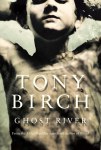
  • Tony Birch’s Ghost river (UQP, 2015) (my review): novel set in working class Melbourne in 1960s; long-listed for the 2016 Miles Franklin Award.
  • Ali Cobby Eckermann’s Inside my mother (Giramondo, 2015): poetry collection.
  • Lizzie Marrkilyi Ellis‘ Pictures from my memory: My story as a Ngaatjatjarra woman (Aboriginal Studies Press, 2016). (Yvonne’s Stumbling through the past review): memoir by a Central Australian woman.
  • Stan Grant’s Talking to my country (Lisa’s ANZlitLovers review): memoir, exploring the complicated experience of growing up black in a white dominated world.
  • Ambelin Kwaymullina’s The foretelling of Georgie Spider (Walker Books, 2015): the last in her Young Adult fantasy series, the Tribe trilogy, set in a post-apocalyptic world in which Aboriginal culture and philosophy play a significant role.
  • Marie Munkara’s Of ashes and rivers that flow to the sea (Vintage, 2016): memoir about her search for her origins. (I read her David Unaipon award-winning Every secret thing, and loved her voice)
  • Lesley and Tammy Williams’ Not just black and white (UQP, 2015) (Lisa’s ANZLitLovers review): won the David Unaipon Award in 2014

I decided to focus just on 2015 to 2016, but in my research I included the new biennial Indigenous Writers Prize in the New South Wales Premier’s Literary Awards, and found that the 2016 joint winners were books published in 2014, so I’m including them too:

  • Bruce Pascoe’s Dark Emu (Magabala Books, 2014) (Lisa’s ANZLitLovers review): analyses pre-colonial indigenous Australian culture suggesting that it was more “settled” than the common “hunter-gatherer” assumption. (I’ll be reading this with my reading group later this year.)
  • Ellen van Neerven’s Heat and light (UQP, 2014) (my review): collection of stories, some connected, some not, and including a longform speculative story, about living as an indigenous person in contemporary Australia.

But what am I hoping to read? First up, an older book, Ali Cobby Eckermann’s Ruby Moonlight, followed by, if I have time, a newer one, Stan Grant’s Talking to my country.

Do you make a point of reading indigenous literature? And do you have favourites?

Jane Austen, a moral absolutist?

Janet Todd, ed, Jane Austen in context

Janet Todd, ed, Jane Austen in context

In my post on the Jane Austen Festival Australia a couple of months ago, I summarised the various papers presented at their day-long symposium. One of the papers was by a Marcus Adamson and his topic was “The ever absolute Miss Austen”.

Adamson’s paper was a challenge to fully comprehend, partly because he referenced, in a short time, a wide range of philosophers and thinkers from the ancient Greeks on. It was impossible to keep up with the flow of ideas, arguments and connections. Fundamentally, though, he argued that Austen’s novels have a serious moral vision, that they present moral truths and certainties that are innately “known” to us. In other words, she asks, he says, the big Socratic question, “How should I live my life?” I agree with him that Austen’s novels do contain serious commentary about human behaviour, but moral truths and certainties? Moral absolutes? That I was less sure about. My local Jane Austen group decided to make it a meeting topic, so I thought I’d share (document) here my meeting preparation. Bear in mind, though, that I’m not a philosophy student so my ideas are very much of the lay variety.

Many have written about Austen’s moral philosophy, one of the first being her contemporary, the theologian Richard Whately (1787-1863) who described her as a Christian writer, but unobtrusively so. Certainly, none of her books explicitly promote Christianity – though in Mansfield Park, Edmund Bertram does talk about the role of a clergyman in guiding manners and morals.

Anthony Ashley Cooper, 3. Earl of Shaftesbury (1671–1713)

Shaftesbury (Public domain, via Wikimedia Commons)

More commentators, in fact, describe Jane Austen as reflecting the philosophical views of Aristotle, and later thinkers like Shaftesbury, Hume and Adam Smith. Some go further to argue that her moral/ethical views are the opposite of the absolutist ideas of people like Calvin. To generalise very broadly, hers is seen as a value system that tries to marry self-interest (or prudence) with sympathy for or kindness to others (or amiability). A recent writer, Rodham, describes her moral philosophy as one of defining a good life in terms of becoming the kind of person who does the right thing at the right time for the right reasons. No wonder I like Jane Austen!

The idea of being flexible – Aristotelian, perhaps – rather than absolute, can be seen in Persuasion, where Anne Eliot wonders regarding Captain Wentworth:

whether it ever occurred to him now, to question the justness of his own previous opinion as to the universal felicity and advantage of firmness of character, and whether it might strike him, that, like all other qualities of the mind, it should have its proportions and limits. She thought it could scarcely escape him to feel that a persuadable temper might sometimes be as much in favour of happiness as a very resolute character.

It can also be seen in Northanger Abbey, where Henry Tilney tells Catherine Morland, upon realising her wild surmises:

Remember that we are English, that we are Christians. Consult your own understanding, your own sense of the probable, your own observation of what is passing around you … (Chapter 24)

And so, Catherine comes to recognise the complexity of the moral world versus simplicity/absolutes of the Gothic literature she loved to read:

Among the Alps and Pyrenees perhaps, there were no mixed characters. There, such as were not as spotless as an angel, might have the dispositions of a fiend. But in England it was not so; among the English, she believed, in their hearts and habits there was a general though unequal mixture of good and bad. Upon this conviction she would not be surprised if even in Henry and Eleanor Tilney some slight imperfection might hereafter appear… (Ch. 25)

(I’ll ignore the nationalistic aspect of these comments, for now. They are relevant to a different discussion!)

In Emma, we see many discussions about how to live, how to behave, how to treat people, between Mr Knightley and Emma. And so on through the novels …

The way Jane Austen writes conveys her moral world view, too – not only through authorial comment as omniscient narrator, but also in her language. She speaks frequently of the mind (not of the soul or spirit, for example): “inferior in talent and all the elegancies of mind” (Emma); “a thinking mind” (S&S); “one of those extraordinary bursts of mind” (Persuasion), and so on. Her characters tend to be multi-dimensional, and she describes them, writes Ryle, in terms of their “tempers, habits, dispositions, moods, inclinations, impulses, sentiments, feelings, affections, thoughts, reflections, opinions, principles, prejudices, imaginations and fancies”. These terms are, he writes, more Shaftesbury than those of black-white ethics.

Before I conclude, I must digress briefly. Knox-Shaw refers, during his discussion, to ‘Hume’s remarks on how an irrational and universal “propensity to believe” generates a momentum of its own …’. This brought me up short, and pointed me right at today’s politics, at how easy it is to accept what is said – the three-word slogans, etc – without analysis or thinking, which can result in decisions being made on the basis of unsubstantiated fears rather than true understanding of the issues.

Conclusion

Austen’s moral or ethical view seems, from my reading of her novels, to be complex, nuanced. We don’t see many absolutes, but we do see characters, particularly her protagonists, juggling awareness of others with self-preservation. She wants her characters to recognise context and the need for moral discrimination. In other words, I, and I think many of us, decided that Austen doesn’t present moral absolutes, or certainties, but that she is interested in how to live a decent (ethical) life.

Some of my sources:

  • Knox-Shaw, Peter. “Philosophy” in Todd, Janet (2005), Jane Austen in context. Cambridge: Cambridge University Press.
  • Rodham, Thomas. “Reading Jane Austen as a moral philosopher” in philosophy.org
  • Ryle, Gilbert. “Jane Austen and the moralists”, reprinted from The Oxford Review (1), 1966

Dorothy Johnston, Through a camel’s eye (Review)

When should I give up saying that I don’t read crime? In the last seven years, I’ve posted nine reviews tagged crime fiction (of which one was a guest post). Perhaps just over one a year still qualifies as not reading crime? Then again, what’s the point of saying it, if every now and then I do read crime? I think there is a point – it advises that I’m not a crime fiction expert, so my posts need to be read from that point-of-view, and it also tells readers not to come here looking for posts on crime.

So now, with that off my chest, I’ll get to Dorothy Johnston’s crime novel, Through a camel’s eye. It’s the first novel in her new crime series, Sea-change mysteries. I decided to read it for two reasons. One is that I’ve read and posted on two other works by her and was interested to see how a Miles Franklin shortlisted author might approach crime fiction. The other is that she was going to be in town last weekend and we’d agreed to meet for a quick cuppa, so I thought this would be the time to read her latest book (though I didn’t finish it in time). I didn’t plan to quiz her about the book, but I did want to show some support for a hardworking author. As with most of the crime novels I’ve read while blogging, I wasn’t sorry about my decision to expand my horizons a little.

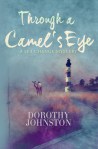
Dorothy Johnston, Through a camel's eyeBefore I write about the book, though, I do want to mention the cover. It features a soft-edged image of a camel, lighthouse, and boardwalk. It’s gentle, atmospheric and, woo-hoo, it doesn’t have an image of a tiny man or a woman’s back as has been popular in recent times. The murder victim is, however, a woman, which, given women do not comprise the majority of homicide victims, is another issue that crops up in commentaries. The point here, though, is that Johnston does not delight in gruesome detail. We gradually discover during the course of the novel how the murder took place but the details, the victim’s emotions, the appearance and/or treatment of the body are not focused on. This is because Johnston’s interest lies elsewhere.

And now, I should get to the story. It’s a police procedural set in a small coastal community in Victoria. The police station is run by a local, Constable Chris Blackie, who returned to the town when his mother was unwell and stayed on after she died. The novel starts, though, with Anthea, a young, recently graduated constable who has been sent to be Chris’ assistant. Her country-town placement has precipitated a break with her architect lover, and she’s pining. Actually, the novel doesn’t quite start with her, either – she’s just the first police officer we meet. The novel starts with one of the town’s “characters”, the recently mute Camilla Renfrew, watching a young woman, Julie, train a young camel. As Camilla walks away, she remembers that on a previous visit she’d heard a woman’s scream. And so there we have it, we think, the crime – and yes, one of the book’s two crimes is a murdered woman, but it’s not, in fact, the first crime we are confronted with. That honour goes to the aforementioned camel, Riza. He goes missing.

From these two crimes, Johnston spins an intriguing tale that keeps us wondering whether the crimes are connected or not – but you’ll have to read it yourself to answer that question. I want to talk instead about what I enjoyed most about the novel – characters and language.

… looking for drama

Most crime novels, I think, draw on archetypes. In this case, there’s the idea of a “sea-change” – particularly for Anthea – and the basic character set-up, the reserved, loner boss, and the fresh, unsettled, somewhat disengaged offsider. Anthea is “disappointed” to have been sent to Queenscliff, and thinks she has her boss pinned:

She would like to dismiss Chris Blackie as an old fuddy-duddy, or a closet-gay; but found she couldn’t, quite.

She’s attracted to “forceful men with definite ideas” but Chris is not that sort of man. He’s barely conscious of his “maleness”, and she doesn’t quite know how to respond to such a person. For his part, Chris would have been happy to run the station solo. Nonetheless, he’d been open to the idea of a woman, but

Anthea had come looking for drama. He’d seen it in her eyes the minute she walked in. Both the anticipation and the almost instantaneous disappointment …

He wasn’t to know of course that her first sight of him, bum-up tending the police station’s lavender and rose garden, hadn’t exactly inspired her.

So, we have an archetypal “misfit” situation – two people working together, neither of whom are completely comfortable in their skins. It is the development of these two characters and their relationship, rather than in solving the crime, that I enjoyed most in the novel. Anthea may have come “looking for drama” but Johnston develops her story quietly, tenderly, rather than dramatically. She achieves this by taking us into the heads of these two unsure people, showing us their thoughts, feelings and reactions.

Why are they unsure? Well, I’ve already described some of it, but there’s more – and this could be where those of you who don’t like coincidences may come a little unstuck, because there are several missing parents here. Anthea’s parents had died in an accident when she was three, while Chris’ father had drowned when he was ten. Camilla’s “cold, punitive” husband had died of a heart attack when her now adult son, Simon, was ten, something for which he seems to still blame her. And young Julie, the camel owner? Her parents had died in a car-crash when she was in her teens. Johnston doesn’t labour all this, but these losses provide background to the characters and help explain their lack of mooring. Coping with loss and resolving the past could also be seen as themes of the novel. Anthea, for example, needs to let go of her lover, while Chris needs to resolve the fears that are stunting him.

Besides these characters, there’s Johnston’s description of place and small town life. We meet the town’s denizens – farmers, teenagers, caravan park owners, retired solicitor. They are typical – they have to be for us to believe the town – but, overall, they work as individuals too. We see the pros and cons of small town living, the everyone-knows-everyone-else’s-business aspect alongside the looking-out-for-each-other part. Chris’ old cottage and Anthea’s flat, the paddocks and seascape, are all clearly, but succinctly, described, as are the characters. Here is a minor character:

His big frame relaxed as though someone pulled a peg that was holding complicated scaffolding in place.

And here is the physical environment, seen through the eyes of another minor character:

Camilla was fascinated by the thick white stalk of the lighthouse, appearing and disappearing through the fog. Behind her, the pier squatted as a vague horizontal line, a grey denser than the sky. Its verticals were lines of shadow legs, a giant centipede.

The crimes are solved, and Chris and Anthea progress in self-understanding, but enough openings are left for us to wonder where Johnston might take these characters next. Through a camel’s eye relies more on the little details of lived lives than on the big dramas to provide interest, which is exactly why I enjoyed it.

awwchallenge2016Dorothy Johnston
Through a camel’s eye
For Pity’s Sake Publishing, 2016
216pp.
ISBN: 9780994448521

Monday musings on Australian literature: My Aussie reads of 1996

Today, I’m having a bit of fun – a little trip down memory lane, in fact. I was inspired in this by Canadian blogger Debbie (ExUrbanis) who recently wrote a post on her past reads. Ever on the lookout for ideas for Monday Musings, I leapt at this one. (I do a few ideas running around my head, but I’m going to let them gel there a little longer and go for a simple post today!)

Debbie posted about 1997, but I thought I’d go for the even two decades ago. The only trouble is that I didn’t start my reading database until 1998, so it took a little bit of sleuthing through other records to discover what I read in 1996. Consequently, my list is probably not complete, but is complete enough I think for today’s purposes. I’ll start, though, with a brief look at what books and authors were “trending” (to use current jargon) in 1996 literary Australia.

1996 in Australian literature

As I only want to provide a little context, I’m just going to look at some of the major awards. Seven books were shortlisted for the Miles Franklin Award, of which four were by women, but the winner was Christopher Koch’s Highways to a war. In other awards, Sue Woolfe won the Christina Stead Prize for Fiction with Leaning towards infinity, Thea Astley The Age Book of the Year with The multiple effects of rain shadow (my review), Richard Flanagan the Adelaide Festival Award with Death of a river guide, and Amanda Lohrey won Victoria’s Vance Palmer Prize for Fiction with Camille’s bread. 

Besides these authors, other Australian writers making their mark in the early to mid 1990s included, to name just a few, Helen Garner, Peter Carey, Roger McDonald, David Malouf, Drusilla Modjeska, and Frank Moorhouse. It’s encouraging to know that all of these particular writers are still writing and publishing twenty years later.

My 1996 Australian reading

I discovered a fascinating, though not completely surprising, thing about the Aussie books I read in 1996. They were ALL by women. Actually, there was one exception, John Marsden, but that related to my reading children’s and young adult books with my children.

This was in stark contract to my non-Australian reading where male writers far outnumbered the women. I read T Coraghessan Boyle, David Guterson, Kazuo Ishiguro, Henry James, Michael Ondaatje and Salman Rushdie. The only non-Australian women I read, besides a couple of children’s authors again, were Kate Atkinson and the Japanese writer Fumiko Enchi. Although overall this is probably fairly typical of my overall practice, it is a little unusual because I have always read Aussie males too – like, back then, Peter Carey, David Malouf, and Tim Winton.

Anyhow, here is my Aussie list for 1996 as best as I can ascertain it …

Helen Garner, Cosmo cosmolinoFiction (Adult)

  • Blanche d’Alpuget, Turtle beach
  • Helen Garner, Cosmo Comolino (shortlisted for Miles Franklin Award in 1993) (read again and reviewed for this blog in 2008)
  • Yasmine Gooneratne, Changing skies
  • Janette Turner Hospital, The ivory swing
  • Sue Woolfe Leaning towards infinity (won the 1996 Christina Stead Prize for Fiction, New South Wales Premier’s Literary Awards)

Non-fiction

  • Jill Ker Conway, True north (Memoir)
  • Katie Holmes, Spaces in her day (History)
  • Pat Lovell, No picnic  (Memoir)

This is not a huge list, and is not, as I’ve already said, all that I read in 1996, but it contains most if not all of the adult Australian literature I read then. It was a time when I was working, and had two young children, so had little time and energy for reading. Even so, most of these books are still vivid in my mind.

janette Turner Hospital, The ivory swing

Janette Turner Hospital, The ivory swing

Janette Turner Hospital’s The ivory swing, published in 1982, was her first novel. I read several of her novels, before and after this, and most of them are still memorable. She’s such a powerful, evocative writer. The ivory swing, like many first novels, has a strong autobiographical element, drawing from her experience as a young wife in southern India. It won a significant Canadian award, the Seal Award for Best First Novel. Queensland-born, Janette Turner Hospital was, for several years, the Carolina Distinguished Professor of English at the University of South Carolina. Coincidentally, another writer I read in 1996, the also triple-named Jill Ker Conway, made her career primarily in the USA, where she was the first female President of Smith College.

But the book that has probably stayed with me most from this list is, surprisingly, a non-fiction work, Katie Holmes’ Spaces in her day. Subtitled Australian women’s diaries of the 1920s and 1930s, it grew out of Holmes’ PhD. I was fascinated by the stories of women’s lives – how they felt about their relationships, the way the single female relation would be expected to give up her own life when family needed help, how they managed washing day – because these were lives of my grandmothers and aunts. In my notes, still in the book, I comment that Holmes emphasises social constructs almost exclusively over other factors, particularly in her discussion on ageing where I suspect natural or biological issues are also at play, but this didn’t then, and still doesn’t, affect the power of this book, because the women’s voices are so strong and because, regardless of other factors, they were indeed constricted by the rules and expectations of their society.

Do you know what you read twenty years ago, and if so I’d love to know your standouts.

Australian Women Writers 2016 Challenge completed

The time has come to write my annual completion post for my one challenge of the year, the Australian Women Writer’s Challenge. As in previous years, I signed up for the top-level, Franklin, which involves reading 10 books and reviewing at least 6. I’ve exceeded this, and I plan to continue to add to the challenge, as I’ve done in previous years, but half-way through the year seems a good time to write my completion post.

I have, so far this year, contributed 14 reviews to the challenge.

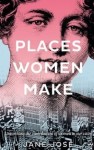
Jane Jose, Places women makeHere’s my list in alphabetical order, with the links on the titles being to my reviews:

This is quite different to last year’s completion post list which included one classic and one book by an indigenous author. I like to read classics, and I also like to read indigenous authors, but this year so far I’ve read neither. Instead, I seem to have read significantly more non-fiction, six out of 14 in fact. By the end of last year’s challenge, I’d read seven non-fiction out of 27 books in total. Looks like I’ll exceed that this year unless I stop reading Australian women’s non-fiction pretty well right now.

It’s also a little different because it includes two books by an author, the wonderful Elizabeth Harrower. Of course, it’s not that I don’t read multiple books by authors – but this usually happens over time. I tend not to find an author and immediately go hell-for-leather with that author – not because I don’t want to, but because I have books lined up, which brings me to …

… plans for the rest of the year. I know I’ll be reading at least one indigenous woman, Ali Cobby Eckermann, and I do have a couple of classics I really want to get to this year, but the review copies are piling up and there’s my reading group schedule, so I’m just going to see how it goes. The best laid plans, and all that!

Do you plan your reading in advance – and if so, do you keep to it – or do you just read what comes?