Jane Austen, The Watsons (Unfinished) Redux

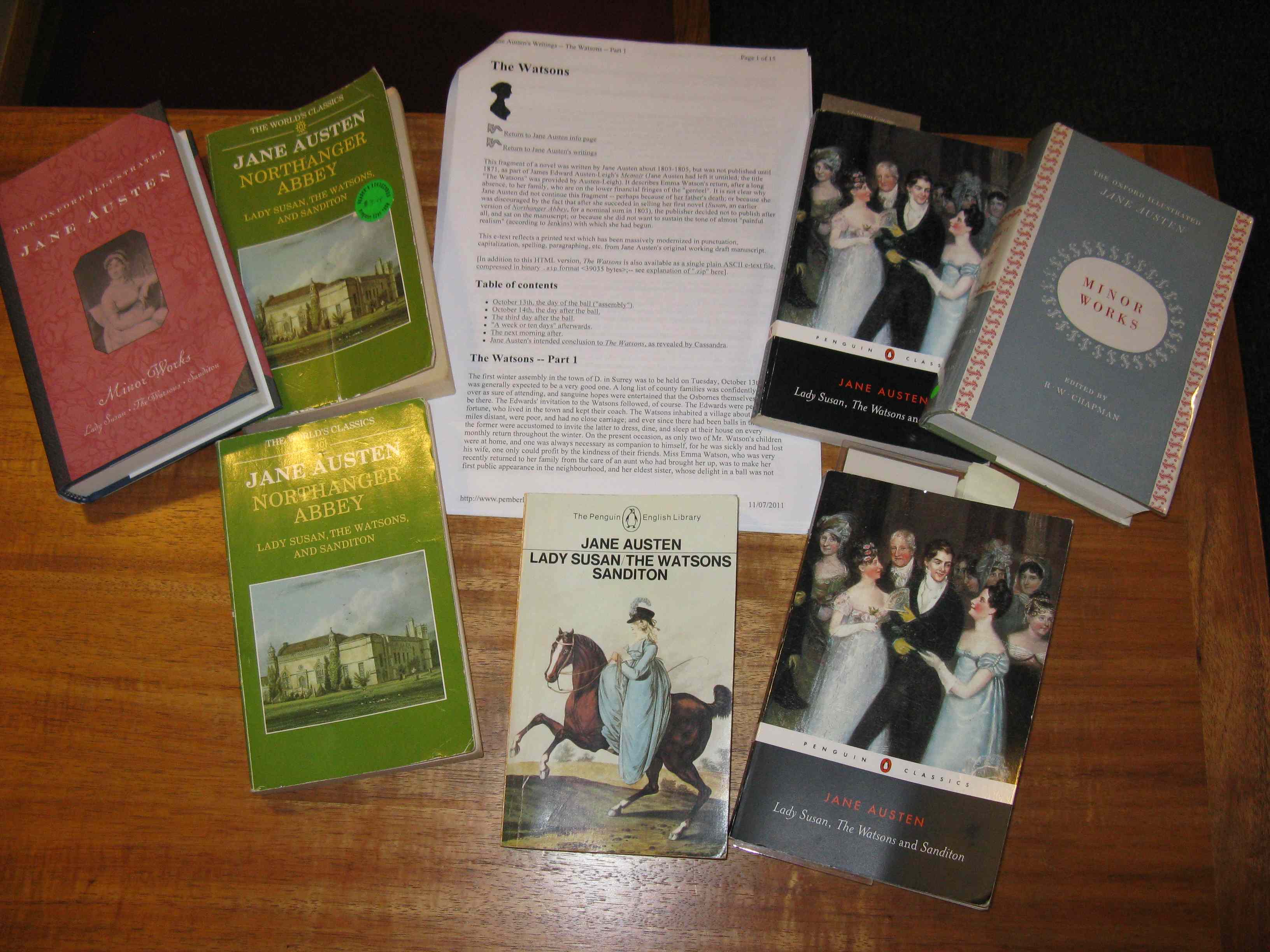
Book covers for Jane Austen's The Watsons

Book covers for Jane Austen’s The Watsons

Jane Austen fans, as you probably know, do a lot of re-reading. Given we only have six complete novels, plus her juvenilia and a couple of unfinished novels, we have little choice. Fortunately, it’s not a chore! And so, having completed rereading all her novels over the last few years for their respective 200th anniversaries, my local Jane Austen group decided to return to her two unfinished novels, starting this month with The Watsons. This was the third time we’ve done it in our relatively short existence. We did it in 2008 and again in 2011 (at which time I wrote my own reflections for this blog).

I do not plan here to write a “proper” review, so if you are interested in my thoughts, please check the link above. However, there are a couple of additional comments I’d like to make, starting with the question I posed in my 2011 post. The question relates to its unfinished nature. There are in fact two main questions regarding this: why did she stop writing it and why didn’t she pick it up again? And here I’ll quickly recap the novel’s background for those who don’t know it. The Watsons was written in Bath probably around 1803-1805, though there isn’t complete consensus about this. It’s commonly believed that she abandoned it after her father’s death in 1805 because of sadness and the resultant uncertainty in her living conditions. Whether this is true or not, it is true that she didn’t take up serious writing again until she settled in Chawton in 1809.

Now, it was at Chawton that she took up two earlier works, which became her first two published books, Sense and sensibility and Pride and prejudice. Why did she not then take up The Watsons and rework/finish it too? This is the more interesting question, I think, than why she stopped it in the first place. There are some theories around, though I haven’t investigated them thoroughly. However, her nephew James Austen-Leigh, who wrote the first “memoir” we have about her life, conjectures that Austen had become aware of “the evil of having placed her heroine too low, in such a position of poverty and obscurity” but I’m not sure I buy it.

My group discussed this idea, and we all felt that Austen had other “poor” heroines, of whom Fanny Price is the obvious example. But, the Dashwood girls were not well-to-do either. It’s true that Austen’s plan for The Watsons, as Cassandra reported, was for things to get worse for our heroine, but still …

No, my idea is different. The Watsons is broadly about four sisters and their marriage prospects – as is Pride and prejudice and Sense and sensibility. When we look at The Watsons, which Austen started after drafting those two books, we can see characters and storylines which remind us of these first two books. And so, I wonder whether, having published P&P and S&S, Austen felt she didn’t have enough new ideas to add to this storyline and wanted to try something different. Certainly, the next book, Mansfield Park, was something different. The marriage plot is still there, but it’s about a poor relation who is taken in by her wealthier ones. The interesting thing is that The Watsons commences with the return of 19-year-old Emma Watson to her family having spent 14 years with a wealthy uncle and aunt. Perhaps Austen decided to explore the story of the poor relation from a different angle, from the time of arrival at the new home?

Another thing about The Watsons is that as well as having characters who remind us of those first two novels, it also has characters reminiscent of some in later books, particularly in Emma. This suggests that while she didn’t finish The Watsons, her work on it wasn’t wasted – and she knew it.

We’ll never know of course. There’s so much we don’t know about our Jane, but it is fun trying to fill in the gaps.

A couple of apposite quotes

There’s more I could explore about this tiny fragment of around 17,500 words, but I’ll save those for the next re-read! Instead, I’ll conclude with two excerpts which grabbed my attention this time.

Gender and money

The first is a conversation between the heroine Emma and the wealthy aristocrat, Lord Osborne, who is interested in her, though his regard is not returned. In this conversation, he suggests that all women should ride horses:

‘I wonder every lady does not. – A woman never looks better than on horseback. –’
‘But every woman may not have the inclination, or the means.’
‘If they knew how much it became them, they would all have the inclination, and I fancy Miss Watson – when once they had the inclination, the means would soon follow.’
‘Your lordship thinks we always have our own way. – That is a point on which ladies and gentlemen have long disagreed. – But without pretending to decide it, I may say that there are some circumstances which even women cannot control. – Female economy will do a great deal my Lord, but it cannot turn a small income into a large one.’

Here we see Emma’s mettle. She stands up to Lord Osborne – to his assumptions about women and to his obliviousness that not all people have the means he has.

On reading to escape

And finally, The Watsons contains another of those wonderful quotes by Austen about books and reading. Here, right near the end of the fragment, Emma is thinking about the downturn in her fortunes through the death of her uncle:

The evils arising from the loss of her uncle were neither trifling, nor likely to lessen; and when thought had been freely indulged, in contrasting the past and the present, the employment of mind, the dissipation of unpleasant ideas which only reading could produce, made her thankfully turn to a book.

So, even in 1805, reading was seen as a way to occupy the mind and so escape, for a while, the troubles of life.

Jane Austen
“The Watsons”
in The Oxford illustrated Jane Austen. Vol VI, The minor works (ed. R.W. Chapman)
London: Oxford University Press, 1969
pp. 315-363

Wanted: Literary Romantic Pairs

I really should have posted this yesterday, on Valentine’s Day. What a missed opportunity! And what on earth, you are probably wondering, am I talking about?William Shakespeare, Romeo and Juliet

Well, here’s the gen. Longterm friend and regular reader of Whispering Gums, NeilAtKallaroo, needs help, and he thinks that this blog’s intelligent, engaged readers are the people to ask. The story is that his daughter is currently planning the reception for her wedding this September. She wants each table to be labelled with a romantic pair – like Romeo and Juliet, Darcy and Lizzie, Anthony and Cleopatra, and even the Owl and the Pussycat.

But, what should they call the bridal party’s table?  Currently it is just called “Bridal Party” which, as Neil rightly says, “isn’t very literary at all”! However, before you start running to your bookshelves, there’s an added request. If possible, they’d like the novel the pair name comes from “to include a sumptuous description of their wedding reception!” Please, no Miss Havishams! Neil and family welcome creativity – so think as laterally as you like – but Miss Havisham’s wedding feast is probably a step too far …

Finally, to offer a little encouragement, if someone here comes up with the pair that is eventually chosen, I will send an Aussie novel of my choice to the first person (no matter where you live) who suggested that pair.

So now, get those literary brains going …

Monday musings on Australian literature: Jane Austen and the Stolen Generations

Yes, you read right, this very brief Monday Musings post is about what Jane Austen might have said – did say in her way – about the Stolen Generations.

What makes great literature great is its timelessness. By this I mean the fact that what is said in, say 1815, is still relevant in, say, 2018. It is this timelessness, in particular, that makes me love Jane Austen. She is so right, so often, about human nature and human behaviour. So, while the quote I’m planning to share comes from British not Australian literature, and from 1815 not 2018, it relates closely to an issue that is currently very important to Australians, the Stolen Generations.

Here’s the quote:

There is something so shocking in a child’s being taken away from his parents and natural home. (Emma, ch. 11: Mrs John Knightley on Frank Churchill being removed from his home after his mother’s death)

“Something so shocking”. There’s nothing much more to say, is there … except that …

… when I drafted and scheduled this on February 7 for posting on Monday February 12, I hadn’t remembered that the next day, February 13, was the tenth anniversary of the Australian Government’s Apology to the Stolen Generations. How freaky – but how appropriate – is that? It’s also rather concerning because, as Reconciliation Victoria says:

As we approach the anniversary of the historic Apology we know that Aboriginal and Torres Strait Islander peoples are still grossly over-represented in our prisons, in out-of-home care, are still dying in custody and are still subjected to racism on a regular basis. There is still much work to do.

It’s a continuing blight on our government, on all of us, that we have achieved (are achieving) so little by most measurable standards.

For those who would like to hear the speech PM Rudd made in the Australian Parliament, here is the YouTube link.

Lynette Washington, Plane Tree Drive (#BookReview)

Lynette Washington, Plane Tree DriveLynette Washington’s debut collection of short stories, Plane Tree Drive, reminded me a little of Rebekah Clarkson’s Barking dogs (my review). Both are collections of stories revolving around a location, and in both the location is in the Adelaide region. There are differences though. Clarkson’s book is a little grittier with an overall theme of community undergoing social change, while Washington’s book is the portrait of a suburban street. There is change, of course, but the change is more broadly human – breakups, ageing and retirement, generation gaps, friendship and dementia, illness and death – although contemporary issues are also touched on.

Like Clarkson’s book too, Washington’s has some continuing storylines – such as Jennifer who is unhappily married to Dan while pining for her first love, Alexander – that are interspersed with the stories of other people. I liked this. Not only do these ongoing storylines provide a lovely sense of cohesion for the whole, but they also reflect a typical neighbourhood street. By this I mean that in any of our neighbourhoods there are people we know well, those we know a little, and others whom we only know passingly. And so, in Plane Tree Drive, there’s Jennifer who appears regularly; there are others like Maurice, Alice, Amily and Faraj who appear more than once, sometimes as a reference in another person’s story; and there are those who only appear in their own story.

To make all this work, Washington pays careful attention to structure. The overall order is chronological, driven primarily by Jennifer’s story, but the collection starts and ends with the other main continuing story, that of musician Maurice. His final section cleverly but light-handedly brings several of the characters together, but I won’t tell you how! The book is divided into sections – I think that’s the best way to describe it – which are named for the characters they cover, but some sections comprise small chapters. For example, a section titled Faraj, Coralie and Ruby, which focuses on Afghani asylum-seeker Faraj, has two short chapters, “Housing Needs Assessment” and “The Bay”. And this brings me to form …

Many of the stories are short, in fact very short, and most are told first person, but there’s some interesting variety, some experimenting with form, too. There’s a dialogue between Maurice and his wife Jacqui (“He said/She said”), some diary entries by the teenaged Poppy (“Dear diary”), several government employee reports on Faraj’s application for housing (“Housing Needs Assessment”), some social media commentary (in the cheeky “Scarlett’s shed”), and even a flow-chart from IT expert Sarah (“Oma’s fruit cake”). This playing with form – which brings with it changes in tone – break up what could, in other hands, become a tedious and melancholic parade of first person voices.

Oh dear, I’ve spent a lot of time describing the book and how it works but not much on whether I enjoyed it – so I’ll do that now. Of course I enjoyed it! How could any reader who is interested in the lives of people not enjoy a book which pokes into the nooks and crannies of all our lives? There are stories with a political bent, albeit told from personal not political perspectives. These include the aforementioned Faraj and his search for a home, a couple (Stella and Graham) who travel overseas to access euthanasia legally, and a woman (Coralie) watching the demolition of a loved theatre. I like that Washington doesn’t proselytise, but simply shows how people are affected by and react to these situations. There are lighter stories, such as Marg who talks to animals, particularly her neighbour’s badly behaved cat (“That cat”).

And there are, dare I use that cliché, “poignant” stories, such as, to give an example, Martha and Charles (“Gaps between boxes” and “So much sand and so much water”). They are a retired couple who have been together since childhood but who, at this point in their lives, suddenly find themselves at odds. She wants to adventure – to “seek out the gaps between the boxes” they’ve been ticking all their lives – but he just wants peace. He thinks “the boxes made a darn good life”. This story is gently and warmly told. No fireworks, just hope and acceptance on both sides.

There’s exploration in the writing – in form in particular – as I’ve already said, but the stories are accessible. This is the sort of short story collection that should have wide appeal. The use of recurring characters makes it appealing to those who prefer novels, while the playing with the short story form and structure provides interest for the short story lover.

Washington, who has appeared here before as editor of Breaking beauty (my review), precedes her book with an epigraph from F. Scott Fitzgerald’s The great Gatsby. The quote concludes with “I was within and without, simultaneously enchanted and repelled by the inexhaustible variety of life.” I wouldn’t say I was repelled, albeit some characters are more appealing than others, but Plane Tree Drive does contain a wide variety of life which makes it an engaging and yes, enchanting even, read. Like many books from smaller publishers, it deserves a wider audience than it will probably get.

AWW Badge 2018Lynette Washington
Plane Tree Drive
Rundle Mall, MidnightSun Publishing, 2017
245pp.
ISBN: 9781925227345

(Review copy courtesy MidnightSun Publishing)

Stella Prize 2018 Longlist

I don’t do well at having read the Stella Prize longlist at the time of its announcement, and in fact last year I’m ashamed to admit that I’d read none. Terrible really for someone who’s supposed to be interested in Australian women’s writing, but there you go. My excuse is that I’m always behind in reading current books. Unfortunately, by the end of last year, I’d still only read three of the 12-strong 2017 longlist – but those I read were good’uns! If only there were more hours in the day – or, perhaps, fewer other things to do!

Anyhow, I can say that I have read (and liked) all the Stella Prize winners to date: Carrie Tiffany’s Mateship with birds, Clare Wright’s The forgotten rebels of Eureka, Emily Bitto’s The strays, Charlotte Wood’s The natural way of things, and last year’s winner, Heather Rose’s The museum of modern love.

The judges are again different to last year’s, which is good to see. It must surely keep the prize fresh to introduce new eyes, new perspectives, each year. (The chair, Fiona Stager, has been a judge a couple of times before, but some experience doesn’t go astray does it?) The 2018 judges are writer Julie Koh, critic James Ley, bookshop-owner Fiona Stager (the chair), writer and publisher Louise Swinn, and writer Ellen van Neerven (whom I’ve reviewed a few times here).

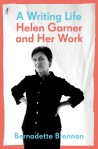
Bernadette Brennan, A writing life Helen Garner and her workAnyhow, here is the longlist,

  • The enlightenment of the Greengage Tree, by Shokoofeh Azar (novel/Wild Dingo Press)
  • A writing life: Helen Garner and her work, by Bernadette Brennan (literary portrait/Text Publishing) (my review)
  • Anaesthesia: The gift of oblivion and the mystery of consciousness, by Kate Cole-Adams (science-based non-fiction/Text Publishing)
  • Terra nullius, by Claire G Coleman (novel/Hachette Australia) (I’ll review in March)
  • The life to come, by Michelle de Kretser (novel/Allen & Unwin) (on my TBR pile)
  • This water: Five tales, by Beverley Farmer (short stories; novellas/Giramondo) (I love Beverley Farmer)
  • The green bell: A memoir of love, madness and poetry, by Paula Keogh (memoir/Affirm Press)
  • An uncertain grace, by Krissy Kneen (novel/Text Publishing)
  • The choke, by Sofie Laguna (novel/Allen & Unwin) (on my TBR, and am very keen to read having attended a lively conversation with her last year)
  • Martin Sharp: His life and times, by Joyce Morgan (biography/Allen & Unwin)
  • The fish girl, by Miranda Riwoe (novella/Seizure)
  • Tracker, by Alexis Wright (memoir/biography/Giramondo)

So, I’ve read and reviewed one, and will definitely read another, Terra nullius, by March. I have bought or been given a couple of others, and am keen to read a few more. On the other hand, there are a couple here that I hadn’t heard of at all – the books by Azar and Morgan.

The judges commented that the longlist

… challenges the reader to experience the pleasures of reading different forms of writing: speculative fiction, novella, memoir, biography, non-narrative nonfiction, history, short stories and work in translation.

I like this. Last year, I noted that there was significantly more non-fiction (more than half in fact), fewer short stories, and not much diversity. This year fiction represents just over half, and only a couple of the non-fiction are memoirs. Three of the non-fiction works are about writers and artists – Helen Garner, Michael Dransfield and Martin Sharp. This year’s list is significantly more diverse too, with indigenous writers Claire G Coleman and Alexis Wright, an Iranian born writer in Shokoofeh Azar, Riwoe’s book set in Indonesia, and our now well known Sri Lankan born writer Michelle de Kretser whose book is set in Sydney, Paris and Sri Lanka. Of course, as always, there are books I would like to have seen here but, overall, it’s an interesting list and I hope to have read more of it by the end of this year than I did last.

Meanwhile, I’d love to know if you have any thoughts on the list.

The shortlist will be announced on March 8 (International Women’s Day, as has become tradition), and the winner in April.

Monday musings on Australian literature: AusLit Women Academics on Colonial Women Writers

Over January, some of us Australian litbloggers – as the result of Bill’s (The Australian Legend) AWW Gen 1 Week – have been talking about early Australian women writers. It’s a topic of great interest to me, ever since the 1980s when I became interested in these writers. There seemed to be a flurry, at that time, of academics and researchers writing in this area – and this work has continued. For my benefit – and hopefully for others – I thought I’d document some of those who pioneered this research (in my time anyhow.)

Debra Adelaide

Adelaide (1958-) is probably best known now as a novelist, and I’ve reviewed her most recent novel, The women’s pages, here.  But I first knew of her as a researcher and writer about our older Aussie women writers. I bought both of her books on this topic back when they came out. One is A bright and fiery troop: Australian women writers of the nineteenth century (1988), which is a collection of essays she edited, covering writers like Louisa Atkinson, Catherine Helen Spence, Ada Cambridge and Tasma. (Adelaide acknowledges two woman in my list below, Dale Spender and Elizabeth Webby.) The other, which was published the same year, is Australian women writers: a bibliographic guide (1988). It is a comprehensive list (to the best of her research by the late 1980s) of all Aussie women writers. It includes a brief description of and a list of works by each writer. A wonderful resource.

Patricia Clarke

Clarke (1926-) is a historian focusing on women in nineteenth century Australia, including writers of all forms/genres. her books include Pen portraits: women writers and journalists in nineteenth century Australia (1988), The governesses: Letters from the colonies, 1862-1882 (1989), Pioneer writer: the life of Louisa Atkinson, novelist, journalist, naturalist (1990), Tasma: The life of Jessie Couvreur (1994), and Rosa! Rosa!: a life of Rosa Praed, novelist and spiritualist (1999). With Dale Spender (see below), she also published Life lines: Australian women’s letters and diaries 1788-1840 (1992). I love that these books look at writing beyond fiction – as important as that is – to letters, diaries, and journalism.

Joy Hooton

Hooton (1935-), an academic, is perhaps a bit of a ring-in to this group. She co-authored both The Oxford companion to Australian literature (1986) and the Annals of Australia literature (both of which I have). She is also an authority on autobiographic writing, and has published an anthology of autobiographical writing from the convict era to the present day, Australian lives: an Oxford anthology (1998). Most of the early writers, here, though, are male. However, I’ve included her because her works, particularly the Oxford companion and the Annals, are useful sources for researchers. And because just to be a woman academic, particularly one born pre-WW2, would not have been easy.

Elizabeth Morrison

Morrison (1936-) is another historian of colonial times, but her speciality is the role of the Australian newspaper press as publisher of serial fiction, particularly in the colonial era. She edited two of Ada Cambridge ‘newspaper novels’,  A Woman’s Friendship and A Black Sheep, which were published by UNSW Press, but she has also written many academic articles and given lectures on the subject. I have her edition of A woman’s friendship (republished 1995, orig, 1889), which was published in the Colonial Texts Series series, by UNSW Press (through, surprisingly, the Australian Defence Force Academy where Morrison was based).

Dale Spender

Spender (1943-) is an academic and feminist who has spread her wings wider than “just” Australian women, but her Australian credentials include being founding editor of Pandora Press (which published several of the older Aussie women authors I read in the 1980s, including Rosa Praed’s The bond of wedlock) and a commissioning editor of the Penguin Australian Women’s Library (whose books I also read, including Ada Cambridge’s Sisters). She also wrote Writing a new world: Two centuries of Australian women writers (1988). (Thanks Bill, for the reminder!)

Spender’s wider interests include early British women writers, and in this area her books include Mothers of the novel: 100 good women writers before Jane Austen (1986)You can see why I’m interested in her! I have this book on my Kindle!

You might like to check out her website. I do like her definition of “himitator”.

Elizabeth Webby

You may remember Webby (1942-), because my last two Monday Musings drew from a lecture of hers – but I didn’t say much about her except that she’s a retired academic. She was Professor of Australian Literature at the University of Sydney for nearly 20 years, and has been editor of the literary journal Southerly. She researched both colonial and modern Australian (women’s and men’s) literature, and perhaps her main legacy, publication-wise, is as editor of the Cambridge companion to English literature (2000), which I have. She has written numerous articles and given lectures on colonial literature, including an article on colonial women poets in Adelaide’s A bright and fiery troop. She has also published a bibliography about our early Australian poets, Early Australian poetry: an annotated bibliography of original poems published in Australian newspapers, magazines and almanacs before 1850. Bibliographies make for pretty dry reading, but how important they are!

I thank these, and all the other academics, who thought researching Aussie women writers was an important thing to do. I’m sure it wasn’t always easy.

I’ve only selected a few, of course – those that have been particularly relevant and useful to me – but if you have some favourites in this sphere that you’d like to share, I’d love to hear about them.

How to read difficult books

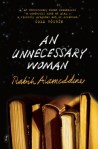
Rabih Alameddine, An unnecessary womanThere was a quote I really wanted to use in my review last week of Rabih Alameddine’s An unnecessary woman, but I couldn’t find a place to fit it in. Sometimes reviews take off in a direction and they just can’t be reined in, I’ve found! This quote is, however, too good not to share – at least, I think so.

The quote occurs when Aailya, our unnecessary woman, is talking about reading philosophy. The quote in question refers to her attempt to read and understand Schopenauer. She says that “I can’t seriously claim I ever grasped much of Schopenhauer on that first reading, or the second, but I kept trying”. And then she describes her method:

In philosophy, I was a page-turner long before I was a reader. I worried the surface till I penetrated the essence.

I think this is great advice for reading anything that’s a bit challenging, not just philosophy. Once upon a time I would try to understand each sentence of works that challenged me, and become frustrated when meaning eluded me. However, now my practice is to keep reading, because very often doing this will result in my gradually working my way into the author’s style (words, images, rhythm, tone) and world-view (ideas, themes). In other words, I think what I do is worry the surface until I penetrate the essence – though I must admit that I tend not to give books multiple chances. I (mostly) do need to achieve this some time during the first read. Anyhow, once I’ve cottoned on to what the author is doing I’ll go back to the beginning – if I need to – to catch what I’ve missed.

Do you have any hints for reading the more difficult books that come your way?

Six degrees of separation, FROM Lincoln in the Bardo TO …

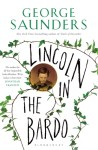
The Six Degrees of Separation meme, currently hosted by Kate (booksaremyfavouriteandbest), is, I’m starting to realise, an effective marker of passing time – and I’m not sure I like it. This passing of time I mean, not the Six Degrees meme, which I enjoy! If, perchance, you are not familiar with this meme, please click the link on Kate’s blog-name – you’ll get all the gen you need there. Meanwhile, this month’s book is one that I bought with a Christmas gift voucher, but I haven’t read it yet. It’s George Saunders’ Booker Prize-winning Lincoln in the Bardo.  As always though, I’ve read all the linked books, albeit some before this blog.

George Saunders, Lincoln in the BardoNow, the reason I bought Lincoln in the Bardo is not so much because it won the Booker, but because one of our ex-reading group members (ex because she retired to the coast, not because we expelled her I might add!) recommended it. She said it was challenging to start with but a great read. However, when I put it forward as an option for this year’s schedule, it was not chosen. I still plan to read it – but when?

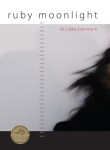
Ali Cobby Eckermann, Ruby MoonlightAnother book that I recommended for this year’s schedule and that was not chosen was Ali Cobby Eckermann’s verse novel Ruby Moonlight (my review). I don’t usually recommend a book I’ve read, as I like to use my reading group to read a new book for me, but I would like us to read more indigenous authors, and this one, a work of historical fiction in verse, is particularly interesting. In the end we chose Claire G Coleman’s Terra Nullius which suits me just fine as it’s one I’m keen to read.

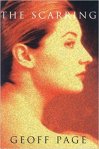
Geoff Page, The scarringI’ve enjoyed quite a few verse novels during my reading life to date, but the first one I reviewed here was local Canberra author Geoff Page’s The scarring (my review). It’s a gut-wrenching story about war, love and loneliness, revenge and male power. And it’s one of those books that I haven’t forgotten.

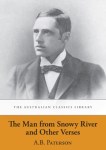
Talking about firsts on this blog, and first verse (ha, that rhymes!) in particular, the first verse collection I reviewed here was A.B. (Banjo) Paterson’s now classic collection The man from Snowy River and other verses (my review). Interestingly, Paterson differentiated between verse and poetry, which he saw as a higher form. He wrote verse he said.

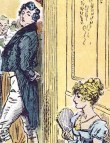
Jane Austen's Mr Darcy, illustration by CE Brock

Mr Darcy, illus by CE Brock (Public Domain, courtesy Wikipedia)

Like many of us I’m sure, I was introduced to reading by my parents. I remember as a very young child carting a pile of picture books into my dad in the mornings (as he was an early riser), but the first author I remember him sharing with us was the aforementioned Banjo Paterson. It perhaps won’t surprise regular readers here that the first author I remember my mum sharing with me was Jane Austen. And the first book of hers she shared – read aloud in fact – was, of course, Pride and prejudice. I haven’t done a full review of it here – I hardly dare – but I did write a post about it to commemorate its 200th anniversary.

Ayn Rand, The fountainheadNow, the thing about Pride and prejudice, according to the Independent, is that it’s never been out of print. Another book that I’ve read, though long before I started this blog, that hasn’t been out of print – according to the The Irish Times is Ayn Rand’s The fountainhead. It’s one of those books I’m glad I’ve read though I can’t claim to love it as I do Pride and prejudice!

Patrick White, Happy ValleyMost authors, of course, would be thrilled to know that their books have never been out of print, but not all. One such is Patrick White who didn’t want his first novel, Happy Valley (my review), to be republished. Fortunately for us, Text Publishing disagreed with him – after his death, anyhow – and published it as part of their wonderful Text Classics series. I’m so glad I got the opportunity to read it! Not only is it an interesting read, but it’s an accessible introduction to his themes and style.

So, this month we’ve not travelled far, culturally speaking anyhow, having only been to the USA, England and Australia. Historically, though, we’ve been a bit more diverse, including visiting Regency England and colonial Australia. We’ve spent time on farms and in cities, and we’ve met some moral men and not so moral ones. I wonder whom we’ll meet next month and where they’ll be! I can’t wait to see the starting book Kate has chosen for us.

And now, have you read Lincoln in the Bardo? And whether or not you have, what would you link to? 

Rabih Alameddine, An unnecessary woman (#BookReview)

Rabih Alameddine, An unnecessary womanLebanese-born American writer Rabih Alameddine’s novel, An unnecessary woman, is tailor-made for readers. It was fittingly, therefore, my reading group’s first book for 2018. The novel is told first person in the voice of 72-year-old childless, divorced Aaliya Saleh, who lives alone and spends her time reading and translating books. Set in an apartment in Beirut in the 2000s, it has a minimal plot, focusing more on the thoughts and ideas of this reclusive woman who describes herself as her “family’s appendix, its unnecessary appendage”.

However, before I tell you more about the subject-matter and why I so enjoyed this book, a little warning. This is the quintessential literary novel. It is packed with literary references and allusions, not to mention references to musicians and artists. One of Aaliya’s favourite authors is the also-reclusive “connoisseur of alienation”, Portuguese poet Fernando Pessoa, and he appears regularly, but she also mentions, in no particular order, WG Sebald, Fyodor Dostoevsky, Patrick White (whom she adores), Helen Garner, Marguerite Youcenar, JM Coetzee, António Lobo Antunes, Ernest Hemingway, Albert Camus, Shakespeare, and many, many, many more. While I know the authors I’ve named here, I certainly don’t know all those she mentions – but it doesn’t matter. Well, it might, in that more knowledge might add all sorts of nuances to the book’s meaning, but all I can say is that I enjoyed it with what I do know.

But now the subject-matter. Where to start? The book covers a lot of ground. It’s about living in a war-torn city and country; it’s about relationships, gender and women’s lives in a patriarchal society in which her “half brothers, like so many men and boys, have the impatience of the entitled”; it’s about aloneness and loneliness; and, best of all, it’s about books and reading. It’s this last one I want to focus on, partly because it’s the one that gave me the most chuckles.

These chuckles aren’t of the belly-laugh variety. They’re more subtle, coming particularly from allusions and irony. Take for example this comment, a bit over halfway through the book:

Most of the books published these days consist of a series of whines followed by an epiphany. I call these memoirs and confessional novels happy tragedies. We shall overcome and all that. I find them sentimental and boring.

This comment made me laugh because her story is, essentially, “a series of whines followed by an epiphany”, for all her dislike of epiphanies. “Enough”, she says, “have pity on readers who reach the end of real-life conflict in confusion and don’t experience a false sense of temporary enlightenment”. This book is, you might be seeing now, also about the intersection between reading and life. To what extent do they inform each other?

Another of her dislikes, in life and in literature, is the idea of “causality”. Alain Robbe-Grillet, she says, “wrote that the worst thing to happen to the novel was the arrival of psychology”, meaning, she believes, “that now we all expect to understand the motivation behind each character’s actions, as if that’s possible, as if life works that way”. So literature, in other words, needs to reflect life. She writes:

I’ve read so many recent novels, particularly those published in the Anglo world, that are dull and trite because I’m always supposed to infer causality. For example, the reason a protagonist can’t experience love is that she was physically abused, or the hero constantly searches for validation because his father paid little attention to him as a child. This, of course, ignores the fact that many others have experienced the same things but do not behave in the same manner, though that’s a minor point compared to the real loss in fulfilling the desire for explanation: the loss of mystery. Causation extraction makes Jack a dull reader.

Interesting point, this “loss of mystery”, this sense that life cannot be so easily explained. She gives an example from “life” of a woman killed, during the civil war, while driving home from work. People proposed all sorts of reasons why it happened. She was a spy, or was a bank courier carrying a large amount of money, or was wearing a flashy diamond, whereas in fact she was just unlucky. “A stray bullet killed her”.

For Aaliyah there is something fundamentally wrong with this cause-focused approach to reading, and to living. She writes:

If you read these pages and think I’m the way I am because I lived through a civil war, you can’t feel my pain. If you believe you’re not like me because one woman, and only one, Hannah, chose to be my friend, then you’re unable to empathize.

This idea that finding causes for what happens to others enables us to distance ourselves from responsibility and to feel safe, has, says Aaliya, been explored by philosophers, such as the “ponderous and portentous” Sartre! Aaliyah, you see, is not cowed by big names and reputations. Nonetheless, she admits that, while she’s trained herself “not to keep inferring or expecting causality in literature”, she constantly wants explanations in life “where none exist”. “Uncertainty”, she says later, “is unsettling”!

I enjoyed Aaliya’s cheeky, somewhat self-mocking voice, the way, for example, her commentary is peppered with allusions – particularly, pointedly, from Macbeth – that tease the reader. But it’s not all light. There’s seriousness – pathos – too. For all her enjoyment of reading and translating (which is another whole topic I could write about), Aaliya is not as happy as she seems. She’s aware of ageing – and refers to Helen Garner’s belief “that all women over sixty instinctively learn to pass by a mirror without looking”- and she is lonely in her chosen aloneness:

It is the loneliness, the abject isolation. Hannah reappears in my memories to remind me of how alone I am, how utterly inconsequential my life has become, how sad.

It is partly in regard to this theme – and to the role of the “three witches” in her building – that Aaliyah has her “damn epiphany” at the end!

Besides the discussion of books and reading, the description of life in Beirut, and the analysis of the outsider’s life, An unnecessary woman has much more to offer, including its small but colourful cast of characters and some gorgeous language. This description of a saucer, for example, is surely also a metaphor for Aaliyah:

The rim of the saucer’s depression is lightly discoloured – a dusting of rust and red and brown, remnants of teas gone by that did not wish to be washed away, refused to be forgotten, the age rings of a small plate.

By her actions, Aaliya, despite her “age rings”, shows that she does “not wish to be washed away”, that she refuses “to be forgotten”. She will not, in other words, accept being “unnecessary”.

I have barely scratched the surface of this thoughtful yet playful book that teases us with an idea and then, more often than not, turns it on its head. It is this mixing of the playful with the serious, in Aailya’s compelling voice, that makes this largely plotless novel such an involving read.

Rabih Alameddine
An unnecessary woman
Melbourne: Text Publishing, 2014
291pp.
ISBN: 9781922148292 (eBook)

Monday musings on Australian literature: Reading aloud in colonial Australia

At the end of last week’s Monday Musings post on literary culture in colonial Australia, I commented that author Elizabeth Webby had also discussed the practice of reading aloud, and that I might do a future post on that. Well, not only might I, but I’ve decided to do it this week because I was fascinated. (Just to recap, last week’s post drew from Webby’s lecture titled “Reading in colonial Australia”, which is available online). And, would you believe, February 1 is World Read Aloud Day!

So, I’ll start briefly with Webby’s discussion and then move on to some of my own research, from Trove of course. She starts by saying that reading aloud remained popular throughout the nineteenth century alongside a rise in silent, individual reading. She writes:

Those worried about the excessive reading of fiction by women and young people were particularly keen to encourage the domestic practice of reading aloud. A father reading aloud to his family in the evening formed an ideal Victorian domestic scene: he could monitor what was being consumed by his wife, sons and daughters; they had the advantage of his company and attention.

(There’s that gender issue again!) She shares information gleaned from diaries. One mother, for example, would not allow Shakespeare while another was very happy to read from Dumas’ 8-volume Celebrated crimes (1839-1841). Webby says this “reminds us that individual readers have always been free to set their own rules about what should be read, ignoring the more restrictive norms of their times.” She also discusses the encouragement of reading aloud for women (“as an alternative to idle gossip as they sewed or carried out other more sedentary household jobs”) and bush-workers (“as a more profitable alternative to gambling and yarning”), and the ongoing concern about what was read (but I discussed some of that last week.)

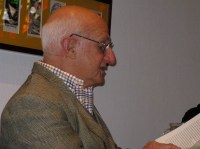
A modern author reading: Malouf reading from Ransom, NLA, 16/8/2009

Webby then describes the rise of “penny reading” in the second half of the nineteenth century. This is the practice of attending public readings for the cost of a penny. While Dickens never toured Australia, as he had Britain and the USA, readings from his books were popular at these penny readings, which were apparently popular in Victoria. There were also “philanthropic” souls who read, free-of-charge, to hospital patients and prison inmates. Webby suggests that regarding readings for prisoners, the authorities would have seen them as having value as “cheap entertainment combined with a controlled use of fiction as a means of moral reformation”. There was, she says, a strong continuing belief in “the humanising value of literature”.

What I found in Trove*

Having read Webby’s discussion, I was keen to see if the topic was discussed in newspapers of the time – and my, was it! It seemed particularly popular in papers of the later nineteenth century, with much of the commentary I found coming from the 1870s. It was generally earnest, and had two main threads: the importance of reading aloud well; and the value of reading aloud (along with a concern that people weren’t doing enough of it).

A long article by Sarah Ellis in the Sydney Morning Herald on 21 January 1870 starts with:

Amongst the accomplishments which belong to education of the highest order, reading aloud ought certainly to hold a prominent place – that is, the art of reading aloud so as to give the full meaning of what is read, and at the same time to charm the ear of those who listen.

She then discusses how reading aloud is so often unsatisfactory, how people adopt a voice that doesn’t change or adapt to the meaning of what they are reading. She suggests that one of the causes is the reduction of reading aloud in the home. Poor education is another cause but an article in the Mount Alexander Mail (25 October 1878) reports on a lecture by Mr T.P. Hill, a well-known elocutionist of the time, who discusses the finding of school inspectors “that this neglected, but important branch of elementary education was moving forward in the right direction”. Unfortunately, though, “in a few districts … complaints were made of the monotonous and sing-song manner in which the voice was allowed to degenerate”.

My final example regarding the issue of reading aloud well, raises again the gender issue. It comes from the Avoca Mail (26 June 1877):

It is much to be regretted that the charming accomplishment of reading aloud is not more cultivated by ladies. … To do this well, a certain amount of study is requisite. First of all, it is necessary to acquire a habit of sustaining the voice; then one must learn to modulate the tones, to attend to the punctuation, and, above all, the reader must have a fair appreciation of the author’s meaning. This involves a study of English literature, which is so sadly needed by most young ladies who are supposed to have a finished education.

Oh dear, those “young ladies”, eh? Gender also comes up in the aforementioned Sarah Ellis’s article, and here I shift into the issue of why people should read aloud. Reading aloud, she says, can “increase the number of our innocent enjoyments”, “make the social hours of life glide pleasantly along”, and “prevent them from becoming vapid or wearisome”. She then separately identifies the value for women and men:

Amongst women, this accomplishment might go far to help them in filling their homes with interest; amongst men, it would help them on all public occasions, when called upon to speak or read.

Oh well, that was then – a woman’s place was in the home. We wouldn’t expect anything different, would we? I should add that Ellis spends some time discussing the best book to read aloud, the Bible, which Webby says would have been the “most-read” book in colonial Australia.

So, reading aloud was seen as good for family togetherness, for entertainment, for education, and for usefulness in the outside world. Indeed, in terms of the latter, the writer in the Ovens and Murray Advertiser (13 October 1877), reporting on another lecture by Mr T.P. Hill, describes it as “an art which at the Bar might save lives, which in the Senate might save nations, and which in the Pulpit might save souls”. Meanwhile, in terms of the former more recreational value, Ellis overlays a moral value, describing it as a “counter charm of a social and intelligent nature to take the place of pleasures which are purely sensational”!

I will end, though, with another reason which you mightn’t have seen coming. It’s from the Queenslander (6 February 1897):

The late Sir Henry Holland says in his ‘”Medical Notes” that persons who have a tendency to pulmonary disease should methodically practice “those actions of the body through which the chest is in part filled or emptied of air.” He advises that those whose chests are weak should read aloud at stated intervals …

World Read Aloud Day 2018See, reading aloud really is good for you!

Do you have any experience of reading aloud as an adult, either reading or listening (besides, that is, reading to children), and if so, I’d love to hear about it? Audiobooks? Live reading?

* Note that when I say Trove, I mean its digitised newspapers subset, because Trove, in fact, currently covers over 560 million “Australian and online resources: books, images, historic newspapers, maps, music, archives and more”. Note, too, that many of the articles I found appeared in many newspapers around the country.