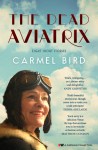
Carmel Bird, The dead aviatrix: Eight short stories (#BookReview)

Carmel Bird, Dead aviatrix

Carmel Bird, whose latest short story collection, The dead aviatrix: Eight short stories, I’m reviewing here, has to be the consummate writer. She can turn her hand to fiction and nonfiction, to short and long form writing, to formal and more informal voices, and to both serious and witty or satiric tones. She’s also an editor/anthologist in addition to being a writer. And now she’s experimenting with a digital platform. So, when she hesitantly offered me The dead aviatrix to read and review, there was only one answer, yes.

Her hesitation related to its e-book form. She feared that we Gums’ people aren’t much interested in ebooks, but, she wrote, “they are a growing part of the literary landscape”. Then, using a very Bird-like expression, she continued, “so maybe one day you will write a bit about them, and if and when you do, The Dead Aviatrix will be idling on the tarmac.” Well, how could I resist, even if I had wanted to, an aviatrix idling on the tarmac? And anyhow, as you know, I do read and write about e-books. Annabel Smith’s The ark (my review) is a good example, but I’ve reviewed several e-books here including Dorothy Johnston’s Eight pieces on prostitution (my review).

Like Dorothy Johnston’s book, which was a digital publishing initiative of the Australian Society of Authors, The dead aviatrix is the first Capsule Collection, a new platform by digital publisher Spineless Wonders. Subsequent titles in the series will, the book’s “About” says, include works “selected from The Carmel Bird Digital Literary Award”. You clearly can’t keep a good writer down. I love that this doyenne of the Australian literary scene is still exploring and experimenting.

However, it’s all well and good to explore and experiment with form, delivery platform, and so on, but in the end you need to produce the goods, and this Bird has done with her eight stories. I should say, before discussing them, that all have been published before – in publications like Southerly, Island Magazine, and Review of Australian Fiction.

So now, at last, the stories themselves. They are a wonderful lot. Bird regularly makes me laugh, and she does so again here. It’s not empty laughter though, because her targets are serious. It’s just that she frequently presents her ideas with a cheeky, often satirical approach.

The first story is “The dead aviatrix and the Stratemeyer Syndicate”. It’s written in the sort of style Bird used in Fair game, her memoir of Tasmania (my review). By this I mean it digresses or, as she says, becomes “productively sidetracked”. However, as “The dead aviatrix” is “a publishing story”, the opening digression about the prolific Edward Stratemeyer – creator of a childhood favourite of mine The Bobbsey Twins – is relevant in a way (of course!). Actually, it’s very relevant because she finds a quote about an aviatrix in a Stratemeyer book, and uses it to springboard her story. Oh, she’s a character! The tone of the story, like several in the book, is chatty. She talks directly to us, the reader, leading us along, often lulling us into a false sense of security. In this case, it’s a little satire on the publishing industry – on proofs going astray, on distracted publishing interns – but along the way it invokes or references all sorts of ideas, including the Australian aviatrix Nancy Bird Walton who “unlike the great and mysterious Amelia … did not disappear in the skies.” Sometimes it is hard to keep up with Bird (our Bird, I mean!) but I love trying. This story is, partly, about the art of writing stories.

The second story, “The Whirligigge of time brings its revenges”, draws from a Shakespeare quote, and is also a publishing story, this one more satirical about first and second novels, the notion of “literary” novels, awards, and not using agents. Again, it has a similar, chatty story-telling tone. Here’s an example:

The history of this novel (The Heat of Summer) is the real subject of my tale. That, and the wheel of fortune and the quirks of fate. The book takes its first inspiration from Camus’ famous L’Etranger, and its content is drawn from the aforementioned history of Joseph Tice Gellibrand, the disappearing Attorney-General of Van Diemen’s Land. Well, you can see that what Frankie was doing here was risky. It was what is often described as literary fiction.

There’s more delicious satire about publishers and their slush piles, but I’ll finish with a quote about promotion:

The media hype for The Heat of Summer is huge, what with the glamour of Frankie’s Paris life, and the deep fascination with gothic Australian bush stuff and so forth. Based around the tragic life of her ancestor. Smash hit. Frankie turned out to be a publicist’s dream, having, as well as the attributes I have alluded to, long legs, a face that could sell cosmetics and airline tickets, and an engaging lisp.

Delicious isn’t it?

And so the stories continue, addressing issues like missing children (“Cold case”), dying towns and New Age shops (“Cactus”), shallow suburbanites and their prejudices (“The matter of the mosque”), surrogacy (“Surrogate”), and species extinction (“Letter to Lola” and “The tale of the last unicorn”). All the stories could be lessons in writing – in tone, in varying form, in how to make words and language work for you, in being absurd without being absurd (if you know what I mean), in addressing serious matters with a light but pointed touch. I enjoyed every one.

While several stories are written in the chatty, satirical tone of the first two. Not all are. “Dear Lola” takes the form of a love letter from a Spix’s Macaw to his lost mate. It’s sad, and pointed, but the whole idea of a bird writing to its lover gives it a whimsical touch too. “The matter of the mosque”, on the other hand, is written in little scenes, comprising mostly dialogue between two mothers in which it’s clear that whether to use hairspray or mousse is more important than opening their minds to different ways of being. Bird’s control of language and narrative here, together with her use of repetition and recurring ideas or images, makes this a little gem.

Now, I know many of you aren’t short story readers, because you want to get lost in character. These stories won’t give you that. However, what a mind, what ideas, what fun and, ultimately, what heart, you miss by ignoring a book like this. It’s only available in e-format and costs a whopping $4.99! Why not give it a go?

AWW Badge 2018Carmel Bird
The dead aviatrix: Eight short stories
Spineless Wonders, 2017
50pp.
ISBN (e-version): 9781925052343

(Review copy courtesy the author, but available from Spineless Wonders)

Monday musings on Australian literature: Aurealis Awards for Speculative Fiction

Those of you who know my lack of interest in science fiction might be surprised to see a post dedicated to the genre here. However, I do like to be more representative in my Monday Musings series. If that means sometimes moving into areas that are out of my comfort zone, then so be it. And now seems to be an appropriate time to do so in this instance, because this year’s Aurealis shortlist has been released and it contains some books that interest me.

First, though, a little background. According to the website, the awards were established “in 1995 by Chimaera Publications, the publishers of Aurealis magazine, to recognise the achievements of Australian science fiction, fantasy and horror writers.” Their aim is to complement the Annual Australian National Science Fiction Convention’s Ditmar Awards and various other literary awards, but they delve deeper into the genre by distinguishing different types of speculative fiction – science fiction, fantasy and horror.

Their “rules” explain their criteria. They see themselves as “first and foremost a literary award”, so “literary merit, originality and contribution to the genre are of paramount importance in selecting the shortlisted works”. In other words, genre elements alone are not enough for shortlisting. Regarding genre definitions, they say that “a problematic definition of what makes a work of a particular genre” should not “bar an excellent book that contains appropriate elements of that genre”. They prefer “an inclusive view of what genre markers may include”. So, while they provide guidelines for their three named types of speculative fiction, these are not meant to be proscriptive. Rather, fluidity and inclusivity is their goal. This broad view is probably why there are a few books on this year’s list that interest me.

Over the years, award categories have come and gone, but the end result is that, today, the list is extensive. Their 2017 awards are for:

  • Best children’s fiction
  • Best graphic novel/illustrated work
  • Best young adult short story
  • Best horror short story
  • Best horror novella
  • Best fantasy short story
  • Best fantasy novella
  • Best science fiction short story
  • Best science novella
  • Best collection
  • Best anthology
  • Best young adult novel
  • Best horror novel
  • Best fantasy novel
  • Best science fiction novel

Phew! I love that they cover their three “types” in novel, novella and short story forms, and that they separately recognise children and young adult works, and collections and anthologies. It’s comprehensive, and it’s clearly successful because these awards have now survived more than two decades.

There is also the Convenor’s Award for Excellence. It’s something a little different, being awarded at the discretion of the convenors for “a particular achievement in speculative fiction or related areas” that doesn’t necessarily fit into award categories. ” It can be given to “a work of non-fiction, artwork, film, television, electronic or multimedia work, or one that brings credit or attention to the speculative fiction genres.” There’s no shortlist, and people can self-nominate. Again, if you’re interested to see the sorts of works being considered this year, do check the website.

Interestingly, I can’t find anything on their site about what the winners win, which makes me think it is more for the glory than for monetary gain.

Selected shortlist titles for the 2017 Awards

Given the large number of awards made, I’m not going to list the complete shortlist, but if you’re interested check out their  announcement. However, I’d like to identify a few that caught my eye.

Firstly, there are a few authors in the list who have appeared here, such as short story writer Deborah Sheldon (see my review of her 300 degree days and other stories). There are also popular children’s and young adult writer Garth Nix, local writer Kaaron Warren, and several writers I’ve learnt about through the Australian Women Writers Challenge, such as Kate Forsyth, Margo Lanagan and Tansy Rayner Roberts. I don’t feel quite so out of my comfort zone now that I recognise some names!

Claire G Coleman, Terra nulliusBut, this year’s shortlist also contains some specific titles that interest me:

  • Lois Murphy’s Soon, published by Transit Lounge (for Best Horror Novel). It won the Tasmanian Premier’s Prize for Unpublished Manuscript. Lisa reviewed it and found it compelling.
  • Claire G Coleman’s Terra Nullius, published by Hachette Australia (for Best Science Fiction Novel). This debut genre-bending novel by an indigenous writer (who identifies with the South Coast Noongar people of Western Australia) has also been longlisted for the Stella Prize. The judges wrote that “Coleman’s punchy prose is insistent throughout, its energy unflagging”. My reading group will be reading this in March so you can expect a review here in a month.
  • Krissy Kneen’s An Uncertain Grace, published by Text Publishing (for Best Science Fiction Novel). I’ve read one of her novels, Steeplechase (my review) and am intrigued to read more of her. An uncertain grace has also been longlisted for the Stella Prize (link above). The judges’ report begins with “Krissy Kneen does not simply perform the difficult feat of writing wittily about sex, she does so with aplomb. An Uncertain Grace is a formally ingenious and often amusing novel that combines eroticism and science fiction with a playful spirit of intellectual inquisitiveness.”
  • Jane Rawson’s From the Wreck, published by Transit Lounge (for Best Science Fiction Novel). I loved Rawson’s A wrong turn at the Office of Unmade Lists (my review) and am very keen to read this latest book of hers which, I believe, crosses historical and science fiction genres. I rather thought it might have been longlisted for the Stella, but that didn’t happen.

These awards are clearly sought after. This year 800 entries were submitted across the 15 categories. The winners will be announced at an awards ceremony over the Easter long weekend during the Swancon convention in Perth.

Does speculative fiction have a place in your reading preferences? If so, how?

Diana Blackwood, Chaconne (#BookReview)

Diana Blackwood, ChaconneDoes a book set in the early 1980s qualify as historical fiction? Does a book about a twenty-something woman’s romantic adventures, and search for direction, qualify as coming-of-age? The answer is probably yes to both. Certainly, it is within these parameters that it’s appropriate to discuss Diana Blackwood’s debut novel Chaconne.

Chaconne, as you can see, has a gorgeous cover. Rather than an image of a pretty young woman, promoting the idea of a “woman’s book”, it features a harpsichord – with an image of a Pershing (or similar) missile inside its open lid – sitting in a golden-lit rural landscape. This clues us into some important aspects of this novel, which are that music and war are involved. Of course, the title, Chaconne, also suggests a music theme. A chaconne, says Wikipedia, is “a type of musical composition popular in the baroque era when it was much used as a vehicle for variation on a repeated short harmonic progression, often involving a fairly short repetitive bass-line (ground bass) which offered a compositional outline for variation, decoration, figuration and melodic invention”. By this description, the “chaconne” works as a metaphor for Eleanor who is “sort of” progressing in her life, though with a deal of repetition, particularly in her way of choosing the wrong men and of  bumbling along, without goal, from job to job. And within this main storyline are several interesting people and events which intervene along the way to add variety and decoration to the whole!

The novel starts with 24-year-old Eleanor arriving in Paris in 1981 to meet her lover, the bourgeois communist Julien whom she’d met a couple of years earlier in Sydney while he was an exchange student in Australia. Eleanor, who has “a fuzzy sense of being shut out of her proper story as if she had failed youth, been found wanting by life itself”, seems to have little direction in her life, though we know from flashbacks that she’s interested in music. One of her complaints against her mother, Mavis, and there are many, is that she’d stopped Eleanor’s piano lessons, replacing them with something she deemed more important for Eleanor’s education, maths tutoring! Escaping to Paris, though, is a bit of out-of-the-frying-pan-into-the-fire, because Julien proves to be rather less than she thought. She finds herself spending much time alone in a tiny flat, relieved somewhat by her English teaching job at a lycée. Fortunately, her loneliness is assuaged a little by some lovely people, such as Rosa and the kind Monsieur Joubert who recognises her interest in music and starts, in a small way, her musical education.

As her relationship with Julien flounders, she meets Lawrence, an American who is flat-sitting for her next-door neighbour. It’s not long before she follows him to Germany, where he, a PhD student in deconstructive theory, is an English tutor on an American airforce base near a German village. The novel is set during the Cold War, when fear of nuclear destruction was high. Here Eleanor also obtains work teaching English. But, Lawrence – as we readers could have told her, just as we could have with Julien – doesn’t turn out to be the man she hoped.

Providing a background to Eleanor’s lacklustre romantic life is the unsettled political situation. Julien is engaged in communist politics, taking part in peace marches and the like, while Lawrence works on a military base where Eleanor keeps her Parisian life quiet and tries not to get too close to the base’s scary off-limit areas. Nonetheless she lives with “the unpalatable truth … that the nuclear umbrella was sheltering her by paying her rent.”

Not only does Lawrence draw her to this uncomfortable environment, but he is also not interested in music. What was she thinking in following him? Luckily, Eleanor finds a choir in the village, and her life gradually starts to change as she finally finds the thing that enlivens her.

And this is perhaps where the novel was a little problematical for me. While Eleanor’s journey to self-discovery was interesting, I never quite “felt” her sadness or her joy. I liked her, but I didn’t fully engage with her. This may be because she makes too many bad decisions that didn’t quite ring true for the intelligent young woman she clearly is. The coming-of-age felt a little late (particularly for the 1980s, which was before our 30-is-the-new-20 age?) But, this could just be sensible me speaking! Still, I would love to have seen more of her gutsy-but-also-life-challenged friend Ruth.

Nonetheless, there’s a lot to like about this book. I particularly enjoyed Blackwood’s obvious love of the English language. Eleanor and her Australian friend Ruth – not to mention her aforementioned mother – are grammar nazis (though that’s an unfortunate phrase given the post-war setting of this novel, a time when Germany was particularly uncertain about its past). The book delights in wordplay (including puns), alongside more serious discussions of grammar. Lawrence pegs Eleanor as “a proponent of prescriptive grammar” while she expects that “traditional grammar was another thing he would like to see tossed on the scrapheap”. The discussions Eleanor has about language are those we have here among the extended Gums’ family. We discuss language with each other, yell at the TV, argue about prescription versus description, ponder how and why language does or should or shouldn’t change. There are no answers but it’s fun exploring the issue.

Blackwood’s writing is also beautifully evocative, such as this description of Monsieur Joubert – “loneliness was close about him like a Parisian winter”. And this of the beginning of spring:

In the last few days spring has retreated. The quickening of the senses, the opening up to life and fate, had been dampened by chilling rain and the need to wear a jumper again.

This is exactly why I’m not a big fan of spring! It taunts with moments of warmth before plunging us all into cold again! Time and again Blackwood captured moments perfectly.

Chaconne, then, is an intelligent, well-written, well-structured book set in interesting times and places. I did like the cheeky metafictional reference to The catcher in the rye’s Holden Caulfield. Eleanor suggests that he needed “a firm but loving grandmother”. However, she also recognises that,

of course, the whole point of being a fictional character was to suffer misadventures and setbacks and humiliations without being bailed out by your grandmother, at least not until you’re sufficiently chastened.

Very true – and in the end our fictional character is – but no, I’ll not give it away.

Chaconne is book that should appeal to those who love Western Europe and baroque music, who remember the 1980s, and who like their romantic novels to be thoughtful and not neatly wrapped up. By the end, Eleanor has grown, but, as in life, we know she has yet more growing to do – and that’s the sort of ending I like.

Lisa (ANZLitLovers) loved this novel and includes two YouTube links to music referenced in the novel.

AWW Badge 2018Diana Blackwood
Chaconne
Melbourne: Hybrid Publishers, 2017
296pp.
ISBN: 9781925272611

(Review copy courtesy Hybrid Publishers)

Monday musings on Australian literature: Australia’s most successful writer, ever

The obvious question to ask when someone makes a “best ever” claim is by what criteria? The easiest way to justify “best” is with numbers. And so it is here, as it’s with numbers that Australian publisher Allen & Unwin’s blog, Things Made From Letters, suggests that Morris West is “Australia’s most successful writer, ever.” The numbers are sales of course. According to Allen & Unwin (A&U), West’s books have sold over 70 million* copies around the world – more, apparently, than any other Australian author.

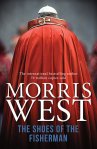
Morris West, The shoes of the fishermanAnd yet, I wonder how many readers here know – or have read – Morris West. He wrote nearly 30 novels, not to mention radio serials, plays and non-fiction, and his work was translated into 28 languages. His most famous novels were The devil’s advocate  (1959), which made him an international best-seller, and The shoes of the fisherman (1963). These, and a few others, were adapted to film.

West was born in Melbourne in 1916, and died in 1999. The Oxford companion to Australian literature says that he was a member of the Christian Brothers order for 12 years, but that he left in 1940 before taking his final vows. This is relevant because he was known for writing about the Roman Catholic Church, particularly regarding its role in international affairs. During World War 2 he worked as a cipher officer and was briefly private secretary to ex-PM Billy Hughes. After the war, he worked in radio, and founded, in fact, Australian Radio Productions.

However, as the A&U blog says, he “was determined to build a career as a writer, and as for so many artists, musicians and writers before the 1980s, the only way to do that was to move overseas.” And so he did, living in Europe and the USA from 1955 to 1980. He clearly maintained contact with Australia during this time because in the early 1960s, he helped found the Australian Society of Authors. The A&U blogger is particularly interested to know why such an apparently successful writer is barely known today, indeed completely unknown to her “younger colleagues”. She offers a few reasons. One is that except for a couple of early novels, all his books are set overseas. “Is Australian literary culture reluctant to acknowledge a novelist who doesn’t write about Australia?”, she asks. Or is it that “an increasingly secular Australia is now uncomfortable reading fiction which takes religion seriously?” Even though he wrote this fiction with a critical eye?

But then there’s the issue of “literary” quality. The A&U blogger quotes the AustLit database as stating that his fiction “has not received a great deal of literary attention.” Kerryn Goldsworthy, writing about Australian fiction from 1900 to 1970 in The Cambridge companion to Australian literature, names West, along with Ion L. Idriess and Jon Cleary, as writers who were very popular in their time but who “tended to be dismissed by their ‘serious’ peers and by later literary historians as middle-brow.”  She describes his books as looking at public institutions, usually political or religious ones, on the international stage and dealing with “the moral dilemmas they pose for the individual”. These three writers are probably the equivalent of my generation’s Colleen McCullough and Bryce Courtenay?

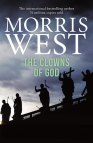
Morris West, The clowns of GodSo, why the interest now? Well, you may not be surprised to hear that Allen & Unwin is re-publishing most of his work – in print and e-version. (The book covers here are from this new series). Author Simon Caterson writing in The Monthly refers to this reissue and asks what West has to offer contemporary readers. Good question. He talks about the subject matter, suggesting that the “fascination with church politics and influence” is of continuing interest. Books keep coming out dealing with these, he says, just think The Da Vinci Code!

What makes West worth reissuing is, he suggests, West’s ability “to turn the intellectual and emotional struggles within his faith – his own and that of others – into gripping melodrama.” Moreover, he says that

it makes commercial sense to bring back the books of Morris West, whose big themes – conscience versus power, the individual versus the institution – are as relatable to the struggles of secular – as much as religious – life.

And finally, there’s the writing. Caterson sums it up this way:

It is also important to note that West could not have sold tens of millions of copies of his books without knowing how to make the pages turn. The prose may sometimes be prolix and the endings not always satisfying, but his writing is always full blooded and, for the most part, remarkably fluent.

Middle-brow perhaps, but a good read it seems. And as someone who loves seeing older Australian writers being read again – even those who didn’t write about Australia! – I’m happy to see this blast from my past being published again. Good on Allen & Unwin. I hope, just as I continue to hope for Text Classics, that they do well.

* Wikipedia says 60 million, but I think that might be based on figures around the time of his death.

Jane Austen, The Watsons (Unfinished) Redux

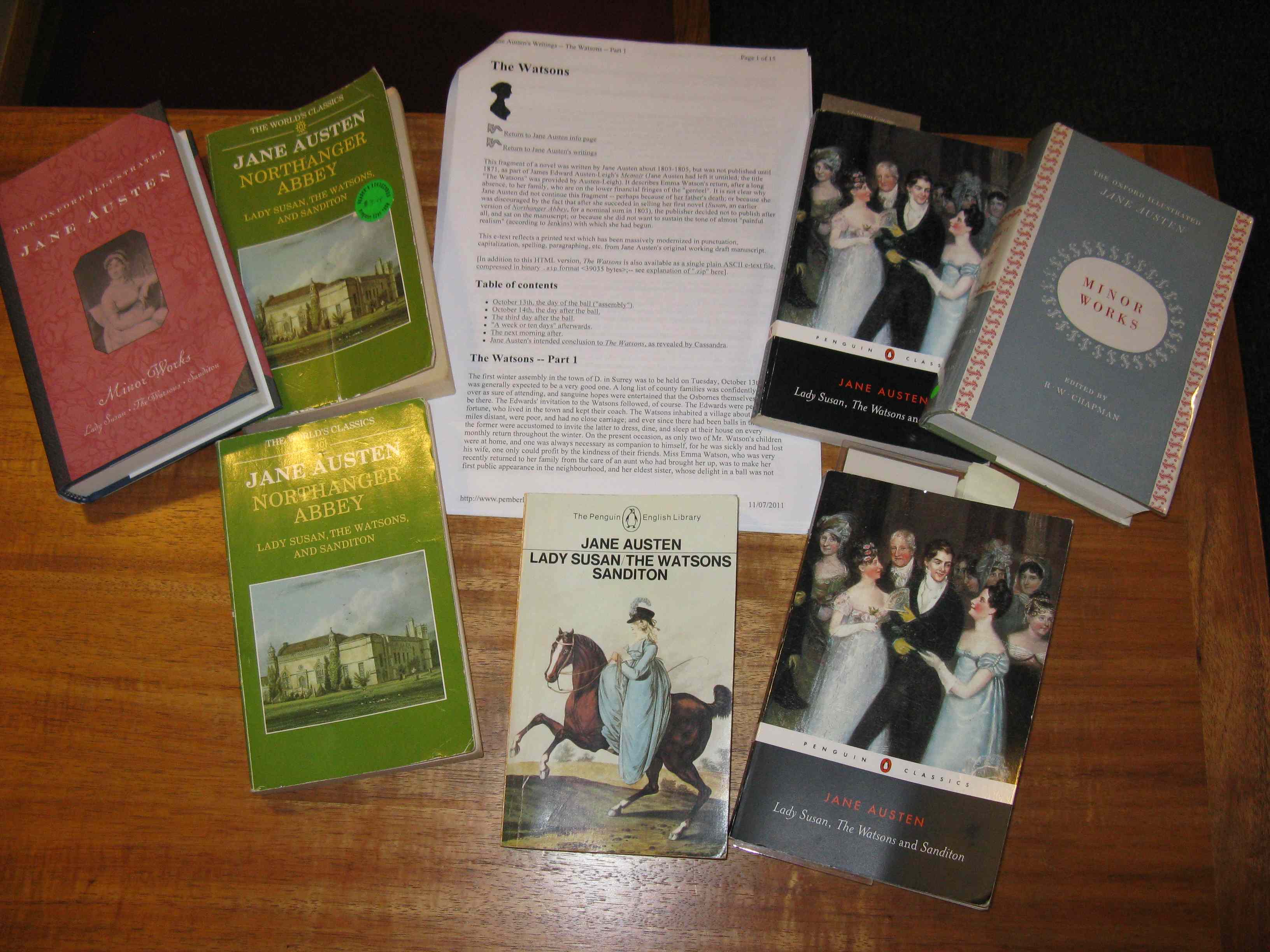
Book covers for Jane Austen's The Watsons

Book covers for Jane Austen’s The Watsons

Jane Austen fans, as you probably know, do a lot of re-reading. Given we only have six complete novels, plus her juvenilia and a couple of unfinished novels, we have little choice. Fortunately, it’s not a chore! And so, having completed rereading all her novels over the last few years for their respective 200th anniversaries, my local Jane Austen group decided to return to her two unfinished novels, starting this month with The Watsons. This was the third time we’ve done it in our relatively short existence. We did it in 2008 and again in 2011 (at which time I wrote my own reflections for this blog).

I do not plan here to write a “proper” review, so if you are interested in my thoughts, please check the link above. However, there are a couple of additional comments I’d like to make, starting with the question I posed in my 2011 post. The question relates to its unfinished nature. There are in fact two main questions regarding this: why did she stop writing it and why didn’t she pick it up again? And here I’ll quickly recap the novel’s background for those who don’t know it. The Watsons was written in Bath probably around 1803-1805, though there isn’t complete consensus about this. It’s commonly believed that she abandoned it after her father’s death in 1805 because of sadness and the resultant uncertainty in her living conditions. Whether this is true or not, it is true that she didn’t take up serious writing again until she settled in Chawton in 1809.

Now, it was at Chawton that she took up two earlier works, which became her first two published books, Sense and sensibility and Pride and prejudice. Why did she not then take up The Watsons and rework/finish it too? This is the more interesting question, I think, than why she stopped it in the first place. There are some theories around, though I haven’t investigated them thoroughly. However, her nephew James Austen-Leigh, who wrote the first “memoir” we have about her life, conjectures that Austen had become aware of “the evil of having placed her heroine too low, in such a position of poverty and obscurity” but I’m not sure I buy it.

My group discussed this idea, and we all felt that Austen had other “poor” heroines, of whom Fanny Price is the obvious example. But, the Dashwood girls were not well-to-do either. It’s true that Austen’s plan for The Watsons, as Cassandra reported, was for things to get worse for our heroine, but still …

No, my idea is different. The Watsons is broadly about four sisters and their marriage prospects – as is Pride and prejudice and Sense and sensibility. When we look at The Watsons, which Austen started after drafting those two books, we can see characters and storylines which remind us of these first two books. And so, I wonder whether, having published P&P and S&S, Austen felt she didn’t have enough new ideas to add to this storyline and wanted to try something different. Certainly, the next book, Mansfield Park, was something different. The marriage plot is still there, but it’s about a poor relation who is taken in by her wealthier ones. The interesting thing is that The Watsons commences with the return of 19-year-old Emma Watson to her family having spent 14 years with a wealthy uncle and aunt. Perhaps Austen decided to explore the story of the poor relation from a different angle, from the time of arrival at the new home?

Another thing about The Watsons is that as well as having characters who remind us of those first two novels, it also has characters reminiscent of some in later books, particularly in Emma. This suggests that while she didn’t finish The Watsons, her work on it wasn’t wasted – and she knew it.

We’ll never know of course. There’s so much we don’t know about our Jane, but it is fun trying to fill in the gaps.

A couple of apposite quotes

There’s more I could explore about this tiny fragment of around 17,500 words, but I’ll save those for the next re-read! Instead, I’ll conclude with two excerpts which grabbed my attention this time.

Gender and money

The first is a conversation between the heroine Emma and the wealthy aristocrat, Lord Osborne, who is interested in her, though his regard is not returned. In this conversation, he suggests that all women should ride horses:

‘I wonder every lady does not. – A woman never looks better than on horseback. –’
‘But every woman may not have the inclination, or the means.’
‘If they knew how much it became them, they would all have the inclination, and I fancy Miss Watson – when once they had the inclination, the means would soon follow.’
‘Your lordship thinks we always have our own way. – That is a point on which ladies and gentlemen have long disagreed. – But without pretending to decide it, I may say that there are some circumstances which even women cannot control. – Female economy will do a great deal my Lord, but it cannot turn a small income into a large one.’

Here we see Emma’s mettle. She stands up to Lord Osborne – to his assumptions about women and to his obliviousness that not all people have the means he has.

On reading to escape

And finally, The Watsons contains another of those wonderful quotes by Austen about books and reading. Here, right near the end of the fragment, Emma is thinking about the downturn in her fortunes through the death of her uncle:

The evils arising from the loss of her uncle were neither trifling, nor likely to lessen; and when thought had been freely indulged, in contrasting the past and the present, the employment of mind, the dissipation of unpleasant ideas which only reading could produce, made her thankfully turn to a book.

So, even in 1805, reading was seen as a way to occupy the mind and so escape, for a while, the troubles of life.

Jane Austen
“The Watsons”
in The Oxford illustrated Jane Austen. Vol VI, The minor works (ed. R.W. Chapman)
London: Oxford University Press, 1969
pp. 315-363

Wanted: Literary Romantic Pairs

I really should have posted this yesterday, on Valentine’s Day. What a missed opportunity! And what on earth, you are probably wondering, am I talking about?William Shakespeare, Romeo and Juliet

Well, here’s the gen. Longterm friend and regular reader of Whispering Gums, NeilAtKallaroo, needs help, and he thinks that this blog’s intelligent, engaged readers are the people to ask. The story is that his daughter is currently planning the reception for her wedding this September. She wants each table to be labelled with a romantic pair – like Romeo and Juliet, Darcy and Lizzie, Anthony and Cleopatra, and even the Owl and the Pussycat.

But, what should they call the bridal party’s table?  Currently it is just called “Bridal Party” which, as Neil rightly says, “isn’t very literary at all”! However, before you start running to your bookshelves, there’s an added request. If possible, they’d like the novel the pair name comes from “to include a sumptuous description of their wedding reception!” Please, no Miss Havishams! Neil and family welcome creativity – so think as laterally as you like – but Miss Havisham’s wedding feast is probably a step too far …

Finally, to offer a little encouragement, if someone here comes up with the pair that is eventually chosen, I will send an Aussie novel of my choice to the first person (no matter where you live) who suggested that pair.

So now, get those literary brains going …

Monday musings on Australian literature: Jane Austen and the Stolen Generations

Yes, you read right, this very brief Monday Musings post is about what Jane Austen might have said – did say in her way – about the Stolen Generations.

What makes great literature great is its timelessness. By this I mean the fact that what is said in, say 1815, is still relevant in, say, 2018. It is this timelessness, in particular, that makes me love Jane Austen. She is so right, so often, about human nature and human behaviour. So, while the quote I’m planning to share comes from British not Australian literature, and from 1815 not 2018, it relates closely to an issue that is currently very important to Australians, the Stolen Generations.

Here’s the quote:

There is something so shocking in a child’s being taken away from his parents and natural home. (Emma, ch. 11: Mrs John Knightley on Frank Churchill being removed from his home after his mother’s death)

“Something so shocking”. There’s nothing much more to say, is there … except that …

… when I drafted and scheduled this on February 7 for posting on Monday February 12, I hadn’t remembered that the next day, February 13, was the tenth anniversary of the Australian Government’s Apology to the Stolen Generations. How freaky – but how appropriate – is that? It’s also rather concerning because, as Reconciliation Victoria says:

As we approach the anniversary of the historic Apology we know that Aboriginal and Torres Strait Islander peoples are still grossly over-represented in our prisons, in out-of-home care, are still dying in custody and are still subjected to racism on a regular basis. There is still much work to do.

It’s a continuing blight on our government, on all of us, that we have achieved (are achieving) so little by most measurable standards.

For those who would like to hear the speech PM Rudd made in the Australian Parliament, here is the YouTube link.

Lynette Washington, Plane Tree Drive (#BookReview)

Lynette Washington, Plane Tree DriveLynette Washington’s debut collection of short stories, Plane Tree Drive, reminded me a little of Rebekah Clarkson’s Barking dogs (my review). Both are collections of stories revolving around a location, and in both the location is in the Adelaide region. There are differences though. Clarkson’s book is a little grittier with an overall theme of community undergoing social change, while Washington’s book is the portrait of a suburban street. There is change, of course, but the change is more broadly human – breakups, ageing and retirement, generation gaps, friendship and dementia, illness and death – although contemporary issues are also touched on.

Like Clarkson’s book too, Washington’s has some continuing storylines – such as Jennifer who is unhappily married to Dan while pining for her first love, Alexander – that are interspersed with the stories of other people. I liked this. Not only do these ongoing storylines provide a lovely sense of cohesion for the whole, but they also reflect a typical neighbourhood street. By this I mean that in any of our neighbourhoods there are people we know well, those we know a little, and others whom we only know passingly. And so, in Plane Tree Drive, there’s Jennifer who appears regularly; there are others like Maurice, Alice, Amily and Faraj who appear more than once, sometimes as a reference in another person’s story; and there are those who only appear in their own story.

To make all this work, Washington pays careful attention to structure. The overall order is chronological, driven primarily by Jennifer’s story, but the collection starts and ends with the other main continuing story, that of musician Maurice. His final section cleverly but light-handedly brings several of the characters together, but I won’t tell you how! The book is divided into sections – I think that’s the best way to describe it – which are named for the characters they cover, but some sections comprise small chapters. For example, a section titled Faraj, Coralie and Ruby, which focuses on Afghani asylum-seeker Faraj, has two short chapters, “Housing Needs Assessment” and “The Bay”. And this brings me to form …

Many of the stories are short, in fact very short, and most are told first person, but there’s some interesting variety, some experimenting with form, too. There’s a dialogue between Maurice and his wife Jacqui (“He said/She said”), some diary entries by the teenaged Poppy (“Dear diary”), several government employee reports on Faraj’s application for housing (“Housing Needs Assessment”), some social media commentary (in the cheeky “Scarlett’s shed”), and even a flow-chart from IT expert Sarah (“Oma’s fruit cake”). This playing with form – which brings with it changes in tone – break up what could, in other hands, become a tedious and melancholic parade of first person voices.

Oh dear, I’ve spent a lot of time describing the book and how it works but not much on whether I enjoyed it – so I’ll do that now. Of course I enjoyed it! How could any reader who is interested in the lives of people not enjoy a book which pokes into the nooks and crannies of all our lives? There are stories with a political bent, albeit told from personal not political perspectives. These include the aforementioned Faraj and his search for a home, a couple (Stella and Graham) who travel overseas to access euthanasia legally, and a woman (Coralie) watching the demolition of a loved theatre. I like that Washington doesn’t proselytise, but simply shows how people are affected by and react to these situations. There are lighter stories, such as Marg who talks to animals, particularly her neighbour’s badly behaved cat (“That cat”).

And there are, dare I use that cliché, “poignant” stories, such as, to give an example, Martha and Charles (“Gaps between boxes” and “So much sand and so much water”). They are a retired couple who have been together since childhood but who, at this point in their lives, suddenly find themselves at odds. She wants to adventure – to “seek out the gaps between the boxes” they’ve been ticking all their lives – but he just wants peace. He thinks “the boxes made a darn good life”. This story is gently and warmly told. No fireworks, just hope and acceptance on both sides.

There’s exploration in the writing – in form in particular – as I’ve already said, but the stories are accessible. This is the sort of short story collection that should have wide appeal. The use of recurring characters makes it appealing to those who prefer novels, while the playing with the short story form and structure provides interest for the short story lover.

Washington, who has appeared here before as editor of Breaking beauty (my review), precedes her book with an epigraph from F. Scott Fitzgerald’s The great Gatsby. The quote concludes with “I was within and without, simultaneously enchanted and repelled by the inexhaustible variety of life.” I wouldn’t say I was repelled, albeit some characters are more appealing than others, but Plane Tree Drive does contain a wide variety of life which makes it an engaging and yes, enchanting even, read. Like many books from smaller publishers, it deserves a wider audience than it will probably get.

AWW Badge 2018Lynette Washington
Plane Tree Drive
Rundle Mall, MidnightSun Publishing, 2017
245pp.
ISBN: 9781925227345

(Review copy courtesy MidnightSun Publishing)

Stella Prize 2018 Longlist

I don’t do well at having read the Stella Prize longlist at the time of its announcement, and in fact last year I’m ashamed to admit that I’d read none. Terrible really for someone who’s supposed to be interested in Australian women’s writing, but there you go. My excuse is that I’m always behind in reading current books. Unfortunately, by the end of last year, I’d still only read three of the 12-strong 2017 longlist – but those I read were good’uns! If only there were more hours in the day – or, perhaps, fewer other things to do!

Anyhow, I can say that I have read (and liked) all the Stella Prize winners to date: Carrie Tiffany’s Mateship with birds, Clare Wright’s The forgotten rebels of Eureka, Emily Bitto’s The strays, Charlotte Wood’s The natural way of things, and last year’s winner, Heather Rose’s The museum of modern love.

The judges are again different to last year’s, which is good to see. It must surely keep the prize fresh to introduce new eyes, new perspectives, each year. (The chair, Fiona Stager, has been a judge a couple of times before, but some experience doesn’t go astray does it?) The 2018 judges are writer Julie Koh, critic James Ley, bookshop-owner Fiona Stager (the chair), writer and publisher Louise Swinn, and writer Ellen van Neerven (whom I’ve reviewed a few times here).

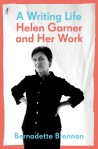
Bernadette Brennan, A writing life Helen Garner and her workAnyhow, here is the longlist,

  • The enlightenment of the Greengage Tree, by Shokoofeh Azar (novel/Wild Dingo Press)
  • A writing life: Helen Garner and her work, by Bernadette Brennan (literary portrait/Text Publishing) (my review)
  • Anaesthesia: The gift of oblivion and the mystery of consciousness, by Kate Cole-Adams (science-based non-fiction/Text Publishing)
  • Terra nullius, by Claire G Coleman (novel/Hachette Australia) (I’ll review in March)
  • The life to come, by Michelle de Kretser (novel/Allen & Unwin) (on my TBR pile)
  • This water: Five tales, by Beverley Farmer (short stories; novellas/Giramondo) (I love Beverley Farmer)
  • The green bell: A memoir of love, madness and poetry, by Paula Keogh (memoir/Affirm Press)
  • An uncertain grace, by Krissy Kneen (novel/Text Publishing)
  • The choke, by Sofie Laguna (novel/Allen & Unwin) (on my TBR, and am very keen to read having attended a lively conversation with her last year)
  • Martin Sharp: His life and times, by Joyce Morgan (biography/Allen & Unwin)
  • The fish girl, by Miranda Riwoe (novella/Seizure)
  • Tracker, by Alexis Wright (memoir/biography/Giramondo)

So, I’ve read and reviewed one, and will definitely read another, Terra nullius, by March. I have bought or been given a couple of others, and am keen to read a few more. On the other hand, there are a couple here that I hadn’t heard of at all – the books by Azar and Morgan.

The judges commented that the longlist

… challenges the reader to experience the pleasures of reading different forms of writing: speculative fiction, novella, memoir, biography, non-narrative nonfiction, history, short stories and work in translation.

I like this. Last year, I noted that there was significantly more non-fiction (more than half in fact), fewer short stories, and not much diversity. This year fiction represents just over half, and only a couple of the non-fiction are memoirs. Three of the non-fiction works are about writers and artists – Helen Garner, Michael Dransfield and Martin Sharp. This year’s list is significantly more diverse too, with indigenous writers Claire G Coleman and Alexis Wright, an Iranian born writer in Shokoofeh Azar, Riwoe’s book set in Indonesia, and our now well known Sri Lankan born writer Michelle de Kretser whose book is set in Sydney, Paris and Sri Lanka. Of course, as always, there are books I would like to have seen here but, overall, it’s an interesting list and I hope to have read more of it by the end of this year than I did last.

Meanwhile, I’d love to know if you have any thoughts on the list.

The shortlist will be announced on March 8 (International Women’s Day, as has become tradition), and the winner in April.

Monday musings on Australian literature: AusLit Women Academics on Colonial Women Writers

Over January, some of us Australian litbloggers – as the result of Bill’s (The Australian Legend) AWW Gen 1 Week – have been talking about early Australian women writers. It’s a topic of great interest to me, ever since the 1980s when I became interested in these writers. There seemed to be a flurry, at that time, of academics and researchers writing in this area – and this work has continued. For my benefit – and hopefully for others – I thought I’d document some of those who pioneered this research (in my time anyhow.)

Debra Adelaide

Adelaide (1958-) is probably best known now as a novelist, and I’ve reviewed her most recent novel, The women’s pages, here.  But I first knew of her as a researcher and writer about our older Aussie women writers. I bought both of her books on this topic back when they came out. One is A bright and fiery troop: Australian women writers of the nineteenth century (1988), which is a collection of essays she edited, covering writers like Louisa Atkinson, Catherine Helen Spence, Ada Cambridge and Tasma. (Adelaide acknowledges two woman in my list below, Dale Spender and Elizabeth Webby.) The other, which was published the same year, is Australian women writers: a bibliographic guide (1988). It is a comprehensive list (to the best of her research by the late 1980s) of all Aussie women writers. It includes a brief description of and a list of works by each writer. A wonderful resource.

Patricia Clarke

Clarke (1926-) is a historian focusing on women in nineteenth century Australia, including writers of all forms/genres. her books include Pen portraits: women writers and journalists in nineteenth century Australia (1988), The governesses: Letters from the colonies, 1862-1882 (1989), Pioneer writer: the life of Louisa Atkinson, novelist, journalist, naturalist (1990), Tasma: The life of Jessie Couvreur (1994), and Rosa! Rosa!: a life of Rosa Praed, novelist and spiritualist (1999). With Dale Spender (see below), she also published Life lines: Australian women’s letters and diaries 1788-1840 (1992). I love that these books look at writing beyond fiction – as important as that is – to letters, diaries, and journalism.

Joy Hooton

Hooton (1935-), an academic, is perhaps a bit of a ring-in to this group. She co-authored both The Oxford companion to Australian literature (1986) and the Annals of Australia literature (both of which I have). She is also an authority on autobiographic writing, and has published an anthology of autobiographical writing from the convict era to the present day, Australian lives: an Oxford anthology (1998). Most of the early writers, here, though, are male. However, I’ve included her because her works, particularly the Oxford companion and the Annals, are useful sources for researchers. And because just to be a woman academic, particularly one born pre-WW2, would not have been easy.

Elizabeth Morrison

Morrison (1936-) is another historian of colonial times, but her speciality is the role of the Australian newspaper press as publisher of serial fiction, particularly in the colonial era. She edited two of Ada Cambridge ‘newspaper novels’,  A Woman’s Friendship and A Black Sheep, which were published by UNSW Press, but she has also written many academic articles and given lectures on the subject. I have her edition of A woman’s friendship (republished 1995, orig, 1889), which was published in the Colonial Texts Series series, by UNSW Press (through, surprisingly, the Australian Defence Force Academy where Morrison was based).

Dale Spender

Spender (1943-) is an academic and feminist who has spread her wings wider than “just” Australian women, but her Australian credentials include being founding editor of Pandora Press (which published several of the older Aussie women authors I read in the 1980s, including Rosa Praed’s The bond of wedlock) and a commissioning editor of the Penguin Australian Women’s Library (whose books I also read, including Ada Cambridge’s Sisters). She also wrote Writing a new world: Two centuries of Australian women writers (1988). (Thanks Bill, for the reminder!)

Spender’s wider interests include early British women writers, and in this area her books include Mothers of the novel: 100 good women writers before Jane Austen (1986)You can see why I’m interested in her! I have this book on my Kindle!

You might like to check out her website. I do like her definition of “himitator”.

Elizabeth Webby

You may remember Webby (1942-), because my last two Monday Musings drew from a lecture of hers – but I didn’t say much about her except that she’s a retired academic. She was Professor of Australian Literature at the University of Sydney for nearly 20 years, and has been editor of the literary journal Southerly. She researched both colonial and modern Australian (women’s and men’s) literature, and perhaps her main legacy, publication-wise, is as editor of the Cambridge companion to English literature (2000), which I have. She has written numerous articles and given lectures on colonial literature, including an article on colonial women poets in Adelaide’s A bright and fiery troop. She has also published a bibliography about our early Australian poets, Early Australian poetry: an annotated bibliography of original poems published in Australian newspapers, magazines and almanacs before 1850. Bibliographies make for pretty dry reading, but how important they are!

I thank these, and all the other academics, who thought researching Aussie women writers was an important thing to do. I’m sure it wasn’t always easy.

I’ve only selected a few, of course – those that have been particularly relevant and useful to me – but if you have some favourites in this sphere that you’d like to share, I’d love to hear about them.