Mena Calthorpe, The dyehouse (Review)

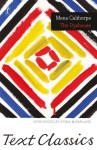
Mena Calthorpe, The dyehouseMena Calthorpe’s novel The dyehouse was, as I wrote in a post last year, Text Publishing’s choice for its 100th Text Classic, which surely says something about its quality or worth, wouldn’t you think? And yet, as Lisa (ANZLitLovers) pointed out in her post, it is not mentioned in recent books discussing the history of Australian literature, such as Geordie Williamson’s The Burning Library and Jane Gleeson-White’s Australian Classics.

However, it is listed in bibliographic and encyclopaedic works like Debra Adelaide’s Australian women writers: A bibliographic guide, Joy Hooton and Harry Heseltine’s Annals of Australian literature, and William Wilde, Joy Hooton and Barry Andrews’ The Oxford companion to Australian literature. It has also captured the attention of others, including Introduction-writer Fiona McFarlane (whose The night guest I’ve reviewed here). She writes of coming across a secondhand copy in a Sydney bookshop and says that she’d never heard of Mena Calthorpe, but as soon as she’d read the opening sentences, she decided to buy it. I can understand that. I would have too.

Now, before I get to the book, I’m going to bore you a little more with what people have or haven’t said about the book. In my above-linked 100th Text Classics post, I noted that while most reviewers were favourable, one from my city’s paper was less so. S/he, RR, called it “badly written and pretentious”, though conceded that if Calthorpe focused on “telling a story simply, economically, and honestly” she could be “a force … on the Australian literary scene”. Marian Eldridge, reviewing a reprint in the same paper, two decades later, had quite the opposite opinion. She praised Calthorpe’s “spare, clear prose and jaunty dialogue”, and called the book …

“a fine example of the social realist genre”

Well, I’m with McFarlane and Eldridge. The book got me in from its first paragraph, and I enjoyed it immensely. It is, what Lisa would call, a book that matters because its subject is, to put it broadly (and baldly!), the impact of capitalism-at-all-costs on workers. That could make for a dry, didactic book, but Calthorpe’s writing and characterisation bring the story to life. Her political message is unavoidable but it’s tempered by a cast of believable people (ranging from the cold chairman-of-the-board to the lowliest labourers), a well-controlled story that contains tragedy and romance without turning into melodrama, and writing that’s fresh and lively.

I’ll start with the writing first. The novel starts in 1956 and takes place over about a year. It’s told third person, in short chapters which move between the many, but not hard to keep track of, characters. It starts with Miss Merton arriving at the Dyehouse and meeting the on-site boss, Mr Renshaw. In chapter 2, we meet the Chairman of the Directors Harvison, the General Manager Larcombe, and Company Secretary Cuthbert. They’re discussing problems in the Dyehouse: it’s not keeping up with production. We quickly get a sense of the characters of these three men. Harrison’s lips tighten as he wonders “Where’s the firing squad?” Larcombe is ineffective – wary, unexciting, and full of excuses – while Cuthbert is “sharp-featured, pleasantly mannered”. We soon learn that he has some humanity, some empathy, but too easily lets his accounting distract him from troubling people issues. Then, in the same chapter, we shift to the General Office, and this (which McFarlane loved too):

Clack! Clack! Up came the carrier and ejected papers onto Mr Dennet’s table. There they lay: the Fanfolds! the Ledger Copies!
The Debits!
Mr Dennet took up his pen and began entering into the Control Book. The Comptometers sprang to life. Two young women with painted nails fell upon the papers.
Tic-tac, tic-tac. Now over to the files.
OK, Miss Brennan, you sort them out. City, Country, Government. Now break them up. A to K, L to Z, and then into the files with them.

There are other short interludes like this – a paragraph on worker Barney running for the morning train, for example – which break up the rhythm and convey the life better than any straight descriptive text could do. I have no idea what RR was thinking. Pretentious? No! Instead, I’d agree with McFarlane’s description of it as “formally experimental … with its episodic structure and its restrained lyricism …  its playful attention to sound.” It all makes for delicious reading.

“The trap’s set for us all” (Miss Merton)

Next, the well-controlled story. Told over a year, Calthorpe explores how the Dyehouse manages with its production crisis. We see Renshaw scapegoating the skilled, experienced but not certificated Hughie, moving him from his beloved dye-room to working on the vats. We also see Renshaw sexually preying on pretty young women in his employ, including the initially gullible Patty. We see the workers, their lack of security – those on “Staff” versus those brought in as needed – and their struggle to sustain their lives. We see the bosses turning a blind eye to the struggles of their people, or, not even noticing these struggles. We see nascent attempts to “organise” for better conditions. Along the way there’s an unplanned mid-life pregnancy, a tragic death, physical assaults and sexual abuse. The novel is nicely structured, beginning and ending with the calm, mature Miss Merton.

All this might suggest that the characters are stereotypical, designed simply to serve the “idea” but, while they do serve the idea, they come across as real, authentic human beings. Larcombe and Cuthbert, for example, are not simple villains. They are, in Larcombe’s case, for example, a bit lazy, a bit self-protective, a bit uncertain, resulting in his being a bit ineffective! Even the biggest villain of the piece, Renshaw, is shown to to have the odd ounce of humanity. Similarly, the workers. Hughie, Barney, Patty, Miss Merton and Oliver Henery, to name a few, are all rounded out with succinctly presented backstories, which establish their authenticity while also adding depth to the plot.

It is, essentially, an ensemble cast, but the stories of two characters primarily carry the plot – Hughie (whose love of his job “had given purpose and dignity to his labour”) and Patty (a naive young women who believes Renshaw will marry her, until she discovers otherwise).

The ending, which I won’t give away, is inspired, striking the right balance between realism and hope.

I really can’t recommend this book enough. It slots well into other books exploring the struggles of the working poor of the early post-war period, like Ruth Park’s Harp in the South series. And it is a thoroughly engaging read which is relevant today, not only because its humans reflect universals of human behaviour as well as the life of the period, but because we are currently seeing new threats to worker security which ensures that this book’s concerns do not feel dated. A worthwhile read on multiple counts, in other words.

Mena Calthorpe
The dyehouse
Melbourne: Text Publishing, 2016 (Orig. pub. 1961)
299pp.
ISBN: 9781925355758

(Review copy courtesy Text Publishing)

The natural way of things: Conversation with Charlotte Wood

I have just returned from an inspiring evening in which we got to see Aussie author Charlotte Wood in conversation with Guardian Australia’s Katharine Murphy. It more than made up for our disappointment last year when Wood had to pull out of the Canberra Writers Festival due to illness. Tonight’s event was presented “in association with the Canberra Writers Festival” and had the support of the National Library of Australia where it was held.  

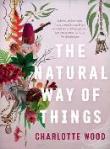
Charlotte Wood, The natural way of thingsAs the post title suggests, the evening was framed around Wood’s latest novel, The natural way of things (my review), which is partly why I was very keen to go because this is a provocative book that doesn’t leave you in a hurry. Wood started by describing the set-up, and explaining that the main plotline is like any prison novel. In other words, the question is: Will they escape or won’t they? I liked the simplicity of this!

Anger and the book’s genesis

Murphy asked her to talk a little about her comment, elsewhere, that anger had inspired the book. Wood explained that she didn’t realise how angry she was when she started writing the book. She talked about hearing a radio documentary about the Hay Institution whose inmates were described by the government as the “ten worst girls in the state”. The anger-inducing thing is that these girls had all been sexually assaulted in some way, and had been locked up for “being in moral danger”. They were locked up because they were in moral danger? You can see why Wood was angry – why any of us would be – on hearing that. Why were the victims locked up?

Wood then explained that her original story was historical, realist, in style, and it wasn’t working. Then, because when you are writing, “everything is about your book”, she started noticing contemporary stories – the army girl raped by a co-cadet, the woman employee sexually harassed by the David Jones CEO, etc – and decided to try a contemporary approach …

… but, while she was writing it, Julia Gillard became Australia’s first PM, and she saw a photo of Gillard, Quentin Bryce, and Anna Bligh together. They presented such a positive picture of female achievement that she thought her book was no longer needed. We all laughed at that! She then spoke of the hatred directed at Julia and her own distressed reaction to this. This is where her writing comes in: art helps you understand incomprehensible things, she said, you can give them shape.

Later, during the Q&A, she spoke more on the anger issue.  She’s uncomfortable with anger, she said – a little self-deprecatingly. She likes it when the book is described as “ferocious” or “fierce” rather than as “angry”. She talked about the importance of humour, of its being the essential companion to anger. (There is humour in the book, as I noted in my review). She quoted American thinker, Patricia Williams (she thought), who talks of the “gift of intelligent rage”. Wood saw this as anger/rage which encompasses positive energy.

That ending!

The discussion then turned to the ending, and its ambiguity. Murphy worried that Wood seemed to be suggesting that the answer is “separatism, opting out”. The ending is certainly the aspect that gave me some pause. It wasn’t that image that bothered many readers of the women pouncing on the designer handbags. No, for me, as for Murphy, it was the ambiguity. I like ambiguity, but here I was a little uncertain about what I was taking away.

Wood’s response was helpful. She said the book has different endings depending on who you are following, and that some readers come away feeling triumphant, while others feel demoralised. She said that for Yolanda, her only liberation was to “separate” herself, to go feral, to become an animal in fact, but that wasn’t Verla’s answer. This gave me a little structure for my thinking.

While she doesn’t like to talk in terms of messages, she agreed that part of it was that in order to be free you have to separate yourself to a degree from a culture that hates women. This can mean not reading women’s magazines that hurt/harm you, not laughing at sexist jokes, and so on.

She talked about another issue that intrigued me, and that’s to do with the men – the prison guards – ending up being trapped too. This is where the balance of power started to shift a little – and is the part of the novel she liked writing!

Nerdy stuff

Charlotte Wood (Courtesy: Wendy McDougall)

Murphy then asked her “nerdy stuff”, that is, about her writing process. I won’t spend a lot of time on this (though nerdy me was interested too). I’ll just share a couple of comments. One was that although she now has five novels to her name, she is still always unsure when she sits down to write, but one thing experience has given her is that she is now “quicker at diagnosing problems”. She has also learnt more about the “craft” of writing, such as how to shape stories.

She described writing as hard – it’s hard making up stuff out of your head, she said. She knows when she’s got the momentum up – it’s when her current book is in her dreams, when she thinks about it as soon as she wakes up. She referred to her PhD on the cognitive aspects of creativity. She found some commonalities between writers, but knowing what these are doesn’t help you do it, she said! Encouraging eh?

Murphy asked whether she kept a notebook to jot down ideas she comes across, things she hears. She said she does this a bit, but wishes she did notebooks as well as Helen Garner. Mentioning the notebook excerpts in Garner’s latest book, Everywhere I look (my review), she said she admires “the precision of her [Garner’s] observations”.

Plausibility in fiction

Early in the conversation, Wood referred to some readers questioning plausibility in the book. I followed this up at question-time, as it was an issue in my reading group. I loved her answer because – as you regular readers here will see – it concurred with my views!

She said it depends, partly, on the sort of novel you’re writing. She wanted this novel to be strange and weird. Her usual benchmark is to ask what she herself would believe. Her question for readers is: “Are you going with it. If you start worrying about factual details, you risk missing out on what’s true.” Yes! So, in this book, in particular, she didn’t “care” much about plausibility. Her next book is more realist so the facts will matter more, but I got the sense that fundamentally she focuses more on what she is trying to do, to say, than on getting all the facts right.

There was more, but I’ll leave it here on my question – and conclude by saying that Wood came across as warm, natural (!), thoughtful, and openly sharing of herself. This made it a most enjoyable event – the hour went way too fast.

Monday musings on Australian literature: Ali Cobby Eckermann’s big prize

Last week’s news that Ali Cobby Eckermann had won a very special prize scuttled my plans for today’s Monday Musings post, which is fine because it can wait, whereas this one can’t. Last year, I wrote about Helen Garner winning the lucrative 2016 Windham-Campbell Prize for Non-Fiction. It was a new prize to me, and is American-based, so imagine my surprise when it popped up again this year through the announcement that indigenous Australian poet, Ali Cobby Eckermann, had won the 2017 Windham-Campbell Prize for Poetry. How wonderful for her, and, by association, for Australian literature, for Australian indigenous writers, and, with Garner and now Eckermann winning, for Australian women writers too.

Eight Wyndham-Campbell Prizes were awarded this year, two each for Fiction, Non-Fiction, Drama and Poetry. This is the first year the awards have included poetry. These prizes, which are open to English-language writers around the world, were “established in 2013 with a gift from the late Donald Windham in memory of his partner of forty years, Sandy M. Campbell”. They’re impressive for a couple of reasons. Firstly, the nominations are made confidentially and judged anonymously, so the recipients have no idea they are in the running until they receive a call from the prize manager. Secondly, the prize is worth USD165,000. That is, each winner receives that amount of money. Now that’s a prize!

Before I get to our winner, just one more thing on the prize. It is awarded at a ceremony during the Windham-Campbell Festival, which happens this year from September 13-15, 2017 at Yale University. The awards ceremony apparently traditionally begins with an invited speaker who gives a talk on “Why I Write.” This year’s speaker will be Karl Ove Knausgård. All the events are apparently free and open to the public. Really, this is philanthropy isn’t it! Now, to …

Ali Cobby Eckermann

The prize announcement page describes her as “Yankunytjatjara Aboriginal Australian”, and the page on her explains her work in these terms:

Through song and story, Ali Cobby Eckermann confronts the violent history of Australia’s Stolen Generations and gives language to unspoken lineages of trauma and loss.

It also says that she founded Australia’s first Aboriginal writers retreat. I didn’t know that.

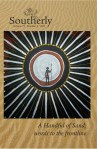
Southerly 71-2 CoverEckermann has published poetry collections, two verse novels, and a prose memoir. She also edited a special issue of Southerly devoted to indigenous writing. Southerly, congratulating her on win, describes it as their best-selling issue.

On being told of her prize, Eckermann (born 1963) is reported as saying that it will change her life completely. She is currently living in a caravan and looking after her elderly adoptive mother. This money will help her bring her family – including her son and grandsons – together. She is, as you’ll have gathered, a product (I don’t want to say “victim”) of the Stolen Generations. Linda Morris, reporting the win in the Sydney Morning Herald, writes:

In her memoir Too Afraid to Cry, published in 2013, Eckermann related how she had been tricked away from her mother as a baby, repeating the trauma her mother had suffered when she was taken from her grandmother many years before. Eckermann, in turn, had to give her own child up for adoption.

It’s a tough story, and one that reflects, we now know, the lives of many indigenous people. It’s this story, and the wider dispossession of indigenous people, that Eckermann explores in her work. She told Morris that

”I like to think the prize recognises an honest truth around Stolen Generations, for writing around an emotional truth, not academic. I’ve learnt to embrace my emotional baggage and turn it into poetry.”

She sees herself as representing a ”generational voice, not a singular voice”.

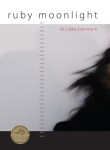
Ali Cobby Eckermann, Ruby MoonlightIt might be useful here to list her work:

  • Little bit long time (2009, poetry collection)
  • Kami (2010, poetry collection)
  • His father’s eyes (2011, verse novel)
  • Love dreaming and other poems (2012, poetry collection)
  • Ruby Moonlight (2012, verse novel, my review, winner of the NSW Premier’s Literary Awards Book of the Year and Kenneth Slessor Prize for Poetry)
  • Too afraid to cry (2013, memoir, and winner of the Tangkanungku Pintyanthi Fellowship)
  • Inside my mother (2015, poetry collection, Lisa’s combined reviews post, shortlisted for the NSW and Premier’s Literary Awards, and described by Eckermann as an “emotional timeline” of the Stolen Generations.)

In addition to these she has appeared in many anthologies, including a few editions of Best Australian poems.

The judges praised her ”substantial and formally innovative body of work”. I’ve only read a little of her work – Ruby Moonlight, which I’ve reviewed as you’ll have seen above, some of Inside my mother which I’ve just bought, and an individual poem or two. While I have to admit that my knowledge of poetry is not particularly deep, I can see from even this small sample what they mean by her work being “formally innovative”. As for “substantial”, I’m assuming they don’t just mean quantity but the quality and depth of her work and ideas.

Anyhow, while I didn’t use those words in my review of Ruby Moonlight, I tried to convey a sense of its formal and intellectual cleverness alongside the emotional engagement it generates. I can see these qualities in Inside my mother too. It opens with a gorgeous shape poem, “Birdsong”, and has at least one other, “Severance”. It has longer narrative poems alongside more abstract poems, of various forms, that convey feelings and ideas. There’s a discordant poem, “I tell you true”, that has an almost cheery singsong rhythm while telling a bitter story about alcohol abuse, violence, suicide, loss. And so on …

Interestingly, in his introduction to The best Australian poems 2009, poet Robert Adamson writes:

I attended the APC Regional Poetry Festival at Castlemaine in April 2008. Ali Cobby Eckermann, a poet from Alice Springs was on the program and she read a poem I have included here, “Intervention Pay Back”. Ali recited this poem and the audience was clearly moved. I was certainly moved by both the subject matter and the language of the poem. Somewhere between a ballad and written spoken word, it makes a new shift into what a poem might say and be.

“A new shift into what a poem might say and be” is clearly what the Wyndham-Campbell judges also saw nine years later.

So, big congratulations to Ali Cobby Eckermann on a much-deserved award … and kudos to the person or persons who nominated her.

David Carlin and Francesca Rendle-Short (eds), The near and the far: New stories from the Asia-Pacific region (Review)

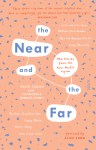
David Carlin and Francesca Rendle-Short, The near and the far

Anthologies, almost by definition, have a unifying theme, something that explains their existence. There are the “best of” type, as in best of a year or of a genre, for example. There are those drawn from a prize, such as The trouble with flying, and other stories (my review) from the Margaret River Short Story competition. And of course there are subject-oriented ones like Rebellious daughters (my review) or Australian love stories (my review). David Carlin and Francesca Rendle-Short’s anthology, The near and the far, is another type. Its origin is a project called WrICE (Writers Immersion and Cultural Exchange) which, the editors tell us, is “a program of reciprocal residences and cultural events focused on writers and writing from Australia and the Asia-Pacific”. The residencies and events occurred in such places as Singapore, Malaysia, Vietnam and Australia. The aim was to enable Asia-Pacific writers to immerse themselves in the face-to-face exchange of ideas and collaborative experiences, in order to build cultural understanding and find, as one participant says, “sustainable ways of speaking amongst ourselves and relating to one another as cultural practitioners”.

The result is that the stories – and even the forms of the pieces – are varied. The book has been thoughtfully presented. There’s a foreword by Alice Pung and an introduction by the editors at the beginning, and some notes on WrICE and a list of contributors with mini-bios at the back. The stories themselves are organised into three groups – The Near, The Far, and The Near and The Far – though I’d probably have to think hard about why certain stories have been allocated their particular group. There are 21 stories, 15 of which, if I’ve counted correctly, are by women. There’s a lovely extra touch, which is that at the end of each story is an author’s reflection – on the writing process, the goals and/or the experience of WrICE. They were often illuminating.

Before we get to the stories – and of course I’m only going to be able to focus on a few – I’d like to share some comments from the foreword and introduction. In her foreword, Pung calls the book a travel anthology, and I suppose it is, in a sense, though I may not have described it that way if I hadn’t read her foreword! She says

The near and the far is one of those rare travel anthologies, combining fiction with poetry and longform essays, each piece revealing a real insider’s experience of inhabiting a different world without exoticising the foreign. Each story has a centre – whether philosophical, moral, or political – and yet none of them are didactic.

The editors talk of how our different colonial experiences had “left long shadows across our imaginations”. They refer particularly to “settler” Australians who live in what was seen as an “outpost” – further than the “Far East” – and yet who still tend to look to Europe and America for our main cultural input. “The far feels near”, they write, “and the near feels far away”. That makes a lot of sense – to me.

You think you know (Omar Musa)

Now the stories. They come from, as you’d expect, a diverse group of writers, from Australia and Vietnam, from the Philippines and America, and from many places in between. Some I knew – like Melissa Lucashenko, Omar Musa, Cate Kennedy, and of course Francesca Rendle-Short – but most were new to me. Many of the pieces explore in some way the idea of what we know and don’t know. They may be about ignoring what we know because it’s too painful, or because we fear the rejection of others. They may be about the disconnect between what we assume and what we find. Or they may simply be about facing something new or unexpected.

I loved that indigenous Australian writer Melissa Lucashenko’s story, “Dreamers”, was chosen to start the anthology. Set in rural Australia in 1969, two years after the famous referendum, it’s a beautifully structured and told story about the relationship that develops between indigenous woman and her non-indigenous employers. It’s a story about love, loyalty and tolerance, but manages to quietly reference, without being polemical, social change issues such as environmental protest and the stolen generations.

Not surprisingly, the theme of accepting – welcoming, hopefully – diversity runs through the book. In “My two mothers”, Singaporean Suchen Christine Lim shares a story about a young adopted girl’s shame at having two mothers, her unwillingness to appreciate their love and tender care, and her eventual recognition of what they had given her.

If you have ever read or heard Australian-Malaysian performance poet Omar Musa, you won’t be surprised to hear that diversity underpins his contribution, “You think you know”. In this first-person story he explores “the deeply troubling issues” regarding sexual identity in Malaysia through his narrator’s (presumably himself) friendship with a young Malaysian man met on a bus. It’s a quiet, reflective, wrenching story – quite different from the higher octane wordplay of his performance poetry.

A story using a completely different tone and pace is Chinese-Indonesian, now American writer Xu Xi’s “BG: The significant years”. In a time when scientists and historians argue about dating nomenclature – BCE/CE anyone? – Xu Xi has come up with her own, BG or Before Google! Google (created 19 August 2004, if you want to know) provides for her a significant life marker. In short chronological sections, starting with “BG 43 (circa 1961 to ’62)”, she chronicles her life – in a lightly satirical tone – from applying to go to university in America, to becoming a US citizen, and getting a job and then losing it in the 1986 stock market crash. Her commentary on life in the US is enlightening. Joining the unemployment queue meant, she writes, that “for once I wasn’t a minority, because the minority was the majority in that government office”! Telling eh?

There are many more stories I’d like to share: Laurel Fantauzzo’s second-person-told story, Some Hints About Travelling to the Country Your Family Departed, about going back to the place (in her case the Philippines) a parent came from; Francesca Rendle-Short’s “1:25,000” on the geologies of time, on memories, regrets and saying “no”; and Maxine Beneba Clark’s short, painful, 9/11-inspired “Aviation” in which accepting “other” is put to the test.

And then there’s David Carlin’s gender-bending, mind-bending “Unmade in Bangkok”. Inspired by Thailand’s ladyboys, he explores ideas about identity and gender. The story is told in ten sections, mostly in third person but slipping between male and female personas. In section four, “she” considers:

Women make themselves up, men do not. This is curious when she thinks about it. To be a woman, in this culture, is to be a creature dipped in fiction, whereas to be a man is to be altogether real or at least natural, unconstructed.

So she dresses up and considers: “What is she becoming? Ever more fictional? A character in drag?” I enjoyed how Carlin explored gender identity, using broader ideas about “fiction”. “Some fictions trap us”, he writes, “but other fictions free us”. For ladyboys the implications are serious. It’s a complex story which covers a lot of ground. I need to read it again.

I titled this section “you think you know” because in all the stories, the writers are seeking to know, not so life can be assured, or complete, but in the spirit of understanding, of growing. Alvin Pang, in the note to his story “The Illoi of Kantimeral”, discusses the invented language he used:

Their precise meanings may or may not be immediately discernible from context, but neither is the experience of engagement, negotiation, resistance, and mystery within the Asia-Pacific itself as straightforward as we might wish the world to be. There is humility and pleasure in earnest encounter, and in listening out for the inherent humanity of what we do not fully recognise.

Perfect! This is a book which confronts us with many ways of seeing and experiencing. Different stories will appeal to different readers, depending on experiences, but I hope I’ve given you a taste. Books like this deserve a bigger audience than they often get.

aww2017-badge

David Carlin and Francesca Rendle-Short (eds),
The near and the far: New stories from the Asia-Pacific region
Melbourne: Scribe, 2016
288pp.
ISBN: 9781925321562

(Review copy courtesy Scribe)

Carson McCullers, The great eaters of Georgia (Review)

Carson McCullers, 1959

Carson McCullers, 1959 (photographed by Carl Van Vechten, Public domain, via Wikimedia Commons

Regular readers of my Library of America (LOA) Story of the Week posts will probably guess why I’ve chosen to write about this story: it’s by an appealing American writer and it’s about food. However, it’s quite different from the other food stories. Firstly, while it’s called “the great eaters” it’s more of a little memoir essay albeit structured around food, and secondly, it was published posthumously in 2005. McCullers was born in 1917 (on Feb 19 in fact, so this month in the centenary of her birth) and died in 1967. “The great eaters of Georgia” was written, LOA’s notes say, in 1954 but was not published, because …

It’s a complex situation, which the Wikipedia article section on her personal life fills in, but the significant thing for us is that she had returned (fled) to the US from Paris in 1953, because her husband had tried to encourage her to commit suicide with him. Soon after her return, he succeeded in taking his life. Now, this is relevant because LOA tells us that McCullers had been offered money by Holiday magazine for a piece on Georgia, but, according to McCullers’ biographer Josyane Savigneau, the magazine rejected the article because they were “looking for a lighter, more descriptive, less personal piece.”

I guess that’s fair enough for a holiday-oriented magazine, but for readers more interested in McCullers than in Georgia – sorry, Georgia – it’s great that the piece didn’t disappear. Like many people, I’ve read and/or seen The heart is a lonely hunter and The member of the wedding – but in my case so long ago that my main memory is not of the plots but of melancholy and loneliness, the sorts of emotions that appealed to my teenage self!

But now, “The great eaters of Georgia”. It’s an intriguing piece that doesn’t perhaps quite cohere – certainly as a piece for a holiday magazine. For example, she mentions visiting various people. First is the controversial writer Lillian Smith, who openly confronted such issues as race and gender equality. McCullers writes:

Lill, like other Southerners, feels passionately about the problems of the Negro. Most Georgians do not agree with her, and often when her name is mentioned there is that strange area of silence.

This may not have been what Holiday was looking for, particularly when she adds that during her visit they “discussed Georgia politics”. Then she visits psychiatrist Dr Hervey Cleckley. She doesn’t share her discussions with him about her husband’s suicide – this I learnt from LOA – but they did talk

of the improvement in the understanding of racial problems and the migration from the rural cotton areas to the cities and towns.

Again perhaps not Holiday content? She says they also talked about Dr Crawford Long, a Georgian who was the first to use ether in an operation. You may wonder why this came up, but it resulted from their discussion of “ether parties”:

These odd-sounding affairs must have been like marijuana parties to the modern teenager but there was no social stigma attached, and my grandmother told me that, as a young lady, she often held ether parties for her young friends after they had ridden home from church and gathered for Sunday dinner.

Fascinating eh? Dr Long apparently noticed the numbing effect of ether (!) and thought it might work in surgery! I found this interesting because I have reviewed Sawako Ariyoshi’s The doctor’s wife, which fictionalises the story of Hanaoka Seishū who is believed to have been the first to use general anaesthesia in surgery – in 1804. Long carried out his first surgery in 1842.

Anyhow, I guess McCullers included this story of Long as an example of Georgian ingenuity? Again it may not have been what Holiday was looking for.

She was probably on firmer ground in her description of eating practices and food, because yes, she does talk about those too as the title suggests! I enjoyed little tidbits such as that in her mother’s day:

a child wore an asafetida bag around his neck to ward off colds and contagious diseases. Asafetida is the foulest-smelling substance. I suppose it makes good medical sense because one was not apt to go very near a person wearing an asafetida bag.

Hmmm, that’s not a food story though asafetida is used in cooking – and, anyhow, it’s adds a touch of humour.

She also talks about what great eaters (hence the title) Georgians are – at every meal:

Georgians eat big meals three times a day. I have never gotten over this orange-juice-and-coffee breakfast they have up North. A respectable Georgia breakfast means fish roe and grits or at least eggs or maybe country sausage.

She remembers chewing sugarcane as a child, and the historic cultivation of chinaberry trees “to counteract miasma”. She mentions the razing of the home she was born in, and sneaks in a comment about the reduction in (though not removal of) poverty in her home-town, before returning to the subject of breakfasts. She talks of the Yankee vulgarity of referring to children as “kids”. And she tells us that fried chicken is probably Georgia’s best-known dish, closely followed by “field peas”. She surprised me by mentioning a dish I have in my recipe folders from my early recipe-gathering days, Country Captain. It’s a sort of curried chicken dish, and I didn’t realise it came from the American south.

She also tells us that “any discussion of Georgian food is incomplete without the mention of watermelon” and provides a loving description of the “special operation and procedure” it demands. Fruitcake, tupelo honey, and the smells of Savannah are also shared with us, before she comes to a little anecdote about a “town character”, a bachelor who prefers to eat alone. This is very “un-Georgian”, and she concludes her piece by saying that

Although we have our share of eccentrics, I know very few Georgians who do not love fellowship, good hunting, food, and laughter—who do not enjoy life.

All in all, it’s a fascinating article – for what it tells us about Georgian life and food but more, for the little insights we glean of her interests and her emotional state. A good read for anyone interested in McCullers.

Pam (Travellin’ Penguin) has also written a response to this story.

Note: My other LOA food stories are by John Duncan (“A Virginia barbecue“), Ana Menéndez (“Celebrations of Thanksgiving: Cuban offerings“), George G. Foster (“The eating-houses“) and George Augustus Sala (“The tyranny of pie“).

Carson McCullers
“The great eaters of Georgia”
First published: Oxford American, Spring 2005
Available: Online at the Library of America

Kate Chopin, Fedora (Review)

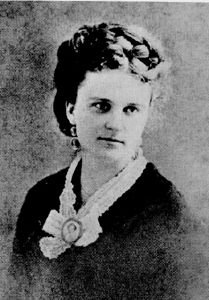
Kate Chopin

Kate Chopin (Public domain, via Wikipedia)

Time methinks for another Library of America (LOA) Story of the Week, particularly since one of their recent offerings was one of my favourite American authors, Kate Chopin. “Fedora” is the sixth story by Chopin I’ve discussed here, and is probably the shortest, more of a “sketch”. In fact its original title was apparently ““The Falling in Love of Fedora. A Sketch”

If you’ve read any of my previous posts, or her novel The awakening which I read a couple of times before blogging, you’ll know that Chopin was not afraid to tackle confronting subjects, like suicide, adultery, and miscegenation. LOA’s notes briefly discuss the controversy surrounding The awakening. Words such as  “morbid,” “sex fiction,” “poison,” were applied to it, and the clearly more conservative, younger, Willa Cather, whom I’ve also reviewed here, said that “I shall not attempt to say why Miss Chopin has devoted so exquisite and sensitive, well-governed a style to so trite and sordid a theme.”

Well, of course, many of us do know why she explored the themes she did in puritanical late-nineteenth century America, and we admire her for doing so. LOA explains that while her stories were usually sought after, some were a little too hot to handle. “Fedora” was one such, being “turned down by the national magazines that often competed for her work”, only appearing “in an upstart literary journal in her hometown of St. Louis”.

So, what is it that was so shocking about “Fedora”? Well, there’s the rub, because it’s one of those short stories that leaves you wondering. Fedora is 30 years old – and is described pretty much as the quintessential spinster:

The young people—her brothers’ and sisters’ guests, who were constantly coming and going that summer—occupied her to a great extent, but failed to interest her. She concerned herself with their comforts—in the absence of her mother—looked after their health and well-being; contrived for their amusements, in which she never joined. And, as Fedora was tall and slim, and carried her head loftily, and wore eye-glasses and a severe expression, some of them—the silliest—felt as if she were a hundred years old. Young Malthers thought she was about forty.

The story concerns her going to the station – driving the horse and cart – to pick up young Malthers’ sister who is returning from college. Young Malthers is, we are told, 23 – and Fedora has become fascinated by him, suddenly realising he is a man – “in voice, in attitude, in bearing, in every sense — a man”. Now, early in the story, we’d been told that:

Fedora had too early in life formed an ideal and treasured it. By this ideal she had measured such male beings as had hitherto challenged her attention, and needless to say she had found them wanting.

But, suddenly she is aware of him, she watches him:

She sought him out; she selected him when occasion permitted. She wanted him by her, though his nearness troubled her. There was uneasiness, restlessness, expectation when he was not there within sight or sound. There was redoubled uneasiness when he was by—there was inward revolt, astonishment, rapture, self-contumely; a swift, fierce encounter betwixt thought and feeling.

Fedora could hardly explain to her own satisfaction why she wanted to go herself to the station for young Malthers’ sister. She felt a desire to see the girl, to be near her; as unaccountable, when she tried to analyze it, as the impulse which drove her, and to which she often yielded, to touch his hat, hanging with others upon the hall pegs, when she passed it by.

It seems, then, that she is in love with him, as the original title encourages us to think – or that she, at least, feels a desire or passion for him. So, when she picks up Miss Malthers, why does she do what she does? That is the question – and it’s one I’m not going to answer, because that would be a spoiler and because the story is so short that you can read it, and ponder it, yourself. And anyhow, I’m still thinking about it myself, given the way Chopin teases us. Suffice it to say that, however you read it, Chopin was challenging her readers to think about desire – its origins, its expression, and its impact on the person who desires.

This is a beautiful and intriguing little “sketch”, though to call it that doesn’t fully do it justice.

Note: My other Kate Chopin reviews are A pair of silk stockings, After the winterA respectable womanDésirée’s baby and Morning walk. My, they are building up aren’t they?

Kate Chopin
“Fedora”
First published: Criterion, February 20, 1897
(Under the pseudonym, La Tour)
Available: Online at the Library of America

Maria Katsonis and Lee Kofman (eds), Rebellious daughters (Review)

Maria Katsonis and Lee Kofman, Rebellious daughtersTo rebel or not to rebel, that is the question. At least, it’s the question that interested memoirists Maria Katsonis and Lee Kofman who, having written their own stories about “conservative upbringings and subsequent rebellions”, wanted to discover what other women could reveal about that “universal life experience”, the rebellion against parents. This book, Rebellious daughters, is, obviously, the end result – and it makes for fascinating reading.

In their Introduction, Katsonis and Kofman quote American author Gordon Lish’s statement that the  best thing writers can do is to get themselves “in trouble”, to “make it hot” for themselves. This is what they wanted from their contributors, they wanted them to take risks – and it’s what they got.

Like most anthologies, Rebellious daughters has been carefully ordered. It starts with one of the grand-dames of Australian literature, Marion Halligan (“The daughters of debate”) who describes herself as “well-behaved”, as the “good girl” that so many of the later contributors rebelled against. But this is not to say that she didn’t engage in her own little subversions, such as reading forbidden books. They didn’t do her any harm, she writes, “the delicate ones were my parents.” I related to Halligan’s story because, like her, I was the eldest, “the one who came before, who paved the way” and didn’t rebel dramatically. But, enough of that, I’m talking order, structure, here.

The book ends with author-journalist Jane Caro (“Where mothers stop and daughters start”) who shares her daughters’ rebellions, the loud in-your-face one and the withdraw-and-don’t-engage one. Her motherly perspective provides a satisfying, logical conclusion to the anthology. And then, right in the middle, the ninth story of seventeen, is author-publisher Rebecca Starford’s “Who owns my story”. Drawing on her own life and memoir, Starford grapples with the form, with the ethics and practice of memoir writing. I was intrigued by the placement of this contribution, but it’s clever. Having read eight already, I was ready to think about the issues Starford posed, and then, as I read the final eight, I had them in mind.

So, what are the issues? Starford starts by quoting author JP Dunleavy, who said that “The purpose of writing is to make your mother and father drop dead with shame”. Starford likes this quote because

it reveals, simply and with a degree of sharp comedy, the risky nature of memoir writing.

She touches on several issues. One is the idea of shame, and whether it is “an emotion women memoirists suffer from more acutely than our male counterparts.” She thinks it is, and wonders if this is due to girls being taught that they should never speak out. She also explores “a nagging moral quandary”, that is, “the right” to tell stories that involve others. It is, she admits, “the biggest ethical question a memoirist faces” particularly when the memoir portrays these others “in an unflattering light”. She discusses the option of writing the story as fiction. (But we all know cases where people “see” through that – or think they do – don’t we!) Anyhow, she says that she couldn’t choose the fiction option:

For me, the act of writing a memoir was important to the process. If I’d written my experiences as fiction, I would have been hiding behind the genre, and that would have been self-defeating, less courageous, and less honest.

This makes sense to me – and implies that many memoirs are a form of catharsis or, at least, of resolving one’s past. This seems to be the case for Starford who concludes that her memoir has resulted in improved communications with her father. And, she says, while her memoir might have seemed like rebellion to him, for her it was about “seeking to understand him and my mother” and how her experiences as a child had shaped her.

Starford’s analysis of the personal and ethical implications of writing memoirs provides a wonderful grounding for understanding of the other “stories”. There’s a lot of pain here, but there’s also humour, occasionally laugh-out-loud, more often wry. Lee Kofman’s story (“Me, mother and Sexpo”) about taking her conservative Hassidic mother to the Sexpo exhibition is hilarious, but is also a lesson in the assumptions we make – particularly about our parents. Michelle Law’s (“Joyride”), on the other hand, perfectly captures her pain of rebelling only to discover that she’d misread the feelings of the boy in question.

Not surprisingly many of the stories are about tension over boys and sex. Krissy Kneen (“Wundermärchen: A retelling of my grandmother”), whose Steeplechase I’ve reviewed, comes to realise in the end that instead of being the rebellious granddaughter she thought she was, she had taken on her grandmother’s mantle, she’d become a storyteller who likes to shock the innocent. It’s just that her grandmother used death, where she uses sex.  In “Resisting the nipple”, Rochelle Siemienowicz, whose memoir Fallen I’ve reviewed, tells of her struggle against the “good girl” expectations of her strict Seventh-day Adventist family and then of her complicated feelings, particularly regarding her mother, when becoming a mother herself.

In many of the stories, the youthful rebels are shocked to discover things aren’t as they thought they were or would be. Jamila Rizvi (“The good girl”) is confused when she realises that a girl (like her baby sister for example) could be not-good but liked. Jo Case (“Rebelling to conform”), in her desperation to be popular, starts to do poorly at school only to realise, later, that some of those popular girls she was trying to emulate got good grades. And Amra Pajalic (“Nervous breakdowns”) is frustrated by her out-of-touch migrant mother’s nervous breakdowns until she realises the cause is a mental illness.

Not all the rebellions in the book are against mothers – some are against fathers and grandmothers – and not all are resolved but, in most of the stories, age and experience eventually bring rapprochement. That doesn’t mean of course that the daughters capitulate. Rather, they come to understand their mothers (or whomever) a little more and their mothers likewise learn to accept the daughter they have. As Susan Wyndham (“A man of one’s own”) concludes

life is a long lesson and from this distance I prefer to look back with tenderness on those riotous years … And for both of us I say, no regrets.

And that seems the perfect point on which to end my post on this engaging, sometimes shocking, but thoroughly generous and warm-hearted book.

Note: A percentage from the book’s sales is going to the Women’s Legal Service Victoria.

aww2017-badgeMaria Katsonis and Lee Kofman (eds)
Rebellious daughters: True stories from Australia’s finest female writers
Edgecliff: Ventura Press, 2016
322pp.
ISBN: 9781925183528

(Review copy courtesy Ventura Press)

Louisa Atkinson, A voice from the country: January (Review)

Louisa Atkinson, as I wrote in a post a few years ago, was a pioneer Australian writer. She was a significant botanist, our first Australian-born woman novelist, and the first Australian woman to have a long-running column in a major newspaper. It was a natural history series titled A Voice from the Country which ran in The Sydney Morning Herald for 10 years from 1860. I’ve shared here a few natural history articles/essays written by Americans, such as John Muir, but never an Aussie one. That’s going to change here, now – for a couple of reasons. Firstly, because I can, given the articles are findable through Trove, and secondly because the Australian Women’s Writers Challenge plans to focus this year, among other things, on classic Australian women writers. You can’t be a more classic Aussie writer than our Louisa!

But, which of Louisa Atkinson’s many columns should I do? I read a few and decided on one from her first year. In fact, I think it might have been the very first in the series. It’s titled “January”, which makes it particularly appropriate this month. Atkinson was living in Kurrajong, on the lower slopes of the Blue Mountains, in “Fernhurst”, the house built by her mother.

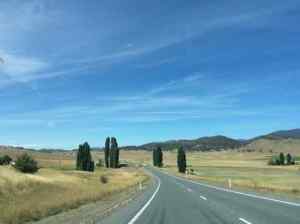
Monaro region, in January

January in the Monaro, 2010s not 1860s

So, the piece is about what it says, January. She describes the birds and plants in particular that you see in January in her region. Here is the opening sentence:

A WARM drowsy month, without the opening promise of Spring or maturing riches of Autumn.

Beautiful don’t you think, and it perfectly catches the middle of the Australian summer, particularly when you read the next couple of sentences:

In dry seasons the grass is scorched and white, the dust flies along the road before the least puff of wind, much to the annoyance of the traveller. The observer of nature finds his field of observation limited, yet not altogether barren.

In other words, it is dry, more yellow I’d say than white, and there’s nothing much happening, nature-wise. “Much” though is the operative word, because it’s “not altogether barren”, as she goes on to show by describing, for example, the activity of various birds such as the “waterwagtail or dishwasher”, laughing jackasses, lowries. Now, here’s another reason I chose this piece – her language. There’s the obvious fact that Atkinson has an engaging way of writing about nature, but what I want to explore here is its unfamiliarity.

By this I mean unfamiliar expressions and names. Regarding the former, I often find in articles I locate through Trove, language that is more erudite than we see in today’s newspapers. It suggests a higher level of literacy in readers. Take, for example, Atkinson’s use of “ferruginous” to describe the colour of a fungus. We might find that word in a novel these days, but not, I expect, in a general interest newspaper column. Of course, it may also suggest that newspapers were geared more to the elite than to the general populace? I don’t know enough about newspaper history to say any more on this. Sometimes, it’s more that word usage has changed. For example, Atkinson writes that some young birds “essay flight”. We rarely see “essay” used in that sense these days. I love that reading these older articles can give us insight into other times beyond the subject matter of the writing.

The other unfamiliarity relates to her naming of things. I know what laughing jackasses and lowries are – kookaburras and crimson rosellas*, respectively – but these names aren’t commonly used now. However, I have no idea what a “waterwagtail or dishwasher” is. Is it the willie wagtail and nicknamed dishwasher because its tail swishing back and forth reminded people of a dish mop? So, I did a Google search, and found an article titled “21 Facts about Pied Wagtails” from UK’s Living with Birds website. Facts 6 and 7 are:

6. Few birds have as many country names as the pied wagtail. They range from Polly washdish and dishwasher to the more familiar Penny wagtail, Willy wagtail and water wagtail.

7. The origin of the washer names is a mystery, but it may be because women once washed clothes, as well as pot and pans, by a stream or village pump, the sort of place that pied wagtails also frequent.

So, not the action of their tail perhaps but the places they frequent? I’m not a bird expert, but my understanding is that this White or Pied Wagtail is a “vagrant” in Australia, and that what we call the willie wagtail is from a different family. Which one – if either of these – is Atkinson talking about? Regardless, my point is that reading past writing can trip us up when the writers described plants, animals or objects using terms or names we don’t use now. We have to be careful – particularly those of us not expert in subjects – about drawing wrong conclusions from our reading.

POSTSCRIPT, 31 Jan 2017: Pam (Travellin’ Penguin) checked out “dishwasher” through her bird contacts, and was pointed to the book Austral English, which says that it’s “an old English bird-name for the Water-wagtail; applied in Australia to the Seisura inquieta … the Restless Flycatcher”. It quotes from the 1827 Transactions of the Linnæan Society, that the bird “is very curious in its actions. In alighting on the stump of a tree, it makes several semi-circular motions, spreading out its tail …”.

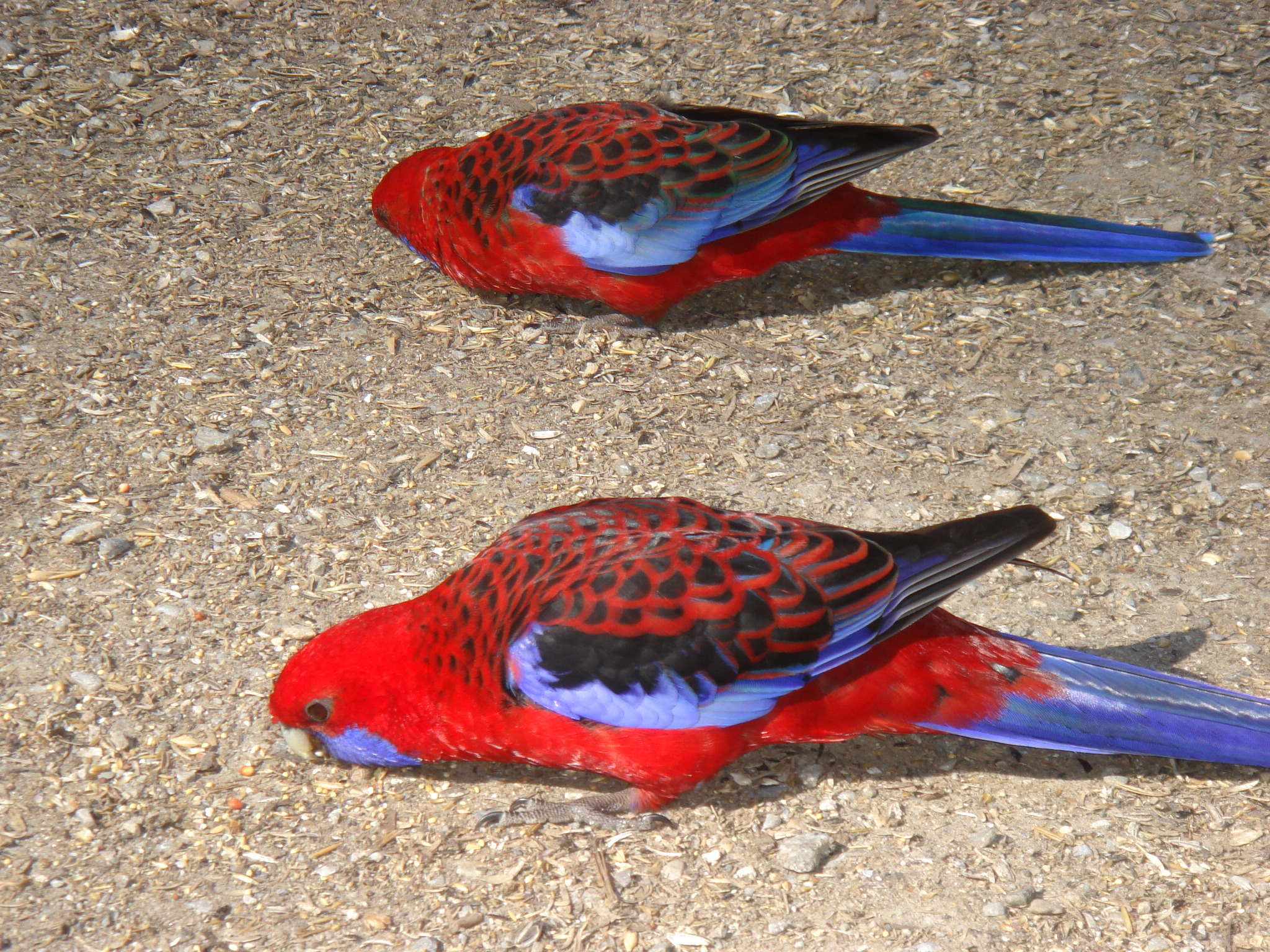
Crimson Rosellas

Crimson Rosellas by Kevin Tostado, using CC BY 2.0, via Wikimedia Commons

Enough of that, though. Let’s get back to Atkinson and her description of the lowries (i.e. crimson rosellas).  They are common to my garden – and her writing captures them perfectly:

A flock of lowries, young and old, frequent the fields, whence the oaten hay was gathered, nor confine their depredations there, assisting themselves liberally to the ripening peas and beans, which the gardener intended for seed, and even pursuing these favourite morsels into a verandah where they are spread to dry. The flock presents a brilliant appearance ; the full plumaged birds are vivid crimson, blue, partially pied with black, whilst the nestlings are variegated with green.

And now to conclude I’m going to jump five years to a report in the The Sydney Morning Herald in January 1865 of a meeting of the Horticultural Society of Sydney. It reports on various attendees bringing all sorts of plant specimens to the meeting, most of them exotic, and then, towards the end, there’s this:

Miss Atkinson, of the Kurrajong, sent a jar of jam, of the Lisanthe sapida, with the following remarks –

“LISANTHE SAPIDA – A small shrub of the Epacris family, bearing a crimson fruit, enveloping a single stone; good bearer, crop lasts about two months or more, coming in in November. To make jelly—boil the drupes, adding a few spoonfuls of water; when soft strain the juice off, add one pound white sugar to a pint, and boil to jelly. The fruit makes a pleasant tart—the Lisanthe Sapida grows in poor sandstone ranges. If any member of the societv would like to cultivate the shrub, and cannot procure the fruits in their locality, it is to be met with in the Kurrajong.”

A vote of thanks was given to the exhibitors, and more especially to Miss Atkinson, who it was remarked had made herself most remarkable for her endeavours to bring colonial productions into notice.

The lisanthe (or lissanthe) sapida, aka native cranberry, is, as you might have guessed, a plant native to Australia. Lovely to see recognition, by her peers, of a woman, and one who clearly loved and promoted the natural environment in which she lived.

* Mountain lowry is an alternative name for the Crimson rosella but is not, I believe, the most common one, particularly in New South Wales, but readers can correct me if I’m wrong.

aww2017-badgeLouisa Atkinson
“A voice in the country: January”
in: The Sydney Morning Herald, 1 March 1860
Available: Online

Claire Battershill, Circus (Review)

Claire Battershill, Circus

Metaphors and allusions can be dangerous. The inside-front-flap-blurb for Claire Battershill’s debut collection of short stories, Circus, concludes that the book “is a beautiful reminder that sometimes everyday life can be the greatest show on earth”. A reviewer on the back cover describes it as “the kind of book you’ll want to run away with”. As I finished it, however, my first thought was that “life is a circus”, meaning it can be disconcerting and unpredictable. Luckily for Battershill, all these work, and are encompassed by her epigraph from ee cummings’ play Him which says “Damn everything but the circus … damn everything that won’t […] throw its heart into tension, surprise, fear and delight of the circus, the round world, the full existence.”

A selection of stories from this book co-won the 2013 Canadian Authors Association Emerging Writer Award, and, before that in 2008, the title story won the CBC Literary Award for Short Fiction. It has some cred in other words, but you might be wondering how I came to it. It was, in fact, a Mothers Day gift from Daughter Gums (DG) back in 2014. She and I had seen the book on a Canadian authors stand in a Toronto bookshop a couple of months earlier that year, and she noticed that it was one that I had eyed particularly covetously. (It helped that it is a beautifully designed book and is lovely to hold!) I was thrilled when I opened my gift, and apologise to DG for taking so long to complete it.

There are nine stories in the book, with the titular story “Circus” occupying the middle. Two are told first person, the rest third. I do like short story authors to mix their voices up a bit and to not be afraid of third person, as sometimes new writers can seem to be. Battershill uses the voices well. The guide in the Hendricks Memorial Miniature Museum (“Each small thing”) talks to the reader as though we are in her tour group. First person was needed here to effectively convey the guide’s self-absorption. It’s perhaps not so critical in “Two-man luge: A love story”, but the first person voice does enable us to feel the narrator’s uncertainty and longing for connection.

What I love about this collection is the variety of her characters and the often bizarre situations they find themselves. We have Henry Bottlesworth (“A gentle luxury”) who “has given himself  thirty-one days to find love on the internet” after ten years of enduring the matchmaking efforts of friends and family. This is not so unusual a situation, and the ending is probably the most predictable, and yet Battershill injects such warmth into what could be a frustrating character. The next story (“Sensation”) switches gear completely to a story about a single father and the tent he buys for his daughter’s 16th birthday. They pitch it in the living room:

Annie loves it … She loves how the energy saver-light bulb glows like a dying star through the waterproof nylon, how scents from the rest of the house filter in, from time to time, through the mesh windows … She is open to the elements, but there’s no danger of rain or mosquitoes, no need for thermal underwear or finicky gas lanterns. This is camping at its finest.

Haha, love it. From here, the tent becomes a conduit first to a closer relationship between father and daughter, and then with the neighbourhood, and then … well, I don’t want to spoil it, but it is a gorgeous story that manages to be warm while also having a little dig about art, fads and fame.

And so the stories continue. Here are some more. There’s the couple who buy a house in the country (“Brothers”) only to find that they’ve also acquired two elderly brothers, shepherds, one blind, the other deaf. Or the widowed grandfather who listens to the Northern Lights and wants to share this love with his grandson (“The collective name for Ninjas”). Or the wife who goes to New York with her husband for their first no-children holiday, only to return alone (“Quite everyday looking”).

The stories are warm, and humane, sometimes humorous, but all about relationships (with partners, parents, children, others) and the decisions made and not made. They are written with a lovely eye for those details that can lift them out of the ordinary:

Henry has, with time and experience, learned a thing or two about the culinary ins and outs of first dates. Sushi, for instance, invites a rice explosion. Ordering a saucy noodle dish or a dressing-laden salad is asking for a spill, and Chinese broccoli is impossible to eat all in one bite without losing one’s dignity. (“A gentle luxury”)

Karen has the face of someone who has swan-dived into love and never hit bottom. (“Brothers”)

The New York version of her was slim, with bare, smooth legs rather than thick, sturdy calves in support socks. And surely as soon as the plane touched down at JFK, she would instantly know how to apply liquid eyeliner precisely and her hair would emerge in elegant finger waves when she lifted her head from the neck pillow. (“Quite everyday looking”)

So, “greatest show on earth”? Not if you think this means fireworks and high drama. But if it means for you the idea that seemingly ordinary lives can be surprisingly varied and rich, then, yes, Circus fills the bill – and fills it with confidence and aplomb.

Endings are hard. Everyone knows it – the end of life, the end of a holiday, and of course the end of a novel. EM Forster knew it – and wrote about it in Aspects of the novel. Endings are particularly important in short stories, I’d argue, and Claire Battershill’s endings are good ones. There are no twists or neat resolutions here. Just a sense that characters have reached some point in life, major or minor, and are now moving on – in a direction that is usually clear to the reader but not completely spelled out. I like that.

POSTSCRIPT: It seems that Circus is out of print, but you can read one of the short stories, “Two-man luge: A love story”, online.

Claire Battershill
Circus
Toronto: McClelland & Stewart, 2014
207pp.
ISBN: 9780771012785

Olive Ann Burns, Cold Sassy Tree (Review)

Olive Ann Burns, Cold Sassy TreeAs I explained in my post last year on Annie Dillard’s The Maytrees, we are slowly listening to some of the audiobooks we gave Mr Gums’ mother in the last years of her life, and have just finished Olive Ann Burn’s epic-length, Cold Sassy Tree. From what I’ve read in Wikipedia, Olive Ann Burns was another late bloomer (albeit not an Australian one of course). Born in 1924, she didn’t publish Cold Sassy Tree, which was her only completed novel, until 1984. It was so successful that her readers pleaded for more, for a sequel, that is. She started it, but died of a heart attack in 1990 before finishing it. It, Leaving Cold Sassy, was apparently published unfinished, but with her notes, in 1992.

Now, when authors write historical fiction – particularly one that is not about a specific event, like, say, World War 2, or a person, like, say, the ever popular Ann Boleyn – my first question is why have they decided to write about a past time? Cold Sassy Tree is set in the American South in 1906, though if I remember back to the first CD correctly, the first person narrator, Will Tweedy, is telling the story some 8 years later (which would make it on the verge of the World War 1 – not that that is relevant given the USA’s delayed entry into the war.) According to Wikipedia, Burns was a journalist and columnist, and it wasn’t until 1971 that she “began writing down family stories as dictated by her parents. In 1975 she was diagnosed with lymphoma and began to change the family stories into a novel that would later become Cold Sassy Tree”. So, I guess, there’s my answer: she was capturing the stories from her family’s past. Will Tweedy, I believe, is based on her father. And it is, fundamentally, a simple, but charming, family story.

But, like all family stories, there is a little more to it than that. The American South is – or was, particularly, at the turn of the twentieth century – conservative, religious and prejudiced against other (coloured folks, poor folks, and so on). This is the society that Will Tweedy is born into. Luckily for him, he was also born into a family with an independent-thinker, live-by-his-own-rules, grandfather, E. Rucker Blakeslee. Early in the novel, Cold Sassy Tree (for that’s the name of the town), and particularly Will’s mother and aunt, are thrown into turmoil when 60-odd-year-old Rucker, just three weeks widowed to a wife he clearly loved, ups and marries the 33-year-old Yankee, Miss Love Simpson, who was working as a milliner in his general store.

Will, just entering adolescence, is the perfect narrator in what is, partly, a coming-of-age novel. He adores his grandfather, and becomes a sometime confidant, sometime unwitting but not unwilling eavesdropper, of the newly married couple. He has a mind of his own but is still obedient enough to mostly do what he is told. He soaks up what is going on around him, and is prepared to take risks and listen to new ways of doing things while also maintaining some of that level of shock about change that his parents have.

I’m not going to write a long post on this, partly because I listened to it over a long period of time and partly because, having listened to it, I don’t have good quotes to share. Burns has written the book in southern dialect, but it’s not hard to follow, and she uses some lovely fresh appropriate imagery – similes, in particular – which adds to the enjoyment. The coloured man, Loomis, for example says that religion is “like silver”, you “must keep polishing” it.

Besides the main story of this “shocking” marriage – which has its own trajectory to which Will becomes privy – we see the introduction of motor cars to the small town, the lack of opportunity for the children of the poor working class, the changing role of women, the economic challenges faced by small towns, and the stultifying effect of narrow religious beliefs. It’s not, in other words, all light. There’s drama – a near train accident, a returned would-be lover, a suicide, to name a few. There is also awareness of racism, but Burns glosses over this a little, preferring to show, overall, positive, more humane attitudes. She doesn’t necessarily gild the situation, but she doesn’t draw out the ugliness either.

This is not, probably, a book I would have picked up and read of my own accord, but as a book to listen to during hours on the road it did an excellent job with its engaging characters, its light touch, its warm but clear-eyed view of small-town life, and its sense that although times have changed people haven’t all that much.

Olive Ann Burns
Cold Sassy Tree (audio)
(read by Tom Parker)
BlackstoneAudio, 1993
12H 30M on 11 CDs (Unabridged)