Emily Maguire, An isolated incident (#BookReview)

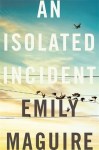
Emily Maguire, An isolated incidentEmily Maguire’s novel, An isolated incident, reminded me of Charlotte Wood’s The natural way of things (my review). Sure, An isolated incident is a crime novel, albeit a genre-bending one, while The natural way of things is a dystopian novel, but both deal with the same fundamental issue, misogyny. Wood exposes the scapegoating of women for their sexuality, while Maguire tackles violence against women (and in doing so, also traverses some of the same ground regarding attitudes to women’s sexuality).

That Maguire is going to confront the issue head-on is implicit in the irony of her title. Twenty-five-year-old Bella’s murder may have happened in an isolated place, and such murders may be rare in her small country town, but as we all know in our media-fuelled times, violence against women is not isolated. Indeed, it happens with terrible frequency. Maguire makes sure that not only do we not forget this, but that we see it in its entirety.

I started by saying that An isolated incident is a genre-bending crime novel. Now, I’m no expert in crime fiction but I know enough to recognise that this book inverts our expectations. In a nod to the genre, the novel is told chronologically with the chapters named by the date, such as “Monday, 6 April”. However, it is not told from the point-of-view of the police or detectives, and it does not focus on the whodunnit aspect, though the investigation does provide an ongoing thread. Instead, the story is told through two voices – the first person voice of Chris, Bella’s grieving big sister, and the third person voice of journalist May who has come to town with her own demons regarding a married lover. This narrative approach enables Maguire to broaden her reach, to focus on things other than catching the criminal, because that is the least relevant – I almost said least important except of course we do want these perpetrators off our streets – part of the story. The most relevant is why does this violence happen, and how does it affect those involved.

Maguire does not, however, provide any answers to these questions. Who knows why it happens? But Maguire does show some of the ways misogyny plays out in everyday life, from the “all piss and wind … harmless” pest who follows women in his car, through men who won’t take no, the men in the pub who know about violent men but do nothing, the schoolboy who enacts his sexual attraction by creating ugly pictures, to actual domestic violence resulting in a wife’s death. It’s powerful because it’s all so real – and true. And, definitely not isolated.

In a telling exchange between May and Chris, May says:

‘… You don’t realise how much most men dislike women. And knowing that, most women can’t relax around men the way you do. Can’t let ourselves show that we like them even if we really do.’

‘Ah. That’s a different thing, though. I like ’em fine, but I’m never relaxed, not fully. It’s like with dogs. All the joy in the world, but once you’ve seen a labrador rip the face off a kid, you can’t ever forget what they’re capable of.’

Late in the novel, Chris ponders this whole issue of the things men do and don’t do, and, heartbreakingly, decides:

… and there are men … who are pure and good of heart and intent and who only want to be our friends and brothers and lovers but we have no way of telling those from the others until it’s too late, and that, perhaps, is the most unbearable thing of all.

Similarly powerful is the way Maguire captures bereaved sister Chris’ grief. Chris is a down-to-earth, small-town barmaid who’s not above taking the odd man home for a little necessary money on the side. Her grief, her loss, is overwhelming, threatening to upset her sanity, and Maguire captures it well, including showing the impact of requiring a relative to identify a body when that body has been horrifically disfigured. The memory of how Bella looked, and imagining how the disfigurement occurred, add significantly to Chris’s grief.

An intriguing thread in the novel concerns the role of writing. Through May being a writer, Maguire explores, initially, the exploitative behaviour of journalists. They sweep into town en masse, intrude on people’s lives, trot out their jargon-laden reports about “close-knit” communities, and when the excitement is over, breeze out again to the next drama. May is one of these, until something about this story, and about Chris, results in her quitting her job to stay.

She explains to her brother why. It’s because she wants her writing to help overcome “the fear, the injustice”, whether by helping to catch the killers or just writing about Bella in a real way rather than simply as a victim. A little later, she tries to convince Chris to talk to her, arguing that her writing may help bring justice. As she argues with Chris, we wonder how much of what she is saying is sincere and how much is desperation to get a story, now that she’s freelance. Maguire writes:

May had started speaking in desperation but as the words came she realised she had once believed all of this about the power of a well-written story. The quaver in her voice told her that maybe she still did.

Hmm, is this Maguire, too, arguing for the value of writing her novel – and for writing in general?

So, did I like the novel? I did enjoy reading it. Maguire’s writing is compelling: it was easy to engage with Chris particularly, and to be interested in journalist May. Maguire’s picture of Strathdee is convincing, and she successfully imbues the story with a complexity that offers no easy answers. If it has a failing, it’s that it’s spread a little thin across the issues – male violence, media intrusion, grief and closure – resulting in an ending that didn’t quite punch an emotional or intellectual point home.

Quite coincidentally, just as I finished this book, Mr Gums and I watched the 2008 miniseries of Sense and sensibility, whose script was written by Andrew Davies. Towards the end comes a line from Marianne, albeit not Austen’s. Having been “burnt” by the dastardly Willoughby, she asks Elinor,  “What do men want from us – perhaps they don’t see us as people but as playthings”. Fortunately, many (most, perhaps) men do see women as people, but these novels, together with books like Anna Krien’s Night games (my review), remind us that we still have a long way to go before there is true equality, true respect, between the sexes.

This book has been reviewed by several of my blogging friends, including Michelle (Adventures in Biography), Bill (The Australian Legend), Lisa (ANZLitLovers), Kate (booksaremyfavouriteandbest), and Kim (Reading Matters). Two didn’t like it much, the others were more positive!

aww2017 badgeEmily Maguire
An isolated incident
Sydney: Picador, 2016
343pp.
ISBN: 9781743538579

Emily Midorikawa and Emma Claire Sweeney, A secret sisterhood (Pt 1) (#Review)

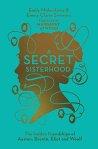
Emily Midorikawa and Emma Claire Sweeney, A secret sisterhoodMidorikawa and Sweeney’s book, A secret sisterhood, published this month, is subtitled The hidden friendships of Austen, Brontë, Eliot and Woolf, by which you might guess why a copy came my way! And so, as homework for my Jane Austen group meeting this month, I’ve just read the first part, which is about Jane Austen and Anne Sharp. If this part is representative of the whole, then I’m going to enjoy the book – but will probably read (and post on it) part-by-part. Not only will that spread my enjoyment, but it will enable me to slip the reading of it in between other books.

The impetus for the book, as Midorikawa and Sweeney (M&S from now on) explain in their Introduction, was to suss out literary friendships among female writers. They argue that literary male friendships, such as between Byron and Shelley, and Hemingway and Fitzgerald, are well-known and documented, but not so much those of women writers. They say, in fact, that “the world’s most celebrated female authors are mythologised as solitary eccentrics or isolated geniuses.” Jane Austen, for example, is seen as “a genteel spinster”, but there is more to her story than that – and M&S set about researching it.

Now, Anne Sharp is not unknown in Austen scholarship, so after reading M&S’s section, I decided to remind myself of what I already knew about this woman. She appears in several of Austen’s extant letters (Deirdre Le Faye’s Jane Austen’s letters) and in many biographies, such as those by Claire Tomalin and Carol Shields. Where she doesn’t appear, however, is in the first official Memoir of Austen written by her nephew, James Edward Austen Leigh in 1869. Why is this?

Jane Austen by sister Cassandra (surely public domain!)

Well, as Austen scholars and aficionados know, the Austen family worked hard to create what they thought was a suitable image of their famous relation. Letters were destroyed, for a start, and Jane Austen’s romances were not mentioned in the first edition. M&S argue that the family wanted to emphasise her neat handwriting, the precise way “she dropped sealing wax on her letters”, her matchless needlework. This is perhaps a little exaggerated, but the Memoir, we know, needs to be treated with some caution.

Anyhow, the real question is: was Austen-Leigh’s omission of Anne Sharp from his memoir justified, or are M&S drawing a long bow? Well, as with all research, it depends a little on your perspective and/or goals. M&S want to argue a literary friendship for Austen, and Anne Sharp would be the closest candidate for this role.

One of the features of Austen section (as I haven’t read the rest) is the insight they give into the challenges of literary research. There is, we know, a dearth of primary sources about Austen’s life. We have her letters – but their value is limited by two main factors. First, sister Cassandra destroyed any she thought were not conducive to the image of Jane that she wanted to leave, but also, Austen’s most revealing letters would have been to Cassandra, and of course she would only have written to Cassandra when they were apart. Consequently, events which occurred when they were together were less likely to have been recorded and would not have been recorded with the same openness. (Austen did write to other people, but we have even fewer of those letters. Hands up who keeps letters!)

However, as M&S found, there are other sources and these have not always been fully researched (or perhaps not even known about). For example, Austen’s niece Fanny, for whom Anne Sharp was governess, kept diaries from the age of 10. M&S write that Fanny’s “unpublished notebooks and letters” have been “largely unmined” by scholars but her writings show what must have underpinned the “deep affection” between Jane and Anne, which is the fact that Anne was a writer.

So, there in Fanny’s diaries are references to Anne Sharp’s playwriting, and M&S spend some time developing their thesis from these diaries, as well as from other sources including sister-in-law Mary Lloyd’s “pocketbook” and references to Anne in Austen’s letters. Along the way, they also research some of Sharp’s own story. M&S argue that although biographers have generally ignored the rapport between the two, Sharp was in fact a “trusted literary friend”. They cite evidence for this, including that Austen asked Sharp for her opinion on some of her novels and that Sharp responded with some writerly commentary.

Also, Sharp was one of the very few non-family members to whom Austen gave one of her 12 presentation copies of the first edition of Emma. Two others went to the Prince Regent (who’d asked for a dedication) and the established author Maria Edgeworth. M&S cite this act as indicative of the esteem in which Austen held Sharp. They also argue that her sending a copy to Edgeworth demonstrates her desire to establish some kind of literary alliance or friendship. Was it that, or did she just want the endorsement of an established author? We don’t know but M&S could be right. Whatever she wanted, however, she didn’t get it from Edgeworth.

More evidence they cite for the importance of Sharp to Austen is that Sharp was, as far as records show anyhow, one of the last people to whom Austen wrote before her death. And, she was one of the people to whom Cassandra sent not only a lock of Austen’s hair after her death, but a couple of other mementoes as well.

Have M&S convinced me of this friendship? Yes, I think so, though I’m not sure they’ve completely proved Austen’s desire for “a literary friendship”. However, this first part of A secret sisterhood is a good read, not just because I love all things Jane but because of the open way they share the process and challenge of literary research. I expect each part will be different because the sources and existing knowledge will be different, but I’m looking forward to reading them and will share my thoughts with you (eventually).

Emily Midorikawa and Emma Claire Sweeney
A secret sisterhood: The hidden friendships of Austen, Brontë, Eliot and Woolf
(Uncorrected proof)
London: Aurum Press, 2017
306pp.
ISBN: 9781781315941

(Review copy received from publisher’s rep)

Rebekah Clarkson, Barking dogs (#BookReview)

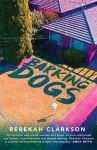
Rebekah Clarkson, Barking dogsThe best way to describe Rebekah Clarkson’s debut book, Barking dogs, is that it’s a portrait of a community undergoing social change. This community is Mount Barker on the outskirts of Adelaide. Once a farming community, it is now, says Wikipedia, “one of the fastest growing areas in the state”, the province of developers, the aspirational and the upwardly mobile, rich pickings in other words for an observant novelist. But, did you notice that I said “debut book” not “novel”? This is because, superficially, this book presents as a collection of short stories. However …

What’s in a name? It reminded me of the recent discussion about Junot Díaz’s debut book, Drown, on the ABC’s First Tuesday Bookclub. Drown is also a collection of short stories, but panel members argued that it could be defined as a novel because “the stories are too interlinked for us not to see it as a narrative whole”. Drown, though, does have the same narrator throughout, which Clarkson’s book doesn’t. Her book is probably closer to Tim Winton’s The turning. Like Barking dogs, its stories are set in the same place, and it has some recurring characters, though, from memory, I’d say recurring characters are a stronger feature of Clarkson’s book.

The question is, of course, does any of this matter? Not really, except that calling it a novel might attract more readers – you know, those who say they don’t like short stories. And, it is always relevant to consider form, even if, in the end, the actual label is irrelevant.

The form, style and structure of Barking dogs, do, in fact, give us much to consider. There are, for example, 13 stories. Are we meant to consider the “negative” implications of the number 13 in terms of this community’s future? Why does Clarkson start the collection with a troubling story (“Here we lie”) set at a later time in the book’s chronology, and end with a story set at the earliest time (“If it wasn’t this”)? The fact that this last story, although set in the seemingly idyllic rural days, ends rather bleakly on the image of a tree “alone, stark and bare” suggests that Clarkson recognises the complexity in all communities. Again, I was reminded of Pulitzer prize-winning author Paul Beatty on the First Tuesday panel talking about how he sometimes plays around with the order of the stories in Drown, and how this changes its impact.

Regardless of the overall intention, though, the stories make great reading. Whether they are told 1st, 2nd or 3rd person, and whether the narrator is male or female, young, middling or older, or struggling financially or more well-off, Clarkson is able to get inside her characters’ heads. She captures, and explores, the feelings, values and thoughts, the confusions, uncertainties, and pretensions, of her town’s inhabitants. We can “see” it all: the struggle to pay mortgages, to maintain meaningful marriages, to raise their children (or to conceive them in the first place), to get on with their neighbours, to achieve the lives to which they aspire.

A number of motifs run through the book, including the murdered girl Sophie Barlow (whose family appears in the second story, “Something special, something rare”, but whose story is never fully told), the Wheeler family which forms the main connecting thread in the collection, and of course the barking dogs of the title. These, together with the setting, contribute to the coherence of the whole.

Some stories stood out more than others. This may say more about my particular interests, rather than the quality of the stories, but it may also be that the stories that are more connected by characters are more engaging because of the story development they entail. It’s a book that would bear multiple readings, because even skimming it for this review revealed further links and connections that I missed on my first pass.

The overall theme, that of a community going through change, is beautifully encapsulated in the story “Hold me close”, in which the recently widowed Edna, a long-term resident of the town’s now rural outskirts, struggles to understand the aspirations and lifestyle of her daughter, Andrea, who has moved back to the area. Andrea lives in a “ex-display home village” and, Edna thinks, is more interested in appearance than substance. This tension between striving for success and being, hmm, more real is played out in various ways in the other stories.

The Wheelers

But, perhaps the best way to illuminate the book is to look briefly at how the Wheeler family is woven through the book. The Wheelers are 49-year-old Malcolm, a successful management professional, his confident teacher wife, Theresa, their 11-year-old son Martin who’s been diagnosed with Asperger’s, and Jasper, their barking dog. They epitomise the new families in the area – their aspirations, their values, and their problems – and at least one of them appears, or is referred to, in seven of the stories. The first references are in passing. In “Something special, something rare”, Martin has been physically bullied by Liam Barlow, but we don’t meet him specifically, and in the following story “World peace” he is again referred to, this time by one of his classmates. We gather he’s a little different, and doesn’t fit in well with the normal schoolyard cut-and-thrust.

The next four stories (4th, 7th, 9th and 11th) in which they appear are told from their perspectives, the first two from Malcolm’s, then one from Martin’s, and finally Theresa’s. I don’t want to give too much away, but we get the picture of a fairly kind, laissez-faire husband married to a more go-ahead, shall we say, proactive, wife. In the fourth story, “Raising boys”, we also meet their barking dog who is bothering his neighbour, and in the seventh, which is, structurally, the central story, Malcolm receives some terrible news which provides the book’s emotional heart. The penultimate story, “Jasper”, is shocking. It exposes the cracks in “society today”, such as unrealistic aspirations, lack of neighbourly communication, fractured marital relationships.

Interestingly, while the stories are not presented chronologically, the Wheelers’ “story” is, giving the book a clear narrative arc. The overall order, perhaps, provides its thematic one, one that warns against rose-coloured glasses about the past.

Unfortunately, I am using an uncorrected proof copy from which quotes are forbidden (though I have “quoted” one or two phrases which I hope is okay!). However, I do want to briefly mention the writing, which maintains an effective satirical tone while also conveying a level of tenderness for the characters. There’s some lovely irony too. We know for example, that poor Graham Barlow’s vision for his business, Winners, is unlikely to be realised (“Something special, something rare”), and that Gladeview Park, where many of our characters live, does not provide the “Serene and fun-filled living” environment promised on the estate’s sign (“Jasper”).

Barking dogs offers a thoughtful, intelligent look at contemporary suburban life. It explores what a pristine, homogenous white middle-class enclave might look like. Unfortunately, it looks more like a bunch of isolated individuals than a healthy community, partly because the pressures that drive them seem to prevent real engagement with each other. It doesn’t need to be this way.aww2017 badge

Rebekah Clarkson
Barking dogs (Uncorrected bound proof)
South Melbourne: Affirm Press, 2017
240pp.
ISBN: 9781925475494

(Review copy courtesy Affirm Press)

Linda Neil, All is given (#BookReview)

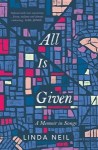
Linda Neil, All is given, coverLinda Neil’s second book, All is given, is subtitled “a memoir in songs”.  I wondered if this meant her memoir would be structured around specific songs – but that’s probably way too prosaic an idea. Certainly, it’s not what I got! I’m somewhat embarrassed to say that I didn’t know of Linda Neil, who is described in the brief author bio as “writer, songwriter and documentary-producer”, but I did enjoy getting to “know” her through this book.

The memoir starts with “Prologue: Songbook”, and immediately I had one of those glimmers of enlightenment because she opens with the end of a house concert. Now, friends of ours hold house concerts. They are such wonderful to-be-treasured occasions, which provide a beautiful way of enjoying music away from big formal concert halls or noisy popular venues. For the performer, however, there are challenges. The concert that Neil opens her memoir on finished at 11pm, and she was hungry, not to mention “spent” after nearly three hours of “singing and telling stories”. Not so, necessarily, the audience. They were energised, inspired, and wanting to talk with her in this lovely intimate venue! So, with food from her host in her hand she sits to chat with one of these people – and discovers that what the woman really wanted to do was share her own stories, which had been stimulated by the concert. Neil, as it turned out, enjoyed hearing her stories – but I learnt a lesson about house-concert etiquette!

Another issue comes up in this opening chapter which attracted my attention. She says that many people think love songs, which she was singing, are autobiographical. However, she writes,

in my experience, they may well be inspired by real people, but the form of a song means that, from this basis of fact, changes need to be made. A bass line is added perhaps. Something high is included. A man becomes a woman. A five-letter name expands to eight …

and so on. The point is, “the facts may not always be true, but the feelings certainly are”. “YES”, I wrote in the margin. And I loved her rider: “and if some events did not happen exactly the way they are described, perhaps they should have”. Haha! Love it. That is what creativity, and living, are about…

Hence, she writes in the last paragraph of this opening chapter:

So think of this collection of stories as a book of songs that contains improvisations and variations on themes of truth. If you listen closely enough you might even be able to hear the fabric of facts and fiction as they are stitched together.

What follows are delightful, non-chronological, stories of travel. This book, in fact, is as much travel memoir as a musical one, and as much about travel to the self as about the places she visits – Shanghai, Paris, Kathmandu, Kolkata, Ulaanbaatar, to name a few – though she writes engagingly about them too.

… a pilgrim of the imagination …

All is given is just a lovely read. Neil presents as a person with such an open heart and curious mind, with such a willingness to give things a go and to test her own preconceptions, that she can’t help but be interesting to read. And when you add to this, her clear, fresh prose, well, you have a book that is a winner on multiple levels. Here, for example, she’s in Paris:

Sometimes a city is the kind of place where, despite being on your own, you are never alone.  Where sitting under a statue or leaning over a balustrade of a bridge is an invitation. You have to discern very quickly, though, who might waylay you, who might waste your time and who might be, like you, a pilgrim of the imagination on a voyage through change. But if your antenna is working properly, the chance encounter with a stranger might bring you something you need at that particular moment in time, something that might not come in any other part of the world, but exactly where you sense of wonder and curiosity has led you, across oceans and skies, out of safety into the unknown.

I wanted to share all of this, but particularly that phrase “a pilgrim of the imagination on a voyage through change”.

This is what the book is about. It’s partly, of course, about the places she goes, the people she meets, the seemingly serendipitous discoveries, such as the recording studio in Kathmandu and the YWCA in Kolkata where she meets a group of people volunteering at Mother Theresa’s Missionaries of Charity, but it’s mainly about the things she learns.

She learns, for example, on her first solo trip, which paradoxically is the last one described in the book, not to travel with the Lonely Planet Guide, because “travel was best unplanned”. It’s a lesson I’m starting to learn. I can’t imagine giving up the guides altogether – not being, clearly, a complete “pilgrim of the imagination” – but I’m gradually freeing myself from the shackles of “musts” to the wonders of “let’s explore”. She experiences the “gift of stories – of listening to and receiving them, of being in the right place at the right time”. This is “the magic of travel”. She learns that she can sometimes be “prim”, when she lectures a young girl on modest dressing in India, where she was “once open-minded”, but on the other hand, that she could be “free”, in opening up to people, where once she “might have felt more cautious”. These are the surprises of travel.

She learns, too, in Mongolia that “freedom” is not the simple concept we like to think it is, that for many Mongolians the initial liberation from Russia was “a catastrophe”. Her Mongolian friend reminds her, once again she says, that:

western narratives of history aren’t the only ones, and that … there are many ways to tell the story of our collection past.

A lesson we Australians are very slowly learning now as we come to grips with different versions of our colonial past. She learns, through this and other experiences, “not to romanticise places” where the reality for the locals is very different, but also to “be happy with tiny moments”.

And so the memoir goes. I’ve focused on travel’s lessons because those reflections spoke to me. Another reviewer could very well pick up the musical motifs, her journey through sound, or perhaps explore the organic way she intersperses moments from her youth with those from travel. The point is, whatever your interest, All is given is an engaging, enjoyable read by a writer-musician who sees that being “real and true” is sometimes different from “being perfect or even good”, but who often manages to achieve both.

aww2017 badgeLinda Neil
All is given: A memoir in songs
St Lucia: UQP, 2016
238pp.
ISBN: 9780702254093

(Review copy courtesy UQP)

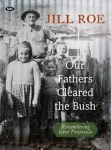
Jill Roe, Our fathers cleared the bush (#bookreview)

Jill Roe, Our fathers cleared the bushAs that old pop song goes, what kind of fool am I? I went, you see, to Macquarie University, which I chose for its then modern approach to tertiary education. It was great, but somehow, I didn’t end up in tutorials taught by Thea Astley, nor did I study Australian history in which Jill Roe was one of the University’s foundation lecturers. What was I thinking? Hindsight is a marvellous thing, eh?

Most of you will know who Thea Astley is, but non-Australians, in particular, may not know Jill Roe. She is best known for her comprehensive award-winning biography of Miles Franklin (see a review by Lisa, ANZLitLovers), but she wrote many books and was, among other things, a regular contributor to the Australian Dictionary of Biography. The book I’m reviewing here, Our fathers cleared the bush, was published last year, only months before her death early this year.

Old and new regionalism

What a fascinating read it was – for its content, which tells the story of Eyre Peninsula, a part of Australia I don’t know, and for its form and style. This latter is what I’m going to focus on mostly in this post. The book’s subtitle, “remembering Eyre Peninsula”, provides some clue to its form, which I’d describe as an amalgam of memoir/family history, regional history and historiography. Roe seems, overall, to be exploring an approach to writing the history of regions.  In her introduction she writes:

The aim is not so much to tell my own story – though I often start there – nor to fill a gap in the literature – though there is one – but rather, on the basis of personal reflections and a now quite extensive range of materials, to capture some key aspects of, and moments in, the regional experience over time.

“Extensive range of materials”. Hold that thought, because I’ll come back to it. For now, though, I’m sticking to the regional history idea. Chapter 7, one of my favourites in fact, is titled “I danced for the Queen”. In it she writes quite a bit about regionalism and regional histories. She suggests that as Australian history established itself in the 1950s and 60s, “some fine regional studies appeared” and she names a few. It was “a golden age of regional history when it seemed the national story was becoming clear”. But, she argues, that was “old regionalism”. Since the 1970s, new issues and factors have arisen. These include the understanding of “regionalism” itself; the rise of interest in local and family history which is adding “new building bricks, even new layers” to the undertaking and appreciation of regional history; the role of the environment; and that major factor, the recognition of Aboriginal history, which she says introduces a discontinuity into held narratives. She suggests that exploring Aboriginal history “seems to work best in regional frameworks”. Perhaps, but there is also need to include Aboriginal history in the overarching national story. I presume she would argue that too?

She teases out the Aboriginal history issue a bit more. She says:

On a grander scale, the history of the Kimberley in Western Australia is being transformed by research into the Aboriginal experience, much of it distressing, none of it yet settled or fully integrated into the national story. This history may be hard for some to take in, but that is because it adds new data and a challenging dimension to taken-for-granted narratives. In time, along with environmental and the other histories, Indigenous history will most likely lead to a new regional history in this country.

She then makes what could almost be a manifesto:

… my firm belief that any history in which people cannot recognise themselves – whether proudly or ruefully, in surprise or dismay – is not good history.

Beautifully said, and hard to argue with – at least these days when we don’t accept that history begins and ends with great deeds by big men (and occasionally women).

“a now quite extensive range of materials”

Now, histories can often be rather dry, but Our fathers cleared the bush has a lovely conversational tone. It almost felt like she was talking to me as I read along. We learn a lot about life on the Peninsula from the 1840s to the 1960s and beyond. We hear about farms and schools, churches and sport, transport and the country show. I laughed at her comment that when she turned her mind back to the Peninsula in 1998, she “paid no attention to sport as a source of social life and values, a mistake I mustn’t make again”. Anyhow, all these are features of country life, and many are shared through the prism of her and her family’s experience, but while we come away knowing the skeleton of her life, this is definitely not a memoir. The focus is the history.

However, as well as telling the history, she also shares her methodology and her sources. She says that “the discovery of a new source is the historian’s delight”. She mentions women’s diaries and school records; and she talks about the value and limits of census data. She uses anecdotal evidence but carefully notes the unreliability of recall. She notes there are limits to what personal memories can offer the large picture. In her family, for example, there were no sons so the daughters “did more than usual of the outdoor work.” It would be not be valid to generalise, then, she’s saying, from her family. For some readers, Roe’s historiographical discussions might get in the way of the history itself, but I enjoyed getting to know the historian’s mind.

Finally, she also points to histories that are still waiting, such as “a comprehensive account of the Aboriginal experience of the Eyre Peninsula”. Others include “the coming of service stations” to Australia or the role of Greek Orthodox churches in fishing communities. Anyone looking for a PhD topic might like to start here!

So, I’m at the end of my post and I’ve told you very little about the Eyre Peninsula. All I can say is that if you are interested in the Peninsula, or in the history of rural Australia, you should find what you’re looking for in this book (particularly given its index and extensive end-notes) but if you are interested in approaches to modern history writing, this would also be a good book to read. Roe says, early on, that her approach to history is “post-modern, in the sense that it can’t come to a definite conclusion”. That is certainly what she has presented here – a story about a region that tells us much but which also leaves many questions to be answered – because life goes on and there’s always more historical research to do.

PS For a lovely tribute to Jill Roe written just after her death, please read blogger (and historian) Yvonne’s post.

aww2017 badgeJill Roe
Our fathers cleared the bush: Remembering Eyre Peninsula
Mile End: Wakefield Press, 2016
249pp.
ISBN: 9781743054291

(Review copy courtesy Wakefield Press)

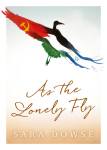
Sara Dowse, As the lonely fly (#BookReview)

Sara Dowse, As the lonely blySome books grow out of their author’s desire to engage the reader in an issue they feel passionate about, such as Jane Rawson on climate change in A wrong turn at the Office of Unmade Lists (my review) and Charlotte Wood on the scapegoating of women in The natural way of things (my review). Sara Dowse’s latest book, As the lonely fly, falls into this category, but for Dowse the issue is the Israel-Palestine problem, the “rightness” or otherwise of establishing a Jewish state. This doesn’t mean, however, that books so inspired are boringly earnest or stridently polemical. It’s a risk, of course, but in the hands of good writers, like the three mentioned here, issues are turned into stories that engage us, while simultaneously raising our consciousness.

Unlike Rawson and Wood’s more dystopian novels, Dowse uses historical fiction, with a hint of mystery/thriller, to explore her ideas.  The novel is set in the first half of the twentieth century, and follows the lives of two Russian-Jewish sisters, Clara and Manya, and their niece, Zipporah. We start, theoretically at least, with Clara (who changes her name to Chava when she arrives in Palestine), but are immediately introduced to her younger sister Manya (who had migrated to the US with their parents and who becomes Marion).  Niece Zipporah, the committed Zionist who followed Clara to Palestine, opens Part Two.

The story is divided into 6 parts in fact, the first labelled “Clara begets Chava 1922-1925” and the last “Tikkun? 1967” (“tikkun” being, significantly, a Hebrew word for “fixing/rectification”). The narrative has an overall forwards momentum, but the chronology is not linear and the perspectives change. Following all this requires an alert reader, but it enables Dowse to fill in backstories at the relevant moment (such as Clara’s experience of the 1905 Odessa uprising) and to link various characters and ideas. Her goal is to explore the difficult situation confronting Eastern European Jews in the early 20th century and the concomitant creation of Israel. In so doing, Dowse raises bigger questions about idealism and justice, and exposes the challenges of migration, particularly of migration that is politically charged.

While Part One is labelled 1922-1925, the first chapter is headed “Marion 1967”, ensuring an important, comparative, role for the American experience. However, the bulk of this part tells of socialist Clara/Chava’s early days working to create a new Jewish state. It’s not long before the hard-working Chava starts to question what they are doing, to see the difference between the political Zionism of Herzl and the cultural (or spiritual) one of Ahad Ha’am. She starts to agree with Ha’am, as she writes to Marion,

that there shouldn’t even be a state like the one Herzl advocated, but a centre in Palestine where Jews reconnect with our culture and from there would disseminate it through the Diaspora. That the land wasn’t empty as Herzl had us believe, that it would be difficult to find land that wasn’t already cultivated, and the Arabs wouldn’t be overjoyed about the space we’d taken up in what happened to be in their land too. Or ecstatic about losing their jobs. The Marxist in me is increasingly uneasy about this … (Pt 2, Ch. 11, Uncorrected proof copy)

If you are an Australian, this idea of taking up space that’s not empty will resonate, as I’m sure Dowse intends it to do!

… too much head …

Eventually Chava finds occupying this already occupied land too difficult and, after supporting an Arab uprising, willingly returns to Russia where, unfortunately, she finds anti-semitism on the rise. Meanwhile, Zipporah provides a foil to Chava, retaining her commitment to the Zionist ideal, albeit seeing the trauma that can be caused by commitment to a political idea. The story of her student, Talli, provides this insight. Dowse, in other words, provides no easy answers, but forces us to face, through stories of real human beings with whom we fully engage, the complexity of the situation.

Chava meets in Jerusalem, a cobbler, Ha-Kohen, a spiritual rather than a political Hebrew man. He says to her:

You and your chaverim, those pals of yours, can you really believe all those things you read? It’s all from the head. And the source of all evil on this earth is too much head, my dear, and not enough heart. (Pt 2, Ch. 10, Uncorrected proof copy)

A little more empathy, in other words, is what is needed.

As the lonely fly could be described as a family saga. There are many characters besides the three women I’ve introduced here – including another sister (Zipporah’s mother) and her family, various friends and colleagues, and a love interest or two – and the novel spans six decades from 1905 to 1967. There’s also a thriller element including some espionage, and a nod to the mystery genre too. What is wrong with Talli, and what does happen to Clara? Through these Dowse explores her themes while involving us in real lives – via lovely domestic details of rooms, meals and close relationships, and vivid descriptions of place. By the end of the novel I was deeply engaged with her characters and their dilemmas, whether or not I agreed with all their decisions.

… the passion for justice …

Manya/Marion is a somewhat more shadowy character than Clara and Zipporah, and yet, as the one who migrated to America, the land of the free, she provides an important counterbalance to the lives of the other two. On the surface, her ambition to be an actor, and her oh so western focus on colouring her hair, on “the showering, the creaming, the makeup’, are as “exasperating” to us as they are to Zipporah, but she is the character who opens and closes the novel, so we need to heed her. Her idealistic, bookish husband, Sidney, dies a very American death, and leaves her with two young sons. It provides a counterpoint to the high drama that was occurring in Israel.

In the loneliness of her later years, she finds herself still struggling to understand him, but she comes to see that both his and Clara’s idealism was really “a passion for justice”. In the book’s final chapter, she and Zipporah, whom she visits in Israel, attend a Hebrew performance of a favourite play of hers, O’Neill’s The iceman cometh. Now, I don’t know this play – besides knowing of its existence – but I presumed Dowse had chosen it for a reason, so I checked Wikipedia. It told me that the play’s main themes are the self-deceptions, the pipe-dreams – the lies, in other words – that we tell ourselves to keep going. The play references, apparently, political ideals such as anarchism and socialism. Certainly, Clara discovers her socialist ideals being undermined when the factory managers in Soviet-era Moscow start employing capitalist techniques to increase production. However, I’m sure Dowse intends us to read O’Neill’s theme in terms of how we behave today – in relation to Israel/Palestine and to all the other injustices that we see around us, but try to justify away.

The past is not, in fact, the burden we thought, says Zipporah to Marion. It’s the future we need to worry about. Like all good ideas novelists, Dowse has not bombarded us with answers but, instead, has intelligently and compassionately given us plenty to think about.

aww2017 badgeSara Dowse
As the lonely fly
For Pity Sake Publishing, 2017
327pp. (Uncorrected proof edition)
ISBN: 9780994448576

To be published: June 2017

(Advanced review copy courtesy For Pity Sake Publishing)

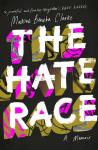
Maxine Beneba Clarke, The hate race: A memoir (Review)

This is how it changes us. This is how we are altered.

Maxine Beneba Clarke, The hate raceMaxine Beneba Clarke’s Stella Prize short-listed memoir, The hate race, is one powerful book. I’ve been reading about racism since my teens during the Civil Rights years, and have read many moving novels and memoirs. Clarke’s book holds its own in this company.

The book chronicles Clarke’s life from early childhood through to the end of high school, but she bookends this chronological story with a prologue and epilogue which are set later, during her son’s first year of school. This approach to structuring her story is effective, because it enables her to reflect on what’s changed a generation later. And the answer is, not much, which is such an indictment on Australian society.

Before saying more, though, I need to back-pedal a bit, and make sure you know who Clarke is – besides being the writer of a well-reviewed collection of short stories, Foreign soil. She’s the Australian-born daughter of West Indian-born parents who migrated to Australia from England in 1976. As a young girl she was mystified by people asking her where she was from, and confounded when these same questioners became angry when she responded, honestly, Australia. This is, I know, a common story, but is not, I think, well-documented in our literature. However, as Clarke would say, what’s a story for, if not to tell how it went.

And that’s what she does, tells us how it went – and went, and went. The bulk of the story is, as I’ve said, told chronologically but Clarke hangs each chapter, each step in her chronology, around a specific topic, such as her involvement in sport or debating, or that transition period between primary school and high school. She captures beautifully the trajectory of thirteen years of schooling from the early 1980s to the mid 1990s. Although everyone’s experience is different, much of what she describes is universal: the first day of school, the yearning for a specific toy (like a Cabbage Patch Kid), parties, first love, getting braces, and so on. What isn’t universal, though, is her experience of being a child of colour.

This is how …

Reading her story is gut-wrenching. She faces racism – direct and indirect, intended and unintended – from her first day of pre-school to the end of high school. One high school class-mate, who ranks the girls in the class (as if that’s an acceptable thing to do anyhow), doesn’t rank her at all “because animals didn’t count. Greg Adams said that would be bestiality”. She’s called every name you could possibly think of – and more you probably couldn’t. She’s spat at and threatened. Luckily, she has friends too – otherwise it’s hard to imagine how she could have survived.

The disappointing thing is the inept handling by the schools, because it’s clear that for all the work ostensibly being done in schools to promote tolerance and harmony, only some of it is getting through*. There’s only so much schools can do, of course, given students’ main role models are their parents, but the least teachers can do is take the racist behaviour seriously and respond in a meaningful and supportive way. This, however, is not always the case: “He’s trying to wind you up. It’s just a little bit of nonsense. Don’t give him the satisfaction, Maxine”, says one high school principal, for example. That’s not good enough. Writing about her early primary school years, Clarke says this:

I knew before I started big school that, for me, the playground would always be a battlefield: a world divided into allies and enemies. At five and a half, racism had already changed me.

After a while, you start to breathe it. Another kid’s parents stare over at our family on the first day of school with that look on their faces. You make a mental note to stay away from that kid … You tell a teacher someone is calling you names. Blackie. Monkey girl. Golliwog. The teacher stares at you, exasperated, as if to say: Do you really expect me to do something about it? The next time you have a grievance, you look for a different teacher. This is how it changes us. This is how we’re altered.

Towards the end of the book, her boyfriend asks her to come to his place to swim in his family’s pool. She’s uncertain:

I had no reason to believe Marcus’ family would have an issue with the two of us, based on what I knew of them, but I wasn’t sure I wanted to put myself through the stress of finding out.

This is how we edit our lives.

How we brace against the blows.

The book isn’t unmitigated misery. Clarke mixes up the tone, sometimes using humour to make her point – it never hurts, after all, to see the absurd side of things – but the book is a memoir, not an autobiography. This means that it is not about the whole life but a part of it, and in Clarke’s case the part that she wants to share, to expose, is her experience of racism while growing up. Her goal was not vindictive. She writes in her Acknowledgements that she loves Australia, but she wanted to show “the extreme toll that casual, overt and institutionalised racism can take: the way it erodes us all”. That, she certainly does.

There are things about the book that I could quibble about, but they are petty in the face of its overall power. I don’t like to describe books as “important” or to say that everyone must read them, but for a readable and devastating understanding of how racism, in all its guises, impacts on a personal, rather than a theoretical or historical level, The hate race is essential. It’s a story that needs, as indeed Clarke aimed, to be “written into Australian letters”. It deserves the accolades it has received.

Kim (Reading Matters) also admired this book.

aww2017 badge

Maxine Beneba Clarke
The hate race
Sydney: Hachette Australia, 2016
261pp.
ISBN: 9780733632280

* This is the 1980s and 1990s I know, but I use present tense here about schools because it’s pretty clear that not a lot has changed.

Ellen N. La Motte, Alone (Review)

I decided to read Ellen N La Motte’s story “Alone” from recent Library of America (LOA) Story of the Week offerings because it was a war story, but as I read LOA’s notes I became more and more intrigued. I hadn’t heard of La Motte (1873-1961) before, but she was an American nurse. Two years before the US formally joined the First World War in 1917, she offered to work at the American Hospital of Paris.

She wasn’t pleased by what she saw. Rather than a serious “warzone” she found a bunch of “alleged do-gooders crowding out the recuperating soldiers”. In an essay written at the time, “An American Nurse in Paris,” she described the workers, as follows:

nearly all are dressed in the becoming white gowns of the French Red Cross and a few are pearled and jeweled, rouged and scented till they are quite adorable. . . . This system floods the institution with a mass of unskilled labor, some of which is useful, much superfluous, and some a positive menace to the patients themselves.

Not surprisingly, La Motte decided to move on, and worked for a year in a military hospital in Rousbrugge outside Dunkirk. She was little prepared, LOA writes, for the horror she witnessed. She herself described it as “beyond and outside and apart from the accumulated experience of a lifetime.”

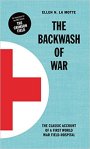
Ellen N LaMotte, The backwash of warWhile working at the hospital, she wrote of her experiences, and upon her return in 1916 published a dozen or so sketches in The backwash of war: The human wreckage of the battlefield as witnessed by an American hospital nurse. However, it was withdrawn in 1918 by her publisher, due to government pressure. It was too “unpalatable”, and wasn’t published again until 1934!

“Alone” is one of the sketches in the book. It tells the story of injured soldier, Rochard, who has gas gangrene. It’s a straightforward story – story-wise, anyhow. Rochard is brought into the hospital within six hours of being injured, but his wounds are inoperable and all know he will die. All they can do is offer pain relief and nursing care to keep him as comfortable as possible. What impressed me about the piece was La Motte’s insight, her humanity, and her ability to write, all of which turn this sad story into something more powerful.

La Motte describes the doctors in the hospital as comprising, primarily, young recent graduates from medical schools, and old doctors who had graduated long ago. She writes that

all those young men who did not know much, and all those old men who had never known much, and had forgotten most of that, were up here at this field hospital, learning. … there were not enough good doctors to go round, so in order to care for the wounded at all, it was necessary to furbish up the immature and the senile.

Oh dear. She describes the initial treatment given to Rochard in rather gruesome detail – which I won’t share here – and then describes his dying. He is given morphia, which “gives a little relief, at times, from the pain of life, but it is only death that brings absolute relief”. She never mentions euthanasia but, from her description of Rochard’s horrendous pain, you sense she’d support it. His death is a long and painful one. She writes, after one trying night:

So when the day nurse came on in the morning, there was Rochard strong after a night of agony, strong after many picqures of strychnia, which kept his heart beating and his lungs breathing, strong after many picqures of morphia which did not relieve his pain. Thus the science of healing stood baffled before the science of destroying.

As Rochard nears death, the screams of pain reduce and he becomes quiet. She writes that:

he had been decorated with the Médaille Militaire, conferred upon him, in extremis, by the General of the region. Upon one side of the medal, which was pinned to the wall at the head of the bed, were the words: Valeur et Discipline. Discipline had triumphed. He was very good and quiet now, very obedient and disciplined, and no longer disturbed the ward with his moanings.

Bitter, eh. The piece moves to its inevitable end – Rochard’s death – but the language La Motte uses to describe it and the way she controls the narrative to deliver a punch at the end, is impressive. This woman could have been a writer – well I suppose she was! – but her passion lay elsewhere, nursing and public health.

After the war La Motte, who wrote many books and articles on her nursing experiences, travelled in Asia and saw the devastation caused by opium addiction. According to the Johns Hopkins Medical Institutions, where her papers are stored, she became an authority on opium trafficking, and reported to the League of Nations. She was awarded the Lin Tse Hsu Memorial Medal by the Chinese government in 1930 and received the Order of Merit from the Japanese Red Cross.

But, she did more, too, so I’m going to conclude with the final paragraph from the American National Biography Online:

Ellen La Motte’s professional life was devoted to causes she analyzed through the lens of public health advocacy. Her efforts on behalf of the antituberculosis campaign, woman suffrage, and the anti-opium crusade emerged from a firm belief that promoting ways to improve the health of the larger community could create a more equal and just society for all.

Someone well worth knowing about … I’m glad I decided to read this LOA story.

Note: The backwash of war is available in entirety at Project Gutenberg.

Ellen L. La Motte
“Alone”
First published: The backwash of war: The human wreckage of the Battlefield as witnessed by an American hospital nurse (1916)
Available: Online at the Library of America

Carmel Bird, Family skeleton (Review)

Carmel Bird, Family skeletonI love a cheeky writer, and Carmel Bird must be the doyenne of cheeky writers, so it goes without saying, really, that I thoroughly enjoyed her latest novel Family Skeleton. The cheekiness starts with the epigraph, which, as she is wont to do, is a quote from her fictional character Carillo Mean. As Bird has said in an interview, “he always has something interesting to say”. But that’s just the start of the cheekiness. The story is narrated by “the skeleton in the wardrobe”. Now, I know many readers don’t like what they see as cute or contrived narratorial devices – like girls in heaven or dead babies – but please don’t let that put you off here, because in the hands of a skilled writer such a device can lift a story to a whole new level.

So, when I tell you that the novel’s framing idea is an obsession with family history, you might start to understand where our narrator comes in – except that the story is not really about the skeleton, whose identity is never divulged, nor is it about family history. What it’s about, really, is family secrets and betrayal, and the tipping point. It’s about the recently bereaved and well-to-do Margaret O’Day, whose family, through her husband, has been involved in the funeral business for generations. Such a setting is, of course, ripe for black comedy and that’s what we get in this novel. But, back to Margaret. Her husband Eddie, “a philistine” according to our skeleton, was also a philanderer and died in the arms of his mistress. Margaret had been betrayed – more than once, in fact – but she knew this, and even accepted this last mistress, and her children with Eddie, at the funeral.

From this set up, the story progresses, mostly chronologically but with a couple of significant time-shifts along the way. It is mainly told by our omniscient skeleton, but Margaret starts a journal, which she calls – hmm, note this – “The Book of Revelation”. Her entries in it form some of the book’s chapters. This title, “The Book of Revelation”, is another of Bird’s jokes, for the novel is about things revealed and not revealed – particularly the latter, because as the story progresses Margaret discovers an even bigger betrayal than her husband’s, and she is desperate to hide it from visiting O’Day family historian Doria Fogelsong.

The novel, then, as I said, is about secrets and betrayals. For the “virtuous” Margaret, who has put up with much throughout her marriage and who has become very good at “concealing her true feelings from people”, this lately discovered betrayal is the last straw. It takes all her resources to keep going. The family history motif compounds the tension. Will the story come out? Will Margaret be able to keep Doria (“with her iPhone on her left, iPad on her right”) from finding it out.

There’s satire here, surely, on the current obsession with family history. Our skeleton tells us

I happen to know that one of the little violinists was the son of Eddie O’Day and a gorgeous Hungarian dress-designer. Evan didn’t realise that, not that it makes any difference to anything, although it is a nice detail for a family tree. Doria missed out there.

So cheeky, these little jibes dropped in. Bird also skewers fashions in family history – such as how it is now a positive thing to uncover a convict or an Indigenous ancestor – while also exposing its underbelly, that is, the pain discovery can cause. The obvious question, of course, is whether it is better to know the truth or not.

However, it’s not only family history which catches Bird’s eye, but the pretensions and self-absorption of contemporary middle-class life, from designer clothes to electronic devices, from shallow parties to theme park cemeteries. It’s all here, providing background to the main fare.

But there’s more to the novel too, because it is also about writing and reading fiction, a storytelling masterclass in a way. The skeleton does more than narrate. S/he engages with the reader, reminding us of things we’ve already read, making sure we are keeping up with any plot hints or twists. Oh, how I loved this. I felt Bird was right there, having fun, playing games with us, while at the same time teaching us about how writers write and, more significantly, how we should read. Early on, for example, our skeleton presents us with a future auction advertisement for Margaret’s house, Bellevue, and says:

I realise that the eye of the reader can easily slide carelessly across such elements of the text. However, I suggest you take your time and study this document carefully.

The joke, though, is on us because at this stage in the story we have no idea what “secrets” are contained within. (At least, that’s my reading of what Bird is doing.) At another point, after telling us that “nothing bad ever happened at Bellevue these days”, the skeleton teases us with, “I trust you are alert enough to hear a faint bell ringing”.

Bird also plays with the archetypes of popular fiction – the betrayed wife, the philandering husband, and “the archetypal stranger who rides into town … the harbinger of fate” – but she gently subverts our expectations. The betrayal that most disturbs Margaret is not her husband’s, and it’s not Doria, the stranger, who brings the news that so distresses Margaret, albeit, given Margaret’s discovery, Doria can certainly ramp up the pain.

And then there’s the writing, with its gorgeous descriptions, pert sentences, delicious irony, entertaining word-plays and its smart, cheeky tone which leaves you in no doubt about who or what is being targeted but is good-humoured rather than bitter. Here is Margaret preparing to have Doria for lunch:

When Margaret asked for just a plain omelette, Lillian [her housekeeper] understood that the guest was someone who gave Margaret no joy, and who was to be more controlled than entertained. It was control by omelette. A sliver here, a sliver there, and a quiet soft squashing with the tongue against the palate. Desultory conversation, meaningless smiles. Plain omelette.

What more can I say? Family skeleton delights on so many levels. It is in fact quite a shocking story, but one told with a spoonful of sugar that has just the right amount of spice. I can’t help thinking that Bird chuckled and chuckled as she wrote it. I certainly did reading it.

Lisa (ANZLitLovers) also enjoyed the novel.

aww2017 badgeCarmel Bird
Family skeleton
Crawley: UWA Publishing, 2016
228pp.
ISBN: 9781742588902

Janette Turner Hospital, Orpheus lost (Mini-review)

Janette Turner Hospital, Orpheus lostLast year I did a mini-review of Elizabeth Jolley’s An innocent gentleman using some scrappy notes from when I read the book long before blogging. This post on Janette Turner Hospital’s Orpheus lost has similar origins. I’m keen to add it here because I’ve read several of her novels, but none since blogging, and I really want her represented here.

Orpheus lost commences in Boston and is about Leela, a mathematician from the South, and the Australian musician, Mishka the subway-playing violinist, whom she meets.  They become lovers, until suddenly, after a subway explosion in which terrorism is suspected, Leela is taken to an interrogation centre where an old friend Cobb tells her that Mishka isn’t who she thinks he is. Meanwhile, Mishka is looking for his missing father, and heads off to the Middle East. The scene is set for what becomes, in fact, a literary thriller.

In a conversation* with Jason Steger on The Age online book club, Hospital said she had no political agenda but was interested in how people emotionally handle the shock of being randomly caught up in political action, and in what moral decisions they make. In other words, she’s interested in the moral and emotional repercussions of what happens when people get caught up because what they do looks dangerous but actually isn’t. (This is similar, in fact, to what happens in Richard Flanagan’s The unknown terrorist). It’s nightmarish stuff. Hospital talked about the trading of civil liberties for safety in the post-9/11 world, something she sees as a dangerous response. It makes it rather relevant still today doesn’t it?

However, she also talked about Orpheus and Eurydice being one of the great love stories of all time, and suggested that it is as much about loss, grief and yearning, as it is about love. But she was tired, she said, of the women always being the rescued ones. So she decided to give it a feminist twist and invert it. Consequently, in Orpheus lost, the man’s the one snatched away, and she’s the rescuer. Now that’s surely political!

The novel is a multiple-point-of-view novel and opens with Leela’s voice. We learn that she is fascinated by maths (numbers) and on the second page she quotes a seventeenth century mathematician saying ‘Obsession….is its own heaven and hell’. This theory is played out in the novel. The three main protagonists all have obsessions: Leela is obsessed with maths (which she believes always provides an answer to things) and with Mishka; Mishka is obsessed with music and with his identity (which involves his missing ‘father’); and Cobb is obsessed with Leela. There are other obsessions in the novel, though, too – the Islamic fundamentalists, Leela’s father with his religious fundamentalism, and other obsessive musicians and mathematicians.

Into this world of obsessed people, comes terror – and alongside terror, as we all know only too well, is the desperation for safety. Safety is a constant issue throughout the book. For example Cobb describes two types of people – those who take safety for granted and those who know it’s a precious thing. He suggests that the former create risks for the latter.

Unfortunately, I seem not to have the book anymore – which is unusual for me. Perhaps I’d borrowed it! So what I want to focus on is my experience of reading Hospital, rather than on the plot. She’s one of our more structured or tightly-styled writers. This means that I read her with my head as much as with my heart because she always has a lot going on. There is, for example, her strong use of recurring motifs and metaphors, such as, in this novel, photographs. They play several roles: they represent love, connections between people, surveillance, evidence, and the idea of truth vs fiction. I enjoy teasing out these sorts of things. Music and maths are other significant motifs. For some readers, and for me on occasions, Hospital can push her metaphors too hard but I thought they worked here.

And then, alongside multiple points of view and these recurring motifs and metaphors, there are structural devices, such as her use of parallels to set up points of likeness and tension between her characters. The three main protagonists all lost a parent early (Cobb and Leela their mothers, and Mishka never knew his father); Cobb and Leela both have ‘damaged’ fathers; the main characters all have small town upbringings in ‘odd’ places (the Deep South in a town called Promised Land, and the Daintree which is described as ‘the promised land’). The whole idea of “promised lands” is rich for exploration in our modern world of nationhoods!

Anyhow, to conclude this mini-review, lessons are learnt in the novel. Cobb, who initially wants to make Leela fear, comes to regret his actions. And Leela, who has to confront the reality of fear, also learns that random events which you can’t always control do occur. Steger says the book is about redemption – but, despite what Hospital says, I can’t help thinking it is also about politics. Like most of her novels, it’s challenging to read, because she’s a writer who extends, probes and pushes – occasionally, perhaps, a little too much – but that, to me, makes her always worth reading.

Bill (The Australian Legend)‘s review will fill you in nicely on more of the details.

aww2017 badgeJanette Turner Hospital
Orpheus lost
Sydney: Fourth Estate, 2007

* I couldn’t get the actual conversation to load when I checked this old link, but I’m adding it here in case it was just a temporary gremlin.