Betty McLellan, Ann Hannah, my (un)remarkable grandmother: A psychological biography (#BookReview)

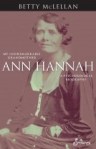
BettyMcLellanAnnHannahBetty McLellan’s Ann Hannah, my (un)remarkable grandmother: A psychological biography disconcerted me at first. I’d never heard of a psychological biography (which, I presume, is the same as psychobiography) so I was intrigued by McLellan’s discussion in the Introduction of her decision to use this approach. I did feel, for a chapter or two that she was drawing a long bow, but I persevered and it was worth the effort.

McLellan commences her Introduction by telling us a little about who Ann Hannah Stickley was and why she decided to write the book. As you’ll have gathered from the title, Ann Hannah was her grandmother. Born in 1881, and emigrating to Australia with four children when she was 40, Ann Hannah was, writes McLellan, “an unremarkable woman who lived an unremarkable life and died an unremarkable death” (albeit at the, I’d say, remarkable age of 97!) However, McLellan came to realise, long after Ann Hannah had died, that this grandmother, who was already living with her family when she was born and who was still there when she left home at nineteen, was worth investigating. She sensed that her grandmother had had a “remarkable resilience” and wanted to know how she’d done it. But how was she to explore this, given her grandmother had been dead for nearly 40 years?

The problem was that she knew relatively little about this quiet, practical, hardworking woman, and that there was no one left who might have known more. So what, she questioned, “would be the best literary device to use to record her story, explore my own reactions to it and analyse it in terms of its relevance for other women?” A straight biography would not work, for the reasons already given. Consequently, she turned to this new-to-me genre of psychological biography which “seeks to discover a subject through analysis of their political pronouncements, decisions, writing, behaviour or art”. Ann Hannah, being a private, “ordinary”, person had none of those, but she did have a number of sayings – didn’t all our grandmothers? It is through these that McLellan decided to analyse Ann Hannah, “with a view to uncovering the deeper meaning behind her words” and in so doing to not only understand her grandmother more, but, among other things, “to present her as a representative of many women born in her time and circumstance”. It’s a big ask …

McLellan, a psychotherapist and feminist activist who has written other books, does this by taking each saying, explaining its meaning and how her grandmother had used it, and then exploring its wider implications or connotations. What exactly she explores is largely driven by the saying. The saying in Chapter 2, for example, is “I’m a Londoner”, and so McLellan explores – through historical and sociopolitical lenses – what life was like in the parts of London where Ann Hannah had lived until her migration to Australia in 1921.  She was uneducated, and part of “the working poor”. But, this was also the time of the women’s suffrage movement, which McLellan describes in some detail. Ann Hannah, she says, had never indicated she was aware of the “political machinations” going on around her, so in one sense we could question McLellan’s inclusion of the history here. However, McLellan concludes the chapter by saying her grandmother had lived her life as a “strong, determined woman”. It could be argued that this was in part made possible by the sociopolitical environments she found herself in.

By contrast, Chapter 4’s saying is “‘e was a wickid man” [ “wickid” being spelt that way to capture Ann Hannah’s pronunciation]. It deals with Ann Hannah’s second husband’s violence and sexual abuse of his step-daughter, as well as of Ann Hannah, herself, and one of their daughters. Here, not surprisingly, McLellan looks more at psychiatry, psychology and the law, than history and politics. She describes the lack of recourse women had during the time Ann Hannah lived, and concludes that her grandmother’s only choice, really, was to “accept her lot” and get on with it, which is exactly what she did. (Not surprisingly, Ann Hannah said it was “the ‘appiest day of my life when ‘e died”!)

These are just two of the six chapters exploring Ann Hannah’s sayings. Two others deal with the experience of migration and of the loss of a child, both of which particularly engaged my interest.

Overall, the approach makes for a somewhat disjointed book, skipping as it does around different fields of human knowledge and experience. Nonetheless, it all works reasonably well because there are unifying threads to which McLellan returns, one being Ann Hannah herself, and the other McLellan’s feminist perspective. I say “reasonably” well because there were times when, due I’m sure to lack of information, Ann Hannah seemed to slip though my fingers. I wanted, I suppose, a more traditional biography! Given that McLellan explained why she couldn’t produce that, it’s unreasonable of me to criticise the book for what it’s not, so I won’t. I’ll just say that it’s what I would have liked!

The real question is, then, does McLellan’s decision to write a psychological biography of her grandmother work? Does it provide, in other words, some useful insights into women’s lived experience, as McLellan intended? I think it does – and does so in a way that not only illuminates the past, but also contributes to our understanding of the present and why things are the way they are today. A different but interesting read.

aww2017 badgeBetty McLellan
Ann Hannah, my (un)remarkable grandmother: A psychological biography
Mission Beach: Spinifex Press, 2017
150pp.
ISBN: 9781925581287

(Review copy courtesy Spinifex Press)

Helen Garner, Why she broke: The woman, her children and the lake (#Review)

Three years ago I reviewed Helen Garner’s This house of grief about Robert Farquharson who drove his car into a dam in Victoria, resulting in the deaths of his three sons. It’s a grim grim story, so you might wonder why I am now writing about her essay “Why she broke: The woman, her children and the lake” about Akon Guode who, in 2015, drove her car into a lake in Victoria resulting in the deaths of three of the four children inside.

There are two reasons, the main one being that this essay was, last week, awarded the Walkley Award (about which I’ve written before) for Feature Writing Long (over 4000 words). I hadn’t read the article when it was published in June this year, and probably wouldn’t have read it now, except for this award. What, I wondered, when I heard the news, made this essay, on a topic so seemingly similar to her recent book, worthy of the Walkley Award? The other reason is that although there are similarities – both parents drove their cars into water resulting in the deaths of children – there is a big difference. One parent was a father, and the other a mother. I wanted to know what, if anything, Garner would make of that in her analysis.

I’ll start two-thirds through the essay, where Garner quotes Guode’s defence counsel using a statement made to the Victorian Law Commission in 2004:

While men kill to control or punish their children or partner, women kill children because they cannot cope with the extreme difficulties that they encounter in trying to care for their children.

Given the current political climate – Harvey Weinstein, Don Bourke, et al – this statement must surely be read as part of that bigger picture concerning women’s powerlessness.

In the first part of the essay, Garner describes Guode’s life. She was a Sudanese refugee to Australia who had been married as a teenager but had then lost her husband in the civil war there. In that culture women cannot remarry, but remain a possession of their husband’s family. Guode’s third child was fathered by a brother-in-law. Eventually, after more trauma in Africa, she was sponsored to come to Australia by another of her late husband’s brothers, Manyang. Her life here became difficult in a different way, with her bearing four children to this already married man. At the time of the incident she had seven children.

Garner details the difficulties of Guode’s life, including the traumatic birth of her seventh child, and her struggle to care for her family while also sending money back to family in Africa. To her, this was an obligation, but at the committal hearing, Garner writes, a local community leader said that “It is not an obligation. I would call it a moral duty”! Not surprisingly Garner’s reaction to this is that “under the circumstances this seems like a very fine distinction”! This sort of word play – “obligation” versus “moral duty” – can make such a mockery of the law (or of its practitioners), can’t it?

There was of course discussion during the hearing of Guode’s mental state, with the judge suggesting that “something dramatic” must have triggered her action. The psychiatrist, however, argued that “it can just be the ebb and flow of human suffering, and the person reaching the threshold at which they can … no longer go on.”

But Garner also proposes a possible “trigger event” that went back 16 months to the last traumatic birth. Postnatal haemorrhaging was so bad she was close to needing a hysterectomy. Guode initially refused treatment. Garner writes that she was

prepared to risk bleeding to death on a hospital gurney rather than consent to the surgical removal of the sole symbol of her worth, the site of her only dignity and power: her womb?

Surely, a woman whose life had lost all meaning apart from her motherhood would kill her children only in a fit of madness.

Garner also discusses the technicalities of infanticide versus murder in Victorian law, and Guode’s counsel’s argument that all three deaths should be viewed through “the prism of infanticide”, which would result in a lesser sentence, even though only one of the children met the age criterion. Her eventual sentence makes clear that he didn’t win his argument.

What makes this essay so good, besides the analysis, is Garner’s writing. Here she is on a jury trial versus a plea hearing (which this was):

If a full-bore jury trial is a symphony, a plea hearing is a string quartet. Its purpose seems to be to clear a space in which the quality of mercy might at least be contemplated. There is something moving in its quiet thoughtfulness, the intensity of its focus, the murmuring voices of judge and counsel, the absence of melodrama or posturing. It’s the law in action, working to fit the dry, clean planes of reason to the jagged edges of human wildness and suffering.

That last sentence! Breathtaking. It reminds me once again what an excellent essayist Garner is, and it’s not just for her style. She has the ability to take us on a journey, leading us logically, and empathically, to consider values and ethics, without ever being didactic.

In this essay, it’s her concluding comments and final question regarding mercy which gets to the nub of it. It concerns the idea of “mother”, which she calls “this great thundering archetype with the power to stop the intellect in its tracks”. Read Garner’s essay, and/or this report in The Age, and see what you think. I don’t envy Justice Lasry’s job, but I know, based on what I’ve read, where my intellect goes.

aww2017 badgeHelen Garner
“Why she broke: The woman, her children and the lake”
The Monthly, June 2017
Available online

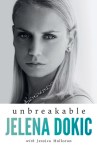
Unbreakable: Conversation with Jelena Dokic

Louise Maher and Jelena Dokic

If you are a fan of professional tennis you will probably have heard of Jelena Dokic who hit the world stage during the 1999 Wimbledon Championships. She was just 16 years old, and, as Wikipedia writes, “achieved one of the biggest upsets in tennis history, beating Martina Hingis 6-2, 6-0. This remains the only time the women’s world No. 1 has ever lost to a qualifier at Wimbledon.” If you were an Australian tennis fan this was very exciting – or should have been. Unfortunately for Croatian-born Dokic, her tennis trajectory was one dogged by controversy, much of it caused by her abusive, controlling father. Her story, which she has documented in her book, Unbreakable, co-written with Jessica Halloran, is a tough one.

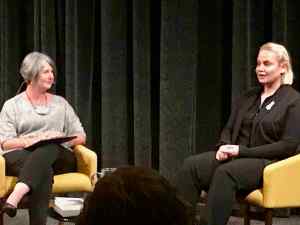
An author talk with a sportsperson about a co-written memoir would not necessarily be high priority for me, but if there’s one sport I love, it’s tennis, and Dokic’s story has implications that extend beyond tennis. So, with no competing events on that night, Mr Gums and I decided to go. It was in the form of a conversation between Dokic and local ABC presenter Louise Maher.

Jelena Dokic, Unbreakable

The conversation started with some introductory information. This included that Dokic had reached 4th in the world by the age of 19 years old, and that, due to the Yugoslav wars, she and her family had left Croatia for Serbia when she was 8 years old, and then emigrated to Australia in 1994 when she was 11. By 11 years of age, then, she’d already experienced far more trauma than most her age had experienced. When you add to this the fact that her father – who saw tennis as the opportunity for a good life – started abusing her from the minute he introduced her to tennis when she was 6 years old, you get the picture of a sad and lonely young person. It’s no wonder that the Australian tennis community – fans and players – found it hard to warm to her. No wonder, I say, but that’s no excuse. The failure of duty of care for this young person is clear – and her book has, apparently, got the international tennis world talking.

Now, I’m not going to give a blow-by-blow summary of the conversation, partly because it covered a lot of ground that is covered in the book, as well as in the various stories about her life that you can read on the Internet. Instead, I want to focus on the lessons and messages from the book (well, from what she told us about the book, as I haven’t read it.)

She had a few reasons for writing the book. One was to help others: she hopes by sharing her story, she will increase awareness of abusive parent-child relationships, particularly in sport, and thus help ensure it doesn’t happen to others.

Another reason is a more distressing one, in a way, and that is to enable Australians get to know her better – because the truth is that, due to her father’s abusive control of her, spectators never really got to know her, and as a result, they sometimes gave her a hard time. Some of this was racially or ethnically based – indeed she was told “to go back where you came from” – by several within and without the tennis world. The worst time for her, though, was when her father suddenly withdrew her from Australia, when she was 17 years old, to play for Yugoslavia. Her first major tournament after this was, unfortunately, the Australian Open – and the crowds jeered her. That’s hard enough for any-one, but for a 17-year-old girl who had no say in the matter, who was being abused by her father, it increased her sense of loneliness, of isolation, of having no support.

This issue of having no support is something she repeated several times in the conversation. When Louise Maher pressed her about her mother’s role, Dokic answered that her mother didn’t intervene. She wanted the family to stay together, and trusted her husband knew what he was doing!

Dokic provided various examples of her father’s abusive behaviour towards her, and of her desperation for a little praise that apparently never came (even after significant wins). She finally managed to “escape” home when she was 19-years-old – but life was tough, as she left with nothing, no money, no credit card. This is when, she said, she particularly needed support, but there was none.

I won’t continue, but there are some too-familiar lessons here, particularly the one that I’ll call the “turning a blind-eye syndrome”! There were people, Dokic said, who knew things weren’t right, but they were reluctant to get involved. And the media focussed on her father, enjoying the sensationalism of reporting on his behaviour – “Media thought he was funny, but he wasn’t”, she said. The didn’t pay any attention to what was happening to Dokic, or to the impact of their reporting on her. (I wished, that night, that I’d thought of my question about what she’d have liked the Media to do, before, not after, question-time finished!)

Dokic loved playing tennis, she said, but her father ruined her career. Tennis aficionados will, I’m sure, agree with her. She did look like achieving a come-back in her mid-to-late twenties but injury, illness, and surely the impact of all she’d suffered, meant there wasn’t the fairy-tale ending. Today she does sports commentating, motivational speaking and coaching.

There was a lot lot more – but if you’re interested, read the book!

Meanwhile, there are lessons to be learnt by the media, by spectators, and by tennis organisations about duty of care, particularly when reporting on, watching, or managing young players. What happened to Dokic could not have been completely avoided – its having started at home when she was a beginning 6-year old player – but it should not have gone on for as long as it did if people who knew, or even suspected, things were amiss, did something about it. I do hope this book has the effect that Dokic would like.

(Oh, and sitting next to me at this event was one of the ACT Litbloggers, the lovely Angharad of Tinted Edges. I look forward to seeing her post on it.)


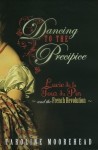
Caroline Moorehead, Dancing to the precipice (#BookReview)

Unusually, my reading group read two biographies about non-Austrian women this year, Jane Fletcher Geniesse’s book on Freya Stark (my review) in January and now, this month, Caroline Moorehead’s book Dancing to the precipice: Lucie de la Tour du Pin and the French Revolution on the French aristocrat Henriette-Lucy, Marquise de La Tour-du-Pin-Gouvernet. Interestingly, Moorehead has also written a biography of Freya Stark. Moreover, while Caroline Moorehead is an English writer, it turns out that her father was the Australian war correspondent and historian Alan Moorehead. How tangled is all this!

But now the book itself. Dancing to the precipice chronicles the life of French-born aristocrat Lucie, from her birth in 1770 to her death in 1853, a period which, you’ll realise, covers some of Europe’s and, in particular, France’s most tumultuous times. Lucie de la Tour du Pin, as Moorehead calls her, saw most of it up close and personal, but somehow managed to survive. The evocative title conveys a sense of how tenuous that survival could be. It comes from Lucie’s own words written just before the storming of the Bastille. She wrote:

Amid all these pleasures we were laughing and dancing our way to the precipice.

Lucie, Moorehead tells us, went on to say that while this blindness was pardonable among the young, it was “inexplicable in men of the world, in Ministers and above all, in the King”. She wasn’t wrong – and the rest of the book tells us how often throughout their lives they nearly went over the precipice.

Dancing to the precipice is a thorough work, thorough in its description of Lucie’s life, and thorough in the research carried out by Moorehead. The biography is footnoted (though not intrusively) and contains an extensive list of sources at the end. It is also well-indexed. All of these are important – to me, anyhow! The reason the book is able to be so thorough – without Moorehead ever needing to resort to gap-filling – is because her life is so well documented, by herself primarily.

Lucie, in fact, has been described as the Pepys of her generation because of the memoir she started writing when she was 49. Titled Journal d’une femme de 50 ans, it was published posthumously and covers her life through the Ancien Régime, the French Revolution, to the time of Napoleon, until March 1815 when he returned from exile on Elba. In her Afterword, Moorehead explains that in addition to this memoir, which apparently has never been out of print, she had access to an extensive collection of letters written by Lucie to a god-daughter and many others, and the papers and correspondence of her husband. A wealth of resources that I suspect many biographers would die for.

Except, it’s perhaps this wealth that has caused my one little criticism of what is, really, an excellent biography. My criticism, as you’ve probably guessed, concerns the amount of detail in the book. There were times when I wondered whether I really needed to know as much as she gave, for example, about the wedding of a half-sister or the love-life of her friend. In terms of social history, perhaps yes, but there were times I wanted a tighter focus, and to not be inundated with quite so much information about so many people. That said, Dancing to the precipice is a fascinating story about an astonishing period of history and an engaging and resilient woman.

There were many aspects of the book I enjoyed, starting with refreshing my old high school and university history studies in the French Revolution. As Moorehead revealed each new phase in that tortuous process by which France moved from the ancien regime to the final republic, I remembered. I loved the description of Lucie and her husband’s time as émigrés in Albany, NY, in America, and the resourceful way they fit into the life there, despite their aristocratic training. I also loved the descriptions of fashion and food in Paris, and of the salons, and the role played by women in encouraging intellectual discussion and debate. Every time the émigrés felt it was safe to return to Paris, the salons started up again (until, eventually, they didnt!) Moorehead draws a stark comparison between the engagement of women in public debate in France versus that of their English counterparts:

Englishwomen remained, to the surprise and annoyance of their French guests, firmly in their segregated and inferior places, expected to withdraw after dinner to allow the men to talk literature and politics. In England, a visitor smugly remarked, women were ‘the momentary toy of passion’, while in France they were companions ‘in the hours of reason and conversation’. As Jane Austen put it, ‘Imbecility in females is a great enhancement of their personal charms’, something that Lucie, brought up to talk intelligently, would find extraordinary. (Loc 4713)

What most retained my interest in the book, though, was Lucie herself. Always the aristocrat but also believing in the need for change, her resilience and resourcefulness in the face of blow after blow was inspiring. Besides the escapes from France and the returns, only to have to escape again, there was the loss of her children. Only one from her ten pregnancies outlived her, something Moorehead argues was extreme, even accounting for the times. Lucie was also unusual for a more positive feat, that of having a successful, loving marriage for 50 years. She and Frédéric were, it appears, true partners.

So, there was more to enjoy about the biography than to criticise, and I’m very glad I read it. I’ll conclude with a quote from the book describing Frédéric’s last days, and his statements about the importance of studying history:

He now spent much of his time in his room, reading and writing to [grandson] Hadelin, long letters mulling over his own life and urging the young man to study, to think on serious matters, to develop a taste for reflection. He should turn, he wrote, towards ‘the vast questions of humanity: there you will find true riches’. […]  It was in history, he told Hadelin, that he should seek to find ways of understanding the world, and to learn how to make his mark on it; for it was to history that ‘one must look to discover motives and judgements, the source of ideas, the proof of theories too often imaginary and vague’. Reflection, he added, was ‘the intellectual crutch on which the traveller must lean on his road to knowledge’.

It’s astonishing that this couple who, Moorehead writes, stood out “for the reckless ease with which they challenged political decisions they considered to be lacking in morality or common sense”, regardless of who was in power, survived into their old ages. It says, I suspect, something about both the respect with which they were held and their ability to judge when it was time to skedaddle. A most interesting read.

Caroline Moorehead
Dancing to the precipice: Lucie de la Tour du Pin and the French Revolution
London: Vintage, 2010
ISBN: 9781409088929 (ePub)

Stephanie Buckle, Habits of silence (#BookReview)

Stephanie Buckle, Habits of silenceI have been champing at the bit to read local author Stephanie Buckle’s debut short story collection, Habits of silence, ever since I attended its launch in August by John Clanchy at the Canberra Writers Festival. The readings that both Clanchy and Buckle herself gave from the book grabbed my attention and convinced me that this would be a book I’d like. However, it had to wait its turn in my review copy pile. Finally its number came up – and I devoured it. I will never understand why some readers don’t like short stories. At least, I understand their reasons in my head, but I don’t in my readerly heart! (If that makes sense.)

John Clanchy, in launching this beautifully designed book, spoke about its title which is not, as commonly occurs, the title of one of the stories inside. When this happens, it’s logical to consider what the title means, and for Clanchy it reflects the book’s interest in communication, and particularly in the part played by silence. Silence, he said, can be positive or negative, and both of these are explored in Buckle’s stories. This is not to say that all the stories are specifically about, or even feature silence in a major way. But even in those that don’t, there’s usually some missed communication or miscommunication that might just as well be silence.

And now I come to that part that’s always a challenge with reviewing short story collections, which is whether to quickly survey all the stories or focus on a couple or try to do a bit of both. I usually opt for the last of these, and will probably do so again here. One day I’ll come up with an exciting new way to discuss short story collections, but I haven’t found it yet!

So, the survey part. There are fourteen stories, some of which have been published before, with a couple having won awards. There are both first-person and third-person stories – providing lovely variety – and the protagonists range in age, situation, and gender. It feels like a collection that could only be written by someone with a good few decades of life experience under her belt (but perhaps that’s denying what imagination can do). I’m certainly not saying that Buckle has experienced all she writes about, but the stories do feel imbued with a deep sense of knowingness.

One of the stories that is specifically about silence is titled, well, “the silence”. It’s about two brothers, Jim and his older brother George Clayton (love this cheeky last name), who live in a country town and have run the family furniture business for years, without speaking to each other. Each works alternate days and George communicates with Jim by letter, because, it seems

Silence is safe. Silence commits to nothing. Far easier to be silent than to speak.

Except, this silence is burning Jim up – that, and his brother’s complete inflexibility about changing anything in their increasingly anachronistic shop to bring it up to date. I liked this story, the beautiful realisation of the characters, and its tentative but by no means certain resolution.

Another story in which silence is central is “fifty years”. This is one of the stories read from at the launch, and it tantalised me. It concerns a woman who has been rendered mute by a stroke. She’s in hospital, attended by her husband of fifty years and her daughter, from whose point of view the story is told. Here’s part of the excerpt read at the launch. It comes after the husband has been prattling on with platitudes:

And that’s when I see it, the first time. It’s the expression you make when you think no one’s looking. The one you make to yourself, with your back turned. It’s the one that makes all the others look like masks, as if all the cups of tea, and all the ironed shirts, are just pretending. She turns from me and regards him quite steadily, but as if she sees him down the wrong end of a telescope, or as if he’s a fly buzzing still against the window, that she briefly thinks she might stir herself to deal with, but can’t be bothered. Are you still here? it says.

If that doesn’t make you want to read this book, then I’d say you’re a lost cause! Buckle’s insights into human relationships make you sit up and pay attention – and her honed spare writing is well-suited to her theme.

The second story in the collection, “sex and money”, is also about a lonely wife who feels unappreciated. Like the husband in “fifty years”, Frank appears to know little about the wife he lives with, and is more likely to help a neighbour than do something she’s asked. And yet, in his head, he loves – at least he desires – his wife. Rose meanwhile finds her own way of obtaining pleasure. It’s all to do with money, but not what you might be thinking. Buckle’s playing with ideas of lust, desire and money here is cheeky – and telling.

But not all marriages, not all relationships in the book, are poor. The woman in “the man on the path” has been grieving her beloved husband’s death for four years. She has come to the Lakes, a favourite holiday place of theirs, for a break, but feels out of place amongst all the happy holidaying couples. Then, out walking, she meets a man on the path, but a “failure of courage”, an inability to communicate appropriately, sees an opportunity to make a connection pass. She perseveres with her walking, however, and, well, you never know, there could be a second chance …

There’s nothing like mental illness to focus us on essential truths about humanity. Lillian, in the opening story “lillian and meredith”, is developing dementia – her “words scatter in all directions” – but, like many of the book’s characters, she’s lonely so when new patient Meredith appears she sees her opportunity. Meredith is welcoming, but when money goes missing, it all falls apart and poor Lillian is handled with less than kindness by the staff. This is just one of several stories which feature mental illness, with three of them – “us and them”, “frederick”, and “no change” – set in the same place, Cedar Grove Psychiatric Facility. There is no cross-over in characters, but there’s something nicely grounding in returning to a familiar place, even if when we get there we are confronted by questions about duty of care and our frequent failure, for whatever reasons, systemic or personal, to provide it.

Buckle’s stories, then, explore all sorts of relationships – between couples, siblings, parents and children, friends, teachers and students, and even staff and patients – showing that none are immune from communication challenges, from silences that hide true feelings to words which do the same, from convictions that relationships are true to realisations that they aren’t, from attempts to connect to refusals to do so. Although some stories impacted me more than others, I was engaged by them all, reminding me once again why I love short stories. It’s their little nuggety insights into human nature – and Buckle’s Habits of silence provides just that.

aww2017 badgeStephanie Buckle
Habits of silence
Braidwood: Finlay Lloyd, 2017
202pp.
ISBN: 9780994516534

(Review copy courtesy Finlay Lloyd)


Hoa Pham, Lady of the realm (#BookReview)

Hoa Pham, Lady of the realm

Hoa Pham was one of the participants at the recent Boundless Festival (my post), so it’s rather apposite that her latest work, Lady of the realm, popped up as my next review copy. The very brief author bio on the Festival site describes the novel as “about a Buddhist clairvoyant in Vietnam”. Well, it is, but it’s about far more than that too.

Vietnamese-Australian Hoa Pham was born in Hobart after her Vietnamese parents went there to study in the 1970s. She has written several novels, children’s books, plays and short stories, but her novella, Lady of the Realm, is the first that I’ve read. It’s a slim book, a novella in fact, told first person in a chronological sequence that covers nearly five decades from 1962 to 2009. If you know your south-east Asian history, you’ll realise that this time-span starts during the Vietnam or American War (depending on your perspective.)

It’s quite a challenge to cover such a long and tumultuous period in less than 90 pages, but Pham achieves it by keeping her focus tight – to the experience of the Buddhist monk Liên. Before we meet her formally though, there is a short prologue, which is also in her voice, albeit unknown to us at that point. She prepares us for the vignette-style in which she tells her story:

Looking back over the years, it seems that time stretches and contracts, depending on my experience of each moment. Some moments are etched in my memory, like the sunlight patterning the water in the river, ethereal moments captured only by my mind. Other longer stretches of time are a blur ….

This makes perfect sense to me in terms of how we remember our lives, and hence works for telling a story that covers a long life in a turbulent place. However, if you are someone who likes to get lost in a character and the ongoing drama of life, this book may not work for you.

So, Liên. She is introduced in 1962 as a young girl who has a prescient dream that the Viet Minh will come and destroy her fishing village. This marks her as the one to succeed her grandmother Bà as keeper of the shrine and mouthpiece for the Lady of the Realm (as she calls the Buddhist goddess of mercy, Quan Ám). Unfortunately, the village head ignores the warning, and the village is attacked with most in the village killed. Liên, however, escapes, and lives to chronicle the aftermath.

The book then takes us through moments in Liên’s, and therefore Vietnam’s, life in 1968, 1980, 1991 and 2007, before finishing in 2009 when Liên is now an old woman living in a Buddhist monastery. She has experienced much violence and oppression – through the war and the “fall of Saigon”, through the Communist regime which she “naively believed” would bring peace but which brought “re-education” and more death, and through later “reforms” which were supposed to open up Vietnam but saw her beloved Prajna Monastery destroyed. Liên survives it all, sustained by hope:

Ever hidden away the Lady could still bring hope, I thought. I had found the Lady in many guises, but the strongest seemed to be the Lady I had inside. (1980)

This hope is sorely tested, however, and in the last section she says:

Sanctuaries are an illusion, only suffering is real. I know that this is not what Buddha taught, and my experience has made my own sayings out of his teachings. I believe that any safety I find is temporary, any refuge is not permanent. But my teacher would say, all things are impermanent and change. I hope that our situation will change. Some days I cannot bear another moment of being under siege. (2009)

The tone, here, is typical of the book as a whole – calm, somewhat resigned, and sometimes hopeful.

Now, how to describe the writing? There’s the tone, and there’s Pham’s simple, direct language (which is also evidenced in the above excerpt). There’s also her preponderant use of short paragraphs. And there’s the episodic form, with each episode/year heralded by an epigraph, the last four by Buddhist monk and peace activist, Thích Nhất Hạnh. Together, these create a sort of prose-poem, and with that, dare I venture, a higher (or perhaps just universal) plane of truth!

In other words, Pham has contrived to tell a personal, human story through her character Liên, while also conveying a philosophical attitude to life based on endurance, compassion and most of all hope. A moving, inspiring read.

Lisa (ANZLitLovers) captures the book beautifully in her review.

aww2017 badge

Hoa Pham
Lady of the realm
Mission Beach: Spinifex Press, 2017
98pp.
ISBN: 9781925581133

(Review copy courtesy Spinifex Press)

Gabrielle Carey, Moving among strangers (#BookReview)

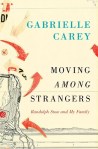
Gabrielle Carey, Moving among strangersEmma’s guest Monday Musings post last week on Randolph Stow provided the impetus for me to finally retrieve Gabrielle Carey’s Moving among strangers: Randolph Stow and my family from my TBR pile. I’ve been wanting to read it for the longest time, but … well, those of you with big TBRs will understand.

Moving among strangers, whose title comes from a line in Stow’s novel The girl green as elderflower, is an unusual book. It’s partly a biography of Stow, and partly a memoir of Carey and her family, but Carey wouldn’t call it either. She says in her prologue:

… this book is not a biography. Neither is it a work of literary analysis or scholarly enquiry. It is more like a ‘mostly private letter’, to use Stow’s phrase, written out of curiosity, and tenderness towards a man whom I have come to think of as an almost-relative, a dear friend of my mother’s, and the ideal literary mentor.

It all started when, as her mother was dying in 2009, Carey wrote to Stow in England letting him know of her mother’s condition. It was his response, which came four days after her mother’s death, which set Carey off. She’d known there’d been a connection, of course, but she didn’t know much about it. Stow wrote that Joan’s letters from London, when he was a schoolboy and undergraduate, “were like a window on the world”. Why, Carey wondered, did her mother correspond “with a young man, an adolescent, thirteen years her junior, who wasn’t even a relation?” This question is never properly answered in the book, not because there’s something salacious to discover (in case you were wondering), but because some connections made in life don’t have explanations beyond the fact that they occur. If that makes sense.

So, as the book progresses, Carey follows a Stow trail, “like a groupie”. She interrogates his novels and other writings, and reactions to them. She reads the letters Stow wrote to members of her and his family. And she visits the places in England where Stow had lived and meets some of the people who knew him there. One of the main strands in her story concerns Stow’s unease with Australia – with his feeling rejected by Australia and/or his rejecting Australia. There is no answer to this question either, but Carey’s exploration of the issue is enlightening (particularly given all those other Australian intellectuals who left in the 1960s – some well known like Germaine Greer and Clive James, others less so like Jill Ker Conway and Ray Mathew. Each story is different but there is probably a thread that links them too?)

There are many angles, in fact, from which I could write on this engaging but slippery book. There’s Carey’s sharing of her own history – the loss of her mother, her tricky relationship with her sister, the death by suicide of her father, and so on. There’s the form of the work and how it fits into what seems to be a new breed of biography-memoirs that is popping up. And of course, there’s Stow, himself. He comes across as an elusive character, and that’s probably because he was. When she, having made connection with him, enthusiastically tries to engage him, by correspondence, in a literary discussion about his and her mutual interest in James Joyce, he shuts her down, albeit politely, explaining that he was “old and ailing” which, in fact, he was. He died the next year.

This doesn’t deter her – for which we should be grateful because although the book is not, as she forewarns us, a biography, we do, nonetheless gain insight into Stow. She paints a picture, in the end, of a man at odds with the country in which he was born though exactly why is hard to say. Did he reject Australia – with its “depressing tolerance, even worship, of the second-rate” (his words) – or did Australia reject him with its inability to understand his work. Australian critics, apparently, panned his novel Tourmaline, for example, rejecting its combination of “fable and poetry” with “realism”. A later critic, Carey says, notes that Tourmaline represented a change, a move away from “bush realism … towards something more experimental”. However, at the time, as is so often the case with innovative creators, this was not recognised and Stow’s “too truthful, too confrontational of conventional attitudes” novel was not appreciated in his own country. Stow felt the rejection.

But, Carey is wary of coming to conclusions, as she constantly reminds us. At one point, when she has questions and no answers, she tells us that given there’s no one alive to tell her “the real story”, she “can only imagine”, but a page or two later, she says

But I could be wrong. Being wrong, I realised, is how I’ve spent most of my life: misinterpreting, misunderstanding, misjudging, miscommunication. Words slip and slide, as T.S Eliot said, or as Stow put it, ‘words can’t cope’.

A strange thing for a writer to say, perhaps? And yet, perhaps not. Perhaps, it’s something only a writer could say?

You are probably getting the gist now of this unusual book – and hopefully, realising what a delightful, engrossing and stimulating read it is. It is not a long book, and is therefore not comprehensive. If you want, for example, to read about the Stow book I know best, his first Miles Franklin winner, To the islands, you won’t find it here. What you will find though is an intelligent analysis of Stow the man and of his work. You will also gain, or, at least I did, some insights into literary Australia of the mid to late twentieth century – not a list of luminaries, or even a history, but a sense of the life and times, and of how one particular writer did (or didn’t) navigate it.

Near the end, Carey returns to a theme she introduced earlier in the book, that of twinning or duality of perspectives. She concludes that, in the Essex pub where she met people who had known Stow in the latter years of his life, she found “twin versions” of him, one “content in his lifestyle, in his aloneness, who was self-sufficient and independent” and one “who was uncomfortable in his own skin, internally and perpetually in conflict over his sexuality, his nationality and his identity.”

If you are interested in Stow, in Australian literary history more broadly, and/or in Carey herself, this is a book for you.

aww2017 badgeGabrielle Carey
Moving among strangers: Randolph Stow and my family
St Lucia: UQP, 2013
232pp.
ISBN: 9780702249921

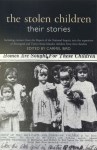
Carmel Bird (ed), The stolen children: Their stories (#BookReview)

Carmel Bird, The stolen childrenCommenting on my post on Telling indigenous Australian stories, Australian author Carmel Bird mentioned her 1998 book The stolen children, describing it as her contribution “to the spreading of indigenous stories through the wider Australian culture”. It contains stories told to, and contained in the report of, the National Enquiry into the Separation of Aboriginal and Torres Strait Islander Children from their Families (Bringing them home)*. She offered to send me a copy, and of course I accepted (despite having read much about the Report at the time.)

Bird said in her comment that the book is “still regularly used in schools”. This is excellent to hear because it contains a history that needs to be told – forever, alongside all those other histories taught to Australian students. It needs to be as well (if not better) known by our students as the story of The Gold Rush or Our Explorers. We need to know it, we need, as a nation, to know our dark side, our failures, as well as our big adventures and achievements.

What makes this book particularly useful is Carmel Bird’s curation of it – and I would call what she’s done “curation” because of the complexity and variety of the writings she has gathered and organised. Bird has structured the book carefully to tell a story, with introductory front matter (including a preface from Ronald Wilson the National Committee’s prime commissioner); the Stories themselves; Perspectives from people at the time, including Hansard excerpts from politicians at the tabling of the Report; the Report’s Recommendations; and end matter comprising an Afterword from historian Henry Reynolds and a poem titled “Sorry” by Millicent whose story appears in the Stories section. Bird’s curation also  includes providing introductions to each of the stories to draw out important issues or points about that person’s situation, and adding other explanatory notes where appropriate.

This careful curation ensures that the book contains all the content and context it needs to stand alone as a resource for anyone interested in the Stolen Generations.

“It made no sense”

In her story, Donna says “It made no sense”. She’s describing her train trip away from her mother in the company of a white woman, a train trip she’d been initially excited about, thinking it was to be a family trip. However, with her mother staying behind on the platform and her brothers disappearing one by one as the journey went on, it just made no sense to her.

None of the stories make sense. And they are all heart-rending. Some children were given up willingly by their mothers, who believed it would result in better opportunities, and some, most, were stolen, often suddenly, with no explanation. Some were newborn, some pre-school or primary school-age, while others were 12 years old or more. Some found themselves in loving foster homes, but many found themselves in institutions and/or abusive situations. All, though, and this is the important thing, suffered extreme loss. They lost family and they lost language and culture. Fiona, for example, who will not criticise the missionaries who cared for her, says, on reconnecting with her family thirty-two years later:

I couldn’t communicate with my family because I had no way of communicating with them any longer. Once that language was taken away, we lost a part of that very soul. It meant our culture was gone, our family was gone, everything that was dear to us was gone.

Fiona also makes the point, as do several others, about the treatment of the mothers:

We talk about it from the point of view of our trauma but – our mother – to understand what she went through, I don’t think anyone can understand that.

The mothers, she said, “weren’t treated as people having feelings”.

The stories continue, telling of pain, pain and more pain. Murray says “we didn’t deserve life sentences, a sentence I still serve today”, and John talks of being a prisoner from when he was born. “Even today,” he writes, “they have our file number so we’re still prisoners you know. And we’ll always be prisoners while our files are in archives”. This is something that I, as a librarian/archivist, had not considered.

But, there’s more that makes no sense, and that’s the government of the time’s refusal to apologise, to satisfy, in fact, Recommendations 3 and 5a of the Report. This issue is covered in the Perspectives section, with extracts from speeches made by the then Prime Minister John Howard and the Minister for Aboriginal Torres Straight Islander Affairs Senator Herron who argue against making an apology, and from the Opposition Leader Kim Beazley and Labor Senator Rosemary Crowley, who made their own apologies. Crowley also says:

If ever there were a report to break the hearts of people, it is this one.

The Perspectives section also includes other commentary on the Report and the apology. There’s a letter to the editor from the son of a policeman who cried about his role in taking children away from “loving mothers and fathers”, and one from La Trobe Professor of History Marilyn Lake contesting the historical rationale for the practice of forcible removal. She argues that there had never been “consensus [about] the policy of child removal”. There’s also a long two-part article published in newspapers that year, from public intellectual Robert Manne. He picks apart the argument against making an apology, noting in particular Howard’s refusal to accept that present generations should be accountable or responsible for the actions of earlier ones. Manne differentiates between our role as individuals and as members of a nation:

we are all deeply implicated in the history of our nation. It is not as individuals but as members of the nation, the “imagined” community, that the present generation has indeed inherited a responsibility for this country’s past.

In the event, of course, an apology was made, finally, in February 2008, by Labor Prime Minister Kevin Rudd. This, however, does not mitigate the value of Bird’s book. It has value, first, as documenting our history and the voices of those involved – indigenous people, politicians and commentators. And second, it contains thoughts and ideas that we still need to know and think about, not only for historical reasons, but because in the twenty years since the Report we have not made enough progress along the reconciliation path. It is shameful.

I loved Carmel Bird’s introduction. It’s both passionate and considered, and clearly lays out why she wanted to do this book. I’ll conclude with her words:

I think that perhaps imagination is one of the most important and powerful factors in the necessary process of reconciliation. If white Australian can begin to imagine what life has been like for many indigenous Australians over the last two-hundred years, they will have begun to understand and will be compelled to act. If we read these stories how can we not be shocked and moved …

“There can,” she says, “be no disbelief; these are true stories.” This is why the stolen generations should be a compulsory part of Australian history curricula (Recommendation 8a). It’s also why, to progress reconciliation, we should keep reading and listening to indigenous Australians. Only they know what they need.

aww2017 badgeCarmel Bird (ed)
The stolen children: Their stories
North Sydney: Random House, 1998
188pp.
ISBN: 9780091836894

(Review copy courtesy Carmel Bird)

* For non-Australians who may not know this Enquiry, its first term of reference was to “trace the past laws, practices and policies which resulted in the separation of Aboriginal and Torres Strait Islander children from their families by compulsion, duress or undue influence, and the effects of those laws, practices and policies”. You can read the full Report online.

Sofie Laguna in conversation with Karen Viggers

Sofie Laguna and Karen VIggers

Sofie Laguna and Karen Viggers

What a treat it was to witness a conversation between two lively, intelligent Australian women writers in the company of other writers. I mean, as you can see from the post title, Miles-Franklin award-winning author Sofie Laguna and local writer Karen Viggers whose book The lighthousekeeper’s wife has just hit 500,000 copies sold in France!

I must say that I felt a bit like an interloper, given the event was organised by the ACT Writers Centre in their “Developing Writers and their Work” program, but I did enjoy eavesdropping on what writers talk about and want to know!

“I wasn’t ready to win”

The evening started with Sofie (I’m going to use first names) reading from the second chapter of her new book, The choke. Then we got down to business, starting with how Sofie handled her Miles Franklin win for The eye of the sheep (a book which still sits on the pile next to my bed, I’m afraid.) She had a new baby at the time and wasn’t expecting to win. She felt out of her depth. She had no speech prepared, and was suddenly surrounded by media and the press. It was both too much and something you want, she said. However, she felt the prize would be positive for many years to come, and said it made her feel her work was now validated by the literary establishment.

Karen Viggers, The lighthouse keepers wifeKaren then asked her about her experience as a woman in the industry, but Sofie turned this back on Karen – as she did several times during the conversation! Karen, though, was up for the challenge. She commented that she did feel her gender has impacted her career, including such things as the covers of her books.

Sofie agreed that she works in an unfair world, and that women get less attention. She talked about dealing with practical demands of winning the prize and managing a baby. It helps, she said, to trust your instincts. However, “you still have to empty the dishwasher every day”. That got a rueful laugh from many!

“Character IS the plot”

Sofie Laguna, The chokeMany times during the interview, Sofie returned to character. It’s clearly what she writes for, and about.

Karen asked her how she “found” Justine’s voice, the 10-year-old girl living on the Murray with her war-damaged grandfather in The choke. Sofie referred to her training as an actor, and how actors discover that some characters are easier to inhabit than others; she finds young voices easy. Young protagonists, she said, can have a fresh view on the world. Moreover, the more vulnerable voice of child characters frees her to comment on the adult world in a more powerful way.

Sofie then talked about Justine’s Pop. He’s narcissistic. He cares about Justine, albeit not necessarily as he should or could. She admitted that yes, he was another damaged character, but that seeing him that way was too simplistic. Many of us, she said, are damaged in some way. It was clear that she felt there’d been too much focus in interviews on “damage”!

Nonetheless, Karen commented, Sofie did write demanding books, to which Sofie responded that she’d grown up with war-caused loss and damage in her family, something she hadn’t talked about before.

The conversation then returned to Justine, who is dyslexic and generally powerless. Karen asked whether there were ways in which Justine was powerful. Sofie said that while Justine’s in a difficult world, she has the power – can choose – to respond in positive ways. She’s able to form connections. Unlike Pop, she’s not self-absorbed, and can enter other people’s worlds, can empathise. Sofie believes there’s much positivity in the book.

Sofie said that it’s the characters and the tensions between and within them that drive the narrative.

Later, when asked whether her books are character- or plot-driven, whether the plot fits the character or vice versa, she said that character IS the plot.

Place

While character is Sofie’s focus, Karen noted that place is significant in the novel. Sofie described how the Murray River and the Barmah Choke inspired her setting. She said the Murray is brown and gritty which works metaphorically in her story. The choke is where the river becomes narrower. Trees in the choke may look like they’re dying, but they don’t die, they keep growing, which makes a lesson for Justine.

Hope

Sofie believes that hope is important. She quoted a writer’s adage, which is that you want readers thinking:

“I fear she won’t, but I hope she will”

Writing to this tension keeps readers reading. (I love this, and will try to remember it.)

Around here, the issue of writing about disadvantage came up. Sofie said that people living disadvantaged lives often find themselves in self-destructive patterns. And yet, like the women in her book who don’t have much power, they can find ways to survive. However, she said, her subject is the richness of world, not specifically poverty and disadvantage. Her stories would not work if she decided to write about disadvantage. She sees her job as being to endow world with life not to be a spokesperson for marginalisation. Anyhow, privilege doesn’t save people from suicide, crime, etc, she argued.

The writing process

Given that the session’s focus was “developing writers”, Karen concluded by turning to the writing process. A lesser interviewer would have been flummoxed at this point when Sofie responded that she had “no answers for questions about how she does it”. But, of course, she did have answers, and she shared them. She:

  • plunges in with a plan
  • writes millions of drafts
  • doesn’t always write from beginning to end, and sometimes stops when she has more to say which can make it easier to start next sitting
  • has found that, with experience, writing has got faster over the years
  • knows her character’s “soul”, but the rest she gets to know as she writes. She noted that initially she found it hard to differentiate Justine from The eye of the sheep’s Jimmy, but Justine’s character developed as she kept writing
  • prefers one-person to multi-person narratives
  • doesn’t choose to write for a specific audience (i.e. young people or adults) but writes for character, and the audience falls into place
  • likes to have some time and space between books (partly because of the promotion she needs to undertake for the most recent book)

It felt at times that Sofie was discovering more about her book as she discussed it with Karen. Her excitement and Karen’s flexibility in going with it made the conversation fun and engaging. It was one of the liveliest I’ve been to, and we all laughed when Sofie said that she wasn’t like this at the breakfast table! I’m glad I decided to go.

Ellen van Neerven (ed.), Writing black (#BookReview)

Writing black: New indigenous writing from Australia is one of the productions supported by the Queensland Writers Centre’s if:book that I wrote about in a recent Monday Musings. It’s an interactive e-book created using Apple’s iBooks platform, and can be downloaded free-of-charge via the if:book page or directly from iBooks.

Title page for Ch. 16, Sylvia Nakachi

Ch. 16, Sylvia Nakachi (Using fair dealing provisions for purposes of review)

Writing black was edited (and commissioned) by Ellen van Neerven (whose book Heat and light and story “Sweetest thing”, I’ve reviewed here). It contains works by 20 writers, in a variety of forms, including prose by writers like Bruce Pascoe, Tony Birch, and Marie Munkara; poetry by Tara June Winch, Lionel Fogarty, Kerry Reed-Gilbert and Steven Oliver (most of which are presented in both text and video); and twitter-fiction by Siv Parker. For each writer, there is a “title” page which provides a brief biography, and the works are illustrated with gorgeous sepia-toned photography by Jo-Anne Driessens.

In her editor’s introduction, van Neerven states that, by the time of publication, there had not been a “digital-only anthology of Australian indigenous writing”. This book addresses that gap, but with a very particular goal. It was, she writes, “moulded by possibility”, by the fact that “the multimedia and enhancements a digital publication allows lifts the imagination”. Certainly, we see some of these possibilities in this production.

Her point, though, that particularly interested me was this:

Expectations of what we write about are changing, no longer the narrow restriction of life stories and poetry. Indeed, Indigenous writers do not need to write about Indigenous issues at all, if they choose not to. With more Indigenous books and authors comes a new generation of readers — open-minded to what Indigenous writers can write about, and across new forms and experiences.

Great point – just as it’s important that we see indigenous people on television and in movies, for example, without their indigeneity needing to be referenced or be part of the story. Anyhow, we see this broadening of content in Writing black – in Jane Harrison’s “Born, still”, for example – although, not surprisingly and completely understandably, given where we are on the reconciliation journey, many of pieces do have political intent.

This brings me to one of the appealing aspect of this production, which is its variety, not only in form as I’ve already mentioned, but in tone and content. The pieces span moods from the intensity of Tara June Winch (“Moon”) to the cheeky humour of Marie Munkara (“Trixie”), from the anger of Kerry Reed-Gilbert (“Talking up to the white woman”) and the frustration of Steven Oliver (“You can’t be black”) to the melancholy of Bruce Pascoe’s (“A letter to Barry”). Many of the pieces speak to loss of country and identity, and the emotional impact of these. What makes them particularly powerful is that they come from all over, from the tropical north to country Victoria to various urban settings.

Another appealing thing, which stems from its being an e-Book, is that we can hear poets perform their own work, as well as read the text ourselves. One of these is the new-to-me Steven Oliver. He has four poems in the collection – “Real”, “You can’t be black”, “Diversified identity” and “I’m a black fella” – with video of him reading each of them. He (or his poetic persona) is an urban dweller who regularly confronts questions concerning his indigenous identity. In “Real” he describes a discussion with another who refuses to accept he’s “black”, who produces those crass arguments like he’s “more of a brown” and “not really a full”, but who suddenly turns when our poet responds that his English name suggests he’s not “from here”. Oliver writes:

Listen here Abo, you know-it-all coon
It seemed that my friend has spoken too soon
Just moments ago I was not the real thing
Yet now by his words my heritage clings

This is a long-ish poem, but is accessible. Its use of rhyming couplets provides a light touch that keeps the reader engaged while the actual words drive home a serious point about Aboriginal identity. I hope it’s taught in schools.

Another poem of his, “You can’t be black”, also addresses assumptions others make about what being Aboriginal is:

You can’t be black
When the media shows Aborigines they live on communities
And struggle with petrol, poverty and disease
So you can’t be black
If you’re black you wouldn’t have nice clothes on your back.

Oliver’s poems are made to be performed, as are those of the next poet Kerry Reed-Gilbert.

She also comes out fighting, with five poems. She writes of being in a bar, waiting for the racist slurs (“A conversation and a beer”), or of being exploited by people who only want to know her to further their own aims (“Talking up to the white woman”). She speaks in the voice of a white racist in “Because my mum said so” to show how racism is learnt through families. This is a particular concern of mine. I’ve seen schools trying their hardest to teach tolerance and respect – but that role-modelling at home is mighty powerful stuff.

Another well-established poet who has been politically active for decades is Lionel Fogarty. His two poems in this collection focus more on caring for country, on sharing the land, on passing knowledge on.

The prose pieces are, overall, more diverse. There’s Tristan Savage’s cheeky short film script, “Gubbament man” about Freddy the indigenous “discrimination prevention officer”. Siv Parker’s twitter-fiction piece “Maisie May” was originally released as tweets over several hours on, note, 26th January, in 2014. It tells of a trip to country for the funeral of Aunty Maisie May who “could tell you about country and our ways that we lost over the years.” Marie Munkara is here too with her particular brand of humour to tell about “Trixie” who takes revenge on her ex. There’s also Tony Birch whose “Deep rock” clearly draws from (or fed into) his novel Ghost River (my review). And there’s David Curtis whose “What kind dreaming” tells of three young indigenous men, two already becoming familiar with the life and law of their country and the other a greenhorn from the city, who go bush. Our greenhorn soon learns a few things from the other two, who respect “them old people”.

In an interview in Sydney Review of Books, Ellen van Neerven comments briefly on why she wanted to do this “digital collection”:

For me it’s as much about audience and access. There is a really hungry international audience for Indigenous writing but also lots of roadblocks in getting the books out there. Being able to access work online is definitely an advantage and we’ve had a lot of feedback and contact from people overseas who have been able to find out about Indigenous writing and read content from 20 different authors that way.

And that’s exactly it. This oh-so-rich collection introduces readers to many of Australia’s current significant indigenous writers, not to mention the range of issues that interest them. And it’s free to download. That we should be so lucky! A big thanks to if:book and the Queensland Writers Centre for supporting such innovative and sophisticated projects as this one.

aww2017 badgeEllen van Neerven (ed.)
Writing black: New indigenous writing from Australia
State Library of Queensland, 2014
133pp.
ISBN: 9780975803059