Julie Thorndyke, Mrs Rickaby’s lullaby (#BookReview)

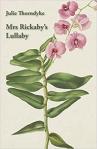
Book coverQuaint title, eh? I really didn’t know what to expect when I accepted this book for review, but accept I did because the publisher is a quality little press and because the author, Julie Thorndyke, although unknown to me, has a track record as a writer, particularly of tanka. Mrs Rickaby’s lullaby, however, is her first novel.

In addition, I was intrigued by the advance description of the protagonist as a “semi-retired botanical illustrator … with a penchant for Mozart”. Well, I love botanical illustrations and I’m a fan of Mozart. Who isn’t? And finally, there was the fact that the novel is set in a “peaceful retirement village”. Being of an age that is eligible for retirement village living, that was a bit of a drawcard too.

So far so good, but what sort of book is it? Well, the back cover blurb provides a hint when it says that Mrs Rickaby’s “tranquility is disturbed when close friend and neighbour brings home a twice-widowed younger man of dubious character, and introduces him as her future husband. Petty theft, vandalism and violence disrupt the peaceful retirement village. How can Mrs Rickaby protect her friend from this con-man lover?”

Now we are getting closer. I think the best way to describe this novel is “cosy crime”, which Wikipedia describes as “a subgenre of crime fiction in which sex and violence are downplayed or treated humorously, and the crime and detection take place in a small, socially intimate community.” This is not really my genre, any more than any crime is, but Mrs Rickaby’s lullaby turned out to be a light enjoyable read.

The story is told in Mrs Rickaby’s first person voice. She is in her early 70s and had moved to the retirement village after losing her much loved husband. She has two children who, at the start of the novel, are both living overseas, so her most important social contacts are her friends at the village, particularly her neighbour Irene, plus her cat Missy.

It’s a curious book, because it doesn’t, I’d say, perfectly conform to the “cosy crime” genre. Much of it reads like a story about contemporary life, and the challenges of ageing, of losing your partner and having to make a new life for yourself. All this Mrs Rickaby does. Her days are occupied by spending time with Missy, by her involvement in the local Orchid Society, by her free-lance botanical illustration commissions, and by socialising with her friends in the village. It’s only gradually that the crime aspect comes into view as her early suspicions about Irene’s new man, Ralph, start to seem valid. Gradually, the mystery aspect hots up as Mrs Rickaby and another friend from the village, Annette, start nosing around about Ralph in their effort to protect Irene from making a bad, and potentially dangerous, mistake.

I enjoyed reading about Mrs Rickaby’s relationships with family and friends, albeit they were generally easier relationships than those in Charlotte Wood’s The weekend (my review). This is not surprising, perhaps, as most of Mrs Rickaby’s friends are new, and thus free of the years of baggage carried by Wood’s friends who are, coincidentally, in the same early 70s age range. My only demur regarding the characters concerns Irene, “a skilled surgeon” who was still volunteering for Doctors Without Borders”. Could such a person be taken in by such a con man? My initial reaction was not, but perhaps I’m naive? Anyhow …

The narrative is framed by Mrs Rickaby’s love of music. The ten chapters all have musical titles, like Nocturne, Misterioso, Counterpoint, Agitato, and Danse macabre. You can see, by these, how the chapter titles might reflect their content. Threading through all this is one particular song, a favourite of Mrs Rickaby’s, the lullaby “Weigenleid”, which is also the title of the final chapter. Once ascribed to Mozart modern research now suggests otherwise. It is a piece of music that is at once calming and melancholic, making it suited, Mrs Rickaby suggests, to contemplating the end of one’s life …

As you would expect with the “cosy” style, the novel has a light humorous touch. It also has some reflections worth pondering, such as this on loneliness:

It is quite amazing to me how easily habits, both good ones and bad, are formed. The single glass of chardonnay in the evening can easily become a bottle, and then two; one spoon of tiramisu becomes a bowlful; an attentive man becomes a lover to a lonely woman, then her husband, whether or not she wanted or needed one, in her rational mind. But loneliness does odd things to one, and even the simplest of pleasures can become a habit, a need, a necessity.

And this on life from Annette who reassesses her realisation in her forties that “life is short” to:

“Well, now I realise that it’s actually too long … too long and too lonely. The evenings,” she whispers. “Just too many and too long.”

And, this important one:

Investments in friendship are the most vulnerable and irredeemable of assets.

Mrs Rickaby’s lullaby is probably not a book for everyone – then again, what is – but is perfectly suited to those looking for something gentle and reflective, but spiced-up with just a little page-turning twist as well.

Challenge logoJulie Thorndyke
Mrs Rickaby’s lullaby
Port Adelaide: Ginninderra Press, 2019
183pp.
ISBN: 9781760417093

(Review copy courtesy the author)

Stella Prize 2020 Winner announced

Well, a very different announcement “party” for the announcement of the 2020 Stella Prize winner but one that was exciting for those of us not in Melbourne, because we could attend!

It was a beautifully conceived and smoothly produced program, with words from each of the shortlisted writers and each of the judges, plus a powerful “keynote” address by Julia Gillard. Stella executive director Jaclyn Booton provided the necessary official overview and emcee/presenter Patricia Karvelas held it all together in her isolated studio!

I enjoyed seeing (and hearing) the passion for the role literature can play in our lives, with some speakers specifically referring to our current pandemic times. For example:

  • Caro Llewellyn spoke of how books can enable us “to dig deep and really explore what’s happened … show us the joy in the world”
  • Tara June Winch hoped people would pick up her book and “not be ashamed to look at our collective past”; she saw her book as one of hope, saying “in the horror there is ultimately the truth, and the truth is a beautiful thing”
  • Charlotte Wood talked, among other things, of turning “to writers to help us stay calm in terrible times”.
  • Ex-Prime Minister Julia Gillard said how these pandemic times “bolstered the power of literature”, including that literature can offer both ”escape” and “comfort”. But, and this relates to a question I asked in a recent post, she also said that we will rely on writers and artists in the future to distil the deeper truths of what we are experiencing now.

Julia Gillard spoke at length, and eloquently as you’d expect, about gender equity, about the need to accelerate the rate of change, but she also made clear that the issue is complex and multi-layered. She also spoke specifically about literature, saying that it is crucial to address gender bias in the literary world. She, herself, she said, had lived a different life than she may have because of books she’d read when young, like Margaret Atwood’s The handmaid’s tale and Anne Summers’ Damned whores and God’s police. These books shaped her, she said, rather like Germaine Greer’s The female eunuch, in particular, shaped me.

Finally, though, the point she made that particularly interested me concerned the fact that the Stella Count had shown improvement in many of the areas counted, such as the percentage of books written by women reviewed in significant papers and journals. What interested me was that her point was not so much about the improvement itself, but that the improvement shows that “targets work”, that “what we choose to count matters”. That’s an important message I think because it’s hard to change things if you don’t have the data.

Before I announce the winner, which most of you will have heard by now anyhow, here is a quick recap:

  • the longlist was announced on 6 February; and
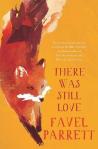
  • the shortlist was announced on 6 March (not International Women’s Day as has been tradition for some years): Jess Hill’s See what you made me do (nonfiction); Caro Llewellyn’s Diving into glass (memoir); Favel Parrett’s There was still love (novel); Josephine Rowe’s Here until August (short stories); Tara June Winch’s The yield (novel); Charlotte Wood’s The weekend (novel).

Jess Hill See What You Made Me DoAnd the winner, from around 170 books submitted, is Jess Hill’s See what you made me do: Power, control and domestic abuse. It is the fourth non-fiction book to win the award in eight years, confirming yet again Stella’s aim to be broad in the forms it encompasses. The previous three were Vicki Laveau-Harvie’s The erratics (2019, my review), Alexis Wright’s collective biography, Tracker (2017), and Clare Wright’s history The forgotten rebels of Eureka (2014, my review).

Jess Hill making her Stella Prize Winner's speechJess Hill’s winner’s speech was articulate, convincing, engaging and oh so passionate about her subject and the book. Commissioned by Aviva Tuffield, it was some four years or so in the making, and was clearly (and not surprisingly) a very demanding book to write. Although I’m interested in its subject, I had not necessarily planned to read the book, but now I feel I must!

The winner receives $50,000, and each long and shortlisted author also receive monetary prizes.

If you have any comments on the winner, please share them with us.

Tara June Winch, The yield (#BookReview)

Book coverTara June Winch’s novel, The yield, follows her impressive – and David Unaipon award-winning – debut novel Swallow the air (my review). Ten years in the making, The yield could be described as her “passion project”. It makes a powerful plea for Indigenous agency and culture.

I wrote about The yield’s genesis last year, but will repeat it here. It was inspired by a short course Winch did in Wiradjuri language run by Uncle Stan Grant Sr (father of Stan Grant whom I’ve reviewed here a couple of times). Discovering language was, she said, transformative, but turning her passion into a book proved tricky. She started with too broad a canvas, until her mentor, Nigerian Nobel Laureate Wole Soyinka, encouraged her to focus on 500 acres of land, telling her she could tell her story through that lens. So, she found her 500 acres on the Murrumbidgee, created fictional places – the Murrumby River, and the towns, Massacre Plains and Broken – and her novel started to take shape.

“that unhandsome truth”

But my, what a shape it takes. It has three, roughly alternating, narrative strands, each quite different in style but each reflecting or enhancing the other two. They are:

  • Poppy Albert Gondiwindi, dictionary writer, first person narrator. He is dying but is also a time-traveller, so, Winch said, his story has elements of magical realism. It’s told through the words in his dictionary, starting at the end of the alphabet, “a nod to the backwards whitefella world I grew up in”. “The dictionary”, Poppy says, “is not just words – there are little stories in those pages too.” There sure are. Through them Poppy tells the story of his and his people’s lives; he passes on as much of their culture as he has learnt and can tell; and he shares his hopes and values:

respectyindyamarra I think I’ve come to realise that with some things, you cannot receive them unless you give them too. Unless you’ve even got the opportunity to give and receive. Only equals can share respect, otherwise it’s a game of masters and slaves – someone always has the upper hand when they are demanding respect. But yindyamarra is another thing too, it’s a way of life – a life of kindness, gentleness and respect at once. That seems like a good thing to share, our yindyamarra.

  • August Gondiwindi, Poppy’s grand-daughter, third person voice. She tells a contemporary story of the 500 acres where the Gondiwindis live, and the challenges faced, including from mining and river degradation. Her story is about finding her place after living overseas for ten years. It’s a quest story, in a way, a little like that of Swallow the air’s protagonist. We meet her in Chapter 2 as she hears of the death of Poppy:

She knew that she had once known the beloved land where the sun slapped the barren earth with an open palm and knew too that she would return for the funeral … go back and try to find all the things she couldn’t find so many thousands of kilometres away.

(“Where the sun slapped the barren earth with an open palm”. Winch’s language throughout is gorgeous.)

  • Reverend Ferdinand Greenleaf, Lutheran missionary, first person voice. Winch created him, she said, to “round” out the story. He’s her villain, but she gives some balance, humanity, to him by sharing his own experience of loss of home and mother tongue. His story is told through the letter he writes in 1915 to Dr George Cross of the British Society of Ethnography about his experiences running a mission from the 1880s. The first instalment ends with why he is writing it:

To tell how wrongs became accepted as rights. … I will tell that unhandsome truth, even if it will amount to last words. The circumstances and the times demand it.

His story is the most problematic for readers because he, with good intentions, established the ironically named mission, Prosperous House, near the non-ironically named town of Massacre Plains. Indeed, Poppy writes in his dictionary that the Reverend was “the only good white gudyi” he’d known, gudyi meaning medicine man, priest, conjuror. Greenleaf’s heart is in the right place – having seen the “the vile inhumanity practised by the white-skinned Christian on his dark-skinned brother in order to obtain land and residence, for ‘peaceful acquisition'” – but of course he is a man of his times and his paternalistic actions have their own consequences. August sees the paradox in his “trying to protect those ancestors at the same time as punishing them”, while her aunt Missy takes a harsher stance.

These three stories span over 100 years from the late nineteenth century to the present, with Poppy Albert’s dictionary providing the novel’s backbone, spiritually, culturally, and plot-wise. August’s story, on the other hand, provides its emotional heart, while Greenleaf’s provides important historical context.

The stories don’t, then, just meander along side by side for their own sakes. Each contributes to an overall plot which concerns a proposed mine, and efforts to stop it – a story that is broadly reminiscent of non-Indigenous Australian author Madelaine Dickie’s Red can origami (my review). In both stories the Indigenous people need to invoke Native Title if they are to have a chance of stopping the mine, and in both stories competing interests and loyalties, not to mention a helping of skulduggery, work to prevent the Indigenous owners from progressing their claim.

In Winch’s story, Poppy’s dictionary, which documents not only language but his people’s ongoing connection to the land, together with a collection of artefacts that had been donated to a museum by local rich landowners, and the information in Reverend Greenleaf’s letter, are critical to the Native Title claim. August and her family’s challenge is to realise the relevance of and/or discover and locate these “proofs”, while others try to foil them. It’s the oft-repeated story across Australia when traditional owners, protestors and landowners, with competing or criss-crossing interests, confront development, particularly mines.

Threading through all this is the novel’s heart, August’s journey to find herself and her place of belonging, as she navigates her people’s painful history of being “torn apart”, of massacres and dispossession, of racism, of incarceration, and of abuse from both within and without her culture. These are stories we’ve heard before. However, Winch keeps them fresh and urgent by engaging with contemporary thought (concerning, for example, Indigenous agricultural practice and the idea of slavery) and by creating characters who feel real and authentic, who are complicated like those in Melissa Lucashenko’s Too much lip (my review), rather than simple mouthpieces for ideology.

For all the anger and sadness in the book, it is also a positive – perhaps even hopeful – one. Early on, Poppy’s wife and August’s grandmother, Elsie, tells her, “Please don’t be a victim”. This is, I’d say, Winch’s plea to her people, and is reinforced by Poppy’s dictionary words at the end in which he says the time for shame is over. It is time, in other words, to heal, to be proud, to embrace country with confidence.

The yield is a rewarding read. Its three very different voices challenge our minds to think carefully about what we are reading, while its plot and characters engage our hearts. I would be happy to see it win the Stella Prize next week.

Challenge logoLisa (ANZLitLovers) also loved the book and includes examples from Poppy’s dictionary.

Tara June Winch
The yield
Hamish Hamilton, 2019
344pp.
ISBN: 9780143785750

Monday musings on Australian literature: Authors respond to COVID-19

In last week’s Monday Musings I wrote more generally about COVID-19 and its impact on the Arts. Like that post, this one is not aiming to be a formal comprehensive one either; news and ideas are coming far too quickly. And, anyhow, as I also said last week, most if not all of you are well enough connected to be receiving news and notifications yourselves. You just need to be social-media-connected in some way to your favourite arts organisation, bookshops, publishers, and so on, to see a whole range of ideas and initiatives popping up to keep authors in our field of view.

To give just one example of what formal or organised culture is doing, the National Library of Australia held its first Digital Book Launch on 27 March, featuring our lovely local author Karen Viggers in conversation with Felicity Volk to launch Volk’s new book Desire lines.

The NLA is not, of course, the only organisation finding ways of keeping culture alive. From social media, I see that digital launches, in particular, using a variety of platforms, are quickly becoming popular.

However, what I want to do today is something a bit different, which is share three recent social media posts by individual authors, in which they respond – in their own way – to COVID-19. They are different authors at different stages in their lives and careers, so their response and/or needs are also different. Oh, and it’s coincidental that they are all women writers.

Sara Dowse has appeared in my blog several times, including a reference to her memoir piece about the time she spent as a child with Ava Gardner, which was included in The invisible thread anthology. Since 15 March, she has been daily posting on Facebook an excerpt from her unpublished memoir. She figures she’s never going to bring it to publication, so why not share it for people to read now, when so many of us are at home. Dowse is a thoughtful and intelligent writer, so having access to this is quite a treat for us, I’d say. At the end of the first except, the American-born Dowse introduces her memoir by pondering her complicated family background and falling in love with an Australian:

Was my infatuation an escape from this? It’s frightening to admit that it might have been so, just as it is to contemplate that escaping from difficult situations I hadn’t the sense not to get into in the first place was to become an indelible facet of my nature. An admirable capacity for survival, or a shameful weakness? Perhaps it’s the Hollywood influence that makes me think that you can shift the meaning of almost any story simply by changing the angle of the lens.”

Sulari Gentill, A fete right thinking men

Those who know me will know that I love this idea that you can shift the meaning of stories by changing the perspective.

Sulari Gentill, the historical crime fiction writer who lives in a rural area only a couple of hours from where I live, made me laugh with her homeschooling Instagram post. There was picture of her 14-year-old son reading her novel A few right thinking men. Her caption starts with:

Homeschooling … I’ve decided to cover English and History by making Atticus read my books. It may be the only time I have this power … And it means I can actually discuss both the literary and historical aspects of the novel with him sensibly, as well as be assured that his critiques will be robust (though perhaps a little blunt). It’s not exactly on the curriculum but we can deal with that later …

I loved this so much. You go Sulari! (I have written about a Canberra Writers Festival panel including Gentill, here.)

Debut crime author Karina Kilmore wrote (and tweeted) a blog post on the Sisters in Crime site. Her post is titled “Writing in the times of corona”. She talks about having her book tour and promotion activities cancelled. She talks of why she writes, which is to share her stories, but then ponders

But the reality for me as a writer has never seemed more stark. Those dystopian novels, those science fiction scenarios, those terrible crimes by people in desperate situations are no longer pure works of fiction. We have all seen the footage of people fighting each other in supermarkets, hoarders taking more than their fair share and people risking other peoples’ lives by not following the restrictions. This type of realistic crime makes writing my second novel harder.

She also says that while cancelling her book tour was the right decision, the impact is to “somehow” make her doubt herself. You can feel her uncertainty and pain.

(Kilmore’s book, Where the truth lies, is published by Simon and Schuster. It was shortlisted for the Unpublished Manuscript Award in the 2017 Victorian Premier’s Literary Awards.)

I hope you’ve enjoyed these little snippets.

Meanwhile, as I wrote last week, take care and be safe my blog friends.

Do you have any interesting author stories to share?

David Carlin and Francesca Rendle-Short (eds), The near and the far: More stories from the Asia-Pacific region, Vol. 2 (#BookReview)

Book cover

This anthology, like the first The near and the far volume, stems from a project called WrICE (Writers Immersion and Cultural Exchange), an intercultural and intergenerational program which “brings together Australian and Asia-Pacific writers for face-to-face collaborative residencies in Asia and Australia”. The most recent residencies have been in Indonesia (2018), The Philippines (2017) and China (2016). The editors write in their Introduction to this volume that these residencies provide a safe space in which writers come to trust “in a way that is powerful and unusual, that their bumbling work-in-progress and their wild hopes will be met with kindness.” This is probably why, as Maxine Beneba Clarke describes in her Forward, “the writing in this book veritably sings: it is a cacophony of poetry, essay-writing, fiction and nonfiction”.

This volume is structured similarly to the first, starting with the foreword and introduction, and concluding with some notes on WrICE and a list of contributors with mini-bios at the back. There is also, in this one, a conversation between the two editors. The works are again organised into three sections, this volume’s being Rites of passage, Connecting flights, and Homeward bound. For some reason, I enjoyed more of the pieces in first and third sections, than the second. There are 27 stories, with a little over half being by women; three are translated. As in the first volume, each piece is followed by a reflection by the author – on the writing process, their goals and/or their experience of WrICE.

To tame words with ideas (Nhã Thuyên)

Now the stories. Given the project, the writers are of course a diverse group, coming from Australia (including two First Nations writers), Vietnam, Indonesia, the Philippines, and elsewhere. I knew the Australians – Ali Cobby Eckermann, Alice Pung, Christos Tsiolkas, Ellen Van Neeerven – but most were new to me, which feels embarrassing, really.

I’m not sure I could ascertain a strong theme running through this collection as I did last time, but there is an overall sense of writers trying “to tame words with ideas” (“Utterances, by Nhã Thuyên, tr. by Nguyên-Hoàng Quyên), of trying to find the right words to articulate their ideas across diverse cultural spaces. I like this image of taming words with ideas. It suggests to me many things, including that words are hard to pin down, and that ideas/emotions/passions are hard to communicate in words. It is certainly something that you feel the writers working at in this book, some of them consciously, overtly, sharing their struggles with us.

I particularly liked the first section “Rites of passage”, with its pieces about, essentially, identity, though the subject matter includes issues like aging, coming out, postnatal depression, father-son relationships. Christos Tsiolkas in “Birthdays” writes of a gay man, grieving after the break-up of a longterm relationship, and facing aging alone. Told third-person, but with an immediacy that has you identifying with the narrator’s unhappy restlessness, his questioning of who he is, and where he is going, makes a perfect, accessible first piece for the anthology.

In “Eulogy for a career”, Asian Australian, Andy Butler explores the challenges of identity in white Australia, of finding his place, particularly as a young Asian-looking boy wanting to ballroom dance! He cynically notes that, after years of ostracism, he is suddenly, in this new pro-diverse world, being offered opportunities. “Progressive white people,” he writes, “can’t get enough of us”. But, he knows and we know how fragile this foundation is likely to be. First Nations writer Ellen van Neerven closes out this section with small suite of poems, “Questions of travel”, riffing on Michelle de Kretser’s novel of the same name. “When we travel”, she writes, “we walk with a cultural limp.” Our identities can be fluid or feral or freer – when we travel – but there are no easy answers to living and being.

In the second section, “Connecting flights”, the pieces are loosely linked by explorations of place and self. Mia Wotherspoon’s Iceland-set short story, “The blizzard”, exposes the moral and ethical complexities of contemporary political activism, while Steven Winduo’s “A piece of paradise” crosses continents, with characters from Papua New Guinea, Australia and the US pondering the possibility of intercultural relationships. Han Yujoo’s “Private barking” is one of the pieces that overtly addresses that challenge of taming words. “Sometimes we need a knife to write. (Or teeth)”, says Korean Yujoo, trying to write with her “little English”.

First Nations author, Ali Cobby Eckermann opens the last set with “Homeward bound”, a home-grounded poem set in a cave where self finds home in place, but knows it’s not secure. Else Fitzgerald’s  “Slippage” is a cli-fi short story, in which grief for the environment is paralleled by grief for a lost love. The very next story Lavanya Shanbhogue Arvind’s “A long leave of absence” is also about a lost love, this one due to a father’s forbidding the marriage, resulting in the narrator turning to alcohol. For each of these writers, home is fraught.

There are several pieces in this section that I’d love to share, but the one I must is deaf writer Fiona Murphy’s “Scripta Continua”. I must share it because it reiterates much of what Jessica White writes about in Hearing Maud (my review). This five-part piece takes us from the idea of “conversations”, which Murphy often feels like she is “peering into, rather than partaking in”, through the “spaces” (and silences) deaf people frequently inhabit, the fatiguing “attention” so necessary for communication, and the “writing” that helped her start to understand herself better, to “Auslan”, the sign language system that brings new, less fatiguing, ways of conversing and inhabiting space!

The final piece, “Wherever you are” by Joshua Ip, is a real treat. A long poem comprising 28 quatrains, it consistently flashed my memory with phrases and ideas that sounded familiar. Well, of course they did, because, as he explains in his closing reflection, “Each quatrain is a response to each writer’s gift, in sequence”! So 27 pieces, 27 quatrains in response, with a concluding one of his own. How clever, and what respectful fun many of them are. “Words span and spin the globe”, he writes. If you are interested in such words – touching, probing, confronting ones – I recommend this book.

Challenge logo

David Carlin and Francesca Rendle-Short (eds),
The near and the far: More stories from the Asia-Pacific region, Vol. 2
Melbourne: Scribe, 2019
295pp.
ISBN: 9781925849264

(Review copy courtesy Scribe)

Author event: Heidi Sze on her book Nurturing your new life

Book coverA book primarily intended for postpartum mothers is not really the sort of book Whispering Gums’ readers would expect to see here, but let me explain. Melbourne-based Heidi Sze started her food blog, Apples Under My Bed, the same year I started mine. However, that’s not our link. Rather, it’s that later that year, Daughter Gums also started a blog, through which she met Heidi – first online, then in person. Through that connection, a few years on, Daughter Gums ended up working in the Melbourne-based company co-founded by Heidi’s husband. Got all that?

Anyhow, the point is that over the last few years, I have been following Heidi, mainly via her Instagram account heidiapples. I have watched her gorgeous two children come into being – and then her third “darling child” (as Jane Austen would call it), her book Nurturing your new life: Words and recipes for the new mother. Note the double meaning of the title, “new life” referring both to a new child, and to a woman’s new life as a mother. “Matrescence, the process of becoming a mother” is, in fact, what the book is about.

Consequently, when I received Paperchain bookshop’s email announcing Heidi’s author tour event there, I knew I had to go and meet her in person. (Of course, Daughter Gums had already given me the heads-up, so I wasn’t going to miss it.)

The event …

I arrived early, hoping to say hello to Heidi before it started, as I had to get off promptly afterwards. I recognised her immediately, and was thrilled to be so warmly greeted when I introduced myself. An added bonus was that her two children, Joan (4) and Walt (18 months), and husband Ben were there too, so I got to meet the whole lovely family. Joan, though, as she should in a book shop, was more interested in finding out where the children’s section was. I approved!

The event basically comprised Heidi telling us about herself, how the book came into being, her intentions for the book, and how she structured and wrote it to meet those intentions. It was a small audience, comprising mostly mums and dietitians/nutritionists, given Heidi is a professional dietitian with a Bachelor of Nutrition and Dietetics from Monash University.

Would-be authors might be interested to know how she came to write this, her first book. She explained that a literary agent, who had been reading her blog and liked what she was writing, contacted her and suggested she write a book! Obviously, this isn’t going to happen to every blogger, but it shows that well-written clearly focused blogs can lead to other things – in Heidi’s case, also to being a recipe columnist for ABCLife (a lovely editor of which I also met at the event.)

Back to the book, though. It took Heidi seven months to prepare her book proposal, which included planning out the chapters and what each one would cover. She obviously did a thorough job because she got a book contract with HarperCollins.

Heidi also shared her career trajectory, explaining how, after the birth of her first child, she moved from general nutrition to a pre and postpartum focus. She also explained how in her early private practice she found she was doing as much counselling as specific nutrition advice. Through this, she had become increasingly aware of the damage that diet culture does. With her awareness of this and of the hard time women give themselves in general, Heidi underpins her book with one important message – that no two experiences are the same, so comparing yourself with others is not helpful. (A message relevant not just to new mums, eh?) She recognises, however, that it’s hard to live by this with “all the noise out there”.

Heidi supports this message in her book with practical advice for new mothers, two of which are that new mothers need support (Chapter 3) and that self-care is critical (Chapter 4). “We are not meant to do this alone”, she realised early in her new-motherhood. Indeed, the trickle-down effects of no support are immense, she said. And she’s right of course. Each generation does it differently, but each generation needs to recognise this important fact. It does take a village to raise a child. You are not a failure as a woman or a mother, if you can’t do it all because, in fact, you CAN’T do it all.

Related to the idea of support is the idea that new mothers need to take care of themselves, that fitting in self-care is not a luxury, but “a necessity and should be treated as such”. So, to tak self-care as an example of how the book works, Heidi not only provides sensible suggestions for how to achieve it, but, understanding from her own recent experience how hard it can be, she nurtures her readers along, encouraging them not to reach for the stars but to work out what’s manageable for them. Analyse your day, she says, to work out when you might slot in some time for yourself; think about when and how your partner can help; and so on. Self-care, she says, can be as simple as having a quiet rejuvenating shower. It’s partly in the mindset. In the end, she says:

Just do what you can and pray the stars align more often than not. And remember, you may need to make sacrifices – be it accepting piles of laundry or cancelling non-essential obligations – so that you don’t sacrifice yourself.

I didn’t find it hard to let the housework go, I must say!

Of course, being a nutritionist/dietitian, she includes recipes. Heidi said her goal was to create recipes that were easy and nutritious, that provided left-over opportunities for later meals, and that use up ingredients to reduce shopping expeditions. The recipes are great, and include things like banana oat smoothie, kedgeree (something I love), and slow-cook beef casserole.

If you have a new mother in your life, this warm, practical, non-judgemental book is for her – and, it wouldn’t hurt dipping into it yourself for ways to help. And, of course, if you are a new mother, this book is definitely for you.

Challenge logoAuthor Event: Heidi Sze on Nurturing your new life
Paperchain Bookstore, Manuka
27 February 2020

Carmel Bird, Field of poppies (#BookReview)

Book coverThere are some writers whose personalities shine through so strongly that I have taken to characterising them in just a word or two. Jane Austen, for example, I think of as wickedly witty, and Helen Garner as heartbreakingly honest. Carmel Bird is another of these. I describe her as seriously cheeky, by which I don’t mean she is really cheeky, but that there’s seriousness beneath her surface cheekiness. The cheekiness makes me chuckle, but ruefully, suspiciously so, because I know that waiting nearby is very often a skewer of some sort. Her latest novel, Field of poppies, is no exception. Even the title is paradoxical, alluding as it does to both Monet’s pretty painting, Field of poppies in Argenteuil 1873, and the poppy fields of Flanders.

Field of poppies, then, has all the hallmarks of Bird’s writing – a light tone, and all manner of allusions and digressions, underpinned by a clearly-focused intelligence. If you are lulled, early on, by narrator Marsali’s chatty, friendly tone, you’d be advised to check the epigrams and preface. The very first epigram tells you, in fact, exactly what this novel is all about:

We are within measurable, or imaginable distance of real Armageddon. Happily there seems to be no reason why we should be anything more than spectators. (Henry Asquith, Secretary of State for War, July 24 1914)

Can’t say plainer than that. The epigrams, which include one by Bird’s signature fictional novelist Carrillo Mean, are followed by an incisive preface which offers a vision of the modern world and where it’s heading. Mixing visions of disaster (“Crops failed, dried out, withered, died”) with those annoyances we love to comment on (“People forgot how to punctuate or spell”), it further cements the book’s intention.

The novel is told first person by retired interior designer Marsali Swift who, with her husband, the semi-retired doctor William, made a tree-change to the perfectly named, prosperous ex-goldfields town of Muckleton. I mean, Muckleton! That suggests something too, doesn’t it? However, in the opening paragraph, Marsali also tells us that she and William had given up their country idyll after seven years and now live in a high-rise apartment in Melbourne, called, ironically, the Eureka. The tree-change hadn’t met their expectations, because of two events, a robbery at their loved home Listowel, and the mysterious disappearance of local eccentric musician, Alice Dooley. The arrival of a new gold-mine doesn’t help, either, with its disruptions and environmental threat.

Now, if you know Bird’s writing, you will know what to expect, but if you don’t, let me say that this is not a book you read for plot – though there is a plot about the missing Alice. Rather, it’s one you read for the joy of engaging with a lively but concerned mind and all the insights such a mind can offer. Isn’t that, really, what we read for? As one member of my reading group described it, reading this book is like having “a conversation with a quirky, artistic, intelligent friend”. That’s exactly how I feel when I read Bird. I feel my mind engaging with hers, pondering where it’s going and what it’s trying to tell me, and really enjoying the ride. She can be so sly, such as this about the missing Alice’s Silver Sisters group of witches:

The Silver Sisters still exist, to the best of my knowledge but Alice certainly does not. I understand the SS were always a harmless lot …

Whoa? The SS, harmless? Well, of course, the Silver Sisters were, but referring to them as SS can’t help but remind us of another SS, can it? This is what Bird does – and I love it. She makes me feel alive as a reader.

“Such a state of affairs is clearly a fantasy”

Various motifs run through the novel, including the aforementioned poppies, dreamhouses, and Alice in Wonderland. Each contributes in its own way to the idea that all is not as it seems, that we may, in fact, be living a fantasy. Marsali spends some time dissecting Monet’s painting, but as she draws us into its seemingly idyllic beauty, she inserts something sinister – not only the poppies and their dark reminder, but the possibility of a gun pointing out of a window in the lovely house nestled in the background. Bird’s meaning is clear: our dreamhouses, our country idylls, may not be what they seem at all. Dreams, she says early in the novel, are dangerous. For a start, they can lure us away from reality.

Later in the novel, Marsali’s description of returning to Muckleton for bookgroup makes her meaning clear:

When I go there for Mirrabooka nights I drive past the gate to Listowel and catch a glimpse of the house itself behind the trees. It’s really so very like the house in the distance in the Monet, the dangerous fool’s gold of the old lost dream house.

For Marsali, there are glimmers like these of the truth beneath the fantasy, but will she and William – who, we must see, stand for many of us – really change their ways?

Bird also refers in the novel to several literary texts, and in particular to Alice in Wonderland. Carroll’s Alice works beautifully as a foil for the missing Alice Dooley. Without spoiling the ending too much, both disappear into the deep, but Alice in Wonderland survives while Alice Dooley doesn’t. However, this foil isn’t a case of simple opposites, because, although Carroll’s Alice survives, the world she enters is chaotic.

“This is my memoir”

Another thing Bird does in this book is play with the idea of fiction. Marsali keeps reminding us that this is her memoir. It’s dangerous, she writes, for fiction writers to include dream sequences in their narratives, but as this is her memoir, she will include some! Similarly, “it’s hard to make coincidence work in fiction”, but again, because this is her memoir, she has them since “coincidences happen quite naturally in real life”. It’s “a nice coincidence”, Marsali writes, that Alice Dooley was called Alice! She pushes our acceptance of coincidence even further by not only involving kangaroos in the two road accidents that start and end the book’s drama, but also having the second accident’s driver spending time at a pub called The Kangaroo before he sets off on his fateful drive:

Look, it was called The Kangaroo. I can’t help that. It just was.

Well, look, that made me laugh. She is so blatantly cheeky.

I’d love to go on, because this book is rich in commentary, satire and jokes about contemporary life – and I’ve barely touched them.

However, I will close here, and will do so on this from the book:

Beauty always falls in love with the Beast, who always turns out to be the Prince, but that’s only the end of the telling, not the end of the lives of Beauty and her Beast-Prince. Life goes on until it doesn’t. Cinderella died in the end, and so did Snow White.

Fantasy, fairy tales, even fiction, in other words, are just that. They do not tell the whole story. Which world are Marsali and William living in, and which, indeed, are we?

Lisa (ANZLitLovers) also enjoyed this novel.

Challenge logoCarmel Bird
Field of poppies
Melbourne: Transit Lounge, 2019
241 pp.
ISBN: 9781925760392

Review copy courtesy the author.


Charlotte Wood, The weekend (#BookReview)

Book coverAfter reading the first few pages of Charlotte Wood’s latest novel, The weekend, I was starting to wonder how on earth these women, with “their same scratchy old ways”, could be described as “dearest friends”. They seemed so different, and so irritated or, sometimes, cowed by each other’s differences. Where was their point of connection I wondered, besides their late friend Sylvie?

But, let’s start at the beginning. My edition’s back cover describes the set up beautifully: “Four older women have a lifelong friendship of the best kind: loving, practical, frank and steadfast. But when Sylvie dies, the ground shifts dangerously for the other three. Can they survive together without her?” Well, they are going to find out, because the book concerns a weekend – a Christmas weekend, in fact – in which the remaining three come to Sylvie’s beach-house to clean it out for sale. It’s a thankless task at the best of times, so when you get three very different, but still grieving personalities doing it, the stage is set for tension, at the very least.

Who then are these three? There’s retired restaurateur Jude who has had a married lover for over forty years; public intellectual Wendy whose much loved husband died many years ago and who now has the frail, demented dog Finn in tow; and out-of-work actor Adele whose relationship has just fallen apart, leaving her homeless. Wood sets the scene, and establishes their characters perfectly through describing their journey to and arrival at the beach-house (much like the opening title sequence for another house-party story, The big chill.) We quickly learn that Jude is organised, task-focused, financially comfortable and disdainful of other people’s frailties; that Wendy is disorganised and soft, but emotional and loyal; and that vain but always optimistic Adele is seen by her friends as “the child” of the group. While Wendy and Jude work at their Jude-assigned tasks, she can be found reminiscing over Sylvie’s LP collection.

Over the weekend, the women’s friendship is tested to its limits. Early on, Wendy reflects that “it was exhausting, being friends”, while Adele remembers their early years of friendship, and how they “saw their best selves in each other”. But, how honest are they, can they be, should they be with each other? Adele ponders early, that “it was dangerous business, truth-telling”. Over the weekend, of course, some truths come out – what they think about each other, and truths that were supposed to be secrets. And yet, the friendship holds fast:

Because what was friendship, after forty years? What would it be after fifty or sixty? It was a mystery. It was immutable, a force as deep and invitable as the vibration of the ocean coming to her through the sand.

“simple creatureliness”

However, there is a fourth main character in this story – the aforementioned Finn whom Wendy brings with her knowing full well that Jude would not be impressed. But what was she to do? Living alone and unwilling to euthanise him, she had no option. Utterly frail in body and mind, he is a significant character – or, at least, plays a significant role – in the book. This role is bifold. Firstly, we gain more information about the women’s characters and their attitudes to aging and death through their attitudes and reactions to him. His physical and mental frailty, his incontinence, deafness and blindness, confront the women with their own mortality. No-nonsense Jude doesn’t want him and his mess around, and thinks, frankly, he should be put down. She is barely aware of Finn’s importance to Wendy. Adele isn’t enamoured but more tolerant and understanding, while Wendy, for whom Finn was a lifeline after her husband’s death, finds it impossible to think about euthanasia. His presence throughout the novel sometimes mirrors, sometimes opposes the women’s volatile emotional states.

But, the other more interesting role played by Finn has to do with one of the novel’s over-riding themes, one triggered by ageing. It’s the question of what have I lived for, what have I achieved, when have I “finished [my] turn”? Wendy and Adele, for example, both feel they have more to achieve. For Wendy, it’s the intellectual idea she feels she’s moving towards, “the place she had always felt was there waiting for her”, and for Adele, it’s “clawing back her one great moment on the stage”. Jude’s life is more about “gathering experience, formulating opinions, developing ideas” to “fold away and save for” those times her married lover is able to see her. So, the underlying question is: When you no longer have those seemingly limitless goals of youth, what goals do you have, where do they come from, and what happens when you, perhaps, run out of goals or purpose? Finn offers this opposite – “simple creatureliness”, or, just being. This issue of goals and purpose is, I believe, one of the biggest challenges of ageing – alongside the obvious physical ones – and I love that Wood takes it on.

However, she doesn’t stop there, because her women also confront other ageing-related issues – increasing homelessness for older women, the threat of loneliness that often attends age, and coping with technological and cultural change not to mention with children who start to parent you.

To keep this story and its tensions focused, Wood uses the house-party setting, as many other authors have done before including John Clanchy in his novel Sisters (my review). I didn’t much like the melodramatic party scene, involving two interlopers, that occurs near the end, but this is a common trope, I think, in the house-party sub-genre. Overall, I loved the writing. It’s tight. We shift seamlessly between the characters without getting lost, each one nicely differentiated, and there are some spot-on images:

Every time Jude had to hold her tongue, every time she didn’t tell Wendy she should pay him the kindness of letting him die, she felt falsehood pulled tighter like a plastic bag, closer, closer over her mouth and nose. She couldn’t bear it.

AND

Outside the cicadas were filling the still summer air with sound. You must shed the dead skin … The bush was full of insects and snakes reborn, shining with newness. The dried carapaces rustled as the resurrected creatures slithered out of, away from, their dead selves. You had to struggle free from what had protected you.

By now, you may be thinking that this a grim book, but while its intent is serious, Wood’s touch is light, using some humour – sometimes generous, sometimes satirical or ironic – in the telling. This humour – as in the scene describing Adele, in the park, having just peed, running into a theatre producer – keeps these women real and relatable, and the tone edging to hopeful.

You would think that The weekend would be the perfect pick for my reading group, given we are all women not much younger than Wood’s protagonists and that many of us have been friends for thirty years plus. And yet, the responses of the twelve members present at our meeting were mixed. One group was ambivalent, arguing that the characters were too much like types, while the other loved it, believing it captured the dynamics of longtime women’s friendships with heart and humour. You know which group I belonged to – for all the reasons I’ve described above.

Lisa (ANZLitLovers) also enjoyed the book.

Challenge logoCharlotte Wood
The weekend
Sydney: Allen & Unwin, 2019
256pp.
ISBN: 9781760292010

(Review copy courtesy Allen & Unwin)

Angela Thirkell, Trooper to the Southern Cross (#BookReview)

Book coverUnlike many, I think, I have not read Angela Thirkell’s Barsetshire novels which, I understand are very different to her only Australian-set novel, Trooper to the Southern Cross, which, in fact, she published under the male pseudonym of Leslie Parker. It has been on my TBR for some time, so I’m grateful that Bill’s AWW Gen 3 Week provided the impetus for me to finally pull it off the shelves and read it.

That said, Angela Thirkell is a bit of a ring-in. Wikipedia describes her as an Australian and English novelist, but really, she, who lived from 1890 to 1961, only lived in Australia from 1920 to 1929. All her novels were published after her return to England, so, although she did some journalistic writing in Australia, it’s a bit of a stretch to call her an “Australian” novelist. Nonetheless, I’d argue that this book, which has an Australian protagonistwas and was published in 1934, is worthy of Bill’s week, and the Australian Women Writers Challenge.

Before I get on with the book, I should tell you that Thirkell’s father was William Morris’ good friend and biographer, and her maternal grandfather was Pre-Raphaelite painter Edward Burne-Jones. She had Rudyard Kipling and Stanley Baldwin as cousins, JM Barrie as godfather, and Beatrix Potter as a neighbour. She moved, then, in interesting circles.

Hilarious and affectionate satire

GoodReads writes that in Trooper to the Southern Cross, Thirkell “assumes the voice of an Australian army officer and relates an amusing, rough-and-tumble sea story about an eventful, post-World War I journey on a troop-carrying vessel deservedly labeled a ‘hell-ship.’ Thirkell’s keen ear for dialogue, and her skillful use of her own first-hand experience of a voyage on a similarly rumbustious vessel, combine to create an amusing and spirited yarn.” This is a fair description, but Virago’s back cover does a better job, describing it as “an hilarious and affectionate satire on the manners and mores of Australia”, “satire” being the operative word.

I make this point because, as Bill will be interested to know, HM Green, in his History of Australian literature, believed, says Virago, this book was written by a male, and described it as an example of “unconscious humour” rather than as satire. It’s an easy mistake to make, particularly if you don’t know the full story. At this point, of course, I had to check out Trove, where I found two contemporary reviews. One, from Sydney’s The Sun (18 November 1934), is scathing, describing it as “without literary merit, with just a touch of sardonic humor and a good deal of unrestrained nastiness”. The main complaint is that the book “portrays the Australian soldier as something between a savage and a simpleton”.

The other review, from The Sydney Morning Herald (29 September 1934), is a little more positive. It has its criticism, though, saying that the “language and outlook” of its army doctor narrator “is that of the common soldier and rather difficult to reconcile with his rank and the assumption that he is a graduate in medicine of an Australian university. Our Medical Faculties hardly turn out their diamonds quite as rough as this unpolished specimen.” However, this reviewer finds the book funny, and concludes:

The voyage was full of incident, and the episodes, tragic, thrilling, or amusing, lose none of their interest in the free manner of telling. From the major’s mouth came artless revelations of opinions on all subjects that are reminiscent of “Gentlemen Prefer Blondes,” though the artlessness has not the subtlety of the art of Anita Loos. Diggers will chuckle over this book.

Hmmm … not The Sun’s diggers, perhaps.

“a reserved kind of chap”

Trooper to the Southern Cross is based on Thirkell’s own trip to Australia in 1920 on the requisitioned German troopship SS Friedrichsruh which, like the novel’s fictional Rudolstadt, had been ingeniously sabotaged by the Germans. For example, the toilets flushed boiling water and salt water flowed from freshwater taps. Not surprisingly this added to the havoc on a ship that was carrying officers with their wives and families, “ordinary” diggers, and prisoner diggers who soon had it over the soldiers guarding them. As Thirkell tells it in her novel, there was much violence on board and at the only two stops made en route, Port Said and Colombo. All this is told in the voice of Major Tom Bowen, who is modelled on Thirkell’s husband, albeit her husband wasn’t a doctor or a major. Bowen’s wife, Celia, however, is not based on herself, says Tony Gould in Virago’s introduction, but Mrs Jerry, the Colonel’s wife, is.

The novel is interesting to read for a number of reasons, one being simply for its history, its being, according to its publisher, the first book to deal with “the repatriation of Australian troops after the war.” A very particular repatriation one would hope, but a story of such nonetheless. Mostly, though, it’s interesting for the voice of its narrator. He is quite something, and I can imagine different readers responding very differently to him. He, like George Thirkell, served in the war from the Gallipoli Campaign right through to Armistice. He’s reasonably educated, having done medicine in Sydney, but he uses Australian vernacular and his cultural tastes are popular. Virago’s Gould notes that Thirkell “became extremely well versed in Australian literature and culture and uses it to comic effect” in the book. Here, for example, is Bowen soon after meeting “the wonderfully pretty little thing” who was to become his wife:

The girl didn’t know what back-blocks were, so I had to explain that they were way out beyond everything. I asked her if she’d read ‘On Our Selection’, because that gives you some idea of the back-blocks. But she hadn’t. And she hadn’t read ‘We  of the Never Never’, nor ‘While the Billy Boils’, so I knew she wasn’t literary.

You can imagine the female Thirkell enjoying writing this male character – and she does it so well. He makes you cringe – with his frequently smug patronising manner, sexism, racism, and general all round chauvinism – and yet you can’t help liking him too. He has nous dealing with men, particularly the diggers for whom he has a clear-eyed affection; he is resourceful; and he shows tenderness to others in need, regardless of who they are. He’s even open to having his mind changed, such as when the Roman Catholic padre helps him out:

To think of an R.C. showing me what Christianity really was. It gave quite a shock to a lot of my ideas.

As a document of 1920s Australian manners and culture, told with a lightly satiric eye, Trooper to the Southern Cross is a surprisingly entertaining read.

Challenge logoAngela Thirkell
Trooper to the Southern Cross
London: Virago, 1985 (Orig. pub. 1934)
(Virago Modern Classic No. 171)
177pp.
ISBN: 0860685926

Ruth Park and D’Arcy Niland, The drums go bang! (#BookReview)

Book coverVolume 1 of Ruth Park’s autobiography, A fence around the cuckoo, covers the period of her life up to when she lands in Australia to marry D’Arcy Niland. Not being sure, perhaps, that there’d be a sequel, Park concludes with:

We lived together for twenty-five years less five weeks. We had many fiery disagreements but no quarrels, a great deal of shared and companionable literary work, and much love and constancy. Most of all I like to remember laughter.

That autobiography was published in 1992. The drums go bang, written collaboratively by Park and Niland, was published in 1956 and covers the first five or so of these years to just after the publication in 1947 of The harp in the south.

The first thing that struck me was its point of view: it slips astonishingly between third person and first person plural, sometimes in the middle of a paragraph. And then the penny dropped, its collaborative nature. When they are talking about one of them, Tiger (Ruth’s nickname) or Evans (D’Arcy’s), third person is used, but when they are talking about them together, first person plural is used. Here is an example about their delayed honeymoon:

We didn’t mind the delay. Tiger was crazy to see Sydney, and besides she wasn’t too keen on going away to the Blue Mountains with a strange man. While Evans was away at the Railway she went around the city on her own …

Once you work out what’s going on, it works very well. However, to understand this particular paragraph, and the “strange man” comment you’ll need to read their story for yourself, as I want to move on to other things. Suffice it to say that this comment, while containing an element of truth, given the way their relationship developed, is also an example of their light, self-deprecating humour. As Park said in her autobiography, “most of all I like to remember laughter”.

The drums go bang is a short and often funny book, but it manages to cover a lot, including their struggles to find accommodation in 1940s Sydney when accommodation was scarce, their decision to go freelance and the resultant struggle to survive, their work in the outback, two pregnancies, their lives in Surry Hills and other Sydney suburbs, and their relationships with a wonderful cast of characters. The aspects which interested me most were of course Surry Hills, because it inspired The harp in the south, the writing life, and the writing itself, which provides such an insight into their skills.

Although they tell it with such humour, Park and Niland are very clear about how difficult the freelance life is. For most of the five years covered by the book they live a hand-to-mouth existence, experiencing poverty at close hand. However, there’s also good advice here for would-be writers. For example, early in the book, Tiger expresses frustration at Evans’s belief that a good story will sell regardless, but even this is told with humour:

He was convinced that if the story were good it must sell. He bailed up an amiable Salvation Army major and tried to persuade him that “The Other Side of Love” was just what was needed for the War Cry. He submitted “The Menace of Money” to the Business Man’s Monthly, and a sentimental animal story to the house magazine at the Abattoirs.

They share their Minor Carta, their manifesto for writers who wish to make a living writing. Its eight articles include some hard learnt truths, such as that you have to “write anything and everything”, you cannot afford to be “snobbish” about your art, and you can’t let rejection slips get you down. They talk about the variability of payment systems for freelance work, unscrupulous writing schools, and the importance of marketing, of needing to “shape it to fit”. They write articles, songs, short stories, radio plays, children’s radio, comedy sketches, and more – anything that might bring in a cheque (and they do it sharing one old typewriter.)

I’d love to share more about their lives, and particularly the characters in it, like Evans’ brother Young Gus, the generous freelance publisher Mr Virtue, and colourful relations like Aunt Nibblestones and Uncle Looshus, but I want to get onto something that is most relevant to Bill’s AWW Gen 3 Week, their time in Surry Hills and how it inspired The harp in the south. Initially scared by “the place, with its brawling, shrieking life”, abusive drunks and fighting prostitutes, Park started to adapt, and

… began to study the people for what they were, and not what they did. Their true kindness, their generosity and charity filled her with shame. They were so much more genuinely loveable than she had given them credit for being, and she began to understand how the incredible congestion of their lives, the rabbit-warren houses, the inescapable dirt of an area which is built around the big factory chimneys all contributed to their innately lawless, conventionless attitude towards life. She began to understand that in such a place dirt ceases to become important, morals are often impracticable, and privacy is an impossibility.

As it turned out, though, The harp in the south was written, almost, you could say, accidentally. In New Zealand for some needed R&R after the birth of their second child, they are sent a clipping by Uncle Looshus which announces a Sydney Morning Herald competition for a novel, short story and poem. Park tries to convince Niland to write a novel but he refuses, saying he only writes short stories, and tells her to have a go. So, she does, and of course Surry Hills is her inspiration:

… she felt she understood them. She certainly liked them, mostly because in the midst of all their dirt and poverty and fecklessness they contrived to be happy.

She wrote down a sentence that seemed to sum up their philosophy: “I was thinking of how lucky we are”.

That sentence, the last line in the book, was the key that opened the door. From then on the story grew by itself.

This book, published serially in 1947 to both acclaim and vituperation, has become a classic of Australian social realism, albeit, as Paul Genoni says, “tempered with romanticism”. The same could be said of this delightful memoir.

Challenge logoRuth Park and D’Arcy Niland
The drums go bang!
Illustrated by Phil Taylor
Sydney: Angus and Robertson, 1956
195pp.
ISBN: None