EM Forster, Howards End (#BookReview)

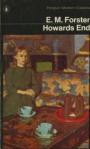
EM Forster, Howards EndWhere to start? Like all great classics, EM Forster’s Howards End has so much to think and write about that it’s difficult to know where to focus, not to mention what new angle I could possibly add. Perhaps I’ll just start at the beginning – with its epigraph, “only connect…” That’s a concept that’s sure to get idealists like me in!

First, though – a quick plot summary. Howards End is a place – and it was left, unbeknownst to her, to a young woman named Margaret Schlegel. The novel tells the story of how this came about and what happened after the owner died and Margaret was not told the place was intended for her. But, of course, this is Forster, so the story is not a simple inheritance plot. In fact, almost none of the central plot tensions relate to this little Wilcox family secret. Instead, the novel explores the lives and values of two – well, three, really – families: the business-capitalist-oriented Wilcoxes; the more intellectual, idealistic, arts-and-culture-focused Schlegels; and the poor, down-on-their-luck Leonard Bast and his ex-prostitute wife. You can surely see in this, where the theme of connection might play out.

The novel is described as a “condition-of-England” novel. It is set in the first decade of the twentieth century, the Edwardian period, and England was changing. Money and progress (symbolised by things like the automobile) were replacing more traditional culture and values (symbolised by things like Howards End). It was a time when socialist ideas were being discussed, and of course, it was the time of the women’s suffrage movement. It was a time when society was moving increasingly from a division between the leisured class and the (mostly agricultural) working class to one between those with “their hands on the ropes” in business and industry and the urban workers who had little control over their destiny. (At least farm workers, traditionally, had homes, for example. Not so, the urban poor.)

All this Forster explores through the relationships that develop between the Wilcoxes and the Schlegels – and the poor Basts who get caught in the middle of their complex economic and moral conflicts. This is not to say that the book is all about overt conflict. Our characters are “civilised”. There is a lot of discussion, of presenting ideas and values. But, most are set in their ways and it will, in the end, take more than discussion to shift understanding on.

Only connect …

A BIT OF A SPOILER

This is a classic, and has also been adapted to film and television, so I’m not sure how careful I should be, but it’s hard not to say that by half way through the novel Mr Wilcox (father, and widower of Mrs Wilcox who had “left” Howards End to Margaret) proposes to Margaret. Margaret’s more romantic, uncompromising sister Helen is horrified, and when some unfavourable information regarding Mr Wilcox comes out, she deserts the scene while Margaret – doing her best to “connect” in her own way – learns to accommodate this new knowledge.

Even before this crisis, however, Margaret has expressed (to herself) the “only connect” mantra:

Only connect! That was the whole of her sermon. Only connect the prose and the passion, and both will be exalted.

She wants to help Mr (Henry to her, now) Wilcox build within himself “the rainbow bridge” that will unify all the fragments of his soul, “the beast and the monk.” This is where Margaret and Helen differ. Helen has no time for the Mr Wilcoxes of the world, no time for business and industry, or for murky morals, while Margaret, who is “not a barren theorist”, makes the connections. She knows for example that Mr Wilcox had saved Howards End for Mrs Wilcox when it was all but lost, and she knows that their comfortable lives are underpinned by the industry that Helen so despises.

This difference between the siblings reminded of another writer – one whom EM Forster admired greatly – Jane Austen! Soon into the book, I felt there was a bit of Sense and sensibility going on here, a bit of sensible, practical Elinor versus romantic, idealistic, single-minded Marianne. Like Elinor, Margaret has a good heart, and deeply humane values, but she’s not blind to the world and how it works. Like Marianne, Helen sees only one way to live … and must learn something about compromise and moderation.

And so, the resolution, when it comes, sees Mr Wilcox and Helen coming to appreciate each other’s strengths, with Margaret’s more mature understanding prevailing. That said, the ending, while recognising the role of the Wilcoxes in the world, comes down firmly on the side of the importance of “the inner life”. It is only when Margaret finally makes a stand on the values most important to her – when she confronts Henry with his refusal to connect – that the rapprochements can begin.

Where to end?

I started this post by asking “Where to start”, and now I’m wondering “where to end?” Howards End is so rich – I took multiple notes and made many observations as I was reading it. I want to share them all, but that would be impractical (if not downright boring.)

So, I might just share a few things about the pleasure of reading this book. What makes a classic a classic – that is, a book that we keep re-reading – can be many things. Most important is that they have something new to say on each re-read and for each generation, that, in other words, their themes and/or understanding of humanity translate well into other times. This is certainly true of Howards End, given the philosophical and political schisms we are facing now.

But, we are, I think, only prepared to read these older books if their writing is also good – if they tell a good story, if their characters engage us, if their language and style woo us. Again, Howards End satisfies. The involving story of the Wilcoxes, Schlegels and Basts and the evocation of their individual characters get us in. These are why the book has been adapted for screen more than once. But it’s more than the story and characters that made this book such a wonderful read for me.

It’s also that it is so beautifully conceived and written. It starts with Helen’s letters from Howards End in which she describes the place and talks of Mrs Wilcox bringing in the hay, and ends with Helen, back at Howards End, but bringing in some hay herself this time. There is recurring imagery – such as frequent references to “grey” and “greyness” which convey the misery of impoverished lives, the impoverishment (of mind and spirit), and, more generally, the dullness of daily life. Here is Margaret near the end, reflecting on the importance of respecting and tolerating difference:

It is part of the battle against sameness. Differences – eternal differences, planted by God in a single family, so that there may always be colour; sorrow perhaps, but colour in the daily grey.

I also enjoyed EM Forster’s surprising, occasionally intrusive first person voice, and the sly irony that enhances, or complicates, the novel’s commentary. Some deeper analysis would be worth doing, in fact, on the narrative voice.

Howards End was my Reading Group’s classic for the year and while everyone enjoyed the writing, there were some understandable demurs, demurs which are comfortably explained or overlooked for some, but not for others. Aspects of the plot, for example, are improbable – but that’s not new in fiction. And some of the values and attitudes are problematic – particularly regarding the impoverished Basts, who seem more like pawns than real people. But, for me, these were not flaws. They marked the book as being of its time, and perhaps, of a time in Forster’s own life and thinking, but they do not destroy the integrity of the message, nor of Forster’s overall humanity.

Have you read – or re-read – Howard’s End? If so, did it speak to you?

Lisa (ANZLitLovers) posted on this back in 2016.

EM Forster
Howards End
Middlesex: Penguin Books, 1941 (1910 orig. ed.)
319pp.
ISBN: 140003118
Delicious descriptions: EM Forster and downsizing

EM Forster, Howards EndMy reading group’s next book is EM Forster’s Howard’s end which I first read at university in 1973. (My lovely Penguin Modern Classics edition cost me all of $1.20.) It’s a delicious read and I’m falling in love with Forster all over again. My full post on it will go up some time next week, after I’ve finished it and book group is over. But, I can’t resist sharing this little section on moving house, because it feeds into all those discussions that have been happening over recent years – in the media and in my personal circles – about downsizing and decluttering.

THE Age of Property holds bitter moments even for a proprietor. When a move is imminent, furniture becomes ridiculous, and Margaret now lay awake at nights wondering where, where on earth they and all their belongings would be deposited in September next. Chairs, tables, pictures, books, that had rumbled down to them through the generations, must rumble forward again like a slide of rubbish to which she longed to give the final push, and send toppling into the sea. But there were all their father’s books — they never read them, but they were their father’s, and must be kept. There was the marble-topped chiffonier — their mother had set store by it, they could not remember why. Round every knob and cushion in the house sentiment gathered, a sentiment that was at times personal, but more often a faint piety to the dead, a prolongation of rites that might have ended at the grave.

It was absurd, if you came to think of it; Helen and Tibby came to think of it: Margaret was too busy with the house-agents. (Ch. 17, opening)

My first reaction was plus ça change. My second was how I love Forster’s language and writing, and how this paragraph (or so) shows exactly why I love the writing – the language, the voice and tone, the gentle satire and social commentary. And my third was that I must share it with you all.

Are any of you Forster fans?

Amanda Duthie (ed.), Margaret & David: 5 stars (#BookReview)

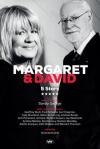
Amanda Duthie, Margaret and DavidMargaret and David, the subjects of this delightful, eponymously named collection of reminiscences and essays, do not need last names here in Australia. They are just “margaretanddavid”. But, since we have an international readership here, I should formally introduce them. Margaret and David are Margaret Pomeranz and David Stratton, Australia’s best-known and best-loved film critics who retired from their television movie show in 2014 after 28 years on air! There were to us as Siskel and Ebert were to Americans. Their influence was immense.

This book, Margaret & David: 5 stars, is essentially a tribute book produced on the occasion of their being awarded the 2017 Don Dunstan Award, an award established in 2003 to commemorate the late South Australian Premier, Don Dunstan, who was a major champion of the arts, including film. The book contains mostly short reflections, but also an extended essay, on Margaret and David’s contribution to Australia’s film industry and culture, and, in fact, to world film culture. The pieces are written by a wide variety of industry people, from producers like Jan Chapman, through actors like Geoffrey Rush, and directors like Cate Shortland and Gillian Armstrong, to film business people, journalists, film festival directors, and even, Margaret’s son, Josh. It’s a delightful read – but a provocative one at times too.

Of course, I enjoyed the insights into Margaret and David’s personas and working relationship – and won’t go into these. If you’re looking for gossip you won’t get it here because Margaret and David were professionals, and were, and are, we are told, good friends. Sure, they disagreed, sometimes vociferously – we all remember Margaret’s “Oh, David!” exclamations – but these arguments always teased out ideas about film. Gillian Armstrong says, “they formed a lively, fiery, passionate, laughter-filled relationship.” If, on the other hand, you’re looking for insights into the history of the Australian film industry, you will get some here. This is not an academic work, but many of the reflections on these two can’t help but comment on the Australian industry and on film culture more broadly, from the mid 1980s when they started on television to the mid 2010s when they finished. Their contribution – and impact – was not only qualitative but, in some respects, quantifiable.

This all interested me, but what I want to focus on in the rest of this post is what the book offered me regarding …

The practice of criticism

… because, fundamentally, criticism is criticism, whether you are discussing film or books, drama or ballet. I enjoyed some of the commentary on this.

Director Gillian Armstrong, while teasing (and forgiving) David about his poor review of her Oscar and Lucinda film, describes perfectly the art of the critic, when she says

It is important to have serious discussions that actually discuss the craft of the director. They shared a real appreciation of the vision behind the camera angles, the lighting, editing, music and casting. But most importantly, their reviewing was about the very heart of those films, the content and ethics.

Leaving aside the terms “review” and “criticism” which tend to be used somewhat interchangeably in the book, I think this statement contains the guts of what criticism or, shall we say, serious reviewing is about: marrying analysis of technique with exploration of content (and ethics). Journalist Sandy George, in her extended essay, puts in this way:

They actively engage in talking about the narrative, the history of the production, what the filmmaker was trying to achieve, and how the film affected them; they don’t engage in reductive talk such as “this is good”, “this is bad”, “see this”, “don’t see that”.

There’s one memorable review they did which several writers commented on: their review of the violent R-rated movie Romper Stomper. Margaret gave it 4.5 stars and David refused to rate it. This review is now famous – and part of this is for the way their discussion was conducted. It was respectful, and considered. You can see the review here.

Other practical issues are teased out – such as reviewing works you don’t like, and reviewing works by friends. On the former, Sandy George quotes David Stratton on writing reviews for “the extremely influential” Variety:

‘I never gave a glowing review to something that didn’t deserve it … but knowing how important a Variety review is, I sometimes went out of my way not to review a film.’

A valid decision I think, though purists would probably say that you should review such films regardless.

George also quotes Margaret about reviewing works by friends. They tried, she said, “not to be friends with filmmakers, but it’s impossible”. She also says:

“I’ve always been kind to Australian films because I’m such a wimp … “

Indeed, one person said that because of this, a good review from David carried more weight!

George goes on to report one distributor’s comment that

one way the pair went above and beyond for Australian films was how carefully they chose their words when one fell short.

Notwithstanding my above comment about not reviewing at times, I also like this approach. Honest reviews are important, but there are ways of being honest. The arts are tough enough, without demoralising those working hard within it, don’t you think?

Anyhow, I enjoyed this book. It’s a quick read but not a frivolous one. I’ll close with a comment made by current SA Premier, Jay Weatherill:

Their love of cinema is real, undiminished and contagious, and they have helped me and countless other Australians to understand the critical role can play in telling our nation’s stories and presenting our values.

AWW Badge 2018Amanda Duthie (ed.)
Margaret & David: 5 stars
Mile End: Wakefield Press, 2017
133pp.
ISBN: 9781743055137

(Review copy courtesy Wakefield Press)

Nadia Wheatley, Her mother’s daughter: A memoir (#BookReview)

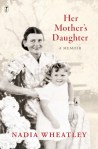
Nadia Wheatley, Her mother's daughterIn Her mother’s daughter: A memoir, Australian writer Nadia Wheatley has written the sort of hybrid biography-memoir that I’ve reviewed a few times in this blog. All of them, as I mentioned in my recent Meet the Author post, have been mother-daughter stories, Susan Varga’s Heddy and me, Anna Rosner Blay’s Sister, sister, and Halina Rubin’s Journeys with my mother. It’s this hybrid form that I’d particularly like to explore in this post.

And the hybrid I’m talking about is one where the biography is of the subject (mothers, in these cases) and the memoir is of the writer (the daughters.) This is the more common form of hybrid biography-memoir, though my research did turn up others, such as Room to dream by Kristine McKenna and David Lynch in which McKenna’s biographical chapters on Lynch are followed by Lynch’s responses to those.

The biographer’s question

There are, of course, many memoirs by people who, in order to tell their own story, need to figure out their relationships with others, particularly their parents. However, these books remain primarily about the writer. Hybrid biography-memoirs, on the other hand, tend to be as much, if not more, about the other person as the writer. The end result might be the writer understanding themselves more, but the focus tends to be the other. This was clearly Wheatley’s intention. Indeed she told us that her biographer’s question was “Why would a nice person like Neen marry an awful person like my father?”

So, her book’s main focus, then is her mother. Nina (Neen) Wheatley, nee Watkin, was born in northern New South Wales in 1906, and died in Sydney in 1958. She lost her own mother when she was five years old. She and her siblings were separated when her father remarried, with Nina and her younger sister Boo staying with their father and his new wife. It became clear that the family expected Nina to be the parents’ carer in their old age. However, Nina managed to train as a nurse, and go overseas during the war as an enlisted nurse with the 6th AGH (Australian General Hospital), where she worked in Greece and Palestine. She returned to Europe after the war to work with UNRRA and then IRO, caring for Displaced Persons. It was during this time that she met the man – English doctor, John Wheatley – she ended up marrying. It was a bad decision: he was a womaniser, possessive and controlling, and, according to Wheatley, sadistic. Indeed, it’s very likely that, had he – and the medical fraternity more broadly – taken women’s health seriously, Nina would not have died when she did. After her mother’s death when Wheatley was 9 years old, she, an only child, lived with a local family known to her (and chosen by her mother before her death.) This was, for Wheatley, a problematic situation – but this part of the story occupies just the last 20 or so pages of the book, and, while it’s important to the overall memoir, I do want to move onto other points.

So, back to the form. Unlike Wheatley, those other three biographers-cum-memoirsts, Varga, Blay and Rubin, were able, as adults, to question their mothers. They could bring an adult’s eye to their mothers, and ask the sorts of questions an adult might ask. They all tape-recorded their mothers. Wheatley’s mother, however, died when Wheatley was nine, so concocting her mother’s story was a very different challenge. Fortunately – and how prescient of her – she realised that her memories wouldn’t last so, at 10 years old, she started writing down her memories of the happy times she spent with her mother and also the stories her mother had told her about her life. At times I wondered how she could possibly have remembered as much detail as she does. However, given Wheatley was clearly a writer from the start and given what she experienced was so powerful, it wasn’t hard to trust her authenticity. It’s these stories and  memories, together with letters, journals and interviews with family members and friends, and official records, that provide the facts for her mother’s biography.

Step one, then, is the research, but next comes how to marshall it all into a narrative. Varga and Rubin, like Wheatley, take us on a journey of discovery. As Wheatley said during the conversation with Halligan, she wanted to take the reader on the quest with her. She wanted to share the detective story of her unravelling her mother’s story, and not just present the evidence. Varga and Rubin do something similar, but they tell their story first person, sharing when their mother is reticent, when they, as daughters, are challenged, and so on. Varga makes it clear to her mother – and us – that this means “it won’t be her life story, not properly” but would be “filtered” through her “reactions and thoughts”, her “second generation eyes.”

Blay, however, is more formal, presenting her mother Hela and aunt Janka’s stories in their words as transcribed from her interviews with them. She intersperses these with her own perspective in italics. The three voices are thus distinct.

Wheatley, though, uses a different approach again. She tells her mother’s story third person, but, intermittently, will suddenly switch to first person to present her own role in the research or the story, removing us from Nina’s chronology to her own time-frame. Chapter 9, which relates her mother’s life immediately postwar, is a good example. The first 10 pages read like a standard biography, describing what Nina was doing, quoting from letters and journals to support the information, then, suddenly, after a reference to Nina’s father’s death, she flashes to nine years after Nina’s own death (and over twenty years after the time we’ve been in.) Nadia is dining with her Auntie Boo, and casually asks if she knows where Nina’s wedding ring is. Her aunt bursts into tears, saying:

‘Daddy’s will was so unfair! To leave everything to Neen! Not just Glenorie, but everything in it!’ As my aunt moved on in her attack, it turned out that I too was guilty as charged: ‘All those things that Nina and you had in that house at Strathfield, you had no right to them.’

Now, Nina’s father had left “other real estate to his other children” but leaving the family home to Nina rankled so much, writes Nadia, that “some of her siblings would never get over it.” After a page on all this, we are returned to Nina’s life, and the third person voice.

This approach ensures that as well as travelling the journey with Nadia, we also see the impact on her, and her sense of guilt, as she is growing up. There are many insertions like this, including one later in the book when Nadia remembers a time with her father when she was three years old. With this approach, Nina’s story is told chronologically, but Nadia’s is disjointed until after Nadia is born when her story is gradually folded in to the main narrative. It’s a tricky approach, but Wheatley, an experienced novelist and biographer, makes it work, resulting in something that provides both a coherent biography of her mother, and the impact on her. It doesn’t necessarily work if you are expecting a detailed memoir of Wheatley’s life, but that wasn’t Wheatley’s goal.

Defining moments

Interesting as all this is, however, the main joy in reading Her mother’s daughter lies in its social history of the first half of the twentieth century. Wheatley’s story of her mother’s experience as an active participant in World War 2 is vivid, and makes a significant contribution to a less covered aspect of that war. Her story of her mother’s life in Sydney during 1950s is significant too – but terribly so.

Nina’s War “story” was fascinating. Her reports of her early experience are cheerful, full of a sense of adventure and camaraderie, but that soon changes as her real war experience starts. She sees the impact of bombing on civilians in Greece, and she nurses casualties of the Syrian campaigns including El Alamein. She already cared about social justice before going to war, but her desire to help others firmed afterwards. Her experience of forced repatriations, of seeing “Poles packed like cattle in trucks” during her work with UNRRA, was “a defining moment” writes Wheatley. Nina wrote in her journal that “This experience will have an intense influence on all my life.”

Wheatley’s description of her mother’s work with Displaced Persons is inspiring, showing Nina to be a resourceful and empathetic woman who managed to create harmony in extremely difficult circumstances. However, her marriage to Dr Wheatley saw this confident, warm woman brought undone. Her husband’s cruel, self-centred behaviour soon soured all Nina’s hopes of a happy marriage of equals. Nadia writes that he either “provoked arguments” with her mother, or set up “elaborate games in which I was the pawn he used to take the queen.” That – and his womanising – were bad enough but, when in 1956 Nina started feeling unwell, the situation became dire because Nina fell prey to a male-dominated medical system, actively supported by her doctor husband. The belief that the ills women of Nina’s now middle-age felt were all “in the mind” resulted in her eventual destruction. It’s devastating for Nina (of course) and for Nadia from whom so much, before and after, was kept secret – but, for anyone who knows or lived through the 50s, it’s only too believable.

Unfortunately, as it turns out, not all the defining moments of Nina’s life were positive ones.

Now, once again, I’ve outstayed my welcome, so I’ll conclude by saying that Her mother’s daughter is a great read for two reasons. Firstly, it provides a thoughtful, authentic – sometimes exciting, sometimes disturbing – social history of the times. And secondly, with Wheatley’s ability to write engaging narratives, it makes for engrossing, moving, provocative reading. I do recommend it.

AWW Badge 2018Nadia Wheatley
Her mother’s daughter: A memoir
Melbourne: Text Publishing, 2018
322pp.
ISBN: 9781925603491

Sue Williams, Live and let fry (#BookReview)

Sue Williams, Live and let fryWell, 2018 is clearly “the year of the Mallee” here at Whispering Gums, with Sue Williams’ Rusty Bore Mystery, Live and let fry, being my third Mallee-set book so far this year. The others are Jenny Ackland’s Little gods (my review) and Charlie Archbold’s Mallee boys (my review). By the time I visit the Mallee – next year I hope – I should know it well, though I might stay away from Rusty Bore. Fortunately, that won’t be hard as Rusty Bore is fictional. I say fortunately, because who wants to visit a place known for murders? It would be like choosing to visit Midsomer!

Seriously though, on with the book, starting with the fact that it’s the third in the Rusty Bore Mystery series. I haven’t read the first two, but I’d say this one stands alone well. There’s enough recap for the new reader to quickly pick up the main characters and their relationship with the protagonist, Cass Tuplin, who’s an unlicensed private investigator as well as the owner-operator of the Rusty Bore Takeaway. I’m not a big reader of crime fiction, but I do watch a bit on TV, and I can say that Cass fits the mould of many TV detectives – private or not, licensed or not – in that she has a messy personal life. She’s clearly had a fling with Vern, the owner of the town’s only other shop, but is now with Leo, who’s doing good works in Bolivia but is staying away significantly longer than he’d told her he would. Cass also has two sons – Dean, a not-very-successful policeman in Mildura (a real place), and the-not-very-sensible Brad who’s waiting his court case for “disseminating false information to the market.” There’s affection between mother and sons, but it’s not without tensions – either because Dean is fussing over his mother’s safety, not to mention her unlicensed detecting, or because Cass is too focused on this detecting to listen to Brad well enough to hear what’s happening in his life.

None of this need be taken too seriously, though. As the back cover blurb says, Williams is “Australia’s answer to New Jersey’s Janet Evanovich.” I haven’t, I admit, read Evanovich – shock! horror! – but Daughter Gums has, so I know enough to realise that her crime novels are bright, breezy affairs. And so, certainly, is Live and let fry.

Now, what to say? This is rural crime, and it starts with the disappearance of the aforesaid Vern’s new lady friend, Joanne, from the neighbouring town of Sheep Dip. (There’s nothing subtle in the town names here – Rusty Bore, Sheep Dip, Muddy Soak, Hustle.) Cass, like any self-respecting unlicensed private detective, is reluctant to become involved but, of course, you know she will – and she does. Pretty soon, a murder occurs – not Joanne’s though – and the plot rapidly thickens as we move into the murky world of developers and environmental protection. This has our intrepid Cass driving backwards and forwards across the Mallee in her “little Corolla”, getting into more and more serious scrapes, worrying her sons, irritating the police, and not always making the right calls – as you’d expect.

All this gives Williams the opportunity to provide us with a picture of the Mallee and its inhabitants, which she does in language somewhat different from that we’ve seen in those other Mallee books I’ve read. Here is the Mallee, for example:

As I got closer to Mildura the eucalypt-and-orange desolation gave way to irrigation green, the dark green of orange groves, the brighter, flamboyant green of grapevines, the camouflage khaki of olive trees. I drink it in – green’s not a colour we get that much of in Rusty Bore.

And here is one of its inhabitants:

Nola’s eighty-two and usually quite mentally robust, with opinions carefully cryo-preserved since 1953.

The writing is peppered with gentle, affectionate mocking like this, along with broad satire of various contemporary issues and preoccupations, such as “coffee condescension” from city-siders, and Cass’s own “artisanal” food. We’re also told that

Leo’s import-export business in Muddy Soak folded after the African knick-knack trade fell victim to the decluttering trend.

And there are digs at politics and politicians, such as:

I stood at the desk and waited. A TV flickering behind Taylah showed a surging crowd of middle-aged people in suits. Mostly men, looked like politicians. Another leadership spill? A new Royal Commission? There’d been a lot of debate lately about whether air exists. “If you can’t see it, can’t smell it, it can’t be there.” The slogan of one of the newer political parties.

It’s not subtle, but then Williams’ goal is less social or political commentary than maintaining a light breezy tone and conveying character.

Now, though, back to Cass. Does she get her man (or, not to be sexist, woman)? Well, this is what I’d call “cheery crime”, so yes, one way or another, she does. In other words, without spoiling anything, it all comes out right(ish) in the end and Cass lives to fight (or not, as she chooses) another day. I’m not sure I’ll read another Rusty Bore mystery as I feel I’ve got its measure now, but for those who love light-hearted crime, particularly with an Australian flavour, then Rusty Bore could be just the ticket.

AWW Badge 2018Sue Williams
Live and let fry
Melbourne: Text Publishing, 2018
295pp.
ISBN: 9781925603514

(Review copy courtesy Text Publishing)

HC Gildfind, The worry front (#BookReview)

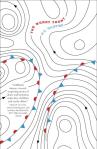
HC Gildfind, The worry frontThe first thing to note about HC Gildfind’s short story collection, The worry front, is its striking, inspired cover. Designed by Susan Miller, it features a weather map which captures the central motif of the title story, but it also suggests the unsettled lives which characterise the book. Gildfind, however, writing a post on the publisher’s blog ascribes another meaning too, noting the link between maps and stories. She says that both “guide us: they locate us in the present by showing us where we have been and where we might go in the future.” Both can also represent the abstract and concrete domains in which we live and operate – and where they might intersect.

But now, the book. It contains ten short stories and a novella, titled “Quarry”. All but one of the stories have been published before – in respected literary journals like Meanjin, Griffith Review, Westerly and Southerly. “Quarry” in fact appeared in the Griffith Review’s novella edition back in 2015. Gildfind then is an accomplished writer, and yet I hadn’t been aware of her. I am now, though, and I’m impressed.

I wasn’t completely sure that I would be, however, when I started the collection. “Ferryman” is a grim, gritty story about an angry man. I wasn’t sure that I was ready for such anger, albeit understandable in the circumstances – but the writing, particularly the rhythm and poetry of it, appealed, so I kept on reading. I’m glad I did, because the next story, the title story – “The worry front” – got me in completely. While the first story is told third person through a man’s eyes, this one is first person in the voice of an eighty-year-old woman. Like “Ferryman”, it’s a powerful story – but this time about a widowed woman who, all her life, has been dogged by “the worry front” but who, when confronted with the realisation that she has cancer, takes matters into her own hand with a breathtakingly original plan. It’s one of those stories where, at the start, you think, “is what I think is happening, what is really happening?” Well yes, it is.

And so the stories continue – varied in gender and voice, but often about something a little out of the ordinary or from a slightly offbeat point of view. The third story, “Gently, gently” is, for example, told second person. It’s a woman speaking about herself, but the second person voice engages us intimately in her life and feelings, drawing us in. It’s about a couple and the three hens they acquire. A chook goes missing – and the couple’s reactions highlight the tension in their relationship. Violence ensues. Like other stories in the book, it treads familiar ground but then turns a corner that forces us to see it from different angles. The relationship dynamic is not as simple as it might have first seemed. The next story, “Eat. Shit. Die” is told in two alternating voices – Leo’s in first person, and Nina’s in second. Both are lonely, and both have – hmm – gut troubles. Nina can’t stop eating, and Leo is having trouble with his s******g, but these are, as you might expect, also symptomatic of something else.

The birds and other animals, and food and eating, that appear in these two stories, recur in many of the book’s stories. Sometimes they reflect emotional states and other times they provide conduits for resolution. In the novella, “Quarry”, a stray black dog kickstarts our damaged protagonist Luke’s return from his agonising loneliness.

These recurring motifs underpin, as you’d expect, recurring themes. One is the interrogation, sometimes explicit, sometimes not, of what is normal. And another is that universal human one of longing for meaningful connection. Some characters eschew it because it hasn’t proven positive (“The wished for”), some are resigned to not having it because they feel unloved or unlovable (“Quarry”), and some actively seek ways of achieving it (“Solomon Jeremy Rupert Jones”). In most cases, this meaningful connection means a relationship with someone of the opposite sex, which, not surprisingly, raises the spectre of gender differences – which issue does run through many of the stories. There’s violence, direct or indirect, in several – but there’s nuance here rather than reliance on standard tropes or simple explanations.

Margaret River Press has produced Book Club Notes for the book. I’m not usually interested in such notes, because they don’t usually address my reading interests, but these are good. There are thoughtful questions for each story, ones that ask for the meaning or significance of events, symbols, actions, and/or characters, rather than the more simple “what would you do” sort of question that you often see.

There are also some general questions for the overall collection. One of these is: “Do you think it is important to ‘like’ a character when reading fiction?” This is a good question because it confronts this problematic issue head on. The worry front does not have many immediately likeable characters – but most characters ring true, and that’s the critical thing for me. We may not, for example, decide to do what the woman in “The worry front” does, but her feelings of dismay, and her resignation to and acceptance of things she can’t change, are true.

Another general question asks “which stories – or characters – provoked the strongest thoughts and feelings in you?” What a good question! I love that it doesn’t ask which one/s you like the best. For me, three stories in particular stand out – “Ferryman” because its anger was so viscerally shocking, “The worry front” because its protagonist’s plan is so surprising while her feelings are so comprehensible, and “The quarry” because Luke’s predicament engaged my heart from the start.

Not all stories grabbed me equally, but there are other memorable ones, including “What there is”. I related to its narrator’s searching for “the body-jolt of recognition” in books. Ironically, a significant jolt that she receives comes from another character, not a book:

You can never change the past. But you can always change how you feel about it.

However, it did come from a book, for me!

It’s hard to do a collection like this justice, but I liked it. I liked its surprising situations. I liked having my expectations unsettled. I also liked its design, and its careful order. It starts and ends with angry men, both of whose anger is caused by the actions of others, by, as Luke sees it, “f*****g men and f*****g women f*****g everything up for everyone forever” (“The quarry”). While it’s uncertain whether our first man will recover, Gildfind does leave us with a sense of hope at the end. I like that too.

AWW Badge 2018HC Gildfind
The worry front
Margaret River Press, 2018
288pp.
ISBN: 9780648027577

(Review copy courtesy Margaret River Press)

Robyn Cadwallader, Book of colours (#BookReview)

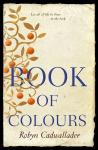
Robyn Cadwallader, The book of coloursWhat makes historical fiction worth reading for me is the exploration of universal ”truths”. Fortunately, Robyn Cadwallader’s second novel, Book of colours, does this, albeit I wish that some of the universals – gender inequity, class (meaning social and economic inequity), and fear of foreigners – were no longer universal! The book explores other more general universals, too, such as love, friendship, loyalty, courage, suspicion, fear. However, historical fiction needs something more of course. It needs to authentically evoke an historical time and place, preferably through engaging characters. Cadwallader does this too.

Book of colours is set in mediaeval England, specifically between 1320 and 1322, and concerns an illuminated book of hours. The narrative is structured into two main chronological threads – the story of the book’s creation and the people creating it, from late 1320 to 1322, and that of the noblewoman who commissioned it, Lady Mathilda Fitzjohn, after she has it in her hands, from May to September 1322. She lives in Hertfordshire, while the limners’ atelier is located in London, so we also see city and country life during this period. As the limner Gemma writes:

…let all of life be there in the book, from high to low, animal and monster, story and joke, devotion and dance … (from The art of illumination)

Now, I particularly like it when historical fiction writers provide some historical context to their story, preferably in an afterword, along with some references or sources. This Cadwallader does, with a four-page Author’s Note and two-plus pages of Further Reading. She explains the historical background, including that the period she chose encompasses the Great Famine and the Dispenser War, and she discusses where the facts are less well documented. The meaning of those bawdy or confronting marginal images in books of hours, for example, is little understood. Also, says Cadwallader, no women limners are listed in this period, but there is evidence that women did, in fact, undertake illumination. These notes support the novel’s political, socioeconomic and sociocultural context.

The story is told third person through three main perspectives: Mathilda’s and those of two of the atelier workers, journeyman-near-master Will Asshe and master-in-work-if-not-in-name Gemma Dancaster. The atelier is owned by Gemma and her husband John – well, actually, given the times, it is “owned” by her husband, but he inherited it from her father. Prefacing the atelier-based chapters are sections from the book The art of illumination which Gemma secretly writes for her apprentice son Nick.

“both beauty and chaos”

Towards the end of the novel, the widowed Mathilda – her rebel Marcher husband having been killed while fighting the Dispensers – realises that life is not “ordered” as she had thought but is, like the “delicate, bawdy and capering creatures” in her book, “both beauty and chaos.” It is this “beauty and chaos” that Cadwallader captures through her vivid characters. The atelier thread starts with the arrival in London of Will, a limner who is escaping something that happened in Cambridge where he had lived and done his training. As the story progresses we discover, of course, what that was, but all I’ll say here is that he’d been associating with a student named Simon who had filled his head with ideas about equality. These ideas make Will angry about “the rich and their ambitions” and resentful about “the marks of privilege” requested for the book of hours. He’s a bit fiery, our Will, and gets himself into several scrapes, all the while watched over by an animated gargoyle who represents, I’d say, Will’s conscience.

Meanwhile, Gemma, the would-be master limner, is frustrated about the inequalities she faces as a woman – particularly a woman having to cover for her husband who is, we soon discover, no longer able to draw and paint. Gemma, too, is aware of economic inequities. Southflete, the stationer and middleman who handles the commission, tells them that

the calendar pages must be beautiful scenes of life on the demesne, you understand … Chubby infants, well-fed peasants, colour, beauty …

Gemma is not impressed:

Beautiful. How, in a village farmer’s wife, would January be beautiful? Snow if the weather was kind, ice if it was not. And this past year, colder than ever. Frost that rarely lifted, and then only to snow or rain. London had clenched its teeth, frozen to the marrow, too cold to move. At least the cramped lanes and houses blocked some of the wind; what it was like in the country, she couldn’t bear to think.

She, like Will, makes her assumptions about their patron Mathilda’s life and values, but as is often the case, assumptions aren’t always completely right – and these too Cadwallader teases out as the book progresses.

There are other characters – including Gemma’s gentle husband, their quietly wise apprentice Benedict, and their son and beginning apprentice Nick. These, plus other residents of London’s book trade area, Paternoster Row, flesh out the story, adding depth to the narrative and to the history of this fledgling industry struggling to establish itself as a guild.

So, there’s beauty and chaos in life, but it is through their drawings that the limners convey their feelings and ideas. As the world changes around them – for reasons I can’t fully divulge – the limners draw and paint their reflections and reactions, their messages even, into the book. Both Gemma and Will remind Mathilda of who she is and of her responsibilities to herself and others, responsibilities that become more nuanced and more personal than their original simplistic view of the world at the start of the novel. The interplay between the artists’ ideas as they paint and Mathilda’s reflections as she considers their paintings is one of the joys of the book. It is as much through these, dare I say, “virtual communications” as anything, that our three main characters grow in understanding. It is through them, for example, that Gemma shares her feelings – feelings Mathilda doesn’t recognise as coming from any sermon she knows – about women’s need to stand strong in the face of men’s power.

Book of colours, in other words, is a delicious read, imbued with the life of a long-ago time but filled with people whose emotions, hopes and frustrations are very much our own. Latish in the novel, Mathilda realises that Will’s friend “Simon’s simple borders of right and wrong won’t hold. They leave no space to breathe.” This is the book’s message: to grow and change we need to expand beyond simple conceptions of right and wrong. We need to let each other breathe and be. Only then can true selves, true relationships and, hopefully, a true understanding of equity develop.

Note: Lisa (ANZLitLovers) loved this book, and Angharad Lodwick (one of last year’s Litbloggers) was also impressed. I also reported, back in April, on a Conversation with Robyn Cadwallader about this book.

AWW Badge 2018Robyn Cadwallader
Book of colours
Sydney: Fourth Estate, 2018
360pp.
ISBN: 9781460752210

(Review copy courtesy HarperCollins)

Vance Palmer, Battle (#Review)

Meanjin AnthologyVance Palmer’s short piece “Battle” is the first piece in this special Meanjin anthology. Meanjin is one of Australia’s longest lasting literary journals. It was founded by Clem Christesen in 1940. As publisher Melbourne University Press says, it has, since then, “documented both the changing concerns of Australians and the achievements of many of the nation’s writers, thinkers and poets.” This anthology contains, they say, “a broad sweep of essays, fiction and poetry published in Meanjin since the magazine began” which will give its readers “a sense of the debates waged in print over those seven decades and the growing confidence of the Australian written voice.”

I read Vance Palmer’s piece when I bought this anthology a few years ago, but planned then to review the anthology as a whole. Now, though, I think that some of the writers are worth featuring here on their own – just like those writers I choose to read from the Library of America offerings – so here is Vance Palmer!

I was first introduced to Palmer in my first year of high school when I read and enjoyed his best known novel, The passage. I have not, however, reviewed Palmer’s writing here (except in a Monday Musings), but he has appeared in this blog many times because of the significant contribution he (and wife Nettie) made to Australian literature in the first half of the twentieth century. They vigorously supported and defended the development of an Australian literature. They were also political – egalitarian, anti-Fascist. There’s a good introduction to him in the Australian Dictionary of Bibliography (ADB), which describes him as “a liberal socialist of the broad left.”

So, “Battle”. ADB’s biographer describes “Battle” as “a noble statement of war aims”. It is interesting to look at “Battle” now, from today’s perspective. Published in 1942, at the height of World War 2, its main point is to define what makes Australia and to argue that it is worth fighting for – all of which ties in with his interest in encouraging and promoting Australian literature.

However, despite his documented interest in and awareness of indigenous Australians, he falls into the trap of many of his time of thinking that Australia is a “young” country:

We have no monuments to speak of, no dreams in stone, no Guernicas, no sacred places. We could vanish and leave singularly few signs that, for some generations, there had lived a people who had made a homeland of this Australian Earth. A homeland? To how many people was it primarily that? How many penetrated the soil with their love and imagination? We have had no peasant population to cling passionately to their few acres, throw down tenacious roots, and weave a natural poetry into their lives by invoking the little gods of creek and mountain. The land has been something to exploit, to tear out a living from and then sell at a profit. Our settlements have always had a fugitive look, with their tin roofs and rubbish-heaps. Even our towns . . . the main street cluttered with shops, the million-dollar town hall, the droves of men and women intent on nothing but buying or selling, the suburban retreats of rich drapers! Very little to show the presence of a people with a common purpose or a rich sense of life.

“We have had no peasant population to cling passionately to their few acres, throw down tenacious roots…” No, we don’t but we have something more … we have indigenous people who have clung passionately to, and tended, this land for 60,000 plus years. (This is something that a young non-Indigenous Aussie school girl stood up for last week by refusing to stand for the Australian national anthem with its lines “for we are young and free.”)

It would have been good if Palmer had recognised this point too, but … that was then, I suppose.

Anyhow, he goes on to describe what makes Australia and Australians. There is, he says,

an Australia of the spirit, submerged and not very articulate, that is quite different from these bubbles of old-world imperialism. … And it has something to contribute to the world. Not emphatically in the arts as yet, but in arenas of action, and in ideas for the creation of that egalitarian democracy that will have to be the basis of all civilised societies in the future.

And here’s the other point I want to make – his faith in Australia as an example of “that egalitarian democracy that will have to be the basis of all civilised societies in the future.” That caught my eye, because it is something I believed of Australia, something that I thought, back in the 1970s and 1980s, we were actively working towards and achieving. Not so anymore, it seems.

Palmer concludes that he believes Australia will survive the war,

that we will come out of this struggle battered, stripped to the bone, but spiritually sounder than we went in, surer of our essential character, adults in a wider world than the one we lived in hitherto.

I wonder what he would think now? Perhaps he would remember that in the penultimate paragraph he admitted that we have “a share of the decadent that have proved a deadly weakness in other countries – whisperers, fainthearts, near-fascists, people who have grown rotten through easy living.” Some of these “have had power in the past and now feel it falling away from them.” However, “we will survive,” he believes, “according to our swiftness in pushing them into the background and liberating the people of will, purpose, and intensity.” Who are those people “of will, purpose, and intensity” now?

Vance Pamer
“Battle”
in Meanjin Anthology
Melbourne University Press, 2012
ISBN: 9780522861563 (eBook)

Laurie Steed, You belong here (#BookReview)

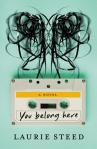
Laurie Steed, You belong hereMy first reaction as I started reading Laurie Steed’s debut novel, You belong here, was, “oh dear, another novel about a dysfunctional family”, but I was quickly disabused of that prejudice because while that is indeed the book’s “genre”, Steed writes it in such a fresh and engaging way, albeit seriously so, that I was soon engrossed in his Slater Family.

You belong here is an ambitious novel, spanning over four decades from 1972, when Jen and Steven are 16 years old, to 2015 when their grandchild turns 13. This is the span you’d normally find in a family saga of 400 pages or so, but Steed does it in under 250 pages. How does he do it?

First, though, the basic plot. It concerns the marriage and its subsequent breakdown, of the above-named Jen and Steven, and the impact on their three children, Alex, Emily and Jay. Australian author Melanie Cheng, whom I’m yet to read, says on the back cover that the family has “all the dysfunction of an Anne Tyler novel, but with a distinctly Australian feel.” Having read and loved Tyler’s novels (before my blogging days), I’d say this is a good call. Steed, like Tyler, deals with a very particular family – its idiosyncrasies, and shifting individual relationships – while also speaking to universals like love and loyalty, betrayal and breakdown, closeness and distance.

Now, back to the time span. The book is organised by chronological parts: 1972-1984; 1985-1995; 1996-1999; 2000-2002; and, 2015. To cover this ground it is, necessarily, episodic*. Each part comprises short, evocatively titled chapters, which contain scenes from a life, switching the point-of-view between the five main characters. These time-shifts (which aren’t all clearly signposted within the parts) and changing perspectives demand a level of concentration from us readers, but I didn’t find they slowed me down significantly. On the contrary, they kept me engaged and focused on the matter at hand – that is, on whose story I was reading now, what was happening to them and why.

A hairline crack. Small, but spreading.

So, the early parts of the book focus on Jen and Steven’s relationship, their falling in love and the subsequent stresses – three children in quick succession for Jen, and failure at work for Steven – which drive a wedge between them. Steed’s writing is evocative and tight – it has to be really – and I enjoyed it immensely. Take this description of Steven’s commute to his job at the airport:

Steven had lost track of time. Moments, hours, left scattered along the Great Eastern Highway while driving to and from work. Seconds entered in the till by an underpaid, overworked cashier. A day maybe two, left hanging in the change room at the airport. (Before a fall)

Or this of Jen, in the bedroom with Steven, after we discover she’s been having an affair:

She stared past him at the wall, beneath the windowsill. She’d seen it before, maybe weeks, months earlier. A hairline crack. Small, but spreading. (Wallpaper)

The staccato rhythm here is perfect. And Jen’s sadness is palpable.

As the novel progresses, the children grow up and we shift to their lives, with Jen and Steven receding somewhat from the narrative focus. Each child struggles in his or her own way to navigate the family and their place in the world. We are frequently devastated for them, while also applauding their will to survive. There are some lovely vignettes, such as a cricket innings played by Alex and his friend Walker. The whole is underpinned by pop-culture references to music and video games that were only vaguely familiar to me as a baby-boomer parent of late Gen-X early Gen-Y children. Knowing these better might have added to my appreciation of the novel, but I didn’t feel my lack greatly. That is, the novel seemed to work well for me anyhow.

The jerky, episodic structure may have grown out of the original short story concept, and for some it could result in frustration at not “knowing” the characters as fully as they’d like. But I thought it effectively mirrored both the family’s fractured relationships and the way they stick together despite it all. Over time, allegiances switch as particular stresses develop for one person or another, but the love between them, while it falters at times, comes through.

But then, Alex couldn’t make head or tail of any of it. He felt sad and sorry for his sister, his brother, and the fraught, familiar way that the family closed ranks when one began to sink. It felt tender if he touched upon it, like he’d picked up a peach and felt the bruise. (Skin I’m in)

Lest this sound a bit corny, let me say that this is a serious book. The impact on the children of their parents’ separation is unflinchingly exposed, particularly through mental health issues and the difficulties they face in forming long-lasting relationships. It isn’t a pretty picture, but the end, without giving too much away, suggests that with love, perseverance and loyalty, families can and do muddle through.

And so, a book that I thought at the beginning was just another novel about a dysfunctional family surprised me with its insights, warmth, relevance to us all, and above all, its writing pizzazz. Well-worth reading.

* WA writer-blogger Nathan Hobby’s review tells me that the book started as a short story collection, which makes sense. Lisa (ANZLitlovers) featured Laurie Steed in her occasional series on Debut authors.

Laurie Steed
You belong here
Margaret River Press, 2018
250pp.
ISBN: 9780648203902

(Review copy courtesy Margaret River Press)

Raphaël Jerusalmy, Evacuation (#BookReview)

Raphael Jerusalmy, EvacuationRaphaël Jerusalmy, for those who, like me, hadn’t heard of him, is a French-born and educated writer living in Tel Aviv. He had a career in the Israeli military intelligence services, worked in humanitarian and educational fields, and is now an antiquarian book dealer in Tel Aviv, where his novella, Evacuation, is set. In some ways, the book is a love letter to Tel Aviv – but it is more than that, too …

Evacuation is a short, quick, but powerful read. The narrative is structured around a road trip, in which twenty-something Naor is driving his mother from her kibbutz home to Tel Aviv. As they drive he tells her what happened in Tel Aviv, after he, his girlfriend Yaël, and his grandfather Saba, had jumped off the bus that was taking them out of the city, as part of a mandatory evacuation process.

The thing about this book is that although we realise the war is part of the ongoing Middle-eastern conflict, no specifics are given. No dates, no enemy, just, later on in the story, that peace negotiations were taking place in Geneva. By the time the novel starts, that peace had been achieved (for the moment anyhow) and Naor is dealing with the aftermath. The lack of specificity universalises the story, focusing us on the characters’ experience more than on the whys and wherefores, rights and wrongs, of the war.

So, their experience. Firstly, I should explain that it was Saba and Yaël who had decided not to evacuate, with Naor feeling obliged to stay with them. They are all artists – Naor a filmmaker, Yaël a visual artist, and Saba a writer – so there is also an underlying thread about art and resistance. They go to friend Yoni’s house in the already evacuated part of the city, and from there they learn how to survive – how to find food, water, clothes – and how to occupy their time. They roam further and further, taking risks to enjoy a dip in the sea; they enjoy strolling down Tel Aviv’s beautiful Rothschild Boulevard; and, they decide to make a film, titled Evacuation, to Naor’s script and with Saba and Yaël acting.

It’s while filming a critical scene in a synagogue that a long-range missile attack occurs, forcing them to take cover. After this attack, Yaël decrees that they are not going to let air-raid sirens disturb their peace again – “From now on, we were going to behave as if there was no war” – setting us up for the tragedy that we have been sensing through Naor’s narration.

Now, I said that the novel focuses more on the characters and their experience, than the war. However, there are occasional references to Zionism and the ongoing political situation, including this on Saba’s opinion:

Deep down Saba wasn’t unhappy about what was happening to Tel Aviv … He said it did no one any harm to get a kick up the arse from time to time. And that we Israelis badly needed it. Because we had got stuck in a stalemate. Not only with the Palestinians, which was of course unfortunate. But also and especially with ourselves, which was much worse.

So the evacuation was timely. It gave us an undreamt-of chance to wipe the slate clean. To start again. In his mind, Zionism as an idea was not a failure. But it was stagnant. It had come unstuck in its application. Because of this and that. Those were his exact words. This and that. He spoke about restarting our attempts at Jewish socialism. About the importance of education. ‘Everything stems from that.’ And about being kinder in general. To poor people, and to Arabs.

There’s also Yaël’s stronger statement that Tel Aviv was the only place she “felt safe. From those at war with us. From those who have morality and justice on their side.” [my stress]

All this is narrated by Naor to his mother as they continue their trip – and as he does, certain things become clear. One is that there’s been some falling out between his mother and Saba, her father, and that this trip is partly a peace-making one (subtly paralleling the political war-and-peace background to the story.)

Now, I daren’t say any more for fear of giving the whole lot away. While it’s written nicely (albeit I read it in translation), its main appeal, besides the story, is its engaging narrative structure and gentle tone. I loved the way Naor’s story is interrupted regularly by comments from his mother (not to mention road signposts). These interactions, while hinting at some of the tensions needing to be resolved, also imbue the book with a lovely normal intimacy, unexpected perhaps in a book with such subject matter.

Evacuation is an open-ended book, one the reader can consider from various perspectives, including the choices we make, love and family, art and resistance, war and peace. I found it a surprisingly enchanting read, which I hope doesn’t make me sound insensitive to its seriousness, because I felt that too.

Raphaël Jerusalmy
Evacuation
(Trans. by Penny Hueston)
Melbourne: Text Publishing, 2018 (Eng. ed.)
150pp.
ISBN: 9781925603378

(Review copy courtesy Text Publishing)