Monday musings on Australian literature: Queensland’s women writers, 1920s

Yesterday, as I was trying to untangle a curly identification for my next Australian Women Writers blog post, I came across an interesting article in The Brisbane Courier. Published on 15 October 1927, and penned by one W.M., the 1300-word article is titled “Queensland Women Writers: Poets and Novelists“. Of course, it caught my attention, and not only because buried within was an important clue for my puzzle (about which I might write next Monday).

Although I’ve written several Trove-inspired posts about Australian literature in the 1920s and 30s, this one caught my attention for two reasons – it is focused on just one state (Queensland) and is limited to women writers. I don’t know whether W.M. wrote separately about Queensland’s men writers, because it’s hard to search on by-lines like “W.M.” I did try to identify him. He may be William Marquis Kyle, whom I came across via an announcement for a lecture to be given by “Mr. W.M. Kyle, M.A.” He was appointed Professor of Philosophy at the University of Queensland in 1938. The best record I found for him included that “he gave public lectures, wrote and reviewed newspaper articles and was well known as a broadcaster”.  So, on this slim basis, I am going to refer to “W.M.” as he/him.

Queensland women writers

W.M. commences by talking about poetry, arguing that

When we contemplate the work of Australian writers, we can hardly fail to be impressed with the large proportion who have chosen poetry rather than prose as their medium. May it not be that a young nation, like a young writer, turns to poetry as more fitting than prose to express wonder and joy in a country which inspires emotions and sensations most appropriately uttered in lyrical form?

He goes on to say that whether his reasoning is true or not, “there is a larger amount of creditable verse than prose in the imaginative literature of Australia” and this is “apparent in any survey of the women writers of Queensland and their work”. But, he says, two novelists do occupy the first and last positions in his chronological list of Queensland women writers: Mrs Campbell Praed and Mrs Dorothy Cottrell. Both have appeared on my blog before.

W.M.’s article starts with brief paragraphs on the older writers. They are (links go to their Wikipedia pages):

For these six writers, W.M. identifies a work or two, and adds some assessment or description. I’m not sure why he allows Sumner Locke her own name, given she married Henry Logan Elliott. Perhaps it’s that most if not all her works were published before she married, and she died the following year. Anyhow, he praises her, saying “her style was forcible and direct, as shown in her novels”.

He has positive words for all these writers. Of Rosa Praed, he says:

Her style was simple and illustrative, and she had the faculty of making her characters “live.” Her descriptions of the social life of early Brisbane, centring in Government House, show that in many respects the social life of the present time still resembles that of 30 years ago.

Mary Hannay Foott’s “poetic style was simple, but distinguished by considerable lyrical power”, and he praises her versatility. Mabel Forrest’s early promise, evident in a story published when she was 10, “has been fulfilled by an exceptionally large output of poetry, short stories, descriptive articles, and novels”. And, while her novels “contain many descriptive passages of outstanding charm and sincerity, upon her verse rests her claim to rank among the foremost writers of Australia to-day.” Her novel The wild moth was adapted to screen by Charles Chauvel in The moth of Moonbi.

Emily Coungeau had, he says, “a mind attuned to the beauty of Nature and the best in human hearts” which enabled her “to produce verse of much charm and sensibility”. Emily Bulcock’s poetry, on the other hand, was characterised by a “strong spiritual note”.
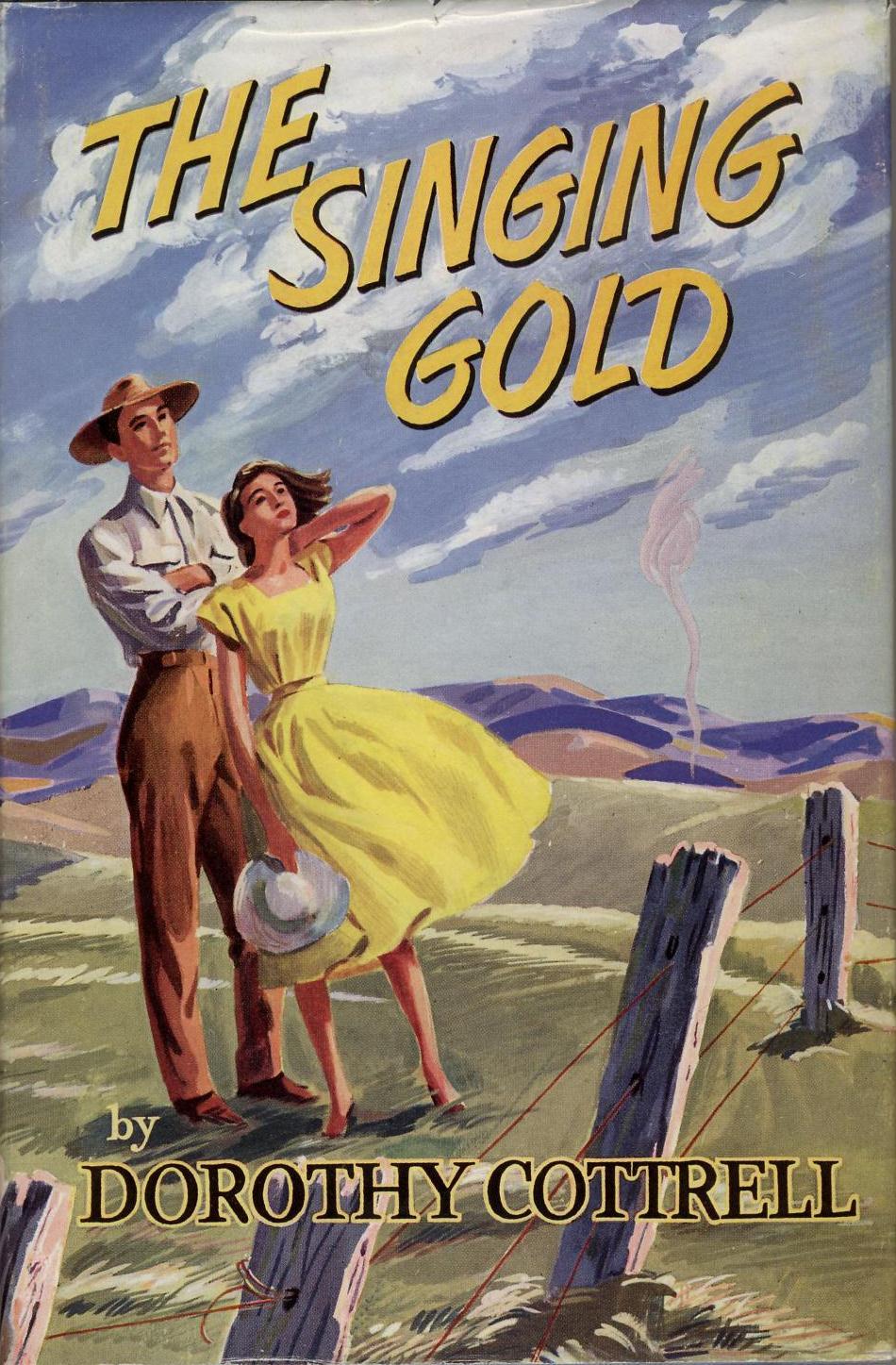
The rest of the writers, listed under the heading “Other writers”, are given one sentence or less, with the exception of the first in the list, Zora Cross. Her reputation has lasted more than most of the above. The reason for the short shrift given to her seems to be that she made her home in Sydney, so, not really a Queensland writer it seems! Few of the others are remembered today, except perhaps for the last on his list, the aforementioned Mrs Dorothy Cottrell. She, he writes, “is hailed by American publishers as a writer of exceptional power”. Her novel The singing gold was first serialised in The ladies home journal. The cover here is the 1956 edition (obvious from the fashion!) which suggests she remained popular for some time. A later story of hers became Ken Hall’s 1936 film, Orphan of the wilderness.

However, I will comment on one other. Wikipedia and the ADB have an entry for Nelle Tritton (1899-1946) whom Wikipedia writes as Lydia “Nellé” Tritton, and ADB as Lydia Ellen (Nell) Tritton. She had an interesting life. She was born in Brisbane in 1899, but in her mid-20s, she went to London and toured Europe, gained “a reputation for knowledge of international affairs”, and married a former officer of Russia’s White Army. The marriage ended in 1936, and in 1939, she married the exiled Russian prime minister Alexander Kerensky in Pennsylvania. ADB writes of their time in America that “their life, when they were together, was idyllic, with numerous visitors and games of croquet”. W.M. tells us none of this – much of which happened after 1927 – but it’s interesting that he’s included her, given she was barely in Australia. All he says of her is that “while still in her teens” she wrote a booklet of “Poems”. Curious – but fascinating. 

W.M. concludes that, from his brief survey, “it is evident that the work of Queensland writers has reached a standard which justifies and claims adequate attention from the reading public”, and he quotes literary critic Bertram Stevens, who had died in 1922 but had apparently said:

Australia has now come of age, and is becoming conscious of its strength and its possibilities. Its writers to-day are, as a rule, self-reliant and hopeful. They have faith in their own country; they write of it as they see it, and of their work and their joys and fears in simple direct language.

Anton Chekhov, The lottery ticket (#Review)

Back in April I posted on Majorie Barnard’s short story “The lottery” for Kaggsy’s and Simon’s 1937 Year Club. Commenting on that post, my American friend Carolyn said that in looking for Barnard’s story she found Chekhov’s “The lottery ticket”, written fifty years earlier in 1887. Of course, I had to read it too. There are enough similarities to make us think that Barnard very likely had read Chekhov’s story, but had decided to put her own spin on it. Whether we are right or not, the two stories make for an interesting comparison. I will try to discuss them without spoiling them, but there will be hints.

Both stories deal with a married couple and their reaction to the idea of winning a lottery, and both stories are told third person from the husband’s point of view. Marjorie Barnard’s is set in suburban Sydney, and explores what happens when a wife wins the lottery. She doesn’t tell him immediately so he finds out from others who had read it in the newspaper. On his way home from work, he thinks about what it all means, how “he” might spend it, and he then starts to find fault with his wife. She “wasn’t cheery and easy going” and hadn’t aged well (not as well as he had, anyhow), and so on. It ends, however, with the wife having the upper hand. Barnard’s story reflects her interest in gender, in how little agency women had, and how constricted their lives were.

This is not Chekhov’s prime interest. He is writing in a different place and time. In his story, it is also the wife who had bought the ticket, but it’s the husband who checks the newspaper and sees that there’s a “probability” that her ticket had won. However, rather than reading on and confirming whether that’s the case he suggests they wait:

Looking at his wife, Ivan Dmitritch gave a broad, senseless smile, like a baby when a bright object is shown it. His wife smiled too; it was as pleasant to her as to him that he only mentioned the series, and did not try to find out the number of the winning ticket. To torment and tantalize oneself with hopes of possible fortune is so sweet, so thrilling!

The hope of course is that they will have a lovely dream about the possibilities, those dreams we all occasionally have (even if we don’t buy lottery tickets!) But, if you know Chekhov, you’ll know that he is unlikely to be interested in unrealistic dreams, but in how ordinary people traverse life and their relationships. So, he lets Ivan dream – of “a new life … a transformation”. “That’s not money,” he says, “but power, capital!” He imagines paying off debts, buying “an estate”, going abroad. Occasionally, he notices that his wife is also dreaming. But, it comes to a head when he realises she’s dreaming of going abroad too. What? She’d be no fun to go with. She’d just talk about the children, complain about the cost of the food, not to mention want to spend money on looking after her relations,

And for the first time in his life his mind dwelt on the fact that his wife had grown elderly and plain, and that she was saturated through and through with the smell of cooking, while he was still young, fresh, and healthy, and might well have got married again.

So the story continues with this man who was, at the beginning, “very well satisfied with his lot” – including presumably, having his wife at home, cooking his meals, caring for the children – feeling very different about his life by the end.

The irony, in Chekhov’s as well as Barnard’s story, is that the lottery ticket was the belittled wife’s. Barnard, however, gives her wife agency, whereas Chekhov’s focus is on how money and greed can destabilise (or, is it reveal?) one’s values. However, the little point is still there, in the irony, in that early description of the husband with his “senseless smile, like a baby when a bright object is shown it”, and in so many of the husband’s attitudes towards his wife. Gender issues are not so forward in the resolution, but they are part of the picture.

Anton Chekhov
“The lottery ticket”
First published 1887
Available online at Classic Shorts

Michael Fitzgerald, Late (#BookReview)

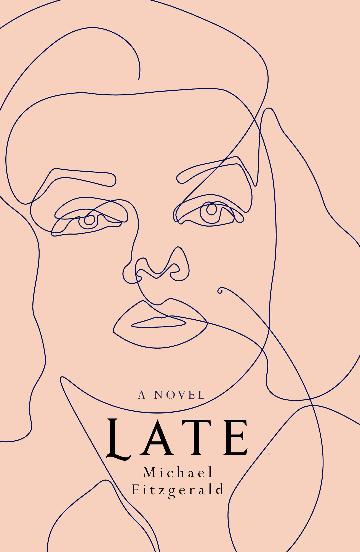
Australian author Michael Fitzgerald’s novel Late owes something to what is known as the alternate (alternative) history genre, or what I call “what if” novels. Here, the underlying story is, what if Marilyn Monroe had not died in 1962 but, instead, had instead escaped Hollywood’s oppressive celebrity culture and moved to Sydney, Australia?

It’s hard to imagine any celebrity who has inspired more books, films, songs – you name it – than Marilyn Monroe. Just check out Wikipedia’s page listing them. There are over twenty works of literature, of which I’ve only read one, Andrew O’Hagan’s The life and opinions of Maf the dog and of his friend Marilyn Monroe (my review).

Now though, I should ‘fess up that nowhere in Fitzgerald’s book does he name Marilyn Monroe. His narrator is unnamed. However, she tells us she is also known as Zelda Zonk, a name once used by Marilyn Monroe, and the biography she gives us is that of Monroe down to her birth and death dates, the details of her marriages, and much more. So, given our narrator is intended to be Marilyn, the question is why? Why write a(nother) story using Marilyn, rather than start from scratch? And why do it using another of her personas, Zelda Zonk? I don’t know, but I’ll have a go at thinking about it.

So, let’s start with the setting. We are in 1980s Sydney, so Marilyn has been in Sydney for a couple of decades. She is living in a modernist (Harry Seidler-designed) building in Vaucluse, not far from some of the cliffs in Sydney which, in the 1980s, were also the site of gay-hate crimes known as the “Sydney cliff murders”. Notwithstanding that darkness, Sydney is beautifully evoked.

Early in the novel, our narrator meets a young man Daniel, who turns out to be gay and who is locked out of the apartment he is house-sitting. The relationship that ensues brought to mind Sigrid Nunez’s The invulnerables (my review) in which an older woman develops a friendship with a young man, but they are different books, so let’s move on. Our narrator and Daniel discover points on which they connect – from something as simple as their mothers’ names (Gladys and Gladyne) to something more fundamental like both having experienced adoption and a sense of being outsiders. Trust and tenderness develop between them, as they walk, ride on a ferry together, and cook a meal for Shabbat.

Now, a little aside: I’m not sure how to refer to the narrator because, as she writes in the opening paragraph of Scene (aka Chapter) 2, “I am not always Zelda, and Zelda is not always me”. Indeed, she writes, “Zelda is everything that I’m not […] She is the me who goes on living”, and later again, she is “the protectress of my spirit, of the shattered sense of me”. If I name her Zelda in my post, I am ignoring the distinction, and I don’t to do that. So, I am going to stick with the term “narrator”.

“What I have to say is important and personal” (Zelda)

Our narrator’s voice is variously wise, funny, erudite, and also at times self-deprecating. She is out to set the record straight in terms of her reputation as the “dumb blonde”, the “beautiful child”, the difficult actress who was always “late”:

You see, I wasn’t late: they were in a God-awful American hurry. Yes, let it be said for the record, being late wasn’t a problem: they were in this crazy rush to the moon. In any case, who aspires to be on time when, for my Art, readiness is all?

And when it really counted, let’s face it, my timing was perfect.

Drop-dead perfect.

So much in those few sentences.

She makes us see her life from a different perspective, such as the time she wore the see-through rhinestone dress to sing Happy Birthday to JFK. I don’t know what Monroe really thought or intended but that is perhaps not the point. Michael Fitzgerald gives her a voice that reflects on her experience, on how the culture manipulated her, on the hurts of being commodified and ignored as a person. Marilyn is a wonderful vehicle for interrogating celebrity, and Zelda for exploring how an escapee might see the experience and move on from it.

There are several questions to ask about this book, besides why Marilyn. Another is, why is she speaking now, a couple of decades after her arrival in Sydney? This one she answers – it’s because “the cliffs have been warning me, for months now, that evil dwells here”. And this is where Daniel as a young gay man comes in. He is the vehicle for exploring the homophobia of the time, the gay-hate crimes and cliff-murders. He is a gentle person with his own crisis, and is drawn to Zelda “like an old person or wounded animal is”. Our narrator empathises with him, and the other young men who have disappeared, and wants to help him. Their cliff-top nemesis is, pointedly, blond.

I won’t say more about the plot, because the novel’s main interest lies in the narrator’s musings. They are what I most enjoyed – her clever allusions to movies, books, poetry, and songs, her witty footnotes, her humanity, and the entertaining wordplay (starting with the multiple meanings of the title itself).

I don’t know if I understood the novel the way Fitzgerald intended, but I enjoyed the voice. It is confident, witty, in-your-face. “Without a sense of humour, we are animals, we are lost,” she says. It is also intelligent and thoughtful. This Marilyn – if I can call her that at this point – has come through and is living life the way she wants to live it, but she has heart too, and cares about the young men. It’s a surprising thing that Fitzgerald has done to put the two ideas together, but I think he has made it work. After all, why not have a gay icon care about saving young gay men?

So, I found it an absorbing to read, one that encourages us to think about who Marilyn might have been had she been allowed to be herself. And who Daniel might be if allowed to be himself!

Right near the end, our narrator comments,

Don’t you think it’s funny? How we still haven’t explored these shadows of the human heart?

Maybe we never will, fully, but books like this encourage us to keep trying.

Lisa also enjoyed and reviewed this book.

Michael Fitzgerald
Late: A novel
Melbourne: Transit Lounge, 2023
208pp.
ISBN: 9781923023024 

(Review copy courtesy Transit Lounge via publicist Scott Eathorne)

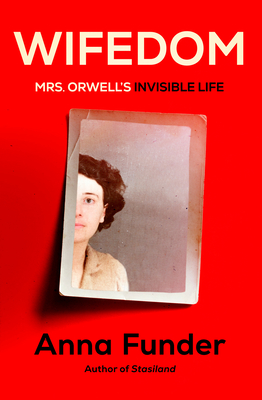
Anna Funder, Wifedom (#BookReview)

Anna Funder’s Wifedom: Mrs Orwell’s invisible life is a book with a mission, a mission that is implied in its full title. That mission is to examine the notion of “wifedom”, and the way patriarchy works to construct it, through the example of the invisible – or, as Funder also calls it, erased – life of George Orwell’s wife, Eileen O’Shaughnessy.

To do this, she wrangles Eileen out of the shadows of history to produce an intelligent, funny, warm-hearted, loyal and hard-working woman who, observed novelist Lettice Cooper, loved George “deeply, but with a tender amusement”. It’s an engrossing story, well-told. However, it’s a challenging read too.

Funder explains early in the book that her interest in Eileen came from reading something Orwell wrote about women and wives – after Eileen had died. It’s astonishingly misogynistic, and made her wonder who Eileen was and what she might have thought. Funder set about reading six Orwell biographies written between 1972 and 2003, but she found them unhelpful when it came to Eileen. Indeed, she says, they gave so little that they “started to seem like fictions of omission”. Funder then, logically, went to these biographers’ sources. She found some more bits and pieces about Eileen, but it wasn’t enough. All she had was “a life in facts, a woman in pieces”, so she “considered writing a novel – a counterfiction to the one in the biographies”. But, she was fascinated “by the sly ways” in which Eileen had been hidden, and she felt a novel couldn’t effectively explore this. Then she “found the letters”.

These were six letters that Eileen had written to her good friend Norah from just after her marriage in 1936 until 1944, but they had not been discovered until 2005. These letters gave her Eileen’s voice – and this voice was “electrifying”. Funder believed she could no longer write a novel. She writes,

I wanted to make her live, and at the same time to reveal the wicked magic trick that had erased her, and that still holds sway today. I thought of it as writing a fiction of inclusion.

“it’s hard … for history to find you”

This is where the book gets tricky, because, while I found Wifedom a fascinating read, it raised questions too, and they are intrinsic to what Funder is trying to achieve, and how she goes about achieving it. The book is divided into five parts, with the first part titled “Wifedom, A Counterfiction”. What does this mean? She doesn’t immediately explain what I have described above. Instead, she opens her book on a scene in which she imagines Eileen writing a letter to Norah – and she includes excerpts from that letter. This throws us readers in at the deep end. As we get into the book, we come to recognise these imagined sections, because they are identified by indentation, and opening and closing graphical symbols, but at the beginning it’s a bit mystifying, albeit an engaging way to capture our interest.

Early in the read, then, it becomes apparent that Wifedom comprises a complex mixture of processes and forms. The imagined sections are interspersed throughout the book between more traditional biographical writing about Eileen and George’s life. And interspersed between these are reflections from Funder’s own life, because one of her points is that the patriarchy, the “patri-magic”, which erased Eileen’s life from George’s biography, still exists and is evident in her own life as a wife and mother, despite her supportive husband and “egalitarian” marriage. I’m not going to focus on this aspect of the book, though, because it seems to fade away somewhat as Eileen and George’s story picks up, and is not, anyhow, where I want to go in this post.

Instead, I want to tease out the process. Early on Funder writes that

Looking for Eileen involved the pleasure of reading Orwell on how power works. Finding her held the possibility of revealing how it works on women: how a woman can be buried first by domesticity and then by history.

This is not particularly new. Anyone interested in feminism is aware of how women have been lost in (and thus to) history. However, Funder’s book is enlightening in this regard. She does an excellent job of interrogating how it can happen. It happens when biographers ignore or play down the role of women in their subjects’ lives. Through cross-matching her sources she finds example after example of Eileen’s contributions being downplayed or omitted. She shows how the use of passive voice and terms like “wife” rather than Eileen’s name work to make her disappear. (Orwell does it himself in Homage to Catalonia.) She finds examples where biographers, disconcerted by some of George’s behaviour, excuse it (how often are men excused!), or, uncertain about evidence, will rephrase it. For example, Funder writes that Eileen

noted his extraordinary political simplicity – which seems to have worried one of the biographers, who rewrote her words to give him an ‘extraordinary political sympathy’.

Eileen’s words come from a 1938 letter to Marjorie Dakin. The biographer is Crick. (Another of the textual clues to readers in this book is that Eileen’s words are conveyed in italics, while the words of others are enclosed in quotation marks.)

But here’s the challenge – interpretation. Funder writes early in her book that,

As serendipity would have it, in 2020 Sylvia Topp published Eileen: The Making of George Orwell, which contained much material I hadn’t found, and was thrilled to read, though we interpret it differently, and so build differing portraits of Eileen.

She does not explain what she means here, but in the very thorough Notes at the end of the book, Funder elaborates on Topp’s approach to Eileen. Put simply, Topp, Funder says, sees Eileen as one of those celebrated people’s partners who devoted their lives “joyfully to assisting the talented partners in all their various needs knowing all along that they would be under-appreciated, and often ignored, and yet never faltering in their dedication, or in their willingness to submerge their own personal talents into their partners’ success.” Topp, then, sees Eileen as a “helpmeet of genius” while Funder is interested, as she writes in these Notes, “in examining what it took, perhaps, to be in that marriage, and that dream”.

So, what we have here is interpretation. Topp had the same sources that Funder did. Indeed, she added some to Funder’s arsenal. But, she interprets them differently. As a feminist, I easily aligned with Funder’s interpretation, but as I read I also had this little niggle that Funder was interpreting her sources – from the perspective of her times, values and gender – just as other biographers had before her.

Wifedom was my reading group’s April book. Our conversation focused mainly on the biographical content – on Eileen’s life, on George Orwell and his books, and on the impact of patriarchy on Eileen. We were horrified by the life led by Eileen, as Funder tells it – and the facts seem inarguable. Their relationship appeared to us to have been so one-sided. Eileen did all the domestic work, and it was hard work given the primitive rural cottage that they called home. She was, often, the main breadwinner, and she did his typing, as well as offering editorial comment. She was necessary to him. Meanwhile, he focused on his writing and, we gathered, chasing other women. And yet, Eileen stayed with George. Why, we wondered?

We didn’t delve into the interpretation issue, albeit I would have loved to, but I needed more time to collect my thoughts. We did, however, discuss why we thought Eileen stayed with George which, I guess, was us interpreting what we’d read! Various ideas were put forward, including that Eileen might have been a “rescuer”, or that she knew she was unlikely to have been published herself (in a patriarchal world) and so channelled her energies through George, or, simply, that she loved him and, much like Topp argued, willingly helped him in any way she could.

So, there you have it! History, biography, it’s all a matter of the facts you have, and the way you see them. I don’t mean to devalue the biographer’s art by that statement, but simply to recognise that even the most formal, most rigorously documented biography will, necessarily, be affected by the biographer and their times. For this reason, I found Wifedom an absorbing and provocative read, though perhaps only partly in the way Funder intended.

Anna Funder
Wifedom: Mrs Orwell’s invisible life
Hamish Hamilton, 2023
511pp.
ISBN: 9781760143787

Monday musings on Australian literature: Stella Prize 2024 Winner

The 2024 Stella Prize winner was announced last Thursday, the 2nd of May, but that was the also the day my blog turned 15, and I didn’t want to flood cyberspace with too many posts. Then this weekend was the SixDegrees meme which meant another post coming at you. So, I decided to do my Stella 2024 post, this year, as a Monday Musings. It makes sense to do so, in fact, because it’s an historic win. First though, the winner, for those of you who haven’t heard yet:

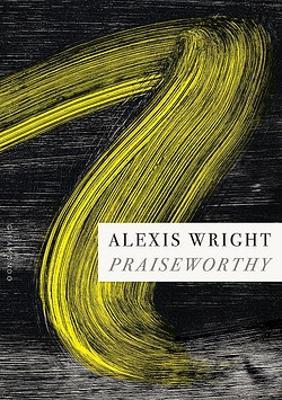
Alexis Wright’s Praiseworthy

Why historic? Again, some of you will already know this, but Alexis Wright, one of our leading First Nations writers, is the first writer to win the Stella twice in its 12 year history. An impressive achievement by any measure. I am embarrassed to say, however, that of the now four Stella winners I haven’t read, Wright’s two are among them. This is not because I don’t want to read them, but because they are big tomes, and my life doesn’t seem to lend itself these days to chunksters. I read and loved her multi-award winning novel Carpentaria (my post), which was big enough – at over 500 pages – but that was before blogging when time pressures felt different! Clearly, though, I should make time for this because, from what I can tell, its subject matter is something I care about and it has the wit and playfulness, passion and imagination, that I loved in Carpentaria.

Praiseworthy has already been recognised by the literary establishment. Last year it won the Fiction Book Award in the Queensland Literary Awards. Further, as publisher Giramondo shares, it has been shortlisted for many other awards: The Dublin Literary Award 2024; the People’s Choice Award, the Christine Stead Prize for Fiction and the Indigenous Writers Prize in the 2024 New South Wales Premier’s Literary Award; The James Tait Black Prize for Fiction 2024; and the Queensland Premier’s Award for a Work of State Significance in the 2023 Queensland Literary Awards.

The chair of the judging panel said this about the book:

Praiseworthy is mighty in every conceivable way: mighty of scope, mighty of fury, mighty of craft, mighty of humour, mighty of language, mighty of heart. Praiseworthy is not only a great Australian novel – perhaps the great Australian novel – it is also a great Waanyi novel. And it is written in the wild hope that, one day, all Australian readers might understand just what that means. I do not understand. Not yet. But I can feel history calling to me in these pages. Calling to all of us. Imagine if we listened.

Giramondo’s (above-linked) page for the book, includes excerpts from other critics and reviewers. Samuel Rutter of the New York Times Book Review describes it as “the most ambitious and accomplished Australian novel of this century”, while Jane Gleeson-White wrote in The Conversation that “Praiseworthy is Alexis Wright’s most formidable act of imaginative synthesis yet…a hero’s journey for an age of global warming, a devastating story of young love caught between two laws, and an extended elegy and ode to Aboriginal law and sovereignty”. More than one references Ulysses, such as Ruth Padel, who describes it in The Spectator as “an impassioned environmental Ulysses of the Northern Territory… Playful, formally innovative, multi-storied, allegorical, protean and dizzyingly exhilarating, it is long, lyrical and enraged”. Several, in fact, praise the language; and many comment on its satirical aspect, its lyricism, its comedy. Lynda Ng, in Meanjin, calls it:

The finest distillation yet of Wright’s themes – a bold assertion of Aboriginal sovereignty that successfully encompasses all areas of life: culture, economy, and jurisprudence.

Of course, Giramondo has selected excerpts that praise, but the sources of that praise are impressive.

There are those who think that she should/may/will be Australia’s next Nobel Laureate for Literature.

Returning to the Stella, you can read more on the Stella website, including a link to Alexis Wright’s acceptance speech, and an expressive video performance of a brief scene from the novel by Boonwurrung actor Tasma Walton.

Just to remind you, this year’s Stella judges were writer, literary critic, Artistic Director of the Canberra Writers Festival and this year’s chair, BeeJay Silcox; Filipino-Australian poet, performer, arts producer, and advocate, Eleanor Jackson; First Nations award-winning poet and arts board member, Cheryl Leavy; novelist, occasional critic and full-time dad, Bram Presser; and writer and historian, Dr Yves Rees.

Wikipedia offers a well-presented complete list of the winners and all the short and longlisted books.

Thoughts anyone?

Monday musings on Australian literature: Forgotten writers 4, Kate Helen Weston

In 2021, I started my Monday Musings sub-series on forgotten Australian writers, with posts on Helen Simpson and Eliza Hamilton Dunlop. This year I added Marion Simons, who was my first post on the Australian Women Writers (AWW) blog this year. As I explained then, Elizabeth Lhuede and I have decided to focus this year on sharing public domain works published in 1924 – or written by writers who died in 1924. So today, I am introducing another writer I’ve posted on there, Kate Helen Weston.

As with Marion Simons, I am not including here the piece written by Simons that I published at AWW. It is an entertaining piece titled “The ubiquitous apostrophe”. If love discussions of grammar and punctuation, do check it out at AWW.

Kate Helen Weston

Kate Helen Weston (1863-1929) was born Kate Helen Carter in Ballarat, Victoria, to British parents who came to Australia for the gold rush, but she died in Adelaide. Indeed, one “L.B.” described her in The Australian Woman’s Mirror (of 24 February 1925) as “one of the best-known of Adelaide’s feminine inky-wayfarers”. She has an entry in AustLit, and in Debra Adelaide’s Australian women writers: a bibliographic guide, but not in the Australian dictionary of biography or Wikipedia. Adelaide’s News (10 December 1924) provided a brief biography of her in their “Pen Portraits of People” series, after she was elected president of the Liberal Women’s Educational Association.

These sources aren’t quite in tune with each other. AustLit says that she married John Samuel Weston “in Adelaide in 1885, and moved there in 1892”. Adelaide’s News says she married “Mr. J.T. Weston … and later came to Adelaide”. AustLit says that she was widowed in 1894, and “turned to writing to provide financially for herself and her children. She contributed to many Australian newspapers, and published fiction between 1911 and 1928”. They also say that “she was Lady Superintendent of the Elder Conservatorium in Adelaide between 1900 and 1914”. The News, on the other hand, says that “after her husband’s death she accepted the position of secretary to the Elder Conservatorium, which she held for 22 years”. So, some minor differences in detail here – in the name of her husband and in her Elder Conservatorium role. These would be good to clarify, but for now I’m noting them and moving on.

The News tells us that she “developed literary and artistic tastes” and had published three novels in London. In fact, she published four novels, one a few years after the News’s article. Her novels were The partners (1911), The man MacDonald (1913), The prelude (1914) and The vagabond soul (1928). The man MacDonald, says News, “had a wide vogue”. Melbourne’s Table Talk (26 July 1928), announcing the publication of The vagabond soul, said that “the story, which contains a dramatic situation of some originality, is entirely Australian in setting, and it is written with the same facile spontaneity which characterises Mrs Weston’s other novels”. But, her novels have not lasted.

Both AustLit and the News mention her other literary and journalistic work, but AustLit is more specific, telling us that she contributed to many Australian newspapers. They say she was “music and art critic for The Register, contributed to The Woman’s Record – a monthly publication – and, according to her obituary in The Advertiser, she was the ‘founder of community singing in Adelaide’.” She received a Commonwealth Literary Fund Fellowship in 1915, and was also actively involved in the National Council of Women.

Weston was clearly well-known in Adelaide’s literary circles. The News (9 September 1924) reports on an address she gave at the monthly meeting of the Liberal Women’s Educational Association. (Th Association aimed to educate women in political and social matters, but, said The Register on 2 March 1926, it could also become active in social reform, “when necessary”.)

Anyhow, the focus of Weston’s talk was Australian Women Writers. The News starts with:

It was not until one began to reckon up the women writers of Australia, said Mrs. Weston, that it was realised how many there were and what a contribution they had made to the literature of Australia in poetry, prose, and journalistic work, though it was only of late years that woman had met man on equal ground in the field of journalism. 

Turning then to poetry, she said that Australian men were credited with being better poets than Australian women, but she believed that the work of women poets was “possibly much more original in style as it bore the impress of no old world stylist, and invariably expressed the writer’s personal outlook on life”. Mary Gilmore, for example, “spoke always with a woman’s voice and wrote, not of things but of humanity and the home”. She named, and apparently read from many, contemporary Australian poets.

She then talked about fiction, arguing that it’s through fiction that the life of an age is chronicled. She named many novelists including those we still recognise today, like Mary Gaunt, Ada Cambridge, Mrs Campbell (Rosa) Praed, and Ethel Turner. She also mentioned – and I think this is an astute and significant recognition – the “many letter writers, whose small contributions fitted into the interstices of the wall of literature which was being built”. 

She concluded by arguing that the Commonwealth Government needed to more actively encourage Australian literature. She pointed to the lack of Australian publishing houses and the small market. She said, writes the News, that “writers of fiction could not afford to remain in their own country, but were forced to go to the fogs of London or the bustle of America, where they lost their nationality and their English”. And she urged would-be writers “to read all styles, and copy none” – and to practise constantly. 

The News and AustLit both describe her other, considerable, community involvements and achievements. These included having a tilt at politics. The News writes that she stood for a ward in municipal elections in 1923, and “polled the highest percentage of votes ever gained by a woman in the elections in this State”. Her death, after falling from a tram from which she never regained consciousness, seems tragic.

So far I have written on four women writers for this year’s AWW project. Two, Marion Simons and Alice Tomholt, never married, and two, Kate Helen Weston and Lillian Pyke, were widowed with young children. All, it seems, managed to eke some sort of living from writing. 

Jane Austen, Mansfield Park (Vol. 2)

Mansfield Park book covers

As I wrote last month, my Jane Austen group is doing a slow read of Mansfield Park this year, meaning we are reading and discussing the novel, one volume at a time, over three months. This month was Volume 2 (that is, chapters 19 to 31). It starts with the return of the patriarch, Sir Thomas Bertram, from his plantation in Antigua, and ends with Fanny rejecting Henry Crawford’s proposal.

Last month, I said that the thing that struck me most in volume 1 was the selfishness, or self-centredness, of most of the characters. I wondered whether Austen was writing a commentary on the selfishness/self-centredness of the well-to-do, and how this results in poor behaviour, carelessness of the needs of others, and for some, in immorality (however we define that). Having now read volume 2, I’m still on this path – together with a couple of other, somewhat related ideas, education, which I also mentioned last month, and parenting.

But first, the selfishness and self-centredness continues. In this volume, Maria marries and she and Julia leave Mansfield Park, leaving Fanny the only young woman at the Park. Mary Crawford, over in the parsonage, no longer has a young female friend to entertain her, so her sister Mrs Grant thinks Fanny would suffice:

Mrs. Grant, really eager to get any change for her sister, could, by the easiest self-deceit, persuade herself that she was doing the kindest thing by Fanny, and giving her the most important opportunities of improvement in pressing her frequent calls. 

Here is one of the reasons I love Austen. She knows exactly how we justify our actions to ourselves.

Anyhow, as a result, Fanny spends more time with Mary, as a favour to others, resulting in, Austen writes,

an intimacy resulting principally from Miss Crawford’s desire of something new, and which had little reality in Fanny’s feelings.

Examples like this pepper the volume. Lady Bertram doesn’t want Fanny to accept a dinner invitation because it would affect her “evening’s comfort”. After all, as Austen writes, “Lady Bertram never thought of being useful to anybody”. Late in the volume, Lady Bertram rises to the occasion, or thinks she does. She sends her maid to help Fanny dress for her first ball, and says so during the ball when Fanny’s appearance is complimented. “Chapman helped her to dress. I sent Chapman to her.” Yes, she did, but only after she was dressed and too late to help Fanny who was already dressed! Austen adds:

Not but that she was really pleased to have Fanny admired; but she was so much more struck with her own kindness in sending Chapman to her, that she could not get it out of her head.

Mrs Grant, Mary and Lady Bertram aren’t the only selfish, self-centred people in this volume. There’s the egregious Henry Crawford who had played, in volume 1, with the feelings of Maria and Julia, and then leaves Mansfield, in volume 2, with nary a word to either of them:

Henry Crawford was gone, gone from the house, and within two hours afterwards from the parish; and so ended all the hopes his selfish vanity had raised in Maria and Julia Bertram.

That’s not the end of Henry, though, because he’s soon back, telling his sister Mary, “my plan is to make Fanny Price in love with me”. In my Jane Austen group, we discussed that as his frivolous flirtation moved to something more serious – as he started to truly see, we believe, Fanny’s value – he gives no thought to whether Fanny will love him. That’s a given! He’s a catch!

There’s more I could say on this theme – I haven’t even mentioned Mrs Norris – but there are other ideas to talk about. I started to see in volume 2 that Mansfield Park is also about parenting, and, relating to this, I’d argue that in this volume we see the beginning of the education of Sir Thomas.

However, Sir Thomas is a controversial character in my group. Some detest him, rather like Mr Yates who had never seen a father so “unintelligibly moral, so infamously tyrannical” as Sir Thomas. But, along with some others, I see Sir Thomas differently.  Sure, he’s formal, but he loves his children – and he has no support in that wife of his. When he realises how silly Maria’s fiancé is, he wants to give her an out. Unfortunately, Maria wants to escape home and its restraints, so doesn’t take it. Sir Thomas is – admittedly – relieved because it suits his wish “to secure a marriage which would bring him such an addition of respectability and influence”. An example of new money, he’s a product of his times, and a “good” marriage can only help! However, as the volume progresses, Sir Thomas looks out for Fanny, wanting to give her opportunities, despite Mrs Norris’ attempts to keep puttng Fanny down.

For me, a recurring theme in Austen’s novels, in fact, is parenting. Lady Bertram is completely hands-off, letting Mrs Norris (as I mentioned in volume 1) have too big a hand in her daughters’ upbringing, to their detriment. Sir Thomas, on the other hand, is strict and – well, let’s talk about how it all plays out in volume 3. Here, though, he is kind to Fanny and wants well for her.

I have more to say on this, but I’ll leave it here as there are two ideas I’d like to share from my group’s discussion.

One of our members talked about the Australian critic John Wiltshire’s discussion of the disempowerment of women in his book Jane Austen and the body. He argues that caring for servants and the working class is a traditional role for genteel but otherwise disempowered woman, but that “this benevolence has a Janus face” because it replicates the inferior-superior social relationships that characterise the wider society. Mrs Norris, Wiltshire argues, “punishes others for her own dependency and frustration, whilst being able to hide this from herself in the guise of generosity to the recipients and loyal service to the system”.

Similarly, all at Mansfield Park have, through their adoption of poor Fanny Price “basked in the pleasure of benevolence”. But this has let Fanny become Mrs Norris’ victim. Both Fanny and Mrs Norris, says Wiltshire, are outsiders, “fringe-dwellers”; both are single, defenceless females who are “not part of the family except by courtesy. The one lives in the small White House, on the edge of the estate, the other in the little white attic at the top of the house”. Wiltshire argues that Fanny becomes the scapegoat upon whom Mrs Norris can “exercise her frustrations and baffled energies”. By scolding and punishing Fanny, she can “appease her own sense of functionless dependency and reaffirm the strictness of the social hierarchy which gives meaning to her life”. An interesting idea which I plan to think more about. It doesn’t excuse Mrs Norris, but it might explain her!

The other idea I want to share came from a young American visitor to our meeting. While she had read Austen and other classic authors, she said that her main reading, currently, is romance and general fiction. So, as she was reading Mansfield Park, she looked for tropes common to the romance genre. And, she found two significant ones, which could cement Austen’s reputation as the mother of the romance genre! The first trope is the idea of friends (or, here, cousins) becoming lovers, and the other is the romantic heroine’s belief that she’s “not like other girls”. She’s not as pretty, not as outgoing, and so on, as her rivals. Fanny makes this sort of observation in a discussion with Edmund about how she likes hearing Sir Thomas talk about the West Indies. She says she is “graver than other people” and concludes:

… but then I am unlike other people, I dare say.

I loved this insight from a first-time reader of the novel.

So much more to say … but there will be more opportunities to talk Austen, I dare say! Meanwhile, thoughts?

Monday musings on Australian literature: 1937 in fiction (2) – and Trove

Karen’s (Kaggsy’s Bookish Rambling) and Simon’s (Stuck in a Book) “Year Club” officially finished yesterday, but I focused so much in last week’s post on the issue of the state of Australian criticism, that I didn’t get to share some other ideas I found. So, I’ve decided to bookend the week with Monday Musings posts!

Trove

First, though, I’d like to explain a little about how I use Trove. For those who don’t know what Trove is, it is an online library database managed by the National Library of Australia. It is a fantastic resource for researchers because it contains an extensive – in depth and breadth – range of digital resources, including newspapers, journals and gazettes; official and personal archives and manuscripts; images; archived websites; and more. I mostly use the digitised newspaper collection, so I’m going to focus on it.

The process for putting non-born-digital newspapers online involves scanning the papers (from print or microfiche form) and then using OCR (optical character recognition) to produce readable text. On Trove, we see both the original and the OCR-ed texts. The quality or accuracy of the OCR text varies greatly, depending on the quality of the original from which the scanning was done. Trove’s solution to this has been to use crowdsourced (aka volunteer) text-correction.

Of course, as a librarian, I can’t use a service like this without doing my bit, so whenever I search Trove I end up doing corrections. This can be a tedious business when the original was poor, and can take a large amount of time. But, I don’t want to link in my blog an article that my readers will find hard to read, so, to do the time! The result is that I may not always research Trove as much as I would like in order to write my posts, but I hope that I research enough to make what I say valid or worthwhile!

I do sometimes cut corners. Where the item I am interested in is, say, part of a multi-subject column, I will, occasionally, only correct the section of interest to me. That’s a pragmatic decision I just need to make sometimes. (Just telling you in case you click on one of these links and wonder what I have been doing!!)

Back to 1937

On developing Australian literature

In my last post I focused on discussion about the importance of a good critical culture to the development of an Australian literature, but other thoughts about the state of Australian literature were also shared during the year. For example, in February, commenting on a gathering – attended by “many prominent men” – to commemorate Henry Lawson, the Williamstown Advertiser observed that Lawson’s “Australianism” is a heritage to be treasured, and that Australians need to

encourage home writers whose individuality cuts through the meshes of old-world hyperorthodoxy in literature, which conveys an assumption that the “blawsted colonials” are mere vulgarians.

Two months later on 10 April, Melbourne’s The Herald ran an article discussing the development of Australian literature, comparing it with the the challenges faced by American literature. It looked at the two nations, and commented on the problems faced by Australian writers. It suggested that America had now developed its own style. From the realism of Dreiser and Anderson, “the American literary spirit has taken lucid shape in the works of Ernest Hemingway and John Dos Passos”. It says that this new spirit represents “a revolt against nineteenth century English romanticism” and that the new style encompasses “typical Americanisms, the characteristic speech, the special vocabulary, the distinctive syntax and, above all, the natural mode of expression”.

Is Australia ready for “the emergence of a style in which an Australian outlook is implicit, and which would incorporate the characteristic speech, syntax and vocabulary of Australia?” Creating this, it argues, “is a labor of love; there is no material reward in it, at present”. Unfortunately, Australia, it says, has not recognised its similarity to America, and “is still awed by the heaped-up riches of the English literary tradition”. This does not, it concludes, prevent our making an “intelligent assessment of the lines upon which distinctively Australian writing should, develop”.

A week later, 17 April, there was a lengthy riposte in The Herald. You can read it at the link provided, because it covers several issues, but it starts by arguing that the most important issue is

that people read books not because they are written by Englishmen, or Americans, or Australians, but because they are entertaining.

So there, you writers! Write what the readers want! “Patriotism,” it says, “does not enter into the plain man’s choice of books”. It accepts that there’s a critical minority of readers who are interested in the technical experiments needed to improve literary standards, but

A critical minority … does not make a best-seller. For that the writer must look to the reading public as a whole, to the suburban libraries, to the man who has never heard of James Joyce or Aldous Huxley— except when one of his books is banned.

The article then argues that Australian artists have developed an Australian style, and suggests how Australian writers might proceed. It concludes that “it would be absurd to believe that the public is hostile or the Australian scene barren” (which I don’t believe the previous article argued.)

Education

Education is critical to encouraging interest in local literatures. At least, it is, I’d argue, for those whose culture has been – or risks being – swamped by larger cultures. The issue of education popped up a few times in 1937.

A pointed reference came from Brisbane’s The Catholic Advocate of 14 October. Written, I believe, by “Pasquin”, it opens with:

Is there a Chair of Australian Literature in any one of our six Universities?

It notes that “the University of Queensland tacks on to the course of English literature half-a-dozen lectures or so on Australian letters”, but then says

Surely it is a disgrace to Australia that in none of our seats of learning is our literature considered worth anything more than a digression or an aside.

It then goes on to ask how many Professors of English Literature are Australian? Go Pasquin, eh? “It is no wonder we have an inferiority complex”. Pasquin then pushes on:

How many are English ex-patriates like Professor Cowling of Melbourne, who in a recent article in the Sydney Morning Herald declared that he was at a loss to name a single Australian novel suitable for the classroom.

Hmm … Many journalists in 1937 could name “good” Australian writers, like, Henry Handel Richardson and Katharine Susannah Prichard! Pasquin concludes by saying that “Even J. T. Lang has been moved to describe the Senate of the Sydney University as “the most un-Australian body in Australia.”

Meanwhile, grass roots action was occurring. The Sydney Morning Herald reported (14 October) that the Workers’ Educational Association (WEA) had organised “a tutorial class in Australian Literature” for the summer. It was to be run by Fisher University librarian and critic H. M. Green, and Hartley Grattan, an American literary critic, with expertise in Australian literature.

On 9 November, Sydney’s The Workers Weekly reported that a Central Cultural Council had been established as the result of a conference convened by Sydney’s Writers’ Association. Indeed, it appears this conference had not only inspired the abovementioned WEA course but the Teachers’ Federation deciding to give more attention to the teaching of Australian literature in schools!

Keeping to the subject of schools, my last 1937 article comes from Queensland’s The Northern Miner on 18 December. It reported on a speaker at a Sydney luncheon. Dr. G. Mackaness, described by the ADB as “educationist, author and bibliophile”, made an “appeal for a better appreciation of Australian literature”. He saw the education system as one of the problems, and said “it was appalling that over a period of five years only one Australian writer was included in the books which had been chosen for Leaving or Intermediate Certificate examinations”. This report concluded that:

The fault of lack of appreciation of Australian literature was equally divided among those who had the selection of certain literature for studies, the non-progressiveness of Australian publishers to help the Australian writer, and the uneducated mind of the average Australian to the culture obtainable from Australian authorship.

We have come a long way since then, but there’s always more to do…

Previous Monday Musings for the “years”: 1929, 1936, 1954, 1940, 1962 and 1937.

Rachel Matthews, Never look desperate (#BookReview)

One of the most appealing things about Rachel Matthews’ third novel, Never look desperate, is that it features some decent men. In this #metoo era, which differs little from what came before, there’s plenty of fiction which shows men in less than stellar light. And that’s fair enough. One of the reasons I read fiction is to expand my understanding of the issues I care about. I can feel along with the so-called sad girl stories, and applaud the angry feminist ones. However, most men I know, like most women I know, are decent human beings trying to live good, fulfilled lives. And this, essentially, is the subject matter of Matthews’ novel.

Never look desperate follows three main characters, in alternating, third-person chapters. These characters are 49-year-old Bernard, 54-year-old Minh, and Bernard’s recently widowed 70-year-old mother Goldie. It is set in Melbourne, immediately post-pandemic. People are starting to get out and about again, but the pandemic’s shadow lingers in the background. Bernard and Minh are single, lonely, and seeking connection.

Bernard, a photographer who works at Officeworks, dearly misses his father Marvin, who had died 12 months ago. He also wears a locket encasing some of his dead-ex-wife’s ashes around his neck. He had loved his wife, and the fact that they were divorced when she died, does not lessen his grief. With both gone, he feels that from now, “the world would keep taking pieces of him”, but he’s surviving – just. The last time he’d had sex, on a Tinder date, “it was all over in one minute and 10 seconds – the same time it took him to microwave porridge”.

Vietnamese-born Minh, who came to Australia by boat when she was seven, works at the Kino cinema complex. She has never married, though has had her share of boyfriends. She loves her mother, but rarely sees her because her evangelical step-father had kicked her out long ago. We first meet her as she wakes, gasping, from “night terrors”, and we soon learn that she carries trauma from the loss of her father on that boat from Vietnam and from the racism she experienced as the only Vietnamese kid at school.

Goldie is more complicated. She’s “alternative”, and uncompromising. She is implicated in her husband’s death, though this is not a legal issue in the novel, because she had slowly replaced his blood pressure tablets with alternative medicines. She has a new lover, but she’s prickly – and grief and ageing are not making her any easier to be with. However, Franz is hanging in there. As she does with the other characters, Matthews nails her with sentences like this:

Goldie didn’t really have friends. Her old workmates from a community centre in Collingwood, found her difficult to work with, but we were grateful when she wrestled with management for better conditions.

She is the most difficult character for readers to identify with, but she has her own baggage, including a tough upbringing, during which her mother would lock her in a dark laundry, aka “the Thinking Room”.

“the world was different now” (Goldie)

So, we have three people who are all grieving or have suffered losses in their lives. Bernard and Minh meet early on via the dating app Tinder, and through the rest of the novel there’s a rom-com type tension regarding whether they will overcome their anxieties and get together. The novel’s other main tension concerns whether there will be a rapprochement between Goldie and Bernard, whose upbringing had been difficult with such an inflexible, “alternative” mother, and who believes that she does not grieve his beloved father. We though know better. (Marvin, whom we only know by hearsay, is one of the book’s joys.)

Now this might all sound ho-hum, but it’s definitely not, for a few reasons. One is the humour. Matthews captures the place and time, and her characters, with light satire that preserves their humanity while letting us laugh at the things they and we do in these strange times of ours. She hones in on some of the absurdities and pretensions of our times, without condemning. After all, who knows who will have the last laugh! That said, the IKEA and cruise-ship scenes are priceless.

Another reason is the characterisation. These characters are real. We know them, and, even if we are not exactly like them, we have surely suffered similar sadnesses and insecurities. This week, for example, we lunched with a recently widowed friend, and as I greeted her with a hug, she said “oh, a lovely hug”. One of the points Matthews makes so eloquently in this novel is the longing “to be touched” in those left alone – especially during the pandemic. So, there’s genuine pathos here, too, as we watch our characters struggle, hard, to beat back their justifiable fears and reconnect.

Related to the characterisation is the setting. Melburnians will love all the grounding references to places, products and businesses that carry signals for those who know, but are self-explanatory enough for those who don’t. The novel is also peppered with pop-culture references, particularly to music but also to film and TV shows, which will be more universal for the generations involved.

Then there is the quiet wisdom. Bernard’s dad had told him once that “a sad day is only a day”. This is not to minimise intense grief, of course, but it puts into perspective the little ups and downs that we can let get on top of us if we don’t take care. Matthews shows the various kindnesses people meet through life, often in unexpected places, and also that online-friendships, like Minh has with Suzy in New York, are real and sustainable.

Goldie recognises early in the novel that “the world was different now. She just had to find her way”. By novel’s end, our characters are finding their way. The future isn’t guaranteed, but they are on their way with a little more connection in their lives. What did E.M. Forster say in Howard’s End? “Only connect”. Yet again, we see his wisdom – and Matthews has given it to us in a funny, warm-hearted novel that is a real pleasure to read.

Lisa (ANZLitLovers) also enjoyed this novel.

Rachel Matthews
Never look desperate
Melbourne: Transit Lounge, 2023
297pp.
ISBN: 9780645565393

(Review copy courtesy Transit Lounge, via Scott Eathorne, Quikmark Media)

Marjorie Barnard, The lottery (#Review, #1937 Club)

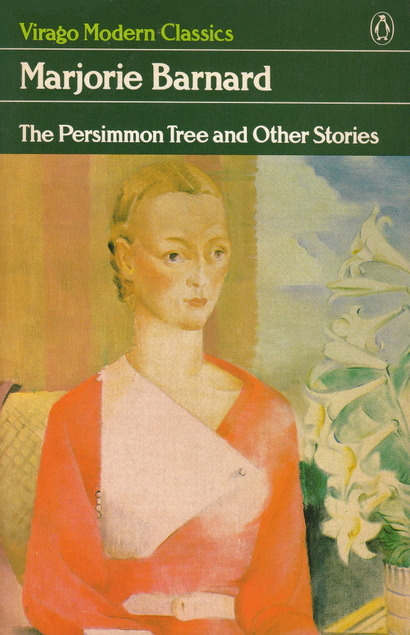
This will probably be my only review for the 1937 Year Club but I am thrilled to do it, because it is by Marjorie Barnard, an author whom I have mentioned many times, but have not yet managed to review here. My post is on a short story from her collection, The persimmon tree and other stories, which is one of the very few short story collections I’ve read more than once. It is so good. And don’t just take it from me. Carmel Bird mentions it in her bibliomemoir, Telltale, calling it “extraordinarily powerful”.

I wasn’t sure, in fact, what I was going to read for this week. I certainly hadn’t considered this collection because it was first published in 1943 but, rummaging around Trove, I discovered a story by Marjorie Barnard in The Bulletin of 6 January 1937. The page was titled “Of a lottery winner: First Prize” but I recognised it immediately, and let out an internal whoop. Here was my chance.

“The lottery”, as it is titled in the collection, has been anthologised, including in The Penguin best Australian short stories (1991), though the titular story, “The persimmon tree” is, I believe, the most commonly anthologised from the collection.

Who was Marjorie Barnard?

Marjorie Barnard (1897-1987) was an Australian novelist and short story writer, critic, historian and librarian. She wrote five collaborative novels with Flora Eldershaw, under the pseudonym, M. Barnard Eldershaw. Their first novel, A house is built, was published in 1929, having jointly won, with Katharine Susannah Prichard’s Coonardoo, The Bulletin prize in 1928. Their last, the futuristic Tomorrow and tomorrow and tomorrow was censored, and published in an expurgated edition as Tomorrow and tomorrow in 1947. Barnard also wrote works of literary criticism, and is credited with writing the first assessment of Patrick White (in Meanjin in 1956) and the first biography of Miles Franklin. (Jill Roe writes of the biography in the ADB, saying that “written with misgivings and before the release of Franklin’s voluminous papers, it exhibited characteristic virtues, with insight and style making up for ambivalence and inevitable error.”)

Barnard, along with Eldershaw, and other Sydney-based writers, like Frank Dalby Davison, was deeply concerned about the social and economic upheavals of the 1930s. These three, known as “the triumvirate”, held literary soirees which were attended by like-minded writers including Xavier Herbert and Miles Franklin. They were active in promoting writer’s rights (through the Fellowship of Australian Writers), and opposed censorship. She was a pacifist, and was apparently named in those political witch hunts of the 1950s, making her cautious about what she admitted to in terms of political affiliations. She was one of many writers who corresponded with, and often asked advice of, Nettie Palmer. She was a significant force.

In 1983, she was awarded the Patrick White Award, as was also her admirer Carmel Bird, years later. Hers was a long, and active life – far too long for me to cover here – and unfortunately, I don’t think anyone has done a biography of her. She is more than a worthy subject.

“The lottery”

What is so “extraordinarily powerful” about The persimmon tree and other stories is the quietly controlled but clear-eyed way Barnard interrogates human experience, in general, and women’s experience, in particular. Many of the stories have a strong feminist undercurrent, and “The lottery” is one of these. What makes it remarkable is that it is told third person through the perspective of the husband, which sets us up to align with him – perhaps.

The story is set in suburban Sydney. It starts with the husband, Ted Bilborough, having just boarded the ferry on his way home from work. His co-passengers tell him – show him in the paper, in fact – that his wife had won the lottery, “Mrs. Grace Bilborough, 52 Cuthbert-street.’… First prize, £5OOO, Last Hope Syndicate.” The thing is, Ted didn’t know. We then follow him on his way home as he goes through various emotions – and as he does so, we glean a picture of who he is and the sort of life his wife has led. A disconnect builds between how he – the perfect unreliable narrator – sees that life and the way we do.

At first, we are told that “everyone likes Ted”. He’s decent, it seems, in that typical-for-the-time suburban-husband way, and because of this “he’d always expected in a trusting sort of way to be rewarded, but not through Grace”. It’s little qualifications like this – “but not through Grace” – that give the game away.

Alongside Ted’s thoughts are descriptions of the evening. They too contain nuances that suggest deeper truths are at play. “The sun was sinking into a bank of grey cloud, soft and formless as mist” and two pine-trees have a “soft arrested grace”, a bit like his Grace, we readers might think. A little further on, “Ted could see that the smooth water was really a pale, tawny gold with patches, roughened by the turning tide, of pale frosty blue”.

He wonders how she’d paid for the ticket, “He hadn’t noticed any difference in the housekeeping, and he prided himself he noticed everything”. He starts to rethink Grace, who’d been “a good wife”, while he’d been “a good husband”. Indeed, “theirs was a model home” but, “well, somehow he found it easier to be cheerful in other people’s homes than in his own”. Whose fault is this? Well, Grace’s of course!

She wasn’t cheery and easy-going. Something moody about her now. Moody. He’d worn better than Grace; anyone could see that, and yet it was he who had had the hard time. All she had to do was to stay at home and look after the house and the children. Nothing much in that. She always seemed to be working, but he couldn’t see what there was to do that could take her so long. 

And so it continues, Ted ruminating on the situation, on their marriage, and on how things might proceed – even starting to feel a bit magnanimous with this money that’s not his own – until he arrives home, and discovers exactly what Grace intends. It’s all in the name of the Syndicate!

The writing is delicious. Spare, and accessible, it nails women’s lives and the constrictions so many live under. There is little agency for many of her women, and Barnard draws this with such simple but knowing realism it takes your breathe away. I love many of the stories in the book – and this is as good as any of them.

* Read for the 1937 reading week run by Karen (Kaggsy’s Bookish Rambling) and Simon (Stuck in a Book) who, I discovered, has reviewed the collection.

Marjorie Barnard
“The lottery” (orig. pub. in The Bulletin, 6 January 1937)
in Marjorie Barnard, The persimmon tree and other stories
London: Virago Press, 1985 (first published by Clarendon in 1943)
pp. 97-105

Full text of The persimmon tree and other stories is available online at the Internet Archive