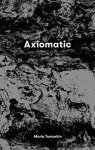
Maria Tumarkin, Axiomatic (#BookReview)

Maria Tumarkin, Axiomatic

A couple of weeks ago, I posted a guest post by Amanda for Maria Tumarkin’s book of essays, Axiomatic. At the time that post was negotiated, I had no immediate plans to read the book myself, but that changed when Brother Gums and family gave me a copy for Christmas …

Now, if you are a regular reader here, you may remember that Amanda had mixed feelings about the book. She liked the writing, and found the analysis was “at its best in the first three sections when dealing with complex social issues”. But, she found the book “unrelenting”, “not balanced or fair”, and ultimately nihilistic in not offering hope or, to put it simply, ways forward. She concluded by asking what Tumarkin wanted to achieve with the book. Having now read the book, all of these comments make sense to me, but my response is more positive. Perhaps it’s because this Ukrainian-born Australian Tumarkin reminds me of Helen Garner whose bold, clear-eyed writing about tricky subjects I greatly appreciate. Indeed, Garner is quoted on the back of my edition, describing Tumarkin as charging “headlong into the worst and best of us, with an iron refusal to soften or decorate…” That’s Garner, and that’s Tumarkin.

Axiomatic comprises five long essays, each interrogating an axiom:

  • time heals all wounds
  • those who forget the past are condemned to re–––––
  • history repeats itself
  • give me a child before the age of seven and I will show you the woman
  • you can’t enter the same river twice

As you’ve probably worked out by now, Tumarkin doesn’t unquestionably accept these axioms, showing them instead to be simplistic or misguided, if not, false.

In the first essay, she explores the notion that “Time heals all wounds” through the prism of teenage suicide. At one point she references psychologist Erminia Colucci’s study of “attitudes to suicide and suicidal thoughts among young people in Italy, Australia, India”, and adds, in parentheses:

(There are intellectually rigorous reasons for her choice of countries. There are lovely simple ones too: ‘I am Italian. I love Australia. I am fascinated by India.’)

This description could also be applied to Tumarkin’s rather idiosyncratic approach to her book. There is intellectual rigour – at least to the best of my knowledge and experience – but it also frequently feels personal, subjective, drawing on stories that interest her, that relate to her experiences, and that may not, initially anyhow, seem the most obvious choices. A lot of names – like Colucci’s, for example – are given, but this is not a foot-noted academic book, so you need to use your search engine if you want to check out the authorities she invokes. All this suggests that the book belongs to the creative non-fiction genre, one for which Garner, too, is well recognised. Amanda described Tumarkin’s writing as “a powerful composite of investigative journalism, analytical thinking and literary technique”. I’d agree, and add “personal reflection”.

But, now, how to discuss this complicated, rather slippery book? Discuss each of the essays, teasing out the ideas Tumarkin explores? Choose just one essay, and use it to discuss Tumarkin’s approach? Or, just focus on some specific aspects of the book that stood out for me? I’m opting for the latter.

What most appealed to me is the iconoclastic way Tumarkin thinks, the way she looks behind the assumptions we make, confronting the platitudes, or the way she asks questions from different (but often logical) angles. Regarding adolescent suicide in “Time heals all wounds”, for example, she identifies the nature of adolescence itself:

… one of adolescence’s constants is not knowing what’s happening inside you. And by extension not knowing what you’re capable of.

How do schools, society, handle this inherently unstable nature of adolescence? Then there’s the current “untreated depression” model of suicide causation, an explanation more common, Colucci tells her, in Australia than in Italy and India. What are the implications of this? This is a powerful essay – offering no resolution or answers. Just questions. I’d argue, though, that there’s value in that. Without asking the right questions, there can be no answers?

In “History repeats itself”, Tumarkin applies her pen to the justice system and the way it treats “offenders”, the way it assumes that they’ll re-offend, and then behaves, treats them, accordingly. It’s devastating – and certainly discomforts those of us, including herself she admits, living “cushy middle-class” lives.

Tumarkin discusses how offenders fall through the cracks. For example, she writes:

It’s a real issue, how to keep people real. And not make them into catchphrases for banners, appendixes to principles … Many of those who advocate on behalf of others don’t want a connection with those they are advocating for.

And yet, there are paradoxes, she sees, in connecting. Beware what you start if you can’t see it through. What, for example, does giving up drugs do to a person whose whole life is bound up in that community? What indeed? Do you have an answer?

(An aside: I can’t resist mentioning here that the idea of “connecting” recurs several times in the book, reminding me of EM Forster’s Howards End and its theme, “only connect”.)

Then there’s the notion of “knowing [my emphasis] your life is precious” and the assumption that that is “the default state of the human psyche”. But

How about all those people for whom their life does not feel precious? Why not is often the easy bit to get [and she then catalogues the reasons why not]. A harder question is can the feeling your life’s worth shit be fixed, whether from outside in, or inside out? Can it? All the services offering legal aid, food, counselling, employment (tedious employment), shelter, they cannot get close to this worth-shit feeling … I mean this feeling’s impervious to being messed with, it is too deep and diffused … And when this feeling is there it skews the survival instinct  …

“History repeats itself” also provides examples of another feature of the book – its writing. There are perfect (often gut-wrenching) descriptions like this:

Perhaps one way of putting it is that many of Vanda’s [her main “guide” in this essay] clients live their lives on a highway where they are repeatedly hit by passing trucks. As they are bandaging their wounds, cleaning them out with rainwater, putting bones back into sockets, another truck’s coming.

Beyond this, the writing is varied, and rather eccentric, slipping from formal perfection, dialogue and narrative, to, at times, idiosyncratic syntax and punctuation that stop you in your tracks, forcing you to think about what she is saying. Compounding this are digressions and odd juxtapositions which also keep the grey matter exercised.

There is so much more to say about the content, style, thought processes, and inspirations for the book, not to mention the ‘yes’ moments – so many of those – but I’ll close with what I see as a unifying idea running through the five essays – the past. How the past affects us, how we perceive and deal with it. I’m not sure I fully grasped her meaning on one reading – and maybe there is no one meaning. But I sense she’s saying that although the past is significant, although it doesn’t “disappear”, we are not – to quote one of her contacts – “all sum totals of our histories.” That idea is too simplistic – and yet is the way it is too often viewed, which limits us, repeatedly, in our interactions with each other, personally, politically and systemically.

Axiomatic is, for me, a compassionate work. While Amanda sees it as lacking hope, I see it as realistic. True, it doesn’t offer answers. As Vanda says, “there are no fairytale endings.” Why not, Tumarkin asks. “Because,” replies Vanda, “people are people.” And that, I’d say, is the fundamental humanity of this slippery, uncomfortable, provocative book.
AWW Challenge 2019 Badge

Maria Tumarkin
Axiomatic
Brow Books, 2018
201pp.
ISBN: 9781925704051

Jarrah Dundler, Hey Brother (#BookReview)

Jarrah Dundler, Hey BrotherIs she ever going to write another actual review you’ve been probably wondering but yes, I am – and it’s for the young protagonist book I mentioned in my recent Reading Highlights post. The book is Jarrah Dundler’s debut novel, Hey Brother, which was shortlisted for the The Australian/Vogel Upublished Manuscript Award in 2017 under the title Tryst. Tryst is quite a clever title: it’s the nickname of the 14-year-old protagonist Trysten, and suggests actual and hoped for trysts between the teen couples, but maybe it also has overtones of something more genre-like so was rejected? As it is, the published title conveys both the familial and broader meanings of brotherhood, which are played out nicely in the novel.

Publisher Allen & Unwin categorises Hey Brother as Popular Fiction, and describes it as “a genuine and compellingly portrayed family drama of a tough kid from rural Australia”. I would describe it, however, as a coming-of-age novel, and it reads to me as more Young Adult than Adult. There’s nothing wrong with this, but it explains my uncertainty about how to read it – or, to be more specific, how to write about it.

So, the book. Hey Brother has a first person narrator, the aforementioned Trysten who lives on a property in northern New South Wales with his mother, Kirsty, and his big brother Shaun. His father, Old Greggy, is there too, but prior to the novel’s start he’d been exiled by Kirsty to a caravan down by the river. So, it’s a somewhat fractured family, but not devastatingly so, because it becomes quickly clear that there’s an underlying love and respect between them all. The novel starts with big brother Shaun going off to fight “the Taliban in Afghanistan”, where he’d “been keen to head from the get-go, back when the dust from the Twin Towers was still settling”.

Into this mix comes uncle Trev who turns up to support his sister, Tryst’s mother who is worrying about her son off at war. Her form of “worrying” includes self-medicating with alcohol and letting her other responsibilities fall by the wayside. Unfortunately, Trev, who has some lovely moments of wisdom, also self-medicates his own demons the same way. It’s not a lethal mix, but it creates its challenges, and in fact offers Trev some insights. There is also Tryst’s best friend Ricky, and, as the book progresses, their girlfriends, Jessica and Jade. It’s a tight little community, and Dundler handles the relationships well. They feel real, with the tensions authentic, understandable, and not over-dramatised. In fact, Dundler’s characterisation is a strong point. His people live and breathe from the moment they appear on the page.

Hey Brother, then, features the typical YA narrative – a young teen meets his first love and is desperate to spend more time with her. But this particular story is complicated by the teen’s relationship with his brother whom he hero-worships but who returns from war psychologically damaged, suffering from PTSD. The novel’s crisis is, in fact, triggered by Shaun’s mental distress, and complicated by the conflict confronting Tryst between his love for Jessica and for his brother.

The novel is told first person by Tryst, in the vernacular of a rural, teenage boy. It’s fresh, direct, immediate, full of the profanity and colloquialisms that are appropriate to the context – but, here’s the thing, it is also more descriptive than reflective. Tryst comes across as a loving, heart-of-gold young man, but he is about the moment. To some extent we can see the deeper issues at play here – the PTSD, the complexity in the adult characters’ lives and relationships – but these are not the novel’s focus. The focus is Trysten, his life and, ultimately, his growth. This, to me, makes the novel Young Adult – and makes it quite different from, say, Laguna’s The choke (my review) where, although the story is young Justine’s, the themes focus on the impoverished environment – economically, socially, spiritually – that makes her life the way it is.

Did, then, I enjoy the novel? Yes, in that its protagonist and setting are foreign to my experience and I like to read about lives different to mine, and because the writing was engaging, lively, and appropriate in language and imagery. Here, for example, Tryst describes Trev confessing to past troubles:

It was like he wanted the words to go straight down the plughole after he’d uttered them.

And Trev, late in the novel, gives Tryst some advice:

‘Decisions, mate. That’s what defines you in the end. Some advice for ya–before you make one, try and give it a little thought beforehand, would ya? ‘Cause, believe me, regret’s a f****n c**t of a thing to live with.’

I also liked that late in the novel, we learn, in passing, that Ricky, Tryst’s friend, is indigenous. The reference is somewhat didactically done, but Dundler clearly wanted to do what we need more of, that is, to include indigenous characters without their indigeneity being an issue in the story. How you do this is the challenge.

However, Young Adult Fiction is not really my interest. Young Adult concerns belong to a long-ago part of my life. I appreciated Dundler’s skills in plotting and characterisation, not to mention his heart and desire to give life and air to some big issues, but I did tire at times of Tryst’s concerns, perspective and voice. Not his fault, mine. I would unhestitatingly recommend this book to YA readers – and would willingly check out Dundler’s next work. A good debut.

For a beautiful post on this book, check out Theresa Smith’s (Theresa Smith Writes).

Jarrah Dundler
Hey brother
Sydney: Allen & Unwin, 2018
281pp.
ISBN: 9781760631123

(Review copy courtesy Allen & Unwin)

Note: The asterisked words in the quote are to defect the wrong sort of hits coming my way.

Maria Tumarkin, Axiomatic (Guest post by Amanda) (#BookReview)

I am thrilled to host this post by Amanda who responded to my call on the Australian Women Writers Challenge for a review of Maria Tumarkin’s Axiomatic, which won the Best Writing Award in this year’s Melbourne Prize for Literature awards. However, Amanda does not have a place to post reviews on-line, so we agreed that I would post it here so it can then be added to the AWW database. Thanks very much Amanda!

Amanda notes that Tumarkin has her own web page, and that Axiomatic has also been shortlisted for the Victorian Premier’s Literary Awards to be announced at the end of Jan 2019.

Amanda’s review

Maria Tumarkin, AxiomaticHaving lived outside Australia for several decades I had not heard of Tumarkin.  A professor in Creative Writing at Melbourne University, she is the author of several non-fiction titles, Axiomatic being her 4th and her first with Brow Books publishing – an independent, not-for-profit publisher dedicated to innovative writing at about marginalised topics.

At the time of this review, Axiomatic had won the Melbourne Prize for Literature’s 2018 Best Writing Award. And Axiomatic is great writing but it is also flawed.

More like a compilation of long essays, the title is derived from 5 axioms which are the themes driving each section of the book. The writer then goes on through the essays to dispel the axiom through a collection of real life case studies and experiences.

She opens with her strongest and most heart-wrenching piece “Time Heals All Wounds” about teenage suicide in Australia. Tumarkin’s writing is a powerful composite of investigative journalism, analytical thinking and literary technique. Brutal and unflinching – delivering a  punch to the gut – Tumarkin is able to conjure in the mind’s eye all the complexities and nuances of grief, love and survival  through snippets of conversation and quotidian details. She includes numerous references to contemporary writers, classical literature, Greek mythology and philosophers, deftly combining both fiction and non-fiction.

In terms of critiques – and there are a few – the writing never lets up. There is no pause, no distraction, no break in the narrative for the reader apart from what is self-imposed. Sentences have been meticulously crafted and her writing sings, but it’s hard to appreciate it all because Axiomatic is so unrelenting.

Tumarkin’s arguments are also often convoluted. She veers off on tangents at the slightest provocation and then expands these into auxiliary sections. Her analysis is at its best in the first three sections when dealing with complex social issues, and is less effective and more self-indulgent when focusing on her personal friendships and relationships. (The last section – “You Can’t Enter the Same River” – seems out of place). The book is uneven in quality.

Axiomatic is not balanced nor fair in its judgments. Some would question Tumarkin’s right to take a position on any of these subject but, as she states herself, this has never stopped her in the past, and it certainly doesn’t now. She likes “to kick the floorboards out from under her readers”, so are the shock techniques of her writing her key selling points? If so, she is selling short the stories of these survivors.

Reasoning aside, what Axiomatic lacks from a visceral perspective is hope. Fictitious happy endings are overrated, but hope is not. Tumarkin puts forth unattainable Utopian standards both for society and its participants in order to fix its ills, and therefore Axiomatic is ultimately nihilistic.

As a reader, the one question I have is – what does Tumarkin wish to achieve with this book? She paints in grim detail an Australian society bereft with failings. The unsung heroes rallying against the system and circumstances are alone. But these problems of teenage suicide, poverty, abuse ,corruption and inadequate systems are perennial and  can be made about many countries.

There are no easy solutions to these problems. Tumarkin does not have the answers. Most readers will be both devastated and frustrated with the pieces – is it meant to serve as a rally cry for the rest of us to do more to rectify these issues? You can’t read Axiomatic and not be moved – but then what do you do with this awareness?

If you’ve read Axiomatic, Amanda and I would love to know what you think about it, and Tumarkin’s intentions?

AWW Badge 2018Maria Tumarkin
Axiomatic
Brow Books, 2018
201pp.
ISBN: 9781925704051

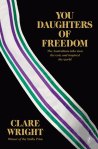
Clare Wright, You daughters of freedom (#BookReview)

Clare Wright, You daughters of freedomWell, that was a tome and a half! And in saying this I’m referring less to the length of Clare Wright’s new history, You daughters of freedom: The Australians who won the vote and inspired the world, than to its depth and richness. There are, in fact, two main stories going on here – the story of women’s suffrage in Australia and England, and that of Australia’s leadership in the world, at the time, in terms of progressive politics, of forward-thinking social legislation. They were heady, optimistic times, and the suffragists (being those men and women who advocated for women’s enfranchisement) were part of it all.

Clare Wright frames her history of this period in Australia’s nationhood through the story of five suffragists – Vida Goldstein (1869-1949), Dora Montefiore (1851-1933), Nellie Martel (1855-1940), Dora Meeson Coates (1869-1955), and Muriel Matters (1877-1969). These women should – like that famous suffragette Emmeline Pankhurst is – be household words. Indeed Pankhurst knew and used most of them in her long battle for women’s suffrage in England. Why are they not? Why, for example, asked Clare Wright at the lecture I attended, is there no statue to Vida Goldstein in Victoria? (There is, she tells us in her Epilogue, a memorial park bench in her hometown of Portland, Vic! A park bench!!)

Well, lest we think they are not well-known because achieving suffrage was oh-so easy in Australia, Vida told otherwise to a US Senate Select Committee on US Suffrage during her 1902 USA tour:

Vida wished the senators to know, too, that this was the result of years of hard fighting–in case they also subscribe to the ‘one fine day if just happened’ school of political progress.

In other words, our five women (and all the other Australian fighters for the cause) may not have had to chain themselves to a grille like Muriel Matters did in England in the Suffragette cause, nor refuse to pay taxes as Dora Montefiore also did in England for the same cause, but they had lobbied their case hard. Indeed, while South Australia granted suffrage to its women in 1894, and the new federal government to women in 1902, it took until 1908 for the last state in Australia, Victoria, to do so.

I should clarify here that, although Australia was a leader in women’s suffrage by being the first nation to legislate suffrage for all white adult Australian women, without property qualifications, and to enable those women to stand for parliament, it was just for white women. As Wright says, “it was now race, not gender, that defined the limits of Australian citizenship.”

Writing history

You daughters of freedom is, then, a good read, because the story it tells is fascinating. The five significant women are all wonderful subjects in their own right:

  • Vida Goldstein, the private school girl who “developed a passionate commitment to the underprivileged” and a “zeal for social reform”, and stood for parliament several times to pave the way for others;
  • Dora Montefiore, the committed socialist whose practice of non-violent civil disobedience was observed by a young Gandhi;
  • Nellie Martel, the elocutionist whose militant activism resulted in her being arrested in England and spurned by papers at home;
  • Dora Meeson Coates, the artist whose “Trust the women” banner is now on permanent display in Parliament House; and
  • Muriel Matters, the actor who led the grille protest in the House of Commons, flew in a “Votes for Women” labelled airship over London, and undertook a popular, successful lecture tour on English suffrage in Australia.

I’m not going to share their stories, because you can find them in reviews (like Lisa’s, in the link below), in the Australian Dictionary of Biography (on which their names above are linked), and most importantly in Clare Wright’s book. Each of these women played critical roles in the suffrage fight both home and in England where limited women’s suffrage wasn’t achieved until 1918.

No, what I want to write about is the style, because no matter how interesting or important history is, few (besides the academics and die-hards) will read it if it it’s not written in a way that engages. And this is where Wright shines. It’s a hefty tome, at nearly 500 pages. It’s a complex one which juggles the stories of five quite disparate women, from the late nineteenth century to the second decade of the twentieth. And it is extensively researched, with each page containing not one but several quotes from mostly primary sources (such as newspapers, speeches, and documents from personal papers.) A daunting work for researcher and reader alike.

In my admittedly limited knowledge of historical writing – so I might be barking up the wrong tree – Clare Wright’s approach reminded me somewhat of Thomas Carlyle’s in his three-volume The French Revolution. It’s a few decades since I read Carlyle, but that history could be written with such verve and colour made a big impression on me. Like Carlyle, though perhaps not quite so flamboyantly, Wright is not afraid to use bold rhetorical tools to tell her story. Explaining why 1911 didn’t turn out to be the golden year England’s suffragettes hoped, Wright writes:

Truth be told, the writing was on the wall well before that. The summer of 1911 continued in a national pantomime of over-the-top pageantry and under-the-surface tension with the King and his court centre stage. But the audience should have been shouting, ‘Over there! Look over there!’

Over there  … to Bermondesy […]

Over there … to Ireland […]

And further over there–to Germany […]

The glorious late summer of Edwardian England was about to shatter like a cheap vase.

There is nothing inaccurate in what she says – to my knowledge, anyhow – but the way she says it is fresh, compelling, and devoid of dry or, worse, obfuscating academese. I could pull out example after example of writing that captures our attention, but I think I’ve made my point.

Wright is also careful to make clear where the historical record is lacking. Why did Nellie, for example, suddenly disappear from public life? Wright explains that there are no clear answers, but follows up to discuss the “few clues”.

And, then, almost best of all, there’s the extensive use of contemporary newspaper reportage – surely made so much easier for modern researchers by the wonderful Trove. Wright draws on conservative and progressive newspapers from around Australia to reflect what people – as represented by editors and journalists – were thinking at the time. When Nellie, say, or Vida, were active in England, the Australian papers were watching closely and reporting. Not only does this flesh out our understanding of the suffrage question, but it fleshes out the wider social history.

The book is chronologically told, with evocatively titled chapters, such as, for example, Chapter 28’s “Homecoming Queen, Australia, winter 1910”, which chronicles Muriel Matters’ return home for her lecture tour. However, despite this signposting, readers do have to be on their mettle to keep track of our five suffragettes, to know where they are at any one time, and which of the many political organisations, if any, they’re aligned with. It’s a complicated story that Wright aims to tell – and following it requires attention.

They were heady days …

So, You daughters of freedom, is an engrossing read – but, I have to admit that, as I read it, I became sadder and sadder. This was mainly because of that thread that I mentioned in my opening paragraph, the one to do with Australia’s leadership in terms of progressive politics. What happened to us – us Australians I mean? There we were, at the turn of the century, leading the world, not only in women’s suffrage but in a whole raft of social reform measures, relating to working conditions, conditions for women and children, and, even, Maternity Allowance. We were also the first nation to elect a socialist or Labor government, when Andrew Fisher was swept into power in 1910.

Well, what happened, says Wright, was World War 1, which completely changed the nation’s narrative. But that is another story. Meanwhile, I highly recommend You daughters of freedom, and look forward to Wright’s third book in her planned trilogy on Australian democracy.

Lisa (ANZLitLovers) has also reviewed this book. She liked it too.

AWW Badge 2018Clare Wright
You daughters of freedom: The Australians who won the vote and inspired the world
Melbourne: Text Publishing, 2018
553pp.
ISBN: 9781925603934

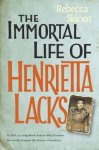
Rebecca Skloot, The immortal life of Henrietta Lacks (#BookReview)

Rebecca Skloot, The immortal life of Henrietta LacksIn her extensive acknowledgements at the end of her book, The immortal life of Henrietta Lacks, Rebecca Skloot thanks “Heather at The Book Store, who tracked down every good novel she could find with a disjointed structure, all of which I devoured while trying to figure out the structure of this book.” Interesting that she looked at novels, particularly given our recent discussion regarding non-fiction that reads like fiction, but more on that later …

Many of you will have heard of the book, or, if not, of Henrietta Lacks, or of her HeLa cells? It’s a sort of hybrid biography-cum-science book about an African-American woman named Henrietta Lacks who died in 1951, and the immortal HeLa cell line that was and continues to be cultured from her cervical cancer cells. As Skloot writes, “these cells have transformed modern medicine.” The book was published in the USA in 2010. It won multiple awards, including, says Wikipedia, the National Academies Communication Award for “best creative work that helps the public understanding of topics in science, engineering or medicine”. In addition, the paperback edition was on the New York Times Bestseller List for 75 weeks.

I’ve described the book as hybrid, because the story (or biography) of Henrietta Lacks is just one of its threads. It also interrogates the complex intersection between race, class and ethics in medical research as well as broader ethical ramifications of issues like “informed consent” and the commercialisation of human tissue. Skloot, herself, says early in the book,

The Lackses challenged everything I thought I knew about faith, science, journalism, and race. Ultimately, this book is the result. It’s not only the story of HeLa cells and Henrietta Lacks, but of Henrietta’s family—particularly Deborah—and their lifelong struggle to make peace with the existence of those cells, and the science that made them possible.

If you haven’t guessed it by now, then, this book is another example of those non-fiction books that I like so much in which authors author takes us on their journey of discovery, in this case to understand the people and the science, the ethics and the law, behind this astonishing story. Skloot wasn’t the first so tell it, however – something she makes clear during our journey. Earlier stories include Michael Rogers’ 1976 article in Rolling Stone, and the 1997 BBC documentary, The way of all flesh, which you can watch on YouTube. I’m not going to spend a lot of time on the story of the cells, so if you want to know about them – read the book and/or watch this video.

Skloot explains her own fascination with Henrietta, from being introduced to her cells in high school, through those HeLa cells being “omnipresent” throughout her biology degree, to when she was in graduate school studying writing “and became fixated on the idea of someday telling Henrietta’s story”. It’s not surprising then that this book has been extensively researched – as evidenced by the Notes and Acknowledgements. (These two chapters make great reading in themselves.) It took around 10 years to write, not just because of this extensive research. A major issue which Skloot had to confront was the understandable suspicion and anger of the Lacks’ family, whose help she needed if she were to tell this story properly and with integrity. Their story is bound up in a long invidious history of research carried out on African-Americans, which is also detailed in the book.

“What do you mean, ‘everybody else’?!”

So, the structure. The book is divided into three parts – Life, Death, Immortality. In the first two parts, the story is told in two roughly alternating, chronological threads – one telling the story of Henrietta Lacks, her cells, and her family, from 1920 to 1973; the other tracking the early days of Skloot’s research from 1999 to 2000. In the third part, the two tracks coalesce into one chronological thread, starting from 1973 when the late Henrietta’s daughter-in-law, Bobbette, discovers quite accidentally via a friend’s brother-in-law, that Henrietta’s cells were being used in scientific research and had been since 1951. Until that point, no-one in the family had known that Henrietta’s cells were still “alive” and being used in research all over the world:

“What?!” Bobbette yelled, jumping up from her chair. “What you mean you got her cells in your lab?”

He held his hands up, like Whoa, wait a minute. “I ordered them from a supplier just like everybody else.”

“What do you mean, ‘everybody else’?!” Bobbette snapped. “What supplier? Who’s got cells from my mother-in-law?”

She is, to put it mildly, horrified – and rushes to tell her husband and thence the family.

Here, though, I’m going to return to the issue of writing non-fiction like fiction. There’s the use of narrative structure, of plot lines, to create some sort of tension for the reader – in this case it largely revolves around the lives and reactions of the family, particularly Deborah – while we are also learning drier “stuff” about the history and ethics of cell culture and medical research. The dialogue I’ve just shared is part of the main plot line concerning the family’s discovery of what had been happening to Henrietta’s cells.

Then there’s the use of evocative, descriptive language. Skloot doesn’t overdo this, staying, in the main, direct and focused – but there are enough little flourishes to keep the writing interesting, like “HeLa grew like crabgrass” or “tufts of hair like overgrown cotton sprouted from his head”. The imagery draws from the area in which it is set. And, there’s the use of dialogue. Skloot did carry out a lot of interviews over her decade-long research and often makes clear when she’s quoting from those – but not all dialogue comes from that research. Some is imagined – or what critics call “representative”. No-one, for example, would have recorded Henrietta’s exact words when she visited her gynecologist, but Skloot writes:

“I got a knot on my womb,” she told the receptionist. “The doctor need to have a look”.

How much more interesting that is to read than, say, “Henrietta visited her gynaecologist, telling the receptionist that she had pain in her womb that needed to be investigated.” I know what I’d rather read. Not only is dialogue more engaging, but if the writer gets the voice right it enhances our understanding of the character. One of the delights of this book, in fact, is our getting to “know” members of Henrietta’s family, and the dialogue plays a significant role in this. Not non-fiction readers, however, approve of this approach.

As I’ve already said, I’m not going to write a lot about the content of this book, fascinating though it is. It has been written about extensively; there are interviews with Skloot on the web; and for background there’s that BBC documentary. The book is now nearly a decade old. Cell research has moved on, but the story of the intersection of race and class with science and ethics is still relevant. Moreover, this is a book of history – the history of medicine. Close to home for me, for example, was learning that HeLa cells were involved in identifying the connection between the HPV virus and cervical cancer, and thence the development of the vaccine with which my reading group’s daughters were among the first in the world to be vaccinated.

All this makes the book well worth reading. There were, admittedly, times when the cell science got the better of me (and other non-scientific members of my reading group) but not enough to turn us off. Skloot’s courage, warmth and empathy with people out of her ken, the trust those initially fearful, angry people came to place in her, and her ability to tread the fine line between judgement and analysis when discussing actions of the past make this a special read. No-one in my reading group regretted this choice for our schedule. A fine way to end the year.

Rebecca Skloot
The immortal life of Henrietta Lacks
Sydney: Picador, 2010
ISBN: 9781742626260 (ePub)

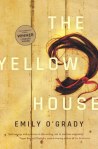
Emily O’Grady, The yellow house (#BookReview)

Emily O'Grady, The yellow house

Although Emily O’Grady’s debut novel The yellow house won this year’s prestigious The Australian/Vogel’s Literary Award for unpublished manuscripts by authors under 35, I wasn’t sure at first that I was going to like it. I think this was because I was feeling I’d read a surfeit of books this year about young people living challenging lives in rural settings – Charlie Archbold’s Mallee boys (my review), Jenny Ackland’s Little gods (my review) and Sofie Laguna’s The choke (my review). I wasn’t sure this was going to have anything new to offer.

However, it wasn’t long before ten-year-old Cub’s voice got me in and I realised that this book had a different spin again, which is that it explores how families of violent or sociopathic criminals, like serial killers, cope in the long years after it all comes to light. It’s a coming-of-age story, in a way, but a very different one. Cub, then, is our narrator. She lives on a “lonely property bordering an abandoned cattle farm and knackery” (back blurb) with her twin bother Wally, her 17-year-old brother Cassie whom she adores, and her parents, Colin and Christine. Within sight of their home is “the yellow house” in which her maternal grandfather, Les, had lived. He had died two years before the Cub and Wally were born – and in the prologue we learn that he had been a serial murderer of young women. The prologue closes with a now wiser Cub telling us:

Now, I know everything he did trickled down and created us all, because it turned out he was the god of all our lives.

So we know at the beginning something that Cub doesn’t know when the narrative “really” starts. Why does O’Grady take this approach? I’m guessing it’s to focus us less on that plot. We know what Cub doesn’t know – or at least enough of it. We can therefore focus on how a family lives with this knowledge rather than on trying to work out, as Cub has to do, what the secret is. It makes Cub a perfect naive narrator: she has the curiosity and loyalty of a child but lacks the wisdom necessary to make the right calls. There’s an added complexity to Cub’s situation which increases her isolation: everyone else in the family knows, including her twin brother. Cub wasn’t told because she’s a girl. It’s no coincidence that she, Coralie, has a baby-ish nickname, while her twin brother doesn’t.

The novel proper starts when Cub is approaching 11 years old, and her aunt, Helena, and 11-and-a-half-year-old cousin, Tilly, move into the yellow house. Tilly’s father, Dermott, we’ve already been told, had driven his car into the dam some time ago and died. It is Helena and Tilly’s appearance which sparks the events that play out in the rest of the novel, events that are “driven” by that violent forbear whose “rotten blood” is in their veins, whose legacy they struggle to shake off.

It’s a horrifying novel. We realise early on that the family is ostracised by the community in which they live, and is struggling emotionally. Cub’s Dad does his best to keep them together but is ill-equipped for the challenge he faces, while her Mum also does her best in her own way, but regularly takes to her bed, with various malaises, many depression-based presumably. Cub and Wally have no other friends at school, something Cub doesn’t fully cotton on to, but we do:

The kids at school were strange; Wally and I played by ourselves at lunchtime, always paired up when we did partner work.

Cub is consequently desperate to make Tilly, so close in age, her friend:

I tried to think of something else to say. I knew we had one chance to make a good impression and I didn’t want to waste it. But the silence felt as deep as the dam, impossible to swim out of. I was annoyed at myself for not practising with the girls at school. I should’ve been prepared.

But, it never quite works. Tilly, dangerously – she’s too much like her mother, Cub’s Mum hints at one stage – is more interested in boys. And, there are boys – besides Wally. There’s Cassie, and his creepy friend Ian. Tilly, like Cub, doesn’t know the story of the “yellow house” and her mother is determined to keep it that way.

The story develops slowly, chillingly, and, it feels, inevitably, as the secrets, parental inadequacy, community prejudice and cold opportunism combine to result in … I’d like to say more, but perhaps should not spoil the plot.

This is not a novel in which everything is explained – as can be typical of naive narrator stories – but there seems to be a specific intention here. At least, I’d say that O’Grady’s aim is not to tease out all the possibilities and permutations of the situation, nor to follow the more usual crime fiction path of restoring order out of chaos. Instead, it’s to encourages us, at each point, to consider what might be happening, why it might be happening, and what might make (or have made) it happen differently. That gives the book a power that those more traditional crime novels don’t have.

Besides this open-endedness which kept me engaged and pondering throughout, there’s O’Grady’s writing. It’s not tricky. There’s quite a bit of dialogue and simple description of what’s going on, as you’d expect, rather than a lot of reflection, but O’Grady has some lovely turns of phrase. At one point Cub is near Cassie’s friend Ian:

Now that I was right up close to him I didn’t know what to do; it was like my brain was wrapped in sticky tape and I couldn’t think properly.

The language and imagery, as this example shows, are appropriate for Cub’s age. And there’s the “yellow house” itself. Yellow has so many connotations. It can suggest something warm, bright, cheery, hopeful, but is also the colour of cowardice and deceit, and can convey sickness. The contrast between these positive and negative meanings of the title underpin the novel’s horror.

Why read this novel? There’s the obvious reason that it explores a subject that many of us must wonder about when we hear of violent crimes – how does the wider family cope, what happens to them? And there’s the associated reason that in so doing it might encourage us to think more empathetically if we found such a family in our midst. But, besides that, it’s an engaging debut novel by a new young writer from whom we will hopefully hear more. It’s always exciting to be in there at the start.

Lisa (ANZLitLovers) also liked this book.

AWW Badge 2018

Emily O’Grady
The yellow house
Crows Nest: Allen & Unwin, 2018
314pp.
ISBN: 9781760632854

(Review copy courtesy Allen & Unwin)

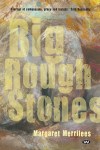
Margaret Merrilees, Big rough stones (#BookReview)

Margaret Merrilees, Big rough stonesIn her latest novel Big rough stones, Margaret Merrilees seems to have done for Australian lesbians what Armistead Maupin did for the American gay community in his Tales of the city series. It is the story, spanning roughly three decades from around 1970s on, of a character named Ro and her lesbian sisterhood in Adelaide. In so doing, it also encompasses some of the feminist activism and sociopolitical concerns of those decades.

Now, Merrilees has appeared here before – with her debut novel The first week (my review) and in my post on her essay about non-indigenous writers writing about indigenous people. I’ll return to this point later …

The novel’s title comes from Miriel Lenore’s poem, “the walls of lesbos”, which is quoted at the beginning of the book. It starts:

to build a lesbian wall
take big rough stones

don’t cut to fit

The poem concludes with the idea that the strength of the wall lies in the combination of the places where the stones touch and the gaps between. This idea perfectly encapsulates the relationships in Big rough stones, because there’s a real sense of a bunch of different individuals who support each other for the long haul. There are points at which they meet. They share political beliefs, for a start, and they share their lives (sometimes as lovers, sometimes in share houses, sometimes in work). But there are also the gaps, those individual differences that either make a community stronger or break it apart. Here, they make it stronger.

Ro, we soon realise, is not the easiest person to live with, not always the most responsible or reliable person, but she’s “sturdy and energetic, descended from a Welsh pit pony and a dour Scot.” She’s idealistic, passionate, and will give things a go. She’s our focal point. The novel is told third person but mostly through her perspective. However, we also get to know several of her friends and lovers, sometimes through her eyes, but sometimes we pop into their heads for a brief while too.

Besides this occasionally shifting third-person point of view, the novel also has an interesting, almost circular, 4-part structure: Now, A while ago, A long time ago, Now. At the novel’s opening – in Now – Ro is in her 60s and learns that she has terminal cancer (so, no spoiler here). We also learn that, at this stage in her life, she wishes she still had someone called Gerry in it. We then move back in her life, eventually reaching “a long time ago” where we meet Gerry and discover why she is no longer in Ro’s life. It’s a sad story. In the final “Now”, Ro is in the terminal stages of her cancer, being cared for by her friends. We see just how strongly that wall has been built. The story reminded me just a bit of Helen Garner’s The spare room – not that Ro tries ineffective alternative medicine, but in the challenges her friends face in caring for a seriously ill person. It isn’t easy.

So, the book is about relationships – lesbian ones, yes, but there’s much that’s universal here too. However, it is also about the times – about political ideals and feminist activism, about the environment and climate change. Several of the women, including Ro, work in a Shelter for abused women. They work as a collective, and we share in some of the struggles of making such arrangements work. We sit in on a collective meeting, after Ro has missed a shift without calling in. There’s discussion and dissension about Ro’s commitment, with one member suggesting this might not be the job for her. Lovely, loyal Maddie speaks up:

I don’t like this. We’ve never been into sacking people or any of that sort of patriarchal shit.’

‘Maybe that’s our problem,’ said Tilda. ‘The place would run a lot more efficiently if we were.’

But this was going a bit too far for the others.

‘No, that’s completely against what we value,’ said the oldest member. ‘People always come first, and that includes workers. It’s up to us to honour Ro’s strengths and figure out how to work with her.’

Ro herself was struck by Tilda’s echo of her own thought. We should have a few more rules, she wanted to say.

She doesn’t say it, though. Instead, she concedes that she was wrong, and offers to work on her relationship with Tilda. An uneasy truce is achieved!

Another quote from the novel that has been used in its promotion provides a good sense of what Ro and her friends were about:

‘You thought feminism would stop violence against women,’ said Julia. ‘And that would stop war. And stop people trashing the Earth. You tried.’

‘Not alone,’ said Ro modestly. ‘I had help.’

Truth-telling

I want to end, however, with Merrilees’ concern about representing indigenous Australians in our stories. Here’s something I quoted from her in my previous post:

To write about Australia, particularly rural Australia, without mentioning the Aboriginal presence (current or historical) is to distort reality, to perpetuate the terra nullius lie. However, for a non-Aboriginal writer to write about Aboriginal people is to run the risk of “appropriating” Aboriginal experience; speaking on behalf of … There’s been too much of that already.

This, as I see it, relates to the issue of truth-telling. There’s the formal truth-telling – via, say, a truth-telling and reconciliation commission – but there’s also the more informal truth-telling that we can all do. Truth-telling is about all Australians coming to a “shared understanding of our history”, which includes “the acceptance of mass killings, incarceration, forced removal from land and forced removal of Aboriginal and Torres Strait Islander children from their families”. The now standard welcome or acknowledgement of country statements are part of this.

So, in Big rough stones, Merrilees has taken a sensitive approach. She does not, here, as she did in The first week, have an indigenous character, but she acknowledges indigenous Australians by showing her characters being aware of the “truths”. For example, Alby, one of Ro’s friends gets a job at a mine. Ro is horrified, and says:

‘Shit, Alby. How could you? Mining. Probably on Aboriginal land.’

‘Certainly on Aboriginal land. The whole country is Aboriginal land. This pub is on Aboriginal land.’

True! On another occasion, after a protest in Alice Springs against Pine Gap, Ro ends up in gaol for a night. The cells are disgusting and Ro finds it hard to engage in the political debate about the US base:

The walls were covered in graffiti. The misery and degradation of the previous occupants hung in the air, a miasma, shockingly brutal. The protest about the US base lost its urgency. Here was racism, fundamental, elemental, an Australian truth most of them had never seen before. Not close up. This they should protest about.

She realises that:

She and the others had privilege that no Aboriginal prisoner ever had. They could give up their resistance and walk away any time. And eventually they did.

I think she has hit on a way of not continuing terra nullius but, at the same time, also not appropriating indigenous experience. It may not work in all situations, but here, with politically aware characters, it does.

Fundamentally, Big rough stones is a straightforward, accessible story with a lot of dialogue that keeps the story moving along – but this is not all it is. Like Tales of the city, it offers a realistic, but warm-hearted portrayal of a time and place, with all the attendant personal and political messiness. An engaging read.

Lisa (ANZLitLovers) also liked this novel.

AWW Badge 2018Margaret Merrilees
Big rough stones
Mile End: Wakefield Press, 2018
278pp.
ISBN: 9781743055526

(Review copy courtesy Wakefield Press.)

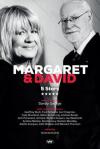
Amanda Duthie (ed.), Margaret & David: 5 stars (#BookReview)

Amanda Duthie, Margaret and DavidMargaret and David, the subjects of this delightful, eponymously named collection of reminiscences and essays, do not need last names here in Australia. They are just “margaretanddavid”. But, since we have an international readership here, I should formally introduce them. Margaret and David are Margaret Pomeranz and David Stratton, Australia’s best-known and best-loved film critics who retired from their television movie show in 2014 after 28 years on air! There were to us as Siskel and Ebert were to Americans. Their influence was immense.

This book, Margaret & David: 5 stars, is essentially a tribute book produced on the occasion of their being awarded the 2017 Don Dunstan Award, an award established in 2003 to commemorate the late South Australian Premier, Don Dunstan, who was a major champion of the arts, including film. The book contains mostly short reflections, but also an extended essay, on Margaret and David’s contribution to Australia’s film industry and culture, and, in fact, to world film culture. The pieces are written by a wide variety of industry people, from producers like Jan Chapman, through actors like Geoffrey Rush, and directors like Cate Shortland and Gillian Armstrong, to film business people, journalists, film festival directors, and even, Margaret’s son, Josh. It’s a delightful read – but a provocative one at times too.

Of course, I enjoyed the insights into Margaret and David’s personas and working relationship – and won’t go into these. If you’re looking for gossip you won’t get it here because Margaret and David were professionals, and were, and are, we are told, good friends. Sure, they disagreed, sometimes vociferously – we all remember Margaret’s “Oh, David!” exclamations – but these arguments always teased out ideas about film. Gillian Armstrong says, “they formed a lively, fiery, passionate, laughter-filled relationship.” If, on the other hand, you’re looking for insights into the history of the Australian film industry, you will get some here. This is not an academic work, but many of the reflections on these two can’t help but comment on the Australian industry and on film culture more broadly, from the mid 1980s when they started on television to the mid 2010s when they finished. Their contribution – and impact – was not only qualitative but, in some respects, quantifiable.

This all interested me, but what I want to focus on in the rest of this post is what the book offered me regarding …

The practice of criticism

… because, fundamentally, criticism is criticism, whether you are discussing film or books, drama or ballet. I enjoyed some of the commentary on this.

Director Gillian Armstrong, while teasing (and forgiving) David about his poor review of her Oscar and Lucinda film, describes perfectly the art of the critic, when she says

It is important to have serious discussions that actually discuss the craft of the director. They shared a real appreciation of the vision behind the camera angles, the lighting, editing, music and casting. But most importantly, their reviewing was about the very heart of those films, the content and ethics.

Leaving aside the terms “review” and “criticism” which tend to be used somewhat interchangeably in the book, I think this statement contains the guts of what criticism or, shall we say, serious reviewing is about: marrying analysis of technique with exploration of content (and ethics). Journalist Sandy George, in her extended essay, puts in this way:

They actively engage in talking about the narrative, the history of the production, what the filmmaker was trying to achieve, and how the film affected them; they don’t engage in reductive talk such as “this is good”, “this is bad”, “see this”, “don’t see that”.

There’s one memorable review they did which several writers commented on: their review of the violent R-rated movie Romper Stomper. Margaret gave it 4.5 stars and David refused to rate it. This review is now famous – and part of this is for the way their discussion was conducted. It was respectful, and considered. You can see the review here.

Other practical issues are teased out – such as reviewing works you don’t like, and reviewing works by friends. On the former, Sandy George quotes David Stratton on writing reviews for “the extremely influential” Variety:

‘I never gave a glowing review to something that didn’t deserve it … but knowing how important a Variety review is, I sometimes went out of my way not to review a film.’

A valid decision I think, though purists would probably say that you should review such films regardless.

George also quotes Margaret about reviewing works by friends. They tried, she said, “not to be friends with filmmakers, but it’s impossible”. She also says:

“I’ve always been kind to Australian films because I’m such a wimp … “

Indeed, one person said that because of this, a good review from David carried more weight!

George goes on to report one distributor’s comment that

one way the pair went above and beyond for Australian films was how carefully they chose their words when one fell short.

Notwithstanding my above comment about not reviewing at times, I also like this approach. Honest reviews are important, but there are ways of being honest. The arts are tough enough, without demoralising those working hard within it, don’t you think?

Anyhow, I enjoyed this book. It’s a quick read but not a frivolous one. I’ll close with a comment made by current SA Premier, Jay Weatherill:

Their love of cinema is real, undiminished and contagious, and they have helped me and countless other Australians to understand the critical role can play in telling our nation’s stories and presenting our values.

AWW Badge 2018Amanda Duthie (ed.)
Margaret & David: 5 stars
Mile End: Wakefield Press, 2017
133pp.
ISBN: 9781743055137

(Review copy courtesy Wakefield Press)

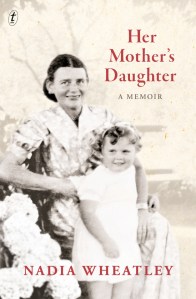
Nadia Wheatley, Her mother’s daughter: A memoir (#BookReview)

Nadia Wheatley, Her mother's daughterIn Her mother’s daughter: A memoir, Australian writer Nadia Wheatley has written the sort of hybrid biography-memoir that I’ve reviewed a few times in this blog. All of them, as I mentioned in my recent Meet the Author post, have been mother-daughter stories, Susan Varga’s Heddy and me, Anna Rosner Blay’s Sister, sister, and Halina Rubin’s Journeys with my mother. It’s this hybrid form that I’d particularly like to explore in this post.

And the hybrid I’m talking about is one where the biography is of the subject (mothers, in these cases) and the memoir is of the writer (the daughters.) This is the more common form of hybrid biography-memoir, though my research did turn up others, such as Room to dream by Kristine McKenna and David Lynch in which McKenna’s biographical chapters on Lynch are followed by Lynch’s responses to those.

The biographer’s question

There are, of course, many memoirs by people who, in order to tell their own story, need to figure out their relationships with others, particularly their parents. However, these books remain primarily about the writer. Hybrid biography-memoirs, on the other hand, tend to be as much, if not more, about the other person as the writer. The end result might be the writer understanding themselves more, but the focus tends to be the other. This was clearly Wheatley’s intention. Indeed she told us that her biographer’s question was “Why would a nice person like Neen marry an awful person like my father?”

So, her book’s main focus, then is her mother. Nina (Neen) Wheatley, nee Watkin, was born in northern New South Wales in 1906, and died in Sydney in 1958. She lost her own mother when she was five years old. She and her siblings were separated when her father remarried, with Nina and her younger sister Boo staying with their father and his new wife. It became clear that the family expected Nina to be the parents’ carer in their old age. However, Nina managed to train as a nurse, and go overseas during the war as an enlisted nurse with the 6th AGH (Australian General Hospital), where she worked in Greece and Palestine. She returned to Europe after the war to work with UNRRA and then IRO, caring for Displaced Persons. It was during this time that she met the man – English doctor, John Wheatley – she ended up marrying. It was a bad decision: he was a womaniser, possessive and controlling, and, according to Wheatley, sadistic. Indeed, it’s very likely that, had he – and the medical fraternity more broadly – taken women’s health seriously, Nina would not have died when she did. After her mother’s death when Wheatley was 9 years old, she, an only child, lived with a local family known to her (and chosen by her mother before her death.) This was, for Wheatley, a problematic situation – but this part of the story occupies just the last 20 or so pages of the book, and, while it’s important to the overall memoir, I do want to move onto other points.

So, back to the form. Unlike Wheatley, those other three biographers-cum-memoirsts, Varga, Blay and Rubin, were able, as adults, to question their mothers. They could bring an adult’s eye to their mothers, and ask the sorts of questions an adult might ask. They all tape-recorded their mothers. Wheatley’s mother, however, died when Wheatley was nine, so concocting her mother’s story was a very different challenge. Fortunately – and how prescient of her – she realised that her memories wouldn’t last so, at 10 years old, she started writing down her memories of the happy times she spent with her mother and also the stories her mother had told her about her life. At times I wondered how she could possibly have remembered as much detail as she does. However, given Wheatley was clearly a writer from the start and given what she experienced was so powerful, it wasn’t hard to trust her authenticity. It’s these stories and  memories, together with letters, journals and interviews with family members and friends, and official records, that provide the facts for her mother’s biography.

Step one, then, is the research, but next comes how to marshall it all into a narrative. Varga and Rubin, like Wheatley, take us on a journey of discovery. As Wheatley said during the conversation with Halligan, she wanted to take the reader on the quest with her. She wanted to share the detective story of her unravelling her mother’s story, and not just present the evidence. Varga and Rubin do something similar, but they tell their story first person, sharing when their mother is reticent, when they, as daughters, are challenged, and so on. Varga makes it clear to her mother – and us – that this means “it won’t be her life story, not properly” but would be “filtered” through her “reactions and thoughts”, her “second generation eyes.”

Blay, however, is more formal, presenting her mother Hela and aunt Janka’s stories in their words as transcribed from her interviews with them. She intersperses these with her own perspective in italics. The three voices are thus distinct.

Wheatley, though, uses a different approach again. She tells her mother’s story third person, but, intermittently, will suddenly switch to first person to present her own role in the research or the story, removing us from Nina’s chronology to her own time-frame. Chapter 9, which relates her mother’s life immediately postwar, is a good example. The first 10 pages read like a standard biography, describing what Nina was doing, quoting from letters and journals to support the information, then, suddenly, after a reference to Nina’s father’s death, she flashes to nine years after Nina’s own death (and over twenty years after the time we’ve been in.) Nadia is dining with her Auntie Boo, and casually asks if she knows where Nina’s wedding ring is. Her aunt bursts into tears, saying:

‘Daddy’s will was so unfair! To leave everything to Neen! Not just Glenorie, but everything in it!’ As my aunt moved on in her attack, it turned out that I too was guilty as charged: ‘All those things that Nina and you had in that house at Strathfield, you had no right to them.’

Now, Nina’s father had left “other real estate to his other children” but leaving the family home to Nina rankled so much, writes Nadia, that “some of her siblings would never get over it.” After a page on all this, we are returned to Nina’s life, and the third person voice.

This approach ensures that as well as travelling the journey with Nadia, we also see the impact on her, and her sense of guilt, as she is growing up. There are many insertions like this, including one later in the book when Nadia remembers a time with her father when she was three years old. With this approach, Nina’s story is told chronologically, but Nadia’s is disjointed until after Nadia is born when her story is gradually folded in to the main narrative. It’s a tricky approach, but Wheatley, an experienced novelist and biographer, makes it work, resulting in something that provides both a coherent biography of her mother, and the impact on her. It doesn’t necessarily work if you are expecting a detailed memoir of Wheatley’s life, but that wasn’t Wheatley’s goal.

Defining moments

Interesting as all this is, however, the main joy in reading Her mother’s daughter lies in its social history of the first half of the twentieth century. Wheatley’s story of her mother’s experience as an active participant in World War 2 is vivid, and makes a significant contribution to a less covered aspect of that war. Her story of her mother’s life in Sydney during 1950s is significant too – but terribly so.

Nina’s War “story” was fascinating. Her reports of her early experience are cheerful, full of a sense of adventure and camaraderie, but that soon changes as her real war experience starts. She sees the impact of bombing on civilians in Greece, and she nurses casualties of the Syrian campaigns including El Alamein. She already cared about social justice before going to war, but her desire to help others firmed afterwards. Her experience of forced repatriations, of seeing “Poles packed like cattle in trucks” during her work with UNRRA, was “a defining moment” writes Wheatley. Nina wrote in her journal that “This experience will have an intense influence on all my life.”

Wheatley’s description of her mother’s work with Displaced Persons is inspiring, showing Nina to be a resourceful and empathetic woman who managed to create harmony in extremely difficult circumstances. However, her marriage to Dr Wheatley saw this confident, warm woman brought undone. Her husband’s cruel, self-centred behaviour soon soured all Nina’s hopes of a happy marriage of equals. Nadia writes that he either “provoked arguments” with her mother, or set up “elaborate games in which I was the pawn he used to take the queen.” That – and his womanising – were bad enough but, when in 1956 Nina started feeling unwell, the situation became dire because Nina fell prey to a male-dominated medical system, actively supported by her doctor husband. The belief that the ills women of Nina’s now middle-age felt were all “in the mind” resulted in her eventual destruction. It’s devastating for Nina (of course) and for Nadia from whom so much, before and after, was kept secret – but, for anyone who knows or lived through the 50s, it’s only too believable.

Unfortunately, as it turns out, not all the defining moments of Nina’s life were positive ones.

Now, once again, I’ve outstayed my welcome, so I’ll conclude by saying that Her mother’s daughter is a great read for two reasons. Firstly, it provides a thoughtful, authentic – sometimes exciting, sometimes disturbing – social history of the times. And secondly, with Wheatley’s ability to write engaging narratives, it makes for engrossing, moving, provocative reading. I do recommend it.

AWW Badge 2018Nadia Wheatley
Her mother’s daughter: A memoir
Melbourne: Text Publishing, 2018
322pp.
ISBN: 9781925603491

Sue Williams, Live and let fry (#BookReview)

Sue Williams, Live and let fryWell, 2018 is clearly “the year of the Mallee” here at Whispering Gums, with Sue Williams’ Rusty Bore Mystery, Live and let fry, being my third Mallee-set book so far this year. The others are Jenny Ackland’s Little gods (my review) and Charlie Archbold’s Mallee boys (my review). By the time I visit the Mallee – next year I hope – I should know it well, though I might stay away from Rusty Bore. Fortunately, that won’t be hard as Rusty Bore is fictional. I say fortunately, because who wants to visit a place known for murders? It would be like choosing to visit Midsomer!

Seriously though, on with the book, starting with the fact that it’s the third in the Rusty Bore Mystery series. I haven’t read the first two, but I’d say this one stands alone well. There’s enough recap for the new reader to quickly pick up the main characters and their relationship with the protagonist, Cass Tuplin, who’s an unlicensed private investigator as well as the owner-operator of the Rusty Bore Takeaway. I’m not a big reader of crime fiction, but I do watch a bit on TV, and I can say that Cass fits the mould of many TV detectives – private or not, licensed or not – in that she has a messy personal life. She’s clearly had a fling with Vern, the owner of the town’s only other shop, but is now with Leo, who’s doing good works in Bolivia but is staying away significantly longer than he’d told her he would. Cass also has two sons – Dean, a not-very-successful policeman in Mildura (a real place), and the-not-very-sensible Brad who’s waiting his court case for “disseminating false information to the market.” There’s affection between mother and sons, but it’s not without tensions – either because Dean is fussing over his mother’s safety, not to mention her unlicensed detecting, or because Cass is too focused on this detecting to listen to Brad well enough to hear what’s happening in his life.

None of this need be taken too seriously, though. As the back cover blurb says, Williams is “Australia’s answer to New Jersey’s Janet Evanovich.” I haven’t, I admit, read Evanovich – shock! horror! – but Daughter Gums has, so I know enough to realise that her crime novels are bright, breezy affairs. And so, certainly, is Live and let fry.

Now, what to say? This is rural crime, and it starts with the disappearance of the aforesaid Vern’s new lady friend, Joanne, from the neighbouring town of Sheep Dip. (There’s nothing subtle in the town names here – Rusty Bore, Sheep Dip, Muddy Soak, Hustle.) Cass, like any self-respecting unlicensed private detective, is reluctant to become involved but, of course, you know she will – and she does. Pretty soon, a murder occurs – not Joanne’s though – and the plot rapidly thickens as we move into the murky world of developers and environmental protection. This has our intrepid Cass driving backwards and forwards across the Mallee in her “little Corolla”, getting into more and more serious scrapes, worrying her sons, irritating the police, and not always making the right calls – as you’d expect.

All this gives Williams the opportunity to provide us with a picture of the Mallee and its inhabitants, which she does in language somewhat different from that we’ve seen in those other Mallee books I’ve read. Here is the Mallee, for example:

As I got closer to Mildura the eucalypt-and-orange desolation gave way to irrigation green, the dark green of orange groves, the brighter, flamboyant green of grapevines, the camouflage khaki of olive trees. I drink it in – green’s not a colour we get that much of in Rusty Bore.

And here is one of its inhabitants:

Nola’s eighty-two and usually quite mentally robust, with opinions carefully cryo-preserved since 1953.

The writing is peppered with gentle, affectionate mocking like this, along with broad satire of various contemporary issues and preoccupations, such as “coffee condescension” from city-siders, and Cass’s own “artisanal” food. We’re also told that

Leo’s import-export business in Muddy Soak folded after the African knick-knack trade fell victim to the decluttering trend.

And there are digs at politics and politicians, such as:

I stood at the desk and waited. A TV flickering behind Taylah showed a surging crowd of middle-aged people in suits. Mostly men, looked like politicians. Another leadership spill? A new Royal Commission? There’d been a lot of debate lately about whether air exists. “If you can’t see it, can’t smell it, it can’t be there.” The slogan of one of the newer political parties.

It’s not subtle, but then Williams’ goal is less social or political commentary than maintaining a light breezy tone and conveying character.

Now, though, back to Cass. Does she get her man (or, not to be sexist, woman)? Well, this is what I’d call “cheery crime”, so yes, one way or another, she does. In other words, without spoiling anything, it all comes out right(ish) in the end and Cass lives to fight (or not, as she chooses) another day. I’m not sure I’ll read another Rusty Bore mystery as I feel I’ve got its measure now, but for those who love light-hearted crime, particularly with an Australian flavour, then Rusty Bore could be just the ticket.

AWW Badge 2018Sue Williams
Live and let fry
Melbourne: Text Publishing, 2018
295pp.
ISBN: 9781925603514

(Review copy courtesy Text Publishing)