Neil H Atkinson, The last wild west (#BookReview)

In one of those strange synchronicities, I attended an event, a few hours after finishing Neil H Atkinson’s The last wild west, that gave me the perfect opening for my post. This event was the launch of the VR film, Carriberrie, at the National Film and Sound Archive. Speaking at the launch, indigenous woman and participant in the production, Delta Kay, referred to being approached by the non-indigenous filmmaker Dominic Allen about making the film. Most non-indigenous people, she said, come to their community and “want, want, want” but Allen was offering to “give”, in a spirit of true reconciliation. This spirit of “giving” to indigenous people was as far from Atkinson’s experience as you could get.
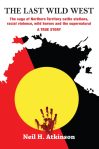
Neil H Atkinson, The last wild westAtkinson’s memoir –The last wild west: A saga of Northern Territory cattle stations, racial violence, wild horses and the supernatural: A true story – chronicles the time, 1977-1980, he spent working at a Northern Territory cattle station. He went there in a state of disillusionment and despair, having been refused shared custody of his children after his divorce. His aim was to transform himself, to become a man the judge would see as stable and reliable, to become, in other words, a person “like other people, who were trusted and respected”. He did transform himself, but not quite in the way he’d expected. He had felt that in the Northern Territory he could work hard and prove himself a man. In no way did he think that he would become involved in brutal racial conflict and that the “manhood” he sought would encompass a new understanding of humanity.

I’ve read novels about white brutality towards indigenous people in Australia – such as Thea Astley’s A kindness cup – and I’ve read histories and other nonfiction books, like Chloe Hooper’s The tall man, which tell this story. However, I haven’t read a memoir this charged on the subject. The physical and psychological brutality conveyed here is truly confronting – and what makes it worse is that, much as we’d prefer it be otherwise, it’s not surprising or unbelievable.

But, why write it now? Atkinson’s experience happened 40 years ago, and progress has surely been made (as suggested by projects like Carriberrie.) Atkinson answers this in his Introduction:

I wanted to hold up a mirror; otherwise it is too easy for people to say: “That was then, and  our society isn’t like that anymore.” I wanted to ask if things had changed as much as people thought they had.

This is a question for each reader to consider. I would certainly hope that the sort of brutality described in this book is no more, but I really can’t be sure. However, I do know – we all know – that we still have a long way to go before true equality is achieved. For that reason – because we all know about slippery slopes – Atkinson’s book is relevant, and worth reading.

“an alien in his own homeland”

And now, I’d better give you some sense of what Atkinson’s experience was. Self-described as timid and insecure, Atkinson, with no cattle station experience, decides that the Northern Territory is the place to remake himself. Serendipitously, while en route, he meets two truckies who give him the names of a pub, of a man who visits that pub and of the station he works for. They advise him not to admit his lack of experience but to “wing it”. They also tell him that “blacks are treated worse ‘n shit”, that they “should get more credit and be paid more”, and, most critically, that “there’s a hell’va lot of bad blood between whites and blacks right now.” This was post-Wave Hill, a landmark for indigenous land rights that heralded a time of change in the outback. White owners and bosses felt threatened, and, while the tide might have been changing, indigenous people were still deemed inferior and had little or no power.

Atkinson’s story is one of being caught between these two worlds. While he starts off having little regard for indigenous people and their rights, early describing himself as having “little sympathy for the blacks”, he is a sensitive person. He soon experiences the brutal machismo of the men in charge – to greenhorn men like himself, to the indigenous workers and their families, and to the cattle. Indeed, his descriptions of the treatment of the cattle by the station workers and managers conveys such barbarity that you are prepared for anything.

To write this memoir, Atkinson draws from the diaries he kept at the time, in which he recorded experiences “as they occurred, the same day or shortly after, and using as far as practical, people’s own words”. The result is that the dialogue and descriptions feel fresh and authentic. He is a good story-teller, telling his story chronologically, and building up slowly to the event which – well, I won’t spoil it. He shares this journey with an almost ego-less honesty, admitting that, even two-thirds of the way through his time in the Territory, even after seeing much brutality, he was still thinking “It was an Aboriginal problem, not mine.” His intellect, his historical understanding, in other words, lagged behind his humanity. Emotionally, he started aligning himself increasingly with the indigenous workers, but he continued to do his darndest to avoid becoming involved in the conflict, to avoid even recognising that the indigenous people’s struggles for voice, dignity, and land, was an “Australian” problem not just an “Aboriginal” one. This attitude is, to a degree, understandable, given the power and control wielded by the white station foreman and his henchmen.

Atkinson’s writing is highly evocative. Initially, I found it almost over-blown – too many adjectives I was thinking. But, as I got into the story, I became mesmerised by his voice, by his way of imbuing feeling into what he was seeing and experiencing. This is not the spare writing of modern writers – but it feels right for Atkinson. Certainly, it conveys an inner response to the situation he found himself in:

Dawn knocked with such blinding clarity, its beams should have scarred the door and windows with clutching fingers of blazing red and yellow, as if I should just hurry over and embrace the new day because of its arrogant promise of purity and renewal.

[and, on Sno, his indigenous co-worker]

I then watched him walk away, a black man with a black shadow cast over the baked red earth of a past filled with pain.

Now, I’ve discussed here many times that issue concerning white people telling black stories. This is not, ostensibly, a problem here, because this is Atkinson’s memoir of his experience. It involves sharing his understanding of indigenous people’s culture, particularly of their attitude to place (“country” is not used here – was not used, I think, so much back in the 1970s) and of their spirituality. Mostly, he quotes their words to him, or his interpretation of their words. It can be a fine line.

As I often say in my posts, there is so much more to this book, so many issues and ideas that I haven’t touched upon, but I’m going to close with two ideas Atkinson discusses in the book, ideas which get to the nub of why this book is worth reading. One concerns his understanding of the history wars:

Such wars are as much about morality as about facts, because we choose the way we frame the national drama: either to regard the dispossession of the people as an injustice that needs addressing, or not. There is no neutral body of facts to which to appeal to answer the basic question. We all have to answer for ourselves. Every Australian has to exercise historical judgement. (p. 149)

And the other, in a sense, frames this:

Most ignorance is ignorance you choose. We don’t know because we don’t want to know. Our will decides how and upon what subjects we use our intelligence, direct our interest. Those who don’t detect any meaning in the Aboriginal world generally do so because, for one reason or another, it suits their opinion that the black world should be meaningless, so it is. (p. 194)

I don’t usually like to use book review clichés, but The last wild west is, I must say, provocative in the best meaning of the word.

Neil H. Atkinson
The last wild west: A saga of Northern Territory cattle stations, racial violence, wild horses and the supernatural: A true story
Melbourne: Hybrid Publishers
288pp.
ISBN: 9781925272918

(Review copy courtesy Hybrid Publishers)
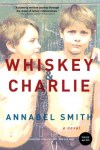
Annabel Smith, Whiskey and Charlie (#BookReview)

Annabel Smith, Whiskey and CharlieSome explanations first. Western Australian author Annabel Smith’s novel Whiskey & Charlie was first published in Australia back in 2012 as Whisky Charlie Foxtrot, which immediately brings to mind the two-way alphabet (or, as I knew it, the alphabet used by the police on The Bill for communication. The things you learn via TV!) However, as happens, the book was, excitingly and successfully, published in America in 2014, and its title was changed to the less evocative Whiskey & Charlie. What I read – heard, actually – was the audiobook that I won in a Readers’ Pack draw last year. Mr Gums and I listened to it on our recent road trip to Melbourne. It passed the time beautifully.

But, another thing, before I talk about that. I’m not a huge fan of audiobooks as I explained earlier in this blog. I really like to see the text; I don’t like to miss visual clues; and I rarely like readers acting out the voices. All these were challenges with Whiskey & Charlie, particularly the last one. The reader, Gildart Jackson, is English. He did the English accents well, but, oh dear, his Australian accent sounded disconcertingly American. I assume this audio, with its American title, was made for an American audience, but, regardless … I prefer reading!

So now the book itself which, really, is what this is all about isn’t it? It tells the story of two identical twins, Whiskey (born William) and Charlie. It is all told, however, through Charlie’s eyes, as the novel starts after Whiskey has had a freak accident and is lying in hospital in a coma. They are 32 years old, and the trouble is that they have been estranged for some time. Charlie has no idea what music, for example, Whiskey would want played at his funeral should he not awaken. He’s distressed. A procastinator who avoids confrontations, he’d always believed there’d be time to sort it all out. The novel progresses from this point, with the family taking turns waiting by Whiskey’s bedside, while Charlie remembers the past and how they’d got to the point they’re at. As he does so, he gradually comes to some realisations about himself and their relationship that enable him to – finally – mature, to see that it hadn’t all been as one-sided as he’d rather smugly assumed. This could be seen in fact as a coming-of-age novel. Perhaps all novels are, in a way; perhaps none of us stop coming of age until we, well, stop?

Anyhow, what makes this book particularly intriguing, besides the thoroughly engrossing story of an ordinary family with all its ups and downs – emigration from England to Australia, parental divorce, and so on – is its structure. And this is where the two-way alphabet comes in. We learn early on that when they were 9 years old, the then close twins been given a walkie-talkie set, and, to help with communication, they learnt this alphabet. William was disappointed that Charlie’s name was in the alphabet, while his was not. Charlie dubs him Whiskey, which becomes his name from then on. Smith structures the narrative around the alphabet, with each chapter titled according to the words – Alpha, Bravo, Charlie, Delta and so on right through to Zulu – and with each of these words linking to some part of its chapter’s content.

This – and the fact that the flashbacks aren’t completely chronological – gives the novel a somewhat episodic structure, but it doesn’t feel forced. Instead, the story is revealed in the backwards-forwards sort of way, for example, that we gradually get to know new friends while the friendship itself is moving forward. (A not uncommon structure. What makes this one a bit different is being organised by the alphabet.)

I’m not going to write my usual sort of review, mainly because having listened to it, I don’t have the same sort of notes, or the same easy access to check details or find quotes. So, I’ll just make a few comments. It’s quite a page-turner, with the main plot, as you’d expect, turning on whether Whiskey will come out of his coma, and if he does what state will he be in. The secondary plot relates to Charlie’s mental state, and his understanding of himself and his relationship with his brother (not to mention with his long-suffering, angelically patient partner, Juliet). He has always felt inferior – the one who came second, the one who didn’t get the girls or the fancy jobs – but he also felt in the right when it came to their estrangement. However, were things really how he saw them? This is something he has to work out for himself. For this reason, the third person limited voice is a good choice for the novel. It enables us to feel with Charlie, while also providing that little bit of distance which enables us to see that Charlie’s perspective may be just a little skewed.

One of the lovely things about Smith’s plotting is that there’s no melodrama, or over-blown emotionalism here. Sure, drama occurs, and there are some surprises, but it’s all within the realm of possibility. There’s some lovely humour too, particularly in the stories of the boys growing up. One particularly funny section has Charlie describing the “bases” in petting with a girl. There were times, though, when I felt Charlie was too angry, too irrational, particularly towards the end when it seemed he was on the road to growth, but that’s minor and didn’t affect his overall trajectory.

Binding all this together is the description of Whiskey’s medical condition. Smith obviously did quite a bit of research – or already knew – just how extended comas play out. While I knew some of it, there were details that I didn’t, and that I found fascinating. Smith also covers such issues as grief and end-of-life decisions.

Finally, I like the title. At first I wondered why Whiskey’s name was first when Charlie was telling the story, particularly given Charlie also comes first in the alphabet. But, of course, it’s polite to put the other person first, and it also reflects Charlie’s sense of who was first in their relationship.

Whiskey & Charlie (or Whisky Charlie Foxtrot) has been out for a few years now, but it’s still worth reading if you come across it in a library or bookshop. Or, have you read it already? If you have, let me know what you thought.

Lisa (ANZLitLovers) also liked and reviewed this – but way back when it came out!

AWW Challenge 2019 BadgeAnnabel Smith
Whiskey & Charlie (Audio)
(Read by Gildart Jackson)
Blackstone Audio, 2015 (Orig. pub. 2012)
10H30M on 9CDs (Unabridged)
ISBN: 9781504608268


Igniting Change, Small ways to shape our world (#BookReview)

Igniting Change, Small Ways to Shape our WorldI really should have posted on this book, Small ways to shape a world, way before this, because it is a quick (albeit meaningful) read, but I am rigorous about the order in which I post on books sent to me for review, and so it has taken until now for it to rise to the top of the pile. I am sorry it has taken so many months for me to get to this book.

Anyhow, enough excuses. Have you heard of Igniting Change? I hadn’t until this lovely little book was sent to me. Igniting Change is, as its website says:

a purposely small organisation that’s passionate about sparking big, positive change with people doing it tough in our communities. We are moved by the humanity and courage of the people we are privileged to work with. We listen, we remain open-minded, we uncover what’s hidden from everyday eyes, we’re guided by the people who experience the issues, we connect unlikely experts to create new thinking and above all we strive to give a voice to people experiencing injustice and inequality. Solid governance and independent funding enable us to take risks when backing outstanding people and organisations, cutting-edge investments that have a real chance of catalysing social change. We call this ‘igniting change’ and we love what we do.

They are, then, about social change and they seem to mainly work from the grass-roots level. Click on the videos on their Projects page to get an idea of how they work, and what they do. One of their mantras is “see the person, not the label” – that is, not “prisoner”, or “homeless”, or “refugee”, and so on.

(Check out the members of the Board for a good picture of who they are.)

Anyhow, Small ways to shape a world is very much about working from the grass-roots. It stems from their belief that “Small Changes x Lots of People = Big Change.” Their promo describes it as “a meaningful, practical book encouraging over fifty small acts of kindness, thoughtfulness and quiet rebellion”. It is, then, about person-to-person kindness, and about the myriad things any individual can do to effect change – no matter how small. As Paul Kelly sings, “from little things, big things grow”.

The book contains a variety of ideas – some are direct suggestions for action, while others are thoughts or questions or adages that suggest action or that simply encourage us to tweak how we think which may then flow on to how we act. Whatever the idea though, it’s inspired by such values as respecting dignity and showing warmth. Some of the ideas are credited to other people and organisations, while others presumably come from their own brainstorming. They address a wide gamut of issues we are confronting – regarding community, social justice, and energy. Here are some picked (sort of) at random!

  • Why do some cultures have elders while others have the elderly? (elders.org)

  • Homeless doesn’t mean nameless. (thebigissue.org.au)

  • Who are the traditional owners in your suburb? (welcometocountry.mobi)

  • People who need the most love often ask for it in the most unlovable ways.

  • Connect with people. Have a talk.

Igniting Change, Small ways to shape our world, page viewThese ideas and thoughts are presented one to a page with a simple, clear illustration on the facing page, some whimsical, some more provocative, most symbolic, but all making a point.

I don’t think there’s much more I can say except that this is the sort of book that probably preaches mainly to the converted, but even the converted can need reminders, because it is so easy to get caught up in our daily challenges and forget the small ways in which we can contribute to the bigger picture.

Lisa also posted on this lovely little book.

Igniting Change
Small ways to shape our world
Richmond: Hardie Grant Books, 2018
ISBN: 9781743794197

(Review copy courtesy Igniting Change)

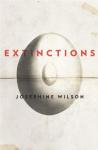
Josephine Wilson, Extinctions (Guest post by Amanda) (#BookReview)

I am very pleased to bring you another guest post by Amanda, for a book I’ve not managed to read yet, much as I’d like to: Josephine Wilson’s Miles Franklin Award winning novel, Extinctions.

Amanda’s review

Josephine Wilson. ExtinctionsI loved this book. I was really sorry when it ended. It’s the kind of novel you press into the hands of a good friend. If we lived in the same town I would drive over and lend it to you. [Thanks, Amanda, I wish you could!]

It comes with impressive credentials – Winner of the 2017 Miles Franklin Literary Award and the 2015 Dorothy Hewett Award for an Unpublished Manuscript. I would never judge a book based on its awards – and putting those aside, Wilson has created an intelligent sensitive story, combining the personal and political with poignant and endearing characters.

I’ll give you a brief synopsis of the plot and a mention of some unique touches Wilson employs. Some reviews out there give away too much, which ruins the book’s unfolding narrative.

As implied by the title – the book deals with extinctions of all sorts – racial, national, natural and personal. Our protagonist is retired engineering professor Fred Lothian, father to Caroline and Callum, reluctant resident of St Sylvan retirement village, neighbour to Jan and desperately missing his deceased wife Martha. The first couple of chapters are a bit slow moving as we are introduced to Fred and in retrospect to Martha. But it picks up the pace quickly and indeed the ending did seem a bit rushed. The story is told mainly through balancing the present with Fred’s memories.

Wilson uses photos and drawings throughout the book to emphasise a point, which works very well. The photos are unique enough to create interest and have sufficient detail for a reader to divine meaning in addition to the narrative. She also likes quoting large paragraphs from other literature, ranging from Shakespeare to Wind in the willows. That I liked less, they seemed overdone and distracting.  Some engineering terms are used as metaphors in numerous chapter titles.

Wilson is a master story-teller. She is excellent at creating suspense. She deftly manages humour and even in this poignant, serious tale it never seems out of place. You’ll find the most entertaining first date in literature in this book. Some writers let their characters meander aimlessly in the story, but Wilson was having none of that. She works her characters like draught horses. They are constantly flung at each other to challenge, chide, ameliorate and alleviate each other. She has a great ear for dialogue and parent-child dynamics. However, this is a political book and sometimes her characters’ conversations can seem didactic – with each taking an opposing view to prove that there is no absolute right or wrong in most matters. Also occasionally Wilson needs to stretch the plot twist to fit the story and even Fred admits that some events were highly coincidental.

Extinctions is full of beautiful sentences – there is a whole paragraph about the early years of educating a child. It’s too long to quote here, but you will recognise it when you get to it. With great writing I often wonder how much is autobiographical. I note in the afterword that both of Wilson’s parents and a mother–in-law passed away during the writing of the book. Also her father was an engineer.

What I liked most is Wilson’s message of hope – that before we all grow old and become extinct, it is never too late to make amends and make the world a better place for the ones we love.

Lisa (ANZLitLovers) reviewed it of course when it came out.

AWW Challenge 2019 BadgeJosephine Wilson
Extinctions
UWAP, 2016
ISBN: 97817425888988

Angela Meyer, A superior spectre (#BookReview)

Angela Meyer, A superior spectreA superior spectre may be Angela Meyer’s first novel, but her already significant writing credentials, including being the author of the short/flash style fiction collection Captives (my review), and the editor of the anthology The great unknown (my review), ensure this is a confident debut. And it needed to be, because Meyer took big risks in this book – structurally, genre-wise, and with her characters.

Let’s start, however, with the title. It hints at genre, doesn’t it? And yes, this book does owe much to genre, but more to genre-bending than to simple genre. It has two storylines – which is part of the risky structure – one set in mid 19th-century Scotland, drawing on historical fiction, and the other also set in Scotland, but in 2024, making it more speculative fiction. There is also a touch of the Gothic here, with visitations, hidden rooms and madhouses, with dark thoughts and hints of perversion. But, the novel is more complex, more sophisticated than that suggested by this idea of two interwoven storylines from the past and the future. The two epigraphs that introduce the novel clue us into this complexity. The first epigraph is from Emily Dickinson and suggests that the “superior spectre” is not “external”, or “material”, but something “interior”, or “more near”, while the second, from Kafka, hints at the dark side of love and human nature.

These ideas are explored through the two main characters: Leonora, a young farm girl from the Scottish Highlands, and Jeff, a dying man who has “escaped” Australia (something that is difficult to do in his chip-controlled futuristic world) to die alone in Scotland. Leonora is poor, but well-read and resourceful; she’s a hard-worker and loves her father; she’s sensual, sexual, but not afraid to express it; and she has a mind of her own, but is independent rather than wilful. She is, in other words, easy to like and wish well for. Jeff, on the other hand, is more ambiguous, and thus a challenge for us readers. Not only does he admit to some questionable sexual proclivities, but his behaviour in Scotland, particularly towards Leonora, becomes increasingly selfish. He knows it, but in the end puts his needs and desires ahead of hers. How, though, given their different eras?

Well, let’s now turn to the structure. Meyer sets us up at the beginning with a comfortable, predictable structure in which third-person Leonora’s story alternates with first-person Jeff’s. There’s nothing particularly remarkable in this, but it doesn’t last. In Part 2 (of this four-part novel), Leonora’s story also becomes first-person. It happens because, as the back cover blurb has told us, Jeff is using some experimental technology (a “tab”) that enables him to inhabit Leonora’s mind, and at the end of Part 1 he decides to change how he brings her to us. His aim, he says, is to enable us to “partly inhabit her as well” though in so doing, he warns us, our thoughts too, like Leonora’s, may be “infected” by him. I like books in which the structure itself underpins the meaning of the work. In this case, the structure unsettles us – as in, where are we now, who are we with – and mirrors the discord being experienced by Leonora, who wonders

about how powerful our thoughts can be. We might think we are sick when we truly have no ailment. But if we present the symptoms, and believe them, are we not sick anyway? . . . I wonder if a person could learn to be aware of when the mind is influencing a bodily reaction, and also when an instinct is overruling the mind.

So, in A superior spectre, we have a destabilising structure, a slippery character in Jeff who knows he doesn’t deserve our sympathy but wants to justify himself nonetheless, and a creative intertwining of genres – but to what purpose? There are several, I think, some personal, some sociopolitical. The latter is obvious. For Leonora there are the gender expectations which limit what a young girl of her class and background can do: she cannot study at university as some young women she meets are doing; she cannot marry the Laird for whom she falls; and she cannot protect herself from being deemed mad when she admits to strange visions of flying machines and horseless carriages. For Jeff, whether we like him or not, there is the lack of personal freedom that comes with living in a so-called technologically-advanced (dystopian) society. It’s not completely coincidental that Meyer wrote her final draft of this book on Jura, where George Orwell finished 1984.

But, it’s the personal – particularly the grappling with one’s inner demons or “spectres” – that gives the book its greatest power. Jeff’s selfishness, his poor self-control and yet desire to explain himself to us, recall characters like Nabokov’s Humbert Humbert. It’s hard to completely hate a character who is so open about his self-disgust even while he does nothing about it, and who engenders at least some sympathy from his Scottish landlady. She doesn’t approve, but she doesn’t reject either. In the end, Jeff is more pathetic than hateful, partly because his “spectres” are plain to see.

Leonora’s “spectres” come from her challenge in matching her sensual nature with the life she finds herself in, from her desire to find that freedom espoused by John Stuart Mill:

It is difficult for me to read about freedom and tyranny without relating these words to my own situation. Mill’s number one basic liberty is a freedom of thought and emotion. The individual being sovereign over his own body and mind. But what if your thoughts are being suppressed not just from the outside, but from some inner tyrant also?

She knows her aunt wants the best for her, a “good” marriage, but fears this would mean

suppressing the thoughts and emotions I have? It is the opposite of liberty; it is to put myself potentially in the hands of another tyrant. I feel I am pressing at walls all around.

Jeff’s “infection” of her (his tyranny), then, can have multiple readings: not only is it a manifestation of his selfish disregard of others, but it represents her own inner spectres, and symbolises the male control she rejects.

A suitable spectre is not an easy book to pin down, but this just makes it more enjoyable. And if that’s not a good enough reason for you, how about that it offers an intelligent interrogation of past and future, of inner conflicts and outer challenges, through two vividly drawn, not-easy-to-forget characters?

Lisa (ANZLitLovers) also liked this book.

AWW Challenge 2019 BadgeAngela Meyer
A superior spectre
Edgecliff: Ventura Press, 2018
270pp.
ISBN: 9781925183917

(Review copy courtesy Ventura Press)

Monday musings on Australian literature: Reading Victoria

The inspiration for these Monday Musings posts comes from all sorts of places, but mostly from online sources and print media. Today’s, however, comes from a catch-up I had last week with my group of litblogger mentees (at which Angharad and Emma from 2017 met Amy from 2018.) It was delightful. You won’t be surprised to hear that a main topic of conversation was reading and writing – during which Emma mentioned Reading Victoria and the stories that have been lobbing weekly into her email inbox. How did I not know about this? Ah well, I do now – better late than never!

Reading Victoria is a Melbourne City of Literature initiative, created in 2018 to celebrate the tenth anniversary of Melbourne’s designation as a UNESCO City of Literature. The aim was to publish “a new piece of writing each week, free and online, themed around a suburb or town in Victoria. From fiction to nonfiction, poetry to prose, the only constant was the titles.” By “constant”, I think they mean that the titles comprise, simply, the name of the place being written about – nothing fancy, just, say, Mallacoota or Ramsay Street. The place, as you say from these examples, could be pretty much any physical place. The About page, linked above, says that by the end of the 2018 they will have published 60 pieces. (Hmmm, lucky Victoria. They seem to have found 8 more weeks in their year. Wish I could!!)

Anyhow, the main page on their simple, clear, website is their Suburbs & Pieces page, which so far lists 57 pieces. It’s now well into 2019 so will there be 60, or have they stopped? I’ve subscribed so will soon find out. It would be lovely if the project continued. The site implies it was just for 2018. It doesn’t say how it is funded and whether the writers (and the editors, Sophie Cunningham, Andre Dao, Elizabeth Flux, Omar Sakr and Veronica Sullivan) are paid? It would be good to know these things?

Meanwhile, back to Suburbs & Pieces. Have you clicked on it already? I probably would have. However, on the assumption that you haven’t, or that you’re not Australian and would like a little more context, I’ll describe the pieces a little more to give you a flavour.

The content is wonderfully varied. I picked some at random to look at – based either on places or authors I know. The first one to catch my eye was Wangaratta (Week 6 by Andy Connor). Wangaratta is an attractive little country town on the Hume Highway between where I live and Melbourne. Connor’s piece is non-fiction, a little memoir, reflecting on all the reasons he had for wanting to escape it and wondering why, upon a return visit, he found you can ” feel nostalgia for a place you never felt you belonged”. Fair question.

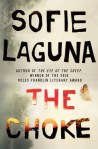
Sofie Laguna, The chokeAnother non-fiction piece is Sofie Laguna’s Echuca (Week 14), which is on the Murray River near when she set her novel The choke (my review). Her piece is moving, but I particularly like this which gives you a sense of the novelist’s ear and eye:

I read about the Barmah Choke – a place in the Murray where the banks come closer, flooding at certain points in the year, contributing to the wetlands environment. I liked those words – Barmah and Choke and the way they sat together – the first so round, lifting at the final vowel, and the second so tight, hemmed in by biting consonants. The words seemed to contradict each other.

These two pieces are non-fiction but there are also fiction pieces, poems, small plays, interviews. Many well-known published authors are here including Tony Birch, Helen Garner, Alex Miller and Jane Rawson, but there are new-to-me writers too, writers who have been published in journals like Lifted Brow, or are performers, or, even, comic book artists (see Corio, Week 41, Eloise Grills).

Some of the stories have been published elsewhere. At least, I recognised Bruce Pascoe’s fiction piece Mallacoota which appeared, with a few changes and under a different title, in Writing Black. But that doesn’t matter. In fact, one of the great things about short form writing is that it can be “curated” in different places and collections, and that writers can continue to “fiddle” with their pieces for each iteration. Not being a writer, I don’t know, but I’m guessing that sometimes this “fiddling” is to fix up something they don’t like, and sometimes to tailor the piece to its new “home”?

There is of course a very brief bio for each writer at the end of their piece providing their writing background or credentials. That’s particularly useful for writers you don’t know.

For anyone interested in writing about place, this project has a lot to offer. Many of the pieces are gritty, pulling no punches about the places they write about (Sydney Road, Week 38, by Fury is particularly strong), while others are affectionate, or even satirical. There are pieces by indigenous writers (like Tony Birch, Yarra River, Week 46), and by those from migrant backgrounds (like Alice Pung, Footscray, Week 30). When this is published, I will be staying somewhere along the one of Australia’s iconic roads, the Hume Highway, and it is here too: Hume Hwy (Week 48, by Sophie Cunningham).

In some ways this project reminds me of the Library of America Story of the Week program, except that it’s about sharing America’s literary heritage. Reading Victoria, on the other hand, is focused very specifically on contemporary responses to place.

Do you know of any similar initiatives to this – and do they interest you?

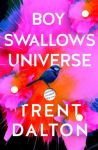
Trent Dalton, Boy swallows universe (#BookReview)

Trent Dalton, Boy swallows universe

Two books came to mind as I was reading Trent Dalton’s debut novel Boy swallows universe. One was Steve Toltz’s out-there book about fathers and sons, A fraction of the whole (my review), and the other was Tim Winton’s Breath (my post), which explores what it is to be a good man, but more on these anon.

I had three reasons for wanting to read the book. Firstly, it was my reading group’s first book of the year, and secondly, it was recommended by two people whose literary tastes often match mine, my brother and an ex-reading group friend. Finally, there was its Brisbane setting. I spent six special years of my childhood in the Sandgate area of Brisbane, where, I’d read, Dalton had also lived while growing up. Fortunately, all these reasons were justified as this novel is an excellent read – engrossing in content and intriguing in style.

Boy swallows universe covers around six years of its protagonist Eli Bell’s life, starting in 1985 when he is 12 years old and living with his mother, Frankie Bell, and stepfather Lyle. He and his mute older brother August are regularly babysat by Slim (based on the real criminal, convicted murderer Arthur Ernest Halliday) while Frankie and Lyle are out dealing drugs. Slim, for all his apparent criminality, turns out to be one of the most important wise people in Eli’s life – and, while he isn’t always around as Eli grows older, it is to Slim that Eli often speaks, consciously or subconsciously, drawing on his ideas and advice, as he faces life’s challenges. Eli’s relationship with Slim is just one of the threads and refrains that hold this big book together.

a genre-bending coming-of-age crime novel with a touch of magic

Terrible things happen in the book – and Eli and August are pushed around, buffeted by the things that happen in the adult world and over which they have little or no control. Part way through the book, having lived most of their lives with Frankie and Lyle in Darra (Brisbane’s southwest), they find themselves dumped with their damaged alcoholic father Robert Bell, whom they don’t know, and who lives in Bracken Ridge (Brisbane’s north in the Sandgate electorate). While Frankie and Lyle, for all their illegal doings, provide a generally stable home-life, the one provided by Robert is erratic, affected by his alcoholic binges. And yet, here too, the two resourceful boys find love – and more, support.

All this probably suggests to you a straightforward book about dysfunctional families, of which there are many these days. But, you would be wrong, because wrapped around the domestic is a story of drug dealing, drug double-dealing and violence, that takes this book into a whole other realm. In fact, the best way to describe it is as a genre-bending coming-of-age crime novel with a touch of magic. You with me?

Now, I’m going to shift gear a bit and return to those two books I mentioned in my opening paragraph. The book’s opening line is “Your end is a dead blue wren”, and we soon discover that these words have been written in air by August, who is sitting on their brown brick fence while Eli is being taught to drive by Slim. There’s a bizarre edge to all this which, in addition to the fact that the book is mostly about men and boys, fathers and sons, made me think of Toltz’s A fraction of the whole. However, while Toltz’s “bizarre” lies more in the absurd area, Dalton’s is more magical. There’s a red telephone in a secret room, for example, that always seems to ring when Eli is around. Who is at the other end? August at one point says it is he, but is it really? It doesn’t really matter, in fact, because the phone seems to be more about deflecting or, perhaps, relocating fear and trauma than about reality. It works because Eli’s voice and the sort of jaunty in-the-moment tone make it work.

More interesting to me, though, is the link with Winton’s Breath. They are very different books. For a start, Breath is more novella, while Boy swallows universe verges on the big, baggy monster. But, both books are fundamentally about what makes a good man – and, in neither case is the answer simple. In fact, it comes more often than not from flawed, if not sometimes bad, men. From early on in Dalton’s novel, Eli asks various men – family, friends, criminals, strangers – “are you a good man?” Many are surprised and know not what to answer. Gradually though Eli puts together his own picture from their answers and bevaviours, until, near the end, he says (addressing Slim in his mind):

This is what a good man does, Slim. Good men are brash and brave and fly by the seat of their pants that are held up by suspenders made of choice. This is my choice, Slim. Do what is right, not what is easy … Do what is human.

Now, before I get onto the writing, a bit about this genre-bending novel’s plot. As I mentioned above, the novel’s plot-line relates to drug double-dealing. This results, at the end, in quite a suspenseful, page-turning adventure that was much enjoyed by many in my reading group. But, not so much by me who finds reading action pretty boring. Indeed, if I have one question about the book, it’s whether it really needs the final chase. I think the point would have been made had the novel concluded just before it – but that final adventure will help the novel adapt well to film, and to a film that many will want to see, so I won’t be too churlish about it.

And, anyhow, it’s a small criticism because I greatly enjoyed the book. It is so well constructed. Little details dropped in one place are picked up in another; little verbal refrains recur adding both poetry and meaning without being heavy-handed. Even the curious, often cryptic, three-word chapter headings, like “Boy writes words”, “Boy steals ocean”, and “Boy masters time”, are explained late in the book when the Courier Mail editor asks Eli to tell his life in three words.

There’s also lovely descriptive, sometimes lightly satirical writing, such as this from the Vietnamese restaurant scene:

There’s two more tanks dedicated to the crayfish and mud crabs who always seem to resigned to the fact they’ll form tonight’s signature dish. They sit beneath their tank rocks and their cheap stone underwater novelty castle decorations, so breezy bayou casual all they’re missing is a harmonica and a piece of straw to chew on. They’re so unaware of their importance, so oblivious to the fact they are the reason people drive from as far away as the Sunshine Coast to come taste their insides baked in salt and pepper and chill paste.

Then, of course there’s the characterisation, and the first person voice. Eli is such a kind and likeable character. His coming-of-age is a tough one, but he’s positive, loving, open-minded and willing to learn. He’s also courageous. It could almost be schmaltzy except that you see the grit and know that he has been tested. More cynical readers might think Eli is too good to be true, but the book’s light tone and touch of magic remind us that this is not social realism. It’s “true” to the heart of what Eli (and I believe Dalton) experienced, but it’s not fact. It’s about surviving trauma. Dalton has, I’d say, found a perfect recipe for conveying dysfunction and accompanying trauma while also showing how it can be mentally and spiritually survived.

A good read, and a meaningful book that got my reading group off to a rip-roaring start for 2019.

Trent Dalton
Boy swallows universe
Sydney: Fourth Estate, 2018
474pp.
ISBN: 9781460753897

Deborah Hopkinson, Ordinary, extraordinary Jane Austen (#BookReview)

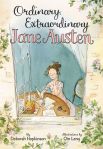
Deborah Hopkinson, Ordinary, extraordinary Jane AustenWriting biographies for young children – like, for example, Deborah Hopkinson and Qin Leng’s Ordinary, extraordinary Jane Austen – is an interesting concept. Interesting, but not new. So, when I was given this gorgeous Jane Austen one for Christmas, I decided to research the topic – and what I discovered is that the picture book biography is a well-recognised genre. I shouldn’t have been surprised, I suppose, given the number I bought for the young Gums way back when.

Still, it got me thinking. A quick search of the ‘net retrieved a few interesting articles (mostly including lists of recommended books). In 2016, The Guardian writer Amy Coles wrote how “picture book biographies peel back history and bring to life the true stories of iconic figures for a younger generation of readers”. An obvious aim, I suppose, but there’s more to it than just knowing these people’s stories, as Coles continues:

there is a lot to be learnt from the trailblazing achievements of history’s most renowned and respected figures. But how did these inspirational figures reach their goals and what prompted them to act the ways they did?

Coles provides a list of ten books that cross “nationalities, careers and cultures”, books about well-known people like the inspiring young Malala Yousafzai and Nelson Mandela, and lesser-known ones (to me, anyhow) like Wangari Maathai, who is “credited with planting over 30 million trees in Kenya”.

I love the idea of these non-fiction picture books, but how popular are they, really? Well, it just so happens that they have quite a wide readership.

Writers Rumpus is the website and blog of a group of children’s book writers and illustrators from the Boston area. Their blog began with “a lively, opinionated, humongous rumpus of a critique group” that (still I gather) meets monthly in a library. Back in May last year, they wrote this (as an introduction to a list of new releases from the previous year):

We live in a most exciting time, one of abundant picture book biographies! At my library, patrons of all ages check out these books. One adult recently told me he found it an excellent way to learn about famous people—past and present—without spending precious time reading a full biography on each person. With their lavish illustrations and informative back matter, this is no surprise. Authors and illustrators of picture book biographies put in a lot of research time to make sure their facts are correct, recorded, and shared in an entertaining manner.

The list is appealing – and includes books about the composer Bach, the “father of children’s literature” John Newbery whose name now graces a significant American children’s literature award, the black woman ex-slave-cum-anti-slavery-activist Harriet Tubman, the Mexican artist Frida Kahlo, not to mention a whole raft of scientists, sports people and creators of all sorts.

Julie Just, writing in The New York Times last November, also praised picture-book biographies, stating that modern publishers are producing

beautifully illustrated and closely researched nonfiction books about unsung heroes as well as heroes we can’t read enough about. Best of all, if you like true stories, they include superbly detailed endnotes and suggestions for further reading.

And this brings me to the Ordinary, extraordinary Jane Austen, which is just such a book. The front cover flap describes the book as a “gorgeous tribute to an independent thinker who turned ordinary life into extraordinary stories”.

The book’s epigraph from Pride and prejudice – “For what do we live but to make sport for our neighbours and laugh at them in return” – will probably not make sense to its 4 to 8-year-old intended audience, but should give its adult readers a wry laugh. The book proper opens – not totally originally (!) – with

It is a truth universally acknowledged
that Jane Austen is one of our greatest writers.
But it might surprise you to know that
Jane lived a simple life.
She wasn’t rich
or even very famous in her time.

This would, I think, push the young reader a bit. How many would even have heard of Jane Austen to wonder whether she was rich or famous? Still, from the opening page they learn some basic facts about her. This first-page text is accompanied by a lovely sketch-illustration of our Jane writing at her famous little round writing table. The book goes on to provide the important facts of her biography. It gives a sense of Austen’s personality, including her love of humour, particularly at the “foolish things people sometimes did and said”. It tells us about the life of her times, including how people entertained themselves, which of course would interest children. It also explains how Austen wanted to write more realistic stories about the ordinary world, representing a significant break from the popular novels of the time – adventures and romances. Its conclusion, suggesting that Austen may have stood in her father’s library one day and thought to herself, “I can do this”, is nicely aspirational (as Coles suggests these books can be.)

The book concludes, as Julie Just notes many such books do, with some useful end matter: a basic but detailed enough timeline; a description of each of her novels including when it was published, and some “famous quotes”; some Internet sources to research; and a few books about Austen that the author used in her research.

You won’t be surprised to learn that this book didn’t teach me anything new, but as the friends who gave it to me know, I love adding to my Jane Austen collection of books, videos, CDs and other merch!

Do you have any favourite picture book biographies?

PS I should note that the annual Children’s Book Council of Australia Awards includes the Eve Pownall Award for Information Books, which would include picture-book biographies in its purview.

Deborah Hopkinson
illus. Qin Leng
Ordinary, extraordinary Jane Austen: The story of six novels, three notebooks, a writing box and one clever girl
New York: Balzer + Bray, 2018
ISBN: 9780062373304

Jennifer Down, Pulse points (Guest post by Amanda) (#BookReview)

Amanda is on a roll, reading several Aussie women writers, so when she offered me a review of Jennifer Down’s collection of short stories, Pulse points, of course I said yes. I love her opening explanation of why she loves short stories – I couldn’t have said it better myself.

Amanda’s review

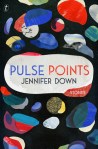
Jennifer Downs, Pulse pointsI love short stories. They can be an introduction to literature, restore your faith in fiction and inspire awe in a mere few pages.  The good ones shed light on the human condition – who we are, what we do and why we do it. The great ones perceive and portray human complexity in original and vivid colours.

Pulse Points is a collection of 14 short stories by Jennifer Down, pulse points being the metaphor for emotional life changing moments. The stories are of varying quality. At best Down has a keen ear for dialogue, well-rounded characterisation and with sensitive depiction of issues. The stories are not plot driven, they do not deal with large macro political issues, no biting satire, no morphing magical realism and no laugh out loud moments. That is not a bad thing. That is just not Down’s style.

Instead the stories are focused on brief periods, sometime even moments, of the characters’ lives which are used to explore universal themes: loss, mourning, the treatment of women, rural isolation, disfranchisement and childhood neglect appear several times. These are stories about humanity.

Down utilises a traditional treatment of the short story form, the timeframe is largely linear with some flashbacks. The voices are polyphonic, switching between first and third person.

For my tastes, there were too many discordant stories and the linkage between the main title and the stories was too loose. I have been influenced by the style of Elizabeth Strout where characters in her short stories (Olive Kitteridge and Anything is possible) not only appear consistently though the novel linking one story to another but also providing an alternate prospective. Similarly, Jhumpa Lahiri (Interpreter of maladies) can write distinct, unconnected short stories but her ability to stick to an overarching theme is more disciplined.

As such Pulse points is best treated as a “pick and mix” rather than being read as a whole in one sitting.

In an interview with the Sydney Morning Herald, Down is quoted as saying “If I’m trying to bring attention to a particular moment, a point of tension or an image, you need to let it have a bit of space, to let it breathe. So, for me, having a more economical approach to language is one way of trying to achieve that.” Pulse points is populated with pared-down prose, but that is different from narrative restraint.

To that end, I prefer the stories in the collection that do not rely on melodramatic plot devices, sudden improbable violence or tragedy to propel the narrative. In some cases, the violent event jars the pacing of the story and interrupts the crescendo, distracting the reader and making one question the focus of the story (the eponymous “Pulse points” and “Vaseline”). For deft pacing and the seamless use of fictional violence (or the threat of) – George Saunders (Victory lap) and Flannery O’Connor come to mind.

Down’s strongest pieces are gentle, subtle explorations of profound themes using quotidian details and sound so authentic, they could be autobiographical:  in “Convalescence” dealing with the imbalance in a relationship, the sifting power balance and the sacrifice both partners endure. In “Pressure okay, Down manages to convey the gently mourning of the loss of a spouse who served as the conduit for an endearing father to understand his feisty adult daughter. “Turncoat” similarly explores the slow burn of mid-life crisis. Like most readers, I love recognising myself in characters, creating empathy and the sense of being understood.

She is at her best when dealing with sensitive, analytical, educated characters; less so when she tries to portray the mindless rage and violence of teenage boys in “Dogs” (the weakest piece). The narrative is too brief and too horrific to allow any three-dimensional view of the characters or their motivation.

Similarly, those stories set in Australia or dealing with Australians aboard (“Convalescence” and “Aokigaraha“) resonate more than pieces set in the US (“Vaseline” and “Eternal father”) where Down does not have the vernacular or familiarity to make the characters sound genuine. As a reader I was grappling for place names or dialogue to try to identify which country the story was taking part in to give the mind a sense of location and what to expect of the characters.

Some of her writing is wholly original, comparing the contents of a women’s handbag to the movements at the bottom of the seabed and at other times – “she dyed her hair the colour of sunshine” – her writing is more prosaic. Frequently, her stories end too abruptly, another paragraph or two even in a vignette could provide direction and closure for the reader.

A reader can tell that a lot of work has gone into crafting and refining these stories and it shows. But Down is still a very young writer and compared to more assured short story collections this falls short. This is Down’s second publication. Her first, the Magic hour is a widely acclaimed novel. I look forward to her future works.

AWW Challenge 2019 BadgeJennifer Down
Pulse points
Melbourne: Text Publishing, 2017
240pp.
ISBN: 9781925355970

Jamie Marina Lau, Pink Mountain on Locust Island (Guest post by Amanda) (#BookReview)

Late last year I hosted a review of Maria Tumarkin’s Axiomatic by Amanda who had responded to my call on the Australian Women Writers Challenge for reviews of it and Jamie Marina Lau’s Pink Mountain on Locust Island, which won the 2018 Melbourne Prize for Literature’s Readings Residency Award, and was shortlisted for the Readings Prize for New Australian Fiction.  Amanda offered to write reviews of both, and so, as with Axiomatic, I am hosting Amanda’s review, so that it can then be added to the AWW database. Thanks very much – again – Amanda!

Synopsis of Pink Mountain on Lotus Island

From publisher The Lifted Brow’s website:

“Monk lives in Chinatown with her washed-up painter father. When Santa Coy—possible boyfriend, potential accomplice—enters their lives, an intoxicating hunger consumes their home. So begins a heady descent into art, casino resorts, drugs, vacant swimming pools, religion, pixelated tutorial videos, and senseless violence.”

Amanda’s review

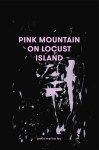
Jamie Marina Lau, Pink Mountain on Lotus IslandTwenty-year-old Lau’s debut novel is simultaneously innovative, surreal, disjointed and funny. At her best she writes like a stand-up routine; at her worst, though, she veers into the bizarre and nonsensical: “cardigan metropolis and a hushed voice millennia”; “he was in a creme brulee mood”. I don’t get it either. The chapters are divided into numerous short vignettes and sequences, some only a sentence long and follow a linear timeline. It’s a book for the social media and internet age – perhaps written for those just getting used to reading serious prose after the word limits on Twitter.

Its protagonist Monk is 15, and living with her Xanax-addicted former Art lecturer Dad after the departure of her Mum. It could be set in any urban metropolis with a bustling Chinatown. Along comes the love interest Santa Coy (also a developing artist) and then things get complicated.

There is a narrative though that can be followed, and it is cinematic so you can visually follow her discussions around what makes Art and what people will sacrifice for it, the difficulties of human relationships, and cross cultural complexities.

Food is another obsession – its preparation, consumption, description of, e.g. Yum Cha – and some bizarre discussions. What is the difference physically and philosophically between turnips and yams? Turnips are lively and yams are brooding. Obviously, if you didn’t know this you have to visit the same supermarkets as Monk does. [Haha, love this Amanda.]

Some plot twists are unbelievable and her non-traditional use of metaphors and language often fall flat. Lau (who also makes music under the pseudonym ZK King, hence the musical references in the novel) stated in an interview that she often has several browsers open while writing – reading articles, listening to music etc – and this multimedia multi-tasking is what comes across in her writing and original use of language.

Lau described Monk as the most sincere female character she had created – and that is the strength of this novel, Lau’s authentic portrayal of her teenage Monk as a composite of angst, joy, confusion, curiosity and strength. You just need to get through some bizarre distractions to discover this.

AWW Challenge 2019 BadgeJamie Marina Lau
Pink Mountain on Locust Island
Brow Books, 2018
244pp.
ISBN: 9780994606884