 Today I attended several sessions of the first Yarra Valley Literary Festival, which the organisers turned around and converted to an online event with the arrival in our lives of COVID-19. I plan to write up a couple more sessions over the next week, when time permits, but you can also check Lisa’s blog for her posts.
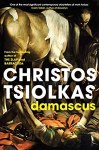
I was looking forward to this session, because Damascus is my current read. I also wanted to see interviewer Angela Savage (whom I’ve reviewed here, and who comments here every now and then) because she is such an engaged writer, herself, as well as a supporter of writers.
Now, I must say that although I’ve really liked the two Tsiolkas novels I’ve read, I was not really looking forward to reading Damascus. Biblical times are not something I gravitate to, and I had heard that the novel contains quite a bit of violence. However, although Damascus does indeed start with something violent – the stoning of an adulterous woman – I was engaged immediately. The violence was neither gratuitous nor laboured, and Tsiolkas’ writing just got me in (again). I’ve read about a third of the novel and the subject matter, the origins of Christianity, is keeping me interested, because I’ve started to realise why it is worth reading. Tsiolkas is focusing particularly on Christianity’s commitment to equality or egalitarianism. Given the way organised Christianity seems to have lost much of its way in our times, it seems a good time to consider its founding values.
So, the conversation, but with the proviso that I did miss bits due to much of it being broken up by connection/transmission problems somewhere.
I’ll start by saying it was a lovely conversation, held between two people who obviously know each other well. That’s one of the lovely things about these writers festivals – you get to see the camaraderie that exists between some writers, and discover some of the ways they support each other. In this case, it came out that Savage had read some of Tsiolkas’ drafts and had had discussed them with him. She praised him for the time he takes with his work, for the way he honours his art.
The first questions explored some of the novel’s background. Tsiolkas said he’d spent five to six years on Damascus, and was terrified when it came out because it is quite different from anything he’s done before. However, he’s fortunate, he said, to have a supportive publisher in Jane Palfreyman, albeit she too was nervous about this one!
While he doesn’t call himself a Christian now, he did grow up with Christianity. He was interested in how much of what we know about Christianity has come through the interpretation of Saul/Paul, and he talked about his interest in Paul, from his adolescent understandings of being rejected by an admonishing Paul to his more mature comprehension when he returned to Paul after a personal crisis. That Paul, he realised, had suffered too. He said that (Biblical) Paul’s aim was to teach people how to live while “waiting for the kingdom” or eternity (which he thought was going to happen any day now.) For Tsiolkas, this has translated to “am I really leading the life that will enrich me?”
From here Savage asked him about his characterisation of Paul.
Tsiolkas talked about his research. Saul/Paul was a Jew who left his faith to follow a strange scandalous religion. Tsiolkas talked about exploring the differences and similarities between Paul’s world and ours, and the challenge of finding his own way to Paul. He knew he wasn’t writing a hagiography, because the reality is that we are human. What is remarkable about the Christian story, he said, and what the Greeks and Romans could not understand, is the fact that through Jesus the sacred becomes human. However, the book also wasn’t going to be “a kicking in the guts”. It also wasn’t intended to be heretical or blasphemous (though some might see it that way!)
He needed to give Paul a battle, and so we have in the book sins like lust, greed, vanity, pride.
This brought us to the question a novelist begins with. For Damascus it was what was it in the Christian belief system that changed the world?
Savage then asked him about the novel’s structure. She loves, she said, how he structures his novels – and if you know me as a reader, you will know that structure is something that fascinates me. I have read enough of the novel to notice its non-chronological, four-points-of-view structure – which Savage called a “roving point of view” – so I was keen to hear his answer.
Tsiolkas said that structure is important to him as a novelist. It provides him with a blueprint which stops him getting lost. Voice and structure are the first things he thinks about. He was lucky with Paul’s voice, because of Paul’s letters. The three other voices are:
- Lydia, representing the history of female participation in the church, something that was later wiped away. (Lydia, from a dye-making family, appears in the book of Acts as the first woman Paul brings to the new religion.) Tsiolkas talked about how he had wanted the female voice to be a slave, given Christianity was largely reviled because it accepted slaves, but he couldn’t find the voice and had no models from his research to draw on. He emphasised what a radical moment this acceptance of slaves was, and, as I have already noticed in my reading, he said that the novel’s refrain, “the first shall be last, the last shall be first”, makes this point. Anyhow, he struggled until suddenly Lydia came to him in the early hours one morning, and he just started writing her. I love stories like that.
- Thomas, representing the doubter that he wanted in the novel because he, too, is a doubter. He chose Thomas from gospel of John, because, like Thomas, he doesn’t believe Christ was resurrected. Tsiolkas believes there is no eternal kingdom, that working out how to live a good life has to be worked out here and now. This idea offers another direction in which the church could have gone.
- Timothy was Paul’s companion in the Bible. His father was pagan Greek and his mother Jewish, so he embodies “between world-ness”.
Savage, noting that it’s not a blasphemous book because it has such a respect for the values, asked about its reception. Tsiolkas said the way people have engaged and have wanted to have a conversation about it has been heartening. He’s been “blown away” by people’s generosity in responding to it.
There was a Q&A but I’m going to end on Tsiolkas’ wonderful answer to the question about his personal faith, because it’s an answer that is more broadly applicable I think. He said that the only answer is to hold doubt and faith together. If you know me, you’ll know that this sort of almost paradoxical answer suits me to a T.
From Yarra Valley Writers Festival 2020 (Online)
9 May 2020, 9:30 AM – 7:30 PM
Livestreamed
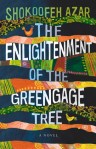 I bought Shokoofeh Azar’s novel The enlightenment of the greengage tree when it was longlisted for the 2018 Stella Prize, for which it was also shortlisted. However, it was its shortlisting this year for the International Booker Prize that prompted me to finally take it off the TBR pile.
 Shokoofeh Azar
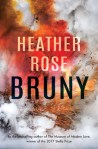 If The yield (
 Heather Rose
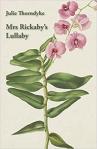 Quaint title, eh? I really didn’t know what to expect when I accepted this book for review, but accept I did because the publisher is a quality little press and because the author, Julie Thorndyke, although unknown to me, has a track record as a writer, particularly of tanka. Mrs Rickaby’s lullaby, however, is her first novel.
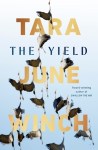 Tara June Winch’s novel, The yield, follows her impressive – and David Unaipon award-winning – debut novel Swallow the air
 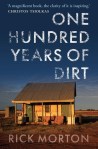 Way back in the early 1970s when I was an undergraduate university student, I did some sociology, and one of our set books was The myth of equality by Tom Roper. It, and the courses around it, have informed ever since my understanding of how our society operates. Morton’s book One hundred years of dirt would have been perfect recommended reading for these studies. At the end of his first chapter he says this:
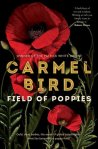 There are some writers whose personalities shine through so strongly that I have taken to characterising them in just a word or two. Jane Austen, for example, I think of as wickedly witty, and Helen Garner as heartbreakingly honest. Carmel Bird is another of these. I describe her as seriously cheeky, by which I don’t mean she is really cheeky, but that there’s seriousness beneath her surface cheekiness. The cheekiness makes me chuckle, but ruefully, suspiciously so, because I know that waiting nearby is very often a skewer of some sort. Her latest novel, Field of poppies, is no exception. Even the title is paradoxical, alluding as it does to both Monet’s pretty painting, Field of poppies in Argenteuil 1873, and the poppy fields of Flanders.
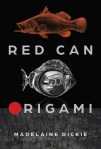 Some writers, I understand, suffer from a thing called “second novel syndrome”, which describes the fear of writing a second novel after a successful first one. Well, it’s clear that Madelaine Dickie, who won the TAG Hungerford with her first novel Troppo (
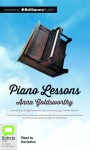 Ever since Anna Goldsworthy’s memoir, Piano lessons, was published, I’ve hankered to read it, but somehow never got around to acquiring a copy. So, when I was casting around for our next road trip audiobook and this one popped up serendipitously in Borrowbox, I grabbed the opportunity.
 Whispering Gums