Finlay Lloyd: Celebrating 10 Years of Publishing

This weekend I attended a delightful event run by the National Library of Australia’s bookshop. It was an afternoon of author readings to celebrate the 10th anniversary of independent small publisher Finlay Lloyd, which is based in Braidwood, about an hour’s drive from here. It is run by two men, author Julian Davies and artist Phil Day.

Julian Davies em-ceed the event. He described Finlay Lloyd as a non-profit publisher, and said he is often told by other small publishers that they can be that without trying! Ouch! The press is, he said, a quixotic venture, established because many writers were finding it hard to be published by increasingly bottom-line focused publishers. Once, he said, publishers took risks but they now tend to be overly market driven. The press was also established in response to threats about the death of the printed book. For Finlay Lloyd, the book as an artefact is important as well as the content. I can attest to that. Their books have a lovely edge, even the little flsmalls.

Then the main part of the afternoon started, with the format being Davies introducing the writer, asking one question, followed by the writer reading an excerpt. It went for about an hour and a half. My post is rather long – despite my only quoting from one writer – but my headings will enable you to skim and skip if you desire.

Alan Gould and The seaglass spiral (bought at the event)

Davies’ question for Gould was about what he expected of the publisher-author relationship. Gould, whose The Lakewoman I’ve reviewed here, was the perfect choice to be first because he epitomises the reasons behind Finlay Lloyd’s establishment. He had expected it to be hard, he said, to find a publisher for his first couple of books but he then thought an author-publisher relationship would develop. That didn’t happen, so almost every novel of his has had a different publisher.

He introduced his novel, The seaglass spiral, by describing himself as a character novelist. He read from the beginning and a small except from Chapter 10. Here’s the opening paragraph:

There was a fellow called Ralf Sebright. He was decent enough, glad for the most part to be alive, and despite being able to swim, he had just sunk beneath the Pacific Ocean for the second time. Odd to think this about this plight really, that a lineage going back to the first caves of kinship might imminently be pinched off. For Ralf had arrived at a moment when he realised his existence might be in trouble.

In short, he was drowning.

And here are the last few sentences of his first excerpt:

Ralf observed the dominant emotion of drowning was not fear. It was guilt. He also noted that, even when a person says impossible he does not stop imagining deliverance.

Gould told us to remember that word “impossible”. It’s important in the book he said. I’m intrigued. Since I had frequently fondled this gorgeous-looking book when it first came out but had resisted the temptation given my bulging TBR pile, this time I gave in to temptation. See what an author reading can do!

Phillip Stamatellis and Growing up cafe (my review)

To first-time author Stamatellis, Davies posed a question about what the editing process had meant to him. Stamatellis responded that, given the book grew out of scattered pieces of writing he’d been doing, structure was the important thing he’d learnt. Haha, I thought! Here is a sentence from my review: “Stamatellis has structured his short memoir cleverly”! Structure is indeed important to this book.

StamatellisGrowingFinlayLloyd

He also commented on Davies’ obsession with commas, to which Davies interjected with the fact that John Clanchy says he doesn’t use commas enough! This reminded me of my 12 year-old-daughter, as she was then, arguing over a comma with her school principal, who was editing a little book for the school. The principal won but, some months later, she said to me, “you know, Hannah was right about that comma”!

Anyhow, Stamatellis read the first “story” in his book in which he describes a typical cafe scene – the cafe, being, as Davies said, the book’s main character.

Camel Bird and Fair game (my review)

Courtesy: Finlay Lloyd

Introducing Bird, Davies proposed that the current discourse in our society is polarising, but Bird’s book, Fair game, he said, digresses and weaves, telling the story of Tasmania through her personal reflections. Bird agreed with this assessment, saying that “the digressive form is native to me.” And I love this form as I wrote in my review: “I love reading this sort of writing – it’s a challenge, a puzzle. Can I follow the author’s mind?” Oh, and Bird also said it was a wonderful experience to be edited by Julian.

Bird gave a wonderfully expressive reading. She loves being a little cheeky, as I also wrote in my review, and is clearly able to do that in person and well as in print!

Wayne Strudwick and The dark days of Matty Lang (bought at the event)

You meet authors in strange places, it seems. Davies met Strudwick through the latter peering into his eyes. Strudwick, you see, is an optometrist but, Davies soon learnt, also writes – and this led to the publication of Strudwick’s story, The dark days of Matty Lang, in the first series of flsmalls.

Given this story is set in a country town, Davies asked Strudwick about his interest in such towns. He responded that in these towns, everyone knows everyone else, which can be comforting but also claustrophobic. Traumas, he said, go through the whole community. His story is about a trauma, and the reading intrigued me, so I bought it too!

Bidda Jones and Backlash (my review)

Bidda Jones is Davies’ partner so the question was obvious: how did she find working on a book together. Jones explained that she’s a scientist not a writer. She did the book, she said, “through gritted teeth” and was very glad when it was over! But, she’s also glad, I believe, the story is documented.

Jones read an excerpt from the book describing how she and Lyn White took their research and footage to the ABC, but she also told us that already the book has been attacked in parliament. So, I went looking and found the speech by National Party Senator Barry O’Sullivan. My oh my! He name-calls, and he makes false statements about what the book does or doesn’t cover. But the clincher is that he concludes his speech not on proving that the government has made advancements in live export animal welfare but by attacking Jones and the RSPCA – attack after all being the best form of defence – for not focusing their effort on domestic pets and animals (as if they don’t do that too!), which he argued are the RSPCA’s “core and fundamental issues”. In fact, the RSPCA’s mission is broad: to “To prevent cruelty to animals by actively promoting their care and protection”. It’s hard to take such a speech seriously.

Paul McDermott and Fragments of the hole (my review)
McDermottFragmentsFinlay

McDermott’s book is heavily illustrated with his drawings, so Davies’ question to him related to the process of working with Finlay Lloyd’s Phil Day. McDermott, who attended the Canberra School of Art, told us that he is always writing little stories and making drawings and sketches. He described how creatively Day had used his drawings, making selections from what was apparently a big bundle, sometimes upending them, sometimes using only part of them.

McDermott, also an expressive reader of course, read the second part of his story “The boy and the goat” but I certainly won’t share that because it included the wonderful last line of the story. I loved this little book, but was a little disconcerted when, on having a copy of his book signed for a friend, he told me that he’d only seen one review of the book and the reviewer said it wasn’t for children, but it is he said! Hmmm, I thought, I reviewed his book. Was that I? I didn’t ‘fess up, because I couldn’t remember, but checked when I got home and it was. In my defence, though, I did qualify it by saying it wasn’t for “(most) children”. Oh dear.

Meredith McKinney and Mori Ogai’s The wild goose (on my TBR)

Fiction, non-fiction, essays, and even commissioned translations, Finlay Lloyd does it all. Davies talked about how, as he and McKinney were working on this Japanese classic, they compared three translations of this Japanese classic from 1959, the 1990s, and Meredith’s 2010s. He enjoyed their discussions about Japanese language and the decisions that have to be made in translating it.

But, his question for McKinney was why she chose this particular novel (novella, really). It’s because, she said, she’s interested in pre-western-influenced Japanese literature. Davies commented that he liked the sympathy Ogai shows to his minor characters, and McKinney agreed saying that he exhibits tenderness for everybody. I’ve had this book on my TBR for a couple of years, and it’s time I read another Japanese novel, so I really need to find time to read it.

Julian Davies and Crow mellow (my review)

Julian Davies, Crow mellow Book cover

The event ended with Davies’ own book, Crow mellow, which was illustrated by Phil Day. He said he gave Phil Day complete free rein and he enjoyed seeing Day’s illustrations come through as he was writing it. While I love art, my main focus tends to be text, but it was hard not to notice Day’s illustrations wandering as they do all through the text. In my review I commented that they provided “whimsical and sometimes very pointed satirical commentary on the text”.

Davies read a scene in which two young women talk about sex. I remember the scene well. Its illustrations are a hoot, and it ties neatly, satirically, to the novel’s epigraph (from American author, James Salter) that “the new hunger was for sex”.

And on that, the event closed … I, and a few I spoke to, thought the format worked very well. I was only sorry that, due to other commitments, I wasn’t able to hang around for long afterwards.
My literary week (1), in a sense

I say “in a sense” because my reading has been slow this week as Mr Gums and I have been getting back up to speed after our Lake Eyre trip. However, in terms of the literary world, much has been happening and I thought I’d share some with you, documenting it at the same time for my own future benefit.

Gillian  Mears

I’ll start with the sad news, the death of the wonderful Australian writer, Gillian Mears, who had suffered from multiple sclerosis for over 20 years. Her disease was so debilitating that she appeared in 2011 before state (NSW) hearing on the Rights of the Terminally Ill. The Sydney Morning Herald quoted from her submission in 2013. Here is part of that submission:

Not a day goes by that I don’t wish that I were dead. It would be so much easier than living in a body beleaguered now by advanced multiple sclerosis. I’m in my 17th year of living with this disease [she was diagnosed at the age of 30] and I’ve very nearly had enough.

Gillian Mears' Foal's bread
Foals’ bread cover (Courtesy: Allen & Unwin)

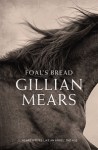
I had not been aware of her condition until she won the Prime Minister’s Literary Award in 2012 for Foal’s Bread and was unable to take part in the post-announcement panel, which I attended, because she needed to conserve her energy for other commitments. I first read her (The Mint Lawn) with my reading group, and we loved it, but that was way before blogging. However, I did review Foal’s bread, which also won the Miles Franklin award, here. She was a fine writer, and this book, in particular, is one you don’t easily forget.

Her death represents a tragic sad loss for Australian literature, because it was too early – she was only 51. But, given the situation she found herself in, it was clearly for her, in the end, a release. Vale Gillian Mears.

NSW Premier’s Literary Awards

The annual NSW Premier’s Literary Awards were announced earlier this week, as it usually is, to coincide with the Sydney Writers Festival Week. You can read all the winners on the State Library of NSW’s site, so I’ll just share the few that are particularly relevant to my blog’s interests:

  • Christina Stead Prize for Fiction: Melinda Bobis’ Locust girl: A love song (I have reviewed her Fish-hair woman, which I loved, but for a review of this novel you can check out Lisa’s of ANZLitLovers)
  • UTS Glenda Adams Award for New Writing (Adams being another of our writers who died too young): Sonja Dechian’s An astronaut’s life (also longlisted for the Dobbie Literary Award)
  • Indigenous Writer’s (biennial) Prize: Bruce Pascoe’s Dark emu (which is on my radar, but has also been read by that voracious reader, Lisa! as well as by Michelle at Adventures in Biography)
  • Douglas Stewart Prize for Non-fiction: Magda Szubanski’s Reckoning (which I really MUST read). (Interesting that poet Douglas Stewart’s name is used for the non-fiction prize. He did write some criticism and autobiography too but they’re not what he’s known for.)

There are also awards for Poetry, Scriptwriting, Multicultural writing, among others, but I’ll just leave it at these for today.

Sydney Writers Festival

I’d love one day to get to the Sydney Writers Festival, but its timing in May is always tricky for me, so I end up relying on ABC RN and bloggers for my fix. I’ll share just two examples for you to check out if you are interested:

  • Jonathan Shaw of Me fail, I fly has written multiple posts, one for each day, of his experience of the Festival. Start at Day 1, and work your way through from there. I have quickly scanned his posts but will be adding my comments later. Thanks as always, Jonathan, for helping me enjoy this festival vicariously.
  • ABC RN’s Books and Arts Daily program usually broadcasts – live or later on – several events from the Festival, but I’ll just share the link for their live panel session which I listened to live. The topic was to discuss the “pleasure and challenges of writing and reading in a globalised world”. The panelists were Australian comedian Magda Szubanski (author of Reckoning), Dutch author Herman Koch (whose upcoming novel is Dear Mr M), and French writer Marie Darrieussecq (whose latest novel is Men: A novel of cinema and desire). It was a fascinating discussion in which the writers teased out a range of issues. To give one example: they discussed Herman Koch’s The dinner and the idea that even where a book’s themes may seem universal – such as parental love for children – reactions/responses can vary greatly depending on the culture of the reader.

The scandalous Lady W

Joshua Reynolds painting of Lady Worsley
Joshua Reynolds [Public domain], via Wikimedia Commons

To end on something completely different and not entirely literary is the story of Lady Worsley (born Seymour Dorothy Fleming, 1758-1818) as told in the BBC telemovie The scandalous Lady W, which my local Jane Austen group viewed this weekend. She was apparently the inspiration for Sheridan’s play School for Scandal and was painted by Joshua Reynolds.

Lady Worsley was involved in a high profile adultery (“criminal conversation”) trial brought by her husband against her lover. However, the story was far from straightforward, her adultery being “commanded” by this very husband who turned out to be a voyeur who preferred to watch his wife have sex with others than do so himself. The inevitable happened and she eloped with one of these lovers. This is a story of women-as-property, of women-not-having-access-to-their-own-propety, and of a woman who was brave enough to stand up for herself. She didn’t win, entirely, but my, did she make her point, as the film shows. The story reminded me that although women – western ones anyhow – have more legal rights now, this idea of “you are mine” is surely behind much of the domestic violence that still occurs.

The main reason my group watched this movie was because Lady Worsley lived during Austen’s time (Austen’s dates being 1775-1817) and lived part of her life near Austen’s home. What, we wondered, did our Jane, a keen reader, know of Lady Worsley? It was the talk of the town.

Monday musings on Australian literature: JAFA, an indulgence

OK folks, today I’m begging your indulgence to let me stray from the “proper” theme of my Monday Musings series. In other words, I’m not going to talk – except for a minor digression – about Australian literature. But, I am going to talk about Australians talking about literature. Bemused? I’ll explain.

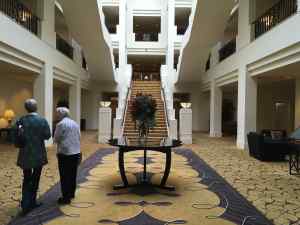
Quiet foyer at the Hyatt, outside seminar room.

Quiet foyer at the Hyatt, outside seminar room.

This last weekend in Canberra was the 9th Jane Austen Festival Australia. It’s a festival designed “to explore all aspects of Jane Austen’s world”, so many of the sessions relate to dance, costume, military re-enactments, and learning about the culture of Regency times. However, it also includes a thread focusing on Jane Austen’s novels, and in the last three years this thread has been concentrated into a day-long Symposium, on a theme. The theme for 2016 was the Chawton Years. For those of you unfamiliar with Jane Austen’s biography, the Chawton Years cover the period of her life from 1809, when she, her mother and sister were offered Chawton Cottage as a home after their father and husband’s death in 1805, to 1817, when Austen herself died. All her novels were published after the move to Chawton, but three were specifically written during that time – Mansfield Park, Emma and Persuasion. (We could also add the unfinished novel, Sanditon, if we liked!).

The Symposium comprised 6 papers, and I’m going to reflect very briefly on each, knowing that some of you who come here like things Jane.

Edward Austen Knight and his Legacy at Chawton (Judy Stove)

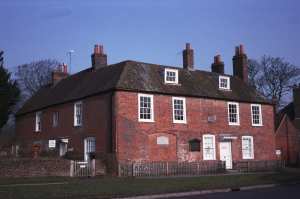
Chawton Cottage (1985)

Chawton Cottage (1985)

Judy Stove was an early member of my local Jane Austen group, until she left town. She’s now an Adjunct Lecturer at the University of NSW in the Faculty of Science, but is also interested in, and has written on, eighteenth century literature. Her paper provided the perfect start to the day, as it was Edward Austen Knight, Jane’s brother, who provided his mother and sisters with Chawton Cottage. Judy took us through a well-constructed argument concerning Edward’s legacy, moving from his and Jane’s immediate family to his descendants, and their role in the beginning of we would now describe as the cult of Jane Austen. From this point Judy developed a case concerning cultural nationalism and the controls now being exerted in many countries on exports of cultural property. Her example was Kelly Clarkson’s purchase of Jane Austen’s turquoise ring. I won’t elaborate here, but Judy proposed that emotion may play a bigger role than rational thought in some of these “material culture” export decisions. A thoughtful, and well structured paper.

“My Fanny” and “A heroine no one but myself will much like”: Jane Austen and her heroines in the Chawton novels (Gillian Dooley)

Gillian Dooley is an Honorary Senior Research Fellow at Flinders University in South Australia, with particular expertise in the music of Jane Austen and her times. This paper, however, was dear to my heart because it got into some literary nitty-gritty regarding point-of-view. Her aim was to explore the degree to which Austen’s heroines might speak for her, thereby giving us insight into Austen’s own beliefs and opinions. To do this, Dooley teased out, to the depth available in her 30-40 minutes time-slot, where Austen’s “authorial persona” does and doesn’t collide with the perspectives of her heroines. She compared excerpts from some of Austen’s letters with statements by heroines, like Mary Crawford (Mansfield Park) and Emma, and she teased out points-of-view in the novels, suggesting where we are in a character’s head, and where it is authorial comment speaking. I found this particularly interesting given my recent reading of Elizabeth Harrower during which I was conscious of a similar slipping between characters and author. As for Dooley’s thesis? Well, we’ll never know exactly who Jane really was, but we certainly have clues to consider!

Marriage in Mansfield Park (Julia Ermert)

Julia Ermert is a retired teacher, historical dancer and Jane Austen aficionado. She is particularly expert in the social history that informs the novels, in those things that readers at the time knew and which can add significantly to (even change) how we understand the novels. For example, a knowledge of the different carriages helps us understand status, and assumptions. And knowing courtship “rules” and practices can be critical to our understanding why, and how, certain events happen. For this talk, Ermert focused on that most controversial heroine, Mansfield Park’s Fanny, and the issue of marriage, that “coldly cruel social obligation”. She took us through laws and practices relating to dowries and marriage settlements, elopements, adultery, breaches of promise, cousin marriage, and the fragility of women’s reputations. Even those of us who know Austen and the era pretty well learnt a thing or two.

“Suppose we all have a little gruel”: the importance of food in Emma (Katrina Clifford)

Clifford is the Dean of Residents at Robert Menzies College, Macquarie University (my original alma mater). She did her PhD on sibling relationships in 18th century domestic fiction, and has written and taught widely on things Austen. Her talk started from the point that there’s nothing superfluous in Austen, that is, if Austen talks about food, or carriages, or jewellery, you can be sure it’s there to make a comment. Food features heavily in Emma: it explains the relationships between characters and the structure of Highbury life. Who is generous to whom and how, who accepts generosity from whom and who doesn’t, provide subtle (or not so) commentary on the characters. For example, Mr Knightley giving the last apples of the season to the impoverished Bateses demonstrates his generosity of spirit, whilst Emma giving a whole loin of pork to them tells us her heart is kind even if she doesn’t always behave well. These also demonstrate that both have a similar attitude to their social responsibility and are a good match. And what about Mr Woodhouse’s gruel, and Mrs Elton and the strawberry party? They provide the book’s comedy but also inform about character and relationships. Another insightful talk, in other words.

The ever absolute Miss Austen (Marcus Adamson)

Adamson is a psychotherapist and ethics consultant interested in the history of ideas and the application of philosophy to psychology. This was the most demanding of the day’s presentations, because of its dense erudition. Referencing philosophers and thinkers from the ancient Greeks on, he argued that Austen’s novels have a serious moral vision, that they present moral truths and certainties that are innately “known” to us. In other words, she asks the big Socratic question, “How should I live my life?” This runs counter to the common assumption that “small ‘r” romance” is the chief attraction of her novels. He then turned to modern times. Our current individual-focused world has, he said, resulted in the individual becoming “unshackled from society”, and thus losing, if I understood him correctly, a moral mooring. Nothing in our post-modern world is certain anymore, everything is open to doubt, and the consequences, he believes, are “catastrophic”. Austen’s novels, with their serious moral vision, can work as a “corrective” to this dilemma. I’ve compressed something very complex into something very simple, but I think that was the gist of it. As an Austen-lover I agree that, for all their wit and humour, Austen’s novels do contain serious commentary about human behaviour, but the bigger picture of his paper? It’s appealing but I need to digest it more.

Napoleonic era British Naval Uniforms demonstrated

Napoleonic era British Naval Uniforms demonstrated

Royal Navy in the Regency Period (John Potter)

After that talk we all needed to decompress a little, and John Potter was just the man to do it. An amateur expert in military and naval history, and in the Napoleonic period in particular, he turned up in full naval uniform, accompanied by some armed officers and sailors, also in historical dress. He talked about the Napoleonic Wars (1793-1815) and regaled us with much information about the British Royal Navy – its ships, its organisation, naval hierarchy and jobs. We learnt about weapons, and his “men” showed a few, including the dirk and cutlass. The Navy tended to be drawn from the middle class, and boys joined very young – around 10-12 years old – as there was a lot to learn about running a ship. The army was a different matter. He also explained how prize money was shared (which is relevant to Persuasion and Captain Wentworth’s returning a wealthy man) and the impress service (i.e. press gangs). A relaxing and enjoyable end to the day.

And that, as they say, was that. Back to Aussie lit proper next week.

Monday musings on Australian literature: Blak and Bright

I should have written about the Blak and Bright last Monday, as the Festival was held last weekend, but unfortunately I only heard about it – my inattention, I’m sure – a few days ago, via an ABC RN program (which you can listen to online). However, although the actual Festival is now over, I think it’s still a worthwhile topic – and, anyhow, most of you who read my blog wouldn’t have been able to attend, given it was held in Melbourne.

So, what is (was) Blak and Bright? From the website, link above, it is described as the debut event of the Victorian Indigenous Literary Festival. Their “about” page lists sponsors and supporters, and says:

We believe Indigenous writing is relevant and exciting to literature lovers and readers everywhere.

What a simple, straightforward “mission statement”! Unfortunately, there is no program online. However, there is a list of artists, and from that you can locate the sessions they were involved in. Via this method, I found a fascinating variety. Here are a few:

  • 6 Plays in 60 Minutes: six short play readings from Australia’s longest running Indigenous theatre company, Ilbijerri.
  • Blak Book Club: an opportunity to discuss two Indigenous books, Gayle Kennedy’s Me, Antman & Fleabag and Tony Birch’s Ghost River.
  • Borrow a Rare (Living) Book: opportunity for attendees to have one-on-one sessions with Indigenous storytellers/Elders (Aunty Di Kerr, Uncle Larry Walsh, Aunty Kerry Reed-Gilbert and Aunty Judith ‘Jacko’ Jackson).
  • Cross Continental Conversations: explored the international Indigenous writing scene, by discussing the experiences of a contingent of Aboriginal writers who travelled to the Native American literary organisation, Woodcraft Circle, and the Literary Commons exchange in India. Participants were Lee Francis IV, Bruce Pascoe and Ali Cobby Eckermann.
  • Fresh Blak Writers: Maurial Spearim (playwriting), Hannah Donnelly (speculative fiction), and Elijah Louttit (screenwriting) talking about how they got started with their writing.
  • Ellen van Neerven, Heat and light, book coverPublishing and Editing Blak: about the challenges faced by Blak writers working with white editors and publishers, and the challenges faced by Blak editors and publishers. Posed the question: Is there a need to make Aboriginal language or depiction of culture easy for a white readership? It involved Rachel Bin Salleh, Ellen van Neerven (whom I’ve reviewed) and Sandra Phillips.
  • Sistas are Doing It: Tammy Anderson, Anita Heiss, and Kate Howarth share how to “build and sustain a career as a Blak writer”.
  • Yung, Blak and Bold: involved young writers presenting new ways of presenting the world. “Listen”, the program advised, “as we bust stereotypes and discuss how words in new contexts can activate change”. Featured Benson Saulo, Amelia Telford and Nayuka Gorrie. (All new to me, but that’s the point I guess!)

It looks wonderfully varied, catering for all sorts of interests. It involved several writers I don’t know; and some, like Bruce Pascoe, Ally Cobby Eckerman, Gayle Kennedy, who are on my radar to read. Sessions were supported (sponsored I presume) by some wonderful literary “players” like the Small Press Network and the Stella Prize. I would be interested to see an assessment of how it went, recognising that these sorts of events can take a few years to build.

There is a blog on the site. I’m not sure if it will continue post-festival, but in addition to posts about events, it has a series on the topic “Why I read Blak?”:

  • Associate Professor at the Graduate School of Language and Culture at Osaka University, Sei Kosugi: on the global reach of Australia’s Indigenous storytellers, naming a couple of the writers she teaches and why.
  • Writer and crossword-maker, David Astle: on “an important lesson he’s learnt from reading Blak”.
  • Writer Drusilla Modjeska: on the various ways reading Blak has enriched her reading and writing life. She looks more widely, starting with African writer China Achebe’s Things fall apart (which I will be reading and reviewing in a few months – at last!)
  • Our very own Auslit blogger Lisa Hill: on the value to her of reading books by Indigenous Australians. She writes that “I feel as if I am being invited to get to know my country better. I’m being welcomed in to share in an ancient story”.

Finally, in the RN program I heard (link in the opening paragraph), Anita Heiss spoke on why people should read Blak. She has fleshed it out on her blog. It not only gives excellent reasons – such as “we write human rights” and “we write the search for self” – but it provides a useful but by no means complete list of works and authors well worth checking out.

Author Talk with Kate Llewellyn, Barbara Hill and Ruth Bacchus

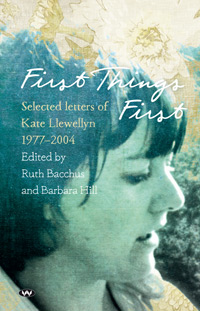
Ruth Bacchus and Barbara Hill, First things first

Having attended Robert Drewe’s Seymour Biography lecture at the National Library of Australia last week, I was thrilled to see another event come up this week. It was billed as an author talk with Kate Llewellyn, and with Barbara Hill and Ruth Bacchus who edited First things first, the collection of Llewellyn’s letters which I reviewed a few months ago. They also discussed Llewellyn’s most recent “journal”, A fig at the gate. In the end, it was Llewellyn who did most of the talking, but that didn’t matter – sorry Barbara and Ruth – because she was the main one we’d all come to see.

I’m not going summarise the whole talk, but just share a few ideas that interested or, in some cases, tickled me. Llewellyn is an engaging speaker.

On letters and letter writing

Naturally some of the discussion focused on letters. Llewellyn explained that the letters included in First things first were held in the ADFA library collection, and that they’d been acquired from the recipients of her letters.  She doesn’t keep copies of letters she writes, she said, horrified that we might think she did. In fact, she’d rather recipients of her letters would destroy them! However, she sang the praises of the American ADFA librarian who initiated the project of collecting the papers of Australian poets.

Llewellyn confirmed that she did not censor Bacchus and Hill’s choice of letters. She trusted them not to include anything that would do her harm. Some names, though, have been changed to avoid hurting people. Don’t believe everything you read, she said! There is artifice at work, even here. The project had some specific principles, including that the focus would be letters to other writers or artists, and not family.

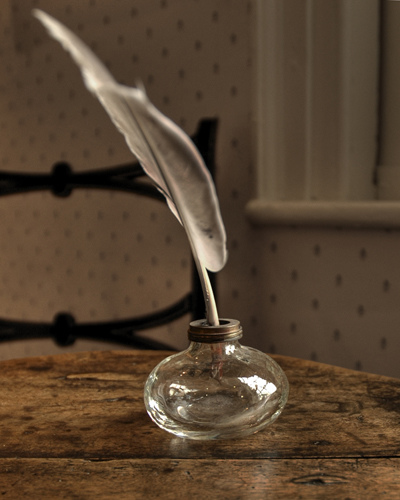
Austen's desk, Chawton. (Photo: Monster @ flickr.com)
Austen’s desk, Chawton. (Photo: Monster @ flickr.com)

Llewellyn was asked about her current letter writing activity, but she said that she rarely writes letters now because of emails. She only writes now when “something means a lot” and she wants to share it. She sees letters as capturing the important things in life.

She likes to write by hand, so her books are written that way. She believes that the hand-to-brain sensibility is different to the hand-to-machine one, and that she doesn’t have “ardour”, an important quality for her, when using a machine.

The letters in her books, like A fig at the gate, are made up, she said. For example, the letters to her daughter are a device to enable her to talk about her relationship with her daughter, and about Australia.

I found all this fascinating because I have read and discussed Jane Austen’s letters with my local Jane Austen group, looking at how or whether they could contribute to our understanding of her times and her novels. And then, this month, we discussed how Austen used letters in her novels – to develop character (the writer’s and/or the recipient’s), to progress the plot, and to provide information and solve mysteries.

The writer-reader relationship

Llewellyn talked about the complex relationship between reader and writer, particularly highly autobiographical writers like her. A fig at the gate is true, she said, because she is writing to a reader with whom she shares a trust. It is her pact with the reader that what she writes is true.  However, a problem arises when readers think they know her. They mix up life with art. There’s no winning in this she said. After all, she has done it: she has created the relationship, she has made that sacred writer’s pact to not lie, to not betray the reader. However, some readers misunderstand the protocol, they forget that the meeting is one of writer-reader, not of friends. That’s when, she says, she uses her umbrella to create a physical barrier!

Llewellyn shared a few amusing stories. One concerned being asked why she had titled her last book A fig at the gate. Because, she said, there’s a fig at my gate. But why call the book that, the reader apparently persisted. At this point Llewellyn said she had to admit that some things just aren’t deep! (She admitted, though, that she often does think metaphorically.) She also talked about the origin of the book. Now in her 70s, she wanted to write about ageing but believed that would not sell, so she decided to write a book whose “flesh would be the garden, but the bones would be ageing”.

Weather, the great story of life

I can’t remember how this topic came up, but it tickled me immensely because I have been sharing a weekly snail-mail correspondence with a wonderful American friend for over 20 years. Writing about the weather has become a bit of a running joke between us. We try to hold off for at least a couple of paragraphs and then admit we can’t hold out any longer! The weather will out.

Anyhow, Llewellyn’s story relates to meeting an English-born lecturer, who was her lover at the time, for lunch, and he started to talk about the weather. She thought that was boring and that maybe he wasn’t for her, but he told her that the English love the weather. He taught her, she said, that the weather is a good subject. (Of course, anyone who has read a good symbolic Shakespearean storm, for example, knows that.)

There was another lovely connection here for me because I had just finished, the day before, Karen Lamb’s biography Thea Astley: Inventing her own weather (my review) whose title comes from Astley’s idea of weather as representing the highs and lows, the fluctuations in life.

To recap: Lessons learned

  • Don’t believe everything you read.
  • Don’t confuse life with art. Art – even autobiographical art – is artifice.
  • Respect the writer-reader protocol.
  • And, most importantly, the weather is a perfectly fine topic to write (or talk) about!

Llewellyn concluded by reading aloud her clever, funny, wicked poem, “The breast”. Do read it online if you don’t know it.

Who me?: Robert Drewe’s Seymour Biography Lecture

One of the best parts of living in Canberra – and there are many best parts, despite what the politicians and media seem to say! – is that we have the National Library of Australia. It presents many literary events each year, to which I only ever manage to make a few. Some of them I’ve written about here, some not – but I am going to share the latest, Robert Drewe’s Seymour Biography Lecture.

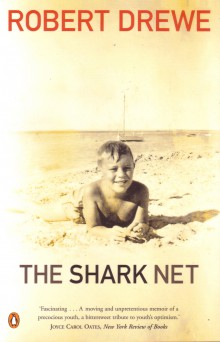
Robert Drewe, Shark netThe Seymour Biography Lecture, endowed by the Seymours in 2005, is an annual lecture devoted to life writing. The inaugural lecture was given by one of Australia’s most respected biographers, Brenda Niall. Later speakers have included Robert Dessaix and Drusilla Modjeska. Initially hosted by the Humanities Research Centre‘s Biography Institute, it was transferred to the National Library in 2010. When I saw that Robert Drewe was to give this year’s lecture, I had to go. While I haven’t reviewed Drewe here yet, I have mentioned him a few times, and have read some of his work in the past. He has written novels, short stories, essays and memoir. The shark net, his first memoir, was adapted to a well-regarded miniseries in 2003, and his second, Montebello, was published in 2012. (I mentioned these in my recent Monday Musings on literary autobiographies.)

The lecture will I’m sure, like those before it, be made available via the Seymour Biography page (link above), but I would like to share a few ideas that struck me.

Memoir, or autobiography?

Drewe talked about how memoir is viewed, the fact that some see it as self-absorption or as narcissistic, about revenge or self-justification. He quoted American critic William Gass (author of Autobiography in the age of narcissism) who attacked memoir for being about self-absorption. Gass ridiculed the genre: “Look, Ma, I’m breathing. See me take my initial toddle, use the potty, scratch my sister; win spin the bottle. Gee whiz, my first adultery-what a guy!” Hmm, I have friends who don’t like memoir for this very reason.

Drewe gave a brief history of memoir – particularly memoir as confession, or redemption – through the writings of St. Augustine who made memoir, he said, an interior exercise, and Rousseau who moved the confession or memoir into the literary arena. He told us that Patrick White described his Flaws in the glass as not a memoir but a “self-portrait in sketches”! Flaws, Drewe said, is regularly criticised. English critic, Richard Davenport-Hines, for example, wrote that White’s “spiteful bestseller Flaws in the Glass must rank as the most inadvertently self-diminishing memoir since Somerset Maugham’s”.

Memoirs, Drewe said – looking at works like St Augustine’s – predated autobiographies. He defined the two forms as follows: memoirs are written from a life, while autobiographies are of a life. The change in preposition here is significant. As Gore Vidal would describe it, memoirs are about memory, while autobiography and biography are about history. In a memoir, a writer can take a memory and describe or expand it to tell a story about his/her life or experiences. Facts can be played with in order to find the emotional truths. Autobiography on the other hand – despite George Bernard Shaw’s “All autobiographies are lies… deliberate lies” – are expected to be factual.

Drewe told us that Sigmund Freud, when asked to write about his life, refused, arguing that it would be a reckless project. To tell his complete life would require so much discretion, it would be an exercise in mendacity. No wonder that, as Drewe told us, 99% of memoirists wait until their parents have died. Oh dear! I do hope my writing-oriented children are among this 99%! We did our best!

All this might sound dry and boring, but Drewe’s presentation was entertaining. He told us that when he thinks of autobiography he thinks of Father’s Day – and sports (particularly cricket) and political autobiographies. He regaled us with the punning titles of cricket autobiographies, such as At the close of playOver to meTime to declare (two in fact); Over but not out; and No boundaries. 

Before we had a chance to call him sexist, Drewe said that Mother’s Day made him think of WOTOs, that is, Women Overcoming the Odds, like, you know, widowed women running a cattle station in the outback, or a woman sailing solo around the world or saving an endangered animal!

Drewe returned several times in his talk to the issue of “facts” versus “truths”. He quoted Louise Adler who commissions political autobiographies for Melbourne University Press, including Mark Latham’s The Latham Diaries, Peter Costello’s The Costello Memoirs, Tony Abbott’s Battlelines, and Malcolm Fraser’s The Political Memoirs. Politicians have a good memory for insults and slights. Being memoirs, they are not necessarily verifiably factual. However, Adler, Drewe said, argues that their unreliability makes them riveting reading. They may be myopic, partisan, but they deliver riches. Drewe didn’t say this, but I’ll add that this requires a certain level of sophistication in the readers, that is, we readers need to understand the memoir genre and read with that understanding. I have no problem with that!

There is, however, what he called “the veracity squad”. These include the righteous readers or burgeoning historians – his descriptions – who are pedantic about facts. They don’t believe, for example, that you can remember dialogue from a family Christmas dinner twenty years ago and so they discount works that include such content. They wouldn’t approve, also, of crafting a particular person into a standout character.

Around here, Drewe referred to his first memoir, The shark net. He said he decided not to focus on the ego, but on the serial murderer with whom his family had contact, Eric Edgar Cooke. It’s basically factual he said, but he did imagine a couple of scenes – that is, he “fictionalized fact” – because he wanted to show Cooke as a human being.

I recently posted a review of Rochelle Siemienowicz’s Fallen. She tells us, in the Epilogue, that she’d initially written the story as a novel but her editor, I believe, suggested it would be better as a memoir. Drewe said in his lecture that “some stories are best kept true, some best as fiction”. The challenge is to decide which form is best. Some writers don’t make the right decision and find themselves in a literary furore, such as Norma Khouri with her fake memoir, Forbidden love. A more complex situation is Helen Demidenko with her fiction, The hand that signed the paper, which she falsely claimed was autobiographical. What both these writers failed to realise is that the first rule of memoir is that you shouldn’t lie!

Memoirs named by Drewe

During his lecture, Drewe identified a number of memoirs, some of which I’ll share as we all like lists:

Top selling Australian memoirs

  • Clive James, Unreliable memoirs
  • Albert Facey, A fortunate life
  • Errol Flynn, My wicked, wicked ways

Other memoirs

  • Vladimir Nabokov’s Speak, memory (in my TBR)
  • Maya Angelou’s I know why the caged bird sings (read before blogging)
  • Joan Didion’s The year of magical thinking (read before blogging)
  • Anne Frank’s Diary of a young girl (read before blogging)
  • Sally Morgan’s My place (read before blogging)

So …

Towards the end of the lecture, Drewe referred to an article titled “Reflection and retrospection” by American critic Phillip Lopate. It commences:

In writing memoir, the trick, it seems to me, is to establish a double perspective, that will allow the reader to participate vicariously in the experience as it was lived (the confusions and misapprehensions of the child one was, say), while conveying the sophisticated wisdom of one’s current self.

Makes sense to me …

Emma: 200 years of perfection: Pt 3, Gender and the study of Austen

Jane Austen and gender studies are made for each other, not only because the content of her novels inspire feminist critique (albeit sometimes conflicting, because, well, all her heroines get married, don’t they?), but also because reactions to her tend to be polarised along gender lines. (Remember my reporting in a recent post on VS Naipaul’s assessment?). It is this latter issue that Barbara Seeber addressed in her second paper of the conference, “The pleasures (and challenges) of teaching Emma“.

Seeber commenced her talk by stating that “the politics of gender underpin divided opinions of Jane Austen”. She looked at some of the reasons why students (readers, more widely too, I’d say) say they don’t like Emma – Emma herself is unlikable, the book lacks a plot, and it’s mostly a romance – and teased them out one by one, particularly in terms of their gender implications. I’m not going to summarise the paper, but will just share a few salient points that contribute to issues I’ve been thinking and writing about here.

Unlike VS Naipaul, Sir Walter Scott praised Jane Austen’s writing. Nonetheless, in his review of Emma, Sir Walter Scott distinguished between “cornfields and cottages and meadows” which he saw as typical of “the sentimental and romantic cast” and works dealing with “the rugged sublimities of a mountain landscape”. Although Scott himself praises Austen’s “precision” and comic ability, this distinction that he makes does, Seeber argued, reflect a common feminine versus masculine divide.

So, how does the gender divide play out for readers of Emma?

Unlikeable Emma

Well, Seeber herself recognised that as a young woman she did not like Emma because she is bossy and controlling, but did not feel the same about Mr Knightley. She realised she had internalized the prevailing attitudes regarding femininity, the double standard that allows men to be authoritative and commanding but disallows the same in women.

(I must say that Emma’s bossiness wasn’t an issue for me when I first read the novel – perhaps because, as the oldest child, I had a bossy tendency myself!  It was her snobbery that made her less likeable to me, but I have come to a more complex understanding of that.)

Nothing happens, or what happens isn’t important

There’s a gender point too – of course – behind the idea that nothing happens. Seeber quoted Virginia Woolf from A room of one’s own:

Speaking crudely, football and sport are ‘important’; the worship of fashion, the buying of clothes ‘trivial’. And these values are inevitably transferred from life to fiction. This is an important book, the critic assumes, because it deals with war. This is an insignificant book because it deals with the feelings of women in a drawing-room. A scene in a battle-field is more important than a scene in a shop — everywhere and much more subtly the difference of value persists.

Related to this issue of “feelings”, Seeber said that the popular film/tv adaptations can work for and against appreciation of the novel in the classroom. The films, she said, tend to focus on feelings, and can result in students resisting to expand their thinking beyond feelings. Also, in terms of gender, the issue is further complicated by the fact that male students can be self-conscious about liking Austen because of these films.

Too romantic

My dearest, most beloved Emma, tell me at once (Illus. CE Brock, 1909, via solitaryelegance.com)

My dearest, most beloved Emma, tell me at once (Illus. CE Brock, 1909, via solitaryelegance.com)

The focus on feelings in the movies, has been described by some as the “Harlequinisation of Austen novels”. It can result in the shaming of boy Austen readers. Anxiety about normative masculinity, Seeber said, can be present in the classroom. On the other hand, male students can be surprised to find that Austen is actually interesting, and female students surprised to find the male students enjoying her! (Oh dear!)

But then Seeber’s argument became really interesting for me in terms of recent discussions on this blog regarding gendered reading and writing. Seeber argued that denouncing the films as Hollywood romanticism, that dismissing them as popular culture, is related to the devaluing of women, in that works enjoyed by women are often dismissed as trivial. This is ironic, she argued, because Austen satirizes those who claim themselves above the popular novels (eg Mr Collins in Pride and Prejudice, and John Thorpe in Northanger Abbey). Austen, she said, does not distinguish readers by what they read.

The obvious, and frequent, counter made to the argument that nothing happens in the novels, that they are merely domestic or romantic, is to point to references or allusions to wider issues like the Napoleonic Wars, the slave trade, and the governess trade in Austen’s novels. BUT, Seeber argued, to justify Austen in this way is to undermine the real story of, say, Emma, which is about the achievement of self-awareness and living in the every day, about being human or acting humanely, as Norton describes it, or, as I might describe it, about being civil.

In other words, to try to justify the value of Austen by pointing to her references to the bigger picture is to undermine the importance of the so-called feminine (or more domestic) values.

I liked this argument.

Monday musings on Australian literature: Guest post by Annette Marfording of the Bellingen Writers Festival

Courtesy: Annette Marfording

Courtesy: Annette Marfording

Having been intrigued by comments made by Annette Marfording, Program Director of the Bellingen Readers and Writers Festival, about running a literary festival, I approached her about writing a guest post for my blog. I thought her experience might intrigue at least some of my readers here too.

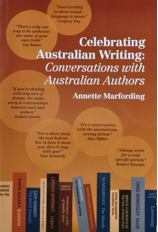
Marfording chairs one-on-one conversations and panels at the Festival, and is also a broadcaster at Bellingen’s community radio station 2bbb fm for which she created a monthly program on Australian writers and their work. Marfording’s recently published book, Celebrating Australian Writing: Conversations with Australian Authors, is based on in-depth interviews broadcast on this program. All profits from the sale of the book will go to the Indigenous Literacy Foundation. What a generous gesture! I have bought a copy of this book, which includes writers like David Malouf, Cate Kennedy and Larissa Berendt. You can too at lulu.com.

Now, here’s Annette’s post …

Some time ago, Sue asked me as Program Director of the Bellingen Writers Festival (full name Bellingen Readers and Writers Festival) to do a guest post for her wonderful blog on the joys and challenges of organising a writers’ festival. I’m delighted to do so.

This year the Bellingen Writers Festival (full name Bellingen Readers and Writers Festival) had its fifth birthday. In the period since our first in 2011, there’s been an explosion of new literary festivals all around Australia. With the exception of big city specialised sub-festivals, such as the Sydney Jewish Writers’ Festival and its Festival of Speculative Fiction, and some school or suburb festivals, such as the Abbotsleigh Literary Festival and the Sutherland Shire Writers’ Festival, most of the new festivals are in small regional towns and not specialised in any particular genre. Even though not all of them survive (for example the Gloucester Writers Festival), at the time of writing there are at least nine such regional festivals in New South Wales alone in addition to the big ones: the Sydney Writers’ Festival, the Byron Bay Writers’ Festival and the Newcastle Writers Festival.

On the one hand, this proliferation of festivals is wonderful for readers and book sales and demonstrates that the book is not dead. On the other, for several reasons, it is cause for concern:

  1. All these festivals compete for government grants and sponsorships.
  2. They also compete for authors, and understandably authors tend to prefer the greater publicity and book sales associated with the big festivals. Our invitations are often declined on the grounds that the author is overseas at the time/wants to concentrate on her/his next book/can’t possibly attend every writers’ festival in the country.
  3. Several of the festivals are scheduled in winter, enhancing the competition for authors during those months.
  4. Sadly these difficulties are compounded when other regional festivals choose to schedule theirs at the exact same time as another, as the newer Batemans Bay Writers Festival did with the Bellingen Writers Festival. Thus two of the authors we had invited appeared in Batemans Bay instead. Similarly it is confronting to find that other regional festivals have copied your advertising slogan, as the Southern Highlands Writers’ Festival in Bowral did with their adoption of ‘Be a part of the story‘ (in comparison to Bellingen’s ‘Be part of the story.’

Even if there were only one literary festival in the country, organising a festival is not for the faint hearted. The large festivals attract big money from government agencies and sponsors while the smaller ones have to make do with far less. That usually means that large festivals have a large number of paid staff, while the smaller ones tend to be organised and run by volunteers.

In Bellingen all festival committee members work as unpaid volunteers, which means they have to be brimming with passion and enthusiasm for there is a lot of work to be done: books must be read, authors and chairs selected and invited, contracts drawn up, funding applied for, sponsorship sought, venues booked, an experienced bookseller chosen, transport and accommodation organised, possibly a schools program organised, the program put together and proof-read multiple times for print and website, newsletters written for the website, social media and print publicity employed to spread the word. For the event itself, you need an event producer/organiser, sound engineers, microphones for all venues and multiple speakers, additional volunteers and an organiser for those volunteers. After each festival there are clean-up tasks, author payments and accounting to be done. Over the five years we have lost several festival committee members due to burn-out or the need for an income-generating job. We have also gained a few new ones each year, but they don’t always stay. Only four members have been involved since the beginning.

Government funding bodies often demand the introduction of a new aspect or theme for each year’s festival. For 2013 the Bellingen Writers Festival chose Celebrating Women Writers and Women’s Stories, because 2012 marked the beginning of a conversation about gender in literary culture. In 2013 the Stella Literary Award was awarded for the first time. As the readers of this blog may remember, a number of women authors, critics and publishers pushed for the introduction of an award for women writers after women had been left off the shortlist for the Miles Franklin Literary Award for Fiction for two years in a row. Another response was the creation of the Australian Women Writer’s Challenge. For 2015 the Bellingen Writers Festival chose Politics and Society and attracted a number of politicians, journalists, screenwriters and fiction writers exploring social issues and added three forums on mental health issues with Professor of Psychiatry Gordon, clinical psychologist David Roland and author of Australia’s first memoir on youth suicide Missing Christopher Jayne Newling.

Festival visitors often don’t realise that authors need to be paid not only for their transport costs and accommodation, but also earn a fee for every festival appearance (in accordance with standards set by the Australian Society of Authors). In small regional towns such as Bellingen, where small businesses often struggle, it is very difficult to attract sponsorship from local businesses, especially since Bellingen hosts several music festivals as well. Government grants are difficult to obtain on a recurring basis, especially in these times of funding cuts to the arts. This means that smaller festivals become ever more reliant on ‘big name’ authors to attract visitors prepared to pay for tickets. The further away authors live from the festival location, the higher the authors’ transport costs. This means that authors who live on the other side of Australia, in Tasmania, let alone the US, are unaffordable for the Bellingen Writers Festival.

I think it’s obvious from the above that the challenges are formidable. The joys of organising a writers’ festival require far fewer words, but nevertheless win in the end for those who are engaged and passionate about reading and/or writing. The joys of introducing favourite authors to new readers, observing the audience’s enthusiastic faces, rapt attention, and long queues for books and autographs. Even better if the authors have a good time, too, and in Bellingen, they always do. For me personally, involvement in the festival has also made it easier to interview some of the authors in my recently released book Celebrating Australian Writing: Conversations with Australian Writers which has sold 80 copies in the first two weeks – to the benefit of the Indigenous Literacy Foundation, which will receive all the profits from the sale.

****

Thanks so much Annette for this wonderful behind-the-scenes insight into running a festival. Readers like me owe a big debt to people like you who are willing to undertake the hard yakka of putting on a regional festival. I wish I lived closer to Bellingen!


Emma: 200 years of perfection: Pt 2, The art of literary research

For my second post on JASA’s Emma: 200 years of perfection conference, I want to share (or, at least, summarise for my own edification) some of the ways the speakers had gone about researching Emma, at least as they became apparent to me via their papers. None of these are particularly mind-blowing – they are the bread-and-butter of literature academics – but I enjoyed seeing how they’d variously gone about it to present the papers and ideas that they did.

Contemporary reading

Sayre Greenfield, David Norton, Barbara Seeber and Susannah Fullerton all drew on works contemporary to Jane Austen’s time to explore their theories about the novel or to elucidate deeper meanings from them.

Sayre Greenfield shared some his research into works that are in the library at Chawton House*, showing how they contribute to our understanding of Austen’s world view and how that might have played out in the writing of Emma. For example, as is obvious to the reader and as many critics like to discuss, riddles and word games feature heavily in Emma. Greenfield pointed us to books and magazines which show that these were a major form of entertainment for girls and young women of Austen’s time. Not only did he remind us of extant riddles written by Austen when she was young, noting that hers tended to be more satirical than those by her brothers, but he also referred to The Ladies Magazine which, like magazines today, contained games and puzzles for its readers. He discussed the role of these word games in the novel’s plot, but also pointed to Mr Knightley’s criticism of Emma to Mrs Weston that:

But I have done with expecting any course of steady reading from Emma. She will never submit to any thing requiring industry and patience, and a subjection of the fancy to the understanding.

For Mr Knightley, games are all well and good, but Emma could do with something more serious!

Another topic that Greenfield explored was that of old maids. He described a book by William Hayley, published in 1785, titled A philosophical, historical, and moral essay on old maids. By a friend to the sisterhood. In three volumes. This description of old maids in one of his chapters sounds very much like Miss Bates:

The curious Old Maid is a restless being, whose insatiate thirst for information is an incessant plague both to herself and her acquaintance; her soul seems to be continually flying, in a giddy circuit, to her eyes, ears, and tongue; she appears inflamed with a sort of frantic desire to see all that can be seen, to hear all that can be heard, and to ask more questions than any lips can utter …

Now, said Greenfield cheekily, Hayley defines old maids as women unmarried by their fortieth year, and it just so happens that the unmarried Jane Austen turned 40 the month Emma was published. What was she really wanting to say about “old maids” he asked.

Seeber drew on contemporary texts regarding animal rights to argue a relationship, that was made during Austen’s time, between the mistreatment of animals and the domination of social “other”, like women and slaves. I’m looking forward to reading her paper, so I can grasp her argument more fully. She had some interesting things to say about fussy Mr Woodhouse and vegetarianism too!

Fullerton explored the many royal connections to places in the novel, which she suggested is partly about “who will be queen of Highbury”, while Norton turned to Samuel Johnson’s dictionary definitions to help us understand the contemporary meanings of words used by Austen. When Emma calls Mr Knightley “humane”, for example, she was likely meaning Johnson’s definition of “civil, benevolent, good-natured”. Remember my point about “civility” in my previous post?

Close textual analysis

Close analysis of the text is, of course, standard practice for academic critics, if not for more general reviewers. I’m mentioning it here, therefore, not because it was surprising but because for me close analysis – of word choice, imagery, structure, and so on – can inform meaning, and provide support for arguments, in interesting and sometimes unexpected ways. And so it proved to be at this conference.

Fullerton and Norton, for example, talked about the wordplay in names – Highbury, where Emma is buried; Donwell, where Mr Knightley has done well, a farm that is doing well; and Hartfield, or the field of the “heart”, of  feelings. These are fun to think about, but what I found most fascinating was Norton’s discussion of punctuation and grammar.

Grammar and punctuation, he said, are straightjackets on how we think, they exert controls on the expression of our thoughts. Austen knew that, Norton argued, and exploited it. Pride and prejudice, he suggested is one of Austen’s most rational, logical novels. We know exactly what Elizabeth Bennet thinks, and her thoughts and feelings progress logically in the book. Emma, on the other hand, is her most secretive novel. Nothing is really as it seems, and what is happening on the surface – Emma’s matchmaking of Harriet, and the possible romance between Emma and Frank – is not the real story.

One way Austen conveys this irrationality and this secrecy is through dashes! Yes, you heard correctly, dashes. And here is where the analysis was particularly interesting because in Pride and prejudice, he said, there is only one dash per 192 words, but in Emma it is one per 52 words. Who’d have thought? The dashes play two roles. Sometimes they convey the dashing around of thoughts – irrational thinking as it were – as characters jump from topic to topic. Miss Bates does this a lot in breathless prose, but Emma is also guilty of it. Etymologically, Norton told us, the “dash” punctuation mark is related to the verb “to dash”, so a dash can give a sense of movement of the mind.

But, formally, according to Samuel Johnson, the “dash” represents “a pause or omission”. And it also plays this role in Emma when characters pause before they say something they might regret, or have not fully realised themselves. Here is Miss Bates trying not to give voice to rumours about Emma and Mr Elton:

A Miss Hawkins. Well, I had always rather fancied it would be some young lady hereabouts; not that I ever — Mrs. Cole once whispered to me — but I immediately said, ‘No, Mr. Elton is a most worthy young man — but’ [and so on]

What, Norton asked us, can happen in a pause?

And so, he argued, Pride and prejudice is written in coherent, grammatical prose, while Emma is significantly less grammatical – and that tells us something about the novels themselves and the minds of their respective characters. If you don’t believe me, go check them both out, and see what you think.

Adaptations

I’ve rambled on enough, and this third one is a little tangential, but Greenfield and Troost’s speciality is the study of Austen adaptations. They explore how analysing adaptations can throw light on both the adaptations themselves – duh – and on Austen’s originals. At this conference, they discussed three recent adaptations of EmmaEmma (BBC miniseries, 2009), Aisha (Anil Kapoor Films, 2010), and Emma – Appoved (Pemberley Digital VLOG, 2014). They demonstrated how these productions focus on themes or ideas that we don’t find in Emma itself, chief among these being materialism, the pursuit of fun, and the idea that life is about being true to yourself. Most recent adaptations of Emma, they argued, have roots in Clueless.

For Greenfield and Troost, adaptations are a worthy topic for Austen study. In my last post on the conference, I’ll tell you what Barbara Seeber thinks.

* Chawton is where Jane Austen spent the last years of her life, and from where all of her novels were published. Her house is now a museum.

Emma: 200 years of perfection: Pt 1, The capacious Emma

This year is the 200th anniversary of the publication of Jane Austen’s Emma, so it was natural that the Jane Austen Society of Australia’s (JASA) biennial weekend conference, held last weekend, would be devoted to the novel. It was a fascinating and inspiring conference, and one I felt well-prepared for having just re-read Emma earlier this year.

There were eight papers, presented by five speakers. I’m not going to summarise the papers in detail – they will be published in JASA’s peer-reviewed journal Sensibilities later this year – but I’d love to share, over a couple of posts, a few thoughts and ideas that came out of the weekend for me.

First, though, I will name the speakers:

  • Susannah Fullerton, President of JASA, author, lecturer, and literary tour leader
  • Sayre Greenfield, Professor of English, University of Pittsburgh (Greensburg), USA (and married to Troost)
  • David Norton, Emeritus Professor of English, Victoria University of Wellington, NZ
  • Barbara Seeber, Professor of English, Brock University, St Catharine’s, Canada
  • Linda Troost, Professor of English, Washington & Jefferson College, Pennsylvania, USA (see Greenfield!)

We all knew it, but just to make it perfectly clear, Seeber commented that Jane Austen’s novels are “capacious”, meaning that they accommodate multiple views which comprehend individual experiences and biases. This is why Austen aficionados can argue so passionately for particular readings of the novels and be right (or, more accurately, be able to justify their reading). Seeber, in fact, quoted Virginia Woolf’s argument that we do not have to provide a final reading of a work, but show how we have arrived at our particular reading. We bloggers know that – but it is nice having the likes of Virginia Woolf support us!

The capacious Emma

What is Emma about? Well this is where its capaciousness is particularly evident because it seems that almost every reader has a different opinion. In my last read I saw a major theme as being about Emma’s search for a “true friend”, and about the definition of what true friendship means and how it relates to marriage. Other themes include social status, social change, and the restricted lives of women. They are all valid.

Another theme was proposed at the conference. It came from David Norton who suggested that the book is about:

What it means to be human, and why it matters (or, how) to be humane

He argued, for example, that while the word “truth” appears many times in the novel, being humane is its cornerstone. When Emma makes her big blunder by insulting Miss Bates at Box Hill, Mr Knightley chastises her not on the grounds of “truth” because, after all, what she said was true, but for being “unfeeling”. He tells Emma that Miss Bates deserves her “compassion”.

Another way we could view this theme, I think, is that it’s about the importance of “civility” in our relationships with each other, that in fact, sometimes, to quote Frank Churchill, “civil falsehoods” are better than “a disagreeable truth”. As Sayre Greenfield commented, Highbury heals itself at the end, but is not a perfect place. There will still be Mrs Elton to cope with! And that will demand, I fear, all the civility that Emma can muster!

Miss Bates, I shall be sure to say three dully things (Illustration by CE Brock, 1909,  from solitary elegance.com)

I shall be sure to say three dull things (Miss Bates) (Illustration by CE Brock, 1909, from solitary elegance.com)

Another area where Emma is capacious is in our reactions to the characters. Jane Austen herself is famous for her statement that “I am going to take a heroine whom no one but myself will much like”. Emma’s likability has engaged readers ever since – but she’s not the only character in the book to engender fierce discussions. Frank Churchill is another. Not all characters cause significant dissent, though. Most readers, for example, see Miss Bates as a silly old maid, and Mr Woodhouse as a fussy, selfish old woman of a man – see how both negatives involve gender terms! – but our speakers had some different views.

Here, however, I’m just going to share some ideas presented by by the speakers on two characters:

  • Miss Bates. Norton and Greenfield, in particular, spoke about Miss Bates and both viewed her in positive terms. Greenfield argued that although Miss Bates fits the popular contemporary image of old maids (more on that in another post), she is the most socially intelligent character in the novel. She knows what’s going on, and she understands the complexity of her community. Norton demonstrated how Miss Bates is “the great revealer” in the novel, and argued that if you listen to her (skip her speeches at your peril, in other words), you will know what is really going on.
  • Frank Churchill. If Emma has a villain, it is Frank Churchill, but over the years I’ve noticed that it is in our reactions to Austen’s main characters that we most demonstrate our personal prejudices and biases (particularly in relation to the so-called “bad boys”). I find it most fascinating, and illuminating! Linda Troost devoted a paper to the question of whether Frank is a good guy or “a jerk”, and argued convincingly (to me anyhow) that he’s more good than bad. Drawing from both a close analysis of the text and an understanding of human psychology, she suggested that much of Frank’s behaviour arrives out of his invidious situation than from any real “badness” in his character. (She also argued that much of Mr Knightley’s criticism of Frank stemmed from – or was at least aggravated by – his jealousy).

These are just a few of the ideas that inspired me from the conference, but I’ll leave it there. In the next post, I want to talk about something completely different – literary research.