Stella Prize 2018 Longlist

I don’t do well at having read the Stella Prize longlist at the time of its announcement, and in fact last year I’m ashamed to admit that I’d read none. Terrible really for someone who’s supposed to be interested in Australian women’s writing, but there you go. My excuse is that I’m always behind in reading current books. Unfortunately, by the end of last year, I’d still only read three of the 12-strong 2017 longlist – but those I read were good’uns! If only there were more hours in the day – or, perhaps, fewer other things to do!

Anyhow, I can say that I have read (and liked) all the Stella Prize winners to date: Carrie Tiffany’s Mateship with birds, Clare Wright’s The forgotten rebels of Eureka, Emily Bitto’s The strays, Charlotte Wood’s The natural way of things, and last year’s winner, Heather Rose’s The museum of modern love.

The judges are again different to last year’s, which is good to see. It must surely keep the prize fresh to introduce new eyes, new perspectives, each year. (The chair, Fiona Stager, has been a judge a couple of times before, but some experience doesn’t go astray does it?) The 2018 judges are writer Julie Koh, critic James Ley, bookshop-owner Fiona Stager (the chair), writer and publisher Louise Swinn, and writer Ellen van Neerven (whom I’ve reviewed a few times here).

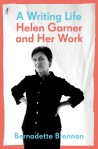
Bernadette Brennan, A writing life Helen Garner and her workAnyhow, here is the longlist,

  • The enlightenment of the Greengage Tree, by Shokoofeh Azar (novel/Wild Dingo Press)
  • A writing life: Helen Garner and her work, by Bernadette Brennan (literary portrait/Text Publishing) (my review)
  • Anaesthesia: The gift of oblivion and the mystery of consciousness, by Kate Cole-Adams (science-based non-fiction/Text Publishing)
  • Terra nullius, by Claire G Coleman (novel/Hachette Australia) (I’ll review in March)
  • The life to come, by Michelle de Kretser (novel/Allen & Unwin) (on my TBR pile)
  • This water: Five tales, by Beverley Farmer (short stories; novellas/Giramondo) (I love Beverley Farmer)
  • The green bell: A memoir of love, madness and poetry, by Paula Keogh (memoir/Affirm Press)
  • An uncertain grace, by Krissy Kneen (novel/Text Publishing)
  • The choke, by Sofie Laguna (novel/Allen & Unwin) (on my TBR, and am very keen to read having attended a lively conversation with her last year)
  • Martin Sharp: His life and times, by Joyce Morgan (biography/Allen & Unwin)
  • The fish girl, by Miranda Riwoe (novella/Seizure)
  • Tracker, by Alexis Wright (memoir/biography/Giramondo)

So, I’ve read and reviewed one, and will definitely read another, Terra nullius, by March. I have bought or been given a couple of others, and am keen to read a few more. On the other hand, there are a couple here that I hadn’t heard of at all – the books by Azar and Morgan.

The judges commented that the longlist

… challenges the reader to experience the pleasures of reading different forms of writing: speculative fiction, novella, memoir, biography, non-narrative nonfiction, history, short stories and work in translation.

I like this. Last year, I noted that there was significantly more non-fiction (more than half in fact), fewer short stories, and not much diversity. This year fiction represents just over half, and only a couple of the non-fiction are memoirs. Three of the non-fiction works are about writers and artists – Helen Garner, Michael Dransfield and Martin Sharp. This year’s list is significantly more diverse too, with indigenous writers Claire G Coleman and Alexis Wright, an Iranian born writer in Shokoofeh Azar, Riwoe’s book set in Indonesia, and our now well known Sri Lankan born writer Michelle de Kretser whose book is set in Sydney, Paris and Sri Lanka. Of course, as always, there are books I would like to have seen here but, overall, it’s an interesting list and I hope to have read more of it by the end of this year than I did last.

Meanwhile, I’d love to know if you have any thoughts on the list.

The shortlist will be announced on March 8 (International Women’s Day, as has become tradition), and the winner in April.

Heather Rose, The museum of modern love (#BookReview)

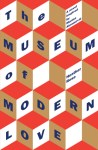
Heather Rose, The museum of modern loveAs I neared the end of Heather Rose’s Stella Prize-winning novel The museum of modern love, I slowed down. I wanted, of course, to know how it was going to resolve, but I wanted to savour it too. It doesn’t seem right to rush the end of thoughtful books like this.

But, I have to admit that I was initially hesitant about reading the book, as I am about any book inspired by a person or work I don’t know. I fear missing something important. However, I did want to read it and my reading group scheduled it. The die was cast. Then, as I was about to start reading, Brother Gums sent me a link to the documentary Marina Abramović: The artist is present about her and the performance piece which inspired this novel. I was set! As it turned out, I think Rose’s writing is evocative enough that it wasn’t necessary to have seen the film, but it did add a layer to the experience.

So, what is The museum of modern love about – besides love, that is? Its centre is performance artist Marina Abramović’s 75-day piece, The Artist is Present, which she performed at MoMA in the spring of 2010, to accompany a large retrospective exhibition of her work. The piece involved her sitting, still, quiet, at a table all day, 6 days a week (MoMA is closed Tuesdays), with gallery attendees invited to take turns to sit opposite her and share a gaze. It was an astonishing success, with, by the end, people camping out overnight to get the chance to sit. Many attended for days just to watch, creating, as Rose describes it, quite a community of spectators. In the end, over 850,000 people attended, with 1,545 people sitting (including Rose). (All are recorded at flickr.)

Anyhow, from this premise, Rose weaves an engaging, thoughtful story about art and love. It has two main narrative strands, telling the real Marina Abramović’s story and that of an attendee, the fictional musician Arky Levin, whose life is stalling, partly due to a restraining order made by his now-unresponsive terminally-ill wife that he not visit her. Interspersed with these, enriching the exploration of the themes, are smaller stories of other attendees, and family and/or friends of the protagonists. It’s narrated by a mysterious third person voice, who starts the novel with

He was not my first musician, Arky Levin. Nor my least successful. Mostly by his age potential is squandered or realised. But this is not a story of potential. It is a story of convergence.

This is a very particular omniscient narrator, some sort of artist’s muse who self-describes late in the novel as a “good spirit, whim … House elf to the artists of paint, music, body, voice, form, word”, one whose job is sometimes just “to wake things up”. This could be cutesy or forced, but it isn’t because Rose doesn’t overdo it. Mostly the story progresses without the intrusion of this narrator, so that when s/he appears we pay attention.

The moral conundrum at the novel’s heart is – is art enough or is love more important? It’s explored primarily through Levin, whose friends suggest he should appeal Lydia’s court order.

I know you’re going to say that she wanted you to do this; she wanted you to make music. But is that enough?

Music, it sounded feeble suddenly in the face of the yawning gap between life before Christmas and life these past four months. (p. 158)

So what does Levin do? Continue to live his increasingly lonely life making music, or follow his heart?

Levin’s story is off-set against other stories, notably that of Jane Miller, a friendly, recently widowed art teacher visiting New York from Georgia. She is lonely, like Levin, missing her husband “achingly, gapingly, excruciatingly. Her body hadn’t regulated itself to solitude.” She becomes one of the mesmerised watchers, but she also connects with others in the crowd, including Levin and Brittika, a PhD student from the Netherlands who is writing her thesis on Marina. Jane forms a natural link between the two themes of love and art.

What, then, is art?

The first time Jane attends the performance, she overhears people in the crowd questioning what the show is about, asking what is art, in fact. There are, of course, the naysayers, the ones who say that “art is irrelevant. If everything goes to crap, it won’t be art that saves us”. But Jane thinks differently, and turns to the man next to her who is, you guessed it, Levin, and says

I think art saves people all the time … I know art has saved me on several occasions.

As the novel progresses, various claims are made for art. Our muse, speaking particularly for artists, believes that “pain is the stone that art sharpens itself on time after time” and that “artists run their fingers over the fabric of eternity”. Marina’s art teacher says to her 16-year-old self that  “Art will wake you up. Art will break your heart”, which causes Marina to consider that “Art … could be something unimaginable”. At one point Marina is reported as saying “I am only interested in art that can change the ideology of society”.

Jane, the viewer, though, has her own epiphany:

And maybe this was art, she thought, having spent years trying to define it and pin it to the line like a shirt on a windy day. There you are, art! You capture moments at the heart of life.

But, I think it is art critic Healayas who makes the clearest, simplest point when she says during a discussion about Marina’s performance:

She simply invites us to participate … It may be therapeutic and spiritual, but it is also social and political. It is multi-layered. It is why we love art, why we study art, why we invest ourselves in art.

… and what has love got to do with it?

Everything, if art, as all this suggests, is about humanity.

Let’s look specifically at Levin. It would be easy to criticise him, as his friends and daughter gently do, for being passive. But, we do get the sense that Lydia encouraged his passivity in their life together, that she liked to be in control, not in a control-freak way but in that way that super-competent people can do. Moreover, Lydia made her order out of love for him, to let him continue creating his art, rather than look after her which she didn’t believe was in him. So, what’s Levin to do? How does he reconcile his love against hers?

The resolution when it comes is triggered by art, by Marina’s performance. And this, as Jane believes art can do, probably saves him. I say probably because Rose, clever writer that she is, leaves the ending uncertain. As she and Levin realise,

the best ideas come from a place with a sign on the door saying I don’t know.

This is an inspired and inspiring book that leaves you pondering. I’ve only touched the surface.

Lisa (ANZLitLovers) also liked the novel.
aww2017 badgeHeather Rose
The museum of modern love
Sydney: Allen & Unwin, 2016
284pp.
ISBN: 9781760291860

Monday musings on Australian literature: Mid-year awards round-up

As is my wont, I have not been posting this year on all the awards that have been announced  – on their longlists, shortlists or even their winners – though I have done some. It can become a bit overwhelming. Instead, I’ve decided that a mid-year recap might be a useful way to go – so, since we have now passed the year’s halfway mark, that time has come. I’ll mention the awards I’ve chosen to do, in chronological order of their announcement.

Stella Prize

Heather Rose, The museum of modern loveThe Stella Prize is now one of the first awards to be announced in the year, and I did post on the longlist.  From this longlist, a shortlist of six books were chosen:

  • Between a wolf and a dog, by Georgia Blain
  • The hate race, by Maxine Beneba Clarke (my review)
  • Poum and Alexandre, by Catherine de Saint Phalle
  • An isolated incident, by Emily Maguire (my review)
  • The museum of modern love, by Heather Rose
  • Dying: A memoir, by Cory Taylor

And the winner, announced in early March, was Heather Rose’s The museum of modern love, which I will be reading with my reading group later this year.

Indie Book Awards

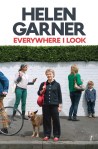
Helen Garner, Everywhere I lookThe winners of these awards, which are run by Australian independent booksellers, were announced in late March. Several awards are made, which you can check out on their site but those most relevant to my blog are:

  • FictionThe last painting of Sarah De Vos, by Dominic Smith
  • Non-fiction: Everywhere I look, by Helen Garner (my review)

The New South Wales Premier’s Literary Awards

These awards are multipronged and far too complex for me to report on in detail here. You can see the full list of winners, which were announced in late May, on Wikipedia. However, those of most relevance to me were:

  • Christina Stead Prize for FictionThe museum of modern love, by Heather Rose
  • UTS Glenda Adams Award for New Writing: Letter to Pessoa, by Michelle Cahill

ABIA, or the Australian Book Industry Awards

These awards, announced in late May, only a few days after the NSW Premier’s awards, are also multipronged. You can read the full list on the ABIA website, so again I’ll just share the most-reelvant-to-me award here, the  Literary fiction of the year award, which went to The last painting of Sarah De Vos, by Dominic Smith.

I should add that the hugely popular bestselling Australian author Di Morrissey was inducted into the ABIA Hall of Fame, and also that, for the first time this year, an award was made for Audiobook of the year, which nicely recognises the popularity and value of this form of “reading”.

Oh, and interestingly, the overall winner, Jane Harper’s The dry, was also the overall winner at the Indie Book Awards earlier in the year. So, the overall winner and the literary winner of both these awards were the same. The shortlists at both are judged by independent panels.

Miles Franklin Shortlist

While the Miles Franklin Award won’t be announced until later this year, it’s such a significant award in Australia that I’m going to share the shortlist here which was announced in June. The shortlist is:

  • Emily McGuire’s An isolated incident (Picador) (my review)
  • Mark O’Flynn’s The last Days of Ava Langdon (UQP)
  • Ryan O’Neill’s Their brilliant careers (Black Inc Books)
  • Philip Salom’s Waiting (Puncher and Wattman)
  • Josephine Wilson’s Extinctions (UWAP)

Nice to see a gender mix, and good representation from smaller publishers, including two university presses!

Stella Prize 2017 Longlist

“I feel like we’re at the Oscars for nerds” tweeted Tracey Spicer, ABC Journalist, at tonight’s announcement of the 2017 Stella Prize Longlist. Love it. Nerds of the world unite!

When the longlist (of 12) was announced last year, I had read and reviewed only one of the books. By the end of the year, I had read 6 which I’m satisfied with given how much I read last year overall. This year I haven’t read any (yet)! Really? Where have I been?

The judges are different again to last year’s, with just the chair continuing. They are writer Delia Falconer, bookseller Diana Johnston, writer/memoirist Benjamin Law, academic/Chair of First Nations Australia Writers’ Network Inc. Sandra Phillips, and writer/chair Brenda Walker.

Anyhow, here is the longlist, including, sadly, two posthumous nominations:

  • Victoria: the queen by Julia Baird (HarperCollins/Biography)
  • Between a wolf and a dog by Georgia Blain (Scribe/Novel) (Posthumous)
  • The hate race by Maxine Beneba Clarke (Hachette/Memoir)
  • Poum and Alexandre by Catherine de Sainte Phalle (Transit Lounge/Novel)
  • Offshore: Behind the wire at Manus and Nauru by Madeline Gleeson (NewSouth/Non-fiction)
  • Avalanche by Julia Leigh (WW Norton/Memoir)
  • An isolated incident by Emily Maguire (Picador/Novel) (Lisa named this as her book of the year last year, so I really should make this a priority)
  • The high places: Stories by Fiona McFarlane (Farrar, Straus and Giroux/Short stories)
  • Wasted: A story of alcohol, grief and a death in Brisbane by Elspeth Muir (Text/Biography-Memoir)
  • The museum of modern love by Heather Rose (Allen & Unwin/Novel)
  • Dying: A memoir by Cory Taylor (Text/Memoir) (Posthumous)
  • The media and the massacre: Port Arthur 1996-2016 by Sonya Voumard (Transit Lounge/Nonfiction)

As usual a mixed lot, but a different mix to last year’s. There’s significantly more non-fiction (more than half in fact), including a few memoirs – and fewer short stories. I suppose it’s purely coincidental, but I was surprised at the number of memoirs/autobiographies/biographies I read last year. Are memoirs making a come-back? I note that the list seems to be rather low on “diversity”, but two of the judges could be seen to represent diverse backgrounds, so presumably that issue was canvassed.

I have read and liked all the Stella Prize winners to date: Carrie Tiffany’s Mateship with birds, Clare Wright’s The forgotten rebels of Eureka, Emily Bitto’s The strays and Charlotte Wood’s The natural way of things. I look forward to seeing which of the above books wins this year …

The shortlist will be announced on March 8, and the winner on April 18.

Stella Prize 2016 Winner Announced

WoodNaturalJust a short post for those of you who read my Stella Prize longlist and shortlist posts and haven’t heard the news – which would primarily be you readers from lands other than mine! The winner was not a surprise, as you may know if you read my response to BookerTalk’s question on my shortlist post. It’s Charlotte Wood’s The natural way of things.

Wood’s book has been garnering such positive reviews, I knew I should have read it before the announcement, but instead I read three others (Tegan Bennett Daylight’s Six bedrooms, Elizabeth Harrower’s A few days in the country and other stories, and Fiona Wright’s Small acts of disappearance.) I will definitely be reading Wood soon, since it is up for other awards this year too.

Charlotte Wood’s acceptance speech is available online at the Stella Prize site. Here are a couple of excerpts:

I know that the measure of a book’s quality, and the measure of one’s worth as an artist, can never be decided by awards. Nor can it be defined by sales, nor even the response of our beloved readers. If there is a measure – and I’m not sure there is – it can only be time.

Partly true. I discovered recently that Elizabeth Harrower missed out on the Miles Franklin Award for her wonderful The watch tower (my review) in 1966 to Peter Mathers’ pretty much forgotten Trap. (Of course, someone could revive it too as Text Publishing has Harrower’s books making me eat my words).  “Worth” though is not only about longevity. That’s one measure, sure. But relevance to the time in which the work is written and relevance to the readers of that time is, I’d argue, surely a “worthy” (ha!) measure of “worth” too. And that’s probably what awards in particular measure. Whether Wood stands the test of time, only time knows, but that she has captured something critical about our times can’t be denied if the universal acclaim this book is receiving is to be trusted. The judges certainly see it that way: they described the book as “‘a novel of – and for – our times” and “‘a riveting and necessary act of critique.”

Wood goes on in her speech to list some reasons to write, which are worth reading, but I’ll conclude with her argument about the importance of art:

Art is a candle flame in the darkness: it urges us to imagine and inhabit lives other than our own, to be more thoughtful, to feel more deeply, to challenge what we think we already know. Art declares that we contain multitudes, that more than one thing can be true at once. And it gives us a breathing space – a space in which we can listen more than talk, where we can attentively question our own beliefs, a place to find stillness in a chaotic world. I hope that my novel has provided some of those things: provocation, yes, but also beauty and stillness.

Now, I’m off to do some of my own form of stillness – yoga. Catch you all later …

Stella Prize 2016 Shortlist

Around a month ago, I announced this year’s longlist for Stella Prize … and now I bring you the short list. It must have been such a difficult choice and I’m sure all the books longlisted deserved to be shortlisted – but there can only be 6, and here they are:

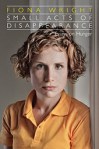
  • Fiona Wright, Small acts of disappearanceSix bedrooms by Tegan Bennett Daylight (Random House)
  • Hope Farm by Peggy Frew (Scribe)
  • A few days in the country: And other stories by Elizabeth Harrower (Text) (on my TBR – now definitely higher in my priority list)
  • The world without us by Mireille Juchau (Bloomsbury)
  • The natural way of things by Charlotte Wood (Allen & Unwin)
  • Small acts of disappearance: Essays on hunger by Fiona Wright (Giramondo) (my next read, after my current one)

These represent three novels (by Peggy Frew, Mireille Juchau and Charlotte Wood), two short story collections (by Tegan Bennett Daylight and Elizabeth Harrower), and a set of essays (by Fiona Wright). Varied as usual, but with, also as usual, an emphasis on fiction.

Brenda Walker, one of the judges, says:

A common thread I see – it doesn’t apply to every title – is some kind of vital expansion of Australian women’s literature,” she said. “You can say that Fiona Wright connects her book to Christina Stead – she writes quite a bit about Stead – and you immediately think about Barbara Baynton when looking at a few of the titles. Elizabeth Harrower is part of that literary history and there she is vivid and present. So I see this as a burgeoning of women’s literary tradition, which has often been a little bit oblique to the mainstream, canonical stuff.

Christina Stead, Barbara Baynton – both significant, and strong Australian women writers. I like the sound of this, this sense of a tradition, of writers building on those who came before – the building on, being the important thing of course.

The winner will be announced on April 19. The prize is $50,000. However, each of the shortlisted authors will now receive $2,000, and apparently a three-week writing retreat at a house in Point Addis, Victoria. Sounds like a wonderful “consolation” prize to me – and, as I reported David Malouf as saying just this week, being shortlisted is a significant achievement in terms of recognition.

The judges as I advised in my previous post are: writer Emily Maguire, memoirist/essayist Alice Pung, author/academic Brenda Walker, literary critic/author Geordie Williamson, and bookseller/founder of the Indigenous Literacy Foundation Suzy Wilson.

PS I won’t be doing long and short lists for every award that comes along, but because of my commitment to the Australian Women Writers’ Challenge, I do like to promote the Stella Prize.

Stella Prize 2016 Longlist

The announcement of the Stella Prize Longlist is a red-letter day for the Australian Women Writers Challenge … and also for me of course. So, today, I share the list with you. The shortlist will be announced on March 10.

The judges look good to me: writer Emily Maguire, memoirist/essayist Alice Pung, author/academic Brenda Walker, literary critic/author Geordie Williamson, and bookseller/founder of the Indigenous Literacy Foundation Suzy Wilson.

Alice Robinson, Anchor Point

Anyhow, here is the longlist:

  • The women’s pages by Debra Adelaide (Pan Macmillan) (I’ll be reading this soon)
  • The other side of the world by Stephanie Bishop (Hachette)
  • Panthers and the Museum of Fire by Jen Craig (Spineless Wonders)
  • Six bedrooms by Tegan Bennett Daylight (Random House)
  • Hope Farm by Peggy Frew (Scribe)
  • A few days in the country: And other stories by Elizabeth Harrower (Text) (on my TBR, and now higher in my priority list)
  • A guide to Berlin by Gail Jones (Random House)
  • The world without us by Mireille Juchau (Bloomsbury)
  • A short history of Richard Kline by Amanda Lohrey (Black Inc)
  • Anchor point by Alice Robinson (Affirm Press) (my review)
  • The natural way of things by Charlotte Wood (Allen & Unwin)
  • Small acts of disappearance: Essays on hunger by Fiona Wright (Giramondo)

As is usual for the Stella, the list include novels, short story collections (a few in fact) and non-fiction … And as is usual, I have most on my radar. I have read the first three Stella Prize winners: Carrie Tiffany’s Mateship with birds, Clare Wright’s The forgotten rebels of Eureka and Emily Bittos’s The strays. All have been excellent reads, which augurs well for my enjoyment of this year – although as we have been hearing lately past practice is no predictor of the future!

I’m sorry that this is a basic post … I am holidaying for a few days in a gorgeous Aussie country town, and am without my normal computing facilities. The iPad us not conducive to long post writing. Phew, do I hear you say?

Emily Bitto, The strays (Review)

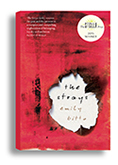
Emily BItto, The strays, book coverLet me start by saying I really enjoyed reading Emily Bitto’s The strays. It was scheduled for my reading group the day after my return from Tasmania, and I suddenly found myself in the last day of my Tasmanian holiday without having started the book. Wah! I read it in two days, helped by several hours in a couple of airports. I haven’t done that for a long time, and what a joy it was to have a real length of time to commit to a book. It helped, of course, that having both a strong plot and an intriguing set of characters, The strays is compelling to read. It reminded me, albeit loosely, of Evelyn Waugh’s Brideshead revisited and Ian McEwan’s Atonement.

This is a debut novel, which also won this year’s Stella Prize. Set primarily in the 1930s, with the last of four parts set in the 1960s, The strays is both historical fiction and a coming-of-age novel. It is also a classic outsider story. Lily, who tells the story first person, is befriended when she is 8 years old by schoolmate Eva, the middle daughter of the Trenthams who, early in the novel invite a number of artist “strays” to form a utopian-bohemian artistic community. The Trenthams are inspired by the Reeds and their Heide group, but The strays is not a Heide story*.  This may be the strength of the novel, but also perhaps its weakness – a strength because it frees Bitto to tell her own story, but a weakness because it removes potential ideas on which to hang her story.

Before I get to that, though, a little more about the story. The first three parts follow the Trenthams for 8 years, from when Lily is 8 to 16. During this time Lily becomes increasingly involved with the Trenthams, in preference to her boring, conservative, middle-class parents, eventually living with them full-time. Some members in my reading group found her parents’ relinquishing of their daughter unbelievable, but this was during the Depression, and Lily’s parents did have some problems of their own to manage. I could suspend my disbelief. From Lily’s point of view, she was in thrall to the excitement of the Bohemian life, telling her parents, “I love you both but I want to be different”.

Her parents, however, should have been concerned, because the Trenthams are rather casual, neglectful parents and the four girls more or less run their own lives, sometimes being fed properly, sometimes not, sometimes, in the case of one in particular, going to school, and sometimes not. The story is as much about them, as about the artists, though we do hear about the artists too. There’s exploration of experimental art and its acceptance or otherwise by society, obscenity charges, mentee supplanting mentor, and so on. There are parties, and other occasions, where artists and children come together. Bitto, through Lily, paints all this beautifully. Indeed, I loved her ability to evoke scenes, people and places with effective, yet tight imagery.

Bitto’s use of Lily as her narrator works nicely. Through most of the novel, we see the story through her child’s point-of-view, but occasionally, with a “later I realised” type of comment, we are reminded that this is an adult telling the story of her childhood:

When was it that I became a voyeur in their midst? I was the perfect witness, an unsuspected anthropologist disguised within the body of a young girl, surrounded by other young girls who were part of the family. Yet I was cuckoo in the nest, an imposter who listened and observed, hoarding and collecting information.

This narrative style keeps the story grounded. We see the dysfunctional dynamics and its effects before Lily, wooed by the excitement, does – though she does have moments of clarity. When the youngest daughter goes missing on one occasion, she writes:

I drew in my breath. These adults were no use in a crisis.

The subtext is that her parents would be.

But, here’s the thing. The book tackles a lot of ideas. There’s the exploration of society’s reaction to experimental art; the idea of coming to terms with the past (for Lily); the utopian artist community and whether it can really work; indulgent or neglectful parenting, creating a dysfunctional family life that comes back to bite; the exploration of girlhood friendships and the whole coming-of-age thread; not to mention those big issues like loyalty and betrayal, envy, sexuality and sensuality. It’s not that these were uninteresting, or even that they weren’t well developed. It’s more that I struggled to find Bitto’s main focus, and I guess I like some sort of central idea on which to hang my understanding of a book.

My reading technique is that when I finish a book I go back and reread the beginning. This usually puts the whole into context, pinpointing what the author was about. However, this technique didn’t work wonderfully with The strays. Bitto’s Prologue starts by discussing the mystery of instant attraction between people, and then moves on to the idea of past life connections and that people’s souls can be twinned from one life to the next. These ideas are used to explain Lily’s relationship with Eva, but I’m not sure that this is fundamental to the book’s meaning. The prologue then discusses the past. Three decades after the main events, Lily receives a letter:

and I become aware of an old compulsive pain I have pressed like a bruise again and again throughout the years.

AND

I feel a tenderness in my chest, and the past rushes in as a deluge I can no longer hold back …

AND

I let my mind turn back once more, to recreate again that distant, still wracked past.

Is it this, the idea of coming to terms with or resolving the past, that binds the book together? It is partly. By the end of the novel, Lily has come uneasily to terms with what happened those three decades ago, and its impact on her life. I say uneasily because – and here we come to the epigraph, by William Pater, which expresses a different idea again to those in the prologue: “To burn always with this hard, gem-like flame, to maintain this ecstasy, is success in life”. Lily’s uneasiness is that she has chosen “conventionality”, but recognises that part of her “is still drawn to the romance of the fully lived life”. Then we have the book’s concluding paragraphs, which are more concerned with mothering and family in Lily’s recognition that it was the Trentham children who paid the debt for their parents’ experiments. See my problem regarding central idea? Or, is it just that I’m being boringly 20th century?!

Whatever it is, they are just niggles. As a read, The strays is up there as one of my most enjoyable for the year – for its lucid writing, for the story and a setting that had such appeal, and, yes, even for that whole raft of ideas that she throws so determinedly at us. Even for that.

Lisa at ANZLitLovers enjoyed the book too.

* Interestingly, a couple of “real” people are mentioned, one being politician and later judge, Herbert Evatt – as a supporter of modern, experimental art.

awwchallenge2015Emily Bitto
The strays
South Melbourne: Affirm Press, 2014
290pp.
ISBN: 9781922213211

Stella Prize 2015 Shortlist

I rarely write longlist, shortlist and winner posts, but for the Stella Prize I don’t mind making an exception. Last month, I posted on the longlist, and yesterday, the shortlist was announced.

  • Maxine Beneba Clarke’s Foreign Soil (Hachette): short story collection that I really must read, a debut book
  • Emily Bitto’s The Strays (Affirm Press): another debut book, this a novel that’s been garnering excellent reviews, and I’m keen to read this.
  • Christine Kenneally’s The Invisible History of the Human Race (Black Inc): the only non-fiction in the list, about her research into DNA and humanity’s origins.
  • Sofie Laguna’s The Eye of the Sheep (Allen & Unwin): second adult novel by an award-winning playwright and writer for children, about an individual young boy who may be, though it’s apparently not stated, on the autism spectrum.
  • Joan London’s The Golden Age (Random House): the only shortlisted book by a well-established novelist. I love her writing so need to read this. All these “must reads” make me wonder what I have been reading!
  • Ellen van Neerven’s Heat and Light (UQP): another debut book, and an intriguing collection of short, long and interrelated stories. I reviewed it last month.

It’s great seeing so many smaller publishers in the mix. Reminds us again that we should not overlook them when we are seeking quality books! This Stella Prize link will give you all the gen on the shortlist, including excerpts.

I was disappointed not to see Helen Garner’s The house of grief shortlisted, but not having read all the books, I’m in no position to pass judgement.

PS Apologies to those who saw it for the early incomplete posting of this post. I’m on the road and, against my better judgement, stupidly tried to use WordPress’s app. I like most things about WordPress, but detest the iPad app, so I tediously finished this in the browser on the iPad. Not a fun thing to do.

Stella Prize 2015 Longlist

As a team-member of the Australian Women Writers’ Challenge, I’m particularly interested in the Stella Prize, which, as you probably know, is a prize limited to Australian women writers. The great thing about it, though, is what it isn’t limited to – and that is form and genre. The first winner in 2013 was a novel, Carrie Tiffany’s Mateship with birds (my review), and the second, last year, was a history, Clare Wright’s The forgotten rebels of Eureka (my review). What will it be this year?

Well, it could be a book of short stories or a memoir, or it could be true crime or, yes, a novel, or it could even be a young adult novel or a book about the human race. Here, if you are interested, is this year’s longest (the shortlist to be announced on March 12):

Helen Garner, This house of grief book cover
  • Maxine Beneba Clarke’s Foreign Soil: a collection of short stories which has been receiving positive reviews.
  • Emily Bitto’s The Strays: a debut novel set around the 1930s and published by small publisher, Affirm Press
  • Ceridwen Dovey’s Only the Animals: a collection of short stories giving, I understand, a animal’s-eye-view of humans, at our best and worst.
  • Helen Garner’s This House of Grief: a sort-of true-crime-cum-courtroom story which I reviewed last year.
  • Sonya Hartnett’s Golden Boys: novel by one of our well-established well-regarded writers
  • Christine Kenneally’s The Invisible History of the Human Race: non-fiction about the development of the human race, looking at DNA and historical factors.
  • Sofie Laguna’s The Eye of the Sheep: second novel from an author whose first novel was longlisted for the Miles Franklin Literary Award and shortlisted for the Prime Minister’s Literary Award.
  • Joan London’s The Golden Age: I loved London’s Gilgamesh, and also enjoyed her The good parents (which I’ve reviewed here) so why haven’t I yet read this one?
  • Alice Pung’s Laurinda: debut novel, for young adults, by acclaimed memoirist Pung whose second memoir I’ve reviewed here).
  • Inga Simpson’s Nest: second novel by an author proving to be popular with AWW Challenge reviewers. She’s on my radar.
  • Ellen van Neerven’s Heat and Light: debut novel which won the 2013 David Unaipon Award, and it’s on my TBR.
  • Biff Ward’s In My Mother’s Hands: memoir by the daughter of historian Russell Ward, which I’ll be reading in March, as it’s been scheduled for my reading group.

This year’s stellar (couldn’t resist that) judges are critic and writer Kerryn Goldsworthy (chair), journalist and broadcaster Caroline Baum, writer and lecturer Tony Birch, singer–songwriter Sarah Blasko, and author Melissa Lucashenko. You can read the judge’s full report on the Stella Prize website.