Finlay Lloyd’s 20/40 Prize 2024: Shortlist announced

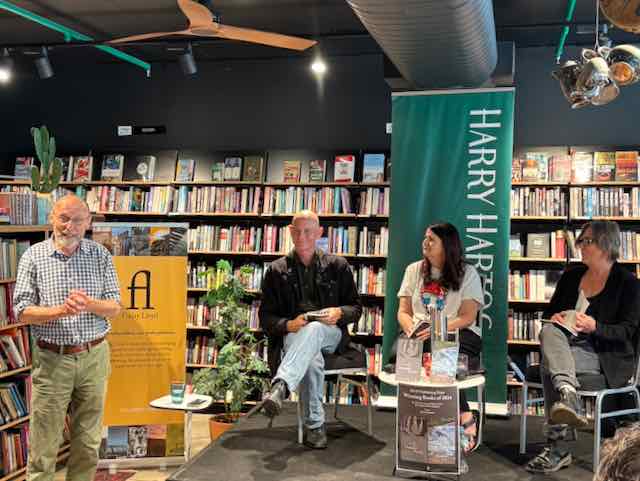
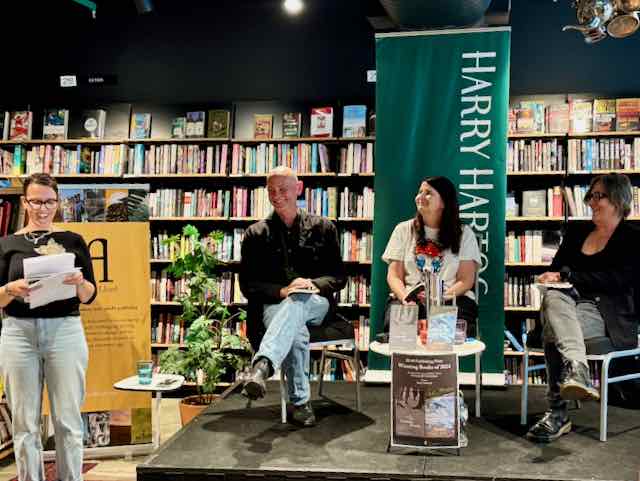
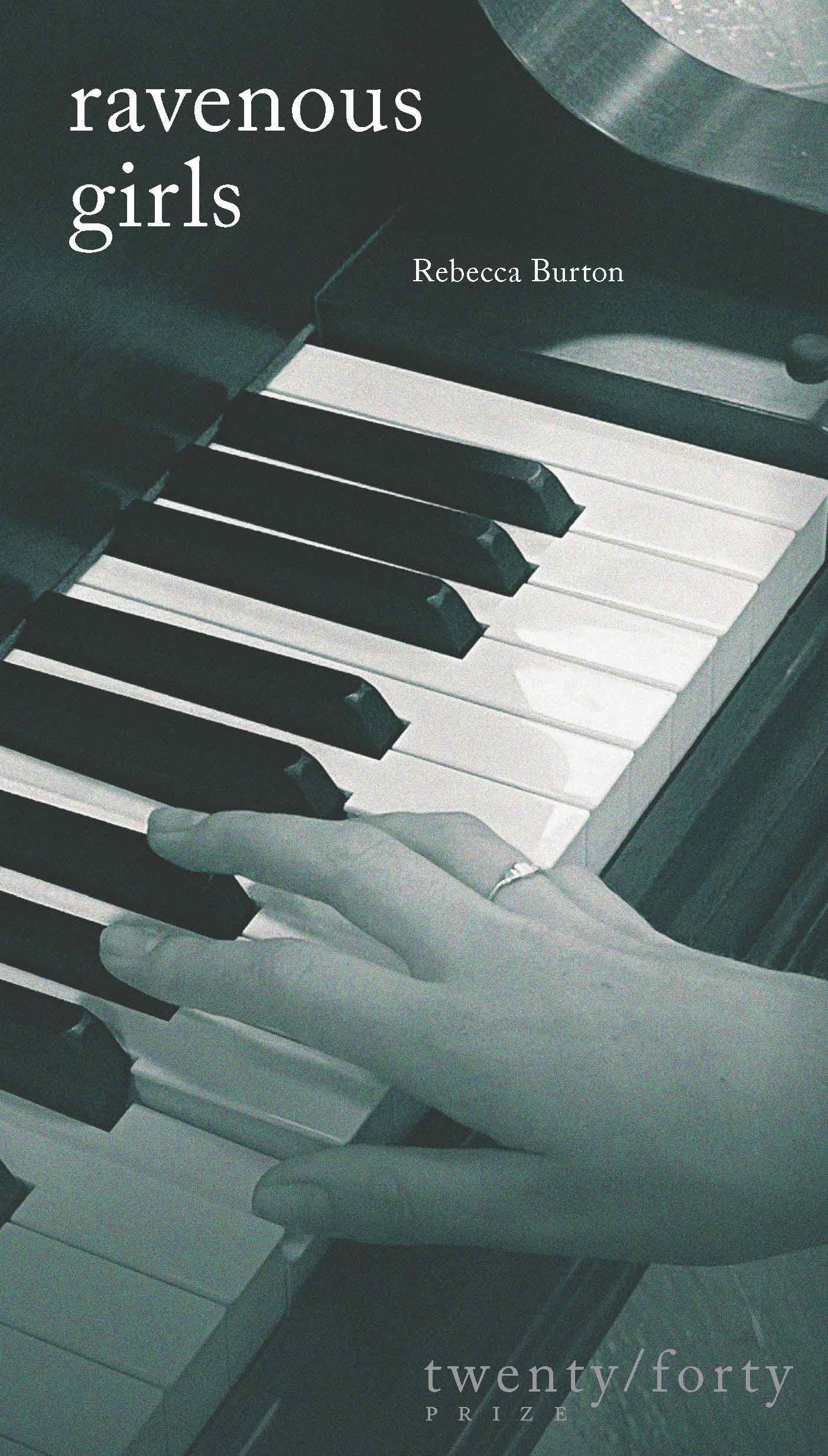
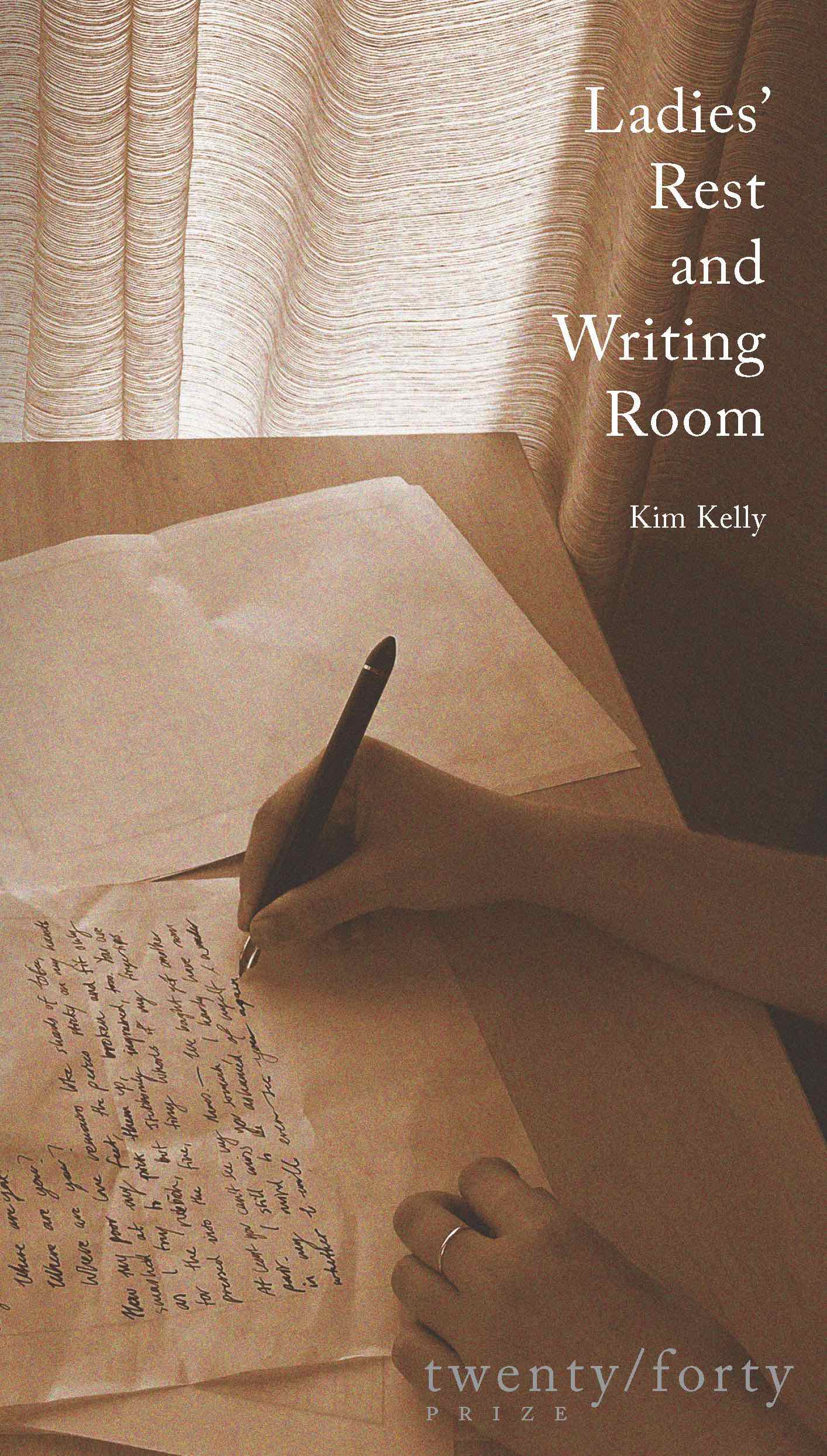
And, the interesting literary awards keep coming. In November 2022, I announced the creation of the new 20/40 Publishing Prize by the local-to-my-region independent, non-profit publisher, Finlay Lloyd. A year later, in October 2023, I announced the inaugural shortlist, and soon after that, the winners, Rebecca Burton’s Ravenous girls (my review) and Kim Kelly’s Ladies’ Rest and Writing Room (my review). I am absolutely thrilled to see that the shortlist for this year’s award has just been announced.

But, before I get to that, a little explanation re my opening sentence. Like the Barbara Jefferis and the Mark and Evette Moran Nib Literary Awards, this award, too, has different and specific criteria, though in this case they are not so much about content as form. The 20/40 prize is a manuscript award with the prize being publication, neither of which criteria is particularly unusual. Further, it is not limited to debut or young or women or any other subgroup of writers, as some manuscript awards are. Submissions can be fiction or non-fiction, but must be prose (albeit “all genres … including hybrid forms” are welcome). What makes this award particularly special – to me anyhow – is that it is for shorter works, that is, for works between 20,000 and 40,000 words (hence the award’s name, the 20/40 Prize). The original aim was to make two awards – one to a work of fiction and one to nonfiction. However, last year the fiction submissions were so strong, said the judges, that both winners were fiction. Let’s see what happens this year …

And now, the 2024 Shortlist

Here is the shortlist, with a description from the announcement, plus further information I have found on the previously published authors.

  • Alicia Marie Carter’s Minotaur toes pulls no punches in taking the reader deep into the searing, visceral reality of the ensnared existence of a young woman, manipulated in prostitution: Carter is a writer, editor, teacher and podcaster who has had short stories, poetry and personal essays published in various literary journals, has won awards for her short fiction, and had a novel, Songs at the end shortlisted for the Penguin Literary Prize 2021.
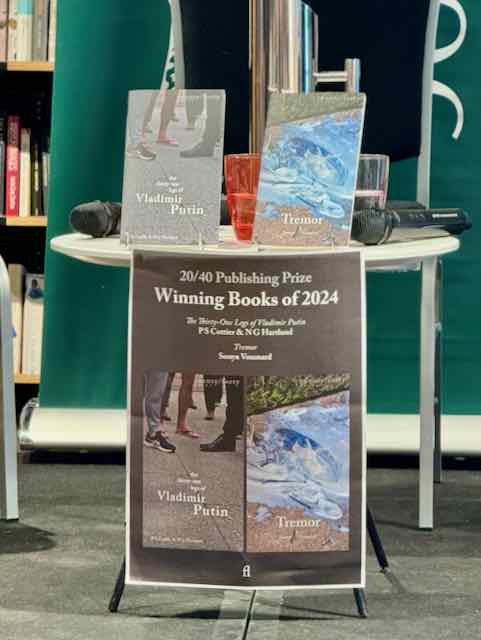
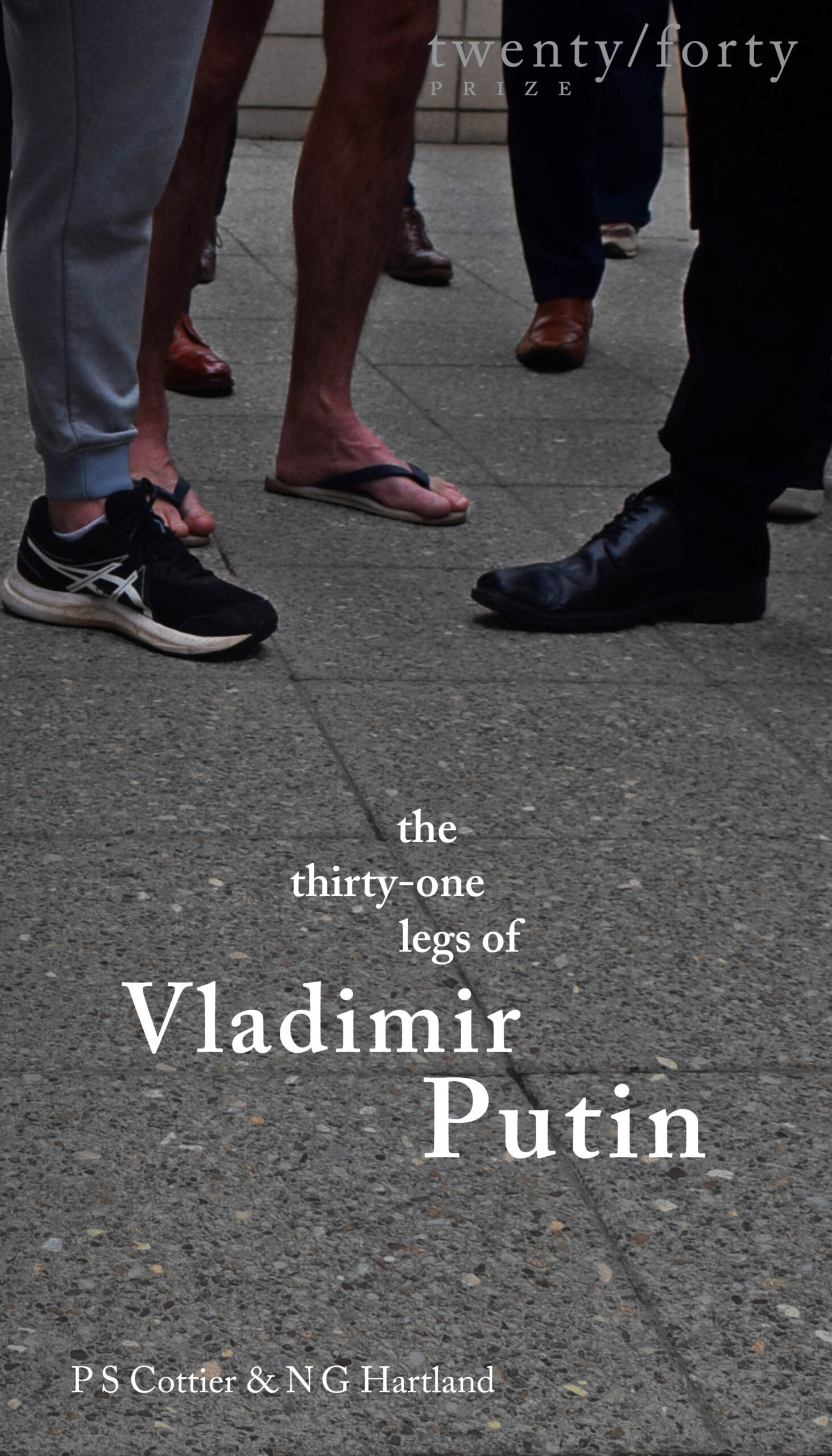
  • PS Cottier and NG Hartland’s The thirty-one legs of Vladimir Putin spirits us away on a comedic journey into a world where the reality and absurdity of political power are increasingly indistinguishable: Cottier is a Canberra-based “poet who occasionally writes prose”, among other things, with an impressive body of work to her name; Harland is also a Canberra-based writer about whom I have found little except some references to prose writing.
  • Susan Saliba’s There is something that waits inside us empathetically explores the search for solace of a girl caught between the example of her high-achieving aunt and her eccentric, dysfunctional mother: Saliba is an English and Creative Writing Teacher, and an award-winning writer of young adult and children’s fiction.
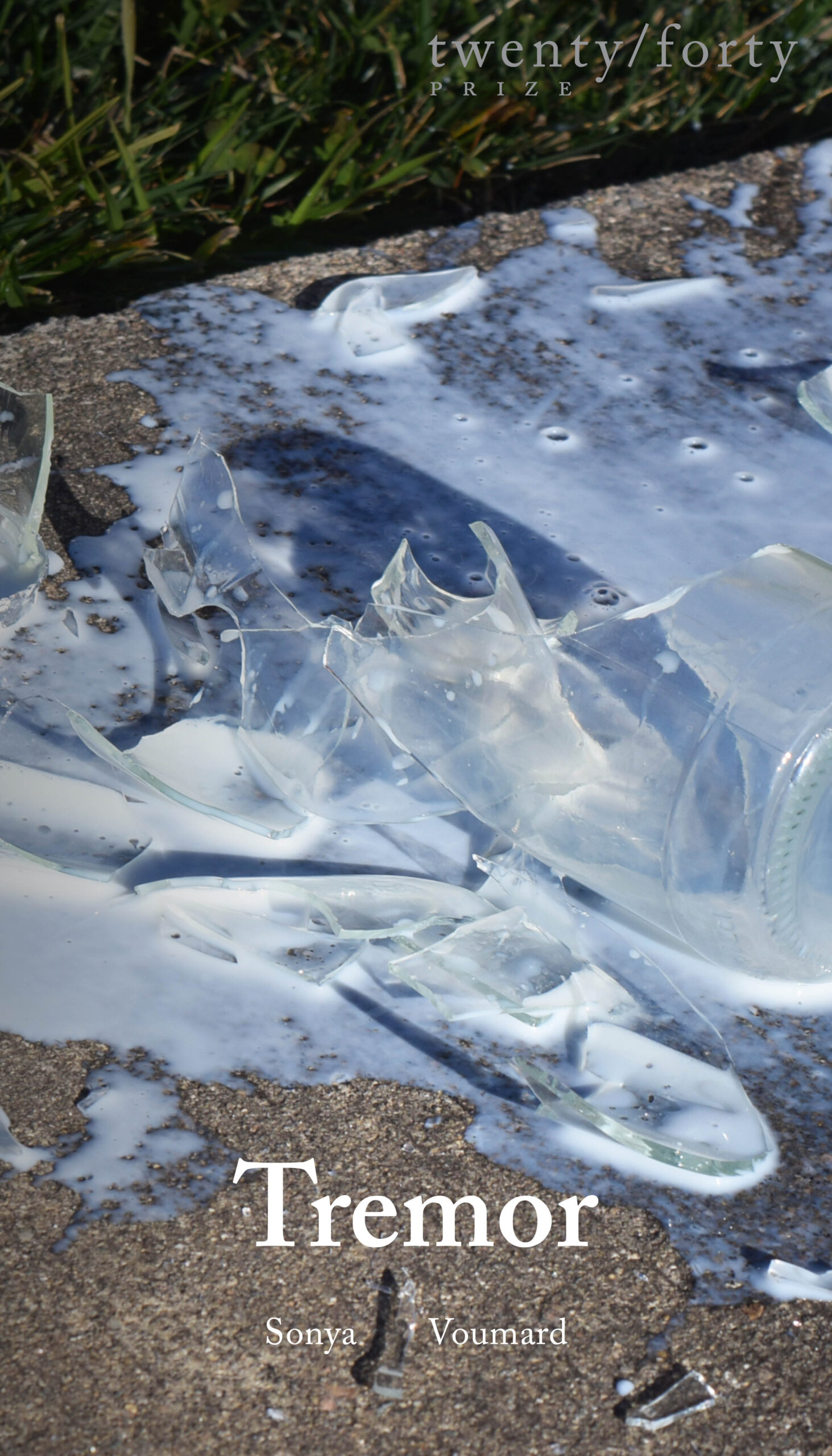
  • Sonya Voumard’s Tremor shows us that beyond our societal expectations and judgements about normality, individual lives with disability can follow atypical, often difficult, but ultimately inspiring paths: Voumard is a writer and lecturer, primarily in non-fiction, who first came to my attention when she was longlisted for the Stella Prize in 2017 with The media and the massacre (which kimbofo reviewed from her won journalistic perspective).

Last year’s submissions were judged blind. This is not explicitly stated in this year’s shortlist announcement, but Julian Davies did say in an email announcement earlier this year that “Consistent with the ethos behind the prize, and last year’s guidelines, all entries will be read blind by the panel so that the quality of the writing guides the panel’s decisions rather than any extraneous influence”. I am clarifying this as I know it appeals to many readers and writers.

The judging panel for the 2024 prize comprised author Kevin Brophy (whose The lion in love I’ve reviewed), the publisher and author Julian Davies (whom I’ve reviewed a few times), author and poet Rashida Murphy, and last year’s winners, Rebecca Burton and Kim Kelly (aka Kim Swivel). The ongoing plan is for the previous year’s winners to be on the next year’s panel.

The winners will be announced on 26 October, just in time, again, for Novellas in November. The media release says, “it is intrinsic to a publishing prize that when the shortlisted entries are announced, the winning books are already in the final stages of being prepared for publication”. In other words, we should be able to buy them at the end of this month. Watch this space. I have so many novellas I want to read for Novellas in November …

It is heartening to see Finlay Lloyd’s commitment to their prize. I hope it continues long into the future.

2024 Mark and Evette Moran Nib Literary Award shortlist

Recently, I posted on the shortlist for the Barbara Jefferis Award, which has a very specific goal concerning the depiction of women and girls in a positive way or in a way that empowers the status of women and girls in society. Today, I’m sharing another shortlist for another award with a specific focus. The award is the Mark and Evette Moran Nib Literary Award and its focus is “Australian research-based literature”. It is offered through a municipal council, the Waverley Council in Sydney, which also makes it unusual.

Like the Barbara Jefferis award, and indeed the Stella Prize, this award is not limited by genre or form – that is both fiction and non-fiction are eligible. The judging is based on “on literary merit, research, readability, and value to the community”. I have written about it before, so if you are interested in its origins and intentions please check that link. Previous winners include historians Alison Bashford and Claire Wright, biologist Tim Low, novelists Helen Garner and Delia Falconer, and journalist Gideon Haigh.

Last year, the winner’s prize doubled in value from $20,000 to $40,000, due “to an ongoing multiyear commitment by the award’s principal sponsors, Sydney philanthropists, Mark and Evette Moran, Co-Founders/Co-CEOs of the Mark Moran Group”. This makes it a significant prize. There is also a People’s Choice Prize of $4,000 and the six shortlisted books receive $1,500 each.

The judges for the 2024 award are poet Jamie Grant, publisher Julia Carlomagno, and writer Angela Meyer (whom I’ve reviewed a few times here). They narrowed the shortlist to 6 books, from 175 submissions. The announcement quotes them as saying:

“We were impressed with the breadth and calibre of this year’s entries, which ranged across genres, forms and styles. The six chosen books cast a lens both global and intimate, exploring issues of gender, class, nation and family, and emphasising the importance of community. We congratulate all the shortlisted authors.”

The 2024 shortlist

  • Shauna Bostock, Reaching through time: Finding my family’s stories (Allen & Unwin, First Nations family history)
  • Deborah Conway, Book of life (Allen & Unwin, memoir, kimbofo’s review)
  • Ryan Cropp, Donald Horne: A life in the lucky country (La Trobe University Press, biography, Lisa’s review)
  • Anna Funder, Wifedom (Hamish Hamiliton, biography, my review)
  • Melissa Lucashenko, Edenglassie (UQP, historical fiction, my review)
  • Dave Witty, What the trees see: A wander through millennia of natural history in Australia (Monash University Press, ecoliterature/nature writing)

As commonly happens with this award, life-writing features heavily in the shortlist. Like last year, there is just one work of fiction. But, unlike some years, I’m pleased to have read two of the shortlist!

If you wish to vote for the Nib People’s Choice Awards, you can do so from now until 17th October, so click here to register your choice. For more information on the award overall, check out Waverley Council’s announcement.

The winner of the overall prize and the People’s Choice Award will be announced on 27 November.

Have you read any of these books?

Barbara Jefferis Award 2024 Shortlist Announced

I didn’t report on this biennial award in 2022, but with the 2024 shortlist just having been announced, and my having read half of them, I am reminding us all again of this interesting award. Worth $50,000, this award, for those of you who don’t remember it, has very specific criteria:

“the best novel written by an Australian author that depicts women and girls in a positive way or otherwise empowers the status of women and girls in society”.

What this means is that it is not the sex of the writer that’s relevant here (nor, in fact, the genre). This award is for books about women and girls – and so can be written by anyone of any sex – but they must present women and girls in a positive or empowering way. I wrote a Monday Musings post about this “positive or empowering” requirement a few years ago.

This year’s shortlist of six books are all by women, but you’ll see that a male writer, Tony Birch, is among the highly commendeds.

  • Gail Jones, Salonika Burning (Text Publishing) (my review)
  • Melissa Lucashenko, Edenglassie (University of Queensland Press) (my review)
  • Miranda Riwoe, Sunbirds (University of Queensland Press)
  • Sara M Saleh, Songs for the dead and living  (Affirm Press)
  • Lucy Treloar, Days of innocence and wonder (Pan Macmillan Australia)
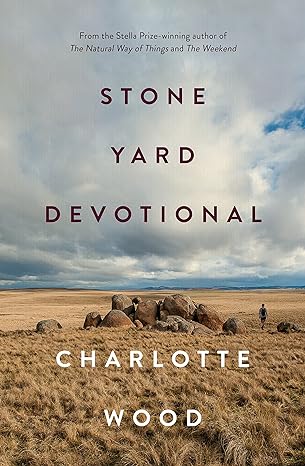
  • Charlotte Wood, Stone Yard devotional  (Allen & Unwin) (my review)

This year, the judges also named three Highly Commended titles:

  • Tony, Birch, Women & children (University of Queensland Press)
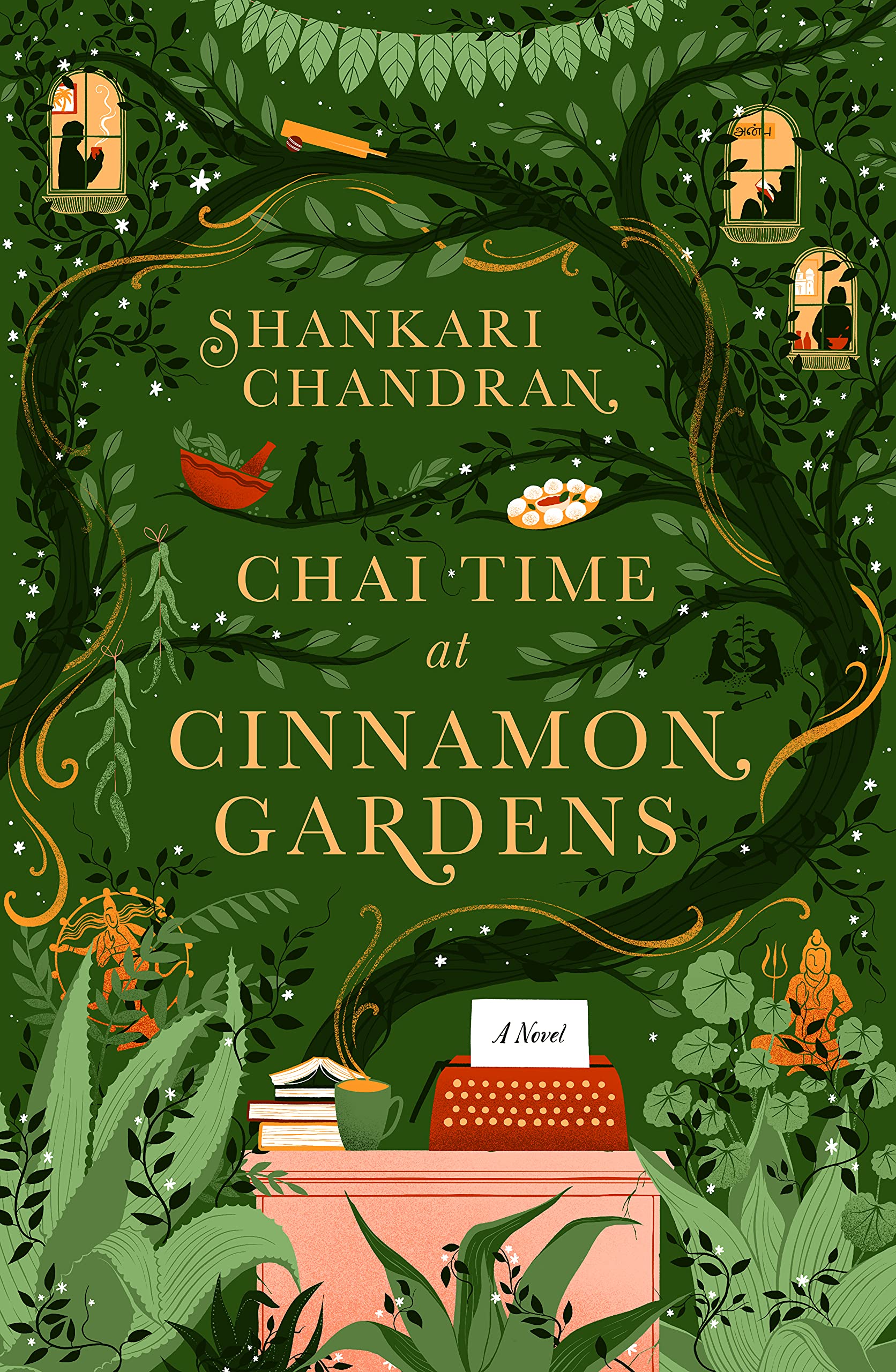
  • Shankari Chandran, Chai time at Cinnamon Gardens (Ultimo Press) (my review)
  • Katerina Gibson, Women I know  (Scribner)

The judging panel for the 2024 Barbara Jefferis Award comprises Hannah Kent (Chair), Jennifer Mills, and Melanie Saward. You can read the full judges’ comments on their decision and the individual books on the Australian Society of Authors website, but overall they said that:

“The many entries to this year’s prize reflected a healthy diversity of genre, form, settings and narratives. Common to many were themes of migration and exile, resilience and recovery from trauma, social isolation and renewed connection, thwarted ambition, and violence against bodies and minds. The representations of women and girls were varied and often original. We would welcome more expansive representations of gender diversity. […]

We found all six books deeply affecting, and many highly memorable for their unswerving demands for social justice and reclamations of power. We would like to extend our congratulations to their authors.”

They did make an interesting observation that “few writers focused on the future” and “wondered whether this revealed a wider desire for, and interest in, historical reckoning for this country”. Could be so. Having just spent two weeks in outback Australia, I sense some movement in understanding of what our dispossession of land has meant for our First Nations people. But so much has been lost and needs to be recovered, and progress in reconciliation seems very slow. Easy for a city-slicker to say, I do appreciate, but my heart tells me it has to be said.

The winner will be announced on 13 November 2024.

Apologies for the quick post, but I do like this award, and wanted to share it. However, I am on holidays still, and time is short.

Any thoughts?

Monday musings on Australian literature: First Nations Australian short story collections

NAIDOC Week 2024 National Logo

NAIDOC Week 2024 finished yesterday, but, as I often do, I am bookending the week with Monday Musings posts. Last week, I posted on First Nations Australian Stella listees. This week I’d like to highlight some recent (meaning 21st century) short story collections. In my admittedly limited experience, First Nations people can be wonderful storytellers. Lest this sound like a stereotype or generalisation, see Tara June Winch’s quote below!

As I shared last week, NAIDOC Week’s theme this year was Keep the Fire Burning! Blak, Loud and Proud. It encompasses a number of ideas but one, the website says, relates to forging “a future where the stories, traditions, and achievements of Aboriginal and Torres Strait Islander communities are cherished and celebrated, enriching the fabric of the nation with the oldest living culture in the world.” Short stories make a perfect contribution to this goal, and contemporary First Nations writing is richly served in this form. My aim here is to share a selection in order to provide a resource for anyone interested in reading more First Nations stories.

“we are a culture that has survived by storytelling” (Tara June Winch)*

The first First Nations stories I read were the “myths and legends” which comprised a significant component of the first works of First Nations literature to find its way into the mainstream. Not all of these, I admit, were written by First Nations people, though some were, such as those published in the 1970s and 80s by Dick Roughsey. Some others claimed (and I hope this was honest) to have shared the stories with the agreement of the relevant owners of those stories. I then jump a few decades to journals like The Griffith Review which has, from its start, included writings – fiction and nonfiction – by First Nations writers. Indeed, they write on their website that

One of the things that makes Australia truly unique is being home to the oldest continuous civilisation. What this really means is undervalued and little understood in this country. It is part of the reason Griffith Review has featured Indigenous writing in every edition.

So, we find articles, poetry and fiction by Tony Birch, Melissa Lucashenko, Ellen van Neerven, Alexis Wright, and others. One of the first First Nations short stories I reviewed on my blog was one by Melissa Lucashenko from The Griffith Review.

Selected short story collections and anthologies

  • Tony Birch, Common people (UQP, 2017) (Lisa’s review)
  • Tony Birch, Dark as last night (UQP, 2021)
  • Tony Birch, Father’s day (Hunter Publications, 2009)
  • Tony Birch, The promise (UQP, 2014)
  • John Morrissey, Firelight stories (Text Publishing, 2023)
  • Mykaela Saunders (ed), This all come back now: An anthology of First Nations speculative fiction (UQP, 2022)
  • Adam Thompson, Born into this (UQP, 2021) (my review)
  • Ellen van Neerven (ed.), Flock: First Nations stories then and now (UQP, 2021) (on my TBR)
  • Ellen van Neerven, Heat and light (UQP, 2014) (my review)
  • Archie Weller, The window seat (UQP, 2009)
  • Tara June Winch, After the carnage (UQP, 2016)

As with the Stella listees, UQP leads the pack here too, with such a strong commitment not only to First Nations writing but to that dreaded form, the short story! And, many of these collections have been listed for (or won) some of Australia’s top literary awards. The stories cover all genres – contemporary fiction, speculative, dystopian, historical fiction, satire, ghost stories, and so on.

I would like to add here a title from Fremantle Press, though its ambit is a little wider. Published in 2022 and edited by Ellen van Neerven and Rafeif Ismail, it is Unlimited futures: Speculative, visionary Blak+Black fiction, and it comprises “speculative, visionary fiction from 21 emerging and established First Nations writers and Black writers” (Fremantle website). I’ve reviewed a few pieces from it, including Ambelin Kwaymullina’s Fifteen days on Mars (my review).

I didn’t plan for this to be a treatise, but a taster – or, is it, tempter? I will close on another quote that speaks to me …

We are your original storytellers. Our culture has survived through story and we are the civilisation with songlines etched in the land you inhabit. (Tara June Winch)*

* Tara June Winch, “Decolonising the shelf”, Griffith Review 66 (Nov 2019)

Click here for my previous NAIDOC Week-related Monday Musings.

Have you read any First Nations short stories – Australian or otherwise? And if so, care to recommend any?

ALS Gold Medal for 2024 announced

It is some time since I wrote about the ALS Gold Medal. This is not because I don’t think it’s interesting or worthwhile, but because there are so many awards, and I just don’t have the time to write up announcements for every award made each year. So, I pick and choose a bit, and this year’s ALS Gold Medal winner is – well, you’ll see … but first, a quick recap on the award.

As I wrote in my first post on the medal, it was established in 1928 by the Australian Literary Society (ALS) – hence its name – but this society was incorporated in 1982 into the Association for the Study of Australian Literature (ASAL), and it is this organisation that now makes the award. The Gold Medal is awarded to “an outstanding literary work in the preceding calendar year”. Note that it is for a “literary work”, which means it can be fiction, poetry, memoir, biography, and so on.  It is Australia’s longest-standing literary award, but there is no money attached to it, just a gold medal. This is a shame for the writers, but it is nonetheless an award that is well worth having.

The shortlist for this year’s award was:

  • Jordie Albiston, Frank (documentary poetry)
  • Stuart Barnes, Like to the lark (poetry)
  • Katherine Brabon, Body friend (novel)
  • J. M. Coetzee, The Pole and other stories (short story collection)
  • Omar Sakr, Non-essential work (poetry)
  • Sara M. Saleh, The flirtation of girls/Ghazal el-Banat (poetry)
  • Alexis Wright, Praiseworthy (novel)

And the winner, announced on July 8, is

Alexis Wright’s Praiseworthy 

How apposite for Wright’s win to be announced in NAIDOC Week. This is the third time that Wright has won the medal. Books+Publishing, announcing this award, says that over the life of the award only two other writers have won it three times, and they are Patrick White and David Malouf. Those of you who read my Monday Musings post this week may remember that I observed that Alexis Wright and Melissa Lucashenko are the only writers who have won the Stella Prize three times. This woman, this First Nations writer, really is something, and I need to catch up my reading of her.

For the record, Praiseworthy has, so far, won the ALS Gold Medal (2024), the Stella Prize (2024), the Queensland Literary Award for fiction (2023), and the James Tait Black Memorial Prize (2023). It has also been shortlisted for the Miles Franklin Literary Award (2024).

This year’s judges for the medal were Elizabeth McMahon (academic and literary critic), Ali Alizadeh (literary writer and theorist), and Ann Vickery (poet and feminist scholar). According to Books+Publishing, the judges described Praiseworthy as “a novel for and of our time… hilarious, furious, poetical and painful”.

(BTW I haven’t read any of this year’s shortlist, but I have read two of last year’s including the winner, Debra Dank’s We come with this place).

Monday musings on Australian literature: First Nations Australian Stella listees

NAIDOC Week 2024 National Logo

Yesterday was the start of NAIDOC Week 2024. As has been my practice since 2013, I’m devoting this week’s Monday Musings to the cause.

NAIDOC Week’s theme this year is Keep the Fire Burning! Blak, Loud and Proud. Without specifically stating it, this theme responds, I’m sure, to the devastating loss of the Voice referendum last year. As the website says, it “celebrates the unyielding spirit of our communities and invites all to stand in solidarity, amplifying the voices that have long been silenced”. They say more, but I’ll just share two other points. One is that “the fire represents the enduring strength and vitality of Indigenous cultures, passed down through generations despite the challenges faced”, and the other is that

Through our collective efforts, we can forge a future where the stories, traditions, and achievements of Aboriginal and Torres Strait Islander communities are cherished and celebrated, enriching the fabric of the nation with the oldest living culture in the world.

For this year’s NAIDOC Week Monday Musings, I thought I’d pick up the point about cherishing and celebrating the stories of Aboriginal and Torres Strait Islander communities. This is simplistic, I know, but one way in which stories are celebrated is through awards – particularly through being short- or long-listed, or winning them. One award which has actively sought to embrace diversity in its foundational purpose is the Stella. Yes, that diversity is limited to “women and non-binary writers”. Nonetheless, the achievements have been significant in encouraging and raising the profile of many writers who may not have been seen otherwise.

So, with 17 years of the prize now in the bag and in the spirit of celebrating their achievement, I am listing all those works by First Nations writers which have featured in the Stellas over that time. This might also give them another little time in the air.

The Stella listees

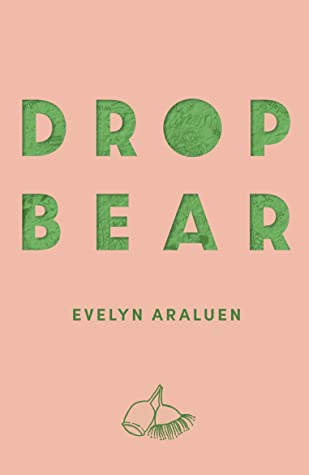
  • Evelyn Araluen, Dropbear (Poetry and prose, UQP) : Winner 2022 (my review)
  • Claire G. Coleman, Terra nullius (Fiction, Hachette Australia) : Shortlisted 2018 (my review)
  • Dylan Coleman, Mazin Grace (Fiction, UQP) : Longlisted 2013 (Lisa’s review)
  • Debra Dank, We come with this place (Nonfiction, Echo) : Shortlisted 2023 (my review)
  • Ali Cobby Eckermann, She is the earth (Poetry/Verse novel, Magabala Books) : Longlisted 2024  (on my TBR, kimbofo’s review)
  • Gay’wu Group of Women, Songspirals (Nonfiction, Allen & Unwin) : Longlisted 2020 (Denise’s review)
  • Anita Heiss, Bila Yarrudhanggalangdhuray (Fiction, Simon & Schuster) : Longlisted 2022 (my review)
  • Ngaire Jarro & Jackie Huggins, Jack of Hearts: QX11594 (Nonfiction, Magabala Books) : Longlisted 2023 (kimbofo’s review)
  • Melissa Lucashenko, Edenglassie (Fiction, UQP) : Longlisted 2024 (on my TBR, Brona’s review)
  • Melissa Lucashenko, Mullumbimby (Fiction, UQP) : Longlisted 2014 (Lisa’s review)
  • Melissa Lucashenko, Too much lip (Fiction, UQP) : Shortlisted 2019 (my review)
  • SJ Norman, Permafrost (Fiction, UQP) : Longlisted 2022
  • Elfie Shiosaki, Homecoming (Poetry, Magabala Books) : Longlisted 2022 (Lisa’s review)
  • Nardi Simpson, Song of the crocodile (Fiction, Hachette) : Longlisted 2021 (my review)
  • Ellen van Neerven, Heat and light (Fiction/short stories: UQP) : Shortlisted 2015 (my review)
  • Chelsea Watego, Another day in the colony (Nonfiction, UQP) : Longlisted 2022 (on my TBR, Bill’s review)
  • Tara June Winch, The yield (Fiction, Penguin Random House) : Shortlisted 2020 (my review)
  • Alexis Wright, Praiseworthy (Fiction, Giramondo Publishing) : Shortlisted 2024 (Bill’s second post with a link to his first)
  • Alexis Wright, The swan book (Fiction, Giramondo Publishing) : Shortlisted 2014 (on my TBR, Bill’s review)
  • Alexis Wright, Tracker (Nonfiction, Giramondo Publishing) : Winner 2018  (Bill’s review)

Some comments. There are 20 listed books (if I’ve got them all) out of 204. Of these there have been two winners – Alexis Wright’s Tracker and Evelyn Araluen’s Dropbear – seven shortlists, and 11 longlists. Alexis Wright and Melissa Lucashenko are the most listed authors – out of all authors – through the history of the prize to date. The listed books include novels, poetry and nonfiction.

Certain publishers appear frequently, particularly UQP which has an excellent – and long record – for supporting and publishing First Nations Writers. Eight of the listed books come from them. First Nations publisher, Magabala, has three, and Giramondo which publishes Alexis Wright also has three. Hachette has published two, with Simon & Schuster (which is behind the new First Nations imprint Bundyi I wrote about last week), Allen & Unwin, Penguin Random House and Echo, each having one. It’s healthy to see a spread, but it’s also great to see serious support being reflected here.

You will also see that almost every book has been reviewed by a litblogger. Some have been reviewed more than once, but I’ve just chosen one to share here. I hope that my posting this list will remind us all of some good books out there, and whet our appetites to check out First Nations writing.

Click here for my previous NAIDOC Week-related Monday Musings.

ACT Literary Awards 2024

On Thursday evening, I attended the presentation of the ACT Literary Awards (which I also attended last year when they were called the ACT Notable Book Awards). These awards are made by Marion (the ACT Writers Centre), and this year’s event was MC’d by the CEO Katy Mutton (left) and Board Chair, Emma Batchelor. As last year, the event had a lovely relaxed informality, while still paying real respect to the authors and their works.

The evening opened with a moving (and informative) “rite of passage” offered by local Ngunawal elder, Wally Bell. He explained that granting attendees a “rite of passage” is the correct process – is the one enacted by First Nations Australians across the country when they visit each other’s countries – not the “welcome to country” that we commonly experience at events. We keep learning new things, I’m finding, as different elders talk to us, and it makes these rites or ceremonies increasingly meaningful to us non-Indigenous Australians.

The awards were held, as last year, in the Canberra Contemporary Art Space, which occupies a beautiful building on the edge of Lake Burley Griffin. As our MCs said, when thanking CCAS for its ongoing sponsorship, it is an appropriate venue because there are links between all artists, including the fact that many have interdisciplinary practices. (Other sponsors included Big River Distilling which provided gin for the evening.)

But now, the awards…

Marion notes on the awards webpage, that across all categories they ask judges to consider which entries “stand out in their brilliance” and demonstrate the following:

  • Literary excellence
  • Powerful narrative structure
  • Considered and impactful use of language

They also note that in Children’s literature they received a particularly broad field of entries from picture books through to YA Fiction, so would be awarding winners in both the younger and older reader sections.

It’s worth noting too that Marion accepts self-published entries, in recognition of the fact that this how many writers get started. This year two books were named self-published winners in their categories, and three were highly commended in theirs.

The judges were historian Professor Frank Bongiorno, First Nations author and academic Dr Paul Collis, writer Dan Hogan, children’s writer Krys Saclier, and literary critic/writer/Artistic Director of the Canberra Writers Festival Beejay Silcox.

For full information on the awards, including all the highly commendeds, and judges’ comments, check out Marion’s website.

As I didn’t share the shortlists for these awards, I am listing them, and highlighting the winners in bold.

Poetry

  • Elanna Herbert, Sifting fire writing coast (Walleah Press)
  • Paul Hetherington, Sleeplessness (Pierian Springs Press)
  • Tim Metcalf, The moon the bone: Selected Poems 1986-2022 (Ginninderra Press)
  • KA Nelson, Meaty bones (Recent Work Press)
  • Sandra Renew, Apostles of anarchy (Recent Work Press)

Nonfiction

  • Kristen Alexander, Kriegies: The Australian airmen of Stalag Luft III
  • Ryan Cropp, Donald Horne: A life in the Lucky Country (Black Inc.)
  • Kate Fullagar, Bennelong & Phillip: A history unravelled (Scribner)
  • Kellie Nissen, What cancer said and what I said back
  • Fred Smith, The sparrows of Kabul (Puncher & Wattmann)
  • Angus Trumble, Helena Rubinstein: The Australian years (Black Inc.)

Kristen Alexander won the self-published award for Kriegies. As with many of the categories, there were highly commended awards. One in this category was the late Angus Trumble’s book on Helen Rubenstein. Trumble’s brother, Hamish, accepted the award, and spoke entertainingly about his brother’s obsession with sussing out Helena Rubenstein’s early years in Australia and argued, pointedly, that it was appropriate for this book to be recognised in Canberra, “the city of facts”! He didn’t need to tell us that facts are important.

Children’s

This was a bit confusing, because there were two Children’s shortlists but three winners, so I am listing the two shortlists and noting what each winner was for. Canberra is rich in children’s writers, and there were, Katy Mutton said, a large number of entries in this category.

Shortlist 1:

  • David Conley, That book about space stuff (Children’s self-published)
  • Tania McCartney, Wildlife compendium of the World (Hardie Grant) (Children’s nonfiction)
  • Kathy Weeden, Kim Drane, Phonobet (National Library of Australia)
  • Rhian Willams, Martina Heiduczek, Surprise at the end of Onkaparinga Lane (Walker Books Australia)
  • Barbie Robinson, Ian Robertson, Phoenix and Ralph

Shortlist 2:

  • Jackie French, Danny Snell, The turtle and the flood (HarperCollins Australia) (Children’s picture book)
  • Gary Lonesborough, We didn’t think it through (Allen & Unwin) (Children’s older readers)
  • Amelia McInerney, Lucinda Gifford, Neil the amazing sea cucumber (Affirm Press)
  • Emma Janssen, Strong little platypus

Fiction

  • J. Ashley Smith, The measure of sorrow: Stories (Meerkat Press)
  • Elisa Cristallo, The last famine
  • Emma Grey, The last love note (Penguin Books Australia)
  • Ayesha Inoon, Untethered (HarperCollins Australia)
  • Kylie Needham, Girl in a pink dress (Penguin Books Australia)

The Marion Halligan Award

The Marion Halligan Award honours the life and work of Marion Halligan, who died earlier this year (see my post), and who, Marion’s website says, “captivated readers with her elegant prose and insightful storytelling. She was an enduring force of creativity, intellect, wit, and wisdom”. The aim of this award is to recognise “works that demonstrate uniqueness, literary excellence, and/or surpass genre boundaries”.

The award was introduced by Alex Sloan (who has appeared several times here). She spoke about our much beloved Marion, and then announced the inaugural winner: Paul Hetherington for his poetry book Sleeplessness.

Other awards

Three other awards were made:

  • The Anne Edgeworth Emerging Writers Award, now in its 11th year, is made to an emerging writer and this year’s was shared between two writers – Jemima Parker and Gill Watson. It is worth up to $5,000 and is used “to advance the recipients’ development in the craft of writing”. The Fellowship is provided annually by the Anne Edgeworth Trust and administered by MARION.
  • The June Shenfield National Poetry Award for an individual poem was won by Cate Furey for Momentum
  • The MARION Fellowship to (TBA as I don’t see it on the website and I didn’t record the name)

Canberra (the ACT) is a small jurisdiction, but, as I wrote last year, it has an active, engaged and warm literary community that was once again well in evidence despite the rather chilly evening outside. After all, it is always wonderful to see writers being rewarded/recognised for their hard work – and, yes, writers, and their readers, do also like, sometimes, to party.

Monday musings on Australian literature: Book industry awards

How to title today’s post was my first challenge – and I hope the title I settled on covers it well enough. What I am wanting to cover here are those awards that don’t go to books (or manuscripts) or writers, but to those in the industry – people and organisations – that support writers and their books. The ABIAs, or, Australian Book Industry Awards, have been doing this for some years.

ABIAs

Established in 2006, these awards are, says Wikipedia, ‘publishers’ and literary awards held by the Australian Publishers Association annually in Sydney “to celebrate the achievements of authors and publishers in bringing Australian books to readers”‘. I have only written on them once before, and that was to highlight some of the winners in the 2019 awards that interested me. However, these awards also recognise others working in the industry. The categories change over the years, but since 2017 there have been awards for (listed with the winners in the years they were made):

  • Book Retailer of the Year: Readings (2020); Readings (2021); Harry Hartog Bookseller, Burnside Village, Adelaide (2022); Big W (2023)
  • Bookshop of the Year: Books Kinokuniya (2020); Avid Reader, Brisbane (2021); Avenue Bookstore, Albert Park, Melbourne (2022); Matilda Bookshop (2023); Fullers Bookshop, Hobart, Tasmania (2024)
  • Commissioning editor of the Year: Jane Palfreyman (Allen & Unwin) (2023); Catherine Milne (HarperCollins Publishers) (2024)
  • Independent Book Retailer of the Year: Readings Potts Point Bookshop (2017); Readings (2018); Mary Martin Bookshops (2019)
  • Marketing Strategy of the Year: Bloomsbury for Johann Hari’s Stolen Focus (2023); Affirm Press for Pip Williams’ The Bookbinder of Jericho (2024)
  • National Book Retailer of the Year: Booktopia (2017); Dymocks (2018); Booktopia (2019)
  • Publisher of the Year: Pan Macmillan Australia) (2017); HarperCollins (2018); Pan Macmillan Australia (2019); Allen and Unwin (2020); Penguin Random House Australia (2021); Penguin Random House Australia (2022); Allen and Unwin (2023); Penguin Random House Australia (2024)
  • Rising Star Award: Shalini Kunahlan, marketing manager at Text Publishing (2018); Ella Chapman, head of marketing communications at Hachette Australia (2019); Hazel Lam, senior book designer at HarperCollins (2020); Pooja Desai, head of design at Hardie Grant Children’s Publishing (2021); Emily Hart, Commissioning Editor, Hardie Grant Books (2022)
  • Small Publisher of the Year: NewSouth (2017); Thames & Hudson Australia (2018); Affirm Press, with Honourable Mention to Magabala Books (2019); Magabala Books (2020); UQP (or University of Queensland Press) (2021); UQP (or University of Queensland Press) (2022); UQP (or University of Queensland Press) (2023); Magabala Books (2024)

As you can see, the categories move around a bit, but there are awards for publishing companies, booksellers, and book industry professionals. I like seeing designers, commissioning editors and marketers being recognised in what is an awards-rich field.

ABDAs

The Australian Book Design Awards aim to “showcase the best of the best in book design in this country”. They are open to books designed and first published in Australia, in the year preceding the awards. They are offered in multiple categories. In 2024, some 19 categories are in the mix, including Best Designed Commercial Fiction Cover, Best Designed Literary Fiction/Poetry Cover, Best Designed Non-fiction Cover, and so on. There are awards for covers only and for overall book design. I have written about them once, in the past, for the 2017 Shortlist.

Sarah Krasnostein, The trauma cleaner

Their Awards Archive site takes a bit of navigation, and doesn’t always present the information in the most ideal way, but you can find some gorgeous covers there, including Sandy Cull’s award winning cover (2017) for Heather Rose’s The museum of modern love. Another award winner – cover and overall design (2018) – was W.H. Chong’s work on Sarah Krasnostein’s The trauma cleaner. Back in 2018, I attended and wrote up a Canberra Writers’ Festival event involving W.H. Chong.

Specialist Awards

There are also awards run by specialist or special interest publishers, like the Educational Publishing Awards Australia (or EPAAs). These were co-founded in 1993 by the APA (Australian Publishers Association) and the late Professor Mike Horsley, and are organised by the APA which also manages the ABIAs. Most of the award categories are for specific books/educational titles, but they also include Primary and Secondary Publisher of the Year, which, in 2023, were won by SevenSteps (Primary) and Cambridge University Press (Secondary). Publisher Jacaranda has been a regular winner of these awards.

Are you aware of these awards, or of similar awards in your location or area of interest? I’d love to hear about them.

Gail Jones, Salonika burning (#BookReview)

Australian author Gail Jones’ ninth novel, Salonika burning, is a curious but beautiful novel, curious because she fictionalises four real people for whom she has no evidence that they met or knew each other, and beautiful because of her writing and the themes she explores. The novel is set during World War 1, but its focus is firmly on the interior rather than the grand stage of battle.

It opens dramatically with the burning of the city of Salonika (Thessaloniki). This is another curious thing, because this destructive event was caused not by an act of war but an accidental kitchen fire. Also, the novel is not set in Salonika but some 90 miles off, in and around “the field of tents that comprised the Scottish Women’s Hospital”, on the shores of Lake Ostrovo in Macedonia. It is 1917, and the novel’s narrative centre is this hospital and those working in and around it. Here, not Salonika, is where our four main characters are based — Stella, an assistant cook/hospital orderly; Olive, an ambulance driver; surgeon Grace; and Stanley, an orderly with the Royal Army Medical Corps. They are based on the Australians, writer Miles Franklin and adventurer Olive King, and the British painters, Grace Pailthorpe and Stanley Spencer. In her Author’s Note, Jones makes clear that she has fictionalised these characters, and that while all are known to have worked in the vicinity, there is no evidence that they met or even knew each other. It is “a novel which takes many liberties and is not intended to be read as a history”. This is fine with me. After all, a novel, by definition, is not history. The novel follows these characters over a few months after the burning of Salonika.

“everything was coming apart”

So, why Salonika? I see a few reasons. For a start, its burning sets the novel’s tone. On the first page we are presented with opposing ideas. The sight of the burning city is described as “strangely beautiful” but, on the other hand, “alarm, instant fear, the sufferings of others … were no match for excitement at a safe distance”. As the fire died, “excitement left and in its place was a murky lugging of spirit”. Throughout the novel, Salonika represents these contradictions, this tension between what is ugly, what is beautiful; between what is random, what is not; and in how to respond to, or feel about, what is being experienced.

The Salonika fire also encompasses the idea of witness and representation. In the opening scene, Jones describes a painting made of the fire by William T. Wood. It is a “morning-after scene, brightly calm, with a floaty view from the heavens” done in his “signature pastels, remote as a child’s dream and thinly decorative”. Those who saw this painting later, she writes, “saw the pretty lies of art”, whereas “former residents and soldiers said, No, it wasn’t like that”. This tension too is played out in the characters as they think about how they might represent their experience.

The burning of Salonika, then, embodies several ideas that are followed through in the novel. But, Salonika is also relevant to the plot. The novel’s narrative arc lies mainly in the characters and their emotional reactions to what is happening as the months wear on. Not only is there the war with its injured and dying soldiers, but malaria is rife, and the privations they experience, professionally and personally, are exacerbated by the burning of Salonika and the attendant shortage of essential provisions – food, petrol, medical supplies. However, a plot also unfolds, and it is something that happens on the way to Salonika, well into the story, which sets the novel’s final drama in motion.

Salonika burning traverses themes that are the stuff of the best war literature – themes that expose the “idiocy of this war, of all wars” and its impact on those caught up in it – but it offers its own take. The telling feels disjointed, particularly at the start, with its constant switching between the perspectives of the four characters who interact very little with each other until well into the novel – and even then it’s often uneasy, as befits their temperaments. And yet, the novel is compelling to read, primarily because of these characters. They are beautifully individuated, so flawed, so human, so real.

Olive, who is the first character we meet, and the one who closes the novel, is confident, tough and practical. Grace, too, is tough, doing her “duty” with a “dull vacancy”. Stella, at 38, the oldest of the four, is “cranky and wanting more”, more excitement to write about, but she believes in “chin-up and perseverance”, while the youngest, 26-year-old Stanley, is “ill-fitted … to this life of rough cynical men”.

These are “intolerable” times, and we are privy to their struggle to maintain their sanity. Olive resorts to her German grammar to escape the emotional load, while Stanley has his mules and favourite painters, his “Holy Rhymers”. Stella, “writing jolly accounts in her diary”, thinks about what stories she will tell, while Grace has her favourite brother to think about and write to. The disjointed structure mirrors, I think, their sense of isolation. Contact and the potential for friendship is there, but Matron discourages emotional engagement. There’s “no room for emotion”, she says, just “duty”. Olive, who seems to represent the novel’s moral centre, thinks otherwise:

It seemed another kind of duty, not to forget. Olive wanted to speak of what she had seen and known, though she suffered too much remembrance.

This could neatly segue to that issue of representation, and the post-war work done by Stella, Grace and Stanley, but instead, I want to conclude with another idea. On a supply trip to Salonika, Olive, “driving in her safe foreign aura”, had been indulging in a dose of self-pity, but is suddenly confronted by the loss Salonika’s burning represented for its residents, “and only now understood that it was the woe of others that claimed importance”. Likewise, Stanley, Grace and Stella are confronted with the woes of others through the novel’s closing drama, and must decide where their humanity lies.

I started this post noting some curious things about Jones’ approach to her story, but these didn’t spoil the read. Rather, they added to my interest as I read it. Ultimately, Salonika burning is a true and tenderly written novel that captures the essence of war’s inhumanity, and then goes about extracting the humanity out of it. A worthy winner of the 2023 ARA Historical Novel Prize.

Lisa and Brona also read and enjoyed this book.

Further reading

Gail Jones
Salonika Burning
Melbourne: Text Publishing, 2022
249pp.
ISBN: 9781922458834

Monday musings on Australian literature: Stella Prize 2024 Winner

The 2024 Stella Prize winner was announced last Thursday, the 2nd of May, but that was the also the day my blog turned 15, and I didn’t want to flood cyberspace with too many posts. Then this weekend was the SixDegrees meme which meant another post coming at you. So, I decided to do my Stella 2024 post, this year, as a Monday Musings. It makes sense to do so, in fact, because it’s an historic win. First though, the winner, for those of you who haven’t heard yet:

Alexis Wright’s Praiseworthy

Why historic? Again, some of you will already know this, but Alexis Wright, one of our leading First Nations writers, is the first writer to win the Stella twice in its 12 year history. An impressive achievement by any measure. I am embarrassed to say, however, that of the now four Stella winners I haven’t read, Wright’s two are among them. This is not because I don’t want to read them, but because they are big tomes, and my life doesn’t seem to lend itself these days to chunksters. I read and loved her multi-award winning novel Carpentaria (my post), which was big enough – at over 500 pages – but that was before blogging when time pressures felt different! Clearly, though, I should make time for this because, from what I can tell, its subject matter is something I care about and it has the wit and playfulness, passion and imagination, that I loved in Carpentaria.

Praiseworthy has already been recognised by the literary establishment. Last year it won the Fiction Book Award in the Queensland Literary Awards. Further, as publisher Giramondo shares, it has been shortlisted for many other awards: The Dublin Literary Award 2024; the People’s Choice Award, the Christine Stead Prize for Fiction and the Indigenous Writers Prize in the 2024 New South Wales Premier’s Literary Award; The James Tait Black Prize for Fiction 2024; and the Queensland Premier’s Award for a Work of State Significance in the 2023 Queensland Literary Awards.

The chair of the judging panel said this about the book:

Praiseworthy is mighty in every conceivable way: mighty of scope, mighty of fury, mighty of craft, mighty of humour, mighty of language, mighty of heart. Praiseworthy is not only a great Australian novel – perhaps the great Australian novel – it is also a great Waanyi novel. And it is written in the wild hope that, one day, all Australian readers might understand just what that means. I do not understand. Not yet. But I can feel history calling to me in these pages. Calling to all of us. Imagine if we listened.

Giramondo’s (above-linked) page for the book, includes excerpts from other critics and reviewers. Samuel Rutter of the New York Times Book Review describes it as “the most ambitious and accomplished Australian novel of this century”, while Jane Gleeson-White wrote in The Conversation that “Praiseworthy is Alexis Wright’s most formidable act of imaginative synthesis yet…a hero’s journey for an age of global warming, a devastating story of young love caught between two laws, and an extended elegy and ode to Aboriginal law and sovereignty”. More than one references Ulysses, such as Ruth Padel, who describes it in The Spectator as “an impassioned environmental Ulysses of the Northern Territory… Playful, formally innovative, multi-storied, allegorical, protean and dizzyingly exhilarating, it is long, lyrical and enraged”. Several, in fact, praise the language; and many comment on its satirical aspect, its lyricism, its comedy. Lynda Ng, in Meanjin, calls it:

The finest distillation yet of Wright’s themes – a bold assertion of Aboriginal sovereignty that successfully encompasses all areas of life: culture, economy, and jurisprudence.

Of course, Giramondo has selected excerpts that praise, but the sources of that praise are impressive.

There are those who think that she should/may/will be Australia’s next Nobel Laureate for Literature.

Returning to the Stella, you can read more on the Stella website, including a link to Alexis Wright’s acceptance speech, and an expressive video performance of a brief scene from the novel by Boonwurrung actor Tasma Walton.

Just to remind you, this year’s Stella judges were writer, literary critic, Artistic Director of the Canberra Writers Festival and this year’s chair, BeeJay Silcox; Filipino-Australian poet, performer, arts producer, and advocate, Eleanor Jackson; First Nations award-winning poet and arts board member, Cheryl Leavy; novelist, occasional critic and full-time dad, Bram Presser; and writer and historian, Dr Yves Rees.

Wikipedia offers a well-presented complete list of the winners and all the short and longlisted books.

Thoughts anyone?