Andrew Croome, Document Z

Truth, according to the dictionary, can mean several things including:

  • the state of being the case, fact or actuality; and
  • a transcendent or spiritual reality.
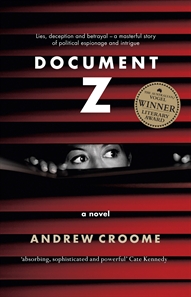
Document Z bookcover

Document Z cover image (Courtesy: Allen & Unwin)

Truth in all its variety and slipperiness is, I think, the fundamental theme of Andrew Croome’s Document Z which won the 2008 The Australian/Vogel Literary Award. This book, which chronicles the famous-in-Australia Petrov Affair about the defection of Vladimir (familiarly, Volodya) and Evdokia Petrov in 1954, began as a PhD Creative Writing thesis. Who needs a PhD in Creative Writing, though, when you have a publication offer instead?

At the end of the novel is a reference to an oral history that was conducted with Evdokia by the National Library:

This historian’s questions give her the space to betray Volodya, to admit his faults, to commit herself finally, to the truth. She doesn’t. The record is no all-important thing, and what exactly would be the point?

What indeed? After all, duplicity is what the book is about. Vladimir and Evdokia are MVD agents at the Soviet Embassy. This is their secret role, in addition to their formal embassy roles, and it puts them in conflict with the ambassador since, in effect, they work for two masters, the ambassador and the MVD headquarters in Moscow. Not an easy position to be in, particularly in a regime that thrived on suspicion.

Croome nicely structures the book, commencing with the dramatic attempt on 19 April 1954 by the Soviet authorities to return Evdokia to Russia. The book’s narrative form is multiple third person subjective, and this opening scene is viewed through Evdokia’s eyes: “Evdokia knew this crowd was for her. They were hunting her…”. She was wrong though. The crowd was with her and were “hunting” those who seemed to be taking her away. This opening chapter ends with the words, “Everything he had betrayed”. The scene is set to tell their story, and the book flips back to 1951 and their arrival in Canberra. From this point on the story is told through several eyes, particularly Evdokia’s, Vladimir/Volodya’s (who, Moscow thought, “could be well and truly trusted [my stress]”) and Dr Bialoguski’s (the man who worked for ASIO and who, through cultivating Petrov’s friendship, engineered the defection).

I enjoyed the book – partly because it was set in familiar territory, which is a bit of a rarity for we Canberrans, and partly because I was interested in the Petrov Affair. Croome seems, to the best of my knowledge, to have captured the era well. I loved the description of the Soviet Embassy wives going shopping…and he nicely evokes the polarisation of views between East and West/Communism and Capitalism that characterised the Cold War period. However, the book was a little unsatisfying too. I think it’s because Croome focusses a little too much on plot machinations for me – and yet the plot is not dramatic enough to support this. He does try to get “into” the characters but, for all his sound characterisation of the Petrovs, they are, at the end, pretty much as shadowy in terms of their “true” natures/desires/motivations as they were at the beginning. In the end, there’s not much drama in either the political or the personal story. It feels, almost, as though they were victims of circumstance – and perhaps they largely were.

And what were these circumstances? Well, they were largely the duplicitous – and fear-ridden – situation they lived and worked in. I had to laugh, early in the book, at the description of the embassy’s secret (MVD) section: “Somewhere, the roof leaked“. The book has many little ironies and paradoxes mostly playing on notions of secrets, lies, deception and betrayals, playing, that is, on a world in which truth is treated with rather careless abandon. By the end of the book we are, I think, no nearer the truth. We perhaps know some of the “facts” (albeit this is fiction!), but we do not “really” know the “spiritual reality” of these two people whose marriage seemed weak and who apparently lived a pretty sad life in exile.

I’d certainly recommend the book … it’s well written, and is a genuinely interesting portrayal of the case. But if you are looking for insights into the affair, I’m not sure you’ll find them here.

Andrew Croome
Document Z
Crow’s Nest: Allen & Unwin, 2008
350pp.
ISBN: 9781741757439

Prime Minister’s Literary Awards, 2009

Nam Le’s The boat has won the fiction category in the Prime Minister’s Literary Awards. Much deserved too I say! Interestingly, the non-fiction prize was shared by two books: Evelyn Juers’ House of exile, and Marilyn Lake and Henry Reynolds’ Drawing the global colour line. Lisa, at ANZLitLovers, recently wrote about Juers’ book – you can read what she says here.

The Boat – Recap

Back in February I reported on my bookgroup’s discussion of The boat on our group blog, but that was before I started writing here. I won’t repeat here what I said there – as you can read it yourselves. I will note though that one of its stories was included in Mandy Sayer’s recent anthology, The Australian long story. That has to say something! If you haven’t read it yet, think about it now. Nam Le is a new voice on the scene and I certainly hope he isn’t a flash in the pan.

Booker Prize 2009

I received a voucher a couple of weeks ago for 25% off a 2009 Booker Prize shortlist book. What to buy? Hard choice as I hadn’t read any of them – I know, I know, how can I call myself a reader but, really, I am not driven to read shortlists per se. Awards are great – love them – but they don’t drive my reading. They simply provide one of the useful imprimaturs that inform my choices. Anyhow, back to the Booker, I settled on Hilary Mantel’s Wolf Hall.

Prescience perhaps? More like just good luck. Whatever it was, I would now be in the money had I been a betting woman because a few hours ago it was announced the winner and the bookmakers towards the end had her the favourite. Now I will have to read it eh? Don’t hold your breath as there are a few ahead of it, but I will try!

Indie Book Award, 2009

The winner of this year’s Indie Book of the Year Award was announced last week – and it is Jasper Jones by Craig Silvey, which I reviewed here recently. The Indie Book Awards are made by Australian independent booksellers, and this is their second year. The winners in the four sections are chosen by a panel of judges, and then the overall winner is voted by independent booksellers from around Australia.

Cover image courtesy Allen & Unwin

Cover image courtesy Allen & Unwin

The shortlist – chosen by those judges – was:

  • Fiction: Jasper Jones, by Craig Silvey
  • Non-fiction: The tall man, by Chloe Hooper
  • Debut fiction: The virtuoso, by Sonia Orchard
  • Children’s book: Pearl verses the world, by Heather Potter

I guess I’m not really qualified to comment as I’ve only read two of these books but, if I was going to choose between those two, I would have chosen The tall man hands down. I enjoyed Jasper Jones rather a lot (to use my best reviewer language) but it won’t be my most memorable book of the year. It’s been many months, though, since I read The tall man, and I haven’t forgotten it: it was beautifully written and makes a thoughtful contribution to our literature on black-white relations. And yet, it has been consistently pipped at the post in awards around Australia this year (with the exception of the New South Wales Premier’s Literary Awards). Why is this?

Queensland Premier’s Literary Awards, 2009

Queenland has done itself proud with this year’s award winners: Richard Flanagan’s Wanting, Chloe Hooper’s The tall man, Nam Le’s The boat and Adam Elliot’s film script for Mary and Max all won their sections. All great works. Perhaps I should try to read the winners of the other sections. I like how these judges think!

Thanks to Lisa at ANZLitlovers for drawing my attention to the announcement. As she wrote, a full listing of the awards can be found at Matilda.

Victorian Premier’s Literary Awards Shortlist

And so, as reported by Perry Middlemiss on his Matilda blog, it’s pretty much the usual 2009 suspects that have been shortlisted for the Vance Palmer Prize for Fiction. They are:

  • The pages by Murray Bail (Text)
  • Dog boy by Eva Hornung (Text)
  • The boat by Nam Le (Penguin)
  • The slap by Christos Tsiolkas (Allen & Unwin)
  • Breath by Tim Winton (Penguin)

I have read the last three of these (links are to my reviews here or elsewhere), and will be reading The pages in the next month or so. Nam Le’s The boat won this year’s New South Wales Premier’s Literary Awards Book of the Year and UTS Glenda Adams Award. Will it win in Victoria? I rather hope it does – if only because it represents a fresh new and talented voice that would be great to encourage.

Imre Kertèsz, Fateless (or Fatelessness)

[WARNING: SPOILERS, of sorts]

Let’s get the first thing clear. I like holocaust literature – not because I enjoy the subject matter but because in it I find the most elemental, universal truths about humanity. Depending on the book, this literature contains various combinations of bravery and cowardice, cruelty and kindness, love and hate, self-sacrifice, self-preservation and betrayal, resilience and resignation, and  well, all those qualities that make up humanity and its converse, inhumanity. I have by no means read all that is out there but here are some that have moved me: Anne Frank’s The diary of a young girl (of course) and Anne Holm’s I am David, from my youth, and then books like Martin Amis’ Time’s arrow, Bernhard Schlink’s The reader, Marcus Zusak’s The book thief, and Ursula Hegi’s Stones from the river. There are gaps, though, in my reading, such as Thomas Keneally’s Schindler’s ark (I did see the film), the works of Primo Levi, and Elie Wiesel’s Night. I have, however, just added Imre Kertèsz’s Fateless to my list of books read.

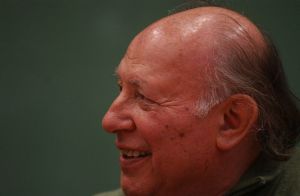
Kertèsz, 2007 (Photo by Csaba Segesvari, from Wikipedia under GNU Free Documentation License 1.2)

Kertèsz adds a new spin to the universal truths explored by these books – it’s what he describes (in my 1992 translation anyhow) as “stubbornness” which seems to me to mean “resilience” or a determination to survive, and even to have, if possible, little wins against the system.

Anyhow, first the plot. The novel takes place over the last year of the war and concerns Gyorgy Koves, a 14-year old Hungarian Jew, who, one day, is suddenly called off a bus, along with all other Jews on the bus and transported to Auschwitz, and then Buchenwald, Zeitz and back to Buchenwald, before returning home at war’s end. It chronicles his experiences, his thinking, and the impact on him of his experience. He begins as the archetypal naive narrator…but by the end, though his tone has changed little, he is no longer naive. This is rather beautifully achieved as we see his youthful application of logic being changed into something more cynical and survival focused.

Gyorgy speaks with a strange sense of detachment borne, to start with, of an apparent unawareness of what exactly was happening to him and a disbelief that anything untoward would happen. And so, in the beginning, as events unfold he describes them as “natural” because of course, when they got to Auschwitz, it was sensible to inspect each person to see who was physically fit and capable of working. He didn’t know then what would happen to those not found physically fit. The horror gradually builds as reality sets in and he goes about making it through each day – through his share of beatings, the reduced food rations, and all the other deprivations that make up concentration camp life. In the first part of the book he uses the term “naturally” to mean some sort of normal logic but by the end it comes to mean, as he explains to a journalist who asks him why he keeps using the word for things that aren’t natural, that these things were natural in a concentration camp.

Early on in his captivity he says that they approached their life (and work) “with the best of intentions” but they soon discover that these “best of intentions” do not bring about any kindness from their overseers, and so his attitude to getting on, to surviving starts to change. As he starts to physically weaken, become emaciated and develop infections, he observes that “my body was still there. I was thoroughly familiar with it, only somehow I myself no longer lived inside it”. Always dispassionate, always matter-of-fact, while describing the most heart-rending things.

Towards the end, he is placed in a hospital ward and there he is treated better and, even, with a certain amount of kindness. This in its way is as shocking to him as the cruel beatings he experienced at Zeitz. He can see no logic, “no reason for its being, nothing rational or familiar”. He can only understand kindness in terms of the giver receiving “some pleasure” from it or having some “personal need” satisfied. Never is there any sense that altruism might come into play. His view of “justice” is based very much on survival. He says, when he is spared, “everything happened according to the rules of justice … I was able to accept a situation more easily when it concerned someone else’s bad luck rather than my own … This was the lesson I learned”.

And so, in the end he returns home, and finds it hard to explain to people just what happened and how he now views life. He describes getting through his time as “taking one step after another”, focusing just on the moment. He implies that if he had known his fate he would have focused on time passing – a far more soul-destroying activity than concentrating on getting through each day “step by step”. This brings us to the fate/fateless bit. He says at the end that:

if there is a fate, there is no freedom … if, on the other hand, there is freedom, then there is no fate. That is … that is, we ourselves are fate.

I find this a little hard to grasp but he seems to be saying that we are free to make our own choices, even in a concentration camp – we are not fated but make our own fate. He was and is not prepared to accept any other approach to life. But life will not be easy:

I am here, and I know full well that I have to accept the prize of being allowed to live … I have to continue my uncontinuable life … There is no impossibility that cannot be overcome (survived?).

And yet, at the very end of the book, he says “and even back there [in the concentration camp], in the shadow of the chimneys, there was something resembling happiness”. Wow! This is an astonishing book – it charts horrors with a calmness that is quite shocking, and it is particularly shocking not because Gyorgy is unfeeling but because he can’t quite grasp what is happening to him. This is the fundamental irony of the book, and the fundamental truth of a naive narrator: we the reader know exactly how it is even as Gyorgy tries to make sense of it using logic and reason. I must read this book again – and preferably the newer more highly regarded 2004 translation by Tom Wilkinson.

(Translated by Christopher C. Wilson and Katharina M. Wilson)

Vale Frank McCourt

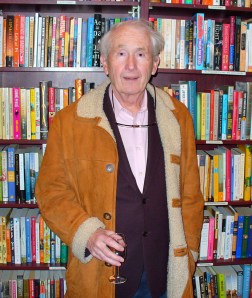
Frank McCourt, 2007 (Photo by David Shankbone, used under Creative Commons Attribution ShareAlike 3.0)

Frank McCourt, 2007 (Photo by David Shankbone, used under Creative Commons Attribution ShareAlike 3.0)

I’ve only read one of Frank McCourt’s books, his Pulitzer Prize winning memoir, Angela’s ashes. I loved it, but for some reason didn’t really feel the need to read more, though I’m sure I would have enjoyed them if I had!

Angela’s ashes was such a visceral read. I’ve never read quite such a vivid description of poverty as I found in this book. I know there are some who claim that he exaggerated it but who cares? My sense is that what he described was “real” – real either because it “really” did happen that way or because it genuinely conveyed what deep poverty “feels” like. And, the fact that he could describe such poverty in a way that could make you laugh and cry at the same time marked him out as a true storyteller. One of the, little really, scenes I remember is when he was in hospital and isolated in a ward on his own. The nurse wouldn’t let him talk to the equally lonely and isolated girl in the ward next door. The nurse would yell out to them, “Diphtheria can’t talk to Typhoid” (or vice versa). Oh dear! Just as well he had a sense of humour I reckon.

I saw the film, too, of course. As I recollect it was true to the facts but it somehow managed to convey the grimness without the accompanying humour. That was a shame really.

Anyhow, now McCourt has died. I’m sure his death will result in a resurgence of interest in his books. Commercial, yes, but why should new readers not have his books brought to their attention? There are far worse books they could be reading! Just ask Tom Keneally, who knew McCourt and was interviewed on the radio today. He said :

He is the only man I’ve known who in his mid-60s went from a school teacher pension to being a multi-millionaire and also remaining the same bloke he’d been before it all happened to him. The same whimsical, ironic, very Australian sense of humour he had. …

In the first paragraph [of Angela’s ashes] he mentions the fact that in Limerick the churches were full but he says that was because it rained all the time. It was not piety but hypothermia that filled the benches and I think you would have to search a long way back into Irish history to find such a funny line as that.

I am missing him even now. I have to say starting, as old men do, to get teary that such a grand spirit has departed this earth …

Elizabeth Jolley, My father’s moon

‘No one,’ she says, ‘can write anything till they’ve had experience. Later on perhaps. You will write later on.’ (Elizabeth Jolley, My father’s moon, 1989)

Although fiction demands imagination, it must be based on  some kind of genuine experience. (Elizabeth Jolley, “Only Connect”, essay first published in Toads, 1992)

My father’s moon is the first book in Jolley’s semi-autobiographical trilogy, the others being Cabin fever and The George’s wife. It won The Age Book of the Year Award in 1989.

I am an Elizabeth Jolley fan – and, along with Helen Garner, another Jolley fan, I enjoy the way she repeats and revisits stories and characters from one book or story to another. In this book is the chapter, “Night Runner”, which was published as a short story in Meanjin in December 1983, and again in a short story anthology, Room to move, published in 1985. The narrator of the story – and of the novel – typifies Elizabeth Jolley’s alienated protagonists and their often peculiarly self-centred and self-deluded ways of coping with their loneliness. Clearly Jolley decided that this was a character she wanted to develop further. And clearly she also drew a lot from her own experience to develop this character. Like Vera, Jolley was brought up as a Quaker, her parents sheltered refugees before and during the Second World War, and she trained as a nurse. Like Vera, Jolley probably experienced loneliness and alienation. However, this is fiction and so we need to be careful about how far we take these analogies between Vera and her creator. Much as I can empathise with Vera’s predicament, I must admit that I would hate to think she is Elizabeth Jolley.

It’s an uncomfortable novel. Vera, the first person narrator, is not a highly sympathetic character but neither is she totally disagreeable either. What she is, though, is lonely. The book has a somewhat challenging structure – and I had to concentrate to keep track of where I was. It starts with Vera, a single mother, leaving her parents’ home, with her young daughter, to live and work in a boarding school. Her hopes for a lovely life there among people “who feel and think as I do” are dashed. Such people “are not here as I thought they would be … I am by my own mistakes buried in this green-leafed corruption and I am alone”. In this first chapter are flashbacks to the past, and gradually the book moves into the past, providing us with insights into her character and how she has ended up where she is. Most of this past takes place in the hospital where she trains as a nurse during the war. The book finally returns to the beginning of the novel with Vera resolving to make a step towards alleviating her loneliness. However, we are by no means convinced she will.

Moon, by atomicshark @ flickr, licensed under Creative Commons CC-BY 2.0

Moon, by atomicshark @ flickr, licensed under Creative Commons CC-BY 2.0

The book comprises titled chapters, many if not all of which could be (and some have been) published separately as short stories. This gives it a somewhat disjointed feel – but seems appropriate for the story of a person like Vera. It is full of wonderfully drawn characters, with some very funny (if often dark) scenes and dialogue. Just think nurses and hospitals! There are many references to music – something that is common in Jolley’s works. Music is usually a comforting force for her characters, offering them respite from what is often a cruel world – and this is the case here, with Vera being drawn to characters who love and play music. There is a lot of irony, some of it subtle, some of it less so as in Magda’s comment to Vera who has fantasised about an affair with her husband: ‘You are so innocent and good … Don’t ever change’. Naive perhaps, innocent no!

So, what about the title? Funnily enough(!), it refers to Vera’s relationship with her father, a major stabilising influence in her life. He tells her throughout her childhood that wherever she is she can always look at the same moon he is looking at, ‘And because of this … you must know that I am not far away. You must never feel lonely’. A lovely concept and one to which Vera regularly returns in the book.

My father’s moon is not, I think, the easiest Jolley to read, and there are some things that might become clearer on a second reading. However, its concerns are very representative of her work – loneliness and alienation, homosexuality, parenting, memory, music and religion. While Vera is deeply lonely, while she often behaves selfishly, she can also be kind. She is also no quitter. For that I rather like her.

J.M. Coetzee, Diary of a bad year

Coetzee, Poland, 2006 (Photo: Mariusz Kubik, from Wikipedia)

Coetzee, Poland, 2006 (Photo: Mariusz Kubik, from Wikipedia)

J.M. Coetzee is one of those rare novelists who pushes the boundaries of what a novel is. The progression from his mid-career novel, the spare but terrifying Disgrace (1999), through Elizabeth Costello (2003) to Diary of a bad year (2007) is so dramatic that there are those who question whether these last two are even novels. It’s actually been a year or so since I read Diary of a bad year but it is currently being discussed by one of my reading groups so now seemed to be a good time to blog about it here.

One of the first things to confront the reader who picks up Diary of a bad year is how to read it. It has three (two to begin with) concurrent strands running across the top, middle and bottom of the page. Some readers try to read the three strands as concurrently as possible while others read the strands sequentially. Following this latter path, though, means you risk missing the way the strands comment on each other. The three strands are:

  • the narrator’s formal voice, basically taking the form of essays he is writing
  • the narrator’s informal voice in which he talks about his life as he is writing the essays
  • the voice of Anya, his “little typist”, and, through her, of her boyfriend, Alan

The three characters represent three modes of viewing the world: the narrator’s is primarily theoretical, while Anya’s is more pragmatic and Alan’s rational. Through these modes, Coetzee teases out the moral conundrums of the early 21st century both in terms of the political (the events confronting us) and the personal (how are we to live).

Towards the end, Coetzee refers to his love of Bach. To some degree the book is a paean to Bach: its three-part structure in which each part counterpoints the others seems to be a textual representation of Bach’s polyphony. The essays running across the top of the page, while a little uneven and dry on their own, are counterpointed by the views of the characters in the other two strands, resulting in our being presented with different ways of viewing the same world.

The characterisation is interesting: Senor C, the writer of the essays, is the logical, moral but somewhat pessimistic thinker; Anya is practical, down to earth, but with a strong moral sense; and Alan is the economic rationalist for whom money is essentially everything. The views of the two men are strongly contrasted, while Anya is caught in the middle. There is a Darwinian sense in Alan of the survival of the fittest, while Senor C spurns competition as a way of life, preferring collaboration. For all his “moral” views, though, Senor C is not presented as a paragon and we are discomforted at times by his attitude towards the beautiful Anya.

The overall theme seems to be how do we live in a world full of paradoxes and contradictions, a world that seems to be pervaded by dishonour and shame (the things Senor C explores in the essays). He talks about ordinary people and how they (we) cope with things they (we) don’t approve of. He wonders why they (we) don’t do something about it, but suggests in the end that they (we) practise “inner emigration”. He says:

The alternatives are not placid servitude on the one hand and revolt against servitude on the other. There is a third way, chosen by thousands and millions of people every day. It is the way of quietism, of willed obscurity, of inner emigration.

I like that concept though it does smack of burying one’s head in the sand. He also talks about collective guilt, and about bearing the dishonour of what’s gone on before. Through choosing a “novel” form like no other, one which blends but in no way harmonises fact and fiction, Coetzee shows in a very concrete way that difficult times need new ways of presenting ideas. He offers no neat conclusions, no easy outs;  he is quite subversive really. Late in the book he ponders the value of writing, and says:

Are these words written on paper truly what I wanted to say?

This then is another step in Coetzee’s path of trying to find the best, perfect perhaps, way of saying what he wants to say. I, for one, will be ready for his next step.