Monday musings on Australian literature: The Hope Prize

I came across the beautifully named Hope Prize over the weekend via some online service. Was it Twitter? Was it Facebook? Perhaps even Instagram though I think not, but I really can’t recollect. Such is our online lives, eh?

Anyhow, the Hope Prize, was, according to the website, established by the Brotherhood of St Laurence “thanks to the generosity of the late Prudence Myer and the support of her family*, to encourage writing that transcends stereotypes of ‘the poor’ and reflects the resilience we know that people show in the face of poverty and testing times.” The Prize is supported by publisher Simon and Schuster and Readings bookshop.

So, what is the prize for? Well, it is subtitled the Brotherhood of St Laurence Short Story Competition. I understood from the site where I first read about it, that it’s geared to amateur writing. The competition rules say that entries “must be the original work of the applicant” and “must not have been published, broadcast, or won a monetary prize in any competition”. The applicant must also be a resident of Australia, and the story must be between 2,000 and 5,000 words.
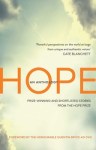
Hope prize short stories book coverThe judges for the inaugural prize, whose winners have just been announced, were Australian actor Cate Blanchett, novelist Kate Grenville, and ex-Governor General Quentin Bryce. What a lovely panel (albeit an all-female one. Perhaps it would be good to include a token male next year! Sorry, couldn’t resist that.) Anyhow, the website says that “they were impressed with the very high standard of writing and reported that all the finalists revealed powerful perspectives on the world at large, and displayed unique, unpretentious and authentic voices.” According to an article in the Sydney Morning Herald (SMH), a collection, which will include the winning and commended stories, will be published by Simon & Schuster on November 9. Sounds like a gift worth buying and giving.

But now, the winners:

  • First Prize, $5,000: Catherine Moffat for “Better Homes and Gardens”
  • Second Prize, $3,000: Eloise Young for “555 to Reservoir”
  • Third Prize, $2,000: Katherine Hayes for “Queen St”
  • Young Writer winner, $500: Eleanor George for “Colours”

There were also six highly commended stories.

… an entirely different perspective …

The abovementioned SMH article says that the winning story, “Better Homes and Gardens”, is “narrated by a young girl who lives in her father’s car with her little sister and describes her trying to stay afloat at school”. Cate Blanchett says of this story that

I suddenly saw the world from an entirely different perspective … It’s language and perspective on the world that in middle class society we take for granted. I felt like my entire world had been turned upside down.

She says that the stories did not confirm stereotypes and were “utterly illuminating”.

Quentin Bryce says that the stories, which present the perspectives of refugees, asylum seekers and homeless people, gave her a real understanding of the isolation experienced by many Australians every day. SMH quotes her as saying:

I was reading those stories again and thinking about what this publication is about; about poverty and disadvantage and the compassion you really feel very deeply. It gives you an awareness of how easily life can change.

And finally to return to Blanchett, she is, SMH says, “a firm believer that great works of art and literature can be catalysts for change”. I have to agree, and love her passion and support for projects like these.

Hope: an anthology will be available in trade paperback and format, and royalties are being donated to the prize. You can order via the Simon and Schuster site, or presumably buy from shops like Readings, after November 9.

What an encouraging initiative this is – one which encourages the arts while also working to raise awareness of social justice – and what a great example of what philanthropy can do.

* I’m not sure if this has been organised through the Myer Foundation, but the Myers, through four generations now, are among Australia’s most signifiant philanthropists in the arts, social welfare and the environment. Prudence Myer was married to Kenneth Myer, whom I met eons ago through his active support of the National Library of Australia.
Bruce Pascoe, Dark emu, black seeds: Agriculture or accident? (Review)

Bruce Pasco, Dark emu

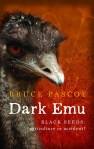
Indigenous author Bruce Pascoe’s Dark emu, black seeds: Agriculture or accident? was my reading group’s October book, and a very interesting read and discussion it turned out to be. It’s not a simple book to discuss and really got us thinking, eliciting a variety of responses, though we all agreed with Pascoe’s basic premise that we Australians need to revise our understanding of, and beliefs about, Australia’s history. How could we not?

Publisher Magabala’s website says Dark emu

argues for a reconsideration of the ‘hunter-gatherer’ tag for pre-colonial Aboriginal Australians and attempts to rebut the colonial myths that have worked to justify dispossession.

Pascoe, they continue, contends that indigenous “systems of food production and land management have been blatantly understated in modern retellings of early Aboriginal history”.

A case to be argued

Dark emu is, then, a book that is determined to argue a case – and herein lies its challenge. In his Introduction, Pascoe sets out his main thesis which is that Aboriginal economy was “much more complicated … than the primitive hunter-gatherer lifestyle we had been told was the simple lot of Australia’s First People”. He asks:

Could it be that the accepted view of Indigenous Australians simply wandering from plant to plant, kangaroo to kangaroo in hapless opportunism was incorrect? (p.12)

Now, there are a couple of things here that disconcerted me. Firstly, emotive language like “hapless” doesn’t help when you want to present a logically argued case. And, anyhow, “hapless” is not a word I would ever apply to hunter-gatherer societies. Being hunter-gatherers doesn’t, to my mind, mean they don’t know their environment and don’t use this sense and knowledge in their hunting and gathering. But secondly, I didn’t comprehend his argument that the early settlers had no legitimate right to seize the land because Aboriginal Australians were practising agriculture:

In denying the existence of the economy they were denying the right of the people their land and fabricating the excuse that is at the heart of Australia’s claim to legitimacy today. (p.17)

Arguing this seemed to me to imply the corollary that if indigenous Australians did not have this economy, if they were indeed simply hunter-gatherers, then taking the land would be legitimate? But surely the fundamental truth is that, regardless of how indigenous people were living and using the land, it was their home and they had a right to be treated as the owners? Being on the path to sedentism, practising agriculture and aquaculture, didn’t, in my mind, make their ownership of the land more legitimate. Did it? I needed to understand this a bit more so, unusually for me, I set off looking for discussions of the book before completing my review, and I found the answer.

It was in a discussion of the book by Amy McQuire at NewMatilda.com. McQuire wanted to know why Australia had “so readily embraced” Dark emu, and whether it meant Australians must now “embrace the issue of sovereignty and treaty”. She quotes Professor of Law Megan Davis (from It’s our country: Indigenous arguments for meaningful constitutional recognition and reform):

“It mattered whether claiming a territory was done by settlement or whether by conquest and cession, because each had differing implications for the reception or not of British law.

“Settlement occurs when the land is desert and uncultivated and it is inhabited by backward people.

“Conquest means that it is a forcible invasion of occupied land and cession means that there is a treaty over occupied land. In the case of conquest, the laws of people conquered apply until the Crown or other foreign power laws apply, and in regard to cession, a treaty is entered into but the Crown or foreign power abrogates it.”

She writes “When lands are cultivated, then they are gained through conquest or they are ceded by a treaty”. And when lands are conquered or ceded, it still has laws of its own.

“Until the Crown asserts sovereignty and actually changes them ‘the ancient laws of the country remain’.”

Ah, so now the penny dropped. It’s all about the “law” (European law, that is), not about “reason” or “logic”. Pascoe makes reference to “Australia’s claim to legitimacy”. He discusses the way colonisers can fabricate history and be reluctant to credit colonised peoples (e.g.. p.61) for their achievements, and in so doing underrate sovereignty. But it didn’t properly click with me. I consequently didn’t see why he was arguing so forcefully for this “new” vision of pre-colonial Aboriginal Australian life. I was reading it more as an interesting, and yes very important, contribution to our understanding of Australian history, and I was seeing it as a way of correcting the historical record, and therefore of restoring the “truth” and, critically, “Aboriginal pride in the past”. But I didn’t fully grasp the import of the distinction he was making (and why, accordingly, the odd emotive word or long bow crept in.)

Convincing the doubters

However, this little niggle didn’t stop my being thoroughly engaged by the book. I loved the way Pascoe interrogates records from the past, particularly the journals of explorers such as Charles Sturt and Thomas Mitchell, to prove that Aboriginal Australians* were developing a sedentary culture based on intensification of agriculture and aquaculture. They managed the land, “manipulating the landscape” to produce crops for harvesting, corral animals for hunting, and trap fish for capturing and spearing. They irrigated, they built wells and dams, they stored food for future use. They built dwellings and lived in village groups. And they had been doing so for thousands, if not tens of thousands, of years making them among the world’s earliest, if not the first, agriculturalists (depending on whose “dating” you believe).

Pascoe, however, doesn’t stop at his argument that they practised agriculture. He also contends that they practised it sustainably, using a variety of techniques, including what archaeologist Rhys Jones called “firestick farming”. He argues that there’s much about Aboriginal practices that we could learn and use today, and that modern Australian agriculture could be more sustainable, particularly in our environmentally-uncertain-climate-changing world, if we focused our efforts on Australian plants and animals.

The depth of Pascoe’s research is mind-boggling, and is perhaps partly explained by his comment in that NewMatilda.com article that academics had criticised his previous writing, which apparently used his own words. He decided “to use an authority that they respected … the explorers and the settlers… you know the ‘heroic’ first settlers.” (Oh dear!) But he also draws on a wealth of other research from anthropologists (like WEH Stanner), archaeologists (like Rhys Jones), historians (like Gill Gammage and Rupert Gerritsen), and others. The book is heavily but not intrusively footnoted (I do like a footnote!), and contains an extensive bibliography.

While I would never have called myself a doubter needing to be convinced, it is true that, for all my interest in the subject, my knowledge of indigenous history and culture was rather out of date. Dark emu should, really, be read by all Australians, and at 156 pages of text, it is not a big ask.

Several of my blogger friends have reviewed this book, including historians Janine (Resident Judge of Port Phillip) and Yvonne (Stumbling Through the Past), as well as teacher-librarian Lisa (ANZLitLovers) and biographer Michelle (Adventures in Biography).

* Terminology, terminology! I note that Pascoe mostly uses the term Aboriginals.

Bruce Pascoe
Dark emu, black seeds: Agriculture or accident?
Broome: Magabala Books, 2014
175pp.
ISBN: 9781922142436

Monday musings on Australian literature: Patrick White (Literary) Award

I was thrilled to hear on the radio this morning that Carmel Bird had won this year’s Patrick White (Literary) Award. Bird is such a worthy winner for this award, but more on that anon.

The Patrick White Award* is named, obviously, for one of Australia’s most significant writers and only, to date, Nobel Laureate in Literature. But, more than this, it was established by the man himself, using the proceeds of his Nobel prize money. White, for all his famed grumpiness, was a principled and generous person. Having won two Miles Franklin Awards, among others, he stopped entering his work for awards in 1967 to provide more opportunity for other less-supported writers. His award, established a few years later, continues this desire to support his fellow writers. David Carter, writing in the Australian Book Review, says this about it:

White was no friend to literary prizes and, in some ways, no friend to Australian literature, but he proved himself a friend to Australian writers. The ‘Patrick White’ is in many ways a writer’s award, created by a writer for other writers, and highly valued by them even if it hits the headlines less than the Miles Franklin.

The Canberra Times reported on the creation of this award in October 1973, stating:

Professor Geoffrey Blainey, of the University of Melbourne, said in a statement yesterday that the prize would be awarded annually to “a distinguished Australian writer — preferably an older writer whose life’s writings have not received adequate recognition or reward”.

David Foster, who won the award in 2010, said that White had intended it as ”as a kind of literary loser’s compo”! I guess it’s all a matter of perspective, of how you define “loser”, but it is good to have an award which goes to those writers who, though I wouldn’t call them losers, have fallen into the gaps. Carmel Bird is one of these.

Carmel Bird and Marion Halligan

Carmel Bird and Marion Halligan at the NLA

Before I talk about Bird, though, I’d like to share a little anecdote from Patrick White’s memoir/autobiography, Flaws in the glass. It is about a dinner party he was giving for the second winner of his award, the poet David Campbell:

It was again the evening of a dinner party, this time in honour of David Campbell the poet, who had won the award I set up with the money from my Nobel Prize. I was drudging away in the kitchen about five o’clock when I switched on the radio hoping for distraction from the boredom brought on by chopping and stirring. Like a stream of lava, out poured the news of what was happening in Canberra: that the Governor-General [Sir John Kerr] has dismissed the Government elected by the Australian people …

White goes on to say that he then rejected the Order of Australia that Kerr had recently persuaded him to accept, despite his professed antipathy to such awards, by saying his refusing it “would ruin everything”. Awards, then, are tricky beasts, and I know there are readers of this blog who are not keen on them. I understand their reasons, but I also understand that for many writers the money, regardless of any kudos that may or may not accrue, is very important.

(BTW Note the timing. White wanted his annual Award announced in the week following the Melbourne Cup, which occurs on the first Tuesday in November, “to give literature a brief chance of ousting sport from the nation’s mind”. The dismissal occurred on 11 November, suggesting that in 1975 the David Campbell announcement had been made in White’s time-frame. However, given this year’s announcement date of mid-October, White’s wish seems to have fallen by the way-side.

POSTSCRIPT: This point re timing has caused some discussion in comments and behind the scenes. I have now received in writing from the Trustee’s PR that “Perpetual as Trustee of The Patrick White Literary Award confirms that there is no stipulation in the Trust Deed in regards to the timing of the announcement of the winner.” It seems like it may have been something White talked about but never actually enshrined, which is good really. I believe that the fewer restrictions the better. Times change and donors can never be sure that what they stipulate in their times will have the desired result in later times.)

So now, Carmel Bird. Her Wikipedia article provides an excellent list of her literary output – her novels, her short story collections, the anthologies she’s edited, her non-fiction, and so on. It’s an impressive output ranging across a wide variety of forms and styles, over a long period of time. And yet, under the list of awards and nominations, you’ll see that she’s been shortlisted several times but hasn’t won any of Australia’s major literary awards. Now, at last, she has!

I last saw Bird at the Canberra Writers Festival when Marion Halligan launched her latest novel Family skeleton. On the back of my copy is a quote from the Australian literary critic, Peter Craven:

Carmel Bird is a literary artist to her fingertips … She writes prose that has the precision of poetry and that uncanny quality poetry has of making the inner life speak.

I agree, but the thing that I really like about Bird is the way her mind works. At the risk of sounding cliched, which she never is, she is fresh, original, unafraid to follow the connections her mind makes and certainly unafraid to depart from the expected. You just have to attend a live event involving her to realise this. I mean, this is an author who creates characters who then take on lives of their own, like Virginia O’Day who writes letters of advice to authors in Dear writer. And this is the author who creates a writer, Carrillo Mean, whose work she then uses as epigraphs for her novels! Have you got all that? I wasn’t surprised, therefore, to read that another idiosyncratic writer on the recognition-fringe of Australia’s literary firmament, Gerald Murnane, has described one of her books, The woodpecker toy fact, as “my kind of book”.

FL Smalls 7: Carmel Bird's Fair Game

FL Smalls 7: Carmel Bird’s Fair Game

I’ve reviewed here her cheeky fl small Fair game: A Tasmanian memoir, and I’ve read other work of hers before blogging. I also have the revised ebook edition of her book on writing, Dear writer revisited (featuring the aforesaid Virginia O’Day)I’m not a writer – that is, I have no ambitions to write fiction – but I often dip into this book because the advice is applicable to all writers.

For example, Letter Two discusses “the use of adverbs and adjectives”. Although she is referring to a piece of fiction, Bird’s advice works for any sort of writing. This, for example:

Perhaps you thought that you, as the writer, were the one who had to do all the imagining, and that the reader was to get every detail of the picture from your words. The reader of fiction takes pleasure in doing some of the work, and will more readily believe you and trust you if there is work to do. Strangely enough, the strength of fiction seems to lie as much in what is left out as in what is included, as much in the spaces between the words as in the words. This is one of strange powers at the heart of good writing. The writer’s skill likes perhaps as much in creating the spaces as in finding the words to put down.

Now, when I write my posts I regularly bother about adjectives. I seem to feel that I need them but I rarely like the ones I use. Perhaps I don’t need them at all! The other reason I like to check this book out is for the examples and advice she includes from other writers – from the likes of Helen Garner and Fay Weldon, David Foster Wallace and Frank Moorhouse, to name just a few.

She also quotes Ernest Hemingway:

There is nothing to writing. All you do is sit down at the typewriter and bleed.

Oh dear. This is from Letter Fifteen, “Writers are different”. I think they are – but too often we take them for granted and do not give them the recognition they deserve for the ways they enrich our lives. I’m so glad Bird has received this award and I sure hope she is too.

* I am not sure what this award is called. In some places, including Wikipedia, it is the Patrick White Award, while in others it is the Patrick White Literary Award. Take your pick it seems.

Monday musings on Australian literature: 2016 awards season dragging to a close

As the year draws to a close, our final major literary awards are being announced. We’ve seen this month the winners of the Queensland Literary Awards and the Western Australian Premier’s Book Awards. The Barbara Jefferis Award has announced its shortlist, but we are still waiting for the Prime Minister’s Literary Awards shortlist.

All but one of these awards have had somewhat problematic trajectories in recent years. The Queensland Literary Awards were established in 2012 when the then Queensland Premier, Campbell Newman, abolished the Queensland Premier’s Literary Awards. The awards were managed for two years by a volunteer committee, before negotiation with the State Library of Queensland saw the Library take over management in 2014. In 2015, new Premier Anastasia Palaszczuk announced that the government would again support the awards. However, they are now a more collaborative venture than they’d been under the abolished regime, which should ensure a more secure future for them. The Western Australian Premier’s Book Awards, on the other hand, which had been awarded annually from 1996 to 2014, were downgraded to a biennial timetable starting in 2016. Disappointing, really.

Meanwhile, what has happened to the Prime Minister’s Literary Awards (PMLA)? Established in 2008 after Kevin Rudd became Prime Minister, they expanded quickly from comprising just two prizes (fiction and non-fiction) to several, so that by 2102 there were six prizes with young adult fiction, children’s fiction, poetry and Australian history being added to the mix. However, there seems to be no established timetable. In 2008, the winners were announced in September, while in 2009 and 2010, we had to wait until early November. Then, in 2011 and 2012, they were announced in July, and in 2013 it was August. The last two years, 2014 and 2015, the winners were announced in December, with their shortlists announced in October and November, respectively. Given there’s been a call for entries this year, they must be happening, so presumably we’ll see this year’s shortlist soon! The PMLA people play it very close to their chest, despite having a Facebook page on which they share all sorts of literary news, because this year, as in recent ones, I’ve not been able to find a timetable. I guess we just have to have faith.

The Prime Minister’s Literary Awards have other issues, though, besides erratic timetabling, including a lack of transparency regarding the process, poor marketing and promotion, and, most serious of all, political interference in the judges’ decisions. The best known example of this occurred in 2014 when the then Prime Minister Tony Abbott over-ruled the fiction judges’ choice of Stephen Carroll’s A world of other people to award the fiction prize to Richard Flanagan’s The narrow road to the deep north. But, according to Patrick Allington in The Conversation and past non-fiction judge Colin Steele, such interference has occurred a few times in the Awards’ short history. This is not good enough. As Allington writes, the stipulation that a Prime Minister has the final say about winners “compromises the Awards’ credibility, purpose and depth.”

The fun stuff … some winners

But enough of that. Let’s talk about some of the winners. I’m not going to list them all because the Queensland Literary Awards offers prizes in twelve categories and you can see them all at the site. Similarly, the WA Premier’s Book Awards has about eleven categories, and you can see those winners too at their site. I’m just going to share the few winners I’ve read and reviewed!

Elizabeth Harrower, A few days in the country and other stories

First up, the Queensland Literary Awards. The award which pleased me most is Elizabeth Harrower’s A few days in the country and other stories (my review) sharing the Steele Rudd Award for Australian short story collections sponsored by the University of Southern Queensland. This is a wonderful collection of short stories, which has been shortlisted for a couple of awards, so I’m thrilled to see Harrower receive the recognition she deserves. (And I’m pleased for Text Publishing too given the work they’ve done to bring Harrower to our attention through their Text Classics).

Fiona Wright, Small acts of disappearanceAnother a winner at these awards was Fiona Wright’s honest, insightful collection of essays, Small acts of disappearance (my review), about her experience of an eating disorder. Wright was the Non-fiction Book Award, also sponsored by the University of Southern Queensland.

Meanwhile, over in the west, at the newly biennial Western Australian Literary Awards, it all felt a little old because many of the winners have been around for a couple of years now and most of them featured in the 2015 shortlists and awards. This is not their fault of course, but it certainly brought home the impact of the awards only being two-yearly. The fiction award, for example, was won by Joan London’s The golden age, which was shortlisted and/or won several awards in 2015.

Helen Garner, This house of grief book cover

Courtesy: Text Publishing

The big news at these awards, from my point of view, is that Helen Garner’s non-fiction work This house of grief (my review) won not only the Non-fiction prize, but also the overall Premier’s Prize. A fascinating choice, because mostly, though not exclusively I know, these overall awards tend to go to works of fiction.

Western Australia, like Queensland, quarantines an award or two to writers from their states. Queensland has awards for “a work of state significance” and “emerging Queensland writer”, while Western Australia offers awards for “Western Australian history” and “Western Australian emerging writer”. The winner of this last award is a book I’ve reviewed here, Lost and found by Brooke Davis.

And so, by my reckoning, we have three more literary awards to go – the Prime Minister’s (on a yet-to-be announced date), the biennial Barbara Jefferis Award (on 25 October), and the always interesting MUBA (Most Underrated Book Award (on 11 November). Good luck everyone.

Anthony Doerr, All the light we cannot see (Review)

Anthony Doerr, All the light we cannot seeJust when you thought that there couldn’t possibly be another angle to writing about World War 2, up comes another book that does just that, like, for example, Anthony Doerr’s Pulitzer prize-winning All the light we cannot see. I had, of course, heard of it, but it wasn’t high on my reading agenda until it was chosen as my reading group’s September book. I wasn’t sorry we chose it, because I do, in fact, like World War 2 stories, and Doerr’s turned out to be an engaging one – warm, generous but not sentimental, and highly readable despite its alternating time-frames, locations and characters.

I’ve read several and reviewed some World War 2 novels and memoirs. Many have been about Jews and the Holocaust, such as Imre Kertesz’s Fateless, Hans Bergner’s Between sea and sky, Marcus Zusak’s The book thief, and two memoirs, Halina Rubin’s  Journeys with my mother and Anna Rosner Blay’s Sister, sister. A couple have been about the fighters, such as Alan Gould’s The lakewoman and Richard Flanagan’s The narrow road to the deep north. Some have drawn on the perspectives of children and young people – Zusak’s The book thief, Ursula Hegi’s Stones from the river and, of course, Anne Frank’s The diary of a young girl. Doerr’s book fits into this last group, but is different again. Zusak’s and Hegi’s girls are non-Jewish Germans, and Anne Frank is of course a Jewish girl in Amsterdam. These books focus on the Holocaust. Doerr’s does not. His interest is the personal experience of his young people – a blind French girl, Marie-Laure, born around 1928, and an orphan German boy, Werner, born around 1927. Their stories – Marie-Laure’s birth in Paris and flight with her father to Saint-Malo after Paris is occupied, and Werner’s childhood and youth in Germany followed by his war experience in Russia, Central Europe and France – are told in parallel until they inevitably meet.

Marie-Laure and Werner are nicely realised characters. They are ordinary young people trying to make a life for themselves in terrible times, but are extraordinary too. Marie-Laure’s childhood-onset blindness makes her initially helpless but she becomes a resourceful and imaginative young girl. Werner, the orphan, is a clever boy who develops a fascination with radios and things electrical. This leads him to a particular role in the war – tracking down partisan-resistance transmitters – that is different from most “soldier” stories.

All the light we cannot see is a big book. It has a wide, but not unwieldy, cast of characters, and a complex structure comprising two chronological sequences, within each of which the stories of our two young people alternate. This might sound difficult or confusing to read, but Doerr handles it well.

I’m not going to write a thorough review of this. Being a top-selling prize-winner, it has been reviewed widely. Instead, I’d like to share some of its themes, or ideas, because these are what interests me most. Before that though, I want to raise one issue. One review I read and some in my reading group expressed irritation at Doerr’s use of American idiom (such as people going “to the bathroom in their pants”). For some reason this sort of issue rarely worries me. Does that make me a bad reader? Perhaps. But it’s difficult, I think, to write in the language of another place and time, and when writers try to do it, it can feel forced. Some manage it (like Peter Carey’s True history of the Kelly Gang) and some compromise by relying on some well-placed words from an era. Generally, I’m happy for the author to use contemporary-to-them expression.

What you could be (Volkheimer to Werner)

What interests me most as a reader is not whether authors get these sorts of details right but questions like why is the author writing this, why has the author structured the story this way, what does the imagery mean, and so on. It is to the first of these that I’ll turn now. The novel’s overall subject matter is the obvious one – the tragedy of war, the way war destroys people’s lives – but within this are some interesting ideas.

One relates to logic and reason. Early in the novel, Marie-Laure’s locksmith father believes (or, perhaps, wants to believe) in logic:

Walk the paths of logic. Every outcome has its cause, and every predicament has its solution. Every lock its key.

This idea is reiterated in the book Marie-Laure is given by her father, Verne’s Twenty thousand leagues under the sea:

Logic, reason, pure science: these, Aronnax insists, are the proper ways to pursue a mystery. Not fables and fairy tales.

The opposing view, however, is put by Werner late in the war when he is tracking resistance transmitters:

Everybody, he is learning, likes to hear themselves talk. Hubris, like the oldest stories. They raise the antenna too high, broadcast for too many minutes, assume the world offers safety and rationality when of course it does not.

Logic and reason may work well enough in “normal” life, but during war they can stand for very little.

Somewhat related to this are the discussions about curses and luck. A major plot line concerns an ancient gem, the Sea of Flames diamond, which is said to carry a curse. It’s surely not by chance (ha-ha) that Doerr hides this stone behind the 13th door in the museum, and that his novel has 13 sections! Anyhow, here is Marie-Laure’s father on curses and luck. There are, he says:

no such things as curses. There is luck, maybe, bad or good. A slight inclination of each day toward success or failure. But no curses.

AND

Stones are just stones and rain is just rain and misfortune is just bad luck.

Later though, when her father has been arrested and Marie-Laure is scared and alone, she conducts an imaginary conversation with him:

You will survive, ma chérie.
How can you know?
Because of the diamond in your coat pocket. Because I left it here to protect you.
All it has done is put me in more danger.
Then why hasn’t the house been hit? Why hasn’t it caught fire?
It’s a rock, Papa. A pebble. There is only luck, bad or good. Chance and physics. Remember?
You are alive.

In almost every story I’ve read about war – fiction and non-fiction – luck has played a significant role. It’s one of the things that makes war so scary. You cannot expect reason to prevail.

Finally, related to these two ideas is that of choice:

Frederick [Werner’s friend at Schulpforta, the Nazi training school] said we don’t have choices, don’t own our lives, but in the end it was Werner who pretended there were no choices …

Frederick, in fact, chose to exercise his choice by refusing to follow orders and he suffered the consequences, while Werner did as he was told – at school and later in the field (“they do as they’re told”) and suffered the consequences in a different way. Late in the novel, Werner meets Marie-Laure:

He says, “You are very brave.”
She lowers the bucket. “What is your name?”
He tells her. She says, “When I lost my sight, Werner, people said I was brave. When my father left, people said I was brave. But it is not bravery; I have no choice. I wake up and live my life. Don’t you do the same?” 

These and similar discussions thread through the book. They remind us that in war survival is largely a matter of “luck”, that reason and logic will only get you so far when you confront the chaos of war, and that, perhaps paradoxically, you do have choices even if they are between two unappealing alternatives. The ultimate tragedy is that war destroys “what you could be” – all those talents, all those dreams, are subsumed into the business of survival.

This is not a perfect book. It’s a bit sprawling, trying to do a lot with imagery that I haven’t been able to completely untangle. And I wonder about the necessity of the final decades-later chapters. However, it is a page-turning read and produced a lively discussion in my bookgroup. I’m glad I read it.

Anthony Doerr
All the light we cannot see
London: Fourth Estate, 2014
531pp.
ISBN: 9780007548682 (eBook)

My literary week (3), mid-winter 2016

Today pretty much marks the middle of winter for us downunder, and what an unusually cold and wet winter it’s been, at least in my city. We’ve had more rain than usual, and we’ve had snow, which is rare for us though not unheard of. Our average July maximum is around 12-13°C but this last Wednesday it barely made it to 7°C. No wonder, as I write this, I am en route to slightly warmer climes, on the New South Wales central coast, where we expect to experience temperatures of 18-22°C in the coming week. Whew. But, none of this relates much to my literary week, so on with the show …

Kibble Award Winners

The winners for the Kibble Literary Awards for life-writing by women were announced this week. I’m thrilled that Fiona Wright’s honest, moving collection of essays, Small acts of disappearance (my review) about her experience of an eating disorder, won the Nita B Kibble Literary Award, which recognises the work of an established Australian woman writer.

Lucy Treloar’s historical fiction novel, Salt Creek, won the Dobbie Award for a first published work by an Australian woman. I’m yet to read it, but as it’s been shortlisted for this year’s Miles Franklin Award I would like to try to fit it in. You can check out Lisa’s review at ANZLitLovers.

Both these books were shortlisted earlier this year for the Stella Prize. As happy as I am about Fiona Wright’s win – it’s an excellent book – I did have a secret little wish that Elizabeth Harrower’s A few days in the country, and other stories (my review) would win. She hasn’t been recognised nearly enough.

Helen Garner on mothers and daughters

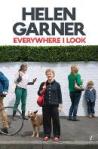
Helen Garner, Everywhere I lookI am currently reading Helen Garner’s beautiful collection of essays, Everywhere I look. A review will follow soon-ish – that is, as soon as I finish the book instead of  soaking up some sun. In the meantime, I’ll share a quote from her essay about her complicated relationship with her mother. Helen, born in 1942, was the eldest of 6. She writes:

When, in the street, I see a mother walking with her grown-up daughter, I can hardly bear to witness the mother’s pride, the softening of her face, her incredulous joy at being granted her daughter’s company; and the iron discipline she imposes on herself to muffle and conceal this joy.

This brought tears to my eyes.

New ways of telling stories

Finally, I want to share some ideas I heard last Saturday from ABC Radio National’s Future Tense program. It explores change from all sorts of angles. In this particular session they interviewed three novelists about new forms of story telling. My comments below are based on some quick notes I made at the time, while I was doing some housework. I haven’t had time to listen to it again, but you can do so at the link I’ve provided if you’re interested.

First off, and the least “controversial”, was Australian author Nick Earls on his recent series of novellas. Wisdom Tree. (Lisa has reviewed the first two at ANZLitLovers.) Novellas aren’t new of course, but Earls sees them as meeting the needs of contemporary readers (though he believes that big books will never be completely replaced) and as having excellent podcast potential. The thing that interested me most about this interview, however, was his requirements for a good story: it must be authentic; readers must be able to connect with the characters (he didn’t say we must “like” or even “engage” with them); and there needs to be something at stake that will interest the readers and make them want to read on.

Next was Naomi Alderman, an author-cum-video game developer from London. She argued that video games are the new “story form”. I was fascinated by this, partly because of recent discussions I’ve had with Son Gums. He has always loved stories. In his primary school years, he got into comics, alongside his love of “chapter books”, but by his late teens, comics and graphic novels had become his main fare. He never, though, really got video games the way his friends did – until very recently! Now in his early-thirties, he’s come to them quite late. I was surprised, but the reason he gave was the new style of story-based games. If I hadn’t had these conversations with him, I may not have connected quite so quickly with Alderman. Anyhow, she also gave her story requirements: the characters must be real; the worlds created must be coherent, in that the players must be able to imagine humans in them; and there needs to be meaningful themes like justice, revenge, freedom. In conclusion, though, she said quite categorically that if you want to understand story culture today, you must understand games and the way they use storytelling.

Finally, we heard Sydney novelist Mike Jones on virtual reality. He has created a piece of crime fiction called VR Noir. It premiered at this year’s Vivid festival in Sydney. I was interested in his idea that we tend to choose what we read/see/experience on the basis of what “choose to feel”. In other words, when we look at a selection of movies at the local cinema, we choose what to see on the basis of what we want to “feel”. I think there’s a lot of truth in that, though I’ve never quite thought about it that way. VR feeds into this “experiential” need, he says –  the “reader” (“user”) is put into the story and experiences it from within. VR, he said, draws from both video games and interactive theatre, and is still very new.

Do you think our story-telling (story-reading) needs have changed in our modern digital, interactive, connected world?

Monday musings on Australian literature: Miles Franklin Award, the third decade (1978-1987)

Miles Franklin

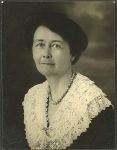
Miles Franklin, c. 1940s (Presumed Public Domain, via Wikipedia)

Today’s post is the third in my little sub-series of posts looking at the Miles Franklin Award by decade.

As before, I don’t plan to list all the decade’s winners, as you can find them on the Award’s official site. Instead, I’ll share some interesting snippets, inspired by my Trove meanders.

Women writers on the rise?

The late 1970s and 1980s saw, I believe, a flowering of Australian women writers, similar to that we saw in the 1920s-1940s with the likes of Katharine Susannah Prichard, Marjorie Barnard/Flora Eldershaw, Eleanor Dark, and Christina Stead, not to mention Miles Franklin herself. This flowering is partly evidenced by the fact that while just five awards were made for books by women in the first two decades, another four were made to women in this third decade. These were Jessica Anderson’s Tirra Lirra by the river (1978) and her The impersonators (1980), Elizabeth Jolley’s The well (1986), and Glenda Adams’ Dancing on coral (1987).

In 1979, The Australian Women’s Weekly announced Jessica Anderson’s win under the headline “Women take honours in literature, fashion”. It seems the awards were handled differently then, with the winner being advised before the presentation. The Weekly describes Anderson’s reaction:

“I was thrilled,” she said. “Like all Australian writers, I think we owe a tremendous debt to our predecessors. The award does encourage writers. You feel someone out of the past has spoken to you.”

One of the Award judges, the well-known and successful publisher-editor, Beatrice Davis, said of Anderson’s book that “It has an unpretentious elegance, an individual quality so different from the realistic documentary that still dominates the field in Australian novels.” But Jessica Anderson told The Weekly that, the book’s content annoyed a lot of people, particularly men:

“I didn’t mean it to be a liberationist gesture,” she said. “Men recorded their experiences for hundreds of years and women read them with admiration.”

Hmmm … this is fascinating, and an issue that we still confront, I believe. Meanwhile, if you haven’t read Tirra Lirra by the river, add it to your list. It’s a great read. I read it before blogging, but Lisa has posted her thoughts on her blog.

Incomprehensible or outstanding?

David Ireland won the award in 1980 for the third time with A woman of the future. Ireland said at the time that it had been initially rejected by Macmillan because it was “too incomprehensible”. The judges called it “outstanding”. Well, four of them felt it was. The fifth, Colin Roderick, called it “literary sewage”, The Canberra Times reported.

A few months after it won, a long article giving “a feminist perspective” appeared in Woroni, the ANU’s student paper. The writer, Andrea Mitchell, starts by discussing Ireland’s previous novels in which women appear as “domestic or sexual adjuncts”. Ireland, she argues, does not dissociate himself in these novels from his male characters’ poor treatment of women, but, she writes

A Woman of the Future offers a different and more rewarding perspective on women in society. A complete turnabout, Ireland presents a woman’s life and experience in the first person.

It’s an in-depth analysis, but I’ll just share her assessment of what she thinks he is doing, because I love it:

I would suggest that Ireland is not only satirizing sexism, but levelling criticism at a certain style of feminism epitomized by German Greer’s A Female Eunuch: That is, that in order to change the subservient position of women, women must become as ruthlessly self-oriented and competitive as men have traditionally been. Ireland reasonably sees the same danger for women as for men who pursue social power: a less than full human existence, and alienation in their personal lives.

Here come the men!

Peter Carey, BlissIf this decade saw a flowering of Australia’s women writers, it was also when some of the men who are now among Australia’s top male writers won their first awards. I’m talking Peter Carey, who won the first of his three Miles Franklin Awards with his debut novel Bliss, and Tim Winton who won the first of his four awards with his second novel Shallows.

The Canberra Times reported judge Beatrice Davis as saying that

Carey was an “effortless stylist” who “gives a sense of immediacy to every vivid scene and compels belief in every character no matter how bizarre”.

While I haven’t loved every Carey I’ve read, I do love the fact that you never know what form or “style” he’s going to produce next. He is exciting to read.

Tim Winton won the 1984 award with his novel Shallows. The award was not made for 1983 (see below) so I was intrigued to read the following statement by the judges quoted in The Canberra Times report:

The merit of Winton’s novel is reflected by the high quality of the 29 books considered this year for the $5,000 award … Among the other books entered were David Malouf’s Harland’s half acre, Elizabeth Jolley’s Milk and honey, Thomas Shapcott’s The white stag of exile, Nicholas Hasluck’s The Bellarmine jug (The Age Book of the Year), David Ireland’s Archimedes and the seagle, Alan Gould’s The man who stayed below and Olga Masters’s Loving daughters.

Interesting.

Now, I’m a Winton fan but when I read Shallows not long after it came out I clearly remember feeling it overdid the imagery a bit, that it was a little “overwritten” (which is something I’ve just read Helen Garner felt about his first novel). Still, the judges saw “ample proof of a developing talent” and I certainly wouldn’t disagree with that. The judges also said:

The merits of this novel are perhaps most evident in the strength of the characterisation — these characters stand on their own — and in Winton’s ability to bring the early history of whaling into an intelligible relationship with present-day attitudes to the whaling industry.

Fair enough. Winton is great at writing character, and setting. He, like, Carey, is always exciting to read.

Another interesting winner this decade was Rodney Hall, with his wonderful Just relations, but I just don’t have time to share everything I found.

No award (again)

As happened in the second decade, there was a year in this third decade, 1983, in which no award was made. The Canberra Times reported that most of judges for the 1983 Miles Franklin Literary Award “felt the standard too poor to justify presenting it”. The report continued that “if no novel of sufficient quality is available, the author of a play for stage. radio, television ‘or such other medium as may develop’ can be the recipient but few scripts are received”.

In 1983, novels were published by people like Brian Castro, Sara Dowse, Elizabeth Jolley, and Peter Kocan. Interestingly Peter Kocan’s The cure won the NSW Premier’s Literary Award and Elizabeth Jolley’s Mr Scobie’s riddle won The Age Book of the Year Award. There were also short story collections – but these, unlike plays and scripts, are not eligible it seems – by Carmel Bird, Robert Drewe, Beverley Farmer, amongst others. I’m not saying any of these should have won, but in the light of what the judges said the following year – including highlighting The Age Book of the Year as indicative of quality – it does make me wonder.

Past posts in the series

Julie Proudfoot, The neighbour (Review)

Julie Proudfoot, The neighbourWhen Julie Proudfoot offered me her debut novel, The neighbour, for review I was more than happy to accept. After all, it had won Seizure magazine’s Viva La Novella Prize in 2014, and you all know how much I love a novella. I must say it’s a gorgeous looking book. I’m not one to judge books by their covers, but neither am I immune to a beautiful book, and The neighbour is that – from its rich, green and mysteriously intriguing cover to its crisp, clear internal design. It is such a pleasure to hold and read. No wonder I prefer print to electronic!

But of course, the most important thing is the content, and the book delivers here too. It’s an Ian McEwan style page-turner. By this I mean it starts with a dramatic event which sets in train actions and reactions as the characters struggle to come to grips with the event, with its impact on themselves and their relationships, and with the way it exposes secrets and past traumas. The event is the horrible but accidental death of a child due to a mistake made by a neighbour. The circle of characters is tight – Ryan, Angie, and the nearly-five Lily, who live next door to Luke, Laney, and their four-year-old son Sam. On the opening page, Luke acknowledges, internally, that a frisson of tension (“a nervous kind of energy”) exists between himself and Angie  – and then she asks him for a favour he does not want to do.

“His actions were wrong, but now he can right them”

The neighbour is a novel about psychological disintegration brought about by grief and guilt, and about the tension that ensues when one wants to forget, another wants to remember, while yet another wishes to atone. Grief, we see, is a personal, private thing, and particularly so when it is bound up in a secret that prevents its full expression. Luke has always been Mr Fix-it for Angie and Ryan, so of course he wants to keep on fixing. If he can just fix their house, the loose roof-tiles, for example, he can make amends. Actions, he tells Angie, are the only way he can “beat down” the guilt. But you can’t help or fix for others if you are falling apart yourself, and you certainly can’t if those others don’t want that help. This is something Luke has trouble recognising as his thinking becomes more and more disordered.

And Luke’s thinking becomes so disordered, in fact, that his behaviour moves into quite bizarre territory. His determination to fix things for Angie and Ryan, despite their refusal, edges him into stalker territory. But, stranger still, Lily’s death resurrects (I’ve chosen this word specifically but I’m not going to explain why!) memories of his older brother’s drowning when they were children. Luke’s response to these memories is, there’s no other word for it, sadistic, but we go with it because we know Luke is losing his hold on reality. He is not a sadist. He is a troubled man. We care about him – because Proudfoot makes sure we do.

She achieves this by telling most of the story through Luke’s perspective, though we also occasionally enter other perspectives, such as Angie’s, too. It’s in third person, but present tense, so we journey with Luke, and other characters, as they try to make sense of their situation. Here’s Luke after Ryan has vehemently rejected his attempt to fix their roof:

As he climbs back over the fence, he can feel Ryan watching him. It’s going to be tough. Ryan will fight it. He knows this, but they’ll thank him in the end. They don’t even know what they need right now. He’ll get them all back on track. Ryan and Angie need never be aware of it.

The language, as you can see, is clear and direct. Because we are in Luke’s head most of the time, description is kept to a minimum, but the writing is nonetheless evocative. Sentences are generally kept short, which keeps the story moving and develops tension. The short, choppy sentences also mimic the characters’ erratic, distressed mental states. Here is Angie through Luke’s eyes:

When she talks her face is in parts. Her eyes shine. Her mouth moves. Her cheeks square up when she speaks and droop when she stops. In doing what Ryan wants, she has become fractured and tense. The more Luke tries to help her, the worse she gets.

Then there’s the plotting. It’s delicious. As the novel progresses, we think we’ve guessed the back story, and we have, but not quite. As it builds to its conclusion, we think we know how it will end, and we are right, almost. The end, in fact, has a beautiful irony – and is perfect.

Despite its brevity, The neighbour tells a complex story of grief, guilt, culpability and responsibility. There are layers, here, as there often are in tragic accidents, but rather than labour them, Proudfoot trusts us to comprehend them while she gets on with the story. This is a powerful, thoughtful – and at times – shocking novel that gripped me from its opening sentence. I look forward to seeing what Proudfoot produces next.

Lisa (ANZLitLovers) read and enjoyed this when it first came out.

awwchallenge2016Julie Proudfoot
The neighbour
Sydney: Xoum Publishing, 2014
204pp.
ISBN: 9781922057983

(Review copy courtesy the author)

My literary week (2), or so

No, I’m not going to write weekly “My literary week” posts – my last one was, anyhow, two weeks ago – but sometimes things happen that I want to share, and bundling them up seems the best way to do it.

Miles Franklin Award Shortlist

The shortlist for Australia’s best known literary award was announced last week – actually, just over a week ago, hence the “or so” in my post title. I had only read two books on the longlist – you are quite justified in wondering what on earth I’ve been reading over the last months! – and neither of them were on the list. The two I had read were both by male authors, but the shortlist of five comprises four female authors and one male. The list is:

  • Hope Farm, by Peggy Frew
  • Leap, by Myfanwy Jones
  • Black rock white city, by A.S. Patrić
  • Salt Creek, by Lucy Treloar
  • The natural way of things, by Charlotte Wood

Last year was the same, and the previous year four of the six shortlisted books were by women. Indeed, since 2012, the year the Stella Prize was established (first awarded in 2013), women have featured very well on the shortlists. The main change, though, has not so much been in gender balance of the shortlists, but in that of the winners. Up to 2011, male writers had won the prize over three times more than women had – but women have won the last four years. Is this gender politics at play? I hope not, because that denigrates the value and meaning of the prize. Or, does it signify an increasing acceptance of more diverse subject matter and voices? I hope so, because that is what the move to promote women writers has been about.

Oh, and, while we are talking imbalances, I should point out that all five authors are apparently Melbourne-based, but we’ll let that through to the keeper this year. Those of us in other states will be watching though! (Just joking!)

Meanwhile, you can expect a review of Charlotte Wood’s book next week.

Quote of the week

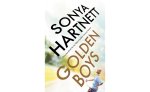
Sonya Hartnett, Golden boysI nearly wrote a post just to share the following quote. My fellow bloggers will know how frustrating it is when we can’t include all our favourite quotes from a book in a post. Well, this week, I’m going to share one more quote from Sonya Hartnett’s Golden boys (my review) because it’s a beautiful example of her use of imagery. The quote comes early in the novel when tough, street-wise, working class 10-year old Syd meets the similarly-aged but soft, dependent, well-to-do Bastian:

Syd and Bastian look at each other, and it’s like a Jack Russell being introduced to a budgerigar: in theory they could be friends, but in practice sooner or later there will be bright feathers on the floor.

Need she say any more?

PS I have another favourite quote this week, but I have already posted it in my Washington Irving post. It’s his statement that he hides his morals from sight, disguising it with “sweets and spices” so that the reader might “have a bolus of sound morality popped down his throat, and be never the wiser for the fraud”. Don’t you love the cheekiness of it?

… and then there was lunch

During the week, I lunched, with a good friend who is also in my reading group, at Muse, a favourite local cafe which describes itself as “a space where good food, great wine and the magic of the written word come together”. In other words, it is a cafe, bookshop (for new and secondhand books) and event venue located in one of Canberra’s boutique hotels. I have bought a signed first edition Thomas Keneally, Three cheers for the Paraclete, here. I treasure it. Anyhow, before my friend arrived, one of the owners and I chatted books, what we were currently reading – he saw me reading Charlotte Wood’s The natural way of things – and upcoming events, which will include Arnold Zable. Yes!

And then my friend arrived and we continued our discussion, from reading group the previous night, of Sonya Hartnett’s Golden boys – because there’s always more to discuss when you read a good book! We particularly talked about the ending – how well did it work – and about Hartnett’s decision to set it in the 1970s given its concerns – pedophilia and domestic violence – are very relevant today. No great resolutions, of course, but it was good to tease out ideas a little more.

My literary week (1), in a sense

I say “in a sense” because my reading has been slow this week as Mr Gums and I have been getting back up to speed after our Lake Eyre trip. However, in terms of the literary world, much has been happening and I thought I’d share some with you, documenting it at the same time for my own future benefit.

Gillian  Mears

I’ll start with the sad news, the death of the wonderful Australian writer, Gillian Mears, who had suffered from multiple sclerosis for over 20 years. Her disease was so debilitating that she appeared in 2011 before state (NSW) hearing on the Rights of the Terminally Ill. The Sydney Morning Herald quoted from her submission in 2013. Here is part of that submission:

Not a day goes by that I don’t wish that I were dead. It would be so much easier than living in a body beleaguered now by advanced multiple sclerosis. I’m in my 17th year of living with this disease [she was diagnosed at the age of 30] and I’ve very nearly had enough.

Gillian Mears' Foal's bread
Foals’ bread cover (Courtesy: Allen & Unwin)

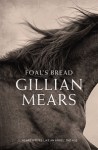
I had not been aware of her condition until she won the Prime Minister’s Literary Award in 2012 for Foal’s Bread and was unable to take part in the post-announcement panel, which I attended, because she needed to conserve her energy for other commitments. I first read her (The Mint Lawn) with my reading group, and we loved it, but that was way before blogging. However, I did review Foal’s bread, which also won the Miles Franklin award, here. She was a fine writer, and this book, in particular, is one you don’t easily forget.

Her death represents a tragic sad loss for Australian literature, because it was too early – she was only 51. But, given the situation she found herself in, it was clearly for her, in the end, a release. Vale Gillian Mears.

NSW Premier’s Literary Awards

The annual NSW Premier’s Literary Awards were announced earlier this week, as it usually is, to coincide with the Sydney Writers Festival Week. You can read all the winners on the State Library of NSW’s site, so I’ll just share the few that are particularly relevant to my blog’s interests:

  • Christina Stead Prize for Fiction: Melinda Bobis’ Locust girl: A love song (I have reviewed her Fish-hair woman, which I loved, but for a review of this novel you can check out Lisa’s of ANZLitLovers)
  • UTS Glenda Adams Award for New Writing (Adams being another of our writers who died too young): Sonja Dechian’s An astronaut’s life (also longlisted for the Dobbie Literary Award)
  • Indigenous Writer’s (biennial) Prize: Bruce Pascoe’s Dark emu (which is on my radar, but has also been read by that voracious reader, Lisa! as well as by Michelle at Adventures in Biography)
  • Douglas Stewart Prize for Non-fiction: Magda Szubanski’s Reckoning (which I really MUST read). (Interesting that poet Douglas Stewart’s name is used for the non-fiction prize. He did write some criticism and autobiography too but they’re not what he’s known for.)

There are also awards for Poetry, Scriptwriting, Multicultural writing, among others, but I’ll just leave it at these for today.

Sydney Writers Festival

I’d love one day to get to the Sydney Writers Festival, but its timing in May is always tricky for me, so I end up relying on ABC RN and bloggers for my fix. I’ll share just two examples for you to check out if you are interested:

  • Jonathan Shaw of Me fail, I fly has written multiple posts, one for each day, of his experience of the Festival. Start at Day 1, and work your way through from there. I have quickly scanned his posts but will be adding my comments later. Thanks as always, Jonathan, for helping me enjoy this festival vicariously.
  • ABC RN’s Books and Arts Daily program usually broadcasts – live or later on – several events from the Festival, but I’ll just share the link for their live panel session which I listened to live. The topic was to discuss the “pleasure and challenges of writing and reading in a globalised world”. The panelists were Australian comedian Magda Szubanski (author of Reckoning), Dutch author Herman Koch (whose upcoming novel is Dear Mr M), and French writer Marie Darrieussecq (whose latest novel is Men: A novel of cinema and desire). It was a fascinating discussion in which the writers teased out a range of issues. To give one example: they discussed Herman Koch’s The dinner and the idea that even where a book’s themes may seem universal – such as parental love for children – reactions/responses can vary greatly depending on the culture of the reader.

The scandalous Lady W

Joshua Reynolds painting of Lady Worsley
Joshua Reynolds [Public domain], via Wikimedia Commons

To end on something completely different and not entirely literary is the story of Lady Worsley (born Seymour Dorothy Fleming, 1758-1818) as told in the BBC telemovie The scandalous Lady W, which my local Jane Austen group viewed this weekend. She was apparently the inspiration for Sheridan’s play School for Scandal and was painted by Joshua Reynolds.

Lady Worsley was involved in a high profile adultery (“criminal conversation”) trial brought by her husband against her lover. However, the story was far from straightforward, her adultery being “commanded” by this very husband who turned out to be a voyeur who preferred to watch his wife have sex with others than do so himself. The inevitable happened and she eloped with one of these lovers. This is a story of women-as-property, of women-not-having-access-to-their-own-propety, and of a woman who was brave enough to stand up for herself. She didn’t win, entirely, but my, did she make her point, as the film shows. The story reminded me that although women – western ones anyhow – have more legal rights now, this idea of “you are mine” is surely behind much of the domestic violence that still occurs.

The main reason my group watched this movie was because Lady Worsley lived during Austen’s time (Austen’s dates being 1775-1817) and lived part of her life near Austen’s home. What, we wondered, did our Jane, a keen reader, know of Lady Worsley? It was the talk of the town.