Elizabeth Jolley, Hilda’s wedding (#Review, #1976 Club )

One of Elizabeth Jolley’s biggest fans is Helen Garner, as I have said before. Garner often mentions Jolley, and my current read, the second volume of her diaries, One day I’ll remember this, is no exception. She writes:

Elizabeth Jolley’s new novel, My father’s moon [my review]. She re-uses and reworks images from her earlier work, brings forth experiences that she’s often hinted at but never fully expressed. I can learn from this. I used to think that if I said something once I could never say it again, but in her book I see how rich a simple thing can be when you turn it this way and that and show it again and again in different contexts.

This is not the only reason Garner admires Jolley, but the reasons are not my topic for today! I will add, though, because it is relevant to my topic, that another thing Garner appreciates about Jolley is that both draw closely from their own lives in their writing.
So now, “Hilda’s wedding”, which I read for the 1976 Club, hosted by Kaggsy’s Bookish Ramblings and Stuck in a Book. It’s not the short story I had planned to read, but I couldn’t find that one – also a Jolley – in my collection or online. Fortunately, during my hunting, I found this one from the same year, and it exemplifies the two points I made at the beginning. Firstly, it features a character, Night Sister Bean, who appears in other Jolley works, including the first of hers I read, the short story “Night runner”. And, being a hospital-set story, it draws on (let’s not say “from”) her own experience of nursing.

“Hilda’s wedding” is a rather bizarre or absurd story – which, again, is not a surprise from Jolley. In it, the narrator, who is a relieving night nurse – so somewhat of an outsider – organises an on-the-spot wedding for the very pregnant, apparently unmarried, kitchen maid Hilda. The various roles – husband, celebrant, parents of the bride, pages – are played by night staff including the cook, cleaners and porters. The bride is dressed, with a veil made of surgical gauze and a draw sheet as her train (which contains a hint of the Gothic that we can also find in Jolley’s writing). Immediately after the ceremony, Hilda goes into labor and gives birth in the elevator.

What does it mean? I’m not sure, but this little story about an impromptu wedding sounds like children’s play-acting. It’s a game which uses imagination and creativity, which provides a sense of fun in a grim place, and which brings a little joy to Hilda, whose “melon-coloured face shone with a big smile”. Melons, as you may know, are often associated with pregnancy and fertility. However, injected into the story at various points is the real world, one characterised by rules and impersonality. There’s also the unresolved mystery about Sister Bean and rumours about her negative impact on transfusions/drips. Is she a witch, they wonder?

Sister Bean opens and closes the story, but otherwise appears only occasionally. There are various ways we could read her. One could be people’s need to find a reason or explanation or scapegoat for the bad things that happen in a world where you have little control. In the third last paragraph, our narrator comments on the early morning, and the city waking up:

A thin trickle of tired sad people left the hospital. They were relatives unknown and unthought about. They had spent an anonymous night in various corners of the hospital waiting to be called to a bedside. They were leaving in search of that life in the shabby world which has to go on in spite of the knowledge that someone who had been there for them was not there any more.

It is against this backdrop of sadness that our nurse narrator was there for Hilda. In the next and penultimate paragraph, the narrator is standing outside, taking “deep breaths of this cool air which seemed just now to contain nothing of the weariness and the contamination and the madness of suffering”.

In this story, as is typical of Jolley, there is humour alongside sadness, comedy next to tragedy, unreality bumping up against reality, and, appropriately, no resolution at the end.

In Central mischief – a collection of Jolley articles, talks and essays compiled by her agent Carolyn Lurie – is a talk Jolley gave to graduating nurses in 1987. Before I get to my concluding point from it, I’ll just share something else she says, which is that “for me fiction is not a form of autobiography”. This is an important distinction, which I think Garner would also make. Writers like Jolley and Garner may draw on their own experiences, but what they write is something else altogether.

But now, I want to conclude on this that she tells them:

There is a connection between nursing and writing. Both require a gaze which is searching and undisturbedly compassionate and yet detached.

What a clear-eyed view – and how hard to achieve. What do you think about this?
Challenge logo

Elizabeth Jolley
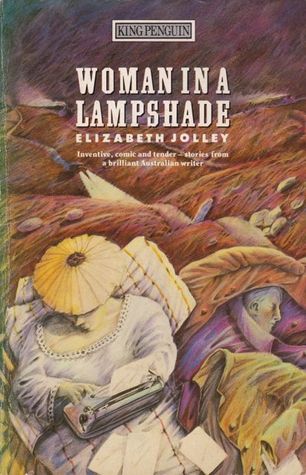
“Hilda’s wedding” (first pub. 1976, in Looselicks)
in Woman in a lampshade
Ringwood, Vic: Penguin Books, 1983
pp. 139-46
ISBN: 0140084185
Arthur Gask, The passion years (#Review, #1936Club)

A couple of weeks ago, I posted a Monday Musings in support of Karen (Kaggsy’s Bookish Rambling) and Simon (Stuck in a Book) #1936 Club, which involves participants reading, posting and sharing books from the chosen year.The #1936 Club has been running, 12-18 April, which means it is about to finish.

In my post I listed a number of potential books for me – or others – to read (and noted those from the year that I’ve read in the past.) Unfortunately, I did not find the ones I wanted to read, so I decided to do something different, read a short story! The first short story I considered was Ernest Hemingway’s The snows of Kilimanjaro, which was first published in Esquire in 1936, but, I really wanted to do an Australian story – so, back to the drawing board. And, at Project Gutenberg Australia I found a short story published on Boxing Day (26 December) 1936 in, wait for it, The Australian Women’s Weekly! Nothing ventured, nothing gained I thought so in I dived. It’s called of course, “The passion years”.

Published in a women’s magazine on Boxing Day, it is, as you would guess, a romance. It’s past midnight and two women – “all pink and white in their robes-de-nuit” and looking “pretty enough to eat” – are chatting, one of them telling the other about her brother’s romance:

It seems just like a tale one reads and, of course, it’s a very sentimental one, too. Oh, no dear, you take it from me sentiment is not all sickly, and only those say it is who are getting old and sickly themselves. Sentiment’s the most beautiful thing in all the world, and when you’re first in love, well, the sentiment there is just too holy and too sacred to understand.

As the story goes, her brother had lost all his money in a horse race and at the same time a wealthy young woman falls for him, but, being a proud and responsible man, he withdraws when he realises she is showing interest in him because he doesn’t want to be a fortune hunter. You can guess how it works out, but what adds to the story is the perspective and world view offered by the narrator. Our teller asserts that “a baby’s only what every girl who’s really in love looks forward to”. The story is very much of its time and place, highly gendered, but it is nicely written.

However, of more interest is the writer, Arthur Gask. The Australian dictionary of biography (ADB) describes him as a dentist and novelist. Born in England in 1869, he came to Adelaide, Australia, with his second wife, in 1920. He was particularly a crime writer, and was prolific as Wikipedia and the Project Gutenberg Australia show. His first novel, The secret of the sandhills, was published to immediate success in 1921, partly he believes due to the reviews by S. Talbot Smith. Wikipedia says he wrote it while waiting for his patients!

Gask went on to write over thirty books, as well as countless short stories. He gave up dentistry in 1933, and bought a farming property, which he names Gilrose, after his detective, Gilbert Larose. However, apparently most of his stories were set in England. ADB’s Michael Tolley described his writing as pacy and sometimes titillating, and says that his works were translated into several European languages, were serialised in newspapers, and broadcast on radio.

For interest, I tracked down a local review of his posthumously published novel, Crime upon crime. The review was written by AR McElwain in Adelaide’s The Mail on 4 October 1952. I was interested in his comment on the writing

Prolific Mr. Arthur Gask of Adelaide (SA) has a remarkable facility for blending sordid crime with old world charm So much so that I am usually more fascinated by his prose style than by the actual cases …

He also provides insight into Gask’s detective:

Our old friend, Gilbert Larose introduces some unorthodox sleuthing. But there’s a Gaskian explanation for it all, never fear. Larose is simply “acting up to his reputation as a man who always places justice above law.”

McElwain’s comment on Gask’s writing points to why he most drew my attention. His writing was also admired by novelist, HG Wells, who called Gask’s 1939 novel, The vengeance of Larose as his “best piece of story-telling…It kept me up till half-past one.” In addition, philosopher Bertrand Russell also loved his books. Russell corresponded with Gask, and visited him in Adelaide in 1950, when Gask was 81 and Russell 78.

According to Wikipedia, Gask was still writing two 80,000-word novels a year when he was nearly 80. Prolific indeed.

So, my contribution to the #1936club is small, but I’m thrilled to have finally taken part and to have discovered another Aussie writer.

Did you take part in the 1936 Club?

Monday musings on Australian literature: Nonfiction November

Every November for a few years now, a group of bloggers have coordinated a focus on nonfiction for bloggers in November. They set up a plan of topics, one per week, with a different blogger being responsible for each week, as follows: Leann (Week 1) (Shelf Aware), Julie (Week 2) (Julz Reads),  Rennie (Week 3) (What’s Nonfiction), and Katie (week 4) (Doing Dewey).

This year’s schedule was:

  • Week 1: Your Year in nonfiction, involves looking at our nonfiction reading this year, thinking about our favourites or topics that have particularly interest us or books we’ve most recommended.
  • Week 2: Book pairing, involves pairing a nonfiction book with a fiction title (on whatever criteria you like).
  • Week 3: Be the expert/Ask the expert/Become the expert, involves, as it sounds, reflecting our own expertise, asking others to help with books about something we’d like to know, or choosing our own reading plan for something we’d like to learn.
  • Week 4: New to my TBR, involves – well, it’s obvious isn’t it, except the idea is that they’re books that participating bloggers have posted about.

Now, I have taken part in this week – in a sporadic sort of way – before, writing two combination posts in the Novembers of the last three years. I planned to do the same this year, but haven’t! So, instead, I’ve decided to do one post for my last Monday Musings of the month, which means of course that I’ve added an extra criterion: all the nonfiction I talk about has to be Australian. Here goes.

Your year in nonfiction

Chloe Hooper, The Arsonist

I haven’t read a lot of nonfiction this year – I haven’t read a lot this year, full stop – but most of the nonfiction I’ve read has been by Australian writers. For Week 1, I’m going to choose three books, that I have already or would thoroughly recommend to others.

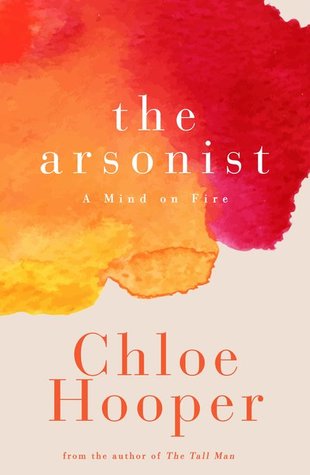
  • Chloe Hooper’s The arsonist (my review): another excellent sociopolitical true-crime exploration by Hooper, this time of an arsonist behind Victoira’s catastrophic Black Saturday fires in 2009.
  • Rick Morton’s One hundred years of dirt (my review): I have since taken more interest in his journalistic writings in The Saturday Paper.
  • Helen Garner’s Yellow notebooks: Diaries, Volume 1, 1978-1987 (my review): the first volume of Garner’s edited diaries that will be published over the coming years. I loved the insights it provides into her writing practice, her way of seeing the world, and her thoughts about all manner of subjects (including herself!)

Book pairing

Book cover

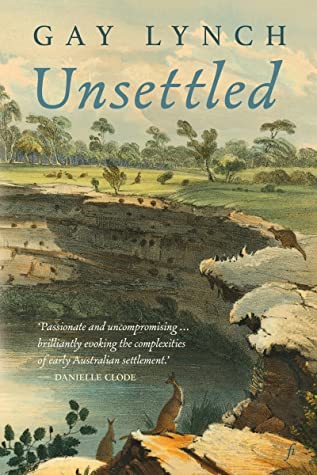
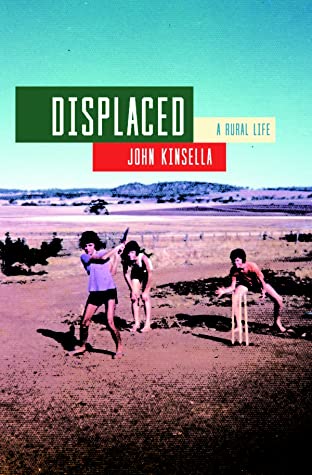
This one was easy because I paired them in my review of the novel I’m pairing here. I paired Gay Lynch’s historical novel, Unsettled (my review), with poet John Kinsella’s memoir Displaced (my review).

This pairing is both superficial and complex. It’s superficial because both have single-word titles which encompass multiple meanings that are both literal and metaphorical. However, it is complex because these are very different books – in form and subject matter. But, fundamentally, both deal with colonialism, with the settlement of Australia by Britain, and with the ramifications of that for both the colonisers and the colonised.

Be/Ask/Become the expert

Regular readers here will know something of my year and will not be surprised that ageing is the topic of most interest to me this year. It’s one that I’ve been interested in for a while but that has become a matter of rather more immediate relevance this year, with the death of my lovely nonagenarian mother and the move of my centenarian father into aged care. So, for this section I feel I’m a bit of an expert, but would like to become more of an expert too!

Book cover

Consequently, I was one of those who supported adding Griffith Review’s issue on ageing, Getting on (issue no. 68) (my review) to my reading group’s schedule this year. The book, as I’ve come to expect from Griffith Reviews, did not disappoint with its excellent collection of thoughtful and informative reportage, alongside memoirs and fictional responses to the subject.

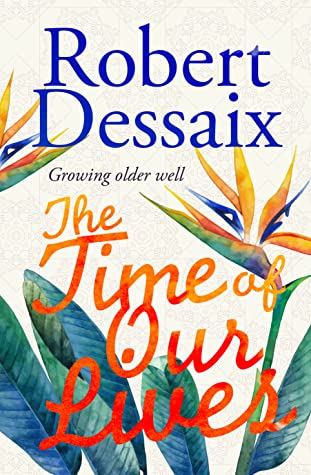
I do of course want to increase my knowledge of this subject, which is also becoming closer to me personally! Consequently, I would like to read Robert Dessaix’s latest book, The time of our lives, about which I posted recently after zoom-attending a Yarra Valley Writers Festival event on this book.

I would love to hear of any other nonfiction books you’ve read on the subject that you would recommend.

New to my TBR

I don’t read a lot of biographies, though every year I read a few, including, this year, Desley Deacon’s thoroughly researched and beautifully produced book on Judith Anderson (my review). My main biographical interest, however, are literary biographies, and a few have been published this year that interest me. They have been posted on by bloggers but I didn’t notice them in Nonfiction November posts:

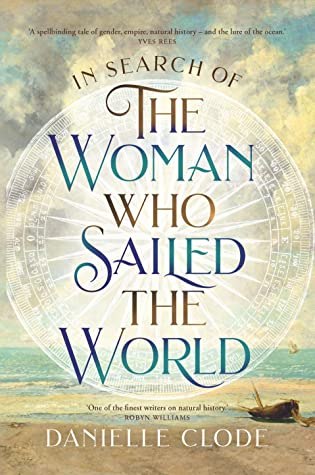
And, Lisa (ANZLitLovers), in her My Year in Nonfiction post, mentioned a couple of books that interest me: Danielle Clode’s The woman who sailed the world, and Debra Adelaide’s Innocent reader (which is already on my TBR).

And that, in the nick of time, is my contribution to Nonfiction November 2020.

I’d love to hear about your nonfiction interests and highlights this year.

Non-fiction November 2019, Weeks 4 to 5

Meme logoAs for my first Nonfiction November post this year, I am concatenating my last two posts, and posting them in the middle of the two weeks.

The meme is jointly hosted by Julz (Julz Reads) (Week 1), Sarah (Sarah’s Book Shelves) (Week 2), Katie (Doing Dewey) (Week 3), Leanne (ShelfAware) (Week 4) and Rennie (What’s Nonfiction) (Week 5).

Week 4: (Nov. 18 to 22) Leann (Shelf Aware) Nonfiction favourites:

What makes a book you’ve read one of your favorites. Is the topic pretty much all that matters? Are there particular ways a story can be told or particular writing styles that you love? Do you look for a light, humorous approach or do you prefer a more serious tone? 

I’ll start with what I don’t look for, which is tone. That is, I don’t look for any particular tone over another. The important thing is that the tone matches the subject. I am not put off by serious, sad or confronting tones, but I can also enjoy (who doesn’t) a humorous tone. I also don’t gravitate to memoir, though I do read a select few each year. This year, for example, I’ve read Ros Collins’ Rosa: Memories with licence (my review), Anita Heiss’s anthology Growing up Aboriginal in Australia (my review), Vicki Laveau-Harris’ The erratics (my review),  and Jocelyn Moorhouse’s Unconditional love (my review).

What I do look for are subject matter and author’s approach or style. My favourite subject matter would have to be literary biography (and to a slightly lesser degree, literary memoir) but none of this year’s books have been such. I like essays, of which I’ve read a few this year, some stand-alone, some in collections. And I particularly like reading authors who explore form, who don’t stick to the tried-and-true. This doesn’t mean I don’t read and enjoy the tried-and-true if it’s well-written and a topic I’m interested in. Two standout non-fiction books this year for me were:

  • Maria Tumarkin’s Axiomatic (my review), which she says is not a collection of essays, though I’m not sure what else to call it. This is a humane, provocative books that forces us to rethink those axioms, those cliches that we too often resort to in an effort to not confront uncomfortable truths and situations.
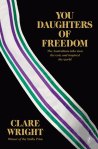
  • Clare Wright’s You daughters of freedom (my review) for its well-researched but highly readable history of the women’s suffrage movement in that late nineteenth to early twentieth centuries, and Australia’s significant role in it. Wright has done a wonderful job of bringing a hidden history to the fore.

Note: I have only included books I’ve read from November 2018 to October 2019. Any read this month will be in the running for 2020’s meme!

Week 5: (Nov. 25 to 29) Rennie (What’s Nonfiction) New to my TBR:

It’s been a month full of amazing nonfiction books! Which ones have made it onto your TBR? Be sure to link back to the original blogger who posted about that book!

I’m afraid that I haven’t really had time to take note of many books posted by other meme posters, though I have read several posts. So, I’m listing here a small selection of non-fiction books I am keen to read, not just ones that have appeared via this year’s meme:

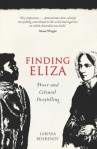
  • Larissa Behrendt’s Finding Eliza: Power and colonial storytelling, which is in fact old on my TBR but which I’m going to make a concerted effort to read by next Nonfiction November.
  • Peter Carey’s Wrong about Japan, because I love Japan and am interested in what Peter Carey has to say. Brona (Brona’s Books) posted about this in her Be the Expert post.
  • Annie Cossins’ The baby farmers, because I’m interested in colonial Australian women’s history. Shelleyrae (Book’d Out) included this in her Be the Expert post.
  • Paul Genoni and Tanya Dalziell’s Half the perfect world: Writers, dreamers and drifters on Hydra, 1955–1964, which won this year’s Prime Minister’s Literary Award for Nonfiction. It’s about the post-war international artist community on the Greek island of Hydra, which included our Aussie literary couple, Charmian Clift and George Johnston.
  • Chloe Hooper’s The arsonist, which has been shortlisted for several awards and has been on my TBR most of this year. It seems an absolute must given the early start to this year’s bushfire season here down under.

And there you have it. Another Nonfiction November completed in two posts. I apologise for not giving it the attention it deserves, but I am glad I was stimulated by the meme to spend a little time thinking about nonfiction this month.

Any nonfiction favourites you’d like to share? (Not that my TBR pile needs them, mind you, but other readers might like to hear of them!)

Non-fiction November 2019, Weeks 1 to 3

Meme logoI’m a relative latecomer to Non-fiction November, but I like to take part in some way because I do like and read non-fiction. However, I don’t have the time to fully take part, so as in previous years, I plan to do a couple of concatenated posts.

The meme is jointly hosted by Julz (Julz Reads) (Week 1), Sarah (Sarah’s Book Shelves) (Week 2), Katie (Doing Dewey) (Week 3), Leanne (ShelfAware) (Week 4) and Rennie (What’s Nonfiction) (Week 5).

Week 1: (Oct. 28 to Nov. 1) (Julz ReadsYour Year in Nonfiction:

There are several questions for this week, but I’m just going to answer a couple …

What was your favorite nonfiction read of the year?

My year starts at the end of last November. I’ve not read a lot of non-fiction, but have read a lot of really interesting non-fiction! I’m choosing three highlights:

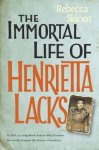
  • The immortal life of Henrietta Lacks by Rebecca Skloot (my review): because it’s a biography that also explores the history and ethics of science, as well as social justice and racism. It’s the whole package really.
  • Axiomatic, by Maria Tumarkin (my review): because, again, social justice is at its core, and it forces us to rethink those maxims that we trot out, often without thinking about them too deeply.
  • You daughters of freedom, by Clare Wright (my review): because it illuminates how progressive Australia was at the time of our Federation, and the significant role played by women, nationally and internationally, in that progressive thought and action.

Do you have a particular topic you’ve been attracted to more this year?

I wouldn’t say this is a topic I’ve been particularly attracted to this year, but I have had a long, ongoing interest in the stories and rights of Indigenous Australians, and try to keep my reading up in this area. This year, in terms of non-fiction regarding Indigenous Australians, I read Anita Heiss’s anthology Growing up Aboriginal in Australia (my review) and Stan Grant’s On identity (my review). I also read Neil H Atkinson’s The last wild west (my review), in which he chronicles his enlightenment of the injustices under which Indigenous Australians live.

Week 2: (Nov. 4 to 8) (Sarah’s Bookshelves) Book Pairing:

“This week, pair up a nonfiction book with a fiction title. It can be a “If you loved this book, read this!” or just two titles that you think would go well together. Maybe it’s a historical novel and you’d like to get the real history by reading a nonfiction version of the story.”

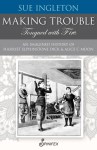
Clare Wright, You daughters of freedomI love this week of the Challenge, because for as long as I can remember I’ve enjoyed seeing connections between my reading. However, because I’m doing three weeks in one, I’m going to do just one pairing, and it pairs two books I’ve read this year, Clare Wright’s You daughters of freedom (my review) which chronicles the women’s suffrage movement in Australia with Sue Ingleton’s Making trouble: Tongue with fire (my review) which tells the story of two women’s rights advocates, Harriet Elphinstone Dick and Alice C Moon.

Book coverBoth these books focus on the late nineteenth and early twentieth century, though Ingleton’s ends right at the beginning of the twentieth century. Ingleton’s Dick and Moon weren’t actively involved in the suffrage movement, but they were passionate advocates of the rights of women and of women’s ability to live independent lives, and they, particularly Moon, met and associated with early Sydney leaders of the suffrage movement, like Rose Scott and Louisa Lawson, who feature in Wright’s book.
Week 3: (Nov. 11 to 15) (Doing Dewey) Be The Expert/Ask the Expert/Become the Expert:

Either share 3 or more books on a single topic that you have read and can recommend (be the expert) … [or] put the call out for good nonfiction on a specific topic that you have been dying to read (ask the expert) or … create your own list of books on a topic that you’d like to read (become the expert).

Hmm, except that I wouldn’t and couldn’t call myself an expert, I could choose Indigenous Australian rights and lives, and repeat the three books I listed under Week 1’s particular topic question. I will stay with this idea, and share some more books I’d like to read, but with the proviso that I, as a non-indigenous person, could never actually become the expert. Some non-fiction indigenous works I’d like to read include:

  • Larissa Behrendt’s Finding Eliza: Power and colonial storytelling (Lisa’s ANZLitLovers review): this book which explores/exposes early writing about Indigenous Australians has been on my TBR for a few years now. I hope to read it for Lisa’s 2020 Indigenous Literature Week.
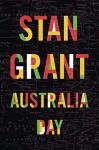
  • Stan Grant’s Australia Day (my post on a conversation with Stan Grant): having heard the conversation, I’d now like to read the book!
  • Alexis Wright’s Tracker (Bill’s The Australian Legend review) which won the Stella Prize in 2018, and which appeals for its story of a strong but controversial Indigenous Australian activist and for its “take” on biography/memoir.

(I am early with Week 3, but I figure that balances the fact that I’m very late with Week 1. I hope I’ll be forgiven.)

Non-fiction November 2018, Weeks 4 and 5

Non-fiction November 2018Well, bizarrely, I did the first three weeks from 2016 for my first Non-fiction November of 2018 post! I won’t revisit those – they’re similar topics to this year’s anyhow – but I’m back on track for this post. Non-fiction November, if you haven’t guessed, involves celebrating non-fiction for the month, with each week focusing on a specific issue, question or topic. This year’s meme is being hosted by Katie (Doing Dewey), Kim (Sophisticated Dorkiness), Rennie (What’s Nonfiction), Julz (JulzReads), and Sarah (Sarah’s Bookshelves). 

As with my first post which covered weeks 1 to 3, I’m combining weeks 4 and 5 into one post and am publishing it during the weekend between the two weeks.

Week 4: (Nov. 19 to 23) – Reads Like Fiction (Rennie @ What’s Nonfiction)

This topic essentially asks whether we like a form of non-fiction called “narrative” or “creative non-fiction”, which Wikipedia describes as “writing that uses literary styles and techniques to create factually accurate narratives.”

Well, in a word, yes – I do – very much. If that makes me sound soft, then so be it, but I’d argue that non-fiction writer using literary styles and techniques to engage readers doesn’t automatically weaken the seriousness or worthiness of their content. Commenting on a previous post of mine, historian Yvonne Perkins quoted historian Penny Russell who said that “Writing history… is a creative art. It requires empathy, intuition, a keen sense of drama and pathos, a distinct narrative flair.”

Helen Garner, This house of grief book cover

So, who (or what) are my favourites? One of the internationally recognised exponents of this form is the Australian writer, Helen Garner, whom I started reading long before blogging. Her books Joe Cinque’s consolation and This house of grief are excellent examples, and she influenced, I believe, younger Australian writers, like Chloe Hooper (The tall man) and Anna Krien (Into the woods and Night games). In these books the narrative drive comes from the writer’s involvement in the “story”, in their taking us along in their thinking and investigation. And to be not entirely ethnocentric, I’ll name one excellent non-Australian author I’ve read, albeit some years ago – Erik Larson and his book Isaac’s storm.

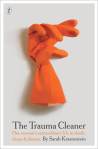
Michelle Scott Tucker, Elizabeth MacarthurTurning to this year, most of my non-fiction reading has been biography, which lends itself to this “creative” approach though not all biographers do adopt it. Two that I’ve read this year did, however, Sarah Krasnostein’s The trauma cleaner and Michelle Scott Tucker’s Elizabeth Macarthur: A life at the edge of the world. Krasnostein achieves it by being part of the journey, by using a creative structure interweaving her subject’s past with her present life, and by evocative language which uses the sort of imagery more common in fiction. Tucker, on the other hand, takes the more traditional straight chronological approach, but she encourages us to engage with Elizabeth Macarthur the woman, rather than present her to us as a fait accompli. There are gaps in Macarthur’s story. For example, we might know what happened, but not, perhaps, how or why, so Tucker uses her imagination – and makes it clear she’s doing to – to consider the situation. Here’s an example:

No. The most likely source is Elizabeth Macarthur, once more trying to mitigate her husband’s wilder misjudgements. But we have to imagine it: a hushed yet heated conversation with Edward to send him flying out after Oakes and then a vain attempt to placate and soothe John …

This is a thoroughly researched and documented biography, but written with a narrative, dare I say, novelist’s flair.

Week 5: (Nov. 26 to 30) – New to My TBR (Katie @ Doing Dewey)

Unfortunately, like last year, and although I’ve been reading several participants’ posts, I haven’t added anything to my TBR as a result of these November posts, because – and it’s a big because – I have so much already on that pile, including, most recently:

  • Peter Ackroyd’s Dominion (History of England V)
  • Elizabeth Kleinhenz’s Germaine: The life of Germaine Greer (about which I have also posted recently)
  • Clare Wright’s You daughters of freedom (currently reading, and about which I have already posted)

However, if I were looking for book ideas, I’d probably go back to some of “expert” posts. What a variety of topics – from Kate (booksaremyfavouriteandbest) on Empathy to Debbie (ExUrbanis) on Downsizing and Making Major Life Changes, from Buried In Print’s call for good non-fiction books on Indigenous Storytellers to Brona (Brona’s books) wanting more on the French Revolution (which reminds me that I must go recommend something!) To name just a few!

Meanwhile, I’d love your comments on any of the above, but particularly your thoughts on non-fiction that reads like fiction. Do you like it? And if so, do you have any you’d recommend?

Non-fiction November 2018, Weeks 1 to 3

I’m not sure how long Non-fiction November has been happening in the blogosphere, but I first became aware of it last year. It runs for a month, with a different set of questions posed for each week of the month. Last year I concatenated my responses into two posts, one for weeks 1 to 3, and the other for weeks 4 to 5. I’m going to do the same this year.

The meme is jointly hosted this year by Katie (Doing Dewey), Lory (Emerald City Book Review), Sarah (Sarah’s Book Shelves), Rachel (Hibernator’s Library) and Julz (Julz Reads).

Week 1: (Oct 31-Nov 4) (KatieYour Year in Nonfiction: 

There are several questions for this week, but, like last year, I’m just going to answer a couple …

What was your favorite nonfiction read of the year?

Now, last year, I read a disproportionate amount of non-fiction (in terms of my reading preferences, that is), and said that I would like to right the balance somewhat this year. I like non-fiction – a lot – but I don’t want it to overtake fiction as it nearly did last year. Well, this year I sure have righted it, with, so far, non-fiction representing around 15% of my reading to date – mostly biographies and autobiographies/memoirs.

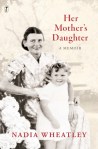
There are three standouts: Michelle Scott Tucker’s Elizabeth Macarthur: A life at the edge of the world (my review), Nadia Wheatley’s Her mother’s daughter (my review), and Sarah Krasnostein’s The trauma cleaner (my review). If I were forced to choose just one, I would have to go for The trauma cleaner for the sheer chutzpah of its subject against terrible odds and for the clever structure Krasnostein uses to tell the story.

What is one topic or type of nonfiction you haven’t read enough of yet? 

The same as last year – literary biographies – closely followed by Australian history.

Week 2: (Nov 7 – 11) – (Rachel) Choosing Nonfiction

Again, there are several questions and I’ll share them all: What are you looking for when you pick up a nonfiction book? Do you have a particular topic you’re attracted to? Do you have a particular writing style that works best? When you look at a nonfiction book, does the title or cover influence you? If so, share a title or cover which you find striking.

Book cover, The forgotten rebels of EurekaThese are complex questions that could take a whole post, but I’m going to keep it succinct, with the following answer encompassing the first three questions above! The two main things I look for in a non-fiction book are subject matter and engaging style. For example, I like biographies (particularly of writers and achieving women) and Australian history, but I don’t like dry factual this-happened-and-then-that-happened writing. I particularly like something called creative non-fiction. However, while I want to be engaged, I also want to feel that the writing is authoritative so I like to see the author’s sources. Clare Wright’s histories, such as The forgotten rebels of Eureka (my review) and You daughters of freedom, are excellent examples. Wright writes with the narrative instincts of a novelist and yet her claims and statements are thoroughly cited.

Covers are never hugely important to me in selecting books. Of course, a good cover can catch my eye, but I will never buy a book by its cover. With fiction, it’s the author or a recommendation from a person I respect, that will decide me once I’ve seen the book. With non-fiction, the cover is even less important to me, which is just as well, because in general I’ve found non-fiction covers to be less interesting. Non-fiction covers seem more literal, more determined to capture the “facts” of the book – an image of the subject of the biography for example or of a war scene for a war history – whereas fiction covers can get a little more creative and look to capture an emotional response rather than depict content.

PS I also like Helen Garner’s non-fiction. She could write about grass growing and I’d be there.

Week 3: (Nov 14 – 18) – (Sarah) Book Pairing

I’m a bit ahead of the game here, but as I’ll be away from November 14 to 16, I’m going to sneak in my response now. The challenge is to pair up a nonfiction book with a fiction one – via whatever sort of connection seems fit. I loved this challenge last year, and found it fun again this year.

My pair is:

Yes, it is Clare Wright’s latest history, You daughters of freedom, which I’m still reading, and EM Forster’s Howard’s End which I reviewed just a week or so ago. You daughters of freedom is about the achievement of women’s suffrage in Australia, from the late 19th to early 20th century, and the role Australian suffragists played in worldwide suffrage movements, particularly in England.

Howards End was published in 1910, and its two main female characters, Margaret and Helen Schlegel, are well aware of and support women’s suffrage, though, as you’d expect from their personalities, Margaret is the one who is clearer about its meaning and impact. The novel opens with Helen writing from Howards End where Mr Wilcox easily demolishes her arguments for suffrage and equality:

He says the most horrid things about women’s suffrage so nicely, and when I said I believed in equality he just folded his arms and gave me such a setting down as I’ve never had. … I never felt so ashamed of myself in my life. I couldn’t point to a time when men had been equal, or even to a time when the wish to be equal and made them happier in other ways. I couldn’t say a word. I had just picked up the notion that equality is good from some book – probably from poetry, or you.

Later, when Margaret holds a luncheon party in Mrs Wilcox’s honour, suffrage and women’s rights come up. Margaret sees the issue as wider than just “the vote”:

“Aren’t we differing on something much wider, Mrs. Wilcox? Whether women are to remain what they have been since the dawn of history; or whether, since men have moved forward so far, they too may move forward a little now. I say they may…”

Howards End provides a fascinating study of England during this time of political and social change – and gender is one of the issues which recurs throughout.

Non-fiction November 2017, Weeks 4 and 5

Nonfiction November 2017 bannerIn my last My Literary Week post, I took part (sort of) in the Non-Fiction November meme, giving my responses for the first three weeks. Because the last two weeks ask some questions, I’d like to answer, I’ve decided to combine them is a second post. It’s probably cheating, but …

Week 4, Nov. 20 to 24: Nonfiction Favorites

For this week the question is to discuss our favourites and what makes them so. Is it to do with the topic? Or the style, or tone? Or what?

Helen Garner, This house of grief book cover

Courtesy: Text Publishing

I can name some non-fiction books that I remember years after I finished them, but can I find some common threads in them? Well, perhaps, and it’s not the topic. For example, a non-fiction work that stands out for me is one I read before blogging, so that’s more than 10 years ago. It’s Erik Larson’s Isaac’s storm about the lead up to and aftermath of the damaging 1900 hurricane in Galveston. It’s told through the eyes of meteorologist Isaac Cline, and is in that style loosely called creative non-fiction, which means it uses many of the techniques of fiction to tell its story. I discovered long ago that creative or narrative non-fiction is the non-fiction style that most appeals to me. If that makes me shallow, then so be it!

Other books using this style that I’ve read in the last decade include Chloe Hooper’s Tall man, Ann Krien’s Into the woods (my review), Richard Lloyd Parry’s People who eat darkness (my review), and Helen Garner’s First stone, Joe Cinque’s consolation and The house of grief (my review). The topics vary in these books – there’s a natural disaster, an environmental investigation, a sexual harassment case, and four very different true crime stories (including an Aboriginal death in custody, a serial killer and two focusing largely on court cases) – but they all use a narrative approach.

Book cover, The forgotten rebels of Eureka

However, there are two topics that are likely to attract me, regardless of style – Australian history and literary biographies/memoirs. Of the former, books like Inga Clendinnen’s Dancing with strangers and Clare Wright’s The forgotten rebels of Eureka (my review) appeal, partly because they explore history from different angles, from angles that question existing paradigms (if I dare use that word), and partly because both historians share the process of their research with the reader as they write. I like this direct engagement with me. Not only do I find it more readable, but importantly this more personal approach reminds me that this is one historian’s view of the past – a well-supported valid view (hopefully, and in these two cases, absolutely) but their view nonetheless.

My favourite recent literary biography has to be Karen Lamb’s Thea Astley: Inventing her own weather (my review) because I love Thea Astley and because Lamb’s book, though clearly positive about Astley, provides a “real” picture of an intelligent, passionate and sometimes prickly woman, of the woman, in other words, that I imagined Astley to be.

Week 5, Nov. 27 to Dec. 1: New to My TBR

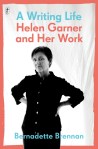
Bernadette Brennan, A writing life Helen Garner and her workI think here we are supposed to mention books that we’ve read in other posts on this meme – and link back to the blog which inspired us. However, I’m afraid I’ve been a bit remiss in keeping up with all the posts, and with noting the books that have appealed when I have read the posts, so I’m going to start with a book that I’ve recently added to my TBR because it’s a must for me to read. It’s a literary biography, Bernadette Brennan’s A writing life: Helen Garner and her work. I will read this in the next two months!

And, just to show I did read some Non-fiction November posts, I was attracted to a book posted by Buried in PrintTanya Talaga’s Seven Fallen Feathers: Racism, Death and Hard Truths in a Northern CityBuried described it as “a gripping story, bound to appeal to readers who appreciate elements of true crime, history, memoir, social justice and narrative-driven journalism.” If you’ve read my Week 4 above, you’ll know exactly why this book appealed to me! It’s about the deaths of students who were attending an Indigenous-run high school in Thunder Bay, Ontario (a fairly remote place which daughter Gums visited three or four years ago). Buried explains that “to understand the importance of this educational opportunity (even with the challenges of students’ adjustments to city life and the embedded racism in the community), it’s useful to have some understanding of the residential school system, which was wielded like a weapon against Indigenous communities from the later nineteenth-century until 1996.” With our own problematical treatment of indigenous people, and my ongoing interest in racism, this book sounds particularly interesting to me.

POSTSCRIPT: Oops, I clicked the Publish button before writing my conclusion! I wanted to say that I’ve read a lot of great non-fiction in the last few years, so it’s been hard to name just a few in this post and the previous one. Different Non-fiction November questions could very well have resulted in my naming different books.

My literary week (10), Non-fiction November and Lady Chatterley

I had hoped to finish my current book by this weekend, but it’s been a busy week with a two-day trip away, an exhibition launch, and a Friends’ of the NFSA event, on top of usual commitments. However, I do have some “literary” bits and pieces to share. I’ll start with the one that isn’t hinted at in the post title!

Starstruck: Australian Movie Portraits Exhibition

Stupidly, I didn’t take any pics of the two events I attended – a special members preview and the gala opening – for this exciting new exhibition at the National Portrait Gallery (NPG). Created collaboratively by the NPG and the National Film and Sound Archive (which provides most of the images), this exhibition contains 275 images from Australia’s film industry. I’m including it here – besides wanting to promote it – because the curators, Jennifer Coombes and Penny Grist, have organised the collection to convey a narrative, from set-up to resolution. This results in images from different eras and genres being placed side by side, forcing us to think about them from different perspectives. I’ll be back to spend more time. (Meanwhile, you might like to check out the interactive exhibition of the Cinesound movie company’s gorgeous Casting Books.)

Cover Story (or, Vinyl Covers with David Kilby)

Still with the NFSA, on Friday I went to an event organised by our Friends’ group at which record collector David Kilby presented a selection of record covers. David often collects records for their covers, rather than their contents, and at this presentation we could see why. But, how to present them? There are various possibilities, but the one David chose was to display examples from the “categories” he collects – and my, does he have some fascinating categories. Some relate to audio content – such as Religious songs, Instructional records, or Co-star with me – and some to the cover art. There are, for example, covers which use “stars” who have nothing to do with the content. Jayne Mansfield was a popular choice here! Wonder why! Then there are those which depict actions, such as smoking, or types of people, such as plumbers. You really had to be there!

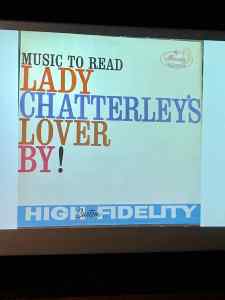
Music to read lady Chatterley's lover by, album coverBut, the group I’m sharing here is the “Music to [insert action] by”, and particularly, “Music to read by”. To represent this group, David displayed the cover for Music to read Lady Chatterley’s lover by. The music comes from Richard Shores and his Orchestra, and there are ten tracks: Love, Hate, Sorrow, Gay, Blues, Surprise, Frustration Nostalgia, Fear, Hysteria! The cover notes briefly refer to the novel’s controversial history – the censorship, and so on – and then continues:

Richard Shores [apostrophe?] initial venture into musical “no-man’s-land” may trip the same kind of alarm. Nature in the raw is seldom mild as can be seen when Shore utilizes his melodic pallet to characterize the spectrum of human emotions.

While music has always reflected the composer’s attempt to picture human emotions through the symmetry of naturals, sharps and flats, Shores flamboyantly exposes man’s innermost feelings relentlessly.

Gotta hear this one day!

Non-fiction November meme

Having seen some of my favourite bloggers – such as Lisa (ANZLitLovers) and Kate (booksaremyfavouriteandbest) – take part in the Non-fiction November meme sponsored by julzreads, among others, I considered joining in, but this week got the better of me. Consequently, I’m just going to respond briefly here:

Week 1, Oct 30-Nov 3: Your year in non-fiction

Two of the questions for this week were:

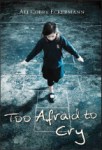
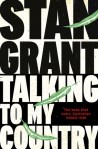
  • What was your favourite non-fiction read of the year? Without doing the count, I seem to have read more non-fiction this year than in recent years, so it’s tricky to answer this. In fact it’s so tricky that I’m going to give three: Kim Mahood’s Position doubtful (my review); Ali Cobby Eckermann’s Too afraid to cry (my review); and Stan Grant’s Talking to my country (my review). All three explore Australia, and what it means to be Australian, particularly in relation to indigenous people. (For more, see Week 3 below)
  • Bernadette Brennan, A writing life Helen Garner and her workWhat is one topic of nonfiction you haven’t read enough of yet? This would have to be literary biographies and memoirs. Two, in particular, have come out this year that I’ve not managed to read (yet), Bernadette Brennan’s biography of Helen Garner, A writing life: Helen Garner and her work, and Georgia Blain’s memoir, The museum of words. I did though retrieve (and read) from my TBR pile, Gabrielle Carey’s Moving among strangers (my review) so it hasn’t been completely hopeless.

Week 2, Nov 6-10: Book pairing

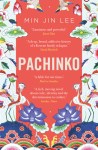
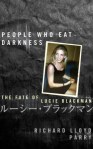
For Week 2 participants were asked to pair a non-fiction book with a fiction one, using your own criteria, but essentially meaning books that seem to go well together. Many bloggers have posted multiple pairings, but as I’m not devoting a whole post to this, I’m going with just one, the one that popped into my head the minute I realised the subject of my reading group’s August book, Min Jin Lee’s Pachinko (my review). It’s about Koreans in Japan, and their struggle to survive. My paired book is Richard Lloyd Parry’s People who eat darkness (my review). Parry’s analysis of the murder of a young English woman in Japan by a serial killer includes a discussion of the poor treatment of Koreans by the Japanese. It prepared me well for Min Jin Lee.


Week 3, Nov 13-17: Be the expert/Ask the export/Become the expert

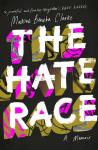
From this group – which officially starts tomorrow, so I’m jumping the gun somewhat – I’m choosing the “be an expert option”. This asks me to share the title of three books on a single topic that I’ve read and recommend (thus making me an expert!). Well, I don’t claim to be an expert on this topic – it would be insensitive of me to do so in fact – but I would (and have) recommended these three memoirs on the experience of racism in Australia. Two of the books are by indigenous Australians, Ali Cobby Eckermann’s Too afraid to cry and Stan Grant’s Talking to my country, and one by an Australian-born writer of West Indian background, Maxine Beneba Clarke’s The hate race (my review). These books paint a picture of Australia that is depressing and distressing. When I first became aware of racism in my teens in the late 1960s, I’d have been horrified to think that half a century later so little progress would have been made in how we treat each other. What is wrong with us?


And here I will end. It would be cheeky answering Weeks 4 and 5 this far in advance.

However, I’d love to know your answers to these non-fiction questions.

Christina Stead, Ocean of story, Pt 1: The early years – Australia (Review)

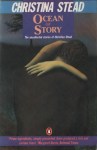
Christina Stead, Ocean of storyContribution no. 2 for Lisa’s Christina Stead Week from Ocean of story: the uncollected stories of Christina Stead.

My first post was on the titular story, “Ocean of story”, which is also used as the collection’s Introduction. After this Introduction, the stories have been organised into 7 sections by editor RG Geering. These sections are presented chronologically, Geering says, reflecting Stead’s timeline, not when they were written. The first is, therefore, logically titled “The Early Years – Australia”. It contains three stories – “The old school”, “The milk run” and “A little demon” – all of which have children as their central subject, which is, perhaps, interesting given Stead had none of her own.

Now, if you ever went to primary (or elementary) school, and that’s all of you I presume, you will enjoy “The old school”. If you were a girl, you’ll probably enjoy it even more. “The old school” was, Geering says, one of the few things Stead worked on in the last years of her life. It was published in Southerly in 1984. It’s like a little slice of life, and like the other two stories, starts with a fairly detailed setting of the scene before she gets to her main subject matter.

So, “The old school” starts with a description of the school, followed by a description of what happens at the school, or, more precisely of what the rumours say happens. But, we are told, in spite of this, “cause and effect” are clearer at school than at home, and “mostly concerned the boys”. Boys who are bad – who truant for example – will go to “the reformatory”. And if you go to the reformatory, your next stop will be prison. And who knows all this? Why “the informants” of course. And who are these “informants”, these “small sages”? Well, Stead writes, they are the “natural moralists, two or three to a class and as far as I knew, all little girls”. From here we are regaled with stories about these informants’ moral pronouncements by this “I”, this “I” who appears in two of the stories and who is an observer, rather than a participant, from within. In “The old school” then, the “I” is a student at the school.

The rest of the story explores the “moral questions” debated by these “informants”, whom Stead describes in more detail:

The informants, our moralists, had clean dresses, pink, blue or sprigged, patent leather shoes and white socks, and curls natural or rag. They did clean school work too, even when we got pen and ink. Goodness alone knows how, with their pink cheeks and shiny curls and neatly dressed brink little mothers, they got all this news about jails, reformatories, judges and sentences, lashings, canings, bread and water.

They are, of course, often little tyrants, deciding which child will be approved and which won’t. The rest of the story chronicles some of their pronouncements and their impacts on their peers. Whenever anything happened in the school “they knotted together, a town moot: they discussed, debated and delivered an opinion.” What the teachers said was to them only “hearsay”. Our “I” character doesn’t have an opinion. She “thought then that cruelty and injustice were natural and inevitable during all of a poor creature’s life”. (The use of “then” would be worth exploring.)

The main story concerns poor little Maidie Dickon who is, literally, “poor” and thus ostracised by our “natural moralists”. She didn’t have the right shoes, didn’t bring the right notes from her mother, and didn’t have her own pen and paper and so would be given some from the school supply. “It isn’t fair” cry the well-provided “informants” who also prove, mystifyingly to our “I”, to be excellent “newsgatherers”. They somehow know about Maidie’s roadworker father, who is (illegally, in those days) striking, and washerwoman mother.

You are getting the drift I’m sure of the story and will be realising that Stead’s focus is on the “natural” justice delivered by these “sages” or “moralists” to those less able to defend for themselves, while the “I”, Stead’s young self, tries to make sense of it all, of how the world works. The ending is gorgeously sharp. The story could take up a whole post – I loved its vivid picture and its passion – but I’ll move on.

“The milk run” was published in The New Yorker in 1972 (and later appeared in a Penguin anthology, The Penguin book of the road, published in 2008). It is set in the same area of southern Sydney as “The old school”, but it tells the story of a family and a little boy whose job it is to get the family’s milk from the grandfather’s dairy a mile away. Stead takes some time setting the physical scene, and describing the family and the boy, Matthew, who worships his father.

It is a beautifully detailed story of a particular place and time. Stead captures ordinary family life and tensions with such precision – a comment here, a brief conversation there, convey all we need to know about the various relationships. It conveys a child’s eye view of the world, the child’s incomprehension of adult behaviour. Things happen. Sometimes they make sense to Matthew, sometimes they don’t. Sometimes the father he worships supports him, sometimes he doesn’t. But, after a lucky find, Matthew gathers to himself a warming thought, something that offers him comfort when all else is uncertain.

And finally, “A little demon”, which was published, Geering says, in “an almost identical version” in the Harvard Advocate in 1973. It’s a satire, which again starts with setting a wider scene by describing a large and successful but rather insular family, the Masons. On the surface, they seem to be perfect, but asides and hints suggest that the surface is just that. There’s something a little claustrophobic and inward-looking about them with their “same notions” and suspicion of travel.

Into this family is born Stevie, the titular “little demon”. We hear a lot about him – the horror of his behaviour and what a trial he is to his mother, though, strangely, not to his teacher who finds him “very good” – but we don’t meet him until the last couple of pages. We are told what an “adorable” person his mother is, and how much she loves her two dogs, Duff and Rags. And here come some hints about who this adorable Mariana really is because, you see, she loved Duff and didn’t want her to ever have puppies. Why would you, after all, “spoil” that beautiful dog by letting her have puppies? Hmm, does this tell us something about Mariana’s attitude to motherhood? Ironically though, she falls in love with Rags, one of Duff’s unwanted puppies, the irony doubled because she doesn’t love her own offspring.

It all starts to go bad for Stevie when the cat that he found upset the dogs. He took the cat’s part, “just for a day or two; and then he saw which way the wind was blowing and lost interest”. And here the rot sets in. Stevie is depicted as having no feelings for animals, and as doing everything he can “to be disagreeable, to annoy, to tease”. How old is this Stevie that everyone – except perhaps his grandmother who defends him – hates? About 5!

It’s a satirical story in which Stead skewers shallowness and self-centredness, not to mention lack of maternal feeling. The language here is more heightened, using exaggeration and exclamation, than the more natural language of the previous two stories. It also has a somewhat stronger plot: we are set up to want to meet this Stevie, and there is a delicious little twist or sting in the tail, which the other two stories don’t have.

I’ve enjoyed reading these stories for Christina Stead Week. I’ll try to read more down the track, but in the meantime they have given me added insight into Stead, into the variety in her writing and into some of her broader themes. Thanks Lisa for the little push to read at least a bit of Ocean of story!
AWW Logo 2016

Christina Stead
“The old school”, “The milk run” and “A little demon”
in Ocean of story: The uncollected stories of Christina Stead
Ringwood: Penguin Books, 1986
552pp.
ISBN: 9780140100211