Six degrees of separation, FROM Turn of the screw TO …

One month into spring here down under, and it is so lovely, particularly with daylight savings starting tomorrow. That will hopefully mean not being woken at 5am by sun and birdsong, much as I enjoy the latter! Now though, onto today’s business, this month’s Six Degrees of Separation meme.  As always, if you don’t know this meme and how it works, please check out meme host Kate’s blog – booksaremyfavouriteandbest.
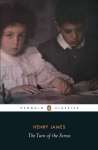
Once again, the starting book is one I haven’t read, though I have read and enjoyed several books by Henry James. The book is his Turn of the screw. Published in 1898, it’s a classic Gothic mystery featuring a young governess, in a country house.
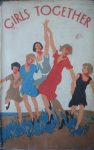
Louise Mack, Girls together

I was tempted to go with governesses for my first link, but decided to do something different and go with year of publication. Louise Mack’s Girls together (my review) is a little known Australian coming-of-age novel that was also published in 1898. Commencing as a school story, it’s about protagonist Lennie’s transition from self-focused girlhood to adulthood and its associated more mature world-view. Her life and choices are paralleled to those of her friend, Mabel.
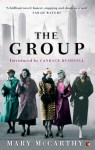
Book cover

Another book which starts with young girls who meet at school – at Vassar College in fact – is Mary McCarthy’s The group (my review). In this case, however, we are talking eight girls, and we follow them through many years of their post-school life.

Book cover

My next link will be obvious to Australians as it is a book which talks about a group of women friends at the other end of their lives – that is, women in their 70s. The book is Charlotte Wood’s The weekend (my review).
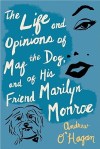
Book cover

While the main focus of Wood’s book is the women, there is another important character, Finn, the aging dog. He doesn’t have a voice in the novel, but a dog who does is Maf the dog in Scottish writer Andrew O’Hagan’s The life and opinions of Man the dog and of his friend Marilyn Monroe (my review). Phew that’s a title, but it was, as I recollect, an enjoyable book!

Book cover

And here is where I get to the point I really wanted to get to because today, Saturday 3 October, is National Bookshop Day in Australia (or, it seems, now called Love Your Bookshop Day). You may be wondering how I am going to link to this? Well, Marilyn Monroe, as you probably know, was a big reader, so I’m linking to author Ann Patchett’s essay, The bookshop strikes back (my review). I reckon Marilyn Monroe would have loved this little book had she still been with us.
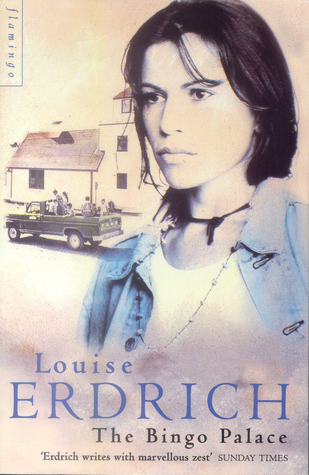
Book cover

To strengthen this post’s tribute to bookshops, I’m sticking with them for my final link. Ann Patchett, as you also know I’m sure, is an independent bookshop owner as well as an award-winning novelist. I included her in my post on author-run bookshops last National Bookshop Day. Another bookshop-owning author I listed in that post was Louise Erdrich, so it’s her The bingo palace (my review) that I’m using for my final link.

Although I didn’t intend it, I’ve stuck very much to anglo-speaking countries this month – Australia, Great Britain and the USA. Moreover, all my authors but one, this month, were women. Not wonderfully diverse then! However, on the plus side, I did manage to work in a tribute to reading and bookshops, because initially I’d headed off in a different direction.

And just so you know, my favourite fabulous bookshops here are:

Now, the usual: Have you read Turn of the screw?And, regardless, what would you link to? And, this month, a bonus question: Would you, wherever you are, like to give a little shout-out to your favourite independent bookshop?
Bill curates: Favourite writers, no. 2

Bill curates is an occasional series where I delve into Sue’s vast archive, stretching back to May 2009, and choose a post for us to revisit.

We discovered in August that Thea Astley is Sue’s #3 favourite writer. We’ve always known that Jane Austen (here) is #1. So I thought we should check out # 2. And, if you’re wondering, I’ve looked and there is no #4. Sue of course – she’s a librarian – is astonishingly well organised, so to go to her Jolley reviews, click on Authors above. There you will find authors listed alphabetically, and beneath each author the books Sue has reviewed.

My original post titled: “Favourite writers 2: Elizabeth Jolley”

Not, unfortunately, being a time-traveller, I haven’t managed to see or hear Jane Austen in person. I am, however, far more fortunate in this regard when it comes to the subject of my next favourite writers post – Elizabeth Jolley. I did get to see and hear her at a literary lunch at the height of her career. My reaction was the same as many others – her “little old lady” appearance and voice belied her sharp wit and earthy worldliness.

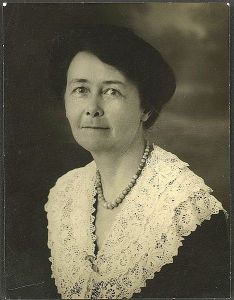
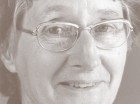
Elizabeth Jolley (Photo: Courtesy Fremantle Arts Centre Press)
Elizabeth Jolley (Photo: Courtesy Fremantle Press)

It’s not surprising that she is one of my favourite writers: I call her my antipodean Jane Austen. She is witty and ironic, she is wicked (though blacker than Austen), and she tends to write about a small number of people in a confined, often domestic, situation. But here the similarity ends. While the “character” of Austen’s characters play a role in what happens to them – there’s a reason why Elizabeth not someone like Lydia “gets” Mr Darcy – Austen’s main interest is in the social and economic constraints on her characters. Jolley on the other hand focuses more on the interior. She explores loneliness and alienation. She looks at the disturbing or unsettling sides of relationships, the ‘feelings’ people have but often don’t admit to such as those for a person of the same sex or for a person for whom they should not have feelings for (due, for example, to age differences, power differences, or infidelity). She shows how difficult it is to maintain a long-term intimate or deep relationship that is equal on all levels (physical, intellectual, social, material, etc).

In the Australian and New Zealand Journal of Psychiatry (Vol. 25, No. 1, 1991), Jolley writes:

In my own writing I have been interested in the exploration of survival (perhaps emotional survival), resilience and responsibility. (I only know this now after several books are written).

How very Jolleyesque that aside is – humble but a bit sly at the same time. She continues a little later to say:

…for the most part my characters are perplexed, anxious, often frightened with perhaps one redeeming aspect in their personalities – that of optimism which might for a time, until it gets out of hand, keep them from the specialist’s doorstep.

Photo: Courtesy Fremantle Press

The first Jolley I read was the short story, “Night runner”, in an anthology titled Room to move. It introduced me to her concept of alienation and rather black notion of survival, her particular brand of irony, her portrayal of characters who more often than not suffer from some level of self-delusion, and her dark humour. I went on to read Miss Peabody’s inheritance, The newspaper of Claremont Street, The well, The sugar mother, and An innocent gentleman, among others, and have never really been disappointed. I enjoy her use of repetition and self-referencing, the motifs and the characters, even, that reappear in different works. She gets me in the pit of my stomach with her vulnerable but often unkind or downright cruel characters, but makes me laugh at the same time with her depictions of their attempts at survival. You just have to see Ruth Cracknell playing The woman in a lampshade to know what I mean!

I have not yet read all of Jolley’s works. Just as for a long time I kept back one Jane Austen novel because once I’d read it I’d have read them all, I am now doing the same with Jolley. Her books are so delicious they need to be savoured. I’m sure this is not the last post I’ll be writing about her.

Postscript: Since this post I have read more Jolley, but I still have some up my sleeve!

____________________

Bill is right. There is no #4, though I have frequently thought about who would be my number 4. I’ve also wondered about how many favourite writers it would be reasonable to have? I love so many writers, still living and those who are no longer with us … but I think that if I do name a 4th I will stick to ones who have died. And, I think I know who that would be.

You now know my top three writers, as I considered them 10 years ago? Would you care to name your top 3?

Australian Women Writers 2020 Challenge completed

I’m very late with my traditional completion post for the Australian Women Writer’s Challenge – it’s been a weird and difficult year all round. As always, I will continue to contribute until the year’s end, and do a final round-up then, but I do like to get the completion admin done!

I signed up, of course, for the top-level, Franklin, which involves reading 10 books and reviewing at least 6, and of course I’ve exceeded this. In fact, by June 30, my usual marker for my completion post, I’d contributed 13 reviews to the challenge,

Here’s my list in alphabetical order (by author), with the links on the titles being to my reviews:

This slideshow requires JavaScript.

Challenge logo

I don’t set myself specific reading goals, but I do keep in mind a wish to read more indigenous and diverse writers, more classics, and more from my TBR pile. As I wrote last year, these continue to be my non-goal goals. So, how did I go? Well, I read just one Indigenous Australian writer, an Iranian Australian writer, two classics (thanks to Bill’s AWW Gen 3 week), and four (Hooper, Park, Thirkell and Azar) from my TBR*. This is not too bad out of 13 books (I think!), particularly given this weird year. However, I’d like to do more. Let’s see how I go by the end of the year.

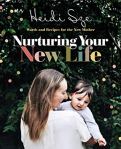
Book coverNot included in the above list is Heidi Sze’s book Nurturing your new life, which I have not specifically reviewed. However, I have read a significant proportion of it, and did write up the author event I attended.
Watch out for my 2020 AWW Challenge wrap-up post for the year’s full story!

* All books I read are, by definition, on my TBR, but in terms of my book management, I define my TBR pile as those I’ve had for more than 12 months!

Six degrees of separation, FROM Rodham TO …

Woo hoo, it’s spring here down under, and in my street we have yellow wattles and daffodils blooming, plus pink prunus trees and white Manchurian pears. Bright spots in difficult times, and it does the heart good. However, I’m not here to talk about that but for this months Six Degrees of Separation meme.  As always, if you don’t know this meme and how it works, please check out meme host Kate’s blog – booksaremyfavouriteandbest.

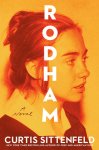
Book coverOnce again, the starting book is one I haven’t read, though unlike last month’s, I have heard of the author. The book is American author Curtis Sittenfeld’s Rodham. According to GoodReads it “imagines a deeply compelling what-might-have-been: What if Hillary Rodham hadn’t married Bill Clinton?” However, this is not where I’m going to go.
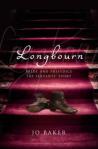
Jo Baker, LongbournI said that I have heard of Curtis Sittenfeld, and the reason is because of her involvement in The Austen Project, her contribution being Eligible, a retelling of Jane Austen’s Pride and prejudice. My first link is from this to another retelling of Pride and prejudice, Jo Baker’s Longbourn (my review).
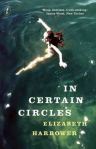
Elizabeth Harrower, In certain circlesLongbourn was, I discovered, one of many books presented in England’s BBC4’s Books at Bedtime program. I was surprised to discover that another book broadcast on this program was our own (I mean Australia’s own) Elizabeth Harrower’s In certain circles (my review). How great is that!
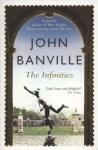
And now, just to mix it up a bit, I’m going to link on circles and the fact that the circle is a symbol of infinity. This brought me to John Banville’s The infinities (my review). 
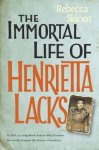
Rebecca Skloot, The immortal life of Henrietta LacksTwo main characters in The infinities can be described as infinite, meaning, in part, that they are immortal – the gods Hermes and Zeus. Gods aren’t the only things that are immortal. Cells can be too, as I learnt in Rebecca Skloot’s fascinating, heartrending, The immortal life of Henrietta Lacks (my review).
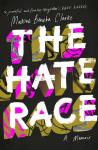
Maxine Beneba Clarke, The hate raceThe story of African-American Henrietta Lacks’ cells should be a good one. After all, her cells have gone on to produce some significant medical advances. However, the way the cells were taken and used is a story of both ingrained medical arrogance and ongoing racism whereby the human behind these cells and her family were continually ignored and discounted. A closer-to-home book about the experience of racism is Maxine Beneba Clarke’s The hate race (my review).
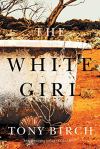
Book coverMaxine Beneba Clarke’s heritage is mixed, her mother being Guyanese and her father Jamaican (Caribbean). Indigenous Australian author Tony Birch, like many of us, has mixed heritage. He claims a Barbadian (Caribbean) convict amongst his ancestry! I can’t resist making that my last link, though I could also link on the fact that Birch’s writing deals with racism. His most recent novel, The white girl (my review), deals very specifically with racism in contemporary rural and urban Australia.
I’ve been very narrow in my travels this month, staying in English-speaking countries, and keeping (mostly) to the last 100 years. I’ve returned to my usual gender breakdown – two men and four women. I started with what has been described as a “what if” imaginary novel, but I ended, unfortunately, with a novel that is far too real.

Now the usual: Have you read Rodham? And, regardless, what would you link to? 

Bill curates: Thea Astley, Drylands

Bill curates is an occasional series where I delve into Sue’s vast archive, stretching back to May 2009, and choose a post for us to revisit.

I selected Drylands because a) this is ANZLL Thea Astley Week; and b) I have just reviewed it myself. Sue apologizes that she relied on “not well-formed” notes, but she came up, as usual, with a well formed and insightful review which I probably should have read before I wrote my own.

_______________________

My original post titled: “Thea Astley, Drylands (Review, of sorts)”

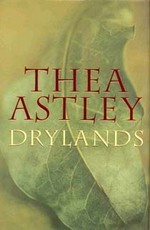
Thea Astley, DrylandsI read Thea Astley’s Drylands many, many years ago now, so what I’m going to share here – inspired by my post earlier this year on confronting Australian novels – are the notes I made when I read it. They are not particularly well-formed, because I wasn’t planning a review at the time, though I must admit that I did spend some time skimming it as I tried to massage my notes into some shape. Too hard not to! It’s her last novel, and it earned Astley her fourth Miles Franklin Award (shared with Kim Scott’s Benang).Drylands is subtitled “a book for the world’s last reader”. It’s one of those tricky books that looks like a collection of short stories but is, albeit perhaps loosely defined, a novel. Its structure comprises sections titled “Meanwhile” by the so-called writer of the stories, Janet, alternated with stories about inhabitants of, or visitors to, a dying town called Drylands:

a God-forgotten tree-stump of a town halfway to nowhere whose population (two hundred and seventy-four) was tucked for leisure either in the bar of the Legless Lizard or in front of television screens, videos, Internet adult movies or PlayStation games for the kiddies.

[…]

No one was reading anymore.
It’s a town “being outmanoeuvred by the weather. As simple as that. Drought. Dying stock.”

The main subject of these stories are three men (Franzi Massig, farmer Jim Randler and the indigenous Benny Shoforth) and three women (Evie the writing teacher, Lannie Cunneen, and Joss the publican’s wife). This is all quite neat, except that we are thrown somewhat by the fact that the “Janet” character may be a conceit dreamed up by Evie, who says she will “write a story … about a woman in an upstairs room above a main street in a country town, writing a story about a woman writing a story”. Since Janet is an inhabitant of Drylands while Evie is not, it makes sense that this might be Evie’s work, not Janet’s, making Evie both character and observer*. Another spanner in the narrative-voice-works is that two of the stories – those of Franzi Massig and Joss – are told first person. I might be reading too much into it, but I wonder if Astley is using this uncertainty to mirror the disorder she sees in society, if that makes sense.

Drylands explores many of the issues important to Astley. The two overriding ones are words and their importance/power, and the impoverishment of the spirit (often related to our inhumanity). Subsumed in the latter are some of Astley’s recurrent issues – gender and race, dispossession and power imbalances. She rails against the shallowness and small-mindedness that lead to poor treatment of “other” (indigenous people, women, less educated people, the ageing, etc), to “the powerlessness”, as Benny calls it, “of poverty and colour”. Here is a husband coming to drag his wife out of her writing class to get him his lunch:

He was hurling words at his shrinking wife like clods or bricks and she was not dodging but receiving them like a willing saint, enduring abuse like a terrible balm.

I wonder what Astley would have written about our treatment of asylum-seekers had she still been around, but unfortunately she died in 2004.

Thea Astley is, as you’ve probably gathered, an unsettling writer – and one with some very strong viewpoints. Besides being unimpressed by how women, indigenous people, and ‘oddballs’ (or outsiders) are treated, she’s also not too fussed about computers, television, and our sports-mad society. For these reasons I’m inclined to agree with Kerryn Goldsworthy that there’s a dystopian element to her vision. I didn’t pick it at first because I tend to see dystopian novels as being speculative or fable or allegorical, as being, in other words, about what “might be” rather than what “is”. The handmaid’s tale is a dystopian novel that is not specifically set in the future but neither is it set in a recognisable “real” world. Lord of the flies and Animal farm are dystopian views of the world that are not set in the future but, arguably, neither do they present a realistic community/society/place. Drylands, though, is recognisably our world, but a pretty grim version of it, which suggests dystopia. It’s probably worth noting here that Drylands was published in 1999, that is, at the end of the millennium.

Regardless of formal definition, though, Drylands, like dystopian novels, is pervaded by a sense of hopelessness. There are likable people – many – but life isn’t easy or happy for them. There are, however, some positive or redemptive hints, particularly for Clem and Joss. Janet, the linking character, on the other hand, can only glimmer the fact that there might be something out there:

There was something out there, but she doubted she would ever discover. The idiocy of her wasted years made her laugh even more.

There were no endings no endings no

The writing in Drylands, though sometimes colourful, is sparer, more restrained than we are used to from Astley – and just right for a bitter tale about lack of literacy, loss of reading skills, and the implications thereof. Janet’s mother tells her that “being unable to read is being crippled for life”. Janet, writing her story, worries whether she’s getting her narrative right, but decides it’s “better for readers to frolic with their own assumptions from the words spoken, the deeds done” – which is, perhaps, the ultimate irony if everyone has lost the ability to read! If you only ever read one Astley, you couldn’t go wrong with this one.

Thea Astley
Drylands
Ringwood: Viking, 1999
294pp
ISBN: 9780670884704

* There is a scene in “Stranger in town”, where Evie briefly meets the eyes of the woman (whom we know is Janet) living above the newsagency.

____________________

Bill is too modest in his introduction. He has a different perspective on this book which is well worth reading – as is the set of comments that his post engendered. Do check it out (at the link in the intro above).

Have you taken part in Lisa’s Thea Astley week? 

Ten Year Monday Musings Giveaway Winners

And so, as promised, I drew the two winners of my ten year Monday Musings giveaway this evening, August 17.

There were fewer entries than for last year’s blogiversary draw, but that just gives the entrants a higher chance of winning! There were 7 entries in the Australian draw and 4 in the non-Australian draw.

However, before I announce the winners, I thought I’d share some of the comments made regarding my questions about favourite Monday Musings and recommending future topics.

Regarding favourite Monday Musings, Meg said that she particularly enjoyed the posts introducing her to “another Australian author”. I like writing these author-based posts, so will try to inject a few more into the schedule over coming months. Bill (The Australian Legend) didn’t surprise when he said that he most liked the pre-WW2 posts, especially those inspired by Trove. I love writing those too, and do have one in the offing. I started it months ago, but hope to find time soon to finalise it.

Kate (booksaremyfavouriteandbest) didn’t name a favourite, but she was “amused” that my post on Older Men Protagonists was among those achieving the most hits. I know what she means.

Regarding ideas for future Monday Musings, a couple were put forward and – phew – both feel doable. First up was author Angela Savage who has been announced as the new CEO of Public Libraries Victoria. She said she’d love a post on libraries and librarians in Australian literature. Author Carmel Bird seconded that, and pointed me to some references to libraries in some of her novels. Thanks Carmel! The other idea came from a relative new commenter here, the originally named Sue. (Sorry Sue, as another Sue, I couldn’t resist that!) She wrote:

Australian Urban Novels – there’s so much emphasis on regional writing which is wonderful – since I live outside the cities – but I think urban based fiction could be interesting.  

I like this idea, partly because it’s been on my list of possible ideas for a long time. I have been pondering how to approach it, but Sue’s request has got my mind working and I think I have an idea. Watch this space …

Thank you Angela, Carmel and Sue for these ideas.

Meanwhile, on with the real business of this post. The winners are:

  • 7A (Australian-based address): Neil@Kallaroo
  • 3N (Non-Australian address): Cathy (746books)

Help Books Clker.com

(Courtesy OCAL, via clker.com)

Congratulations to Neil and Cathy, and commiseration to everyone else. You all deserve to win. Thanks so much for taking part, and thanks to everyone for your good wishes for Monday Musings’ ten years.

Now, to claim your surprise prizes Neil* and Cathy, you will need to send me your postal address for delivery of your book by midnight (AEST) on 24 August 2020. (My email address as at the bottom of my Who am I? page.)

If either or both of you don’t email me by the given date then I will re-draw a new winner for your prize.

As for me, I will get on to selecting your special prizes!

* Of course, I have yours, Neil!

Bill curates: Favourite writers: 3, Thea Astley

Bill curates is an occasional series where I delve into Sue’s vast archive, stretching back to May 2009, and choose a post for us to revisit.

Lisa’s ANZLL Thea Astley Week runs from 17 – 25 August so I thought it would be timely to skip ahead a bit as we make our way through the best of Sue’s older posts and pull out a couple of her half dozen or so Thea Astley posts (I’m going to have to go back and discover who favourite writers 1 and 2 are).
_______________________

My original post titled: “Favourite writers: 3, Thea Astley”

I love its densely woven grammar, its ingrained humour, its uncompromising politics, and its undimmed outrage at human folly, stupidity and greed (Kerryn Goldsworthy on Thea Astley’s writing)

and

Great story, great characters … Stylistically, however, this book is like a very handsome, strong and fit woman with too much makeup on … This kind of writing drives me berserk” (Helen Garner, on Astley’s “An item from the late news”)

Despite winning four Miles Franklin awards along with several other major Australian literary awards, Thea Astley(1925-2004) has to be one of Australia’s most underappreciated writers. The two quotes above, from two significant Australian literati, give us a clue why. She was uncompromising and gutsy in her subject matter and she took risks with her style. This made her a pretty controversial writer. It also makes her great for discussion by reading groups (if they’re prepared to give her a try!)

Before I continue, though, I need to be honest. Her career spanned over 40 years and some 15 or so novels, as well as countless short stories, essays and articles, but I have only read about half of the novels and a few short stories. I’ve read enough though, from her mid career A kindness cup (1974) to her last novel Drylands (1999) to know that I like her and want to read more.

Thea Astley, DrylandsTake Drylands, for example. It covers a lot of the things important to Astley. Two major ones are words and their importance/their power, and people’s cruelty to each other. Subsumed in this latter one are some recurrent issues for her – gender, race, and other power imbalances. She has several targets in this book: she’s not too fussed on computers, television, or our sports-mad society; she’s also critical about how women are treated, not to mention indigenous people and ‘oddballs’. She’s a writer with a strong social conscience – and, for example, tackled race issues head on in books like the ironically titled A kindness cup (1974) and the gorgeously titled The multiple effects of rainshadow (1996).

But it’s not her subject matter that loses her fans so much as her writing. It can be dense…though it can have a sly humour too. She once said in an interview with Candida Baker that “I can’t resist using imagistic language. I like it. I really don’t do it to annoy reviewers”! It’s how she thinks. Here, for example, are some lines describing a town and its “barbaric” Christmas from the first page of the novel, An item from the late news (1982), referred to by Helen Garner in my opening quotes:

…the beer-gut belchings and the rattle of schooner glasses that always discover the Christmas crib and soothe the infant with whack yoicks seem to me to have a muckworm style. All towns. Not just this one. Because this one is smaller, a mere speck on the world’s glassy eye, the grossness is horribly apparent.

Time usually diminishes the memory; but for me it has done nothing but magnify that swollen moment of history when Wafer had the wax on his wings melted from flying too close, not to the sun, but to the local grandees.

Astley, as you can see, is rather critical of small town Australia…and small towns are the common settings for her books. I’m not sure why I, an optimist, like her jaded view of the world. Perhaps being an optimist enables me to take on board her concerns – concerns that are hard to argue against – without being ground down by them?  Anyhow, in 2002 she won a much-deserved, I think, special award at the NSW Premier’s Literary Awards for being ‘a trailblazer’.

I hope, if you haven’t read her before, that this has whetted your appetite. I’ll say no more but end with a favourite line, with which I identify, from Drylands :

… she had never been harried by the glamour of any possessions but books.

(Note: You may notice that some of the content of this blog is also on Wikipedia. Please don’t accuse me of plagiarism: what I’ve used here is material I put there!)

____________________

Bill said in his introduction that he’ll have to suss out my first and second favourite writers. I wonder what he’ll think when he does? I haven’t written another Favourite Writers post but have considered it many times. How many favourite writers can I have, I’ve wondered? Anyhow, I do have a couple of writers in mind for 4 and 5, and may write them up one day.

Meanwhile, do you plan to take part in Lisa’s Thea Astley week, and, if so, what do you plan to read?

Monday musings on Australian literature: Ten Year Anniversary, with a Giveaway

Today (well, yesterday actually, except yesterday wasn’t a Monday) marks the 10-year anniversary of my Monday Musings series. When I came up with the idea, and wrote the first post back on 9 August 2010, I couldn’t have imagined that I’d be here ten years later still blogging, let alone still posting weekly Monday Musings.

My aim, as I wrote in that first post, was very simple – to promote Australian literature.

Some highlights

I have published over 500 Monday Musings posts, across a wide variety of topics – all of course relating to Australian literature in some way.

Miles Franklin

Miles Franklin, c. 1940s (Presumed Public Domain, via Wikipedia)

My first post was titled, simply, Making a start, and in it I shared five random facts about Australian literature. The first real post – 5 to get you started – came the next week, and here I shared five novels that I thought might attract newbies to Australian literature. Would I choose different ones now? Probably, but I still think my list from 2010 isn’t bad.

In terms of number of all-time hits, my top five Monday Musings posts are:

Interesting, eh. These, however, are not the posts that have engendered the most comments. Those top five are:

I have tried to mix up the sorts of topics I’ve covered in Monday Musings, but there have have some threads, such as:

I said, in my first post, that Monday Musings would “explore in more depth all sorts of writers, works and issues relating to literature in Australia. It will be rather serendipitous.” And this is how it has panned out. I have written on themes and motifs, forms and genres, individual writers, awards, issues, and, dear to my heart, on Australia’s literary history (inspired mostly by Trove. What a wonder – and help – that has proved to be.)

Keeping this series going has been challenging at times – coming up with the topics, and finding the time to research and write them, hasn’t always been easy. Many of the posts haven’t received the time and thought they deserve, but I’ve hoped that getting topics on the (web)page has some value.

Overall, Monday Musings posts have faired very well in my comment stats, which confirms that many of you are big supporters of this series. For this, I am hugely grateful. I love that so many people read the posts, and that so many of these posts stimulate discussion. That is the best fun for a blogger – and I learn so much from you all too. I feel very lucky. So …

To mark this anniversary

As I did for my tenth blogiversary, I’d like to do two book giveaways – one to an Australian-based reader and another to a non-Australian-based one. The book I send to each winner will be a surprise, making this a bit of a lucky dip.

The rules. Express your interest in the comments below, noting whether your postal address is Australian or not. Although this is not mandatory for the giveaway, I’d love to know whether you have a favourite Monday Musings post or whether there’s a topic you’d like to see covered in a future Monday Musings (though I don’t promise to do it!)

The winners. Late on August 17 (in my AEST-zone), I’ll draw from each list using a random number generator, and will announce the winners in that night’s Monday Musings (that is, next week’s MM post). If you win, you will need to provide me with your mailing address (privately) as specified in the announcement post. If you don’t, I’ll redraw, as I want someone to win.

Meanwhile, a huge thanks to you all for reading my blog – and particularly for supporting Monday Musings over all these years. You make it worthwhile. I look forward to sharing more with you – for another ten years? Watch this space …


Bill curates: Jane Austen and the information highway

Bill curates is an occasional series where I delve into Sue’s vast archive, stretching back to May 2009, and choose a post for us to revisit.

Jane Austen comes up over and over in Sue’s posts, and as I’m as fascinated by her as Sue is, that suits me fine. Here though we are not looking at Austen’s wonderful writing but mining her for evidence of the way information was disseminated at the beginning of the nineteenth century.
_______________________

My original post titled: “The information highway, Jane Austen style”

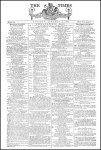
The Times 1785 (must be public domain!)

Did you know there was an information highway in Jane Austen’s day? Well, there was – and it was forged by roads and newspapers.  This is the springboard for Dr Gillian Russell‘s talk, Everything Open: Newspapers in Jane Austen’s Fiction and Letters, which she gave to the Canberra group of  Jane Austen Society of Australia this weekend. She argued that the increase in the publication and distribution of newspapers in the late eighteenth century contributed to the development of a new style of nation – and in support of this quoted Henry Tilney’s statement to Catherine Morland in Northanger Abbey:

Dear Miss Morland, consider the dreadful nature of the suspicions you have entertained. What are you judging from? … Does our education prepare us for such atrocities? … Could they be perpetrated without being known, in a country like this, where social and literary intercourse is on such a footing, where every man is surrounded by a neighbourhood of voluntary spies, and where roads and newspapers lay everything open? Dearest Miss Morland, what ideas have you been admitting?

Dr Russell argued that this provides evidence that newspapers – supported by the roads which made transport of the papers easier and faster (because this was also the era of the Turnpike trusts) – were at the centre of a new style of openness and transparency in Austen’s time.

But, to provide some context. Jane Austen was born in 1775 – and the 1770s, Russell said, was the beginning of the heyday of newspapers. In 1790, some 60 newspaper titles were published in England; by 1821 there were 135. Newspapers comprised just four pages – the first page was primarily advertisements, the second page reported political (and war) news, while the third and fourth pages contained miscellaneous news, often more domestic in nature. Formal access to these newspapers, though, was gender and class-based. Men – of the gentry or middle-class – comprised the majority of subscribers. However, she argued – pretty convincingly, using the writings of Jane Austen, William Cowperand Leigh Hunt – that once newspapers were in the home, they were readily available for women to read. She described how newspapers were passed on from those who could afford them to friends, neighbours, relations. And Austen reflects this in her novels: the Dashwood women, in Sense and sensibility, received their papers from their generous landlord, Sir John Middleton; and Mr Price, Fanny’s rather impoverished father in Mansfield Park, likewise received his papers secondhand from a neighbour, signalling his lower position in the social pecking order. The fact that the Musgrove men in Persuasion read the paper while the foppish Sir Walter Eliot didn’t conveys a lot about the sorts of men they were. Anyone who’s read Persuasion will know that Sir Walter Eliot is not the one we admire!

Russell’s argument is that, while most historians study newspapers in order to understand the politics of their times, these early newspapers epitomise what Samuel Johnson called “intelligence”, which he defined as the commerce of information – that is, the way information moved around society and the role information played in that society. Austen’s writing shows how newspapers brought people together through sharing information: they promulgated domestic/family information regarding births, deaths, marriages, elopements and such, and, during the Napoleonic wars, they published naval information of critical interest to families at home such as who was promoted to what rank, who was on what ship and where the ships were. By publishing information of mainly domestic interest, newspapers validated families’ position in society. Mrs Bennet’s concern, in Pride and prejudice, about the inadequate reporting of Lydia’s marriage, for example, indicates her recognition of the importance of such reporting to establishing (or reflecting) the family’s social standing. Through this process, Russell said, newspapers played a significant role in nation-building, particularly in establishing the middling order as a bigger “player” in the life of the nation.

And, just as we have today, there was a complex information infrastructure in place to support this “commerce of information”. Papers were read by men in clubs, taverns and coffee houses. They were moved quickly from city to country via the roads and complex networks of tradespeople (one rural subscriber for example picked up his paper from the butcher). Reading rooms were an important feature of resort towns (a bit, perhaps, like the Internet Cafes of today?)

In other words, during Austen’s time newspapers became a more central part of the daily lives of the middle classes and the gentry. Papers were major bearers of domestic news and in this way, argued Russell, mirrored what Jane Austen’s novels did – that is, they conveyed information about the way the world worked and in so doing demonstrated that all forms of information exchange (domestic and political) had a public meaning. In this new world, as Henry Tilney said, everything was laid open, transparent.  Except, and here’s the rub, men were still the gatekeepers…

____________________

Bill’s choice this time brought me up with a start. When I wrote this in 2009, newspapers were still, if I remember correctly, significant sources of news for most news-hungry people. But, the last 11 years have seen that landscape change considerably. For my parents, the newspaper was critical for keeping up with personal information like births, deaths and marriages. Reading such news would result in letters or phone calls of congratulation or condolence. What is happening to this information? Does anyone care anymore? And, what about those legally required public notices?

What would Jane make of today’s information highway? And, more to the point, what do YOU make of it? 

Six degrees of separation, FROM How to do nothing TO …

I am so glad to see that two thirds of winter is officially over. It’s been a horrible year, for all of us really, so a bit of warmth and spring rebirth (here down under) would be very welcome, eh? Meanwhile, I’ll entertain myself with things like the Six Degrees of Separation meme.  If you don’t know this meme and how it works, please check out meme host Kate’s blog – booksaremyfavouriteandbest.

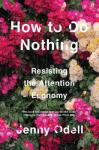
Book coverAugust’s starting book is yet another I haven’t read. Indeed, not only have I not read it, I’ve never heard of it or its author, which is not surprising because, as far as I can tell, it’s a sort of critique of how capitalist forces are driving us all more and more to perform, produce, to be forever doing something, or, as one GoodReads reviewer wrote, on “on how the attention economy and hustle culture is affecting our lives”. The book is Jennifer Odell’s How to do nothing: Resisting the attention economy.
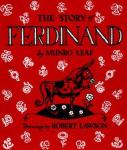
Book coverNow, I’m going to break with my usual practice and start with a book I’ve read but not reviewed on my blog, because this book is the. perfect. book. about. doing. nothing. What’s more, it was published in 1936, so this idea is not new, folks! The book is Munro Leaf’s now classic children’s book, The story of Ferdinand. Why don’t you take a moment to stop and smell the flowers before you read on!
Book cover

My next link is a bit of a leap, because it’s not about a bull, nor about doing nothing, and nor is it set in Spain, but it is about a BIG animal, a mammoth in fact. Yes, my next link is to my most recent review, Chris Flynn’s Mammoth (my review).

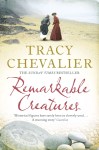
Tracy Chevalier, Remarkable creaturesTracy Chevalier’s Remarkable creatures (my review) is an obvious next link, because it is about fossils, albeit not narrated by fossils. However, it is historical fiction about the early nineteenth century fossil collector, Mary Anning who lived in Lyme. I didn’t love the book, but I must say that the story it told – the historical truth contained within it – has stayed with me.
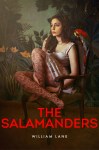
Book coverKeeping with the nature theme, and a coastal setting, I’m going to take us to  William Lane’s The salamanders (my review), part of which is set on the New South Wales coast. While this book is not about fossils, salamander fossils do date back to the Middle Jurassic period in England (and Kyrgyzstan), which is, of course, part of the broader Jurassic period to which Mary Anning’s finds belong.
David Mitchell, The thousand autumns of Jacob de PoetThe story of The salamanders is founded in an artist’s colony, and all the relationships and dysfunctions that such groups can generate. In a very loose link, I’m taking us to David Mitchell’s The thousand autumns of Jacob de Zoet (my review) which concerns a different sort of colony, this one a colony of traders and their slaves on Dejima Island, Nagasaki, Japan. The traders work for the Dutch East India Company, and, as you can imagine, relationships are challenging.
Amitav Ghosh, River of smokeAnother book which deals with European trading in the East Asian region – this time by Britain’s East India Company – is Amitav Ghosh’s River of smoke (my review), the second book in his Ibis trilogy. It is set mostly in Canton in the late 1830s, and explores the lead up to the first Opium War. Hmm, are we back to smelling flowers?

So, a much more travelled chain than usual this month, with visits all over the world, but particularly to  Spain, America, England, Japan and China – as well as Australia. Unusually, too, almost all of this month’s authors are men. What was I thinking?

Now the usual: Have you read How to do nothing? And, regardless, what would you link to?