Reading highlights for 2022

Regular readers of my blog will know two things about my end of year reading highlights post, but I’ll reiterate them here: I always do my list right at the end of the year when I have read (even if not reviewed) all the books I’m going to; and I do not do a list of “best” or even, really, “favourite” books. Instead, I do a sort of overview of the year through highlights which I think reflect my reading year. I also like to include literary highlights, that is, reading related activities which enhance my reading interests and knowledge. All being well, tomorrow I will share my blogging highlights.

Literary highlights

My literary highlights, aka literary events, saw a return to more live events this year, though the pandemic has taught us that there are opportunities to be had by also continuing online experiences – so this year like last I enjoyed a bit of both

Reading highlights

I don’t have specific reading goals, just some “rules of thumb” which include reducing the TBR pile, increasing my reading of First Nations authors, and reading some non-anglo literature. While I didn’t make great inroads into these, I did make some, and, regardless, I had many reading highlights. Last year, I framed this post around my reading preferences, but this year I’m returning to my practice of pulling out random observations that epitomise my year’s reading.

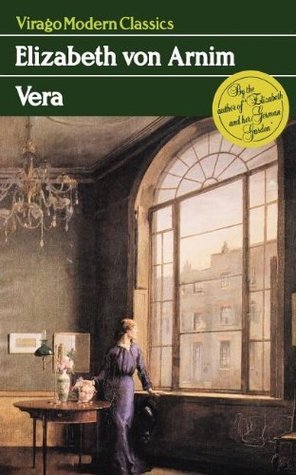
  • Re-find of the year: Elizabeth von Arnim was an author I loved back in the 1990s, and I managed to finally revisit her again this year, via not one but two novels – Vera and Expiation – which reminded me why I enjoy her so much. She is sharply observant about men and women but also witty. I also read this year one of the three biographies recently published about her, Gabrielle Carey’s Only happiness here.
  • Retelling of the year: Retellings can be hit or miss for me but I was greatly moved by Tom Gauld’s graphic novel, Goliath.
  • Topic of the year (1): Mothers and daughters featured heavily in this year’s reading, through Jane Sinclair’s memoir Shy love smiles and acid drops, Elisa Shua Dusapin’s Winter in Sokcho, Lucy Neave’s Believe in me, Nell Pierce’s A place near Eden, Jessica Au’s Cold enough for snow not to mention that absolute classic, and a reread for me, Jane Austen’s Sense and sensibility.
  • Topic of the year (2): Colonialism and racism are issues that many of us read about in order to educate ourselves, and this year I read some magnificent explorations, from Damon Galgut’s The promise and Audrey Magee’s The colony to several works by people of colour, including Nella Larsen’s classic 1929 novel Passing, Julie Koh’s astonishing Portable curiosities, Evelyn Araluen’s Stella winner Dropbear, and Anita Heiss’s historical novel Bila Yarrudhanggalangdhuray.
  • New nationality (for me): I love to add new nationalities to my reading diet, and this year it was Uruguayan, via Ida Vitale’s intriguing Byobu.
  • New genre: Bibliomemoirs are not new, but the term for them is relatively so! Besides Gabrielle Carey’s Only happiness here (mentioned above), I read Carmel Bird’s thoughtful and engaging Telltale.
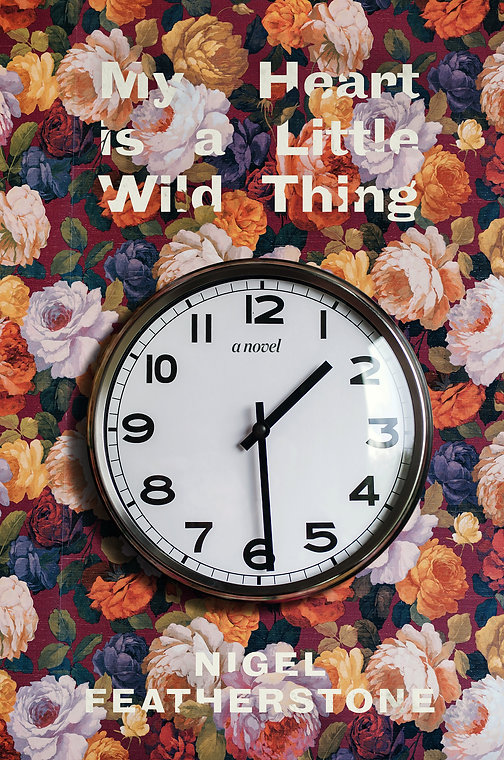
  • Totemic critters: Every year something interesting pops out from my reading. An odd narrator, perhaps – like a skeleton. This year, it was totemic critters with a few books featuring a lurking critter, such as Nigel Featherstone’s quoll (My heart is a little wild thing) and Lucy Neave’s fox (Believe in me).
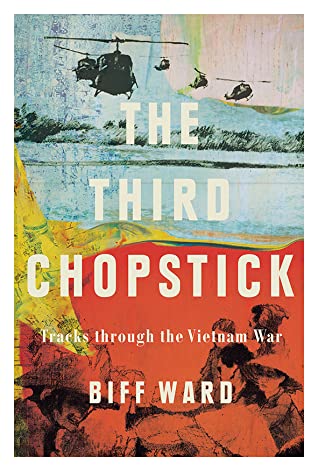
  • The locals have it: I like to support local authors, and this year I have read more than usual – Nigel Featherstone’s My heart is a little wild thing, Shelley Burr’s debut rural noir Wake, Lucy Neave’s Believe in me, Nell Pierce’s A place near Eden, and (then resident) Margaret Barbalet’s Blood in the rain, plus two nonfiction works, Mark McKenna’s Return to Uluru and Biff Ward’s memoir-of-sorts, The third chopstick. I also read, but didn’t review several books by local picture book creators. For a little region, we achieve a lot!

These are just some of 2022’s highlights…

Some stats …

I don’t read to achieve specific stats, but I do have some reading preferences which I like to track to keep me honest to myself! This year I was closer to my preferred ratios in most of the categories than I have been for years – without specifically trying. It just happened:

My preferences are …

  • to read mostly fiction: 74% of my reading was fiction (meaning, everything not non-fiction, so novels, short stories, and poetry). This is close to my plucked-out-of-the-air 75% rule of thumb, and I’m pleased with that.
  • to give precedence to women: 64% of this year’s reading was by women writers, which is similar to last year’s 65%, and around my preferred two-thirds proportion.
  • to read non-Australian as well as Australian writers: 32% of this year’s reading was by non-Australian writers, which is close to my goal of around one-third non-Australian, two-thirds Australian.
  • to read older books: 34% of the works I read were published before 2000, which is more than in recent years. I did say last year that I wanted to increase this, because I love checking out older works.
  • to support new releases: 19% of this year’s reads were published in 2022, which is rather less than last year’s 25% for that year’s releases, but I’m fine with that – even if my to-be-reviewed pile isn’t.
  • to tackle the TBR, which for me means books I’ve had for over 12 months: This year I read just 5, which is similar to the last few years. I’d really love to lift this number because I have so many good (older) books there waiting to be read!

Overall, it was a perfectly fine reading year but I didn’t read as much as I was hoping, mainly because Mr Gums and I are travelling more often to Melbourne to visit family. This is a good thing so I’m not complaining, but still, I’d like to have read more. 2023 is going to be a challenging year with a downsizing move in the offing, as well as our trips to Melbourne. Watch this space!

Meanwhile, a huge thanks to all of you who read my posts, engage in discussion, recommend more books and, generally, be thoughtful and fun people. Our little community is special, to me!

I wish you all an excellent 2023, and thank you once again for hanging in this year.

What were your 2022 reading or literary highlights?

Six degrees of separation, FROM The snow child TO …

Not the weather this month, except to say that Summer has started well. Instead, I’ll just say that I hope you all have a beautiful December, sharing meaningful, nurturing times with the people who matter most to you. It’s not always possible for us all, I know, with families and friends spread far and wide, but that is my wish for you dear readers. And now, I’ll get to our Six Degrees meme. As always, if you don’t know how it works, please check meme host Kate’s blog – booksaremyfavouriteandbest.

The first rule is that Kate sets our starting book. In December it is another book I haven’t read, Eowyn Ivey’s The snow child, which is partly based on a Russian fairytale about a childless couple who build a little girl out of snow. Next day, the snow girl is gone, but they glimpse a little girl in the woods …

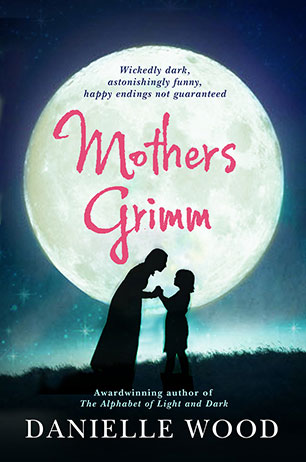
Danielle Wood, Mothers Grimm, book cover

Many writers have taken fairytales and riffed on them to explore an issue they see as relevant or important. I tend not to gravitate to these sorts of books, but one I did and loved is Danielle Wood’s short story collection, Mothers Grimm (my review) which re-visions some Grimm Brothers’ fairytales – “Rapunzel”, “Hansel and Gretel”, “Sleeping Beauty”, and “The Goose Girl” – to reflect on contemporary motherhood.

Book cover

It’s not hard to find links for novels about contemporary motherhood, but I’m going to link to a memoir, Australian filmmaker Jocelyn Moorhouse’s Unconditional love: A memoir of filmmaking and motherhood (my review) because it’s about a mother with a successful profession who had to make some very hard decisions about balancing mothering and career. It is great to see that with her children now grown up, she is picking up her career more actively – and, yes, successfully.

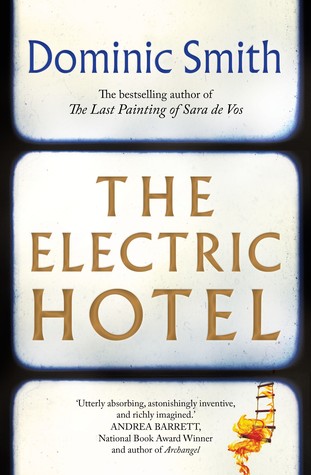
Book cover

You all know that while I read nonfiction, fiction is my first love, so for my next link I’m returning to fiction and an historical novel about the early years of filmmaking, Dominic Smith’s The electric hotel (my review). It chronicles the life and career of fictional silent filmmaker Claude Ballard. He is sent into bankruptcy through the actions of the nonfictional film inventor Thomas Edison who did his best to exert control over the early film industry.

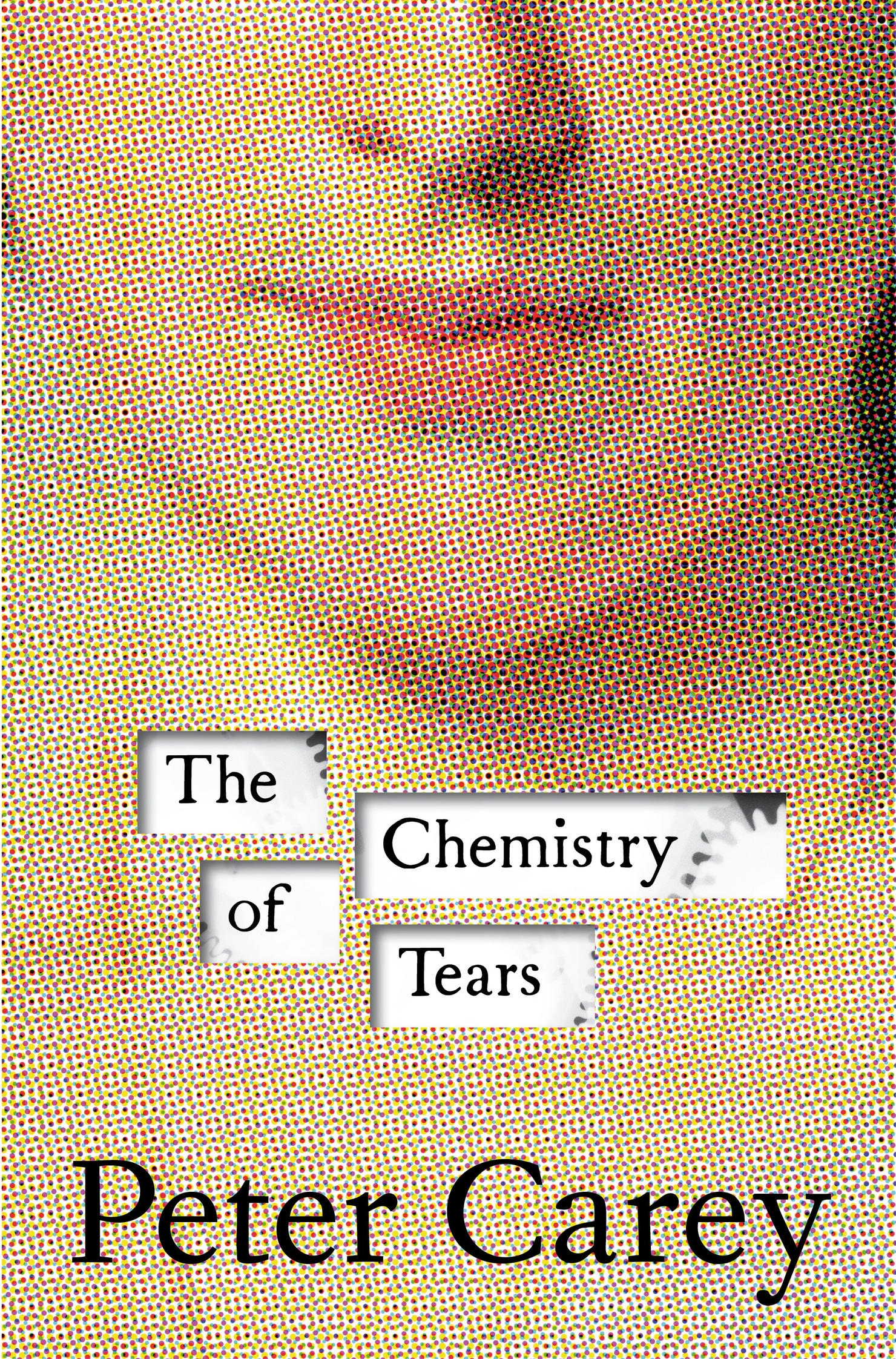
Peter Carey Chemistry of tears bookcover

Dominic Smith is Australian-born but now lives in Seattle, Washington, USA. Another Australian-born writer who has taken up residence in the USA – albeit on the opposite coast – is Peter Carey. I’ve reviewed a few of his books here but the one I’m linking to is another work of historical fiction, The chemistry of tears (my review).

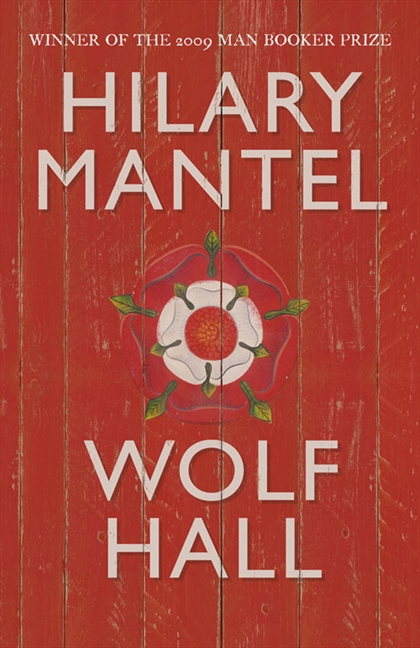
Hilary Mantel, Wolf Hall

The chemistry of tears is set in England and Europe at that time of great industrialisation, but it’s not form or content on which I am linking next. Peter Carey is one of six writers who have won the Booker Prize twice, and I have reviewed books by three of the other five here, JM Coetzee (now Aussie-based), Margaret Atwood, and the one I’m going to link to Hilary Mantel. She won it for Wolf Hall and its sequel Bring up the bodies, but Wolf Hall (my review) is my chosen link, because …

EM Forster, Howards End

Wolf Hall is the name of a place, a building, a residence in fact, relevant to the novel. It conveys something about the protagonist’s wolfish actions and presages the novel’s sequel (being the home of Henry VIII’s next wife). EM Forster’s Howards End (my review) is also titled for the name of a place, a building, a residence. This place too has a political resonance in the novel, albeit not embedded in the name itself. It stands for traditional culture and values at a time of significant social change, and is where two opposing ideas come together.

This month, I have a rare 50:50 gender split in my selections. We’ve not travelled so far, sticking primarily to Australia, the USA and England – though Dominic Smith does have us scampering a bit around the world and Peter Carey takes us to Germany.

Vale Neil: This morning, Bill (The Australian Legend) emailed me to let me know that one of our commenters, Neil@Kallaroo, had died this week. This was desperately sad news for us. Mr Gums and I attended Neil’s wedding in 1978, and he and his wife ours that same year. Neil frequently commented on my Six Degrees posts in particular, offering his own links. Most recently, though, in late October, he engaged in a discussion about reading eBooks and note-taking on my Telltale post. Neil had been chronically ill for many years, and Mr Gums and I had long been keen to visit him. We finally managed to go to Perth and visit him in hospital in September this year. How great that we did. Neil was his same, lovely, engaged-in-life self. Frustrated by his weakness, he was just getting on with living the best life he could – reading, playing games (online with friends and family), doing puzzles. Vale Neil, you were a good person to know. We will miss your annual Gneillian News!

Now, the usual: Have you read The snow child? And, regardless, what would you link to?

Nonfiction November 2022: New to my TBR

Week 5 on Nonfiction (November 28-Dec 2) is all about what’s New to My TBR, and is hosted by Jaymi (The OC Bookgirl). To be honest, I wasn’t going to play along for this week in which we are supposed to list the books that have made it onto our TBRs from those bloggers have been shared over the month. This is because Last year, for example, I listed EIGHT books in my “New to my TBR” post, and have so far read just one, Gabrielle Carey’s Only happiness here (my review). I rest my case …. However …

Newly found on my TBR

In Week 1, two books were recommended to me on my post, that I knew I would want to read. Indeed, they sounded a bit familiar, one in particular. Funny that, because when I returned home from Melbourne in the middle of the month, and looked at the TBR next to my bed – you know, those books that you hope you’ll read soon – there these two were.

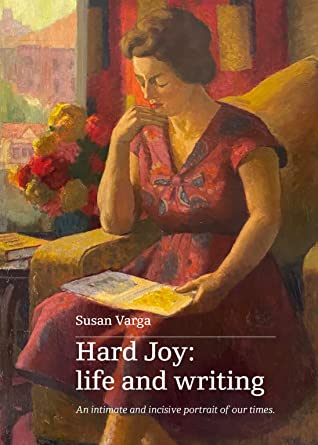
The one I was fairly confident I had was recommended by Australian novelist and feminist Sara Dowse, who has herself appeared several times on my blog. The book she recommended was Susan Varga’s Hard joy: Life and writing. I have reviewed a couple of Susan Varga’s books too – her memoir Heddy and me, and her poetry collection, Rupture – so I am confident that with Sara Dowse’s recommendation and my past enjoyment of Varga’s work, that I will also like this.

The other I was less sure about, but had started to suspect I might have it too. It was recommended by another Australian writer who has appeared several times on my blog, Carmel Bird. She recommended an author I’d never read before, but the topic of his book sounded right up my alley, as Carmel Bird knew – books, nature and words. The book is Gregory Day’s Words are eagles: Selected writings on the nature & language of place. Nature, language and place … this book of essays looks perfect for me.

The reason I have both books is that I advanced ordered them from the relatively new publishing company Upswell. Their inventory is so appealing and I’ve ordered/subscribed to several over the two years of their existence, but have not managed to read them because of the backlog of review copies I have. So, here I’m going to say that I’ve decided that I am going to find a better balance in my reading between the review pile – albeit there are many there I want to read – and those books I have bought because I have specifically chosen them. My next twelve months is going to be very busy as I prepare to downsize and sell our family home of the last 25 or so years and move into something smaller, but, after that, I am very hopeful of having MORE time to read. Yay that!

Eyes bigger than …

Otherwise, I must admit that I’ve jotted down very few other bloggers’ nonfiction reads – not because I wasn’t interested but because I knew I could not justify adding them to my list. However …

Melanie (Grab the Lapels) made these recommendations, with comments, on my Stranger than fiction post:

  • Jessica Chiccehitto Hindman’sSounds like Titanic: this one is a hoot
  • Lee Israel’s Can you ever forgive me?: this one made me hang my mouth open
  • Bruce Goldfarb’s 18 tiny deaths: The untold story of Frances Glessner Lee and the invention of modern forensics: this one surprising because I thought there were more forensic pathologists
  • Janice Erlbaum’s Have you found her?: this one I would love to tell you about but do not want to spoil it.

There were several books in the Worldchangers week, in particular, that also grabbed my reluctant attention, but I’ll just bring a couple to your attention:

Symeon Brown’s Get rich or lie trying, which Liz Dexter described as “an exposé of the world of internet influencers, or rather those who try desperately to monetise their lives for various reasons, including hauling themselves out of poverty, and who are used and abused by companies who know their desperation”.

Alone in the kitchen with an eggplant: Confessions of cooking for one and dining alone, a collection of essays edited by Jenni Ferrari-Adler, which Lou said “helped me to see cooking and eating alone as a privilege and a mark of independence, not a lonely activity”. Many of us either live alone or could very well one day find ourselves alone … this is a great thing to appreciate.

If you are doing Nonfiction November, I‘ll probably see your recommendations. But, if you’re not, do share if any books recommended by bloggers have grabbed your attention this month.

Nonfiction November 2022: Worldview changers

Week 4 of Nonfiction November(November 21-25) is themed Worldview Changers, which is a new one I think for the month. I like this, as it is always good to have a new challenge. It is hosted by Rebekah @ She Seeks Nonfiction and is described as follows:

One of the greatest things about reading nonfiction is learning all kinds of things about our world which you never would have known without it. There’s the intriguing, the beautiful, the appalling, and the profound. What nonfiction book or books has impacted the way you see the world in a powerful way? Do you think there is one book that everyone needs to read for a better understanding of the world we live in?

Jess Hill See What You Made Me Do

Second question, first. The book I think that everyone should read for a better understanding of the world we live in is …

Jess Hill’s See what you made me do: Power, control and sexual abuse (my review). This was a powerful read that I took many, many months to read, after it won the 2020 Stella Prize. It wasn’t so much a worldview changer, for me, because I knew (who doesn’t?) that domestic abuse was going on, but it was certainly eye-opening. While I knew, for example, a lot of it in theory, and had seen many news reports of abuse and violence, the actual stories were gut-wrenching – particularly in the discussion of coercive control, in the levels of abuse of First Nations women, and in the way children are used. The most eye-opening thing was the court system and how the courts too often focus more on the parents’s needs than the children’s and on how men (mostly) can manipulate the system to make it look like the already-controlled wife is incapable of being parenting. This book needs to be read – I thought I knew all this but I didn’t appreciate just how deeply into our systems the problem goes.

As for books that had a strong impact on me, I’m going to name three. They didn’t necessarily change how I view the world, but they certainly enhanced my understanding of it and/or of myself. They are, in the order I read them:

  • Mark McKenna’s Return to Uluru (my review) for its no-holds-barred investigation into some challenging and hidden stories of Australia’s past. Every new correction to Australia’s history, as we learnt it, has value.
  • Carmel Bird’s Telltale (my review) for its intelligent and revealing insights into how her reading affected her, which in turn contributed to my thinking about my own reading and its impact on my intellectual, emotional and social development.
  • Biff Ward’s The third chopstick (my review) for its portrayal of an activist who fearlessly confronted those most affected by that activism and/or the war they were protesting.

While all these books made an impact on me, I also need to say that, overall, the books that most impact me are, really, fiction. That is where the real punches mostly are!

For those of you doing Nonfiction November, I’ll see your Worldview Changers I’m sure, but, if you’re not, would you like to share any or some of yours?

Elizabeth von Arnim, Expiation (#BookReview #1929 Club)

I cannot remember when I last laughed out loud – a lot – when reading a book. The book that broke the drought is Elizabeth von Arnim’s Expiation. Even in her darkest, grimmest novel, Vera (my review), Von Arnim managed to make me splutter several times, albeit ruefully. Expiation, though, caused no such qualms.

I have loved Elizabeth von Arnim since I read Elizabeth and her German Garden in the early 1990s when Virago started publishing her. I went on to read several more of her books over the next few years, but then had a big gap until this year, when I read Vera. It reminded me how much I enjoy her. So, when I saw she had one published in 1929, I selected it for Karen and Simon’s 1929 Club. I finished it more or less on time, but the last couple of weeks have been so busy that I didn’t get to post it until now.

The edition I found was published by Persephone. They describe publishing it as first for them, because “it’s a novel by a well-known writer that has been entirely overlooked”. While most of Von Arnim’s books are in print with other publishers, Expiation, which they were now publishing ninety years after its first appearance, had been ignored. Why, they ask? Good question. I admit that, not having seen it around, I did fear it might be lesser.

Persephone offers some reasons. Firstly, the title “is not very catchy”. True, it’s not. They also suggest that its adultery theme would have been “faintly shocking” in 1929, and further that, although we now read it as a satire, at the time “the characters and their milieu may have seemed rather tame”. Would the satire have been missed? Anyhow, they quote from the novel’s opening chapter, which describes the novel’s central family and the London suburb they live in:

That important south London suburb appreciated the Botts, so financially sound, so continuously increasing in prosperity. They were its backbone. They subscribed, presided, spoke, opened.

This last sentence, Persephone says, “was what deliciously and instantly convinced us that this was a book for us”. I am so glad they did because from the first few pages I could tell it was a book for me too. It truly is delicious.

So now, the book. As you’ve gathered, the plot centres around adultery, which is made clear in the opening chapter. Milly has just been widowed, and her wealthy husband, Ernest Bott, has only left her £1,000 of his £100,000. The rest he has left to a charity for fallen women, with the cryptic note that “My wife will know why”. She does, of course, but thought she had got away with it. What is remarkable about this book, which chronicles how both Milly and the Botts react to the situation, is that we remain sympathetic to Milly. She’s a sinner, she knows she’s a sinner, but she wants to expiate. How, is the question?

The Botts, meanwhile, don’t know what to do. They do not want scandal to ruin their good name, and, anyhow, the male Botts in general rather like round, plump Milly versus their “bony” wives. Moreover, they are not known for meanness: “The family had always behaved well and generously in regard to money, and it would never do for Titford to suspect them of meanness.” Hmmm, a bit of appearance-versus-reality going on here. So, having decided, Jane-Austen-Sense-and-sensibility-style, not to give Milly some of their money, they agree to take her into their homes, in turn, until it all dies down, after which she can go live with Old Mrs Bott, who is perfectly happy to have her. Old Mrs Bott is the voice of reason in the novel. Experience has taught her

that in the end it all wouldn’t have mattered a bit what Ernest had meant or what Milly had done, and that they might just as well have been kind and happy together on this particular afternoon, as indeed on all their few afternoons, and together comfortably eaten the nice soup and sandwiches.

However, a spanner is thrown in their works when the shocked and mortified Milly disappears the day after the funeral. To say more about the plot would give too much away – even though the plot is not the main thing about this book.

What Von Arnim does through this plot is take us on a journey through humanity. Milly’s attempts at expiation often fall flat, either because she doesn’t manage to do what she plans or because others don’t behave towards her as she expects, even wants, them to do. For example, on one occasion, she has “no doubt at all that here at last she was in the very arms of expiation” and yet it comes “to her so disconcertingly, with a smile on its face”. Can this really be expiation? Milly’s not sure. One of the book’s ironies – and points – is, in fact, that the greatest sinner, technically, is among the kindest in reality.

The thing I like about Von Arnim is her generosity. It is on display throughout this novel as Milly, seeking expiation (but also to survive) moves between people she knows, from her previously sinning sister and her obliviously self-centred lover to the various Botts who range from the puritanical and pompous to the warm and lively. Most of these characters, like Austen’s, may come from a narrow realm of society but they represent a much wider spectrum of human behaviour. Like Austen, too, Von Arnim’s targets are not just the personal – greed, selfishness, narrow-mindedness, silliness, pride, self-importance, ignorance, and so on – but the societal, particularly gender, marriage and money. “Too much worldly prosperity”, she writes for example, “deadens people’s souls”.

So, in Expiation, Von Arnim skewers human nature and her society much like Jane Austen does. Sometimes the situations may be a little dated as they can also be in Austen, but human nature itself doesn’t change much – and this is so knowingly, so inclusively, and so generously, on display. There are some less than stellar people here, of course, but as in Austen, they are treated with respect for their humanness by the author, while also being exposed for exactly who they are. I’m going to – with difficulty – choose just a couple for you, one touching on the theme of sinning and morality, and the other on money.

Here is the eldest Bott, Alec, trying to avoid hosting Milly first, because of his wife’s puritanical approach to life:

He stopped, an undefined idea possessing his mind that Milly might be purer after having passed through the sieve of other visits, and more fit to stay with his wife …

Von Arnim’s language – so fresh and funny. And here is another Bott, Fred, telling his sons they will be helping Milly:

“Do you mean financially?” inquired Percy, his eyes still on his paper.
“Kindness,” said Fred.
“Kindness! Well, that’s cheap, anyhow,” said Dick.
“And easy,” said Percy, turning the pages. “I always liked Aunt Milly.”

Finally, I will leave you with one more bon mot from Old Mrs Bott who reflects, at one point during the novel:

It seemed as if these poor children had no sense whatever of proportion. They wasted their short time in making much of what was little, and little of what was much.

With a wit and a sense of humanity that is a joy to read, Expiation encourages us to think about what is important to living both a good life, and a kind and fair one.

Elizabeth von Arnim
Expiation
London: Persephone Books, 2019 (orig. pub. 1929)
314pp.
ISBN: 9781906462536

Nonfiction November 2022: Stranger than fiction

Week 3 of Nonfiction November (November 14-18) focuses on “all the great nonfiction books that almost don’t seem real. A sports biography involving overcoming massive obstacles, a profile on a bizarre scam, a look into the natural wonders in our world—basically, if it makes your jaw drop, you can highlight it for this week’s topic” and is hosted by Christopher (Plucked from the Stacks).

Last year, introducing my post on this week, I wrote that what the idea of “stranger than fiction” brings to my mind are those coincidences (and the like) that happen in real life that a fiction writer could never get away with. This week’s topic host, Christopher, though, takes a broader view, including things like “overcoming massive obstacles”, “scams” and “natural wonders”. My interpretation is a bit different again.

I’m starting with an essay I read via the Library of America’s Story of the Week program, James Weldon Johnson’s “Stranger than fiction” (my review). Johnson wrote one of those trickily titled novels, The autobiography of an ex-colored man (1912). It was inspired by his own experiences, and has been described as the first fictional memoir by a black person. Its protagonist is a young unnamed biracial man, who, because of such experiences as witnessing a lynching, decides to “pass” as white for safety and advancement reasons. The novel chronicles his experiences and ambivalent feelings about his decision.

In 1915, Johnson wrote his essay “Stranger than fiction” about his novel’s reception. To summarise what I wrote in my post, he basically found that for many Northern reviewers, the work was so “real” they could barely believe it was fiction, whereas Southern critics asserted that the work was unbelievable because, Johnson wrote, they didn’t believe African Americans could “pass” as “the slightest tinge of African blood is discernible, if not in the complexion, then in some trait or characteristic betraying inferiority.” For Johnson, this was “laughable”, as most people, he said, know of people who are “passing.”

There are so many “stranger than fiction” layers to this essay and situation but I will leave it here. This essay would, of course, have been another great Week 2 pairing for me with Nella Larsen’s Passing.

What can be stranger than families?

Families, of course, are the stuff of fiction, particularly unhappy ones (as Tolstoy famously shared), but they can also be found in non-fiction, particularly in memoirs, so here I’m going to share three families which were/are strange for one reason or another:

  • Alison Croggon’s Monsters: A reckoning (my review) chronicles a sister-relationship that went badly sour. It’s always sad – and yes, a bit strange to me – when families fall apart. The collapse of siblings relationships is particularly devastating I think.
  • Jane Sinclair’s Shy love smiles and acid drops (my review) chronicles the author’s parents’ difficult relationship. There is much that is “strange” here for most of us, starting with the family’s bohemian lifestyle.
  • Cindy Solonec’s Debesa: The story of Frank and Katie Rodriguez (my review) is strange in a different way. The relationship here is a positive and productive one, but the press release for the book makes its “strangeness” clear when it says the book is about “the unlikely partnership of Cindy’s parents: Frank Rodriguez, once a Benedictine novice monk from Spain, and Katie Fraser, who had been a novitiate in a very different sort of abbey – a convent for ‘black’ women at Beagle Bay Mission” (near Broome). Debesa is also a little strange in form as it is one of those hybrid biography-memoirs in which the writer is part of the family she’s focusing on.

None of these families are probably stranger than anything you’d find in fiction, but they do prove that the strange families you find in fiction can indeed be realistic!

For those of you doing Nonfiction November, I’ll see your strange offerings I’m sure, but, if you’re not, I’d love to see what strange nonfiction you’ve read.

Nonfiction November 2022: Book pairings

Week 2 of Nonfiction November and hanging in. This meme/blog event/reading month/challenge (what do we call it?) is hosted by several bloggers, with Week 2: (November 7-11) – Book Pairing, being hosted by Rennie (of What’s Nonfiction). The challenge is to pair a nonfiction book with something else – a fiction title, another nonfiction work, or even a podcast, film, documentary, TV show, etc. There just has to be some link in terms of subject matter or topic. I really enjoy this week of the challenge, because it’s such fun to do and is also fun to see what other bloggers come up with.

The no-brainer

Since much of my nonfiction involves literary topics – literary biographies or memoirs, for example – this pairing challenge is really very easy. Take, for example, Carmel Bird’s bibliomoir Telltale (my review). There are so pairing possibilities, because in it she discusses books she’s read and written. So, for this year’s no-brainer – I did one last year too – I will pair her bibliomemoir with… Hmm, with what? Because here’s the challenge: she mentions so many books. However, if I limit it to those I’ve reviewed, which is my preference, that narrows the field. And, if I narrow it even more to those books by her that I’ve reviewed, I’m getting to something quite manageable.

Book cover

So, after a little consideration, the one I’ve chosen for my pairing is her Field of poppies (my review), because, as I wrote in my post, it has many of the hallmarks of her writing, including “all manner of allusions and digressions, underpinned by a clearly-focused intelligence”. This, of course, we also find in Telltale. Unfortunately, though, I am away from home, so I don ‘t have my copy of Telltale with me to share some of Bird’s comments about this novel. However, I do remember her discussing mining, and how she had referenced it in her work, including in Field of poppies.

This year I have also read several literary essays, and each of these could be paired with their source novel or story, such as Ellen van Neerven’s essay (my post) on Tara June Winch’s Swallow the air (my review).

But, rather than list all those, I’d like, as I also did last year, to give myself something that’s more of a pairing challenge, so here is …

Another pairing

My most recent nonfiction read was Biff Ward’s part memoir, part social history, The third chopstick: Tracks through the Vietnam War (my review). This book covers both her experience as an antiwar protestor and her later decision to meet and understand the men who went to war – the Vietnam Vets. In those meetings, she comes face-to-face with the traumas (the PTSD) many of them suffered on their return and, with their permission, she shares some of this experience with us.

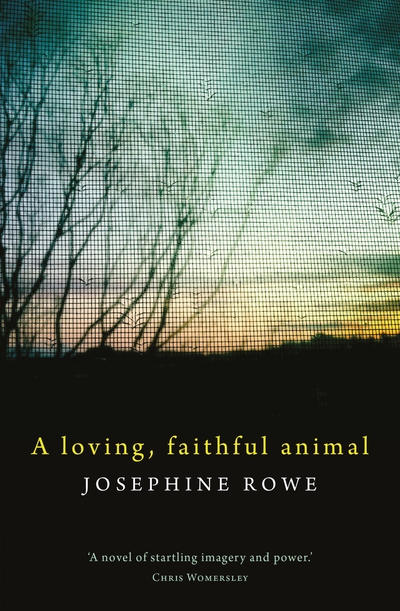
Josephine Rowe, A loving faithful animal

Not a lot of fiction, comparatively speaking anyhow, has been written about this War, as I discussed in my recent Monday Musings – and I’ve read only a little of that. However, I have read a little, and one of those is Josephine Rowe’s A loving, faithful animal (my review), which deals very specifically with PTSD from this war and its intergenerational impact. It’s a strong, and unforgettable novel and worthy of pairing with Biff Ward’s book.

For those of you doing Nonfiction November, I’ll see your pairings I’m sure, but, if you’re not, I’d love to see what you would pair – if you’d like to play along.

Monday musings on Australian literature: Classic Australian novellas

Novellas in November logo

I have written on and reviewed novellas almost since this blog started, because I love the form. Last year, for Novellas in November (run by Cathy of 746 Books and Rebecca of Bookish Beck), I wrote a Monday Musings on Supporting Novellas (here in Australia). This year, I thought I’d address the meme’s first week’s theme, which is Classic Novellas. I am also going to dedicate this post to Brona’s AusReadingMonth, because I know she loves a good novella too!

I love Bookish Beck’s introduction to novellas, in which she quotes American author Joe Hill‘s description of novellas as being “all killer, no filler”. This beautifully captures why I love great novellas – they cut to the chase. This is not to say that longer books can’t also cut to the chase. Of course they can, but novellas often get a bad press because, you know, they are over before you’ve started, they don’t offer value for money in terms of how much you pay per page, etc etc. None of these anti-novella reasons cut it with me, though, because for me writing is all about the punch (broadly speaking) – and you can get that in a short story, a novella, or a full-length novel.

Wikipedia’s article on the novella provides a useful introduction to the form. Do read it if you are interested, but I thought I’d share just one quote from it, because it expands on Hill. The quote comes from Robert Silverberg‘s introduction to the novella anthology, Sailing to Byzantium. He writes that the novella

is one of the richest and most rewarding of literary forms…it allows for more extended development of theme and character than does the short story, without making the elaborate structural demands of the full-length book. Thus it provides an intense, detailed exploration of its subject, providing to some degree both the concentrated focus of the short story and the broad scope of the novel.

I have discussed the definition of novellas before, and you can read more in Wikipedia, so am not going to go there again, except very broadly. Definitions, after all, are the darnedest things, and here, for this post, I’m confronted with two – “classic” and “novella”. Regular readers here will know that I do like discussing definitions but, perhaps contrarily, I’m also happy for them to be loose. That is, I like definitions to offer a framework for the topic under consideration, but I don’t like them to lock us down. So …

For the purposes of this post I’m going to use meme-leader Cathy’s definitions. Classic, then, means published up to and including 1980 (or thereabouts), and novella means up to 150 pages and no more than 200! (Officially, novellas are defined by number of words but how can readers know that, so pages, for all their variation in size, is it!)

Selected Australian classic novellas

The first novella I can remember reading was in fact a classic Australian one, Frank Dalby Davison’s Man-shy, in my first year of high school. It had quite an interesting history, as Wikipedia describes. Originally self-published through the Australian Authors Publishing Company, it was soon picked by Angus and Robertson after winning the 1931 ALS Gold Medal, before then being successfully published in America as The red heifer. In a post on 1930s Australian literature, I shared that a columnist/critic had written that Davison’s The red heifer “has already been accepted in America, probably to a greater extent than in Australia”. 

Over the decades since then I have read many more … including most of those in the list below (though several were before I started blogging).

  • Jessica Anderson, Tirra lirra by the river (1978) (Lisa’s post)
  • Thea Astley, A kindness cup (1974) (Lisa’s review)
  • Frank Dalby Davison, Man-shy (1931)
  • Helen Garner, The children’s Bach (1984) (my review)
  • Bill Green, Small town rising (1981) (Lisa’s review)
  • Barbara Hanrahan, The scent of eucalyptus (1973) (my review)
  • Elizabeth Jolley, The newspaper of Claremont Street (1981)
  • Louise Mack, The world is round (1896) (my review)
  • David Malouf, Fly away Peter (1982) (Lisa’s review)
  • Gerald Murnane, The plains (1982) (my review)
  • Vance Palmer, Cyclone (1947) (Lisa’s review)
  • Patrick White, The cockatoos: Shorter novels and stories (1974) (Bill’s review)

I’ve included Helen Garner’s novella, although it is pushing the definition envelope a bit, because, when researching its Wikipedia article many years ago, I discovered that Australian academic and critic, Don Anderson, had argued that

There are four perfect short novels in the English language. They are, in chronological order, Ford Madox Ford’s The Good Soldier, Scott Fitzgerald’s The Great Gatsby, Hemingway’s The Sun Also Rises and Garner’s The Children’s Bach.

That is some accolade.

Aus Reading Month logo

This is a small selection, based mostly on those I know and have read. I’d love to hear of your favourite classic novellas – and, if you are Australian, I am particularly interested in classic Australian ones that I haven’t included here.

Written for Novellas in November 2022 and AusReadingMonth.

Six degrees of separation, FROM The naked chef TO …

Oh my, oh my, I’m becoming one of those people who complains about the weather – but really, we’ve had so much rain in our neck of the woods. It’s proving difficult to get our washing dry, to carry out some necessary house maintenance, and so on. The problem is, though, that I feel embarrassed about complaining, given we have brought so much of this upon ourselves. So, that recognised, I think I’d best just move on … to why we are here, our Six Degrees meme. As always, if you don’t know how it works, please check meme host Kate’s blog – booksaremyfavouriteandbest.

The first rule is that Kate sets our starting book, and in November it is another book I haven’t read, Jamie Oliver’s The naked chef. I don’t have it, but I am forever grateful to Jamie Oliver for teaching Son Gums to cook, through his books and cooking app. Oliver is a wonder. I was impressed with the app.

Ouyang Yu, Diary of a Naked Official

So, where to from here? I have in fact posted on a couple of cook books, but I’m not going there. Instead, I’m linking on the word “naked” in the title, and going to Ouyang Yu’s Diary of a naked official (my review). My reason is that this enabled me to link to a book that I haven’t – until now – managed to include in this meme. Ouyang-Yu is a Chinese-born Australian-based writer who has a significant body of work.

Linda Jaivin, Found in translation Book cover

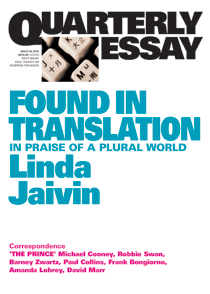
Besides writing novels in English, Ouyang Yu translates English (Australian) books into Chinese. My next link is to Linda Jaivin, who not only wrote a Quarterly Essay on translation, Found in translation: In praise of a plural world (my review), but who also does Chinese-English translation, but in the reverse direction to Yu.

Book Cover

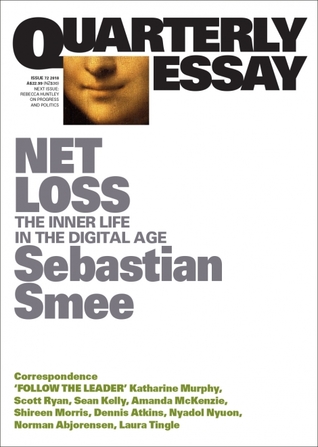
I have reviewed a handful of Quarterly Essays for this blog, another being Sebastian Smee’s Net loss: The inner life in the digital age (my review). I read this particular issue for my reading group, as the result of a little confusion. We weren’t sure whether we were to read this Quarterly Essay or …

Penguin collection, translated by Garnett, book cover

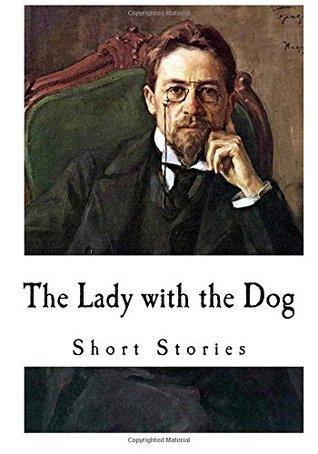
Anton Chekhov’s short story, “The lady with the little dog” (my review). Several of us, myself included, read both. The point was that Smee references Chekhov’s story in his essay, because Chekhov’s Gurov discusses his inner and outer lives. In case you are interested, Gurov argues that the inner life is where “everything that was essential, of interest and of value to him, everything that made the kernel of his life, was hidden from other people”, and Smee is concerned that in our digital age the “notion of an elusive but somehow sustaining inner self is eroding”.

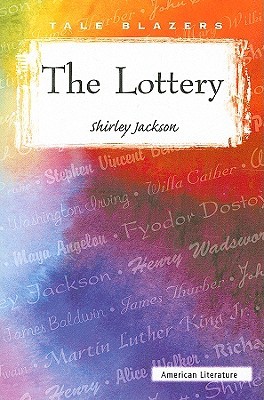
Chekhov’s short story has been translated multiple times, and is much anthologised. Another frequently anthologised short story is Shirley Jackson’s “The lottery” (my review). Indeed, I wrote in my post that it is “one of the most famous short stories in the history of American literature”.

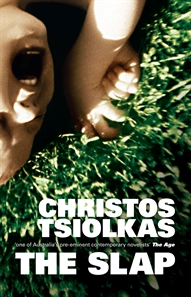
Christos Tsiolkas, The slap

In that post on Jackson’s short story, I also quoted Jackson as saying her story was a “graphic dramatisation of … pointless violence and general inhumanity”, which brings us to my final link, Christos Tsiolkas’ The slap (my review), because I argue that one of its themes is the pervasiveness of violence in western middle-class society.

This month, we’ve spread our wings wide, visiting England, China, the USA, Russia and Australia. For a rare change, my authors are four males to two females. What came over me! I can’t think of any real way of linking Tsiolkas back to Oliver except to say, perhaps, that both are cool dudes with something to say?

Now, the usual: Have you read The naked chef? And, regardless, what would you link to?

Nonfiction November 2022: Your year in nonfiction

My participation in Nonfiction November is usually a bit catch-as-catch-can – that is, I often don’t manage to complete every week’s topic – but I do like to start off as though I might, so here I am.

Nonfiction November, as most of you know, is hosted by several bloggers. This year, Week 1 – Your Year in Nonfiction, is hosted by Katie at Doing Dewey, with the same questions posed for us to consider as last year.

I’m not sure why, but for this nonfiction-November year (that is, from last December to now), I’ve read about 25% more nonfiction than I read in each of the previous few years that I’ve participated. 45% of this reading has been life-writing, 45% essays, and the rest has been “other” non-fiction.

What was your favorite nonfiction read of the year?

Favourites are always hard to identify, because I tend to get something out of most of what I read. However, if pushed, I’d say Carmel Bird’s Telltale (my review), because bibliomemoirs are always going to appeal to me, and when such a book is written by a favourite writer as Carmel Bird is, then it’s a no-brainer. I loved so much about this book, as my review and follow-up post make obvious.

Honourable mentions are many, but let me just name three, Gabrielle Carey’s Only happiness here (my review), because I am a fan of its subject, Elizabeth von Arnim; Mark McKenna’s Return to Uluru (my review) because it increased my knowledge of Australia’s history and relationship with our First Nations people; and Jess Hill’s See what you made me do (my review) about domestic abuse, with particular exploration of coercive control, because I learnt a lot about something I thought I already knew quite a bit about.

Do you have a particular topic you’ve been attracted to more this year?

Last year, I wrote in answer to this question that when it comes to nonfiction, my main interests are literary biographies, nature writing, and works about social justice/social history. Nothing has changed in terms of my preferences, but I should add something I didn’t say last time, which is that in terms of nonfiction forms, I do like essays, and there are always a few in my reading diet.

This year, the greatest proportion of my nonfiction has related to literature in some way. Besides the books by Carmel Bird and Gabrielle Carey mentioned above, I have read several fascinating essays from the anthology edited by Belinda Castles, Reading like an Australian writer. One of my posts from that book was about Emily McGuire’s essay on epiphany in an Elizabeth Harrower short story. It has proved very popular on my blog this year. I’m not sure why but I wonder whether the word “epiphany” has attracted search engine hits?

What nonfiction book have you recommended the most?

Again, as I wrote last year, this is hard, because with nonfiction, even more than fiction, what you recommend depends greatly on people’s interests. I have, though, recommended all those books I named under my favourite nonfiction book of the year.

I have also talked much about my most recent read – which is also, really, a “favourite” contender – Biff Ward’s The third chopstick (my post). Given it is about a time my peers and I lived through when we were young, and given it is written with such humanity and heart, it’s natural that I expect to be talking about and recommending it often in the months to come.

What are you hoping to get out of participating in Nonfiction November?  

What I am not specifically looking for is more recommendations – not because I am not interested but because I have too many books to read already without adding to the pile (physical and virtual). However, what I always get out of participating in blog events like this is book talk on topics that particularly interest me and, sometimes, meeting new bloggers whose interests are similar to mine (albeit, as with my book piles, I don’t really need more bloggers to follow. I hope that doesn’t sound unkind, but I think many of you understand the quandary! We love the book talk, but it also takes away from the book reading!)

Besides this, I’m always interested discussing wider issues regarding nonfiction and nonfiction reading: Why do we read nonfiction? What do we look for? What makes a good nonfiction read?

This year, with us all having come through a pretty tough few years, there’s the question about whether trying times see us seeking more nonfiction that might help us understand what we are going through or less because we want to escape into an imaginative world. What do you think?