Australian Women Writers 2019 Challenge completed

As has become tradition, I’m writing my completion post for the Australian Women Writer’s Challenge, around the middle of the year, though I will continue to contribute until the year’s end, and do a final round-up then.

I signed up, as always, for the top-level, Franklin, which involves reading 10 books and reviewing at least 6, and as always I’ve exceeded this. In fact, by June 30, I had contributed 16 reviews to the challenge, including 3 guest posts by Amanda.

Here’s my list in alphabetical order (by author), with the links on the titles being to my reviews:

This slideshow requires JavaScript.

AWW Challenge 2019 BadgeIn last year’s completion post, I said that I didn’t have specific goals for the rest of that year but that I’d like to read more indigenous writers, more classics, and more from my TBR pile. These continue to be my non-goal goals, but I’ve not done particularly well with them so far this year, but I have read two classic writers (Capel Boake and Louise Mack) and I’ve also read three works by indigenous writers, two of which are anthologies. I’m pleased with all this, and hope to read more indigenous authors, in particular, men as well as women, as the year progresses. And, I’ve returned to my preferred fiction/non-fiction ratio, with 9 of my 13 being novels and short stories. Around 2/3 is my comfort zone!

I’m also pleased to include, this year, three guest posts by Amanda who offered to do these reviews to fill gaps in the Challenge. As Amanda doesn’t have her own blog, and didn’t want to review on GoodReads (another option for our participants), I happily offered her my blog for the purpose.

Watch out for my 2019 AWW Challenge wrap-up post for the year’s full story!

Monday musings on Australian literature: Australian Women Writers Challenge 2018

AWW Badge 2018As has become tradition, I’m devoting my last Monday Musings of the year to the Australian Women Writers Challenge* – but, this year it coincides with New Year’s Eve. When this post goes live, who knows what revelry I’ll be up to! Hmm … I can but hope! Seriously, though, I wish all you wonderful Whispering Gums followers an excellent 2019 in whatever form you would like that to take. I also want to thank you for supporting my blog with your visits and comments. You make this blog such an enjoyable experience for me.

Now, the challenge … it has continued to go very well. In my area of Literary and Classics, we consolidated 2017’s impressive increase in the number of reviews posted, with roughly the same number posted again this year. Theresa Smith (of Theresa Smith writes), continued to oversee the day-to-day management of the blog, enabling Challenge founder Elizabeth Lhuede to be less hands-on. Elizabeth is, however, still an active presence, particularly when it comes to resolving technical issues, reviewing our policies (such as “do we need to update our definition of historical fiction”?), and so on. The database now contains reviews for nearly 5,200 books across all forms and genres, from all periods, of Australian women’s writing. This means that the number of books reviewed on our database increased by 800 books – a 17% increase. Most of these were new releases but older books were also added, making the database particularly rich for readers interested in the long tail!

Most years, I’ve shared some highlights from the Challenge, but this year was more one of consolidation than of many new happenings, so, in the interests of keeping this post short and to the point, I’ll move straight on to reporting on the reviews I contributed for the year.

My personal round-up for the year

Let’s start with the facts, followed by some commentary. I posted 34 reviews for the challenge, four more than I did in 2016 and 2017, but one, admittedly, was a guest post. Here they are, with links to my reviews:
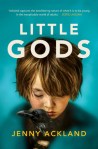
Jenny Ackland, Little godsFICTION

CHILDREN’S PICTURE BOOKS

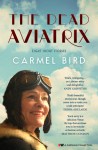
Carmel Bird, Dead aviatrixSHORT STORIES

SCRIPTS

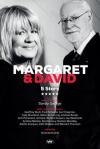
Amanda Duthie, Margaret and DavidNON-FICTION

This year I reversed the trend of previous years which saw me reading fewer and fewer novels for the Challenge – 48% in 2015, 40% in 2016, and only 34% in 2017 – compared with other forms of writing. This year, however, novels comprised over 55% of my AWW challenge reading, which proportion more closely reflects my reading preferences.

I read no poetry or verse novels this year, but I did read two plays by Garner. I also read fewer short story collections or anthologies, but I did read more Classics, including individual short stories. I’d love to read more of those. My non-fiction reading was more diverse – that is, significantly fewer memoirs than last year.

Claire G Coleman, Terra nulliusI’m disappointed that I only read two books this year by Indigenous Australian women – Claire G. Coleman’s novel and Marie Munkara’s memoir. I’d like to improve this next year – and have two right now on the “definitely-will-be-read pile”, so that’s a start.

Anyhow, if you’d like to know more about the Challenge, check it out here. We are also on Facebook, Twitter (@auswomenwriters), GoodReads and Google+. Do consider joining us. All readers are welcome.

Finally, a big thanks again to Theresa, Elizabeth and the rest of the team. I love being part of this challenge, partly because I believe in its goals but also because the people involved are so willing and cooperative. They are a pleasure to work with. See you in 2019.

And so, on to 2019
AWW Challenge 2019 BadgeThe 2019 sign up form is ready, so this is also my Sign Up post for next year. As always, I’m nominating myself for the Franklin level, which is to read 10 books by Australian women and post reviews for at least 6 of those. I expect, of course, to exceed this.

* This challenge was instigated by Elizabeth Lhuede in 2012 in response to concerns in Australian literary circles about the lack of recognition for women writers. I have been one of the challenge’s volunteers since 2013, being responsible for the Literary and Classics areas.

Australian Women Writers 2018 Challenge completed

Mirandi Riwoe, The fish girlAs in previous years, I’m writing my completion post for the Australian Women Writer’s Challenge, around the middle of the year, even though I will continue to contribute until the year’s end. However, I like to get the formal completion post out of the way, so I can relax!

I signed up, again, for the top-level, Franklin, which involves reading 10 books and reviewing at least 6, and again I’ve exceeded this. In fact, by June 30, I had contributed 18 reviews to the challenge.

Here’s my list in alphabetical order (by woman author), with the links on the titles being to my reviews:

AWW Badge 2018There’s a significant difference between this year’s completion post and those of recent years – and that’s in the proportion of fiction to nonfiction. Last year, as you may remember from my 2017 Reading Highlights post, I read an unusually large proportion of nonfiction books (47%) and this was also reflected in my AWW Challenge reading. I said I wanted to recalibrate this in 2018 towards more fiction, and so far I’ve been achieving that (in my AWW Challenge reading and overall).

I don’t have specific goals for the rest of the year, except that I’d like to read more indigenous writers (besides Claire G. Coleman), at least one more classic (in addition to Tasma), and more from my TBR pile (besides Helen Garner and Elizabeth Jolley).

My 2018 AWW Challenge wrap-up post will tell the story!

Wanted: Literary Romantic Pairs

I really should have posted this yesterday, on Valentine’s Day. What a missed opportunity! And what on earth, you are probably wondering, am I talking about?William Shakespeare, Romeo and Juliet

Well, here’s the gen. Longterm friend and regular reader of Whispering Gums, NeilAtKallaroo, needs help, and he thinks that this blog’s intelligent, engaged readers are the people to ask. The story is that his daughter is currently planning the reception for her wedding this September. She wants each table to be labelled with a romantic pair – like Romeo and Juliet, Darcy and Lizzie, Anthony and Cleopatra, and even the Owl and the Pussycat.

But, what should they call the bridal party’s table?  Currently it is just called “Bridal Party” which, as Neil rightly says, “isn’t very literary at all”! However, before you start running to your bookshelves, there’s an added request. If possible, they’d like the novel the pair name comes from “to include a sumptuous description of their wedding reception!” Please, no Miss Havishams! Neil and family welcome creativity – so think as laterally as you like – but Miss Havisham’s wedding feast is probably a step too far …

Finally, to offer a little encouragement, if someone here comes up with the pair that is eventually chosen, I will send an Aussie novel of my choice to the first person (no matter where you live) who suggested that pair.

So now, get those literary brains going …

Monday musings on Australian literature: Australian Women Writers Challenge 2017

aww2017 badgeAs has become tradition, I’m devoting my last Monday Musings of the year to the Australian Women Writers Challenge*. But, this time, my last Monday Musings also coincides with Christmas Day, so I wish a happy, peaceful holiday season to all my readers here who celebrate this time of year, however or whatever you celebrate.

Now, on with the show … This year has been an active one at the Challenge with a significantly increased number of reviews, in my area at least. We’ve also, with the help of new Challenge volunteer Theresa Smith (of Theresa Smith writes), published a large number of interviews with authors in our Spotlight series and, through connections made by Challenge founder Elizabeth Lhuede, published several posts on classic Australian women writers. In other words, we are extending the content on the blog to make it a broader resource beyond our round-ups and the reviews database which is, of course, the backbone of the challenge. The database now contains reviews for over 4,400 books across all forms and genres of Australian women’s writing, from all periods. This represents an increase of over 20% on last year’s total. Another good achievement.

Once again the Challenge ran some special events during the year, achieved some milestones, and introduced some new initiatives. These include:

  • Spotlights: Throughout the year we posted a variety of Spotlights – Saturday and Sunday Spotlights comprised author interviews (of which I did two, with Sara Dowse and Dorothy Johnston), Small Press Spotlights in which we featured some of Australia’s small publishing houses), and spotlights on classic women authors, like Ada Cambridge.
  • Facebook Page: Our Facebook Page – Reading Australian Women Writers – which was created last year, continues to attract readers wanting to share their latest Aussie women writers’ reads.
  • Bingo: We ran our second Bingo challenge – two in fact, one general, one classic – but I let it slip. Next year I will try a reminder system, although I’m not keen to overfill my blog with non-review content.
  • New releases: We are playing with how to capture and promote upcoming releases. We haven’t settled on the perfect process yet. Watch the blog for more on this.
  • Diversity: Once again author and researcher Jessica White coordinated a series of guest posts by “diverse” writers. There were posts by writers living with mental illness, by lesbian/queer writers, and others. These sorts of posts help make the AWW blog stand out from the crowd.

My personal round-up for the year

Let’s start with the facts, followed by some commentary. By the end of the year I will have posted 30 reviews for the challenge, the same as last year. Here they are, with links to my reviews:

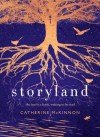
Catherine McKinnon, StorylandFICTION

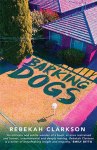
Rebekah Clarkson, Barking dogsSHORT STORIES

POETRY and VERSE NOVELS

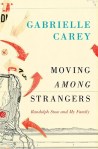
Gabrielle Carey, Moving among strangersNON-FICTION

I’ve noticed an interesting trend over the last three years in my Aussie women’s reading – a noticeable decrease in the proportion of novels:  48% in 2015, 40% in 2016, and just 34% this year. I’m not sure why this is, but I have been aware of reading more non-fiction this year – more by accident than on purpose. The types of novels I read changed from last year too, with very few debut novels this year as against nearly half last year, and two classics as against none last year!

Indigenous writers represented 10% of my total, with two books by Ali Cobby Eckermann and one by Ellen van Neerven. And memoir featured significantly – again – in my non-fiction reading, though they weren’t all your traditional memoir, one being an essay anthology, and two being what I would call “hybrids”. Overall, I’m reasonably satisfied with the diversity of my contribution – though I could always do better.

Anyhow, if you’d like to know more, check out the challenge here. The 2018 sign up form is ready, so do consider joining us. All readers are welcome. I’ll be there again (this being my sign-up post).  The challenge is also on Facebook, Twitter (@auswomenwriters), GoodReads and Google+.

Finally, a big thanks to Theresa, Elizabeth and the rest of the team – including my longtime online bookgroup friend Janine Rizzetti (Resident Judge of Port Phillip), who joined us this year. Once again it has been a positive experience, which is a credit to the willingness and flexibility of those involved. See you in 2018.

* This challenge was instigated by Elizabeth Lhuede in 2012 in response to concerns in Australian literary circles about the lack of recognition for women writers. I am one of the challenge’s volunteers – with responsibility for the Literary and Classics area.

Australian Women Writers 2017 Challenge completed

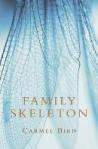
Carmel Bird, Family skeletonI usually write my completion post for the Australian Women Writer’s Challenge, around the middle of the year, even though I plan to take part until the year’s end. As in previous years, I signed up for the top-level, Franklin, which involves reading 10 books and reviewing at least 6, and as in previous years I’ve exceeded this. However, it’s good to get the completion post out of the way before the end of year madness begins!

I have, so far this year, contributed 16 reviews to the challenge, two more than for last year’s completion post.

Here’s my list in alphabetical order (by woman author), with the links on the titles being to my reviews:

Unlike last year’s half-way list, I did review one classic and a book by an indigenous woman author this year. There are other differences too. Last year I’d read just three memoirs (with two of those being hybrid biography-memoirs) while this year I’ve reviewed five memoirs to date. The fiction-nonfiction ratio, though, is still roughly the same.

aww2017 badgeLast year, I ended the post on plans for the rest of the year – and said that they would include reading at least one indigenous woman, Ali Cobby Eckermann, which indeed I did (her Ruby Moonlight). This year, however, I’m not setting out any plans. I do know I’ll be reading Heather Rose’s Stella Prize winner, The museum of modern love, as my reading group is doing that. (We will be reading a couple of other women writers, but they are not Australian.) As for the rest of my reading plans for the year, they are undefined – which means I could very well be as surprised as you by what turns up!

Monday musings on Australian literature: Australian Women Writers’ Challenge 2016

AWW Logo 2016For the fifth year in a row, I’m devoting my last Monday Musings of the year to the Australian Women Writers Challenge*.

This year has been one of consolidation rather than of huge change for the Challenge, as we got used to our self-hosted site to which we moved in 2015. The big advantage of this move was that it enabled us to produce a single searchable database of all reviews logged since the challenge started. It now contains reviews for nearly 3,600 books across all forms and genres of Australian women’s writing, an increase of 20% on last year’s total. A good achievement n’est-ce pas?

Once again the Challenge ran some special events during the year, achieved some milestones, and introduced some new initiatives. These include:

A big thanks to author/researcher Jessica White for her special posts on diversity – the Migrant heritage, Aboriginal and Torres Strait Islander Heritage, and writers with a disability  posts – and to Kelly (Orange Pekoe Reviews) for creating the Bingo Challenge, which we hope to run again in 2017. And a shout out too to Brona, Debbie Robson and Elizabeth who often commented on my AWW round-up posts.

The Australian Women Writers’ Challenge is the only challenge I do (or have ever done). This year I posted 30 reviews for the challenge, three more than last year. I managed a similar variety in my reading, but only dipped once into my TBR pile (to read part of Christina Stead’s Ocean of story for Lisa’s ANZLitLovers’ Christina Stead Week). Last year, I challenged myself to tackle my TBR pile and I failed, miserably. I also let the ball drop this year in one of my favourite areas, classic Australian women’s fiction. I’m therefore making no promises, setting no goals (at least publicly!) for next year.

Anyhow, here’s my list of works read for this year (with links to the reviews):

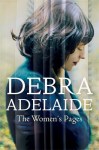
Debra Adelaide, The women's pagesFICTION

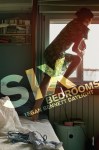
Tegan Bennett Daylight, Six bedroomsSHORT STORIES

POETRY and VERSE NOVELS

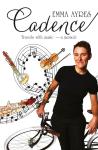
Emma Ayres, CadenceNON-FICTION

As in each year, there are subtle differences in this year’s list, though none are big enough to suggest my reading tastes have changed! For example, last year 48% of the reviews were for novels, while this year only 40% were. Half of these were debut novels. This year saw a return to 2014’s heavy emphasis on Memoir in my non-fiction reading, though there was some interesting playing with form. Not only were a couple of memoirs told through essays, but I also read three mother-daughter stories which combined elements of memoir with biography.

aww2017-badgeAnyhow, if you are interested in the challenge, you can check it out here. The 2017 sign up form is ready so do consider joining up, as we welcome all – women and men – to join us. I’ll be there again. The challenge is also on Facebook, Twitter (@auswomenwriters), GoodReads and Google+.

Finally, a big thanks to Elizabeth and the rest of the team – including Lewis, our wonderful database developer – for making it all such a cooperative, and enjoyable experience. I look forward to seeing what 2017 brings.

* This challenge was instigated by Elizabeth Lhuede in 2012 in response to concerns in Australian literary circles about the lack of recognition for women writers. I am one of the challenge’s volunteers – with responsibility for the Literary and Classics area.

AWW Bingo 2016 Challenge Completed

For a blogger of more than 7-years standing who doesn’t take part in memes and challenges, I’m doing a good job this month. First it was 6 degrees of separation earlier this month, and now it’s a bingo game. I have good reasons for these exceptions, but I don’t expect you really want to know those, so let’s just get on with it.

AWW Logo 2016Back in April, Kelly from Orange Pekoe Reviews created two Bingo cards for the AWW Challenge and posted them on the blog. The date for completion was set as 31 October. A couple of days ago, AWW participant Christy Collins became the first person to post that she’d completed the challenge. Now, my life has been so busy these last 6 months or so that I’ve not actively pursued the challenge. However, I’ve kept the cards next to my work area and have checked them every now and then. After Christy posted her completion, I had another look and blow me down but I’d complete one! Now, that’s the sort of challenge I like as you know, one that’s not a challenge!

So, here’s my post recording that I completed Card One:

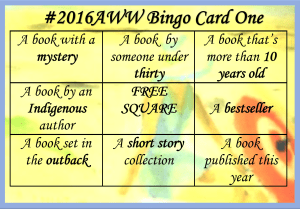
2016 Bingo Card One

  • A book with a mystery: Not being a big reader of crime/mystery books, I was initially glad that this didn’t say “a mystery book”, because it meant I could choose any book which contained a mystery. However, as it turned out, I did read a crime mystery this year, Dorothy Johnston’s engaging Through a camel’s eye: A sea-change mystery (my review). It’s first in her new series set around where she lives on the southern Victorian coast.
  • A book by someone under 30: I really thought this would be the stumbling block for me. I  read quite a few books by young women writers, but which ones are under thirty and which are just over? It’s not always easy to find out. Fortunately, I was saved by Leah A who titled her book perfectly for my purpose, Ten silly poems by a ten year old (my review). Can’t be clearer than that. Thanks Leah! And thanks for your delightful book too.
  • A book that’s more than ten years old: I haven’t read as many classics this year, but I did read Kate Jennings’ autobiographical novel Moral hazard (my review), which was first published in 2002. Not only did it help me meet this challenge but it introduced me to the existence of “business novels”.
  • A book by an indigenous author: I’ve read a few indigenous authors this year, but the one I want to choose here is Ali Cobby Eckermann’s mesmeric verse novel Ruby Moonlight (my review). If I’d been going to do Card 2, I would have saved it for that, because it would have satisfied that card’s “book with poems” category”.
  • My choice (Free square): Oh dear, what to choose here? It’s a toss-up between two collections of essays, Garner’s Everywhere I look and Fiona Wright’s Small acts of disappearance, and Julie Proudfoot’s award-winning novella, The neighbour. But, for her honest handling of such a difficult subject, the experience of an eating disorder, I’ll choose Wright’s book (my review).
  • A bestseller: Fortunately, the challenge didn’t define what it meant by “bestseller”, otherwise I might have had a challenge here, but Charlotte Wood’s The natural way of things (my review) was listed a few times in Melbourne bookshop Readings’ Top Ten sellers of the week. I think that qualifies, don’t you?
  • A book set in the outback: I tend mostly to think of “the outback” as Australia’s dry remote regions, but for this category I’m submitting Sarah Kanake’s debut novel Sing fox to me (my review) set in a remote mountainous area of Tasmania.
  • A short story collection: Now, in this category I have a few excellent choices, including books by Tegan Bennett Daylight and Cassie Flanagan Wilanski, but I’m going to choose Elizabeth Harrower’s A few days in the country, and other stories (my review). That woman can so write, and I’m determined that now re-discovered she’s not going to disappear again.
  • A book published this year: Again, I could choose from several books, but for her wonderful turns of phrase and exploration of mental illness, I’m choosing Anna Spargo-Ryan’s The paper house (my review)

Now, that wasn’t too hard … I rather enjoyed looking at this year’s reading from a different angle, and being reminded of some very fine reading I’ve done.

If you had done this challenge, what books would you have chosen in any of these categories. (Unlike us challenge participants, you don’t have to limit yourself to Australian women!)

Australian Women Writers 2016 Challenge completed

The time has come to write my annual completion post for my one challenge of the year, the Australian Women Writer’s Challenge. As in previous years, I signed up for the top-level, Franklin, which involves reading 10 books and reviewing at least 6. I’ve exceeded this, and I plan to continue to add to the challenge, as I’ve done in previous years, but half-way through the year seems a good time to write my completion post.

I have, so far this year, contributed 14 reviews to the challenge.

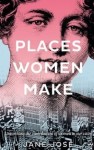
Jane Jose, Places women makeHere’s my list in alphabetical order, with the links on the titles being to my reviews:

This is quite different to last year’s completion post list which included one classic and one book by an indigenous author. I like to read classics, and I also like to read indigenous authors, but this year so far I’ve read neither. Instead, I seem to have read significantly more non-fiction, six out of 14 in fact. By the end of last year’s challenge, I’d read seven non-fiction out of 27 books in total. Looks like I’ll exceed that this year unless I stop reading Australian women’s non-fiction pretty well right now.

It’s also a little different because it includes two books by an author, the wonderful Elizabeth Harrower. Of course, it’s not that I don’t read multiple books by authors – but this usually happens over time. I tend not to find an author and immediately go hell-for-leather with that author – not because I don’t want to, but because I have books lined up, which brings me to …

… plans for the rest of the year. I know I’ll be reading at least one indigenous woman, Ali Cobby Eckermann, and I do have a couple of classics I really want to get to this year, but the review copies are piling up and there’s my reading group schedule, so I’m just going to see how it goes. The best laid plans, and all that!

Do you plan your reading in advance – and if so, do you keep to it – or do you just read what comes? 


Monday musings on Australian literature: AWW Reading Bingo Challenge

I did have another post planned for today, but it can wait – indeed, it might be better written if it waited – because I’d like to tell you about a special sub-challenge in this year’s Australian Women Writers (AWW) Challenge. A Reading Bingo.

awwchallenge2016If, like me, you are not really up on blogger challenge culture, you may not know what a Reading Bingo is. You may not want to know, either, but I figure it never hurts to share knowledge about what’s going on in the lit-blogosphere.  The AWW Challenge’s Bingo was created by Kelly of Orange Pekoe Reviews, who has done them before. Her idea was to inject a little fun into the Challenge, and perhaps encourage a different set of readers to join in. So, here is how it works … You

  • Choose one (or both) of the two Bingo Cards created for challenge. (Each card contains 9 boxes suggesting different topics or categories of books – written on course by Australian women writers – that you might like to read.)
  • Read a book in each of the categories on the card (or cards) you’ve chosen, until you complete the card – between 1 January 2016 and 31 October 2016.
  • Review each book you read on a blog or GoodReads or other reviewing site.
  • Write a wrap up post on your blog and post a link to it  – or post links to your GoodReads (or other) reviews – on the Bingo post on the AWW Challenge site.

There will be prizes. Currently, we have prizes for Australian residents, but we are hoping to organise prizes for overseas readers as well.

You can find all the details about the Bingo challenge online here, but here are the categories to get you thinking:

Bingo Card One:

  • A book with a mystery
  • A book by someone under thirty
  • A book that’s more than 10 years old
  • A book by an indigenous author
  • FREE SQUARE
  • A bestseller
  • A book set in the outback
  • A short story collection
  • A book published this year.

Bingo Card Two:

  • A book set in your favourite town or city
  • A forgotten classic
  • A book you heard about online
  • A funny book
  • FREE SQUARE
  • A book by someone of a different ethnicity to you
  • The first book by a favourite author
  • A book with poems
  • A book of non-fiction

So, if you are taking part in the challenge now, or would like to take part, this might be a way of helping you mix up your reading and explore some areas of writing that you don’t usually read. Or, it could encourage you to get to some books on your TBR that you just need that little bit of extra impetus to pick up. I have just the book for the Forgotten Classic box, one that I’ve picked up and put down may times over the last decade. This might very well be its time!

I guess this is all a bit whimsical. I’m not sure it will change my reading practices much, except for that classic, because I’m pretty confident that I read enough variety that books will naturally fill the spots! It will be interesting to see.

Do any of these categories speak to your TBR? (You can answer with non-Aussie women’s books if you like!)