Monday musings on Australian literature: Selected Australian doorstoppers

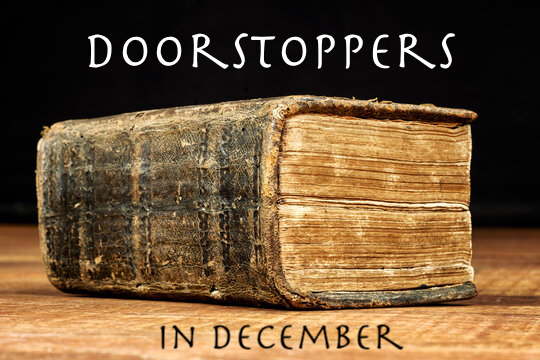
A week or so ago, I saw a post by Cathy (746 Books) that she was taking part in a Doorstoppers in December reading event. My first thought was that December is the last month I would commit to reading doorstoppers. In fact, my reading group agrees that doorstopper month is January, our Southern Hemisphere summer holiday month. That’s the only month we willingly schedule a long book. My second thought was that I call these books “big baggy monsters”. But, that’s not complimentary I know – and I do like many big books. Also, it’s not alliterative, which is almost de rigueur for these blog reading challenges.

Anyhow, I will not be taking active part, but it seemed like a good opportunity for a Monday Musings. I’ll start with definitions because, of course, definition is an essential component of any challenge. The challenge has been initiated by Laura Tisdall, so she has defined the term for the participants. (Although, readers are an anarchic lot and can also make up their own rules! We wouldn’t have it any other way, would we?) Here is what she says:

Genre conventions vary so much. For litfic, for example, which tends to run shorter, I can see anything over 350 pages qualifying as a doorstopper, whereas in epic fantasy, 400 pages would probably be bog standard. Let’s say it has to at least hit the 350-page mark – and we encourage taking on those real 500-page or 600-page + behemoths 

I love her recognition that what is a doorstopper isn’t absolute, that it does depend on the conventions or expectations of different forms or genres. I will focus on the literary fiction end of the spectrum but I think 350 pages is a bit short, particularly if I want to narrow the field a bit, so I’m going to set my target for this post at 450 pages. I am also going to limit my selected list to fiction published this century (albeit the challenge, itself, is not limited to fiction.)

However, I will commence with a little nod to doorstoppers our past. The nineteenth century was the century of big baggy monsters, even in Australia. And “baggy” is the right word for some, due partly to the fact that many were initially published in newspapers as serials, so they tended to, let me say, ramble a bit to keep people interested over the long haul. Dickens is the obvious example of a writer of big digressive books.

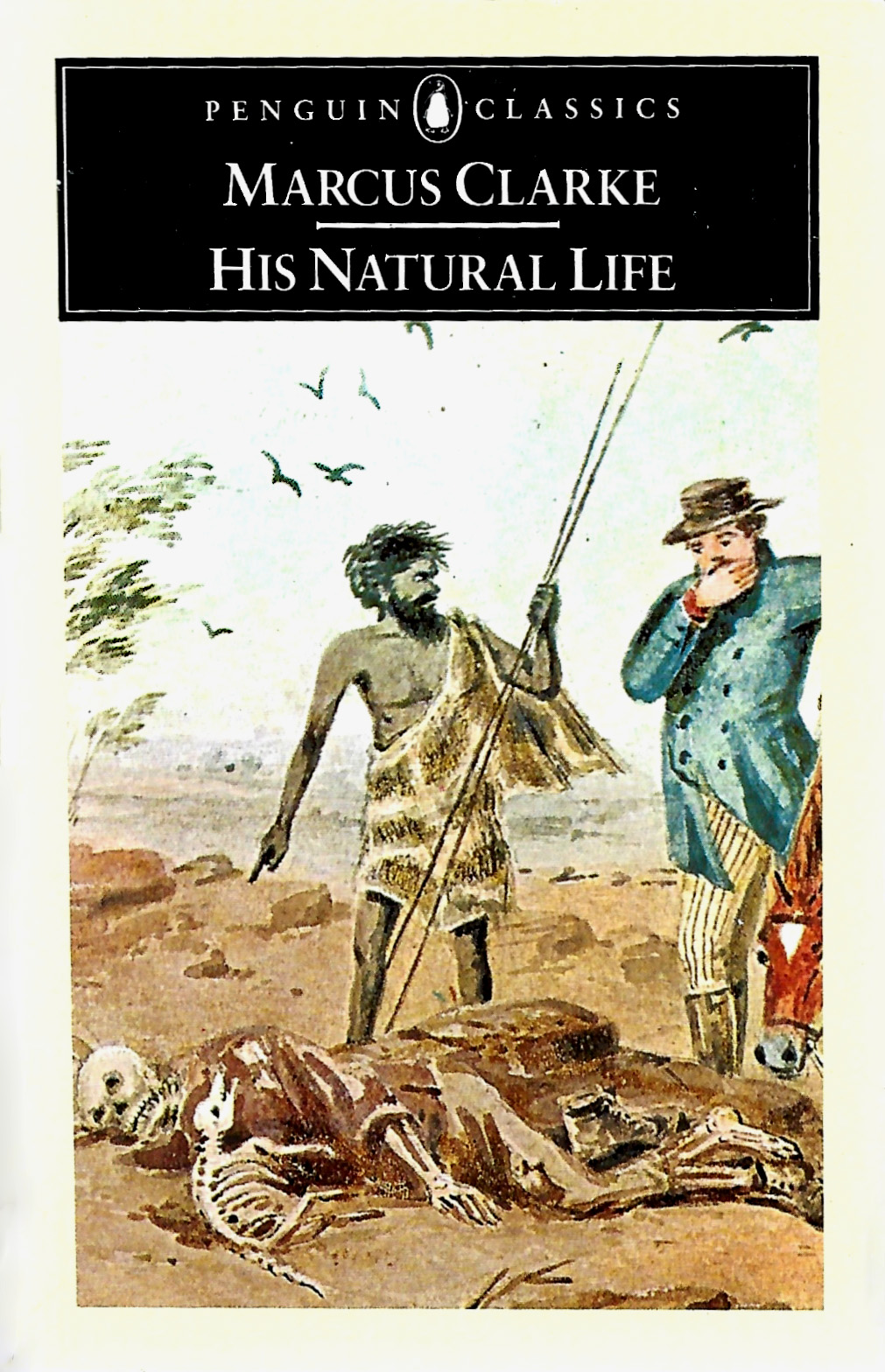
In 19th century Australia, publishing was just getting going so the pickings are fewer, but there’s Marcus Clarke’s 1874 His natural life (later For the term of his natural life). Pagination varies widely with edition, but let’s average it to 500pp. Catherine Martin’s 1890 An Australian girl is around 470pp. Rolf Boldrewood’s Robbery under arms runs between 400 and 450pp in most editions, while Caroline Leakey’s 1859 The broad arrow is shorter, with editions averaging around 400pp.

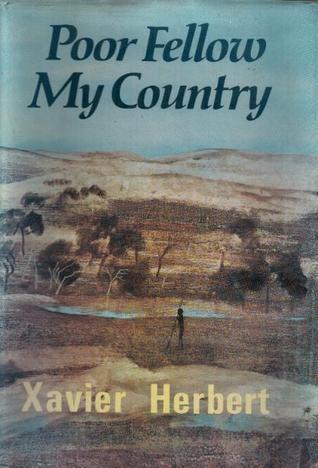
By the 20th century, Australian publishing was growing. Like Leakey’s novel, Joseph Furphy/Tom Collins’ 1903 Such is life is shorter, averaging 400pp (Bill’s final post). Henry Handel Richardson’s 1930 The fortunes of Richard Mahony, depending on the edition, comes in around the 950pp mark. Of course, it was initially published as three separate, and therefore relatively short, volumes but the doorstopper edition is the one I first knew in my family home. Throughout the century many doorstoppers hit the bookstands, including books by Christina Stead in the 1930s and 40s, Xavier Herbert from the 1930s to the 1970s (when his doorstopper extraordinaire, Poor fellow my country was published), Patrick White from the 1950s to late in his career, and on to writers like Pater Carey whose second novel, 1985’s Illywhacker, was 600 pages. He went on to publish more big novels through the late 20th and into the 21st century.

Selected 21st Century Doorstoppers

The list below draws from novels I’ve read from this century. In cases where I’ve read more than one doorstopper from that author, I’ve just chosen one.

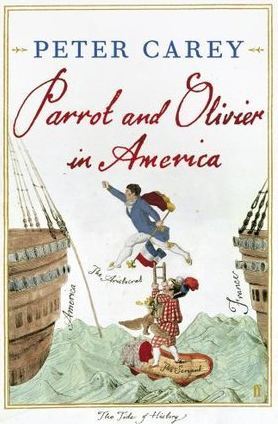
Peter Carey, Parrot and Olivier in America
  • Peter Carey, Parrot and Olivier in America (2009, 464pp, my review)
  • Trent Dalton, Boy swallows universe (2018, 474pp, my review)
  • Michelle de Kretser, Questions of travel (2012, 517pp, my review)
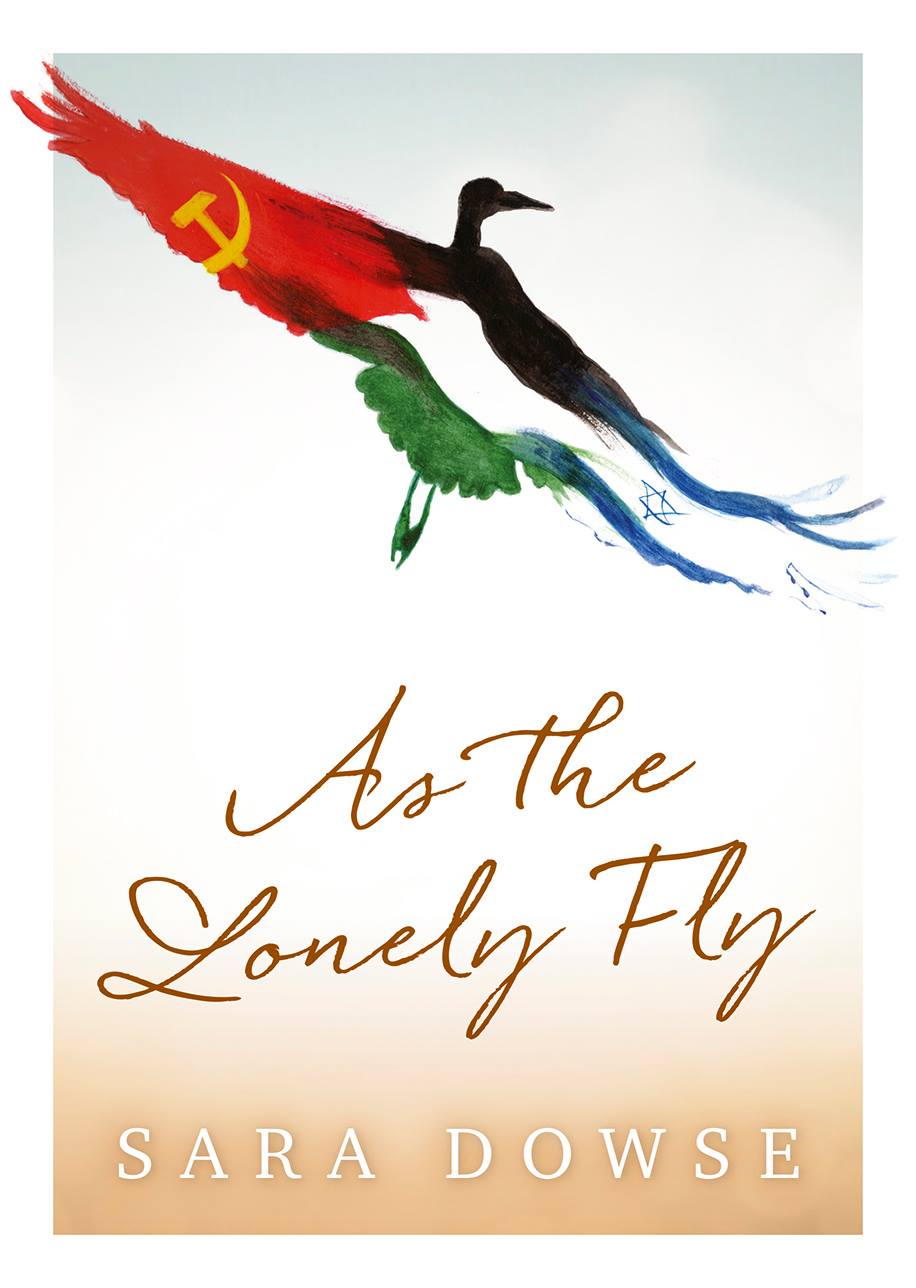
  • Sara Dowse, As the lonely fly (2017, 480pp, my review)
  • Richard Flanagan, The narrow road to the deep north (2013, 466pp, my review)
  • Elliot Perlman, The street sweeper (2011, 626pp, my review)
  • Wendy Scarfe, Hunger town (2014, 456pp, my review)
  • Steve Toltz, A fraction of a whole (2008, 561pp, my review)
  • Christos Tsiolkas, The slap (2008, 485pp, my review)
  • Tim Winton, Dirt music (2001, 465pp, read before blogging)
  • Alexis Wright, Carpentaria (2006, 526pp, my review)
Sara Dowse, As the lonely bly

There are many more but this is a start. They include historical and contemporary fiction. Many offer grand sweeps, while some, like Scarfe’s Hunger town, are tightly focused. The grand sweep – mostly across and/or place – is of course not unusual in doorstoppers. A few are comic or satiric in tone, like Carey’s Parrot and Olivier in America, while others are serious, and sometimes quite dark. The authors include First Nations Alexis Wright and some of migrant background. And, male writers outweigh the females. Perhaps it’s in proportion to the male-female publication ratio? I don’t have the statistics to prove or disprove this. Most of these authors have written many books, not all of which are big, meaning the form has followed the function!

Are you planning to take part in Doorstoppers in December? And, if you are, what are you planning to read? Regardless, how do doorstoppers fit into your reading practice?

Six degrees of separation, FROM Seascraper TO …

Woo hoo, it’s summer at last, not that we necessarily knew it, given on day 2 Canberra experienced its lowest summer minimum (just below freezing point) since records began. However, this weekend is different and we are seeing proper summer temperatures. Just right for our Southern Hemisphere Christmas parties that are starting to happen. I do hope all of you who celebrate holidays in December have good ones. Now, I will get onto the meme. As always, if you don’t know how it works, please check Kate’s blog – booksaremyfavouriteandbest.
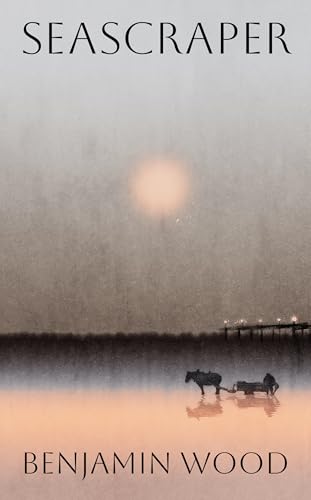
The first rule is that Kate sets our starting book. This month, it’s a Booker Prize nominated novel, Benjamin Wood’s Seascraper, about which I know nothing except what I read while researching it for this meme! GoodReads ends its description by calling it “the story of a young man hemmed in by his circumstances, striving to achieve fulfilment far beyond the world he knows, and sees possibilities when a stranger arrives”.

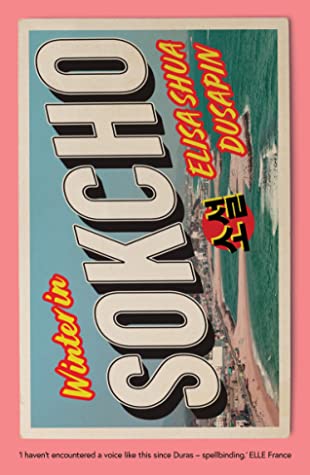
So that is where I am going, that is, to a young woman hemmed in by circumstances and who sees possibilities in a stranger to comes to stay – at the guesthouse where she works. The novel is Elisa Shua Dusapin’s Winter in Sokcho (my review). It has some other loose links to Seascraper, in that she lives in a coastal town – though this is not a seaside book in the sense that Wood’s book seems to be, and she doesn’t earn her living directly from the sea.

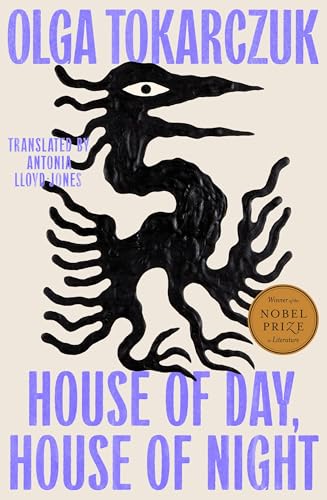
Now I’m moving into a link or theme that will inform the rest of this post, the idea of borders. Dusapin’s unnamed narrator’s town is on the border between North and South Korea. Indeed, when the Korean peninsula was divided into two countries post-World War 2, Sokcho was on the Northern side. It became part of the South after the 1953 Korean War armistice. So, my link is to another novel set in a border region where borders have been changed by war, Olga Tokarczuk’s House of day, house of night (my review). In this book, the border has a strong presence that plays on people’s lives.

Hans Bergner, Between sea and sky

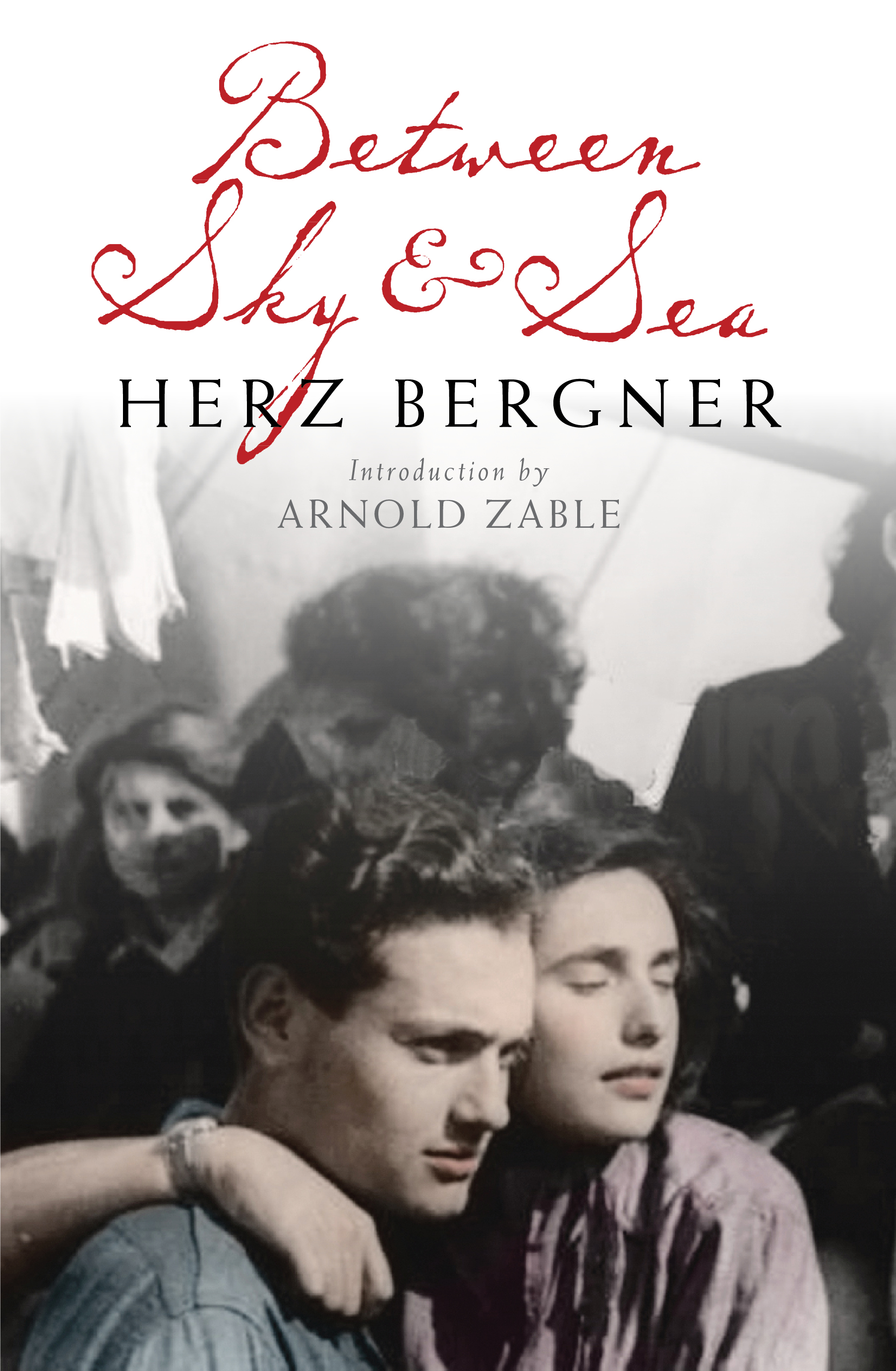
For the people in my next book, war and borders are also important, but in a very different way. The book is Hans Bergner’s Between sea and sky (my review). His people are Jewish refugees on a dilapidated boat, searching for a new home, but being accepted by no-one. They are borderless – and desperate. The book has other links with Tokarczuk’s novel – the refugees are Polish, and the war affecting them is World War 2.

Thomas King and Natasha Donovan, Borders, cover

Staying with borders, I’m moving to another, well, borderless story, in a way, Thomas King’s Borders (see my review of the short story, and of the graphic novel co-created with Natasha Donovan). This is another story where borders have been drawn up with no consideration of their relevance to the people who live there, in this case, First Nations people. Our protagonist insists – rightly – that she is Blackfoot, not American or Canadian, and gets caught in borderland limbo.

Yuri Herrera, Signs preceding the end of the world

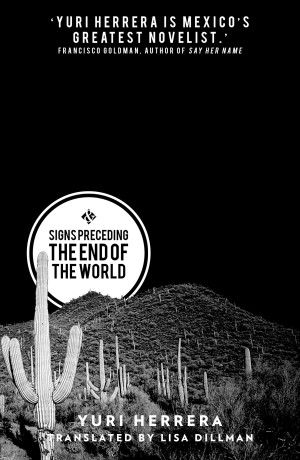
It was not hard to keep on theme, as stories about borders and people abound. We are staying in North America for this one, Yuri Herrera’s Signs preceding the end of the world (my review). Drawing from the USA’s border with Mexico, it tells of a young girl who crosses it – at great risk – to take messages to her brother. Herrera is interested in not only the politics of borders like this, but also their personal, psychological and spiritual implications. I wrote in my post that the novel “works on two levels, the literal Mexican-American border story and something more universal about crossings and transitions”.

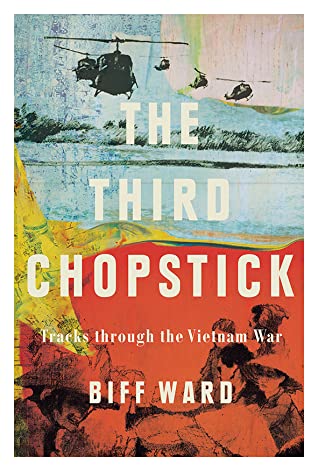
My final book moves further into this idea of mental transitions, but is inspired by a war over borders (to put it simply) – the Vietnam or American War. I’m talking Biff Ward’s memoir, The third chopstick (my review). Ward, a pacifist and anti-Vietnam War activist, decided later in life to revisit her actions during those emotional times. So she sought out, met and interviewed some of the soldiers who fought in the war she’d demonstrated against, and learnt a little about national borders but a whole lot more about the borders in our minds!

Three of my six selections this month are by women and three by men (but one is a male-female collaboration, so the women have it, slightly!) Three of the books are translated. We have crossed much of the globe, east-west and north-south, and touched on war too often, with all set over the last century. Will we ever learn to live peacefully with national borders? Dare I say it would be great to have none?

Have you read Seascraper and, regardless, what would you link to?
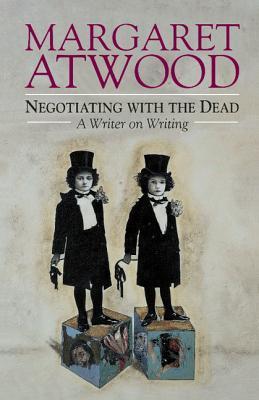
Margaret Atwood, Negotiating with the dead: A writer on writing (#BookReview)

My reading for Buried in Print Marcie’s annual MARM month has been both sporadic and minimal, to say the least, but this year I finally got to read a book that has been on my TBR shelves for a long time and that I have planned to read over the last few MARMs. It’s Atwood’s treatise (or manifesto or just plain ponderings) on writing, Negotiating with the dead. Interestingly, in 2003 it won the Independent Publisher Book Award (IPPY) for Autobiography/Memoir. I hadn’t quite thought of it that way, though on reflection I can see it does have a strong element of memoir.

Its origins, however, are not in memoir but in the series of lectures she delivered at the University of Cambridge in 2000, the Empson Lectures, which commemorate literary critic, William Empson. (I recently – and sadly – downsized his most famous book, Seven types of ambiguity, out of my library). Atwood turned those lectures into this set of essays that was published by Cambridge University Press in 2002 (and that I leapt on when I saw it remaindered in 2010).

Subtitled “A writer on writing”, this book is probably not quite what most of us would expect, unless we really know Atwood. As she says in her Introduction, it is not so much about writing as about something more abstract, more existential even, about what is writing, who is the writer, and what are the writer’s relationships with writing, with the reader, with other writers, and with themself. It’s also about the relationship between writing and other art forms, like painting and composing. She says in her Introduction that “it’s about the position the writer find himself in; or herself, which is always a little different”. (Love the little gender reference here.) It’s about what exactly is the writer “up to, why and for whom?”

I rarely do this, but I’m sharing the table of contents for the flavour it gives:

  • Introduction: Into the labyrinth
  • Prologue
  • Orientation: Who do you think you are? What is “a writer,” and how did I become one?
  • Duplicity: The jekyll hand, the hyde hand, and the slippery double Why there are always two?
  • Dedication: The Great God Pen Apollo vs. Mammon: at whose altar should the writer worship?
  • Temptation: Prospero, the Wizard of Oz, Mephisto & Co. Who waves the wand, pulls the strings, or signs the Devil’s book?
  • Communion: Nobody to Nobody The eternal triangle: the writer, the reader, and the book as go-between
  • Descent: Negotiating with the dead Who makes the trip to the Underworld, and why?

There is way too much in the book for me to comment on, but I don’t want to do a general overview either, so I’m just going to share a couple of the ideas that interested me.

One of her main threads concerns “duality” and “doubleness” in writers’ lives. There’s a fundamental duality for a writer – a novelist anyhow – between “the real and the imagined”. She suggests that an inability to distinguish between the two may have had something to do with why she became a writer. This interested me, but it’s not what interested me most in this book. Rather, it was the idea of the writer’s “doubleness”, which she introduces in chapter 2, “Duplicity”, the idea that there is the person who writes and the other person who lives life (walking the dog, eating bran “as a sensible precaution”, and so on). She explains it this way:

All writers are double, for the simple reason that you can never actually meet the author of the book you have just read. Too much time has elapsed between composition and publication, and the person who wrote the book is now a different person.

It’s obvious, of course, but we don’t often think about it. Writers do, though. Take Sofie Laguna, for example. In the recent conversation I attended, she said she wished she’d kept a diary when she was writing her novel to capture the “dance” she’d had between the conscious and the subconscious as she worked through the issues she was confronting. In other words, the Sofie in front of us was not the Sofie who had written that book. In chapter 5, “Communion”, Atwood addresses this issue from a different angle when she talks about the relationship between writers and readers.

Back to the writer, though, Atwood talks about, gives examples of, how different writers handle this doubleness, the degree to which they consciously separate their two selves or don’t. This brought to my mind Brian Castro’s Chinese postman (my review) in which he regularly – consciously of course – shifts between first person and third for the same character, a character who owes much to Castro himself but is not Castro. This may be similar to the example she gives, Jorge Luis Borges’ short story “Borges and I”. It’s also something Helen Garner has often discussed, such as in her essay “I” published in Meanjin in Autumn 2002. Even in her nonfiction works, she “creates a persona”, one that “only a very naive reader would suppose … is exactly, precisely and totally identical with the Helen Garner you might see before you”. My point in saying all this is that I think Atwood is exploring something interesting here. Is it new? I don’t know, but it captures ideas I’m seeing both in statements like those of Laguna and Garner, and in recent fiction where I’m noticing an increasing self-consciousness in writers who are explicitly striving for new forms of expression.

Another double Atwood discusses – one related to but also different from the above – is that between the writer and the writing. The writer dies, for example, but the writing lives on. It brought to mind that murky issue concerning posthumous publication (which was discussed on 746 Books Cathy’s Novellas in November post about Marquez’s Until August). It’s a bit tangential, I guess, but Atwood’s separation of the writer and the writing, her sense of the doubleness of writers, puts another spin on this conundrum.

She discusses other issues too, including that of purpose, to which she gives two chapters (3 and 4), setting the art-for-art’s sake supporters against the moral purpose/social relevance proponents, and which of course touches on that grubby issue of writing to earn money!

It’s an erudite book, in that she marshals many writers, known and unknown to me, to illustrate her ideas, but the arguments are also accessible and invite engagement. I did have questions as I read, but she managed to answer most of them. A good read.

Read for Marcie’s #MARM2025

Margaret Atwood
Negotiating with the dead: A writer on writing
Cambridge: Cambridge University Press, 2002
219pp.
ISBN: 9780521662604

Nonfiction November 2025

My participation in Nonfiction November, like Novellas in November and MARM, tends to be a bit random and sporadic. Last year, I wrote one post for Nonfiction November. I will do the same this year, focusing on two of the questions – My Year in Nonfiction and Book Pairings. These are the two that most interest me.

Week 1: Your year in Nonfiction

Heather (Based on a True Story) hosted this week, which is described as follows:

Celebrate your year of nonfiction. What books have you read? What were your favorites? Have you had a favorite topic? Is there a topic you want to read about more?  What are you hoping to get out of participating in Nonfiction November?

This Nonfiction November year runs, by my definition, from 1 November 2024 to 31 October 2025. My nonfiction reading has been varied, though most of it involved some sort of life writing – biography, memoir, and hybrids of the two. These books were, in alphabetical order by author, with links to my reviews or posts where applicable:

  • Sarah Ailwood, “Austen’s Men, Immortality and Intertextuality” (2023, essay, read for a Jane Austen group meeting)
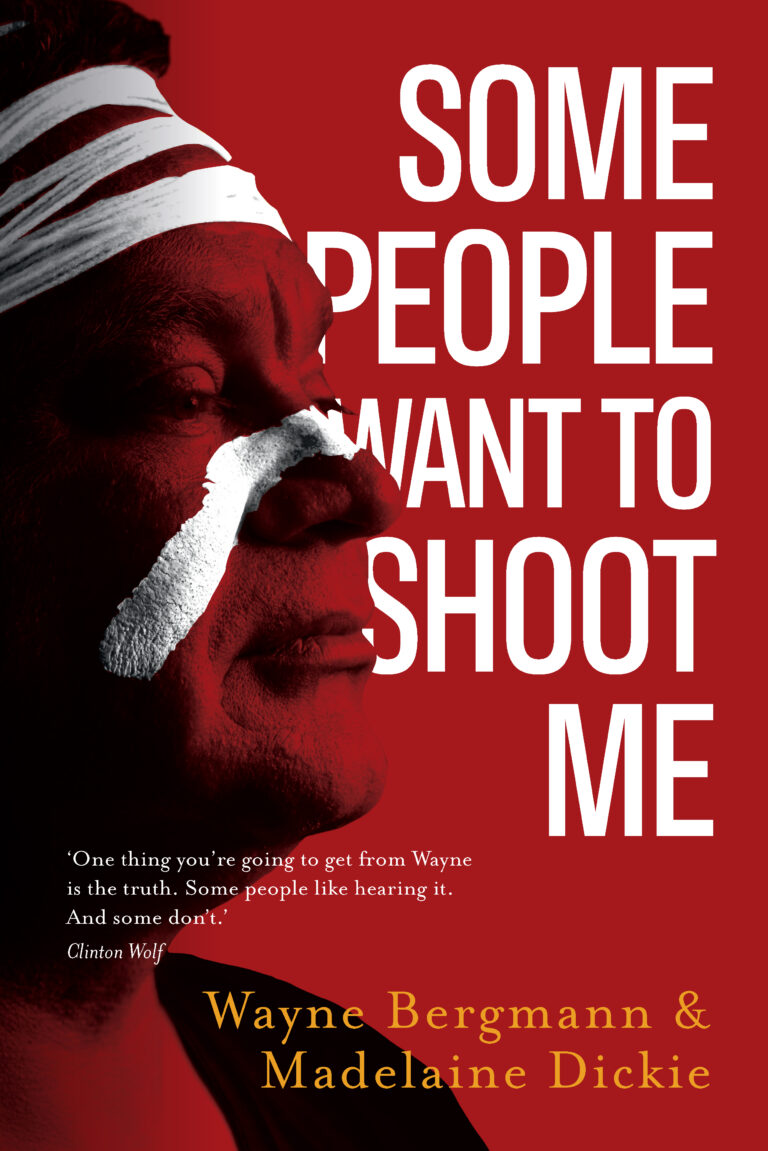
  • Wayne Bergmann and Madelaine Dickie, Some people want to shoot me (2024, co-written biography, my review)
  • Ruby Doyle, “A bush picnic” (1933, newspaper column, read for my post on Doyle)
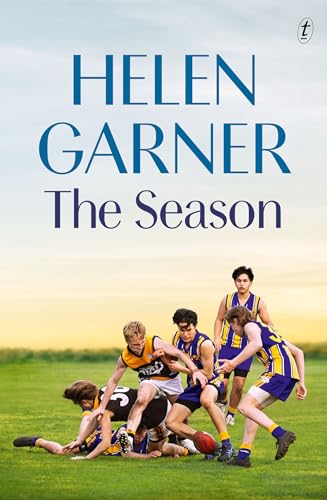
  • Helen Garner, The season (2024, memoir, my review)
  • Gideon Haigh, My brother Jaz (2024, memoir, my review)
  • Marion Halligan, Words for Lucy (2022, memoir, my review)
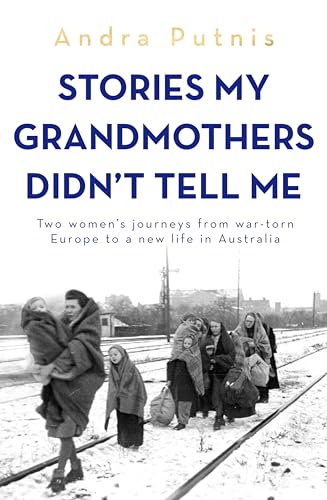
  • Andra Putnis, Stories my grandmothers never told me (2024, biography/memoir, my review)
  • Helen Trinca, Looking for Elizabeth: The life of Elizabeth Harrower (2025, biography, my review)
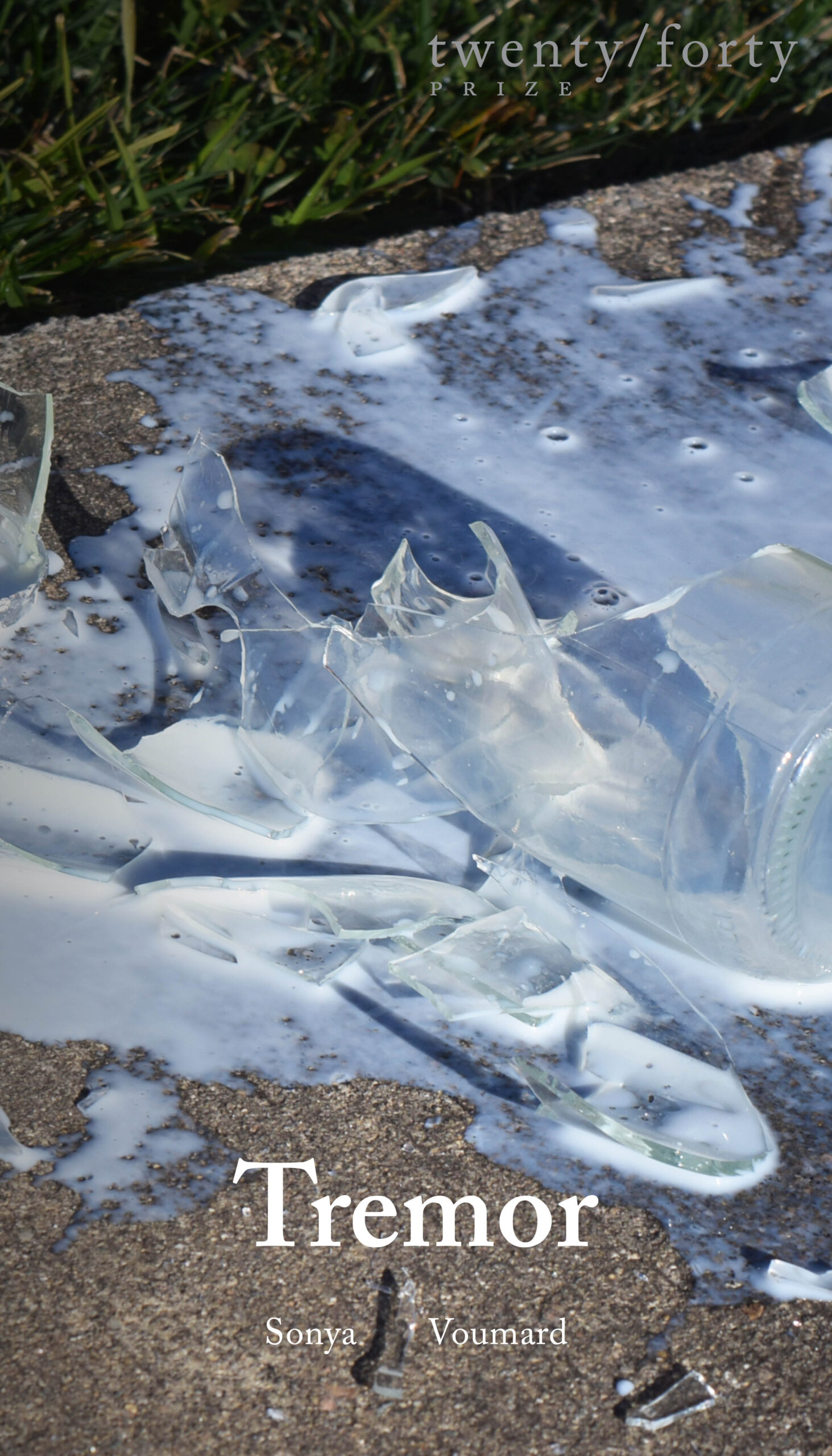
  • Sonia Voumard, Tremor (2024, memoir, my review)

I am currently reading two other nonfiction works, including Hazzard and Harrower: The letters by Brigitta Olubas and Susan Wyndham (see my author conversation post) which I started last year. What I’ve read so far provided some good background for Trinca’s biography of Elizabeth Harrower.

I won’t answer the rest of the questions, except to say that my favourite nonfiction includes literary biography and memoir, and narrative nonfiction on any subject that I think might be interesting!

Week 3: Book Pairings

Liz (Adventures is Reading, Running and Working from Home) hosts this week, and explains it thus:

Pair up a nonfiction book with a fiction title (or whatever you want to pair up). Maybe it’s a historical novel and the real history in a nonfiction version, or a memoir and a novel, or a fiction book you’ve read and you would like recommendations for background reading. Or two books on two different areas have chimed and have a link. You can be as creative as you like!

This is my favourite part of Nonfiction November, because, like the #SixDegrees meme, it’s fun to think about. I’m giving you three pairs. My rule was that the nonfiction book had to come from this year’s reading, but the paired book could – and indeed all do – come from previous years.

Grandmothers’ stories

Cover

This year my reading group read Andra Putnis’ biography/memoir, Stories my grandmothers didn’t tell me (my review) about her two Latvian grandmothers who survived World War Two and ended up in Australia. Five years ago, we discussed Favel Parrett’s novel There was still love (my review), which revolves around the lives of two Czech sisters, who also survived World War 2, but here one ends up in Australia while the other remains in Prague. Parrett tells her story mainly through the eyes of their grandchildren. 

Mining and land rights in Western Australia

Wayne Bergmann and Madelaine Dickie’s biography Some people want to shoot me (my review) tells the story of First Nations man Wayne Bergmann who has spent much of his life fighting for the rights of Traditional Owners. One of those fights documented in this book occurred when he was chief executive of the Kimberley Land Council during the James Price Point gas hub negotiations which saw conflict within First Nations communities and between them and the wider Broome community. Madelaine Dickie’s novel Red can origami (my review) is set in a fictional community in the same region and encompasses a similar story of conflict, negotiation, tested loyalties and skulduggery over a uranium mining licence.

Youth football

This pairing of Helen Garner’s memoir The season (my review) with Karen Viggers’ novel Sidelines (my review) is a bit looser than the previous two, but I’m going there. Both are Australian books about young people playing sport, and in both the sport is football. However, in Garner’s memoir the football is Australian Rules, while in Viggers’ novel it’s soccer (or, in fact, to many, “the” football). Also, Garner focuses on the positive aspects. Hers is a grandmother’s story. She wanted to get to know her grandson better so she followed him through a year of training for and playing games. It’s primarily about the relationship she developed with her grandson through doing so, but does include some insights into youth sport, mostly in terms of its benefits. Viggers’ novel, on the other hand, sets out specifically to interrogate what happens when parental support turns into pressure, and what that pressure can do to the young players experiencing it.

What would you pair (and/or do you have anything to share regarding your year in nonfiction)?

Novellas in November 2025

Last Novellas in November I wrote two posts, besides my reviews, but this year I will only manage one. However, I just want to put it on record that I do appreciate the work put into it by Cathy of 746 Books and Rebecca of Bookish Beck), because novellas feature highly in my most memorable books.

These reading months tend to suggest you start with “my year in [whatever the topic is]”, so that is my focus for this post. Last year I had read nine – a small number I know compared to many of you. This year, which goes from 1 November 2024 to 31 October 2025, I’ve read even fewer, but they were good! I’m dividing them into two groups: Novellas, and Novella-length Nonfiction.

Novella

  • Melanie Cheng, The burrow (185pp.) (my review): shortlisted for the 2025 Stella Prize and other awards
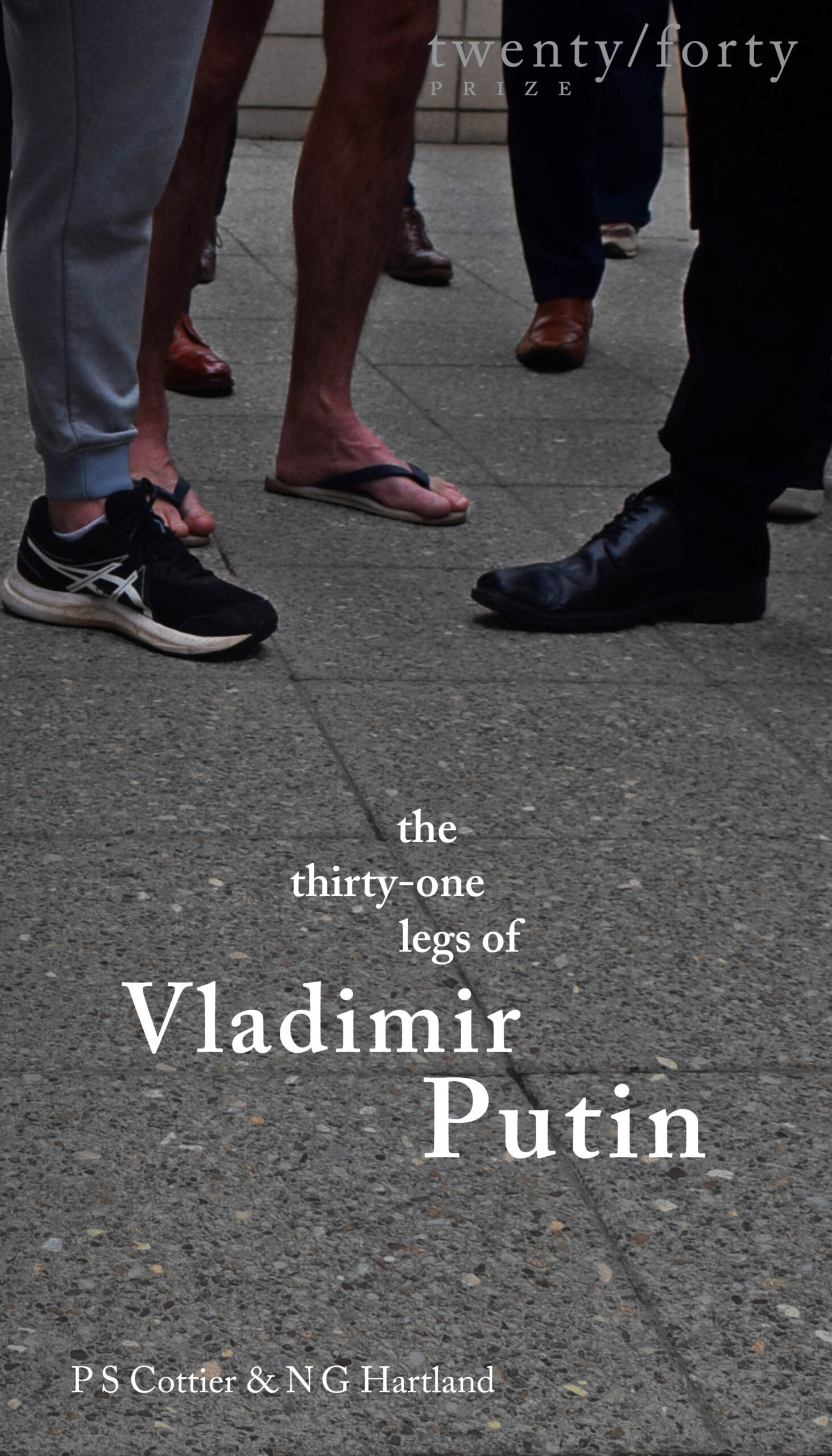
  • PS Cottier and NG Hartland, The thirty-one legs of Vladimir Putin (115pp.) (my review): joint winner of the 2024 Finlay Lloyd 20/40 Prize
  • Michelle de Kretser, Theory & practice (184pp) (my review): winner of the 2025 Stella Prize and Prime Minister’s Literary Award
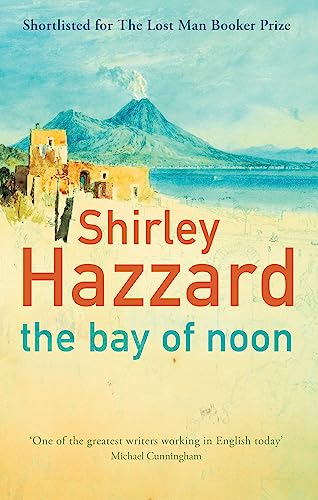
  • Shirley Hazzard, The bay of noon (182pp.) (my review)

Novella-length nonfiction

  • Helen Garner, The season (Memoir, 188pp.) (my review)
  • Gideon Haigh, My brother Jaz (Memoir, 87pp.) (my review)
  • Sonya Voumard, Tremor (Memoir, 129pp.) (my review): joint winner of the 2024 Finlay Lloyd 20/40 Prize

In addition to these, I have read a novella this month but it will appear in next year’s novella count. And I’ll soon be reading another novella-length nonfiction, but again that’s for next year’s count.

All of the above, with the exception of Shirley Hazzard’s The bay of noon, were published in 2024, which suggests that publishers are currently happy to publish shorter works – and, given some showing in literary awards, that judges see value in them. Meanwhile, Shirley Hazzard’s novel, now 55 years old, could be called a classic.

It’s interesting – and completely serendipitous – that the three novella-length nonfiction books are all memoirs. It’s made me think, however, that this shorter length is a good one for memoirs because it encourages a focus on the main driver for the memoir, and discourages the wallowing or padding that can sometimes happen? Indeed, Sonya Voumard made exactly this point about writing Tremor (see my post on a conversation with her).

And this leads me to making a brief final note on novel-length. I have read many wonderful long books, but I have a preference for short (and therefore usually tight) ones. Just as, anecdotally, there’s the view that readers want more bang for their buck when buying books, meaning they don’t want to pay around the same amount for a 100-page novella as for a 400-page tome, I want more bang for my reading time! In other words, I prefer to read three great novellas in the same time I can read one great tome. That’s three different authors’ perspectives and ideas versus one. This, in addition the fact that I do enjoy concision (which I seem unable to emulate!), is what appeals. The point is that getting lost in a book’s world and never wanting to leave it, while I do love that, is not my main criterion for enjoyment.

If you are taking part in Novellas in November, you clearly enjoy them too. And, you are probably interested in literary culture, so if you are interested in the history of book-lengths, check out this article “Novels and novellas and tomes, Oh my!” by American writer and editor, Lincoln Michel. It has an American slant but I found it most interesting nonetheless. (BTW, if you read to the end, you’ll see that he struggles to be concise too!)

Thoughts anyone?

Written for Novellas in November 2025.

Teffi, The examination (#Review, #1925 Club)

Mostly for the Year Clubs, I read an Australian short story, usually from one of my anthologies. However, for 1925, I couldn’t find anything in my anthologies, so turned to other newspaper-based sources, including Trove, but I mainly found romances or works that were difficult to access. And then, out of the blue, I found something rather intriguing, a story titled “The examination”. It was written by a Russian woman named Teffi, translated into English by J.A. Brimstone, and published in The Australian Worker, an Australian Workers’ Union newspaper, on 25 November 1925. I don’t know when it was originally written, nor have I been able to found out who J.A. Brimstone was.

Who is Teffi?

The Australian Worker ascribes the story to N. Teffi. This nomenclature is interesting. My research suggests that Teffi, not N. Teffi, was the pen name of Nadezhda Lokhvitskaya (1872-1952). Wikipedia gives her pen name as Teffi, but its article on her is titled Nadezhda Teffi. Curiously, the article’s history page includes a comment from a Wikipedian, dated 11 June 2014, that “Her pen name is only Teffi, not Nadezhda Teffi”. This Wikipedian “moved” the article (Wikipedia-speak for changing titles) to “Teffi”, but it was later moved back to “Nadezhda Teffi”. Seems to me it should be under “Nadezhda Lokhvitskaya” or “Teffi”. But, let’s not get bogged down. There’s probably more I don’t know about how she used her name over time.

The more interesting thing is who she was. Wikipedia provides what looks like a fair introduction to her life, so I won’t repeat all that here. Essentially, it says she was a Russian humorist writer who could be both serious and satirical, but whose gift for humour was “considered anomalous for a woman of her time”. However, she proved them wrong, “skyrocketing to fame throughout Russia with her satirical writings, so much so that she had candies and perfume named after her”.

Literary scholar Maria Bloshteyn, writing in the LA Review of Books in 2016, would agree. She starts her piece by describing Teffi as “once a Russian literary superstar”, and says that “Nadezhda Lokhvitskaya claimed that she took the comic-sounding and intentionally androgynous nom de plume for good luck”. Bloshteyn writes:

She began to publish in her early 30s and tried her hand in various genres, but it was her short stories, with their keen and hilarious observations of contemporary society, that were read by everyone from washerwomen to students to top government officials. They won her literary success on a scale unprecedented in pre-Revolutionary Russia.

My short story, however, was written post-Revolution, given we are talking 1925. But, I’m jumping ahead. Tsar Nicholas II was a big fan, Bloshteyn says, as was Vladimir Lenin “with whom she worked in 1905 at the short-lived New Life [Novaia Zhizn’] newspaper”. She left Russia in 1919, during the “Red Terror” when things started to turn sour. Her popularity continued in the émigré world. After the collapse of the Soviet Union, her books were read again and “celebrated as recovered gems of Russian humor”.

This potted history sounds very positive, but Bloshteyn explains that there was also darkness in her life, including the death of her loved father when she was young, difficult relationships with siblings, a failed marriage, mental health problems, and more. Also, “she became a victim of her immensely successful but severely confining brand”, meaning editors and readers “only wanted the Teffi they knew” and, worse, “they perceived all of her stories as funny, even when they were clearly tragic”. How frustrating that would be, eh?

She was inspired by – and has been likened to – Chekhov. Bloshteyn says:

Her appreciation of the absurd, of the comic minutiae of life, helps set off the darker or more transcendent aspects of our existence, but her main focus, in the tradition of the great 19th-century Russian writers, was always human nature itself: what makes us tick and why.

I’ll leave her biography here, but if you are interested, start at Wikipedia, and go from there.

“The examination”

“The examination” tells the story of a young girl, Manichka Kooksina, who is sitting for her end-of-year exams which will decide whether she moves on to the next grade. Important things ride on passing them, including staying with her friend Liza who has already passed and getting the new bike her aunt promised her if she passed. However, instead of knuckling down to study she fritters her time, trying on a new dress, reading, and finally filling her notebooks with a prayer “Lord, Help”, believing that if she writes it hundreds or thousands of times she will pass. Needless to say, she does not do well.

The story is beautifully told from her perspective, with much humour for the reader as she flounders her way through preparation and the exam itself. She feels persecuted, an animal being tortured, and resorts to the absurd solution of writing lines, while her nervous peers have at least tried. I wondered why this particular story of hers was chosen by The Australian Worker. Was it the only one available to them in English? Did the examination theme feel universally relevant? According to Bloshteyn, Teffi said that “even the funniest of her stories were small tragedies given a humorous spin”. This is certainly a “small tragedy” for the – hmm, foolish, procrastinating, but believable – Manichka.

Bloshteyn’s essay is primarily a review of two books that had been recently published, Tolstoy, Rasputin, others, and me: The Best of Teffi and Memories: From Moscow to the Black Sea. The former includes sketches and some of her “best loved short stories”. GoodReads says of it that “in the 1920s and 30s, she wrote some of her finest stories in exile in Paris … In this selection of her best autobiographical stories, she covers a wide range of subjects, from family life to revolution and emigration, writers and writing”. I don’t know whether “The examination” is one of them, but Bloshteyn writes, of the child-themed stories she mentions, that all “show children in the process of getting to know the world around them and finding the means to cope with it”. Manichka, although showing some resourcefulness, has a way to go.

I was thrilled to find this little treasure in Trove, and will try to read more Teffi. Has anyone else read her?

* Read for the 1925 reading week run by Karen (Kaggsy’s Bookish Ramblings) and Simon (Stuck in a Book).

N. Teffi
The examination” [Accessed: 21 October 2025]
in The Australian Worker, 25 November 1925

Six degrees of separation, FROM We have always lived in the castle TO …

If you have ever been to Japan you will know that they are deeply interested in weather. Turn the TV on and more often than not you will get a weather report or a cooking program. This now old Internet article was written by a Canadian who, at the time, had lived in Japan for ten years. It explains it well. My American friend who lived in Japan for around 7 years has told me that the Japanese often open conversations with the weather. I;m telling you this as an excuse for my frequently opening my Six Degrees posts with the weather! Not that I’m Japanese … I will say no more about the weather this post, but next post … wait and see. Meanwhile, on with the meme. If you don’t know how it works, please check Kate’s blog – booksaremyfavouriteandbest.

The first rule is that Kate sets our starting book, and this month she has given a nod to Halloween, given today is the day after that event. The novel she’s chosen is We have always lived in the castle, and it’s by America’s queen of gothic mystery and horror, Shirley Jackson. Of course I haven’t read it, though I have read her short story “The lottery” (my review).

Horace Walpole, The castle of Otranto

Jackson’s 1962 novel is set in a castle – or decaying mansion. The book commonly regarded as the first Gothic novel is also set in a castle, which is not surprising, given the tropes of the genre. It’s Horace Walpole’s The castle of Otranto (my review), and was written in 1764, two hundred years before Jackson’s novel. Horace Walpole has something to answer for if you ask me.

Jane Austen, Northanger Abbey

You might have guessed from that comment that Gothic horror is not my go-to reading. What is my go-to reading, on the other hand, is Jane Austen. The reason I read Walpole was to familiarise myself with the Gothic from her time because, according to many, Austen’s Northanger Abbey (one of my posts) spoofs the genre. I, on the other hand, see it more as a spoof of readers of Gothic novels, than of Gothic novels themselves, but let’s move on. (This cover doesn’t really emphasise the Gothic does it!)

Jane Austen was a clever and witty writer, as was Elizabeth von Arnim. As I wrote in my review of her novel, Vera, some critics and readers questioned how “playful, witty Elizabeth von Arnim, author of light social comedies” had become “a gothic writer of macabre tragedy”? Good question, the answer to which has origins in her own experiences of a controlling relationship with a narcissistic man.

Elizabeth Harrower The watch tower

Vera was written in 1921. Forty years later, in 1966, another Elizabeth, Elizabeth Harrower, published her own frightening novel about a young woman trapped in a controlling relationship. It’s The watch tower (my review). It has a third protagonist, the wife’s younger sister who lives with the couple and is caught up in it all. She is more conscious of what is happening, and its effect on her sister (and on herself)

Book cover

So, we are going to move on from coercive control to sisters, and Favel Parrett’s There was still love (my review), which is about two Czech sisters who lived through World War 2. One ends up in Melbourne, while the other remains in Prague. Parrett tells their story through the eyes of their grandchildren, Melbourne-based grand-daughter Malá Liška and Prague-based grand-son Luděk.

Cover

For my final book, we are staying with grandmothers, and a story told though the eyes of a grand-daughter. However, while Parrett’s book is a novel, albeit inspired by her grandmothers’ lives, my last link is a biography-memoir, Andra Putnis’ Stories my grandmothers didn’t tell me (my review). Her grandmothers, who also experienced the War, were Latvian.

Hmm, five of my six selections this month are by women, but we have again moved across the globe – from the USA to England to Australia with forays in Eastern Europe. We have spent time in the 18th, 19th, 20th and 21st centuries. And, unfortunately, we’ve met quite a bit of horror with the Gothic, coercive contol, and war. What can you expect, I suppose, with a chain whose starting book was inspired by Halloween?

Have you read We have always lived in the castle and, regardless, what would you link to?
Monday musings on Australian literature: 1925 in fiction

Once again it’s Karen’s (Kaggsy’s Bookish Rambling) and Simon’s (Stuck in a Book) “Year Club” week. This week, it is 1925, and it runs from today, 20 to 26 October. As for the last 8 clubs, I am devoting my Monday Musings to the week.

The 1920s were wild years, at least in the Western World. The First World War was over, and neither the Depression nor Second World War were on the horizon. It was a time of excess for many, of the flappers, of

A brief 1925 literary recap

Books were, naturally, published across all forms, but my focus is Australian fiction, so here is a selection of novels published in 1925:

  • Martin Boyd (as Martin Mills): Love gods
  • Dale Collins, The haven: A chronicle
  • Erle Cox, Out of the silence
  • Zora Cross, The lute-girl of Rainyvale : A story of love, mystery, and adventure in North Queensland
  • Carlton Dawe, Love: the conqueror
  • Carlton Dawe, The way of a maid
  • C.J. de Garis, The victories of failure
  • W. M. Fleming, Where eagles build
  • Nat Gould, Riding to orders
  • Jack McLaren, Spear-eye
  • Henry Handel Richardson, The way home (the second book in the The Fortunes of Richard Mahony trilogy)
  • M. L. Skinner, Black swans: Rara avis in terris nigroque simillima cygno
  • E. V. Timms, The hills of hate
  • Ethel Turner, The ungardeners
  • E. L. Grant Watson,  Daimon
  • Arthur Wright, The boy from Bullarah

EV Timms had a long career. Indeed, he also appeared in my 1952 Year Club list. Zora Cross has reappeared in recent decades due to renewed interest in Australia woman writers. Both Bill and I have written about M.L. (Mollie) Skinner, a Western Australian writer who came to the attention of D.H. Lawrence. And then of course there are those writers – Martin Boyd, Henry Handel Richardson and Ethel Turner – who have never “disappeared” from discussions about Australia’s literary heritage.

While my focus here is fiction, it’s worth noting that many of Australia’s still recognised poets published this year, including Mary Gilmore, Henry Lawson, Dorothea Mackellar, Furnley Maurice and John Shaw Neilson.

The only well-recognised novelist I could find who was born this year was Thea Astley.

The state of the art

As for previous club years, I checked Trove to see what newspapers were saying about Australian fiction. Because 1925 is a century ago, I had already started researching the year for the little Monday Musings Century ago subseries I started in 2022. So far, I have written just one post on 1925. It focused on two literary societies which were active at the time, the Australian Literature Society and Australian Institute of the Arts and Literature, so I won’t repeat that here.

I found a few interesting tidbits to share, including, in a couple of newspapers, a brief report of a talk given to Melbourne’s Legacy Club by local bookseller, C. H. Peters, manager for Robertson and Mullens. He reported that the English publisher, John Murray the Fourth, said

that the Australian consumption of fiction was enormous, compared with the English market, and that, making allowances for differences in population, the Australian read five novels to every one read by the Englishman. 

Some of the other items of interest I found were …

On a cult classic?

One of the surprising – to me – finds during my Trove search was the book Out of the silence by Erle Cox. It was, says The Argus (9 October) and the Sydney Morning Herald (28 November), first published in serial form around 1919, but there were many requests for it to be available in book form, which happened in 1925. The story concerns the discovery of a gigantic, buried sphere, which contains the accumulated knowledge of an ancient civilisation. The Argus’ reviewer says that the sphere’s aim “was to exemplify the perfection attained in a long past era and to assist the human race of the time of discovery towards similar perfection”, with the finder being helped in this goal by the “dazzling Earani”, a survivor of that civilisation.

The reviews at the time were positive. The Argus says that “the story is carried on with much ability”, while The Age (17 October) describes it as “brilliantly conceived and charmingly written … original and weird, maybe a little far-fetched”. Edward A. Vidler writes for the Sydney Morning Herald that “Mr. Cox is to be congratulated on a story of rare interest, which holds the attention from beginning to end”.

It has been republished more than once since 1925, including in other countries. For example, in 1976, it was republished in a series called “Classics of Science Fiction” in 1976, by Hyperion Press, and in 2014 an ePub version was published “with an Historical Afterword by Ron Miller”, who featured it in his “The Conquest of Space Book Series.” The promo for this edition describes it as “the classic lost race novel” in which a pair of amateur archaeologists “inadvertantly revive Earani, the survivor of an ancient race of superbeings”. But this is not all. It was also adapted for radio, and turned into a comic strip. You can read all this on Erle Cox’s Wikipedia page.

On reviewing

I enjoy seeing how reviewers of a different time went about their business. Some reviews in this era – the 1920s – tell the whole story of the novel, and do little else. Others, though, try to grapple with the book, finding positives as well as negatives, and sometimes discussing the reason for their criticisms.

Reviews for Dale Collins’s island adventure The haven are a good example. It seems that Collins had decided to have the main character – the male protagonist – tell his story. The reviewer in The Age (31 October) didn’t feel it worked, writing that Collins

repeats the experiment of blending psychology and sensation which he caried out so successfully in ‘Ordeal.’ It is a very clever and original story, but the reader who wants sensation will find there is too much psychology in it; and the reader who is interested in psychological studies will discover that the author has handicapped himself by making the central figure tell the story. As a result the psychology becomes monotonous …

The Argus (6 November) on the other hand was positive about the technique of Mark telling his own story:

Mr Collins has skilfully worked out the effect of the situation on each one of his characters, but especially on that of Mark, who reveals himself through a diary of their life on the island … The author has set himself a very difficult task in the carrying out of which he has been remarkably successful.

The reviewer in The Age (25 July) – the same one? – was disappointed in Zora Cross’s The lute-girl of Rainyvale, seemingly because of its supernatural subject matter concerning Chinese vases and curses, after the quality of her previous novel Daughters of the Seven Mile, but ended on:

The story has some vivid descriptive writing, which serves to emphasise that Zora Cross’s real gifts are wasted on fiction of this character.

Mollie Skinner’s Black swans was reviewed twice in the same column in The Age (12 September) with slightly different assessments. The first writes that it is “a very readable story founded on historical events in the convict days of Western Australia” and goes on to say that she had collaborated with D. H. Lawrence on The boy in the bush but that “her unaided work is preferable”. The review concludes that Skinner had “drawn her picture strongly and produced a good novel”.

Later in the same column, the reviewer (presumably a different one?) references Skinner’s work with Lawrence and then says of this new book that the story begins in Western Australia’s Crown colony days of 1849. Skinner “sends her childish heroine and hero on adventures amongst blacks and Malays, in company with an escaped convict” then “takes them to England for the social and love interest”. The reviewer concludes that

Miss Skinner writes well, with a special anxiety to set down striking phrases and epigrams. To quote a common, phrase, she is more interesting than convincing. 

Hmm … there’s a sense between the lines here that the story doesn’t hang together, but that Skinner, like Cross, has some writing skills.

As for Henry Handel Richardson, although her novel came out in mid-1925, I found only a couple of brief references to it. Martin Mills (Martin Boyd), on the other hand, fared better with some quite detailed discussions, including in the West Australian (4 July). The reviewer explored it within the context of being part of a rising interest in the “religious novel” and ended with:

Love Gods, with its old story of the unending conflict between the Pagan deities and the restraining influences of Christianity, is a novel of unusual insight, and most uncommon power of literary expression.

There’s more but I’ve probably tired us all out by now! I will post again on this year.

Sources

(Besides those linked in the post)

  • 1925 in Australian Literature (Wikipedia)
  • Joy Hooton and Harry Heseltine, Annals of Australian literature, 2nd ed. OUP, 1992

Previous Monday Musings for the “years”: 1929, 1936, 1937, 1940, 1952, 1954, 1962 and 1970.

Do you plan to take part in the 1925 Club – and if so how?

Six degrees of separation, FROM I want everything TO …

We are now in spring, not my favourite season of the year, but it’s also Daylight Savings Weekend here in Australia, which is a favourite time for me. I love longer evenings and mornings being not so quickly light! I’m not sure why I frequently start these posts with the weather, but perhaps it’s because we six-degrees participants are from all parts of the world and it sets the scene for where I’m from! I’ll leave that thought there, now, and just get onto the meme. If you don’t know how the #SixDegrees meme works, please check Kate’s blog – booksaremyfavouriteandbest.

The first rule is that Kate sets our starting book. This month, it’s a recent Australian debut novel, Dominic Amerena’s I want everything. I have clearly been out of touch because I didn’t know this author or book, but my research found that it was inspired by Australia’s rich tradition of literary hoaxes.

So that is where I am going, and I wonder whether others – particularly Australians – will too. The book I’m linking to is Stephen Orr’s Sincerely, Ethel Malley (my review). It is about what is probably Australia’s most famous literary hoax, the Ern Malley affair, when two poets who disliked modernist poetry wrote and submitted such poetry to a literary magazine under the name, Ern Malley.

David Mitchell, The thousand autumns of Jacob de Poet

Now, I don’t want to stick to hoaxes, so I’m going on title for my next link, that is, on a book titled with the main character’s full name, David Mitchell’s The thousand autumns of Jacob de Zoet (my review). This book felt appropriate too, because it is set in Japan where I have just been. It is set during that time in history when most of Japan was closed off from the rest of the world. However, Japan and history are not related to my next link so let’s move on …

My next link is a bit cheeky. David Mitchell writes big books, and I referred in my post on his novel that he wasn’t one of Kate Jennings’ “taker-outers” or “takers-out”. Jennings wrote in praise of takers-out and I like them too, so my next link is to such a work, as an antidote to Mitchell, much as I enjoy him too. It’s a work of autofiction by Kate Jennings herself, Snake (my review). It’s a tight, memorable read.

Book cover

I do like to mix up the sorts of links I make, so we are shifting again, this time to genre or form, that is, to autofiction. My link is to a recent autofiction work that I’ve posted on, Winnie Dunn’s Dirt poor islanders (my review). It is the first book published in Australia by a Tongan Australian, and it makes a significant contribution to our body of migrant literature.

I’m not sticking with migrant literature, however, despite that hint. My next book is about islanders, albeit on their home soil. It’s Audrey Magee’s The colony (my review). This is one of those memorable books (for me) that captures at the micro level what colonisation means for those in the sights of colonisers.

For my final book, we are shifting again, and looking at the name Audrey, but not as author. I like the name Audrey. It was one of my mother’s middle names. It’s also the name of one of the voices telling Karen Viggers’ most recent novel, Sidelines (my review). Given it’s footy final fever time in Australia (albeit a different sort of football), this novel about the challenges of youth sport seems a fitting way to close out this month’s Six Degrees.

Four of my six selections this month are by women, but we have moved a little across the globe, including spending time on three islands (in Mitchell, Dunn, briefly, and Magee). We have also confronted the challenges of growing up (in Jennings, Dunn, Magee, to some degree, and Viggers), of colonisation and migration, and of course of literary hoaxes and heists!

Have you read I want everything and, regardless, what would you link to?
Six degrees of separation, FROM Ghost cities TO …

Last #SixDegrees I was driving to the Wurundjeri Wandoon people of the Greater Kulin Nation, that is in my part of Melbourne, but this month, I’m somewhere exotic – Japan. When this post is published, I expect to be on a train between Tokushima, in northern Shikoku, to Hikone, near Lake Biwa in Honshu. I may not manage to respond quickly to all your posts but will do my best. Meanwhile, the meme. If you don’t know how the #SixDegrees meme works, please check host Kate’s blog – booksaremyfavouriteandbest.

The first rule is that Kate sets our starting book. And this month it is another I haven’t read, but should, given it recently won this year’s Miles Franklin Literary Award in Australia, Siang Lu’s Ghost cities.

With Australia’s National Poetry Month (see my Monday Musings) having just ended, it seemed right to try another #SixDegrees title-poem for my this month’s chain. I had fun with it too:

Ghost cities, where
A superior spectre
Seeking The great unknown
Floats down Ghost River
to A place near Eden
Called Cloud Cuckoo Land
And joins The infinities.

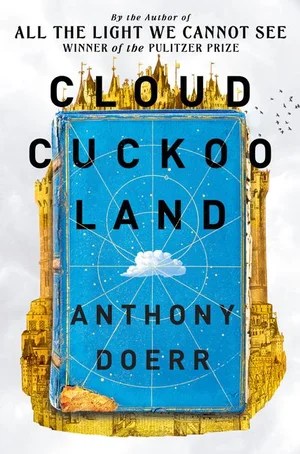
With thanks to Siang Lu, Angela Meyer (first as author then as editor), Tony Birch, Nell Pierce, Anthony Doerr, and John Banville for helping me produce a chain of books whose titles – even if their content doesn’t always – invoke other worlds and other worldliness!

I am proud of myself for using very few filling words in this “poem”.

We’ve travelled in and out of the real world this month, with Australian writers of diverse backgrounds, and an American and an Irish writer – and I’m 50:50 on author gender. How good is that?
Now, the usual: Have you read Ghost cities? And, regardless, what would you link to?