Helen Garner, Why she broke: The woman, her children and the lake (#Review)

Three years ago I reviewed Helen Garner’s This house of grief about Robert Farquharson who drove his car into a dam in Victoria, resulting in the deaths of his three sons. It’s a grim grim story, so you might wonder why I am now writing about her essay “Why she broke: The woman, her children and the lake” about Akon Guode who, in 2015, drove her car into a lake in Victoria resulting in the deaths of three of the four children inside.

There are two reasons, the main one being that this essay was, last week, awarded the Walkley Award (about which I’ve written before) for Feature Writing Long (over 4000 words). I hadn’t read the article when it was published in June this year, and probably wouldn’t have read it now, except for this award. What, I wondered, when I heard the news, made this essay, on a topic so seemingly similar to her recent book, worthy of the Walkley Award? The other reason is that although there are similarities – both parents drove their cars into water resulting in the deaths of children – there is a big difference. One parent was a father, and the other a mother. I wanted to know what, if anything, Garner would make of that in her analysis.

I’ll start two-thirds through the essay, where Garner quotes Guode’s defence counsel using a statement made to the Victorian Law Commission in 2004:

While men kill to control or punish their children or partner, women kill children because they cannot cope with the extreme difficulties that they encounter in trying to care for their children.

Given the current political climate – Harvey Weinstein, Don Bourke, et al – this statement must surely be read as part of that bigger picture concerning women’s powerlessness.

In the first part of the essay, Garner describes Guode’s life. She was a Sudanese refugee to Australia who had been married as a teenager but had then lost her husband in the civil war there. In that culture women cannot remarry, but remain a possession of their husband’s family. Guode’s third child was fathered by a brother-in-law. Eventually, after more trauma in Africa, she was sponsored to come to Australia by another of her late husband’s brothers, Manyang. Her life here became difficult in a different way, with her bearing four children to this already married man. At the time of the incident she had seven children.

Garner details the difficulties of Guode’s life, including the traumatic birth of her seventh child, and her struggle to care for her family while also sending money back to family in Africa. To her, this was an obligation, but at the committal hearing, Garner writes, a local community leader said that “It is not an obligation. I would call it a moral duty”! Not surprisingly Garner’s reaction to this is that “under the circumstances this seems like a very fine distinction”! This sort of word play – “obligation” versus “moral duty” – can make such a mockery of the law (or of its practitioners), can’t it?

There was of course discussion during the hearing of Guode’s mental state, with the judge suggesting that “something dramatic” must have triggered her action. The psychiatrist, however, argued that “it can just be the ebb and flow of human suffering, and the person reaching the threshold at which they can … no longer go on.”

But Garner also proposes a possible “trigger event” that went back 16 months to the last traumatic birth. Postnatal haemorrhaging was so bad she was close to needing a hysterectomy. Guode initially refused treatment. Garner writes that she was

prepared to risk bleeding to death on a hospital gurney rather than consent to the surgical removal of the sole symbol of her worth, the site of her only dignity and power: her womb?

Surely, a woman whose life had lost all meaning apart from her motherhood would kill her children only in a fit of madness.

Garner also discusses the technicalities of infanticide versus murder in Victorian law, and Guode’s counsel’s argument that all three deaths should be viewed through “the prism of infanticide”, which would result in a lesser sentence, even though only one of the children met the age criterion. Her eventual sentence makes clear that he didn’t win his argument.

What makes this essay so good, besides the analysis, is Garner’s writing. Here she is on a jury trial versus a plea hearing (which this was):

If a full-bore jury trial is a symphony, a plea hearing is a string quartet. Its purpose seems to be to clear a space in which the quality of mercy might at least be contemplated. There is something moving in its quiet thoughtfulness, the intensity of its focus, the murmuring voices of judge and counsel, the absence of melodrama or posturing. It’s the law in action, working to fit the dry, clean planes of reason to the jagged edges of human wildness and suffering.

That last sentence! Breathtaking. It reminds me once again what an excellent essayist Garner is, and it’s not just for her style. She has the ability to take us on a journey, leading us logically, and empathically, to consider values and ethics, without ever being didactic.

In this essay, it’s her concluding comments and final question regarding mercy which gets to the nub of it. It concerns the idea of “mother”, which she calls “this great thundering archetype with the power to stop the intellect in its tracks”. Read Garner’s essay, and/or this report in The Age, and see what you think. I don’t envy Justice Lasry’s job, but I know, based on what I’ve read, where my intellect goes.
aww2017 badgeHelen Garner
“Why she broke: The woman, her children and the lake”
The Monthly, June 2017
Available online

Monday musings on Australian literature: Interviews with Aussie writers

Those of you who read my December Six Degrees meme will know that the starting book was Stephen King’s It. Not surprisingly, a couple of bloggers – Kate (booksaremyfavouriteandbest) and Lisa (anzlitlovers) – made their first link Stephen King’s On writing. Lisa then went on to link to an Australian book on writing, Kate Grenville’s The writing book.

Now, I’ve written about Aussie writers on writing before, so I thought that in this post I’d share some books containing interviews with Aussie writers, which I’ll list in order of publication.

Jennifer Ellison’s Rooms of their own (1986)

Ellison’s book, of course, takes its title from Virginia Woolf’s wonderful, pleading book on behalf of women creators. It comprises interviews Ellison conducted with significant writers at the time: Blanche d’Alpuget, Jessica Anderson, Thea Astley, Jean Bedford, Sara Dowse, Beverley Farmer, Helen Garner, Kate Grenville, Elizabeth Jolley, Gabrielle Lord, Olga Masters, and Georgia Savage.

Naturally, the gender issue is explored, but other issues relating to writing, publishing and the role of writers in society are also discussed. I often refer to it.

Candida Baker’s Yacker: Australian writers talk about their work, Vols 1, 2 and 3 (1986, 1989 and 1990)

Candida Baker, Yacker 3The three volumes of Yacker were the result of author-editor-festival director Candida Baker’s multi-year interview project which was inspired by the Paris Review’s “on writing” interviews. By the end of the project she had interviewed 36 Australian writers, representing a wonderful resource – both on writers no longer with us, and on the early or mid-careers of writers still here. Her interviewees were:

  • Yacker: Christina Stead, Peter Carey, Nicholas Hasluck, David Foster, Helen Garner, Blanche D’Alpuget, Dorothy Hewett, Elizabeth Jolley, David Malouf, Thomas Shapcott, Thea Astley and David Williamson.
  • Yacker 2: Jessica Anderson, Marjorie Barnard, Sumner Locke Elliot, Barbara Hanrahan, Jack Hibberd, Thomas Keneally, Ray Lawler, Roger McDonald, Gerald Murnane, Les A. Murray, Janette Turner Hospital and Kath Walker (Oodgeroo Noonuccal).
  • Yacker 3: Randolph Stow, A.D. Hope, Glenda Adams, Kate Grenville, Peter Porter, Robert Drewe, Peter Corris, Louis Nowra, John Tranter, Frank Moorehouse, C.J. Koch and Gwen Harwood.

Kate Grenville and Sue Woolfe’s Making stories: How ten Australian novels were written (1993)

This book takes a slightly different tack to the other books in today’s post in that it comprises authors discussing a particular book, demonstrating their creative process. The authors and books included are: Jessica Anderson’s The commandant (my review), Peter Carey’s Oscar and Lucinda, Helen Garner’s The children’s Bach (my review), Kate Grenville’s Lilian’s story, David Ireland’s A woman of the future, Elizabeth Jolley’s Mr Scobie’s riddle, Thomas Keneally’s The chant of Jimmie Blacksmith, Finola Moorhead’s Remember the tarantella, Patrick White’s Memoirs of many in one, and Sue Woolf’s Painted woman.

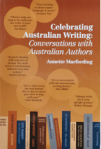
Annette Marfording’s Celebrating Australian Writing: Conversations with Australian Authors (2015)

Regular readers here might remember this book, as I’ve published several posts inspired by the interviews contained within. Marfording was, for several years program director for the Bellingen Writers Festival. She was also a radio presenter for the Bellingen community radio station, 2 bbb fm, on which these interviews were aired from around 2009 to 2014.  Her aim was, she said,

not to produce interviews “like those commonly done, focusing primarily on an author’s latest book. I wanted to inform listeners of their body of work, strengths – as I saw them – writing methods and work associated with their lives as authors, such as judging literary awards, editing short story collections, reviewing other writers’ works.”

Her interviewees are: Robert Dessaix, Cate Kennedy, David Malouf, Gregory Day, Charlotte Wood, Georgia Blain, Kate Howarth, Kristina Olsson, Larissa Behrendt, Debra Adelaide, Alex Miller, Kevin Rabalais, Di Morrissey, Peter Goldsworthy, Robert Drewe, Jon Bauer, Bryce Courtenay, Chris Womersley, Marele Day, Michael Robotham, and Barry Maitland.

In a really lovely, generous gesture, Marfording has directed that all profits from the sale of the book go to the Indigenous Literacy Foundation. A worthy cause and one that I support too.

Charlotte Wood’s The writer’s room: Conversations about writing (2016)

Wood’s book draws on interviews she did for her digital or on-line journal, also called The writer’s room, which ran from 2013 to December 2015. She, like Baker, was inspired by the Paris Review, and wanted to use their model which allowed writers to review and change the edited transcript of their interview. Her reason was that “having been interviewed about my own work so many times and then been embarrassed by my awkward words in print, I wanted ‘my’ writers to know that they would have complete and final control over anything that appeared in the magazine.” In the end, she says, they changed very little, mainly making “small but important clarifications” or expanding something “they’d been oblique about” or making statements or opinions more “definite”.

Because her project started in 2013, her interviewees include very recent writers on the Australian scene. The book contains a selection of the interviews she did: Tegan Bennett Daylight, James Bradley, Lloyd Jones (New Zealand writer), Malcolm Knox, Margo Lanagan, Amanda Lohrey, Joan London, Wayne Macauley, Emily Perkins, Kim Scott, Craig Sherbourne and Christos Tsiolkas.

*****

So, seven books containing interviews with writers, books that I believe provide a valuable contribution to Australia’s literary culture. And yet Marfording, in the Introduction to her self-published book, writes that publishers told her that “books of interviews don’t sell”. Who says, I want to know. I have bought three of the seven books I’ve listed here and wish that I’d bought them all!

What about you? Are you interested in reading interviews with authors? 

Unbreakable: Conversation with Jelena Dokic

Louise Maher and Jelena Dokic

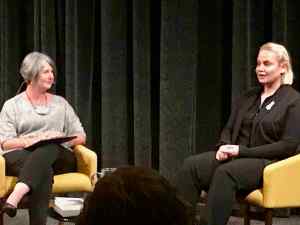
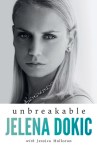
If you are a fan of professional tennis you will probably have heard of Jelena Dokic who hit the world stage during the 1999 Wimbledon Championships. She was just 16 years old, and, as Wikipedia writes, “achieved one of the biggest upsets in tennis history, beating Martina Hingis 6-2, 6-0. This remains the only time the women’s world No. 1 has ever lost to a qualifier at Wimbledon.” If you were an Australian tennis fan this was very exciting – or should have been. Unfortunately for Croatian-born Dokic, her tennis trajectory was one dogged by controversy, much of it caused by her abusive, controlling father. Her story, which she has documented in her book, Unbreakable, co-written with Jessica Halloran, is a tough one.

An author talk with a sportsperson about a co-written memoir would not necessarily be high priority for me, but if there’s one sport I love, it’s tennis, and Dokic’s story has implications that extend beyond tennis. So, with no competing events on that night, Mr Gums and I decided to go. It was in the form of a conversation between Dokic and local ABC presenter Louise Maher.

Jelena Dokic, Unbreakable

The conversation started with some introductory information. This included that Dokic had reached 4th in the world by the age of 19 years old, and that, due to the Yugoslav wars, she and her family had left Croatia for Serbia when she was 8 years old, and then emigrated to Australia in 1994 when she was 11. By 11 years of age, then, she’d already experienced far more trauma than most her age had experienced. When you add to this the fact that her father – who saw tennis as the opportunity for a good life – started abusing her from the minute he introduced her to tennis when she was 6 years old, you get the picture of a sad and lonely young person. It’s no wonder that the Australian tennis community – fans and players – found it hard to warm to her. No wonder, I say, but that’s no excuse. The failure of duty of care for this young person is clear – and her book has, apparently, got the international tennis world talking.

Now, I’m not going to give a blow-by-blow summary of the conversation, partly because it covered a lot of ground that is covered in the book, as well as in the various stories about her life that you can read on the Internet. Instead, I want to focus on the lessons and messages from the book (well, from what she told us about the book, as I haven’t read it.)

She had a few reasons for writing the book. One was to help others: she hopes by sharing her story, she will increase awareness of abusive parent-child relationships, particularly in sport, and thus help ensure it doesn’t happen to others.

Another reason is a more distressing one, in a way, and that is to enable Australians get to know her better – because the truth is that, due to her father’s abusive control of her, spectators never really got to know her, and as a result, they sometimes gave her a hard time. Some of this was racially or ethnically based – indeed she was told “to go back where you came from” – by several within and without the tennis world. The worst time for her, though, was when her father suddenly withdrew her from Australia, when she was 17 years old, to play for Yugoslavia. Her first major tournament after this was, unfortunately, the Australian Open – and the crowds jeered her. That’s hard enough for any-one, but for a 17-year-old girl who had no say in the matter, who was being abused by her father, it increased her sense of loneliness, of isolation, of having no support.

This issue of having no support is something she repeated several times in the conversation. When Louise Maher pressed her about her mother’s role, Dokic answered that her mother didn’t intervene. She wanted the family to stay together, and trusted her husband knew what he was doing!

Dokic provided various examples of her father’s abusive behaviour towards her, and of her desperation for a little praise that apparently never came (even after significant wins). She finally managed to “escape” home when she was 19-years-old – but life was tough, as she left with nothing, no money, no credit card. This is when, she said, she particularly needed support, but there was none.

I won’t continue, but there are some too-familiar lessons here, particularly the one that I’ll call the “turning a blind-eye syndrome”! There were people, Dokic said, who knew things weren’t right, but they were reluctant to get involved. And the media focussed on her father, enjoying the sensationalism of reporting on his behaviour – “Media thought he was funny, but he wasn’t”, she said. The didn’t pay any attention to what was happening to Dokic, or to the impact of their reporting on her. (I wished, that night, that I’d thought of my question about what she’d have liked the Media to do, before, not after, question-time finished!)

Dokic loved playing tennis, she said, but her father ruined her career. Tennis aficionados will, I’m sure, agree with her. She did look like achieving a come-back in her mid-to-late twenties but injury, illness, and surely the impact of all she’d suffered, meant there wasn’t the fairy-tale ending. Today she does sports commentating, motivational speaking and coaching.

There was a lot lot more – but if you’re interested, read the book!

Meanwhile, there are lessons to be learnt by the media, by spectators, and by tennis organisations about duty of care, particularly when reporting on, watching, or managing young players. What happened to Dokic could not have been completely avoided – its having started at home when she was a beginning 6-year old player – but it should not have gone on for as long as it did if people who knew, or even suspected, things were amiss, did something about it. I do hope this book has the effect that Dokic would like.

(Oh, and sitting next to me at this event was one of the ACT Litbloggers, the lovely Angharad of Tinted Edges. I look forward to seeing her post on it.)


Monday musings on Australian literature: Teaching indigenous texts

This post was inspired by an email I received from Reading Australia announcing a partnership with the Broome-based indigenous publisher Magabala Books for a project that was

inspired by the many teachers who reached out to Reading Australia to ask for more resources on works by Indigenous creators, and particularly units that showed non-Indigenous teachers how to teach Indigenous texts.

Then, quite coincidentally, I read on my Twitter feed this morning about a one-day seminar that had been run last week by AustLit’s BlackWords (about which I’ve written before) called Teaching with BlackWords Symposium – so I decided to broaden this post a little. As someone who is keen to promote and review indigenous writing but is always a bit anxious about it, I’m thrilled to see programs like these offering to help people who feel the same and who have formal responsibilities for teaching and sharing.

Reading Australia and Magabala Books

When I clicked on the link in my email announcing the Reading Australia-Magabala Books partnership, I discovered that this was the second such project, supported because of the success of the first. Both projects are funded by the Copyright Agency’s Cultural Fund.

The first project, implemented in 2017, involved Magabala Books creating resources for 15 books for primary school teachers to use in classrooms. You can access resources for 11 of the nominated 15 books on the Magabala site. I’m assuming that the rest is still to come.

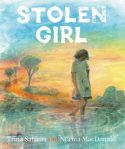
Saffioti, Stolen girlSo, for example, the resource for Stolen Girl (which was written by Trina Saffioti and illustrated by Norma MacDonald) starts with a section titled “connecting to prior knowledge” and points teachers to additional resources like the Bringing them home report. The resource says the book is suitable for around Year 4 (ie around 9-10 year olds). It starts by encouraging children to think about the meaning of “home” and the difference between “house” and “home”. It asks teachers to carry out an Acknowledgement of Country, to discuss its meaning and to talk about the name of the country in which the school is located. It also refers them to use stories from a site called Australians Together. These are just a few of a whole raft of activities helping teachers explore the ideas and history behind this book.

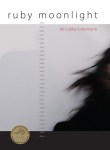
Ali Cobby Eckermann, Ruby MoonlightThe 2018 partnership turns to secondary school teaching. It identifies 8 books (listed in the order used on the site) for which resources will be written:

  1. Becoming Kirrali Lewis by Jane Harrison
  2. Dark Emu by Bruce Pascoe (my review)
  3. Grace Beside Me by Sue McPherson
  4. Jandamarra and the Bunuba Resistance by Banjo Woorunmurra and Howard Pederson
  5. Ruby Moonlight by Ali Cobby Eckermann (my review)
  6. Songs That Sound Like Blood by Jared Thomas
  7. Ubby’s Underdogs: Heroes Beginnings by Brenton E. McKenna
  8. Us Mob Walawurru by David Spillman and Lisa Wilyuka

I’ve only heard of a few of these books, but from what I do know it looks like a good variety.

I wonder how well promoted this program is, and how much it is being used in schools?

Teaching with BlackWords Symposium

Moving up the educational tree, the BlackWords Symposium was geared to secondary and tertiary teachers. The symposium was subtitled Best Practice for Teaching with Indigenous Stories, and promoted as “an important professional development event for teachers.”

The promotion continued:

Have you ever felt concerned, awkward about, or ill-prepared to teach Indigenous authored texts and issues into your classroom?  Would you like advice on how to respectfully use Aboriginal and/or Torres Strait Islander stories and history in your teaching? Do you think your teaching could benefit from a deeper understanding of the concerns and issues that First Nations writers address in their work?

The symposium was apparently sold out. How wonderful is that?

The  speakers were some of our big movers and shakers in promoting indigenous literature, Dr Anita Heiss, Professor Larissa Behrendt, Dr Sandra R. Phillips, and Samuel Wagan Watson. Also, someone I don’t know, Lindsay Williams, described as the “English Teacher Guru”, led a workshop on “using AustLit’s BlackWords resources in the classroom”. The day was chaired by Anita Hess and Kerry Kilner (of AustLit). AWW team member and author Jessica White, whose novel Entitlement I’ve reviewed, tweeted that it was “an amazing day”. Lucky her.

Things are happening, consciousnesses are being raised – but we are a long way, yet, from resting on our laurels.

Non-fiction November 2017, Weeks 4 and 5

Nonfiction November 2017 bannerIn my last My Literary Week post, I took part (sort of) in the Non-Fiction November meme, giving my responses for the first three weeks. Because the last two weeks ask some questions, I’d like to answer, I’ve decided to combine them is a second post. It’s probably cheating, but …

Week 4, Nov. 20 to 24: Nonfiction Favorites

For this week the question is to discuss our favourites and what makes them so. Is it to do with the topic? Or the style, or tone? Or what?

Helen Garner, This house of grief book cover

Courtesy: Text Publishing

I can name some non-fiction books that I remember years after I finished them, but can I find some common threads in them? Well, perhaps, and it’s not the topic. For example, a non-fiction work that stands out for me is one I read before blogging, so that’s more than 10 years ago. It’s Erik Larson’s Isaac’s storm about the lead up to and aftermath of the damaging 1900 hurricane in Galveston. It’s told through the eyes of meteorologist Isaac Cline, and is in that style loosely called creative non-fiction, which means it uses many of the techniques of fiction to tell its story. I discovered long ago that creative or narrative non-fiction is the non-fiction style that most appeals to me. If that makes me shallow, then so be it!

Other books using this style that I’ve read in the last decade include Chloe Hooper’s Tall man, Ann Krien’s Into the woods (my review), Richard Lloyd Parry’s People who eat darkness (my review), and Helen Garner’s First stone, Joe Cinque’s consolation and The house of grief (my review). The topics vary in these books – there’s a natural disaster, an environmental investigation, a sexual harassment case, and four very different true crime stories (including an Aboriginal death in custody, a serial killer and two focusing largely on court cases) – but they all use a narrative approach.

Book cover, The forgotten rebels of Eureka

However, there are two topics that are likely to attract me, regardless of style – Australian history and literary biographies/memoirs. Of the former, books like Inga Clendinnen’s Dancing with strangers and Clare Wright’s The forgotten rebels of Eureka (my review) appeal, partly because they explore history from different angles, from angles that question existing paradigms (if I dare use that word), and partly because both historians share the process of their research with the reader as they write. I like this direct engagement with me. Not only do I find it more readable, but importantly this more personal approach reminds me that this is one historian’s view of the past – a well-supported valid view (hopefully, and in these two cases, absolutely) but their view nonetheless.

My favourite recent literary biography has to be Karen Lamb’s Thea Astley: Inventing her own weather (my review) because I love Thea Astley and because Lamb’s book, though clearly positive about Astley, provides a “real” picture of an intelligent, passionate and sometimes prickly woman, of the woman, in other words, that I imagined Astley to be.

Week 5, Nov. 27 to Dec. 1: New to My TBR

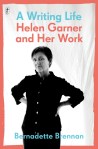
Bernadette Brennan, A writing life Helen Garner and her workI think here we are supposed to mention books that we’ve read in other posts on this meme – and link back to the blog which inspired us. However, I’m afraid I’ve been a bit remiss in keeping up with all the posts, and with noting the books that have appealed when I have read the posts, so I’m going to start with a book that I’ve recently added to my TBR because it’s a must for me to read. It’s a literary biography, Bernadette Brennan’s A writing life: Helen Garner and her work. I will read this in the next two months!

And, just to show I did read some Non-fiction November posts, I was attracted to a book posted by Buried in PrintTanya Talaga’s Seven Fallen Feathers: Racism, Death and Hard Truths in a Northern CityBuried described it as “a gripping story, bound to appeal to readers who appreciate elements of true crime, history, memoir, social justice and narrative-driven journalism.” If you’ve read my Week 4 above, you’ll know exactly why this book appealed to me! It’s about the deaths of students who were attending an Indigenous-run high school in Thunder Bay, Ontario (a fairly remote place which daughter Gums visited three or four years ago). Buried explains that “to understand the importance of this educational opportunity (even with the challenges of students’ adjustments to city life and the embedded racism in the community), it’s useful to have some understanding of the residential school system, which was wielded like a weapon against Indigenous communities from the later nineteenth-century until 1996.” With our own problematical treatment of indigenous people, and my ongoing interest in racism, this book sounds particularly interesting to me.

POSTSCRIPT: Oops, I clicked the Publish button before writing my conclusion! I wanted to say that I’ve read a lot of great non-fiction in the last few years, so it’s been hard to name just a few in this post and the previous one. Different Non-fiction November questions could very well have resulted in my naming different books.

Stephanie Buckle, Habits of silence (#BookReview)

Stephanie Buckle, Habits of silenceI have been champing at the bit to read local author Stephanie Buckle’s debut short story collection, Habits of silence, ever since I attended its launch in August by John Clanchy at the Canberra Writers Festival. The readings that both Clanchy and Buckle herself gave from the book grabbed my attention and convinced me that this would be a book I’d like. However, it had to wait its turn in my review copy pile. Finally its number came up – and I devoured it. I will never understand why some readers don’t like short stories. At least, I understand their reasons in my head, but I don’t in my readerly heart! (If that makes sense.)

John Clanchy, in launching this beautifully designed book, spoke about its title which is not, as commonly occurs, the title of one of the stories inside. When this happens, it’s logical to consider what the title means, and for Clanchy it reflects the book’s interest in communication, and particularly in the part played by silence. Silence, he said, can be positive or negative, and both of these are explored in Buckle’s stories. This is not to say that all the stories are specifically about, or even feature silence in a major way. But even in those that don’t, there’s usually some missed communication or miscommunication that might just as well be silence.

And now I come to that part that’s always a challenge with reviewing short story collections, which is whether to quickly survey all the stories or focus on a couple or try to do a bit of both. I usually opt for the last of these, and will probably do so again here. One day I’ll come up with an exciting new way to discuss short story collections, but I haven’t found it yet!

So, the survey part. There are fourteen stories, some of which have been published before, with a couple having won awards. There are both first-person and third-person stories – providing lovely variety – and the protagonists range in age, situation, and gender. It feels like a collection that could only be written by someone with a good few decades of life experience under her belt (but perhaps that’s denying what imagination can do). I’m certainly not saying that Buckle has experienced all she writes about, but the stories do feel imbued with a deep sense of knowingness.

One of the stories that is specifically about silence is titled, well, “the silence”. It’s about two brothers, Jim and his older brother George Clayton (love this cheeky last name), who live in a country town and have run the family furniture business for years, without speaking to each other. Each works alternate days and George communicates with Jim by letter, because, it seems

Silence is safe. Silence commits to nothing. Far easier to be silent than to speak.

Except, this silence is burning Jim up – that, and his brother’s complete inflexibility about changing anything in their increasingly anachronistic shop to bring it up to date. I liked this story, the beautiful realisation of the characters, and its tentative but by no means certain resolution.

Another story in which silence is central is “fifty years”. This is one of the stories read from at the launch, and it tantalised me. It concerns a woman who has been rendered mute by a stroke. She’s in hospital, attended by her husband of fifty years and her daughter, from whose point of view the story is told. Here’s part of the excerpt read at the launch. It comes after the husband has been prattling on with platitudes:

And that’s when I see it, the first time. It’s the expression you make when you think no one’s looking. The one you make to yourself, with your back turned. It’s the one that makes all the others look like masks, as if all the cups of tea, and all the ironed shirts, are just pretending. She turns from me and regards him quite steadily, but as if she sees him down the wrong end of a telescope, or as if he’s a fly buzzing still against the window, that she briefly thinks she might stir herself to deal with, but can’t be bothered. Are you still here? it says.

If that doesn’t make you want to read this book, then I’d say you’re a lost cause! Buckle’s insights into human relationships make you sit up and pay attention – and her honed spare writing is well-suited to her theme.

The second story in the collection, “sex and money”, is also about a lonely wife who feels unappreciated. Like the husband in “fifty years”, Frank appears to know little about the wife he lives with, and is more likely to help a neighbour than do something she’s asked. And yet, in his head, he loves – at least he desires – his wife. Rose meanwhile finds her own way of obtaining pleasure. It’s all to do with money, but not what you might be thinking. Buckle’s playing with ideas of lust, desire and money here is cheeky – and telling.

But not all marriages, not all relationships in the book, are poor. The woman in “the man on the path” has been grieving her beloved husband’s death for four years. She has come to the Lakes, a favourite holiday place of theirs, for a break, but feels out of place amongst all the happy holidaying couples. Then, out walking, she meets a man on the path, but a “failure of courage”, an inability to communicate appropriately, sees an opportunity to make a connection pass. She perseveres with her walking, however, and, well, you never know, there could be a second chance …

There’s nothing like mental illness to focus us on essential truths about humanity. Lillian, in the opening story “lillian and meredith”, is developing dementia – her “words scatter in all directions” – but, like many of the book’s characters, she’s lonely so when new patient Meredith appears she sees her opportunity. Meredith is welcoming, but when money goes missing, it all falls apart and poor Lillian is handled with less than kindness by the staff. This is just one of several stories which feature mental illness, with three of them – “us and them”, “frederick”, and “no change” – set in the same place, Cedar Grove Psychiatric Facility. There is no cross-over in characters, but there’s something nicely grounding in returning to a familiar place, even if when we get there we are confronted by questions about duty of care and our frequent failure, for whatever reasons, systemic or personal, to provide it.

Buckle’s stories, then, explore all sorts of relationships – between couples, siblings, parents and children, friends, teachers and students, and even staff and patients – showing that none are immune from communication challenges, from silences that hide true feelings to words which do the same, from convictions that relationships are true to realisations that they aren’t, from attempts to connect to refusals to do so. Although some stories impacted me more than others, I was engaged by them all, reminding me once again why I love short stories. It’s their little nuggety insights into human nature – and Buckle’s Habits of silence provides just that.

aww2017 badgeStephanie Buckle
Habits of silence
Braidwood: Finlay Lloyd, 2017
202pp.
ISBN: 9780994516534

(Review copy courtesy Finlay Lloyd)


Monday musings on Australian literature: Genre Worlds

While reading the GenreCon 2017 twitter feed, which resulted in last week’s Monday Musings, I came across the twitter handle @PopFicDoctors. Intrigued, I checked them out and discovered they are behind a research project and manage the website Genre Worlds: Australian Popular Fiction in the Twenty-first Century. The project is being funded by an ARC (Australian Research Council) Discovery Project Grant, for three years from 2016 to 2018. It involves four academics (the Doctors!) from universities in Queensland, Melbourne and Tasmania. You can read more about them on the site’s Research Team page.

Popular fiction is, they say, “the most significant growth area in Australian trade publishing since the turn of the century” and so their project has been framed “to systematically examine 21st-century Australian popular fiction”. Fascinating. On one level it seems a bit weird to me, with the second decade of the century not even over, to be studying trends in the 21st Century. However, having learnt a lot about Australian popular fiction through my involvement in the Australian Writers Challenge, I can see that the chosen topic – Australian popular fiction – is worth researching. I’ll be intrigued to see what the PopFic Doctors come up with.

They identify their areas of investigation as:

  • the publishing of Australian popular fiction;
  • the interrelationships between Australian popular fiction and Australian genre communities; and
  • the textual distinctiveness of Australian popular novels in relation to genre.

To do this, they will focus on thirty novels in three genres (fantasy, romance and crime) in order to produce “a comprehensive picture of the practices and processes of Australian popular fiction”. (I’d love to see their list but I don’t see it on the website.) The research process involves “detailed examination of trade data, close reading of texts, and interviews with industry figures.” That sounds comprehensive – and, to me, interesting. They have produced a flyer documenting what they achieved in the first year of the project.

GenreWorlds Conference

Now, back to Twitter, I was initially confused about some of their #GCoz tweets because they said they were at “GenreWorlds”. Well, the website explains it. Genre Worlds was a one-day academic conference that was run in association with GenreCon. Its specific areas of interest were: Genre Fiction and New Media, Genre Elements in Play, Industry Developments, Travelling through Time and Space, Genres and Society, and Shaping Genre Fiction.

And so, as I did last week, I’m going to share some of the info I gleaned from that conference’s tweets (#genreworlds17) with the tweeter’s username given in brackets, where not otherwise identified.

Romance fiction

One of the presentations that was popular with tweeters was Dr Sandra Barletta’s on “women of a certain age” in Romance fiction. Claire Parnell tweeted Barletta as saying ‘Romance as a genre for everyone consistently depicts older women as Other’. Other tweets on her paper were:

  • Romance fiction has been at the forefront of acknowledging the importance of diverse representation, but still largely fails to include older women as part of this. (PopFic Doctors)
  • Older women face a double standard in media in regards to fuckability that does not apply to men aka the silver foxes. (Claire Parnell)
  • Romance publishers are starting to seek mature women protagonists … but define mature as 35-45. (Claire Parnell)

So older women are “other” and just 35 to 45 years old! There’s a way to go yet … and Barletta apparently threw out the challenge:

Sandra Barletta’a advice to publishers, writers: Flatter us. Give us something to aspire to be instead of old. Reshape what we see, because what we see matters. Come to the forefront of social change–and make money! (PopFic Doctors)

Other tweets on Romance fiction told me that “Self-published romance has grown substantially from 2010-11 to 2015-16″ (Claire Parnell) and that “Romance far outstrips other genres” (Kate Cuthbert).

And then there was this interesting one about Romance heroes in Harelquin novels versus self-published ones: “@cparnell_c research found Harlequin novels feat. heroes w/ ‘masculine’ jobs – cowboys, officers – and self-pub novels feat heroes w/ wealth-based jobs” (Kate Cuthbert).

Other genres

There were tweets about other genres and sub-genres too. Did you know, for example, that there’s such a thing as Football Fiction? I didn’t, but this tweet informed me: “Representation of female protagonists in YA football fiction is fairly equal. Lee McGowan suggests this is because fiction offers women a place to see themselves in sport when streaming on tv is limited” (Claire Parnell). I think something has been lost in the translation to twitter here, but I’m intrigued that this sub-genre exists.

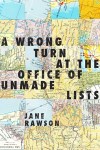
Jane Rawson, A wrong turn at the office of unmade lists

Disguised Speculative Fiction perhaps?

There was also interest in something called interstitial fiction. Laurie Ormond tweeted “Interstitial fiction (blending literary and genre tropes) has been increasingly visible in the last few years” and Angela Hannah tweeted “Are you reading speculative fiction disguised as literary fiction? Interesting discussion of interstitial fiction”. I’m a bit uncertain about the point being made here regarding “disguise”, but Laurie Ormond, probably reporting on the same presentation, tweeted “Literary works are deploying techniques and tropes of genre fiction to explore climate change”.

And here’s another tweet about the relationship between genre, literary fiction and classification: “Australian noir is closely linked to literary fiction and is not always categorized as noir – Leigh Redhead” (Claire Parnell). Is this implying that Australian noir is/can be disguised as literary fiction?

Oh, and there was also talk of New Adult Fiction, but I don’t have many tweets for that – a topic for another day.

On readers, book clubs and literary fiction

Of course, as a reader, I was particularly interested in tweets about the reading end of the spectrum, and there were a few of these.

It’s so fantastic hearing other academics talking about the significance of book clubs and reader experience. (Caitlin Francis)

A couple of other tweets referred to book clubs and their focus on literary fiction:

  • Vassiliki Veros – ‘literary fiction’ dominates library & online clubs. Q&A: lack of ‘gf book club guides.’ (Lynette Haines)
  • Librarians are cultural gatekeepers, especially when selecting books for book clubs @VaVeros(Beth Driscoll)

I’d love to have heard this presentation by librarian-academic, Veros. My reading group rarely uses book club/reading group guides because we have rarely found the questions relevant to how we discuss books, so it’s interesting to see Haines’ tweet suggesting that the lack of such guides for genre fiction may be one reason for such fiction being less commonly read by reading groups. However, being a librarian, albeit a retired one who didn’t work in this area, I take the point about the gatekeeper role played by librarians. They should be alert to the needs of their readers – that’s their job – but selection is always a juggle.

If there’s one overall thing I’ve gleaned from the tweets, it’s that more will be said about the relationship between genre and literary fiction!

Anyhow, there were other intriguing tweets, including one about genre-tagging by GoodReads’ members, but I think this is enough. I was pleased to read that papers from this Conference will be published in a special edition of Australian Literary Studies. I’ll be looking out for it. You may hear more as a result!

Meanwhile, if you haven’t had enough of genre, I’d love to know if anything here has caught your attention.

Tony Birch wins the 2017 Patrick White Award

The Patrick White Award is one of Australia’s very special literary awards, and one that I posted in detail about last year when Carmel Bird was the winner. It’s special for a number of reasons. It is named for Patrick White who is, to date, Australia’s only Nobel Laureate in Literature. But, as I wrote last year, it’s particularly significant because it was established by White himself, using the proceeds of his Nobel prize money. Known for being irascible, White was also a principled and generous person. Having won two Miles Franklin Awards, among others, he stopped entering his work for awards in 1967 to provide more opportunity for other less-supported writers. His award goes to writers who have made significant contributions to Australian literature but who haven’t received the recognition they deserve.

This year’s award, as I heard on ABC Radio National when I was heading out for my patchwork group’s fortnightly cuppa, was announced at Melbourne’s Wheeler Centre last night. It is special for another reason:  the award has been made to Tony Birch, making it the first time the award has been made to an indigenous Australian writer. In one sense I feel uncomfortable about labelling, because Birch has won the award on the merit of his output, but on the other hand such wins can raise awareness and provide encouragement for all those “others” who feel (and, you’d have to say, are) locked out of the mainstream.

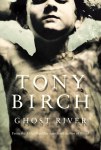
Tony Birch, Ghost riverSo, Tony Birch. He’s a Melbourne-based writer, who has written two novels, many short stories, and poetry. His first novel, Blood, was shortlisted for the Miles Franklin award, and his second, Ghost River (my review) won the 2016 Victorian Premier’s award for Indigenous writing. I have also reviewed one of his short stories, “Spirit in the night” (my review), which was published in the excellent Australian Review of Fiction series.

Australian literary editor Jason Steger, writing about Birch’s win, quotes Birch on White:

“I admired the fact that as a writer in his older age he protested against the Vietnam War, that he was a great supporter of Whitlam after the Dismissal and that he had been involved with Jack Mundey’s protests and the Green Bans.”

Steger continues that this attracts Birch:

because he is “very involved” with the campaign against the Adani Carmichael coal mine in Queensland. And as a research fellow at Victoria University, his work “is essentially about the relationship between climate change and what we now call protection of country”.

The most interesting (and most memorable) parts of Ghost River werefor me, the environmental story about saving the river and Birch’s depiction of the lives of and treatment of homeless men. Michael Cathcart, in his interview with Birch on ABC’s Books and Arts Daily Program, commented that while Birch’s work features indigenous characters, his themes seem broader. Birch responded pretty much as Steger also quotes him:

I suppose my writing is broadly about class, but more essentially about valuing people who might otherwise be regarded as marginalised.

Patrick White would, I’m sure, have been proud.

Monday musings on Australian literature: GenreCon 2017 by Tweet (#gcoz)

GenreCon 2017 BannerFirst off, no, I didn’t attend this year’s GenreCon which took place this weekend past in Brisbane, Queensland. However, I did see many of the tweets that emanated from attendees (using hashtag #GCoz) and found many of them extending beyond the genre focus. So, I thought I’d pass some on.

Not all tweeters identified the sessions their tweet/s related to, so I’m going to “curate” them under issues that interest me! (I will name the tweeter in brackets after their tweet. Note that the quote marks are for the tweeters’ words, which mostly comprise their summary of what they heard rather than a verbatim quote.)

But, before we get started, I’ll share my favourite tweet. It quotes Garth Nix on being an introvert at conferences:

“I just pretend to be the kind of person who likes to talk to people”. (Aiki Flinthart)

For writers

GenreCon is clearly geared to writers more than readers. Consequently the program included sessions like Writing Through Fear with Anna Campbell and Top Ten Tricks and Traps of Publishing Contracts with Alex Adsett, and discussion panels like What Every Writer Ought to Know about their Book Cover.

Tweeters shared advice on how to work within a “genre”, on the need to “know” your genre and its practitioners, and on what to do when your book is published, but I’ll leave those. You can check the hashtag yourself if you are interested. For readers here I’ve chosen other topics …

Americanising text

This is a controversial issue I’ve discussed with Lisa (ANZLitLovers) recently on her blog when she reported on the AALITRA Symposium. I’m not sure who originated the comment, I’m sharing here, but it makes a point: “Nothing throws someone out of a story like a misplaced thong” (Lynette Haines). Or a rubber! I guess tolerance for “Americanisation” depends on the audience you want to attract.

Book covers

Now this is another issue that can get hackles raised, though this didn’t come through in the GenreCon tweets. However, the point made by Escape Publishing/Harlequin publisher, Kate Cuthbert, is interesting:

“Covers are not about the image, they’re about the emotions they evoke” (Jess Irwin).

Cuthbert also apparently said that “Big W accounts for about 40% of Australian book sales, so if they come back and say they won’t stock a book with that cover, you change the cover” (Josh Melican).

And, most worryingly, Cuthbert said that  “Genre fiction has a representational problem which needs to be addressed. If you put a non-white character on the cover, it doesn’t sell as well. That’s a financial reality, but it’s shit. @katydidinoz [ie Kate Cuthbert] has refused to white-wash covers in the past” (Josh Melican).

Awards

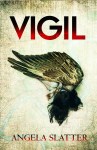
Angela Slatter, VigilAuthor Angela Slatter discussed awards in her plenary address, which she has now posted on her blog. One tweeter wrote: “The talented @AngelaSlatter discusses the ‘award-effect’ (and reminds us that everyone’s trajectory is different and your journey will not be the same” (Tehani Croft). Croft shared Slatter’s slide:

  • Winning an award does NOT make you a better writer
  • Losing an award does NOT make you a worse writer
  • Awards can be useful but your career will NOT die without them

And, just to make sure the point was clear, Slatter also said “Awards garner media attention … on slow news days” (Tansy Rayner Roberts).

The market

A few other points were tweeted about the market besides the Big W figure above. Most came from the literary agent Alex Adsett. She commented on “the energy put into international rights sales by smaller publishers like Text, particularly compared to less active and larger publishers” (PopFic Doctors). I’m certainly aware through overseas bloggers like Kim (Reading Matters) and Guy (His Futile Preoccupations) that Text is active in promoting their books in England and the USA. They are an inspiring publisher.

Adsett also discussed audiobooks, advising that “Authors retaining audiobook rights is becoming a dealbreaker for big publishers over the last 18 months because of how big audiobooks are becoming” (Claire Parnell). PopFic Doctors tweeted that “audiobooks now account for 1% of the market, which is BIG”. One per cent doesn’t sound big to me, but seems it is.

And finally, also from Adsett, is a comment about genre identification: “Many publishers won’t take horror so Alex will pitch as dark fantasy; can genre be spun as literary?” (Rivqa Rafael). Adsett apparently also said that in Australia, writers don’t need an agent, unlike in the USA, but I wonder if authors, on their own, would all know these finer nuances of pitching? As for Rafael’s question regarding whether “genre can be spun as literary”, I’d say yes, but therein hangs a tale for another day I think.

On writing

There were many sessions on the craft of writing, such as writing fight scenes (for women), developing characters, and writing sex and sexuality in the twenty-first century.

American author Delilah Dawson spoke about writing characters: “Delilah Dawson’s cheat sheet of quick ‘charisma points’ for characters: loyalty, wry humour, nice to kids, kind to animals, artistic in some way” (Jess Irwin) and “Delilah Dawson finds out what your characters most want and what they fear most and this feeds into the climax” (Leife Shallcross).

Fiji-born New Zealand writer Nalini Singh’s comment on how to handle hard times in writing was tweeted by many who loved her idea of “squirrels”: “I’m a big fan of having ‘play projects’ aka ‘squirrels’ (you’re working on a hard part in your main project & ‘ooh, squirrel!’) … having these side projects gets you off the treadmill … see where the squirrel leads you … keep it secret to avoid stress.” (Angela Meyer)

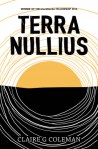
Claire G Coleman, Terra NulliusAnother writer who was frequently tweeted was debut indigenous Australian author, Claire G Coleman (Terra nullius). She clearly had a fresh way of saying things, such as this on inspiration: “A lightning bolt of inspiration is when something in one part of your brain collides with something in another part of your brain and they have babies (Tehani Croft). And this on editing: “Nobody finishes editing. Someone just takes it off you one day” (Narrelle Harris). I can relate to that! I often fiddle with my blog posts long after they’ve been published. Author Emma Viskic also entertained with her comment on editing: “I did kill them, or as I like to say: sent them to the farm to play with other happy words” (Elizabeth McKewin). Love it!

And finally, I liked this one on rules, from the aforementioned Adsett:

“if you’re good enough you can break the rules … but you have to show you know what the rules are” (Tansy Rayner Roberts)

On diversity

Several tweets discussed the issue of diversity. It was clearly a big issue at the conference. There were discussions about Romance fiction, whose popularity is increasing, including more diverse characters. Romance writer Jodi McAlister said that “we’re seeing many more narratives for queer characters beyond the coming out narrative. Queer characters are getting love stories as well as stories about dragons and adventures where it’s not about the character being queer, it’s just who they are” (Claire Parnell). In other words, “You shouldn’t need a reason to include diverse characters…” (Daniel de Lorne)

McAlister also said very pointedly that “Those seen as worthy of love in our love stories tells a lot about what our culture values” (Kali Napier). That’s also worth its own post.

Finally, the issue of how to write these diverse characters came up – relating to that issue we’ve discussed here many times regarding white writers writing black characters. Adsett tweeted Claire G. Coleman’s advice: “Don’t write any diverse character you haven’t had a coffee with, aren’t friends with”.

Creative Native, not an attendee I think, didn’t much like this advice, tweeting: “Plenty of people have ‘had a coffee’ or were friends w[ith] Native, disabled, Bipolar, Autistic, Fat me yet still managed to spout harmful nonsense.” Fair enough. It takes more than one coffee, but I suspect Coleman wasn’t being quite that simple. However, Creative Native did give good advice to writers: “Get a Sensitivity Reader w[ith] the marginalised identity/identites you’re writing about – & deal honestly w[ith] criticism (!!!)”. Which is exactly the approach I’ve come to think best …

Phew, this ended up being way longer than I planned. Hopefully my headings and highlighting have enabled you to pick out what interests you without having to read it all!

Did anything interest you?

Monday musings on Australian literature: Ad hoc literary awards (1)

Wah! It’s Sunday night (as I write this), and I’ve suddenly realised that I’ll be out of town all Monday and Tuesday, so what to do about this week’s Monday Musings? Something quick, that’s what! So, I looked at my little list of ideas for something I could do fairly quickly, and noted one I’d titled “other literary prizes”. By this I meant literary prizes that I rarely cover here because they are not in the “literary” mainstream. That doesn’t mean, however, that they are not worth telling you about (though they can be tricky to track down). I’m numbering this post with (1) because, you never know, I might do another one, one day.

So, for this post, I am going to list some lesser-known (to me, anyhow) non-Australian awards that have been won by Australians. In other words, these are not of the Booker or IMPAC Dublin Prize variety.

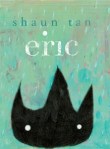
Shaun Tan, Eric coverAstrid Lindgren Memorial Prize

An international children’s literary award established by the Swedish government in 2002 in the name of Sweden’s children’s author Astrid Lindgren (1907–2002). The award is made annually to people or organisations, recognising their contribution to children’s literature. Two Australians have one, Sonya Hartnett (whose adult novel Golden boys I’ve reviewed) and Shaun Tan (whose Eric I’ve reviewed.)

Betty Trask Prize and Awards

Established in 1984 for first novels (general fiction or romance) written by authors under the age of 35 who reside in a current or former Commonwealth nation. One author receives the main “Prize”, with runners-up receiving “Awards”. Australians who’ve won include Nick Earls (Award, 1998), Elliot Perlman (Prize, 1999, for Three dollars), Julia Leigh (Award, 2000), Chloe Hooper (Award, 2002) Evie Wyld (whose Miles Franklin Award winning All the birds, singing I’ve reviewed here, Award, 2010).

German Crime Fiction Prize (Deutscher Krimi Preis)

Peter Temple, TruthApparently Germany’s “oldest and most prestigious” literary prize for crime fiction. It has been awarded since 1985, and every year awards 1st, 2nd and 3rd place in two categories, National and International. Australian writer Gary Disher (whose book Wyatt Son Gums reviewed here) won 1st Prize in 2000 (with Kickback), in 2002 (with Dragon Man) and in 2016 (with Bitter Wash Road, on my TBR), and Peter Temple won 1st prize in 2012 with Truth (my review).

Montreal International Poetry Prize

A new biennial international poetry competition established in 2011. Poems are submitted online, and can come from anywhere in the world, but must apparently be in English (which is interesting given Montreal is in Quebec. Interesting too is the fact that the prize is “adjudicated by a board of 10 international editors, which changes every competition, but the winner is selected by a single judge”.  Anyhow, to date there have only been three awards, 2011, 2013 and 2015, with the first being Australian poet, Mark Tredinnick.

PEN Translates Award (English)

Established in 2012 “to encourage UK publishers to acquire more books from other languages.” It helps UK publishers to meet the costs of translating new works into English and ensures translators are “acknowledged and paid properly for their work”. So, it’s for something published (or to be published) in the UK, and in 2016 a winner was Max by Sarah Cohen-Scali. It was translated from the French by Australian translator (and Text Publishing staffer) Penny Hueston.

We don’t know much in Australia about how well our local writers “travel”, and awards like these aren’t always well-reported at home, so I’ve enjoyed discovering just who has been feted overseas. As with learning of Helen Garner and Ali Cobby-Eckermann winning the Windham-Campbell Literature Prizes, it’s been eye-opening.

There! I’ve written a post, and I found it interesting to research. Hope it’s interesting enough for you too!