Monday musings on Australian literature: Narratives from outside Australia?

In my post on this year’s Stella longest announcement, I quoted this from the judges’ comments:

We wished for more representations of otherness and diversity from publishers: narratives from outside Australia …

They followed this with other wishes like stories by and about “women of colour, LGBTQIA stories, Indigenous stories”. These are obvious desires, but I am intrigued about the specific request for “narratives from outside Australia”, given the writers themselves have to be “either Australian citizens or permanent residents of Australia”. Superficially, at least, this is the reverse of the Miles Franklin Award which stipulates Australianness in the content (“Australian life in any of its phases”) of the works to be considered. (Some might remember the questions about Shirley Hazzard’s The great fire winning the Miles Franklin in 2004. Its link to Australia was pretty tenuous.)

Now, I’m not arguing against reading books not set in Australia – far from it. It’s just that, as a reader, when I look for narratives from outside Australia, I tend to look to writers from those places outside Australia.

So … what specifically do they mean?
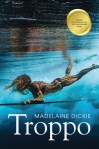
Book cover for Madelaine Dickie's TroppoDo they mean they’d like more narratives by Australians about Australian experiences abroad?

We have always had those. Henry Handel Richardson’s Maurice Guest, Christina Stead’s For love alone (my review) and Shirley Hazzard’s The transit of Venus are good examples from the past. Contemporary examples include Madelaine Dickie’s Troppo (my review) and Angela Savage’s The dying beach (my review). Both authors have spent significant time in the Asian countries they write about. Dickie says this about Troppo:

Some of the anecdotes are almost true, certainly stemming from my own experiences as a traveller and surfer … The texture of Troppo is also very true, the intoxicating smell of kretek cigarettes, the nights bleary on Bintang beer, and the way the call to prayer from the mosques drift down through mountain valleys.

Both these novelists use plot-driven novels to explore not only personal growth, but socio-political and environmental issues affecting the southeast Asian region, issues important for Australians to understand.

Other contemporary novels by Australians about Australians abroad include Murray Bail’s The voyage (my review), Diana Blackwood’s Chaconne (my review), Angela Meyer’s superior spectre (my review), and Tim Winton’s The riders.

Writer Irma Gold recently wrote a blog post titled “Literary adventures abroad”, and featured Angela Meyer, Angela Savage and Leah Kaminsky, whose book The hollow bones I haven’t read. Meyer references that issue concerning writers from the country itself:

I questioned my desire to do so, when there are so many great Scottish writers writing about Scotland. But the desire would not go away, and I knew that the lens I was applying would be Australian — my character, Jeff.

Savage says of her decision to write novels set in Thailand:

Writing fiction set in Thailand provided both a means to process my experiences and an outlet for the travel stories nobody would listen to.

Interestingly, but perhaps not surprisingly, several of the novels I’ve read that include Australians abroad are historical fiction works set during, or post, various wars, such as Alan Gould’s The lakewoman (my review), Joan London’s Gilgamesh, Richard Flanagan’s The narrow road to the deep north (my review). All of theses enhance our understanding of the personal, social and/or political impact of war on Australian life and culture.

Merlinda Bobis Fish-hair womanDo they mean they’d like to see members of our diverse population writing about where they came from?

There are many memoirs on this topic, but, while the Stella Prize encompasses all forms and genres, my focus here is fiction. A memorable example for me is Merlinda Bobis’ Fish-hair woman (my review), which is set in the Philippines during the civil unrest of the 1980s. It’s a strong, evocative piece about humanity and the stories we tell (or manipulate) in the name of it.

Other Australian writers who have written about the places they came from include Michelle de Kretser in The Hamilton case, Sara Dowse in Schemetime (my review), Kavita Nandan in Home after dark (my review), and, coming up this year I believe, debut author Elizabeth Kuiper with her debut novel about coming of age in Zimbabwe.

One of the things these writers can do is provide a unique insight into their home cultures, because they revisit them through their migrant (expat) eyes. That insight can be uncomfortable, though, for the home culture, as we Aussies have felt when our own leave and then write about us from elsewhere. Peter Carey is a good example. I like Sydney Review of Books reviewer Natalie Quinlivan’s analysis of the situation when she says that his “fiction often tries to rewrite and reframe Australia. The success of such a pursuit depends on whether thinking about Australia, rather than living in the country, provides Carey with objective clarity or rhetorical detachment.”
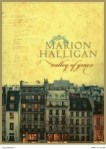
Marion Halligan Valley of graceOr, do they just mean they’d like Australian writers to set books elsewhere.

Markus Zusak’s The book thief is an obvious example (my review). But others are Eva Hornung’s Dog boy (my review) and Marion Halligan Valley of grace (my review). These are all great novels, in which their authors have used their imagination and experience to explore universal truths in places other than their own. Each has a reason for making that decision – Hornung, for example, being inspired by a news article – and each has created a book that I have loved for its heart.

Why seek Australian narratives set outside Australia?

Well, I think Angela Savage says it all on Irma’s blog:

I also wonder if there’s a market for books set in Asia written by non-Asian Australians, or if readers prefer Own Voices writing — in this case, stories set in Asia by writers with an Asian background. For my own part, I enjoy perspectives that both ‘insiders’ and ‘outsiders’ bring to fiction.

I don’t know what the Stella judges specifically meant, but I think Savage has nailed it. In the end, what we want to read is as many different perspectives as we can because diverse reading opens our eyes and minds to other ways of being and seeing. However, my point is one of degree. I welcome these books (as those of you who read my reviews will know), but I’m not sure that Australians writing “narratives from outside Australia” is a glaring gap that needs filling.

I do hope all this has made some sense!

What do you think? 

Monday musings on Australian literature: Ashurst Business Literature Prize

Book coverMy, how dry does today’s topic sound? But read on, and see what you think. This prize was brought to my attention a couple of days ago by a tweet from author Michelle Scott Tucker announcing that her book, Elizabeth Macarthur: A life at the edge of the world (my review), had been shortlisted for the Ashhurst Business Literature Prize. Her tweet was followed up by Lisa (ANZLitLovers) posting the shortlist on her blog. I decided to save my post for Monday, as it seemed a perfect topic for musing on …

What exactly is this Ashurst prize?

Firstly, it has been going for FIFTEEN years, having been established in 2004 by Blake Dawson as the Blake Dawson Business Literature Prize, “for business and financial affairs writing”. The prize’s name was changed to the Ashurst Business Literature Prize in 2012. Ashurst Australia was previously called Blake Dawson, and is the Australian arm of an international commercial law firm. The prize has been administered by the State Library of New South Wales from the start.

The prize is currently worth $30,000, marking it as an award that means serious business! (Sorry, couldn’t resist that.)

Its aims, from the Prize’s site, are to:

  • Encourage business and finance writing and commentary of the highest quality; writing that brings with it the richness that can come from detailed research
  • Stimulate those writers with a knowledge of Australia’s business life and to encourage their continued production of insightful, well researched books that can be easily digested by the general reader
  • Enable all Australians and the general reader to be better informed about Australia’s commercial life and its participants
  • Add another dimension to Australia’s intellectual and cultural life

So the subject matter is clearly defined, as is the intended audience. The subject matter, though, has changed a little over time. Initially, it was restricted to Australian business and finance, but in 2013, this was expanded to encompass “international and global commercial life and its participants”. That explains why a book about the Lanes who started the Penguin publishing company was eligible. (See 2015’s winner.)

There’s also a wider aspiration about adding to our “intellectual and cultural life.” I like that – we need more good writing on some of the more practical topics affecting our lives.

The conditions of entry include the subject matter and the intended audience. Also:

  • the works must be in English, and can be in printed book or ebook form
  • the author/s must be Australian citizen/s or hold permanent resident status, and at least one of the authors must be alive at the time of nomination.

It doesn’t specifically say anywhere, but it seems that the works are expected to be non-fiction, so, for example, a book like Kate Jennings’ Moral hazard, which, as I wrote in my review,  “looks not just at our contemporary globalised financial world, but more widely at work, our relationship to it, and the moral choices we make in work and in life”, would not be eligible. A shame, I think, for such work not to be recognised. However, a wide variety of non-fiction genres are clearly accepted, including histories and biographies.

Past winners

The past winners, as listed on the State Library of NSW’s website:

  • 2004: Fred Benchley’s Allan Fels: A portrait of power (John Wiley & Sons Australia)
  • 2005: Darrin Grimsey and Mervyn K. Lewis’s Public private partnerships: The worldwide revolution in infrastructure provision and project finance (Edward Elgar)
  • 2006: Gideon Haigh’s Asbestos house (Scribe)
  • 2007: Caroline Overington‘s Kickback: Inside the Australian Wheat Board scandal (Allen & Unwin)
  • 2008: Leonie Wood‘s Funny business: The rise and fall of Steve Vizard (Allen & Unwin)
  • 2009: Peter Thompson and Robert Macklin‘s The big fella (Random House)
  • 2010: Paul Barry’s Who wants to be a billionaire? The James Packer story (Allen & Unwin)
  • 2011: Trevor Sykes‘ Six months of panic: How the Global Financial Crisis hit Australia (Allen & Unwin)
  • 2012: Peter Hartcher’s The sweet spot: How Australia made its own luck – and could now throw it all away (Black Inc)
  • 2013: Malcolm Knox‘s Boom: The underground history of Australia, from Gold Rush to GFC (Penguin Random House Australia)
  • 2014: Andrew Burrell‘s Twiggy: The high stakes life of Andrew Forrest (Black Inc)
  • 2015: Stuart Kells’ Penguin and the Lane Brothers: The untold story of a publishing revolution (Penguin Books Australia) (Lisa’s ANZLitLovers review)
  • 2016: Catherine Bishop’s Minding Her own business: Colonial businesswomen in Sydney
  • 2017: Michael Traill’s Jumping Ship: From the world of corporate Australia to the heart of social investment (Hardie Grant Publishing)

Has anyone read any of these? Several of the authors are known to me – including journalists Paul Barry, Gideon Haigh, and Caroline Overington – and I have heard of a couple of the books, but no, I’ve not read a one!

Shortlist for the 2018 prize

  • Ian D. Gow and Stuart Kells’s The big four: The curious and perilous future of the global accounting monopoly (La Trobe University Press)
  • Damon Kitney’s The price of fortune (HarperCollins)
  • Eleanor Robin’s Swanston: Merchant Statesman (Australian Scholarly Publishing)
  • Michelle Scott Tucker’s Elizabeth Macarthur: A life at the edge of the world (Text Publishing)
  • Brian Sherman and AM Jonson’s The lives of Brian (Melbourne University Publishing)

The judging panel is quite different to the usual composition: Richard Fisher AM (General Counsel and Adjunct Professor of Law at the University of Sydney); Narelle Hooper (business journalist, editor and author); Margie Seale (Non‐Executive Director of Telstra Corporation, Westpac Banking Corporation, Scentre Group and Australia Pacific Holdings).

The panel’s chair, Richard Fisher, described the 2018 shortlist:

… Four are biographies; two are concerned with pioneering business people, Elizabeth Macarthur and Charles Swanston whilst the others focus on James Packer and Brian Sherman. The fifth traces the evolution of accounting practice, and particularly The Big Four, from Medici to the modern day.

The winner will be announced on 15 May.

Any thoughts? Would you be inspired to read these sorts of books?

Julian Davies, Call me (#BookReview)

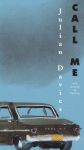
Book coverI wasn’t sure what I was in for when I started reading Call me, the latest offering from that tricksy duo, novelist Julian Davies and illustrator Phil Day. But, it soon became clear that what was before me was a coming-of-age story. What, I wondered, was Davies doing writing such a novel? Then I remembered that this was the author who gave us, most recently, Crow mellow (my review), so I decided to relax and go with the flow. Sensible me, because this is a sophisticated take on the genre, geared to an adult audience.

The story starts in the first person voice of a young woman called Caddie, who is in bed with a young man called Pip. They are both in their last year of school, and the story spans the last couple of months of that year, through their eyes. However, the tricksiness starts here, because Caddie’s voice is first person, while Pip’s is third person subjective. Why? An author doesn’t make these decisions lightly, so I usually want to know why. It’s particularly interesting here because this is a male author choosing to write his female character in first person, and the male in third person. I’ll come back to this because right now you are probably wanting to know more about the actual story than these technicalities!

“This is Australia” (Pip’s friend, Stu)

So, the story. Caddie and Pip have been in a relationship for around a year at the start of the novel, but it’s geographically challenged because Caddie lives in the city (in Canberra, in fact) while Pip lives in the country, an hour or so’s drive away. Davies knows whereof he speaks because he too lives about an hour’s drive from Canberra. Caddie’s parents see themselves, according to Pip, as “high middle class”. They both run businesses, her father’s being an investment business called Capital Capital, and her mother’s an art gallery called Sense and Sensibility (because, as she apparently told Pip, “she was lapping up Jane Austen while her friends were still  playing with their dolls”). They keep “upgrading” their homes, and they fight a lot. Pip’s parents, on the other hand, describe themselves as “feral middle class”. Sydney escapees, they live in the not-quite-finished house they built themselves; they take a loving but laissez-faire approach to parenting; and they get on well. All this introduces the city-versus-country theme that recurs in Davies’ works, including Crow Mellow and his Meanjin piece about building his own home (my review). It’s pretty clear where Davies’ preference lies!

The majority of the novel takes place over 15 days, and chronicles, in lovely nuanced detail, the tensions that develop in Pip and Caddie’s relationship due to Pip’s decision to leave school only weeks before the end. Their thoughts and feelings are told alternately in chronologically named chapters, like “Day One” and “Day Eight (Still Later)”. Although Caddie is critical of her parents, in the way that teenagers often are, she’s following the traditional path of working hard at school and planning to go to university. She is totally into mobile phones and social media. Pip is a more independent thinker. He’s not interested in social media, and only has a phone because Caddie gave it to him. And yet, in a neat paradox, Caddie records her thoughts in a diary, while Pip records his into his phone! This is pure Davies, by which I mean nothing is simple or straightforward.

So, we have the city-versus-country theme, plus a subtle questioning of modern technology, including our reliance on it and its potential for misuse. A third theme relates to education. Pip’s decision to leave school stems from his refusal to live by external expectations that don’t feel authentic to him. He hates the “petty rules” and, as Caddie explains it, “the kind of society we live in that the education system feeds”. He has no alternative plans but feels incapable of “passively endorsing” a system he doesn’t believe in.

“What kind of person am I?” (Caddie)

Accompanying these more sociological themes are personal, psychic ones. Both Caddie and Pip are deeply concerned with their identity, specifically with what it is to be “a person”. Caddie, living in her “sheltered” house and uncomfortably aware of the material benefits provided by her parents, wonders not only “what kind of person” she is, but, more broadly, “what does it mean to be a person.” This question of personhood is frequently burdensome to her. Pip, however, has a different take, recognising that “he is only one person”. One of the challenges they face is negotiating their own and each other’s personhoods. Late in the novel, when their relationship is floundering, Pip wonders “did the new, distant Caddie undermine and diminish his sense of her as the person he thought he knew?” Meanwhile, Caddie “wonders who Pip is that he can hold this view.”

Call me, then, is essentially a book of ideas that questions, in a lightly satirical way, aspects of modern Australian society, but it’s not boringly didactic, partly because the ideas are explored though some engaging characters. These include two we met in Crow Mellow, making this book a sort of “companion piece”. The characters are the wise Phil Day, a teacher who, cheekily, happens to share a name with the book’s illustrator, and the ridiculously named cynic, Dick Scrogum (aka Scrotes). Scrogum’s opinionated banter and Day’s quiet conversations encourage Pip to dig a little deeper into the reasons for his decision.

These characters, however, are only part of why the book doesn’t become mired in earnestness. Another reason is that, surprisingly, as the book progresses, it becomes apparent that there’s more to it than just Caddie and Pip’s relationship; there is in fact quite a plot developing. Who are the mysterious callers on Pip’s phone and what do they want? Should we be worried about them? And what about the gun that Pip has? It is pretty much de rigueur that once a gun is mentioned in a narrative it’s going to be used, but will it? Is this book not what it looks, but, really, some sort of crime-mystery-thriller? You’ll need to read it to find out.

And now, I’ll return to that question I posed at the beginning about voice. Both first person and third person subjective voices offer easy engagement with characters but can only offer limited perspectives. Telling the story through two such voices widens the perspective, by letting us see Caddie and Pip through each other’s eyes as well as their own. In other words, we get a little touch of omniscience alongside close engagement. But, why is one voice first person and the other third? I’m not sure really, but maybe it’s something to do with the fact that Pip is the main protagonist, and that Caddie, as the “I”, represents both herself and the reader (who is, perhaps, likely to be more like her – female, sincere, somewhat conservative, but also open-minded and keen to explore). By being more directly in her head, we are encouraged to question, as she does, certain assumptions and values. I suspect too that there may be something autobiographical about this novel. Is Pip like Davies’ younger self? And does putting Pip at one step remove provide him with a little space to interrogate the boy he was? Certainly Caddie seems to question who Pip is more than vice versa. I’m probably wrong about this, but at least I’ve given it a shot!

As I say all too often, there is so much to say about this book. I haven’t even touched on the gorgeous landscape descriptions of a region I love. Nor on the clever segues, nor Phil Day’s whimsical illustrations, nor the humour, nor, indeed, what a beautiful book is it to look at, hold and read. However, I’ve written enough for now.

Call me, then, is not only an engrossing story about the psychic growing-up of its protagonists, but one that also offers provocative commentary on both humanity in general and modern society in particular. Them’s big boots, but Davies pulls it off, resulting in a book that’s both intelligent and fun to read.

Julian Davies
Call me
Illustrated by Phil Day
Braidwood: Finlay Lloyd Publishers, 2018
363pp
ISBN: 9780994516541

(Review copy courtesy Finlay Lloyd Publishers)

ABIA 2019 Shortlists announced

I have not posted on the ABIA (Australian Book Industry Association) Awards here before, but it has a couple of categories that interest me, so I’ve decided this year to share them with you.

The process of selection involves, as I understand it, the longlist being chosen/voted for by the ABIA Academy of over 200 industry professionals, with the shortlist and winners then being chosen by judging panels. There are several categories, but I’m reporting on just three here. If you are interested to know more, do check out the ABIA awards website.

Books may only be entered for one award – except for the Matt Richell new writing award. This means, then, that submitters must choose whether to submit, for example, their books for the General Fiction Award or the Literary Fiction Award, or, say, for the the Small Publishers’ Adult Book or the General Fiction or Literary one. This must result in some interesting discussions.

The shortlist was announced yesterday, April 11, and the winners will be announced on May 2.

Literary fiction book of the year

  • Trent Dalton’s Boy swallows universe (Fourth Estate) (my review
  • Melissa Lucashenko’s Too much lip (UQP) (my review)
  • Kristina Olsson’s Shell (Scribner) (Lisa’s review)
  • Tim Winton’s The shepherd’s hut (Hamish Hamilton) (Theresa’s review)
  • Marcus Zusak’s Bridge of clay (Picador)

Small publishers’ adult book of the year

(It’s great seeing small publishers getting their own little spot, albeit they’ve been doing pretty well, in recent years on bigger stages!)

  • Anita Heiss’s (ed) Growing up Aboriginal in Australia (Black Inc.) (my review)
  • Robert Hillman’s The bookshop of the broken hearted (Text)
  • Angela Meyer’s A superior spectre (Peter Bishop Books) (my review)
  • Sally Piper’s The geography of friendship (UQP)
  • Alison Whittaker’s Blakwork (Magabala)

The Matt Richell award for new writer of the year

(This award is named for the publisher of the Australian arm of Hachette, Matt Richell, who tragically drowned a few years ago.)

  • Trent Dalton’s Boy swallows universe (link to my review above)
  • Bri Lee’s Eggshell skull (A&U) (Kate’s review)
  • Heather Morris’ The Tattooist of Auschwitz (see link to Lisa’s review above)
  • Holly Ringland The lost flowers of Alice Hart (Fourth Estate) (Theresa’s review)
  • Christian White’s The nowhere child (Affirm Press)


This slideshow requires JavaScript.

Any comments or predictions?

Stella Prize 2019 Winner announced

The Stella Prize winner was announced tonight while I was at yoga so I had to wait, impatiently – oops, no, it was yoga, so I was very calm thanks to my wonderful neighbour and teacher – until I got home, to discover the winner. I only managed to read three of the six, which is one more than I had read by last year’s announcement, but I do have a fourth on my TBR.

Before I announce the winner, which most of you will have heard by now anyhow, here is a quick recap:

  • the longlist was announced on 7 February: check out my subsequent Monday musings post for an interesting conversation about the judges’ comments; and
  • the shortlist was announced, as is tradition, on International Women’s Day: Jenny Ackland’s Little gods; Enza Gandolfo’s The bridge; Jamie Marina Lau’s Purple Mountain on Locust Island; Vicki Laveau-Harris’ The erratics; Melissa Lucashenko’s Too much lip; Maria Tumarkin’s Axiomatic.

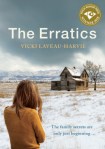
Vicki Laveau-Harvie, The erraticsAnd the winner, from around 170 books submitted, is a memoir, Vicki Laveau-Harris’ The erratics, a book that intrigues me, although I have to admit I wasn’t expecting it to win – but there you go, you never can tell. It is the third non-fiction book to win the award in seven years, nicely confirming Stella’s aim to be broad in the forms it encompasses. The other two were Alexis Wright’s collective biography, Tracker (2017), and Clare Wright’s history The forgotten rebels of Eureka (2014, my review).

The winner receives $50,000, and each shortlisted author receives $3000, as well as a three-week writing retreat on the Victorian coast, making it a generous prize.

Now, while I haven’t read The erraticsKim (Reading Matters) has, and found it “compulsive” reading. Kate (booksaremyfavouriteandbest) has too, and was less enamoured, but she explains her reactions in detail. These reviews are worth reading. Kim also has a postcript explaining book’s publishing trials.

Anyhow, here is an excerpt from what Louise Swinn, this year’s Judging Panel Chair, said at the announcement:

The six shortlisted titles all have something to say about the way we live today, two in the form of nonfiction and four novels. These books are very outward-looking and unafraid. They deal with complex and complicated issues. They can be unsettling.

The winning book elegantly tramples all over the Stella requirements: it is excellent, engaging and original in spades. It is moving and funny, and as powerful in what it leaves out as it is in what it includes. It is also a first book, and I hope it’s the first of many. It is my considerable pleasure to announce that the winner of the 2019 Stella Prize is Vicki Laveau-Harvie for her memoir, The Erratics.

She also made an interesting comment about the Stella Prize itself:

In this seventh year of the Stella Prize, the high quality of the general submissions could, for anyone not paying attention, make you wonder why we have this prize at all. But the Stella has never been about an actual lack of talent — it is about perception and how this has affected the amount of space women’s writing has been allowed to take up.

It will be interesting to see this year’s Stella Count, because that’s where we can see what progress (if any) is being made.

If you have any comments on the winner, I’d love to hear them.

Monday musings on Australian literature: Spotlight on Robert Drewe

Courtesy: Annette Marfording

Courtesy: Annette Marfording

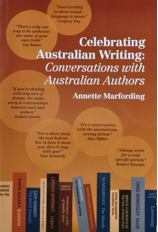
In 2016, I wrote five Spotlight posts inspired by Annette Marfording’s Celebrating Australian writing: Conversations with Australian authors, and decided that was probably enough mining of her work for my blog. However, with over two years having passed since then, I wondered if it might be okay to do another. I emailed Annette, and she kindly agreed. But, who to choose from the 21 authors in her book? Well, of course, you know from the post title who I chose, so the next question is, why him?

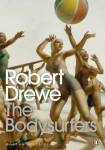
The answer lies in an email correspondence I’ve had with Carmel Bird over the last week in response to my last Monday Musings posts on pianos. Carmel emailed me privately to mention an anthology she edited, Red hot notes, which includes many pieces about the piano. How embarrassing! I actually have that book. Anyhow, that got us talking about short stories and short story writers, including Robert Drewe whose The bodysurfers I have. Carmel exhorted me to read (or, to be precise, finish reading) it. I will, because what I’ve read so far I’ve loved. (Meanwhile, I plan a future post on short stories more generally, inspired by our discussion.)

Robert Drewe, The bodysurfersBut now, after that rather long introduction, on to Robert Drewe. Marfording’s interview took place in August 2009, at which time Drewe had published six novels, three short story collections, two non-fiction books and two plays. Since then he has written another novel and short story collection, both of which I have given as gifts in recent years, plus four more works of non-fiction. He has won two Walkley Awards, a Commonwealth Writer’s Prize, and several other awards. Wikipedia says that his novel The drowner made Australian literary history by becoming the first novel to win the Premier’s Literary Prize in every state”.  And yet, I have not reviewed him for my blog, though I did post on his Seymour Biography Lecture in 2015.

Given the multiple forms he has written in, Marfording started by asking him his preferred form. He said that he likes them all “at different times – sort of equally” but that at the time of the interview he was particularly enjoying short stories, a form he came to after writing a couple of novels. Now, that’s interesting because many people suggest short stories are a training ground for novels, an idea I don’t much like as I see short stories as a form in their own right. Anyhow, Drewe commented that he was “finding the short story more interesting and more contemporary and of the moment.”

Marfording then turned to his origins as a fiction writer, after his early work as a journalist. He talked about always wanting to be a writer, and what his career as a journalist gave him:

It taught me how to write simple declarative sentences, it took me out of a normal Australian middle-class background and showed me how the other half live, it showed me how courts work and crime and how people at the struggling end of the spectrum live. It was really a fascinating background for a writer.

The discussion then moved on to Drewe’s novels and short stories, and how they reflect or comment on contemporary Australian society, including, specifically, such issues as refugees, the environment, and Indigenous Australians. Drewe makes an interesting comment about using the novel versus short story form:

I’m interested in ideas which I try to get across in a novel, but I’m interested in more succinct, shorter forms like relationships and so forth, and conflicts between people are easier to deal with in a short story …

Not surprisingly, this led to a discussion about his treatment of relationships, before returning to the short story, and what he sees as the essence of a short story. For Drewe,

… a good short story makes you look at something about your own life or experience through the prism of what you’re reading. So a sense of identification or recognition is what matters, really.

I’d have to think about whether all “good” short stories need to do this, but certainly I’d agree that many or most do.

Marfording then discussed his writing process, which is something that interests most readers (or, at least, those who read or listen to interviews with authors), and also a little about film adaptations, given his Ned Kelly novel, Our Sunshine, was adapted for a film which starred Heath Ledger. But, I’m leaving those to move on to their discussion about his work as an editor of short story anthologies.

How, Marfording asked, does he choose short stories for his anthologies. Drewe said that he advertises in all the literary columns in “newspapers and so forth”, and, he said, “the stories arrive in their thousands.” He also reads published stories in literary magazines. He said that half the content will be pre-published stories like these, but the rest will be new – “that’s where the fun is for the editor, discovering new people.” I reckon that’s where the fun is for the people he has discovered as well. Imagine being selected by Robert Drewe!

He commented that some anthologies include “slabs of novels … which goes against the whole point of short story collections.” I have certainly seen that. It’s seems fine if it’s a story that the author later develops into a novel, but to excerpt a novel feels a bit suss to me. However, I don’t want to be absolutist about this because there are always exceptions, n’est-ce pas?

Then, of course, there’s that other question we readers all love, his favourite writers. Drewe’s include Gabriel Garcia Marquez, Raymond Carver, Alice Munro, Helen Garner, and Peter Temple. You can see a few short form writers in there can’t you?

Another behind-the-scenes question concerned judging literary awards. It’s not so hard, he said, to choose shortlists, but choosing the winner is something else:

I generally tend to go for the imaginative ones, the ones that strike me as being less like another story than I’ve read before. The more original, the better, really.

A good rule-of-thumb, methinks, though a risky one. It can result in the selection of books that many readers won’t like, and the work may not stand the test of time. But, if award-winners don’t push boundaries, where are we? We need brave judges.

I did say I’d pass by discussing his writing process, but I’ll conclude with a selection of first lines from The bodysurfers which exemplify his comment that “you owe it to the reader to engross them”:

“My father wasn’t in his element in party hats”. (“The manageress and the mirage”)

“It was possibly lucky my mother didn’t marry her first fiancé because he ended up in Fremantle prison”. (“The silver medallist”)

“The murders took the gloss off it.” (“The bodysurfers”)

Would these lines make you want to read on?

Previous Spotlight posts:

Annette Marfording
Celebrating Australian writing: Conversations with Australian authors
Self published, 2015
273pp.
ISBN: 9781329142473

Note: All profits from the sale go to the Indigenous Literacy Foundation. To find out where you can purchase this book, please check Marfording’s website.

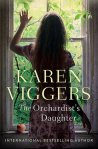
Karen Viggers, The orchardist’s daughter (#BookReview)

Karen Viggers, The orchardist's daughterThe orchardist’s daughter is local author Karen Viggers’ fourth novel, but the first that I’ve read. She has, however, appeared on my blog before, being the person who conversed with Sofie Laguna about her novel, The choke. It was one of the most entertaining conversations I’ve ever attended.

Now, if you haven’t read or heard of Karen Viggers before, there are some facts worth knowing about her. Firstly, she’s a vet with special training in native wildlife health – and this background informs most if not all of her novels, I believe. It certainly informs The orchardist’s daughter. Another significant fact is that she’s a best-selling author in France! How wonderful that a novelist who writes strongly Australia-centric books does so well in France! Her previous novel, The lightkeeper’s wife, was, in fact, awarded the Les Petits Mots de Libraires literary prize.

So, an interesting author, and The orchardist’s daughter is an interesting, enjoyable book. It is set in a small logging town in Tasmania, and has quite a formal structure, starting with a Prologue, followed by four parts – Seeds, Germination, Growth, Understorey – and ending with an Epilogue. It is told third person through the perspective of three characters – Miki, the titular orchardist’s daughter who is 17 years old for most of the novel; Leon, a Park Ranger, who is 25 years old at the novel’s start; and Max, a 10-year-old boy who is Leon’s neighbour. Miki and Leon are relative newcomers to the town, Miki arriving with her older brother Kurt to run the town’s takeaway shop after they lose their home, farm and parents in a fire, and Leon moving from his Ranger job on Bruny Island to the mainland. All three are outsiders and serve to illuminate the tensions existing in the town.

Around these characters is a community comprising mainly logging families, Max’s being one of them. However, there are others who round out the town a little, including policeman Fergus and his sons, Geraldine who runs the information centre, and vet Kate. The narrative develops around a couple of situations. One is a mystery surrounding Miki’s brother Kurt. What does he do by himself in the forest when he insists that Miki wait in the ute, and what does he do during his weekly solo trips to Hobart (during which he locks Miki inside their shop/home)? The other concerns logging, and the dangerous unrest that develops when a temporary ban is placed on logging around a certain ancient tree. Jobs are at risk, the loggers believe, and the butt of their anger is of course Parkie Leon. From these two situations, Viggers builds tension slowly but inexorably, with the Kurt-and-Miki story becoming the prime focus, of course, given the book’s title.

So, there is a strong plot to the novel, but this plot, while driving us on to read, is there to serve some issues that Viggers wants to explore. These concern logging and the environment, bullying and domestic violence, not to mention more personal ones like freedom. These are big issues, and not only is Viggers clearly passionate about them, but her writing about them feels authentic. The characters may be a little less complex than, say, those in Lucashenko’s Too much lip, but they are believable. Logger and vicious bully Mooney is offset against Robbo, who is equally single-minded about logging but seeks more peaceful, law-abiding means of protest. Similarly, Max’s father Shane, another logger who is violent, is offset against colleague Tobey who has a tender, caring relationship with his wife. All of this is observed by Miki from her shop-counter – and she makes her own little attempts to lighten the lives of the bullied and the ostracised, by sneaking treats into their take-away bags. Through this little subversive action, we sense Miki’s inner strength and resourcefulness, something she takes to another level when she works out ways of escaping her “prison” while Kurt is away.

Freedom is one of the novel’s underlying drivers. Miki’s imprisonment is literal, but imprisonment takes many forms – the wives who are abused but feel incapable of escaping, and young Max who is bullied to behave in ways antithetical to his nature. Some of these are resolved, but Viggers recognises that there’s no magic wand for domestic abuse. The first step is moving from passive awareness (or acceptance, even) to taking action, and this starts to happen in the novel.

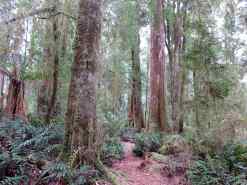
In the Tarkine, NW Tasmania

The book really stands out, however, in its writing about nature. A Booktopia interview with Viggers tells us that she grew up in the Dandenongs and has been to Antarctica. She has also spent time in Tasmania (and immersed herself in Tasmanian-set books, including two I’ve read, Anna Krien’s Into the woods, and Louis Nowra’s Into that forest). All of this has given her a sure feel for the wilderness, so much so that it’s difficult to choose an excerpt to share, but here’s one:

Miki loved the trees and the birds, but what she loved most couldn’t be seen. The way she felt in the forest. The scent of the bush after the rain. The sound of bark crackling. Branches squeaking. The feeling of patience and agelessness, growth and renewal. The aura of trees. The sense of connectedness. Of everything having its place. She could stay here all day, breathing with the tree, drawing its life into her lungs.

These forest descriptions move into Tasmanian Gothic realms during the climactic chase. The experience is both “terrifying and surreal” for our character who crawls and runs through, burrows and squats in the forest, “slipping from the thicket and weaving though the trees, ducking under tree ferns, past the tipped-up end of a fallen tree whose buttressed roots made a wall he could hide behind.” It’s muddy and dangerous with sword grass that scratches you and bark mounds that can trip you up. Viggers knows this landscape – and how to make it terrifying.

In the end, The orchardist’s daughter is about community and compromise, and about the courage to break free. It straddles the boundary between commercial and literary fiction. It is accessible, it has a strong plot and easy-to-engage-with characters, and it is hopeful (not that literary fiction can’t be!!) But, it is also gritty in subject matter and doesn’t offer neat solutions to the important environmental and social issues it raises. I like that in my reading!

Theresa (Theresa Smith writes) also loved the novel.

AWW Challenge 2019 BadgeKaren Viggers
The orchardist’s daughter
Crows Nest: Allen & Unwin, 2019
389pp.
ISBN: 9781760630584

Review copy courtesy the author, Karen Viggers.

Monday musings on Australian literature: Pianos in Australian literature

A rather left-of-field topic for Monday Musings, but did you know that last Friday, March 29th, was World Piano Day? The Piano Day site asks how we are going to celebrate it. Well, three days late, I’m celebrating it by talking about Australian literature that features pianos. Why not?

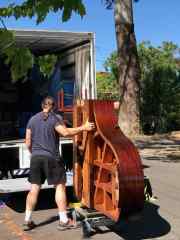
Farewelling my late aunt’s precious Bechstein

World Piano Day is new – the first being 2015 – and it is a slightly shifting feast in that its date is related to the number of keys on a piano, 88. That is, it occurs on the 88th day of the year which is, except for leap years, the 29th of March.

Why do we need a World Piano Day? Its creator, the German musician Nils Frahm, says:

For many reasons. But mostly, because it doesn’t hurt to celebrate the piano and everything around it: performers, composers, piano builders, tuners, movers and most important, the listener.

Any keen reader of Australian fiction will know that pianos abound in Australian literature – hmm, “abound” might be pushing it a bit, but they do occur more frequently than you might think. In John Lang’s mid-19th century novel The forger’s wife (1853) (my review), the wife Emily tries to support herself by giving piano lessons. Elizabeth Jolley features piano teachers and piano playing in many of her novels. And so on…

Consequently my list is an eclectic selection, presented chronologically.

Fiction

Miles Franklin’s My brilliant career (1901) (Karen’s BookerTalk review): Protagonist Sybylla loves music and the piano. For her music represents the life/world she desires. When she is exiled to work at the M’Swats’ farm she finds their piano produces only “jarring, clanging, discordant clatter” and their neighbours “lived the same slow life, and their soul’s existence fed on the same small ideas. I was keenly disappointed that none of them had a piano, as my hunger for music could be understood only by one with a passion for that art.” Harry Beecham, however, is a “fine pianist”, but unfortunately for him, Sybylla’s desire for independence outweighs even that!

Henry Handel Richardson’s Maurice Guest (1908)(Lisa’s ANZLitLovers review) and The young Cosima (1939) (Bill’s TheAustralianLegend review): Both feature pianists, which is not surprising given Richardson was a keen musician who studied music at the Leipzig Conservatorium. Although it barely references the music, I can’t resist this contemporary review of Maurice Guest (from The Sydney Morning Herald, 24 October, 1908):

Maurice Guest (Heinemann) is an elaborate study of the soul progress of a young student of music in Leipzig. It is very long for a modern novel, but it shows a finished style and considerable powers of analysis. The picture of life in Leipzig is very minute, and though the detail is rather overwhelming, it all fits in Its place. Mr. [sic] Richardson is to be congratulated on a fine and careful piece of work of more than ephemeral Interest.

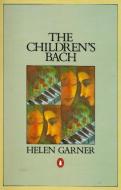
Helen Garner, The children BachHelen Garner’s The children’s Bach (1984) (my review): Protagonist Athena has a piano in her kitchen:

There was a piano in the kitchen and during the day Athena would shut herself in there under the portrait of Dexter’s father and pick away at Bartok’s Mikrokosmos or the easiest of Bach’s Small Preludes. Preludes to what? Even under her ignorant fingers those simple chords rang out like a shout of triumph, and she would run to stick her hot face out of the window.

Peter Goldsworthy’s Maestro (1989): Goldsworthy is a writer, doctor and music lover, who has also written libretti. His daughter Anna, see below, is a concert pianist. Maestro, his debut novel, is a coming-of-age novel about a young boy who is taught the piano by the titular maestro (for whom the piano provides sustenance and escape.)

Sonia Orchard’s The virtuoso (2009) (Lisa’s ANZLitLovers review): While Richardson’s The young Cosima draws on the life of Richard Wagner, and the pianist Cosima von Bülow whom he married, Sonia Orchard’s debut novel draws on the life of the much lesser known Australian pianist Noel Mewton-Wood, who committed suicide when he was 31 years old, and was found next to his Steinway.

Murray Bail’s The voyage (2012) (my review): Most of the books here are about pianists, but Bail’s is about an Australian piano inventor who goes to Vienna to try to sell his piano. It’s a clever motif – an inventor from the New World taking his new piano to sell to the Old World. It goes to the heart of some of Bail’s thoughts about the challenges we face as Australians, not to mention the challenges artists face.

Zoe Morrison’s Music and freedom (2016) (Lisa’s ANZlitLovers review): Morrison is a professional musician, who learnt the violin and piano, but she is also a feminist interested in social justice. Music and freedom, which tells the story of concert pianist Alice from childhood through marriage to old age, combines these two interests.

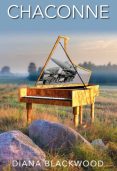
Diana Blackwood, ChaconneDiana Blackwood’s Chaconne (2018) (my review): Blackwood’s debut novel features a harpsichord on the front cover – next to a Pershing missile – the harpsichord referencing protagonist Eleanor’s piano-playing childhood and love of Baroque music, and the missile, the novel’s Cold War setting. This novel is about a young “lost” woman whose reconnection to music helps her get her life together.

Justine Ettler’s Bohemia Beach (2018) (Bill’s TheAustralianLegend review): Another novel about a concert pianist, written by a writer who is also an accomplished musician. Protagonist Catherine Bell’s life has run off the rails and she is self-medicating with alcohol.

Non-fiction

My main interest here, really, is fiction, but I’ll list a few non-fiction books which feature pianos or pianists:

  • Anna Goldsworthy, Piano lessons (memoir) (2009) (Lisa’s ANZLitLovers review): Goldsworthy’s life in music from childhood piano lessons to becoming an internationally successful concert pianist.
  • Michael Atherton, A coveted possession: The rise and fall of the piano in Australia (2018) (history) (Lisa’s ANZLitLovers review): a cultural history of the piano in Australia, from their arrival with the first boats in the late 18th century.
  • Virginia Lloyd’s Girls at the piano (2018) (memoir): Lloyd muses on learning the piano as a child, and the role the piano and music played in her subsequent life.

And, I have to mention Diane Bell’s Generations, in which she discusses, in the chapter “Familiar things”, the way pianos are passed down through generations of women. The piano was seen, she writes, as a symbol of “civilisation, status and sociality”. It provided an opportunity to learn to play music, a way of socialising with people, and of “keeping alive the folk music” of the countries from which people had emigrated. Bell writes that at the turn of the 20th century Australia’s population was under 4 million, but “there was about one piano for every six people.” No wonder, she says, there are many stories about buying and moving them, playing them, and socialising around them.

All these books are very different, but all have one thing in common, the capacity for music to incite some passion or vision for life. Irresistible.

Do you like reading about music? If so, please share your favourites.

Monday musings on Australian literature: Reading marathons

Public reading No Friend but the Mountains

Today’s post was inspired by two comments on yesterday’s post which featured a public reading event I’d taken part in. Lisa (ANZLitLovers) commented that she is taking part in a reading of James Joyce’s Ulysses in a Queenscliff bookshop next Bloomsday, while Karen (Booker Talk) said she wasn’t sure she’d heard of such a grand scale reading event. I had heard of them before, but decided that it was time I got the real gen!

So, I checked Wikipedia (where I found an article on Marathon Reading); I googled; and of course I researched Trove. I discovered a whole world of reading events, which I’ll share here, focussing on Australia, but including some other places too, for context. Wikipedia’s article (accessed 25/3/19) is minimal, basically referencing a few examples of what it calls “marathon reading” but what is more commonly called a “reading marathon”. The first marathon reading Wikipedia describes is a yearly event run by UCLA “where a group of students, faculty, community members, alumni, and often even celebrities read a novel (or two) out loud non-stop for a 24-hour period.”

That description essentially defines what I’m discussing in this post, with a couple of provisos. The time frame for a reading marathon can vary, from several hours to several days; and the readers of course can vary too, from professionals to lay people of all sorts, depending on the event.

Google was useful – to a degree. What I discovered was that Bible reading marathons are BIG. They are big in Australia, and big in the USA, too. Some churches and religious organisations hold them regularly. A bit more on this anon. However, Google also brought up all sorts of reading marathons for various books:

  • the Bible
  • Herman Melville’s Moby Dick
  • James Joyce’s Ulysses
  • George Orwell’s 1984
  • Charlotte Bronte’s Jane Eyre and Jean Rhys’ The wide Sargasso Sea
  • Walt Whitman’s Leaves of grass
  • Harry Potter
  • Jack Kerouac’s On the road
  • Madelaine L’Engle’s A wrinkle in time

The first three popped up frequently, with some organisations running them as regular events. 1984 also popped up more than once.

Most reading marathons seem to have a goal, mostly spiritual (the Bible), or political (eg 1984) or cultural (eg Ulysses). Literacy also pops up frequently as a reason.

The Australian scene

The first references I found to reading marathons in Trove came from the 1920s and 1930s and were all about Bible reading marathons in the USA. It appears that the practice became competitive, with churches vying to do it faster than other churches! An article in World News (30 January 1926) said that “the idea originated in a small western centre some time ago, and had as its object the establishment of a counter-attraction to the then prevalent non-stop dancing Marathons”. The first Bible marathons took 72 hours, but, the article said, a Boston church had done it in 52 hours 18 minutes and 27 seconds. Clergymen were apparently denouncing the contests because “they detract from the reverence in which the Bible should be held, and that the readers gain no instruction or inspiration from their efforts”. There were several articles on the topic, with titles like “Excesses of American churches”.

The first report I found of an Australian reading was of – yes – Ulysses! It was held at the National Library of Australia on June 16, 1993. (I was living in the USA at the time!!) The article starts:

Literary fans walked into the fourth-floor reading room at the National Library yesterday, leaving the cold of a Canberra winter to emerge in Dublin, June 16, 1904, and celebrate Bloomsday slightly late at a marathon eight hour-plus reading of the James Joyce epic, Ulysses.

James Joyce Ulysses

Did they read all of Ulysses in 8 hours? I’d be surprised. Anyhow the report says that the readers, of whom there were over 30, included local politicians, writers and other community figures, and that

there were about half a dozen real Irish accents and an equal number of reasonable facsimiles. Others struggled to overcome Irish names and colloquialisms of varying degrees of technical difficulty and with differing levels of success.

Love it. The article also said that Canberra’s Irish community had held Bloomsday readings before but this was the first at the National Library.

My googling for Australian examples turned up mostly Bible marathons and some Ulysses marathons, both of which continue today (despite those early Bible marathon criticisms!)

George Orwell, 1984

However, there were others. In Melbourne in September 2015, the Wheeler Centre and the Melbourne Festival, organised a “marathon relay reading” of 1984, “Orwell’s prescient novel of power and politics …in a very apt setting—the Legislative Assembly Chamber in Victoria’s Parliament House.” The event was to take over 9 hours, and would involve up to 30 people reading from the Speaker’s chair! Wow! That must have taken some negotiation. The readers included politician Adam Bandt, human rights lawyer Julian Burnside, feminist writer Clementine Ford, ex-Human Rights Commissioner Gillian Triggs, political speech writer Don Watson, and Rosie author Graeme Simsion.

And, just last year, again in Melbourne, the bookshop Readings supported a marathon reading of Emily Watson’s translation of the Odyssey. This was a professional reading organised by The Stork Theatre. A free event, it was to use over 30 performers, and take 12 hours. The promotion said “Come along for your favourite chapter, bring a picnic, stay for the whole 12-hour marathon or come and go as as you please.”

Variations on a theme

My research revealed other events or activities that were tagged reading marathons, but were different from the more common use of the term. These activities comprised two main types:

  • Reading as many books as you can in a given period (a bit like the well-known Ms Readathon): There were a lot of these, one example being the William Stimson Public School, in Wetherill Park NSW, which described its 2017 Book Week as being the “culmination of their reading marathon where the school community read more than 9000 books”. I found these sorts all around the world, from Kenya to the United Arab Emirates, from Latvia to Argentina, as well as in Australia!
  • Nick Bland, The very cranky bearSimultaneous storytime: This is an event where the same story is read at the same time in multiple places. An example occurred in Australia in 2012 when Nick Bland’s The Very Cranky Bear was read aloud “in about 2200 libraries, kindies, schools and homes across Australia” to over 300,000 children in the 12th National Simultaneous Storytime. This event’s aim is partly, at least, to promote literacy.

So, have you attended (or taken part in) a reading marathon? If you have, how did you find it?

Melissa Lucashenko, Too much lip (#BookReview)

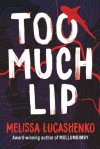
Melissa Lucashenko, Too Much LipMelissa Lucashenko’s title for her latest novel Too much lip conveys a lot about what she is trying to do here. Superficially, the title refers to protagonist Kerry’s refusal (or inability) “to swallow her opinions”, but there are layers to the title which reflect the layers in the novel. Kerry is female and indigenous, and she is lippy, which gets her into trouble, sometimes rightly because she’s not always sensible and measured in her responses, but sometimes there’s a political layer. Sometimes she has something relevant to say but because she’s a woman, or because she’s indigenous, or because, “truesgod”, she’s a woman and indigenous, her “lippiness” is ignored or put down. I’d venture to say – and I don’t think this is a long bow – that this political layer extends to imply that all indigenous people can be seen by white Australians as having “too much lip”. It is this clever, wicked multilayering in Too much lip that makes it such an engrossing and confronting book to read.

Essentially, Too much lip is a contemporary story about an indigenous family living in the small fictional country town of Durrongo in Bundjalung country, in northeast New South Wales. The family struggles to keep it together – and, as the book progresses, we come to see why. And it’s no surprise: colonial dispossession, the massacres, the stolen children policies, not to mention the ongoing racism, result in poverty and dysfunction, in unemployment, drug-taking, violence and withdrawal from wider society. Lucashenko does not shy from exposing violence and conflict within the novel’s indigenous community but she also makes clear that the cause can be found in long-standing, intergenerational traumas experienced by the community – as individuals and as a group.

Now this might all sound very earnest, but it’s not. This is a ripping read with a strong plot about vibrant, beautifully differentiated characters. After a somewhat mysterious opening chapter whose import is not clear until well into the novel, we meet protagonist Kerry, the 34-year-old daughter of Pretty Mary. She’s coming home, riding into town on her stolen Harley, no less. It’s to be a quick trip. She wants to say goodbye to her dying grandfather and then get out of there. It’s clear there’s not much love lost between Kerry and her remaining family in town. However, she is at a bit of a personal crossroads. She’s fleeing a botched armed robbery which resulted in the imprisonment of her partner Allie, who has broken their relationship. Kerry is grieving this. When she and her family catch wind of plans to develop Granny Ava’s island, a sacred place for their people, she decides to stay a bit longer and fight the fight.

So, this becomes, also, a story about land and connection to country versus greedy developers and corrupt politicians who, in this small town, combine in the form of one man, Mayor Jim Buckley. There’s enough thrills and action in the novel, not to mention a romance, to keep lovers of exciting plots engaged, but there’s also enough about characters and their relationships, to keep us more character-oriented readers interested.

This is a confronting novel for non-indigenous Australian readers – but it’s a confrontation we need. It shows (not, didactically tells) what colonial settler societies have done to indigenous inhabitants and how this reverberates through the generations. My back cover blurb calls the novel “gritty and darkly hilarious” – and that’s a perfect description of its tone. Lucashenko privileges us to sit in on an indigenous family’s life. We get to see the world from their perspective, their pain, their frustrations, but also the jokes they make about white people’s ignorance.

Kerry had managed, on the surface anyhow, to rise above the racism she experienced at high school, but

her indifference – part pretence, part real – meant the insults quickly found their targets elsewhere, in the small handful of other Goories who usually decided to fight back, and who were quickly expelled for expecting a bit of common decency in their lives.

Disgusting, isn’t it? Examples of racism abound in the book, but there are also times where Lucashenko’s Goories critique white culture. One of these occurs when policemen, Jim Buckley’s henchmen, turn up at Pretty Mary’s home. The family retaliates by suggesting, at one point in the confrontation, that white people need a refresher on their old ways, and more:

‘How to invade other people’s countries and murder em, and call it civilisation …’ Ken couldn’t remember when he’d enjoyed himself this much.

‘Child stealing 101,’ Black Superman nodded enthusiastically. ‘Interventions for fun and profit.’

‘Globalised capitalism for the one per cent,’ Zippo called out.

Eventually they force the police to retreat, and feel a great sense of victory. They rework the story, savour and analyse it, embellish it, agreeing that “Glenrowan had nothing on Durrongo”. Haha! It’s a wonderfully written scene that makes us whitefellas squirm.

It’s not all hilarious though. The dysfunction is serious. There’s heavy drinking and violence. Brother Ken is irrational, violent, and neglectful of his adolescent son Donny, who is struggling to find his way. Kerry sees this, but is struggling with her own demons, including living in a gendered world where her word counts for little. Even her mother, Pretty Mary, is more likely to turn to Ken than to her daughter. It’s tough. There is hope though, and it comes mainly in the form of two characters – Ken and Kerry’s younger, successful city-dwelling brother, Black Superman, and Uncle Richard.

Uncle Richard, in particular, embodies both strength and wisdom. He’s not a push-over, but he exerts leadership when it’s needed. He says to the incendiary Ken:

‘Yeah, okay. We need to fight. But first I think you’d better come to Men’s Camp this weekend. Get yer head clear, neph. Manage your anger so you use it, not it using you.’

It takes some talking, but he eventually prevails. A little later, Uncle Richard brokers a reconciliation amongst the family, encouraging past hurts to be put into context rather than poison their futures:

‘History’s made us all hard … We had to grow hard just to survive, had to get  as hard as that ol’ rock sitting there. But the hardness that saved us, it’s gonna kill us if it goes on much longer. People ain’t rocks …’

Pervading all this is a strong sense of indigenous culture. Connection to the land is palpable, as is its power to revive the family. Birds, particularly crows, play a subtle role. There’s the “king plate” with a power “too dangerous” to leave lying around. There are references to totems, including tongue-in-cheek jokes that suggest indigenous people are serious but not humourless about their culture. And then there’s the Doctor, a shark which swims around Granny Ava’s island, waiting for a blood debt to be paid.

There are some books you read that you just really want to write about. Too much lip is one such book. I so looked forward to writing this post, but I was challenged at the same time. How to do justice to Melissa Lucashenko’s achievement? By wrapping a rich contribution to truth-telling inside an entertaining story guaranteed to keep you turning the page, she has pulled off something impressive. I really hope I’ve been up to the task. Perhaps you’d better read the book – if you haven’t already – to judge for yourself!

Lisa at ANZLitLovers was also impressed by the book.

AWW Challenge 2019 BadgeMelissa Lucashenko
Too much lip
St Lucia: UQP, 2018
318pp.
ISBN: 9780702259968

(Review copy courtesy UQP)