Monday musings on Australian literature: Britannica Australia Awards

While researching my recent 1965 Monday Musings posts, I came across a new award to me – the Britannica Australia Awards (also known as the Encyclopaedia Britannica Australia Awards). Of course, I wanted to find out more about them. It was tricky. They have Wikipedia article, but The Canberra Times came good via Trove, and there is a paragraph about them in the Oxford companion to Australian literature, so I have enough to share with you.

The awards were sponsored by, obviously, the Encyclopaedia Britannica, to recognise, says the Oxford companion, “outstanding achievement in Australia” and “Australian-American links”. They were only offered from 1964 to 1973. From 1964 to 1967, they were made for the arts, education, literature, medicine and science; and from 1968 to 1973 for the arts, science and humanities. In this post I’m focusing on literature/the humanities. The award included money (initially £5,000), a medal and a citation.

1964: Judith Wright

The first literature winner was poet Judith Wright, who received it “for her wide-ranging and permanent contribution to Australian literature”. According to The Canberra Times, the citation said her work “was already part of Australia’s history. Both readers and other writers were richer in experience because of what she had done.”

Wright has been mentioned several times in this blog, with my main reference being in another Monday Musings post, on Capital Women Poets.

1965: Robert D. Fitzgerald and Professor A. D. Hope

The 1965 award was shared by two poets, AD Hope and Robert Fitzgerald. The Canberra Times reported that Hope “had been named on the occasion of the publication of his book of critical essays, The cave and the spring, and in recognition of his considerable achievement as poet, literary critic and teacher”. Chair of the literature committee, Clement Semmler, said that:

As a critic he is lively and controversial and he has earned the respect of his fellow teachers and intelligent readers, for his determined efforts to re-evaluate accepted literary convention.

Robert D Fitzgerald, the other recipient, was recognised for “his substantial contribution to Australian poetry over many years”.

1966: Julian Randolph Stow and Hal Porter
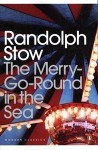
Randolph Stow, The merry-go-round in the seaThe 1966 award was also shared – and at last we have an author I’ve reviewed here, Randolph Stow. The Canberra Times reports this award, as follows:

Mr Hal Porter, novelist, short-story writer, playwright and poet, shared the literature award for his contributions to Australian writings, particularly his two most recent publications, The cats of Venice and The paper chase.

Randolph Stow’s award was made on the merits of his published works since 1956, including his latest novel, The merry-go-round in the sea (my review).

1967: Not awarded

You can’t have an award – even a short-lived one – without a controversy, it seems, and so it was that the Britannica Australia Awards had one. The Canberra Timescolumnist Gang Gang reported that Professor Alec Hope, himself a recipient of the Britannica Award, said ‘that the decision to deprive author Christina Stead of the 1967 award because she was not an Australian author (though born here) was “absolutely bloody nonsense”.’

Hope, naming other Australian writers, like Henry Handel Richardson, who had made their homes outside Australia, said that

Christina Stead made her reputation as an Australian writer and although she left Australia 40 years ago (at the age of 26) she belonged to the world of English-speaking literature. Writers, he added, shouldn’t be subject to the test of whether they are ‘Canadian’ or ‘Australian’ enough to achieve recognition.

However, unknown-to-me journalist and writer Marien Dreyer disagreed:

Book cover“Chrisina [sic] Stead is undoubtedly a fine and prolific author by any standards — but she has lived for too long outside Australia to qualify. She left Australia for America in 1928 and since then our country has experienced two world wars, a world economic depression, and is greatly changed from the Australia she knew nearly 40 years ago”.

Like Stow, Stead has appeared here a few times, including my review of her novel For love alone.

1968: Douglas Stewart

I was introduced to Douglas Stewart, the poet, playwright and literary editor who won the 1968 award, at high school through his verse play about Scott’s tragic expedition to Antartica, The fire on the snow. I have also read his daughter’s biography/memoir Autobiography of my mother about his wife and her mother, the artist Margaret Coen. I didn’t find anything more than a brief announcement of this award in The Canberra Times. Stewart and Coen moved in circles which included several writers I’ve mentioned here, including Rosemary Dobson and David Campbell.

1969: Keith Hancock

1969’s winner, Keith Hancock, was an historian. According to The Canberra Times columnist Maurice Dunlevy, he said, on being advised of this award, “Well I had to wait a long time for Father Christmas to come to me”. Haha! Love that. He was 71.

If you are interested in Hancock, check out the article because Dunlevy gives a decent potted history of the man. On Hancock’s work as an historian, Dunlevy writes that

he sees his role as that of seeker, not seer. His job is not to answer questions but to know how to look for them. “Inquiry and narration – that is my craft”, he once wrote.

and that he wasn’t impressed by the modern “ordeal by thesis” type of history. Instead, said Dunlevy,

he emphasises that history is about life, “The man who chooses theory may write a valuable monograph on monopolistic competition . . . the man who chooses life will write history.”

I’d love to hear what contemporary historians think of his work now.

1970: CB Christesen

Clem Christesen, 1970’s winner, is best known as a literary editor. Not only did he found one of Australia’s most significant literary journals, Meanjin, in 1940, but he was its editor until 1974. He was influential in the careers of many of Australia’s mid-twentieth century writers, including the award’s first recipient for literature, Judith Wright. Again, I found nothing about his winning the award in my Trove search.

1971: Douglas Pike

As for Christesen, I don’t have a report on 1971’s winner, Douglas Pike, but I did found an obituary by Jacqueline Rees in 1974. Professor Pike was also an historian, but his greatest claim to fame was his work as a general editor of the Australian dictionary of biography, for which he received the Britannica award. The report said that he saw this award as “recognition not so much for his own work as for the project as a whole”. Nice.

1972: James McAuley

Poets seem to have won the lion’s share of this award – not a complaint, just an observation. James McAuley, the 1972 winner, was described by The Canberra Times as “Professor of English at the University of Tasmania and a prominent poet and literary spokesman”.

McAuley is quoted as saying at the presentation event

that Australia was second only to the US in the amount of talent it had among poets.

He was not enthusiastic about contemporary English poets. They have had very little to offer in recent years, he said. “Much the same could be said for the Russians”.

Ha! Perhaps the awards committees agreed, and this is why poets did so well!

1973: AD Trendall

The last award went to a new name for me, AD Trendall. Another Professor, he was Master of University House at the ANU, here in Canberra, from 1954 to 1969, but was resident Fellow at Melbourne’s La Trobe University at the time of winning the award.

The Canberra Times provides some brief information about him, saying that

He has written and published many works on archaeology, specialising in the Roman and Greek origin and has been a contributor to many overseas and Australian journals.

To conclude, it’s clear that this award had, as you might expect given its sponsorship, a scholarly tenor, which may explain why “literature” was broadened to “the humanities” (even though I’d argue that most writing in the humanities can be defined as literature.) Why it stopped, I don’t know. It might be there somewhere in Trove, but it didn’t pop up in first few pages retrieved by my various searches.

Another long post, I know, and probably only of interest to a few of you, but I did want to document these awards usefully.
Enza Gandolfo, The bridge (#Bookreview)

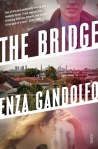
Book coverIf there are people I admire more than any others, it’s those who are able to empathise with, and forgive, someone who has done them great wrong. This complex question of forgiveness – of self and of others – is one of the issues explored in Enza Gandolfo’s Stella Prize short-listed novel, The bridge. However, it’s only one aspect of this intelligent, moving book.

Melburnians, and Australians of a certain age, will remember the West Gate Bridge disaster in 1970. The bridge collapsed during construction, killing 35 and injuring 18 of the 60 workers there at the time. It was, and still is I believe, Australia’s worst industrial accident, and it frames Gandolfo’s book. The novel starts in 1970, introducing us to 22-year-old Italian-born Antonello and his workmates, another Italian Sam, and Slav (whose nickname conveys his origins). Gandolfo quickly sets up the scene – the bonding between these men, and something of their lives and aspirations – before describing the collapse in the next chapter. She captures the horror of those hours in clear, descriptive, but not overblown language that perfectly captures the shock, panic and emotion of the event for all who experienced it – the workers, their families and those in the vicinity.

Antonello survives, but some of his friends don’t, and nor does his boss, Bob, who’d been “like a father” to him. Antonello, along with Bob and his mates, had started to realise that things weren’t right, but, as a rigger, he had no formal responsibility for what happened. However, guilt and trauma attach to him. His lovely relationship with his young wife Paolina survives, but is never quite the same. Gandolfo conveys so well how devastating to a life – to lives – a traumatic event can be, how life can change in a moment. You understand why, these days, counsellors are immediately sent in when tragedies occur.

The book then jumps, in Chapter 4, to 2009, and we meet 19-year-old Jo. Like Antonello she belongs to the working class. She lives in a rather dilapidated weatherboard house near the bridge, with her single supermarket worker mother, Mandy. She is in her last year of school, and has a best friend, Ashleigh, who comes from a comfortable middle-class family where the mother is a high school principal. Jo is the needier of the two, Ashleigh being more clever, more confident, and increasingly more involved with her boyfriend. Jo feels she’s losing her.

And now, here’s the challenge reviewers face. How much to give away of the story. What happens next, happens before a third of the novel is over, and you see it coming, but nonetheless it’s a shock, so I won’t give it away. (I note that some reviewers have, and some haven’t.) Let’s just say that a tragedy ensues and Jo is responsible – and, as it turns out, her friend Ashleigh is Antonello’s grand-daughter.

So, given I’ve decided not to spoil the plot, how best to discuss the rest of the novel, which still has over 250 pages to go?

Well, I could talk about the writing and characterisation. The novel is told chronologically, in third person, from multiple perspectives – from Antonello and Jo of course, but also Mandy, a legal aid lawyer Sarah, and a few others later in the novel. Gandolfo captures their feelings with such sensitivity and realism that by the time the novel is over we feel we know them. We experience their emotions, and go through their thought processes with them as they ponder what’s happened and whether they can possibly keep living in the face of their respective tragedies. It feels so true – and because of that, it breaks our hearts, more than once.

Then there’s the bridge. Its prime meaning here is literal, of course, but it is a gift to a writer because bridges can represent so many things – positive or negative, or, paradoxically both – that are reflected in this novel. They can symbolise progress, for example, but West Gate, which would bring two worlds closer together, was not seen positively by all:

“We don’t want those rich bastards coming over to the west”, was the general sentiment.

Bridges can also suggest connection and transition. In this novel, transition encompasses the idea of social mobility, which West Gate exposes, but it can also mean the transitions individuals make psychologically. It is this latter, often aided by the good connections that can occur between people, that ultimately brings some redemption in the novel.

This brings me to Gandolfo’s themes. Antonello, who has suffered from PTSD since the accident, realises late in the novel that his friend Sam, who had become a union activist, had made the more positive choice. It takes him a long time but finally he learns the lesson:

For years, the most persistent impulse was towards death; a desire to stop living … But life didn’t stop. It went on whether you lived it or not. You have to choose life. This is what he needed to tell them – if you stop living, you may as well die. If you stop living, you aren’t going to be able to love again, and everyone you know will pay for that, everyone.

Empathetic Paolina has always known this, but it’s a lesson that comes hard to the other characters. Anger, revenge, guilt – depending on their role in the events that occur – overwhelm them. And it is Antonello who is the lynchpin. He is able to help Jo, telling her that the best thing she can do is forgive herself and allow herself to live. Similarly, he encourages his own family not to succumb to the sadness, anger and bitterness which brought him such waste and pain.

Enza Gandolfo’s achievement is impressive. She presents us with a bunch of flawed – as in ordinary – characters, and she puts them in terrible but not unrealistic situations. She then has them experience all the emotions that you would expect. And she doesn’t judge. Instead, she makes us feel, confronting us to think about how we would react, and hoping that we will come to the same conclusion that Antonello does.

A character I’ve only briefly mentioned is Sarah, Jo’s legal aid lawyer. She talks about the storytelling aspect of trials:

That was the danger of a good story: you could elicit pity and empathy for even the worst sociopath … Sarah believed telling good stories, the ones people listened to and were swayed by, was a responsibility. It worried her that some people did not take it seriously enough.

It’s not a big leap, I’d say, to suggest that Gandolfo would extend this responsibility to novelists – and in The bridge, she shows what a responsible story can look like. Such a novel.

Lisa (ANZLitLovers) was also moved by this book.

AWW Challenge 2019 BadgeEnza Gandolfo
The bridge
Brunswick: Scribe, 2018
375pp.
ISBN: 9781925713015

Miles Franklin Award 2019 Longlist

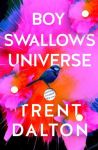
Trent Dalton, Boy swallows universeWoo hoo! Last year I had only read and reviewed one book on the Miles Franklin longlist, but this year I’ve read three! It’s a record (for me, anyhow!)

Here is the list:

  • Michael Mohammed Ahmad’s The Lebs (Nancy’s review) (Hachette)
  • Robbie Arnott’s Flames  (Lisa’s review) (Text)
  • Trent Dalton’s Boy swallows universe (my review) (Fourth Estate)
  • Gregory Day’s A sand archive (Lisa’s review) (Picador)
  • Lexi Freiman’s Inappropriation ( A&U)
  • Rodney Hall’s A stolen season (my review) (Picador)
  • Gail Jones’ The death of Noah Glass (Text)
  • Melissa Lucashenko’s Too much lip (my review) (UQP)
  • Jennifer Mills’ Dyschronia (Lisa’s review) (Picador)
  • Tracy Sorenson’s The lucky galah (Lisa’s review) (Picador).

Rodney Hall, A stolen seasonSome random observations:

  • There are 10 on the longlist. The Miles Franklin judges have, in recent years, not constrained themselves to a set number for their longlist. In 2018 there were 11 books, In 2016 and 2017, there were 9 books, and in 2015 there were 10.)
  • Half of the longlisted books are by women writers. Two of these, Gail Jones and Melissa Lucashenko, were also longlisted for the Stella Prize.
  • Rodney Hall has won twice before, for Just relations and The grisly wife, and been shortlisted three more times.
  • I was little surprised not to see Enza Gandolfo’s The bridge on the list – but this is always the way. I accept that!
  • There are debut authors here – including Trent Dalton and Tracy Sorenson – and many well established ones (who don’t seen to be named!)

Melissa Lucashenko, Too Much LipState Library of NSW Mitchell Librarian Richard Neville, said, on behalf of the judging panel:

The 2019 Miles Franklin longlist yet again highlights a mixture of new and established writers. It showcases ten of the most vibrant voices of Australian fiction speaking to us of lives facing, or having endured, some version of extremity. Angry, funny, contemplative and urgent, these voices—which include a galah—explore personal, historical and ecological loss, cultural inheritances and disenfranchisement, and the fraught bonds of friendships, families and communities.

I am rushing to go out… so will leave that for you to think about.

The judges for this year are almost the same as last year’s: Richard Neville (State Library of NSW),  Murray Waldren (journalist and columnist for The Australian), Dr Melinda Harvey (book critic), Lindy Jones (bookseller), and Bernadette Brennan (author and literary critic). Brennan replaces last year’s Susan Sheridan.

The shortlist will be announced on 2 July at the State Library of New South Wales, and the winner on 30 July in Sydney.

What do you think?

Monday musings on Australian literature: Two Aussie writers in 1965

Continuing last week’s 1965 theme, this post discusses two articles on two Aussie writers who published books that year. I chose them because I think they are instructive examples of book reviewing.

Thomas Keneally

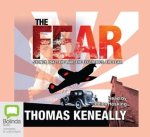
Cover illustration

Audiobook edition

Thomas Keneally, born in 1935, is a prolific Australian author with a long (and still continuing) career. He was shortlisted for the Booker prize four times between 1972 and 1982, one of which he won, and he was shortlisted for the Miles Franklin three times between 1967 and 2003, two of which he won. These were for seven different books! That’s impressive. However, the book reviewed by Maurice Dunlevey in The Canberra Times in 1965 was not one of these. It was for his second novel, The fear.

The reviewer was Maurice Dunlevy and he compares Keneally’s book with Things as they are by American author, Paul Horgan. Both, he said, were about the loss of innocence in boyhood, and both were true to this type of writing. They were also, he continued, “similar in that they deal with Catholic boyhood. That, however, is where the similarity ends.”

Horgan is successful, handling the subject “with a sensitivity surprising from a writer best known for fat volumes of historical fiction and a Pulitzer Prizewinning history”:

Horgan knows exactly what his subject is and he deals with it imaginatively and economically.

In contrast, he describes Keneally’s book as

a novel in search of a subject. Keneally doesn’t know where he is going and his characters don’t know where to take him.

The only imagination displayed in this book is that reportorial kind we expect from the great Australian tradition, the novel written under a coolibah tree.

He then goes on to (vividly) explain this tradition: it requires that

the coolibah tree should be accurately described, branch by bloody branch. The novelist must be there, on the flamin’ spot, mate, so that he can report on the tree and the nearby jumbuck with photo-graphic accuracy.

Anyone who has read ten Australian novels has read seven that were written under this realistic coolibah tree with a thumbnail dipped in the tar of experience.

The problem is that these novels are not “illuminated by imagination; they are enchained, bolted, riveted to experience — the novelist’s own actual physical experience.” These authors, in other words, focus so much on writing about things they have experienced that they are not, in fact, “writing a novel but filing a fact-filled feature story”.

Then he says something that regular readers know would interest me:

But facts are facts and truth often has nothing to do with them. Truth in literature is usually born of the imagination. It is possible that it has some relationship with facts, with hard-earned experience, but it never slavishly follows their dictates.

Events, he continues, don’t just “fall” into the necessary literary form; “they don’t impart their significance to us simply because we record them accurately.” They need to be “moulded in a unique, personal vision”.

Cover illustrationUnfortunately, Keneally does too much reporting of events, it seems. There is no “vision of the world”, “no sense of direction, no consistent subject or theme”, just “the reporter’s eye for inconsequential detail”. Dunlevy’s assessment is that The fear reads more like “a collection of notes for a novel, perhaps fragments of an autobiography”.

I don’t know what Keneally thought at the time, but I do know that he can be reflective, rather than defensive, about his earlier work. Sydney Morning Herald literary editor, Susan Wyndham, wrote in 2013 that Keneally has described The fear “dismissively as the obligatory account of a novelist’s childhood.” (Interestingly he republished/rewrote it in 1989 as By the line.)

Nancy Cato

Cover illustrationNovelist Nancy Cato was one of the writers that last week’s Soviet author, Daniil Granin, met. The Canberra Times article, I read, is by John Graham, who reviews her latest novel, North-west by south. I chose this article for Graham’s thoughtful commentary on Cato. He starts by calling her “a curious phenomenon in Australian literature, a feminist without a formed social outlook.”

He compares her with her more literary contemporaries — Eleanor Dark, Kylie Tennant, Eve Langley and Dorothy Hewett. He says they

have all expressed definite views on society through their novels. Mostly, they are militant socialist rather than purely feminist ideas, a tradition of political awareness handed down to them by Mary Gilmore and Katherine Susannah Pritchard.

But, he says, Cato has never

been drawn into this dynasty. She is closer to the individuality of Judith Wright and Rosemary Dobson in her poetry, much more aggressively feminist in her novels.

However, he continues, she never fully developed her feminism “in the social sense”, and consciously kept away from “political awareness”. Delie in her Murray River trilogy has the pioneering spirit that comes from one side of Australia’s “feminist tradition”, he writes, but she doesn’t have the social viewpoint that might have made her “a memorable figure”. (Little did he know that actor Sigrid Thornton would make her memorable via the TV miniseries, All the rivers run, in 1983!)

Seriously, though, he continues to say that Cato “has found a welcome new theme in the historical novel”, Lady Franklin, about whom I’ve written here before. Graham suggests that Franklin suits Cato much better  than Delie:

Lady Franklin’s feminism is of the same activist variety, but much more capable of development through her position as a Governor’s wife. She also has the virtue of reality, a considerable advantage for a writer with limited powers of character development.

Oh dear, that’s a backhander isn’t it! Anyhow, he goes on to detail how Cato makes a better fist of this protagonist in terms of feminism, and says that

Miss Cato handles all these subtleties with impressive dexterity, indicating a considerable technical development since she laid Delie to rest.

It’s not perfect, though, because Cato “has still not controlled her tendency, to rush from one event to another without pausing for significance”. He gives examples, such as her handling of Mathinna, the indigenous girl adopted by the Franklins. He feels that Cato became “so enmeshed in the historical details that the book is not satisfactory either as a character study of an unusual woman or as an examination of Franklin’s governorship”. Handling their historical research is, of course, a common challenge for historical fiction writers.

Graham details other gaps, suggesting for example that Lady Franklin and her husband’s efforts “to better the conditions of the convicts and to solve the problem of the disappearing Aborigines are treated so scantily that they might better have been eliminated altogether”. This aspect of the Franklins’ lives is a tricky topic that many have tried since Cato (and I list some of them in my post linked above.)

However, he also has positive things to say, calling it Nancy Cato’s “best novel so far” and suggesting it “indicates a direction in which a writer of her talents and limitations might develop further”. It’s the sort of review a writer may or may not like, but it’s clear, detailed and respectful.

So, I hope you’ve enjoyed these little dips into 1965 Australia via its newspapers. I have!

Stan Grant in conversation with Mark Kenny

Who could resist a conversation involving Australian journalist, author and academic, Stan Grant? Not many, it seems, which is why this ANU/The Canberra Times conversation event was held in a bigger venue than usual, Llewellyn Hall, and just as well, because the audience was indeed bigger than usual. Such is the drawcard of Stan Grant – whose Talking to my country I reviewed in 2017.

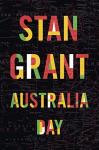
Book coverThis conversation, with Australian journalist and academic Mark Kenny, coincided with the publication of Grant’s new book Australia Day and his essay On identity.

After MC Colin Steele did the usual introductions, Kenny took over, introducing himself and Grant, whom he called an “all-round truth-seeker”. Grant is an articulate, confident, erudite speaker who peppers his arguments with the ideas of many writers and philosophers. There’s no way – my not being a short-hand trained journalist – that I could record all that he said, so I’m going to focus on a few salient points, and let you read the books or research Grant for more!

On Identity

Grant’s analysis of the current “identity” situation made complete sense to Mr Gums and me. He said, essentially, that identity (of whatever sort) is problematic when it becomes exclusive, when it reduces us to those things that define a particular identity and intrudes on our common humanity. At its worst it can trap us into a toxicity which pits us against each other. This sort of identity can make the world “flammable”.

On Justice

This is a tricky one, and I could very well be layering my own values and preferences onto it, but I think Grant aligns himself with people like Desmond Tutu for whom forgiveness, leading to a “higher” peace, was the real goal rather than justice, per se. (It’s all about definitions though isn’t it?) It’s one thing, Grant suggested, to feel righteous indignation, but quite another to desire vengeance. Grant talked about inhaling oxygen into the blood, not the poison of resentment.

On Liberal democracy

The strongest message of the conversation, as I heard it anyhow, concerned Grant’s belief in the fundamental value of liberal democracy as the best system we have for organising ourselves, albeit he recognises that it’s currently under threat (and not just in Australia). In supporting liberal democracy, which came out of the Enlightenment, Grant does not minimise the hurts and losses of indigenous Australians under this system. However, he argues there are solutions within its tenets. I hope I don’t sound simplistic when I say that I found this both reassuring (because I sometimes wonder about our democracy) and encouraging (because it was good to hear some articulate so clearly why he believes liberal democracy has got what we need).

His aim in this latest book of his, Australia Day, was, he said, not to look at indigenous issues in isolation but within a broader context. The conversation spent quite a bit of time teasing out what this actually meant.

Grant made a few clear points:

  • we have a problem when a liberal democratic state refuses to recognise its own history. In Australia we are still living with the legacy of our history, and are facing the challenge of marrying this with Australia’s founding principle, the liberating idea of freedom.
  • the Uluru Statement from the Heart was, fundamentally, indigenous Australians stating that they want to be part of this nation; it conveyed an active choice to be part of a nation that had done them wrong; it represents, and this is my interpretation of what he said, a faith and trust in the nation and its liberal democratic processes. For Grant, the Statement represents the foundational idea of a liberal democracy. Grant then spent some time articulating the flawed arguments used to reject the Voice to Parliament. He argued that the rejection was more than a failure of imagination, courage, and politics. It represented a lack of understanding of the system we are founded upon.
  • the problem in Australia is that there are some extreme minorities who refuse to engage in our liberal democracy.
  • nations are not static – just ask the Balkans, he said! – they come and go. What defines them are not borders but story, a shared story. What is Australia’s story? Part of it is that we are a liberal democracy, but this democracy is being threatened, here and elsewhere, by the increase in the politics of identity which tears at the fabric of nation.
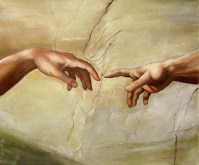
Detail of Michelangelo's Creation of Adam

Detail, Michelangelo, The creation of Adam (Public domain)

A key question he said is whether a liberal democracy can deliver on its promises. Among the many philosophers he referenced was Hegel whose idea of “becoming” Grant likes. He talked about Michelangelo’s painting of The creation of Adam on the Sistine Chapel, and the fact that the fingers don’t meet. We all live in this space, he said. It’s a powerful image. He believes that “unfettered liberalism can erode community”, and that liberalism is currently failing to deal with fruits of its own success. It works well in an homogenous state, but most states are not homogenous. Resolving this is modern liberalism’s challenge.

On Australia Day (January 26)

I have heard Grant on this before, but I enjoyed hearing it teased out more in this forum. On January 26, 1788, the idea of the Australian nation was planted, and this idea encompassed the ideas of the Enlightenment (albeit, he admitted when question by Kenny, the colony didn’t look much like it in those early days). This day, he says, holds all that we are and all that we are not. It also means something for all of us, indigenous and non-indigenous. For him, the day is about considering, recognising, exploring who we are.

He argues that changing this date would hand January 26 over to white nationalists, but he applauds that the change-the-date campaign has ensured that no-one can now come to the day without knowing the issue, without knowing the angst it encompasses. Indigenous people have changed how we see this day, and we all share deeply that first injustice.

He then asserted that our right to protest that day is a rare thing – and it’s because we are a liberal democracy. Grant argued that antagonism is the life blood of the nation, that being free “to antagonise” is the fundamental principle of liberal democracy. The challenge is to hold these antagonisms in balance.

Considering how the current impasse could be resolved, he talked about ways that the day could be imbued with new significance: wouldn’t it be good if a treaty were signed on this date, or that Australia became a republic?

Returning to the idea of identity, he believes the problem is that we think first about identity rather than policy, but, he argued, powerful communities will always look after identity. What we need is good policy to fix our socio-economic burdens. And that, on this Australian election day, seems a good place to end!

ANU/The Canberra Times Meet the Author
MC: Colin Steele
Australian National University
13 May 2019

Janet Lee, The killing of Louisa (#BookReview)

Book coverI started reading Janet Lee’s historical fiction The killing of Louisa straight after reading Amor Towles’ A gentleman in Moscow (my review), which is also a work of historical fiction. They couldn’t be more different. Not only is one about a real historical figure in late 19th century Australia, while the other is about a fictional one in 20th century Bolshevik Russia, but one is told first person present tense, while the other is third person past tense.

Now, when first person present tense started appearing on the contemporary literary scene as the style-du-jour, I rather liked it. I liked its freshness, and the sense it gave of speaking directly to me. But then it started to wear a bit thin. This is not to say that I don’t like it – ever – just that it can be overused and not necessarily add to the experience. I loved the measured, sometimes wry, third person voice in Towles’ novel. It suited a book that seemed to be critiquing both human nature and an historical period. Did the first person voice suit Lee’s novel?

Well, let’s see. The novel is about Louisa Collins who, in 1889, was the last woman to be hanged in New South Wales. Her story is a horrifying one: she was tried four times for murder, with the fourth trial convicting her after the three previous ones failed to come to a decision. There’s more to it though, in that the first two were for the murder, by poison, of her second husband. When the juries could not agree, she was charged with the murder, also by poison, of her first husband. When that too failed, they returned to the first husband, and finally a guilty verdict was achieved, largely using the testimony of Louisa’s 11-year-old daughter May who admitted to seeing a box of “Rough on Rats” in the kitchen. The novel tells this story from Louisa’s point of view.

Formally, the story takes place over six weeks, from 26 November 1888, when she is in gaol waiting for her fourth trail, to 8 January 1889, when she is executed. However, of course, we want to know the full story of Louisa’s life and how she got to be where she was. Lee does this by having her tell her story to the prison chaplain, Canon Rich, while she awaits her execution.

It’s a moving story – of course. Born to a poor family in a country town, Louisa, when still a young teen, is found a job in the home of a lawyer by, it seems, the mother of a wealthy young man who fears her son is becoming too close to the girl. Louisa’s employer is good to her, and she’s happy, but at the age of 18, she is married her off to a man around 15 years her senior whom she barely knows. Charles is a butcher with his own business, and they both work hard, but, more through bad luck than bad management, the family, which seemed to be making a go of it, ends up living in Sydney, and poor. They take in boarders to supplement their income. It’s a world, of course, where women had no rights and little power, though Louisa does stand up for herself within her marriage, exerting a right to wrest some enjoyment out of her life. Things, however, become complicated when the flashy, confident Michael appears on the scene.

All, or most of, this Louisa tells Rich, with a fair degree of self-knowledge about her own failings but also with some insights into human nature (such as how recollections can change!) and how the world works. On her mistress spending years in mourning for a dead baby, Louisa says to Rich:

But the Missus had become like this because she was allowed to dwell upon her sadness for so long. Sometimes folk who suffer a tragedy can pick themselves up and dust themselves off and keep going on through life, and it is often the poorer ones who do this because they don’t have the luxury to stop and mourn […]

Mourning and feeling feeble is a luxury, and it is my observation that only the rich have that luxury, sir.

Louisa is not speaking from theory here; she has learnt the truth through her own experiences of loss.

However, hers a tricky story to tell, because, ultimately, we don’t know whether she was guilty or not, and Lee is not about producing a work of romantic fiction. So, she needs to tread a fine line. Using the primary resources available to her which comprise some letters, court and parliamentary records, and newspaper reports, she tells Louisa’s story.

And Louisa’s story is worth telling for several reasons. First, there’s that reason why many of us enjoy historical fiction, which is to learn, to feel, the social history of a period. Louisa’s first person voice conveys perfectly the lives of poor working women of the time – the hard work, the dust and grime, the worry, the powerlessness. She also conveys her increasing awareness of the need for representation for women in parliament. Knowing where we’ve come from and why we should do all we can not to go back there is a good reason for reading books like this.

But, unfortunately, the book also reminds us of how far we still have to go. One of the features of Louisa’s case is that old story of women being tried by society and the media for not behaving with the propriety expected of them. Louisa likes to have a good time, so she would dance and drink when an opportunity arose, and she argues for her right to do so. Worse though, she appears “cold” after the deaths of her husbands. She doesn’t wear mourning and she doesn’t cry and wring her hands. Heard that before? (Australians will immediately recall the Lindy Chamberlain case.) Louisa’s awareness of this issue is supported in the text by well-placed excerpts from primary sources, such as the snide remark in Parliament, comprising all men of course, about her “method of procuring divorce by means of arsenic”. The problem is that, still, even after Lindy Chamberlain, things haven’t changed, or not changed enough … we still have trial-by-media and women are still excoriated for not behaving in a so-called “womanly” way.

Janet Lee’s is not the first book about Louisa Collins. In 2014, journalist Caroline Overington published her history, Last woman hanged, after researching the case for some years. I haven’t read that, but I understand that she too presents an “open” story, that is, one that leaves it to the reader to consider the rights and wrongs of the case. And that, I think, is the right way to handle this story. What is wrong, though, is capital punishment! It is wrong for so many reasons, but one of the greatest of these is the risk of executing innocent people.

But now back to my original question regarding voice. As I started The killing of Louisa, I felt I wanted a third person omniscient voice telling this story. I wanted a considered voice giving me the pros and cons of the case. However, as I read on, I became engaged by Louisa’s voice, particularly by the tone Lee achieves which, while containing an element of sorrow and self-pity, is neither pathetic nor whiny. By adding excerpts from the sources, Lee provides some of that overview I wanted.

The killing of Louisa, then, is not only an engrossing story about a shameful case from the past, but one that intelligently grapples with the challenges of presenting such a case through historical fiction.

AWW Challenge 2019 BadgeJanet Lee
The killing of Louisa
St Lucia: UQP, 2018
268pp.
ISBN: 9780702260223

(Review copy courtesy UQP)

Monday musings on Australian literature: Literary visitors in 1965

Last week’s Monday musings surveyed Australian literature in 1965. As I researched that post in Trove, I came across some fascinating newspaper articles from the year, which I thought worth sharing in separate posts. I’ve divided them into two groups – one on overseas visitors (today’s post) and the other local writers (next week’s, probably!)

An American academic

Bruce Sutherland, Professor of English Literature at Pennsylvania State University, visited Australia to research Miles Franklin’s time in America. He is, apparently, credited with establishing and teaching the first exclusively Australian literature course in the USA – in 1942. (He’s interesting, so I might return to him another day.)

Anyhow, speaking on an ABC program, he said (according to The Canberra Times), that Australian literature was more widely read now than at any time since the 1890s, and that, compared with his visit in the early 1950s, now “every Australian university is encouraging Australian studies to some degree”.  Publishers too, he said, were rising to the challenge:

Not only are many of the older books kept in print, but more and more, the works of promising young authors are being published.

He noted the importance of reprints, to students and the general public, saying that “a literature that is not read can hardly be said to exist”. Good point, and one that publishers like Text have taken on board in their Classics series. Prof. Sutherland was particularly interested in the fact that the biggest change since 1951 had been in drama.

However, Australians shouldn’t rest on their laurels, because

Quite frankly, Australian literature has a long way to go before it attains the pedestal reserved for the English and American in the English-speaking world. … But it has made great strides, and is now well beyond the toddling stage.

Hmm … no wonder we suffered from cultural cringe! Still, he was a great proponent of our literature, and as a result, in 1993 at least, Pennsylvania State University had one of the best research collections outside Australia.

A Soviet novelist

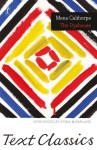
Soviet novelist, Daniil Granin (1919-2017) was visiting Australia as guest of the Fellowship of Australian Writers (FAW), reciprocating author Alan Marshall’s visit to the USSR the previous year. His focus was a bit different, as he was interested in what Australian literature was offering Soviet readers. “Australian literature,” he said at a FAW reception, “is the only window Soviet people have on Australian life.” DK, the Tribune article’s writer, tells us that the attendees included novelist Mena Calthorpe (whose realist novel The dyehouse I’ve reviewed), short story writer Dal Stivens, and poet Kath Walker (later, Oodgeroo Noonuccal).

Mena Calthorpe, The dyehouseGranin told the group that interest in Australia had grown “enormously” in the last decade. In 1964, for example, one and a half million copies of Australian authors were printed and sold in the Soviet Union. Amazing. Did you know? Apparently, writes DK in another Tribune article, this interest is because these Aussie writers’ characters are “flesh and blood” people with an “active attitude to reality”.

Anyhow, he also spoke with various Australian literati including Colin Simpson (who wrote Take me to Russia), Roland Robinson (a poet), Leonie Kramer (the first female professor of English in Australia), Clem Christesen (editor of Meanjin), Alan Marshall (whose memoir I can jump puddles is a classic), and Nancy Cato (author of All the rivers run). That’s interesting, but even more interesting are his comments on some significant, and still remembered, Australian writers at the time:

Of Patrick White: “He is a man who feels a great responsibility for his own literary work, and has a genuine interest in contemporary literature. He has achieved for himself a very high standard of literary craftsmanship.”

Of Katharine Susannah Prichard: “She is a human being who uplifts you from your first meeting. She has an indomitable spirit, throws aside all trifles, and gets down to the main issues.”

Of Kath Walker: “I admire her just because she is the first successful Aboriginal poetess writing in English. She has a keen interest in all new Aboriginal writers and a vital concern with problems facing them.”

Note: For copyright reasons, most of the articles available for the 1960s come only from The Canberra Times and the Tribune, because they made an agreement with the NLA to allow digitisation. For other newspapers, the library must wait until they come into the public domain – and then, I guess, wait their time in the digitisation queue!

Monday musings on Australian literature: 1965 in fiction

1965 as a topic? What the?! Those familiar with the lit-blogosphere will probably guess what inspired this post, but for everyone else, I’ll explain. Over the last week of April, bloggers Kaggsy (Kaggsy’s Book Ramblings) and Simon (Stuck in a Book) ran a 1965 Reading Week, the latest in their series of reading weeks focusing on books published in a particular year. Needless to say, I didn’t manage to take part – if I had, you would have known about it before now! (For a list of the books read and who read them, check Simon’s 1965 Club Page.)

However, I thought I could play along, in my own way, by writing a – yes, I admit – belated post on 1965 in Australian literature. If it works, I might try it again for their next “year”, whatever and whenever that may be.

My main sources for this post were:

Australian literature and 1965

Kaggsy and Simon’s focus is books published in the year, but I’m going to do a sort of literary snapshot.

Writers born in 1965

An interesting group containing, not surprisingly, many writers in their prime now:

  • Michael Farrell: poet, who has had several books published, mainly by independent publisher Giramondo
  • Gideon Haigh: journalist and author, best known for sports and business writing
  • Fiona McGregor: novelist, whose third novel, Indelible ink, won The Age Book of the Year award
  • Melina Marchetta: novelist, primarily of Young Adult literature, whose award-winning YA novel, Looking for Alibrandi (1992), is an Australian classic
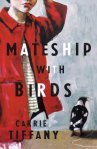
  • Mateship with Birds (Courtesy: Pan MacMillan)
    Carrie Tiffany
    : novelist, whose first two novels, Everyman’s rules for scientific living and Mateship with birds (my review), both won awards, and whose third book, Exploded view, was published this year. Mateship with birds won the inaugural Stella Prize.
  • Christos Tsiolkas: novelist who has written eight novels, including The slap (my review) and Barracuda (my review), as well as plays and screenplays.
  • Charlotte Wood: novelist who has written both novels and non-fiction, and whose dystopian The natural way of things (my review) also won a Stella Prize

Writers died in 1965

Hooton and Heseltine list a small number of deaths for the year (and I’ve added them to Wikipedia), but none are particularly significant in terms of my blog’s interests. However, one of those who died was a significant Australian personage, HV (aka Doc) Evatt. Among other roles, he was President of the UN General Assembly, and helped draft the UN’s Universal Declaration of Human Rights.

Novels published in 1965

By 1965, a goodly number of books were being published in Australia, so I can’t list them all. Hence, I’m focusing on those that interest me! You can check my sources for more.

  • Thea Astley, The slow natives: if I’d taken part in the 1965 Club, this is the book I would have chosen. I love Astley and have written about, or reviewed, her here a few times.
  • Clive Barry, Crumb borne: included because Barry was the inaugural winner of the Guardian Fiction Prize, and was described by the Oxford Companion to Australian Literature as a “vivid stylist with a capacity for dry humour”; his experiences as a POW in Italy in WW2 inform this novel.
  • Nancy Cato, North west by south: well-known for her historical fiction (of which I reviewed All the rivers run) but also wrote biographies and poetry, and was an environmentalist and conservationist; this book is about Lady Jane Franklin.
  • Don Charlwood, All the green year: this would have been my second choice for the club, because I have the Text Classics copy that I gave my late aunt.
  • Catherine Gaskin, The file on Devlinbest-selling romance novelist, whose book Sara Dane, based on the convict Mary Reibey, sold more than 2 million copies.
  • Donald Horne, The permit: one of Australia’s best known public intellectuals in his time, famous for coining the phrase “the lucky country”. Novels were not his main form of writing.
  • George Johnston, The far face of the moon: best-known for his My brother Jack, which won the Miles Franklin in 1964.
  • Thomas Keneally, The fear: prolific novelist who has won both the Booker Prize and the Miles Franklin Award (twice).
  • Christopher Koch, Across the sea wall: best-known for The year of living dangerously, and twice-winner of the Miles Franklin Award.
  • Eric Lambert, The long white night: one of the many left-wing/communist writers who were published in the 1950s and 1960s.
  • D’Arcy Niland, The apprentices: husband of Ruth Park (haha, just had to describe him in relationship to his wife!), and best known for his novel The shiralee.
  • Lesley Rowlands, A bird in the hand: also published two humorous travel books, and short stories.
  • Randolph Stow, The merry-go-round in the sea
    Randolph Stow, The merry-go-round in the sea (my review): woo hoo, one I’ve read!
  • George Turner, A waste of shame: best-known for the SF novels he wrote later in his career, but in 1962, he won a Miles Franklin Award with his novel The cupboard under the stairs (reviewed by Lisa)
  • Morris West, The ambassador: a best-selling author in my youth, West is on my list of topics for Monday Musings one day

Selected other publications from 1965

So many well-known writers well-known published poetry, plays, short stories and other works in 1965, but I can only share a few (links on their names are to posts on my blog which feature them, though most have been mentioned in some way, in fact):

  • Rosemary Dobson, Cock crow (Poetry)
  • Frank Hardy, The yarns of Billy Borker (Short stories)
  • AD Hope, The cave and the spring (Criticism)
  • Geoffrey Lehmann & Les Murray, The Ilex Tree (Poetry)
  • Hal Porter, The cats of Venice (Short stories)
  • Kenneth Slessor, Life at the cross (Poetry)
  • Ivan Southall, Ash Road (Children’s novel)
  • Kylie Tennant, Trailblazers of the air (Children’s novel)
  • Colin Thiele, February dragon (Children’s novel)
  • Russel Ward, Australia (History)
  • Patrick White, Four plays (Drama)
  • Judith Wright, Preoccupations in Australian poetry (Criticism)

Literary Awards in 1965

Most literary awards we now know, started in the 1970s or later:

  • ALS Gold Medal: Patrick White’s The burnt ones (this book of short stories was my second Patrick White, the first being Voss)
  • Encyclopaedia Britannica Awards for Literature: Shared between two poets, AD Hope and Robert D Fitzgerald. The chair of the awards committee said: “As a critic [Hope] he is lively and controversial and he has earned the respect of his fellow teachers and intelligent readers, for his determined efforts to reevaluate accepted literary convention.”
  • Miles Franklin Award: Thea Astley’s The slow natives 

In conclusion

The interesting thing, not necessarily obvious from these lists, is the number of left, if not Communist, writers who were active at this time, beautifully reflecting the political activism and idealism of the 1960s.

Oh, and I found some fascinating articles in Trove about Australian literature in 1965. They deserve their own post – watch this space.

NSW Premier’s Literary Awards 2019 Winners; and Vale Les Murray AO (1939-2019)

I decided to replace today’s Monday Musings with an awards announcement, because the NSW Premier’s Literary Awards were being announced tonight, and they comprise a swag of prizes, many being of particular interest to me. But, then I was shocked to hear that Australian poet Les Murray had died, and I couldn’t let that pass either, so you have a double-barrelled post tonight!

NSW Premier’s Literary Awards

I will only report on a selection of the winners, but here is a link to the full suite. And, if you are interested to know who the judges were, they are all listed on the award’s webpage.

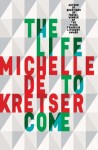
Michelle de Kretser, The life to comeBook of the Year: Billy Griffiths’ Deep time dreaming: Uncovering ancient Australia

The Christina Stead Prize for Fiction: Michelle de Kretser’s The life to come (my review).

People’s Choice Award for Fiction: Trent Dalton’s Boy swallows universe (my review)

The Douglas Stewart prize for Non-Fiction: shared between Billy Griffiths’ Deep time dreaming: Uncovering ancient Australia and Sarah Krasnostein’s The trauma cleaner (my review)

Trent Dalton, Boy swallows universeThe UTS Glenda Adams Prize for New Writing Trent Dalton’s Boy swallows universe (my review). I love that in his thank you speech, he spoke about the time he spent with Les Murray in 2014. Murray, he said, shared his poem Home Suite, telling Dalton not to be afraid to go home. Going home, he said, is exactly which he did in his novel.

Multicultural NSW Award: Michael Mohammed Ahmad’s The Lebs.

Translator’s Prize (presented every two years, and about which I posted recently): Alison Entrekin.

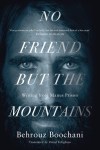
Behrouz Boochani, No friend but the mountainsSpecial Award: Bherouz Boochani’s No friend but the mountains (translated by Omid Tofighian). This award is not made every year, and is often made to a person, but this year it went to a work “that is not readily covered by the existing Awards categories”. The judges stated that it

demonstrates the power of literature in the face of tremendous adversity. It adds a vital voice to Australian social and political consciousness, and deserves to be recognised for its contribution to Australian cultural life.

Some of you may remember that I recently wrote about taking part in a reading marathon of this book.

Congratulations to all the winners – and their publishers – not to mention the short- and long-listees. We readers love that you are out there writing away, and sharing your hearts and thoughts with us. Keep it up!

Vale Les Murray

As I said in my intro to this post, I was shocked to hear this evening that one of Australia’s greatest contemporary poets, Les Murray, aka the “Bard of Bunyah”, had died. He was only 80.

His agent of 30 years, Margaret Connolly, confirmed the news, saying that

The body of work that he’s left is just one of the great glories of Australian writing.

Les Murray, Best 100 poemsI don’t think that’s an exaggeration.

Black Inc, released a statement saying

Les was frequently hilarious and always his own man.

We mourn his bundles of creativity, as well as his original vision – he would talk with anyone, was endlessly curious and a figure of immense integrity and intelligence.

Although I don’t write a lot about poetry, Les Murray has appeared in this blog before, most particularly when Mr Gums and I attended a poetry reading featuring him. What a thrill that was. He was 75 years old then, and the suggestion was that these readings were probably coming to an end due to his health. I have just two of his around 30 volumes of poetry – The best 100 poems of Les Murray and an author-signed edition of Selected poems, both published by Black Inc – and dip into them every now and then.

His poetry was diverse in form, tone, subject-matter. He could be serious, fun, obscure, accessible. You name it, he wrote it. He was often controversial, being, as Black Inc said, “his own man”! In other words, he was hard to pin down, not easy to put in any box. David Malouf, interviewed for tonight’s news, said that he could be “funny”, he could be “harsh”, but that he said things “we needed to hear”. And that, wouldn’t you say, is the role of a poet, particularly one considered by some to be a candidate for the Nobel Prize for Literature?

If you would like to find out more about him, do check out his website, and if you’d like to read some of his poetry (though it would be better to buy a book!), you can check out the Australian Poetry Library. Lisa ANZLitLovers) has also written a post marking his death.

Meanwhile, I’m going to close with the last lines of a poem called “The dark” in his Selected poems (which he chose in 2017 as his “most successfully realised poems”):

… Dark is like that: all productions.
Almost nothing there is caused, or has results. Dark is all one interior
permitting only inner life. Concealing what will seize it.

Seems appropriate for today.

Vicki Laveau-Harvie, The erratics (#BookReview)

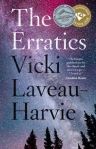
Book coverTruth is that, while I like to read at least some of the Stella Prize shortlist, I didn’t have Vicki Laveau-Harvie’s memoir, The erratics, on my high priority list, though the more I heard about it, the more intrigued I became. However, it was winning the prize that tipped it over into my must-read category. What a challenging read it is.

The erratics is the story of how Laveau-Harvie and her sister responded to their estranged aging parents’ needs as infirmity caught up with them. Canadian-born Laveau-Harvie had, decades earlier, escaped the family home in rural Alberta moving, eventually, to Australia. Her younger sister had also escaped, though not so far. She lived in Vancouver. It all came to a head when their 94-year-old mother’s hipbone “crumbles and breaks” putting her in hospital. Laveau-Harvie and her sister regroup to help – their father, in particular, who, they discover, had been being systematically starved by their mother. The story of this dysfunctional family, and the sisters’ actions to save their father and ensure their mother is deemed incompetent, never able to return home, is arresting.

Equally arresting is Laveau-Harvie’s writing. It’s not surprising that she won the Stella (not to mention the Finch Memoir Prize and being shortlisted in the NSW Premier’s Literary Awards), because the writing grabs your attention with an impressive sureness of tone and language. It’s particularly impressive because it is, apparently, 70-something Laveau-Harvie’s first book.

The back-cover blurb of my edition concludes with: “a ferocious, sharp, darkly funny and wholly compelling memoir of families, the pain they can inflict and the legacy they leave, The erratics has the tightly coiled, compressed energy of an explosive device  – it will take your breath away”. It does all of that.

First, it’s an astonishing story of a mother who seems incapable of the love we expect from a parent. I’ll share the quote that you’ll have read before if you’ve read about this book:

One of the few coherent messages my mother repeated to me and my sister as we grew up, a message she sometimes delivered with deceptive gentleness and a touch of sadness that we weren’t more worthy prey, was this one, and I quote: I’ll get you and you won’t even know I’m doing it.

If you are a parent who feels guilty about mistakes you made in your parenting, you can rest easy after reading this (unless of course you are like Laveau-Harvie’s mother!) Most of us, I’m sure, made our mistakes inadvertently, not with the intent behind this woman’s behaviour. The problem in Laveau-Harvie’s family was compounded by the fact that their father, while not brutal like their mother, was weak, believing (or, at least accepting) everything his wife said about their daughters.

So, the story, itself, is compelling – in the strange behaviour of these two parents, and in the willingness of the daughters, despite being rejected by their mother, including being given no formal role in managing her affairs, to step in and do the hard stuff out of love for their father and, I guess, a sense of responsibility. But, in addition to the story, what makes this memoir particularly compelling is, as I’ve already said, the writing itself.

It’s a tight, spare read at just over 200 pages. It has stunning descriptions, but I’ll exemplify it with the metaphor contained in the title itself, a metaphor that draws from a geologic formation called the Foothills Erratics Terrain in the town nearest her parents’ home:

Countless years ago, the Okotoks Erratic fell in on itself and became unsafe to climb upon. It dominates the landscape, roped off and isolated, the danger it presents to anyone trespassing palpable and documented on the signs posted around it.

Unfortunately, Laveau-Harvie’s mother came with no such sign.

There is a deft handling of chronology, with the occasional bit of foreshadowing. And then there is the tone, which is achieved by a crisp story-telling style that is direct, colloquial, witty even, and that focuses on the facts with little explication, all the while conveying the challenges faced by the two sisters in negotiating their relationships with each other, their father and their mother. One of Laveau-Harvie’s techniques is to undercut a description or plan with a short, emphatic sentence like “That was the plan” or “I can’t fix this” or “I don’t do this”.

It’s an invidious situation, and you can’t help but feel their pain. She writes at one stage of not remembering certain events:

I do know this: where there is nothing, there must be pain; that’s why there is nothing. Be glad if you forget.

There’s another of those short concluding sentences – “Be glad if you forget”. It’s powerful.

The strongest part of the narrative concerns the relationship with her sister who, still living in Canada, is the person on-site, and who has always been less able distance herself from the pain. There’s a telling sentence about their choices of mementoes from the house:

I salvage a few other things … things from my childhood … my sister takes only things acquired by my mother after we had left home, heavy crystal goblets, silver serving plates, full dinner sets of translucent china. I want only the connection to the past, she wants never to feel it again.

So, this sister, the one who wants to distance the past takes on, at a cost to her health, more than Laveau-Harvie believes sensible: “I can see sinkholes of simmering resentment about to develop between us.” Laveau-Harvie explores the challenges of siblings negotiating the care of aging parents with the clear-eyed honesty she applies to the whole story, albeit, at times, I wondered how the sister felt about her depiction. Presumably, it’s ground they’ve well-covered between each other.

The book, then, is compelling and many readers, like Kim (Reading Matters), have found it a “compulsive read”. I did too. But, there was also something about the tone that disquieted me, as it did Kate (booksaremyfavouriteand best). This surprised me because I wasn’t expecting to feel this way. I love fearless honesty. It’s one of the reasons (besides her writing) that I like Helen Garner so much. She is not afraid to say the hard, unpalatable things. And yet, I found it difficult at times here. I think it’s because I felt some of this “honesty” was attended by an unkindness, by a willingness to laugh at another’s expense (though, admittedly, she also frequently laughs at her own).

An example is her description of the array of carers she and her sister put in place for their father. It’s funny, and has an element of truth, recognisable by anyone who has experienced the situation. But I bridle at name-calling, so “the gold-digger” and “the housekeeping slut” did not make me laugh. (I particularly hate women calling other women “slut”, even a “housekeeping” one – but that may just be me!) And then there’s the description of the breakage of some fine china freighted to Australia:

I imagine customs officers dropping the box because it has a label that says ‘Fragile’, satisfied at the sound of something delicate breaking.

Ultimately, however, although I couldn’t help reacting, occasionally, with the disquietude that I did – I realise I can’t judge. How can I, when the family life she experienced is beyond my ken? And, the ending is inspired. She draws on myths about the Okotoks to lay her mother – that “bitterly unhappy and vindictive old woman” – to a potentially more peaceful rest.

The erratics, then, is an impressive debut. It’s compelling and, significantly, it prompts us to think about the importance of love, responsibility and respect within all families.

AWW Challenge 2019 BadgeVicki Laveau-Harvie
The erratics
Sydney: Fourth Estate, 2019 (Orig. pub. 2018)
217pp.
ISBN: 9781460758250