Monday musings on Australian literature: “Returning novels”

Book cover

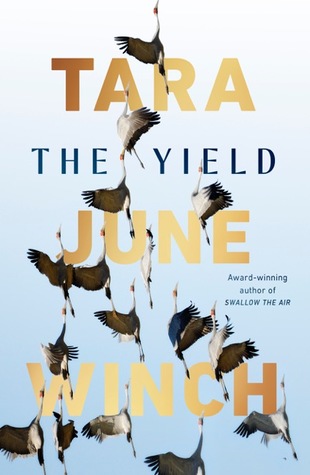
In his review of Tara June Winch’s The yield (my review), Jonathan Shaw (Me fail? I fly!) writes that “Ellen van Neerven, in a review in the Australian Book Review, describes The Yield as a ‘returning novel’”. I loved this way of framing the novel, so I checked the review.

Van Neerven, who has featured several times on this blog, goes on to say that:

In contemporary Aboriginal fiction, a common theme is ‘returning’ – returning to Country, family, language, and culture, all of them intertwined.
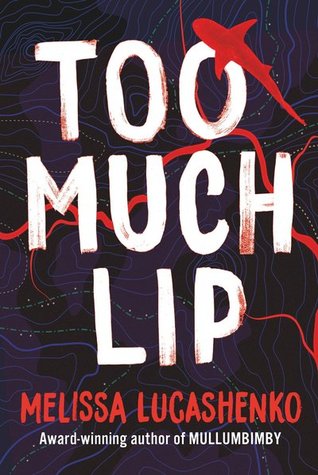
Melissa Lucashenko, Too Much Lip

She’s right, I think. Melissa Lucashenko’s Too much lip (my review) is another example, with Kerry returning to her family, like Winch’s August, due to the death of her grandfather. In both novels, the returning protagonist finds herself embroiled in the family’s challenges and starts to reconnect in a meaningful way with the family she’d intentionally escaped. This sort of “returning” also happens in Indigenous Australian non-fiction, like Marie Munkara’s memoir Of ashes and rivers that run to the sea (my review) in which Munkara, who had been fostered by a white family, returns to the Tiwi Islands to understand her Indigenous family and roots.

However, and I hope this is not inappropriately appropriating van Neerven’s idea, “returning novels” are not limited to Indigenous Australian literature. After all, returning stories – think Homer’s Odyssey or the Bible’s prodigal son – are not new. Van Neerven’s point, though, is that “returning” in Indigenous culture has very specific drivers, impacts and outcomes.

Anyhow, now inspired by this idea, I thought I’d take the opportunity to look at some other Australian returning novels. What are returning stories about? The Odyssey was as much about the journey as about the return, while of course the prodigal son story is all about the return.

The novels I’m thinking about tend to be more about the return than the journey, though not exclusively so. They include returns from war, returns home after long times away, and returns after (or for) a major situation or event (like a death). Like Indigenous Australian stories, these can have their different trajectories.

Post-war

Post-war returning novels are a very specific subset. In these novels, the return is usually attended by the issue of resettling – physically and emotionally – and, in many cases, by the returnee suffering from some level of war trauma. War trauma is often the driver for these novels.

Josephine Rowe’s A loving faithful animal (my review) and Rodney Hall’s A stolen season (my review) are recent war-return stories.
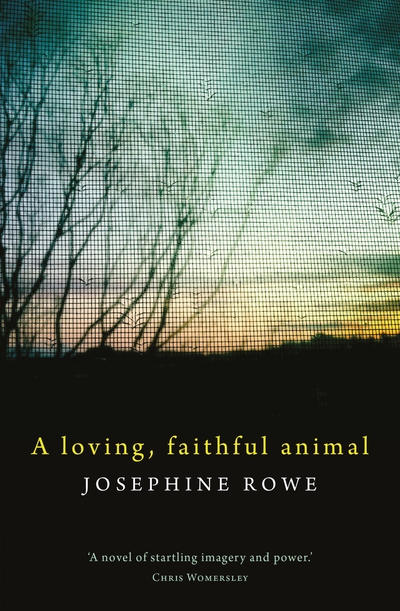
Josephine Rowe, A loving faithful animal

Rowe’s novel explores the devastating impact on a family of the husband/father’s ongoing trauma (PTSD) following his Vietnam War experience. In Hall’s novel, on the other hand, the husband has returned from the war in Iraq so severely physically damaged that he can only live by means of a “Contraption” that is activated and controlled by his brain.

Slightly different examples are Angela Thirkell’s Trooper to the Southern Cross (my review) which chronicles the trip home of an Australian soldier with his English wife, after World War 1, and Geoff Page’s verse novel, The scarring (my review), telling the story of a couple from the 1910s to the 1980s, from their youth and courtship through to old age. Thirkell’s novel is mostly about the journey, but there is much here about the cultural issues that the Australian husband and English bride will face in returning to the husband’s home. Page’s novel may look like a family saga, but it’s what happens after the husband’s return from World War 2 that drives the novel.

After a long time away

Novels about older people returning after a long time away are, of course, different. They tend to be contemplative, and are often (though not always) about the returning person resolving the issues that they were escaping in the first place.

In Jessica Anderson’s Tirra lirra by the river, which I read long before blogging, Nora, who, as a young woman, had escaped the narrow confines of her life in Brisbane, returns at the age of 70, to rediscover and reassess the life she had left.
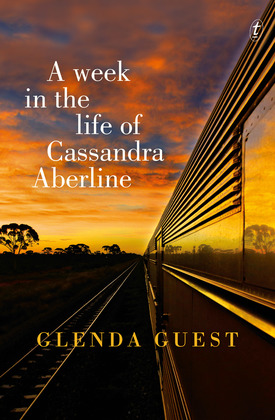
Glenda Guest, A week in the life of Cassandra Aberline

Glenda Guest’s A week in the life of Cassandra Aberline (my review) is about a woman who left home somewhat suddenly, 45 years before the novel opens, for a reason that’s not clear but is clearly unresolved. Now, 60 and with an early Alzheimer’s diagnosis, she wants to be sure she was right to leave, and if not, she wants to “make amends”.

A different sort of return occurs in Eleanor Limprecht’s The passengers (my review). Here, Australian war-bride Sarah is returning to Australia (with grand-daughter Hannah) from the USA where she’d gone with American soldier husband. This “returning” trip provides the opportunity for her to contemplate her choices and decisions.

Other returns

There are all sorts of “returns” though, besides the big two described above!
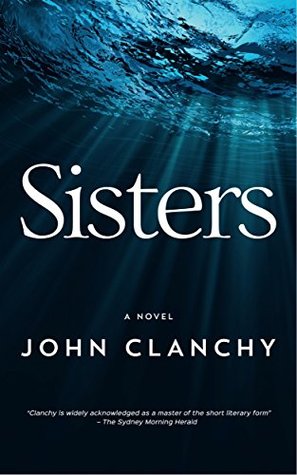
John Clanchy, Sisters

In John Clanchy’s Sisters (my review), sister Sarah calls her other two sisters, all of them in their 60s, to spend a month together at the family home, for an undisclosed reason. Not surprisingly, it is about resolving something that happened in the past, a common driver for “returning novels”.

David Malouf’s Remembering Babylon, another that I read long before blogging. It’s about a white man in 1840s Australia who returns to “white” culture, having spent 16 years with the Aboriginal people who took him in after he survived a shipwreck. He, and the people he “returns” to, are challenged by his readjustment. Bill has reviewed it, and touches on the issue about white writers writing about Indigenous people.

“Returning novels” then are highly varied. Most deal with the past in some way, but for Indigenous people the overriding issues are cultural and political (as well as personal), while in non-Indigenous Australian stories, the driving issues tend to be personal. This is, though, a broad generalisation.

Anyhow, these are just a few examples of the “returning novels” I’ve read. There are many more … I’d love to hear about some you’ve read.

Barbara Jefferis Award 2020 Winner Announced


In early October, the shortlist for the biennial Barbara Jefferis Award, worth $50,000, was announced. This award, for those of you who don’t remember it, has very specific criteria:

“the best novel written by an Australian author that depicts women and girls in a positive way or otherwise empowers the status of women and girls in society”.

Libby Angel, The trapeze actThe eagle-eyed amongst you will realise that it is not the sex of the writer that’s relevant here (nor, in fact, the genre). This award is for books about women and girls – and so can be written by anyone of any sex – but it must also present them in a positive or empowering way. I wrote a Monday Musings post about this “positive or empowering” requirement two years ago. That year, the winner was Libby Angel’s The trapeze act, a book I hadn’t read then, hadn’t heard much about even, and still, I’m afraid, haven’t read.
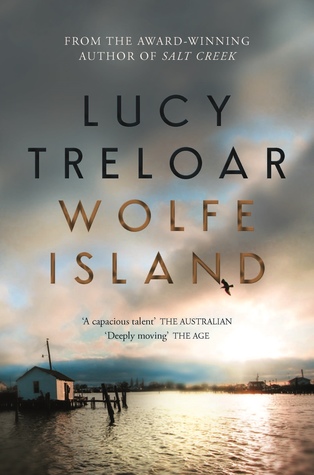
This year’s shortlist of five books comprises four by women writers and one by a man AND, notably, three of the five are by Indigenous Australian writers.

Unbelievably for me, given my usual track record, I’ve read four of the five. I wish I’d read Treloar too because I know it’s been much enjoyed by bloggers, and it is set in a part of the USA that I have visited.

Judges Robyn Sheahan-Bright, Jeremy Fisher and Barbara Horgan, as reported by Books + Publishing, said of 2020’s submissions:

We were very much struck by the empathy with which the experiences of older women were depicted as powerful role models for those younger than them in so many titles—women who were survivors of both personal and family challenges and cataclysmic social, economic or environmental events.

… and the winner is

Of course, the one I haven’t read, Lucy Treloar’s Wolfe Island!

You can watch the announcement here, which includes an introduction by author Bri Lee, comments on each book by judge Robyn Sheahan-Bright, comments on their books by the short-listed authors, the winner’s announcement by Barbara Jefferis’ son Michael Little, and a gracious and strong response from the winner Lucy Treloar. In her words, she repeats the message I’ve shared here before which is that prizes like this (plus all arts funding) enable writers to buy time to write.

Congratulations to Lucy Treloar – and to all the shortlisted authors. I must read this book.

Monday musings on Australian literature: Political biography

With the US election going, going … but not quite gone it seems … and with a new biography of President-elect Joe Biden, Joe Biden: The life, the run, and what matters now by Evan Osnos, hitting the bookstands, I thought it might be apposite to consider the political biography in Australia. By “political biography”, I mean, not those multitudinous memoirs that seem to come out with mind-numbing regularity soon after a major leader leaves the stage, nor the more formal autobiographies, but those extensively researched, analytical, and hopefully objective presentations of politicians’ lives written not by themselves.

Researching this topic, I found a 2006 monograph documenting a workshop on political biography and administrative histories held at the ANU in May 2005. (This workshop, incidentally, included autobiographies and memoirs.) In the final chapter, it says of an informally generated list of “favourite” political biographies that:

all of them tell us about how we are governed, explain the thinking of past leaders, and contribute to political science by illustrating how personalities affect our political structures and policy. … all have contributed to a greater understanding of how politics works.

However, in the monograph’s preface, the writers recognise that political biography is a tricky beast, often being written by those who have sympathy for their chosen subject and who, therefore, tend to write favourable books. But, they argue,

biographies (and autobiographies) have much to offer the student of politics. Political biography is an alternative narrative of events — a personalised view stressing the familiar and the specific. It contributes the views of political actors — sometimes in a contemporary context, sometimes with the benefit of hindsight. It can reinforce existing accounts of events or produce new accounts. It can add new perspectives and insights to existing accounts. It provides a medium through which the personal ‘take’ on politics is able to be ‘written in’ to conventional accounts. Crucially, political biographies are often the most accessible and widely read form of political writing, attracting readerships beyond the purely scholarly interest or the political junkie market.

One of the most famous and authoritative political biographies of recent times is American Robert Caro’s five-volume The years of Lyndon Johnson, of which four have so far been published. Caro is now 85, which begs the obvious question, but you can read about his progress at the Wikipedia link I’ve provided.

Selected Australian political biographies

Book cover

Below is a very select, and somewhat randomly chosen, list of recent-ish Australian political biographies. They are listed chronologically by date of publication, although to follow tradition I should perhaps have listed them alphabetically by biographical subject, or, even more interestingly, chronologically by birthdate of subject! Not surprisingly, these are all about prime ministers.

  • Blanche d’Alpuget’s Robert J Hawke: A biography (1982). One of the rare political biographies I’ve read (because my biographical interest tends towards literary subjects), this biography was published the year before Hawke became Prime Minister. It won the NSW Premier’s Douglas Stewart Prize for Non-fiction in 1983. D’Alpuget, who married Hawke in 1995, wrote a “complete biography” of Hawke, which was published in 2019, the year he died.
  • Allan Martin’s 2-volume Robert Menzies: A life (1993, 1999). I had to include this one, given Menzies was, in his time, and still remains, Australia’s longest-serving prime-minister.
  • Jenny Hocking’s 2-volume Gough Whitlam: The biography (2008, 2012). These volumes are just two of many biographies written about Whitlam, and just two of the several books written about him by Hocking. Hocking came to public notice recently for her successful court case to have the embargo lifted on secret correspondence [now dubbed the “palace letters”] between the then Governor-general, Sir John Kerr, and the Queen concerning the controversial dismissal of  Whitlam’s government.
  • Judith Brett’s The enigmatic Mr Deakin (2018). Deakin was Australia’s second prime minister, so Brett’s biography is certainly one of those able to “benefit from hindsight”. This book won the National Biography Award in 2018, with the judges calling it among “the very best political biographies written in Australia”.
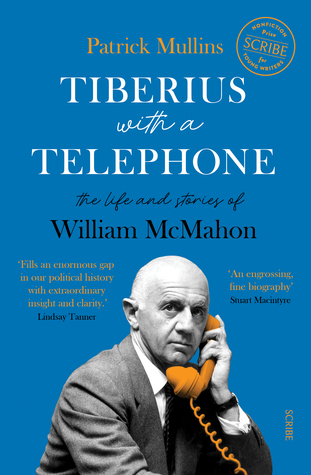
  • Patrick Mullins’ Tiberius with a telephone: The life and stories of William McMahon (2019). Having studied political biographies, Mullins wanted to write one, and McMahon – funnily enough – was there for the taking. So Mullins told the audience at last year’s Canberra Writers Festival. Good decision, because Mullins won two big awards with this – the National Biography Award and the NSW Premier’s Douglas Stewart Prize for Non-fiction. The NSW Premier’s Award judges commented that this was “an impressive work of political biography, an achievement all the greater for its unpromising, though fascinatingly complex, subject”. Poor Billy! 
Book cover er

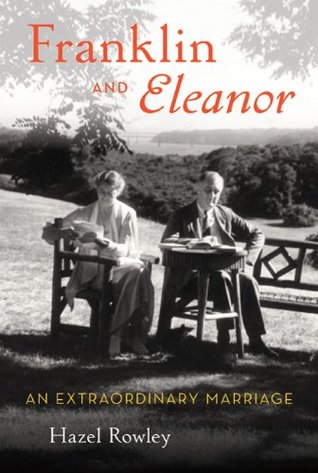
And here I’m going to sneak in one I have reviewed here. The subjects are not Australian, but the biographer is. The book is Hazel Rowley’s Franklin and Eleanor: An extraordinary marriage (2011) (my review).

A matter of definition

But here’s the interesting thing. While Franklin and Eleanor is about two consummate politicians, Rowley’s focus was their marriage. This made me think about who writes political biographies – in Australia anyhow. They tend not to be our “professional” biographers – people like Rowley, Brenda Niall and now, I’d say, Gabrielle Carey – but historians, like Judith Brett, Jenny Hocking and Allan Martin. Is the driver for writing political biographies a little different?

Journalists – like Blanche d’Alpuget, David Marr, Chris Masters – also tend to write biographies with a political bent, though sometimes their subjects are not politicians. Would we call Masters’ biography Jonestown: The power and myth of Alan Jones a political biography? Would we call David Marr’s books, Barwick on Australia’s longest-serving Chief Justice of Australia’s High Court, and The Prince about Cardinal George Pell, political biographies? Not technically, perhaps, but politics surely inspired and drove these books. Your thoughts?

And now the obvious question: Do you read political biographies? And, if so, would you care to share some favourites (or, even, not-so-favourites)?

John Kinsella, Displaced: A rural life (#BookReview)

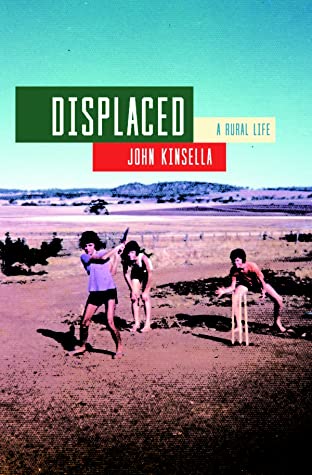
John Kinsella, Displaced

I haven’t talked about reading synchronicities for some time, but when I started reading John Kinsella’s memoir, Displaced, I couldn’t help but think of the book I had just finished, Gay Lynch’s historical novel Unsettled (my review). Both have one word titles which play with opposites; in both cases, those opposites refer to physical meanings and more abstract, intellectual, social and/or emotional ones; and, in both, these meanings draw significantly from the colonial act of settling Australia and displacing its original inhabitants. I enjoy such wordplay that forces us to consider multiple, and sometimes conflicting meanings because it encourages a deeper engagement with the ideas being explored.

Notwithstanding this, reading Displaced was a labour of love, because it is a demanding, and often confronting read. However, I wanted to know about this man who is one of Australia’s leading contemporary poets, so I persevered. My assessment? If you are interested in how one might live life as ethically as possible with regard to justice and the exploitation – of First Nations people and the environment – that is encompassed in the long tail of colonialism, Kinsella’s book is a good place to start.

This leads me, as I’m wont to do, to a consideration of form or genre. Displaced is characterised in promotions as a memoir, but I see it more as a manifesto with memoir elements. Events in Kinsella’s life underpin the book, including his stints in Ohio, Schull and Cambridge, but they are not the focus. Instead, they are used to explicate and exemplify his ethical beliefs and, more, to explore the paradoxes we all live with. These paradoxes provide the book’s main thread. They are expressed in such terms as “belonging and unbelonging”, finding a meaning for “home” that recognises Indigenous “dispossession” and doesn’t encompass the exploitative ideas of “ownership”, and feeling “displaced” while very definitely being in a place. He characterises this as “the ethics of presence”. It’s difficult to get your head around while also being very simple really. In other words, the idea is simple, but the living of it, not so!

Two-thirds through the book, Kinsella talks about conducting peace readings, and says that:

A poet has a job to do – art in itself is meaningless if it does not jolt us into self and collective action.

He then describes a sculpture in the British Museum comprising bits of AK-47s welded together. “The artwork,” he says, “jolts one out of apathy, if not out of complicity”.

For Kinsella then, art is not just for art’s sake. And so, here, this work of art, his “memoir”, has a very specific goal, to raise our consciousness regarding the lives we are living and how colonialism, and the accompanying capitalism, continue to damage both colonisers and colonised. He calls himself an “anarchist”, but not one who subscribes to chaos and disorder. His anarchism, he says, has

the social angle, it has the respect for individual difference. I do not attempt to tell people what to believe, but I do attempt to draw attention to the damage being done.

So now, let me return to my opening comment regarding the title and its multiple meanings. Early in the book, Kinsella talks about growing up in the Western Australian wheatbelt, and about the paradoxical, hypocritical love of nature and place he espoused. “Something didn’t add up”, he says, between the way he “felt about the world” and the way he “acted in it”, his actions drawing from “outdoorsmen activities and the attendant crisis of masculinity.” The things he did – farming, hunting, and so on – were counter to the things he loved. The book chronicles his realisation that

I was part of a colonial invasion force, and I belonged nowhere. What could I do about it? I wandered, displaced as an addict [literally as well as spiritually], and as someone trying to undo my own identity.

Learning a new way of being (“unbecoming what I was, becoming what I might be”) became his lifelong project, one he shares with his wife, the poet Tracy Ryan, and their son Tim. Kinsella puts this thinking into his work – in his writing (as mentioned above) and in his role as Professor of Literature and Environment at Curtin University. He speaks in the book of trying to create a new way of writing about place, “a system for working through the contradictions of presence, of time and space and catastrophe and catastrophising, of the failure of modernity and the consequences of colonial modes and modalities of presence”. That’s a mouthful, but it explains his wish to find a way of expressing how colonialism has negatively infiltrated our lives physically, spiritually and linguistically.

To explain his beliefs, he wanders between childhood, youth and adulthood, amongst relationships with other writers and thinkers, and between his current home, Jam Tree Gully back in the Wheatbelt, and those places he’s lived in overseas. Because – I think – of this to-and-fro structure, there is a lot of repetition of ideas and experiences, and these repetitions did become a little tedious at times. I get it John, I get it, I felt like saying a few times as I read. The other challenge for Kinsella was to not preach or virtue signal. He does come close, at times, but he makes clear that he understands the nuances – how does someone like him, for example, deal with feral cats or weed pests? “There’s plenty of mea culpa in my life”, he says.

In the end, this earnest, frank book is full of heart and commitment. One of the things I’ve taken away from it is a heightened awareness of how “colonialism” has infiltrated our language. Take, for example, an interpretive sign we recently saw on a bushwalk that described a tree trunk as providing “high rise living”. Or, a Wiradjuri country rural town’s proud sign promoting its “170 years of heritage”. Just 170 years? On its website, the Blayney Shire speaks more on this (colonial) heritage, and then mentions its natural environment and Aboriginal heritage. “Aboriginal relics and artefacts”, it explains, “are primarily protected under the provisions of the National Parks and Wildlife Act, 1974. Listed heritage in the Shire is mainly European in nature”. This sort of demarcation in thinking about heritage needs to change.

We can’t turn back the clock, which Indigenous Australians accept, I believe. However, they want and warrant the respect due any human being, recognition of their sovereignty and of their dispossession, and for us to listen to their wisdom and knowledge.

Kinsella, who believes that “poems can stop bulldozers”, includes many in this book. They make good reading. But I’ll end here on a positive note from halfway through the book:

The land is constantly being rewritten. We don’t have to be stuck with the damage. It can be undone.

John Kinsella
Displaced: A rural life
Melbourne: Transit Lounge, 2020
329pp.
ISBN: 9781925760477

Review copy courtesy Transit Lounge, via Scott Eathorne of Quikmark Media

Monday musings on Australian literature: “You don’t walk away until the work is done”

Book cover

This is a different type of Monday Musings, but its relevance will become apparent, I promise you! It’s inspired by Julia Baird’s Phosphorescence which I read a couple of weeks ago. In my review, I mentioned that one of the book’s four main sections is devoted to failure and imperfection, but I didn’t share much about this section, which is titled “We are all wiggly”.

Its opening chapter, after her usual intro, is called “The activist’s attic”. In it she tells of 9 boxes of papers she’s carried around with her for decades. They relate to her “spectacularly unsuccessful endeavour”, when a young woman, to win ordination for women in Sydney’s Anglican church. It’s a failure that has hung heavily on her, and that brought her to ask, in this book, “how to think of these years of effort?”

She shares the stories of other activists, like William Wilberforce who fought against the slave trade for forty-six years, and Nelson Mandela “who spent much of his life, including twenty-seven years in prison, fighting apartheid … “

And then she talks about climate change:

… think of all the scientists who have been warning of the dangers of extreme climate change since the 1960s, and of all the criticism of their work and the dismissal of anything resembling agitation and or activism as the lunatic alarmism of the left. The public burying – or attempts to discredit – the crucial findings of thousands of our finest climate scholars will prove to be one of the greatest (if not the greatest) acts of political and intellectual corruptions of our age.

But then comes the paragraph that is the focus of this post, because this week is NAIDOC Week, and in her book – in this Activist chapter – Baird also writes about Indigenous Australians’ long fight for recognition:

And what of the Indigenous people of Australia seeking constitutional recognition, truth-telling and a voice to parliament, those people who have been mistreated, stymied, rejected, ignored and discriminated against and who continue to ask non-indigenous Australians to walk with them in a makarrata, a Yolngu word meaning peace-making, a coming together after a struggle? The grace of this approach after more than two hundred years of suffering racism, along with their patience, strength and resilience, is astonishing.

The lesson is: you don’t walk away until the work is done.

I should explain here that NAIDOC Week is usually held in July, but it was deferred this year to protect, wrote the Committee, “our elders and those in our communities with chronic health issues from the disastrous impacts of COVID19. I post most years for this Week, and did write two posts back in July, anyhow, to align with Lisa’s ANZLitLovers’ Indigenous Literature Week. But, I wanted to also honour this year’s actual week, so decided to let Baird be my inspiration.

Finally, this year’s theme is “Always was, always will be”, which recognises that “First Nations people have occupied and cared for this continent for over 65,000 years”. It also asks

all Australians to celebrate that we have the oldest continuing cultures on the planet and to recognise that our sovereignty was never ceded. 

C’mon, Aussies … let’s get this thing done!

Monday musings on Australian literature: Astrid Lindgren Memorial Award

Yes, you read right. This week’s Monday Musings on Australian Literature focuses on an award established by the Swedish government, but it is an international award. Established in 2002 to honour the Swedish children’s author Astrid Lindgren (as you’ll have guessed), the prize is five million SEK, making it, says Wikipedia, the richest award in children’s literature and one of the richest literary prizes in the world.

The award, continues Wikipedia, “annually recognises one or more living people and extant institutions” for “their career contributions”, in the case of people, and for their long-term sustainable work, in the case of institutions. The winners should be “authors, illustrators, oral storytellers and promoters of reading” and their work should be “of the highest quality, and in the spirit of Astrid Lindgren.” The award’s aim “is to increase interest in children’s and young people’s literature, and to promote children’s rights to culture on a global level”.

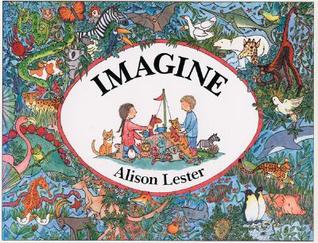
Alert readers here will have seen it mentioned here before, most recently in my post on Alison Lester, because she has been nominated for the award. However, she’s not the only Australian to have been so listed, and in fact, Australians have won it.

Aussie winners

The first winner, in 2003, was Maurice Sendak, but in its short history, Australians have won twice: Sonya Hartnett in 2008 (whose adult novel Golden boys I’ve reviewed) and Shaun Tan in 2011 (whose little book Eric, from Tales of outer suburbia, I’ve reviewed.)

The Chinese paper, People’s Daily Online, reported Hartnett’s win, quoting the award jury as saying:

Sonya Hartnett is one of the major forces for renewal in modern young adult fiction …

and

With psychological depth and a concealed yet palpable anger, she depicts the circumstances of young people without avoiding the darker sides of life. She does so with linguistic virtuosity and a brilliant narrative technique; her works are a source of strength. 

Shaun Tan, Eric cover

Reporting Tan’s win, Claire Armitstead of The Guardian wrote that

Larry Lempert, the chair of the jury, described Tan as “a masterly visual storyteller” whose minutely detailed pictorial narratives touched everyone, regardless of age. “His pictorial worlds constitute a separate universe where nothing is self-evident and anything is possible,” the citation says.

The Guardian article describes the prize as focusing on work with “a profound respect for democratic values and human rights”. That certainly describes Shaun Tan’s work, and ethos, as I know them.

Announcing the British contingent for the 2020 award, The Guardian quoted the jury’s citation for British past-winner Philip Pullman (whose His Dark Materials series Daughter Gums loved) for writing that

stands firmly on the side of young people, ruthlessly questioning authority and proclaiming humanism and the power of love whilst maintaining an optimistic belief in the child even in the darkest of situations

I rest my case – I think!

Some Aussie candidates

As far as I understand it, candidates are nominated by organisations around the world, but the winners are chosen by, quotes Wikipedia, “a jury with broad expertise in international children’s and young adult literature, reading promotion and children’s rights. The 12 members include authors, literary critics and scholars, illustrators and librarians. One member represents Astrid Lindgren’s family.”

Book cover

I’ve already said that Alison Lester has been shortlisted (or, announced as a “candidate” as they call it), but given our strong children’s literature culture here, many Australians have been shortlisted over the years, too many, in fact for me to discuss in detail.

Children’s/young adult author John Marsden was nominated in 2008. I enjoyed reading his books when my children were young, and was impressed by the fearlessness with which he tackled some difficult issues, including domestic violence in his 1987 novel, So much to tell you.

Some authors have been listed multiple times. For example, Jeannie Baker, Ursula Dubosarsky, Susanne Gervay and Margo Lanagan were candidates for the 2020 Award, and are again for 2021. The specialty Indigenous Australian publisher Magabala Books and the Indigenous Literacy Foundation are also in this 2020 and 2021 group.

I know and have read works from some of these writers and organisations, but not all. However, it’s clear how and why Magabala Books and the Indigenous Literacy Foundation would meet the prize’s interest in “democratic values and human rights”.

I could go on finding more Aussies to tell you about, but I think you get the gist. This is an impressive, and significant award in both value and what it is trying to achieve (or so it seems to me).

Are you familiar with it?

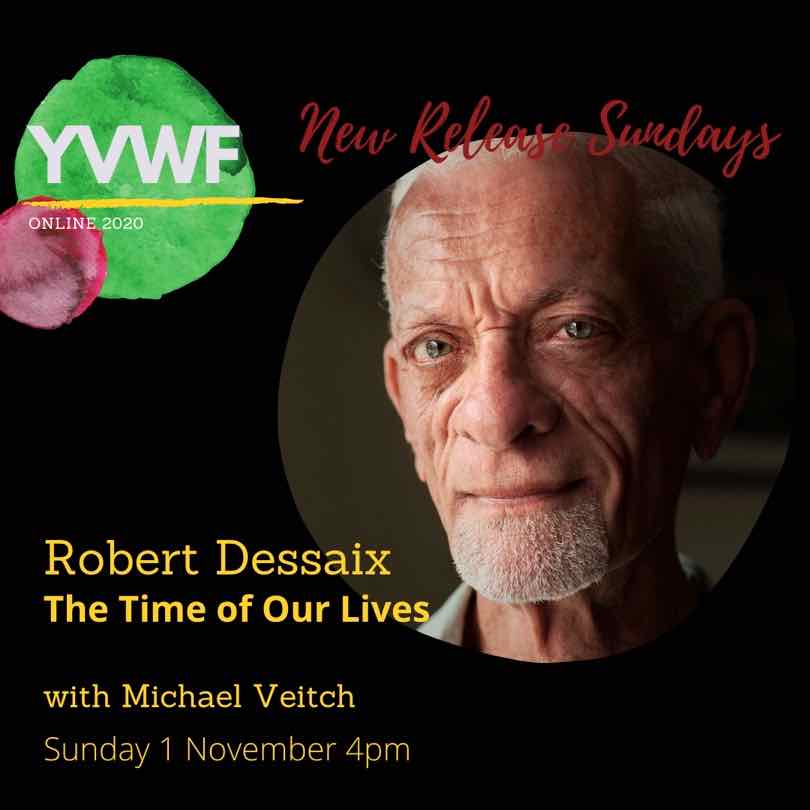
Yarra Valley Writers Festival 2020 (Online): New Release Sundays: Robert Dessaix

YVWF Dessaix Logo

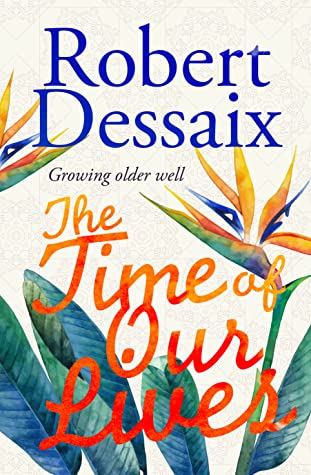
Back in May, I attended several sessions of the Yarra Valley Writers Festival (YVWF), a COVID-19 bonus, as most of you know. The Festival also runs two regular events, a weekly New Release Sundays and a monthly Bookclub. I haven’t managed to attend any, until today, which involved Festival Ambassador Michael Veitch speaking with Australian novelist, essayist and journalist, Robert Dessaix. I read Dessaix’s memoir, A mother’s disgrace, before blogging, and I used to love his ABC RN radio shows, Lingua Franca, and Books and writing (which he did for a decade.) Today’s session was about his new book about growing older, The time of our lives: Growing older well.

The session’s promo described the book as “a wise and timely exploration of not just the challenges but also the many possibilities of old age”. Given I have had nonagenarians, and now a centenarian, continuously in my life since 2004, and given my own aging, this topic interested me.

The conversation

Robert Dessaix, The time of our lives: Growing older well Book cover

Michael Veitch started, of course, by introducing Dessaix, telling us that The time of our lives is Dessaix’s 10th book. He described the book as “joyous”, but hard to define – not a novel, not short stories, not a guide. More, he said, a kaleidoscope of impressions, spiritual and intellectual.

Dessaix liked that image, saying that kaleidoscope describes how he lives: he takes shards from what happens around him, shapes them, and hopes “a beautiful pattern will emerge”.

Several themes ran through the conversation, kaleidoscope being one, plus there being “bulwarks” against the ravages of age, the importances of having an inner life, the value of curiosity, and the idea of dance. The book begins with a dance (“Voulez-vous couchez avec moi”!) and ends with a Javanese dance, which nicely encapsulates his transition from loving Europe to being interested in Asia (particularly India and Indonesia.)

Later in the conversation, Veitch mentioned the death of Dessaix’s partner’s mother, Rita. It seems that she was the (or a) major impetus for the book. She was living in a retirement village – “village” being the wrong word Dessaix felt for such homogenous places – until she had the fall that resulted in her moving into aged care. I’ll return to this later …

Veitch read an excerpt from the book describing the inner life. This definition included that it’s like “a cherished piece of music [that is] shaped by our our individual memories”. (This is a tiny part of the full description, so please don’t quote me!) Dessaix said his aim is not to shut out the outer world, but simply to keep certain things in. The inner self is a conversation, and is something that “holds us together against nothingness”. Hmm, that sounds more like the time of Sartre and TS Eliot than now!

“of course, I’m curious”

Anyhow, Veitch moved onto the idea of curiosity, suggesting that it drives the book. Dessaix agreed, saying “of course I’m curious”. We are only here for a short time!

Dessaix went on to say that a major interest as he’s grown older is other people. How do people cope with what the world has served up to them? He loves to visit India, but not for the sights, which are purely background. He likes getting close to people, to understand their lives. Women, he said, are easier to become close to.

During this conversation he said something that spoke to me, which is that coping is “such a difficult thing to do”. We think, he said, that it will be easy. that we follow the path – get a job, marry, having family, etc – and that it will all just fall into place. I remember thinking that in my angsty teen years. But, he said, it’s not like this, “we have to cope every day with something”. He described the world as “an abattoir”, which is a strong image for what is apparently not a dark book.

This led to a discussion of friendship, but there was nothing particularly new here (for me anyhow), so let’s move on. He did, though, comment that the older you get, the things you care about become less. Now he will say what he thinks, and “take negative responses on the chin”. Around here, he commented that in the 1960s, we (and I became a teen in the 1960s so I was with him) believed everything would get better, but that euphoria of has evaporated into nothing. So sad, because we really did think we were on the way to becoming kinder, gentler, fairer.

“a stupid foreginer”

Veitch asked him about his current interest in Asia. Dessaix replied that Europe started to become tedious. He wanted to go somewhere where he would be a blank, “innocent”, so he started with India, and now visits (except this year) Java. Being in a place where he feels “not at home” stimulates him “to have important conversations with himself”.

He admitted that he is granted liberties because he’s “a stupid foreigner”; he feels open to saying things he would not say in Paris or Berlin.

Veitch read another excerpt which, if I got it correctly, described a secret door going from the formal European gardens of Dessaix’s younger days to the more riotous gardens of places like Java. He said he was humbled to discover he had shut out these intricate civilisations and now he’s too old. These are sensual places. Europe preens, and positions itself as sexy, but is not sensual.

“play and discipline”

Dessaix equated the inner life with a dance, the tango, which he said combines “play and discipline”. It is sexy, sensual, beautiful but also demands discipline. His aim is to hone these two – play and discipline.

At this point, the conversation turned to the aforementioned Rita, who died during the writing of the book. She, Dessaix said, did not have an inner life (though how he really knows, I’m not sure). Born in 1922, she, Dessaix suggested, was one of those women “crushed by the men they lived with”. He believes she did not feel she was worthy of having an inner life.

Veitch wondered whether you have to learn how to have an inner life? Dessaix thought yes, but that class is also involved. Rita was told she was a “stupid woman”. She was, he said, bored out of her mind. Dessaix said her aged care home “smelled of boredom”. This could be a judgement from someone not there yet, though I’m sure boredom does exist in aged care. Dessaix doesn’t feel he will be affected because “there is too much going on inside”.

Now, here’s the thing … many aged care places (here in Canberra, anyhow) offer many opportunities for residents to be engaged and mentally active, but it depends on one’s brain staying healthy, and on hearing and sight being good. Father Gums has quite an inner life. I know, because he tells me about the things he thinks about, but time can, nonetheless, hang heavily, because sight and hearing difficulties make it difficult to partake of opportunities offered to feed the mind.

“happiness & contentment”

The discussion turned to the difference between happiness and contentment. Dessaix initially saw little difference but refined his ideas as the book progressed. Fortunately, what he came up with is how I see it, because I’m bothered by the focus on “happiness”. Contentment – a sort of inner comfort – is what we aim for, he said, but it can never be complete, while there is suffering in the world. Happiness, on the other hand, can be complete, but it “drops on you”. There is no mystery to it. As Veitch said, happiness falls on you, while contentment settles on you.

Continuing this theme, Dessaix said that he doesn’t like “tranquility”, preferring “animation”. For this reason he likes the god, Ganesha, who dances! Apparently, grief guru Elizabeth Kubler-Ross said at the end of her life, “I wish I’d danced more”. I love it!

There was more, including a discussion about attitudes to death. Mainly, though, the conversation reiterated in different ways the main theme of continuing to “play” and engage in life actively, and of accepting ageing without fear. Ever the writer, Dessaix equated life with sitting on your own “Persian carpet”: it is beautiful, has repetitions, and is different from the one next to it.

However, he did add an element of reality, which I approved. Life, he said, is about maintenance – your eyes, your ears, your … well, you get the picture.

Dessaix said he found ageing liberating, meaning that things he had hoped for – like the Catholic Church disappearing – won’t happen, and he no longer cares, because he has his inner life. He is more tolerant now, accepting that some things can’t be changed.

As you age, said Dessaix, you can still be happy: there’s a shrinking list of things to be happy about but that happiness can be deeper.

Veitch concluded the session by saying that the book is not a dark book, and is more about life than age. He liked, he said earlier, that the book is called “growing older” not “old”.

Overall, a good session about a book I’d like to read, but it is clear – and he would probably admit it – that Dessaix is a privileged person for whom ageing and an inner life will come easier than for some.

From Yarra Valley Writers Festival 2020 (Online): New Release Sundays
1 November 2020, 4:00 – 5:00 PM
Livestreamed

Julia Baird, Phosphorescence (#BookReview)

Book cover

Much as I love watching Julia Baird on The Drum, and much as Mr Gums and I worried about her multiple cancer diagnoses and her extended journey to recovery over recent years, I’m not sure I would have read her book, Phosphorescence: On awe, wonder and things that sustain you when the world goes dark, if my reading group hadn’t scheduled it. However, we did schedule it, and I did read it. I found many of its ideas affirming or confirming, or, if not those, thought-provoking. In other words, although it feels like a self-help book which I usually avoid, I’m glad I read it.

Why? Her hope, which she shares late in the book, is pretty straightforward:

I wrote this book in the hope that it might be a salve for the weary, as well as a reminder of the mental rafts we can build to keep ourselves afloat, the scraps of beauty that should comfort us, the practices that might sustain us, especially in times of grief, illness, pain, and darkness. (p. 274)

She goes on to say that she understands that the things she’s shared, “stillness, kindness, the sea and ancient trees can hardly be a universal panacea for all the suffering on the planet”. This is true, but there is more to the book. In the Prelude, she describes her intention as being ‘to search for “the light within”, for what makes people shine’. What she shares, I’d say, will speak to each reader differently, according to our personal values, beliefs, and life experiences.

The book is divided into four main parts, focussing in turn on awe, wonder and silence; the importance of accepting and valuing failure and imperfection; the art and value of friendship; and the practice of looking and savouring, of paying attention to our inner strengths. Each of these explores its topic from three perspectives: documentary evidence from researchers, writers, philosophers; anecdotal evidence from people Baird knows or has spoken to; and, of course, her own personal experience.

It is an unusual hybrid of a book. Part book of essays, part memoir, and part quest (for “phosphorescence” or “the light within”), it sometimes felt more like a collection of random thoughts and ideas than the coherent argument I was expecting. This may be partly because several of the essays originated in previously published pieces, whose links are not immediately obvious. However, while this uncertainty was at the back of my mind as I was reading, it didn’t stop me enjoying each essay as it came along, because each had something interesting – and often heartfelt – to offer.

So, for the rest of this post I’m going to share some of the ideas that appealed to me and why.

Japanese thought, friendship, imperfection and doubt

First was the frequency with which she references Japanese thinking and aesthetics – and many of you know how much Mr Gums and I like Japan. The ideas, which are hard to put into Western words so my descriptions are loose, are Shinrin-yoku (or forest-bathing, the physiological/psychological benefits of being in the forest); Yūgen (mysterious or sublime, perhaps, experiences of beauty); Wabi-sabi (beauty in imperfection or transience, often characterised by asymmetry, roughness); Kintsugi/Kintsukuroi (repairing broken pottery visibly, so that the damage becomes part of its history and beauty); and Moai (the groups created among newborns in Okinawa to provide lifelong social support).

It’s not surprising that a nation that is generally known for values like stillness and stoicism, for preferring what novelist Juni’chirō Tanizaki calls “a pensive lustre to a shallow brilliance”, might have ideas relevant to a search for our “inner light”.

Moai is discussed in the section on friendship which is titled “We are walking each other home” (after Ram Dass). If there’s one image from the book that moved me it was this, the idea of “walking each other home”. It speaks of grace, tenderness and care, and of the way I’d like to think my friends, family and I are with each other. Baird’s section on friendship is beautiful.

In another evocatively titled section – “We are all wiggly” – Baird discusses failure and imperfection. Again, as in the other sections, she ranges over a wide range of ideas and examples, which are too numerous to share here, but they include honouring our failures, letting ourselves go (appearance-wise), and appreciating impermanence.

In the fourth section, Baird, a Christian, writes about faith and doubt. While I appreciated her discussion of her faith and what Christianity means to her, I most enjoyed her discussions of other forms of faith, hope and stoicism, and its corollary, doubt. Embracing doubt is valid, she argues, though she adds this aside:

(Although, seriously, if you can’t accept what the vast majority of scientists have to say about climate change, it’s not doubt that is your problem.)

I also enjoyed her exploration of the importance of searching for our “ert” (a term coined by marine biologist Lisa-ann Gershwin to oppose “inertia”).

In this section she also refers to Helen Garner and Tim Winton, Australian writers for whom faith is important, but whose thinking about it is personally rather than institutionally focused.

Setting a “low bar”

However, what struck me most was her articulation of a philosophy that I live by. It is, as described by psychologist Barry Schwartz, that “the secret to happiness is low expectations”. Or, at least, Baird adds, “realistic ones, erring on the low side”.

When it first dawned on me that this was how I managed my life, I was surprised. It didn’t seem to accord with my view of myself as an idealist, but I then realised that the two were not mutually exclusive. I could have high ideals of how we should all behave and treat each other but I could also not expect that we all would (all of the time). I worried that this might sound snooty, or holier than thou, but hoped not. For me, this approach encompasses the realisation that we don’t all come from the same place; we don’t all have the same experiences or values; we have not all had the same opportunities; and, perhaps most critically, many of the things that affect us are out of our control and that, to remain sane, I need to be able to accept them.

As I’ve been writing this post, it’s become clear to me that the book does, in fact, satisfy Baird’s goal of searching for “the light within” – even though, while reading it, I sometimes felt I was losing the overall plot as I followed her down multifarious paths. In retrospect, I’ve decided that this could be the book’s strength. Not only does it offer a variety of experiences and thinking, but it enables us to choose paths most suitable for us, paths that may change depending on our circumstances. I won’t be swimming with giant cuttlefish like Baird, but I’m very happy to bathe in the forest.

Challenge logo

Julia Baird
Phosphorescence: On awe, wonder and things that sustain you when the world goes dark
Sydney: Fourth Estate, 2020
310pp. (including 23 pages of Endnotes)
ISBN: 9781460757154

Monday musings on Australian literature: Supporting genres, 2: Short stories

When I started this little sub-series, I wondered how to describe it – genres or forms or genres and forms? In the end, I chose “genres” on the assumption that we could define it very loosely to include forms. I hope this works. After all, the content is more important than the name!

I decided to make my second topic Short Stories because it’s around now that the relatively new Australian Short Story Festival has been held. You will see from this post, that the way the forms/genres I discuss in this sub-series are supported vary greatly. Short stories, for example, don’t seem to have a focused organisation supporting them the way genres like historical fiction and crime do. However, they are supported in their own ways.

Short story publishers

Although the scuttlebutt is that publishers do not like short stories, there are some who commit to them in an ongoing way, and these are the ones I’m going to share here. Many publishers, though, do, in fact, publish collections, such as, recently, Laura Elvery’s Ordinary matters (by University of Queensland Press) or Carol Lefevre’s Murmurations (by Spinifex Press, my review).

Black Inc’s Best Australian stories series has been published annually for at least two decades, with each edition edited by significant Australian short story writers like Charlotte Wood (2016) and Maxine Beneba Clarke (2017).

Book cover

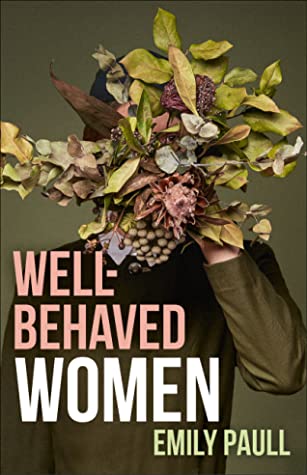
Margaret River Press published their short story prize anthologies, annually, from 2012 to 2017. I have reviewed a couple of these anthologies, which included competition winners and commended stories. They announced in 2019 that they were “taking a break”. They may be taking a break from this competition, but they are continuing to publish short story collections. I reviewed one only recently, Emily Paull’s Well-behaved women.

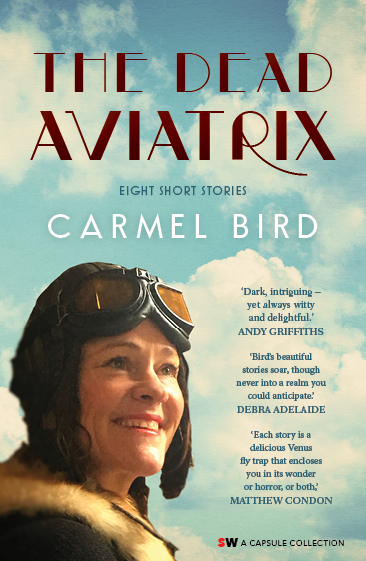
Carmel Bird, Dead aviatrix

The wonderfully named Spineless Wonders describe themselves as “a multi-platform publishing company devoted to short, quality fiction produced by Australian writers”. They support “brief fiction in all its forms – from short short stories to novella” including ‘microlit’ which combines microfiction and prose poetry. Most of their publishing is digital, I believe, and I have reviewed Carmel Bird’s foray into digital publishing, The dead aviatrix: Eight short stories.

Other publishers which support short stories in a significant way include MidnightSun Publishing and Kill Your Darlings, which has now published two annual editions (2019 and 2020) of New Australian fiction.

Short story prizes

Back in 2015, I wrote a Monday Musings on short story awards, so I won’t repeat that here. Please check it out for awards like the ABR Elizabeth Jolley Short Story Prize and the Margaret River Short Story Competition. But, there are some new ones established since then, and genre ones I didn’t mention, that I’d like to share here.

  • Carmel Bird Digital Literary Award: Established in 2018 –  named for Carmel Bird (who has appeared on my blog several times), hosted by Spineless Wonders and supported by the Copyright Agency – this award is for short story collections up to 30,000 words in length. The stories can be in any fiction genre, with all prose forms being acceptable, including non-fiction prose. The award includes cash prizes and world-wide digital publication of the three winning entries. Lisa (ANZLitLovers) has posted on this award.
  • Scarlet Stiletto Awards: Established in 1994 by Sisters in Crime (who will appear again when I focus on crime), this national award is for “short stories, written by Australian women and featuring a strong female protagonist”. Its purpose was “to support and unearth new talent”. Past winners have included writers who have appeared here – Cate Kennedy, Angela Savage – and a young woman who went to school with Daughter Gums, Anna Snoekstra. This award is actually a suite of awards comprising several awards – such as “Best New Writer”, “Best ‘Body in the Library'”, “Best Foreign Linguistics Story”, “Best Story with a Disabled Protagonist”, to name a few.

There is a comprehensive list of short story competitions available in 2020 on the Australian Writers Centre site, which underscores how much support there really is for this oft-maligned form!

Australian Short Story Festival

As I said at the beginning, the reason I chose Short Stories as my second topic for this sub-series is this festival. Founded by Anna Solding (MidnightSun Publishing) and Caroline Wood (Margaret River Press) in 2016, it’s an annual festival celebrating short stories in written and spoken forms. It aims to connect Australian and international short story writers, storytellers, publishers, literary magazine editors, and readers. It’s apparently the first national event to focus exclusively on the short story.

The first festivals were held in Perth – I watched the social media campaigns with great envy! In 2019 it was held in Melbourne. Unfortunately, due to COVID-19, the 2020 festival, scheduled for Adelaide, was cancelled because they felt that “online festival experiences can never quite replicate the immediacy of the face-to-face festival”. This is a festival I plan to attend one day.

Book cover

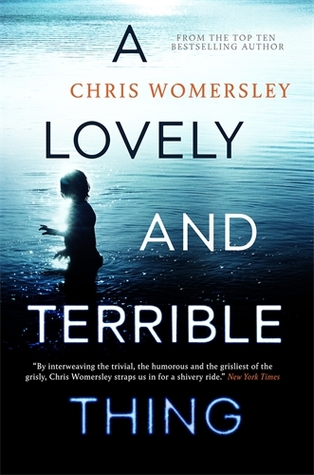
For those of you interested in short story recommendations, check out my reviews of short stories or look at Readings blog post on Short Stories (written to align with the 2019 Australian Short Story Festival). One of the books recommended is Chris Womersley’s A lovely and terrible thing, which I’ve reviewed here, so I’ll conclude this little post with it!

Do you like short stories? Why or why not?

Book (Re)Launch: Sara Dowse’s West Block


Sara Dowse West Block

Way back when, I read Sara Dowse’s debut 1983-published novel West Block. It ticked all the boxes – it was by a woman, by a feminist, was set in Canberra (a rare thing), and was about the Public Service within which I also worked. I enjoyed it immensely and have often wanted to re-read it. I was therefore thrilled to hear that it was being re-published – and with a new introduction by Dowse.

This new edition, by For Pity Sake Publishing who published Dowse’s latest novel, As the lonely fly (my review), was virtually launched at a COVID-19-determined Zoom Event today.

The launch …

The launch comprised a conversation between Dowse and Michele Seminara who is a poet and managing editor at the Canberra-founded creative arts journal Verity La.

Sara Dowse, West Block

Seminara commenced by describing Dowse as a “legend of Australian literature”. She was also one of the Canberra Seven, about whom I have written before. The conversation, though, focused mostly on the book’s subject matter …

West Block, for the non-Canberrans here, is one of the original buildings in our Parliamentary Triangle. Built in 1926 it, and East Block, flanked what is now known as Old Parliament House. These buildings were the home of the public service.

So, Dowse’s novel, West Block, is about the bureaucracy. From 1974-1977, Dowse was the inaugural head of the women’s affairs section established to support PM Gough Whitlam’s first women’s adviser, Elizabeth Reid. Dowse became, she believed, the first femocrat.

Dowse spoke about her intentions for the novel which she started writing a couple of years after the 1975 Dismissal. She wanted to tell the story of what happened and how public servants coped in the aftermath. She wanted it not to be “just” a women’s story but a story about what women saw, about how women perceived government. “I wanted to nail them”, Dowse said, meaning she wanted to write about the male world from a feminist perspective.

The conversation, not surprisingly, also covered the politics then and now, particularly in terms of what was achieved and what has lasted. Dowse, describing the times as “unbelievably exciting”, talked about their focus being issues like child care. She said many reforms were introduced. Some were “tweaked” by the Hawke government, but they’ve been gradually whittled away since the Coalition returned to power.

She talked about the Australian federal public service, and of admiring its commitment to serving the people. She saw this public-good oriented value as being distinctively Australian, including amongst conservatives. (She couldn’t understand the antipathy with which Australians would speak of Canberra, their national capital.) However, she said, much of this value has been lost since PM John Howard turned governing into a business-style, economic rationalist, model. She talked about how private sector inflated salaries are being given as a reason why you can’t get good people into the public service, but her belief is that good people who know that the measure of their worth is not purely monetary will still work in the public service. (They’re not poor, in any event, she said.)

Dowse also told us that the main character, Cassie, is based on her, though Cassie is Australian – and unlike her, has red hair and green eyes! The joy of being a writer is that you can create characters you’d like to be! Cassie, like Dowse was, is also a single Mum juggling work and parenthood.

Seminara asked Dowse about her book’s structure with its five chapters focusing on different individuals. Dowse said she was influenced by two John Dos Passos works, Manhattan transfer and the USA trilogy. She was inspired by his telling a big story through overlapping individual stories, though he also married fiction with nonfiction which she didn’t do.

A point that came up a few times through the conversation related to the publishing and literary environment in Australia at the time she was publishing this book. For example, a fiction-nonfiction blend would not have been accepted then (though it would now.) She was also inspired by Dos Passos’ experimental writing, but that too she had to tone down for Penguin to publish the work. Upon the book’s release, one of the common questions posed about it was “is it a novel or is it stories?” This question is still with us, I believe, though writers are increasingly playing with this form (such as, most recently on my blog, Carol Lefevre’s Murmurations, my review.)

Seminara commented that she loves Dowse’s characters, with their commitment to public interest. They are, she said, “admirable as characters, flawed as people.” She also spoke of how Dowse had managed to make art out of traditionally boring subject matter. More art is now being made of such subjects, but Dowse, she said, was one of the first here to put humanity and drama into it.

Dowse briefly talked about this new edition, which was suggested by publisher Jen McDonald. Dowse said that this was her apprentice novel, and wondered how she would face having it out in the world again. However, she did not want a word changed. It had, she said, to live on its record. I am greatly looking forward to reading it again – and I fully expect it to appeal to me all over again, albeit with older eyes and understanding of how the world works.

Q&A

Dowse also read from the book, and answered a couple of emailed-in questions:

  • John Dos Passos’ influence. Dos Passos, she said, wanted to deal with the coming of mass society, and he did it by oscillating within a group of characters to build up a picture of society. This encompassed both the personal and the political, which, she reminded us, had been the feminists’ mantra: the personal is the political.
  • Susan Ryan‘s recent death and what has been left unfulfilled by it. Dowse expressed great sadness at Ryan’s death, as they had worked closely together. She said young girls now have the right to big dreams but there are still barriers. She believes the feminist voice has been rekindled through awareness of these barriers, injustices, domestic violence, and the ongoing childcare issue. While many things that were started under Whitlam have been truncated, whittled down, Ryan had achieved much, she said, including getting the ALP to accept Affirmative Action.

This was an excellent launch, and I’m glad it was on at a time that I could make. Do consider reading the book. It has much to offer.

Launch of West Block new edition
Online Zoom event by Barbie Robinson of Living Arts Canberra
25 October 2020