Monday musings on Australian literature: Supporting genres, 4: Literary nonfiction

Continuing my little Monday Musings sub-series on “supporting” genres, I’m turning next to a rather “rubbery” genre, literary nonfiction. It is tricky to define – and partly for that reason, it is not obviously well supported.

Literary nonfiction goes by a few other names including creative nonfiction and narrative nonfiction. This last one provides a bit of a clue to its definition, which is that it generally refers to non-fiction writing that uses some of the techniques of fiction, particularly, but not only, in terms of narrative style. Wikipedia defines it as “a genre of writing that uses literary styles and techniques to create factually accurate narratives.” It quotes Lee Gutkind, who founded Creative Nonfiction magazine:

“Ultimately, the primary goal of the creative nonfiction writer is to communicate information, just like a reporter, but to shape it in a way that reads like fiction.”

In other words, it aims for a prose style that is more entertaining (but not at the expense of fact.) In my review of Anna Funder’s Stasiland, I wrote that she “uses some of the literary techniques – relating to structure, voice and language – more commonly found in fiction to tell her story”.

Well-known Australian writers in this “genre” include Helen Garner, Chloe Hooper, Anna Krien, Anna Funder and Sarah Krasnostein, all of whom I’ve read. It is a grey area, though, and I suspect each of us would draw the line at different places. However, I would include essay collections by Fiona Wright and Maria Tumarkin, and many hybrid memoir/biographies, like Nadia Wheatley’s Her mother’s daughter (my review)? Historians who write for general audiences rather than academia might also be included. I’m thinking here of Clare Wright and Inga Clendinnen, as possibilities. What do you think?

Prizes

For some genres – literary fiction and crime for example – awards/prizes are a major source of support (in terms of money and recognition) but this is less so for literary nonfiction.

Anna Funder's Stasiland bookcover

Back in 2004, Anna Funder’s Stasiland (my review) won the Samuel Johnson Prize for Nonfiction. Now renamed the Baillie Gifford Prize for Non-Fiction, it is, says Wikipedia, “an annual British book prize for the best non-fiction writing in the English language”. Not surprisingly, winners include works from this literary nonfiction “genre”. Another winner I’ve reviewed here (though it’s not Australian) is Helen Macdonald’s H is for hawk (my review). Australians have not featured highly in this award.

In Australia, several of the state awards include a nonfiction category, and these have been won by literary nonfiction, though they compete with other forms of nonfiction like histories, biographies and other forms of life-writing, essays, and so on.

Major Australian Nonfiction Literary Prizes

None of the awards listed here are specifically for “literary nonfiction” but these are awards which may be won by such books.
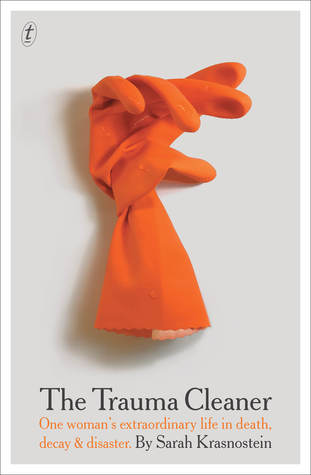
Sarah Krasnostein, The trauma cleaner

Also relevant are awards that are not “specifically” nonfiction:
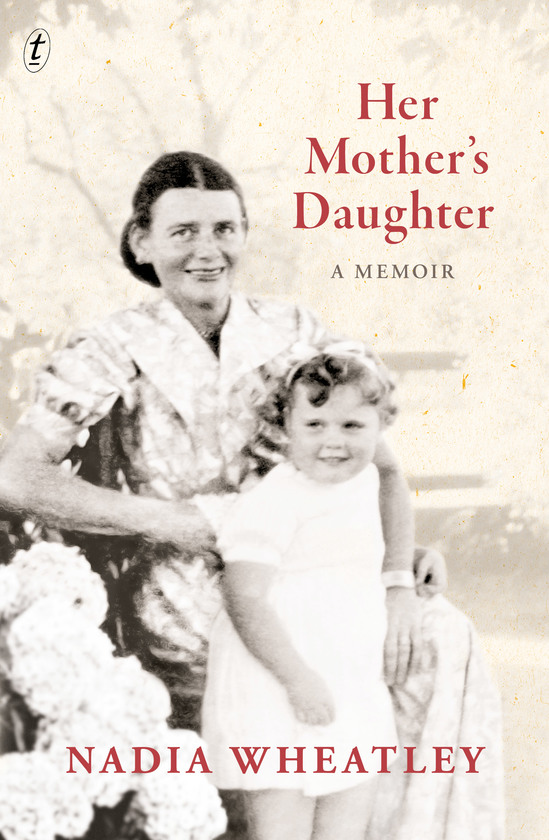
Nadia Wheatley, Her mother's daughter
  • Mark and Evette Moran Nib Literary Award: this award for “excellence in research” and “in writing” has been won by books in this genre, like Helen Garner’s Joe Cinque’s consolation (2005) and Nadia Wheatley’s Her mother’s daughter (2019).
  • Stella Prize: while this multi-genre/multi-form prize has more often been won by fiction, nonfiction – and particularly literary nonfiction – does feature in its long- and shortlists. Rebecca Giggs’ Fathoms, for example, was shortlisted in 2021.

But, is there more?

The issue, though, for writers is what support do they get when they come up with an idea? Are the sorts of fellowships, grants and writer’s residencies that fiction writers can access also around for nonfiction writers? Well, yes, there are, such as:
  • Neilma Sidney Literary Travel Fund is an unusual award that is open not just to writers but also to “literary sector workers”. It recognises the importance of travel to writing and literary careers. Awardees have included writers researching nonfiction topics – and, despite COVID, it is still being offered, with a round being made in June this year. To give some examples, in 2018, the aformentioned Rebecca Giggs received a grant for expenses related to a writing residency at the Rachel Carson Centre for Environment and Society in Munich, Germany. And, in November 2019, Tamara Lazaroff received some funds to research her experimental narrative non-fiction memoir Hermit girls on De Witt Island, Tasmania. 
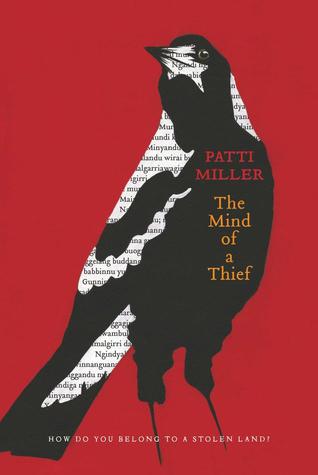
  • Varuna Writers House Residencies are open to “committed writers from all genres”. With around 160 residencies a year, the alumni is extensive, but they include Gail Bell whose The poison principle (on my TBR) won the 2002 NSW Premier’s Prize for Non-Fiction and Patti Miller whose complex memoir, The mind of a thief, was longlisted for the 2013 Stella Prize.

There are more, but these two provide a good start.

Do you read literary nonfiction? If so, would you care to share some favourites?

Previous supporting genre posts: 1. Historical fiction; 2. Short stories; 3. Biography

Irma Gold and Susannah Crispe, Where the heart is (#BookReview)

I don’t normally review children’s books, particularly children’s picture books, but I do make exceptions, one being Irma Gold. I have multiple reasons for this. Irma Gold is local; she is one of the Ambassadors for the ACT Chief Minister’s Reading Challenge; she writes across multiple forms (including, novels, short stories and children’s books, in all of which I’ve reviewed her); and, if you click my tag for her, you will get a sense of just how active she is as a writer, editor and supporter of literary culture, particularly in the ACT. Hence this exception!

But, there is another reason too, which is that Where the heart is not only a delightful book but it slots very nicely into her growing oeuvre. Before I discuss that, though, I’ll describe this, which is her most recent book. Gold explains on its opening page that it was inspired by the true story of Dindim, a Magellanic penguin which, in 2011, was washed up on an island village outside Rio de Janeiro. The bird had been caught up in an oil spill. The fisherman who found him, Joao, cleaned and cared for him until Dindim returned to the wild. However, ever since then, Dindim has returned, annually, to Joao to spend several months of the year with him. There are questions about where he goes, but in Gold’s story it is Patagonia. Patagonia is one of the theories, because it is a major breeding ground for these penguins.

This sort of detail, however, is not critical to the story. It is fiction after all. What is critical to the story is that it tells of the potentially disastrous impact of oil spills on animals. It also tells of the importance of wild animals being free. This is what Joao believed. He brought the penguin back to health and set him free. It’s just that the penguin had other ideas. It also tells of the friendship that can develop between humans and wild animals.

What makes this a gorgeous book is the way Gold tells the story. It’s simply told but the language is not condescending, and it naturally incorporates local culture. Joao and the penguin mend nets, eat sardine sandwiches, and go shopping together, with this “shopping” being at a village market stall. It’s also warm-hearted. It encourages us to think about kindness, tenderness and loyalty, making it a feel-good read. Yet, there is also a narrative arc that encompasses a variety of emotions, including a sense of fear and drama as Dindim journeys back.

Not far from Joao’s beach, the sky swelled and lightning jagged. Dindim rode waves and wondered if he would make it. He was exhausted.

A little bit of drama makes it fun to read aloud to littlies, which I look forward to doing when lockdowns end and I’m able to see our little grandson again!

However, this is a picture book, so for it to succeed the illustrations have to be good as well. Fortunately, they are. I think this is illustrator Susannah Crispe’s first book, though she has another coming out this year. I’m not surprised she has, because she has done a beautiful job with this one. The colours are bright and inviting, but are conveyed with a warmth and softness that support the story. This is nowhere more obvious than in the two facing pages that contain only penguins. The expected intense black-and-white of the penguins is there, yet muted, and the white space surrounding Dindim visually conveys the text’s description of the “ache” in Dindim’s heart. Crispe also incorporates lovely little details from nature in her illustrations, like hummingbirds, butterflies, turtles and albatrosses. These all support the story by adding to its sense of place, but they also create interest when reading to littlies. “Can you find the turtle”, etc!

What I’m saying, in other words, is that this picture book is just the right package.

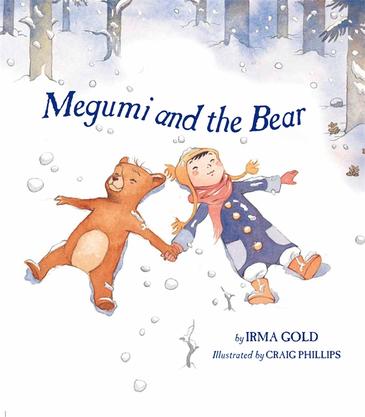
Irma Gold Craig Phillips Megumi and the bear book cover

And there I’ll leave it to return to my opening comment on Gold’s oeuvre, because I am seeing a pattern. The obvious one – from her previous picture book Megumi and the bear (my review) and The breaking (my review) – is her interest in wild animals, and in the relationship between humans and animals. Closely related to this is an interest in conservation, animal rights and the environment. And then – yes, there’s more – overlaying all of this is the importance of friendship, between humans, and between animals and humans. There’s a quiet joy in this, which is something Gold said, in a recent conversation, that she wanted to convey. I believe she has, and look forward to what comes next.

Challenge logo

Irma Gold and Susannah Crispe (illus.)
Where the heart is
Chatswood: EK Books, 2021
[32pp.]
ISBN: 9781925820874

Monday musings on Australian literature: the Australian 9/11 novel

With the 20th anniversary of 9/11 having been commemorated on the weekend, I thought I might explore how 9/11 affected – if at all – Australian fiction. Before I start, though, I have two provisos: one is that my focus will be fiction, not literature, or culture more widely; and two is that, like many of my Monday Musings posts, this will not be a comprehensively researched post, but one intended to throw out some ideas that we all might like to think and share our ideas about.

So, here goes, starting with …

What, if anything, is the 9/11 novel?

I didn’t find a definitive answer, but I’d say the “genre” encompasses novels which speak directly of 9/11 and those which are (or which seem to be, even) inspired by it.

Arin Keeble, from Nottingham Trent University, discussed these novels in The Conversation back in 2016, in an article titled “Why the 9/11 novel has been such a contested and troubled genre”. Keeble discusses the intense debate that these novels engendered, including the concern by some that the focus on 9/11 has “undercut the complex prehistories and aftermaths of 9/11, giving it inflated importance in the world narrative”. He notes that the novels that came out around 2006/7, by Don DeLillo, Claire Messud, Jay McInerney and Ken Kalfus, all explored the event through marriage and relationship narratives. He quotes from a critique by Pankaj Mishra, who wondered whether we are “meant to think of marital discord as a metaphor for post-9/11 America?” Keeble writes that Mishra and others criticised these novels ‘for their “failure” to engage with otherness and the geopolitics of 9/11’. Other critics and commentators weighed in, disagreeing. Read the article – it’s short – if you are interested.

The point that Keeble makes is that, regardless of how “polarised” the debate became, the impact was to ascribe “great importance to the 9/11 novel” and, as a result, to reinforce “the idea of 9/11 as a defining moment”. Writers like Zadie Smith, however, saw this emphasis on 9/11 as an example of “American exceptionalism”.

Other novels did come out with a more political and/or international bent, like Mohsin Hamid’s powerful The reluctant fundamentalist, but marriage and relationships are still at their centre, and they “continue to explore the way privileged Americans absorb and respond to trauma”. Keeble concludes on a book that he believes most aligns with Zadie Smith’s views, Thomas Pynchon’s Bleeding edge which “goes the furthest in challenging the singular importance attached to 9/11 in its intertwined historical narrative, weaving in the significance of the collapse of the dotcom bubble in 2000 and a history of the internet’s transition from an anarchic to a completely corporate space”.

I have read several non-Australian books “inspired” by 9/11, from Don DeLillo’s Falling man (2007) and Jonathan Safran Foer’s Extremely loud and incredibly close (2005) to Ian McEwan’s Saturday (2005) and the aforementioned The reluctant fundamentalist (2007). Each is quite different, but Hamid’s is particularly memorable because of its point of view and the tone he sustains throughout.

Unfortunately, none of this furthers my 9/11-in-Australian-fiction topic. My excuse is that it was in The Conversation and it provides a good introduction.

And, in Australia?

However, some Australian novelists have contributed to the genre. This 2010 article published in JASAL by Jen Webb sounds interesting, from its abstract:

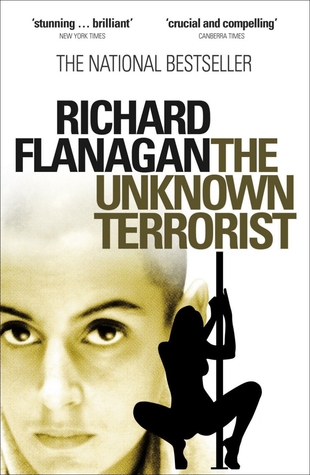
Australian fiction is, arguably, as diverse as the fiction of any other culture or era. But in a globalised world, though the stories we tell may remain inflected by the local context, they will necessarily be informed by transnational relations and geopolitical events. Like writers in the USA, UK, Afghanistan and elsewhere, some Australian novelists have taken arms against a sea of troubles, and produced work that directly and consciously engages that new genre, the post September 11 novel. Only a small number of Australian novels have been published in this genre – perhaps inevitably, given our distance from the scene – and they can be read as relying on the familiar features of the thriller, the detective, or the citygrrl genres that readers find attractive. However, I will suggest that they do more than this. In a reading of Andrew McGahan’s Underground, and Richard Flanagan’s The unknown terrorist, I will discuss the ways in which a very local ‘accent’ is coloured by broader forces, and what contributions we can offer, here at the foot of the world, to the ongoing conflicts and human rights abuses in the hemisphere above us. 

Regrettably, I don’t know what ways and contributions he discusses, so we’ll just have to guess. Meanwhile, I have read Flanagan’s novel, and will throw two other novels into the mix, though they’re not set in Australia, Janette Turner Hospital’s Due preparations for the plague (2003) and Orpheus lost (my review) (2007).

Richard Carr, in ‘”A world of … risk, passion, intensity, and tragedy”: The post-9/11 Australian novel’ (Antipodes, 23 (1), June 2009), mentions the novels by Hospital, Flanagan (2006) and McGahan (2006), but adds two I didn’t know, A.L. McCann’s Subtopia (2005) and Linda Jaivin’s The infernal optimist (2006). He says that all these novels:

entered a world attuned to the destructive potential of the terrorist and wary of the terrorist desire to wreak havoc.

In fact, the terrorist as a symbol of a New Australia defined against an older, safer country is a recurring thematic pattern.

Carr discusses the novels, individually, and, while they are all different, they express some commonalities regarding our “contemporary obsession with terrorism”. To simplify muchly, these include fear of other (often encouraged by government) and lying about other, which result in actions like the scapegoating or oppression of innocent people and increasing reduction in liberty.

Carr also draws some broader conclusions – remember he was writing in 2009 – that I found interesting, and still relevant. He proposes that this obsession

sublimates long-standing sources of guilt and fear: the taking of the land from its rightful owners, the cruelty of the founding penal system, the inhumanity of the treatment accorded Aborigines into the present-day. Whatever the reason … Australian has followed America’s lead in assigning national security its highest priority and identifying the terrorist as the primary threat to that goal.

Do you have any thoughts about this and/or the 9/11 novel?

Delicious descriptions: Sara Dowse on Canberra

In my recent post on Sara Dowse’s West Block, I ran out of time to share some quotes and thoughts on her depiction of Canberra and the heritage building, West Block. Soon after, I wrote a Delicious Descriptions on West Block, promising another one on Canberra – because, well, I can, and Canberra is my city.

Introducing that West Block post, I said that I love reading for its ability to take me to other places, lives and cultures – of course – but that there it is also special to read about one’s own place and life. It can reinforce our own impressions; it can enable us to just sit back and remember; and, most interestingly, it can encourage us to look at things from a different angle or perspective. West Block does all of these for me.

Canberra

So, Canberra. As many of you know, it’s a planned city, designed from the start to be Australia’s federal capital. It was formally “named” in 1913, but, of course, the land it was built on had been occupied for over 20 thousand years before that by Indigenous people, including the Ngunnawal and Ngambri peoples whom we honour today. In colonial times, it had also been farming/grazing country. All of this is referenced in West Block, though it is the contemporary built and natural environment which take precedence in the descriptions because they are what directly impact the characters.

Early in the novel, Dowse addresses the creation of the city when describing old-school George Harland’s decision to move to Canberra from the “hell” of western Victoria, the hot, dry “grass, scrub, dusk”. It had been the same, he thinks, in Canberra, but

With effort and planning and the help of some mountain streams they had beaten it. Everyone planted, in a peculiarly catholic way: silver birches and liquidambers, poplars, willows and rowan-trees, mixed with all manner of eucalyptus and acacia; the claret ash and grevillea, banksia, oleander, jonquils and hyacinth, till the colours of spring splashed over the streets, and autumn cart such a brilliant shadows they could never forget how they came to be.

I suspect there’s an intimation here too of the “catholic” development of Canberra’s population, of its comprising all sorts of people who came to work in this government city. Most of us were transplanted from elsewhere, like the exotic shrubs and trees; few of us had a family history in the place to ground us. Nearly 50 years on that has changed dramatically, but it wasn’t so at the time West Block is set.

Harland’s chapter in the novel contains some of my favourite descriptions of the city. I loved the account of his walk to work, and the various references to Canberra’s paradoxical nature as a city of physical beauty which also lacked “animation”. Harland thinks of Canberra’s past in terms of the farms, the “fields of lucerne that in earlier times had grown on the river flats”. It’s his Canberra-born daughter who reminds him of those for whom it had really been home. She takes him to her favourite park, telling him:

When I first started coming here I had no idea where I was. I mean Corroboree Park. Well, there’s nothing unusual in that. We’ve taken their language just as we have their land, and everything else. To make use of it as we will. But then I found out that this is really where they came to meet, all the tribes of this region, I like to imagine, under this very tree.

The novel is not about Indigenous dispossession and politics, but this reference, along with mentions of the Aboriginal Tent Embassy and of refugees, gently introduces the idea of all the people, in addition to Cassie’s women, whose needs were being ignored.

As well as its beautiful autumns, Canberra is known for crisp winters and clear, blue skies. There is a scene just after the new-style, more proactive bureaucrat, Henry Beeker, has been through a bruising IDC (interdepartmental committee) which had to prepare a joint submission to Cabinet on uranium development and the controversial Ranger Uranium Environmental Inquiry. Games are played and deals done to get the relevant departments to “work out some of the differences” between their ministers. Beeker goes outside with Cassie:

Outside the ground was damp from the morning’s frost, melting now with the warmth of the midday sun. Their feet made soft squishes in the turf. The sky was an uncompromising blue. Clouds bumped into each other, as if they too were invigorated by the crisp winter air.

These descriptions – “melting”, “uncompromising”, “bumping together” – perfectly evoke the physical environment but surely also reflect what Beeker has just gone through?

I have focused on a few examples that particularly speak to the novel’s meaning, but I revelled in all its descriptions of this beautiful city I call home.

Do you love reading novels set in your place – and if so, please share some!

Sara Dowse, West Block (New Ed.), For Pity Sake Publishing, 2020.

Marie Younan with Jill Sanguinetti, A different kind of seeing: My journey (#BookReview)

In many ways, Marie Younan’s A different kind of seeing: My journey is a standard memoir about a person overcoming the limitations of her disability which, in this case, is blindness. It’s told first person, chronologically, from her grandparents’ lives through her birth in Syria to the present when she is in her late 60s and living in Melbourne. However, there are aspects of her story which add particular interest, and separate it, in a way, from the crowd.

One of these aspects is that Younan’s story is not only a story about blindness, but about migration and cultural difference. Younan is Assyrian, and was born, the seventh of 12 children, in the small village of Tel Wardiyat in northeast Syria. Her maternal and paternal grandparents moved, variously, through Turkey, Iran, Russia, Greece and Kurdistan escaping genocide and persecution before they all ended up in Tel Wardiyat. In her own life, Younan’s family moved to Beirut, but with some of the family having already migrated to Melbourne and with civil unrest increasing in Lebanon, more of the family applied to migrate to Australia. Younan herself was initially rejected because of her blindness, so, while her parents left for Melbourne in 1975, she returned to Syria, before moving to Athens to an older sister. Finally, in 1978, and now in her mid-20s, she was granted a visa for Australia joined her parents and family. (What a kind nation we are!)

If this wasn’t enough challenge, Younan’s life was also affected by her conservative upbringing. The book starts with a little prologue chapter describing how, at the age of 7, she came to properly understand her difference, that she is blind:

it dawned on me that there was a ‘thing’ called seeing that everyone else could do except me […]

It was the day my life as a blind person began.

We gradually come to realise that Younan was, as a child, doubly disadvantaged, because while she was brought up lovingly, nurtured by parents and siblings, she was excluded from so much that could have helped her develop as a person. She was not allowed to go to school; she was not allowed to go to big family events like weddings; and when a doctor suggested a corneal transplant for her when she was 10, her grandmother and father refused, because they didn’t believe such a thing was possible. Further, when she was 12, a relative offered to take her to a boarding school for blind girls – so she could “learn something and grow up with knowledge” – but her grandmother and father again opposed it. Her father said,

‘I’ve got 12 children, and I’m not sending one to boarding school, especially if she’s disabled.’

She was heartbroken, asking her mother why not. She didn’t “know anything about the world, or about life”, and badly wanted to. Yet, she expresses no bitterness in the book towards her family. Indeed, she dearly loves and respects them.

Anyhow, she arrives in Australia, highly dependent on her family and functionally illiterate.

I have spend a lot of time on this first part of the book because not only is her early life so interesting in its difference from my own life, but because it lays the groundwork for the astonishing changes she made in her life, with the help and inspiration of others, after her arrival here. I’m not going to detail all that. I’ll simply say that, largely through the mentorship of a man called Ben Hewitt (to whom the book is dedicated), she was introduced to various services, organisations and people that resulted in her learning to read; learning Braille; studying psychology and later interpreting; travelling around Victoria speaking on behalf of the Royal Victorian Institute for the Blind; and working as an interpreter, including for refugees through Foundation House. It’s an amazing trajectory – and one told quietly, and with humility and respect for her family and for all who helped her on the way.

It’s not surprising that she’s been described as “Ben’s biggest challenge and his best success story”. His role in encouraging her, in turning around her thinking from “I can’t” to “I can” cannot be underestimated, because, by the time she met him, Younan had a desire to learn but very little confidence in her ability to do so.

For all its straightforwardness, though, her story does have a little mystery. Younan was not born blind, but became blind when she was a few months old. Just what caused her blindness is a little question that runs through the book, and I’ll leave it to you to discover, but well-intended actions by a much-loved grandmother were involved. It’s a heartbreaking story of mistakes, accidents and missed opportunities, but Younan, if she resents any of it, has the grace to focus on what she has, not what she hasn’t or what might have been.

Now, you may have noticed that this book was written “with” Jill Sanguinetti, who has appeared here before with her own memoir. Younan met Sanguinetti around 1988 at the Migrant Women’s Learning Centre, when she joined sighted migrant women in a Return to Learning class. Sanguinetti was the teacher, and explains in the her Introduction to the book how she and Younan had stayed in touch after the class finished. Some years later, they “decided to work together to write the story of Younan’s life and educational journey”. Younan is, she writers, a “mesmeric storyteller”, but with one thing and another, it took 8 years to finalise the book. There were “many cycles of telling and writing, re-telling and re-writing”, and it shows in the end product, which is tight and keeps focused on the main theme of Younan’s journey from a dependent, innocent young girl to the independent achiever she is today.

A good – and relevant – read.

Challenge logo

Marie Younan with Jill Sanguinetti
A different kind of seeing: My journey
Melbourne: Scribe, 2020
214pp.
ISBN: 9781922310256

(Review copy courtesy Scribe.)

Monday musings on Australian literature: Islands in Australian literature

“No man is an island” wrote John Donne, recognising, to put it very simply, that we are better together than alone. Right now, Australians are experiencing “island-ship” in multiple ways, because not only are we an island geographically, but also practically, given travel in and out is extremely limited. Moreover, many of us on the eastern seaboard are “islands” in the spiritual/emotional sense, since we are in lockdown and isolated from family and friends. This seemed like the perfect opportunity to write a post about islands, given, on the positive side, dreaming about islands has long conveyed a lovely sense of escape and peace.

These thoughts were inspired by a blog post link sent to me a few days ago by a friend and reader of my blog. It was on best books about islands in literature. Islands can be powerful places and metaphors (à la Donne) in literature, so I thought it would be interesting to look at some Aussie island-set books.

The “best books” bloggers name a few reasons islands make good subjects. For example, islands offer an opportunity to observe society in miniature, where you can “encounter communities at their most intense and intricate”. They also say that “islands are perfect settings for origin stories: places where characters can be formed before moving into the larger and often hostile world”.

Randolph Stow, To the islands

They mention “fabulist” stories about islands, and stories about island summers (and the ensuing fun and freedom, presumably!) In children’s literature, “islands are playgrounds or places ripe for adventure”, but islands can also be the setting for “stark, survivalist fiction”. They name YA novel Geraldine McCaughrean’s Where the world ends, but surely William Golding’s Lord of the flies is the most obvious example?

In a nutshell, I’d say that islands tend to function as either places of exile and isolation (forced or chosen) or places of escape (from problems elsewhere and/or to freedom.) These islands can be physical places and/or metaphorical ones.

Selected Aussie island-based books

  • Thea Astley’s The multiple effects of rain shadow (1996) (my review): Set on Northern Queensland’s Palm Island, which was, in the late 1920s to 30s, used as a dumping ground for Indigenous Australians deemed to be “problems”, the novel is based on an historical event in which the white superintendent, grieving over at the recent death of his wife, runs amok, setting fire to buildings (including his own home in which his children were sleeping). 
  • Peggy Frew’s Islands (2019) (Bill’s review): Set on Phillip Island east of Melbourne, an island I have in fact visited and which, apparently has been important to a few generations of Frew’s family. For her, I understand, the island means freedom, however, in the novel, I suspect the island has a more complex role as being, also, a place of isolation.
  • Ben Hobson’s Snake Island (2019) (Theresa’s review): Described as a literary thriller, this book is about a father’s sense of responsibility for a son who has behaved badly. Nothing I’ve read about it explains the “island” of the title. Anyone? It is set in rural Victoria so I’m guessing the title is symbolic or metaphorical, but I don’t know.
  • Ion L. Idriess’ Isles of despair (1947) and The wild white man of Badu (1950): These two novels, set on islands in northern Australia, are historical fiction written by one of Australia’s most popular mid-twentieth century writers. Isles of despair, according to Wikipedia, is based on “the true story of Barbara Thomson, a white woman who was the sole survivor of a shipwreck and was raised by Coral Sea islanders, before being rescued in 1849″, while The wild white man of Badu is about two convicts who escape from Norfolk Island and end up on Torres Strait’s Badu Island.
  • Heather Rose’s Bruny (2019) (my review): About Tasmania’s Bruny Island, this is trickier to classify in terms of traditional island literature, except that Bruny’s character as a place of beauty and escape is being threatened by development. It is a political novel, and Bruny is seen as the thin end of the wedge for Tasmania, and …
  • Jock Serong’s The burning island (2020) (Lisa’s review): Another work of historical fiction, Serong’s novel is based on an actual shipwreck, the Britomart, which foundered in 1839 off Tasmania’s Preservation Island. In terms of our island theme, a review in The Sydney Morning Herald says that “Preservation Island’s community is depicted as an embattled refuge from the demands of religious evangelists and voracious government paternalism”, so, again, an isolated place, but one offering some hopes of freedom?
  • ML Stedman’s The light between oceans (2012) (Janine’s review): This lighthouse-on-an-island novel was an international bestseller. I saw the movie, but haven’t read the book. It’s about a decision a couple makes which can be contained on an island (off Western Australia), but when they return to the mainland those decisions – those secrets – must face reality. Many bloggers reviewed this but I’ve chosen Janine’s because she confronts the island issue: “The setting in a lighthouse on an island is important too.  Not only does the mechanics of the plot hang on the logistics of infrequent contact between the lighthouse and the mainland, but the emotional and ethical question at the heart of the book relies on isolation as well.”
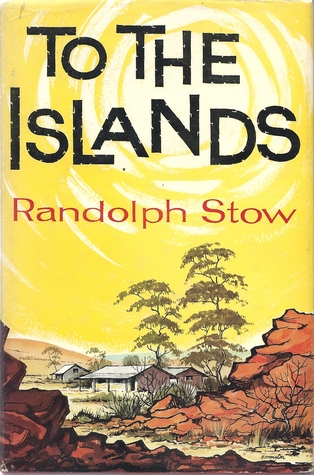
  • Randolph Stow’s To the islands (1958) (Kim’s review): An Australian classic set in northwest Australia that I’m embarrassed to say I haven’t read. However, as far as I can tell, the “islands” in this book are “symbolic” or “metaphoric” in that, says Suzie Gibson in The Conversation, they represent “a world outside one’s knowledge and body” to which we should be looking.
  • Adam Thompson’s Born into this (2021) (my review): Thompson is from the island of Tasmania, but many of his stories are set on islands off this island, and that’s why I’ve included it here. Some of the stories are about escape and isolation, some about caring for country, some about both – and more.
  • Lucy Treloar’s Wolfe Island (2019) (Theresa’s review): An Australian book set on an island of the USA’s northeast coast, this novel seems to be a quintessential island novel about escape and sanctuary, physical and emotional.

And now, of course, over to you to tell us about your favourite island books, Aussie or otherwise.

Monday musings on Australian literature: 2021 Mark and Evette Moran Nib Literary Award longlist

I only occasionally use my Monday Musings post to make awards announcements. Today is one of those occasions, because the Nib Literary Awards longlist was announced today and I did want to share it, as it’s one of Australia’s quieter but yet interesting awards.

I have written about it before and in that post you can read about about its origins and intentions but, in a nutshell, it celebrates “excellence in research and writing”. It is not limited by genre, though given the research focus, nonfiction always features heavily.

The Nib, which celebrates its 20th anniversary this year, is managed by Sydney’s Waverley Council. It is, according to the email announcement I received, the “only major literary award of its kind presented by a local council”. Whether you like awards or not, this represents an impressive and meaningful commitment to Australia’s literary culture, wouldn’t you say?

Anyhow, the judges for the 2021 award are Katerina Cosgrove (author), Jamie Grant (poet and editor), and Lee Kofman (author and editor). They worked their way through 150 nominations, with their judging criteria being “high literary merit, readability and value to the community”.

The longlist

Book cover
  • Bill Birtles‘ The truth about China: Propaganda, patriotism and the search for answers (nonfiction/political)
  • Tanya Bretherton’s The husband poisoner: Suburban women who killed in post-World War II Sydney (nonfiction/true crime) (Kim’s review)
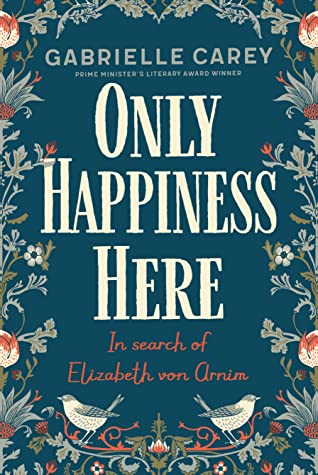
  • Gabrielle Carey‘s Only happiness here: In search of Elizabeth von Arnim (biography/memoir) (on my wishlist) (Brona’s review)
  • Alison Croggon’s Monsters: A reckoning (nonfiction/memoir) (on my TBR)
  • Sarah Dingle’s Brave new humans: The dirty reality of donor conception (nonfiction/science)
  • Richard Fidler’s The golden maze (nonfiction/history)
  • Tim Flannery’s The climate cure: Solving the climate emergency in the era of COVID-19 (nonfiction/environment) (on my TBR)
  • Anthony Ham’s The last lions of Africa: Stories from the frontline in the battle to save a species (nonfiction/environment)
  • Kate Holden’s The winter road: A story of legacy, land and a killing at Croppa Creek (nonfiction/environment)
  • Zoe Holman’s Where the water ends: Seeking refuge in Fortress Europe (nonfiction/refugees) (Lisa’s review)
  • Ramona Koval’s A letter to Layla: Travels to our deep past and near future (nonfiction)
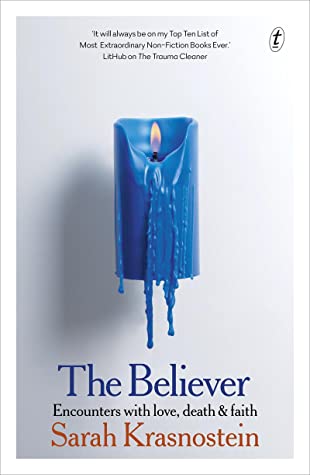
  • Sarah Krasnostein’s The believer: Encounters with love, death & faith (nonfiction/religion) (on my TBR)
  • Bri Lee’s Who gets to be smart: Privilege, power and knowledge (nonfiction/sociopolitics)
  • Mark McKenna’s Return to Uluru (nonfiction/racial politics) (on my TBR) (Janine’s review)
  • Tim Olsen’s Son of the brush (nonfiction/memoir)
  • Dymphna Stella Rees’ A paper inheritance (nonfiction/biography)
  • Rebecca Starford’s The imitator (fiction)
  • Luke Stegemann’s Amnesia Road, landscape, violence and memory (nonfiction/history) (Janine’s review)

At 18 titles, this is a long longlist. Eleven of the 18 are by women, but beyond that it’s not a particularly diverse list in terms of authors. It would be great to see that change. However, thinking of “value to the community”, it does encompass several of our important contemporary political issues including the environment (climate change and species extinction), refugees, racial politics and difficult histories. Four books fall into the life-writing category. There is only one work of fiction, which is probably why very few of these books have been reviewed by the bloggers I follow. We are mostly a fiction-focused lot!

The shortlist will be announced in late September, with the overall Winner ($20,000) and the People’s Choice Prize being announced in November.

Do you have any thoughts on this list?

Price Warung, Selected tales of Price Warung (#BookReview)

Price Warung, as I wrote in my previous post on him, is the pseudonym used by English-born Australian writer, William Astley, who came to Australia with his parents in 1859 when he was still a child. Astley became a radical journalist and short-story writer, with particular interests in transportation/convict literature, and the Labour and Federation movements. Tales of the early days, the book I reviewed in my first post, was republished by the Sydney University Press, and was entirely convict-focused.

I didn’t expect to see Price Warung again, but here he is, a few years later, in a book containing a selection from three of his five books: Tales of the convict system (1892), Tales of the early Days (1894), and Half-crown Bob and tales of the riverine (1898). Given I’ve already devoted a post to the convict stories – four of which are included in this collection’s eleven, including the well-regarded “Secret Society of the Ring” – I will focus here on editor Lucas Smith’s introduction to the collection and Warung’s riverine stories, which are new to me.

Introduction

The first thing to say is that these stories were written between 1888 and 1898, but are mostly set decades earlier.

Smith starts by stating that, after Marcus Clarke’s For the term of his natural life (1874), “no writer did more to forge the myth of Australia’s convict heritage than William Astley”. However, Astley’s work a journalist included rural newspapers, like the Riverine Herald in Echuca, where gathered material for his “poignant and humorous stories about early steamboat traffic on the Murray River”. Smith says that these stories, which were “reminiscent of Joseph Furphy*”, were “his only departure from depictions of the convict system’s grimness”.

Astley’s popularity was brief, but it did make him a prominent “literary and political figure”. He is, claims Smith, “our Chekhov to Clarke’s Tolstoy”. Big claim, eh? Smith says that, with Clarke, Warung “is responsible for our colloquial [my emph.] understanding of the convicts as victims (although usually not innocent ones) of an inhuman system.” While historians like Russell Ward describe “how Australian convicts often enjoyed higher-quality food and working conditions than the labouring classes in England”, the brutal images of “striped backs”, “broken bodies” and “unrepentant gangs bent of revenge” persist. They are based in fact but were “a small aspect of the transportation system”.

Smith goes on to briefly discuss the origins – the facts and fiction – of the “convict myth”, before explaining why Warung is worth reading:

Warung is far from the supreme stylist of colonial Australia. He is often sub-Dickensian in his sentimentality, and rigid in his humour. Nevertheless, his realism, irony and humour, as well as his diligent research, exhaustively undertaken from both archival research and his associations with “the ghosts of Old Sydney”, make him worthy of reintroduction to a contemporary audience.

This collection, he says, represents “a cross-section of his work: the lured convict tales, the laconic riverboat yarns, and the anti-System diatribes”.

Regarding Warung’s reputation, Smith says that unlike some of the other men and women of the Bulletin school of the 1890s, Warung has attracted little academic attention, being seen, with a few exceptions, as an also-ran. One of these exceptions is, intriguingly, an American, Edward Watts, who believes that Warung has been “unfairly marginalised”. While not quite convinced by Watts’ suggestion of a “faint comparison to the infamous neglect of Herman Melville prior to the 1920s”, Smith argues that Warung is “more than a penny-a-liner and well deserving of further study”.

The Riverine

Smith says of the riverine stories that, “freed from the grim and technical language of the penal system”, they contain Warung’s “most fluid and picturesque writing”. He’s right, though these stories have their own technical language to confront. They are more humorous, but can also be “political”, with issues like labour practices, land-deals, political bribery, and so on, revealed through their narratives. Smith suggests that the convicts were violent to authority, while the riverine folk were “merely contemptuous”.

Book cover

The four riverine stories – “The last of the Wombat Barge”, “Dictionary Ned”, “The incineration of Dictionary Ned”, and “The doom of Walmsley’s Ruby” – all concern the steamboats that plied the river system, carrying cargo, particularly wool, from producers to ports, and bringing needed goods back. Given this industry’s demise by the 1930s, Warung’s stories offer insights from one who knew (versus Nancy Cato’s more romanticised historical fiction, All the rivers run trilogy). Echuca, where Warung spent some time, was a major port on the Murray.

“The last of the Wombat Barge” revolves around a woman working on the boats. While Jim, who managed the river pontoons to let boats through, was partial to “womanines”, others were not impressed by a woman taking a man’s job (whether it directly concerned them or not). Indeed, “the whole river population … were in agitation”:

The mate, whom Mrs Kingsley had displaced had almost as much to say as Sooty Bill the loafer, who never had a wash except when he was thrown in the river in a squabble, and who never did an honest day’s work out of gaol.

Various men try to change Captain Kingsley’s mind, but things turn to custard when the deckhands, for whom “the idea of being bossed by a woman galled their manhood” quit, and he is forced to employ scab Chinese labour. While “missie mate” was good at her job, the Kingsleys are, ultimately, brought down by pride and greed. However, the language used to describe the Chinese is shocking, with the novel’s moral being not to employ the Chinese, whose intelligence was limited to “imitation”, who lacked “initiative and readiness of wit”, and who brought disease.

“Dictionary Ned” is my favourite riverine story. Bargeman Ned buys a dictionary when he’s around forty years old, “in the vain hope of making up the deficiencies his early education”. He carries it everywhere, studying it, rigorously, at every opportunity, “when other men smoked, or swapped yarns, or drank”. He is also scrupulous about keeping his person and clothes clean. He is noticed by College Bill who, in addition to being of “odorous carcass”, has squandered his education. He accosts Ned, but comes off worse in a game of words, resulting in Ned’s star rising among his river peers, who had previously ridiculed him. The story’s end, though, is one of kindness and redemption. “The incineration of Dictionary Ned” is an entertaining tale about Ned’s desire for cremation, but it also exposes some of the politics and land deals between squatters and selectors in colonial Australia.

Warung’s stories aren’t particularly subtle but even the more gruesome ones exude a life and energy in their characters that engaged me. The stories also offer insights into the times about which he writes, and the times from which he writes! Worth reading.

* You can follow Bill’s current slow reading engagement with Furphy here.

Price Warung
Selected tales of Price Warung: Selected and introduced by Lucas Smith
Bonfire Books, 2020
236pp.
ISBN: 9780646819273

(Review copy courtesy Bonfire Books)


Monday musings on Australian literature: a “grim continent”?

These are grim times, so you might have assumed that our current predicament is today’s topic, but no, we are going back to 1929. My, if there was a grim time, 1929 heralded such a one. However, it’s not the Depression I’m going to either. In fact, the article I found in Trove, which inspired this post, was written in July 1929, and published in Adelaide’s The Advertiser on 31 August, that is, before the big crash.

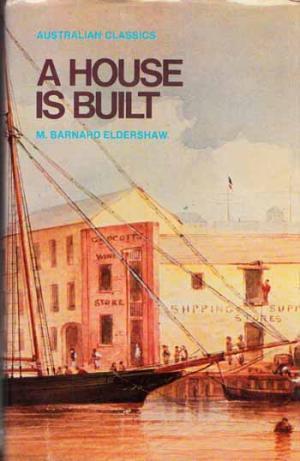
What, then, was the grim continent – and why? You’ll have realised, given this is my Monday Musings on Australian literature, that it’s Australia – and you’d be right. The article was written by “a Special Correspondent London” and it discusses three recently published novels: James Tucker’s The adventures of Ralph Rashleigh, M. Barnard Eldershaw’s A house is built, and Katharine Susannah Prichard’s Coonardoo

As an aside, would you believe that the authors of these books were not named in the article. Moreover, the first book’s author, whom I didn’t know so had to go looking, wasn’t named in an article announcing its serialisation. I’ve said it before and I’ll probably say it again: the author is the important thing! Books don’t appear out of thin air. They come out of darned hard work, and the author should be noted and remembered.

Anyhow, back to the “grim continent”. The article focuses mostly on the outback, so I’ll deal first with M. Barnard Eldershaw’s urban novel, which, as many of you know, shared the inaugural The Bulletin prize, in 1928, with Prichard’s Coonardoo.

Book cover

The article commences by telling us that “because of its unusual character and the starkness of its pictures of Australian life in the convict days”, The adventures of Ralph Rashleigh was receiving the most attention by the reviewers. However, Mr. Arnold Bennett, “who reviews books in the intervals of writing them, prefers to lavish his praise on A house is built“. He wrote in the Evening Standard that Barnard Eldershaw’s book is

“beyond question, a very notable novel … an extraordinary book … a major phenomenon of modern fiction. Not one scene not three scenes, but many scenes in it are magnificent.”

Bennett apparently spent a whole column praising the book. Our Special Correspondent says:

“It is Mr. Bennett’s pleasant habit to describe with gusto the things he likes; nevertheless, the joint authors of A house is built should be gratified by such commendation from such a quarter”.

I reckon! (I do like the “describe with gusto”, and the little hint that this is perhaps not proper critic style!)

The article’s main focus, however, is a column in the Evening News by another novelist-critic, J. B. Priestley, “a sound critic of the younger school”. Priestley wrote about all three books in his column, which he headed “The grim continent”. Our correspondent wrote that he concluded his piece:

with the interesting confession that all the stories he has read about Australia and the Australian bush have succeeded in depressing him. He quoted with approval the complaint of a character in Coonardoo, that “it’s all so ugly and empty,” and added that there must be something desolating about the raw emptiness of the bush, a something not friendly to literature. 

Our correspondent, however, suggests that this sense of the bush is “an emanation of literature rather than of the bush itself”. S/he suggests that many of those who know the bush do not find it ugly, cruel and cheerless:

Mr. Priestley writes from a purely literary knowledge of Australia, and if he feels so depressed about the country, his range of reading must have been restricted to the authors who, in Marcus Clarke-Henry Lawson tradition, have emphasised the more sombre aspects of pioneering and bush life.

Book cover

S/he goes on to suggest that Priestley and his ilk could try other authors who offer “authentic” accounts of the outback, like “Mrs. Aeneas Gunn’s We of the Never Never in which the humor and beauty, as well as the tragedy of the bush are admirably brought out.” S/he also disputes the evocation of the bush in Coonardoo:

The bush, comprehending in that vague term the vast pastoral spaces of inland Australia, is far from being the perennial abode of misery and despair: a region inhabited by sullen despairing people who are for ever yearning (in the words of the woman in “Coonardoo”) to “get away from it all.” 

S/he romanticises, somewhat, the “folk” who “fight the stern and sometimes losing battle with Nature”, arguing you can’t help but “admire their courage, cheerfulness, and steadfastness of character”. We don’t know who this “special correspondent” is, or what experience they have had. However, s/he does make the point that the “bush,” is not all of Australia, that there are “millions of people living in the Australian towns and cities” who know little or nothing of the bush.  

Finally, s/he turns to “the convict tradition” which is the subject of James Tucker’s The adventures of Ralph Rashleigh, and which

survives in Australia for literary purposes only; a fading echo of old, unhappy far-off things. The bad old days provide excellent material for novels of the romantically historical type, or for grim pieces of literature like “The Adventures of Ralph Rashleigh.” 

S/he concludes by applauding the fact that “good Australian literary work” is being appreciated in London, but says

It is not so agreeable to find one or two sombre aspects of Australian life stressed as if they were representative of the whole. 

S/he suggests that should J.B. Priestley ever visit Australia, he would find “a land, not of grimness and gloom, but of color and sunshine”. Moreover, s/he asserts

contact with its people and conditions will provide an effective antidote to the depression with which some of its literature seems to fill him.

I’m not sure whether to laugh or cry at that.

Anyhow, I enjoyed the article for revealing that Australian literature was being read and paid significant attention in 1920s England, and for its perspective on our ongoing discussion about the “the bush” and Australian literature. There’s a defensiveness, and a romanticisation, that you often find in expats, as I presume “special correspondent” is, but s/he makes some important points too, one being a disconnect between what people were writing and/or reading, and the reality of contemporary Australian life.

For Aussie readers in particular: whether you agree or not that there was such a disconnect, do you think we have matured to the point now where there is more alignment between who we are and what we are writing?

Delicious descriptions: Sara Dowse on West Block

In my recent post on Sara Dowse’s West Block, I ran out of time to share some quotes and thoughts on her depiction of Canberra and the heritage building, West Block, in which the novel is set. I am remedying that now.

But, I’ll start by saying that, like most readers, I love reading because it takes me to other places, lives and cultures. Not only is this stimulating, but it helps me understand others more – and that can only be good. However, there is also something special about reading about one’s own place and life. Sometimes it reinforces our own impressions, sometimes it just enables us to sit back and remember, and sometimes it encourages us to look at our things from a different angle or perspective. Sara Dowse’s West Block, which is set in the city in which I’ve lived the majority of my adult life, does all of these for me.

When I say I’m going to remedy that now, I mean I’m going to partly remedy that now because I’ve decided – for my benefit if for no-one else’s – to make two posts, one on West Block and one on Canberra.

West Block

So, West Block – which features on both the original Penguin cover and the new For Pity Sake one. You can find a succinct history of the building on Architect and Heritage Consultant practice Lovell Chen’s site. West Block is part of what was the Parliament House Secretariat group of buildings designed in 1925 by the Chief Architect of the Commonwealth Department of Works and Railways, John Smith Murdoch. The central building was Provisional Parliament House (now Old Parliament House, since the completion of our current Parliament House in 1988). East Block was the other building. The architectural style was, says Lovell Chen, “Stripped Classical”, though changes, including an additional wing, were made to West Block over the next couple of decades. 

As I wrote in my post, West Block housed the Department of Prime Minister and Cabinet, and Dowse describes the regular trips made by its inhabitants through some of the parliamentary rose gardens to Parliament House. Another point made by Dowse is that across the road from West Block were – and still are – the British and New Zealand High Commissions.

However, by the late 1970s when the novel is set, the building was 50 years old, and it was showing. Not only was Cassie’s Women’s Equality Branch (WEB) to be moved out of the Department, but Departmental head, Deasey, had “pulled a deal” to move his Department to another nearby building, so West Block could be demolished. Cassie is “appalled”, but no-one else seems to be:

They had no sense of history, these men.

West Block was being discarded, just like the WEB! (In the event, West Block has survived, but in what form is still unknown, though a boutique hotel is, controversially, the latest. Seems anomalous in the location, to me, but …)

I enjoyed the many descriptions of the building – of the light playing on the walls, of what could be seen out of the windows – but another issue related to the characters’ offices. As in most hierarchical organisations, where you are in a building says something about your status. So …

Economist Jonathan’s boss, Kenneth Olman

had one of the best rooms in West Block. Red silk drapes. Mahogany walls. On which he hung original Australian paintings, the kind that were bound to increase their value. A Whiteley. A Williams. An Olsen. Jonathan used to gaze at them during lulls, love his eyes from on to another, congratulating Olman on his taste and good sense.

We learn here of course, about the building, and about the characters of Olman and Jonathan.

Another senior bureaucrat, Harland, also had a good room.

a large, teak-panelled room with windows facing west and south. His desk was poised between them. He liked to turn in the swivel chair and, flexing his fingers, look down on the cars below, streaming along Commonwealth Avenue.

Facing west and south aren’t ideal, of course, but he did have a view of Commonwealth Avenue and those High Commissions I mentioned. However, the aspect meant that it was cool in the morning, and in the afternoon,

was filled with shadow.

And little else.

It formed part of the executive section, the refurbished front of West Block that faced the rear of Parliament House, and hid its own rather mangy tail. Despite certain luxurious touches – panelling, furniture, carpet, drapes – his office had all the persona of a monk’s cell.

Harland, we come to know, is a sober, reliable public servant – and his corner of West Block tells us that!

Can you guess where Cassie’s office is? On the “gloomy” side of the building, albeit the wind does blow in “wattle smells from Yarralumla and the embassies”. This building, Dowse conveys, was old and had no air-conditioning. It was cold in winter, but, on the plus side, they could open windows! As for Cassie’s interior decoration?

Under Rita’s supervision, the Women’s Equality Branch had dressed Cassie’s wall, with posters left over from International Women’s Year.

These are just a few examples of how Dowse describes the building, and uses it to evoke the characters of its people and their relationships. You don’t have to know West Block – which I have never entered – to enjoy Dowse’s writing about it. It lives – we have cold and sun, we have shadows and floral scents, we have views and some old building idiosyncrasies – and it acts on its occupants.

Have you loved novels in which buildings are quintessential?

Sara Dowse, West Block (New Ed.), For Pity Sake Publishing, 2020.