Monday musings on Australian literature: Some Australian Literature online events for 2012

What better way to kick off Monday Musings in 2012 than by heralding some exciting Australian Literature initiatives from around the ‘net. Here they are, in no particular order:

Australian Women Writers Challenge 2012 Badge

Badge (Design: Book'dout - Shelleyrae)

Australian Women Writers Challenge 2012 by Elizabeth Lhuede. Her aim is to promote women writers across all fields and genres of writing. The challenge involves signing up to read books – in any genre – by Australian women writers. You can focus on one genre or many, you can choose a level that suits you. I don’t usually do challenges, but this one is a no-brainer for me since I always try to read a goodly quantity of Australian literature each year and I love to read books by women. Last year I reviewed at least 14 Australian women writers and, in addition, wrote several posts on specific women writers and women’s literature issues. My aim will be to achieve a Franklin-fantastic Dabbler, that is, I’ll read (and review) at least 10 books by Australian women writers in more than one genre.

Australian Literature badge, by Reading Matters

One of the Australian Literature Month badges (by Reading Matters)

Australian Literature Month by Kim of Reading Matters. She plans to read lots of Australian books during her cold northern January (she would leave Australia!) and encourages readers of her blog, to do the same. As an incentive she has created several gorgeous badges for bloggers to attach to their posts reviewing Aussie books. Since seeing a platypus in the wild is on my bucket list, I have chosen her platypus badge for this post.

Australian National Year of Reading 2012 by WeLove2Read. This project is “a collaborative project joining public libraries, government, community groups, media and commercial partners, and of course the public. As well as creating specific new campaigns for the National Year of Reading, we’ll be using our joint efforts to bring together and showcase the wonderful projects and organisations across Australia which already exist to promote reading and literacy”.  (From the website) Keep an eye on the website for activities and events as they occur during the year.

2012 Aussie Author Challenge by Booklover Book Reviews. The challenge is to “read and review books written by Australian Authors – physical books, ebooks and audiobooks, fiction and non-fiction” (from the blog). There are two challenge levels and, like most challenges, a badge to add to your site. (I added this challenge after the post was published, as the result of Tony‘s recommendation. Thanks Tony.)

And so …

As you start your 2012 reading, do consider including some Aussie Lit into the mix and please let the people above know when you do. They will appreciate knowing that their work has hit some paydirt.

If there are other initiatives that I haven’t listed here, please let me know in the comments below and I will update this list.

Monday musings on Australian literature: My AusLit wrap up for 2011

Here we are at the end of another year and I’ve decided that, rather than list my top Aussie reads for 2011, I’d list my AusLit highlights of the year. I apologise in advance that it’s going to be all about me – that is, the links will be to posts on this blog. After all, we are talking about my AusLit highlights. Here they are in no particular order:

Meanjin‘s Tournament of Books

This year Meanjin decided to emulate the Morning News’ Tournament of Books with the express aim of raising consciousness about Australian women writers. I don’t know how well they achieved this aim but next week’s Monday Musings will be about other AusLit-related initiatives so perhaps it’s all part of momentum building. Meanwhile, if you missed the discussion here, click on my Tournament of Books tag and you will find the 6 posts I devoted to the topic.

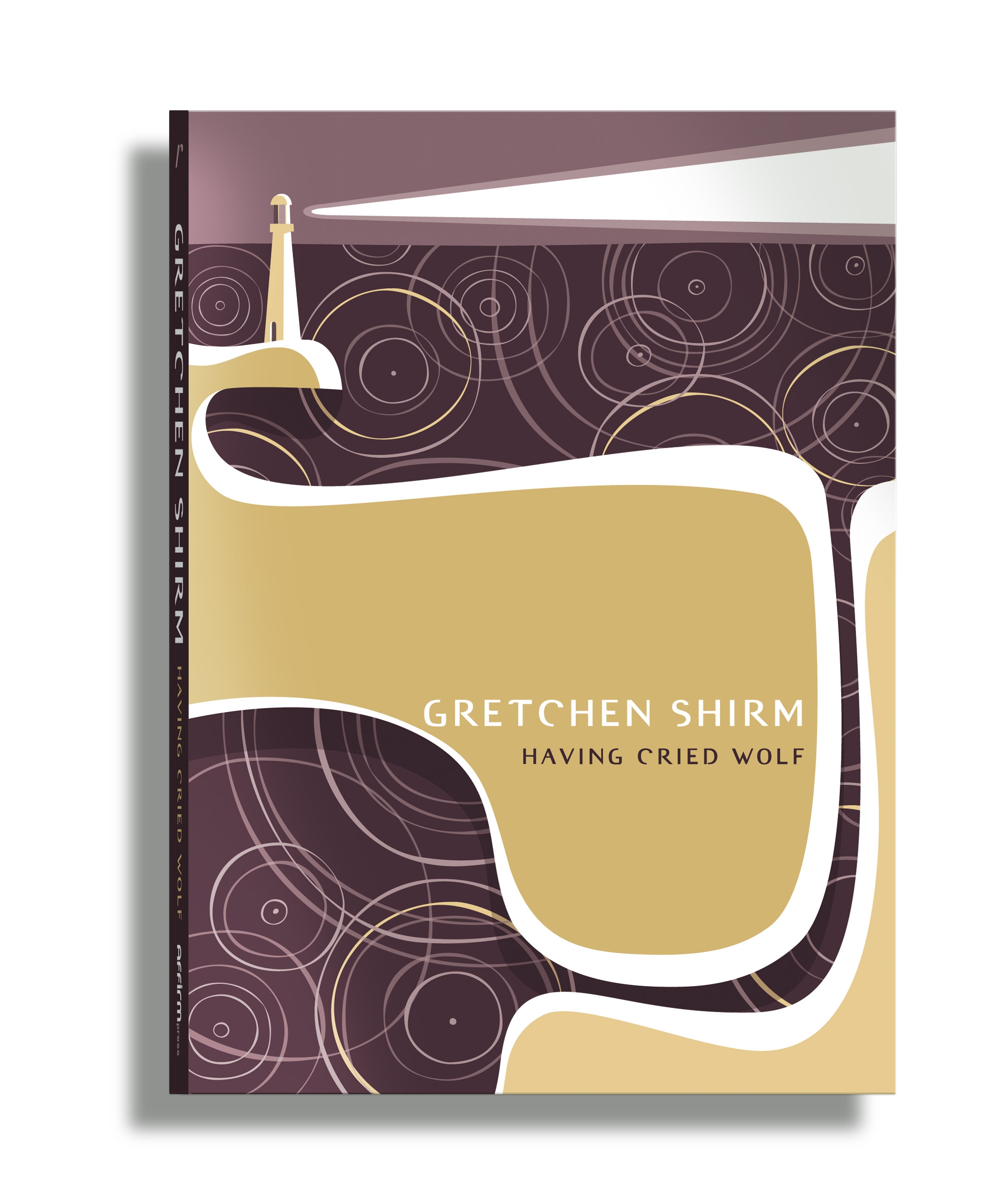
Having cried wolf, book cover

Having cried wolf, book cover (Courtesy: Affirm Press)

Affirm Press’s Long Story Shorts

Affirm Press is one of Australia’s wonderful small independent publishers. In 2010 they published the first of the six books in their Long Story Shorts project which involved commissioning emerging writers to produce short story collections. This year I reviewed the final three books and was impressed by the writing, the gorgeous production and the publisher’s commitment. May there be many more such collections and even more opportunities for emerging writers in 2012 and beyond. Hats off to Affirm Press!

Prime Minister’s Literary Awards panel

The Prime Minister’s Literary Awards are relatively new on the Australian literary awards scene but they’ve made a splash, partly because the prizes are comparatively lucrative. There are plans next year to add a Poetry prize and roll the Prime Minister’s Australian History Prize under the banner. This year, I attended, on the day of the announcement, a panel discussion with some of the winners and shortlisted authors. It was a real treat to hear (and see) the authors firsthand … but I have yet to read this year’s fiction winner, Stephen Daisley’s Traitor. Last year’s winner, Eva Hornung’s Dog boy, though, well demonstrates the calibre of the awards.

Miles Franklin Award

This year’s winner was That deadman dance by Kim Scott. Not only is it a beautifully written and thoughtful book but it’s a rare win for an indigenous author – and that has to make it a 2011 highlight.

Poetry

Readers of this blog know that I like to review poetry occasionally, though I am by no means an expert. I reviewed two special books of poetry this year, special because of the women who produced them and for the quality of their poetry. Ginny Jackson’s book The still deceived was published posthumously after she’d worked hard to complete it while terminally ill with cancer. Her poem, “Getting off the bus”, contains some of the most poignant lines I’ve read about dying. Nora Krouk’s Warming the core of things was published the year she turned 90. I used two lines from one of her poems in our family Christmas card this year. I should read and review more poetry!

Sydney University Press’s Charles Dickens set

Sydney University Press has been doing great work in recent years re-publishing Australian literary classics, several of which I’ve reviewed on this blog. However, this year they published another “treasure”, Charles Dickens’ Australia: Selected essays from Household Words 1850-1859, edited by Margaret Mendelawitz. It’s a five-volume set of articles relating to Australia from Charles’ Dickens periodical, Household Words. The periodical is available on-line, another example of the pluses of electronic communication, but to have someone else do the work of sifting out those articles of relevance to Australia and then sort them into thematic volumes is a perfect example of value adding.

Monday Musings guest posts

When I commenced my Monday Musings series nearly two years ago I planned to include the occasional guest post but for various reasons I haven’t organised many to date. However, there were two this year and they were highlights for me – and not just because I didn’t have to write them! They were informative posts: Louise wrote on some Aussie Children’s Lit creators, and Guy Savage wrote on Max Barry. Both were passionate posts on topics dear to the heart of their writers – and both taught me some things I didn’t know. There’ll be more guest posts next year.

Meeting Alan Gould

Alan Gould is a local (to me) poet, short story writer and novelist, and he was shortlisted last year for the Prime Minister’s Literary Awards for his beautiful, mesmerising novel, The lakewoman. My reading group was lucky to have him attend our discussion of his book earlier this year. It was a treat to be able to ask questions about the genesis of what is an intriguing book and to discuss our reactions to it. Gould was gracious in sharing his ideas with us, and we hope he got something out of the discussion too. He should be better known.

Top Aussie post of the year – Red Dog

WordPress provides some excellent blog stats, including your top posts (by number of hits). You can ask for your top posts to be listed by specific time frames – 7 days, 30 days, year, and alltime. I decided to check for my top post over the past year and was surprised to find that it was my review of The Red Dog (Movie and Book). I posted it in August and it is so far ahead of the next top ranked post that it will be my top post for the calendar year. The movie was based on a book written by Louis de Bernières about a legendary dog of the Pilbara. It’s a slim book and is not great literature but the film has done astonishingly well at the box office. I say “astonishingly” because Australian films often do not attract good audience numbers, which worries our film industry. Red Dog, though, bucked that trend and showed filmmakers that Australian audiences will go to Australian films (sometimes, anyhow!). I would hate this movie to start a spate of similar movies in the hope of cashing in on audience interest, but it was good to see a film that appealed to Aussies. I hope we see more – and varied ones – in 2012.

And finally …

Thanks to everyone who has read, commented on and/or “liked” my blog over the last year. I may not know you all but I sure appreciate your visiting me here. I wish you all happy reading in 2012 … and, meanwhile, would love to hear of your blog or literary or reading highlights of the year.

Monday musings on Australian literature: Guest Post from Guy of His Futile Preoccupations

Monday Musings’ Guest Post no. 3 comes from Guy Savage of His Futile Preoccupations. Guy started commenting on my blog very early on and endeared himself to me by giving me the nickname of Gummie. That is a very Aussie thing to do – or is it English? Guy, you see, is an expat Brit living in the USA. (At least I think I’ve got that right.) I quickly discovered that Guy had an interest in and knowledge of things culturally Australian and we have shared some interesting conversations about Australian authors and films over many posts here and there. He is also interested in the classics, including authors like, oh, Jane Austen for example. His other interest – he’s a man of many talents – is crime fiction and film noir, and he writes with great flair on things criminal! Do check out his blog. You won’t be disappointed.

But, on with the post. Guy stunned me when, commenting on my very first Monday Musings, he named Max Barry as his favourite Aussie writer. Max Barry, who is he? Well, today Guy is going to tell (me) us … read on …

Max Barry 2006

Max Barry 2006 (Courtesy: dejahthoris, via Wikipedia, using CC-BY-SA 3.0 Unported)

Max Barry: One of Australia’s National Treasures

Ok, I’ll admit it. I’m not rational about Max Barry. I’d like to say that I’m his number one fan, but that makes me sound as though I’m ready for psycho-therapy, and anyway, if you make a trip to Max’s website and sign up as a member of Max’s Posse (currently at 5785 and climbing), you’ll see that he’s his own number one fan. So instead I’ll land on the safer statement that I’ve been a fan of this Australian author for 10 years. Born in 1973, Max Barry is a young writer, and there’s going to be a lot of great books coming from his home in Melbourne. I suspect that he’s better known outside of Australia, but I’m basing that on the fact that Gummie hadn’t heard of Max Barry before I mentioned him, and she’s my barometer for all-things-to-do-with-Australian-culture.

Yes it’s been ten years since I first came across Max Barry in 2001 via an out-of-print copy of his first book, Syrup, a brilliantly funny novel which satirizes marketing and consumerism. Actually I’d better back up a bit here–the book, published in 1999, was attributed to Maxx Barry in a continuation of the marketing idea. Max says he added the extra X:

because it seemed like a funny joke about marketing, and I failed to realize everyone would assume I was a pretentious asshole.

Syrup is the story of an unlikely hero, Scat, a marketing graduate from Iowa who moves to L.A. He devises a marketing plan for a new drink called Fukk and plans to sell his idea to Coca-Cola, but before he can seal the $3 million dollar deal, Scat’s roommate, Sneaky Pete, in a wickedly funny backstabbing move of corporate theft, claims the copyright.

Syrup is one of the funniest books I’ve ever read, and when I concluded the novel, I was troubled that I’d found it purely by accident. I took the book’s out-of-print status rather personally, and buying about a dozen copies, I sent them out to anyone who was still speaking to me and urged them to read the book. Without exception, everyone who got one of those copies of Syrup loved the book.

Barry’s second novel appeared in 2003. Jennifer Government is an alternate-reality vision of globalization in which most countries are nakedly dominated by corporations rather than by governments. Corporate employees take the name of the corporation they work for as surnames, and schools are sponsored and controlled by corporations intent on raising the next generation of avid consumers. This is a novel in which corporate competition has become so fierce that consumers become stiffs in a guerilla marketing campaign guaranteed to hype sales of crappy new tennis shoes. Jennifer Government is a remarkably intelligent and prescient novel, for some of the fictional dire social conditions Barry created no longer seem quite so futuristic in the post-boom gloom.

Barry’s 2006 novel Company again placed the individual in the middle of corporate nastiness. This novel, set in Seattle, explores the shady dealings of the Zephyr Holdings Company, and when Stephen Jones from the Training Sales Dept. begins to ask a few awkward questions, he finds himself catapulted into management. In this novel, Barry blends the nonsense rules of corporatism with the naturally absurd results, and consequently, this is a perfect depiction of the insanity of life within the corporate machine.

This year Barry published his fourth novel, Machine Man–the story of corporate scientist Charles Neuman, employee of Better Future, who accidentally loses a leg in an industrial accident. Charles’ discovery that the replacement leg is better than the original sets off a chain of events in which Charles decides to improve himself limb by limb in a grimly hilarious skewering of corporate culture.

Over the years, Barry’s novels have been optioned for film and disappointingly several projects have not gone beyond the blue sky phase; I was rather excited at the news that Steven Soderbergh and George Clooney’s Section 8 films optioned Jennifer Government, but so far nothing on that score. But someone out there has noticed the Vast Talent that is Max Barry and 2012 will see the release of Syrup from director Aram Rappaport. Max Barry flew to America and watched the filming and even got a small cameo role.

Ok so Max Barry has written four novels–two of which are the funniest books I’ve ever read, and now it looks as though he’s about to get some long delayed-global recognition, but there’s a lot more to this author that makes him exceptional. Max has also taken control of his own marketing–albeit that no-one was interested in Max back when his first novel was out-of-print, but any new author out there could learn a thing or two from Max. Max has maintained an active website since 1999 and keeps in touch with his fans (and I’d like to think we’re a little nuttier and stranger than the average readers) via an e-newsletter. In 2004, Max converted his website to a weblog where he shares his news. On the site, you can check out NationStates, a game designed by Max to help market Jennifer Government:

NationStates is a state stimulation game. Create a nation according to your political ideals and care for its people. Or deliberately oppress them. It’s up to you.

Max even has a few videos up on youtube. But if you want to get a taste of Max’s wonderful sense of humour, check out his weblog where you will see comments about nasty critics in a piece called Things Critics Do That Piss Me Off . Here’s Number 3:

#3: Spots Plot Holes That Are There

Max Responds: Shut the fuck up! Go write your own novel, you hack!

And on the Q& A subject of whether or not Syrup is based on Max’s sordid period of employment with Hewlett-Packard:

That’s a filthy lie. Why, if HP was like Syrup, it would be a seedy den of politics and corporate back-stabbing, brimming with sexual tension. That is absolutely not true. There was very little sexual tension.

Actually, HP was a great place to work and taught me a lot about how companies function. I worked with some tremendously talented salespeople, most of whom used their powers for good instead of evil.

As a reader of crime fiction, I’ve noticed that many crime writers tend to take a different type of approach from other so-called literary authors that leaves no room for ivory tower elitism. Not only do many crime writers maintain extremely active blogs (thinking Max Allan Collins, James Sallis, Duane Swierczynski here), but there’s also a high level of reader involvement. Duane Swierczynski (Severance Package, The Wheelman), for example, is even organizing a Philadelphia bus trip January 2012 to the grave site of author David Goodis (Dark Passage). Crime writers don’t seem to feel the need to distance themselves from fans; perhaps they’ve even learned that maintaining a place for readers to check to see what they’re reading and writing is actually a good thing, or there again perhaps they’re tougher than their average readers, and they’re not scared to get within punching distance. Whatever the reason behind this internet-author-reader-relationship, this is the sort of proximity I see in Max Barry–there’s an innate humility in this writer that makes me, as a reader, cheer for his success. He’s an Everyman who’s worked in mind-numbingly boring, demeaning jobs, and he just happens to have the talent to write about his experiences which become, in turn, our experiences. He’s not just a writer who produces a book once in a while; if you’re a fan, you’re involved. We’ve been with Max through his disappointments and his successes, through the birth of two children (to clarify, Max’s wife, Jen  gave birth–not Max), and when Max wrote a serial called Machine Man, newsletter subscribers got to read chapters and give feedback. When Max landed a book contract for Machine Man, we even voted on the choice of cover.  It makes me feel all warm and fuzzy just thinking about it…. Sniff…

… and you’ve made us all warm and fuzzy with your passionate post Guy. I recently bought Company – I just have to find time to read it! Meanwhile, readers here might like to check out Book Around the Corner’s reviews of Syrup and Company and Guy’s own reviews of Jennifer Government, Companyand Machine man.

Monday musings on Australian literature: Australian Gothic (19th century)

A few months ago I wrote a post on Horace Walpole‘s The castle of Otranto which is regarded as a pioneer in the Gothic novel tradition. I thought then that it would be good to explore how the Gothic translated to Australia where we have no castles in which the supernatural can rattle and clang. Australia though had (and has) plenty to inspire a Gothic imagination: strange unforgiving nightmarish landscapes, weird vegetation and imaginary creatures. Moreover, Australia was colonised by the British in the late 18th-early 19th centuries, the time when Gothic novels were at the height of their popularity in Britain.

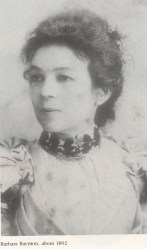
Barbara Baynton 1892

Baynton 1892 (Presumed Public Domain, via Wikipedia)

Consequently, many of Australia’s 19th century writers did incorporate the Gothic into their writing, and today I’ll list just few (but it will be little more than a list as I’ve been away the last two weekends and am playing catchup in pretty much every aspect of my life.)

The following are just some of the authors whose writings are regularly included in Gothic anthologies or in discussions of an Australian Gothic tradition:

  • Barbara Baynton
  • Marcus Clarke
  • Henry Lawson
  • Rosa Praed (who, like Ada Cambridge, is not as well known as she should be, which is something I have been planning to – and will –  rectify)
  • Price Warung.  I reviewed his Tales of the early days, a couple of years ago. One of the tales, “The Pegging-Out of Overseer Franke”, is commonly included in Australian Gothic anthologies. It tells the story of revenge against a cruel overseer of convicts … and explores the fine line between definitions of man and beast when cruelty and revenge become the modus operandi.

19th century Australian writers didn’t always need the supernatural to convey horror, evoke fear and portray disjunction between desire/hope and harsh reality. They had the forbidding Australian landscape, the threat of becoming lost in or being destroyed by that landscape, and the harsh unyielding authority of colonial male power. Who needed castle ghosts in this situation? This is not to say that the supernatural never appeared in Australian writing, but that this writing could, and often did, convey a Gothic sense of horror and dread through the concrete realities of 19th century Australian life. It’s fascinating to see what happened to the Gothic tradition in the second half of the 20th century (in, say, the work of Elizabeth Jolley) but that is a topic for another day.

Monday musings on Australian literature: Women of letters

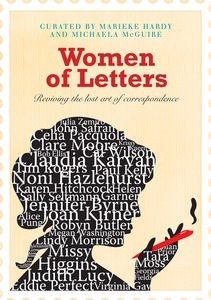
Women of Letters, edited by Marieke Hardy and Michaela McGuire

Women of letters (Courtesy: Penguin Books Australia)

Letter-writing has a long literary tradition – both fictional and non-fictional. Epistolary novels, according to Wikipedia, go back to the 1400s, and I’m sure if you’re a reader you’ve read at least a few. My favourite Australian example is a gut-wrenching young adult novel Letters from the inside by John Marsden. But these are not my topic today. The other sort of letters are the “real” letters written to “real” people. If the letters are good enough and/or the people significant enough these also have a long publishing tradition. I’ve reviewed some here – by Jane Austen (of course)! Collections of published letters can be found for some of Australia’s famous women writers, including Christina Stead, Henry Handel Richardson and Miles Franklin. But these aren’t today’s subject either.

My subject is a specific book of letters compiled by two Australian women, Marieke Hardy and Michaela McGuire, from an initiative of theirs in which they asked Australian women (initially) to “‘pen’ letters to a theme and read them aloud”. Their aim was to raise funds for Edgar’s Mission, “a not-for-profit sanctuary for neglected, discarded and abused farmed animals” in Victoria. Their project commenced in March 2010, and has involved live “shows” in several Australian cities – and now, this book.

The letters have been organised under 16 “recipients”, such as “To the night I’d rather forget”, “To my first boss”, and “To the photo I wish had never been taken”, which gives you a sense of where this collection is going. They are written by 69 well-known (though not quite all so to me) Australian women (mostly!) writers, performers, politicians and so on. I will admit that I have not read the whole 400+ pages book yet, but with Christmas around the corner and a good cause, now seemed to be a good time to write about it. (No, I am not under a retainer for Penguin!). Three of the contributors are writers I’ve reviewed in my blog, so I reckon they’d be a good place to start:

  • Anna Krien “to my first pin-up”. Trouble was Anna Krien was a tomboy and not like other little girls. When they wanted “love”, she wanted friends, so she turned to her cat, Tiger. It’s a light-hearted letter with a serious core about the damage that little girls can do to little girls (“the twisted best-friend bully dichotomy”), something Margaret Atwood explored to great effect in Cat’s eye.
  • Alice Pung “to the moment it all fell apart”. It contains anecdotes from her latest book, Her father’s daughter, presented as a letter to her father. She leads us on about an online relationship only to … but I won’t tell what, except to say it’s to something typically reflective of her and her father’s experiences.
  • Helen Garner “to the letter I wish I’d written”. That sounds like an apposite recipient for a writer who has never shied from controversy – but in fact, being Garner, her contribution isn’t the expected. Rather, it’s a series of letters to her “gazombies”, to people who’ve died, friends who’ve suddenly disappeared from her life, and people who crossed her path but became missed connections. They’re “fragments” that add up to a disjointed but very Garner-ish whole. She thanks the science teacher who taught her that “hot air rises”, she’s sorry that she lost contact with her “nanna” because “my adolescence extended right into my thirties”, she tells a man she regrets not accepting his offer to dance because blokes who can dance “are very thin on the ground”, and she writes to her three ex-husbands thanking them for what they gave her and telling them “there is nothing to forgive”.

There are a few contributions from men, mostly “To the woman who changed my life”. There are light-hearted letters such as actor Jane Clifton’s to her “1991 Nissan Pintara with only 20 000km on the clock” that she calls “the Nissan Piñata, because no matter how many times you get hit, you are the gift that keeps on giving”, and singer Georgia Fields’ to Mariah Carey telling her that “next time I’m at a party and your name comes up, I’m not going to sit quietly and pretend I don’t know you …”. But, I’ll conclude with actor Claudia Karvan’s letter to love, itself, in the “A love letter” section. It’s a cheeky little number telling love she is “eternally grateful for your landing on my shores” but suggesting:

You have a strange habit of departing, and departing quite swiftly. So quick your footsteps aren’t heard. No doorbell sounding the arrival of your cab, just bang, you’re gone […] You really are quite the magician.

This is, as you’ve probably worked out, a book for dipping into. The letters might be artificially created but there’s a lot of art in them – of letter writing, of life. Just the thing, really, for a post-Christmas read.

Do letters play a role in your life? Do you like to read them? Do you write them?

Marieke Hardy and Michaela McGuire (curated)
Women of letters: Reviving the lost art of correspondence
Camberwell: Viking, 2011
413pp
ISBN: 9780670076093

(Review copy supplied by Penguin Books Australia)

Monday musings on Australian Literature: Guest post from Louise of A Strong Belief in Wicker

This week’s Monday Musings is my second Guest Post in the series. It comes from the lovely Louise of A Strong Belief in Wicker. I first “met” Louise through an online bookgroup and we quickly discovered that we lived within a few hours’ drive of each other. Consequently, we have also “actually” met several times (always, to date, through her visiting my city. I must reverse the direction one day.) Louise is a warm and generous soul. She picked up (funny that!) on my love of Jane Austen, and so over the years I have been the lucky recipient of Jane Austen related gifts and of links to things Austen, the most recent being to a review of a children’s book about Mr Darcy, the duck! I value her friendship … and so was thrilled when she was thrilled to be asked to write a guest post. Her blog is wide ranging, but has a focus on children’s literature, and so that is what she has brought us today:

Five Australian Children’s Literature Authors/Illustrators

I was so incredibly excited to have Whispering Gums ask me to write a Guest Post that I immediately had No Ideas! After all Aussie kids lit is so vast! There is such a broad range of picture books, books for young readers, and YA, that it’s hard to know where to start. Of course there are some internationally known superstars writing books for young Aussies and kids around the world. But you don’t really need my help to find your way to Mem Fox, Sonya Hartnett, Shaun Tan or Markus Zusak. Not that their work isn’t worth highlighting. Of course it is.  It’s just that they are justifiably already very famous. In Australia, and around the world.

So I thought I would highlight some authors and illustrators who I’ve read and loved recently – and who deserve to be much more well-known.

Freya Blackwood

A local favourite for me as Freya lives in my town in NSW. I’ve been aware of her work for several years now and love her soft, warm illustrative style. She has an artistic heritage – a few years ago our local art gallery had a wonderful exhibition on her artist grandfather, Harold Greenhill’s work. Freya initially worked in film production and worked on Peter Jackson’s The Lord of the Rings films, and then started off illustrating classic Australian works such as Waltzing Matilda and The Man from Snowy River. She has since worked with many of the biggest names in children’s picture books – Australians such as Libby Gleeson and Margaret Wild, and international authors like Roddy Doyle. In 2010 she won the incredibly prestigious Kate Greenaway Medal. The book she illustrated with Roddy Doyle, Her Mother’s Face, is just perfect, so incredibly moving, I think it is one of my favourite picture books ever. The story of a young girl whose mother died when she was 3. Her father is immobile within his grief and the girl wonders if she has forgotten her mother’s face. Cover blurbs are rarely correct, but I think this book is indeed “a balm to the heart, and a feather in the knickers.” Freya’s current book is the equally fabulous Look, A Book written by Libby Gleeson.

Gary Crew

Is a prolific, highly regarded, critically acclaimed Australian author who doesn’t get nearly enough mainstream recognition. He has written picture books (mainly for older children due to their content and themes) and YA books. I’ve only read his picture books so far, but there are so many gems to be found. He has written two books that were illustrated by Shaun Tan – these are extraordinary. Memorial about a tree planted to mark the end of World War I, and The Viewer, a rather grim view of world history, masterfully illustrated by Tan. Gary Crew has written a brilliant series of books dealing with endangered or extinct animals such as I Saw Nothing: The Extinction of the Thylacine and I Did Nothing: The Extinction of the Paradise Parrot. His books for older readers are apparently even darker still, and some horror titles, which isn’t really my genre of choice, but I would still trust Gary Crew to take me there. Gary lives and works in Queensland, and is an Associate Professor of Creative Writing at the University of the Sunshine Coast. Next year he will be a State Ambassador for the National Year of Reading.

Jackie French Waltz for Matilda

Bookcover for A waltz for Matilda (Courtesy: HarperCollins Australia)

Jackie French

She really is quite a big name. Her subject range is vast. Picture books about wombats and royal underwear. Nonfiction books about keeping chooks in your back yard. And a rapidly increasing range of amazing children’s fiction. She really is extraordinarily prolific. She has written more than 140 books, there really has to be something for everybody. I devoured her most recent book Nanberry a month or two ago. An incredible book that brings the first years of white settlement in Sydney to vivid life. It’s a cracking read, and a fascinating glimpse into our past. My son’s teacher has been reading his Year 5 class her Waltz for Matilda as part of their Australian history studies this year. It has taken the better part of the school year, but has held the children’s interest throughout. Jackie French lives and works in the Araluen Valley in Southern NSW.

John Heffernan

I came across John Heffernan’s extraordinary first book Spud accidentally a few years ago. And I’m so thankful that I did. It’s a remarkable, compelling page turner that I picked up after midnight one night on a whim, and couldn’t put down until it was finished, sometime after 1.30 am.  A tremendously powerful story of a blue heeler called Spud. Spud starts out her life in the city when blue heelers are fashionable pets, but she chewed too much and blue heelers fell out of fashion and she was sent to an animal shelter where a kindly old farmer buys her. Spud’s life changes when she travels into the country to go the farm and become a working dog. There are some graphic acts of both human and canine violence in this book, making it suitable for older, sturdier kids. Just thinking about the book makes me want to reread it, and this time get to read the whole series. John Heffernan is an author and farmer, working and writing in Northern NSW. He has written 24 books from picture books to YA. His picture book My Dog is a powerful, sad and very moving book for the older child dealing with ethnic cleansing.

Martine Murray

I have no idea how Martine Murray escaped my gaze until this year – but she did. Until I came upon The Slightly True Story of Cedar B. Hartley. I love books written in a quirky first person voice, and Cedar B. Hartley gives us that in spades. Cedar’s is a wonderful, observant funny tale of a young girl growing up in Melbourne and doing some circus tricks. There is a great followup book too – The Slightly Bruised Glory of Cedar B. Hartley. Interestingly, I read that Martine Murray feels another of her books, How to Make a Bird, to be her best. I haven’t read that one yet. There is always something more to look forward to. Martine Murray is an author and illustrator who lives in Melbourne.

Monday Musings on Australian Literature: Pondering Meanjin’s Tournament

My recent post on the semifinals of Meanjin‘s Tournament of Books engendered some comments on the value or validity of the tournament itself – so I thought, having dedicated myself to reporting on the tournament, I should comment on what I think about it as an event.

I’ll start by saying that I don’t take literary competitions overly seriously. Literature (like any creative pursuit) just cannot be fit into a neat set of criteria against which to judge it. We could (should we so desire) judge the longest book, or the book with the most characters, or, well you get the drift, but judging the “best” book that, for example, depicts “Australian life in any of its phases” (the Miles Franklin) or that represents “literary excellence” (Prime Minister’s Literary Awards) is patently not a cut and dried thing. But, awards have value, the two main ones being that they:

  • raise awareness and bring not just the winners but also short and longlisted books to wider attention, and that is never a bad thing;
  • often involve MONEY for the winner, and that, too, is never a bad thing!

And so to Meanjin. Here is the Wheeler Centre’s announcement launching the tournament:

The inaugural Meanjin Tournament is a literary stoush like no other. The venerable literary journal pits classics against each other to determine one true candidate for the Great Australian Novel.

The Meanjin Tournament of Books is not your typical literary prize. It’s a sports tournament for people who don’t like sports, a literary smackdown that pits book against book in a bloody battle for ultimate victory. Join us as we launch the Tournament for 2011, announce the shortlisted 15 books, and ask you the audience to vote for a 16th contender. This year the shortlist is limited to novels by Australian women, of any era. The Meanjin Tournament of Books is certain to be the year’s bloodiest, most ruthless literary event.

“Literary smackdown”, “bloody battle”. That rather sets the tone, don’t you think?

Shared Reading Sign

Shared Reading (Courtesy: Amy via Clker.Com)

This is not to say that the tournament doesn’t have intellectual or cultural value – as well as a promotional one. Lisa Dempster, Emerging Writers’ Festival director, said in a guest post on Kill Your Darlings that she was going to readalong with the tournament, and wrote on the value of shared reading. This made me think of “water cooler” television programs. You know, those programs that people like to watch in real-time so they can talk about it at work the next day, something that media fragmentation is undermining big time. But, for Dempster, it’s a bit more than this. She says:

I don’t just enjoy talking about books I have read; I also love the idea of having a shared reading experience, discovering new books, and being one of a community of people reading the same books at the same time …

She’s keen on ideas like One city, One book which encourages everyone in a city to read and discuss one book. I like the idea too … as long as it’s a book I’d like to (or, should I saw, be happy to) read!

But, back to the Tournament itself. Here is what they at Meanjin say it is about:

The Tournament is a literary prize… kind of. Finding a winner is less important in the Meanjin Tournament of Books than the arguing and debating of the competition. It’s about reading books you’ve always meant to read but never quite got around to, and about re-reading dog-eared favourites…

And that, I think, encapsulates perfectly the way I see this and other literary competitions. What do you think?

Monday musings on Australian literature: the AWGIES (for film)

Last week I finally saw the (excellent) film adaptation of Patrick White‘s The eye of the storm (which I may – or may not – separately blog about). I was intrigued to notice that the scriptwriter was one-time actor, Judy Morris, and this reminded me of the AWGIE awards.

The AWGIES are annual awards organised by the Australian Writers’ Guild. They recognise excellence in screen, television, stage and radio writing. I want to post about them because so often the scriptwriter is forgotten when films are spoken of – we talk most of the directors and the stars, and sometimes of the producers and cinematographers, but far less frequently of the scriptwriter. And yet filmmaking is truly a team activity and the script is a critical component. Scriptwriters are recognised, I know, in other awards – the Oscars, BAFTA, AFI etc – but the AWGIES are devoted to them.

The AWGIES have multiple categories, grouped under Film, Television, Stage, to name some – and they now have one for Interactive Media too. For Feature Film there are two main categories, though they aren’t always both awarded: Original and Adaptation. The awards have been going since 1967 – too long for me to list all the winners – so, yes, as usual, I will pick out some that particularly interest me!

Currency Press

In the 2011 awards, Currency Press won the Dorothy Crawford Award for Outstanding Contribution to the Profession. Established in 1971, Currency Press is a specialist performing arts publisher and, apparently, Australia’s oldest still active independent publisher. They are the first place you look (in Australia) if you want a published screenplay, but they also publish more widely in the performing arts arena. And they are, of course, a member of SPUNC, about which I wrote some months ago. Go small publishers!

Christos Tsiolkas

Like many writers, Tsiolkas (of The slap fame) doesn’t only write novels, though they are his main claim to fame. He has, in fact, won two AWGIES. The first was in 1999, for being co-writer of a stage play, Who’s afraid of the middle class? His second was in 2009, again as a co-writer, for the multi-story feature film, Blessed. It’s not hard to see Tsiolkas’ hand in this film which confronts us with the challenges of mothering from multiple angles. It’s gritty, but sympathetic rather than judgemental.

Luke Davies

Davies is another contemporary Australian novelist who tends to confront the seamier side of life. He’s also an award-winning poet and a screenwriter, and he won an AWGIE in 2006 for his feature film adaptation of his own (somewhat autobiographical) novel, Candy. Candy was one of Heath Ledger‘s last films and explores the world of a couple caught up in heroin addiction. I have seen the film, but have yet to read any of Davies’ work, something I must do.

David Williamson

It would be impossible to write about the AWGIEs without mentioning the prolific David Williamson. Primarily a playwright, he has also adapted many of his plays for film, and has won multiple AWGIEs for both his plays and his screen adaptations. His film AWGIEs include adaptations of his own plays, The removalists (1972), Travelling north (1988) and Emerald City (1989). He also won an AWGIE for an original screenplay, for the (now classic Australian) film Gallipoli (1981) on which he collaborated with the director Peter Weir. Williamson’s work tends to be satirical, and he has targeted most things that make up contemporary Australia, including football, party politics, the Melbourne-Sydney rivalry, university ethics and the police force.

Helen Garner

And now, just because I can, I’m going to include Helen Garner, who not only writes novels, short stories, literary non-fiction, and essays/articles, but also screenplays. She hasn’t won an AWGIE but she’s sure to have been considered because the films based on her scripts have all been well-reviewed (and won or been nominated for other awards). She adapted her own novel, Monkey Grip, for film, and she has written two original screenplays, Two Friends and The Last Days of Chez Nous (for which she was nominated for an AFI award). Two Friends is particularly interesting. It’s a teleplay directed by Jane Campion, and was shown in the Un certain regard section at Cannes in 1986. I like its narrative structure, which starts in the present, when the two friends had drifted apart, and moves backwards to the beginning of their friendship. If you know Campion and Garner, you have an idea of what a perceptive little treasure this feature film is.

At the bottom (currently anyhow) of the Australian Writers’ Guild website is a quote from Tom Stoppard. I like it and think you might too:

Words are sacred… If you get the right ones in the right order you can nudge the world a little. (Tom Stoppard)

How often do you think of the scriptwriters of the movies you like – or don’t like?

Monday musings on Australian literature: Asian Australian writers

Brian Castro

Brian Castro (Public Domain, via Wikipedia)

Australia is an immigrant country, with the first immigrants, the original Aboriginal Australians, believed to have arrived 40-60,000 (there are arguments about this!) years ago via the Indonesian archipelago. They established what is now regarded as one of the longest surviving cultures on earth. Today, though, I’m going to write on some of our more recent immigrants – those from Asia. The first big wave of Asian immigrants came from China, during the Gold Rush in the mid 19th century. Since then people from all parts of Asia have, for various reasons, decided to call Australia home – and have enriched our culture immeasurably.

I’m not going to focus on the political issues regarding acceptance, promotion and encouragement of Asian Australian writers because, like any stories to do with immigration, it’s too complex for a quick post here. I hope that things are improving, but only the writers and communities themselves can really tell us that.

As has been my practice in these sorts of posts, I’m going to introduce 5 Asian Australian writers to get the discussion going. After that, I’d love you readers to share “immigrant” writers you know and love …

But first, a definition. My focus here will be on writers who emigrated from Asia, rather than those from subsequent generations. I will not therefore be discussing writers like Shaun Tan and Alice Pung.

Brian Castro (Hong Kong born in 1950, emigrated 1961)

Castro is one of the most prolific and most awarded writers among those I’m listing today. He came here as a child, and started writing short stories in 1970. He has, to date, published 9 novels, many of them winning major Australian literary awards. Lisa at ANZLitLovers suggests he is a contender for Australia’s next (should we ever have another one) Nobel Prize for Literature. In 1996, in the Australian Humanities Review, Castro said this about Australia and Asia:

The situation currently is that Australia needs Asia more than Asia needs it. While the West seems to have run out of ideas in the creative and cultural fields, relying on images of sex and violence, reviving old canons and dwindling to parody and satire in what can already be seen as one of the dead ends of postmodernism, the Asian region is alive with opportunities for a new hybridisation, a collective intermix and juxtaposition of styles and rituals which could change the focus and dynamics of Australian art, music and language.

Strong words – but they make you think! My sense is that Australia is now seeing (accepting?) some of this hybridisation that he speaks of – not only from Asia but also from our indigenous authors like Kim Scott and Alexis Wright. I wonder if Castro agrees?

Yasmine Gooneratne (Sri Lankan born, emigrated 1972)

Gooneratne is one of the first Asian Australian writers I read. I have chosen her for that reason and for some sentimental reasons: she holds a Personal Chair in English at my alma mater, Macquarie University, and she is the patron of the Jane Austen Society of Australia! Long ago I read her first, appropriately named, novel, Change of skies (1991). Like many first novels, it has an autobiographical element and explores the challenges of changing skies, of migrating to another place. It was shortlisted for the Commonwealth Writers Prize. She has, in the last decade, received a number of awards here and in the South Asia region for her contribution to literature.

Michelle de Kretser (Sri Lankan born, emigrated 1972)

Like Castro, de Kretser emigrated to Australia in her youth (when she was 14) and made quite a splash with her debut novel set during the French Revolution, The rose grower. Her second novel, The Hamilton case is set in Sri Lanka and represents she says her “considered” farewell to her country of birth. Her third novel, The lost dog, is set in her home-city (now) of Melbourne, but its main character migrated to Australia from Asia when he was 14 and struggles to find his identity. Her books are not self-consciously migrant but tend, nonetheless, to be informed by the experience of dislocation.

Nam Le (Vietnamese-born, emigrated 1979)

Nam Le is our youngest migrant in this list, arriving here when he was less than 1! His debut book, the short story collection, The boat (2008), won multiple awards and is remarkable for its diversity of content (setting and subject matter) and voice. I, like many others, am waiting to see what he produces next.

Ouyang Yu (Chinese born, emigrated 1991)

To my shame I hadn’t heard of Ouyang Yu until relatively recently, but I do have an excuse. He has only written three novels in English and two of them very recently: The eastern slope chronicle (2002), The English class (2010), and Loose: A Wild History (2011). He is, however, a prolific writer, of, apparently, 55 (yes, 55!) books of poetry, fiction, non-fiction, and translated works in English and Chinese. He’s translated Christina Stead, no less, and even Germaine Greer’s The female eunuch. If this is not contributing to cross-cultural understanding I don’t know what is.

I’ll close with some words from an interview with Michelle de Kretser in which she articulates rather nicely I think the experience of being a migrant (using the character Tom from The lost dog):

But I think that like a lot of people who come to Australia, Tom is trying to escape something. You know, people come here often because they’re trying to get away from war, or poverty or persecution — or merely from perhaps difficult family situations. And I think Tom coming here as a child simply delights in the kind of freedom and anonymity that Australia offers him, which is a classic experience of people moving countries, or indeed if you go back to the 18th century people moving from the city to the country; the city at once offers this kind of blissful possibility of inventing yourself anew, a kind of wonderful freedom from inherited ways of thinking and being identified and categorised. On the other hand that is also simultaneously — can be — a very lonely and disconcerting experience, again.

Monday musings on Australian literature: Christina Stead

I have mentioned Christina Stead several times on this blog – and yet she remains the guilty gap in my reading. I thought 2011 would be Stead year, but things have conspired to restrain the rate of my reading this year. Maybe 2012! I have also written several posts inspired by articles in The ABC Weekly, and I’m returning to this paper for today’s Monday Musings, this time to an article by novelist-journalist Florence James. It’s titled “Young Australian Wins Fame Abroad” and was published on 7 December 1940, at which time Stead would have been 38. This was the year her most famous book, The man who loved children, was published, but James does not mention it by name in her article. (She does though refer to Stead “correcting the galley proofs of a new book”).

James commences her article with a telling comment:

A Sydney girl [girl?] whose name and work are much more widely known and appreciated in England and the United States than in her native Australia is the writer Christina Stead.

I can’t help thinking that little has changed 7 decades on, at least in terms of her recognition here. She is certainly known, but she is not on the tip of everyone’s tongues the way I suspect she ought to be.

James then documents some of this acclaim:

  • English critic John Squire who, on reading her short stories The Salzburg tales (1934), said he’d discovered a “second Sappho”;
  • Poet, and publisher’s reader, T. S. Eliot, who wrote that The Salzburg tales was “a work of genius – but doubtful as a popular success”; and
  • New Yorker critic, Clifton Fadiman, on reading House of all nations, claimed Stead and Virginia Woolf were “the two most important women writing in the English language”.

James, who shared “digs” with Stead for a time in London while she was writing Seven poor men of Sydney, outlines how Stead supported herself in the late 1920s and early 1930s. She started as a private secretary for a firm of grain-brokers. She then worked in a private bank in Paris rising to an important confidential position, and she did “some special financial work in London [which] was regarded with astonishment by conservative London financiers”. A young colonial, and a woman, no less! That would probably never do! Her third novel, House of all nations (1938), is about high finance and has been described by Kate Jennings as one of the best novels ever written about banking.

James describes Stead as follows:

At first shy and reserved, with her friends she is wonderful company. Her talk is as witty as her writings, and although she has a masculine [masculine?] grasp of business and is a scholar and linguist, her simplicity of manner and directness of approach immediately put people at their ease.

I do like reading contemporary articles (or reviews) like this … not only do we learn about the subject but we learn, unintentionally on the part of the writer we are reading, so much about the thinking of the time. Thank goodness for libraries and archives, eh?