Monday musings on Australian literature: Australian Women Writers’ Challenge 2014


awwchallenge2014As I’ve done over the last two years, I’m devoting my last Monday Musings for the year to the Australian Women Writers Challenge. This challenge, which most of you probably know by now, was instigated by Elizabeth Lhuede in response to concerns in Australian literary circles about the lack of recognition for women writers. I am one of Elizabeth’s band of volunteers – responsible for the Literary and Classics area – and, of course, am also a challenge participant.

The challenge has had another successful year with continued commitment by a wide range of reviewers. In 2015, we will be moving to a self-hosted site and plan to produce a single searchable database of all reviews logged since the challenge started in 2012. This will provide an excellent entree to a wide variety of Australian women’s writing across all forms and genres that has not been easy to access to date.

As last year, the Challenge ran some special events during the year, including a focus on indigenous writers, writers from diverse backgrounds, and writers with a disability. These events have included interviews and guest posts, and I thought I’d share some with you here, because they are worth reading and because they demonstrate the depth of diversity the Challenge reaches for:

  • Honey Brown (Women writers with a disability): on living with paraplegia and the surprising links between creativity and coping with adversity.
  • Eleanor Jackson (Queer women writers): on how being a “bisexual, biracial female writer” affects her art.
  • Ambelin Kwaymullin (Indigenous women writers): containing reviews of 5 works by Aboriginal women (including one by an Aboriginal community) which “offer insights into Aboriginal culture and existence”.
  • Donna McDonald (Women writers with a disability): on the struggle for rights for people who are deaf or hard-of-hearing, and how exhausting it is.
  • Yvette Walker (Queer women writers): on two queer writers – Elizabeth Bishop and EM Forster – who have inspired her.
  • Jessica White (Women writers with a disability): on her deafness which brought isolation and dislocation but some consolations too!

If you are interested in the challenge, you can check it out here. I don’t believe the sign up form is ready for 2015, but keep an eye on the site. We’d love you – whether you are female or male – to join us next year. The challenge can also be found on Facebook, Twitter (@auswomenwriters), GoodReads and Google+.

As regular readers know by now, the Australian Women Writers’ Challenge is my only challenge. This year I posted 30 reviews for the challenge, three more than last year. My breadth is similar to last year, except interestingly, I reviewed no poetry this year, whereas last year I contributed three poetry reviews. What happened? However, I am pleased that I managed to read four books from my TBR pile for the challenge. Now that is something worth crowing about! Anyhow, here’s my list (with links to the reviews):

FICTION

SHORT STORIES

NON-FICTION

ESSAYS

JUVENILIA

Again, I have enjoyed taking part in the challenge – and plan to take part again next year, both as volunteer and participant. I particularly want to thank Elizabeth and the rest of the team for making it all such a cooperative, and enjoyable experience. I look forward to 2015.

Monday musings on Australian literature: The challenge of literacy

Today’s topic may be a bit serious for Christmas week, but I’ve decided to go with it anyhow. I was inspired to write it by an article in the online journal, The Conversation. The article, by Deakin University academic Lyn McCredden, was itself inspired by the Prime Minister’s Literary Awards at which one of the winners, Richard Flanagan, donated his $40,000 prize to the Indigenous Literacy Fund. A good thing, nest-ce pas? McCredden goes on to mention the creation by Prime Minister Tony Abbott that night of the Australian Book Council, and quotes publisher Louise Adler as stating that this Council “declares that Australian writing matters and that building future generations of writers and readers is vital to a civilised and free society”. So far so good, but …

Then she quotes American literary critic Michael Bérubé who wrote in 1996 that:

… it has been some decades now since George Steiner and Thomas Pynchon reflected, in their different ways, on the phenomenon of Nazi officers with a fine appreciation of aesthetic excellence. (Bérubé)

In other words, the importance of literacy is a given but

what is so often occluded or skimmed over in many of the prize-giving activities of the book industry is that literacy on its own [my emphasis] is not necessarily a good. (McCredden)

Are you getting the picture? Sure, she says, not being able to read is a bad thing – it usually implies or leads to powerlessness and lack of privilege – but being able to read per se is not automatically good in itself, as Bérubé implies.  (Though, of course, what is “good” is a judgement isn’t it?). Anyhow, McCredden goes on to refer to Flanagan’s winning novel, The narrow road to the deep north, and the fact that “the figure of the vicious and violent prison guard is also notable for the way he quotes the exquisite poetry of Basho, even as he inflicts maniacal harm on prisoners”. If I understand her correctly, she suggests that for reasons like this, she doesn’t find Flanagan’s book (see my review), “satisfying or cohesive”. However, my reading is that Flanagan addresses the ambiguity contained in the Japanese officers’ love of poetry when he says:

They recited to each other more of their favourite haiku, and they were deeply moved not so much by the poetry as by their sensitivity to poetry; not so much by the genius of the poem as by their wisdom in understanding the poem; not in knowing the poem but in knowing the poem demonstrated the higher side of themselves and of the Japanese spirit … (Flanagan, The narrow road to the deep north)

This, to me, clearly expresses Flanagan’s awareness of the questionable or complicated nature of our relationship to literature. McCredden and I could argue this specific point, but it’s not the essence of her article, so let’s continue.

Books, she argues, do not always “unite” us. In fact, the controversies they sometimes generate show that culture is “always contested, and always ideological”. The best kinds of books she therefore suggests might be those that challenge our assumptions about ourselves – like Christos Tsiolkas’ Barracuda (see my review) – rather than those that “please us with myths about ourselves”. She argues that:

if we are, like Dorrigo, privileged enough to be able to read, we are opening ourselves to a world of pain, as much as entertainment. (McCredden)

Literacy, in other words, carries responsibilities as well as rights. As citizens we have a right to be able to read and to therefore conduct the business of our lives, but, there’s more to it than that, and therefore

Learning how to read – that is, how to think, analyse and challenge prevailing ideas (including those appearing in many works of literature, many histories) needs to be considered more coherently alongside the mechanics of book distribution, book marketing, learning the alphabet. (McCredden)

A very good point – and much needed methinks in our rush-to-judgement world. Do you agree? And if so, how do we teach this sort of reading without turning people off?

Monday musings on Australian literature: RN presenters’ pick reads of the year

I was going to write my Case for post this week, but I think now that I’ll leave it to January. Life is a bit too busy right now to put proper thought into presenting my case (though I’ve pretty much decided which book it will be!) So, instead, since various media outlets are starting to publish “best” or “favourite” books of the year, I thought I’d share those from the presenters of the radio station that I most listen to, ABC Radio National.

Many did not choose Australian books, but given the theme of this post, I’m only going to share those who did. However, you can see the whole list online at Radio National. Here goes:

  • Helen Garner, This house of grief book cover

    Courtesy: Text Publishing

    Damian Carrick – presenter of the Law Report – chose Helen Garner’s This house of grief. Not surprising, I suppose, that a presenter on law would choose this book about a murder trial. He was concerned, he said, that he might find it too bleak, but “from the opening page I was hooked. It’s a page turner, and as it should be it’s an aching lament to the loss of three lives”. I hate the use of the word “aching” in reviews but regular readers here will know that I liked it too.

  • Jonathan Green – presenter of Sunday Extra – chose Richard Flanagan’s The narrow road to the deep north. I’m glad someone did! He felt that, given it had won the Booker Prize, “anything I say isn’t much more than licking the spoon that somebody else used to put the icing on the cake. Even so, gosh this is a good book”. I agree.
  • Lynne Malcolm – presenter of All in the Mind – chose comedian Tim Ferguson’s Carry a big stick. Again, it’s not a surprising choice for the presenter of a program about the mind and the brain, as this book is a memoir focusing particularly on Ferguson’s being diagnosed with multiple sclerosis. Malcolm refers to Ferguson’s progress from denial to eventual admission when he could hide the condition no longer.
  • Rhianna Patrick – presenter of AWAYE – chose Ellen van Neerven’s Heat and light. This is a book I have on my TBR. Here’s what Patrick says “Van Neerven is part of what I see as the next wave of Aboriginal and Torres Strait Islander writers, who are university graduates in creative writing. What’s clear early on is van Neerven’s exploration of indigeneity and sexuality, and whether the two can coexist”. That intrigues me. Why can’t they coexist? Clearly, I’ll have to read it to find out.
  • Robyn Williams – presenter of the long-running Science Show – chose Evie Wyld’s All the birds, singing. He says that “It may be about blokes with beers and rugged times on the land, but the voice is always clear and convincing”. Hmm, blokes with beers do appear but I wouldn’t quite say that’s what it was “about”. However, I like the fact that he appreciates Wyld’s voice. (You can check out my review if you like. I expect it will feature high in my top books – when I do my list in January).

Other choices included Eleanor Catton’s The luminaries, and Eimear McBride’s A girl is a half-formed thing, both of which I’ve reviewed this year. The most interesting choice, from my point of view anyhow, was from Ann Jones, presenter of Off the Track. She chose Mexican writer Juan Pablo Villalobos’s Down the Rabbit Hole which she described as “fantastically surreal and brutally real”.

For each of the choices, there is a sound grab (at the link I provided above) that you can listen to which gives you a little more about their reasons. I don’t find them all enlightening, but I do find it interesting at this time of year to hear people’s choices and why they chose them.

Have you chosen your favourite book of the year, or are you, like me, waiting until the year is over? (Even then, I suspect, I won’t be able to choose ONE book to top all the others but I will have some favourites.)

Monday musings on Australian literature: Prime Minister’s Literary Awards

I’ve written about the Prime Minister’s Literary Awards before – more than once in fact, as you will see if you click on my link. They were created in 2007 by our then new Labor Prime Minister, Kevin Rudd. What heady days they were. These were, at the time, Australia’s most lucrative literary awards, and were among the first of the major awards, when they instigated this in 2011, to provide a cash prize for shortlisted books. Awards were initially made in two categories – fiction and non-fiction – but gradually other categories have been added for poetry, children’s fiction, young adult fiction, and Australian history.

I do wonder though about the ongoing support. In 2010 the winners were announced on 8 November, then in 2011, it was 8 July, and in 2012 it was 23 July. Last year the winners were announced on 15 August, and this year they were announced tonight, 8 December. Why such inconsistency? Most major literary awards keep pretty much to a schedule, but this one is all over the place. Does this suggest a lack of commitment? I had started to think this year that they weren’t going to happen – until the shortlist was suddenly announced on 19 October.

I enjoy following these awards – and I’m primarily talking fiction here – partly because there is often something left field about them. Three winners – The zookeeper’s war by Steven Conte (2008), Eva Hornung’s Dog boy (2010) (my review) and Stephen Daisley’s Traitor* (2011) – didn’t win any other major award (as far as I’m aware). And the shortlists have included books that scarcely, if at all, popped up elsewhere, such as Sophie Laguna’s One foot wrong (2009) and Alan Gould’s The lakewoman (2010) (my review). Given that the arts is a subjective business, I like seeing different works being recognised. I can’t believe that there are only 6 or 7 books worth highlighting each year – and yet that’s what often seems to be implied when you look at the shortlists in any one year. (I suppose, though, if you are one of those 6 or 7 you hope that multiple listing will result in your winning at least once?)

Anyhow, it’s now time to announce this year’s winner of the fiction award – and it’s a joint award: Steven Carroll’s A world of other people and Richard Flanagan’s The narrow road to the deep north (my review).

And I can’t help giving a special mention to a couple of other winners:

  • Poetry award: Canberra’s gorgeous Melinda Smith with her collection Drag down to unlock or place an emergency call (published by the lovely little poetry press, Pitt Street Poetry). I haven’t read this, but I have heard Smith speak and mentioned her in my post on Capital Women Poets.
  • Non-fiction award: another joint award – Gabrielle Carey’s Moving among strangers (on my TBR) and Helen Trinca’s Madeleine: A life of Madeleine St John (my review).

The Australian history award was also made to two books. I have no idea what the authors think about all these joint awards, but as you can imagine, I like that the love was shared.

I do hope these awards continue, and hopefully on a more routine schedule.

Congratulations to all the authors, and their publishers, who won this year.

* I have been wondering about what has happened to Daisley, but I read just today in a catalogue from Text Publishing that he has a new book out in 2015, Coming rain, set in Western Australia in 1955, the year he was born! I’ll be looking out for it.

Monday musings on Australian literature: The case for …

Back in February, the online journal, The Conversation, about which I’ve written before, started a occasional series they call The case for …. They described it simply as …

If you had to argue for the merits of one Australian book, one piece of writing, what would it be?

That’s very open-ended and I did think the intention might have been for contributors to argue for a book of controversial standing or, perhaps, one that has not received the recognition the casemaker thinks it deserves. But neither of these work for the first book, which was …

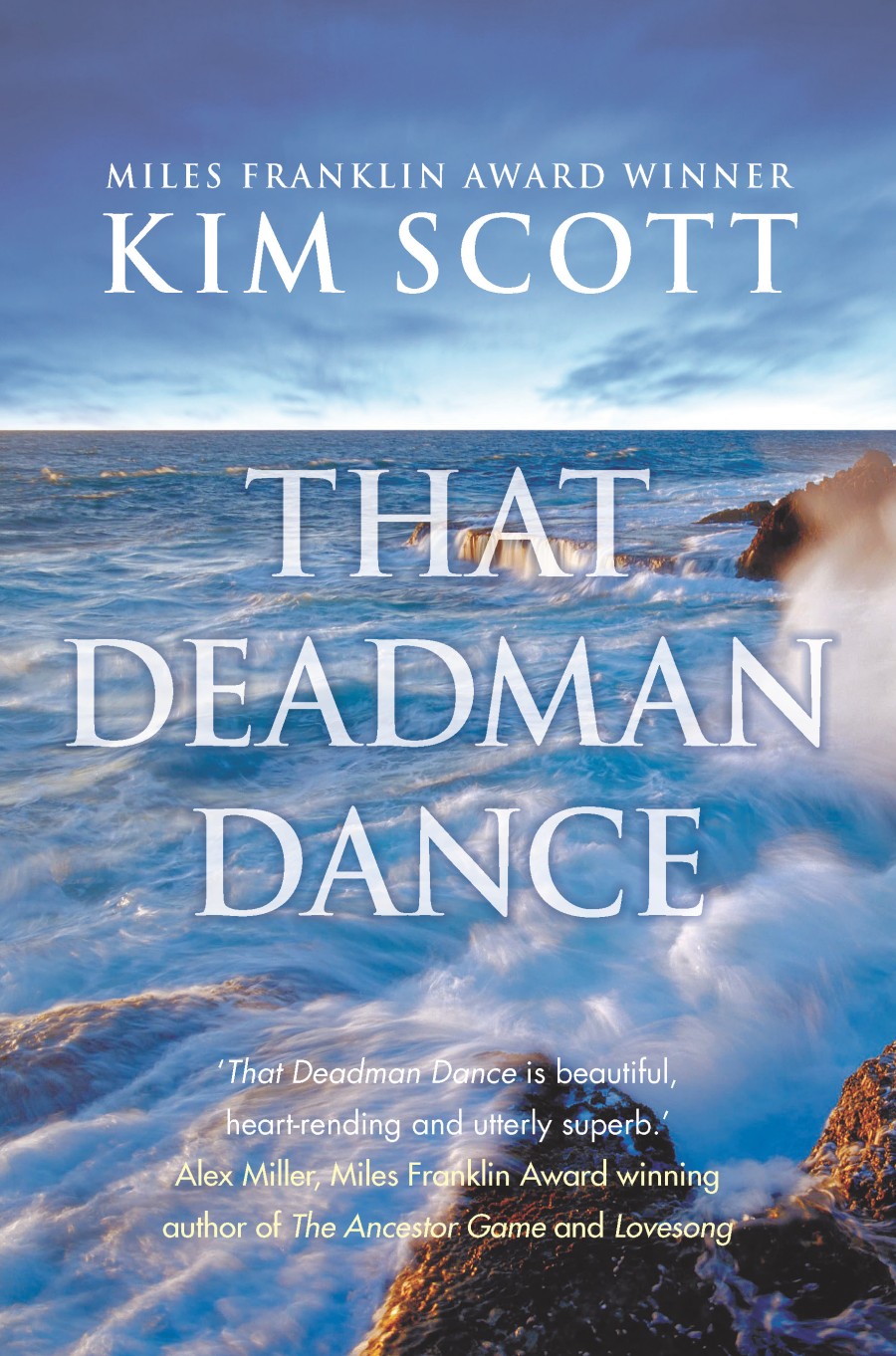
Kim Scott That Deadman Dance

(Courtesy Picador Australia)

Kim Scott’s That deadman dance, chosen by Tony Hughes-D’Aeth, Associate Professor, English and Cultural Studies, University of Western Australia. (See my review). It is not controversial, though some readers found it a little hard to read, and it won a swag of awards, as Hughes-D’Aeth tells us at the start of his case. However, he makes a case on the basis of its importance and relevance to the ongoing discussion in Australia about the facts and implications of first contact. And his case has to do with what he calls Scott’s “bold wager” that “he wanted to write a novel from the point of view of Aboriginal confidence” and that he was “inspired [to do so] by history”. Hughes-D’Aeth discusses his surprise at this idea of “confidence”, given that the history is one of “decimation” and “cultural annihilation”. You can read his “case” if you’d like.

I should clarify, before I continue, that The Conversation also says that the work can be “fiction or non-fiction, contemporary or historical”.

So far there have been eighteen cases put. Several are for books I know or have read (often before blogging), such as (links are to the “case”):

But some cases are for books, I don’t know at all (which probably just demonstrates my ignorance). These include:

Of the eighteen cases listed on the site, the one that stands out as a bit odd to me is Johnny Warren’s book, published in 2002. Warren was a legendary Australian footballer. Casemaker Lee McGowan (Senior Lecturer, Postgraduate Coursework Studies, Queensland University of Technology) admits that the book has its weaknesses, but argues that it’s important nonetheless. He says that “the book’s title refers to what Warren described as a ‘mentality’ that exists around football in its early days in Australia, a mentality he implied was borne of fear.” McGowan suggests this seems outdated now – though I’m not sure exactly what he’s saying is outdated. The words in the title? The mentality? The fear? He doesn’t explore this further, but moves on to say that the book’s main value is that it “remains the best, most insightful account of the Australian game’s contemporary development”. I guess I wouldn’t see the development of football as a critical issue warranting my attention, but to each their own I suppose.

I’m intrigued – though not surprised – to note that several of the books for which cases have been made are by indigenous writers or confront indigenous issues (including Kim Scott, Randolph Stow, Peter Temple, Paddy Roe, and Gail Jones’ Sorry). The cases, in other words, reflect the zeitgeist of our times. Suzie Gibson from Charles Sturt University, arguing for Stow’s To the islands (1958), for example, writes that in it

contemporary readers are confronted with the fruits of Australia’s racist policies concerning Aboriginal peoples.

She argues that, in addition to its literary merit, it is relevant to modern Australia

which tends to function in ignorance of the ongoing cultural disenfranchisement of Australia’s first peoples.

Literature, as we all know, comes in and out of fashion, sometimes for reasons that aren’t immediately obvious. I love this initiative by The Conversation – and hope further academics and researchers take up their offer to present cases.

Anyhow, I’m sharing this series for a couple of reasons. One is that it provides yet another list to look at when considering what to read next. And the other is, as you’ve probably guessed, to ask, What book* would you make a case for – and why? I will make a case for a book in a future Monday musings!

* Preferably from your own national literature.


Monday musings on Australian literature: The Voss Literary Prize

Did the title of this post grab your attention? It grabbed mine so dramatically when I came across it that I immediately abandoned my plans for today’s post – they can wait – to tell you about it.

The first thing to say about it is that it’s not what you think, if indeed like me you immediately thought of Patrick White’s Voss. I was impressed. We have prizes named for authors and sponsors but I hadn’t come across one named for a literary work. Have you? Well, as it turns out, I still haven’t because this award was named for its benefactor, Vivian Robert La Vaux Voss, who conceived it in 1955 – two years before Patrick White’s Voss was published. Hmmm … 1955 and I’ve only heard of it now? This is where the story becomes even more interesting.

I read about this award in one of my favourite on-line journals, The Conversation. The author, and one of the prize’s judges, Anthony Uhlmann, describes its genesis. Vivian Voss, according to Uhlmann, had a “an early career of brilliant promise”. He apparently won many prizes at the University of Sydney and the University of Rome but died in 1963, when he was just 33 years old. His grandfather, Frances Henry Vivian Voss, and mother, Harriette Martha Voss, were both medical practitioners and both appear in the Australian Dictionary of Biography (ADB) for their medical and community work. According to ADB, his grandfather “indulged his love of literature in his fine private library”. The family was wealthy, which must be why Vivian Voss was able to create the Voss Literary Prize in the will he wrote in 1955. In this will, he envisaged the prize being overseen “by five professors at his alma mater, the University of Sydney: the Professor of Latin, the Professor of English, the Professor of French, the Professor of Italian, the Professor of German”. They were to grant the prize to the best novel, “published or unpublished”, in the world! He clearly wasn’t thinking small!

Uhlmann says that the prize was offered to several major universities, all of whom turned it down. It was then offered to the Association for the Study of Australian Literature (ASAL), but they already had a literary award*. So, it was offered to the “newly formed Australian University Heads of English” (AUHE) who “gratefully accepted it”.  Uhlmann doesn’t explain over which time period all this occurred, but it sounds like this last offer was made fairly recently. And, in fact, an AUHE press release seems to explain the timing, stating that “a life tenant in Vivian’s Estate received estate income until his death in 2012”. Ah, so the money, it seems, was tied up, which is why the first award is only now being made. The prize in 2014, this same press release says, will be $6,500.

There is now a website for the award, which describes it as:

a new award dedicated to the memory of Vivian Robert Le Vaux Voss (1930-1963), an historian and lover of literature from Emu Park in Central Queensland who studied History and Latin at the University of Sydney and modern languages at the University of Rome.

As far as I can tell, the award seems to be now limited to Australian publications.

Now to the first awarding of the prize. Uhlmann names his co-judges: Brenda Walker (novelist whose Poe’s cat languishes in my TBR, University of Western Australia), Philip Butterss (whose An unsentimental bloke I recently reviewed, University of Adelaide), Brigitta Olubas (University of New South Wales), and Amanda Nettlebeck (University of Western Sydney). They shortlisted the following novels:

  • Hannah Kent’s Burial rites (my review)
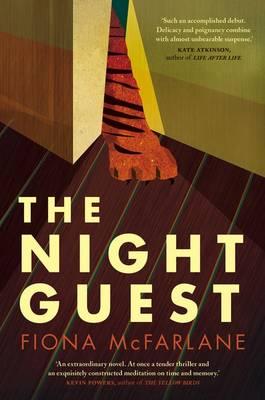
  • Fiona McFarlane’s The night guest (my review, added in 2015)
  • Christos Tsiolkas’ Barracuda (my review)
  • Tim Winton’s Eyrie
  • Alexis Wright’s The swan book

(You can see the longlist on their site).

McFarlaneNightGuestAnd the winner, announced on Wednesday November 19, 2014, at the annual meeting of the AUHE, is Fiona McFarlane’s The night guest. I have had this novel on my radar since I saw the first reviews start to come through for it at the Australian Women Writer’s Challenge. I now have it in my possession – and just need to find time to read it.

I have spent quite a bit of time, I know, on this award – but I thought it was an interesting story and hoped you would think so too. It will be an interesting one to follow – but, I know I will always do a double-take when I see its name!

* The ALS Gold Medal, which was awarded this year to Alexis Wright’s The swan book.

Monday musings on Australian literature: World War 1 in Australian Literary Culture

A couple of weeks ago, while I was having coffee with Australian Women Writers’ Challenge team member, Yvonne (of Stumbling Through the Past), she mentioned a project at the AustLit website, World War 1 in Australian Literary Culture. Given this year is the centenary – have you heard?! – of the start of the First World War, and given I’ve done nothing to date to recognise this, I thought I could salve my conscience by telling you about this project.

Coincidentally, author Annabel Smith (whose book, The ark, I reviewed recently), wrote a post just last week on war novels. War, she wrote, is one of the topics she tends to avoid reading, though she names a few war novels she does admire. My response was that I don’t avoid war books. Indeed, I’m often drawn to them – not to war genre adventure stories but to, I suppose, “literary war”. My reason is that in wars we can see the very best and very worst of people, and everything in between. Good writers can do so much with this. Then, on the weekend, I read a beautiful essay by Tim Winton in The Guardian about hospitals. I related to his comment that:

Wars and hospitals*; it’s a surprise we write about anything else. Hospitals make rich fictional settings because from the inside they are such chillingly plausible worlds unto themselves …

I like his reasoning, and would argue that wars too represent “chillingly plausible worlds unto themselves”.

So, back to AustLit. They introduce this part of their site by saying that it is

an AustLit research project expanding our coverage of the way the 1914-1918 war has appeared in literature, film, and other forms of storytelling from the conflict’s beginning to the present.

They have been working on it since 2012, and now have 5,000 records in the project encompassing a wide range of forms including “poetry, short stories, novels, plays, films, popular songs, children’s literature, biographies and personal accounts …” The main way they present these is through “curated exhibitions”, which are located in the sidebar as a randomly organised rather eclectic list of topics for exploration, such as Anzac Field Theatres, Sumner Locke: War Romances, Indigenous Diggers, Soldier and Nurse Writers, and Women Writing Women’s Roles. These pages provide links to further pages related to that topic. The site says that more of these “curated collections of data” will be added.

Through these “curated exhibitions” I discovered Sumner Locke, mother of well-known Australian writer, Sumner Locke Elliott, and unbeknownst to me, a prolific writer herself. She wrote plays, short stories and novels – with most of her output being “contemporary romance”, including war romances. AustLit tells us that:

When World War I broke out, Locke’s stories changed sharply.

She still wrote bright, fashionable romances and stories of selection life–but from November 1914, they were war stories and they were, more often than not, about women: wives coercing their husbands to enlist, wives convincing their husbands not to enlist, mothers struggling with the enlistments of their sons, women keeping rural communities running in the absence of men, sweethearts convincing their wounded lovers to marry them even in the absence of limbs or sight.

In all of them, Locke’s ironic tone shines through.

Sounds intriguing! And worth checking out methinks. Some stories can be found in Trove, either via the AustLit page or a search in Trove itself.

Now if, like me, you want to find a list of war novels, the way to do it is not apparently obvious, but I got there by clicking on another link in the sidebar titled Search and Explore the Data. This page provides a link to three “lists” (generated via pre-set search parameters so presumably the results list will grow as records are added to the database):

  • Women Writers and the War
  • Gallipoli Poetry
  • Novels of World War 1

Clicking on links in the above pages should take you to a list of relevant works, but unfortunately there’s a bug which I’d hoped would be fixed by now**. Parts of the AustLit site is only accessible by subscribers. However, I believe this project is supposed to be accessible to all, so, if you are interested and can’t access it via a subscribing organisation, just keep trying.

If (or when) you can click the Novels link you will find a list of over 200 novels. You can sort it by various parameters, including date, reverse date, author. I was surprised to find that David Malouf’s Fly away Peter does not appear in the Novels of World War 1 because it is a novella. The novella is a unique form – and I love the fact that they specifically index that – but I think that most people looking at a list of novels about the First World War would expect to find Malouf there.

However, it is an excellent resource, providing a comprehensive survey of a centenary of First World War literature. If you hover your mouse over a title, an abstract may pop up, though this is not universal. On the admittedly rare occasion where AustLit has located an online version of a novel – such as in Trove or Project Gutenberg – they provide a link. One example is Scottish writer RW Campbell’s The Kangaroo Marines, published in 1915. Here is the first paragraph of Chapter 2:

Sam Killem, Commanding Officer of the Kangaroo Marines, sat in his Recruiting Office chewing a cigar in the usual Australian style. Now and again he looked at his recruiting figures and smiled. “Five hundred men in three days,” he mused. “Not bad for you, Sam; and good stuff at that”–for Sam was a judge of men. He was a squatter and as rich as Croesus. His big, bony frame spoke of strength, while his eye and face told the tale of shrewdness and resource. He was forty, and successful. Three hundred miles of land was chartered as his own. His sheep were counted in thousands, and his brand as familiar as a postage stamp. Yet, in all his struggles for success, Sam had found time to be a patriot. He had served as a Tommy in the African War, and since then had commanded a corps of mounted men in the back of beyond. He was the fairest yet fiercest, the most faithful and fearless man in the force. A man who disobeyed his orders always received a knock-out blow, for Sam boxed like a pro, and hit like a hammer.

Hmm … “the fairest yet fiercest, the most faithful and fearless man in the force”. There’s some alliteration run amok! Campbell says in his preface that he wanted “to write deep in the annals of our literature and military history this supreme devotion, this noble heroism” of the ANZACS. It’s not an official history, but his attempt to picture the war. “The cloak of fiction”, he says, “has here and there been wound round temperamental things as well as around some glorious facts.”

Even if I don’t read more of this book, I love that AustLit has enabled me to dip into it. I do hope they keep producing projects like this and BlackWords (on which I’ve posted before).

* You never know, but you may see a post in the future on Australian hospital literature!
** I notified “the bug” over a week ago.

Monday musings on Australian literature: Guest post by Dorothy Johnston, writer and Barbara Jefferis Award judge

Literary awards, their role and import, have come under frequent discussion here at Whispering Gums. So, when writer Dorothy Johnston, whose The house at number 10 and Eight pieces on prostitution I’ve reviewed and, more relevantly, who was one of the judges for this year’s Barbara Jefferis Award, suggested a guest post on the Award, I was more than happy to take her up on it.

I have never met Dorothy but I have “known” her for a long time as she was one of Canberra’s famous Seven Writers who published the anthology Canberra Tales in 1988. I became “reacquainted” with her more recently via blogging and her appearance in The invisible thread anthology edited by Irma Gold for Canberra’s centenary last year. It’s been a lovely rediscovery. Dorothy has published nine novels – literary fiction, and crime-mystery novels, mainly. Two of her novels – One for the master and Ruth – have been shortlisted for the Miles Franklin Award. Dorothy blogs at her website Dorothy Johnston.

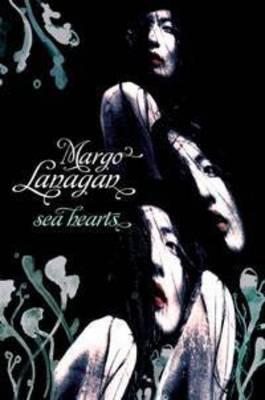
For those who haven’t heard, this year’s Barbara Jefferis Award was shared by Margo Lanagan’s Sea hearts and Fiona McFarlane’s The night guest. Here is Dorothy’s story about her experience as a judge.

***

The idea of splitting the Barbara Jefferis Award between The Night Guest and Sea Hearts did not come up before the three judges (myself, Margaret Barbalet and Georgia Blain) met at the Australian Society of Authors (ASA) in Sydney, at the end of September.

LanaganSeaHeartsI enjoyed working through the 72 entries, making notes, keeping in mind the selection criteria, (a work of literary merit that showed women and girls in a positive light), starring the books I knew I would want to go back to. I had no idea whether my favourites would find favour with Margaret and Georgia.

After about 6 weeks, we exchanged our long lists. One novel was common to all three of us – Fiona McFarlane’s The Night Guest, a brilliant study of a woman who believes there is a tiger in her house. Others on my long list didn’t show up on those of the other two judges, but both had included Margo Lanagan’s Sea Hearts. I went back and re-read it more carefully, and was, as the saying goes, blown away.

These two entries stayed at the top from then on, while we emailed back and forth. Part of the reason for having 72 entries is that the award covered 2 years – 2013 and 2014 – and included self-published titles. By far the greatest number of entries came from the big publishers – Penguin, Allen & Unwin, Random House – though, as it turned out, 4 of the 7 shortlisted book were published by small, or small to medium presses.

We didn’t have to make a firm decision on our shortlist before the meeting; but once in Sydney we only had a morning to finalise it, then choose a winner, and then we had to spend the afternoon writing our report.

I’d had to give up some of the books on my long list because they didn’t find favour with Margaret or Georgia, and the same went for them. One I regretted letting go was Elemental by Amanda Curtin, a terrific story of a young girl growing up in a Scottish fishing village, and what happens to her subsequently. On the other hand, All The Birds Singing, by Evie Wyld, which the others both included, and which, as readers will know, won the Miles Franklin, I thought was over-rated.

McFarlaneNightGuestIf I had to make one general remark about the books that made it onto the shortlist, I would say that each one is utterly itself. What do I mean by this? I mean that, a few pages in, I recognised the voice as original, distinct, perfect for the narrative; they fitted hand and glove. So often I found that an author began promisingly, but then could not sustain the voice. Or, right from the beginning, the author pandered to one contemporary fashion or another. When you’re reading your way through 2 years of entries, you quickly learn that following the fashion is a bad idea.

There’s no whiff of conformity amongst the shortlist. Amy Espeseth’s Sufficient Grace focuses on two young women and their difficult lives in an isolated religious community. The Life and Loves of Lena Gaunt, by Tracy Farr, introduced me to an extraordinary musician and her instrument, the theremin.

Pilgrimage, by Jacinta Halloran, is about two sisters, one of them a doctor, and what happens when their mother is diagnosed with motor neurone disease.

Margo Lanagan’s Sea Hearts takes ancient selkie legends as its starting point and moves in a wholly original direction. Fiona McFarlane’s The Night Guest is another novel that borders the surreal in an original and quite wonderful way. The First Week, by Margaret Merrilees, is, by contrast, a realist tale that cuts to the bone.

The Mountain by Drusilla Modjeska, an ambitious and far-reaching story of Papua New Guinea in the years since independence.

We also highly commended Laura Buzo’s Holier Than Thou.

But back to that meeting at the ASA. We already knew each other’s preferences. We’d picked the same top two and could not choose between them. There didn’t seem a hair’s breadth, or knife point to tip the balance. We called in Lucy Stevens, who was overseeing the judging process. Lucy sat at one end of the table balancing the two books in her hands while we reached the decision to award the prize to both.

The presentation was held in the renovated foyer of St Barnabas Church, Broadway, a lovely light-filled space. It was a beautiful Sydney spring evening. There was music and champagne. I realized – not that I hadn’t known it before, but it came to me suddenly – that we were here to celebrate books and their authors. Angelo Loukakis, Executive Director of the ASA, welcomed us. David Day, who is Chair of ASA’s Board of Directors, spoke about Barbara Jefferis and the bequest. Tara Moss spoke about women and the arts. I looked around me. Everyone in the room cared about, and many worked hard to foster and promote, Australian literature. When I stepped up to the podium, to give my judges’ speech, I had a big smile on my face.

***

Thanks a bunch Dorothy for giving us your insider’s perspective on awards judging. I can see it wasn’t an easy job and love that you’ve shared your thoughts with us.

Dorothy (I’m sure) and I would love to hear your thoughts – on awards, on judging, on these particular books, or on anything else her post has inspired you to think about.

Monday musings on Australian literature: Gap-filling and Wish-lists

Are you a book collector? If so, it probably means you have a wish list of books you want, like Pam at Travellin’ Penguin who lives in Tasmania and collects vintage Penguins or Lisa at ANZLitLovers who collects first edition Miles Franklin Award Winners. Pam lists what she has and what she’s looking for on her blog – categorised under the various Penguin categories, such as Main Series Penguins, that she collects. It’s a hobby and Pam and Lisa clearly enjoy the hunt.

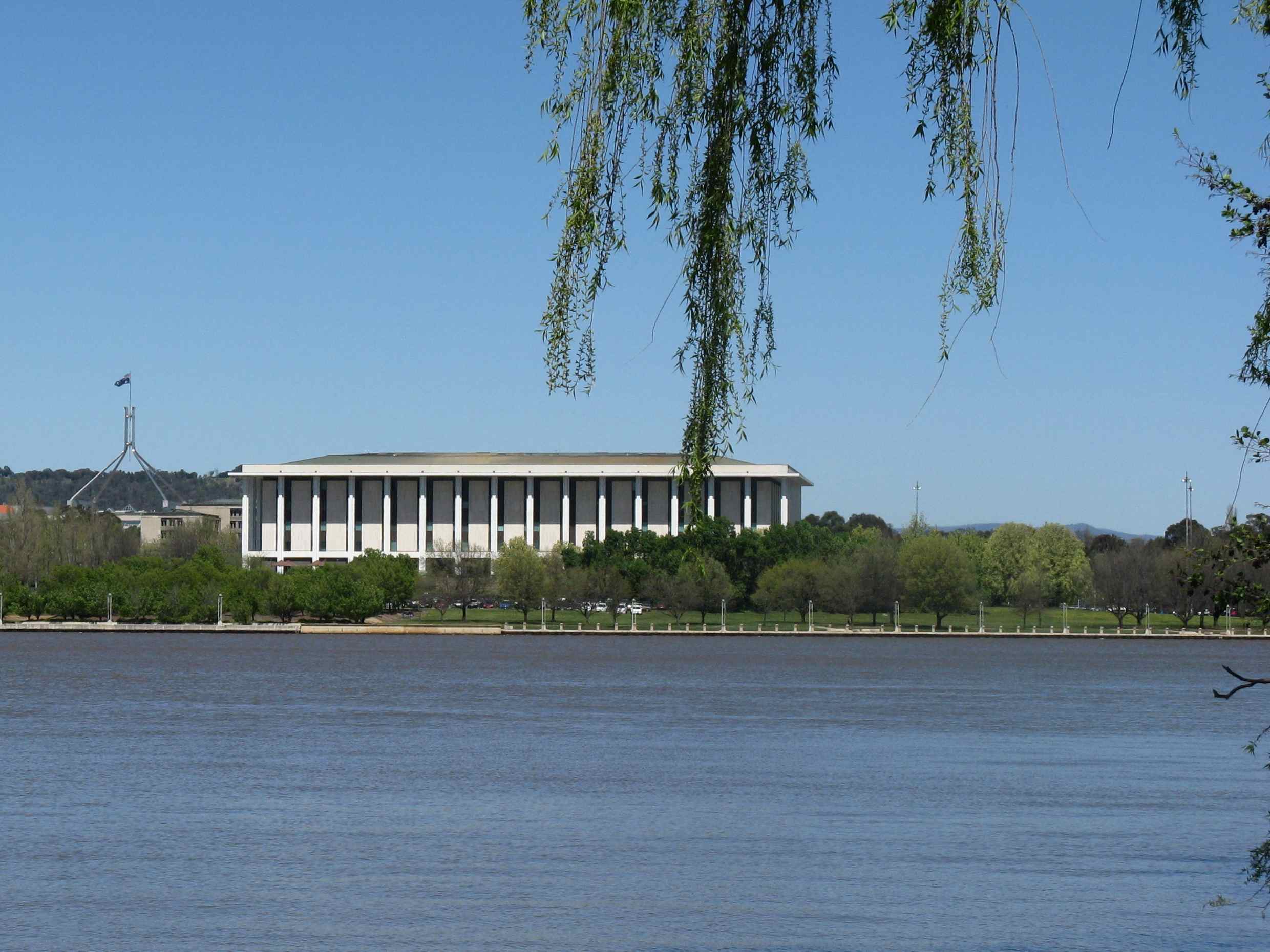
But for some collectors it’s more than a hobby, it’s their mandate. I’m talking of course about cultural collecting institutions – and a critical one here in Australia from a literary point of view is the National Library of Australia. Like most collectors, they have a wish-list which they very sensibly post on their website. Of course, I’ve looked to see if I have anything they want but, I’m not a rare books collector, so it doesn’t look like it. I found it interesting, however, and thought you might too. Here are their categories:

Australiana to 1900

Included here are two books by Rosa Praed, whose The bond of wedlock I read before blogging. One is The brother of the shadow: a mystery of today, and was published in 1886. The other is The Right Honourable: a romance of society and politics, also published in 1886. It’s described as being by Justin McCarthy and Mrs Campbell-Praed (aka Rosa Praed).

Two other books caught my eye. The first one is Limitation of offspring: being the substance of a lecture delivered in the North Melbourne Town Hall, and elsewhere, to large audiences of women only (1893) by someone called Mrs B Smyth. I wonder who she is and what she was telling the women in her audiences. The other is The Parent’s assistant, or, Stories for children (1796) by Maria Edgeworth. Now, Edgeworth is English and never came to Australia, and the book was published in London just 8 years after the British settled in Australia. Why, I wonder, is this particular book on the wish-list under Australiana, which is about books published (or printed) in and/or about Australia? There must be an Australian connection, but it’s not clear from the list.

Australiana 1901-1950

National Library of Australia

National Library of Australia, viewed from Commonwealth Park on the opposite side of Lake Burley Griffin

There are three more Rosa Praeds in this list: The ghost, by Rosa Praed, published in 1903;  The Insane root: a romance of a strange country, by Mrs. Campbell Praed (without the hyphen!), published in 1902; and Stubble before the wind, published in 1908, but with no author identified until you click the link and find, yes, the hyphen-less Mrs Campbell Praed again.

Other books caught my attention, too, but I’ll name just one: Australskem bushi. Upravil a prelozil, by Stepan von Kotze, published in Prague in 1921. The State Library of NSW has a copy. Trove’s listing describes it as “a Czech children’s book about the Australian Outback with particular emphasis on Queensland”, making it a good example of collecting books published “about” Australia. I’d love to know what a Czech writer said about the Australian outback in the 1920s.

Australiana 1951-2005

I suspect that the Library has more gaps than the ten listed here, but what is listed makes interesting reading. No Rosa Praed this time as she died in 1935!

As before, the list is varied giving a sense of the breadth of the Library’s collection. For example, it includes Belly flop by contemporary writer Morris Gleitzman. This surprised me, as I’d have expected that the Library would have all of Gleitzman’s books – until I read on. What they are looking for is specifically the children’s large print edition published in England in 2005.

Other works on the list include those by government bodies or small organisations rather than mainstream publishers, such as The application of a drought index system to Australian bushfire control, by A.G. McArthur, published by the Forestry and Timber Bureau in 1966; Back to the best interests of the child: towards a rebuttable presumption of joing [sic] custody, a paper, published by the Child Support Action Group in Adelaide in 1995; and John Perceval: Williamstown and other images, published by Adelaide’s The Galleries in 1989.

Australian printed music

The Library has a large collection of printed music but, as with books, there are gaps. They say “If you can find any of the items listed below, you could help us by donating them to the Library or simply letting us know of their whereabouts”. The list includes works dating back to the 1820s. One that caught my eye, though, is a little closer to home: Canberra fanfare, by Malcolm Williamson and believed to have been published in London around 1973.

Newspapers

The Library doesn’t list titles here but refers to their “search and rescue campaign” that was launched in 2008 by Australian Newspaper Plan (ANPlan) libraries. They make the point that newspapers aren’t wanted only for the news but for “stories of their times, through ads, photographs, and even their design”. As an occasional user of the Library’s digitised newspaper project for Monday Musings, I know exactly what they mean!

Magazines and journals

Magazines, like newspapers and books, are provided to the library under legal deposit regulations, but, they say, gaps still occur. They list a number of these serial publications, identifying their missing issues.

Menus

I love that the Library collects this aspect of our lives. There’s no list here, not surprisingly, but a description of the sorts of menus they want, which ranges widely – including from restaurants, airlines, ships and special occasions. I have the menu from my graduation. I love to look at it – to see the sort of food we thought was special way back then, and how much we paid for it, as well as to remember a special occasion. One day I plan to offer it to the Library!

I wonder how frequently items on the list are found? Have you seen lists like this on the sites of other cultural collecting institutions?


Not the Usual Monday Musings

Sense and sensibility book covers

Printed and eBooks for Jane Austen’s Sense and sensibility

Just for a change – and because I couldn’t resist it – I’m sharing an ad from ABE Books for a first edition 3-volume set of Jane Austen’s Sense and sensibility, which was first published in 1811. In case you are interested, the inventory number for the book is #ABE-11685473745.

I’m going to quote the ad in full on the assumption that this doesn’t break copyright. Surely one ad does not represent a significant portion of ABE Books’ intellectual content, and anyhow, as sellers, they presumably want their message to be out and about.

As the person who brought the ad to my attention said, this is a seller with attitude. Here goes:

3 vols. 1st edition, whispering in a voice quieter than decency, that the days that make us happy are the days that set us free. 19th century 3/4 morocco. A fine set, cleaner than fresh air, and it’s a complete one too with all 3 genuine half-titles, and though this 1st edition is regularly stalked by all collectors, it has a history of amplified appeal to those who are women, so heed this ladies: Buying a 1st edition of Sense and Sensibility without authentic half-titles is more dangerous than open-knife night at the blow fish bar, and more naïve than sexting your face and your kitty in the same picture. Ex-3 significant women collectors (bookplates) of élan who deserve snaps, Dorothy Stewart, Pamela Kingzett, and Sarah Peter, the last named of the 3, a modern goddess who gathered her 1st editions of fiction in English by women, 1 book at a time, and now stands tall with the greatest collection of them ever assembled. By anyone. Anywhere.

Austen invented modern romantic comedy beginning with Sense and Sensibility, and started schooling 7 generations of readers about the intricate convolutions of affection. What they learned from it right away is that all tests of love end badly, that excitement and familiarity are hard to find in one person, that the first duty of love is to listen, and that when the heart speaks, the mind should know it’s tacky to object. In the 20th century they came to understand that the only real proof of love is trust, that sometimes there are more differences within the genders than between them, that love must be transformed from the flame at first into the light that lasts, and that all men fall somewhere between apes and gods, and the best a wise woman can hope to do, is pick one that’s traveling in the right direction. Now we’re in the 21st century and a new generation of readers just balance Austen’s charm against the realities of daily life, appreciating that “desperate” is not a sexual preference, that the fastest way to improve a relationship is to see love as a verb rather than a feeling, and that a woman can find a blunt equality with men by going to therapy, where she can talk about herself for an hour, just like a guy on a date

.
Don’t you love this  – particularly the ad writer’s understanding of what Austen was (is) about? I reckon Jane Austen would have.