Monday musings on Australian literature: Aussie writers name their pick reads of 2016

December is, or has certainly become in recent years, the month of lists. As always, I’ll be saving my lists until the end of 2015, which means you won’t see them until January. However, that doesn’t mean I can’t share other people’s lists, does it?

I’ve gleaned the list I’m sharing here from a recent article in the Sydney Morning Herald, a list I particularly enjoy because they ask a wide range of Aussie writers who come up with books crossing a variety of forms and genres. In my report on it, I’ve only included Australian books. I hope that, because of this and because my order of presentation is completely different, I haven’t broken copyright. If I have, I hope they forgive me, in recognition of our shared goal of promoting books and reading.

So, here’s the list of books, with the nominating author/s in parentheses at the end. I’ve used asterisks to denote those books nominated more than once, with the number of asterisks identifying the number of nominations.:

  • Randa Abdel-Fattah’s When Michael met Mina (YA fiction) (Maxine Beneba Clarke)
  • ***Steven Amsterdam’s The easy way out (fiction) (Maxine Beneba Clarke, Abigail Ulman, Charlotte Wood)
  • Melissa Ashley’s The birdman’s wife (historical fiction) (Robert Adamson)
  • Carmel Bird’s Family skeleton (fiction) (Jacinta Halloran)
  • **Georgia Blain’s Between a wolf and a dog (fiction) (Toni Jordan, Charlotte Wood)
  • Maxine Beneba Clarke’s Foreign soil (short stories) (Clare Wright).
  • Maxine Beneba Clarke’s The hate race (memoir) (Zoe Morrison)
  • Stephanie Bishop’s The other side of the world (fiction) (Katherine Brabon)
  • Stephen Daisley’s Coming rain (fiction) (Clare Wright)
  • Robin Dalton’s Aunts up the Cross (classic memoir, repub. by Text) (Tim Flannery)
  • Catherine de Saint Phalle’s Poum and Alexandre: A Paris memoir (memoir) (Helen Garner)
  • David Dyer’s The midnight watch (historical fiction) (Malcolm Knox)
  • Sarah Engledow’s The popular pet book (non-fiction) (Chris Wallace-Crabbe)
  • Richard Flanagan’s Notes on an exodus (non-fiction) (Katherine Brabon)
  • **David Francis’ Wedding Bush Road (fiction) (Abigail Ulman, Don Watson)
  • Peggy Frew’s Hope Farm (fiction) (Clare Wright)
  • Alice Garner’s A shifting shore (non-fiction) (Gregory Day)
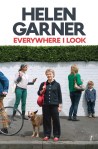
  • Helen Garner, Everywhere I look***Helen Garner’s Everywhere I look (essays) (Lisa Gorton, Jacinta Halloran, Joan London) (my review)
  • Stan Grant’s Talking to my country (non-fiction) (Maxine Beneba Clarke)
  • Tom Griffiths’ The art of time travel (non-fiction) (Clare Wright)
  • Shirley Hazzard’s Cliffs of fall and other stories (short stories, orig. pub. 1963) (Helen Garner)
  • Toni Jordan’s Our tiny useless hearts (fiction) (Graeme Simsion)
  • Gisela Kaplan’s Bird minds (non-fiction) (Tim Winton)
  • Hannah Kent’s The good people (historical fiction) (Malcolm Knox)
  •  Lee Kofman and Maria Katsonis’ Rebellious daughters (short story anthology) (Clare Wright)
  •  Julie Koh’s Portable curiosities (short stories) (Maxine Beneba Clarke)
  • Anthony Lawrence’s Headwaters (poetry) (Robert Adamson)
  • Micheline Lee’s The healing party (fiction) (Helen Garner)
  • Cassie Lewis’ The blue decodes (poetry) (Robert Adamson)
  • Tim Low’s Where song began (non-fiction) (Tim Flannery)
  • Thornton McCamish’s Our man elsewhere (biography of Alan Moorehead) (Helen Garner)
  • Adrian McKinty’s Rain dogs (historical crime fiction) (Michael Robotham)
  • ***Kim Mahood’s Position doubtful (memoir) (Lisa Gorton, Jacinta Halloran, Tim Winton)
  • Robert Manne’s The mind of The Islamic State (non-fiction) (Alex Miller)
  • Zoe Morrison’s Music and freedom (memoir) (Graeme Simsion)
  • **Ryan O’Neill’s Their brilliant careers (fiction) (Toni Jordan, AS Patric)
  • Heather Rose’s The Museum of Modern Love (novel) (Hannah Kent)
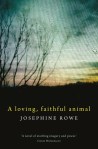
  • Josephine Rowe, A loving faithful animal** Josephine Rowe’s A loving, faithful animal (novel) (Jacinta Halloran, Fiona Wright) (my review)
  • **Baba Schwartz’s The May beetles (memoir) (Helen Garner, Joan London)
  • Sybille Smith’s Mothertongue (memoir) (Helen Garner)
  • Randolph Stow’s The Merry-Go-Round in the sea (classic fiction) (Jacinta Halloran)
  • **Ellen van Neerven’s Comfort food (poetry) (Maxine Beneba Clarke, Lisa Gorton)
  • Dave Warner’s Before it breaks (crime fiction) (Michael Robotham)
  • Alison Whittaker’s Lemons in the chicken wire (poetry) (Fiona Wright)
  • Josephine Wilson’s Extinctions (fiction) (Charlotte Wood)
  • Peter Wohlleben’s The hidden life of trees (non-fiction) (Tim Flannery)

As with last year’s smh list, there are books and authors I haven’t heard of, but I’m thrilled to see some books appearing multiple times, including a couple of books I loved this year – Garner’s Everywhere I look and Josephine Rowe’s A loving faithful animal – and Kim Mahood’s Position doubtful, which I know I’ll be reading next year.  Tim Winton says of Mahood’s book:

If anyone’s written more beautifully and modestly about this country and its people I’m not aware of it. I think it’s a treasure.

A book I should clearly consider reading is three-asterisked Stephen Amsterdam’s The easy way out. Charlotte Wood describes it as “a sharp, snappy novel about assisted dying. Blackly witty but never glib, it’s humane and moving.”

It’s lovely to see Patrick White award-winner, Carmel Bird, in the list with her new novel Family skeleton, alongside older books by Shirley Hazzard and Randolph Stow. And it’s interesting to see the variety of memoirs admired by our authors.

While this year there are several books with two or three recommendations, last year had a runaway winner with five recommendations – Charlotte Wood’s The natural way of things. I noted then that I clearly needed to read it – and I did. In fact, I reviewed, in 2016, 7 books from last year’s list. I wonder if I’ll do something similar in 2017.

Meanwhile, do you enjoy end of year lists – and, more significantly, do they guide your reading choices in any way? If they do I’d love to know how.

Monday musings on Australian literature: Arnold Haskell on the Arts (1)

Arnold Haskell, Waltzing MatildaA couple of months ago I wrote a post on British dance critic Arnold Haskell’s book, Waltzing Matilda: a background to Australia (published in Australia in 1944). I said then that I’d come back to it, so here I am, focusing this time on his chapter on “The Arts”. It comprises 22 pages covering, according to the chapter subtitle, “The theatre – The cinema – Painting – The press – Literature”. Today, I’ll just discuss the theatre and literature.

“a national theatre is not yet born”

He starts with the theatre, and says that although he knows “from experience that Australia has a vast theatre-going public and a fine theatrical tradition … the theatre is unfortunately in decay”. Performances are more likely to be “Gilbert and Sullivan” or English or American musicals or sensational-type plays with imported stars. When an Australian does show ability “he [of course, it’s a “he”] promptly leaves for England or America”. If he stays he’ll “probably starve, both artistically and financially”.

Serious theatre – performing, say, Chekhov or Gogol – mostly occurs in amateur repertory societies and some of these “reach an extraordinarily high standard”. He blames the lack of development of a national theatre on “apathy and the great national inferiority complex” (aka “the cultural cringe” I’ve often mentioned here). However, when it comes to music, ballet and opera things are a little better, particularly in opera where Melba, who had died in 1931, had “dealt a smashing blow to the inferiority complex”.

“still in the formative period”

Haskell spends more of his chapter on painting than on anything else but let’s get to literature. He says, it has “not produced men who are the equals of Streeton, Heysen or Gruner”. Interesting. I might be wrong but I’d say that now Miles Franklin, Katharine Susannah Prichard, and Eleanor Dark are at least as well-known as those three artists.

Anyhow, here is his impression:

Those who could write the great Australian novels, who are neither apathetic nor complacent and who correspond in some way to our Bloomsbury, are unfortunately too busy talking to accomplish more than a poem, a pamphlet or a short story. They are dissatisfied, they hate the squatter, despise the ‘dinkum Aussie’ and are well to the left of his traditional labour. Their thoughts are in Spain or Russia. They have both imagination and compassion, but there is more of bitterness in their make-up… They concentrate on the ideal of some vague revolution just as the masses concentrate on sport.

He argues that the “flourishing school of contemporary American literature was started by such minds as these in their magnificently creative intervals from drinking and posing in Paris.” (Don’t you love it?) He’s referring, I presume, to Hemingway, F Scott Fitzgerald, et al. He sees – quite perspicaciously I’d say – that the problem is that Australians were looking to Europe, were seeing the distance between them and Europe “as a handicap” BUT he says “the differences between Australia and England will produce a national art and literature, not the similarities.” In other words, look to your own. America has recognised this, he writes, “and has made her differences a source of pride”. Our own Nettie Palmer saw it too, and argued strenuously for an Australian literature. She pondered in her 1929 article, “The need for Australian literature”, on what recognition the work of Australians had received. “To what extent, ” she asked, “have their efforts been made barren by the ingratitude and even hostility with which they have been met at the outset.” Cultural cringe again? For Palmer, it is the artist (the writer, in her case) who illuminates, or makes understandable, our lives for us.

Anyhow, Haskell does recommend some Australian authors/works which have become “part of the Australia scene”, which I’ll share as I know we all like lists:

  • Marcus Clarke’s For the term of his natural life: Haskell writes beautifully about this book and how Kensignton-born Clarke used his two years’ bush experience to make himself “an Australian writer”. He argues that Clarke’s characters “have a humanity not unworthy of Dostoievsky” and compares him favourably against Henry Kingsley’s Geoffrey Hamlyn which he describes as “stilted and old-fashioned” and Rolf Boldrewood’s Robbery under arms which is just “a typical boy’s yarn”.
  • Henry Lawson’s While the billy boils, and other works: Haskell says Lawson’s work is universally seen as “honest Australian” and that “no interested tourist should omit reading these sketches of the Australian character”.
  • Vance Palmer and Brian Penton “depict the Australian scene with skill and conviction”, and Mrs Aeneas Gunn’s The little black princess “gives a particularly delightful picture of the aboriginal mind and was highly recommended to me by a distinguished anthropologist”. (Oh dear, but these were different times.)
  • Ion Idriess, who covers “the more adventurous sides of Australian life”, is “not a polished writer” but tells “magnificent” stories from his own experience.
  • Katherine [sic] Susannah Prichard, Helen Simpson and Henry Handel Richardson “are so well known in England that they are accepted as English writers”! What does this mean? And interesting that these are all women writers who are described this way. He says that The fortunes of Richard Mahoney “gives a gloomy picture of Australia but it is surely the greatest contemporary work of Australian fiction”.

Haskell also mentions several poets – Adam Lindsay Gordon, Henry Kendall, CJ Dennis and ‘Banjo’ Patterson [sic] – as worth reading. I’m just going to share, though, what he says about Paterson because Paterson, himself, felt he was just a ‘verse-maker’ not a poet. Here is Haskell:

Patterson, a bigger figure [than Dennis], might be called Australia’s Kipling, though there is little actual resemblance. It might be very easy to dismiss this very hearty verse as being of little account, easy but superficial. When one knows Australia this is altogether impossible. It has a quality of greatness because Patterson has written folk-songs and ballads of Australia. His verse has an extraordinary quality of spontaneity. It is truly indigenous.

Dennis, he writes, “is famous for his amusing doggerel in the Australian vernacular” and “has left behind some humorous journalism. It is more deliberate and sophisticated; it is a tour de force and not a cri de coeur.”

Haskell admits that there are other names he could share. However, his aim has not been, he says, to produce “a study of Australian literature” but rather a “personal account” of his “journey” because his prime goal has been to “see Australia at first hand and not through literature”. I understand that …

Monday musings on Australian literature: 19th century travellers in Australia

I’m a bit of a sucker for 19th century travellers. The one who started it all was Flora Tristan with her Peregrinations of a pariah (1838). Yes, I know, she was a Frenchwoman travelling in South America, so she’s not actually relevant here. And yet, before I get to travellers in Australia I must mention other works I’ve dipped into: Washington Irving’s Tales of the Alhambra (1832), Isabella Bird’s Unbeaten tracks in Japan (1880), and Lafcadio Hearn’s Glimpses of unfamiliar Japan (1894). Of these, Isabella Bird is the only one to have also visited Australia, of which more anon.

Gerstacker

Public domain (via Wikipedia)

None of these, though, inspired this specific post. That honour goes to my current read, Freidrich Gerstäcker’s Australia: A German traveller in the age of gold which was first published in German in 1854, and has now been published in an English translation by Wakefield Press. It chronicles his travels in Australia in the early 1850s. As I started reading it, it occurred to me that while I’ve spoken before about 19th century explorers’ journals, I haven’t mentioned travel writing from the same period.

However, as I started doing a little research, I realised that, particularly given the period and how little the country had been “explored”, there is – or can be – a pretty fine line between explorers’ journals and those of travellers. The difference, I’d say, must be the intention, and here I’ll quote Gerstäcker:

Merely having set foot on a foreign part of the world has its own charm. No matter how passionately people are attached to their own country, they still want to see a different one, so that they can think longingly back to their own.

I’m not sure that the last bit is critical, but he does capture the traveller’s desire to see something different for his or her own reasons, as against the explorer’s goal which is more to travel to new places to gain geographical and/or scientific knowledge, usually for the benefit or use of others. For the person interested in history, though, both offer valuable “primary” insight into the life of another time.

So, I thought I’d share a few 19th century travellers (chronologically by their writings) who wrote about their travels in Australia:

Charles Darwin’s A naturalist’s voyage around the world (1860, text on PGA) describes his visit to Australia in 1836. He opens Chapter 19 with his arrival in Sydney Harbour:

Early in the morning a light air carried us towards the entrance of
Port Jackson. Instead of beholding a verdant country, interspersed
with fine houses, a straight line of yellowish cliff brought to our
minds the coast of Patagonia. A solitary lighthouse, built of white
stone, alone told us that we were near a great and populous city.

He tells of going out to Bathurst “to gain a general idea of the appearance of the country” and goes on to describe what he sees (including “the extreme uniformity of the vegetation”). He comments on his experience of indigenous Australians and also mentions convicts, but his main focus was the natural environment. After spending a couple of weeks in the area around Sydney, the Beagle went down to Hobart before heading to New Zealand.

Ellen Clacy’s A Lady’s Visit to the Gold Diggings of Australia in 1852–1853 (1853, text on PGA): Clacy visited the Australian goldfields with her brother, and was only in Australia for a year or so. Her book was one of many used by Clare Wright in her award-winning The forgotten rebels of Eureka (my review). Wright quotes Clacy’s advice to Englishwomen considering emigration:

Do so by all means … the worse risk you run is that of getting married and finding yourself treated with twenty times the respect and consideration you may meet in England.

The reason for this, Clacy argues, is that because there are so few women “we may be pretty sure of having our own way”. Hmm.

Here she is on Melbourne, or, one aspect anyhow:

The most thriving trade there, is keeping an hotel or public-house, which always have a lamp before their doors. These at night serve as a beacon to the stranger to keep as far from them as possible, they being, with few exceptions, the resort, after dark, of the most ruffianly characters.

Gerstäcker comments on “the truly astonishing number” of pubs in Sydney. Seems our drinking culture started early!

Friedrich Gerstäcker’s Australia: A German traveller in the age of gold (1854): it will be a while before I finish this, but I’ve read nearly a third and am loving his descriptions of mid-19th century Sydney and of his intrepid trip along the Murray. His observations on the people and the landscape, flora and fauna he meets and sees along the way add not only to my understanding of early white-settled Australia but also of mid-19th century European thought. I love that he keeps an eye out for the bunyip, though he’s aware that there’s a chance it doesn’t exist!

Anthony Trollope’s Australia and New Zealand (1873): Trollope visited Australia in 1871, when he was 56-years-old and having negotiated, writes Fullerton (see below), a contract to write a book about the trip. Fullerton writes that “few visitors to Australia have ever worked so hard at seeing everything, learning about Australian institutions and customs, observing locals at work and at play, and covering so much ground, as did Anthony Trollope”. The aim of the book was to be useful to potential English migrants to Australia.

Isabella Bird’s “Australia Felix: First impressions of Australia” (in Leisure Hour, Feb 10, 1877): I’ve enjoyed her writings on Japan but haven’t tracked down an e-version of this article. All I know is that she “disliked” Australia. It was the first exotic place she visited (besides a trip with cousins to the USA) and I wonder whether her attitude might partly be due to inexperience as a traveller – but that may just be me being defensive!

Five is probably enough for my purposes. It’s a subject I’ll return to when I review Gerstäcker’s book … and possibly again in future posts because there are many journals out there.

Sources:

  • Susannah Fullerton, Brief encounters: Literary travellers in Australia 1836-1939, 2009 (includes more writers than I’ve mentioned here including Joseph Conrad and Robert Louis Stevenson)
  • Project Gutenberg Australia (PGA)
  • Clare Wright, The forgotten rebels of Eureka (2013)

Monday musings on Australian literature: 1902 in Australian literature

Why, you may be asking, have I chosen 1902 for this post? After all, it’s not a nice round number of years ago, like 100. I could tease you with hints, but I want to get onto the post proper, so I’ll just tell you: it was the year Christina Stead was born. And, as you’ll have realised if you read yesterday’s post, this week in Lisa of ANZLitLovers’ Christina Stead Week. Now, of course, Stead wasn’t particularly sentient that year, but I thought it might be fun to see what was happening in literature in the (Aussie) world she was born into.

But first, let’s look at who else was born in 1902. Most interesting to me is Dymphna Cusack, whose memoir of her teaching days, A window in the dark, and first novel, Jungfrau, I’ve reviewed here. My research of the National Library of Australia uncovered that Cusack and Stead corresponded with each other, though I think Stead had a closer relationship with Cusack’s literary collaborator, Florence James. Anyhow, also born this year were Alan Marshall, famous for his autobiography I can jump puddles, and a lesser known author, Dorothy Cottrell, who had two novels adapted for film, one of them in her lifetime, Orphan of the wilderness.

Now, what was published in 1902? I’m going to focus on novels and short stories, because these were Stead’s main forms, and I’ve selected names that are reasonably well-known (to my mind anyhow). Here goes:

  • Barbara Baynton’s Bush studies (my reviews can be found here)
  • Rolf Boldrewood’s The ghost camp or, the avengers
  • Henry Lawson’s Children of the bush, plus individual stories
  • Louise Mack’s An Australian girl in London (I have Mack on my TBR)
  • Rosa Praed’s The insane root: A romance of a strange country and her autobiography, My Australian girlhood (I’ve read her The bond of wedlock)
  • Ethel Turner’s Young love (I have reviewed her Juvenilia)

There are others, but most are writers who are not known now, such as Hume Nisbett and Ambrose Pratt.

The interesting question is whether any of these writers influenced Stead? Did she read them as she was growing up? Not having read any biographies of her, I can’t say. However, Baynton and Mack went overseas in the late 19th to early 20th centuries, seeing it as important for establishing a writing career. Expatriation could offer better access to publishers and “a freer life” (Carole Ferrier). Stead also went to England (and later the US) a couple of decades later. She may not have explicitly “followed” them,  but it was a popular path for serious writers. There is an argument – both in her time and now – that Stead’s lack of recognition in Australia stems partly from the lengthy time she spent overseas. You can, it seems, be away from “home” too long! According to Wikipedia, she ‘only returned to Australia after she was denied the Britannica-Australia prize on the grounds that she had “ceased to be an Australian”‘.

A significant person active at the time of Stead’s birth is Vida Goldstein, the politician and women’s rights activist. In 1902 she was the Australian delegate at the International Women’s Suffrage Conference in Washington, DC. Again, whether Stead knew of her, I don’t know, but she was a person worth knowing and was part of a long tradition of Australian women who cared about women’s rights and broader social reform. Stead’s first novel, Seven poor men of Sydney, documenting “the relentlessness of poverty”, demonstrates her interest in similar issues.

I know this little post doesn’t tell us much about Stead, herself, but I found it interesting to research and think about. More useful might be to look at literary life around the time she turned 21? We might then find and think about those who were more likely her peers. Hmmm …

Research:

  • 1902 in Australian literature (Wikipedia)
  • Hooton, Joy and Harry Heseltine, Annals of Australian literature, 2nd ed. Melbourne: OUP, 1992
  • Trove (various newspaper articles!)

Monday musings on Australian literature: The Hope Prize

I came across the beautifully named Hope Prize over the weekend via some online service. Was it Twitter? Was it Facebook? Perhaps even Instagram though I think not, but I really can’t recollect. Such is our online lives, eh?

Anyhow, the Hope Prize, was, according to the website, established by the Brotherhood of St Laurence “thanks to the generosity of the late Prudence Myer and the support of her family*, to encourage writing that transcends stereotypes of ‘the poor’ and reflects the resilience we know that people show in the face of poverty and testing times.” The Prize is supported by publisher Simon and Schuster and Readings bookshop.

So, what is the prize for? Well, it is subtitled the Brotherhood of St Laurence Short Story Competition. I understood from the site where I first read about it, that it’s geared to amateur writing. The competition rules say that entries “must be the original work of the applicant” and “must not have been published, broadcast, or won a monetary prize in any competition”. The applicant must also be a resident of Australia, and the story must be between 2,000 and 5,000 words.

Hope prize short stories book coverThe judges for the inaugural prize, whose winners have just been announced, were Australian actor Cate Blanchett, novelist Kate Grenville, and ex-Governor General Quentin Bryce. What a lovely panel (albeit an all-female one. Perhaps it would be good to include a token male next year! Sorry, couldn’t resist that.) Anyhow, the website says that “they were impressed with the very high standard of writing and reported that all the finalists revealed powerful perspectives on the world at large, and displayed unique, unpretentious and authentic voices.” According to an article in the Sydney Morning Herald (SMH), a collection, which will include the winning and commended stories, will be published by Simon & Schuster on November 9. Sounds like a gift worth buying and giving.

But now, the winners:

  • First Prize, $5,000: Catherine Moffat for “Better Homes and Gardens”
  • Second Prize, $3,000: Eloise Young for “555 to Reservoir”
  • Third Prize, $2,000: Katherine Hayes for “Queen St”
  • Young Writer winner, $500: Eleanor George for “Colours”

There were also six highly commended stories.

… an entirely different perspective …

The abovementioned SMH article says that the winning story, “Better Homes and Gardens”, is “narrated by a young girl who lives in her father’s car with her little sister and describes her trying to stay afloat at school”. Cate Blanchett says of this story that

I suddenly saw the world from an entirely different perspective … It’s language and perspective on the world that in middle class society we take for granted. I felt like my entire world had been turned upside down.

She says that the stories did not confirm stereotypes and were “utterly illuminating”.

Quentin Bryce says that the stories, which present the perspectives of refugees, asylum seekers and homeless people, gave her a real understanding of the isolation experienced by many Australians every day. SMH quotes her as saying:

I was reading those stories again and thinking about what this publication is about; about poverty and disadvantage and the compassion you really feel very deeply. It gives you an awareness of how easily life can change.

And finally to return to Blanchett, she is, SMH says, “a firm believer that great works of art and literature can be catalysts for change”. I have to agree, and love her passion and support for projects like these.

Hope: an anthology will be available in trade paperback and format, and royalties are being donated to the prize. You can order via the Simon and Schuster site, or presumably buy from shops like Readings, after November 9.

What an encouraging initiative this is – one which encourages the arts while also working to raise awareness of social justice – and what a great example of what philanthropy can do.

* I’m not sure if this has been organised through the Myer Foundation, but the Myers, through four generations now, are among Australia’s most signifiant philanthropists in the arts, social welfare and the environment. Prudence Myer was married to Kenneth Myer, whom I met eons ago through his active support of the National Library of Australia.

Monday musings on Australian literature: Women writers on the outback

After I posted my completion of the AWW Bingo Card yesterday a discussion ensued on Lisa’s ANZLitLovers blog regarding her comment on the dearth of books written by women “set in the outback”. That got me thinking … and it seemed like a good topic to play with in a Monday Musings.

Sarah Kanake, Sing Fox to meThere’s a question to resolve first, that of defining “outback”. What do we mean by it? In my post, I said that I tended to see “the outback” as Australia’s dry remote regions, but for the Bingo I used Sarah Kanake’s Sing fox to me (my review) which is set in a remote mountainous area of Tasmania. Meanwhile, over at Lisa’s blog, a commenter suggested that Lucy Treloar’s Salt Creek is set in the outback (I’ll drop the inverted commas from now on!), to which Lisa replied that she “did think of Salt Creek (because I loved it) but it’s on the coast down on the Coorong, not the outback.”

So, what – or where – is this Outback?

I did some research. Online dictionaries offer broad definitions – “the back country or remote settlements; the bush (usually preceded by the)” (dictionary.com) and “the remote bush country of Australia” (The Free Dictionary). The Advanced English Dictionary, quoted by the Collins Dictionary, has it as “The parts of Australia that are far away from towns are referred to as the outback.”

However, perhaps the best definition for our purposes is that offered by The Oxford Companion to Australian Literature (2nd ed.):

‘Outback’ denotes the remote and sparsely settled inland districts of Australia but does not indicate such extreme remoteness as implied in a similar expression, the ‘Never-Never’.

It goes on to say that the term was used in the latter part of the 19th century, but became more common in the 20th century, so much so that “the original semi-colloquial expression is now an orthodox term”. It also says that while the outback was romanticised, particularly by bush balladists like Banjo Paterson, Henry Lawson “forcibly” presented the other side in his Some popular Australian mistakes where he wishes “that Australian writers would leave off trying to make a paradise out of the Outback Hell”.

I’ve read elsewhere* that the outback is the region “past” the bush. So “past” the bush but not as far as the “Never-Never”! Now, as a librarian, I’m into categorising, but I also recognise that categories need to be loose and flexible. So, I’m going to accept any area that is sparsely populated and that has a challenging or forbidding environment to live in. This means, I’d argue, that mountainous Tasmania could qualify, but that the Coorong is borderline. It’s only 150kms from Adelaide and it is coastal rather than inland (which is where we tend to see the outback), but it does have a rather challenging environment.

Outback literature – past

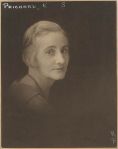
Katharine Susannah Prichard

Prichard, 1927/8 (Courtesy: State Library of NSW, via Wikimedia Commons)

I’m not going to write a deeply researched thesis on this, but write primarily from “the top of my head”. Generally – and I am generalising – much late 19th to early 20th century literature set in the outback tended to be about nationalism, identity and the pioneering spirit. There were novels by women about farmers and pioneers (such as Katharine Susannah Prichard’s The pioneers, my review). Miles Franklin wrote her autobiographical novel, My brilliant career, about a grazier’s daughter who wanted a different life from that being mapped out for her, and then of course there’s the remarkable Barbara Baynton whose short stories in Bush studies (my reviews) certainly didn’t “make paradise” of the outback. Life for her characters, particularly women, was hellish. Baynton and Franklin were realists who didn’t buy into the romance of the bush.

Their realism, and that of some of their peers, was picked up through the middle of the twentieth century by writers like Ruth Park (Swords and crowns and rings, which I’ve reviewed and which is set partly in rural areas before moving to Sydney), Kylie Tennant (The battlers) and Eve Langley’s The pea pickers (my review). But, it’s a huge subject and I really want to get to what inspired this post, contemporary women’s writing about the outback. (The Bingo challenge itself though, I should add, didn’t specify contemporary writing.)

Outback literature – current

In the discussion on Lisa’s post, she suggested that today’s outback novels deal with issues like inheritance and indigenous ownership, to which I added climate change and environmental issues. Before continuing, I should mention that there’s a whole genre of writing that I’m not including here, rural romance, because my focus today is literary fiction.

Alice Robinson, Anchor PointAnd in this area, contemporary women writers have been contributing some provocative books. Gillian Mears’ historical novel, Foal’s bread (my review), is about hard country life, about conservatism and snobbery which refuses to see substance. Jessica White’s contemporary novel Entitlement (my review), on the other hand, explores issues relating farming succession and indigenous connection to land. Cli-fi, fiction about climate change, can be set anywhere, but not surprisingly a subset is set on farms, which is where Alice Robinson’s Anchor point (my review) sits. She also touches on indigenous ownership issues.

And then, of course, there’s Thea Astley who I’d argue is still “contemporary” given she only died in 2004. Most of her books are set in remote places, including her last novel, published in 1999, Drylands (my review). It is set in “a God-forgotten tree-stump of a town” which is “being outmanoeuvred by the weather. As simple as that. Drought. Dying stock.” Drylands moves us into the dystopian vein and brings me to a book which probably wouldn’t immediately be thought of as an outback novel. I’m talking Charlotte Wood’s The natural way of things (my review), which is set in a remote, isolated place that is critical to the way the plot plays out.

Jeanine Leane's Purple threads

Finally, in this very brief survey, I must mention Indigenous writing. Ali Cobby Eckermann’s Ruby Moonlight (my review) is an historical verse novel exploring early contact between indigenous and non-Indigenous people in remote South Australia. Jeanine Leane’s Purple threads (my review) tells of a mostly-female indigenous family living on a small piece of land in the Gundagai area of New South Wales in the 1950s to 1960s. It explores the experience of being indigenous, being lesser, in a rural community. And Alexis Wright’s Carpentaria (my review) is set in a fictional town called Desperance in northwest Queensland. It depicts conflict between different indigenous groups and with the local multinational mining company, and exposes the psychological, spiritual and physical impact of colonisation on indigenous people.

Note: Bill (Australian Legend) has reminded me in his Bingo post that “the Outback” is a white construct. Mea culpa, he’s right, but I’m going to stick with my paragraph above, because I don’t want to ignore indigenous writing. How hard it is, sometimes, to get out of our own world-view.

So, it’s now very clear to me that women are still writing books set in the outback (by my definition). It’s also clear that the issues they are addressing have moved on – not surprisingly – from those of a century ago.

I’d like to know what you think. Do you accept that these books are “outback” novels? And have they reminded you of other novels by women set in the outback? Now that I’ve started, I could certainly go on …

If you are not Aussie, do you have anything equivalent in your national literature?

* Albeit in Wikipedia, with no citation.

Monday musings on Australian literature: Novels about objects

This weekend I went to the National Museum of Australia’s current visiting exhibition, A History of the World in 100 Objects from the British Museum. The promo describes it thus: “Explore the history of humanity — how we have shaped the world, and how the world has shaped us — in this major exhibition. Witness compelling stories expressed through a beautiful collection of artefacts from across the globe.” It’s a beautiful, and, to be clichéd, thought-provoking exhibition. I expect I’ll visit it again.

Funerary stela, Egypt

Funerary stela, Egypt, 100BCE-100CE

The texts associated with the objects varied in the sorts of information they conveyed, depending of course, on the sort of object, and its purpose and meaning. I was particularly interested in those where the object has thrown light on our understanding of people’s lives and social structures. For example, the Egyptian funerary stela is inscribed in three scripts enabling it to be read by “multiple levels of Egyptian society”. That says something about the wish to communicate to all, doesn’t it? Another point the exhibition curators make is that objects have their own biography which may depart from their original role or purpose. They exemplify this by the very first object: an Egyptian mummy FOR x but when it was x-rayed was discovered to contain a male. Why the woman was replaced by a man at some time in the object’s history is a matter of conjecture, though they have some ideas.

Anyhow, all this made me think about novels which focus on an object – and I thought it would be a fun topic for a Monday Musings. It turned out not to be easy – though I suspect it would be easier if I decided to include crime fiction! Objects – weapons, serial killer trophies, and so on, aren’t hard to find there! But literary fiction? Hmm… However, here goes … and of course I’ve made it harder for myself because I am going to focus on Australian novels (listed in alphabetical order by author)

Geraldine Brooks’ People of the book: I read this book before I started blogging. It’s not my favourite Brooks’ novel but it does have an intriguing premise which matches the themes of the exhibition because in this novel Brooks tracks the history of the book, the Sarajevo Haggadah, the people who have owned and handled it through history, its impact on their lives and on history. Parallel to this story is a contemporary thread about the conservator whose job is to prepare the book for exhibition and who is anxious to retain (i.e. not restore away) its history. (I must say though that I’m with the readers who found conservator Hanna’s story the problematic part of this otherwise good read.)

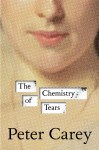
Peter Carey Chemistry of tears bookcover

Peter Carey’s The chemistry of tears (my review):  This was the first book that popped into my head, the one, in fact, that inspired me to write this post. It’s hard to forget the father travelling to Germany to have an automaton made for his ailing son, and the grieving museum conservator given the project of reconstructing it a century later. (I hadn’t thought until now of the loose similarity with Brooks’ book!). The object plays multiple roles: it represents what a father will do for love of a child; it plays a role in the resolution of grief; and, it contains a clever little mystery/irony/message within itself.

Gary Crew’s Strange objects: I haven’t read this novel, a young adult crime novel which won a few awards including the Victorian Premier’s Literary Award in 1991, I but decided to include it because its title, for a start, is a perfect fit. Here is the Wikipedia article‘s description of the book: “Using the framing device of a collection of papers made by a missing boy, Steven Messenger, it is a mystery story that explores the construction of history. When Steven discovers relics from the wreck of the Batavia while on a school camp, (a diary and a mummified hand with a gold ring on it, the two inside an iron pot), he investigates the media frenzy surrounding them …” Wikipedia states that this book was a response to Australia’s bicentenary which, as we Aussies know, brought about quite a revival of interest in exploring Australian history.

Sarah Kanake, Sing Fox to meSome other books in which objects feature, but not as strongly as those above, are Sarah Kanake’s Sing fox to me (my review) in which a Tasmanian Tiger pelt plays a major role in the way various characters manage grief, take agency, accommodate wildness, and Marcus Zusak’s The book thief (my review) in which books in general, starting with The gravedigger’s handbook, and words, in particular, become the focus of our young protagonist’s attempt to understand the Nazi-controlled world she finds herself in. Murray Bail’s The pages (my review) is also framed by an object, by a dead man’s papers (pages) containing his “philosophy”. In fact, when I started thinking about fiction which focuses on objects, the most common object turned out to be books or papers! Not really surprising, eh? But, to conclude my little perfunctory survey, I’ll go for something very different, a bridge. It features in one of my favourite Kate Grenville books, The idea of perfection. It’s at the centre of conflict in a country town, but it also becomes the means of bringing two lonely people together. (And it features on the cover of my edition!)

Have you read any books in which an object is central to the story and the meaning, in which it plays some role in explaining or resolving people’s feelings and lives? I’d love to hear about them – Aussie or non-Aussie of course.

Or, would you like to answer the question our ABC RN asked listeners in a competition related to the exhibition: What object has shaped your history — and why?

Monday musings on Australian literature: Patrick White (Literary) Award

I was thrilled to hear on the radio this morning that Carmel Bird had won this year’s Patrick White (Literary) Award. Bird is such a worthy winner for this award, but more on that anon.

The Patrick White Award* is named, obviously, for one of Australia’s most significant writers and only, to date, Nobel Laureate in Literature. But, more than this, it was established by the man himself, using the proceeds of his Nobel prize money. White, for all his famed grumpiness, was a principled and generous person. Having won two Miles Franklin Awards, among others, he stopped entering his work for awards in 1967 to provide more opportunity for other less-supported writers. His award, established a few years later, continues this desire to support his fellow writers. David Carter, writing in the Australian Book Review, says this about it:

White was no friend to literary prizes and, in some ways, no friend to Australian literature, but he proved himself a friend to Australian writers. The ‘Patrick White’ is in many ways a writer’s award, created by a writer for other writers, and highly valued by them even if it hits the headlines less than the Miles Franklin.

The Canberra Times reported on the creation of this award in October 1973, stating:

Professor Geoffrey Blainey, of the University of Melbourne, said in a statement yesterday that the prize would be awarded annually to “a distinguished Australian writer — preferably an older writer whose life’s writings have not received adequate recognition or reward”.

David Foster, who won the award in 2010, said that White had intended it as ”as a kind of literary loser’s compo”! I guess it’s all a matter of perspective, of how you define “loser”, but it is good to have an award which goes to those writers who, though I wouldn’t call them losers, have fallen into the gaps. Carmel Bird is one of these.

Carmel Bird and Marion Halligan

Carmel Bird and Marion Halligan at the NLA

Before I talk about Bird, though, I’d like to share a little anecdote from Patrick White’s memoir/autobiography, Flaws in the glass. It is about a dinner party he was giving for the second winner of his award, the poet David Campbell:

It was again the evening of a dinner party, this time in honour of David Campbell the poet, who had won the award I set up with the money from my Nobel Prize. I was drudging away in the kitchen about five o’clock when I switched on the radio hoping for distraction from the boredom brought on by chopping and stirring. Like a stream of lava, out poured the news of what was happening in Canberra: that the Governor-General [Sir John Kerr] has dismissed the Government elected by the Australian people …

White goes on to say that he then rejected the Order of Australia that Kerr had recently persuaded him to accept, despite his professed antipathy to such awards, by saying his refusing it “would ruin everything”. Awards, then, are tricky beasts, and I know there are readers of this blog who are not keen on them. I understand their reasons, but I also understand that for many writers the money, regardless of any kudos that may or may not accrue, is very important.

(BTW Note the timing. White wanted his annual Award announced in the week following the Melbourne Cup, which occurs on the first Tuesday in November, “to give literature a brief chance of ousting sport from the nation’s mind”. The dismissal occurred on 11 November, suggesting that in 1975 the David Campbell announcement had been made in White’s time-frame. However, given this year’s announcement date of mid-October, White’s wish seems to have fallen by the way-side.

POSTSCRIPT: This point re timing has caused some discussion in comments and behind the scenes. I have now received in writing from the Trustee’s PR that “Perpetual as Trustee of The Patrick White Literary Award confirms that there is no stipulation in the Trust Deed in regards to the timing of the announcement of the winner.” It seems like it may have been something White talked about but never actually enshrined, which is good really. I believe that the fewer restrictions the better. Times change and donors can never be sure that what they stipulate in their times will have the desired result in later times.)

So now, Carmel Bird. Her Wikipedia article provides an excellent list of her literary output – her novels, her short story collections, the anthologies she’s edited, her non-fiction, and so on. It’s an impressive output ranging across a wide variety of forms and styles, over a long period of time. And yet, under the list of awards and nominations, you’ll see that she’s been shortlisted several times but hasn’t won any of Australia’s major literary awards. Now, at last, she has!

I last saw Bird at the Canberra Writers Festival when Marion Halligan launched her latest novel Family skeleton. On the back of my copy is a quote from the Australian literary critic, Peter Craven:

Carmel Bird is a literary artist to her fingertips … She writes prose that has the precision of poetry and that uncanny quality poetry has of making the inner life speak.

I agree, but the thing that I really like about Bird is the way her mind works. At the risk of sounding cliched, which she never is, she is fresh, original, unafraid to follow the connections her mind makes and certainly unafraid to depart from the expected. You just have to attend a live event involving her to realise this. I mean, this is an author who creates characters who then take on lives of their own, like Virginia O’Day who writes letters of advice to authors in Dear writer. And this is the author who creates a writer, Carrillo Mean, whose work she then uses as epigraphs for her novels! Have you got all that? I wasn’t surprised, therefore, to read that another idiosyncratic writer on the recognition-fringe of Australia’s literary firmament, Gerald Murnane, has described one of her books, The woodpecker toy fact, as “my kind of book”.

FL Smalls 7: Carmel Bird's Fair Game

FL Smalls 7: Carmel Bird’s Fair Game

I’ve reviewed here her cheeky fl small Fair game: A Tasmanian memoir, and I’ve read other work of hers before blogging. I also have the revised ebook edition of her book on writing, Dear writer revisited (featuring the aforesaid Virginia O’Day)I’m not a writer – that is, I have no ambitions to write fiction – but I often dip into this book because the advice is applicable to all writers.

For example, Letter Two discusses “the use of adverbs and adjectives”. Although she is referring to a piece of fiction, Bird’s advice works for any sort of writing. This, for example:

Perhaps you thought that you, as the writer, were the one who had to do all the imagining, and that the reader was to get every detail of the picture from your words. The reader of fiction takes pleasure in doing some of the work, and will more readily believe you and trust you if there is work to do. Strangely enough, the strength of fiction seems to lie as much in what is left out as in what is included, as much in the spaces between the words as in the words. This is one of strange powers at the heart of good writing. The writer’s skill likes perhaps as much in creating the spaces as in finding the words to put down.

Now, when I write my posts I regularly bother about adjectives. I seem to feel that I need them but I rarely like the ones I use. Perhaps I don’t need them at all! The other reason I like to check this book out is for the examples and advice she includes from other writers – from the likes of Helen Garner and Fay Weldon, David Foster Wallace and Frank Moorhouse, to name just a few.

She also quotes Ernest Hemingway:

There is nothing to writing. All you do is sit down at the typewriter and bleed.

Oh dear. This is from Letter Fifteen, “Writers are different”. I think they are – but too often we take them for granted and do not give them the recognition they deserve for the ways they enrich our lives. I’m so glad Bird has received this award and I sure hope she is too.

* I am not sure what this award is called. In some places, including Wikipedia, it is the Patrick White Award, while in others it is the Patrick White Literary Award. Take your pick it seems.

Monday musings on Australian literature: 2016 awards season dragging to a close

As the year draws to a close, our final major literary awards are being announced. We’ve seen this month the winners of the Queensland Literary Awards and the Western Australian Premier’s Book Awards. The Barbara Jefferis Award has announced its shortlist, but we are still waiting for the Prime Minister’s Literary Awards shortlist.

All but one of these awards have had somewhat problematic trajectories in recent years. The Queensland Literary Awards were established in 2012 when the then Queensland Premier, Campbell Newman, abolished the Queensland Premier’s Literary Awards. The awards were managed for two years by a volunteer committee, before negotiation with the State Library of Queensland saw the Library take over management in 2014. In 2015, new Premier Anastasia Palaszczuk announced that the government would again support the awards. However, they are now a more collaborative venture than they’d been under the abolished regime, which should ensure a more secure future for them. The Western Australian Premier’s Book Awards, on the other hand, which had been awarded annually from 1996 to 2014, were downgraded to a biennial timetable starting in 2016. Disappointing, really.

Meanwhile, what has happened to the Prime Minister’s Literary Awards (PMLA)? Established in 2008 after Kevin Rudd became Prime Minister, they expanded quickly from comprising just two prizes (fiction and non-fiction) to several, so that by 2102 there were six prizes with young adult fiction, children’s fiction, poetry and Australian history being added to the mix. However, there seems to be no established timetable. In 2008, the winners were announced in September, while in 2009 and 2010, we had to wait until early November. Then, in 2011 and 2012, they were announced in July, and in 2013 it was August. The last two years, 2014 and 2015, the winners were announced in December, with their shortlists announced in October and November, respectively. Given there’s been a call for entries this year, they must be happening, so presumably we’ll see this year’s shortlist soon! The PMLA people play it very close to their chest, despite having a Facebook page on which they share all sorts of literary news, because this year, as in recent ones, I’ve not been able to find a timetable. I guess we just have to have faith.

The Prime Minister’s Literary Awards have other issues, though, besides erratic timetabling, including a lack of transparency regarding the process, poor marketing and promotion, and, most serious of all, political interference in the judges’ decisions. The best known example of this occurred in 2014 when the then Prime Minister Tony Abbott over-ruled the fiction judges’ choice of Stephen Carroll’s A world of other people to award the fiction prize to Richard Flanagan’s The narrow road to the deep north. But, according to Patrick Allington in The Conversation and past non-fiction judge Colin Steele, such interference has occurred a few times in the Awards’ short history. This is not good enough. As Allington writes, the stipulation that a Prime Minister has the final say about winners “compromises the Awards’ credibility, purpose and depth.”

The fun stuff … some winners

But enough of that. Let’s talk about some of the winners. I’m not going to list them all because the Queensland Literary Awards offers prizes in twelve categories and you can see them all at the site. Similarly, the WA Premier’s Book Awards has about eleven categories, and you can see those winners too at their site. I’m just going to share the few winners I’ve read and reviewed!

Elizabeth Harrower, A few days in the country and other stories

First up, the Queensland Literary Awards. The award which pleased me most is Elizabeth Harrower’s A few days in the country and other stories (my review) sharing the Steele Rudd Award for Australian short story collections sponsored by the University of Southern Queensland. This is a wonderful collection of short stories, which has been shortlisted for a couple of awards, so I’m thrilled to see Harrower receive the recognition she deserves. (And I’m pleased for Text Publishing too given the work they’ve done to bring Harrower to our attention through their Text Classics).

Fiona Wright, Small acts of disappearanceAnother a winner at these awards was Fiona Wright’s honest, insightful collection of essays, Small acts of disappearance (my review), about her experience of an eating disorder. Wright was the Non-fiction Book Award, also sponsored by the University of Southern Queensland.

Meanwhile, over in the west, at the newly biennial Western Australian Literary Awards, it all felt a little old because many of the winners have been around for a couple of years now and most of them featured in the 2015 shortlists and awards. This is not their fault of course, but it certainly brought home the impact of the awards only being two-yearly. The fiction award, for example, was won by Joan London’s The golden age, which was shortlisted and/or won several awards in 2015.

Helen Garner, This house of grief book cover

Courtesy: Text Publishing

The big news at these awards, from my point of view, is that Helen Garner’s non-fiction work This house of grief (my review) won not only the Non-fiction prize, but also the overall Premier’s Prize. A fascinating choice, because mostly, though not exclusively I know, these overall awards tend to go to works of fiction.

Western Australia, like Queensland, quarantines an award or two to writers from their states. Queensland has awards for “a work of state significance” and “emerging Queensland writer”, while Western Australia offers awards for “Western Australian history” and “Western Australian emerging writer”. The winner of this last award is a book I’ve reviewed here, Lost and found by Brooke Davis.

And so, by my reckoning, we have three more literary awards to go – the Prime Minister’s (on a yet-to-be announced date), the biennial Barbara Jefferis Award (on 25 October), and the always interesting MUBA (Most Underrated Book Award (on 11 November). Good luck everyone.

Monday musings on Australian literature: Australian Arts, mid-1960s style

Hodge and Whitehurst, Nation and PeopleLast week’s Monday Musings discussed my high school history book, Nation and people, published in 1967. I don’t plan to labour this book, but I would like to share its chapter on the Arts.

The authors, Brian Hodge and Allen Whitehurst, dedicate 8 pages to “The Arts” which is pretty good, I think, for a school history book. The chapter is divided into sections: Slow growth of Australian culture; Poetry; Drama; The novel; Music; and Painting. There are gaps here – nothing on film or sculpture, for example – but what can you do in 8 pages after all!

They start by arguing that “a distinctive Australian cultural tradition has been slow to grow”. Now, before you jump at me and say “But, but, but, what about indigenous culture?”, they do mention this, albeit with the paternalism that was typical of the time:

True culture is probably the product of a deep and intimate relationship with one’s country, something that occurs over centuries. The original owners of the land, the aborigines, certainly evolved an individual culture that was part of the spiritual core of their existence. Although nothing was written they formulated their legends to explain to the young the marvels of the universe, they composed and sang their simple and sometimes haunting melodies, they carved in primitive fashion, they danced superbly.

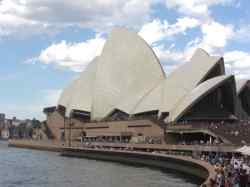
Sydney Opera HouseThere’s a lot that’s wrong with this statement from our 21st century eyes, but at least they recognise the “original owners” and the fact that culture comes from “a deep and intimate relationship with one’s country”. They then go on to describe how the early settlers tended to rely on “the old culture” and that even the balladists telling stories about the new land used “the tunes of their forefathers”. However, they say, “a vigorous development in all the arts” happened after the second world war “coinciding with remarkable economic progress”. Government increased its patronage of the arts, and “in Sydney”, they write, “there is being constructed an Opera House which architectural histories describe as a major achievement of architecture in the twentieth century”. It sure was.

Poetry

I’m just going to briefly share their points on poetry and the novel, given these are the topics most relevant to my blog. Regarding poetry, they point particularly to Judith Wright and AD Hope whose poetry “has been distinguished by a vigour and their imagery noted for its immediacy of impact”. How I wish I could be so succinct! Seriously though, I like their assessment of Wright, that she has “perhaps more poignantly than any other poet”

expressed the nation’s new-found spiritual awareness of its past … Her poetry is the deep expression of the feelings of women: to love, to old age, to decay, to the past, to war, to the future. JB Priestley, prominent English novelist, dramatist and critic, has claimed that Judith Wright is one of the best poets writing in English today.

How fabulous, even though their reference to “the feelings of women” does sound a little reductive?

As for  AD Hope, he too, they say, has “been highly acclaimed by overseas critics”. See that cultural cringe? Clearly, the fact that overseas critics praise Wright and Hope proves their worth! Anyhow, they describe him as “a satirist concerned with Man and his frailties.” (Note the uppercase Man to imply both genders but they can’t avoid the “his”). They quote Hope as describing “Australia as a place ‘where second-hand Europeans pullulate timidly on the edge of alien shores’.” They also say:

In no way does he resemble Wright. Rather he has consciously tried to lead Australian poetry away from a preoccupation with its environment, a savage reaction to the school of Australian poetry that concentrated on gum trees, koalas, kookaburras, kangaroos and boomerangs. His satire has an acidity, a near tragic note and a technical mastery new to Australian poetry.

They name a few other poets, including Douglas Stewart (a favourite from my schooldays), David Campbell, and Gwen Harwood whom they describe as “perhaps one of the most promising contemporaries … whose poetry is deeply personal, with original and compelling imagery”. They were right. She did become important, and one of Australia’s most significant poetry prizes is named for her.

The novel

I’d like to talk about drama, music and painting, but I don’t have the time and energy for that right now, so I’ll move onto “the novel”, which, interestingly, receives far less space than poetry and drama.

They start by saying that “during the 1930s Australian novelists tended to concentrate on the family saga, digging into Australia’s past to reveal the rise of egalitarianism.” They name Miles Franklin’s All that swagger (1933) and the unknown-to-me Landtakers (1934) by Brian Penton. They say that their novels are about pioneers who, as they “gained wealth … seemed to die spiritually.” We can read Landtakers at Project Gutenberg Australia. I’m surprised that they don’t mention works by Katharine Susannah Prichard, M. Barnard Eldershaw, and the other women who made quite a splash in the 1920s-40s. Some of their work was in this “pioneer” mould, but some also turned to the urban landscape, particularly Marjorie Barnard and Flora Eldershaw.

Anyhow, they go on to say that “the writing of historical novels of this pattern continued in the 1940s” but that developments occurred in the 1950s, heralded particularly by Patrick White’s Voss in 1957. They quote an unnamed critic saying:

White has opened up in a startling way the range of Australian fiction, not only by his experiments in form and language (which are sufficiently striking in themselves) but by conceiving and acting out the dramas of his characters in an imaginative world with one more dimension than our novelists have genuinely recognised as existing.

Fascinating, but a little mystifying. “One more dimension”. Is that the telepathic communication experience between Voss and Laura? And “genuinely recognised”? What does that exactly mean? However, I do like their suggestion that the result has been “a turning away from the violence of nature to a deeper study of man himself, with his depths of hidden passion and violence”. They quote Xavier Herbert, Morris West and Hal Porter as writing books reflecting this development.

Points to ponder

At the end of each chapter, Hodge and Whitehurst include some discussion questions. I can’t resist sharing those for this chapter:

Do you consider the Arts important for man? Why?
Do you think the Arts could be an important source for historians? Why?
Which of the Arts are most important in your family?
Do you believe future generations of Australians will regret the enormous expense of the Sydney Opera House?
Do you think Australians yet regard culture as an integral part of their existence

You don’t have to answer them all!