Monday musings on Australian literature: Guest post from Bill of The Australian Legend

It’s been two years since I last published a Guest Post, for no any other reason than that the idea slipped off the radar as other busy-ness took over. However, during a recent email correspondence with (relatively new) blogger Bill, the idea re-popped into my head, and so I asked him, as he explains below.

First though, a quick intro. Bill appeared on the Australian lit-blog scene just over two years ago with quite a bang. Well, that’s a bit overly dramatic perhaps. What I mean is that he launched himself as a serious player in the lit-blogosphere, and one with a very particular agenda – to write about independent women, particularly independent women writers. Well, of course, I was interested in that and have enjoyed some good discussions here and on his blog ever since. If you’re likewise interested, I suggest you start with his About page and move on from there.  Meanwhile, let’s give the floor to Bill …

*****

Apart from my friend Michelle at Adventures in Biography who got me started on Lit.Blogging, Sue here at Whispering Gums was the first blogger I followed and who followed me. So I owe her a great debt, and feel guilty each time I think of the imaginary detective story where the private eye’s principal informant is the toothless derelict … Whispering Gums. (The real, and much nicer, origin of her name is here.)

It is a matter of great pride to me to be invited to do a guest post, and I’m only sorry that it is under false pretences. I was discussing (by email) with Sue some reviews I had put up on the Australian Women Writers Challenge site and I asked her in passing what she thought of biographies of women writers by men. My intended question was did she think the AWWC site should list them. Sue however thought I was asking her opinion of the biographies themselves, and promptly put it back onto me!

Do you remember the old BBC Radio show Just A Minute which was often used as a filler on Radio National? Well I feel like (the late) Derek Nimmo leaning in to the microphone to speak for 60 seconds on the life cycle of newts. But here goes, 1000 words on Biographies of Women Writers by Men, starting now.
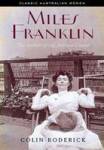
Colin Roderick, Miles FranklinI have reviewed two such biographies, Brian Mathews on Louisa Lawson and Colin Roderick on Miles Franklin. The former is a good example of a man being able to write sympathetically and insightfully about a woman, and the latter is not.

Walking up and down my own shelves I see I have numerous biographies by women. Three – Roe, Barnard and Coleman – on Miles Franklin, Barbara Baynton by Penne Hackforth Jones, Christina Stead by Chris Williams, two by Sylvia Martin – Aileen Palmer and Passionate Friends, ‘collected’ lives by Drusilla Modjeska, and by Dale Spender, Tomalin’s Jane Austen and Gaskell’s Charlotte Bronte; and I also have two more by men, Brian Dibble on Elizabeth Jolley (Doing Life which I really ought to have reviewed by now) and Ric Throssell on his mother, Katharine Susannah Prichard.

Of course, as you may know, I am an old white guy and so I am probably the very last person to be attempting to answer the implied question: does it matter? Well, in the case of Colin Roderick (1911-2000), one of the most influential figures in the Aust.Lit industry in the middle of the last century, his gender matters a great deal. He runs Franklin down both as a writer and as a woman:

[her] unshakeable conviction of physical inferiority and lack of physical attraction… converted her into a skittish coquette stringing two or three men along simultaneously and a synthetic man-hater… It forced her to become a defensively bellicose propagandist for feminist causes.

He routinely misstates her commitment to feminism, and writes that a determined suitor might have cured her flirtatiousness with a spanking. In the comments to my piece on Roderick, author Jess White, taking comfort from my description of him, describes Roderick’s biography of Rosa Praed, In Mortal Bondage, as “bizarre & bordering on fiction in places.”

The Roe biography of Franklin I would describe as asexual, but the earlier (in fact the first) biography, by Marjorie Barnard, which I haven’t read for a long time, does seem to me to reflect the fact that it is written by a woman. It starts (stereotypically!) by describing how Franklin dressed and how she looked: “her smile. Radiant, quick and gay, it transformed her. It was irresistible and in her old age still charming and youthful.” And ends with an analysis of love: “[Miles] held in her heart an impossible ideal of human relationships and when she found it unrealizable, not so much for herself as in the lives of others, she was bitterly hurt and disappointed”, which I have never been able to express half so well.

Unlike Roderick, Matthews takes Lawson’s feminism seriously and gives a good account of it. In fact, he takes Lawson seriously as poet, businesswoman, leading figure in the women’s movement at the turn of the century, and as a mother (with four difficult adult children!) Whether he adequately emphasizes with her, perhaps only a woman could tell. Unfortunately for Matthews there was very little evidence to say how Louisa spent her private life after leaving her husband – although we’re pretty sure she didn’t want to get pregnant again.

Marianne van Velzen in her account of Ernestine Hill turned to fiction to round out those areas where evidence was lacking, an approach which Matthews discusses and dismisses, and which I think detracts greatly from the usefulness of those autobiographies which resort to it.

At this point in my writing I went away for a couple of days, and by sitting, driving, with the radio off, was able to refine my ideas. We have seen that biographies may be ‘factual’ or ‘fictionalized’. Then, from a ‘gender studies’ point of view we may also categorise them as: Neutral, Masculinist, and Feminist. The problem of course with ‘Neutral’ is that old, conservative, white men regard their own point of view as neutral and all others as radical. But let us say for argument’s sake that ‘neutral’ is the gathering and presentation of historical material without (much) gender analysis, and that Jill Roe’s Stella Miles Franklin is an example of this. Colin Roderick’s biographies of Franklin and Praed are clearly ‘masculinist’, in that he devalues the opinions of the women he is writing about and ascribes to them motives which he wouldn’t ascribe to men. An example of a ‘feminist’ biographer might be Sylvia Martin who is exploring the space between spinsterism and lesbianism by looking into the lives of single women writers like Mary Fullerton.

A further division is suggested by Nathan Hobby who is both a blogger and PhD student writing a biography of Katharine Susannah Prichard. At the end of 2015 he wrote, “The best biographies, in my opinion, are generally written by biographers who care about biography as a genre rather than biographers who are simply passionate about their subject.”  So then we also have ‘serious’ biographers and the ‘simply passionates’. The latter definition clearly captures rellos such as Ric Throssell and journalists like Marrianne van Velzen.

If you are thinking I have drifted a bit far from the topic, I guess the questions I am trying to get to are: How many Australian women writers have been the subject of biographies by ‘serious’ men? And, assuming only Roderick actually attacks his subjects, how many of those biographies were sympathetic, and how many missed the point?

Now, all you Whispering Gum-nuts out there, it’s down to you. I’ve listed the four that I have. How many have I missed?

Thanks Bill for taking up my invitation – and for presenting some different angles for us all to think about regarding biographers and their biographies.
Monday musings on Australian literature: Reading indigenous literature

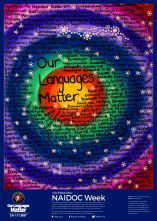
2017 National NAIDOC Poster (used under Creative Commons licence, CC BY-NC-N4 4.0)

Each July, as well as contributing at least one review to Lisa’s ANZLitLovers Indigenous Literature Week, I try to write a Monday Musings post related in some way to NAIDOC week which, as Aussies will know, is a week, usually the first full week in July, during which activities are planned to “to celebrate the history, culture and achievements of Aboriginal and Torres Strait Islander peoples”. Each year there is a theme, and this year it’s a good one, Our languages matter.

I have for as long as I can remember – since high school anyhow – been interested in social justice and civil rights (as we called it in the 1960s & 1970s). I read a lot back then about indigenous Australians and African-Americans in particular, such books as Douglas Lockwood’s I, the Aboriginal and Katharine Susannah Prichard’s Coonardoo. These books helped fire my feelings about injustice: they showed me some of the impacts of the inequities stemming from racism and of course they touched my emotions.

However, the only indigenous Australian writer I remember reading was Kath Walker as she was known then (or Oodgeroo Noonuccal as she became), until I read Sally Morgan’s My place in 1988. These writers started to help me see and feel, under the skin, the experience of being indigenous in Australia.

Now, if you keep up with discussions about the value of reading, you are sure to have read the various arguments for, or theories about, how reading can improve empathy. There was a Scientific American article in 2013 which reported that “Researchers [Emanuele Castano, a social psychologist, and PhD candidate David Kidd] in New York City have found evidence that literary fiction improves a reader’s capacity to understand what others are thinking and feeling.” Another article in The Washington Post in 2016 reported on cognitive psychologist Robert Oatley’s research of over a decade and his conclusion “that engaging with stories about other people can improve empathy and theory of mind”, resulting in improved “social ability”.

There are the naysayers to these arguments, of course, and I don’t know if reading fiction has increased my ability to empathise or not, but I can’t help agreeing with novelist Joyce Carol Oates’ statement that “Reading is the sole means by which we slip, involuntarily, often helplessly, into another’s skin.” “Sole” may be pushing it too far, but otherwise here’s my experience … and I fear I’m a bit clumsy in putting it but hope it makes sense!

I have become aware in recent years that my understanding and awareness of indigenous lives has deepened beyond the intellect and simple empathy, to a level of “knowing”.  In other words, I knew about – and could empathise with – the sense of loss, anger, disempowerment that those earlier, mostly non-indigenous writers described, but now that empathy is increasingly underpinned by knowledge of how dispossession plays out. I can never know what such historic dispossession does to a person’s psyche from personal experience but reading writers like Kim Scott, Alexis Wright, Jeanine Leane, Marie Munkara and many others, has given me the next best thing.

To labour it a little more: because I “know” my white anglo culture, I can can more quickly understand the context for a story about a gay man or an abused wife even though I’m neither of these. The leap to real empathy, which I’m arguing requires a thorough understanding of the underlying culture, is not a big one when people come from my own world. When they don’t, I can empathise at a human level – at the level any of us can when we see someone else in pain, struggling, angry, triumphant, and so on – but I sense that it’s a shallow empathy that doesn’t comprehend the forces behind that pain (etc). How do you get to comprehend those forces?

Well, Jeanine Leane, as I wrote in a recent post, says you need to immerse yourself in the “other’s” culture, in her case, indigenous Australian culture. For most of us, however, this is very difficult, if not impossible, but Leane argues that reading indigenous literature, that is writings by indigenous people about indigenous people’s lives, is a way in which we can engage with the culture. In her book, Position doubtful, which I reviewed recently, Mahood talks about the moments she waits for when, in a sense, a lightbulb turns on, when she experiences “a cognitive shift”. It’s that cognitive shift that I feel happening as I read more and more indigenous authors (of both fiction and non-fiction, particularly memoirs). It manifests in the fact that I don’t have to recalibrate my bearings so much when I open a book by an indigenous author. Certain things are givens – such as the original dispossession, the stolen generations, relationship to country. I don’t have to work to understand these, as I read, they’re there.

I hope this doesn’t repeat too much what I’ve written before, and I hope that it doesn’t sound arrogant, because it’s not meant to. I certainly know that I have much more to learn and understand. However, while I read and listen to commentaries in papers, on television, via the radio, it is through the indigenous writers I’ve read that what once felt more like information is now becoming a truth. I think that’s a powerful thing – and is why I’d argue that more Australians need to read more indigenous authors.

Monday musings on Australian literature: Changing literary tastes (2)

My last Monday Musings post was on Changing literary tastes from the 1920s to 1940s, using newspaper articles I’d found in the National Library of Australia’s Trove. Today’s post draws on just one article from the 1950s. I’m choosing just one because it, unusually in my experience, has a by-line – for a person worth introducing – and because the article is so delightful.

Leon Gellert, 1920s, by May Moore (Presumed public domain, nla.gov.au/nla.pic-an11253492, via Wikipedia)

So, the by-line. It is Leon Gellert (1892-1977), but I can’t resist telling you that when I first heard his name all I could think of was a tragic epic poem I read as a child about the dog Gelert (sometimes Gellert). Being a dog lover, that tale of a faithful dog has dogged me (sorry!) so powerfully ever since that whenever I heard the name Leon Gellert I couldn’t get past the dog – until now.

Why now? Because the article I found in Trove titled “The decline of the bookcase” was so entertaining that I decided to shake off my childish memory and check the man out. I found him in the Australian Dictionary of Biography (ADB). Biographer Gavin Souter describes him as “soldier, poet and journalist”. Gellert was born in South Australia, and taught briefly before he enlisted with the AIF. He ended up at Gallipoli on 25 April 1915, was injured, and repatriated home in 1916 after which he returned to teaching. He wrote poetry during and after the war. Souter describes him as “Australia’s closest approximation to a Brooke or Sassoon”. His short, powerful poem, “The jester in the trench”, appears in Jamie Grant’s 100 Australian poems you need to know.

According to Souter his early promise was not sustained and he turned to journalism. In 1942 he became The Sydney Morning Herald‘s literary editor “and wrote a graceful column, ‘Something Personal’, for the Saturday book pages”. The article I found is one of these, so let’s look at it.

Published on 16 June 1951, it captured my attention because it starts off talking about bookcases, and what reader isn’t interested in them! He starts

RECENTLY I roamed the city in search of some ready-made bookshelves. It was an almost fruitless search. The few that came within the bounds of my requirements were pitifully stunted little things obviously designed by craftsmen who had never read a book in their lives. The top-most compartment reached no higher than a man’s waist and the lowest could be approached only by crawling on all fours.

I was confident I would enjoy reading this. He then talks about

glass-fronted book-cupboards; ungainly remnants from late Victorian days now raised to the peerage with the dubious rank of “antique.” These, doubtless, once held their stern leather-bound arrays of Scott and Thackeray and Carlyle, close-corseted in the gloom against casual and curious hands. But they were too prohibitive in price for my pocket and too full of shadows for my purpose. There is so much unlatching and probing to be undertaken that the extraction of a volume is like an obstetrical operation.

Hmm, we Gums rather like glass-fronted bookcases because of the dust factor – but we only have a couple (recently inherited), and he is right about the “unlatching and probing”. He continues in a similarly entertaining vein, pronouncing his preference for bookcases “of open countenance that smile their invitation across the whole length of a room.” This is the type we mostly have – floor to (nearly) ceiling, most double-stacked. Very convenient, but pretty dusty too! What are your favourite types of bookcases?

He progresses from describing various bookcases to discussing their dearth in contemporary homes. He says where once they had a place in every small home, now they are viewed with suspicion:

How often have I admitted a guest to hear him exclaim, with a tincture of mistrust, as he crossed the threshold for the first time, “Ah, I see you are a reader,” and that mark you, with no more evidence to guide him than a meagre rack of books in what is referred to with sweeping hyperbole, as the entrance hall!

Hands up if, like Gellert and us, your first of many bookcases is in your entrance “hall”.

And then he gets on to WHAT people are reading …

He says that in the past people all read the same sort of material – a wide mix encompassing the likes of Henry James, H. G. Wells, Thomas Hardy, Eden Phillpots and Stanley Weyman (who was also known, says Wikipedia, as “the Prince of Romance”). “Those beyond the pale”, he writes, “read Mr. Garvice“. I had to look him up too! He was a very popular writer of romance in the early twentieth century.

However, now, he says, readers are dividing into two groups, “those who read, let us say, Virginia Woolf, E. M. Forster, Graham Greene and Joyce Cary, and the vast mass who read what I believe are called ‘Westerners’.” What’s more, he suggests, these groups are contemptuous of each other. This is interesting. Is he right that this divide, one that still largely exists today, only started around the 1950s?

Anyhow, then, having mentioned “westerners”, which, according to the writers in my first post, were their way out, he moves on to detective novels. He wonders if they are the cause of the impermanence he’s identified. The detective fiction craze has been going for forty years he says. When will it stop? One of their attractions, he thinks, is that they are a game that can be played in private, like patience, and they have “something in common with the crossword puzzle”. He quite likes detective novels himself, but is concerned that, having lasted more than thirty years – his marker for “the most obstinate vogue in history” –  detective fiction will “establish itself as a durable department of literature.”

He trots out, too, a concern about what it means to love detective fiction. We deride melodrama, he says, but “the most outrageous complexity of treachery, murder, torture and rape is regarded, by the intellectual and the illiterate, as legitimate fun”. Is it really the harmless game people think, he asks? He then tells us that detective fiction is popular with world leaders. Hitler loved them, as do “the most distinguished statesmen in the English-speaking” world and “the most scholarly writers and the most immaculate ministers of religion”. They all “squander countless hours in company with M. Poirot and Lord Peter Wimsy”. And yet, he says, when people worry about child delinquency, it’s cinema and radio they blame!

He concludes by wondering whether the time could come when detective fiction is banned. He doesn’t really want to see that, but at least it could “help to reestablish our pride in the permanent companionship of good books”.

We now know that detective fiction has indeed become “a durable department of literature”, but I’d argue that we have also reestablished our “pride in the permanent companionship of good books” (if he was right that it had been lost). Putting aside for a moment economic issues, the interesting question here is how important to literary culture is “the permanent companionship of good books” – meaning ownership and storage in personal bookcases – versus the fact that people are reading (as he says people were in his time).

Monday musings on Australian literature: Changing literary tastes (1)

Research can send you off on all sorts of tangents – particularly if don’t have to be focused. What fascinating things you can find when you go with the flow (in the wonderful Trove)! It started with my recent post on Currawong Press, which, somewhat serendipitously, led to a post on books published in The Australian Women’s Weekly. It also led to this one on literary (or reading) tastes in 1920s to 1940s Australia, through an article published in the Sun in 1947 which mentioned the strange fact that some books by Currawong Press on taxation had become best-sellers almost overnight, but it said a lot more too …

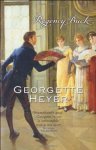
Georgette Heyer Regency BuckHowever, let me introduce the topic. That Sun article set me off on a trail which uncovered several articles discussing the public’s literary tastes, and how and why the “experts” thought they were changing. The experts were mostly librarians and booksellers. In 1929, The Sydney Morning Herald asked the large circulating libraries whether they’d seen changes from the previous year’s borrowing. Yes, said the librarians. They noted:

  • a changing of the guard in popular authors, but since none of the names – except one – are familiar to me, I won’t detail them. The one I did recognise was identified as “rapidly approaching the status of best-sellers”, Georgina Heyer! Well, I sort of recognised her, as presumably they meant Georgette Heyer. Her books would have been gaining traction around then, and I can’t find a Georgina.
  • a decline in the “sex-novel”, and also in plays. “Once upon a time every play published by Pinero and other popular dramatists sold almost as well as a novel”. How interesting.
  • increased interest in detective and mystery stories, and historical novels
  • increased interest in short story collections. Woo hoo! They write that “a very few years ago publishers hesitated to bring out volumes of short stories. That is all changed now.” Is an increased interest happening again now do you think?
  • increased sales of “standard works” (in “pocket editions”). They were “selling so amazingly well that there is almost evidence enough to show that the general public is being weaned from the frothier varieties of books”

What a fascinating insight into reading habits. I have no idea how “scientific” these observations were, but librarians are very trustworthy people, you know!

The Sunday Mail in 1932 explored changing tastes in detective fiction, arguing that “the reader of to-day wants to pit his brains against those of the detective, and so the mystery novel is assuming more and more the aspect of a mental problem”. When asked, Brisbane booksellers and librarians:

emphasised that there are “thrillers” and “thrillers,” detective stories and detective stories. The popularity of the detective thriller of the Edgar Wallace type, it was explained, was on the decline even before the death of that undoubted master, but not so the intellectual “thriller.”

They describe in some detail what makes an “intellectual thriller”.

The article also mentions increased interest in Australian books, and notes the surprising popularity of Swedish physician Axel Munthe’s The story of San Michele. It apparently “emerged from obscurity into something like the status of a best seller, all because a few people allowed themselves the pleasure of reading it ‘on chance’.” The booksellers said that bestsellers of “today are 100 per cent superior in literary merit to the bestsellers of five and six years ago”. This was the Depression era … I wonder what impact that had on reading tastes.

This idea of improved public taste was repeated in 1933 in an article in the Horsham Times which reported a statement by visiting English publisher John Lane, from Bodley Head. He said

there had been an improvement in the literary taste of the reading public throughout the world, and the demand among the great body of the public to-day was for clean healthy stories and plain dirt had little sale.

I’m not sure that “clean healthy stories” are guaranteed to be “literary”, but probably “plain dirt” isn’t? Lane suggests that “cheap lending libraries [presumably in England] were responsible for changing the literary tastes of readers in the industrial classes from the penny story magazine to volumes, and would eventually raise the literary standard of the masses”. Oh dear, this sounds a bit snooty, but I do like his belief that libraries were helping widen people’s reading tastes.

Now we jump t0 1937, with the Depression on its way out, and an article in Melbourne’s Argus titled “Novels are less popular”. It says that demand was changing, with “tastes more serious”. This came from Melbourne librarians who said that the borrowing of novels had decreased from 75% of their loans to 65%. Prahran Library chief librarian gave a reason for this:

The uncertainty of the international situation in Europe, he said, was resulting in many former readers of fiction asking for such books as Gunthe’s “Inside Europe,” and other works on economics and politics. The depression had made borrowers’ tastes more serious, and there was a growing demand for books on the trades and useful arts.

Interesting eh? Sometimes we hear that in hard times people turn to lighter fare, but apparently not always. Except, the report continues:

The [unnamed] chief librarian at a large city library said that with the return of more prosperous times many persons who had been forced to read during the depression were now finding their relaxation and amusement at the cinema. There had been a large decline in the borrowing of low grade fiction.

Hmm, there’s that “low grade fiction” again. And “forced to read during the depression” suggests that reading was not the entertainment of choice then (as that reader survey says it is in contemporary Australia)? The article quotes the librarian of the Borough of St Pancreas London as also attributing “the decline in the popularity of the novel to the appeal of wireless and cinemas”.

Anyhow, now we come to the 1947 article in Sydney’s Sun which inspired this post. Titled “Tastes in books were changing”, it looks at bookbuying in the lead up to that year’s Christmas.  It opens by stating that “book-buying boom, which began in the war years, is being maintained in the peace”. Booksellers said that:

  • War books were generally “out”, with some exceptions. However, publishers felt that war books would return just as the publication of All Quiet On the Western Front had generated renewed interest in World War 1
  • “Thrillers” were also declining, and “the sale of Westerns was negligible”
  • Australian books were popular, with most booksellers “displaying Australian books on special counters” (something we discussed recently). One firm reported that the sale of Australian books had doubled in recent years: the “First edition of Flying Doctor Calling, by Ernestine Hill (Angus and Robertson), sold out in a week. An Australian classic that keeps on selling and selling is The Fortunes of Richard Mahoney, by Henry Handel Richardson.”
  • Long historical novels were in “big demand”
  • Books about Australia and other countries were very popular. A bookseller suggested that “The quiz craze may have something to do with this thirst for knowledge among Australians”. (Love the quiz craze!)
  • European migrants were keen book buyers, buying “expensive books on politics, art, music
  • Children’s books were selling well, perhaps partly due to “the high price of toys”

The article also discussed the increasing cost of books, but said people were paying the high prices “without demur”. It also noted that “unfortunately for Australian authors the boom in Australian books” had coincided with “unprecedented publishing difficulties”, which they describe in some detail. The situation was so bad that “Some local publishers are more than a year behind in their programmes and there isn’t much likelihood of catching up for a long time to come. Dozens of accepted Australian manuscripts are awaiting publication.” Poor writers.

Through these articles, there’s an ongoing thread of concern about “literary quality”. Do we see this same earnestness about whether people are reading “quality” in book reporting today? Or, are we more tolerant of diverse reading interests?

Monday musings on Australian literature: ACT Writers Centre

Do you have a writers centre in your neck of the woods? We do in Australia, but I’ve barely written about them before. They generally provide support and/or training for writers, via online and face-to-face mechanisms, some free-of-charge but most fee-paying, and tend to be membership organisations. Over coming months, I’ll share what’s happening in different centres around Australia, but I’m starting here with the one in my city, the ACT Writers Centre.

First though, a little anomaly – to do with apostrophes! I note that the ACT Writers Centre has no apostrophe in its name, while the Australian Writers’ Centre does. Whyfor this thusness? A quick survey around the various Australian state centres revealed that most do not use the apostrophe (with the Northern Territory appearing to have a foot in both camps, depending on which page you are on!) It’s like Mothers/Mother’s/Mothers’ Day. I prefer the no-apostrophe approach. As in, what sort of (adjectival) day is it? It’s a mothers day, that is, a day for mothers. Rather than, whose (possessive) day? It’s mother’s day, a day owned by mothers. It seems that most writers centres in Australia see it the adjectival way. Either that or they don’t know their apostrophes, and that would be a worry!

Enough pedantry, let’s get on with the ACT Writers Centre. It describes itself as:

the leading organisation of writing-based culture in the ACT. Our mission is to develop writers and their work.

How do they do this? Well, by running programs, offering prizes or awards, and providing services such as manuscript assessment, editing, and mentorship. Most of these are fee-based. They also have a blog, Capital Letters.

In this post, I’m going to focus on four special programs offered, but they also offer various courses. Currently, the ACT Writers Centre runs four main programs:

HARD COPY

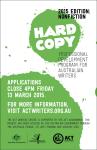
HARDCOPY 2015 flyerI’ve written about Hard Copy before, in a previous Monday Musings post. The first program was held in 2014, so this year’s will be its fourth. They describe it as “a national professional development program that helps build the capacities, aptitudes and resources emerging Australian writers need to reach their potential.”  Its aim is not specifically to achieve publication for its participants, but to help them with manuscript/project development, to arm them with an understanding of how the Australian publishing industry works, and to help them “build connections and relationships within the industry/writing community”.

This program, which is run by our local centre, receives funding from the Australia Council for the Arts, and is offered nationally, that is, not just to ACT-based writers. Also, it alternates between fiction and non-fiction writing. This year’s program, as the one run in 2015, is for non-fiction writing.

All this is pretty dry. For an insider’s perspective, do read Michelle’s posts on her blog, Adventures in Biography, on her experience of the 2015 program. She had a great experience – and I was pleased because I got to meet her while she was here! She found the program very helpful, to say the least.

Between the Lines

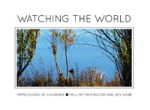
Hetherington and Webb, Watching the worldYou know that mantra, the one that says to be a writer you need to be a reader? Well, the ACT Writers Centre clearly believes it to be so, because this year they are offering “a facilitated book discussion group for writers with an active practice”. This sounds a bit like a reading group, but with two big differences. First, it has  a professional leader, in this case Professor Jen Webb from the University of Canberra (whose book with poet Paul Hetherington, Watching the world, I reviewed a couple of years ago). And secondly, the focus will be on “authorial technique and achievement, rather than subjective personal judgements on whether or not the book is ‘good’ or ‘bad’”.

The focus this first year will be Australasian literary novels. You can see the list on the link I’ve provided on the heading. There are 6 books, as it’s a bimonthly program: three are by men and three by women, three are by New Zealand writers including one by Maori writer Witi Ihimaera, and one is by a woman of indigenous Australian background (Melissa Lucashenko). I’d love to see their discussions written up on the Capital Letters blog!

ACT Writer-in-Residence

This is the program which, when I read about it last week, inspired today’s post. It’s a new three-year program offered by the Writers Centre in collaboration with the University of New South Wales (Canberra) and with support from the Copyright Agency Ltd. Again, you can read the details of what the program offers and expects on the link I’ve provided. Like HARD COPY it is not limited to ACT Writers. It is mainly geared to established writers, but “suitably qualified developing writers” were also encouraged to apply.

Last week the three writers were announced:

  • 2017: Isobelle Carmody, fantasy writer, particularly of the immensely popular, much translated, Obernewtyn Chronicles. (Daughter Gums was, and still is, a big fan.)
  • 2018: Jane Gleeson-White, prize-winning non-fiction writer who plans to research a novel set during World War II.
  • 2019: Angela Gardner, poet who apparently has a project on “Air” which will “include some novel public programs for Canberra – including balloon flying”.

I was initially surprised to see that all three writers have been announced now, but I guess it does enable the later writers to plan their lives, something I suspect writers often don’t get an opportunity to do!

ACT Literary Bloggers

And now comes the one close to my heart! It’s another new program, and another collaborative one, this time with the National Library of Australia. It “provides an opportunity for two emerging ACT-region writers to attend events at the National Library of Australia and document the experience for the ACT Writers Centre’s Capital Letters blog. The program, which will run from May to December, includes a mentorship with ….” yep, me, Whispering Gums! What an honour, and how interesting it’s going to be. The program is particularly aimed at writers who’d like to write about “the literary arts for the online environment”.

The two bloggers have been chosen: playwright and performance maker Emma Gibson, and blogger/podcaster and writer Angharad (Tinted Edges).

I am looking forward to working with Emma and Angharad, particularly to jointly exploring ways in which blogging can be used to further promote literary culture in the (our, any) community. You may hear more about this later in the year.

Monday musings on Australian literature: Reading the reader (Survey)

Late last month, the Australia Council of the Arts released the results of a survey they conducted with Macquarie University. It is, the introduction to their final summary says, “the third stage of a major study of Australia’s changing book industry, by the Australian Research Council and Macquarie University.” The project, according to the Macquarie University website aimed to investigate:

  1. Authors and their responses to changing circumstances;
  2. Book publishers and the ways in which they contribute economic, social and cultural value; and
  3. Practices of contemporary book readers.

They say they are looking into extending the research into other parts of the “Australian book industry”. Today, I’m going to focus on the readers, which is the only part in which the Australia Council was apparently involved but, having discovered the whole project, I just might delve a little more into it in future posts.

The summary document’s subtitle is “A survey of Australian reading habits”. What ho! I wish they’d asked me!

So, who did they study?

There were three parts of the research:

  • A series of focus groups: with Year 8 students at Ryde Secondary College, and with different groups at Parramatta Library (both book clubs that meet at the library and the general public)
  • An online survey of Australians aged 14 years and over undertaken by Roy Morgan Research in October 2016. The final sample of 2,944 was, they say, “nationally representative in terms of age, gender, geographic location, income and ethnicity”.
  • A seminar with masters degree students at Macquarie University.
Their research found, overall, “a strong culture of books and reading in Australia”. It appears that “although developments in digital technology have radically changed many daily habits and pastimes, reading books is one of the nation’s favourite leisure activities, ahead of browsing the internet and watching television.” How fascinating. I’m a little surprised, but pleased. They did say their sample was nationally representative, but would an online survey of just under 3,000 people really catch a representative sample of all Australians? I admit to a little scepticism (is that fair?) but still, the findings are interesting.

Overall, they found that

Australians:
  • value and enjoy reading, and would like to do more of it. Apparently we spend more TIME “browsing the internet and watching television” but are more likely to rank reading books as our favourite leisure activity over these activities. The most common reason we read for pleasure is “to relax and release stress”. This probably explains what we most like to read – see a couple of points below!
  • mix up digital forms with more traditional ways of reading. The majority of us apparently still read print, but over half of us mix this with e-reading, and 12% use audiobooks.
  • read more books than book sales suggest, which is not surprising, I would have thought, given the use of libraries, lending between friends etc (and this is what they found). When we buy books, the major chains are our main source, followed by online bookstores, and then secondhand shops with independent local bookshops a close fourth.
  • like crime/ thrillers/mysteries best! I am fascinated, really, that these “relax” people, but I know this is so (and not just from the survey). The main reason I read is not “to relax and release stress”, and “thrillers and mysteries” are not my favourite reads, so I’m out of step here. You can probably guess the most popular non-fiction category? Yes, autobiography/biography/memoir. Interestingly, the survey found that “around half (51%) of all Australians (including those who are currently non-book readers) are interested in reading the types of books that may be eligible for literary prizes such as the Man Booker and the Miles Franklin and 45% enjoy literary classics. A similar number (48%) are interested in literary fiction by Australian writers past and present.” What they say, and what they do, though, seems a little different.
  • value Australian books and the Australian book industry. I’ll just quote the first paragraph here which is that “The majority of Australians (65%) like to read fiction by Australian authors and 59% like to read non-fiction by Australians. Readers aged 50 and over are the most likely to consciously choose Australian-authored books, while younger readers tend to like Australian books without thinking about the nationality of the author. There is a strong level of interest (42%) in books and writing about Indigenous Australia.”

The report goes on to provide breakdowns of the numbers, including these points regarding interest in reading Australian writers, Australian literary fiction and indigenous writers. There tended to be some gap, in these areas, in terms of people’s interest and what they are actually reading. The report also notes that the most frequent readers – and this is no surprise – are female, over 30 years old and tertiary-educated.

You can read all the detail at the report I’ve linked to above, and that report provides a link to the more academic data provided by Macquarie University. I didn’t go there, I’m afraid. Life is a bit too busy.

Playing with the data

I did, though, have a play with the fun interactive dashboard of the data, which enables users to interrogate the data a little via various parameters. For example:
  • 10% of all readers (all genders and ages) who use online sources to find out about books, use book blogs/bloggers. But if you change the parameters to Frequent Readers who are Female and aged 30-39, then 19% use book blogs/bloggers, while only 7% of Frequent Female Readers who are 60-69 do. Funnily (!), Occasional Male readers aged 14-19 seem not to have ever heard of book blogs/bloggers, whereas their Female counterparts have! Overall, book blogs/bloggers are fourth in terms of online sources of information after online booksellers, Facebook and GoodReads. Other sources include online literary journals, Instagram, Twitter and YouTube. It’s really interesting to see the difference here between different permutations of readers.
  • Regarding physical sources, only 5% of all readers (all genders and ages) obtain information from face-to-face bookclubs, but change that to Frequent Readers who are Female, and the percentage jumps to 10%. The most popular physical source is “word of mouth”, at 60% plus for most of the possible permutations.
  • 42% of All Australians (all genders and ages) agree that “books and writing about indigenous Australians are of interest to me“, but if you change the parameters to Frequent Readers who are Female and All ages, the percentage jumps to 56%. Further refine that to Female Frequent Readers who are 60-69 and it jumps a bit more to 60%. By contrast, the percentage for Male Frequent Readers in the same age group (60-69) is just 45%.
Help Books Clker.com

(Courtesy OCAL, via clker.com)

There’s a whole lot of fun to be had exploring the factors people consider when choosing books to read – such as topic/subject/setting/style, or liking the author, or reader reviews, or the cover. There are eighteen reasons, and they can be explored by the same permutations – Frequent, Occasional or All readers; Female/Male or All genders; and age breakdowns or All ages. Interestingly, in all the permutations I checked, Reader Reviews ranked higher than Professional Reviews. Hmm … how much of that is due to the dearth of professional reviews available these days. The top reason though, that people base their choice on what to read, is “topic, subject, setting or style”.

The interesting thing, now, is to see what, if anything, is done with this research. For example, if people are interested in reading Australian writers or indigenous writers, but don’t, why is that? Is it that there’s not enough specific promotion of these books in the places most people go to? Or?

Any comments?

Monday musings on Australian literature: Books in The Australian Women’s Weekly, 1930s-1950s

This will be a short post, tonight, mainly because I couldn’t find, in the time I had available, enough information for my original idea – which was to discuss The Australian Women’s Weekly’s support for Australian writers. This was inspired by my coming across, during last week’s research into Currawong Publishing Company, an article about a prize for writers being offered by The Weekly (as it is known, familiarly) in 1941. There were two prizes, one for a short story and one for a serial. The reason it popped up during my search was because M.L.L. Woolacott of Currawong Publishing Company was one of the people quoted as supporting the prize. S/he said:

It is gratifying to see a publication such as The Australian Women’s Weekly play a leading role in the movement towards firmly establishing literature in Australia. For this is the moment to give Australian writers every opportunity.

Before I continue to the main matter of today’s post, I’d like to share what a couple of other people said. Novelist Katharine Susannah Prichard (see my review of her The pioneers) said:

Australia has many writers who would produce fine stories and novels if only they could be assured of having their works published in Australia. This competition being launched by The Australian Women’s Weekly is going to give them that chance.

And novelist Eleanor Dark (see my review of her Juvenilia), whose book The timeless land had just been selected as book-of-the-month in the USA, said that “Literature in Australia needs encouraging, for without encouragement the growth will be slow.”

So, a lot of positive support, but I had trouble tracking down an announcement of the winners, and whether the competition was run again. The information could be there, but there’s only so much time …

However, as I was researching this, I did discover that during the 1930s to 1950s, The Weekly regularly published complete novels in an issue, often in a supplement. They were, I’d say, more like novellas or very-long-form short stories, but what a great service the magazine provided to readers – and presumably to the writers whose work was published.

Now, reader, you know what I did next: I checked out these novels and writers to see if any were recognisable. I only checked a handful – there’s only so much time, you know – but I found that mostly the names were not known to me, nor to Professor Google or AustLit. Some were, though, such as T.C. Bridges whose Messenger’s millions appeared in 1935 and C.K. Thompson whose The third man (not THE third man, of course!) also appeared in 1935. The third man Supplement is headed “complete book-length novel”. A book-length novel? I wonder what other sorts of novels there are? Anyhow, Thompson was a journalist based in the Hunter Valley of New South Wales. T.C Bridges, on the other hand, was born in England and worked primarily as a freelance writer. Although he was clearly published in Australia, AustLit says that they have no evidence that he visited Australia.

This was then popular literature, perhaps even pulp fiction, but I’m impressed that during a time when people didn’t always have a lot of disposable income they could find books in their magazine. (Of course, there were also the public libraries.)

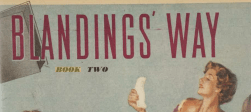
Blandings Way, Book Two, magazine headerBut now, I said this was going to be short, and I’m going to stick to that promise, so I’m concluding with a summary of “the story so far” for Book Two of Blanding’s Way, written by Eric Hodgins and published in 1952:

THE STORY SO FAR: In their Dream Home at Lansdale the Blandings had all sorts of exciting things happen. The vegetable garden produced a record crop, the fields caught fire, thirteen-year-old Joan became a prize-winning essayist, and Mr. Blandings was elected to the school board. NOW

I do love that the exciting things included producing a record crop, becoming a prize-winning essayist, and being elected to the School Board. Sounds right up my alley! Oh, in case you are interested, the “book” occupies 10 multi-column-tiny-font pages of the magazine. If you tried to print the “book” it would, according to my system, take 64 pages.

Note: The National Library of Australia has produced a discovery page for The Weekly, from which their digitised articles can be accessed directly. You can in fact, locate and read any issue published between establishment in 1933 and 1982. Now, if I had the time …

Monday musings on Australian literature: Currawong Publishing Company

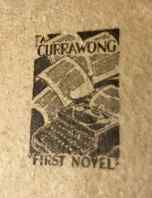
Currawong First Novel logoAs regular readers know, I’ve been involved in much clearing out of houses over the last eighteen months. I have, as a result, accumulated a small but interesting collection of older books, several of which I have already posted on. Today’s post is inspired by another such book, And all the trees are green (1944), by A.E. Minnis who’s unknown to me. However, my post is not so much on Minnis but on the book’s publisher, Currawong Publishing Company.

It captured my attention for a couple of reasons, starting with the little logo on the plain front cover which reads “Currawong First Novel”. Inside, there is a publisher’s Foreword which says that the novels in the series are all “first novels” (obviously) by “young Australian authors”. That made me sit up. I wondered how many authors whom we now know got their start with Currawong – the way many contemporary authors got their start with publishers like McPhee Gribble (such as Helen Garner and Tim Winton) and Fremantle Press (Elizabeth Jolley). Anyhow, the Foreword goes on to set out its philosophy, which is that their authors are chosen mainly for three reasons:

Each author has a story to tell, and tells it. [Haha, love that “and tells it” bit]
Each author’s style shows more than a promise of developing into a powerful literary instrument.
Each author is Australian, either by birth or adoption.

They continue to say that they invite manuscripts from authors who have not had a novel published in Australia or overseas, that “the setting of the plot of any novel submitted need not be Australian”, and, something most authors would love, that “each author whose work is accepted will be placed under contract to The Currawong Publishing Company for his or her next three literary works”.

You can see why I wanted to find out more about them. The AustLit database, which is, unfortunately, only fully accessible by subscription (which I don’t have) says this

The Currawong Publishing Company was a war-time success, active from about 1942 to 1951. Currawong issued a wide variety of fiction – including mysteries, westerns, romances, and fantasies – under the slogan ‘You can’t go wrong with a Currawong’; with a few exceptions, Currawong’s authors were Australian. Currawong also issued a series of ‘Unpopular Pamphlets’, advancing left-wing economic and socialist ideas for post-war reconstruction.

I was also able to read, before I hit the paywall, that the most referenced work relating to this entry is Kylie Tennant’s award-winning debut novel, Tiburon, albeit Currawong’s edition was a later “pocket” one.

Anyhow, Currawong sounded interesting, so I decided to research further, but they aren’t listed in my copies of The Oxford companion to Australian literature, nor The Cambridge companion to Australian literature, nor the index in the Annals of Australian literature. I could find them in Trove, of course, though mostly as the publisher of books being reviewed. That’s better than nothing!

I found, for example, a review of a novel by Ailsa Craig, If blood should stain the wattle (1947). The reviewer calls it a “fine first novel by an Australian author” and says:

Her style is impressive and she writes convincingly about country scenes with which she is familiar … It is rather a sombre story of a modern tyrant who rules the lives of his family in almost mediaeval style. You will find it an enthralling study of human relationships handled simply yet vividly.

The Courier-Times reviewer was a little less glowing, saying “There is quiet talent here but a little too much of the Daphne du Maurier technique to give it its own personality” though does admit that “the story is a good one, well-told”. Meanwhile, over at The Age, the reviewer says that the book was highly commended in the competition won by Ruth Park’s Harp in the south! Ailsa Craig, according to AustLit, was “a writer, journalist and scholar. She was also the first female London correspondent for the Sydney Morning Herald” and she won the prestigious, in Australian journalism circles, Walkely Award.

After Trove, I turned to Professor Google. I didn’t find a lot but did find, in Google books, a reference in History of the book in Australia, Vol. 3: Paper empires, edited by Craig Munro. The reference, which appears in the essay by Ian Morrison titled “Case study: Pulp fiction”, explains that Currawong was one of the leading publishers of pulp fiction – those mysteries, westerns, fantasies, etc – during the war years.

Unfortunately, in all this research, I couldn’t find much about the reason I decided to write this post, their “first novel” series, but I did find this little anecdote in one of those end-of-year articles newspapers like to write about books. The Sunwrote this in its article, “Tastes in books were changing”:

Oddity of the publishing year has been the fact that two books on taxation became bestsellers almost overnight. Earlier in the year Currawong Publishing Company issued “I Can Get It For You Tax-Free!” by E. Kellie, with an introduction by Sydney taxation expert J. A. L. Gunn. In quick time three editions of the book were sold. Currawong has now published, at 10/6, a sequel entitled “Farmers, Bushrangers, Businessmen,” by B. Hall, curiously with an introduction by J. A. L. Gunn. The title is drawn from the indiscreet remarks made about Australia in London last year by Dr. C. E. M. Joad. B. Hall’s book is as witty and as shrewdly informative about taxation affairs as E. Kellie’s book. Chapter headings range from “How to Jack Up Your Director’s Remuneration” to “Don’t Go Shop Crazy Till You Get Your Provisional Assessment.” ‘The publishers’ claim that Mr. Hall can teach Mr. Kellie a thing or two about income tax legerdemain is amply confirmed and must be causing Treasurer Chifley some concern. Taxpayers can confidently anticipate a companion book next year by Capt. Starlight with an introduction by J. A. L. Gunn. (14 December 1947)

There is a joke here – besides the fact that a book on tax went quick-smart into three editions! –  in that the books were, in fact, written by J.A.L. (John Angus Alexander) Gunn. The so-called authors, E Kellie and B. Hall, allude to bushrangers Ned Kelly and Ben Hall, hence the reviewer’s reference to the next book being by Captain Starlight! I’m not sure that all the contemporary reviewers got this. (By the way, Gunn was a highly respected accounting practitioner and was elected into the Australian Accounting Hall of Fame.)

During all this research I found a wide variety of books published by Currawong, in addition to pulp fiction – a book on Indonesia and one by A.O. Neville on Australia’s coloured minority; a book on Australian art, and one containing plays; an autobiography by tennis player Dinny Pails, and much more. They were clearly an active publisher in their time.

As for A E Minnis, I could find little about him – though I did discover that it’s a him. The only review I found starts with “Mr Minnis writes interestingly concerning the odyssey of his young hero, Dick Radford” but it then goes on to just describe the story. I wonder if Mr Minnis ever got his next two books!

Monday musings on Australian literature: Sisters in Australian fiction

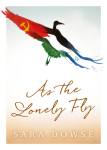
Sara Dowse, As the lonely blyYesterday I posted my review of Sara Dowse’s novel As the lonely fly, which centres on the lives of three sisters (well, primarily, two sisters, and the daughter of the other sister), and today, playwright Joanna Murray-Smith mentioned another book about sisters, Shirley Hazzard’s The transit of Venus, when giving her Top Shelf on Radio National’s Books and Arts Daily program. It got me thinking about novels which feature sisters – and I realised that some of our best-loved classics deal with them. Think Jane Austen’s Pride and prejudice and Louisa May Alcott’s Little women, for a start. And, I can’t resist mentioning, though it’s not a novel, that infamous play, King Lear!

So, I thought it would be fun to talk about sisters in (Australian) fiction, about novels in which the sister relationship plays a significant role in the story. I have read all the books I mention here, but most of them before I started this blog, unfortunately.

Ada Cambridge’s Sisters (1904), which I read over three decades ago, now tells the story of four well-to-do sisters at a time when marriage was seen as women’s only option. She explores – unsentimentally – what this means for the sisters, who have to decide whether to marry for money, for love or not at all. By focusing on the experience of women from one family, by setting their decisions against each other, Cambridge is able to keep her exploration of matrimony tightly focused. I like Cambridge for similar reasons that I like Austen, her clear, somewhat acerbic eye on how social conventions can limit people’s real options.

In Sara Dowse’s As the lonely fly (2017), the three sisters, Frieda, Clara and Manya, have a somewhat awkward relationship, but then they face awkward times. They represent different responses to the same problem, increasing anti-Semitism and the resultant pogroms in their homeland. All migrate, but at different times and/or to different places, and with, significantly, different goals. They have a sense of responsibility for each other, but don’t always understand each other’s decisions. Their sisterly relationship provides a natural, organic basis upon which Dowse can explore various responses and outcomes. This might sound mechanistic, but it isn’t. The sisters live and breathe too – and I cared deeply about them, particularly Clara!

Elizabeth Harrower The watch towerA different sisterly relationship occurs in Elizabeth Harrower’s The watch tower (1966) (my review). Laura and Clare are effectively abandoned by their parents when they are young. There’s seven years between them, so the relationship is driven partly by Laura feeling a sense of responsibility for her sister and also by her not having some of the opportunities afforded her younger sister. It’s a close relationship, and as Laura’s life starts to unravel, Clare tries her hardest to make Laura see what is happening, while not getting caught up in it herself. It’s a chilling study of misogyny, of power and control, but one in which the sisterly relationship provides a source of support.

Shirley Hazzard’s The transit of Venus (1980) also deals with two sisters, Carolyn (Caro) and Grace Bell, and follows them for several decades. Orphaned when young, the girls move to England where they form relationships, and marry. The story mainly follows Caro, and I’m afraid I can’t recollect a lot about how their relationship is depicted, though I seem to remember it is supportive but also reflects those frustrations between sisters who choose different courses in their lives. Joanna Murray-Smith in her Top Shelf statement talked about loving the way Hazzard tells how the sisters’ lives “intersect over a lifetime”.

Elizabeth Jolley, An accommodating spouseElizabeth Jolley’s An accommodating spouse (1999) deals with a relationship that’s a little odd, which won’t surprise you if you know Jolley. It’s about a rather eccentric professor who is married to a woman, Hazel, who happens to be a twin. The twin sister, Chloë, lives with them, and the situation works, largely because there is an accommodating spouse (though who this is and how might not be what you think). Towards the end, after a disturbing event, the Professor

is sorry that his own agitation during the party will have been a burden on Hazel and on Chloë. He comforts the thought with the real fact that Hazel and Chloë always shared misfortune, so only shared half each, of any difficulty.

This is so Elizabeth Jolley to have a character justify himself that way!

Olga Masters’ Loving daughters (1984) reminded me, when I read it back in the 1980s, of Jane Austen – not just because it has a traditional marriage plot-line but because it is set in a small community and has some of Austen’s wicked wit. I remember laughing at the image of the young curate riding around town, while he pondered which sister should he marry – the lively, fun one or the practical, nurturing one. The book, though, is more serious than this comment suggests – and deals, like Austen does, with the way social rules and expectations impinge upon lives and the decisions people make. The sisters’ relationship is affected by both their different personalities and the pressures they find themselves under.

It’s interesting – though perhaps not surprising – that these books, with the exception of Sara Dowse’s, deal in some way with marriage. These are not romances so it’s not because the authors are focusing on marriage as the goal of women’s existence. In fact, it’s pretty much the opposite, it’s that they question, in some way, society’s assumption that getting married and being a wife is the nub of women’s lives, or they tease out the implications for women of being married. I wonder if we’d find any trends in a selection of books about brothers?

Anyhow, do you have any favourite books about sisters?

(Oops, I finished this in time for a Monday post, and forgot to hit the SCHEDULE button! So, most of you anyhow have this week’s Monday Musings on Tuesday)

Monday musings on Australian literature: NLA Publishing, and some free e-Books

Enlighten 2014, NLA

Enlighten 2014, National Library of Australia

I was idly following links around the ‘net over the weekend and somehow ended up at NLA Publishing’s site. For those of you who don’t know, they are the publishing arm of the National Library of Australia. I first mentioned them back in 2011 when I referred to publisher Alec Bolton as the person who established the Library’s publishing program. That would have been over 40 years ago. He was a lovely man, and would surely be thrilled to see that his “baby” is still going today.

NLA Publishing is a small publisher, producing around 18 books a year. As you’d expect from a cultural institution publisher, their books draw on the Library’s collections – and they accept submissions from writers who have an idea that uses these collections. Their publications, they say, contribute to their

aims of nourishing the nation’s memory, of supporting the vitality of Australian culture and heritage, and of demonstrating a strong national focus in all of the Library’s services, products and programs.

These works “selectively interpret the Library’s collections in order to contribute to an understanding of Australian history and culture”, and are also seen as a way of disseminating and promoting the Library’s collections and services. Collecting and preserving, interpreting and disseminating is, of course, the prime function of cultural collecting institutions.

“Australian history”, defined broadly I’d say, is their main subject area, but they also cover “natural history, art, photography and literature”, and a range of children’s books including “picture books, novels and historical ‘faction’”. Their books have won, or been shortlisted for, a variety of awards.

Dymphna Cusack, A window in the darkI have bought many of their books (for myself and as gifts) over the years, and have reviewed at least one on this blog, Dymphna Cusack’s A window in the dark. Other bloggers have also reviewed their books, such as Janine’s (Resident Judge of Port Philip) review of Craig Wilcox’s Badge Boot Button: The story of Australian uniforms and Lisa’s (ANZLitLovers) review of Clive Hamilton’s What do we want: The story of protest in Australia. These are just of few of the many reviews of NLA’s books out there in cyberspace!

The exciting thing, however, is that many of their older books are now available free from the website in eBook form. Now that’s a bargain. I’ll share just a few here – literary-focused ones, naturally – to give you an idea:

  • Dymphna Cusack’s A window in the darkCusack, who also wrote novels, tells of her time as a teacher, including some of the controversies she became embroiled in while trying to offer the best, most appropriate education for her various students.
  • Rosemay Dobson: A celebration: There are several books in their Celebration series, covering such authors as Thomas Keneally, David Malouf, and Ruth Park. These small books comprise “tribute” essays on their subjects and can provide an excellent introduction to the writers. I’ve chosen the late Rosemary Dobson as my example here because as well as being a well-regarded poet, she was Alec Bolton’s wife.
  • David Foster’s (selected and introduced) Self-portraits: A selection of oral history interviews from the National Library’s wonderful Hazel Berg oral history collection. The authors Foster selected include Wilfred Burchett, David Campbell, Ion Idriess and Charmian Clift. (PS Just noticed, 10 May, that autocorrect had made her Chairman!)
  • Ann Moyal’s Alan Moorehead: A rediscovery: A biography of author, journalist, war correspondent Moorehead, who, Moyal claims, was “one of the most successful writers in English of his day” but under-recognised in his own country.
  • John Shaw Nielson’s The autobiography of John Shaw Nielson: Never published in the poet’s lifetime, the biography was included in the papers of one Harry Chaplin, a collector and “connoisseur of literary Australia”.

Presumably, over time, the list of eBooks freely available will grow, so I’ll be checking the site every now and then.

A short post this week, but I hope a useful or, at least, an interesting one.