Monday musings on Australian literature: Hilary McPhee Award

I’m on a roll! That is, this week’s Monday Musings is another post on a lesser known literary prize. I’ll probably stop here for a while, but I came across this one in my notes, and thought, why not? The award is the Hilary McPhee Award (obviously, given the post title!) and is managed by the University of Melbourne. It is relatively new, having been established in 2016, and no, it is not due to a bequest. Hilary McPhee is still – I’m pleased to say – alive.
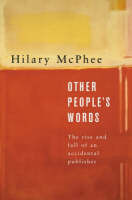
McPhee is probably known to most Australian readers, but may not be so well known further afield. I did write about her some years ago. However, I will recap now. Hilary McPhee is one of Australia’s literary giants. She, with the late Diana Gribble, founded in 1975 a small independent publishing company called McPhee Gribble. They filled a major gap in Australian publishing at the time by bringing us new Australian authors like Tim WintonHelen Garner and Murray Bail. I have reviewed these writers here because they have all gone on to be giants themselves. McPhee Gribble also commissioned Carmel Bird to write a guide for aspiring writers, which resulted in the well-regarded (and highly readable), Dear Writer (1988). It’s so well regarded in fact that a revised edition was published in 2013 as an eBook titled Dear Writer Revisited. McPhee Gribble survived for 14 years before being sold in 1989 to Penguin. (Soon after, Diana Gribble established Text Publishing.) McPhee documented the history of their publishing adventure in a memoir, Other people’s words (which I read before blogging). It’s a great read – still.

Anyhow, back to the award, which is formally described on the University of Melbourne’s website. It is funded by a donation of $90,000 from Hilary McPhee’s brother, Peter McPhee, a Professor Emeritus of the University of Melbourne. It is for

writers making contributions to the Melbourne University Publishing Limited (MUP) publication, the Meanjin Journal or any replacement or successor publication to that journal.

The actual process, as described by the University in its documentation, is that Melbourne University Press (MUP) will “provide a shortlist of candidates for the Award, from which the Dean of the Faculty [of Arts] (or nominee) will select the recipient in consultation with the Chief Executive Officer of MUP”.

So, what exactly is the contribution being awarded? Well, it seems to be an essay – published in Meanjin, which is one of Australia’s oldest literary magazines. In 2022, the prize was worth $3,500, so not a huge prize but surely a decent feather in the cap. (Australia’s “premier” essay-writing prize is, probably, the Calibre Prize, which currently nets its winner around $7.500.) Announcing the winner of the 2022 award, the Queensland University of Technology’s Centre for Justice blog was more specific about the award criteria, saying that the award “recognises brave essay writing that makes a fearless contribution to the national debate. Eligible essays are shortlisted from those published in Meanjin each calendar year”.

I have not, unfortunately, been able to find a list of the winners. My search engine found next to nothing, it’s too recent for Trove, and Meanjin does not seem to have a page devoted to the prize, which is a shame. Here is all I’ve been able to find …

McQuire’s essay commences with a quote from Audre Lorde, and then this:

We do not know how many Aboriginal women have gone ‘missing’ in this country. The archives are filled with the ‘missing’: the Aboriginal women who are no longer here to speak; the Aboriginal women who do not have names; the Aboriginal women who do not have graves or places where their families can remember them. There is a comfort that comes with the word ‘missing’, because to be ‘missing’ implies that perhaps they have left on their own accord; that there are no perpetrators or violence enacted against them. As Canadian First Nations lawyer and activist Pam Palmater says, the term ‘missing’ is a misnomer: ‘It seems to imply that these women or girls are just lost or ran away for a few days.’ ‘Missing’ also comes with the assumption that the case is still active. When the police speak of ‘missing persons’, there is an implication that the police are still searching for them, and that they will never tire in their search until those who are ‘missing’ are found or come back. Because they are still ‘missing’, the police do not see themselves as responsible for failing to find them; but instead, see the women themselves as ‘responsible’ for going missing in the first place. There is a term specific to this place, in that women are accused of going ‘walkabout’, which serves to naturalise their disappearances as innate to Aboriginal culture, and not a distinctly settler-colonial phenomenon.

It’s a strong and necessary read…

I’d love to know if you know anything about this prize and its winners.
Jane Austen on travel

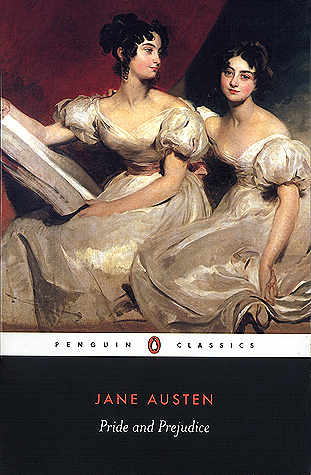
It’s been some time since I posted on Jane Austen, but currently my local Jane Austen group is repeating the slow reads we did a decade or so ago when her novels had their 200th anniversaries. Last year, we did Sense and sensibility, and right now we are doing Pride and prejudice.

There are different ways of doing slow reads, as I know many of you are aware because you do them yourselves. Our way is to read and discuss a volume a month, based on the fact that back in Austen’s day novels tended to be published in three volumes, which makes the volume an excellent demarcation for slow reading. So, last month, we read Volume 2 of Pride and prejudice, or Chapters 24 to 42 in modern editions. This volume starts just after the Bingley retinue has moved to London, and it includes Lydia’s going to Brighton and Elizabeth’s visit to Hunsford, where she receives Darcy’s (first) proposal. The volume ends with her arrival in Derbyshire, in the company of her aunt and uncle, the Gardiners.

As those of you who engage in slow reading know, there are many pleasures to be gained from it, and the pleasures are magnified (with great books anyhow) when you slow read a book you’ve read before because, knowing the story, you can glean so much more. Most of us have read this novel many times, but we are always surprised to find something new in our next re-read. What particularly struck me about volume 2 this read was that it is really about “the education of Elizabeth“. She starts this volume being quite prejudiced. She is very sure of herself regarding Wickham’s and Darcy’s characters. She is prepared to give leeway to Wickham in the marriage stakes – that is, his marrying for money not love – but not to her friend Charlotte. But, she then sees how Charlotte has managed her life with Mr Collins, and we see what poor company her family really were anyhow! She also learns that she had misjudged Mr Darcy, and she recognises her own father’s failings. She castigates herself:

“How despicably I have acted!” she cried; “I, who have prided myself on my discernment! I, who have valued myself on my abilities! who have often disdained the generous candour of my sister, and gratified my vanity in useless or blameable mistrust! How humiliating is this discovery! Yet, how just a humiliation! Had I been in love, I could not have been more wretchedly blind! But vanity, not love, has been my folly. Pleased with the preference of one, and offended by the neglect of the other, on the very beginning of our acquaintance, I have courted prepossession and ignorance, and driven reason away, where either were concerned. Till this moment I never knew myself.” 

However, this is not the reason I chose to write this post! The reason is that I also came across a wonderful comment from Elizabeth about travel, a comment that could be as true today as it clearly was then. It comes in chapter 27, after Elizabeth had been discussing Mr Wickham’s sudden romantic interest in the heiress Miss King with her aunt Gardiner. Mrs Gardiner suggests Elizabeth accompany her and her husband on a holiday to, perhaps, the Lakes. This is Elzabeth’s delighted response:

“Adieu to disappointment and spleen. What are young men to rocks and mountains? Oh! what hours of transport we shall spend! And when we do return, it shall not be like other travellers, without being able to give one accurate idea of anything. We will know where we have gone–we will recollect what we have seen. Lakes, mountains, and rivers shall not be jumbled together in our imaginations; nor when we attempt to describe any particular scene, will we begin quarreling about its relative situation. Let our first effusions be less insupportable than those of the generality of travellers.”

I’ll leave you there, with the wisdom of our Jane!

Monday musings on Australian literature: Melbourne Prize for Literature

Having posted on a literary prize last week – the ACT Book of the Year Award – I decided that I may as well do another one, and give us a break from my recent run of historically-focused Monday Musings posts. This week’s award is another geographically limited one, the Melbourne Prize for Literature.

This award is comparatively new, having been first offered in 2006, and it is, unusually, a triennial award. This is because it is one part of the Melbourne Prize which is awarded, as Wikipedia puts it, “on a rolling three-year basis for Urban Sculpture, Literature and Music, in that order”. It is managed by the Melbourne Prize Trust, which was founded by someone called Simon Warrender in 2005. I did not know who Simon Warrender was, and Wikipedia did not provide a link on his name. However, he is, in fact, in Wikipedia (so there is now a link to him on the Prize’s page!) The English-born Simon Warrender was “a Royal Navy officer and businessman” who migrated to Australia after the war and married into the well-to-do and philanthropic Myer Family.

The Prizes are funded by a range of donors from government, cultural and philanthropic organisations – like the City of Melbourne, The Robert Salzer Foundation, Hardie Grant Books and Readings Bookshop – to the general public.

As Wikipedia’s description of the prize’s order implies, the first prize was for Urban Sculpture. That was in 2005, so the first Melbourne Prize for Literature was awarded in 2006. The Literature Prize is made to “a Victorian published author whose body of published work has made an outstanding contribution to Australian literature and to cultural and intellectual life”. In other words, it is one of those “body of work”/contribution to literature types of award. It can, says the Prize website, “include all genres, for example, fiction, non-fiction, essays, plays, screenplays and poetry”, and they take this seriously as you will see from the winners below. It is a valuable prize, currently netting the winner AUD60,000.

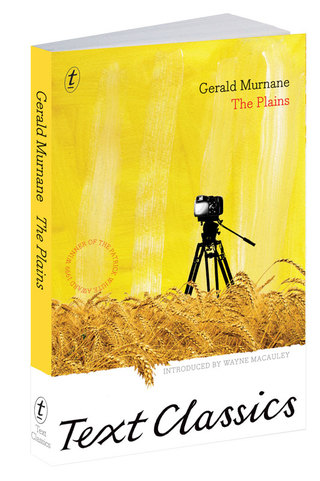
Gerald Murnane, The Plains, bookcover

The winners to date are:

  • 2006 Helen Garner: novelist, short-story writer, screen-writer, non-fiction writer, essayist
  • 2009 Gerald Murnane: novelist, memoirist, short story writer, poet
  • 2012 Alex Miller: novelist, short story writer, essayist, playwright
  • 2015 Chris Wallace-Crabbe: poet
  • 2018 Alison Lester: author and illustrator of, mostly, children’s book
  • 2021 Christos Tsiolkas: novelist, playwright, screenwriter

Links are to my posts on the writer. As you can see I have written about all of them, at least once, except for the poet (though he has had several mentions in passing! I guess that’s better than nothing.)

But wait, there’s more, because other awards are made alongside the main Prize for Literature. One is the Best Writing Award which is for (or was initially) “a piece of published or produced work in any genre by a Victorian writer 40 years and under, which is an outstanding example of clarity, originality and creativity”. By 2018, they seem to have dropped the age criterion. The winners to date are:

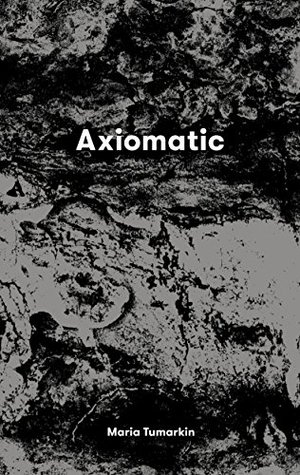
Maria Tumarkin, Axiomatic

In 2021, this prize was not offered, but they presented The Writers Prize. It went to Eloise Victoria Grills. According to the website the prize was for “an essay (10,000 words maximum) of outstanding originality, literary merit and creative freshness”. (I should add that this Prize had also been presented in 2015, in addition to The Best Writing Award, and was won by Kate Ryan.) What will happen in 2024?

The other main prize in the suite is the Civic Choice Award. It is voted for by the public from the finalists for the main award/s. Most recently this has been done via an online form available on the Prize website. The winners to date are:

  • 2006 Henry von Doussa for The park bench
  • 2009 Amra Pajalic for The good daughter
  • 2012 Tony Birch for Blood (Lisa’s review)
  • 2015 Robyn Annear for her essay “Places without mercy”
  • 2018 Louise Milligan for Cardinal
  • 2021 Maxine Beneba Clarke

Over the years there have been other awards, or combinations, or slight changes, like a Residency Award. But, you can see it all at the Prize website which I linked to above.

The Melbourne Prize for Literature – indeed the Melbourne Prize as a whole – is an impressive suite of awards that supports the arts by offering decent prize money and recognises the state’s serious practitioners of their art.

Six degrees of separation, FROM Hydra TO …

Oh my, oh my, I have not written a post since Monday. I am so focused on downsizing and packing, and everything else involved in selling a home, that I’m not getting much time for anything else – and when I do finally get time, all I want to do is fall asleep on my nice, new sunny bed (if it’s still the afternoon that is.) So, let’s just move on from all this, and get onto Six Degrees. If you don’t know how it works, please check host Kate’s blog – booksaremyfavouriteandbest.

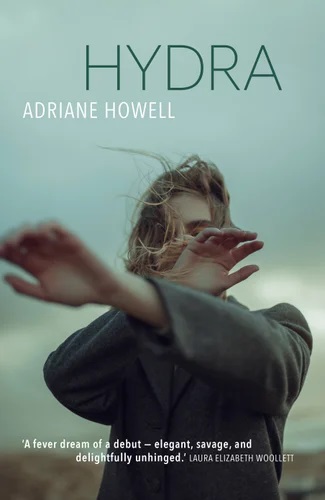
The first rule is that Kate sets our starting book. In May – to sound like a broken record, it’s another book I haven’t read – Adriane Howell’s debut novel, Hydra. I like the sound of the setting – the protagonist works in antiques (where the current focus, as many of you will know, is mid-century furniture, the sort my parents bought!) However, my first link will not relate to this, but to …

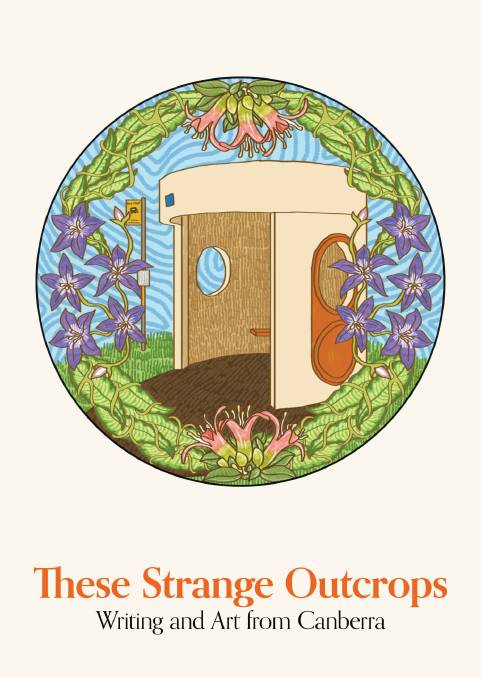
… something pretty obscure but that gives a little air to a different sort of work. Adriane Howell, besides being a novelist, established a literary journal a few years ago. It’s called Gargouille, is published in printed form, and was created with Sarah Wreford. Another literary journal was established by two women a few years ago, albeit an online one, Cicerone. Its focus is emerging writers and the founders are Nancy Jin and Rosalind Moran. Jin and Moran also published an anthology under the Cicerone banner, These strange outcrops: Writing and art from Canberra (my review), and that’s my first link.

I met Rosalind Moran in 2019 when she successfully applied for the New Territory Blogger program. The other successful applicant that year was Shelley Burr whose debut novel Wake (my review) was published last year, to significant acclaim in the crime writing world (and beyond.)

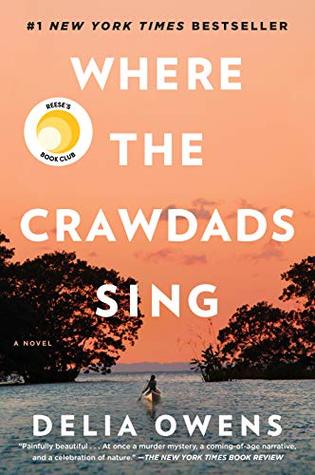
Wake is a debut crime novel in a rural setting – rural noir is one name for its genre. Another debut rural noir crime novel is Delia Owens’ Where the crawdads sing (my review). I could have chosen an Australian one, but felt it was time we sailed to other shores, so was pleased to find a relevant link that we could travel to.

I’m afraid, however, that my next post brings us back to Australia – at least as far as the author is concerned, but not in setting. My link is on titles starting with “Where the”, and the book is a children’s picture book written by Irma Gold and illustrated by Susannah Crispe, Where the heart is (my review). It is set in South America, and concerns a penguin.

Penguins, of course, have a special attraction for readers! And so it is to the publisher Penguin, and their Popular Penguins series of cheaper classics that I’m linking to next. The book I’ve chosen from the many possibilities is Randolph Stow’s Merry-go-round in the sea (my review).

Gabrielle Carey, Moving among strangers

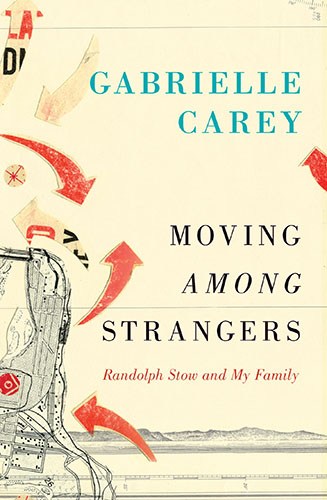
At this point I had planned to take us over the seas again, but things can change quickly … and instead, my final link is by way of a little tribute to a lovely Australian writer whom we lost this week, Gabrielle Carey. Carey made her name with the autobiographical novel Puberty blues which she co-wrote with Kathy Lette, but she then went on to write very different works, nine in fact. One of these was a sort of literary memoir about Randolph Stow, that was inspired by her family’s connection with Stow. The book was Moving among strangers: Randolph Stow and my family (my review). Carey also wrote a thoughtful, enjoyable bibliomemoir about Elizabeth von Arnim which I’ve reviewed, and was apparently working on a book about James Joyce when she died. It’s all very sad, and I pass my condolences onto her family, friends and the wider literary establishment which appreciated what she had to offer.

So, let me just close there. Vale Gabrielle Carey.

Now, the usual: Have you read Hydra? And, regardless, what would you link to?

Monday musings on Australian literature: the ACT Book of the Year Award

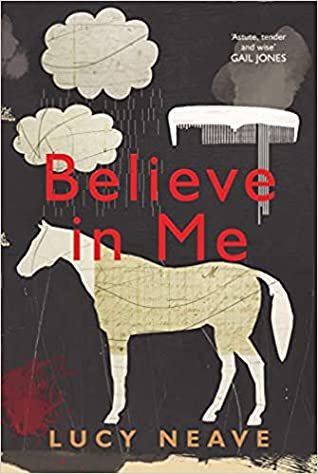
I think it’s time I dedicated a post to the Book of the Year Award made in my own jurisdiction. I briefly introduced it back in 2018, and then wrote recently about its 2022 shortlist. But today, I want to document it a bit more thoroughly. (For the record, the 2022 winner has now been announced, Lucy Neave’s second novel, Believe in me.)

The ACT Book of the Year Award is presented by the ACT Government for contemporary literary works, and is currently worth $10,000. Unlike most of the state government awards (but like the Northern Territory Literary Awards), it is limited to local writers. Only one award is made, and like the Stella Prize, the winner can be fiction, non-fiction or poetry. The award was first made in 1993 – and was shared by poet AD Hope and novelist Marion Halligan – so the 2022 Award is its 30th.

Winners to 2022

  • 1993: Marion HalliganLovers’ Knot (novel, read before blogging); A.D. Hope, Chance encounters (poetry)
  • 1994: John Foulcher, New and selected poems (poetry)
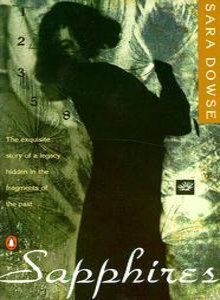
  • 1995: Sara Dowse, Sapphires (novel)
  • 1996: Paul Hetherington, Shadow swimmer (poetry)
  • 1997: Francesca Rendle-ShortImago (novel, Lisa’s review)
  • 1998: Lee Chittick, Travelling with Percy : A South Coast journey (biography)
  • 1999: Craig Cormick, Unwritten histories (non-fiction/satire)
  • 2000: Adrian Caesar, The white: Last days in the Antarctic journeys of Scott and Mawson 1911-1913 (non-fiction)
  • 2001: Alan GouldThe Schoonermaster’s Dance (novel, Lisa’s review); Dorothy Johnston, The Trojan dog (novel)
  • 2002: Jackie French, In the blood (YA novel)
  • 2003: John Clanchy, The hard word (novel)
  • 2004: Marion Halligan, The Point (novel, read before blogging)
  • 2005: Tony Kevin, A certain maritime incident: the sinking of SIEV X (non-fiction)
  • 2006: John Clanchy, Vincenzo’s garden (short stories)
  • 2007: Quynh Du Thon That, Sunday menu : selected short stories of Pham Thi Hoai (short stories)
  • 2008: Tony Kevin, Walking the Camino: A modern pilgrimage to Santiago (memoir/travel, Lisa’s review)
  • 2009: Nicholas Drayson, A guide to the birds of East Africa: A novel (novel)
  • 2010: Marion Halligan, Valley of Grace (novel, my review, and additional post)
  • 2011: Chris Hammer, The river: A journey through the Murray-Darling Basin (non-fiction)
  • 2012: Bill Gammage, The biggest estate on earth: How Aborigines made Australia (non-fiction, on my TBR)
  • 2013: Frank Bongiorno, The sex lives of Australians: A history (history)
  • 2014: Gordon Peake, Beloved land: Stories, struggles and secrets from Timor-Leste (non-fiction)
  • 2015: Mark HenshawThe snow kimono (novel, my review)
  • 2016: Frank Bongiorno, The eighties: The decade that transformed Australia (history)
  • 2017: Tom Griffiths, The art of time travel: Historians and their craft (history, on my TBR, Lisa’s review)
  • 2018: Paul Collis, Dancing home (novel, on my TBR, Lisa’s review)
  • 2019: Robyn CadwalladerBook of colours (novel, my review)
  • 2020: Lisa Fuller, Ghost bird (YA novel)
  • 2021: Subhash Jaireth, Spinoza’s overcoat: Travels with writers and poets (essays, Lisa’s review)
  • 2022: Lucy Neave, Believe in me (novel, my review)

(Links on author’s names take you to my posts on that author, which may not necessarily include the work listed.)

The winners tell you something about Canberra. For example, you might have gleaned from the early winners that Canberra has been particularly strong in poetry, and you’d be right. Well-regarded twentieth century poets like A.D. Hope (1907-2000), David Campbell (1915-1979), and Rosemary Dobson (1920-2012) made this region home for significant stretches of their lives. Canberra’s strength in this form is reflected in poetry winning three of the first four awards. Poetry continues to be strong here, though has featured less in the awards as they’ve progressed through the years.

THEY used to say in my neck of the North Carolina woods that if you shook a tree a banjo player would fall out. I’m beginning to think that if you shake a tree in Canberra, you’re more likely to dislodge a poet. (Bob Hefner, Canberra Times, 25 July 1993)

Couldn’t resist sharing that … but now, moving along … Canberra is also the national capital of Australia, so is the home of our national parliament. History and politics are, consequently, a significant interest of its residents, and this too is reflected in the sort of non-fiction that has won the award – the controversial sinking of SIEV X, the fraught Murray-Darling basin, and revisiting the role of First Nations Australians in our history, to name a few.

In terms of fiction, Canberra’s successful Seven Writers group is well represented here with Marion Halligan, Sara Dowse and Dorothy Johnston all being winners. The year Sara Dowse won she made history, apparently, by also winning the ACT Book Reviewer of the Year award. What, a reviewer award?

Yes! It seems that the ACT Book Review of the Year (as it was initially called) was instigated in 1993, alongside the Book of the Year. It was won by Amirah Inglis for her review of two books – As good as a yarn with you, edited by Caroline Ferrier, and A fence around the cuckoo by Ruth Park – in the November 1992 issue of Monash University’s Editions. In 1994, there were joint winners, Robert Boden’s review of Stanley Breeden’s Visions of a rainforest in The Canberra Times, and Amirah Inglis’ review of Hazel Rowley’s Christina Stead: A biography in the National Library’s Voices. Then in 1995 came Sara Dowse, named as ACT Book Reviewer of the Year. After that a review award seems to disappear from view. What a shame.

Have you heard of professional review or reviewer awards? If so, I’d love to hear about it.

Meanwhile, I hope you have found this little history of my local award interesting!

Maggie O’Farrell, The marriage portrait (#BookReview)

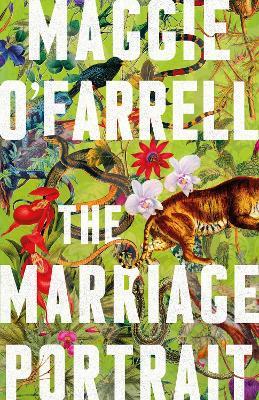
I have mentioned Author’s Notes a few times recently, because I have read a few works of historical fiction. Maggie O’Farrell’s latest novel, The marriage portrait, is another historical novel and so here I am again talking Author’s Notes. The marriage portrait, as you probably already know, is based on the life of Lucrezia de’ Medici, who lived from 1545 to 1561. Her death was ascribed at the time to “putrid fever” (or pulmonary tuberculosis). However, very soon after she died, rumours started that she had been poisoned by order of her husband, Alfonso II, Duke of Ferrara. That suspicion inspired English poet Robert Browning to write his dramatic monologue, “My Last Duchess“. It was this poem and a portrait of Lucrezia that inspired the novel.

O’Farrell writes in her Author’s Note that “I have tried to use what little is known about her short life but I have made a few alterations, in the name of fiction” and goes on to explain some of those alternations and why she made them. I have always argued that historical fiction is just that, fiction. We should not read it as history, that is, we should not rely on it for the facts. However, good historical fiction will provide some truths, and we do find some in O’Farrell’s novel.

The marriage portrait is told in two alternating chronological strands, one starting with Lucrezia’s conception in 1544, and the other a day or so before her death in 1561. In these two strands we are given the whole of Lucrezia’s life. We see her growing up as a resourceful, intelligent but needy middle child in a large family where she felt different from her younger and older siblings. Presumably this is O’Farrell’s invention to enhance her isolation. And we see the last year of her marriage: its deterioration as she fails to bear an heir (to a man who went on to marry twice more without issue) and her realisation that he means to kill her. Not surprisingly, we quickly become engaged in Lucrezia and her plight. O’Farrell knows how to tug our heart strings.

“The ladies . . . are forced to follow the whims …” (Boccaccio)

When I read novels, I believe in reading everything, which here included some matter before the story starts. First is a small paragraph headed Historical Note, telling us of Lucrezia’s death and the rumours concerning it. This is followed by two epigraphs, one from Browning’s poem referring to the portrait, and one from Boccaccio’s The decameron which commences with “The ladies . . . are forced to follow the whims, fancies and dictates of their fathers, mothers, brothers and husbands …” Hence some of the aforementioned truths.

I’m not going to spend a lot of time on the novel but, overall, I found it a readable and immersive story about what was a brutal time period, particularly for women and the serving classes. (I use “serving” rather than “servant” to encompass a wider group of people.) There’s nothing particularly new here, but O’Farrell shows very clearly how women and the serving classes were pawns in the political power plays of the time, with little or nothing to protect them except, sometimes, luck – or the courage of another.

There is more, though, to the novel, than politics and power, gender and class. O’Farrell also looks at that aspect of Renaissance life that we all love, art and artists. Admittedly, politics and class have a hand here too, but Lucrezia herself (the fictional one, anyhow) is depicted as a skilled artist, and her work, materials and technique are described in loving detail. It is through her art that Lucrezia most often can assert herself, albeit that assertion must be hidden from others.

I could argue, too, that the novel suggests the way politics and power can destroy love, loyalty and affection between, in this case, marriage partners and siblings. This could be a modern reading of the situation, but I’m not completely averse to us “moderns” understanding the past through our own lens.

As for the writing itself, it’s gorgeously lush, though verges on the overdone at times. Cosimo’s tigress is described as moving “like honey dropping from a spoon”; she doesn’t “so much pace as pour herself, as if her very essence was molten, simmering, like the ooze from a volcano”. Lucrezia’s husband Alfonso is depicted as “an aquatic creature, half man, half fish, crawling up out of the shores of a river, silvered tail glistening in moonlight”. However, despite this, the rich, descriptive writing seemed appropriate for the opulence of the period. And, there is some more restrained, to-the-point writing, such as this introduction of the man whom those versed in historical fiction will recognise as the likely villain:

The man emerges, shoulder first from the branches, the papers still clutched in his hand. He makes his way through the garden but, unlike Alfonso, he doesn’t pick his way along the paths: he walks through the flowerbeds as if they aren’t there, striding over the low green hedges, through the blooms, scattering bees and petals in his wake. Here is a man, Lucrezia thinks, as she eyes his progress, who waits on no one, who lets nothing get in his way.

His name is Leonello, and Lucrezia recognises him for what he is.

O’Farrell is an experienced writer, so the novel is carefully plotted and structured. I enjoyed her use of parallels to foreshadow later actions. The strangling of the guard Contrari, for example, heralds a later strangling, and our tigress is described by Lucrezia as “a creature captured against its will, a creature whose desires have all been disregarded”, which mirrors her own experience later.

The marriage portrait is not a subtle novel, and it does play somewhat with the historical record, as discussed in the Author’s Note. It’s also excruciatingly brutal at times. But, I did become engrossed in the era and invested in Lucrezia’s plight. A moving read. 

Note: This book was my reading group’s April selection, but due to a COVID-risk I did not attend the meeting.

Maggie O’Farrell
The marriage portrait
London: Tinder Press, 2022
438pp.
eISBN: 9781472223869

Stella Prize 2023 Winner announced

The 2023 Stella Prize winner was announced tonight and, for the second year in a row, it’s a poetry collection …

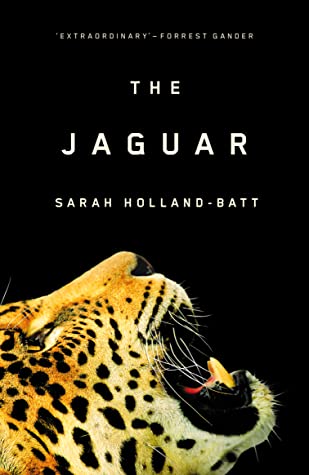
Sarah Holland-Batt’s The jaguar

Darn it! I nearly bought it last weekend when I was at the National Library but with my move and having stuff everywhere, I put it back down again and thought, maybe later. I guess it’s now not “maybe” but “yes later”. However, I’m pleased to share that a couple of bloggers I know have already read and reviewed it – like Kim at Reading Matters and Jonathan at Me fail? I fly! Check their posts if you are interested.

The judges said that The jaguar “investigates the body as a site of both pleasure and frailty”. The panel chair, Alice Pung, expanded on this saying that

… This is a book that cuts through to the core of what it means to descend into frailty, old age, and death. It unflinchingly observes the complex emotions of caring for loved ones, contending with our own mortality and above all – continuing to live.

It’s a response, I understand, to the death of Holland-Batt’s father. Those who have followed my blog for a while will understand, then, why I really would like to read it. Stella CEO, Jaclyn Booton, describes it as “a gift of a book” that “examines questions of grief and memory and care”.

You can read more on the Stella website, including an excerpt from Sarah Holland-Batt’s acceptance. She commented that she was “thrilled to enter into the company of the extraordinary writers who have received the Stella” and also said:

“It’s both an indescribable joy and a deep honour to receive the Stella Prize for The Jaguar. I wrote this book during an intensely challenging period, as my father was dying, and just after. It was the friendship, generosity, and camaraderie of women that not only saw me through this difficult time, but that has been the sustaining armature of my writing life.

Just to remind you, the judges were author Alice Pung, in the chair, with her co-judges bibliophile and host of The Garrett podcast (among many other roles) Astrid Edwards; essayist and literary critic BeeJay Silcox; writer, editor, broadcaster, and Walkley award-winning journalist Jeff Sparrow; and First Nations poet, essayist and legal advisor Alison Whittaker.

I have read eight of the ten previous winners: Carrie Tiffany’s Mateship with birds (2013, my review), Clare Wright’s The forgotten rebels of Eureka (2014, my review), Emily Bitto’s The strays (2015, my review), Charlotte Wood’s The natural way of things (2016, my review), Heather Rose’s The museum of modern love (2017, my review), Vicki Laveau-Harvie’s The erratics (2019, my review), Jess Hill’s See what you made me do (2020, my review), and Evelyn Araluen’s Dropbear (2022, my review).

Thoughts anyone?

Monday musings on Australian literature: Trove treasures (6), Why waste time reading novels?

My next Trove Treasure is not, strictly speaking, Australian, because it features the English humorist Jerome K. Jerome. But, I found it reported in multiple Australian newspapers, which means that many Australians probably read it, and that makes it at least a bit relevant here. The first one I found was in The Inverell Times on June 25, 1904, so it is the one I edited. However, I then found the same piece in the West Gippsland Gazette; the Camperdown Chronicle; the Canowindra Star and Eugowra News; the The Walcha Witness and Vernon County Record; The Gundagai Times and Tumut, Adelong and Murrumbidgee District Advertiser; the Clarence and Richmond Examiner; the Narromine News and Trangie Advocate; The Cobar Herald; The Colac Herald – and, at this point, I stopped noting them. Enough already, as they say. All of these, except for the Canowindra paper, were published between late June and early July 1904. Canowindra’s was, for some reason, printed in 1907!

Jerome K. Jerome (1859-1927), as I’m sure many of you know, was best known for his comedy novel, Three men in a boat, published in 1889. This book was one of those I remember from my mum’s bookshelves when I was quite a little girl – along with M. Barnard Eldershaw’s A house is built, Eve Langley’s The pea pickers (my post), Henry Handel Richardson’s The fortunes of Richard Mahony, and her beloved “little Collins classics”.

According to Wikipedia (linked on his name), the financial security provided by his hit novel enabled Jerome to become a full-time writer. He wrote plays, essays, and novels, but, says Wikipedia, was never able to recapture the success of that first novel. Wikipedia mentions in passing his writing of satirical pieces for journals, and the piece I’m sharing here is clearly one of those, although I have not been able to identify the journal, referred to as M.A.P, from which the piece apparently comes.

Wasting time on reading!

The piece starts like this:

Our old and delightful friend, Jerome K. Jerome, in a most amusing contribution to “M.A.P.” thus discourses: —

“On a newspaper placard, the other day, I saw announced a new novel by a celebrated author. I bought a copy of the paper, and turned eagerly to the last page. I was disappointed to find that I had missed the first six chapters. The story had commenced the previous Saturday; this was Friday. I say I was disappointed, and so I was at first: but my disappointment did not last long. The bright and intelligent sub-editor, according to the custom now in vogue, had provided me with a short synopsis of those first six chapters, so that without the trouble of reading them, I knew what they were all about. ‘The first instalment,’ I learned, ‘introduces the reader to a brilliant and distinguished company assembled in the drawing room of Lady Mary’s maisonette in Park street, and much smart talk is indulged in.’ I know that ‘smart talk’ so well. Had I not been lucky in missing that first chapter I should have had to hear it all again.”

Woman reading with cushion

Haha, I thought, and read on. Of course, Jerome was being tongue-in-cheek, and goes on to argue why we should in fact read it all, not just a summary. He expresses concern that writers will be expected to write “novels in chapters not exceeding twenty words” and that ‘short stories will be reduced to the formula: “Little boy. Pair of skates. Broken ice. Heaven’s gates”.’

“Formerly”, he explains, “an author … would have spun it out into five thousand words”. Then, proposing that this “little boy” story would have been a Christmas story, he shares how he would have written it. He would have started it in the previous spring or summer to let us get to know the little boy:

He would have been a good boy; the sort of boy that makes a bee-line for the thinnest ice. He would have lived in a cottage. I could have spread that cottage over two pages; the things that grew in the garden; the view from the front door. You would have known that boy before I had done with him — felt you had known him all your life. His quaint sayings, his childish thoughts, his great longings would have been impressed upon you…

He continues in this vein, describing how he’d also develop the father and mother, the ice, and so on. “So much”, he says, “might have been done”:

When I think of that plot wasted in nine words, it makes me positively angry. And what is to become of us writers if this is to be the new fashion in literature? We are paid by the length of our manuscript, at rates from half-a-crown a thousand words, and upwards.

How, he asks, are writers to live on the income from the payment for 9-words? All very worrying, he says.

Aren’t we glad that what he feared didn’t eventuate!

D’Arcy McNickle, Train time (#Review)

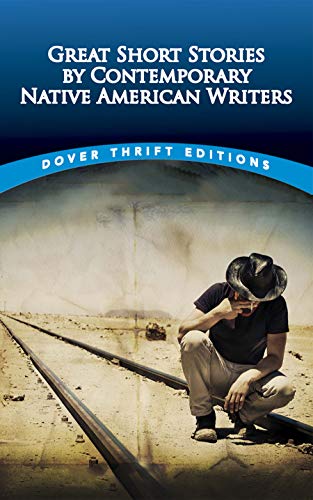
Continuing my reading from Great short stories by contemporary Native American writers, we now jump a decade from John M. Oskison’s 1925-published “The singing bird” to D’Arcy McNickle’s “Train time” which was published in 1936 .

D’Arcy McNickle

As before, I’m using both anthology editor Bob Blaisdell’s brief intro and Wikipedia’s article to introduce this author. D’Arcy McNickle (1904-1977) was, like the previous authors, of mixed parentage. He was born on the Flathead Reservation in Montana to an Irish father and a Cree-Métis mother, and was an enrolled member of the Salish Kootenai nation. He attended schools on and off the reservation, then went to the University of Montana, before studying at Oxford University and the University of Grenoble.

He wrote a few novels, but is probably best known for his first, The surrounded, which was published in 1936, the same year as the piece I’m reviewing here. From the summary I’ve read, it sounds like it draws from his own life, like so many first novels. However, that same year, 1936, McNickle started working at the Bureau of Indian Affairs, a US federal agency. He worked under John Collier, Commissioner of Indian Affairs, who encouraged self-government for Native Americans. McNickle became knowledgable about Native American policies, and in 1944, helped found the National Congress of American Indians in 1944. By 1950, he was publishing non-fiction works on Native American history, cultures, and governmental policies. Later, he worked in academia as an anthropologist.

Of his short stories, Blaisdell writes that “his quiet and intense stories seem to have been informed by a deep experience of Chekhov’s and Hemingway’s short fiction”. “Train time” is certainly quiet and, depending on your perspective, intense – with an ending that leaves many questions hanging.

“Train time”

“Train time” takes place on a train station, where twenty-five Native American (“Indian”) children from the local Reservation are waiting for a train to take them to an off-reservation boarding school. This has been organised by the local white Indian agent, Major Miles, who believes he is doing a good thing. He is, we are told, “a man of conscience. Whatever he did, he did earnestly”.

The trouble with earnest people – as I know a bit too well – is that they can lack imagination. He is thinking about these children who are about to leave the Reservation “and get a new start. Life would change. They ought to realise it, somehow-” It’s hot and stifling, the children are restless, and he is stiff and soldier-like. Not a recipe for the sort of inspirational words the situation needs. Then, he spies a young boy, “little Eneas”.

The Major remembers the moment, six months earlier in the depths of winter, when he had visited Eneas’ home to find out why his grandfather had not started the wood-cutting job he’d been employed to do. Turns out the grandfather and grandmother were no longer capable of such work. Not only that, they seemed ill, and the Major felt trapped. He feared catching pneumonia; he felt unable to help personally out of his salary, as where would it stop; and government resources were limited. Then, he had spied “little Eneas” who was doing his best to help the old people. Eneas’ “uncomplaining wordlessness”, his “loyalty to the old people”, had got the Major thinking. Here was “a boy of quality”. Surely he’d be “shirking his duty” if he failed to help him. So, he had come up with a plan to have the old people cared for and send Eneas off to boarding school. The trouble was that Eneas didn’t like the plan.

But, our Major was not to be dissuaded (so much so that “against his own principles” he had even bought “a week’s worth of groceries” for the old people):

Whether the boy understood what was good for him or not, he meant to see to it that the right thing was done…

You can imagine what that right thing was. The story concludes with our returning to the Major and the children on the railway station, and the Major trying to find those words to inspire the children. The Major knew that “none had wanted to go”, so he wanted to make them see “what this moment of going away meant”. What it meant of course, in the well-meaning Major’s mind, was a bright future.

There is no epiphany for the Major but the powerful imagery in the closing paragraphs, in which “a white plume flew upward” while the “flying locomotive loomed blacker and larger” conveys what the author thinks.

McNickle does a great job of evoking the Major. We see his good intentions, but we also see his stiffness and his obliviousness to the humanity of those he wants to help. This sort of well-meaning paternalism was pretty rife amongst those who wanted to do “the right thing” wasn’t it? I’d love to know how the story was received at the time. Did stories like this get the message across?

D’Arcy McNickle
“Train time” (orig. pub. Indians at work 3, from the Bureau of Indian Affairs, March 15, 1936)
in Bob Blaisdell (ed.), Great short stories by contemporary Native American writers
Garden City: Dover Publications, 2014
pp. 40-45
ISBN: 9780486490953

Monday musings on Australian literature: Trove treasures (5), Church and novel reading

You’ll be getting sick of my time-is-short posts, but rest assured that this too shall pass – eventually! Meanwhile, here is another Trove Treasure post. It shares two different responses to reading from churches, in the first couple of decades of the 20th century.

What the churches thought

Reading novels IN church

Woman reading with cushion
Courtesy: Clker.com

On 27 August 1902, a brief story was carried in Sydney’s Evening News and the Bathurst Free Press and Mining Journal. Here is how it went:

A telegram from Nowra states that in the local Church of England on Sunday, some young men were discovered reading novels during the sermon. The preacher drew attention to the circumstances, and made some pungent criticism about the practice.

Neither of the articles gave any more information. What was the “pungent criticism”? Well, interestingly, two days later, on 29 August, the Evening News ran a sort of correction:

With reference to the telegram that the practice of novel-reading in a local church was commented upon by the incumbent, the latter explains that his remarks had no reference to any supposed practice in his church, of which he had no personal knowledge. He points out that he was simply saying, in the course of a sermon on evil speaking, that the modern novel would hardly be read if it did not deal largely with the evil in human nature.

This seems to me to be a limited understanding of “the modern novel”, but I’ll leave that for you to think about. My point here is that the story did not end here …

The following day, 30 August, The Shoalhaven News and South Coast Districts Advertiser, ran a letter to the editor from “The Correspondent” who had provided the correction that ran on 29 August. This “Correspondent” quotes the previous two news items and then goes on to say that, although the reverend Mr Newby-Fraser was speaking generally about novel-reading,

during the course of the sermon on Sunday last, novel-reading was being practised in the Nowra Church of England by certain young members of the congregation.

In fact, we are told, the names of those readers and “the titles of the novels they had spread before them” could be furnished “if necessary”. Further, those novel readers apparently felt the sermon was being directed at them because they “immediately put away the books”.

The letter then says that as the minister “had no idea that novel reading was indulged in at all by any members of his congregation, young or old … he had good reason for being indignant at having been accused of making a charge of the truth of which he had no knowledge whatsoever”. However, concludes our letter-writer:

‘Truth,’ they sometimes say, ‘is stranger than fiction.’ At all events there is an indissoluble relationship existing between ‘truth’ and ‘fiction’ in this matter of novel reading on Sunday.

You could be forgiven for thinking all this had been written on 1 April – but it seems to be true!

How to spend your Sunday

Melbourne’s The Age ran a brief article on 20 October 1922 headed “Sunday Games: Preferable to reading ‘sloppy’ novels”. It was reporting on the annual meeting of the Congregational Union in Adelaide at which the issue of Sunday games was discussed, the concern being the secularisation of Sunday. Indeed, reports the paper, “a motion of protest against the secularisation of Sunday and urging members to unite with the object of preventing the desecration of the Sabbath was carried.” However, during the discussion, the chairman, Rev. G.H. Wright said

that although he preferred to see a man playing cricket or tennis on a Sunday to staying at home reading sloppy novels and the Sunday paper, it was not the highest ideal. 

And who said Australia was a sporting nation!

Comments anyone?