2025 was one of my best years for some time in terms of the Miles Franklin shortlist. When it was announced, I had only read one of the six novels, Michelle de Kretser’s Theory & practice (my review). However, by the end of the year I’d read three, having read two more with my reading group, Brian Castro’s Chinese postman (my review) and Winnie Dunn’s Dirt poor islanders (my review). Having seen this year’s shortlist, I suspect I won’t live up to that achievement this time around, partly because my reading group’s schedule is set for the second half of the year and partly because I will be travelling for nearly 6 weeks in spring. Time will be short.
However, I’m pleased to record the list for my blog’s posterity at least. It was announced today.
The shortlist
- Randa Abdel-Fattah, Discipline (UQP), Bill’s and Rach’s reviews)
- Steve MinOn, First name second name (UQP)
- Konrad Muller, My heart at evening (Evercreech Editions)
- Omar Musa, Fierceland (Penguin Random House Australia)
- Josephine Rowe, Little world (Black Inc)
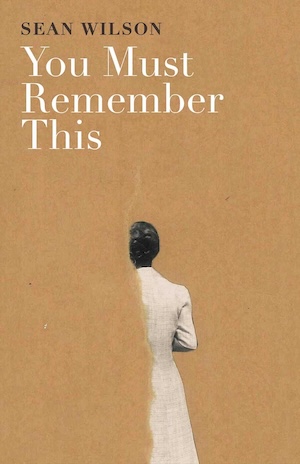
- Sean Wilson, You must remember this (Affirm Press, kimbofo’s and Brona’s reviews)
Some random observations:
- To be frivolous, it looks like the Ms have it! That is, three of the authors have family names starting with M.
- Four of the shortlisted writers are male (I believe). A male writer, Siang Liu, won last year, for the first time since 2016 (AS Patrić’s, Black rock white city – my review).
- Four of the authors are listed for the first time, and two – MinOn and Muller – are debut novelists.
- Except for PRH, the publishers are independent Australian ones, with Evercreech Editions, from lutruwita/Tasmania, being new to me.
- Fierceland won this year’s Victorian Premier’s Literary Award for Fiction, and was top read in 2025 for one of my reading group friends.
- Bill, Rach and Brona (who didn’t review it but commented on Bill’s and Rach’s posts) were not completely convinced by Discipline, mainly because the writing did not seem to convey the complexity they expected. The judges say that it is “both a taut political thriller and a humane meditation on the way that Australia must continue to find ways of working through agonising conflicts that may seem far away but in which Australia and Australians are intimately entangled”. This is of course the author and book which brought down this year’s Adelaide Writers Festival.
Emma Joyce quotes the judging panel in The Guardian, as saying that the shortlist shows that Australian novels can “grapple with the most vexing and profound questions of our time”. She identifies some of these as dementia, war, migration and loneliness. The judges also said that “Grand and intimate, these novels sing the Australian experience into new shapes.” The idea of “new shapes” certainly sounds grand, but, not having read the books, I’m not sure what these shapes are.
For posterity’s sake, here was the longlist
- Randa Abdel-Fattah, Discipline (UQP)
- Dominic Amerena, I want everything (Simon & Schuster)
- Lyn Dickens, Salt upon the water (Wakefield Press)
- Toni Jordan, Tenderfoot (Hachette Australia)
- Steve MinOn, First name second name (UQP)
- Konrad Muller, My heart at evening (Evercreech Editions)
- Omar Musa, Fierceland (Penguin Random House Australia)
- Josephine Rowe, Little world (Black Inc)
- Madeleine Watts, Elegy, Southwest (Simon & Schuster)
- Sean Wilson, You must remember this
Each of the shortlisted writers will receive $5000 from the Copyright Agency’s Cultural Fund, with the winner receiving $60,000 prize.
This year’s judging panel comprises Richard Neville (Mitchell Librarian of the State Library of NSW and Chair), Associate Professor Jumana Bayeh (literary scholar), Dr Mridula Nath Chakraborty (literary scholar and translator), Professor Tony Hughes-d’Aeth (literary scholar and author) and Associate Professor Maggie Nolan (literary scholar and director of AustLit). All but Nolan were on the 2025 panel.
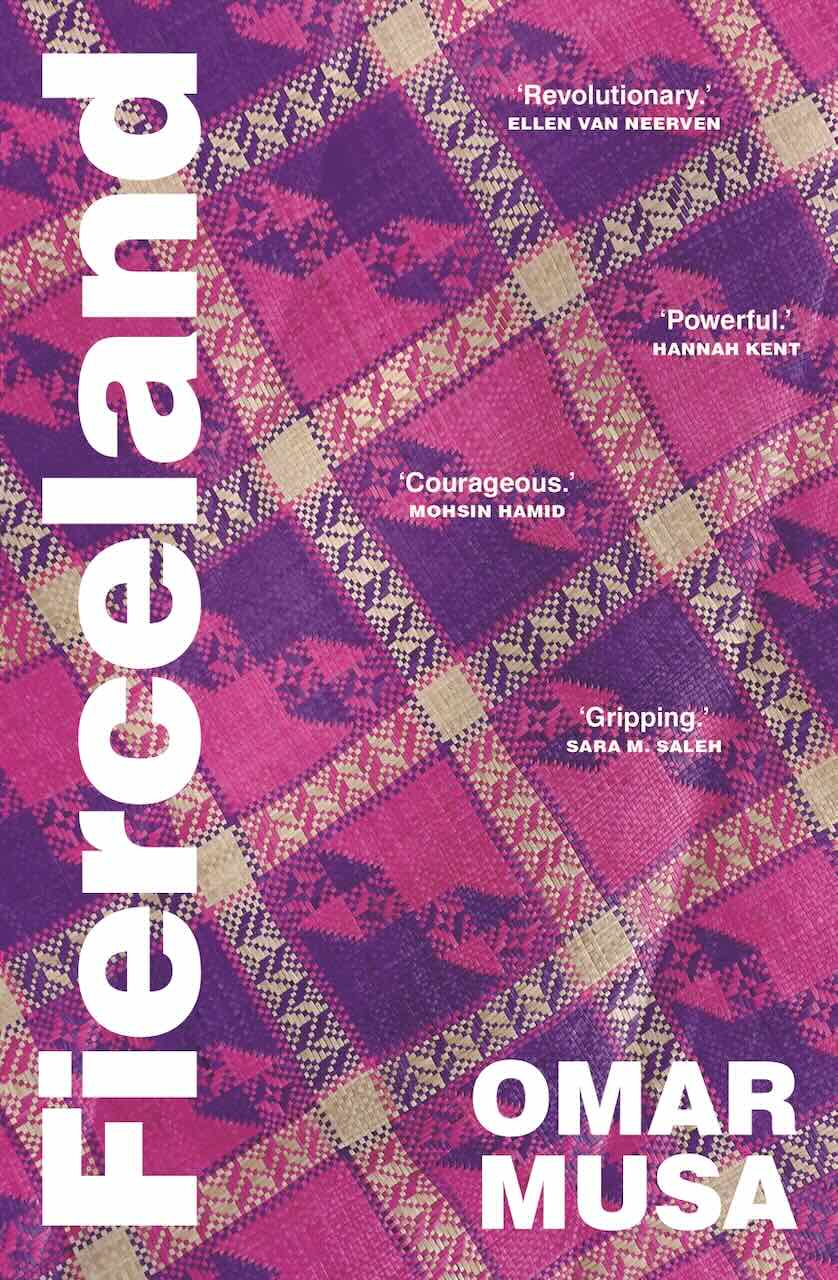
I will stick my head out now and say that if I were forced to choose some to read, they would be Musa’s Fierceland, Rowe’s Little World, and Wilson’s You must remember this. Musa is a local and his passion and way with words have engaged me on the several times I’ve heard him speak; I’ve read and liked Rowe before; and kimbofo’s and Brona’s reviews of Wilson tell me his is a book for me.
You can read more at the Miles Franklin Award webpage.
The winner will be announced on 5 August
Do you have any thoughts about the shortlist?


I promised myself if First Name Second Name was shortlisted I would read it, as one of my colleagues really loved it and I do enjoy the quirky set-up and the post-colonial themes it promises. I started it this afternoon, and so far, so good.
Another colleague read My heart at evening last week and is trying to convince us all to read it too. It’s not only Muller’s debut novel, but also the first book published by Evercreech Editions.
I’m reading Iris Murdoch’s The Unicorn and one of the characters is called Evercreech, a name I had previously never heard of. Wonder if the publishers are fans of Murdoch…?
Ah interesting kimbofo, but I’m not sure. On the website Ouston says this about the name: “Finally, there is something satisfying about the word Evercreech, suggesting a Joycean neologism and a scream from below. A word you feel you should know but at the same time find odd. It sums us up perfectly.” There’s no mention of Murdoch, but maybe he’d like to know!
On their website they reference James Joyce, so I suspect IM may have been tapping into that too.
Interesting idea Brona, except I think when they say “Joycean neologism”, they are implying that it’s his sort of word, not one he actually used?
Oh thanks Brona. I went to the Evercreech website to see who they were but didn’t read beyond, but now I’ve gone back and see the founder is Adam Ouston. I have his latest book on my TBR, but not published by them. Did you see the discussion of the name Evercreech, which I must say mystified me. And, I would be interested in MinOn and Muller too, it’s just that I have more connections with those three I named!
(PS I’m reading Niall Williams!!)
Evercreech is also a village in Somerset. Reading more carefully I see that Ouston says that the name ‘sounds’ like a Joycean neologism, not an actual Joyce word. So maybe IM was thinking about the English village?
Which Williams are you reading?
Yes, I love his description.
This is happiness. I haven’t read much but I’m loving the voice!
I think This is Happiness is the perfect place to start one’s Niall Williams journey. It is my favourite to date.
That’s what the person in my reading group who has read a few said so is why we chose this one! I’m loving it though have only read 8 of its 40 odd chapters.
I’m halfway through Fierceland and enjoying it immensely but cant understand how it complies with the award’s stipulation that the book must show “Australian life in any of its phases” — apart from a character that was educated in Australia, it’s largely set in Malaysia and all the characters are Malaysian. Maybe the second half develops an Australian theme…?
I managed to read Elegy, Southwest last week and absolutely loved it, but that was another book that failed to show Australian life seeing as it was set in the US. The narrator was supposedly Australian but it was only mentioned about three times. While it was a wonderful book, I’m glad it didn’t make the shortlist.
This is interesting Kimbofo. I know Musa has been exploring his Malaysian origins. Maybe as you say a stronger Australian theme develops. Of course there is the definition to consider isn’t there. What does it mean? I am intrigued about the Watts now as I have a special love for the US southwest!
Discipline is the only one I’ve read – and thanks for the link. Abdel-Fattah is excellent at discussing issues and we need more Muslim voices. She tells ok stories but I don’t think her writing is up to literary award standard.
Thanks Bill. I think most of the bloggers I’ve read or heard from agree with you. But we do need more of all our diverse voices, don’t we?
I think it is an interesting short list. I did find one of the comments interesting in that they are books dealing with highly complex issues, which is good, and seeing Australian’s as more than just Colonial inhabitants is also good, but I want quality of writing… lol I think I will hold off, I will probably read the winner in due course.
Thanks Rach. I agree that it is good. We want these issues grappled with don’t we, and literature is a good place for at least of us to do that grappling. I am feeling there’s a whole changing of the literary guard that I’m not keeping up with – after the names of the 80s-2000s are starting to age or die (like David Malouf). This is good but I’m feeling a bit out of touch. There so much being published it seems, which is also good (if it can be sustained.)
I’m I do find it interesting that a few of the authors wrote debut books, and I wonder if there shouldn’t be more prizes for debut authors. Then, my brain flip-flops, as it tends to do, and wonders why somebody should get so much praise for their first book. Shouldn’t someone give praise for continuing to write, to avoiding the sophomore slump? Oh, well!
Love your flip flops Melanie. My brain does that too – I call it “on-the-one-hand-then-again-on-the-other-itis”! It’s a difficult brain to live in sometimes!
I think there are some emerging writers, new writers, and young writers awards which may not necessarily be for debut works but often are. And of course there are unpublished manuscript awards.
I usually run out of hands.
Good one Melanie!
Hi Sue, I have read Discipline and didn’t like it; and I read Little World which is well written but I did not engage with it; but I did love You Must Remember This. So I hope Sean Wilson wins. The writing is clear and touching, and its topic dementia resonated with me. Dementia and its management is a worry for many in Australia.
Thanks Meg … you add to the people I know who did not like Discipline, and to the people I know who liked You must remember this. It sounds well worth reading.
I’ve read First Name Second Name and read through this interesting novel quite quickly, it’s an easy read, but I’m not sure the fantasy element worked for me as I had hoped. I have preferred other Miles Franklin winners but good luck to the author.
If anyone read it this is a minor comment from something I learnt in this book; when I was a kid, we called them Ice Blocks. Who knew they were called “By Jingos” in North Queensland? Not me! I asked my wife, who was born in Central Queensland, and she recalled hearing the northern girls use this term at boarding school. Also another lady I worked with from Atherton region knew then as “By Jingos”
Thanks John … I hadn’t heard of anyone’s having read that one.
Ice Blocks are By Jingos? I did not know that. I was born in Maryborough Queensland, spent some childhood years – Ice Block eating time – in Mt Isa, during which we holidayed 2 or 3 times in Townsville/Magnetic Island and I never heard that term. Not even from my Townsville-born mother who was a lexicographer in her late career. I am not questioning the term at all but am surprised I hadn’t heard it. When is the novel set? When did the term take hold? I love that you shared this!
I am cutting and pasting from a conversation I had on Goodreads.
From a reddit conversation, I read that it was a Paul’s brand and that the name came from an ad that was used in the 60’s. The name stuck for a while, a bit like hoover I guess in the UK. There are a couple of media mentions as well online. It has to be localised to the area of north Qld around Townsville, I have no recall of hearing it or its use at all as a kid living in Brisbane. Also search the headline “By jingo, border closures keep out the icy pole set” from an item in The Sydney Morning Herald from January 1, 2021. “While sipping your beer, you could buy the kids an “ice block” (NSW and South Australia), an “icy pole” (Victoria) or even a “by jingo” – the traditional name for ice blocks in Far North Queensland, presumably because it’s so hot that, upon being given an icy treat, you’ll want to yell your thanks to god.”
https://www.smh.com.au/lifestyle/life-and-relationships/by-jingo-border-closures-keep-out-the-icy-pole-set-20201229-p56qn2.html
Thanks very much John, I did love Paul’s when I was young. You were Paul’s or Peter’s and I was definitely Paul’s.
I did see that SMH article when I looked it up after your original comment. I love writing about language, semantics and linguistic differences across the country, or between countries.
Don’t under estimate Muller. Adam Ousten through Fullers set up a publishing firm, forget its name at the moment, and this is the first book off the press. The 5 book clubs through Fullers who all read it this year by far and wide enjoyed it. I liked it a lot and the main character Hellyer was a real person in Tassie history.
Oh I certainly don’t Pam. When I saw Ouston’s name associated with the publisher my interest was piqued. I just named the three that I have a prior interest in, or some sort of connection with. This post has been great for teasing out the shortlist for me a bit more, so thanks for this contribution.
I think you will definitely get something from all of them.
Thanks Pam … it is sounding more like I will than I had originally suspected.
Hah! For as long as I’ve been shelving my fiction alphabetically, the Ms have been nothing BUT ANNOYING.
Love this Marcie! I was alphabetical until my downsize three years ago. When I unpacked the books I just threw them on the shelves in my categories but any whichway, so I’ve lost touch with how the alphabet is going. I must fix the shelving, but it’s a bit of an overwhelming task.