Woo hoo, it’s summer at last, not that we necessarily knew it, given on day 2 Canberra experienced its lowest summer minimum (just below freezing point) since records began. However, this weekend is different and we are seeing proper summer temperatures. Just right for our Southern Hemisphere Christmas parties that are starting to happen. I do hope all of you who celebrate holidays in December have good ones. Now, I will get onto the meme. As always, if you don’t know how it works, please check Kate’s blog – booksaremyfavouriteandbest.
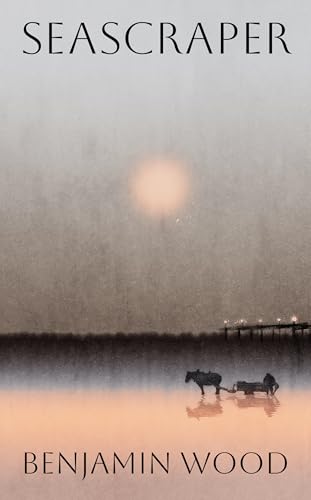
The first rule is that Kate sets our starting book. This month, it’s a Booker Prize nominated novel, Benjamin Wood’s Seascraper, about which I know nothing except what I read while researching it for this meme! GoodReads ends its description by calling it “the story of a young man hemmed in by his circumstances, striving to achieve fulfilment far beyond the world he knows, and sees possibilities when a stranger arrives”.
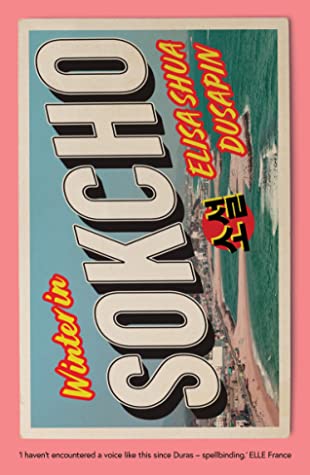
So that is where I am going, that is, to a young woman hemmed in by circumstances and who sees possibilities in a stranger to comes to stay – at the guesthouse where she works. The novel is Elisa Shua Dusapin’s Winter in Sokcho (my review). It has some other loose links to Seascraper, in that she lives in a coastal town – though this is not a seaside book in the sense that Wood’s book seems to be, and she doesn’t earn her living directly from the sea.
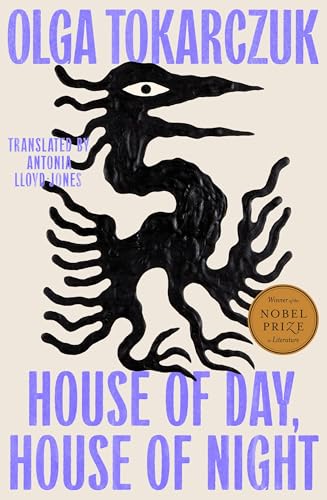
Now I’m moving into a link or theme that will inform the rest of this post, the idea of borders. Dusapin’s unnamed narrator’s town is on the border between North and South Korea. Indeed, when the Korean peninsula was divided into two countries post-World War 2, Sokcho was on the Northern side. It became part of the South after the 1953 Korean War armistice. So, my link is to another novel set in a border region where borders have been changed by war, Olga Tokarczuk’s House of day, house of night (my review). In this book, the border has a strong presence that plays on people’s lives.
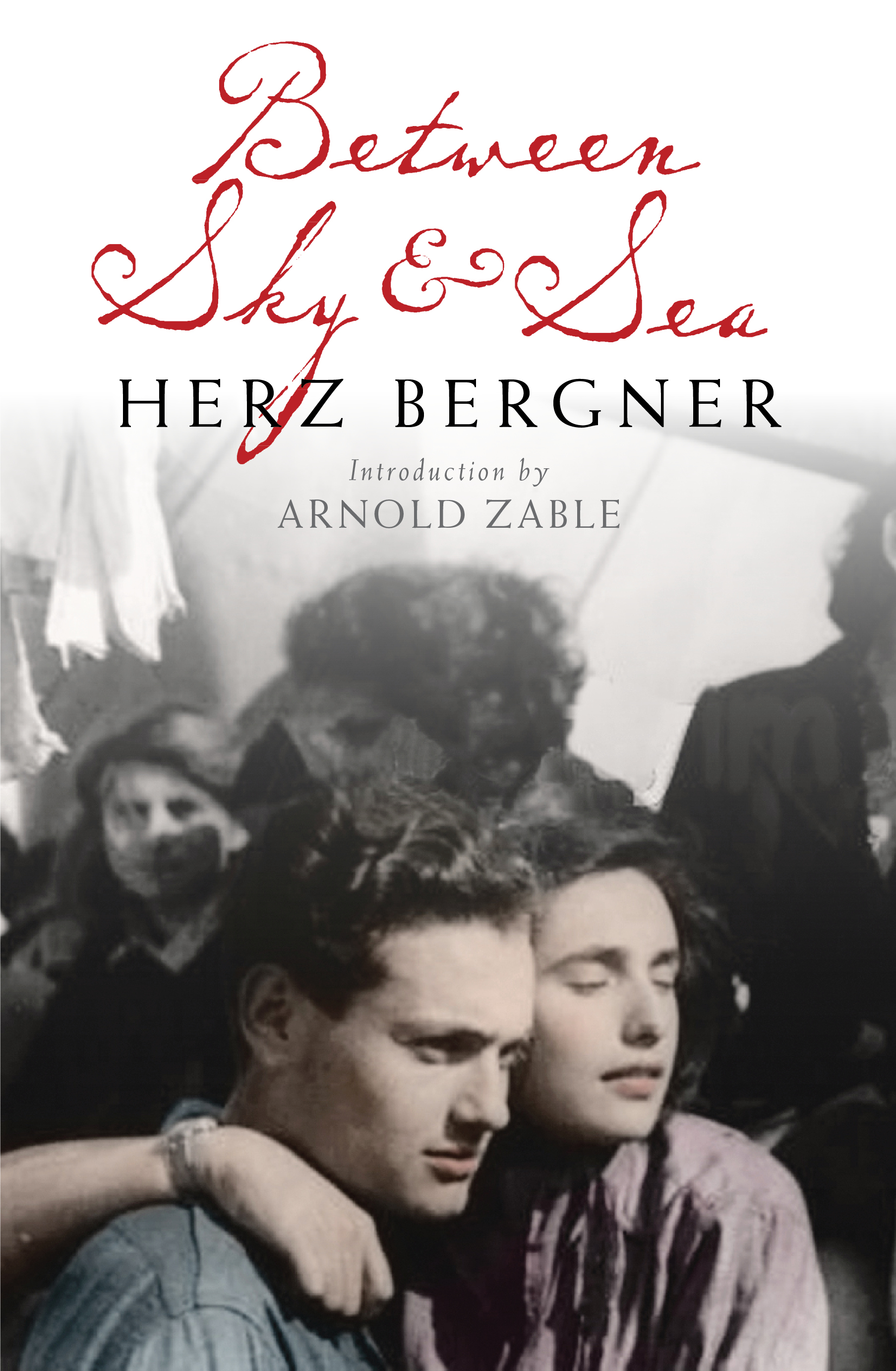
For the people in my next book, war and borders are also important, but in a very different way. The book is Hans Bergner’s Between sea and sky (my review). His people are Jewish refugees on a dilapidated boat, searching for a new home, but being accepted by no-one. They are borderless – and desperate. The book has other links with Tokarczuk’s novel – the refugees are Polish, and the war affecting them is World War 2.

Staying with borders, I’m moving to another, well, borderless story, in a way, Thomas King’s Borders (see my review of the short story, and of the graphic novel co-created with Natasha Donovan). This is another story where borders have been drawn up with no consideration of their relevance to the people who live there, in this case, First Nations people. Our protagonist insists – rightly – that she is Blackfoot, not American or Canadian, and gets caught in borderland limbo.

It was not hard to keep on theme, as stories about borders and people abound. We are staying in North America for this one, Yuri Herrera’s Signs preceding the end of the world (my review). Drawing from the USA’s border with Mexico, it tells of a young girl who crosses it – at great risk – to take messages to her brother. Herrera is interested in not only the politics of borders like this, but also their personal, psychological and spiritual implications. I wrote in my post that the novel “works on two levels, the literal Mexican-American border story and something more universal about crossings and transitions”.
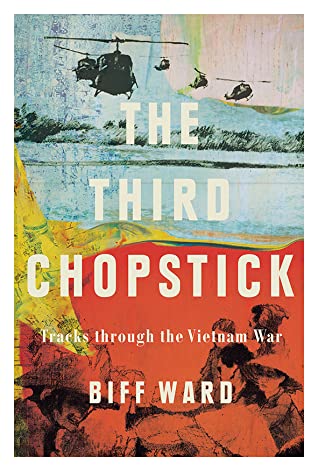
My final book moves further into this idea of mental transitions, but is inspired by a war over borders (to put it simply) – the Vietnam or American War. I’m talking Biff Ward’s memoir, The third chopstick (my review). Ward, a pacifist and anti-Vietnam War activist, decided later in life to revisit her actions during those emotional times. So she sought out, met and interviewed some of the soldiers who fought in the war she’d demonstrated against, and learnt a little about national borders but a whole lot more about the borders in our minds!
Three of my six selections this month are by women and three by men (but one is a male-female collaboration, so the women have it, slightly!) Three of the books are translated. We have crossed much of the globe, east-west and north-south, and touched on war too often, with all set over the last century. Will we ever learn to live peacefully with national borders? Dare I say it would be great to have none?
Have you read Seascraper and, regardless, what would you link to?
 Whispering Gums
I see that the temperatures are soaring in Canberra today – 34 degrees Celsius is hot!
Love the old-fashioned postcard cover of Winter in Sokcho, but as for a world without borders, wouldn’t that be wonderful?
It sure would Rose. And yes I love that cover so much I nearly went a postcard link!
It is hot, dry and a bit scary today. It’s 13:51 and the car says it’s 35°C.
The heat can be scary, especially when there is a crackle in the air. We’ve recently moved to a bushfire area where we built according to regulations for those conditions.
A postcard connection would have been interesting. What book did you have in mind?
Good for you … though it’s only sensible don’t it!
Helen Garner’s Postcard from Surfers. If I use Sokcho again I might do it. I don’t mind reusing books providing the linking is different!
Of course, the perfect postcard link!
Sea being the obvious in my separations.
Seascraper by Benjamen Wood I have not read, though it comes up on all the blogs I read.
The Sea and the Summer by George Turner, a sci-fi future look at a global warming Melbourne.
The Living Sea of Waking Dreams by Richard Flanagan. The usual outstanding Flanagan fare that has one thinking. In my case, the dementia aspect.
The Old Man and the Sea by Ernest Hemmingway. Famous, but I was not that enthralled. Never been a fishing type.
Archimedes and the Seagle by David Ireland. A talking red setter takes centre stage with a dog’s eye view of the world and his friendship with a seagull.
To finish with one I have also not read but is on the TBR, Merry-go-round in the Sea by Randolph Stow.
Thanks John … I nearly went the sea theme. It’s a good one. I’ve always meant to read the Hemingway but still haven’t.
I didn’t do sea, per se, but more water, with mine.
Water is good, Davida, I’ll come check just what water you did!
What an interesting assortment of books and only one I have heard of. We kayak down different rivers. I understand about the weather. Thursday we had really scary fires in the south with high temps and horrible gale force En it mostly stopped by the next day. Now I’m hearing about possible snow tomorrow. It’s nuts!!
Haha, we do Pam … we are driving back from a little event and the wind is hot. It feels scary like fire weather. I love summer but not hot dry winds.
I find the hot dry winds terrifying and then there are the idiots who start the fires. What can one do about that? Reminds me of the Chloe Hooper book.
Me too Pam … that was a really interesting book.
It’s rained on and off all day down here. 😦
And were you happy with that, MR? We did get a little rain in the mid evening, and today looks to be a nicer, calmer day.
I was not. I was meant to have my nails done (just shellac), but I can’t go out when it’s raining coz I can’t manage a stick and an umbrella. 😦
Fascinating chain. I’ll look forward to see where you go from that Chopsticks one.
Haha, yes, Davida. I do have some ideas, albeit might include a book I’ve used before!
I loved Seascraper but the other books in your chain are new to me. They all sound fascinating!
Thanks Helen, I would be interested in Seascraper. It sounds like the sort of book I’d like.
Such an interesting chain. Your theme seems particuarly relevant right now. I enjoyed the Herrera and I’m interested in the King having read a couple of his novels.
Thanks Susan, yes, I think it is. I’m glad you noticed. If you’ve read King, I’m sure you would like this story.
Excellent chain!
Thanks Lisa.
I loved the theme you’ve explored here, Sue. All new-to-me titles and so many that I want to pick up Sochko and House of Day, House of Night especially. Borders also had me thinking of the Korean novel, Saha where an unspoken border separates those are deemed fit to live in mainstream society and those forced to live on the outskirts.
Thanks Mallika … you have picked good ones to be interested in (though I suppose I like all those I’ve linked to really!) I don’t know that Korean novel, so it would interest me too.
Saha was more a novella, and in a dystopian world where there are various degrees of citizens with the status-less ones forced to live on the fringes of town. When one of the privileged falls in love with one from the fringes and is later killed, we see the bitter realities of the world for the status-less. This had a few loose threads at the end but I enjoyed the structure and characters.
The first degree will be Thoreau’s Cape Cod, since it is hard to be at all far from the sea on that cape.
Degree two is The Invasion by Janet Lewis, following your theme of borders. The novel is set partly along western Lake Superior, largely within a few miles of the Sault Ste. Marie, in territory first disputed (on the west) by the Ojibway and the Sioux, then claimed by France, by Britain, and eventually the United States.
Degree three is Wolf Willow by Wallace Stegner. This is a mixture of fiction, history, and memoir set along the boundary between the US and Canada, considerably west of the Great Lakes. One of the chapters discusses the work of surveying the boundary.
Degree four is Surfacing by Margaret Atwood. It is set in Canada about 1970, but everyone seems to have the US on the mind, also the curious status of Quebec.
Degree five is On Borrowed Words: A Memoir of Language by Ilan Stavans. He was born in Mexico, has lived in Israel, and at the time of writing (2002) was a resident of New York, teaching at New York University.
Degree six is a geographical jump, to The Issa Valley by Czeslaw Milosz. This is set in what had recently been the the Russian empire, then (about 1920) was Poland, and now is Belarus.
I have not read Seascraper. Tokarczuk is the only one of your authors that I have read, and it was a different book.
I did consider fitting in Catherine Coneybeare’s Augustine the African to even out the balance of the sexes; but it is very remote in time, and would have expanded that chronogical spread by a fact of ten.
Thanks George. I liked that you picked up the border idea. Of course I know Atwood and Stegner, but some of the others interested me, in particular, the Ilan Stavans. The title and his background both intrigue me.
Did you like the Tokarczuk you read?
The Tokarczuk, Drive Your Plow Over the Bones of the Dead struck me as mannered (capitalizing somewhat randomly as the writers of 250 years ago might have) and not that compelling. We read it for the neighborhood book club, and we have read far worse.
You would probably enjoy Stavans’s book. Actually, you would probably enjoy most of the books I mentioned.
Thanks George … I probably would I agree. I just wish I could stop the world for a while and just read
A very clever chain! I haven’t read any of these but really enjoyed reading about them.
Here’s mine for this week if you haven’t already seen it: https://portobellobookblog.com/2025/12/06/6degrees-of-separation-for-december-2025-from-seascraper-by-benjamin-wood-to-hungry-by-grace-dent-booksky-%f0%9f%92%99%f0%9f%93%9a/
Thanks Joanne … no I hadn’t seen it yet. I usually do my Six Degrees rounds on Sunday, partly because we are often early up in Australia, and partly because Saturdays tend to be busy.
Hi Sue, I have not read Seascraper but looking forward to reading it. I did like your links. My links are: Past the Shallows by Favel Parrett; The Waves by Virginia Woolf; The Sea, The Sea; Breath by Tim Winton; Piranesi by Susanna Clarke and Always Home, Always Homesick by Hannah Kent.
Thanks Meg, I’d like to read it too … I like your links. The sea the sea was one of the first books that came to my mind when I think about this chain. I must say I’m intrigued by Always homesick.
Hi Sue I like to make my links with books that I have read. Always Home, Always Homesick I have just read, and it makes me want to travel and explore Iceland. I have Seascraper on reserve at the library.
I thought you probably did. I wish I could read as much as you do. You must be a great time manager.
Dear Sue
Thank you so much for including me in your Six Degrees on borders of every kind. I really liked how you worded it. It is beyond wonderful to see The Third Chopstick fly again!
best wishes for the Silly Season and all your loved ones, Biff
>
Oh I’m so glad you saw it Biff. I wondered whether you would. It gave me great pleasure to make that link on something meaningful. And now I get to mention your book around next month, because next month’s starting book is different for everyone – it’s the book we ended on in December! I wasn’t expecting that, so now my thinking cap is on!
All the best to you too for the holiday season.
Wow. That is a gift. I look forward to your linkages!
Huge thanks for all that you do in the book/literary/reader/writer space, Sue. You are a precious gem.
Thanks Biff … I love that you see it as a gift. As for gems, it’s writers like you who are the gems. Bloggers like me wouldn’t be here without you.
Really interesting chain Sue!
Thanks Cathy.
I am not familiar with any of these but I just had a great thought – my sister is going to New Zealand for Christmas and I bet some of the books you and Kate mention that are only published in Australia are available there. I am going to make a shopping list for her! I am quite envious of her trip.
What a striking cover for House of Day, House of Night!
Thanks, Staircase. It’s a long time since I’ve been to New Zealand, but I’d like to think they might be. You can only try, eh?
Love how you stuck with the border theme and its many variations! I hope you are enjoying your warm weather.
Love this! And I’ve read two (Herrera and Dusapin…I still haven’t read that Thomas King book, it might be the only one of his that I haven’t, actually!) which is surprising odds between our stacks. But given the borders theme, that does make sense.
Wow, I love that you’ve read two Marcie. I did enjoy exploring the borders theme.