“I love a factory novel”! So wrote Buried-In-Print blogger Marcie on my post earlier this year on the Australasian Book Society. I do too, I replied, and noted to myself that this could be a topic for Monday Musings. I have not done as much research as I would have liked, but I figured I never will, so why not just provide an intro and then call in all of you, the brains trust, for your contributions.
Factory novels are, essentially, a subset of working class literature. They emerged in the 19th century as a result of the Industrial Revolution. They critiqued the exploitation of workers, and identified the poverty and social problems that accompanied industrialisation. Some also explored attempts to improve the situation. Dickens was a major exponent of writing about social problems, but one that made a big impression on me was Elizabeth Gaskell in North and south (read before blogging). Her Mary Barton (on my TBR) also falls within this group.
I love factory novels because the best are written with such heart and passion, with such desire to bring about change. As I’ve said before, I don’t believe literature (or any art) has to do this, but I enjoy art that does.
Selection of Australian factory novels
This small selection includes novels in which factory work and factory workers are the prime focus of the story. There are many other novels which incorporate factory themes or storylines, that I haven’t included. I was so tempted to expand my definition and include other sorts of labourers, such as wharf labourers, for example, but decided to keep it to my original goal.
The books are listed in alphabetical order by author, though I did consider ordering them by date of publication (from 1926 to 2024).
- Mena Calthorpe, The dyehouse (1961) (my review): set in a Sydney dyehouse, this novel is about the impact on workers of capitalism-at-all-costs
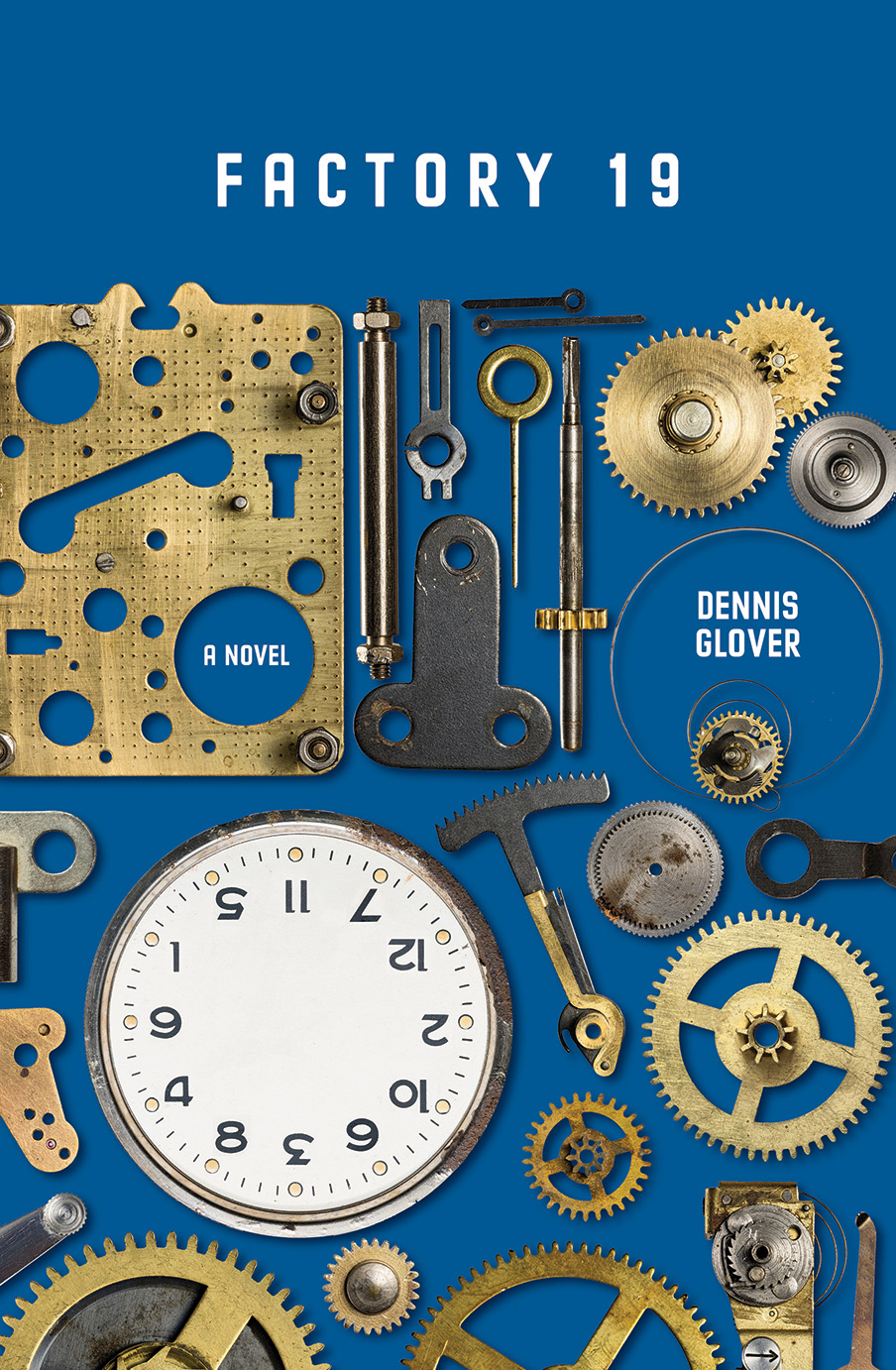
- Dennis Glover, Factory 19 (2020): set in the very near future, 2022, it depicts Hobart, devastated by economic recession, being recreated as a new industrial colony titled Factory 19 which is fixed in the pre-digital past of the 1940s. What can go wrong!
- Rosalie Ham, Molly (2024) (Lisa’s review): prequel to Ham’s The dressmaker (read before blogging); starts with Molly helping to support her struggling family from her backbreaking work in a corset factory (when she’s not demonstrating for women’s rights)
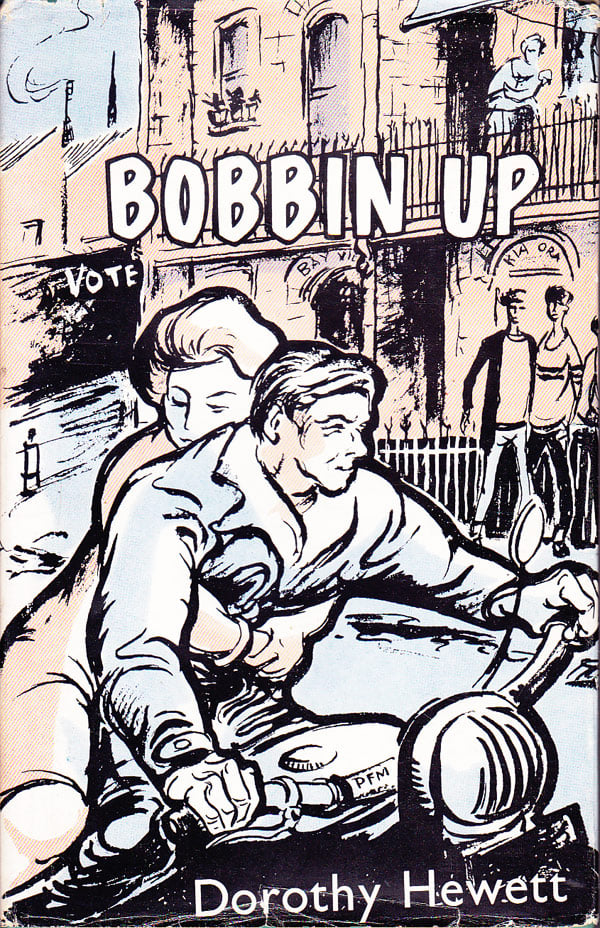
- Dorothy Hewitt, Bobbin up (1959) (kimbofo’s review): set in inner-city Sydney and about, says, kimbofo, “a bunch of hard-working women whose lives are dominated by their long shifts in the [woollen mill] factory”, not to mention the restrictions on their lives imposed by their gender.
- David Ireland, The unknown industrial prisoner (1971) (Bill’s review): set in an oil refinery, a winner of the Miles Franklin Literary Award. Text classics describes it as “a fiercely brilliant comic portrait of Australia in the grip of a dehumanising labour system.”
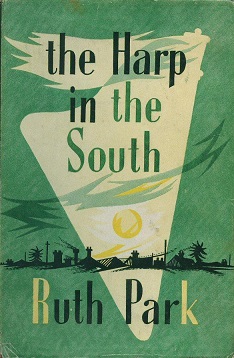
- Ruth Park, The harp in the south (1948) (read before blogging): several of the Darcie family work in factories; a warm-hearted novel in which Park documents the lives of people living on factory salaries and trying to lead a good life.
- Katharine Susannah Prichard, Working bullocks (1926): includes depictions of a timber mill, and the broader issue of working conditions and industrial accidents.
Not surprisingly, most factory novels tell their stories from the point of view of the workers. They chronicle the precarity of life when salary is low, rights are few, and there is little time or energy left for finding ways out. In some of the stories, the workers organise in the hope of forcing change and improving their lot, but our authors are under no illusion that this is easy. Most of the novels are contemporary – that is written around the time they are set – but Ham’s is historical fiction, and Glover’s is, technically, technically futuristic.
So now, my question to you is: Do you like factory novels, and would you like to share your favourites (from any nationality of writer)?
 Whispering Gums
Would never have imagined there to be such a category !!
Read and loved The Harp in the South – when I lived in Sydney, too. It strikes me that if anyone had told me it’s a factory novel I might not have read it: the categorisation reads a bit like Chinese people wearing jackets buttoned right up, to me. 😦
Haha MR… love your description of how that category sounds to you. It’s not completely off given many of the writers of these novels particularly in the past came from communist leaning writers or certainly lefties.
The harp in the south is a wonderful and memorable book isn’t it?
Indeed, ST: it had me wandering about Surry Hills in a dream, for a while.
I can imagine …
Hi Sue, I have read all the novels you listed, except for Molly. All good reads. I thought of The Unknown Industrial Prisoner by David Ireland. Overseas authors, Sinclair Upton and his novel The Jungle; and John Steinbeck and his novel Cannery Row.
Thanks Meg. I love that you have included some overseas ones. I’ve never read Sinclair Upton.
Sinclair Upton is good, but wrote in early 1900-1950’s. Wrote about a meat packing plant in Chicago, put you off eating meat and governments!
Oh no, do I want to read it! (Actually I do. I can cope – I think!)
I do really like them! I hadn’t even thought of them as a class of their own, so thanks for this post Sue.
Thanks Theresa … I’m glad you do too.
I think we can make all sorts of classes of books if we put our minds to it!
I feel like this would be a most enjoyable hobby!
Oh yes, I agree, Theresa. Tt sure would Theresa!
I thought I wouldn’t comment on this post until I had the chance to look across my shelves. And now I have, to no avail.
I am reminded of the Female Factory at Paramatta, but do I have a book about it? No. Teresa in For Love Alone (C Stead) works for a while in the office of a factory. Beryl in Ride on Stranger (K Tennant) rises through ‘sales’ to run her own factory/sweatshop making shirts. I would never have thought of calling the oil refinery at Silverwater a ‘factory’ but I did review The Unknown Industrial Prisoner.
I haven’t read Jean Devanny’s Sugar Heaven, like Working Bullocks, a Communist take on rural workers, but I can’t see that it ventures from the cane fields into the refineries. And that’s as well as I can do.
And what you can do is quite a bit Bill, thanks. I will link your review for the Ireland … I’d forgotten that. I often don’t look to your blog for male writers!
I love factory novels and have mentioned American authors Jim Daniels (poetry, Detroit) and Dave Newman (fiction, Pittsburgh). I just remembered Louise Erdrich’s novel The Night Watchman also has folks from the reservation doing factory work in textile manufacturing.
Woo hoo Melanie … my reading group is doing The night watchman later this year. I wasn’t there when they chose it – I was in remote Queensland … but I was thrilled as I’ve read a couple of hers. You’ve made me more keen now. These factory jobs cannot not only be soul-destroying but also health destroying. I wonder if there are any books about good factory jobs? Some of them might include the camaraderie between workers but books about well run factories that care about his workers. I know I’ve seen some that do have bosses that care.
Doubtful 😬 I mostly only see the camaraderie. Oh!!! Lolita Hernandez has an excellent short story collection on auto factory workers called Autopsy of an Engine.
I hadn’t thought of this as a distinct category of novel before, but it makes sense. I loved Mena Calthorpe’s story and Harp in the South of course.
Bryce Courtney has The Potato Factory and his Balmain book, The Story of Danny Dunn probably features the factories as well as the pubs of Balmain. And recently there was one set in Tasmania – The Jam Maker by Mary-Lou Stephens. I haven’t read any of them, so cannot state just how much of a factory novel they really are though.
On the international front, Zola set several of his Rougon-Macquart books in and around factories, and if you’re allowing futuristic, perhaps you will also allow silly – Charlie and the Chocolate Factory 😀
Oh good one Brona … I will allow anything that focuses on a factory! I know of Bryce Courtney’s book of course, though I haven’t read or seen it, but I hadn’t heard of The jam maker. You have it in your shop?
Yes we did, but not sure if we still have any copies on the shelf.
/claps Yay, I’m so excited! Even though I probably would have a hard time finding those mentioned. Similarly, the ones I’ll share from Canadian writers are also all indie presses, some available directly from the authors’ sites: Kathryn Mockler’s The Onion Man (poems about a summer working in a canned-corn factory in small-town southern Ontario…they could be enjoyed by non-poetry people too) and Jeanette Lynes’ The Factory Voice (novel about women working in a wartime aircraft factory in a small northern Ontario city). But, for a touch of reality, there’s also Factory Girls by Leslie T. Chang, which is sooooo gripping; she knows just how to share details about the older girls and young women who work in these factories in China so that you are invested in their individual stories/experiences.