In early December last year, I started looking out for the Grattan Institute’s Prime Minister’s Summer Reading List for 2024. But somehow, although it was published on their website on 9 December, I missed it. I have no idea how, because I went to their website, but maybe I was a day or two too early, and then forgot in my Christmas-busyness-befuddlement. Anyhow, I believe it still has value, even if the PM is back at work, so here goes …
For those of you who haven’t caught up with this initiative, some background. The Grattan Institute is an Australian non-aligned, public policy think tank, which produces readable, reasoned reports on significant issues. They have also published annually, since 2009, their Prime Minister’s Summer Reading List which, as they wrote back in 2009, comprises “books and articles that the Prime Minister, or any Australian interested in public debate, will find both stimulating and cracking good reads”.
Here is the 2024 list in their order (but with the author first), accompanied by an excerpt from their reasoning, which is available in full on their site):
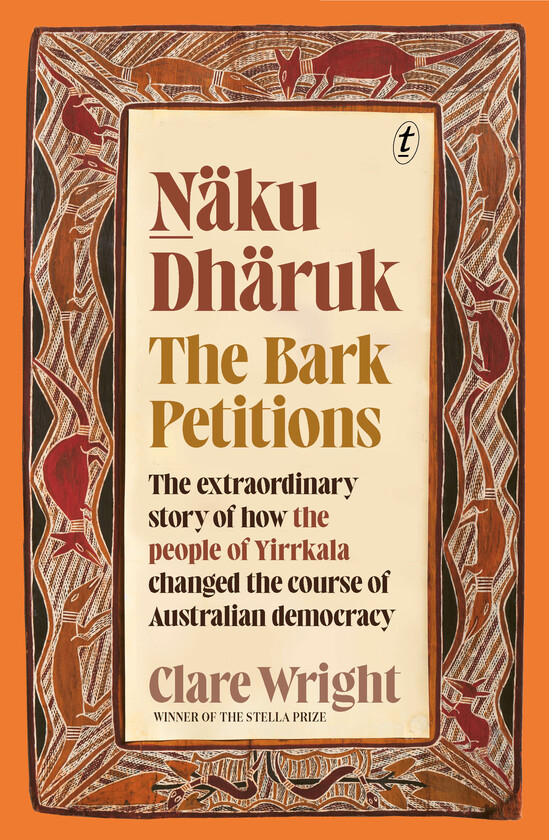
- Clare Wright, Ṉäku Dhäruk The Bark Petitions: How the people of Yirrkala changed the course of Australian democracy (Australian): “The truths told in Wright’s Näku Dhäruk make it essential reading for the Prime Minister and the Australian people. If studying history helps us learn from our mistakes, Australia’s dismissal of the bark petitions is a chapter worth poring over.”
- Adam Higginbotham, Challenger: A true story of heroism and disaster on the edge of space (British): “At its heart, Challenger is a human story … The frozen rubber O-rings that ultimately led to the disaster were a known problem. But a flawed decision-making process allowed it to become merely one ‘acceptable risk’ among many. As demands on governments grow even as trust in institutions declines, Higginbotham provides a timely reminder of the role of individual agency in shaping the success or failure of humanity’s greatest endeavours.”
- J. Doyne Farmer, Making sense of chaos: A better economics for a better world (American): “Farmer argues that traditional economics fails to grapple with the complexity and uncertainty of real-world economies. He makes the case for complexity economics, a new approach that draws insights from biology, neuroscience, and physics. This framework models the economy from the ground up, simulating the dynamic web of interactions between people, goods, and institutions … With vast data and computational power now available, complexity economics could be the next testbed for evidence-based policy.”
- Caitlin Dickerson, Seventy miles in hell (American): “In contemporary debates, where migration policies are entwined with political positioning, easy scapegoating, and a way for politicians to signal ‘toughness’, migrants are often treated as numbers, inputs into an economy, or worse, rather than as human beings with their own hopes, strengths, and impossible choices … Dickerson’s message is clear … ‘What I saw in the jungle confirmed the pattern that has played out elsewhere: The harder migration is, the more cartels and other dangerous groups will profit, and the more migrants will die.’”
- Madhumita Murgia, Code dependent: Living in the shadow of AI (Indian): “as AI is increasingly embedded in our systems and decisions, what does this mean for our society? … Murgia argues that our blindness to AI systems and how they work makes it harder for us to understand when they go wrong or cause harm. And there’s a risk that those harms disproportionately affect marginalised groups … The questions that policymakers must grapple with are almost as numerous as the possible uses of AI: How do we know if AI technologies are safe, or if they are being manipulated or used in discriminatory ways? Which laws need to be amended to take AI into account? More broadly, who is ultimately responsible when AI technologies cause harm?”
- Ceridwen Dovey, Only the astronauts (Australian): “Dovey, an Australian science writer as well as novelist, shows us humans as they might appear to the objects we create and use. Like Adam Higginbotham in Challenger, Dovey critiques the masculine bravado of the space race … This inventive collection of stories has moments of beauty, as well as laugh-out-loud fun …”
The selection process, we’re told, was rigorous. The staff book club “read, loved, loathed, and debated an extensive array of novels, non-fiction books, essays, and articles”. They believe their final six are “all cracking good reads”, and summarise their choices as follows:

Ṉäku Dhäruk and Challenger are case studies in how a handful of people can shape the course of history, for better or for worse.
Making Sense of Chaos argues that we can glean new insights into the economy by modelling individuals’ behaviour from the ground up.
Seventy Miles in Hell and Code Dependent remind us of the human consequences of our high-level policy choices on migration and AI.
Our last pick, Only the Astronauts, is a little different: it’s a series of vignettes about inanimate space objects. But it too offers a new perspective on the human experience by looking in from the outside.
It’s interesting – and, I admit, disappointing – that only two are by Australian writers. And again, only one is a work of fiction. Also, while the ongoing challenge of reconciling our colonial past is included, it’s not in a work by a First Nations writer – as excellent as Clare Wright is. However, I do like that, while it may look like some critical issues are not covered, there seems to be some big picture and lateral thinking included here, which is important.
My track record for reading Grattan’s selections is poor. To date, I have read two of 2022’s list, Debra Dank’s We come with this place (my review) and Jessica Au’s Cold enough for snow (my review), and only one of 2023’s list, Anna Funder’s Wifedom (my review), though I had hoped to also read Ellen van Neerven’s Personal score. Let’s see how I go with 2024’s list!
You can see all the lists to date at these links: 2009, 2010, 2011, 2012, 2013, 2014, 2015, 2016, 2017, 2018, 2019, 2020, 2021, 2022, 2023.
If you had the opportunity to make one book recommendation to the leader of your country, what would it be?
 Whispering Gums
Out of curiosity I checked through the backlist of summer reads and found that I had pretty much read all the fiction/poetry titles on the list and most of the books by First Nations authors.
Politics and the economy are not my usual non-fiction fare though, so not really surprised that I hadn’t read many of them, except for the odd one like Secret Ballot to Democracy Sausage.
I hope the PM enjoyed Ceridwen Dovey’s short stories as much as I did 🙂
Thanks Brona … I love that you checked the backlists. I believe the actual books are sent to the PM. I don’t know if the Grattan institute ever hears back, though I think one interview I hard with a Grattan Institute person suggested that they don’t usually hear back. It would be great to know, wouldn’t it?
I hope that any leader or aspiring leader would read ‘Mean Streak’ (about Robodebt) by Rick Morton. It really is an important lesson about the consequences of failure.
Good one Jennifer… thanks … I’ve read his memoir, and much of his journalism, but not any more of his books.
If I was prime minister on holidays I’d be relaxing not reading NF – he has staff for that. I agree that it’s a shame the Indigenous selection wasn’t by an Aboriginal author. I’m also a bit embarrassed my contemporary Australian reading is so poor that I am unable to contribute a suggestion.
Thanks Bill … I made that comment about the reading for the PM on a previous post. I agree … give him some good novels!
I’m not sure if it still happens, but for years people would weigh eagerly to see what Obama had read. He always had a great mixture of fiction and non-fiction, and his list had a ton of books on it. I’m not too sad to see a leader reading mostly non-fiction, because while fiction gives us empathy, non-fiction gives us information with which to do something. I, too, was surprised that there were so few Australian writers on here. I’m glad to see it wasn’t just Americans, though.
Ah yes, Melanie, I understand your point but I think fiction can give more than empathy? I think it can offer different ways of thinking about things which I see as a bit more than just understanding and respecting others and their ways?
I’m not sure. Every fiction story that sticks with me is one that has made me FEEL. If I come away with “a lesson,” which I acknowledge is not what you’re saying, I tend to not like that book because it feels contrived.
Yes, you’re right, that’s not what I’m saying really. It’s more subtle. Feeling is usually what I remember about books. Not plots. But I’m talking about subtle things like opening our minds to different ways of seeing or thinking about things which for me is broader than empathy but might extend from empathy. However it might also come from characters like me but who see things a different way. Or it might be a reassurance from characters like me that I’m not so weird or unusual or awful or incapable etc as I think I am. Those things can make me feel much better but I don’t think they are really about empathy… unless it’s empathy with myself!?
Maybe validation?
Maybe … that sounds right.
I wonder if there’s any relationship between the parties in power in years when all the recommendations are Australian and when they are more global-minded. I am ambivalent on that, believing OOH that it’s an opportunity to highlight “home grown” writers but OTOH an opportunity to build bridges.
I’m not sure there is Marcie. My sense is that they look for books that either in form or, and this feels a strong emphasis in this selection, encourage new ways to think about things – to encourage some lateral problem solving. I’m not sure that bridge building would be uppermost because as a middle power Australia generally has ok bridges. They might get bumpy/shaky at times but we are not a big threat. That said we have had a few wobbles in recent years but not in places these books would help much I think.