My participation in Nonfiction November tends to be sporadic. Last year, I wrote some weekly and some combined posts, but I did address the weekly questions conscientiously. However, the prompt questions are, I think, much the same this year and my answers would be very similar, so I’m not going to be as thorough this post. I will just respond to Week 1 (My year in nonfiction) and Week 3 (Book pairings) because the responses to these will be different every year.
Week 1: Your year in Nonfiction
Heather (Based on a True Story) hosted this week, which is described as follows:
Celebrate your year of nonfiction. What books have you read? What were your favorites? Have you had a favorite topic? Is there a topic you want to read about more? What are you hoping to get out of participating in Nonfiction November?
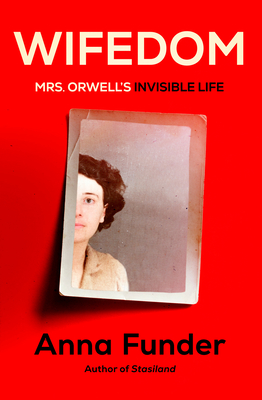
This Nonfiction November year runs, by my definition, from 1 November 2023 to 31 October 2024. My nonfiction reading has been varied, though much of it did involve some sort of life writing – biography, memoir, and hybrids of the two. Two biography-memoir hybrids that I enjoyed this year were specifically related to the literary biography field that is my favourite type of nonfiction. The books were Anna Funder’s Wifedom: Mrs Orwell’s invisible life (2023, my review) and Nell Stevens’ Mrs Gaskell and me: Two women, two love stories, two centuries apart (2022, my review). Both had personal – hmm, agendas is too strong a word so – drivers behind their author’s decision to write about the life of their subject.

Late last year, I posted on my brother Ian Terry’s book, Uninnocent landscapes (my post). It’s a truth-telling project for which Ian followed the journey taken by George Augustus Robinson on his 1831/32 Big River Mission (brief description), which was a poorly conceived attempt to conciliate between settler and Aboriginal Tasmanians. In his book Ian accompanies his photographs with excerpts from Robinson’s text.
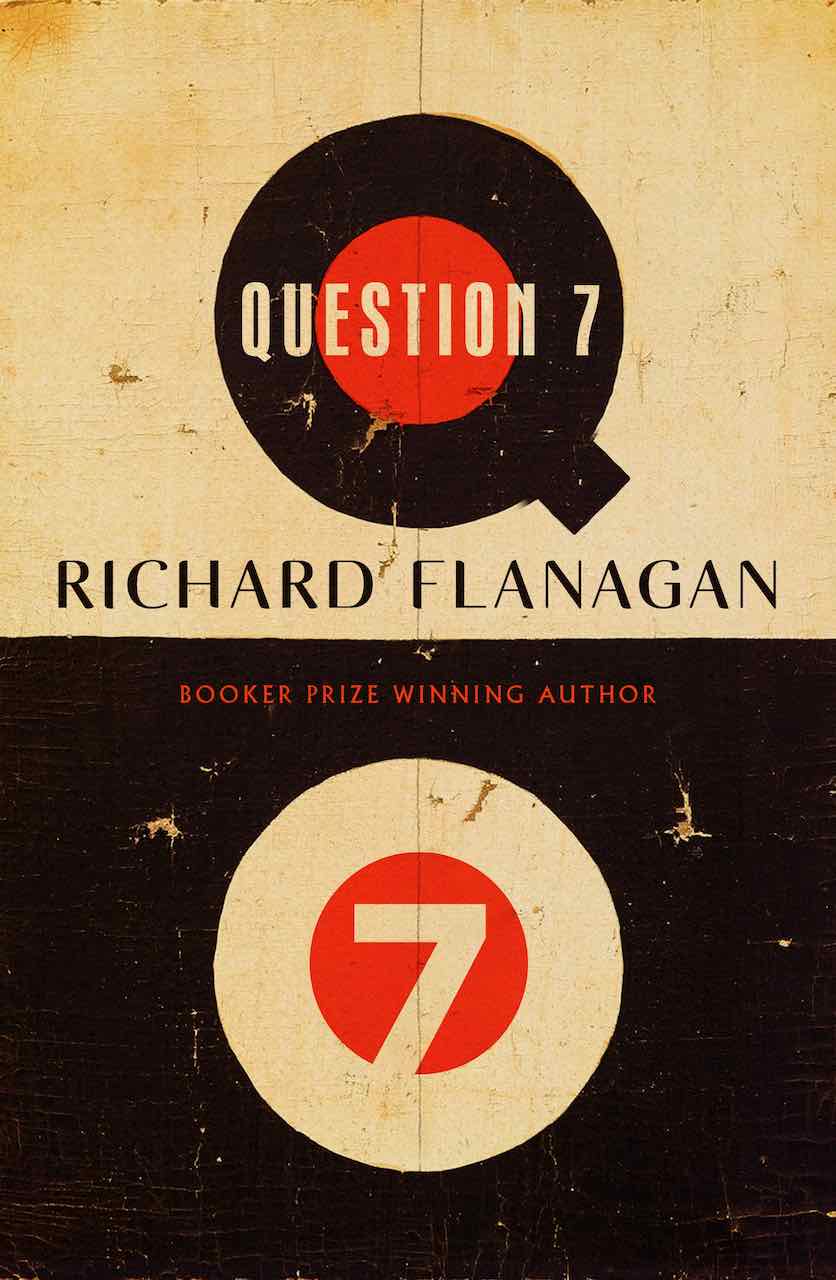
I did read other nonfiction, but I’ll end with two, one that I finished and one I’m currently reading. The finished one is Richard Flanagan’s Question 7 (my review). It was a great read; it stimulated an excellent reading group discussion; and it has just won the Baillie Gifford Prize for Non-Fiction, which is worth £50,000. (As some of you may have heard – see The Guardian – Flanagan said in his acceptance speech that he would not accept the prize money “until the fund manager shares a plan to reduce its investment in fossil fuel extraction and increase investments in renewables”. This is putting your money where your mouth is. I applaud him.)
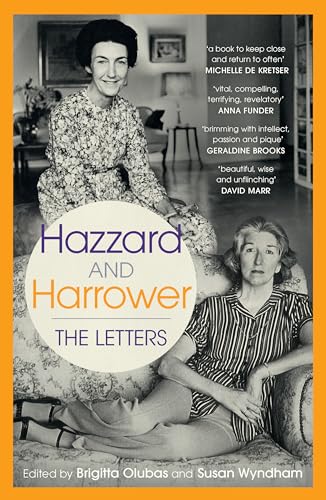
The one I’m currently reading – slowly, between other books – is Hazzard and Harrower: The letters by Brigitta Olubas and Susan Wyndham (see my author conversation post). It is an engrossing mix of personal life “stuff”, and observations on such things as politics at the time (such as Watergate in the USA and the election of Whitlam in Australia) and writers and writing. I’ve just enjoyed some discussion about criticism, which reminded me of that panel I attended at the Canberra Writers Festival. The panel discussed, for example, the idea that criticism can be a work in its own right. Shirley Hazzard, on the other hand, writes to Elizabeth Harrower that “I rarely read criticism, and have little interest in it as a genre [my emph.], only for the occasional statement or essay that rings true and wants books to be good, rather than showing relief & satisfaction when they’re not”.
Week 3: Book Pairings
Liz (Adventures is Reading, Running and Working from Home) hosts this week, and explains it thus:
Pair up a nonfiction book with a fiction title (or whatever you want to pair up). Maybe it’s a historical novel and the real history in a nonfiction version, or a memoir and a novel, or a fiction book you’ve read and you would like recommendations for background reading. Or two books on two different areas have chimed and have a link. You can be as creative as you like!
This is my favourite part of Nonfiction November, because, like the #SixDegrees meme, it’s fun to think about. I’m giving you three pairs.
Reconciliation and truth-telling
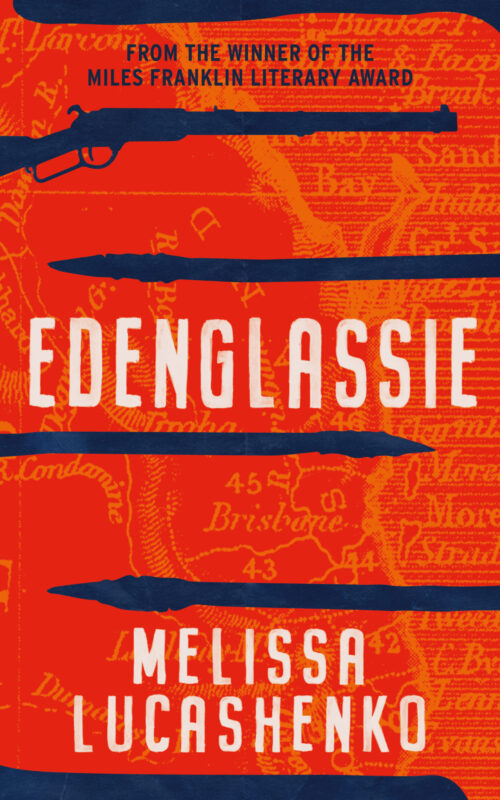
I’ve already mentioned Ian Terry’s Uninnocent landscapes. Essentially, it looks at colonialism’s impact on country, through photographs of the landscape today, excerpts from the historical record, and essays by First Nations Tasmanians and a farmer living on the land. I will pair this with Melissa Lucashenko’s first work of historical fiction, Edenglassie (my review) in which she asks, among other things, what if colonialism had been done differently.
Letter-writing
I can’t resist pairing Brigitta Olubas’ and Susan Wyndham’s Hazzard and Harrower: The letters with Jane Austen’s epistolary novel Lady Susan (my review). I know, I’m shameless – any opportunity to mention my Jane!
Genre-bending
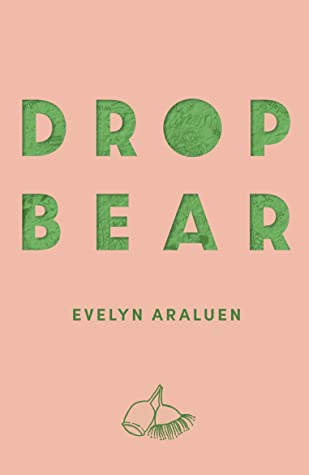
The Guardian article mentioned above describes Richard Flanagan’s Question 7 as “part-memoir, part-novel, part-history”. If that’s not a genre-bending work of nonfiction I don’t know what is. So, I thought to pair it with a genre-bending work of fiction (or, at least, not nonfiction), but which one? I think Evelyn Araluen’s Dropbear (my review) is the perfect match. Winner of the 2022 Stella Prize, it is a collection that combines poetry and prose/memoir, and that, like Flanagan’s work, draws from Araluen’s own life to ask questions that are well worth asking.
What would you pair (and/or do you have anything to share regarding your year in nonfiction)?
 Whispering Gums
Purely by coincidence I read these two books back to back:
Eve, Cat Bohannon and Mother Nature, Sarah Blaffer Hrdy.
The latter because I found it in a free take-away stack a couple of weeks after I had finished the first. It’s amazing how reading about evolution and anthropology can broaden one’s perspective or, in other words, make what I see as immediate threats and dangers look much smaller.
Oh thanks Sabine for sharing these … I like your comment that such books can make immediate threats look much smaller. I’ve experienced that too.
Great pairings, ST (from what I’m told) ! [grin]
Haha MR!
I loved your pairings.
My year in non-fiction has been very different from yours.
I have been deep in research for a novel set in France in the late seventeenth and early eighteenth centuries. Powerful men were running the world, and the thing to do was to go to war. Does that sound a bit familiar?
Thanks Carmel … I’m glad you enjoyed them.
And yes, sadly it does. It makes you wonder sometimes that if history is so determined to repeat itself what is the value of studying it. I’m speaking with tongue in cheek of course but with a tiny bit of seriousness all the same.
Pingback: Nonfiction November Week 3 - Book Pairings
Nice pairings: thank you for joining in my week!
A pleasure Liz … it’s always fun.
I think No Visible Bruises and The Woman Who Walked into Doors would go well together.
I haven’t read either of those Melanie but they sound like a great pairing.
I’m hoping that all the attention for Edenglassie means it will be available soon overseas! (Would also love the collection of writers’ letters, but I doubt that will make its way here.)