Marcie’s (Buried in Print) MARM (Margaret Atwood Reading Month) event is now seven years old, but this is only my second contribution. I read a reasonable amount of Atwood before blogging, and since then have let her slide somewhat, though I have reviewed a couple of books here. You can’t read it all – but, I do like her voice …
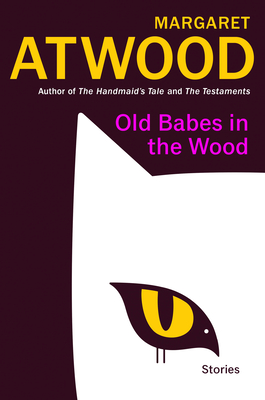
So, I decided to join in again this year, as I knew I had a collection of short stories in my TBR pile. The only problem is that my non-Australian TBRs are still in boxes somewhere. What to do? Maybe, I thought, there’s a short story online somewhere, and sure enough I found one in The Guardian. Titled “Widows” it features Nell and (the late) Tig. From Marcie’s blog I learnt that this couple first appeared in Atwood’s collection of linked stories titled Moral disorder, and appeared again in her recent collection Old babes in the wood, from which this story comes. However, I’ve not read either of these collections, and I didn’t recollect those characters or their names.
Then a strange thing happened. According to Wikipedia, Moral disorder contains eleven connected short stories, the second last one being “The Labrador fiasco”. This is the story I read for last year’s MARM, but it was in a 1996-published Bloomsbury Quid edition. I had no idea it was later included in the 2006-published Moral disorder. Oh these writers can be tricksy. Did she change it in any way – such as to name the then unnamed character – for version in the collection? Anyhow, moving on, Wikipedia tells me that the 2023-published Old babes in the wood comprises fifteen stories in three parts: “Tig & Nell” (three), “My Evil Mother” (eight), and “Nell & Tig” (four). “Widows” is the thirteenth story in the collection, so presumably the second one in that last group of four.
I won’t rehash “The Labrador fiasco”, except to say that it is a “story-within-a-story” story, and that the framing story concerns the unnamed narrator (who is apparently Nell) visiting her aging father and mother. The father, in particular, is declining, having experienced a stroke six years before the story’s opening. It is told first person by the daughter, who regularly visits her parents and is becoming aware of aging and our inevitable decline. Some years have clearly passed, and in “Widows” Nell has recently lost her husband “Tig”. It’s an epistolary story, I guess you could say, though it contains only two letters, both by Nell to a friend named Stevie.
The first, and main, letter is a delight – and pure Atwood. It’s partly in what she covers, as this short short story manages to encompass Atwood’s recurring themes – women (their position in society, and their relationships), language, aging, social conventions, and the state of the world. But it’s also in the sly way she makes her sharp little points. For example, talking about widows, she has a dig at the modern penchant for creating increasingly complicated gender-neutral descriptions:
I’m hanging out with a clutch of other widows. Some of them are widowers: we have not yet got around to a gender-neutral term for those who have lost their life partners. Maybe TWHLTLP will appear shortly, but it hasn’t yet. Some are women who have lost women or men who have lost men, but mostly they are women who have lost men.
Similarly, there is a sly reference to world politics and climate change, when she says to Stevie, who is much younger, that:
if you live another thirty years and are still enjoying it, or most of it – if anyone will be enjoying, or indeed living, considering the huge unknown wave that is already rolling toward us – I expect you will look at a picture of yourself as you are today, supposing your personal effects have survived flood, fire, famine, plague, insurrection, invasion, or whatever …
Of course, Nell talks about grief, about the forms, assumptions and cliches that surround it. She’s quietly scathing about “checking the boxes of the prescribed grief process” and eschews the well-intended offers of casseroles and suggestions that she go on a cruise.
When I read writing like this, I can’t help being reminded of Jane Austen, because both have the ability to see through our conventions and pretensions to the truths beneath, and to make us chuckle as they do so.
However, for all the cheeky barbs and social commentary, there is also something heartfelt in her discussion of grief. She speaks of how it skews one’s experience of time, how it affects one’s relationship with the person who has died, and what grieving people really talk about and deal with. Atwood knows whereof she speaks having lost her husband of 46 years in 2019.
If I thought this first letter was both clever and moving, the second letter just nailed it. In fact, if I were writing criticism and not a review, I would discuss what Atwood does here, but that would spoil the whole experience, and I don’t want to do that because you can read it yourself at the link below. Suffice it to say that, while “Widows” is a short story, it does a lot in its few words, and its ending signs off with aplomb.
Margaret Atwood
“Widows”
The Guardian, 25 February, 2023 (also pub. Old babes in the wood, 2023)
Available online at The Guardian, 2023
 Whispering Gums
She’s a ripper, ain’t she ? 🙂
She sure is, MR.
One of the stories in this collection has an Orwell connection (according to Bill), so I’m hoping to read that one this month.
I look forward to seeing your post Brona.
I’m away. I had been carrying Old Babes in the Wood with me so I could make more informed comments, but sadly this time I have left it home.
I wonder if Atwood has snuck a Strout-esque novel past us with Nell and Tig stories over a number of collections.
Haha good point Bill re her sneaking in a Strout-esque novel. I am keen now to read more of these collections of hers.
What?! /giggles No way! I read TLF in 2003 and Moral Disorder in 2006 and I did not put that together. Now I’m echoing Bill’s musing that she might have been having us on for years! Part of me wants to yank all those earlier collections off the shelf and leaf through looking for Nells and Tigs. Part of me wants to peek ahead at the part of OBitW that I’ve not read, to see Widows (especially its ending). But another part of me is keeping my butt in my seat to write this comment. You have done your math right, that’s exactly where Widows fits into the collection (also, I laughed that you quoted my post and then you quoted me again…because I wrote that part of the Wikipedia article). #smallworld And even without having read the story, I like what you’ve said about really wanting to talk about what she’s doing with the second letter but, simultaneously, not wanting to spoil anything about the reading of it for someone else. Thanks for bringing this short story into this year’s MARM conversation and for linking and whetting readers’ appetites for more.
Oh thanks Marcie … good writers do reuse things often don’t they. The original repurposing!
I love that I quoted you twice over. That happens to me either Wikipedia too as I contributed significantly to some articles on Australian women writers.
I knew you would appreciate my point we discussing the story.
This was great! I read Old Babes in the Woods a year (2 years?) ago and you have brought this story back to life for me since it drifted off into the past memory. thank you 🙂
Oh thanks Stefanie … this is clearly a good collection to read. I love it when a blog post brings some reading back to life – you somehow experience it a bit all over again.
Just recently, my 80-something grandma wrote a post on Facebook about how she would not be voting for Trump, despite voting for him twice before. She could not continue her support after the January 6th insurrection. Many of her friends commented that she lost her mind to the woke agenda, etc., but one person said my grandma’s husband would be spinning in his grave. I couldn’t believe someone would dip so low as to conjure the possible opinion of her dead husband — they’d been married over 50 years — to try and shame my grandma. My grandma replied that he’s been dead for TEN YEARS.
Good on your grandma! On all counts – for understanding the wrongness of January 6, for posting her view on Facebook knowing presumably she’d get pushback, and for standing up to that attempt to shame her as if her. Thanks for sharing this …
BTW we normally say “rolling” in the grave but I have heard “spinning” before. Is this another US versus Aus (maybe English) thing? I must listen out more.
I’ve heard rolling, too, though spinning may be more common in the Midwest.
Love this language usage stuff!
SAME. I get a big kick out of talking language in my interpreting program, too, though it’s often outside of class.
Oh yes, in any interpreting or translating role I bet it’s super fun!
Thanks for the comments on Atwood – if I ever have any energy again, I’ll remember, and go back and read more of her. I had sort of dismissed her (didn’t care for Life After Man?), and I see that was premature.
I can’t read while writing, so it may be a few years unless the long covid researchers find something that helps the victims of post-viral infections and find treatment or cure AND it helps those of us who have had them for decades (the damage may be too great and their research only help recent victims).
Glad to meet you on Jinjer’s blog – The Intrepid Angeleno – I’ll figure out how to follow you on yours.
Nice to hear from you Alicia … I’m sorry you suffer from CFS ( I think I’ve remembered correctly). It’s an awful thing. Good luck with your writing.
I didn’t read Life after man but I loved many of her early books.
Looking forward to your posts – I think I managed to sign up.
Well done … I look forward to hearing from you when you feel inspired. Will check yours out too. I think I’ve commented a couple of times over the years as I’ve seen you comment on a few blogs.
Thanks- I really enjoyed this short story- and having it free in the Guardian was even better! I read the ‘Labrador’ one as well. I’m not a great fan of collections of short stories, because I always feel a bit ‘force-fed’ reading one after the other, even if I try to space them out over a week or so. I find that I appreciate short stories more as stand-alone objects published in a newspaper or magazine. ‘Widows’ really had the ring of truth about it, didn’t it.